
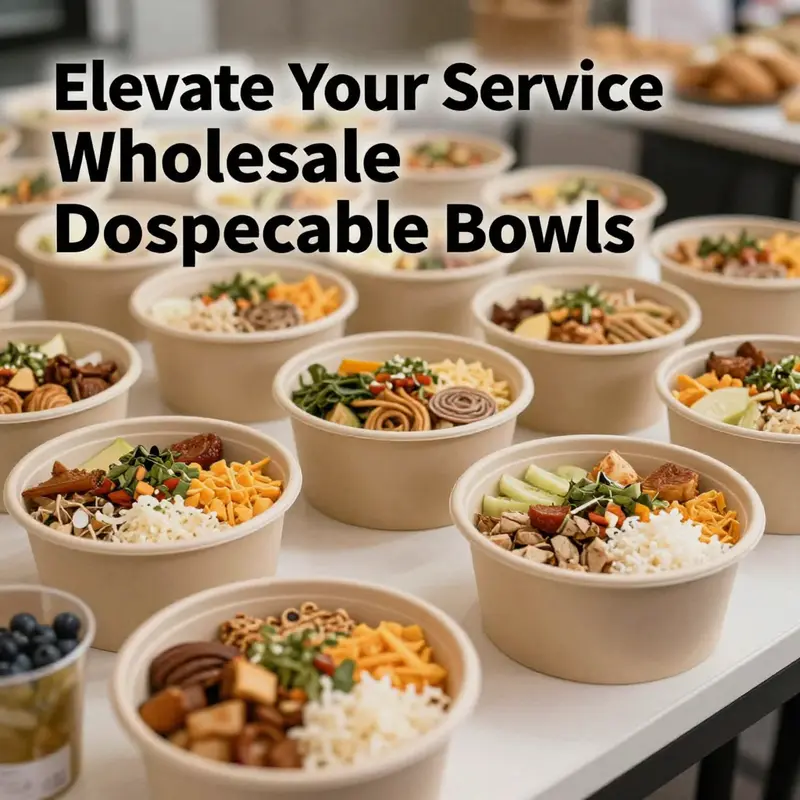
In the dynamic world of food service, creating an appealing presentation is crucial for attracting customers. Wholesale disposable bowls offer a versatile and sustainable option for beverage chains, food trucks, and event planners looking to enhance their offerings. Made from eco-friendly materials, these bowls are not only functional but also customizable to reflect your brand identity. This article explores the product range and features of disposable bowls, the various customization and branding options available, and insightful pricing structures and supplier information. Together, these aspects will provide you with a comprehensive understanding of how wholesale disposable bowls can meet your business needs.
Beyond the Surface: The Rich Range and Features of Wholesale Disposable Bowls
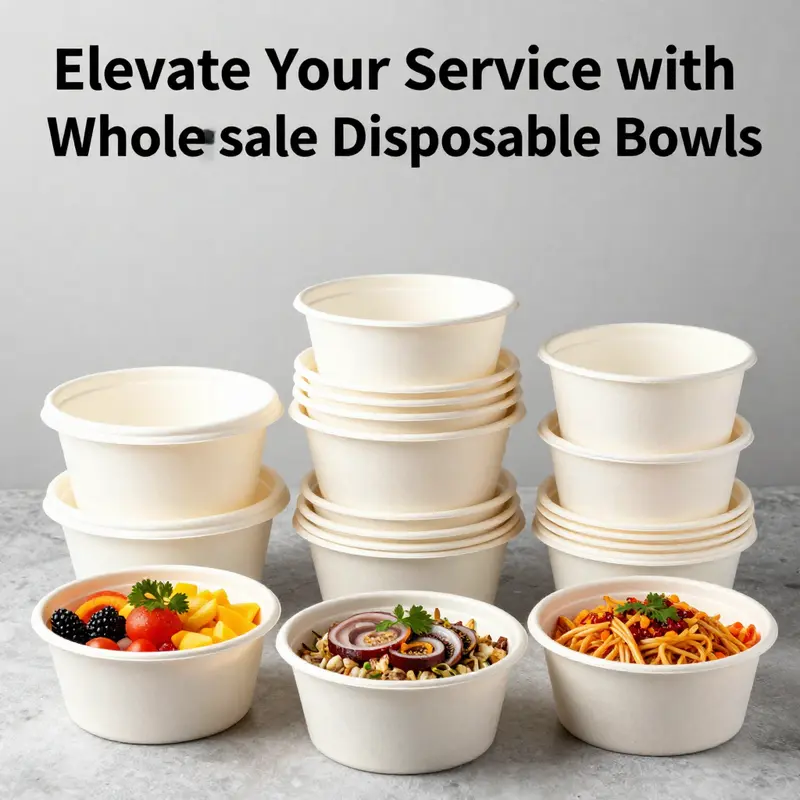
Sold as modest, one-use workhorse containers, wholesale disposable bowls carry a surprising amount of complexity beneath their simple exterior. For operators in foodservice, takeout, and event catering, these bowls are not merely a vessel; they are a small but strategic decision point that can influence throughput, brand perception, waste management, and even menu possibilities. The market presents a spectrum of choices, dominated by sizes from roughly 500ml to 1300ml (about 32oz), and a mix of materials that balance cost, performance, and sustainability claims. At first glance, you might encounter round bowls, white or natural-toned, with matching lids designed to seal and present well on delivery trays or buffet lines. Yet the real decision-making happens when you map your operational realities to the nuanced features that different bowls offer. This is where the wholesale story diverges from the consumer-packaged trickle of options. Bulk buyers emerge not just to stock a pantry, but to curate packaging that aligns with food safety standards, guest experience, and the environmental narrative they want to project to customers and regulators alike.
A core driver behind the wholesale market is material variety, which in turn shapes price, performance, and end-of-life considerations. The baseline is food-grade craft paper bowls that are often coated with either PE (polyethylene) or PLA (polylactic acid). These coatings provide the water and oil resistance necessary for soups, sauces, and dressings, while maintaining a clean barrier against grease seeping through the paper walls. The coatings also influence recyclability and compostability claims, since PLA is compostable in industrial facilities where available, whereas PE is a standard plastic coating that can complicate end-of-life processing. This intersection of performance and sustainability has become a decisive factor for many buyers who aim to reduce plastic footprint without sacrificing user experience. In practice, buyers are assessing not only whether a bowl can hold hot or cold food, but how it behaves during transport, how well it resists leaks, and how it holds up under the rigors of busy service periods.
The range extends beyond paper and coating choices. A growing segment includes materials such as kraft paper, which emphasizes a natural appearance and compostability credentials, and plant-based fibers like bamboo and bagasse (sugarcane fiber). These options are touted for their renewable sourcing and their ability to withstand food contact while presenting a more organic aesthetic that resonates with eco-conscious diners. Bagasse, in particular, has earned attention for its thermal tolerance and its relatively neutral flavor impact on foods with higher temperatures. The market narrative currently leans toward blends of environmental responsibility and practical resilience, offering bowls that can perform under hot holding, cold storage, or a quick-transfer from counter to table. The sustainability conversation is nuanced, because not all “biodegradable” or “compostable” claims hold true in every facility. Industrial composting infrastructure, local regulations, and the presence of coatings can all affect whether a given product actually degrades in a defined timeframe. Buyers who want to align packaging with circular economy goals often pursue certifications, supplier transparency, and clear guidance on disposal pathways, rather than relying solely on broad marketing terms. The result is a market where eco-friendly labeling is substantiated by production practices, material composition data, and, when possible, third-party validation.
Despite these eco-forward impulses, plastic remains a pillar of the disposable-bowl landscape. PET bowls, valued for their clarity, rigidity, and resistance to cracking, occupy a central role in refrigerated cases, delis, and even some microwavable contexts. PET’s durability makes it a versatile choice for cold and chilled offerings, from salads to desserts, where a premium display and reliable containment are prized. In many settings, plastic bowls are paired with resealable lids, a feature that preserves product freshness and minimizes leaks during transport. Resealed configurations are especially advantageous for salads that include dressing, yogurt-based toppings, or multiple components that diners might want to mix at the table. In hot-food scenarios, heat-insulated lids and specially engineered designs help maintain temperature during short journeys, making plastic-based packaging a practical option for takeout and quick-service environments that require predictable performance across a wide range of menu items.
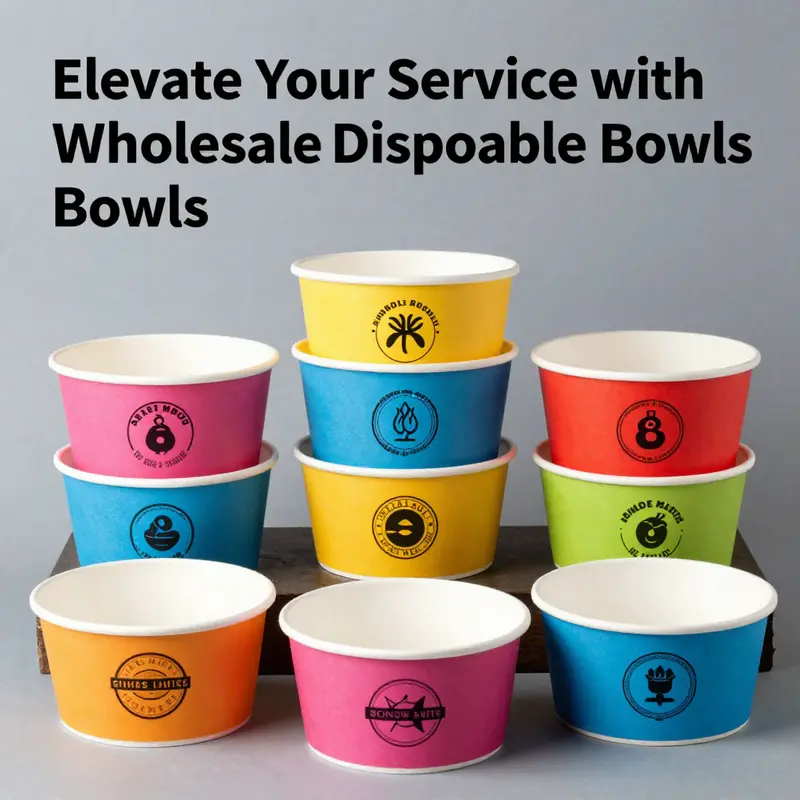
Another layer of decision-making involves customization and branding. Wholesale suppliers recognize that packaging is an extension of brand identity, a mobile billboard that travels with the customer from the restaurant to the event venue and into the hands of the consumer. Buyers can customize size, volume, color, and printing patterns, and they can imprint logos to reinforce brand recognition. Print methods such as flexography (up to six colors) and offset printing are commonly offered, enabling a level of visual sophistication that mirrors more expensive packaging. The ability to print or emboss a logo on a disposable bowl or its lid helps a brand maintain a consistent look across all channels, from social posts to on-site signage. Customization goes beyond aesthetics; it can influence usability too. Some suppliers offer design variants that include fold lines, stacking efficiency, or ergonomic grips that improve the user experience. For events, this customization translates into a cohesive, on-brand guest experience that can be scaled to thousands of pieces without sacrificing consistency.
The economics of customization reveal another set of practical realities. Pricing in wholesale markets follows a volume-based model, with substantial discounts as order quantities rise. A representative picture from the data shows that a 32 oz (950ml) biodegradable bowl can be priced around $0.055 per piece for orders in the 50,000 to 99,999 range, dipping to about $0.053 per piece for orders of one million or more. While these figures provide a snapshot, the underlying principle is straightforward: the larger the order, the lower the unit cost, driven by fixed setup costs and efficiencies in production, printing, and logistics. For smaller businesses testing a concept or a seasonal promotion, suppliers often offer low-friction sample programs—sometimes at a nominal cost (as low as $0.01 per piece)—to allow buyers to evaluate quality, fit, and performance before committing to a larger purchase. This testing phase is crucial for restaurants and event planners who rely on dependable packaging to protect food quality and presentation across multiple service points.
Beyond the macro trends of material science and branding, the wholesale market also offers practical flexibility in terms of sizes and configurations. The 12 oz and 16 oz round bowls are commonly available in both standard and custom sizes, broadening the scope for everything from single-serve desserts to side portions or sample-sized tastings. Even within the same material family, vendors may offer differences in thickness, stiffness, and heat tolerance, which can be decisive in high-volume operations such as stadium concessions or large corporate events. For soups, noodles, or stews, a bowl’s lip design and edge geometry can influence how easily a lid sits, how well a spoon clears the surface, and how cleanly a counter or tray line handles the product. The availability of matching lids—ranging from simple clear plastic to more robust, perm-ready options—adds another layer of utility. Lids play a critical role in maintaining temperature, preventing leaks, and enhancing the perceived value of the offering, especially when customers are carrying meals over longer distances or facing variable weather conditions.
The wholesale channel also emphasizes practicalities tied to logistics and payment. Buyers typically receive shipping quotes directly from suppliers after inquiry, with freight costs and delivery times varying by destination, order size, and chosen material. Payment terms in this arena commonly include secure methods such as telegraphic transfer (T/T), documentary collections, or other USD-denominated arrangements, reinforcing the expectation of formal, traceable transactions in cross-border procurement. A robust platform or intermediary often provides a refund policy that covers orders that fail to ship, go missing, or arrive damaged, offering an essential layer of protection for businesses making substantial investments in packaging inventory. In practice, this risk management aspect matters as much as the raw material performance. A supplier that can stand behind its product through clear terms, traceable shipments, and reliable customer service becomes a dependable partner for a business that relies on consistent supply.
In this landscape, the supplier ecosystem is highly global, with marketplaces and platforms hosting numerous manufacturers and wholesalers. Buyers frequently navigate a web of options, comparing materials, coatings, printing capabilities, MOQs, and lead times. The balance of advantages and constraints will be unique to each operation: a restaurant chain evaluating sustainability goals may favor kraft or bagasse options with industrial compostability claims, while a deli or café that prioritizes shelf stability and clear presentation might lean toward PET with resealable lids. An experienced procurement professional will weigh the nuanced trade-offs between heat tolerance, leak resistance, branding impact, and disposal realities. The decision is rarely about a single attribute; it is about how a bundle of features aligns with the brand’s service model, waste-management commitments, and the logistical cadence of daily operations.
For buyers seeking a centralized entry point to explore the range and to compare suppliers on credibility, capability, and cost, there are well-trodden paths. While the landscape includes many players, the emphasis remains on real-time data and verified supplier capabilities. When evaluating options, it helps to consider not only unit price but also total landed cost, which includes freight, duties, and potential customization charges. The ability to secure low MOQs for printed items remains a topic of interest for many smaller operators; while standard MOQs for printed items can be high, some suppliers accommodate lower quantities to help new entrants test a market or run pilot campaigns. The simplification of the ordering process—clear samples, transparent coatings and material declarations, and straightforward payment terms—can make a decisive difference in procurement efficiency and vendor reliability over time.
In practical terms, a business deciding on wholesale disposable bowls might begin with a candid inventory of its needs: expected daily volumes, peak service periods, and the types of foods most commonly served. A soup-and-sandwich shop, for example, will rate leak resistance and heat retention more highly, while a cold-desserts-focused outlet may prioritize rigidity, clarity for dessert presentation, and convenient lid designs. An event management company, tasked with branding across hundreds or thousands of individual servings, will weight customization, color stability, and print fidelity as well as the ability to scale quickly. The interplay between material choice and user experience matters every time a customer grips a bowl and every time a staff member stacks and unpacks a shipment. This is the essence of the wholesale space: the chance to harmonize mass production efficiency with the specific demands of a given business model.
To anchor these considerations, it’s useful to imagine a workflow that begins with supplier selection and extends through design, prototyping, and mass production. The process often starts with a high-level assessment of material families—paper-based options for sustainability-focused brands, and plastic-based options for durability and price sensitivity. This is followed by a narrowing of size ranges to cover the most common menu items, then by a review of coating and sealing technologies to ensure safe contact with hot and cold foods. Once a baseline is established, buyers explore customization opportunities and confirm feasibility with the supplier’s design team. The next step is a test run, leveraging free or low-cost samples to verify fit with real menu items and to assess performance under real-world handling and transport conditions. If the test is successful, the project advances to production planning, where MOQ considerations, lead times, and logistics align with the business’s launch schedule. The final phase involves quality-control criteria, ensuring consistency in printing and color matching, verifying lid fit, and confirming the integrity of sealants and coatings across batches. Across this continuum, the decision points multiply, but each is anchored in a single aim: dependable packaging that protects, presents, and travels without fail.
For those who want a more navigable entry into the range and the features, a catalog perspective can be valuable. The bowls come in a spectrum of capacities, including 12oz and 16oz rounds and larger formats such as 32oz to 950ml, with variations designed for hot or cold foods and for one-step branding across large events. The best choices balance the facility’s throughput needs with the consumer’s expectations of value and convenience. A strong partner will offer clear information about coating materials, whether the product is intended for microwave use, and any disposal guidance relevant to local municipal programs. They will also provide transparent cost structures that reflect the full value of the packaging—appearance, performance, and the ability to support a brand story—rather than basing decisions solely on the lowest unit price.
In sum, the wholesale disposable bowl market is a dynamic ecosystem that blends material science, branding, logistics, and culinary practicality. It is a space where a seemingly simple packaging choice can ripple through a business’s operations, affecting speed of service, customer satisfaction, and sustainability outcomes. The breadth of options—from kraft and bagasse to PET plastics, from standard lids to heat-insulated solutions—gives operators the latitude to tailor packaging to their exact needs. The ongoing evolution in materials and printing technologies means buyers can expect ongoing improvements in performance, with sustainability considerations becoming more deeply integrated into product development and procurement strategies. If you enter this market with a clear set of priorities—temperature tolerance, leak prevention, brand alignment, and end-of-life considerations—you will navigate toward a solution that not only protects food but also reinforces the values and promises your business intends to deliver to guests.
For those who want to explore the range more directly within a supplier ecosystem, a dedicated catalog page offers a consolidated view of available options, including the disposable-bowls category. This resource can serve as a quick reference as you compare sizes, materials, and customization capabilities across multiple suppliers. disposable-bowls category offers a convenient pathway to review current offerings, visualize how different bowls align with menu items, and gauge the breadth of branding opportunities available when you scale your orders. Keeping this reference handy helps maintain a clear connection between product performance, cost control, and brand strategy as you structure your procurement plan.
External resource: https://www.made-in-china.com/products?keyword=disposable+bowls+wholesale
null
null
Beyond the Price Tag: Supplier Dynamics and Value in Wholesale Disposable Bowls
The wholesale market for disposable bowls is not simply a numbers game of unit cost and minimums. It is a living ecosystem where material science, regional specialization, and the timing of a shipment converge to shape value for restaurants, caterers, event planners, and takeout brands alike. When buyers examine a bulk bid, they rarely fixate on the price alone. Instead, they weigh a mosaic of factors: how a bowl performs under heat, how its coating resists oil and moisture, what packaging and branding options are available, and how robust the supplier’s logistics and quality systems appear. This woven fabric of considerations explains why price bands for the same nominal capacity can vary by as much as a few tenths of a dollar per piece and why the path from inquiry to delivery can hinge on a supplier’s responsiveness, compliance posture, and the overall reliability of the supply chain.
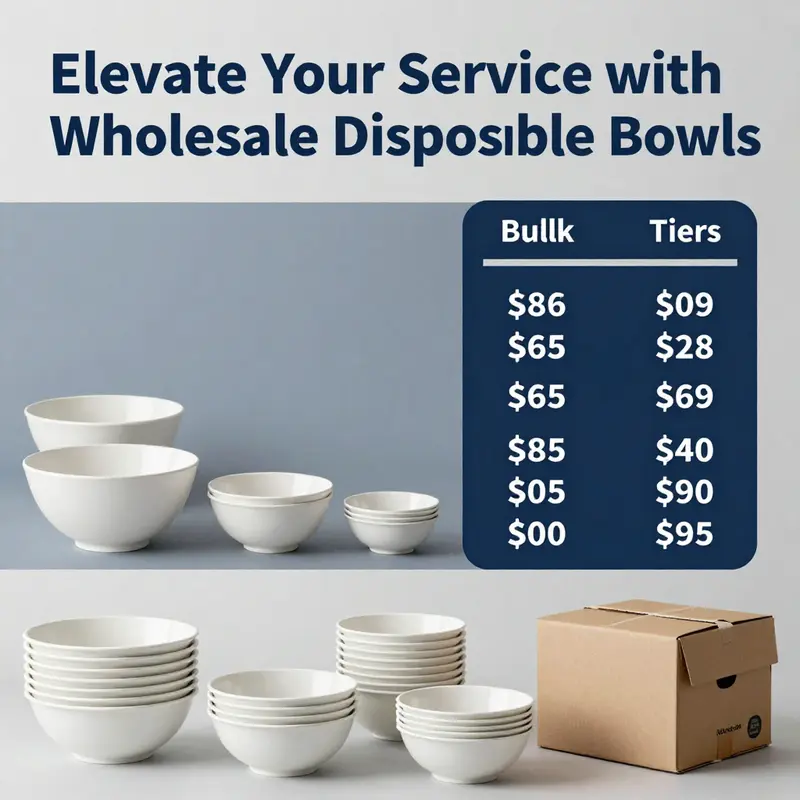
Pricing structures in this sector mirror the material diversity that charters the market. Standard plastic bowls, typically made from polypropylene, dominate the price spectrum with broad appeal for heat tolerance, microwave safety, and stackability. On a bulk basis, these polyethylene-based or polypropylene-based bowls often land in a per-piece range of roughly $0.03 to $0.09 when orders exceed 5,000 units. The economies of scale become more pronounced as quantities climb, with aggressive tiering that reflects both material efficiency and the efficiency of the converting machinery that produces these items. A typical scenario features microwavable plastic soup bowls offered around $0.04 to $0.05 per unit, paired with a minimum order quantity of 5,000 pieces. For buyers seeking cost discipline in high-volume runs, this tiered structure is a predictable starting point, especially for menus that hinge on swift service with reliable, repeatable packaging.
Biodegradable options carry a different story and a different budget discipline. The push toward sustainability—driven by consumer expectations and increasingly stringent compliance regimes—has elevated the market for sugarcane bagasse and other plant-based fiber bowls. These eco-conscious choices offer the appeal of compostability and a responsible lifecycle, but they carry a premium that reflects both the raw material costs and the processing conditions required to produce a bowl that can hold hot liquids without compromising integrity. In the current market, a 32-ounce (roughly 950 milliliters) biodegradable bowl made from bagasse can be priced around $0.053 per piece for orders of 1,000,000 or more. The same price signals the premium embedded in sustainable manufacturing: higher energy inputs for pulping and coating, specialized drying and curing processes to ensure rigidity, and often more stringent quality-control measures to maintain performance across batches.
To counterbalance the perceived premium of eco-friendly options, suppliers often encourage trial as a pathway to larger commitments. Free samples—sometimes offered at a nominal cost such as $0.01 per piece—enable buyers to assess how a bowl behaves with the target foods, the efficiency of the sealing or coating, and the overall esthetics when branded. This sampling approach serves a practical function beyond reassurance; it reduces the risk a buyer bears when shifting a portion of the program from a familiar plastic to a greener alternative. For many buyers, the decision to move into biodegradable or paper-based formats rests on a careful tally of what the extended supply chain can deliver in terms of volume, speed, and consistency, as well as how the product aligns with the brand’s sustainability narrative.
Paper-based bowls add another layer to the pricing mosaic. These products vary widely in price depending on size, coating, and the level of barrier protection against moisture and oils. For instance, 750ml and 1000ml disposable paper bowls find wholesale resonance for parties, lunch boxes, and event catering, where presentation and branding can be as important as the price per unit. Although the precise pricing for all paper-based options isn’t always disclosed up front, the market insight points to a regional cost structure that can influence overall competitiveness. Regions with close proximity to raw pulp sources, such as Zhejiang, often achieve input-cost advantages that can translate into lower piece costs or improved margins for bulk buyers. In practical terms, proximity to pulp, coating, and high-speed printing facilities reduces transport distances, minimizes handling steps, and can shave a meaningful percentage off total landed cost over time—potentially up to a 15% reduction in input costs when scaled appropriately. This is not a universal saving, but it is a meaningful lever for buyers who are planning regular, large-volume programs.
These pricing dynamics unfold within a landscape of supplier specializations and regional strengths. China remains a central hub for disposable bowls, with clusters that have matured into full-spectrum supply chains. Guangdong and Fujian stand out for plastic and bioplastic bowls, where heat resistance and induction compatibility are essential for ramen chains and meal-kit services that demand reliable performance in high-temperature environments. Zhejiang, by contrast, is a powerhouse for paper-based innovations, with Yiwu and Ningbo serving as hubs for pulp processing, coating, and high-speed printing—capabilities that support standardized bulk orders with strong branding potential. Hebei and adjacent provinces add to the mix by providing alternative sourcing routes and additional capacity, helping buyers diversify their risk across suppliers and geographies.
Understanding supplier performance metrics becomes essential when negotiating at scale. Top-tier suppliers in this space often demonstrate operational agility—responding to inquiries within hours, sometimes even under three hours. This rapid feedback loop is not mere courtesy; it is a practical signal of a well-integrated commercial operation. Speed matters because foodservice professionals operate on tight cycles. A supplier that can confirm MOQs, share sample programs, and discuss customization options quickly reduces the risk that a critical project stalls, especially during new product launches, seasonal promotions, or sudden changes in demand. The interplay between responsiveness and reliability shapes a supplier’s reputation more than a single price quote ever can. For buyers, this means that the value proposition extends beyond the unit price to include the quality of communication, the predictability of lead times, and the transparency of delivery windows.
Compliance and quality assurance have never been more central to wholesale procurement. The push to meet international safety standards—such as FDA approval in applicable markets or LFGB compliance for European customers—means buyers must prioritize suppliers who can demonstrate traceability, testing, and documented safety. An emphasis on compliance is not a bureaucratic burden; it’s a strategic risk management measure. When a supplier can provide information about certification, material safety data, and the ability to produce under contract with payment guarantees or USD-based transactions, buyers gain confidence that their programs will remain uninterrupted even as markets tighten or regulatory expectations escalate. The reliability of payment terms and protective clauses for shipments that may be delayed or damaged during transit also matters. The modern wholesale buyer is not just paying for a bowl; they are underwriting a portion of the guest experience and reputational risk that accompanies any foodservice operation.
From a sourcing strategy perspective, the chapter of supplier dynamics invites a practical, multi-faceted approach. For cost-conscious, high-volume orders, Zhejiang-based paper-based suppliers offer appealing economies of scale and the benefits of proximity to pulp and coating resources. The cost advantages here are cumulative: lower input costs on the raw materials, efficient coating formulations that improve moisture resistance, and the ability to print branding in a high-volume, cost-effective manner. When a brand prioritizes sustainability alongside cost, a blended strategy can emerge where a portion of the program shifts to paper-based bowls while the remainder continues to rely on plastic or biodegradable options for different menu lines or service scenarios. In all cases, the decision is guided by a blend of price, performance, and the ability to deliver on a consistent schedule.
For higher-performance needs—where heat resistance, induction safety, and stiffness are non-negotiable—the Guangdong and Fujian regions stand out. Their expertise in plastic and bioplastic materials, coupled with established plastication and downstream finishing capabilities, supports a portfolio of bowls that can withstand the rigors of hot foods and fast-service environments. The advantages here extend beyond the raw material choice to encompass a broader ecosystem: access to rapid prototyping, printing for branding, and the capacity to adapt quickly to design changes. A buyer who plans multiple SKUs or seasonal packaging updates benefits from a supplier network that can pivot between formats, coatings, and lid configurations without sacrificing lead times or quality.
Communication, too, is a critical differentiator. Buyers arriving with clear specifications—whether they are seeking a specific inner surface coating, a particular oil barrier level, or a lid-compatible profile—tend to secure smoother collaborations. The best suppliers translate those specifications into precise production parameters, enabling tighter tolerances and fewer defects. This reduces returns, minimizes wasted material, and sustains brand integrity across thousands or millions of units. The result is a more predictable cost trajectory. Rather than a one-off price quote, buyers gain insight into ongoing cost drivers, such as resin price fluctuations, coating material costs, and the throughput efficiency of converting lines. In turn, procurement teams can craft longer-term purchasing strategies that align with production calendars, promotional campaigns, and seasonal demand cycles.
The strategic sourcing recommendations that emerge from these supplier insights center on a few guiding principles. First, align the sourcing mix with your product portfolio. If your program includes both everyday disposables and premium, branded lines, diversify procurement across regions that optimize each segment’s performance. For cost-effective, high-volume orders, Zhejiang-based paper bowls are a compelling option, given cost efficiencies and robust printing capabilities that support consistent branding. If your brand emphasizes performance—such as bowls designed for high-temperature applications or induction-ready serving—partner with manufacturers in Guangdong or Fujian that have demonstrated expertise in polypropylene and bioplastic materials. This approach reduces the risk of performance lapses that could disrupt service or damage the guest experience.
Second, always request and evaluate free samples as part of a structured testing process. This practice should extend beyond a single bowl to consider a complete set of related components, including lids, sleeves, or packaging that accompanies the bowls. A comprehensive sample review helps ensure compatibility with existing equipment, such as steam tables, display units, cold-holding systems, and branding printers. It also furnishes a practical assessment of structural integrity under typical service conditions. The value of samples is not only in confirming quality; it is also in shaping the buyer’s ability to negotiate more favorable terms as the relationship deepens.
Third, assess suppliers through a holistic lens that looks past price to include quality, compliance, logistics, and long-term reliability. The best suppliers are those that can provide rapid responses, precise lead-time estimates, and transparent shipping terms. They also offer clear post-sale support in the event of shipping damage or missed shipments, with a structured process for claims and refunds. In an era where supply chains can be stressed by external factors, the ability to adapt—whether through alternative routing, increased safety stock, or flexible MOQs—becomes a strategic advantage rather than a mere contingency.
To ground these insights in a practical perspective, consider a buyer who is planning a multi-tier program that spans standard and premium lines. The buyer might allocate the standard line to a Zhejiang-based supplier that excels in paper bowls with high-volume print capabilities and reliable cost structures. Concurrently, the premium line could be sourced from Guangdong-based operations that have demonstrated heat resistance and robust packaging integration. The result is a balanced portfolio that optimizes cost without compromising on user experience or regulatory compliance. As with any complex procurement endeavor, the path to success hinges on depth of information, speed of communication, and a willingness to test, iterate, and scale.
For those navigating this landscape, a useful starting point is to explore the wider category of disposable bowls within the broader packaging and tableware ecosystem. The range of options, from simple, cost-conscious plastic bowls to sophisticated, coated paper solutions and biodegradable formats, illustrates how suppliers position themselves to meet divergent demand signals. The ability to tailor volumes, colors, and printing patterns—while maintaining water and oil resistance and food safety—adds a strategic layer to wholesale sourcing that goes beyond unit pricing. In this sense, wholesale bowls are not merely a commodity; they are a critical component of a brand’s service model and customer experience, capable of reinforcing a restaurant’s or events’ identity while delivering practical performance day after day.
As buyers continue to refine their sourcing playbooks, they increasingly rely on the interplay between regional strengths and the global impedance of delivery timelines. The manufacturing hubs around Guangzhou, Foshan, Quanzhou, Dongguan, Shenzhen, Yiwu, and Ningbo offer a dense, well-connected network of suppliers. The geographic concentration allows for better coordination of production runs, more predictable lead times, and faster re-stocking in response to demand surges. That said, diversification remains prudent. Dependence on a single corridor can create vulnerabilities, especially when raw material prices shift or freight capacities tighten. A robust procurement strategy, therefore, embraces redundancy of sources across Guangdong, Fujian, Zhejiang, and perhaps neighboring provinces, with clear escalation paths and contingency plans.
In this dynamic, pricing remains essential but not exclusive as the sole determinant of value. Buyers who succeed in wholesale procurement tend to adopt a disciplined framework: they map total landed cost rather than price per unit alone, account for branding and customization expenses, and factor in potential savings from improved yield and reduced waste. They acknowledge the nonlinearity of scale—where doubling volume does not always mean doubling savings due to fixed costs in tooling, printing plates, or palletizing—and negotiate accordingly. They also recognize that the future of the category is increasingly influenced by sustainability drivers, which elevate the strategic value of paper and biodegradable formats even when those choices carry higher unit costs today. Each sourcing decision, then, becomes part of a broader conversation about brand narrative, environmental responsibility, and operational resilience.
Finally, the practical act of sourcing wholesale disposable bowls is aided by accessible platforms that aggregate supplier information, pricing, and product specifications. Buyers can engage with multiple producers, request samples, compare MOQs, and review lead times in one consolidated workflow. The right partner will not only provide a competitive price but will also align with your brand’s compliance standards, provide a clear path to scale, and support ongoing optimization through feedback loops and post-purchase support. In an industry defined by small unit margins and large volumes, the capacity to negotiate effectively hinges on the clarity of the cost structure, the reliability of delivery, and the trust established through transparent, measurable performance.
For those who want to explore a starting point aligned with the broader content and product categories discussed here, you can browse our disposable bowls collection to see how different formats and branding options translate into real-world packaging solutions. This resource helps translate the abstract concepts of price and preference into tangible choices, guiding teams as they build or refresh their wholesale strategies. disposable bowls collection.
External resource for broader market insights: https://www.alibaba.com/product-detail/Disposable-Bowl-Supplier-Guide-China-Manufacturers1600498481881.html?spm=a2700.galleryofferlist.pyjgq.1.1a5b4f1dKpSvEo
Final thoughts
As the demand for disposable tableware continues to rise, understanding the benefits of wholesale disposable bowls is essential for any food and beverage business. These bowls not only provide immediate solutions for serving but can also elevate your branding through customization. By choosing eco-friendly options, you align your business with sustainable practices, appealing to the conscious consumer. Explore the various suppliers and their offerings to find the perfect fit for your needs, and watch as these versatile bowls enhance your service quality and customer satisfaction.