
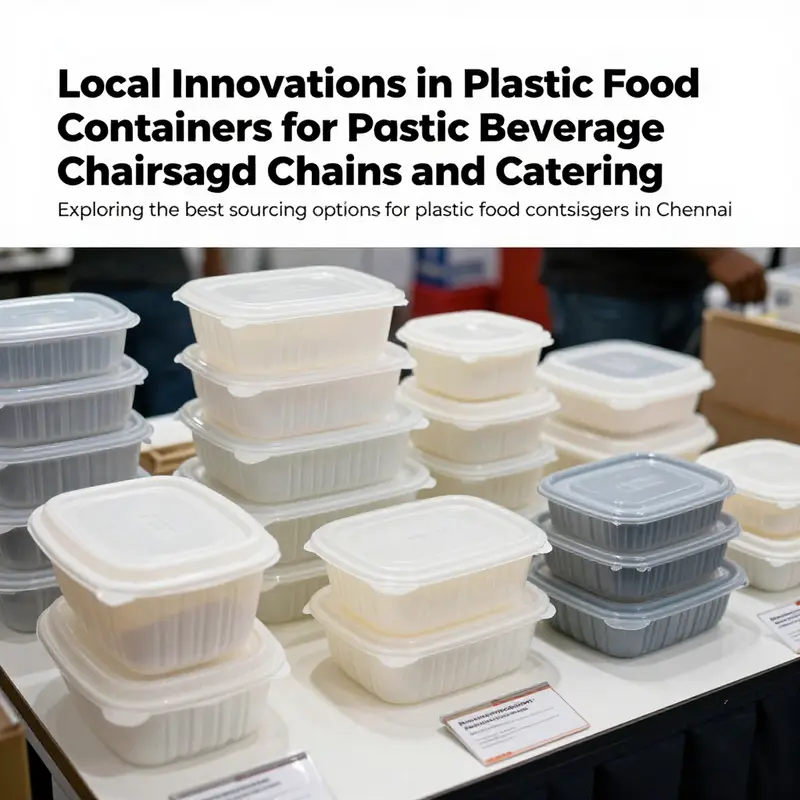
Chennai is emerging as a vital hub for food and beverage businesses, offering a diverse range of local manufacturers of plastic food containers. For bubble tea shops, restaurants, food trucks, and event planners, understanding the benefits and potential of sourcing from both local producers and international suppliers is crucial for operations. This article delves into local manufacturing options in Chennai, the advantages of importing from China, and expert tips for evaluating suppliers to ensure quality and compliance in your food container needs.
null
null
Rethinking Chennai’s Packaging Frontier: Why Chinese-Made Plastic Food Containers Are Redefining Local Sourcing
In the logistics corridors and industrial parks of Chennai, a quiet reckoning is taking place. Local manufacturers of plastic food containers have long served a steady, if modest, demand—from small eateries and neighborhood groceries to regional delivery platforms. They offer the solace of nearby supply, the comfort of faster after-sales support, and a familiar rhythm of production cycles tuned to regional procurement habits. Yet, as these buyers expand their ambitions toward scale, the calculus of sourcing changes. The local advantage—speed and proximity—begins to wrestle with a broader, more global set of economics and capabilities. Across the sea, a different manufacturing ecosystem has matured. It links resin procurement, automated molding, high-volume packaging, and export-ready logistics into a seamless chain. For Chennai buyers aiming to grow, the case for importing plastic food containers from China is not merely about lower sticker prices; it is about a strategic alignment of capacity, quality, and reliability with the demands of a rapidly expanding food service and retail landscape in southern India.
To understand this shift, one must step back from the immediate cost per unit and consider the contours of modern plastic packaging at scale. Chinese suppliers operate within a tightly integrated industrial architecture. This architecture batches resin supply with design, mold tooling, injection molding, thermoforming, quality control, and packaged export—all under efficient, automated workflows. The result is a capability that translates into predictable, lower per-unit costs at high volumes, while still accommodating a broad spectrum of formats. For Chennai buyers managing multi-location restaurant groups, cloud kitchens, or regional online sales, such a capability unlocks a critical competitive edge: the ability to reiterate packaging concepts rapidly without eroding margin.
The most visible of these advantages is cost efficiency, a factor that often dominates the decision calculus when procurement budgets must stretch to thousands or even tens of thousands of units per month. Chinese producers benefit from scale, not only in the raw material supply chain but across the entire manufacturing pipeline. The sheer volume of orders creates margins that are difficult to replicate in smaller, local plants. For buyers who are consolidating orders for multiple outlets or channels, the prospect of unit prices that can drift toward the sub-cent range becomes a real, not theoretical, option. This is especially meaningful for a city like Chennai that has a growing footprint of food-delivery platforms, quick-service concepts, and suburban catering networks, each requiring reliable, cost-efficient packaging to preserve food quality and brand integrity. While local plants in Chennai may claim agility and proximity, the broader data on total cost of ownership—unit price, warehousing, handling, and post-sale service—often tilts in favor of import-led models when volumes are substantial.
But cost is only one lens. The maturity of production technology in China translates into several qualitative advantages that matter for packaging used with food. Large-scale injection molding and advanced thermoforming lines enable not just speed, but tighter dimensional tolerances and more consistent wall thickness across tens of thousands of pieces in a run. In practical terms, that means Chennai buyers can expect a high degree of uniformity and predictability in every batch, a critical factor when packaging must hold up under microwaving, freezing, transport, and shelf life demands. The ability to reproduce a given design across many thousands of units ensures that a restaurant chain’s branding—logo placement, color fidelity, and labeling—remains consistent month after month, a consistency that can be harder to guarantee with smaller, less automated suppliers.
The breadth of formats available also matters. A seasoned Chinese supplier ecosystem typically offers a wide array of container systems—from single-use, stackable options to multi-compartment trays designed for meal kits or bento-style configurations. The value of such variety lies not just in catering to existing menu concepts, but in enabling experimentation with new formats that align with evolving consumer habits. For a city that hosts a robust street-food culture alongside modern quick-service brands, the ability to test multiple packaging forms without paying a premium for tooling is a strategic advantage. In Chennai, where food concepts frequently pivot with seasonality and consumer taste shifts, the ability to pilot several packaging variants with modest initial quantities can shorten product development cycles and reduce time-to-market risks. This kind of flexibility is more Developable in high-volume ecosystems where design iterations are absorbed into the manufacturing process rather than treated as bespoke, one-off projects.
Equally important is the assurance of safety and compliance that international buyers rightly demand. The higher echelons of global packaging demand traceability and adherence to stringent standards for food-contact materials. Reputable suppliers in China often operate with certifications and quality programs that align with global expectations, including but not limited to food-contact compliance for polypropylene (PP), polyethylene (PE), and polystyrene (PS) resins, along with documentation that supports traceability of materials through the production cycle. The regulatory framework these suppliers align with—ranging from FDA-related benchmarks to European Union standards—helps ensure that containers used in Indian markets meet evolving safety expectations. For Chennai buyers who export or who supply to large, multi-regional distribution networks, that level of compliance offers a peace of mind that extends beyond a single procurement cycle. The cost of non-compliance—recalls, brand damage, and market restrictions—can overwhelm any short-term savings from unit prices, making the value proposition of robust safety credentials all the more compelling.
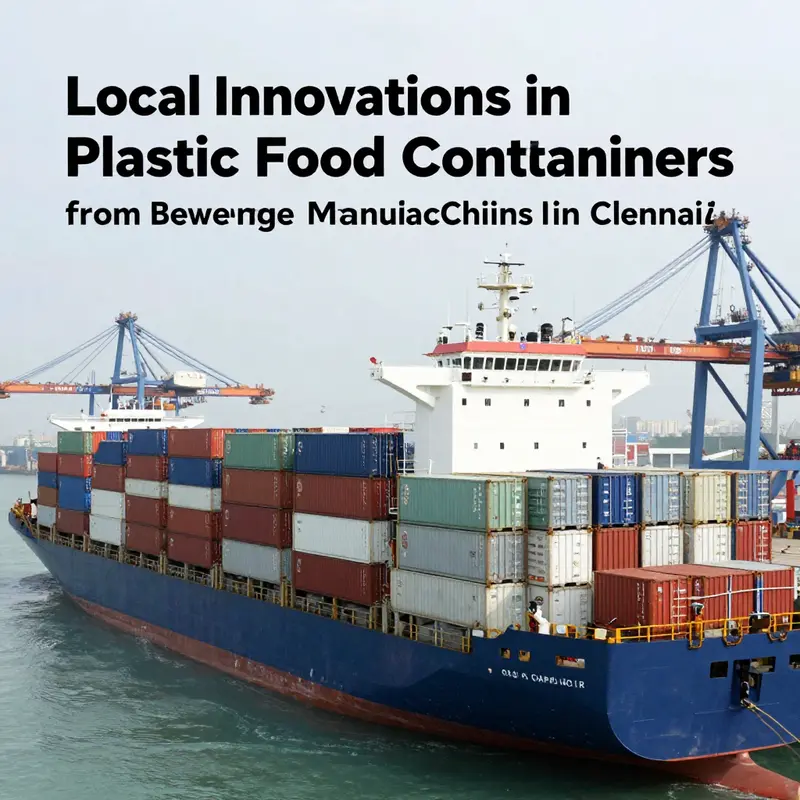
Logistics, too, plays a decisive role in this equation. A sophisticated export-logistics network in China ensures that shipments can be scheduled to align with Chennai’s receiving windows, allowing for smoother replenishment across warehouses and franchises. The typical transit window from major Chinese ports to the Chennai port sits within a tightly managed spectrum, often around ten to fourteen days in sea freight. That cadence, when synchronized with production lead times that can be compressed into a similar window, translates into a reliable supply cadence—an attribute that local suppliers, with limited scale and less integrated export operations, often struggle to guarantee during peak seasons or sudden demand spikes. The predictability of lead times is not a luxury in a market where stockouts can derail service levels and erode customer trust. For many Indian buyers, the arithmetic of lead times, freight costs, and duty/tax implications converges to craft a total landed cost that favors a well-managed import program over domestic options, especially when the domestic market contends with higher unit costs and slower throughput in the absence of scale.
Yet the decision to import is not a blind leap. It rests on a disciplined evaluation framework that is applicable to any sourcing decision but becomes especially crucial when navigating cross-border procurement. The five-dimensional framework—production qualifications, material safety, customization capability, delivery reliability, and after-sales support—offers a practical lens for Chennai buyers to assess suppliers, irrespective of geography. Production qualifications include certifications that signal process hygiene and quality management, such as ISO 22000 or related food-safety attestations, as well as the facility’s compliance with cleanroom practices or equivalent standards in packaging manufacturing. Material safety encompasses the absence of heavy metals and the use of food-grade resins, ensuring that containers do not impart contaminants into food, even after repeated microwaving or freezing cycles. Customization capability examines whether a supplier can adapt printing, sizing, and stacking configurations to fit a retailer’s needs and brand guidelines, without triggering prohibitive tooling costs or long lead times. Delivery reliability is about export experience and the existence of a logistics pathway that supports door-to-door or port-to-warehouse service models, with contingency plans for disruptions. Finally, after-sales support encompasses return policies, defect management, and long-term partnership potential, all factors that influence total cost of ownership and risk management across a product’s lifecycle.
What does this mean for a Chennai business weighing the choice between local production and Chinese imports? It means that the calculus should not be reduced to a single number on a price quote. It should consider the total package: the stability of supply during peak seasons, the breadth of packaging formats available to address evolving menu concepts, the ability to deliver consistent quality across tens or hundreds of thousands of units, and the confidence that the packaging materials will perform under real-world use across a multi-channel distribution strategy. In this framework, Chinese manufacturers’ advantages in scale and process maturity begin to translate into a tangible, if sometimes understated, value proposition for Indian buyers who are building for growth rather than bidding for a single purchase order. For these buyers, the opportunity to access an array of packaging formats—from straightforward one-piece containers to more complex, multi-compartment configurations—can be a differentiator that accelerates menu innovation and expands the potential for new revenue streams. The broad range of formats is not merely a technical convenience; it is a strategic asset that enables quick adaptation to changing consumer expectations around convenience, portion control, and brand storytelling.
As Chennai firms explore these dynamics, it is natural to observe a nuanced reality in which local producers retain certain advantages, especially when small-batch orders or rapid replenishment are the primary drivers. The fastest response times, the ability to tailor orders to specific outlets, and the ease of on-site collaboration can still tilt the balance in favor of local sourcing for smaller players or for initiatives where absolute speed supersedes scale. However, for buyers who are expanding their footprint—whether by opening new outlets, launching nationwide delivery programs, or integrating packaging into a broader, technology-enabled distribution system—the lure of a globally integrated supply chain becomes compelling. It is not that local capability disappears; rather, it evolves in a way that complements the import-led model. Local manufacturers that respond to this evolving demand by cultivating certifications, expanding design and tooling capabilities, and establishing partnerships with logistics providers can carve out a niche where proximity meets sophistication in a way that mirrors the advantages found in offshore clusters. The strategic winners, therefore, will be those who blend domestic responsiveness with international scale, a synthesis that supports both steady day-to-day operations and ambitious growth trajectories.
For buyers seeking to begin or accelerate this transition, a practical first step is to map the current packaging portfolio against a future growth plan. What formats are in steady demand, and what new packaging concepts could unlock additional revenue? Which SKUs require tight tolerances or strong stacking efficiency? Where are the greatest risks in supply continuity? A thoughtful sourcing plan will delineate the packaging formats that must be standardized across a network and those that can be tested and piloted with minimal risk. It will also identify the threading points where procurement teams can leverage the vendor ecosystem most effectively, whether by consolidating orders with a few high-volume suppliers or by maintaining a small number of trusted local partners for urgent replenishment while pursuing Chinese suppliers for core, scalable packaging needs. In this context, the internal catalog of packaging options—such as that found in the plastic-packaging category—can serve as a practical reference point. By reviewing a consolidated set of options and aligning them with the business’s growth plan, procurement teams in Chennai can craft a sourcing strategy that preserves agility while capitalizing on the benefits of scale. The goal is not to abandon local suppliers, but to orchestrate a sourcing architecture in which local strengths are complemented by the robustness and variety of a globally integrated supply chain. The net effect is a package of risk-adjusted, cost-efficient, and brand-consistent packaging that supports expansion without compromising quality.
In this ongoing conversation about where Chennai buyers should source plastic food containers, the online ecosystem offers a bridge between local understanding and global capability. Markets and platforms that aggregate supplier capabilities—without forcing a binary choice between domestic and offshore—enable buyers to negotiate terms, validate certifications, and compare lead times in a structured way. For those who wish to explore the domestic catalog further, the plastic-packaging category on the local supplier portal provides a curated landscape of options that can be referenced during supplier conversations and internal approvals. This approach does not demand a wholesale migration from local to overseas sources; it invites a calibrated, evidence-based assessment that respects both proximity and scale. In practice, this means running pilot orders, validating performance in real-world conditions, and gradually increasing volumes with suppliers who demonstrate reliability, responsiveness, and compliance across the five-dimensional framework. The result is a sourcing program that supports Chennai’s unique market dynamics while unlocking the advantages of a modern, globally connected packaging ecosystem.
The conversation around sourcing choices will continue to evolve as technologies shift and logistics networks adapt to new patterns of demand. The Chennai market, with its mix of traditional food commerce and dynamic delivery platforms, stands at a critical juncture. The decision to import plastic food containers from China is not a rejection of local manufacturing; it is a strategic choice about how to scale efficiently, manage quality, and ensure supply reliability in a market where growth is the constant driver. For businesses that can integrate both models into a coherent procurement strategy, the path to resilience lies in leveraging the strengths of each; local manufacturing can handle agility and closeness, while offshore production can deliver the ultimate scale, consistency, and breadth of design. In the end, the chapter of Chennai’s packaging story that unfolds next will be written by those who orchestrate this dual capability with disciplined governance—test carefully, commit to suppliers who meet stringent standards, and maintain a resilient logistics plan that keeps products moving without interruption. If the goal is to empower a growing network of food service and retail channels to deliver consistent, safe, and appealing packaging, then the bridge between Chennai and China’s manufacturing heartland is more valuable than ever. It is a bridge built not solely on price, but on the alignment of capability, reliability, and long-term partnership.
For readers who want to dig deeper into the sourcing landscape and to compare options beyond instinct and anecdote, detailed supplier analyses and market benchmarks remain essential. The broader industry literature supports this direction, underscoring how manufacturers with integrated supply chains, systematic quality controls, and export readiness can deliver a compelling value proposition to buyers in markets like Tamil Nadu. As Chennai businesses contemplate their next procurement cycles, they may find it helpful to explore the wider ecosystem of options and to test multiple configurations in a controlled, scalable way. The structural advantage that China has built in packaging manufacturing—coupled with Chennai’s own market appetite for growth—creates a fertile ground for a more nuanced, resilient sourcing strategy that respects both local realities and global capabilities. The future of plastic food containers in Chennai, viewed through this lens, is not a straight line but a network of carefully chosen collaborations that together support a more robust food economy.
Internal link reference (for readers exploring local packaging options): the plastic-packaging category provides a gateway to a broad spectrum of container formats and related components that can be evaluated in tandem with overseas options, helping buyers assemble a balanced portfolio that aligns with growth goals. plastic-packaging category
External reference for broader industry context: https://www.alibaba.com
Between Local Hands and Global Supply Lines: Navigating Plastic Food Container Sourcing in Chennai and Beyond
Chennai sits at a strategic crossroads where the demand for plastic food containers from a sprawling hospitality and retail ecosystem meets the reality of global manufacturing networks. The city’s own manufacturing base for plastic items—ranging from molded disposables to storage and takeaway solutions—has grown with the support of a dense industrial ecosystem. Local producers often offer rapid delivery, closer after-sales support, and a more intimate understanding of regional consumer preferences. They serve a spectrum that includes small eateries, independent cafes, mid-sized supermarkets, and delivery platforms that demand reliable, readily available packaging with predictable lead times. Yet the market dynamic in Chennai is not simply a matter of a city’s appetite meeting its own shops and kitchens. It unfolds within a broader context where global supply chains, particularly those anchored in China’s manufacturing clusters, increasingly shape the options available to buyers in this southern Indian hub. What buyers want—cost efficiency, consistent quality, flexible lead times, and the ability to scale or test new concepts—has become a function of both local capabilities and international production ecosystems. The practical implication is that sourcing plastic food containers in Chennai today demands a nuanced approach that recognizes the strength of local manufacturing while acknowledging the scale, integration, and speed of overseas suppliers. The decision is rarely about choosing one over the other; it is about orchestrating a supply strategy that aligns with product requirements, business scale, and risk tolerance over the lifecycle of a packaging program. In this sense, the city becomes a node in a larger supply web rather than a solitary vendor market. The local landscape provides a familiar touchpoint for immediate needs, and it also acts as a proving ground for concepts that may, in time, migrate to overseas partners who offer the advantages of scale and advanced technological capabilities.
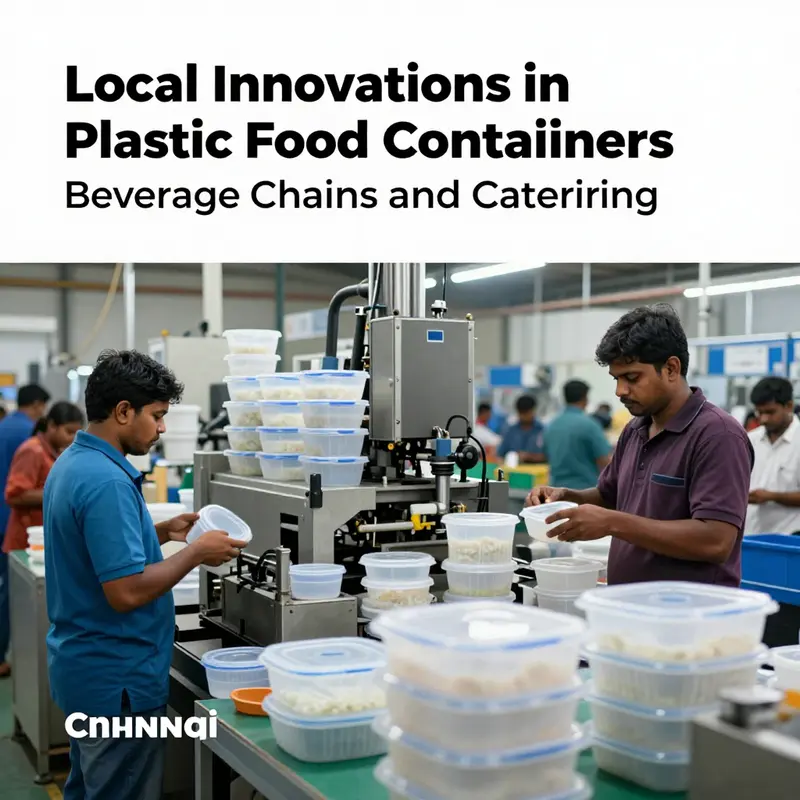
The local manufacturing scene in Chennai is characterized by a mix of processes, including injection molding, blow molding, and thermoforming. Each technique suits different categories of containers—from single-use meal boxes to multi-compartment trays and reusable storage solutions. The products commonly seen in the market reflect what regional foodservice operators require: lightweight yet sturdy disposables, leak-resistant lids, stackable designs to optimize shelf and transport space, and packaging that remains print-ready for local branding. In practice, this means local players often specialize in volumes and configurations tailored to the needs of smaller, faster-moving customers. Because the city leverages strong logistics networks and proximity to ports, local suppliers can offer faster response times for urgent orders, on-site customization, quick prototyping, and easier communication about material choices and safety concerns. But while proximity matters, it is not a panacea. The raw material costs, the level of automation, and the breadth of customization offered by the best local factories can be limiting factors when competing against the scale and sophistication of overseas production networks.
Across the sea, a different manufacturing logic takes hold. Industry analyses show that the most cost-advantaged and technologically advanced supply partners for plastic food containers sit within the major Chinese industrial clusters. Guangdong, Zhejiang, and Jiangsu provinces host networks of suppliers that cover the full value chain—from resin procurement and mold design to high-precision injection molding, sophisticated blow molding, and integrated packaging. These clusters not only produce standard disposable containers but also offer extensive customization options: varied printing capabilities, complex stackable engineering, and alignment with tight tolerances needed for premium, branded packaging concepts. This vertical integration has tangible outcomes. For buyers with high-volume needs or those launching new products, the ability to source a complete solution—from resin to final packaging—within a single ecosystem translates into reduced lead times, lower per-unit costs, and more predictable quality. The practical effect is that many Chennai buyers, whether small cafes looking to upgrade their takeaway packaging or larger food-service operators seeking to optimize procurement, consider overseas suppliers as a core part of their sourcing strategy, especially when the objective includes entering new markets or launching packaging concepts that demand more sophisticated tooling and automation.
Another driver of the overseas preference is the small-batch testing capability that many Chinese suppliers can accommodate. For brands experimenting with new packaging concepts, the option to run very small pilot orders—sometimes as little as a couple of units—before committing to larger production runs is a powerful incentive. This flexibility reduces the risk of investing in molds and tooling that may not align with a brand’s direction, allowing Chennai buyers to validate performance, consumer acceptance, and regulatory compliance before scaling. In practice, this means a pipeline that can move quickly from concept to proto to pilot to full production, something that is harder to achieve when relying exclusively on local producers with more traditional production models. The ability to negotiate terms that include rapid prototyping, short-run manufacturing, and flexible quantities becomes a material advantage in a market where fashion and consumer preferences shift rapidly.
To understand the full calculus of sourcing, one must balance the tangible cost advantages with the more nuanced dimensions of supply reliability and regulatory compliance. The five-dimension framework that experts commonly apply—production capability and customization depth; regulatory compliance and material safety; delivery reliability and logistics; post-sale service and returns; and total cost of ownership—offers a practical lens for Chennai buyers. Production capability matters because not all suppliers operate at the same scale or with the same depth of process integration. Some are multispecialty vendors who handle a broad range of standard items, while others are dedicated manufacturers with strong capabilities in mold design, material engineering, and custom branding. The latter can offer more meaningful differentiation through design features like specialized stacking, venting, or enhanced lid-fit mechanisms, but they often come with longer lead times for tooling or higher upfront costs. Regulatory compliance is non-negotiable for any product intended for food contact. Certifications and attestations—such as food safety management systems, third-party testing, and compliance with recognized standards—provide confidence that the packaging will not introduce safety or risk concerns into the supply chain. In particular, documentation such as declarations for food-grade polymers and exposure to regulatory requirements (FDA, EU, or local equivalents) can determine whether a supplier’s offerings are suitable for markets with strict compliance expectations. Delivery reliability rests on a supplier’s export experience, logistics network, and ability to support door-to-door service or multi-country shipping arrangements. The Chennai market benefits from a robust logistics spine, yet long-distance procurement introduces risks related to transit times, customs clearance, and potential port congestion. The best suppliers demonstrate consistent performance in on-time delivery, accurate documentation, and proactive communication around potential delays. Post-sale service is the quiet power behind supplier relationships. It includes responsiveness to concerns about product performance, availability of replacement parts or lids, and straightforward policies for returns or exchanges—factors that matter more in practice than a price delta on a single order. Finally, total cost of ownership goes beyond the sticker price. It encompasses freight, insurance, duties, storage, quality waste, and the risk of supply disruption. When all five dimensions are weighed together, many buyers in Chennai conclude that a diversified sourcing strategy—combining reliable local partners for standard, fast-moving items with strategic overseas suppliers for high-value, customized, or high-volume packaging programs—offers the most resilient path forward.
For local buyers who wish to stay close to home, it is worth acknowledging that the local landscape continues to evolve. Some manufacturers have built capabilities that close gaps in customization and compliance, working with regional food-service players and major retail chains to deliver packaging that aligns with branding requirements and regulatory expectations. The advantages of such partnerships include shorter lead times, easier co-creation opportunities, and quicker iterations of packaging concepts to test in the market. Moreover, in a city where the logistics network is well established, the costs associated with local production—such as freight for dispersed urban customers and the need for robust on-site support—can be managed through adaptive manufacturing practices and lean operation models. Yet even with these strengths, local producers often face intrinsic constraints. Access to high-end molding technology, the breadth of available food-contact materials, and the capacity to scale to truly large orders can be limited when measured against the scale of the Chinese manufacturing machine. The end result is a pragmatic reality: for certain packaging programs—especially those involving complex lids, sophisticated multi-compartment designs, or branding requiring precise color matching—overseas suppliers remain a compelling option for Chennai buyers seeking cost-efficient scale and advanced capabilities.
The sourcing decision is further influenced by logistics realities that can either shorten or lengthen lead times depending on origin and mode. The traditional view of sea freight suggests longer transit windows but cost advantages when moving large volumes. Industry sources indicate that shipments from major Chinese ports such as Shenzhen or Ningbo typically transit to Indian ports over weeks rather than days, with typical ranges falling in the realm of 15 to 30 days depending on routing, customs, and carrier schedules. This underscores the value of planning and supplier collaboration: lead times become a dialogue about forecast accuracy, production scheduling, and buffer stock. In an environment where demand in Chennai’s hospitality and retail sectors often swings with seasonal peaks, the ability to align production slots with store or restaurant needs is a significant strategic asset. At the same time, faster regional logistics, including air freight for smaller, urgent orders, may offer a bridge when product launches or promotional campaigns demand speed. The nuanced picture is that both local and overseas suppliers have their own logistics profiles, and an optimal sourcing strategy will reflect the variability of demand, the importance of reliability, and the economics of scale.
The practical pathway to robust sourcing in Chennai thus centers on building a structured supplier evaluation process that captures the five dimensions mentioned earlier while staying adaptable to shifting market conditions. A practical approach begins with screening for product quality and regulatory compliance, ensuring that potential partners can demonstrate food-grade material handling and provide third-party test documentation or certifications. Buyers should request material safety data sheets (MSDS), formulation disclosures, and traceability records that map resin batches to finished containers. The presence of terms like food-grade PP or PET in product listings can signal a baseline safety standard, but buyers must verify these claims via official channels or standardized test reports. In parallel, attention should be paid to customization depth. The most valuable overseas suppliers are those that can pair packaging design with tooling development—delivering not only the final product but also the molds, printing capabilities, and process knowledge necessary to maintain consistency across large production runs.
In evaluating reliability, the buyer should look beyond online catalogues to real-world performance indicators. Open feedback on platforms from verified buyers, order fulfilment rates, and the speed of responsiveness during the negotiation phase provide a window into how well a supplier can handle large contracts or flexible pilot runs. A supplier that can accommodate small trial orders alongside large-scale production is particularly attractive in the Chennai environment, where brands frequently test new packaging formats before committing to extensive rollout. The best suppliers also provide integrated services that streamline the import process, such as standardized invoicing compliant with local tax requirements, readily available MSDS documentation, and export documentation ready for Indian customs. When these factors come together, the potential for a smooth, reliable, and scalable packaging program increases significantly.
The decision to source locally or from overseas need not be binary. A well-structured program can leverage the strengths of both approaches. Local suppliers can anchor everyday needs with dependable lead times, easy collaboration, and robust after-sales support. Overseas partners can deliver high-value customization, advanced molding capabilities, and the benefit of economies of scale for larger campaigns. When managed with careful forecasting, risk assessment, and clear governance around supplier performance, a Chennai-based packaging program can remain resilient in the face of global disruptions while still delivering on price, quality, and speed. For buyers who want to embark on this blended approach, building relationships with a curated set of trusted suppliers—both local and international—becomes the central objective. The emphasis then shifts to continuous improvement, aligning product design with supplier capabilities, and maintaining a pipeline of prototype runs, test results, and performance data that guide decision-making over time.
From a practical standpoint, this means adopting a disciplined procurement mindset. Start with a clear specification for each container family: intended use, food-contact material, required seal integrity, stacking behavior, and the branding and printing needs. Follow with a vendor qualification plan that assesses the five core dimensions and documents the reasoning behind supplier selection and ongoing performance reviews. The plan should also include contingency measures for supply interruptions, such as alternate suppliers with compatible capabilities, safety stock considerations, and explicit criteria for switching suppliers should performance fall outside acceptable thresholds. When a packaging program is built around such a framework, Chennai buyers gain the confidence to pursue international suppliers for complex, high-volume, or highly customized packaging while maintaining a robust local backbone for standard, fast-moving products.
For readers seeking direct avenues to expand their supplier universe, the landscape presents a spectrum of possibilities. The overarching message is that Chennai buyers do not have to choose between regional proximity and global scale; they can cultivate a sourcing strategy that integrates both worlds. The key is to approach this with a clear plan, rigorous evaluation criteria, and the willingness to run small pilot programs that validate performance before committing to large-scale production. In practical terms, this means aligning packaging design with supplier capabilities, investing in upfront testing of materials for safety and regulatory compliance, and maintaining an agile procurement process that can adapt to demand fluctuations and supplier dynamics. For those who wish to explore options further, the packaging ecosystem in India and abroad offers a wealth of opportunities to source packaging in a way that balances cost, quality, and resilience. As a next step, readers can review packaging categories and supplier options that span the broader plastic packaging landscape, which can be accessed in the Plastic Packaging category to understand how various container solutions fit into a wider packaging strategy. See the Plastic Packaging category for a broader view of options and capabilities.
In addition to this strategic framing, buyers often benefit from tapping into industry resources and supplier directories to expand their vantage point. While cost is a central consideration, the more robust approach embraces total value, including reliability, regulatory compliance, and the ability to innovate packaging design in response to evolving consumer expectations. To that end, it is helpful to reference external market analyses that compare regional dynamics, production ecosystems, and lead-time implications for Chennai-based buyers. For a broader external perspective on verified suppliers of food-grade plastic containers, see the industry reference that aggregates supplier performance and compliance considerations. This external resource complements the Chennai-focused lens and helps procurement teams triangulate a well-rounded sourcing strategy.
Internal resource note: for readers exploring packaging solutions within a broader product ecosystem, the Plastic Packaging category provides a curated view of related packaging and storage options. This category can help contextualize how containers fit into a wider packaging and product presentation strategy, enabling brands to design packaging ecosystems that are coherent from manufacturing to shelf or delivery. The integration of container design with branding, printing capabilities, and distribution logistics is central to creating packaging programs that feel intentionally designed rather than cobbled together from disparate parts. Link: Plastic Packaging category.
External resource for deeper market insight: for a broader analysis of supplier suitability and regulatory alignment, see the external reference aggregating supplier performance and compliance considerations at the industry analysis platform. This resource provides a framework for evaluating capabilities across production, testing, and logistical readiness, helping Chennai buyers to build more resilient, scalable supply chains. Endnote: https://www.alibaba.com/trade/search?CatId=&SearchText=food+grade+plastic+containers&sortType=price&n=y&tab=all&lang=en
Final thoughts
In conclusion, while Chennai offers several promising local manufacturers of plastic food containers, the advantages of sourcing from China can be substantial in terms of cost-effectiveness and product variety. Businesses, whether they are bubble tea shops, restaurants, or event planners, should embark on an informed supplier evaluation process to ensure high-quality, compliant products that meet their specific needs. By balancing local sourcing with global options, companies can position themselves strategically in a competitive market.