
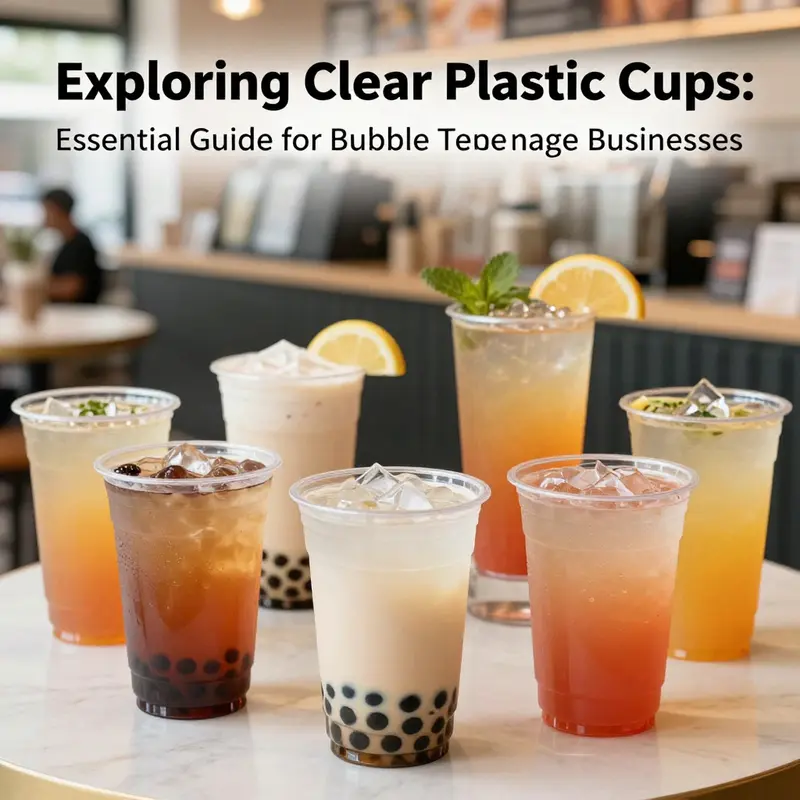
Clear plastic disposable cups have become a staple in various food and beverage businesses, from bubble tea shops to corporate events. Their versatility, cost-effectiveness, and ability to showcase vibrant drinks make them an attractive option for beverage chains and catering services alike. This guide provides a comprehensive understanding of clear plastic cups, covering essential aspects such as price, types, material features, supplier information, and payment protection. By the end of this article, you will be equipped with the knowledge to make informed purchasing decisions tailored to your specific business needs.
Clear-Cup Economics: Mastering Price, Size, and Volume for Bulk Purchases

Choosing the right clear plastic cups for a project, event, or business run is as much a negotiation with market dynamics as it is a hunt for the right size. The market for clear PET and PP cups is large and price-sensitive, and the key to getting the best value lies in understanding how size, material, customization, and order volume interact. In practice, buyers find that the per-unit price can swing dramatically—from a few tenths of a dollar for small, branded runs to fractions of a cent when volume pushes the order into tens or hundreds of thousands. The logic is straightforward: higher volumes dilute fixed costs, improve production efficiency, and unlock supplier capacity that would otherwise sit idle for smaller orders. Yet the arithmetic is more nuanced in real life, because each size and option carries its own baseline cost structure. The journey through price and bulk options begins with the broad spectrum of cup sizes and materials available today, then moves into the economics of bulk orders, and finally considers practical sourcing strategies that align quality, speed, and price in a way that serves the end use without compromising on clarity or recyclability.
At the core of the buying decision is size. Standard offerings commonly include 9, 12, 16, and 20 oz cups, which align well with typical beverages like coffee, tea, juice, or soft drinks. For specialized uses—such as bubble milk tea, iced desserts, or samples—suppliers offer a broader range, from compact 200 ml cups up to 1000 ml variants, often bundled with lids to prevent spills during transport or service. This breadth matters because size drives both consumer experience and the economics of the order. A 9 oz cup tends to be cheaper per piece at very large volumes, and a 20 oz cup may command a premium that reflects its greater material use and added functionality, such as enhanced rigidity for stacked service. Within this landscape, a common rule of thumb emerges: if you anticipate long-run demand, the per-unit cost can be driven down substantially by consolidating orders across similar sizes and consolidating shipments to minimize handling and freight costs.
Material choice also colors the price landscape. PET cups are favored for their remarkable clarity, lightness, and recyclability, making them a standard choice for beverage service at events and venues that require a crisp, transparent presentation. PP cups offer strength and heat resistance, and they are often preferred for cold or room-temperature drinks where durability matters more than the absolute clarity of PET. Some suppliers highlight eco-friendly or bio-based alternatives, offering options that balance the desire for clarity with sustainability considerations. While the moment-to-moment price difference between PET and PP can be modest on large orders, the long-tail effect of lifecycle costs, recyclability, and end-user perception can tilt the decision toward one material over another, depending on the project goals and regional waste-management infrastructure. Across both materials, many cups are designed to be used with lids, which adds value for portability and spill prevention, an important factor for catering services, takeaway counters, and outdoor events.
Customization widens the price spectrum further. While many buyers simply need a clear, disposable cup, others seek printing options—silk screen or UV printing—to showcase logos or branding on the cup surface. Customization can significantly alter the unit price, but it also enables organizations to achieve a professional look at scale. For programs that require a uniform brand presentation, even modest per-unit premiums can be offset by the broader marketing value, consistent messaging, and reduced need for additional cups or sleeves. It is also common to find eco-friendly customization options, where the printing process is compatible with bio-based or recyclable cup substrates. In the right context, a small premium for customization becomes a strategic investment rather than a cost center.
When the buying plan hinges on price, bulk quantities become the decisive factor. The marketplace consistently reveals that large-scale orders—often 50,000 pieces or more—unlock the most favorable per-unit pricing. For core sizes, it is not unusual to see rates in the range of a few cents per cup at very high volumes. For example, a 12 oz cup might be priced around 0.02 per unit at the 100,000-piece tier, while 16 oz cups can also fall to roughly 0.02 per unit under similar quantities. Even larger orders—tens or hundreds of thousands—can push the price further down, sometimes to the neighborhood of 0.01 to 0.04 per cup, depending on the exact size, material, and whether the order includes lids or customization. A practical takeaway is that the most dramatic savings typically occur when the order fits a single size with a consistent material across a large portion of the purchase, allowing the supplier to optimize production runs and shipping bundles.
The general MOQ landscape mirrors this logic. Fifty thousand pieces is a common minimum for many suppliers when projects demand standard, unprinted cups in bulk. Some suppliers offer better rates at 100,000 pieces, and for truly massive commitments, the per-unit price can drop further, with tiered pricing pushing toward the lower end of the spectrum. There are also smaller-scale options for specific needs, such as 10,000-piece runs with custom printing, or 5,000-piece orders for certain specialty cups, though these tend to carry a higher per-unit cost or a longer lead time due to customization or special handling. Lids and packaging can optionally be included in the same order, often at added cost per unit, but the overall value increases when the combination reduces the number of separate SKUs and streamlines fulfillment.
Assessment of the cost picture grows clearer when a buyer weighs not only the raw price per cup but the full cost of ownership. This means adding in lids where needed, the cost of printing if branding is essential, any color or finish considerations, and the structural aspects of the cup such as rigidity and clarity that influence consumer perception. Shipping and lead times matter as well. While a low per-unit price is attractive, it is not a bargain if it comes with long waits, frequent stockouts, or a requirement to purchase excessive accessory stock to cover contingencies. The most reliable procurement approach blends price transparency with a disciplined sourcing process: obtain real-time quotes for the exact cup size and material, compare a like-for-like specification with and without lids, and review the supplier’s sample policy, quality control standards, and return or refund protections that reduce risk if an early batch reveals issues.
To browse the range of available options within the broader category, buyers can explore the Plastic Cups section for practical matches to their needs. This centralized repository helps align cup size with the intended use, ensuring that the chosen format supports the service model—whether it is quick-service, self-serve, or a high-end catering scenario. As with any bulk purchase, it is prudent to request pre-production samples, confirm tolerances for weight and thickness, and establish a clear line of communication for color, print placement, and packaging requirements. The emphasis should be on a reliable supply chain that can adhere to agreed lead times, accommodate anticipated production fluctuations, and maintain consistent quality across thousands of units.
An important practical note concerns the sourcing environment. The market for clear disposable cups is heavily concentrated in certain regions known for manufacturing scale and export readiness. Buyers frequently connect with suppliers through B2B platforms, where details about MOQs, material specifications, and customization options are laid out, and where secure payment protections and refund policies can give peace of mind. For those who want a simple path to documented support and a straightforward quotation process, these platforms can be particularly valuable. It is also worth noting that many suppliers emphasize pre-shipment inspections and sample validation to reduce the risk of miscommunication about color, clarity, or cap compatibility before full-scale production begins. In this environment, a buyer’s due diligence—requesting samples, verifying material compliance with local regulations, and confirming packaging and lid compatibility—becomes a key part of the price-optimization process rather than a separate hurdle.
For readers who want a direct starting point in their online exploration, you can visit the Plastic Cups category to review options and compare styles, sizes, and configurations that align with your project requirements. This link provides a concise way to visualize the breadth of the market and to ground price conversations in concrete specifications. Plastic Cups
Finally, the full picture of price and bulk options demands an understanding of where the market is today and how it might evolve. The pricing environment can shift with raw material costs, transportation dynamics, and shifts in demand from foodservice, hospitality, and consumer events. Buyers should plan for these fluctuations by building a pricing buffer into their budgets, especially when committing to long-term usage or seasonal campaigns. It is wise to allocate lead time for sample evaluation, negotiate favorable terms on long-term contracts, and maintain ongoing supplier relationships that enable renegotiation as orders grow or shrink with seasonal cycles. In practice, the most successful bulk-buy programs rely on consistent cadence: regular forecast updates, routine quality checks, and the flexibility to adjust sizes or finishes without destabilizing the entire order. This approach preserves both the clarity that end users expect and the reliability required for smooth operations.
External resources can offer broader market context and verified listings that help calibrate expectations about pricing ranges and MOQs. For a broader market view, see https://www.alibaba.com.
Clear Choices in Cups: Navigating Sizes, Types, and Practicalities When You Buy Clear Plastic Cups
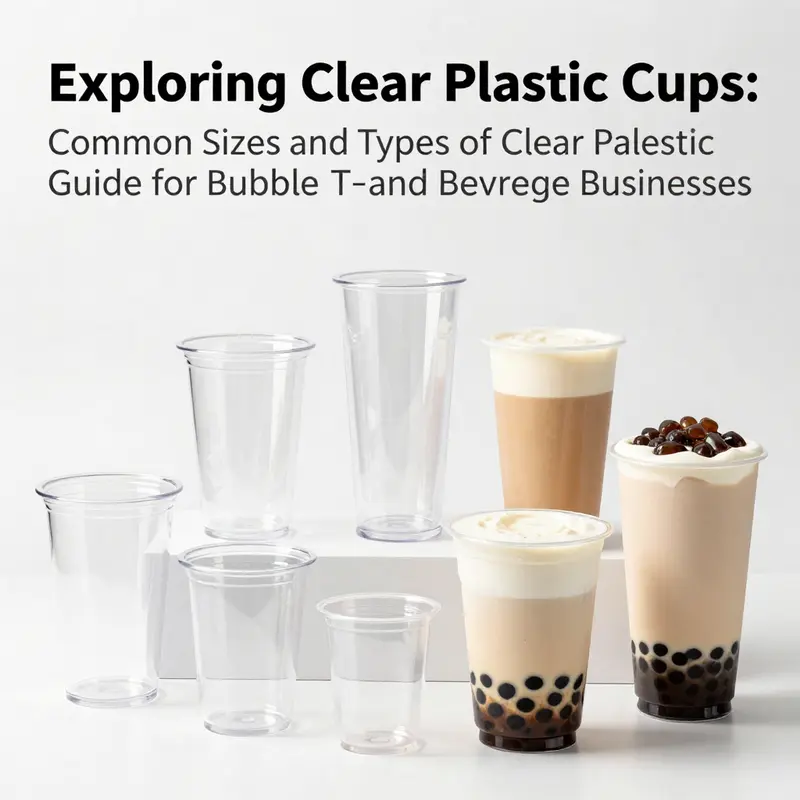
Choosing clear plastic cups is more than picking a container. It is selecting a transparent stage for the beverage, a practical tool for service, and a subtle sign of how you plan to host guests, measure portions, and manage waste. The sheer variety can feel overwhelming at first. Sizes overlap, shapes diverge, and even the same basic material can arrive with different rim designs, lid options, or printing capabilities. Yet this diversity is also an advantage. It allows you to tailor a cup to the moment—whether you are serving hot coffee, cold iced tea, or a dessert topped with whipped cream. The key is to start with how the cup will be used, then verify that the chosen form meets the environment, the event, and the budget you are working with. In practice, that means mapping serving sizes to standard oz measurements while weighing practicalities like stacking, transport, and customer perception.
Common sizes range from small 7 oz to large 24 oz, with midpoints like 9 oz, 12 oz, and 16 oz dominating everyday use. For smaller servings, 7 oz cups are handy for samples, tiny beverages, or instructional tastings where portion control matters. A 9 oz cup is a versatile workhorse, suitable for most drinking occasions from coffee to lemonade. The 12 oz cup is the sweet spot for many cafes and quick-service spots because it accommodates typical ice levels without spilling. When beverages demand more, the 16 oz cup becomes a standard for cold drinks, iced coffee, and even light beers at casual gatherings; it provides a comfortable balance between volume and hand comfort. Larger formats like 20 oz and 24 oz are common for extended events or for customers who want extra value, especially for soft drinks, smoothies, or specialty iced beverages. In some markets, you will also encounter 200 ml to 1000 ml options. These are often preferred for desserts, bubble tea, or novelty servings where lids help maintain freshness and prevent spills during delivery or transport. Understanding these sizes helps you design a menu, price tiers, and guest expectations without surprises at the checkout.
Beyond size, the shape and rim of a clear cup influence both handling and presentation. Straight rim cups offer a uniform edge that makes stacking, pouring, and refilling straightforward. They are especially prevalent in busy service settings where speed matters. Cocktail-style clear cups may feature subtle curves or tapered sides that enhance the visual appeal of layered drinks or vibrant garnishes. Some cups designed for hot beverages include thicker walls or insulating features to reduce heat transfer, though many disposable cold cups are optimized for clarity and light weight rather than thermal performance. There are travel-friendly options with secure lids that snap into place, enabling customers to carry beverages without leaks. Specialty cups designed for desserts or shots often rely on elegant shapes or wider rims to showcase toppings or color, while still maintaining a disposable convenience. The spectrum of types is not about prestige; it is about choosing a form that complements the drink, the serving style, and the environment in which it will be used.
Material choice underpins everything that follows. PET, or polyethylene terephthalate, is the workhorse behind most clear cups because it offers high clarity, rigidity, and easy recyclability. PET gives you that clean, crystal-like appearance that makes colors pop and drinks look appealing in photos or on a menu board. Some suppliers also offer eco-friendly options that lean on post-consumer plastics or compostable packaging platforms, though availability and performance can vary. For hot beverages, certain cups with thicker walls or specialized designs provide better heat resistance, while many standard cold cups prioritize a light feel and cost efficiency. Alongside the base material, features such as lids, vented or snap-on, add a layer of practical control. Lids are particularly important for events, drive-thru setups, and catering where spill prevention matters as guests move through lines or stand in crowds. Customization is widely available too, from simple logos silk-screened onto the surface to full-color UV printing that can render complex images. These options let you align the cup’s look with a brand, a theme, or a seasonal promotion.
Clarity is more than aesthetics. A transparent cup lets the beverage’s color, texture, and even the layering of ingredients show through, which can influence a customer’s perception of taste and quality. Clear cups also reduce the guesswork when staff need to monitor fill levels or identify the contents at a glance. When your offer includes a range of flavors or mixed drinks, the transparent vessel becomes a marketing tool, inviting curious customers to study the menu and engage with presentation details such as gradient hues or foam art. Because appearance matters, many operators invest in high-quality, crystal-clear options that resist fogging and clouding with moisture or condensation. Maintenance is relatively straightforward; most PET-based cups hold up well against damp hands, and their smooth surfaces simplify cleaning between uses in semi-reusable contexts, though they remain designed for disposal in most standard workflows.
Customization expands opportunities for branding at events, conferences, or retail promotions. Printing methods range from silk screening to UV printing, enabling logos, color schemes, and descriptive artwork to appear on the cup with good durability. The result is a portable billboard that attendees can take home, reinforcing recognition long after the event ends. Even simple designs—like a bold color accent or a striped rim—can create a cohesive look across an entire beverage program. When you plan a purchase, you can decide how much branding is essential and how much you can achieve with a printed sleeve or wrap instead. The right choice often balances visibility and cost, ensuring that every cup complements the drink while not inflating the budget beyond what the event warrants.
Durability and usability factors also shape the selection. Clear cups must withstand moisture and hand comfort during service, without becoming difficult to grip when condensation forms. Stacking efficiency matters in storage and transport, particularly for large orders; cups that nest neatly reduce space requirements and minimize the risk of breakage during handling. Some environments demand thicker walls or reinforced rims to resist cracking under pressure from ice or sudden temperature changes. For casual gatherings, a simple, single-use option may suffice, while for take-away service or delivery, the presence of a secure lid and a reliable seal can prevent leaks and preserve a beverage’s freshness until it reaches the customer. In specialty settings such as dessert counters or bubble tea shops, the combination of a clear cup with a specialized lid and optionally a wide rim can enhance both the user experience and the overall aesthetics of the offering.
Price is often the practical compass when making a choice, and it tends to sharpen with volume. When you buy clear plastic cups in smaller quantities, you may observe higher per-piece costs because setup, handling, and packaging costs are spread over fewer units. In some cases, a 50,000-piece order for a 7-32 oz clear cup can price as low as a few cents per piece, reflecting economies of scale and supplier competition. As volumes climb to 100,000 and beyond, the unit price frequently drops further, with rates around four-tenths of a cent to four cents per piece depending on exact size and configuration. The incentives become even more favorable with very large orders, where pricing can approach three cents per piece for 500,000 or more. Buyers often balance unit cost against storage, cash flow, and delivery timelines, recognizing that the lowest unit price may require projected demand, negotiated terms, and a longer lead time. In practice, many organizations set a ceiling for waste by tallying expected consumption, then order to that forecast, avoiding excess inventory while maintaining service levels.
Navigating the supplier landscape requires a bit of diligence. Reputable suppliers usually provide secure payment options and a clear protection policy through the platform, helping buyers claim refunds if shipments are late, missing items, or arrive damaged. Communication with suppliers prior to purchase is critical; exchanging questions about stock availability, lead times, and packaging can prevent surprises. Some stock-keeping arrangements exist with no minimum order when stock is on hand, which is particularly convenient for trial runs or small events. When you’re planning for a larger rollout, consider evaluating sample packs or mixed-size bundles to understand the practical fit for your menu and venue. The market also reflects regional preferences and shipping realities, so you may see price variation and availability that depend on your location, the time of year, and the logistics network connected to the platform hosting the listings. To explore a broad range of shapes, sizes, and finishes, you can visit the Plastic Cups category for a quick browse of what’s in stock, and this can help you identify candidates to request quotes from.
External resource: For a deeper technical dive, consult this external guide on 16 oz clear PET plastic cups: https://www.plasticcupsonline.com/16-oz-clear-pet-plastic-cups-guide/.
Material Matters: How PP and PET Shape Clear Plastic Cups for Clarity, Safety, and Sales
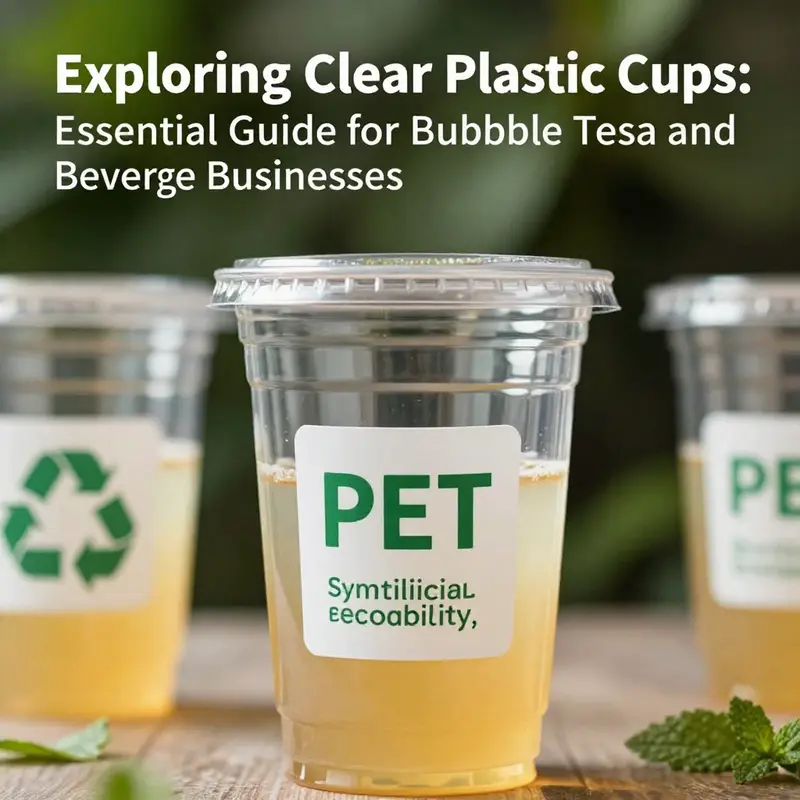
Clear plastic cups do more than hold a drink; they frame the beverage in the customer’s perception. The material at the heart of that frame determines how well the cup preserves flavor, communicates safety, and supports a brand’s visual language. When buyers weigh options for clear cups, two polymers consistently dominate conversations about performance and responsibility: polypropylene (PP) and polyethylene terephthalate (PET). PP is a versatile workhorse noted for durability and respectable heat resistance. It can handle hot coffee or tea at typical serving temperatures, maintains its shape under pressure, and resists cracking or warping when carried in bags or held for a few steps through a line. PET, by contrast, is prized for its extraordinary clarity. If a vendor’s priority is simply to maximize the visibility of a drink’s color, texture, or toppings, PET delivers a glass-like transparency that makes the drink visually pop on menus or at self-serve stations. Each polymer brings a distinct combination of advantages, and the choice often boils down to the intended application, the service environment, and the supplier’s ability to align with regulatory and sustainability expectations.
Beyond these core properties, many buyers now look for eco-friendly or recycled-content options within both PP and PET lines. PP can be manufactured with post-consumer recycled content, reducing virgin resin use while still meeting food-contact safety standards. PET has a long-recognized recycling stream in many regions, which makes it an appealing option for venues aiming to communicate a sustainability message to customers. In either case, the cups must meet food safety standards from relevant authorities. In North America, that typically means alignment with FDA guidance on food-contact materials, ensuring that resin choices, processing aids, and surface coatings do not migrate into drinks beyond established limits. In the European Union, similar compliance obligations apply, sometimes accompanied by certifications that attest to migration testing, batch traceability, and documentation for end-to-end responsibility. Suppliers often provide data sheets, compliance certificates, and migration test results to reassure buyers during planning and risk assessment before large orders. This emphasis on safety and compliance helps distinguish a routine disposable cup from a trusted, brand-supporting vessel that customers can reuse in a responsible manner.
The material choice also shapes the practical features that matter in daily operation. Transparency, the hallmark of these vessels, is not just about aesthetics; it also influences customer satisfaction. When a beverage’s hue and texture are part of the product’s appeal—think vibrant fruit drinks, layered coffees, or colorful bubble teas—the cup’s clarity becomes a differentiator. The visual appeal can enhance perceived value, making a brand feel premium even at a lower price point when paired with effective merchandising and consistent service. The transparent surface is typically coupled with a clean, food-grade interior finish that resists staining and is easy to sanitize between uses. In settings where events or high-volume take-out are common, the cup’s translucence must hold up under daily handling, stacking, and transport, which means wall thickness and plastic rigidity must stay within precise tolerances to avoid deformation when cups are filled or sealed with lids.
Another essential feature is the ease of use and the range of lid options designed to accompany the cup’s design. Clear cups come with several lid types that address different service models and customer preferences. Flat lids with a straw hole provide straightforward, on-the-go access while reducing spill potential during transit. Some flat lids seal tightly but include no straw hole, which is ideal for thicker beverages or foamy drinks that benefit from a snug seal to prevent leakage. Fully sealed lids offer maximum protection against spills and contamination but do not accommodate straws, which can influence the drinking experience for beverages like milk tea or smoothies. The lid system interacts with the cup material and shape to determine overall performance—how well the drink travels from counter to customer, how long it stays at an optimal temperature, and how easily it can be opened and enjoyed once in the customer’s hand. In practice, buyers choose a lid strategy that matches their service environment: fast lines and high turnover benefit from reliable straw-access lids, while catering or delivery scenarios may favor fully sealed versions that minimize mess during transport.
Customization is a growing driver of value when clear cups are used as a marketing channel. The straightforward canvas of a clear cup makes it an attractive surface for branding and messaging, and many suppliers offer flexographic printing, UV printing, or full-color digital approaches to apply logos, taglines, or menu graphics directly onto the exterior. The trade-off, however, is cost and lead time. Vinyl decals and simple one-color options can be affordable and quick, but full-color, high-resolution printing typically carries higher MOQs and longer production timelines. In the industry, MOQs for full-color printing are often cited around the 100,000-piece mark, which makes sense from a manufacturing perspective given the setup, ink optimization, and color consistency requirements. Even when printing is part of the offering, buyers must consider migration and safety: printed inks and coatings must be compatible with food-contact requirements and should not introduce substances that could migrate into drinks, particularly where cups are used for acidic beverages or long-dwell service.
Still, the practical path remains clear: choose the material that best fits the drink, the service style, and the brand narrative, then align the lid and printing strategy to maximize performance and return on investment. A helpful step is to look across the broader range of options for plastic cups to understand the material family’s breadth, including wall thickness variations, dome shapes for certain beverages, and the compatibility of each cup with specific lid configurations. For those who want to inspect the options in a curated catalog, exploring the plastic cups catalog can provide a quick, visual sense of how different materials, thicknesses, and lid compatibilities come together in actual products. You can browse this catalog here: plastic cups catalog.
In practice, a thoughtful procurement process balances display appeal with functional performance. If a drink is hot, selecting a PP formulation with adequate rigidity and thermal resistance is prudent, and the chosen lid should be matched to the cup’s rim profile and any insulation layer. For cold drinks, PET’s exceptional clarity can be the deciding factor when a display-driven decision is paramount, provided the temperature range and stacking considerations align with service needs. For beverages with toppings or high foam, a fully sealed lid or a specially designed cup assembly that accommodates the components helps prevent leakage while preserving the drink’s presentation through the complete service cycle. These choices are not isolated from sustainability goals. Recyclability remains a core consideration; PET is widely recyclable in many markets, and PP’s recyclability is expanding as manufacturers introduce higher post-consumer recycled content. Buyers who plan for large deployments often look for clear documentation about material composition, testing methods, and sustainability attributes to reassure stakeholders—from operators to guests—that the cups meet both safety and environmental criteria.
Ultimately, the decision framework for clear plastic cups centers on the drink and the environment rather than on price alone. If a beverage relies on color and texture to attract attention, a PET-based cup’s transparency can elevate the product’s appeal. If the service setting requires hot beverages or frequent handling with a stack-and-serve workflow, PP provides a steadier performance and broader temperature tolerance. Across both materials, the market now offers options that blend clarity with environmental stewardship, including recycled-content formulations and more recyclable resin streams, which is increasingly important as consumer expectations shift toward responsible sourcing and end-of-life planning. The result is a spectrum of choices that enables brands to deliver a compelling beverage experience while meeting safety standards and logistical needs.
For those who want to continue exploring, a steady path is to review the offered options in the plastic cups catalog and compare how each option aligns with the intended service model and brand storytelling. This practical comparison helps ensure that the chosen product supports both the drink’s requirements and the event’s or venue’s expectations. And for a broader understanding of the regulatory landscape that governs materials used in cups, regulatory guidance on food-contact materials provides foundational context about safe use and reporting expectations. External resources such as the FDA’s guidance on food-contact materials offer foundational information on how safety standards translate into everyday purchasing decisions: https://www.fda.gov/food/packaging-labeling-regulatory-compliance/food-contact-materials
Sourcing Reliability for Clear Plastic Cups: How to Find Trusted Suppliers in a Global Market
Sourcing reliability for clear plastic cups begins long before the first sample arrives. It starts with a clear picture of the supplier network, a precise understanding of what the business needs, and a disciplined approach to evaluating capabilities that matter in high-volume, time-sensitive purchases. For B2B buyers, especially those planning regular restocks or seasonal campaigns, the focus shifts from unit prices to a broader calculus: whether a supplier can deliver consistently, meet safety standards, and scale with demand without sacrificing quality. The dominant production hubs for clear plastic cups lie in East Asia, where vertically integrated ecosystems connect raw material suppliers, molding and thermoforming capabilities, and export logistics in a compact, tightly coordinated network. Within this regional landscape, major provinces such as Guangdong, Fujian, and Jiangxi have built clusters of packaging manufacturers that specialize in clear PET or PP cups, often with lids, printed designs, or unique shapes that reinforce a client’s brand while preserving the clarity that makes these cups versatile for cold beverages, desserts, and sauces. The advantages go beyond the factory floor. Proximity to resin suppliers, access to robust freight routes through busy ports like Shenzhen, Xiamen, and Ningbo, and the presence of experienced third-party testing and certification bodies all contribute to faster lead times and more predictable shipment schedules. If a buyer is weighing options across several suppliers, these infrastructural advantages translate into measurable savings: lower freight costs, reduced risk of stockouts, and more stable planning for menus, catering events, or a store rollout.\n\nWithin this environment, suppliers offer a spectrum of capabilities. Standard clear cups in sizes such as 9, 12, 16, and 20 ounces remain the backbone for coffee, tea, iced drinks, and casual beverages. But many buyers also seek specialty cups, including larger 200 ml up to 1000 ml formats used for ice cream, bubble tea, or dessert bowls, often bundled with lids for spill protection and improved presentation. The material most commonly used is PET, valued for its clarity and recyclability, though many factories also provide PP options and, increasingly, eco-friendly variants that emphasize reduced environmental impact. A steady stream of customization options—silk screen printing, UV printing, and logo customization—allows brands to extend their packaging beyond mere functionality. The resulting mix of standard and custom capabilities makes it essential for buyers to verify not only the product but also the maker’s process controls, quality assurances, and ongoing compliance with food safety norms.\n\nFrom a procurement perspective, price is important, but it must be understood in context. Bulk orders can range from a penny to a few cents per piece for basic PET cups, with minimum quantities commonly pegged at the 100,000-piece level. For more premium or customized runs—such as logos, brand colors, or unique shapes—the per-piece cost can rise, sometimes into the double digits per piece for high-end presentation items in niche markets. Buyers who explore suppliers across the region often encounter a broad spread in pricing driven by volume, material grade, and the precision of the molding process. A practical approach is to model the economics around total landed cost, including freight, inspection, and any required certifications. In many cases, the savings achieved by buying in larger volumes are substantial enough to offset the risk of longer lead times, provided the supplier demonstrates reliability in delivery and quality.\n\nA critical element of reliability is the ability to meet food-safety and regulatory expectations. Reputable suppliers in these clusters typically maintain food-grade safety certifications and BPA-free formulations suitable for cold beverages, desserts, and sauces. International compliance—such as FDA acceptance for the U.S. market or EU safety standards—remains a central criterion for buyers who intend to distribute across multiple regions. Reputable factories will furnish certifications on request, and many buyers find it prudent to request copies of COAs, MSDS, and batch traceability documentation as part of their initial supplier evaluation. When everything aligns, these documents offer not just compliance but a foundation for trust throughout the supplier relationship.\n\nLead times are another decisive factor in supplier selection. For well-established factories with mature quality systems, lead times typically range from one to four weeks after final sample approval, with longer windows during peak seasons or for highly customized runs. Shipping terms, packaging configurations, and the availability of stock for standard cups can dramatically affect timelines. A supplier with a 7–30 day window after sample approval provides a predictable cadence that helps a buyer plan promotions, menus, and inventory across channels. Conversely, inconsistent fulfillment rates—if reported by potential partners—signal higher operational risk and potential disruptions to a program. A related metric is the reorder rate, which reflects how often customers return for repeat purchases and indicates supplier performance beyond a single order. Buyers can use these signals to gauge how a partner handles demand surges and maintains quality across multiple production cycles.\n\nThe procurement conversation should also cover risk controls and customer protection. Platforms that connect buyers with suppliers frequently offer structured protection policies, including refunds or re-shipment if orders do not ship as planned, arrive late, or fail to meet agreed specifications. While these protections add a layer of security, the most enduring safeguard is a rigorous pre-purchase process. This includes requesting product samples, evaluating packaging integrity, verifying lid compatibility, and confirming print durability under refrigerated or chilled conditions. The collaboration is strengthened when buyers communicate exact requirements for cold retention, stacking tolerances during transport, and any anticipated shelf-life considerations for the end use. In practice, a thoughtful supplier search combines three pillars: capability, compliance, and continuity. It is not enough to chase the lowest price; the goal is to align with a partner capable of sustaining performance across a product’s lifecycle, from initial order to multiple reorders.\n\nFor teams seeking practical guidance on evaluating potential partners, a structured approach can help. Start with a clear specification package that includes cup dimensions, volume tolerance, materials, temperature resistance, and lid compatibility. Request a production plan that outlines the molding method, quench speed, and quality control checkpoints. If possible, obtain a sample kit to compare clarity, rigidity, and seam quality under normal handling and shipping conditions. The ability to deliver on-time—measured through a trackable delivery history or a supplier’s stated on-time rate—becomes a leading indicator of reliability in high-volume contexts. Beyond technical fit, buyers should assess soft factors: the supplier’s responsiveness to inquiries, willingness to share audits, and capacity to scale production during spikes in demand. A credible supplier will provide references, offer transparent communication, and maintain a consistent cadence of updates on lead times and production status. In this way, the procurement process becomes a risk-adjusted decision rather than a price-driven gamble.\n\nAs buyers navigate the supplier landscape, it is useful to anchor conversations in concrete expectations about COA documentation, test data, and the supplier’s operational footprint. The East Asian manufacturing ecosystem rewards collaboration with partners who bring not only equipment and capacity but also a shared understanding of quality culture. A factory floor that runs high-precision thermoforming and injection molding lines often benefits from proximity to resin suppliers, efficient logistics, and access to export channels. Buyers who invest time in mapping supply routes and validating certifications reduce the chance of disruptions and gain leverage to negotiate better terms for long-term contracts. The net effect is a more resilient supply chain for clear plastic cups, one that can support branding, seasonal campaigns, or expanded product lines without sacrificing performance.\n\nFor readers seeking further context on related packaging options and to see how these cups fit into broader product ecosystems, the disposable drinkware category provides a useful reference point, offering a spectrum of compatible lids, sleeves, and presentation accessories. disposable drinkware category (URL).\n\nExternal resource: To explore a current market listing that reflects real-time pricing and customization options, see the following external source. https://www.alibaba.com/product-detail/Custom-Logo-Clear-Plastic-Cup-with-Lid-500000-Pieces_1601958485724.html
Guarding Every Sip: Smart Payment and Protection When Buying Clear Plastic Cups
When a business or event organizer starts the process of sourcing clear plastic cups, the focus often lands on price, sizing, and availability. Yet the true risk and value in this purchase lie at the intersection of payment arrangements and protection measures. In bulk, a purchase becomes less about a single transaction and more about a carefully choreographed sequence that guards cash flow, ensures product quality, and minimizes the chance of supply disruption. The most cost-effective quote can quickly become a poor investment if the payment terms are rigid or the seller cannot stand behind the product’s safety or delivery. A smart procurement approach treats price as the starting line and protection as the finish line, woven together through a disciplined, informed process that remains stable across a spectrum of suppliers and logistics realities.
First, payment considerations require a pragmatic look at how much to pay upfront and what security the buyer has in exchange. In large orders, many suppliers ask for an initial payment or deposit—typically a percentage of the total order value. The deposit accounts for the risk a factory takes when committing production slots and materials, especially when negotiating customizations such as logos or special packaging. Beyond the deposit, reputable suppliers may offer flexible payment terms, including net terms like net 30 days for established business customers. These terms can be a practical cushion, giving a buyer time to inspect a first batch or a sample run before the full balance is due. The key is to negotiate terms that align with cash flow realities and operational risk tolerance, and to document them clearly in a purchase agreement so both sides share the same financial expectations.
Credit risk, however, must be managed with equal rigor. The simplest guardrails are credibility checks that apply before any money changes hands. A supplier with a proven track record, verifiable business licenses, and a transparent communication channel stands out. For buyers, the credibility check translates into due diligence: review a supplier’s stated capabilities, confirm their production capacity aligns with the requested quantity, and ask for sample goods or datasheets that disclose material composition and safety attributes. In addition, the security of the payment method matters. Using trusted payment gateways that provide buyer protection reduces exposure to fraud, non-delivery, or misrepresentation of product specifications. While the language of “secured payments” is common, the practical takeaway is to insist on a traceable payment trail, escrow where feasible, and a clear path for dispute resolution through the payment processor if issues arise.
Protection against defects and delivery gaps is not an afterthought. A robust protection framework begins with a documented return policy and a clear guarantee on the order. Buyers should confirm whether the supplier offers an order guarantee or a defined mechanism for handling defective goods, damaged shipments, or mismatched specifications. The contract should specify response times, the process for reporting issues, and the remedy—whether it is replacement, credit, or refund. In the real world, even the most meticulous supplier can encounter a hiccup, from a minor batch variance to a temporary production delay. The ability to trigger a seamless remedy without lengthy negotiations is a major form of protection for the buyer’s operational planning.
International supply chains add layers of complexity that heighten the importance of protection. When goods cross borders, shipments are exposed to regulatory variances, customs delays, and the risk of non-compliance with labeling or material standards. Trade assurance programs, widely available on large online marketplaces, offer a financial safety net if products do not meet agreed specifications or fail to ship. While the exact program names may differ, the essential feature is a pre-set mechanism that protects funds and ensures a corrective course of action if performance falters. A buyer should seek such protections as part of the contract, especially when working with suppliers in distant regions or when the order involves significant customization or large quantities. Beyond trade assurance, buyers can ask for documentary evidence—production certificates, certificates of conformity, and official datasheets—that verify compliance with safety and environmental standards.
A cornerstone of protection is material safety. Clear plastic cups are typically made from PET, a material admired for clarity and recyclability, but not all PET is created equal in terms of safety for food contact. Buyers should insist on documentation that the cups meet relevant food-grade safety standards. Requesting official datasheets or supplier-supplied safety documentation adds a layer of assurance that the cups will perform safely under normal use, especially in beverage service where temperatures and contact with consumables are routine. This is not merely bureaucratic checkwork; it is a practical safeguard against purchasing items that could pose contamination risks or fail under typical service conditions. In this light, a responsible procurement process becomes a dialogue, not a single transaction. The supplier’s willingness to provide data, answer questions about materials, and demonstrate compliance is part of the value proposition, not a red flag.
To translate these principles into action, a buyer can adopt a disciplined, repeatable workflow that maintains momentum while guarding against common pitfalls. Start with a clear specification: determine size ranges needed (for most beverage service, common options include 9 oz, 12 oz, 16 oz, and 20 oz cups, with additional options for specialized applications such as cold dessert cups or bubble tea cups). Document the lid requirement if spills are a concern, the expected tolerance for clarity, and whether bulk pricing applies only to standard stock or extends to customized prints. Then, request a datasheet and product sample before placing a large order. The datasheet provides the exact polymer type, clarity ratings, and any additives that could affect safety or recyclability. A sample run helps validate that the cup’s dimensions align with existing lids, sleeves, or cup holders, and that the printing or labeling, if any, adheres at the expected quality level. If the supplier balks at sharing technical data or delaying samples, that hesitation is itself telling and warrants a slower, more cautious path.
Internal alignment is a practical, often overlooked form of protection. Before sending a purchase order, coordinate with operations, procurement, and compliance teams to ensure the contract captures the critical protections discussed: deposits and payment terms, delivery windows, a defined remedy for defectives, and the obligation to furnish product safety documentation. A unified approach reduces miscommunication and the risk of reactive negotiations when a shipment is delayed or a batch fails the expected test. When the buying team wants a quick route to market, the temptation is to move fast. Sensible protection principles remind us that speed should not outpace verification. A well-structured agreement can accommodate changing production slots, logistics options, or even mid-order design adjustments, as long as the changes are documented and agreed in writing.
An additional layer of practical protection is the ability to inspect shipments upon arrival, well before they are integrated into service workflows. Even with a reputable supplier, inspecting a random sample from the latest batch can reveal issues not evident in the datasheet or a pre-production sample. This inspection should assess not only the physical integrity of the cups but also packaging quality, labeling accuracy, and the presence of any contaminants or defects consistent with the supplier’s documented standards. Having a defined return or remediation pathway for damaged deliveries accelerates the recovery process and minimizes downtime for a busy operation.
From a sourcing perspective, one practical way to explore options without overcommitting on a single supplier is to view the broader product landscape through a category page that aggregates clear cups in multiple sizes and formats. For a quick view of options, see the plastic cups category. This page serves as a practical baseline to compare typical sizes, lid compatibility, and batch-ready stock levels while keeping the door open for more detailed negotiations with specific suppliers. The presence of category-wide information can help buyers distinguish between standard stock items and items that require lead times or customization, enabling more accurate forecasting and budgeting.
Ultimately, the path to secure, compliant, and timely delivery of clear plastic cups rests on a balance of price awareness and protection discipline. Price transparency helps you compare unit costs across quantities and potential customization fees. Protection discipline—through credible supplier verification, documented guarantees, explicit return policies, safety documentation, and sound international shipping terms—transforms a routine procurement into a reliable operational backbone. It also builds a resilient foundation for future purchases, where repeat orders become smoother, risk-assessed, and more predictable. The aim is not to eliminate risk entirely but to render it manageable and auditable, so each purchase contributes to a steady cadence of service without surprising interruptions.
To further safeguard your investment and align with recognized safety guidance, always cross-check your procurement approach against authoritative resources that address food-contact plastics. This alignment helps ensure your cups are appropriate for the beverages you serve and that your handling processes meet current food-safety expectations. For anyone responsible for program governance, the continual refinement of supplier diligence, payment controls, and protection mechanisms becomes part of a mature procurement culture that serves both customers and the business alike. External references for safety-oriented procurement practices are available from official health and safety guidance resources, which provide practical checklists and criteria for discarding or returning items that do not meet stated standards. External resource: https://www.foodsafety.gov/foodservice/plastic-cups
Final thoughts
In conclusion, clear plastic cups are a vital resource for bubble tea shops, beverage chains, restaurants, and event planners. They offer diverse pricing options, sizes, and features that can cater to various needs in the food and beverage industry. By choosing the right suppliers and understanding the materials used, businesses can enhance their service while ensuring customer satisfaction. With secure payment methods and buyer protection, purchasing these essential items has never been easier. Elevate your beverage offerings today with clear plastic cups that embody quality and convenience.