
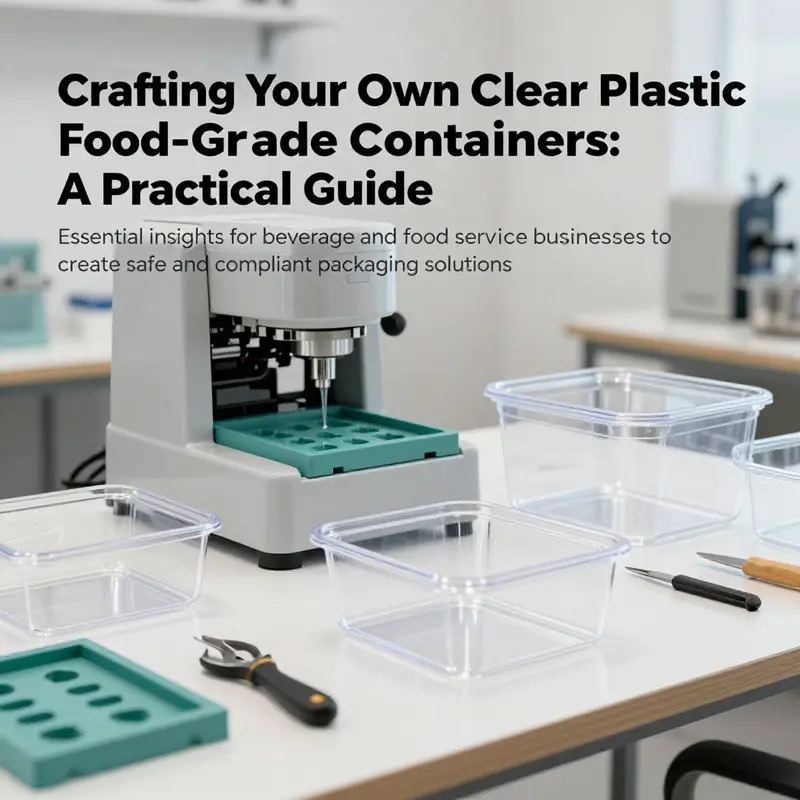
The ability to create your own clear plastic food-grade containers can be a game changer for beverage chains, restaurants, food trucks, and catering services. Not only does it afford customization opportunities, but it also ensures compliance with safety standards essential in food service. This guide will navigate through the essential aspects, starting with choosing the right materials certified for food safety, then moving on to effective manufacturing techniques like vacuum forming and CNC machining. Safety and regulatory compliance will follow, ensuring your creations meet all necessary guidelines. Lastly, we will identify trusted suppliers that provide the required materials, empowering your business to innovate confidently in packaging.
null
null
Clear Pathways: DIY Food-Grade Containers Through Injection and Blow Molding
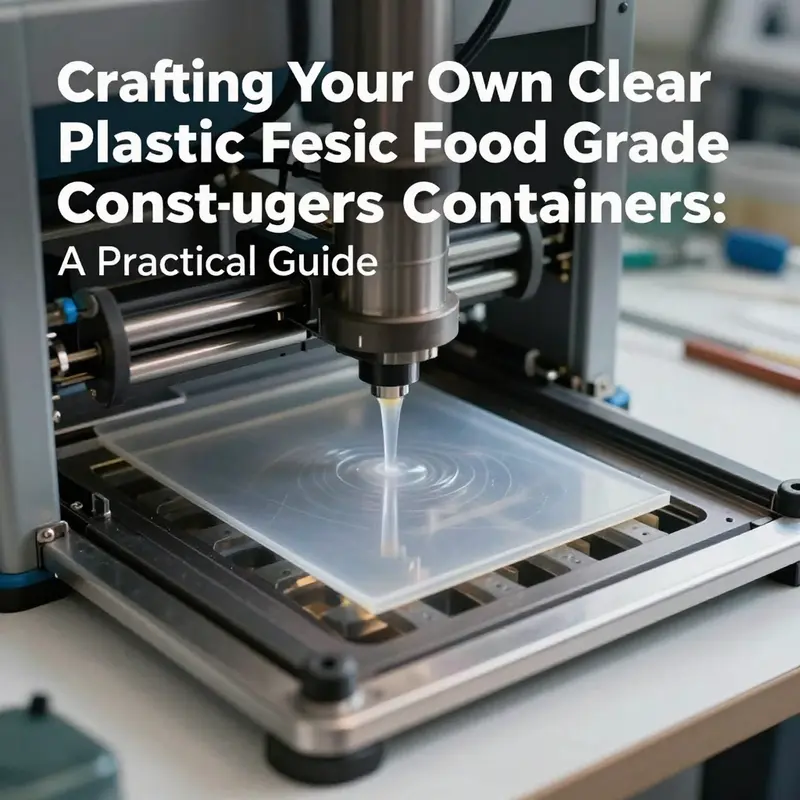
The journey to create clear, food-grade containers at home combines material science with practical making. For food-contact safety, begin with resins labeled FDA-compliant or equivalent in your region. PET and PP are common choices for transparent, food-safe sheets, offering clarity and reasonable heat resistance. Injection molding yields rigid, high-precision parts suitable for small jars, lids, and containers with tight tolerances. Blow molding excels at hollow shapes like bottles and jugs, typically starting from an injection-molded preform. Vacuum forming provides a lower-cost path for simple geometries and rapid iteration. Throughout, prioritize clean handling, proper ventilation, and testing of materials for migration, heat resistance, and compatibility with intended contents. Design should favor smooth interior radii and uniform wall thickness to ease cleaning and maintain clarity. When using alternative methods like CNC machining or laser cutting, ensure all contact surfaces remain non-porous and food-safe. In short, a careful pairing of material choice and forming technique can yield reliable, food-safe containers at home, with safety and compliance guiding every step.
Guardrails for Clear Containers: Safety, Compliance, and Confidence in DIY Food-Grade Plastics
Creating your own clear, food-grade plastic container starts with safety, regulation, and realistic expectations about material behavior from production to use. Choose materials with established food-contact approvals, such as PET or PP, and verify it is labeled food-safe or FDA-compliant. PET offers clarity and rigidity but is not ideal for repeated heating; PP resists heat and is microwave-friendly. For DIY projects, obtain documentation and certifications from reputable suppliers to verify compliance. When forming, use a method like vacuum forming with proper ventilation to minimize fumes and ensure smooth interior surfaces for sanitation. If you use 3D printing, prefer non-heat-exposed components or treat printed parts as non-food-contact components with appropriate coatings. Quality control, sanitation, and clear documentation are essential: record material sources, processing steps, and labeling to support traceability. Communicate intended use and temperature limits to avoid unsafe use. Avoid recycled or industrial-grade plastics for food contact unless you are certain of their safety. Finally, include basic labeling and storage guidelines, and retain sources and certifications to facilitate audits if the project is shared or sold. For further reading, seek official guidance from food-safety authorities and reference materials on plastic migration and food contact regulations.
Clear Choices: Navigating Suppliers and Resources for DIY Food-Grade Container Materials
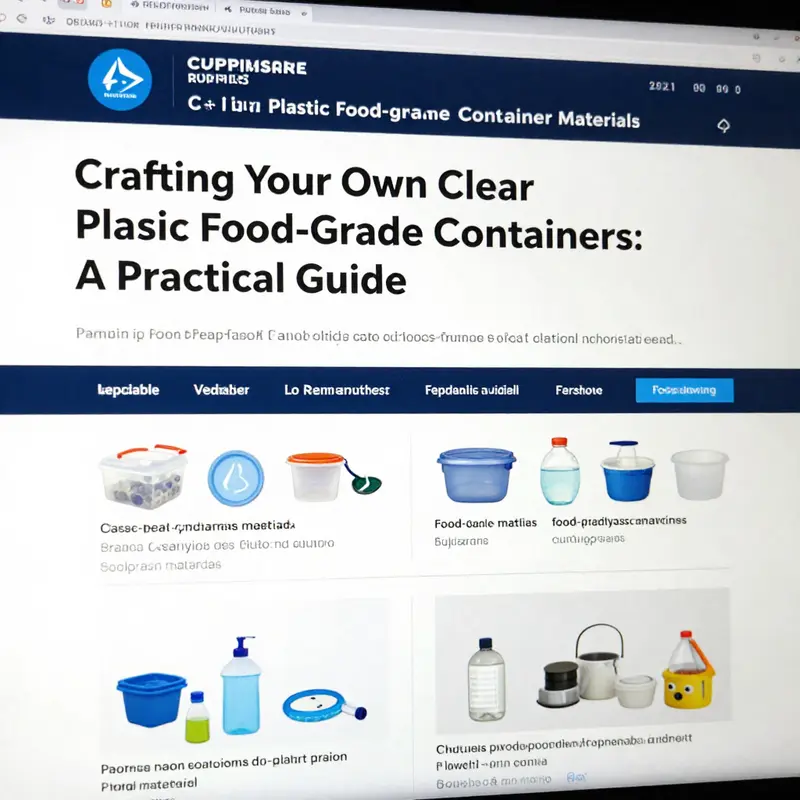
Sourcing the right materials for a DIY, clear, food-grade container is as much a decision about safety and stewardship as it is about visibility and convenience. The dream of a custom, transparent storage vessel ends up being real only if the glass-clear appearance you crave is backed by plastics that meet food-contact standards, can withstand the intended use, and come from suppliers you can trust. In this chapter we move from the intuition of a simple, show-through container to the practical choreography of picking materials, locating dependable suppliers, and aligning your project with the regulatory landscape that governs food packaging. The path is less about a single perfect resin and more about a careful selection of options, each with its own strengths, limits, and supply channels. Along the way, you will encounter a web of decision points—what to choose for liquids versus dry foods, heat tolerance for reheating or sterilization, environmental considerations, and the realities of buying in sizes that suit a home workshop or a small business venture. The narrative here threads those threads together, keeping the threadbare yet essential principle in view: clarity must cohere with safety, and practicality must align with compliance if you intend to store or present food for others, whether at home or in a small-scale operation.
The heart of a clear food-grade container starts with material choice. PET, the familiar clear plastic used in beverage bottles, offers excellent transparency, lightness, and chemical resistance, making it a natural candidate for many dry and liquid foods. PET’s barrier properties help keep flavors and aromas more stable, which matters when you’re packaging ingredients for later use or foods with delicate profiles. Yet PET is not a universal solution. Its performance under heat is limited; repeated heating or high-temperature contact can compromise its structural integrity and even encourage undesirable changes in the container’s properties. This caveat is not a pejorative against PET but a practical reminder that the intended use should guide the material selection. If your project envisions microwaving or hot-fill scenarios, PET may not be the best choice, and you should consider alternatives that better align with those conditions.
Another strong candidate is PP, polypropylene. Clear or translucent PP sheets and molded forms bring notable advantages: high heat resistance, chemical resistance, and a track record of safety for repeated cleaning and sterilization. PP can tolerate temperatures well into the range used for cooking and reheating, which makes it a favorable option for containers designed to hold foods meant for cold storage, reheating in the microwave in a microwave-safe context, or even hot-fill processes when properly designed. The BPA-free profile of PP is also a meaningful asset for consumer confidence. When you choose PP for a clear container, you typically gain a robust balance between transparency and performance, especially for household or light commercial uses where rough handling is possible but not extreme. It is important to verify the specific grade and certifications from the supplier to ensure the sheet or molded part is explicitly labeled as food-safe and compliant with applicable standards.
HDPE is another workhorse in the world of food packaging. While it is not always perfectly crystal clear, HDPE can be semi-transparent or slightly translucent, offering exceptional impact resistance and a good heat tolerance profile. HDPE excels in larger containers, storage barrels, and bulk food storage compartments where durability and stacking efficiency matter. It is widely used in kitchen storage and in industrial contexts for bulk ingredients or liquids that aren’t intended for very high-temperature exposure. For a DIY project that aims to strike a balance between visibility and ruggedness, HDPE can be a compelling choice, particularly when you measure the trade-off between ultimate clarity and long-term stability under repeated use and washing.
A word of caution is warranted with PVC. Historically important for certain packaging applications, PVC requires careful handling and often carries health and environmental concerns associated with plasticizers and additives. In food-contact contexts, many regions impose stricter controls or outright limitations on PVC use. For DIY projects centered on food storage and display, it is prudent to prioritize PET, PP, or HDPE and treat PVC as a material to avoid unless you have explicit, certified, food-safe PVC formulations and robust documentation confirming safety.
With these material profiles in mind, the question becomes how to source them in a way that aligns with safety, cost, and practicality. For DIY projects, the most reliable route is to obtain food-grade sheets or molds from reputable suppliers who publish explicit food-contact certifications. Look for labeling such as food-safe, FDA-compliant, or EU food contact approvals on the product description. This is not merely a marketing claim; it reflects regulatory expectations in many markets and helps ensure that the material has been tested and deemed suitable for contact with edible goods. The safest path for a DIYer who plans to use the container at home or in a small-scale operation is to select materials that clearly communicate food safety and are traceable to certification documents.
The journey from material to finished container often traverses a landscape of suppliers, distributors, and marketplaces. Large, established distributors and reputable manufacturers that publish technical data sheets, certificates of conformity, and clear labeling are preferable to speculative sources. For those sourcing in a DIY context, it is especially important to verify the presence of a clear food-contact status rather than relying on generic statements. If you are exploring global supply channels, you will encounter a spectrum of options—from direct factory sourcing and custom sheet production to online marketplaces that connect buyers with manufacturers and distributors around the world. In this regard, the practical approach is to begin with a broad scan of available material forms and then narrow the field to suppliers who can provide documentation that is both credible and accessible.
A useful way to approach supplier breadth is to consider the full lifecycle of the container’s use. Start with the material itself: PET sheets for transparency and barrier properties, PP sheets for high-temperature resistance, and HDPE for durable, bulk-capacity containers. Then map these materials to compatible manufacturing methods. Vacuum forming remains a practical, accessible route for many DIY projects because it can produce reasonably shaped containers from flat sheets with modest equipment: a heat source to pliable the plastic, a mold on which to form the part, and a vacuum device to pull the sheet into the desired contour. This alignment of material and method can reduce risk by limiting the need for complex tooling while still enabling a clean, clear final product. If you are exploring more distinctive designs or precise tolerances, CNC machining or laser cutting of certified food-grade sheets can deliver the geometry you want with predictable quality, albeit at a higher cost or longer lead time. The overarching principle is to ensure that every step—from material choice through forming method to final assembly—remains compatible with food-contact safety and your intended usage scenario.
When you begin to assemble your supplier shortlist, think in terms of both credibility and practicality. Credibility comes from documented certifications, traceability of the material, and evidence of compliance with food-contact regulations. Practicality shows up as available cut-to-size sheets, reasonable minimum order quantities, predictable lead times, and responsive customer service. It is wise to request sample sheets or test portions of the material to verify optical clarity, surface finish, and any edge effects that might appear after forming. For example, PET sheets should retain their transparency in the formed shape without significant hazing, and PP should maintain its clarity after exposure to mild heat or sterilization cycles, depending on the formulation. If you intend to store liquids, you will want to test the finished container with the intended foods, checking for any leaching or odor transfer after washing and cycles of use.
A critical aspect of supplier evaluation is certification management. In Europe, compliance with the EU Food Contact Materials Regulation 1935/2004 is a baseline expectation, complemented by member-state requirements and, where applicable, environmental certifications that address end-of-life and recycling capabilities. In North America, FDA standards govern food-contact materials, with additional state and local considerations in certain markets. If your project is aimed at a household environment, these certifications still matter because they reflect the material’s proven safety for contact with edible contents. For entrepreneurs or small businesses scaling up to commercial packaging, regulatory compliance becomes even more central. Documentation such as certificates of conformity, technical data sheets, and batch-specific compliance statements should accompany any purchase that will ultimately enter a consumer’s kitchen.
Sustainability trends also influence supplier selection. The demand for recyclable content and reduced plastic packaging has accelerated the availability of recycled PET sheets (rPET) and other recycled-content materials that still meet food-contact standards. If you prioritize sustainability, you may explore suppliers who offer rPET or other recycled, food-safe options with credible recycling streams and end-of-life solutions. The supply ecosystem is increasingly responsive to this shift, but it also requires diligence: verify the exact composition of recycled content, confirm that the supplier’s recycling claims align with independent standards, and ensure that the chosen option remains compatible with your use-case, particularly regarding heat exposure or repeated washing.
Beyond the material and certification details, the practical logistics of obtaining food-grade, clear container materials deserve careful attention. For DIYers and small-scale operators, bulk industrial channels can be cost-effective, but they come with minimums and longer lead times. Online platforms that connect buyers with manufacturers can be a convenient route for sample orders, smaller runs, or introductory trials. When considering such channels, insist on clear labeling of the material’s food-grade status, ask for the relevant test reports, and clarify the terms of re-certification if you anticipate product changes or supplier adjustments. Always confirm the exact material grade and whether the sheet or molded part is specifically approved for the intended food-contact scenario—cold storage, hot liquids, or microwaving—since these details can dramatically influence performance and safety.
In pursuit of reliable sources and credible options, a practical starting point is to explore the storage containers category within trusted supplier networks. This approach helps you discover a spectrum of ready-to-use, certified options that have already been vetted for food safety and usability. It also provides a reference point for design ideas, such as seal types, lid configurations, and compatibility with standard closure systems. By examining a range of containers, you gain a clearer sense of what a DIY project requires in terms of thickness, tolerance, and edge finishing, which in turn informs your material choice and manufacturing approach. This approach also helps you calibrate expectations about surface gloss, clarity, and resistance to scratching, all of which influence the final perception of the product as a “clear” container rather than a merely transparent one. For a practical browse across options and specifications, see the storage containers category on the site. storage containers category.
As you assemble your supplier map, keep in my mind a few concrete steps that can keep your project on track. First, define the exact use-case for your container: what foods, what volumes, and what temperatures? A simple chart can prevent missteps later, such as choosing a highly clear but heat-limited PET option for hot soups, or selecting a superbly transparent PP sheet that behaves unpredictably in direct contact with certain oils. Second, request formal documentation with every major purchase: material data sheets, certificates of compliance, and, if possible, recent third-party test results for the specific grade you are buying. Third, confirm logistics: minimum order quantities, lead times, shipping costs, and the supplier’s policy on samples and returns. Finally, test the prototype. A formed, tested sample provides a final sanity check before committing to larger quantities and any subsequent branding or labeling work that might accompany a brandable, clear container design.
In closing, the landscape of suppliers and resources for clear, food-grade container materials is robust but nuanced. The core decision hinges on matching your intended use with a material that is both physically suited to the task and backed by credible compliance documentation. PET offers clarity and general versatility but limited heat tolerance; PP adds heat resilience and microwave compatibility while preserving safety; HDPE supplies ruggedness and high-volume storage with acceptable clarity. PVC remains a material to be approached with caution and only with robust certification. The supplier ecosystem—ranging from direct factory sourcing to global marketplaces—provides breadth, but it requires careful vetting, explicit documentation, and a preference for credible, food-safe labeling. For DIYers aiming to set up a transparent, safe, and compliant storage solution, begin by surveying reputable suppliers, solicit samples, verify certifications, and leverage available internal resources to gauge what will actually perform in your kitchen or workspace. The journey from material to final container is a chain of decisions that, when aligned, yields a clear product that is as safe as it is sightly. And if you want a curated starting point for exploring options, consider examining the storage containers category as a reference hub for practical forms, sizes, and closures that pair with the materials described above. External reference: https://www.mcmaster.com/1822T21/
Final thoughts
Creating your own clear plastic food-grade containers can enhance options for your business while adhering to safety standards. With a clear understanding of suitable materials, effective manufacturing techniques, and compliance regulations, you are well-equipped to offer tailored solutions that meet your operational needs. Partnering with the right suppliers for these materials will ensure your containers are both high-quality and safe to use. Taking these steps not only supports your brand’s image but also prioritizes consumer safety, leading to a more successful and innovative product offering.