
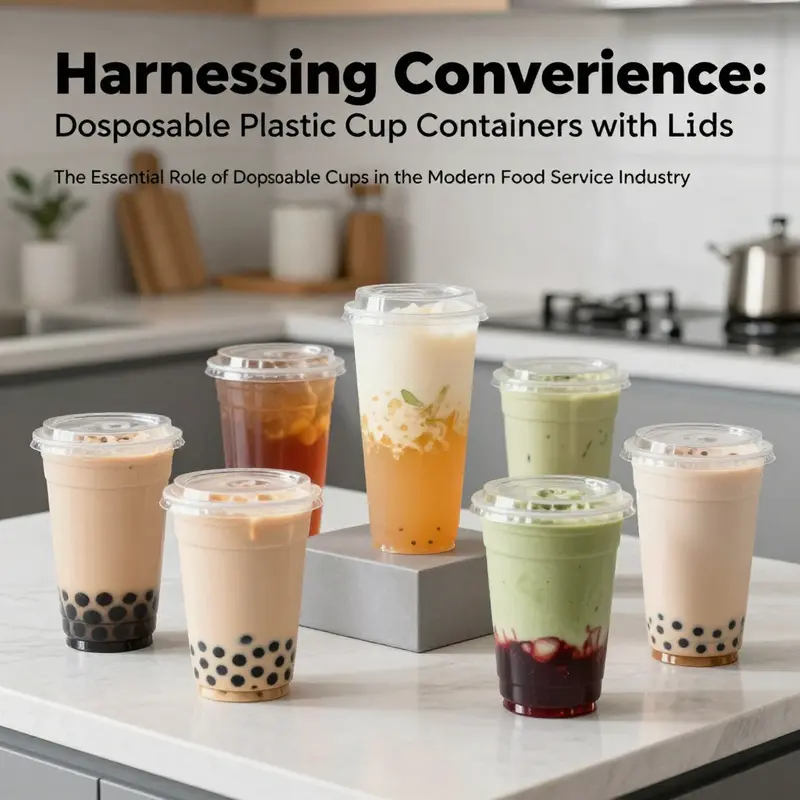
In a world that prioritizes convenience and hygiene, disposable plastic cup containers with lids have become an essential element across multiple sectors including bubble tea shops, restaurants, food trucks, and event planning. These cups not only facilitate seamless service but also ensure that products remain secure and visually appealing. This article delves into the pivotal role these containers play in the food industry, explores the growing sustainability trends associated with them, and analyzes economic factors that shape their market. Understanding these aspects will help businesses make informed decisions that align with customer expectations and environmental responsibilities.
Guardians of Freshness: The Essential Role of Disposable Plastic Cup Containers with Lids in the Modern Food System
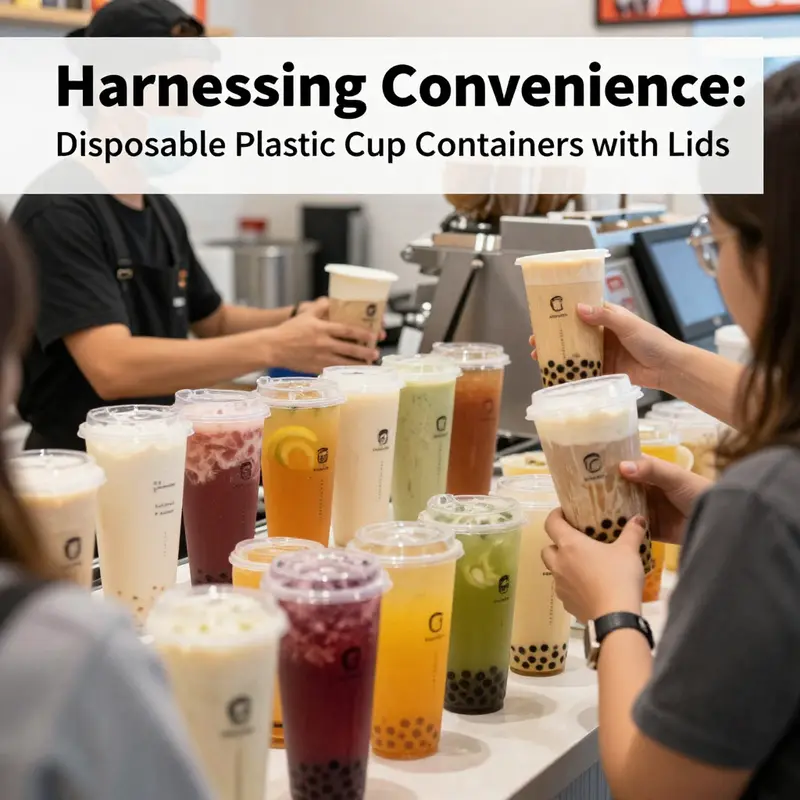
In the steady hum of kitchens, dining rooms, and event venues, a small, often overlooked tool quietly orchestrates safety, speed, and satisfaction: the disposable plastic cup container with a lid. Seen from the back of a service line or in the hand of a street-food vendor, this humble vessel embodies a balance between protection and practicality. It is more than a receptacle for content; it is a barrier that guards against contamination, a solvent for convenience, and a spoke in the wheel of a highly choreographed operation. When viewed through the lens of the modern food system, these containers reveal a layered role that touches safety, efficiency, and sustainability in equal measure. Their impact radiates outward from the point of contact with food to the broader narratives of supply chains, consumer expectations, and environmental responsibility, weaving together the textures of material science, regulatory assurance, and practical craftsmanship that define today’s takeout culture and on-site service.
From a safety perspective, the core value of disposable cup containers with lids lies in their ability to create a clean, dependable barrier between food and the external environment. This is not merely about keeping dust off the surface; it is about mitigating a spectrum of potential hazards that can arise during preparation, transport, and storage. The use of food-grade plastics—most commonly polypropylene (PP) and high-density polyethylene (HDPE)—is central to this. These materials are prized for their chemical inertness, meaning they do not readily react with foods or leach unwanted substances into beverages, sauces, or desserts. In a rigorous evaluation conducted by a recognized food research authority, containers of this class have been shown to meet stringent safety standards for heavy metals and residual styrene monomers. Such findings provide live assurance that, when used as intended, the containers support rather than compromise food safety. PP, in particular, is often highlighted for its microwave compatibility, expanding its applicability to a wider array of foods such as yogurt, ice cream, and hot or warm-ready items that must be delivered in a sealed, portable form. This emphasis on material behavior under typical usage conditions is not incidental; it reflects a deliberate alignment between protection, practicality, and consumer safety that forms the backbone of the modern packaging approach.
The material story extends beyond safety into the realm of function. PP and HDPE offer a robust combination of light weight and strength, enabling containers to withstand the rigors of on-the-go consumption while preserving the sensory integrity of the contents. The transparent variants that are so common in consumer-facing visuals serve a dual purpose: they allow staff and customers to confirm contents at a glance, and they streamline inventory management by reducing the need for opening to verify what is inside. In practice, this visibility supports a more efficient flow from storage to display to customer handoff, a chain that benefits both speed and accuracy in busy settings. The lids, often designed to interlock securely with a ribbed edge or an ergonomic profile, play a critical role in preventing leaks during transit and in protecting the consumer from exposure to heat or splashed contents. The reliability of a well-fitting lid translates into fewer spill incidents, lower waste, and an enhanced customer experience—essential aspects for any operation that seeks to balance quality and convenience.
A key element of the modern container’s value proposition is its versatility across the spectrum of food service and retail use. These containers perform across fast-food lines, takeout windows, catering booths, and events where speed accompanies volume. They commonly handle hot and cold beverages, sauces, condiments, and portions that range from small dips to larger servings, reflecting a broad applicability that helps operators standardize menus and simplify training. The same family of products is equally at home in dessert presentations, yogurt and gel desserts, or sample-sized tastings that require hygienic containment with easy portion control. The result is a uniformity of experience: customers enjoy a familiar, reliable package that protects the product while presenting it in an accessible, appealing form. This universality is one of the underappreciated strengths of disposable cup containers with lids, enabling a single packaging strategy to address diverse menu items without compromising safety or quality.
From a design perspective, many packaging solutions in this category emphasize precise volume markings on the cup walls—1 oz, 2 oz, 5.5 oz, 350 ml, and similar gradations—that support accurate portion control. For cafés and bakeries that rely on consistent yields and cost management, such markings reduce guesswork and help standardize SKU performance. They also aid in customer perception, providing transparent cues about serving sizes and pricing. In addition, the stackable geometry of these containers offers tangible storage advantages. When nested and flattened into a compact stack, they can reduce warehouse footprint by a meaningful margin, which translates into lower handling costs and improved space efficiency on a busy shop floor. This is particularly advantageous in fast-paced service environments where every square foot matters for throughput and organization. The net effect is a packaging system that not only keeps food safe but also harmonizes with the tempo of service, enabling staff to move with confidence and customers to receive orders with minimal delay.
The regulatory and quality assurance landscape surrounding these containers underscores a broader commitment to consumer protection and industry integrity. Certifications such as the British Retail Consortium (BRC) standards and ISO frameworks are often cited as indicators of compliance with stringent food safety and quality management criteria. While the everyday function of a container might seem straightforward, its credibility rests on a secure, auditable foundation. Adherence to these standards signals to buyers—from small local cafes to large institutional kitchens—that the packaging is manufactured under conditions that prioritize process control, traceability, and hygienic handling. In an economy where supply chains are complex and the consequences of contamination are magnified by scale, such assurance matters. It is not merely about meeting a regulatory bar; it is about cultivating trust with both operators and consumers who rely on consistent performance and dependable containment every time a lid is snapped shut.
Sustainability sits alongside safety as a defining axis for modern disposable packaging. The industry’s response to environmental concerns has moved beyond a narrow recycling pledge toward a more comprehensive view of plastic packaging life cycles. Recyclability and recyclate content are increasingly emphasized, with manufacturers exploring recyclable formats and, in some cases, biodegradable or compostable alternatives that still meet the demands of food-contact safety. The goal is to provide options that reduce the environmental footprint without sacrificing the protective qualities that users rely on. In practice, this means advocating for containers that can be recovered through established recycling streams and designing for end-of-life separation so that each component can be treated appropriately. The conversation also encompasses the broader societal shift toward responsible consumption and responsible disposal, recognizing that the most effective packaging solutions are those that align with local waste-management ecosystems and consumer behaviors.
Yet, even as sustainability gains ground, the practical realities of procurement shape how organizations adopt and deploy these containers. For bulk buyers, cost, delivery reliability, and customization options are decisive factors. It is common to encounter a spectrum of price points tied to volume, lead times, and the degree of customization. Many buyers look for options that allow logos, branding, or tailored dimensions to align with corporate or event identities while preserving the core functional characteristics of the container. This balancing act—between branding and practicality—speaks to a broader truth about disposable packaging: it is not a one-size-fits-all solution but a modular toolkit that can be adapted to reflect brand voice, service model, and customer expectations.
From a supply-chain perspective, the adaptability of these containers is reinforced by the availability of multiple formats and sizes. The same basic design can be scaled from tiny 1 oz portions to larger 350 ml servings, enabling a family of products that covers a wide range of use cases. The mere presence of a precise volume scale fosters consistency in portioning and pricing across a menu, which in turn supports kitchen discipline and waste control. The lightweight construction and the ability to stack for storage also translate into reduced handling costs and lower spoilage risk during busy periods. The cumulative effect is a packaging solution that integrates seamlessly with the workflow of foodservice operations, from prep to service to takeaway.
For readers planning to extend their packaging strategies, an awareness of product categorization can help. A nearby online resource catalogues the disposable drinkware category, offering a spectrum of options that complement cup containers with lids and expand the potential configurations for service environments. This interconnected ecosystem of packaging choices reinforces the idea that success in the modern food business relies on a coherent packaging strategy rather than isolated, ad hoc choices. By viewing containers and lids as parts of a broader system—one that includes lids, inserts, sleeves, and other accessories—operators can optimize compatibility, reduce waste, and reinforce consistency across all touchpoints with customers. As such, the choice of a container becomes part of a larger design philosophy aimed at safety, efficiency, and brand integrity. disposable drinkware category
In the ongoing dialogue about the environmental footprint of disposable packaging, the conversation tends to focus on end-of-life outcomes. What often matters as much as the raw material is how the product is designed for recyclability, how easily it can be sorted and processed, and how well it performs across a life cycle that includes transport, storage, use, and disposal. The best packaging solutions are not only compliant with safety and quality standards but also designed to minimize waste in practical terms. This includes stackability to conserve storage space and reduce handling time, as well as the ability to withstand typical service conditions without compromising food safety or user experience. It also involves selecting materials that align with regional recycling capabilities and consumer attitudes toward waste. In this sense, disposable cup containers with lids can be a strategic piece of sustainable packaging when chosen with an eye toward end-of-life realities and local recycling infrastructure.
To complement the internal quality narrative, it is helpful to consider the broader systems that govern how these containers are produced and used. The food-grade plastics market continues to evolve with innovations in barrier properties, heat resistance, and clarity, all while maintaining the safety profiles required for direct contact with consumables. Manufacturers, in turn, strive to produce reliable stock while accommodating custom requests—whether that means branding a lid, adjusting the lip geometry for improved sip-ability, or tailoring dimensions to fit a particular display or cooler rack. These customization possibilities enable brands to extend their identity into every aspect of the consumer experience, from the moment a cup is picked up to the final seal of the lid and the inevitable moment of disposal. The result is a packaging system that supports a consistent, trusted experience while providing the flexibility needed to respond to evolving menu items, seasonal promotions, and changing consumer preferences.
The practical elegance of disposable cup containers with lids lies in their ability to integrate safety, efficiency, and branding in a way that is simultaneously simple and scalable. They are not the most glamorous component of the food system, but they are among the most consequential. They protect, they facilitate, and they amplify the reach of a service model. They help ensure that a hot drink remains hot and a cold dessert remains cold while traveling from kitchen to customer, all without sacrificing the integrity of the product or the dignity of the consumer’s experience. The conversation about their role in the food industry, then, is really a conversation about how modern food service maintains hygiene, speeds service, and honors sustainability without compromising taste or value. It is a conversation about the quiet software of the kitchen—the packaging that does not shout but ensures that the story behind every item on a menu remains intact from prep to plate.
External resources can deepen this understanding and provide practical guardrails for procurement and operations. For readers seeking further context on food-contact safety standards and packaging guidelines, a comprehensive external reference is available and can serve as a thoughtful companion to the operational considerations discussed here. FDA packaging guidance.
Rethinking Convenience: The Sustainability Turn in Disposable Plastic Cup Containers with Lids

The landscape of disposable cup containers with lids is changing beyond functionality to include responsibility and transparency. This chapter explores how material choices, certifications, and end-of-life considerations shape decisions in hospitality, retail, and events. It discusses the tension between clarity and recyclability in PET and PP, the role of bio-based alternatives like PLA, and the conditions under which composting is viable. It emphasizes lifecycle thinking, traceability, and the need for clear disposal guidance to empower consumers. It also examines packaging design choices that reduce material use while maintaining performance, and the importance of partnering with waste management providers to realize true circularity. The chapter closes with practical implications for procurement decisions, sourcing strategies, and the invitation to evaluate packaging across full lifecycle rather than isolated claims.
Balancing Cost, Convenience, and Compliance: Economic Currents in Disposable Cup Containers with Lids
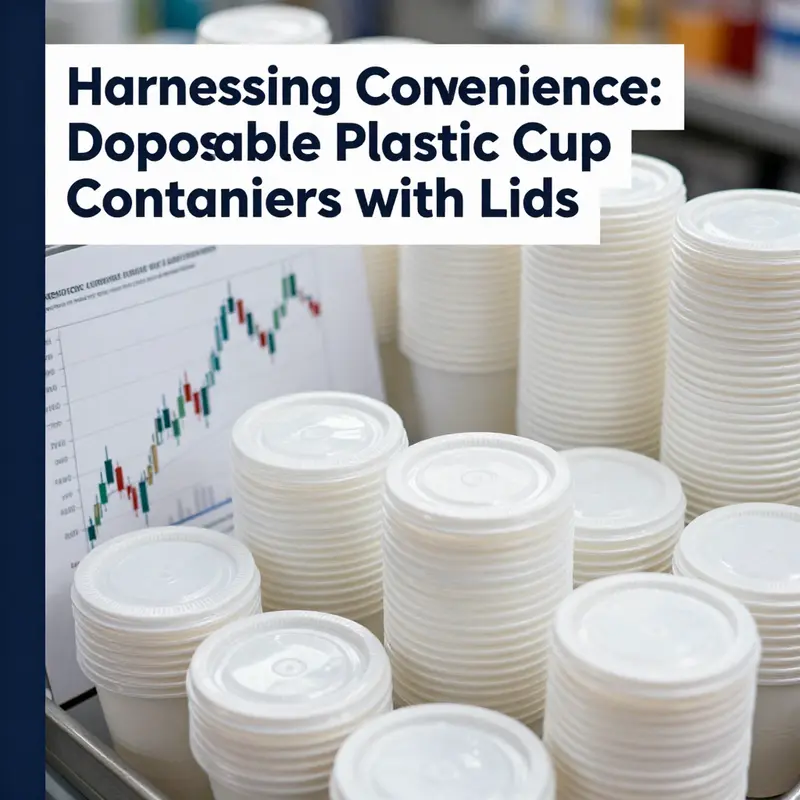
The market for disposable plastic cup containers with lids unfolds like a living ledger, where numbers tell the story of how convenience, volume, and policy collide in real time. These containers, designed for direct contact with beverages, sauces, and desserts, sit at a crucial juncture in the supply chain. They are not merely packaging; they function as a financial barometer for foodservice operators, retailers, and event organizers. Their performance relies on the physical attributes of cups and lids—clarity, leak resistance, stackability, and secure transfer from counter to customer—while being shaped by macro forces that push prices down, volumes up, and sustainability expectations higher. To understand the market, one must look beyond surface features to the underlying currents: the rise of quick service and on‑the‑go consumption, the cost dynamics of plastics, and the evolving regulatory and consumer landscape that redefines what is permissible, desirable, and profitable.
At the heart of the economic narrative is the expansion of quick service restaurants and other high‑volume outlets. The appeal of these venues lies in speed, consistency, and the ability to serve a growing clientele with tight margins and high throughput. In urban and semi‑urban locales, the demand for single‑use packaging is not a luxury; it is a workflow necessity. Each meal, snack, or beverage sold carries a packaging requirement fulfilled with minimal friction. When QSRs scale up, even modest per‑unit savings multiply across millions of units. The market responds with packaging designed to be stackable for storage, adaptable to different beverage sizes, and compatible with automated warewashing or rapid turnover in busy service lines. The economics are clear: increase speed of service while holding or lowering per‑unit cost, and volume follows. This dynamic explains why a material that can be molded efficiently, transported easily, and sold cheaply will retain a dominant position in cups and lids across regions and channels.
Another driver is the broader trend toward on‑the‑go consumption. Urban lifestyles, flexible work, and outdoor events push consumers to choose containers that are portable, lightweight, and predictable in performance. A cup with a lid that seals tightly offers a practical solution for mixed‑use occasions—coffee on a commuter train, a smoothie during a park stroll, or a dipping sauce for a quick lunch. With takeaway becoming standard, packaging must support this behavior while preserving safety and quality of contents. Plastic cups and lids deliver transparency for product identification, durability to minimize leaks, and versatility to accommodate beverages and even non‑beverage uses in some contexts. The economic implication is straightforward: as on‑the‑go demand grows, unit costs fall with scale, while willingness to pay for reliability remains high. In this climate, suppliers of disposable cup containers with lids find a receptive market that values performance and price stability, reinforcing the use of PP and PET as backbone materials for many offerings.
The cost‑efficiency of plastic materials is a third pillar in this economic architecture. PP and PET provide a favorable mix of lightweight strength, chemical compatibility, and temperature resilience, translating into lower raw material costs per unit, easier high‑volume processing, and reduced shipping weights. These factors compress the total cost of ownership for businesses relying on these containers. Recent market data reinforce this advantage, showing plastics’ dominant share in the cups and lids market. For manufacturers, this translates into economies of scale: the more units produced, the lower the average cost, enabling aggressive pricing while sustaining profitability.
Regulatory and sustainability considerations add an important layer to the economic model. Governments increasingly target single‑use plastics with recycling targets, composition restrictions, and incentives for recycled content or alternative materials. These regulations raise production costs over time, particularly for those relying on virgin plastics or requiring equipment upgrades. The tension between the benefits of plastic packaging—low cost, reliability, and convenience—and policy aims to reduce waste creates a shifting cost structure. Companies that anticipate changes can mitigate risk by investing in recycling streams, recycled content, or biodegradable or compostable coatings where appropriate. While such moves require capital, they position suppliers to navigate shifts more smoothly and maintain access to a broad customer base seeking compliant packaging.
Raw material price volatility is another critical driver. The feedstock for many plastics is tied to crude oil, and fluctuations ripple through resin costs, additives, and processing. When oil prices spike, resin costs tend to follow, squeezing margins for manufacturers with thin buffers. Conversely, during periods of lower crude prices, margins may improve and enable more aggressive pricing. The risk includes currency exchange rates and energy costs used in extrusion and molding, and the reliability of supply from key producers. End buyers—cafés, food courts, and event organizers—often experience price adjustments, changes in minimum orders, or renegotiated terms in response to new cost realities. In this climate, strategies favor longer‑term contracts that secure more predictable feedstock costs and incentivize resin‑reduction or recyclability improvements.
The regulatory and sustainability layer also shapes the economic equation in subtler ways. Higher compliance costs and evolving consumer expectations reward recycled content and responsible choices, while increasing supply‑chain complexity. Some suppliers build recycling infrastructure, take‑back programs, or partner with waste firms to ensure cups and lids can be recovered and reprocessed. Although upfront investments can be substantial, they offer longer‑term payoffs in resilience to regulatory shifts and appeal to customers who prioritize sustainability. Certifications such as BRC and ISO provide extra assurance of food safety and quality, reinforcing trust and enabling stable pricing through consistent demand. The interplay between regulatory costs, sustainability investments, and standards creates a virtuous loop: as compliance becomes embedded, buyers gain confidence, potentially enabling premium pricing where value is demonstrated.
In this landscape, customization and segmentation remain strategic differentiators. Buyers seek tailored dimensions, precise volume markings, and branding options that differentiate offerings while maintaining portion control. Custom printing adds value but comes with higher costs for short runs and frequent changes in specs. Manufacturers balance the premium for customization against efficiency gains from larger MOQs, creating a dynamic market where price points reflect material cost, processing efficiency, customization premiums, and the value brands place on consistent portioning and recognisable packaging. The economics determine which suppliers win contracts and which operators stay agile in switching suppliers in response to price shifts or regulatory changes.
A final thread is the ongoing migration toward localized or regionalized supply chains. Shipping costs, lead times, and the reliability of international networks affect the total cost of ownership. In markets with tariffs or duties on resin, manufacturers may source regionally, even if slightly higher per‑unit costs reduce economies of scale. The push for resilience—shorter lead times, reliable delivery, and maintained quality—reorients priorities toward flexibility and risk management. Flexibility becomes a hidden asset that preserves margins when traditional price leverage on raw materials weakens.
The long‑run trajectory rests on combining economic efficiency with environmental accountability. In many regions, policymakers and consumers converge on the same point: packaging that is economical, safe, and less burdensome to the environment. This convergence accelerates material science innovation and packaging design, such as thinner walls enabled by softer formulations or the use of recycled content as a value proposition for retailers. Each pathway carries an economic profile: upfront R&D and equipment investments versus potential savings from material reductions, waste handling, and regulatory compliance. The challenge lies in forecasting which path will deliver sustainable profitability in a market of rising demand and nuanced regulation.
To tie these threads, macro data helps track market health. The overarching story is economic at its core: expanding service sectors, growth in on‑the‑go consumption, and cost discipline afforded by plastics create durable demand. Yet tension between affordability and sustainability sharpens, nudging innovation while preserving margins. As long as demand for reliable, cost‑effective packaging persists and the market can adapt to evolving environmental expectations without sacrificing efficiency, the momentum behind disposable cups and lids endures. The most resilient players will blend low‑cost production with safety and environmental responsibility, while offering customization options brands increasingly expect from packaging suppliers.
For readers seeking a broader macro perspective, external resources provide context, such as market analyses that situate these factors within a global framework, illustrating how size, scale, and policy interact to shape pricing, capacity, and product development in a market that touches daily life. The Disposable Drinkware category likewise showcases how packaging design and branding reinforce value while maintaining performance for end users.
Final thoughts
Disposable plastic cup containers with lids are undoubtedly transforming the food service industry, offering convenience without compromising safety or sustainability. As customer demand shifts towards environmentally friendly options, businesses are encouraged to adopt practices that resonate with these values while maximizing efficiency. By understanding the key role these containers play, the sustainability trends surrounding their production, and the economic factors influencing their market, businesses can strategically position themselves for success in a rapidly evolving marketplace. Make informed choices that cater to your clientele and contribute positively to our environment.