
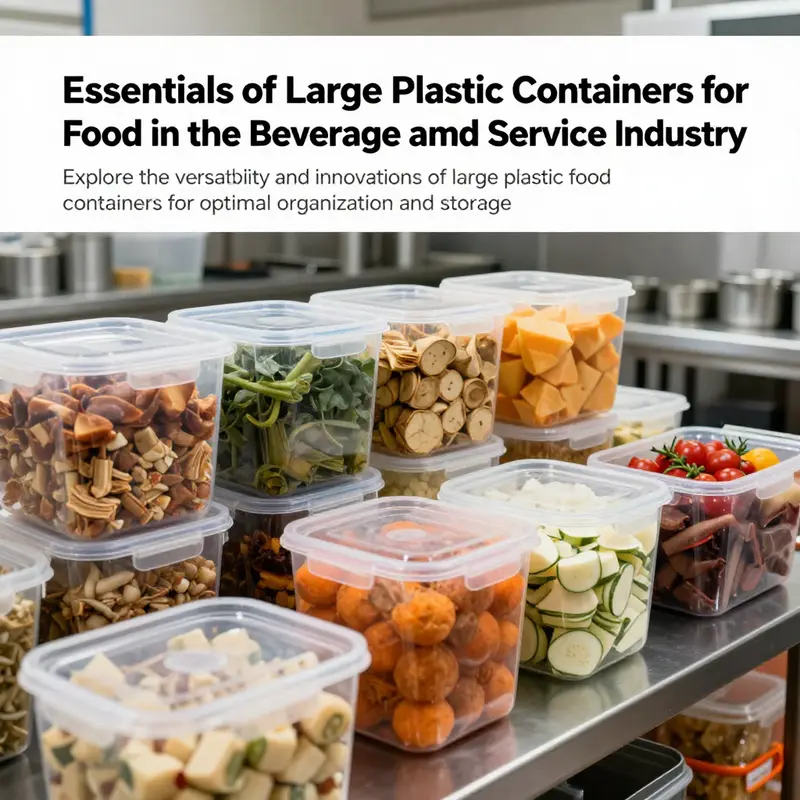
Large plastic containers for food play a pivotal role in efficiently managing the storage and organization of various ingredients and products across a range of businesses, from bubble tea shops to catering services. Their diverse sizes and configurations provide solutions that enhance operational efficiency while maintaining freshness and quality. This article will delve into the different types and benefits of large plastic food containers, the materials that make them a reliable choice, and the latest innovations that are transforming food storage solutions in the industry. Join us as we uncover how these containers can elevate your food management strategies.
Built to Last: The Shape, Purpose, and Promise of Large Plastic Containers for Food Storage
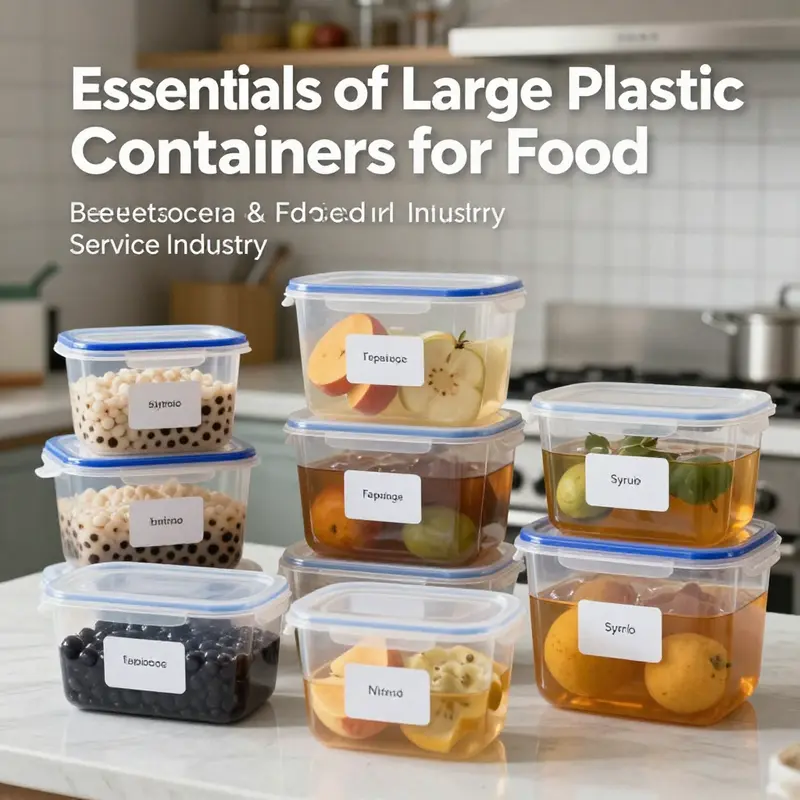
Large plastic containers for food are more than simple receptacles. They are core components of how modern kitchens, both in commercial settings and households, manage space, preserve freshness, and streamline operations. Their value shows up in subtle places—how a stack of square boxes fits neatly into a narrow pantry, how a bulk container can be wheeled across a warehouse floor, or how a tank designed to hold liquids guards shelf life through consistent seals and hygienic interiors. When we look closely, a single container can influence a chain of decisions: how ingredients are portioned, how supplies travel from storeroom to production line, and how waste is minimized during long-term storage. The practical benefits and the design logic behind these large plastic containers reveal a deliberate balance between durability, safety, and everyday usability, a balance that supports food safety, efficiency, and sustainability across diverse food environments.
The primary types of large plastic containers used in food applications span a spectrum of sizes and configurations, each tailored to particular kinds of products, processing steps, and handling demands. Plastic drums, also called buckets in some contexts, are the traditional workhorses of bulk storage. They are typically made from high-density polyethylene, a material chosen for its strength, chemical resistance, and cost efficiency. Drums come in a variety of volumes, commonly ranging from just over a hundred liters to more than two hundred liters. They can be open-head or closed-head, a distinction that matters when the container must be poured or when it must be sealed to prevent contamination and moisture ingress. Open-head drums give easy access for scooping or pouring dry goods, while closed-head drums provide a secure barrier for liquids or powders that require controlled handling. In practice, these drums support everything from bulk oils, syrups, and sauces to grains and other dry ingredients. Their compatibility with standard lids and gaskets makes them versatile across cold storage and room-temperature environments alike, while their rugged exterior protects the contents from impact and environmental exposure during transport.
Intermediate bulk containers, or IBC totes, occupy a different tier of scale and sophistication. These units are designed for moving large volumes with ease, typically up to about one thousand liters. An IBC combines a rigid outer HDPE shell with a flexible inner liner that is often food-grade, creating a robust, hygienic system that protects contents from contamination. The outer frame is engineered for forklift handling, stackability, and efficient use of space in warehouses and loading docks. The inner liner is designed to be compatible with cleaning and sanitizing regimes common in food operations, ensuring that the product remains safe from the point of filling through distribution. The synergy between the outer container and the inner liner provides a reliable barrier against oxygen, moisture, and particulate intrusion, which helps maintain product quality over prolonged storage and multiple handling cycles.
Water tanks and larger storage systems are another essential category, especially when the operation requires substantial quantities of potable water or other food-grade liquids. These tanks are often manufactured using high-density linear low-density polyethylene, leveraging rotational molding to create seamless, durable structures. The rotational molding process yields a smooth interior and a resilient exterior, minimizing crevices where residues could accumulate and simplifying cleaning and sanitation. For food supply chains, these tanks support not just water storage but also the safe handling of liquids used in processing, cleaning, or diluting concentrates. Their robust construction allows them to withstand repeated filling and emptying cycles, exposure to cleaning agents, and occasional temperature fluctuations without compromising integrity or safety.
Beyond drums, IBC totes, and water tanks, plastic boxes and bins provide the practical, everyday utility that keeps kitchens and storerooms orderly. Boxes and bins come in various shapes—square, rectangular, or even round—to accommodate different shelving configurations and transport needs. They are admired for being lightweight yet sturdy, easy to stack, and simple to label for quick identification. This class of containers excels in organizing produce, prepared meals, bakery goods, and bulk items that require frequent access. The best examples feature tightly fitting lids or snap-on closures, along with smooth, easy-to-clean interiors. In environments where ventilation is necessary, some designs incorporate perforated sides or vented lids to enhance airflow, reducing moisture buildup and supporting longer shelf life for susceptible items like fresh bakery products or cut produce.
The materials chosen for high-quality large plastic containers address both safety and performance. Food-grade HDPE and PP are among the most common choices because they resist chemicals used in cleaning and sanitizing, resist impact damage, and endure the temperature variations typical in storage and transport. In some specialized applications, bottles and certain liners may incorporate PET or PS elements, but the core takeaway remains consistent: the plastics are selected for their ability to stay inert in contact with food while offering dependable mechanical strength. This makes it possible to reuse containers many times, which, when paired with appropriate cleaning protocols, trims operating costs and reduces waste. The choice of material also informs how easily containers can be molded and formed into efficient stackable shapes, a critical factor for packing density in busy facilities where every square meter matters.
From a design perspective, the utility of large plastic containers goes beyond raw material selection. The design must harmonize sealing capability with usability. Lids that snap on, twist shut, or flip-lock into place create secure closures that limit leaks and protect against contamination. Gaskets or seals are essential in maintaining a barrier against air and moisture, which directly impacts the duration of freshness for stored products. For liquids and semi-liquids, a leak-proof configuration is not merely convenient; it is a safety and cost concern, preventing product loss and reducing the risk of cross-contamination in shared environments. For solids, the primary concern is often moisture control and physical protection during transport, which can be addressed by tight-fitting lids and smooth interior surfaces that resist nicks and scratches where residues could accumulate.
A well-thought-out design also considers handling and space efficiency. Many large containers are engineered to stack or nest when not in use, a feature that minimizes clutter and maximizes storage density. Stacking capability reduces the footprint of material on pallets and shelving, allowing more product to be stored within the same footprint and facilitating smoother logistics. Nesting features help when containers are emptied and stored, enabling them to compress toward a compact form without damage. The result is a storage system that scales gracefully from a small kitchen to a major distribution center, enabling operators to increase throughput while maintaining order and hygiene.
Labeling and traceability are additional design considerations. In modern food operations, containers often need to carry labeling or be compatible with standardized labeling systems. This supports batch tracking, expiration management, and cross-document traceability, all of which are important for food safety audits and regulatory compliance. The labels may be applied directly to the container body, or the lids may provide reserved space for such information without compromising the seal. When labeling is integrated with container design, workers spend less time searching for information and more time ensuring that products move through processing and storage in a controlled, auditable manner.
In practice, selecting between these container families—drums, IBC totes, water tanks, and boxes—depends on the nature of the product, the stage of the supply chain, and the handling requirements of the facility. Bulk liquids require containers with proven sealing performance and chemical resistance, along with robust filtering and venting options when needed. Dry bulk ingredients require rigid containment with moisture barriers and easy pourability. Fresh or perishable items benefit from vented designs and air circulations that reduce spoilage while allowing efficient temperature management. In all cases, the overarching aim is to protect product quality from the point of fill to the point of use, while also enabling operators to optimize space, time, and labor.
The practical implications of these choices extend into the daily rhythms of storage and transport. A warehouse that optimizes its large plastic containers benefits from predictable handling: pallets sized for forklifts, standardized lids and closures, and consistent interior dimensions to reduce wasted space. The result is smoother batch transitions, fewer spill incidents, and a lower likelihood of cross-contamination between products. The benefits are not only operational; they touch sustainability as well. Reusable containers reduce packaging waste and the environmental footprint of food operations when they are cleaned and maintained properly. The combination of durable materials, modular designs, and reusable formats aligns with circular economy principles that increasingly guide modern procurement and facility management.
To fully appreciate the utility and safety of these containers, it is helpful to consider the regulatory framework that governs food contact materials. The U.S. FDA, among other authorities, provides guidelines about what materials are permitted in contact with food, how they should be manufactured, and how they should be maintained to avoid contamination. While the specifics of regulatory compliance are nuanced, the overarching message is clear: containers used for storing or transporting food must not leach harmful substances and must be able to withstand the temperatures, cleaning agents, and mechanical stresses typical of food operations. This focus on safety and performance informs every stage of container design—from choice of polymer and molding technique to the geometry of the interior and the reliability of the lid gasket. For more detailed information on the materials and construction of food-grade plastic containers, you can refer to official guidelines. See the FDA’s guidance on food-contact materials for a comprehensive overview of applicable requirements and best practices.
In choosing large plastic containers for food, practitioners often weigh cost against capability, and they do so with an eye toward long-term value rather than upfront price alone. Blow molding and rotational molding processes enable scalable production that reduces per-unit costs as volumes rise, making industrial storage and distribution more economical. These processes also contribute to the durability and consistency of the containers, important factors when facilities demand predictable performance across thousands of cycles of use, cleaning, and re-use. In environments where upscaling is a strategic priority, these containers provide a reliable platform for growth—supporting batch cooking, centralized ingredient storage, and multi-site distribution with uniform performance. The ability to standardize containers across multiple sites simplifies training, inventory management, and quality control, while the reuse potential lowers environmental impact and long-term expense.
The practical logic of large plastic containers becomes even clearer when we consider the lifecycle from fill to reuse to eventual disposal. A well-maintained HDPE or LLDPE container can endure many cycles of cleaning and refilling if appropriate sanitation protocols are followed. This durability reduces the need for frequent replacement, preventing interruption in storage and preserving product integrity. Yet the lifecycle is not infinite. Proper cleaning, appropriate label maintenance, and adherence to temperature and chemical resistance limits are necessary to extend service life and ensure continued safety. In facilities where cross-contamination risk is carefully managed, containers are routinely inspected for cracks, gouges, or compromised seals. Damaged units are retired from use and replaced, while those in good condition may be refurbished or repurposed for non-food uses if permissible by health and safety guidelines. This pragmatic approach to lifecycle management reinforces the broader goal of minimizing waste while maintaining high standards of food safety and organizational efficiency.
As you step back to assess the opportunities and constraints of large plastic containers, a few guiding principles emerge. First, match the container type to the product and its handling needs. Liquids, powders, and dry goods each demand different sealing, venting, and cleaning requirements. Second, prioritize sealing integrity and interior smoothness. A container that leaks or harbors residues undermines safety and efficiency. Third, optimize for space and handling. Stacking, nesting, and forklift-friendly designs translate into tangible gains in throughput and storage density. Fourth, align with regulatory expectations and sanitation practices. Materials must be food-grade, resistant to common cleaners, and able to withstand routine temperature cycles without degradation. Finally, plan for lifecycle management and sustainability. Reusability, refurbishing options, and clear labeling practices support a resilient, cost-effective, and responsible operation. These principles help ensure that large plastic containers remain reliable workhorses across a wide range of food environments, from bustling kitchens to expansive distribution centers.
For readers seeking a focused starting point on storage solutions that leverage these container types, consider exploring the broader category of storage containers. It provides access to a range of compatible options that complement large plastic containers and help maintain organized, efficient spaces. To learn more, visit the storage containers category: storage containers. This resource can help align container choices with shelving, labeling, and workflow needs, supporting a cohesive storage strategy across operations.
The conversation about these containers would be incomplete without acknowledging the practical reality of daily use. In a busy facility, the ability to quickly move a bulk container from storage to line, to access contents without compromising the seal, and to sanitize the interior without damage is invaluable. The choice of materials, the integrity of the lid closure, and the ease of cleaning inside the container all contribute to safer, more efficient environments. When used thoughtfully, large plastic containers become an integrated part of the food system, enabling precise portioning, consistent product quality, and reliable traceability. They are not just vessels for ingredients; they are enablers of process control, hygiene, and sustainability at scale.
In closing, the spectrum of large plastic containers for food—from drums to IBC totes, from water tanks to boxes—captures a design philosophy that favors safety, resilience, and practical utility. Their material science, manufacturing methods, and careful attention to sealing, labeling, and handling all work together to meet the stringent demands of modern food operations. They are engineered not merely to hold food, but to protect it through the many hands and milestones of a supply chain. As the industry continues to evolve toward greater efficiency and tighter waste reduction, these containers will remain central to how food is stored, transported, and transformed into meals that nourish people and communities. They are a quiet engine of safety, efficiency, and sustainability—an enduring cornerstone of the food system.
External references and further reading can provide a broader regulatory and technical context for these containers. For an authoritative overview of materials used in food-contact applications and the safeguards required, see the U.S. FDA guidelines on food-contact materials: https://www.fda.gov/food/food-contact-materials
Guardians of Freshness: How Materials Shape Large Food Storage Containers and Their Environmental Footprint
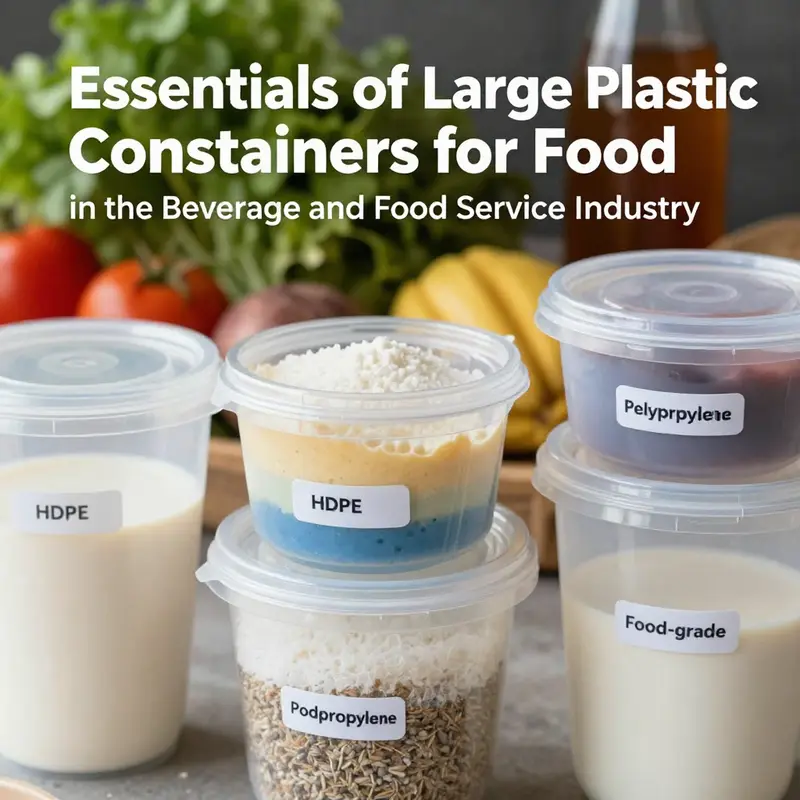
Large plastic containers for food storage act as unsung partners in kitchens, warehouses, and institutional kitchens, quietly shaping how we preserve, organize, and move ingredients and prepared meals from one point to another. Their influence extends beyond the clear walls we sometimes glimpse in a pantry shelf; it is written into the very texture of daily routines. When a family plans a week’s worth of meals, or a bakery or catering service shifts from batch cooking to just-in-time distribution, the chosen containers determine how long food stays safe, how much space is needed, and how efficiently items can be rotated, stacked, or retrieved. In practice, these containers come in shapes that favor space optimization—most commonly rectangular or square forms that tessellate across shelves, refrigerators, and carts. This geometric logic reduces wasted space in crowded storage areas and simplifies the choreography of moving goods through a facility. The practical payoff is tangible: fewer trips to the aisle, less spill risk, and a pantry that breathes with order rather than chaos. It is precisely this interplay between form, function, and flow that makes material choice a central thread in the story of large plastic containers for food.
The specific geometry of large containers often balances two competing aims: maximizing usable volume while enabling easy stacking and nesting. Rectangular designs with uniform corners allow many units to sit snugly atop one another or side by side, reducing gaps that invite air exchange and moisture buildup. In kitchens where space is precious, this stacking capability translates into tangible throughput gains—more containers fit on a single shelf, more containers travel in a truck without wasting height, and more batch cooking cycles can be planned with predictable, repeatable storage footprints. For fragile or perishables, perforated or mesh-enhanced sides can improve airflow and help regulate humidity, which can be critical for preventing moisture from lingering around delicate goods. A bakery storage solution might employ a container with perforated sides to foster airflow around breads or pastries, thereby delaying moisture accumulation and preserving crust integrity. The practical value of such design features lies in their impact on shelf life and ease of transport, two pillars of efficient food management across scales.
Behind these design choices lie a triad of material properties that are well understood in the world of food-grade plastics: safety, durability, and chemical resistance. The most commonly used materials—high-density polyethylene (HDPE), polypropylene (PP), and, in some cases, polyethylene terephthalate (PET)—each bring a distinct set of advantages that guide where and how they are deployed. HDPE is prized for its strength and rigidity, its resistance to moisture and many chemicals, and its ability to withstand a range of temperatures. This makes HDPE a natural fit for containers intended to hold liquids such as milk and juices or dry goods that require a sturdy, leak-resistant housing. When users need containers that can endure repeated washing cycles, rough handling in a busy kitchen, or exposure to cold storage, HDPE often becomes the default choice because it maintains structural integrity without becoming brittle in freezing conditions.
PP offers a different kind of reliability: heat resistance and versatility in applications that require a higher tolerance for temperature changes. This material supports hot-fill processes and is frequently used in containers designed for microwaving or reheating. The ability to withstand higher temperatures without deforming is not only a matter of convenience but also a consideration for food safety, where the risk of warping or seams failing under heat can complicate handling and sanitation. PP’s resilience to heat therefore aligns with workflows that involve rapid cooling after cooking or the need to move containers from hot production lines into cooler storage spaces without compromising the container’s structural integrity.
PET, or polyethylene terephthalate, enters the conversation primarily for transparency and aesthetic clarity. In household or retail contexts, PET can provide an attractive, see-through option for beverages or fresh produce where visibility is a benefit. However, for large bulk containers used in deep storage or heavy-duty applications, PET’s impact resistance and overall durability can be lower than HDPE or PP, making it a less common choice for the heaviest or most oversized storage needs. PET’s strength lies more in consumer-facing, short-term storage or display contexts, while HDPE and PP dominate the long-term, high-demand roles that bulk storage often requires. Taken together, these materials form a palette that manufacturers and buyers use to tailor containers to specific uses—whether the aim is to shutter the storage space against moisture, to withstand repeated freezing, or to survive the occasional hot-fill step in a production line.
The health and safety considerations around these materials are not just about the absence of toxins. They are about the overall integrity of the container through its lifespan. Food-grade HDPE and PP are selected for their chemical resistance, which helps minimize interactions with foods—reducing the probability that flavors or residues will linger or migrate unexpectedly. Yet, every material comes with a caveat: chemical migration can occur, especially if a container is exposed to heat, acidic contents, or aging fibers that degrade over time. While modern manufacturing has moved away from certain problematic additives, the broader conversation remains important. Substances once used as plasticizers or stabilizers can migrate into food under certain conditions. The industry has responded in part by reformulating formulations to be BPA-free and by adopting labeling systems that inform users about suitable uses, temperatures, and cleaning methods. Still, the risk calculus evolves as new research uncovers how additives interact with different foods and how storage practices alter exposure over repeated cycles.
Environmental considerations intersect with health concerns in a more systemic way. The life cycle of these containers—from raw material extraction to manufacturing, use, and end of life—shapes their environmental footprint. The fact that many large containers are designed for reuse highlights one of their strengths: they can reduce single-use packaging when producers and consumers commit to responsible cleaning, sanitation, and long-term maintenance. But this reuse economy also imposes responsibilities. For one, the durability that makes a container reliable across many uses also necessitates sound recycling and end-of-life handling. Containers that are not properly collected for recycling risk contributing to plastic waste streams that persist in ecosystems. This is not merely a disposal question; it is a matter of designing containers with recyclability in mind, selecting materials that are easier to separate in typical recycling streams, and encouraging take-back or recycling programs that can handle bulk plastics at scale.
The environmental discourse around packaging plastics has grown increasingly nuanced as researchers examine the broader ecological consequences. Microplastics and the potential for small polymer fragments to shed from containers during wear, cleaning, or aging is a concern that scientists are actively exploring. The evidence points to a pathway by which degraded plastics can contribute microplastics to soils, waterways, and, in some scenarios, food chains. These possibilities underscore the importance of rigorous quality control in manufacturing and the need for robust recycling infrastructure. When discussing the impact of large storage containers, it is not enough to consider their functional value alone. We must also weigh how these containers fit into a circular economy, where materials are kept in use longer, recovered more efficiently at end of life, and redesigned to minimize environmental harm.
Within households and professional kitchens alike, the decision to buy large, durable containers is typically driven by a balancing act: the value of reliable, long-lasting storage against the desire to minimize ecological impact and to maintain food safety across the product’s lifetime. This balancing act often involves pragmatic compromises about material selection, design features, and the intended use-case. For instance, containers with airtight, snap-on lids fulfill a crucial role in preventing leaks and keeping contents sealed from air, which can reduce oxidation and moisture loss. In a commercial setting, such features also contribute to sanitation and workflow efficiency by helping staff quickly identify the right container for a given batch, maintaining consistent labeling systems, and ensuring that lids and bases align to form stable, secure stacks. Some designs integrate built-in labeling surfaces or are compatible with labeling schemes that accelerate inventory checks and reduce misplacement. These seemingly small features accumulate into meaningful operational advantages, especially when scaled across busy facilities where hours of labor can be saved through more predictable handling, fewer spills, and clearer organizational signals.
The research and industry practice converge on a shared theme: while the physical properties of HDPE, PP, and PET shape what containers can do, the broader ecological and health contexts shape how we should use and dispose of them. The materials offer a robust toolkit for safe, durable, and efficient storage, but they require thoughtful stewardship. From a consumer perspective, this often means choosing products with clear temperature guidelines, avoiding heat exposure when not appropriate, and understanding cleaning recommendations that preserve the integrity of the container’s seals and joints. From a producer or retailer’s standpoint, it means prioritizing materials that are more easily recycled, designing for modularity and repair, and communicating clearly about safe reuse cycles and temperature limits. It also means recognizing that the container is only one part of a larger system that includes proper waste management, post-consumer collection, and community-level recycling infrastructure.
When we trace the thread from material science to everyday practice, the result is a pragmatic philosophy: large plastic containers for food storage should be chosen not only for how well they hold up under pressure but also for how well they support sustainable habits. The best options combine stability with safety, and durability with a respect for the planet’s finite resources. They invite reuse rather than disposal, while offering designers and manufacturers room to innovate toward lighter weights, easier cleaning, and better end-of-life outcomes. The architectures of these containers, from their snug, nestable bodies to their secure lids, matter because they influence how often we reach for them, how carefully we handle them, and how much waste we generate in pursuit of organized, safe food storage. In every kitchen—home or professional—the right material and design choices translate into a smoother workflow, less waste, and fresher food, which is, after all, the central promise of effective storage at any scale.
For readers seeking a practical starting point in selecting storage solutions, the broader category of storage containers houses a range of sizes, shapes, and capabilities that can align with specific needs. Exploring options within the Storage Containers category can help identify designs that optimize space, guide labeling, and support health and safety objectives. Linking these considerations to the core questions of material choice—durability, heat resistance, chemical stability, and recyclability—offers a coherent framework for decision-making that respects both productivity and responsibility. In this sense, the container becomes more than a vessel; it becomes a tangible intersection of science, design, and ethics that underpins everyday operations in kitchens and warehouses alike.
As we look ahead, the trajectory of large plastic containers for food storage will likely be shaped by ongoing advances in recycled content, material science, and circular economy initiatives. Manufacturers may increasingly blend polymers to achieve performance gains while reducing total virgin resin use. Innovations in barrier properties, seal integrity, and antimicrobial surfaces could further extend shelf life and simplify sanitation protocols. At the same time, policymakers and industry groups are pushing for clearer labeling, better end-of-life data, and enhanced recycling streams to minimize environmental leakage. The net effect of these developments will be a set of containers that remain reliable workhorses in food management, while also becoming more sustainable across their lifespans. In everyday practice, that means a storage system that not only keeps food safe and organized but also respects the limits of our shared environment. It is a goal that invites ongoing attention to materials, manufacturing practices, and the choices we make in the quiet moments of pantry organization, where each container is a small act of stewardship as much as it is a practical tool.
In sum, the materials chosen for large food storage containers—HDPE, PP, and PET—offer a spectrum of capabilities that support safety, efficiency, and durability. The decision to deploy one material over another hinges on the intended use, the temperature regimes involved, and the long-term plan for reuse or recycling. The same decision must also reckon with environmental footprints, the potential for microplastic release, and the evolving understanding of chemical migration. When these factors are balanced thoughtfully, containers can deliver strong performance without compromising health or ecological integrity. The overarching message is simple and powerful: the container should do its job well, stay safe under the conditions it encounters, and participate in a broader system that values reuse, responsible disposal, and continuous improvement. In the end, every thoughtful choice about materials and design contributes to a kitchen, a facility, or an operation that preserves freshness, saves space, and honors the planet as it feeds people today and for years to come.
Internal link for further exploration: delve into the comprehensive range of options within the broader storage solutions landscape by visiting the Storage Containers category for more possibilities and to align container choices with space, labeling, and reuse goals. Storage Containers.
External reference for further reading: for a broader perspective on the environmental impacts of food packaging materials, see the comprehensive analysis available at https://www.sciencedirect.com/science/article/pii/S1364038020301725.
Beyond Bulk: The Evolution of Large Plastic Food Storage Containers for Precision, Space, and Sustainability
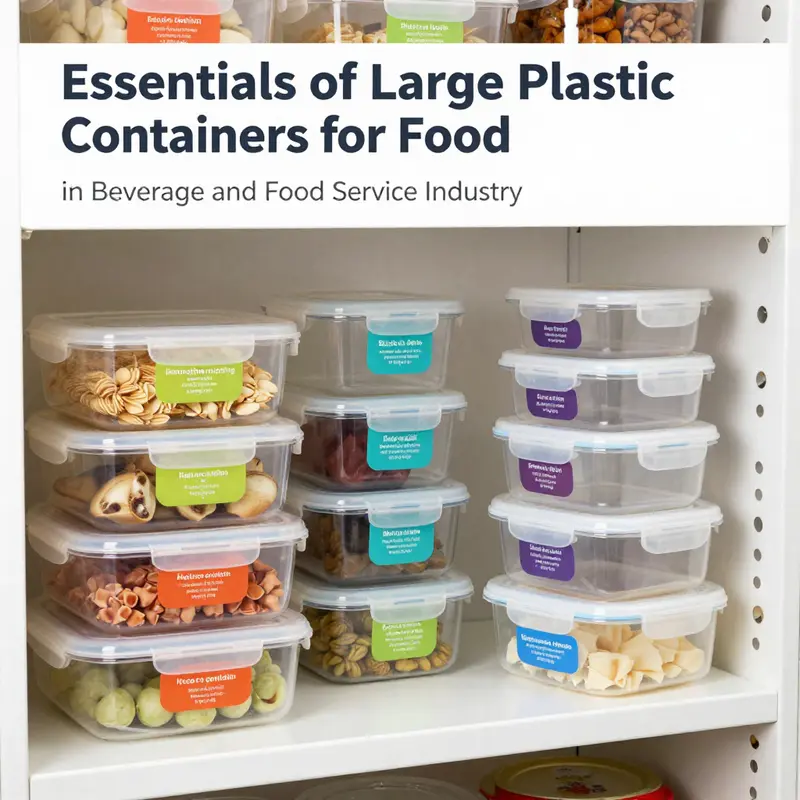
The category of large plastic containers for food has quietly become a central pillar of modern kitchens, supermarkets, and industrial food operations. It is a space where utility, safety, and sustainability meet in concrete form. In design terms, these containers have shifted from simple, bulky receptacles to purpose-built systems that optimize square footage, streamline workflows, and extend the freshness of what they hold. Rectangular and square shapes dominate because they align with standard shelving, refrigerator grids, and shipping pallets. This geometry, when paired with thoughtful stacking and nesting features, unlocks a practical discipline: containers that save space when stored, yet expand rapidly to accommodate bulk ingredients, batch-cooked meals, or a rotating inventory of perishables. The result is less clutter, faster access, and less waste—an equation that resonates from home kitchens to high-volume bakeries and industrial kitchens alike. In this evolving landscape, the details matter as much as the overall idea. A design that keeps air from circulating into a container, a material that resists cracking when frozen, or a lid that snaps shut and stays shut under a busy day’s stress—these small choices define large-scale usefulness.
In the modern repertoire, airtight seals have moved from a convenience feature to a baseline expectation. An airtight system not only preserves flavor and texture but also mitigates the risks of freezer burn and moisture migration. This is especially important for ingredients that may linger for longer periods—grains, flours, nuts, dried fruits, and bulk spices—all of which benefit from a stable microclimate inside the container. The emphasis on safety begins with the materials themselves. Food-grade plastics such as high-density polyethylene (HDPE) and polypropylene (PP) are widely used for their chemical resistance, durability, and resilience to temperature fluctuations. In a culture increasingly mindful of chemical exposure, the market’s pivot toward BPA-free formulations has become more pronounced. Consumers want assurance that the containers can be reused multiple times without leaching, and manufacturers have responded by certifying compositions that meet safety standards for both freezing and heating. The pursuit is not merely compliance; it is confidence that the pantry remains a safe reservoir for nourishment rather than a source of concern. When a lid closes with a definitive snap and a seal that remains consistent over dozens of cycles, it signals that these containers are built for real-life use, where muting the daily chaos of cooking and storage is as important as keeping ingredients fresh.
Beyond the seal, the containers’ interiors have become more thoughtfully calibrated to daily tasks. Built-in measuring markings, for example, provide a practical, real-time cue for portion control and for scaling recipes. This becomes especially valuable in meal-prep routines where a cook may be dividing a bulk batch into several portions for a week’s meals. The transparency of lids or bodies lets the cook identify contents without opening the container, a deceptively simple feature that saves time and minimizes heat exchange or moisture loss. For kitchens that juggle multiple ingredients, the option of modular compartments within a single large container introduces a flexible form of organization. Separate compartments reduce cross-contamination risks and enable rapid rotation of ingredients, while still preserving the overall compact footprint. In homes where shelves are precious real estate, such a hybrid system can replace several smaller bins and drawers, consolidating storage without sacrificing clarity or accessibility.
Another thread in this evolution is airflow management. In certain designs, perforated mesh or vented sides allow air to circulate around stored goods in a controlled way. The intent is to reduce moisture buildup, a common culprit behind mold, mildew, and off-flavors, particularly for baked goods, dry staples, and perishables stored at room temperature or in coolers. The challenge lies in balancing airflow with containment. Perforated designs must still keep moisture where it belongs—inside the container when appropriate and away from surfaces where mold could take hold. In practice, these features are most beneficial for specific use cases, such as bulk bakery storage or delicate produce in transitional stages before refrigeration. What matters is that airflow-oriented designs demonstrate a nuanced understanding of how microclimates inside a container influence shelf life and texture. They remind us that large containers are not just passive vessels; they are microenvironments where chemistry, physics, and human routines converge.
From the standpoint of sustainability, the shift toward more responsible materials and manufacturing processes is shaping the future of large plastic containers. Recycled materials are increasingly woven into the production fabric, enabling containers to be both durable and kinder to the planet. The reuse ethos is reinforced by the emphasis on durability and reusability. When a container endures countless cycles of freezing, thawing, washing, and stacking, its environmental footprint per serving tends to drop dramatically compared with single-use or disposable packaging. Yet the sustainability story does not stop at the material level. Design for disassembly and end-of-life recovery plays a growing role. Containers are being engineered so components such as lids, gaskets, and seals can be separated and recycled more efficiently. Even the labels and inks used on the surfaces are chosen with recyclability in mind. In this way, the large plastic storage system becomes part of a circular workflow rather than a linear one, reducing waste without compromising performance.
The user base for these containers is broad and continues to diversify. Home users seek practical, space-saving solutions that demystify pantry management and meal prep. For families, large containers enable batch cooking and bulk storage of staples, while keeping foods organized in transparent, labeled ways that map neatly onto weekly routines. In commercial kitchens, the stakes are higher: hygiene, durability, and consistency are non-negotiable. The containers must withstand frequent cleaning, aggressive sanitizers, and high-throughput handling. In industrial settings, large, robust designs interface with inventory systems and cold-chain logistics, supporting precise storage planning and efficient transportation. Across all environments, you can feel the influence of a philosophy that values clarity, reliability, and adaptability. When a container stacks neatly into a vertical stack in a crowded pantry or slides securely onto a racking system in a cold room, you see how thoughtful geometry and robust construction translate into real-world productivity. Labels, whether integrated into the design or easily affixed to a flat lid, help teams keep inventory accurate and reduce the chance of mislabeling that could compromise safety or flavor.
The purchasing landscape for these containers has also matured. Consumers and organizations weigh the long-term costs against upfront prices, recognizing that a well-built, reusable container often saves money by reducing waste, improving prep efficiency, and cutting the need for multiple storage solutions. In this context, the design priorities shift away from purely aesthetic considerations toward practical matters—how easy the container is to clean, how well it resists cracking under cold storage, and how transparent its usage history appears to the operator. The best designs offer a quiet elegance: a lid that opens with one hand, a seal that remains reliable after dozens of cycles, a body that resists fogging under refrigerator humidity, and a size profile that harmonizes with existing shelving units. These elements combine to make the container not merely a tool for storage but a systems partner for kitchen workflows.
The broader implications of these innovations extend to how households and institutions think about food management. A well-designed large container acts as a catalyst for better planning, more disciplined grocery runs, and smarter cooking schedules. When you can clearly see what’s inside, you’re less likely to overbuy or waste. When you can portion accurately, you can align meals with nutrition goals while maintaining budget discipline. When you can stack and nest, you free up valuable square footage, reducing clutter and making spaces feel calmer and more organized. These improvements ripple outward, influencing how families plan meals, how schools feed students, and how distribution centers manage bulk products. They also shape consumer expectations: containers that are safe, sturdy, and simple to use empower people to take ownership of their food storage and reduce the friction that often leads to waste.
In considering these trends, it helps to recognize the role of the broader ecosystem. Retailers and manufacturers increasingly converge on features that support labeling, compatibility with standard storage architectures, and easy integration into pantry ecosystems. The design language respects the realities of everyday use—wet hands on a busy morning, a dishwasher running in a crowded kitchen, a corner where a last-minute bulk purchase must be stowed away before the next shipment arrives. In this sense, the large plastic storage system becomes an enabling technology for everyday resilience. It supports not only the function of holding food but the broader discipline of inventory management, meal planning, and sustainability. And because these containers touch so many corners of daily life, the conversation around them is as much about habits as it is about polymers and plastics.
For readers seeking a practical focal point within this evolving landscape, it helps to think of storage containers as adaptable building blocks rather than fixed endpoints. They offer a framework for organizing foods by category, shelf, or use cycle, while providing a reliable platform for future upgrades—whether that means new closure mechanisms, labels that resist moisture, or even modular compartments that can be added to an existing container. The move toward modularity mirrors a larger design principle spreading through packaging and kitchen gear: systems that can be reconfigured to meet changing needs without requiring wholesale replacement. When a family grows, or a restaurant expands, the containers can be augmented or reconfigured to fit new workflows instead of being discarded. In that sense, the evolution of large plastic containers is less about novelty and more about scalable resilience, a quality that makes them a quiet backbone of modern food storage and preparation.
Within this context, one practical tip that emerges from contemporary practice is to treat storage containers as an ecosystem. Start with a core set of sizes that align with your most frequent tasks—bulk dry goods, prepped ingredients, and leftovers—and select lids and labeling accessories that can be standardized across those sizes. A single labeling system that works across multiple containers saves time and reduces confusion. If you adopt a category-wide approach to storage, you also create an opportunity to review and improve your pantry layout. A well-considered layout reduces steps, lowers energy use, and minimizes the time spent searching for ingredients. Moreover, when containers are part of a deliberate system, you are more likely to notice opportunities to reuse, recycle, or repurpose elements at the end of their life cycle.
The conversation about innovation in large plastic food containers does not pivot on one breakthrough alone. It rests on a constellation of small, meaningful improvements that together produce substantial gains in efficiency, safety, and sustainability. Airtight seals, BPA-free materials, stackable geometries, measuring marks, transparent lids, and modular compartments all contribute to a design language that speaks to both the practical and the aspirational aspects of food storage. The goal is not to chase novelty for its own sake but to craft containers that integrate seamlessly into daily routines, support responsible consumption, and endure the rigors of diverse settings. When this balance exists, the containers become more than mere vessels; they become reliable partners in culinary practice, grocery discipline, and waste reduction. And as the market continues to refine materials, improve manufacturing sustainability, and expand labeling capabilities, the future looks less like a single solution and more like a flexible, interconnected system that grows with the needs of homes, kitchens, and industries alike. For readers who want to explore related topics in a broader category of storage and organization, the storage containers section provides a practical gateway to additional options and ideas.
External resource for further context on the latest testing and comparative insights into plastic food storage containers can be found at the following source, which offers a comprehensive evaluation of materials, performance, and safety considerations: https://www.consumerreports.org/plastic-food-storage-containers/best-plastic-food-storage-containers-a20251226
Final thoughts
The versatility and functionality of large plastic containers for food cannot be overstated, particularly in dynamic environments such as beverage establishments, restaurants, and catering services. By understanding the types and benefits of these containers, along with the materials used to manufacture them, you can make informed choices that enhance your food management processes. Embracing recent innovations also ensures that your vehicle for storage is not just practical but also efficient, contributing to a smoother operational flow and a better customer experience. Invest in quality large plastic containers today, and pave the way for organized and efficient food storage in your business.