
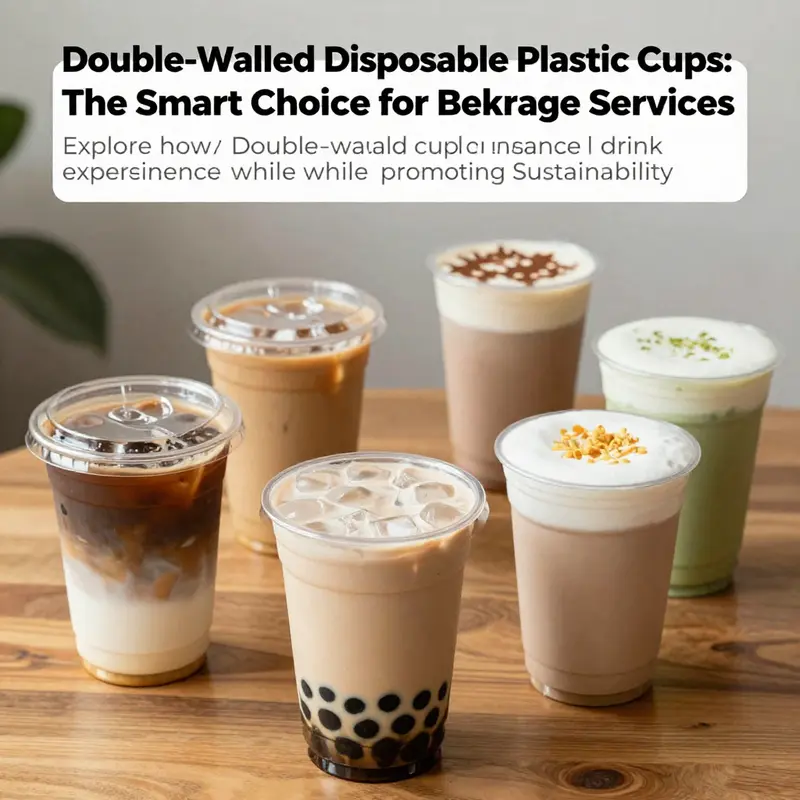
In today’s competitive beverage landscape, from bubble tea shops to catering services, the choice of packaging can significantly impact customer satisfaction and branding. Double-walled disposable plastic cups emerge as a game-changing solution, combining thermal insulation and convenience for a variety of drink offerings. These cups promise to keep beverages hot or cold longer while ensuring ease of use and safety for customers. This article will delve into the thermal insulation technology that makes these cups efficient, the materials driving their production, the growing focus on sustainability, and the various applications that illustrate their versatility in different settings.
Layered Warmth: The Thermal Science Behind Double-Walled Disposable Cups
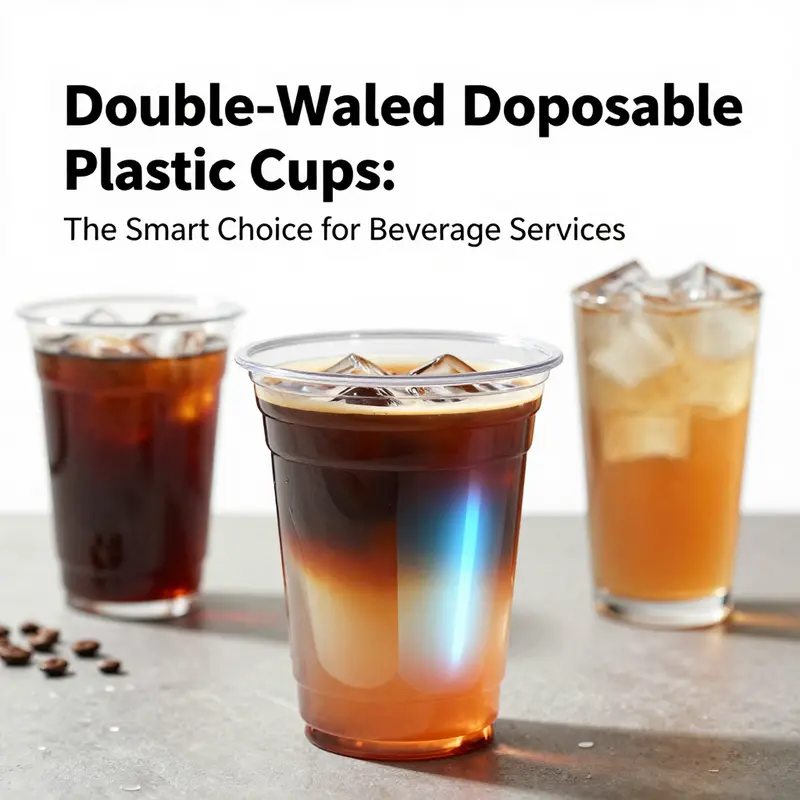
The double-walled disposable cup stands at the intersection of convenience and sensible engineering, a small but telling example of how materials science translates everyday needs into better experiences. At a glance, it resembles a familiar cup, yet its outer silhouette hides a deliberate architecture: two walls with an air gap between them. This simple arrangement does not merely add a decorative flourish; it creates a thermal regime that changes how hot beverages are felt, held, and enjoyed.
Conduction and convection are the two main heat transfer modes addressed by the design. In a single-wall cup, heat travels readily through the wall to the outer surface, making the mug warm to the touch. In a double-walled cup, the inner wall sits next to the liquid, while the gap between walls traps air, a poor conductor. Heat must cross two thin plastic barriers and the still air, slowing the overall transfer. The outer surface remains cool enough to hold, even as the beverage stays warm longer. This insulation is most effective when the cup is full and properly sealed, reducing heat flux and improving user comfort.
Convection is also challenged by the still-air layer. The inner air pocket limits the movement of warm air away from the liquid, which helps retain temperature inside the cup. Practically, this means a better drinking experience and reduced need for sleeves. In testing, designers often observe measurable improvements in heat retention and perceived warmth, with the outer wall remaining comfortable to touch well after pouring. The insulation comes from geometry as much as from materials; the air gap is a deliberate buffer that works with the chosen plastics to deliver a predictable, scalable result.
Materials play a crucial role. Most double-walled cups use polypropylene (PP) or polystyrene (PS) because they can be molded precisely, hold shape under heat, and remain cost-effective at scale. Some lines experiment with bio-based blends or recycled-content versions to support sustainability claims, while preserving the essential double-wall geometry. The manufacturing workflow commonly relies on injection molding and in-mold labeling, enabling robust walls, clear branding, and durable surfaces that survive handling and stacking.
From a practical standpoint, the trade-offs are real. The extra wall thickness adds a bit of weight and expense, and the cups can be more fragile if dropped. Yet many operators value the convenience: the need for fewer sleeves, shorter service times, and a consistent experience from the first pour to the last drop. For environments that serve hot beverages rapidly—fast-food outlets, stadiums, outdoor events—the ability to keep drinks warm without burning hands is a meaningful differentiator. The technology also aligns with broader packaging goals of performance with efficiency, even as the single-use paradigm remains under scrutiny.
Sustainability and safety are integral to the conversation. Brands emphasize food-contact safety and clear labeling, with attention to recyclability and compostability where allowed. While some products boast recycled content or compostable variants, every option must demonstrate reliable performance and comply with relevant regulations for contact with hot liquids. The lifecycle conversation continues to drive innovation: blends that balance insulation, mechanical strength, and end-of-life pathways, along with transparent guidance on disposal.
In sum, double-walled disposable cups combine geometry, material choice, and process control to deliver warmth without sacrificing comfort in the hand. The approach stays relevant across foodservice, healthcare, and event settings, and its ongoing evolution will likely strive for even better balance among insulation, durability, and environmental responsibility.
Insulating Precision: Materials and Methods Behind Double-Walled Disposable Cups
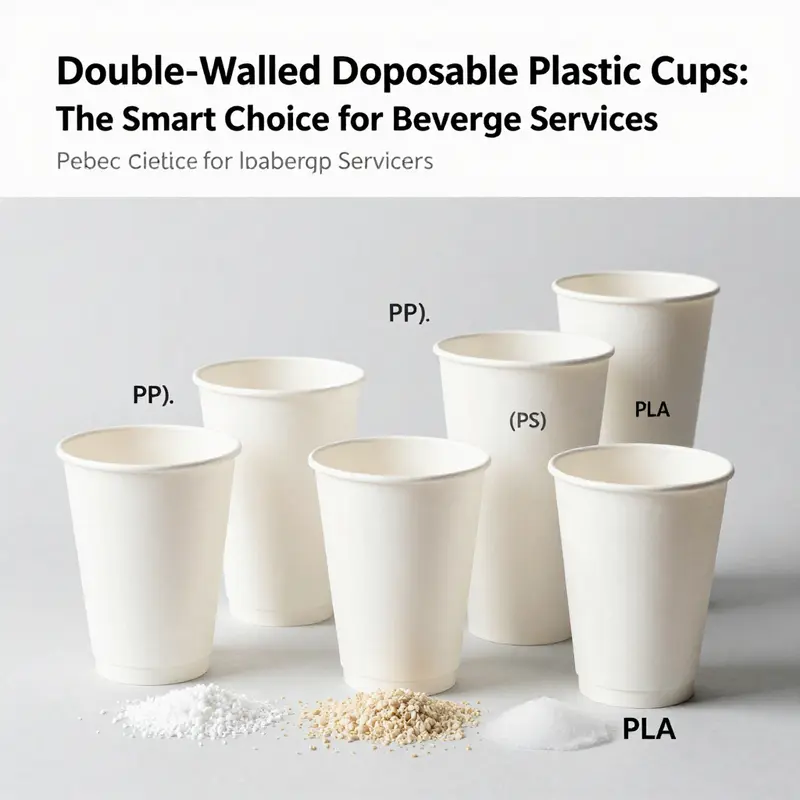
The double-walled disposable plastic cup stands as a quiet testament to how everyday objects can be engineered for comfort as well as convenience. At first glance the design seems simple—a cup, two layers, a pocket of air between them. Yet that air gap is a carefully tuned barrier that interrupts heat transfer, letting hot beverages stay hot without scalding fingers and keeping cold drinks from sweating through a sleeve. The architecture relies on two familiar thermoplastics, polypropylene and polystyrene, each chosen for a different balance of performance, cost, and manufacturability. In the broad spectrum of disposable drinkware, the double-walled cup marks a deliberate shift toward better user experience while still leaning into the realities of single-use packaging. For a broader view of offerings in this family, see the disposable drinkware category.
Polypropylene, the workhorse of many food-contact containers, brings a blend of heat resistance, chemical durability, and light weight. It tolerates repeated exposure to hot liquids without deforming, a property that is especially valuable when the cup must retain its shape while the beverage remains piping hot. Polypropylene’s melting point sits well above typical hot beverage temperatures, which helps maintain structural integrity during handling. It is also known for relatively good chemical resistance, which matters when ingredients or cleaning agents come into play in a consumer setting. From a circular economy perspective, polypropylene is recyclable and commonly identified by recycling code #5, which informs both collection streams and downstream reuse. This recyclability is a practical advantage in a category where people reach for a new cup with every coffee break and may seek to limit waste through higher recycled-content products or take-back programs.
Polystyrene, by contrast, has long been favored for single-use cups because of its cost efficiency and its comfort in heat retention. A single-wall PS cup can deliver strong thermal performance at a low price point, which made it a staple for many cup lines. In the double-walled format, PS contributes to stiffness and a crisp, transparent outer shell that helps users gauge fill levels and drink temperatures visually. However, PS faces more challenging recycling dynamics compared with PP, and its performance can degrade if exposed to higher temperatures over time. This nuance matters in consumer environments where hot liquids are common and recycling infrastructure varies by region. The interplay between PP and PS in double-wall configurations embodies a broader industry compromise: prioritizing performance and affordability while acknowledging ongoing challenges in waste management and end-of-life processing.
The design logic of the double-wall cup rests on the creation of an insulating corridor. An air gap enclosed between the inner and outer walls reduces heat transfer by limiting conduction from the hot beverage to the outer surface. It also curtails convection by interrupting path and velocity of heated air near the cup’s exterior. The result is a cup that can be held more comfortably even when full of coffee, tea, or other hot liquids, while the drink remains near its desired temperature inside. This insulating effect is complemented by a grip-friendly exterior that remains cooler to the touch than the beverage, an important practical check against accidental burns. The absence of a separate sleeve streamlines the user experience and can contribute to packaging efficiency; in a well-optimized line, fewer parts mean fewer components to manage in a busy coffee shop or catering service. The comfort delivered by the double-wall structure often translates into a more confident handling experience for customers, which in turn can influence how often the cup is chosen for hot beverages in fast-paced settings.
From a manufacturing perspective, producing a true double-wall cup requires a set of precise steps that can vary by facility and the exact instrument set used. The inner and outer walls are typically formed as two interconnected layers that are later joined, sometimes through co-extrusion or a secondary molding operation. The production may involve extrusion-blow molding or sophisticated two-shot molding, where the components are molded separately and fused to form the sealed air gap. The geometry of the walls is critical: the walls must be thin enough to keep overall weight reasonable, yet robust enough to withstand stacking, transport, and repeated handling. The interface between the two walls must remain stable under heat and pressure, ensuring the insulating air gap does not collapse or leak over time. Precision in this fabrication sequence is what keeps the cup reliable across thousands of cycles of use, disposal, and, in the consumer sense, occasional reuse in the brief future after purchase, given some products are designed to be compostable under specific industrial conditions.
In this light, the choice of materials also carries implications for safety and food-contact compliance. The materials used in disposable cups are governed by guidelines that address how they perform when in contact with hot liquids. Polypropylene and polystyrene each interact with heat, moisture, and fats in distinct ways, and the coatings or liners that may sit inside a cup can influence the overall safety profile. The industry has noted concerns around microplastics or other compounds that could migrate under certain conditions if processing quality is not maintained. High-quality inner coatings or films are intended to minimize any risk of interaction with the beverage, but these protections hinge on robust upstream manufacturing practices. In consequence, food-contact safety standards and independent verification play a crucial role in keeping double-wall cups reliable for daily use in homes, workplaces, and public venues.
The sustainability narrative surrounding these cups often centers on content composition and end-of-life options. Some manufacturers pursue formulations with recycled content—sometimes reaching into the 30 percent range—to align with regulatory expectations and brand sustainability promises. This approach is not without its trade-offs. Recycled content can affect clarity, strength, and heat performance if not carefully balanced, and it can complicate recycling streams if the material is mixed with incompatible polymers. The reference to standards like EC 1935/2004 underscores a broader push to ensure that materials in contact with food are handled in ways that preserve safety while enabling recycling and recovery where possible. At the design level, this tension inspires innovations such as selecting a base polymer that maintains performance even when recycled, or layering in recycled strata in a way that does not compromise the cup’s primary thermal and handling functions.
Within the broader ecosystem, sustainable options are often marketed as compostable or biodegradable, particularly in product lines aimed at reducing environmental impact. These claims typically hinge on the use of alternatives such as PLA or other plant-based polymers. While such materials can improve the environmental narrative in isolation, they introduce additional considerations. Compostability usually assumes industrial composting conditions, which limits practical end-of-life scenarios for many consumers. In road-tested environments, the double-wall design may be compatible with these materials as part of a wider strategy to reduce waste, but stakeholders must remain vigilant about the conditions required to achieve true compostability and the potential trade-offs in barrier performance or heat resistance. In parallel, some cups advertise a higher recycled content while staying within standard food-contact safety guidelines; these options aim to reduce virgin material use without compromising consumer safety or the integrity of the insulated structure.
The practical applications of double-walled cups extend beyond coffee and tea to settings that demand precise liquid handling or clear visibility. In medical and pharmaceutical contexts, calibrated cups with measurement markings are used to assist accurate administration of liquids, leveraging their clear, durable plastic to provide a reliable reading of volumes. This application highlights how the same fundamental material choices—PP and PS—and the same double-wall logic can be adapted for specialized tasks without sacrificing the convenience of disposability. In such scenarios, the focus shifts from mere insulation to precise quantification and traceability, illustrating how form and function can converge in even the most seemingly ordinary disposables.
Yet even as the performance advantages accumulate, the double-wall cup is not without limitations. The geometry that yields insulation can also introduce fragility relative to standard single-wall designs. The two-wall construct must withstand the mechanical shocks of everyday use, including stacking, transport, and occasional rough handling. The reliance on specific processing parameters also means that variability in material quality or manufacturing conditions can compromise the integrity of the air gap, potentially reducing insulation or even creating micro-leaks that would degrade performance. Moreover, as with any plastic component intended for hot liquids, there is a continuing concern about microplastic formation and potential leaching from coatings or boundary films, particularly when suboptimal resins or processing methods are employed. This is a reminder that performance and safety are products of both material selection and manufacturing discipline.
Consumers and businesses increasingly seek options that balance performance with responsibility. The availability of cups with meaningful recycled content, or with certified compostable materials, reflects a broader design philosophy that values end-of-life possibilities as much as in-use experience. The practical takeaway for buyers is that the material choice—PP for resilience and recyclability, or PS for cost-effective insulation—should align with local waste-management infrastructure and the intended lifecycle of the product. In markets where curbside recycling remains robust, PP-based double-wall cups may offer cleaner end-of-life outcomes. In regions with industrial composting capabilities, compostable variants might be a workable option for food-service operators who want to signal environmental stewardship without compromising service quality. The overarching message is that material selection is not an isolated decision but a component of a larger system that includes manufacturing capability, consumer behavior, and municipal waste strategies.
As with any food-contact material, vigilance around safety and compliance remains essential. The U.S. Food and Drug Administration’s guidelines on food contact materials provide a framework for evaluating whether a plastic choice is appropriate for a given use case, including considerations like migration, coating integrity, and compatibility with hot liquids. These guidelines, while not a substitute for supplier verification, offer a reference point for industry players and a reassurance channel for consumers who want to understand how their cups are vetted for safety. They also emphasize that ongoing quality control is a critical element of any double-wall program, ensuring that the insulating performance is preserved across batches and that any potential issues with coatings or inner films are detected early. For readers who want to explore related product families and broader packaging options, a convenient entry point is the disposable drinkware category, which collects a wide range of cups, lids, and related items in a single catalog.
Taken together, the materials and methods behind double-walled disposable cups reveal a careful balance of physics, economies, and expectations. The combination of polypropylene or polystyrene with a double-wall geometry delivers a practical solution that improves user comfort without abandoning the realities of single-use packaging. The conversation about these cups now often includes not just how they perform in the hand and in the cup, but how they fit within sustainability agendas, how they align with safety standards, and how manufacturing choices ripple outward to influence cost, availability, and end-of-life outcomes. In short, the evolution of double-walled disposable cups is a story about material science meeting everyday life, a narrative where a simple coffee break becomes a small but meaningful test of engineering, policy, and responsibility.
External context keeps pace with the evolving landscape. For a regulatory perspective on how materials intended for contact with food are evaluated and regulated, consult the FDA guidelines on food contact materials. This external resource provides a foundational understanding of how migration, coatings, and alternative polymers are considered in approving and monitoring products that people touch daily.
Guarded Heat, Unguarded Footprint: Navigating the Environmental Realities of Double-Walled Disposable Cups
Double-walled disposable plastic cups occupy a peculiar niche: they promise the warmth of a hot beverage without the burn of a hot handle, a design goal that blends consumer comfort with the convenience of single-use service. Their essence lies in a simple yet effective idea—a narrow gap of air or a lightweight insulating layer nestled between two plastic walls. This arrangement slows heat transfer, allowing a drink to stay hotter longer while protecting the wearer’s fingers from scalding. In a world accustomed to on-the-go consumption, such cups have become a common accoutrement in cafes, events, and office settings. Yet behind the popularity lies a set of trade-offs that complicate their reputation. They are the tangible embodiment of a broader tension between convenience and sustainability, a tension that plays out in how we design, use, and ultimately dispose of everyday packaging. The chapter that follows unpacks this tension by tracing the life cycle of double-walled cups, with attention to materials, end-of-life pathways, and the evolving standards that shape how responsibly we can, or should, use them. It is not a meditation on perfection but an invitation to weigh the practical benefits against environmental costs in a field where small, rapid choices accumulate into meaningful outcomes.
Material choices drive much of what makes these cups appealing and, at the same time, problematic. The majority of double-walled cups rely on polymers such as polypropylene and polystyrene. These plastics, derived from fossil fuels, bring a familiar set of performance advantages: clarity where needed, toughness in the wall structure, and compatibility with high-speed manufacturing. Polypropylene, in particular, has often been favored for its balance of rigidity and resilience under heat. It can be molded into precise shapes that accommodate an insulating cavity without adding excessive weight. Polystyrene, while offering excellent clarity and rigidity, introduces different environmental considerations due to its energy profile in production and its behavior at end-of-life. In a market increasingly attentive to the life cycle of materials, these choices are not merely about performance; they are about what happens after the cup has fulfilled its short, busy life in a café line or a conference room. The reliance on fossil-based feedstocks remains a central point of debate, especially as organizations seek to align packaging choices with broader sustainability goals. To some, the appeal of PP and PS lies in proven recyclability pathways or in the feasibility of integrating recycled content, while to others the fossil-based nature of these materials signals a need to push more aggressively toward circular alternatives. For readers exploring broader context and related packaging categories, a deeper look at disposable drinkware offerings can be found here: Disposable Drinkware.
The structural logic of double walls also shapes practical realities beyond heat management. The increased plastic content per cup, compared with single-wall designs, translates into more material use and more volume that needs to be managed at the end of the cup’s life. In many municipalities, the multi-layered nature of double-walled cups creates a formidable barrier to conventional recycling. Separation of components, cleaning of residual contents, and the economic viability of recycling operations all factor into whether a given cup can be reprocessed. When the economics do not favor recycling, these items commonly end up in landfills or as litter, where plastics can persist for decades or longer. The environmental footprint is not merely a function of the cup’s mass; it is intertwined with waste management systems, collection efficiencies, and consumer behavior. The reality is that even well-intentioned efforts to divert these products from waste streams can be thwarted by a lack of compatible facilities, contamination risks, or the absence of dedicated sorting streams. In this context, the story of double-walled cups becomes a case study in how design and policy must align to translate performance advantages into genuine sustainability gains.
From a broader sustainability perspective, the conversation often shifts to what can be done to close the loop. Some manufacturers have experimented with post-consumer recycled plastics, aiming to boost the recycled content of the cup walls without sacrificing the necessary structural integrity or heat resistance. Others explore biodegradable or compostable alternatives, such as materials that claim compostability under industrial conditions or that promise lower overall environmental impact when certified and properly managed. The allure of these options lies in reducing long-term persistence in the environment, yet they introduce new complexities. Biodegradable and compostable materials can behave differently under heat, moisture, and mechanical stress, and their performance in real-world service conditions must be weighed against the potential for contamination of recycling streams if misapplied. Even within this spectrum, the performance criteria—thermal insulation, grip comfort, and resistance to deformation—must be balanced against end-of-life considerations. The sustainability narrative, therefore, is not a simple substitution of one material for another; it is a systems-oriented rethinking of how packaging is produced, used, and managed after use.
In practice, industry voices emphasize a spectrum of strategies intended to reduce the environmental burden without sacrificing user experience. These strategies include increasing material efficiency—achieving the same insulating performance with thinner walls or with smarter wall geometries that maintain strength while using less plastic. Another is the responsible incorporation of post-consumer recycled content, which reduces reliance on virgin resin and helps close the circular loop when feasible. A third lever is the exploration of alternative materials that provide similar or better performance with a more favorable environmental profile, whether through lower energy use in production, lower toxicity, or improved recyclability. These approaches reflect a broader trajectory in packaging design toward products that can fit more naturally into waste management ecosystems, even as the culture of single-use consumption remains deeply ingrained in many sectors. The move toward such approaches is not merely technical; it carries implications for branding, consumer education, and how businesses communicate the trade-offs involved in their packaging choices.
For those who want to anchor these considerations in the empirical arena, several studies and practical assessments offer nuanced perspectives on material trade-offs and environmental outcomes. A peer-reviewed work by a noted scholar in materials science highlights how polypropylene stacks up against alternatives in energy use and greenhouse gas emissions across typical life cycles. While PP often shows favorable performance in energy efficiency compared with more energy-intensive polymers, the absolute impact of any cup is magnified by its scale and the infrastructure that supports its use and disposal. The key takeaway from this body of research is that material choice is a meaningful lever, but it operates within a wider system of consumption patterns, waste collection, and processing capacities. These dynamics remind us that even the most efficient cup design is only as sustainable as the framework that handles it after use. As packaging professionals seek path-dependent improvements, the dialogue increasingly centers on systemic changes that extend beyond the single-use moment and toward a more resilient material economy. In this broader context of environmental assessment, the balance between performance, cost, and sustainability becomes a living conversation rather than a fixed prescription, inviting ongoing experimentation and transparent reporting of outcomes.
To place this discussion in a practical frame, consider the role of standardization and safety in food contact materials. Regulations around food contact safety—such as limits on contaminants and the assurance that materials can withstand repeated contact with hot liquids—shape what is permissible in cup design. These standards also influence consumer trust, an essential currency in a crowded market. Even when a particular cup design offers superior insulation, it must also meet safety benchmarks to be viable in real-world settings. The interplay between performance and safety often drives a rigorous testing regime, including assessments of thermal behavior under different beverage temperatures and durations, as well as evaluations of any potential leaching or degradation under heat. In this sense, the environmental story of double-walled cups cannot be divorced from the regulatory and safety frameworks that govern their composition and usage. Consumers and businesses benefit when material choices are made with both performance and safety in mind, and when transparency about these choices is prioritized in product labeling and corporate communication.
From a consumer education standpoint, the discussion inevitably circles back to the question of waste and what happens to cups after use. The dual promise of insulation and convenience can create a cognitive dissonance when the end-of-life path is uncertain or protracted. Waste audits, local recycling capabilities, and consumer habits all shape the fate of double-walled cups. Even in regions with advanced waste management, the practicalities of sorting and processing multi-layered cups can pose challenges. The path to meaningful improvement lies in acknowledging these realities and pursuing coordinated actions: better design for recyclability, clearer labeling to guide sorting, and investments in infrastructure that can handle a wider range of plastics and composites. Ultimately, if societies want to lean more heavily into reusable systems, the role of single-use variants—no matter how well designed—must be reevaluated within a broader strategy that brings down overall waste generation while preserving the benefits of convenient beverage service.
In conclusion, double-walled disposable plastic cups embody a paradox that many modern packaging solutions share. They deliver tangible benefits for users—hot drinks stay hot, hands stay cool, and service remains fast—yet they amplify material use and place a spotlight on end-of-life management that is not always aligned with prevailing waste infrastructures. The path forward is not a single silver bullet but a constellation of improvements: smarter materials, higher post-consumer content where feasible, clearer information about disposal, and, crucially, a shift in consumer and organizational behavior toward reduced reliance on single-use solutions where practical. The chapter above situates these cups within that broader narrative, emphasizing that performance and sustainability are compatible only when design, policy, and user behavior move in tandem. For readers seeking a broader catalog of packaging options and related materials, the disposable drinkware category offers a lens into how different choices influence both daily practice and environmental outcomes. External researchers and practitioners point to a growing body of evidence on material trade-offs, urging caution in generalizations and encouraging ongoing evaluation across contexts. For a peer-reviewed examination of these trade-offs and their implications for policy and practice, see the resource here: https://www.sciencedirect.com/science/article/pii/S0956053X2400178X.
Double-Walled Disposable Cups in Practice: Applications, Design Trends, and the Sustainable Path
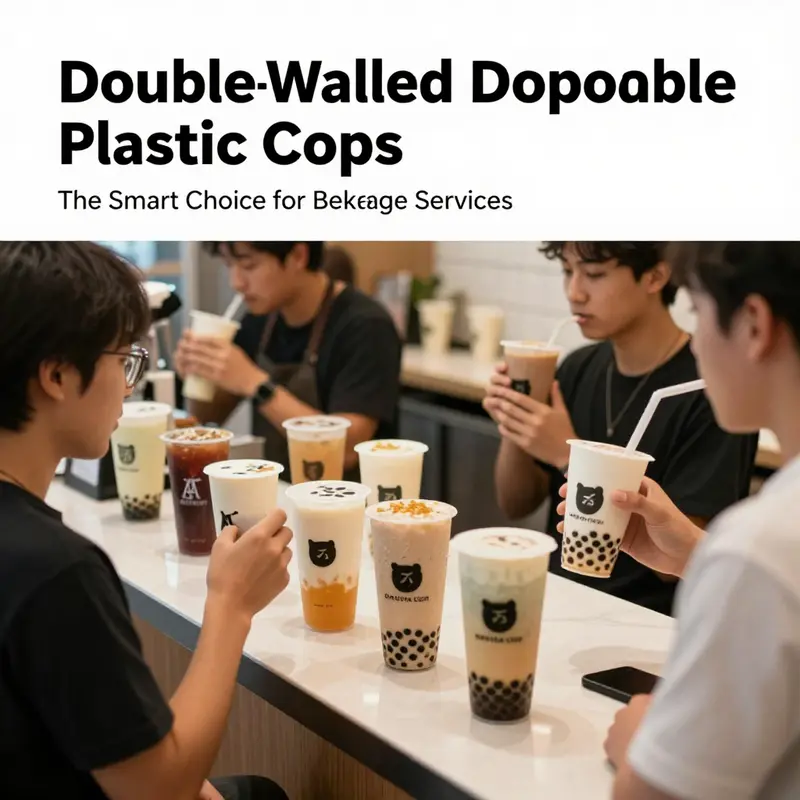
The double-walled disposable cup remains a practical solution for hot beverages by providing an insulating air gap between two walls. In hospitality, offices, commuting, and events, these cups balance user comfort, service speed, and branding opportunities while driving considerations around disposal and recyclability. Design choices such as wall thickness and lid compatibility influence heat retention, grip, and spill resistance, and manufacturers increasingly offer variants with higher recycled content or compostable materials to fit local waste systems. Regulation, labeling, and end-of-life infrastructure shape which options are viable in any given market, encouraging a portfolio approach rather than a single universal solution. The evolving story emphasizes transparency, performance, and responsible packaging as the industry collaborates with suppliers, buyers, and regulators to align convenience with environmental stewardship.
Final thoughts
In summary, double-walled disposable plastic cups are more than just a trend; they represent a commitment to enhancing customer experience while considering environmental impact. From thermal insulation technology to a focus on sustainability and diverse applications, these cups fulfill the demands of modern food and beverage businesses. As organizations seek innovative solutions to stand out and meet customer needs effectively, incorporating double-walled disposable cups can serve as a valuable asset in their product lineup.