
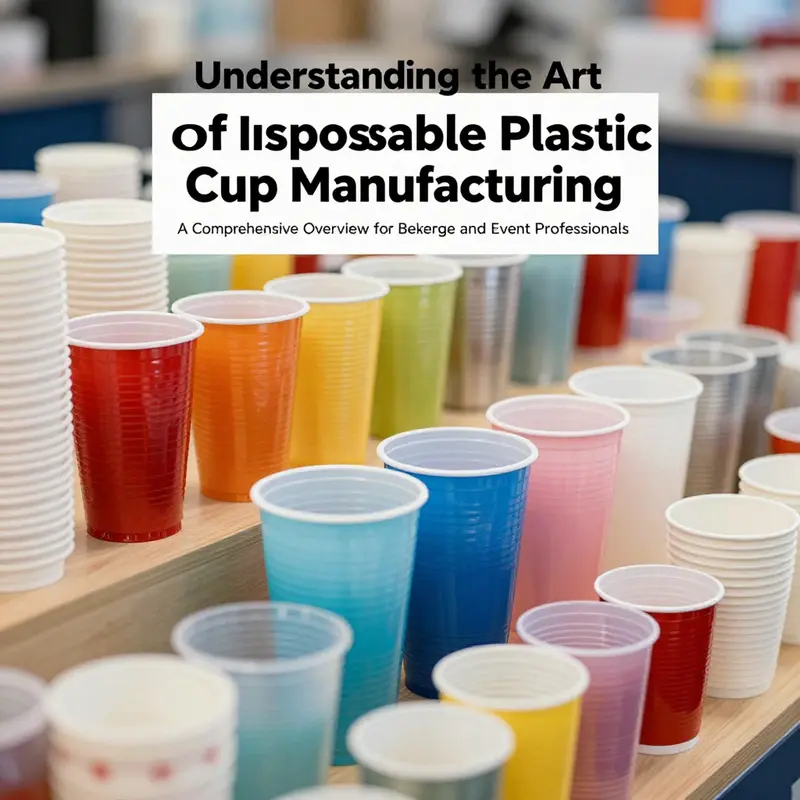
Disposable plastic cups have become ubiquitous in the food and beverage industry, especially in bubble tea shops, restaurants, and catering services. The ability to produce these cups in large volumes efficiently is crucial for businesses serving customers on the go. This article delves into the intricate manufacturing processes behind these essential items, providing insights relevant to event planners and corporate procurement teams. We’ll explore thermoforming and blow molding techniques, carefully consider material selection, and examine how automated systems enhance efficiency in production. Each chapter is designed to equip you with the knowledge to make informed decisions about your disposable cup needs, ensuring that your beverage offerings remain both appealing and practical.
Shaping Convenience: Thermoforming and the Quiet Precision Behind Disposable Cups

Every sip begins with something almost invisible in daily life: a cup. It is simple, familiar, and relentlessly efficient. Yet the journey from a flat sheet of plastic to a reliable, hygienic vessel that safely carries hot coffee or cool lemonade involves a choreography of heat, pressure, and precise timing. In the disposable plastic cup manufacturing landscape, thermoforming stands as a foundational method. It converts a sheet of thermoplastic into a three-dimensional cup by softening the material and guiding it into the contours of a mold, using either vacuum suction or carefully directed air pressure. The result is a lightweight, cost-effective container that can be produced at scale with remarkable consistency. This technique excels in producing standard-sized drinking cups and symmetrical containers, where speed and uniformity are paramount.\n\nThe core of thermoforming lies in transforming a flat sheet into a hollow form with minimal waste and high repeatability. The sheet—often polypropylene (PP) or polystyrene (PS)—is heated until it becomes pliable, then positioned over or into a mold. A vacuum draws the softened sheet into the mold’s recess, or air pressure presses it outward, shaping sharp, defined features. The cooling stage that follows solidifies the profile, and the formed cup is ejected and routed toward trimming, quality checks, and packing. The appeal of this method for disposable cups is unmistakable: it couples rapid cycle times with the capacity to produce large volumes, while accommodating a degree of design flexibility that keeps pace with evolving consumer preferences. The form must hold up to the rigors of stacking, distribution, and occasional temperature exposure, all while remaining comfortable to handle and aesthetically steady for branding opportunities.\n\nMaterials play a decisive role in shaping both performance and cost. In practice, PP and PS dominate because they deliver the right balance of stiffness, clarity (for certain applications), heat resistance, and recyclability. PP, in particular, is favored for its resilience at moderate temperatures and its compatibility with widely available recycling streams. PS offers clarity and sharp edge definition that can enhance the perception of freshness, a factor that matters in beverage presentation. The broader family of thermoplastics—including high-impact polystyrene (HIPS), polyvinyl chloride (PVC), and PET in some cases—expands the toolbox manufacturers can draw from, enabling cups tailored for specific consumer tasks, from hot beverages to desserts and prepared meals.\n\nIn practice, this balance translates into reliable output across a broad range of cup sizes and shapes, enabling manufacturers to respond quickly to seasonal demand, brand campaigns, or retailer requirements. In automated production, lines integrate heating, forming, cooling, trimming, and stacking into a continuous workflow, with real-time monitoring and feedback that sustain consistency across hundreds or thousands of cycles per hour. Modern tooling supports rapid mold changes, allowing a single line to produce different cup geometries without a full rebuild, a key advantage in a market that prizes both standardization and customization.\n\nThe end result is a dependable supply of cups that meet regulatory expectations while aligning with consumer desires for safe, convenient, and visually consistent packaging. Thermoforming remains a scalable, versatile method whose impact can be felt from a single coffee shop to a global beverage program, where the combination of material choice, process control, and design flexibility shapes the everyday experience of drinking on the go.
From Parison to Cup: Mastering Blow Molding Techniques in Disposable Drinkware Manufacturing
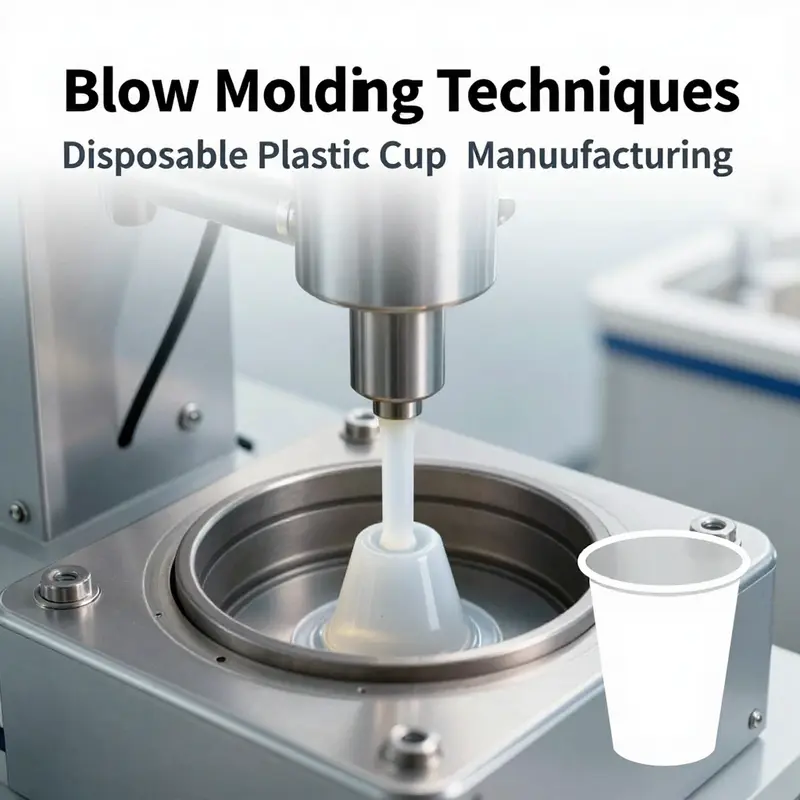
Blow molding remains a foundational technology in the production of disposable cups, enabling hollow, thin-walled parts to be produced at high speed. The process starts with melted thermoplastic, shaped inside a mold by compressed air to form a sealed cup. Extrusion blow molding (EBM) is common for high-volume cups because it can produce a continuous parison into a molded cup with relatively low tooling costs. Injection blow molding (IBM) offers tighter tolerances and better surface finish but at higher capital cost and added handling. Injection stretch blow molding (ISBM) adds a stretching step during the blow phase to align polymer chains, improving strength and clarity, and is frequently used for PET cups. For multi-layer barrier cups, co-extrusion can build walls with outer stiffness and inner barrier layers while enabling recycled content. In practice, designers balance wall thickness, material choice, heat resistance, barrier performance, and production economics. Modern lines emphasize automation for parison handling, mold changes, trimming, and stacking to reduce labor and ensure consistent thickness. Ultimately, the choice of blow molding path depends on product requirements and scale, but all share the same core physics: a parison, an enclosed mold, and air pressure that shapes the softened polymer before it hardens. The result is a reliable cup suitable for a wide range of beverages and service environments.
Materials Matters: How Plastic Choices Shape Performance, Sustainability, and Cost in Disposable Cup Manufacturing

Material selection in the disposable plastic cup manufacturing process is more than a technical decision; it is a strategic choice that resonates through performance, environmental impact, and cost. In a market where consistency, safety, and speed define competitive advantage, the raw plastic chosen for a cup sets the ceiling for what the production line can achieve and how the finished product is experienced by the consumer. The journey from resin to ready cup begins long before the first heated sheet or preform is placed in a mold. It starts with an understanding of the cup’s intended use, the end-of-life expectations of customers, the infrastructure available for recycling, and the economic realities of high-volume manufacturing. The choices made at this stage ripple through every subsequent step—from forming method to lid compatibility, from printability to branding, from shelf life to disposal. In short, material selection is the invisible engine behind the visible traits that customers notice: clarity or opacity, stiffness, heat tolerance, and the tactile feel of a disposable cup in hand.
Among the most commonly used plastics in cold and hot beverage applications, certain resins have established themselves as dependable workhorses. Polyethylene terephthalate (PET) is celebrated for its exceptional clarity, high strength, and recyclability. Cups made from PET are a staple for water, soda, and juice offers where visual appeal matters as much as durability. PET’s transparency makes branding and flavor cues more legible through the cup, which is a powerful marketing advantage in beverage retail. Yet PET has clear limitations: it is not designed for hot liquids. The heat resistance of PET is insufficient for hot beverages, so its use in hot-drink cups is generally avoided or restricted. This specific boundary—clarity and rigidity for cold uses, with heat resistance limitations—illustrates a recurring theme in material selection: the trade-offs between mechanical performance and thermal safety.
High Impact Polystyrene (HIPS) adds another layer of choice. HIPS delivers rigidity and impact resistance that are advantageous for thicker cold cups, dessert containers, and snack packaging. It offers good printability, which is a boon for branding on mainstream disposable ware that must communicate through promotional graphics and colors. The downside? HIPS is less transparent than PET, which can reduce the product’s visual appeal in certain applications, and it generally presents lower recyclability from a closed-loop perspective. The economics of HIPS—strong performance at a lower unit cost—help explain why many large-volume cups rely on this material for cost-sensitive cold-drink and snack packaging. The decision to deploy HIPS, like other material choices, hinges on a balance between required rigidity, brand presentation, and environmental considerations.
Polypropylene (PP) stands out for its heat resistance and versatility. In hot beverage contexts, PP is a natural fit because it can withstand moderate temperatures without deforming, making it a common choice for cups designed to handle steam or warm liquids. The trade-off with PP is often clarity: while advances have improved transparency, PP generally does not match PET in optical appeal. Nonetheless, PP’s ability to tolerate higher temperatures expands the functional envelope of a single cup family, enabling manufacturers to offer both cold and hot variants with a common design language and tooling footprint. This compatibility with hot liquids aligns with consumer expectations for convenience and single-use versatility, reinforcing PP’s role in a broad range of disposable cup portfolios.
Polystyrene (PS) serves in both cold and hot drink contexts, offering low-cost performance and good rigidity. PS has historically been a staple in disposable tableware because it can be molded into crisp edges and hold a stable form at modest temperatures. However, the environmental narrative surrounding PS is more constrained, given its brittleness under certain conditions and its ongoing debate within recycling streams. Its presence in the material mix underscores a broader design principle: selecting materials that align with a brand’s sustainability commitments while still meeting functional targets.
PVC, though less common today in mainstream disposable cup applications, appears in niche scenarios where specific barrier properties or cost considerations drive its use. The adoption of PVC is increasingly scrutinized due to environmental concerns and evolving regulatory landscapes, which can influence both supplier availability and consumer acceptance. The overarching lesson here is that the material palette for disposable cups is broad, but not unlimited. Each resin carries a profile of strengths and limitations that must be weighed against the cup’s intended life cycle, the equipment capabilities, and the end-user experience.
Beyond these widely used resins, biodegradable and plant-based alternatives have moved from the margins toward meaningful consideration in many portfolios. Polylactic acid (PLA) is a prominent example, offering lower carbon footprints and compostable properties under specific conditions. PLA can align with sustainability goals, but it also introduces constraints. Industrial composting facilities are often required to achieve the intended end-of-life outcomes, and PLA’s performance in temperature, shelf life, and barrier properties may vary in ways that affect product integrity and consumer perceptions. The integration of PLA into a cup family requires careful testing of sterilization compatibility, thermal performance during distribution, and compatibility with hot-fill or hot-drink scenarios if applicable. Even when a compostable option is technically viable, the real-world logistics of composting—collection, processing capacity, and regulatory frameworks—must be part of the decision calculus.
Material selection is not a purely theoretical exercise; it is a systems problem that links formulation with tools, temperatures with cycle times, and brand promises with consumer behavior. Several practical considerations guide the choice of resin in a way that aligns with the manufacturing realities of thermoforming and blow molding, the two dominant pathways in disposable cup production. Thermoforming, which uses a heated sheet of thermoplastic formed into shapes through vacuum or mechanical pressure, benefits from materials that exhibit predictable forming characteristics, crisp edge definition, and dimensional stability after cooling. PET, with its high clarity and robust strength, forms a compelling option for visual appeal in cold beverages and for applications where stacked packing, stacking efficiency, and display integrity matter. The sheet’s thermoformability must also harmonize with cycle times and downstream trimming and stacking operations. For hot-fill or hot-drink designs, PP’s higher heat resistance can be a decisive factor, even if clarity lags behind PET. The ability to withstand repeated thermal exposure during handling and consumer use is as important as the initial forming step.
Blow molding, on the other hand, creates hollow, thin-walled containers by inflating a preform inside a mold. This process emphasizes material resilience and wall thickness uniformity, along with the need for clarity when a transparent cup is a brand asset. In these applications, PET again shines for its clarity and strength, while PS may offer cost effectiveness for certain disposable drinkware segments. The choice of resin influences the preform design, the heating profile, and the mold geometry, which in turn affect cycle time, energy consumption, and defect rates. The ability to switch between plastic types with minimal downtime becomes a strategic capability for manufacturers aiming to respond rapidly to demand shifts or the emergence of new beverage formats.
A central theme emerging from these material considerations is the interplay between performance requirements and end-of-life realities. Recyclability is a critical criterion in many market segments, and PET leads the way in curbside recycling systems in many regions, often with established mechanical recycling streams that preserve clarity and strength across cycles. HIPS and PS, while economically attractive, face evolving post-consumer sorting challenges and varying rates of recoverability depending on local infrastructure. The shift toward single-material solutions—where feasible—can reduce recycling complexity and improve overall circularity. Yet this is not a one-size-fits-all solution. In some cases, multi-material solutions may be necessary to achieve required barrier properties or to meet branding ambitions, and those cases demand transparent communication about end-of-life expectations to consumers and waste processors alike.
The sustainability conversation also intersects with brand commitments and consumer expectations. As companies articulate their environmental goals, the material choice becomes a tangible signal of responsibility. The availability of recycled content, the ability to maintain a distinctive brand image through clarity or color, and the alignment with approved food-contact regulations are all material-related levers that brands pull as they design new cups. The decision framework increasingly weighs not only the raw material cost per kilogram but also the system cost: energy intensity of the forming process, material yield and scrap rates, and the downstream impact on recycling streams. In practice, this means a material evaluation protocol that couples resin properties with process windows, tooling compatibility, and post-consumer fate. Modern equipment is designed to accommodate switching between resin families with minimal downtime, enabling producers to tailor their offerings to shifting demand without sacrificing volume or quality. The ability to pivot, for instance, from a PET-based cold cup to a PP-based hot cup within a single production line, showcases how equipment flexibility and material science converge to create adaptable manufacturing ecosystems.
A strategic material choice also entails a careful look at the broader supply chain. Availability of resin grades, regional price fluctuations, and relationships with resin suppliers influence both cost and stability of supply. In high-volume environments, even small price differentials can translate into significant total cost of ownership over a year. The design team and procurement specialists must work together to select resins that not only meet technical specifications but also travel smoothly through the procurement cycle, with predictable delivery times and minimal risk of supply disruption. This collaboration extends into the acceptance testing phase, where physical properties such as dimensional stability after forming, heat resistance during hot-fill, and barrier performance against moisture and gases are validated under realistic production conditions. The goal is to reduce iteration cycles and avoid costly redesigns that could derail a deployment timeline or erode margins.
The material conversation would be incomplete without acknowledging the role of consumer safety and regulatory compliance. Food-contact safety standards vary by region, but the underlying principle remains constant: the chosen resin must perform in contact with consumables without compromising safety or taste. This is not only about the inherent toxicology of additives but also about how the material behaves under heat and over time. For hot beverages, the interaction between liquid temperature, cup material, and the wearer’s handling experience matters; for cold beverages, clarity and barrier properties can influence perception and enjoyment. In this sense, the raw material is part of a broader safety and quality ecosystem that includes formulation additives, barrier enhancements, and compatibility with coatings or printing inks. The chain from resin to finished cup must be traceable, auditable, and aligned with the expectations of retailers and regulators alike.
In practice, the optimal material selection emerges from a structured yet flexible decision framework. Designers weigh intended application against optical and thermal performance, recyclability, and end-of-life logistics. They consider how the forming method—thermoforming or blow molding—influences resin choice by affecting heating profiles, wall thickness, and defect modes. They balance the aesthetic and brand needs against the practicalities of mass production, including cycle times, scrap rates, and maintenance of consistent quality across tens or hundreds of thousands of cups per hour. They acknowledge that the best material for one product line may not be ideal for another, and that a diversified resin strategy can enable a company to meet varied consumer demands without sacrificing efficiency.
For readers navigating this landscape, a practical takeaway is that material selection should be treated as a data-driven, cross-functional effort. Researchers and engineers should not only test mechanical performance but also model lifecycle implications, recycling compatibility, and cost trajectories. The decision matrix becomes richer when it includes supply chain resilience, regional recycling capabilities, and the evolving expectations of consumers who increasingly value eco-friendly packaging. In such a framework, a cup is no longer a simple vessel; it is a carefully engineered interface that bridges material science, manufacturing engineering, and circular economy ambitions. For those seeking an accessible entry point into the material discourse, exploring the Plastic Cups product category offers a tangible view into how brands translate material choices into visible product lines and coherent packaging families. See more about the broader range of plastic cups in this category.
External resource: https://www.alibaba.com/product-detail/LITAI-Disposable-Plastic-Cup-Making-Machine_1600489275137.html
Precision in Motion: How Automated Systems Elevate the Disposable Plastic Cup Manufacturing Process
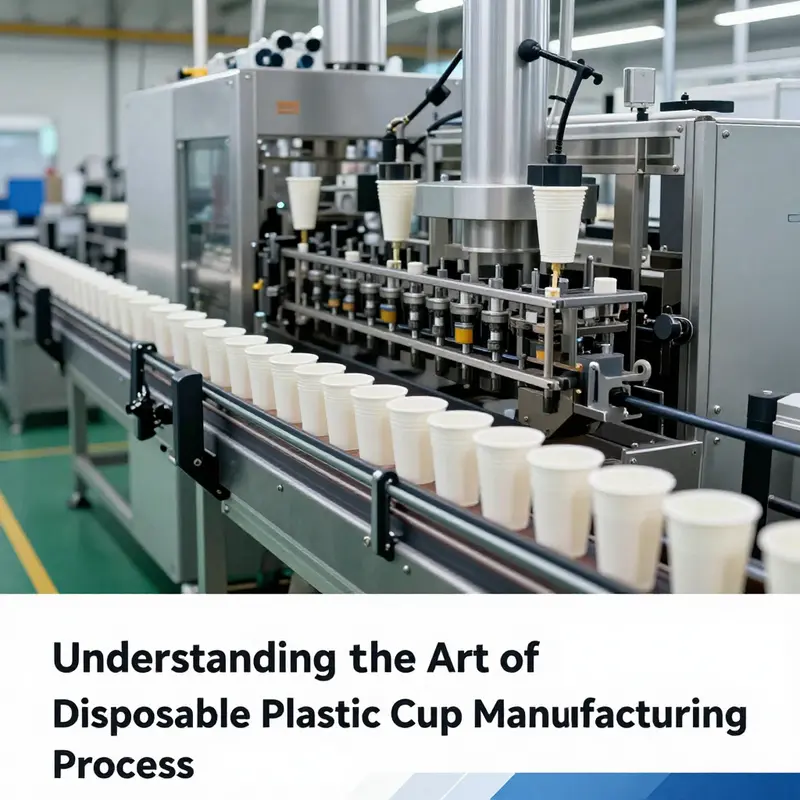
Across modern manufacturing floors, the disposable plastic cup has evolved from a simple molded item to the product of carefully choreographed automation. The chapter you’re reading sits at the intersection of material science, process engineering, and logistics, where the raw resin’s behavior under heat and pressure meets the orchestrated cadence of a fully automated line. The overarching topic—the disposable plastic cup manufacturing process—depends increasingly on intelligent systems that integrate every step from material feeding to final stacking. In this context, the choice between thermoforming and blow molding is not just a matter of part geometry or material; it is a decision shaped by throughput goals, material properties, and the degree of standardization that a production line must sustain. Automation does not replace the physics of forming; it choreographs it with precision, enabling constant output and uniformity at scales that once required extensive manual labor or costly rework. When a line is truly automated, the difference is measurable in both product consistency and the speed with which a factory can respond to demand spikes or shift to different cup sizes and grades of plastic without sacrificing quality.
The core advantage of modern automation lies in its ability to manage the entire workflow in a single, continuous sequence. Full automatic plastic cup making machines are designed to handle every stage—from raw material feeding and heating to forming, trimming, and stacking. This holistic approach minimizes human intervention, reduces the likelihood of operator-induced variability, and tightens process control. The result is a production environment that can sustain high output rates while maintaining the structural integrity of the cups. In practical terms, the line operates like a well-tuned assembly line, where each module—feed, heat, form, trim, and stack—knows its exact timing and tolerances. The success of such lines hinges on closed-loop control, where sensors monitor temperature profiles, material flow, and gap tolerances, and the control system keeps every segment synchronized to the same rhythm. The practical impact is a step-change in reliability. Downtime shrinks as automated feeders and conveyors minimize idle time, while automatic trimming pipelines reduce waste by delivering consistently clean edges and uniform wall thickness.
At the heart of this automation is PLC-based control. Programmable Logic Controllers provide the logic, sequencing, and fault-handling that keep complex lines running. PLCs translate the desired recipe—temperatures, stroke lengths, vacuum or air-strength, and cycle timing—into precise electrical commands that coordinate heating elements, clamping devices, molds, and conveyors. The result is a system that not only executes a program but also self-diagnoses common faults and reconfigures workflows to avoid costly interruptions. In practice, operators can adjust cycle parameters with confidence that the changes will propagate through every unit in the line without destabilizing other stages. This level of control supports rapid changeovers and batch-to-batch consistency, both essential when lines must alternatingly produce standard drinking cups and specialty designs for different markets or brands. The role of automation thus extends beyond throughput by sharpening reproducibility and traceability, two attributes increasingly demanded by customers and regulators alike.
The claimed pace of modern lines—up to about thirty cups per minute in some high-speed configurations—offers a tangible sense of the scale at which these systems operate. In internal testing contexts, this performance can exceed older, slower setups by a meaningful margin, often around twenty percent or more, depending on the particular geometry and material chosen. The variability in performance is not simply a matter of raw speed; it emerges from a balanced equation of heat transfer, mold design, and the efficiency of material handling. For thermoforming, where a heated sheet becomes pliable before molding, speed is amplified by the automation of heating zones and the precision of vacuum or pressure application. For blow molding, which creates hollow, thin-walled cups by inflating a preform inside a mold, cycle efficiency is enhanced by accurate preform handling, controlled inflation pressure, and rapid cooling strategies. In either case, the automation layer provides the repeatability needed to sustain such rates, while the mechanical design minimizes dwell time between cycles.
A critical facet of this automation is material versatility. Modern lines are engineered to work with multiple plastics—ranging from HIPS to PVC, PET, PS, and PP—without requiring a complete rebuild for each resin family. Material compatibility matters because it determines how heat is applied, how the sheet or preform behaves during molding, and how robust the trimming and stacking phases must be to ensure clean edges and stable geometry. The ability to handle different plastics on the same line reduces capital outlay and increases responsiveness to market shifts. It also raises the bar for quality management, because the system must adapt to a wider range of thermal properties, shrinkage rates, and crystallinity. Basing the line’s control strategy on a single, adaptable program reduces the risk of mismatches and improves the predictability of cycle times across resin families. When a plant can switch from, say, a PS-based cup to a PP-based cup without sacrificing throughput, it gains a crucial competitive edge in a market that prizes flexibility as much as efficiency.
Beyond speed and material flexibility, automated lines deliver reliability through integrated robotics and conveyors. The marriage of horizontal injection molding behemoths with robotic arms, automated grippers, and synchronized conveyors creates a seamless flow of parts that minimizes manual handling. Robotic systems can perform delicate tasks such as extracting freshly formed cups from molds and transporting them to trimming stations or deposition areas with minimal risk of deformation or contamination. This degree of automation reduces the opportunity for human error, increases the uniformity of cup dimensions, and lowers the potential for operator-induced defects. Moreover, the digital backbone—the PLCs and their associated software—provides real-time visibility into every metric that matters: cycle time, temperature uniformity, wall thickness consistency, trimming flash quality, and stacking alignment. Operators gain a comprehensive picture of process health, and managers can trace deviations back to root causes with a precision that would have been unattainable in purely manual lines.
From a standards and safety perspective, automation enhances compliance across the board. Modern lines carry certifications such as CE and ISO, signaling adherence to essential safety, quality, and environmental controls. These certifications are not mere formalities; they reflect a disciplined approach to machine design, guarding, and maintenance routines. The automated platform must be built with protective enclosures, interlocks, and fail-safe sequences that reduce the risk of accidents and equipment damage in high-speed environments. Routine maintenance becomes predictable rather than reactive, with scheduled calibrations for temperature sensors, mold alignment checks, and lubrication cycles that keep throughput stable. Such reliability is not purely about uptime; it also reinforces product safety, ensuring that cups intended for hot or cold beverages retain their integrity and do not pose a risk of warping or leakage under typical service conditions.
For many manufacturers, the pull toward automation also involves a careful economic calculation. While full automation delivers the highest potential throughput and the cleanest, most consistent output, it comes with a higher upfront cost and a longer return-on-investment horizon. Semi-automatic configurations offer a more accessible entry point, providing improved output relative to manual lines while preserving flexibility for product variety and incremental upgrades. The strategic decision typically depends on market demand, capital availability, and the desire to maintain continuous production with the option of gradual scaling. Even in semi-automatic setups, automation tends to crop up in critical junctures—robot-assisted trimming, automated material handling, or part of the forming cycle—where even modest gains in speed and accuracy translate into meaningful cost savings over time.
The role of design in automated lines should not be overlooked. For cassette-based thermoforming or blow-masting configurations, the form, trim, and stack modules must be designed to accommodate a range of cup geometries while preserving cycle integrity. This requires molds with consistent surface quality, controlled cooling channels, and precise flash removal mechanisms that can cope with different resin shrinkage behaviors. The interaction between mechanical design and process control is why modern automation tends to be a system rather than a stand-alone machine. The full value emerges when heat profiles, mold temperatures, and robotic pick-and-place routines are tuned together, producing a synergistic effect on quality and throughput. The result is a facility that can rapidly adjust to design changes, such as a new cup diameter or a slightly altered wall thickness, without destabilizing the entire line.
In practice, the seamless integration of automated material feeding and shaping systems is what makes these lines resilient. A reliable feed system minimizes resin starvation or overfeed, ensuring that heating zones operate within a narrow thermal band. The shaping stage, whether it employs vacuum, pressure, or inflation, benefits from precise synchronization with downstream trimming and stacking. The entire chain is optimized to remove bottlenecks and reduce idle time. Horizontal injection molding—notwithstanding its own technical specifics—often serves as a backbone for such automation because of its compatibility with fast, automated part handling and short cycle times. The combination of robust sealing, accurate mold alignment, and advanced control logic translates into uniform cups with consistent wall thickness and minimal variations in diameter. The payoff is a predictable, repeatable product line that can reliably meet large-volume orders and export requirements while maintaining stringent quality standards.
To readers exploring the broader ecosystem of disposable tableware and its manufacturing realities, the visual and practical cohesion of automated lines is worth noting. For related categories and supplementary materials, see the Disposable Drinkware section of the broader product family. This reference helps contextualize how automation in cup production harmonizes with other single-use tableware offerings, reinforcing a holistic view of manufacturing efficiency and supply chain responsiveness. Disposable Drinkware provides a lens into how integrated automation scales beyond cups to a wider range of single-use beverageware, illustrating how the same principles of material handling, heating, forming, trimming, and stacking drive consistency across a family of products. The goal is not merely to produce more cups but to produce the same cup better, with tighter tolerances, cleaner edges, and faster cycle times—attributes that sustain a competitive edge in a marketplace that values both cost efficiency and reliability.
In sum, automation is the enabling technology that transforms the disposable plastic cup from a simple packaging item into a reliable, scalable product with predictable performance in a diverse set of environments. The decision between thermoforming and blow molding remains central, but it is inseparable from how the line is controlled, how quickly it can adapt to new shapes or materials, and how well it can maintain quality across high-volume runs. The PLC-driven, robot-enabled, high-speed lines described here are not just about moving faster; they are about moving with precision, repeatability, and responsible efficiency. They reflect a mature understanding that modern cup manufacturing thrives at the intersection of physics, engineering, and intelligent automation, where every cycle is a carefully tuned articulation of heat, material behavior, and robotic choreography.
External resource for deeper technical context on high-speed automated cup-making equipment is available here: https://www.alibaba.com/product-detail/LITAI-Disposable-Plastic-Cup-Making-Machine_1600745986243.html
Final thoughts
Understanding the manufacturing processes of disposable plastic cups is vital for enhancing the operational efficiency and customer satisfaction levels in your business. By selecting the appropriate production method—whether it be thermoforming or blow molding—and choosing the right materials, you can ensure that your beverage offerings are both functional and appealing. Embracing automation in production not only streamlines operations but also elevates product quality. With these insights, you can confidently navigate your purchasing decisions and ensure your food and beverage service remains competitive in this evolving market.