
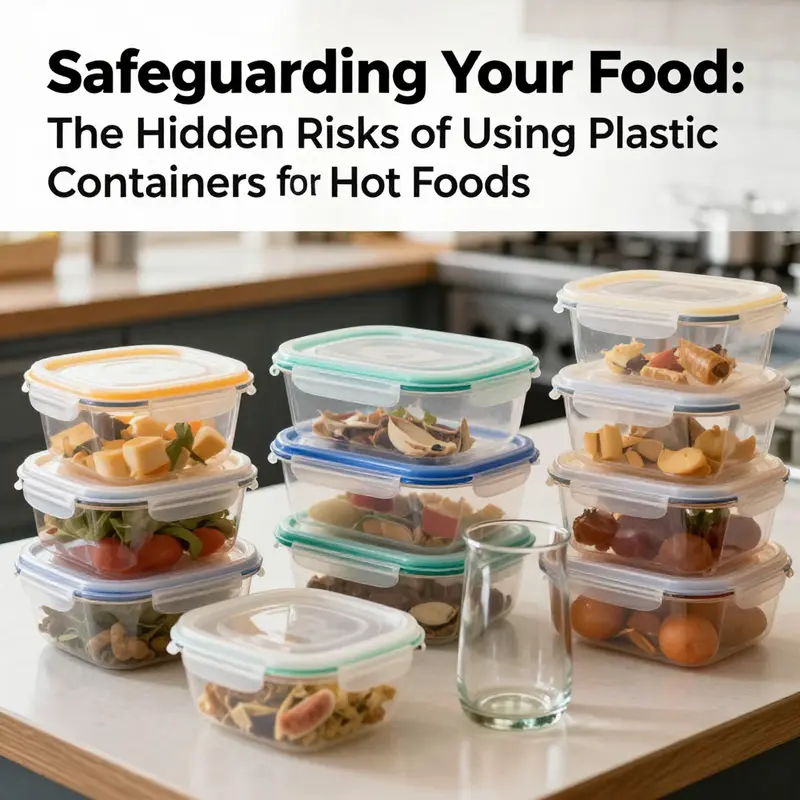
The culinary world, whether operating a bubble tea shop, restaurant, or food truck, constantly faces the time-sensitive challenge of ensuring food quality and safety. One concern that often gets overlooked is the type of container used to store hot food. Many businesses may unknowingly contribute to health risks by placing hot food into plastic containers that aren’t designed for such use. This article will unveil the potential dangers of this common practice, diving into the chemical risks and material-specific concerns associated with plastic containers. Additionally, we will cover best practices for safe food storage and highlight safer alternatives that can protect both your customers and business reputation.
Hidden Heat: The Chemical Risks of Heating Food in Plastic Containers
When you lift a steaming mug or spoon a hot bowl from the microwave, you may feel the comfort of a ready meal. Yet beneath that familiar, comforting steam lies a chemical drama playing out between heat, plastic, and your plate. The simple act of putting hot food into a plastic container is not just a storage choice; it is a moment when chemistry and health policies converge in a quiet, persistent risk. The core question—should you put hot food in plastic containers?—has a clear backbone in science and safety: only containers designed and labeled for heat should ever handle hot foods. The rest invite risk. The temperature to watch for is not a single number but a threshold where plastic begins to behave differently under heat. In practical terms, heating often exceeds the temperature at which some plastics release additives or shed microplastics into the food. The result is not a dramatic chemical event but a gradual, invisible migration of substances that can accumulate over time and with repeated exposures. As a result, many food safety experts argue for a cautious approach: minimize plastic contact with hot foods whenever possible and favor materials known for stability under heat, especially for daily reheating and storage.
The most widely discussed risk centers on the leaching of chemicals used to manufacture plastics. Additives such as phthalates and bisphenol A have earned notoriety for their potential to migrate into food when plastics are heated. Phthalates act as plasticizers, making polymers more flexible, but they can act as endocrine disruptors once they enter the body. BPA, used in older generations of polycarbonate plastics and in some can linings, has also been shown to mimic hormones in ways that can interfere with reproductive development and metabolic processes. When hot food sits in a plastic container, the heat can accelerate the movement of these compounds from the plastic into the meal. The impact is not instantaneous or dramatic in every case, but the risk compounds with exposure across meals, days, and years. For people who regularly reheat meals in plastic, the cumulative exposure is a concern that many health professionals treat with the same caution they bring to other long-term dietary risks.
Crucially, not all plastics are created equal, and the safety of heating depends on the material, its condition, and its labeling. Among the common plastics, each type behaves differently when subjected to heat. PVC, or plastic #3, is widely recognized as a plastic you should avoid heating. When heated, PVC can release hazardous phthalates and chlorine-containing compounds. The potential toxic mix is not something to gamble with food. Polystyrene, or PS, plastic #6, is another hazard, because it softens and can melt at relatively low temperatures. When heated, PS can release styrene, a substance that has been associated with carcinogenic concerns in some exposure scenarios. PET, the familiar plastic #1 used for beverage bottles, is not designed for heating and can deform or break down when exposed to hot foods, releasing substances and compromising the container’s integrity. It is meant for single-use or cold applications at best. Among the so-called safer options, PP, or plastic #5, stands out as the only widely used plastic with a relatively high melting point, around 160°C. This technical edge makes PP the only common plastic that is sometimes microwave-safe, but even PP has caveats: only containers explicitly labeled “microwave-safe” should be used, and old, scratched, warped, or damaged PP containers should be discarded rather than reused for hot foods.
The science does not end with the chemistry of leaching alone. A growing body of research is drawing attention to microplastic and nanoplastic contamination that can be released from heated plastics. When meals are heated in plastic containers, tiny fragments and particles detach from the polymer matrix and enter the food. Once ingested, these microplastics can circulate in the body and accumulate in tissues, with potential inflammatory and immune system effects. Some early work has detected microplastics in blood, organs, and even in the placenta, raising questions about longer-term health implications that extend beyond the obvious concerns about contamination. While the exact health outcomes remain the subject of ongoing study, the consensus among researchers is that minimizing exposure is prudent, particularly for children, pregnant people, and individuals with chronic health conditions. In parallel, some studies have begun to connect plastic-derived leachates with broader physiological impacts, such as alterations in gut microbiota. The gut is a dynamic ecosystem, and small chemical shifts can influence inflammation, metabolism, and even cardiovascular health. A 2025 line of research highlighted the possibility that heated plastic leachates could perturb microbial communities in the gut, with downstream implications for heart health and systemic health. While these findings require further replication and long-term human studies, they underscore a consistent message: heat intensifies plastic-related risks, and avoidance is the safest posture.
This is not a case of radical warnings versus common sense. Regulations and standards exist to manage contaminants and to improve hygiene in food-contact materials. For instance, national standards and regulatory regimes govern what can be used in contact with food and under what conditions. They are designed to limit the presence of hazardous substances such as certain aromatic amines, and they impose hygiene requirements during production and packaging. Yet regulations cannot guarantee safety when a container is used beyond its intended temperature range or beyond its design life. The real world is messy: people reuse containers, scrape residues, and stack hot meals in ways that push containers beyond the conditions under which the rules were derived. The persuasive takeaway from the current evidence is practical and straightforward: use plastic only when the label explicitly says microwave-safe or heat-resistant, and treat heat tolerance as a feature of the container itself, not a universal property of plastic as a material.
To translate this into everyday practices, consider the simple but powerful guidelines that emerge from the science and regulatory discussions. First, always check the label. When a container bears a microwave-safe symbol or a clear statement that it can handle hot foods, you have a line between risk and safety. If the container is old, scratched, cracked, or warped, discard it. Degradation of the polymer can alter how it behaves under heat and can enhance leaching or mechanical failure. Second, avoid plastic bags and cling films for hot foods or liquids. Even when used as a wrap, they can melt or deform, and heat can drive the migration of additives into the food. Third, when in doubt, reach for safer alternatives. Glass, ceramic, and stainless steel containers offer more stable performance under reheating and do not pose the same risk profile as many plastics. This choice is especially prudent for meals that are fatty or acidic, which tend to increase the migration of additives from plastics that are not designed for heat.
The nuanced landscape of plastic safety also means paying attention to the micro-scale realities of plastic manufacturing. The presence of contaminants or byproducts in plastics is not a uniform affair across all batches or brands, and there is variation in how additives migrate. Even within a single plastic type, older formulations can behave differently from newer ones, and a container that travels well in the refrigerator may not stand up to the microwave. The overall safety posture thus emphasizes intentionality: select containers with explicit heat tolerance, minimize direct contact between hot foods and the plastic surface, and avoid heating foods that contain significant fats or acids in non-heat-stable plastics. Acknowledging these realities helps you make informed decisions rather than relying on assumptions about general plastic safety.
From a practical standpoint, you can also lean into smarter storage and reheating habits. If you plan to reheat a meal, consider transferring hot dishes into a microwave-safe container made of glass or ceramic before reheating. Even when a container seems robust, a transfer ensures that the heat encounters a material designed to withstand it rather than a plastic that may be compromised by heat. When you do choose plastic, use only those containers explicitly labeled as microwave-safe, and avoid older or compromised items. And for liquids like soups, stews, or broths, refrain from using plastic wrap or bags to cover the surface or to hold the food during reheating. A loose lid made of heat-resistant glass or the vented lid of a microwave-safe container is a safer alternative that reduces direct contact with plastic while still containing splashes and heat.
An evolving thread in this topic is the broader context of how households store and reheat food. The decision to avoid plastic for heated meals is not simply a risk calculation; it is part of a broader practice of reducing exposure to potentially harmful substances while supporting more sustainable material choices. If you are assessing options for how to organize and reuse containers, a quick way to orient yourself is to consider the storage-container category as a practical starting point. This resource emphasizes sturdy, reusable, nonplastic or heat-tolerant options and can be a helpful guide as you restructure your kitchen routines. For a straightforward path to exploring safer storage options, you can look at the storage-containers collection as a targeted resource for durable, safer choices that align with the goals of minimizing heat-related risks and ensuring long-term food safety. storage-containers.
Recognizing the limitations of plastic does not imply abandoning plastics altogether. It means recognizing when and how they should be used to protect health. For hot foods, the safest default is to reduce plastic contact, select heat-stable materials, and be mindful of the specific plastic type and its labeling. The PP option, marked with the familiar five, does offer a functional route when properly labeled and maintained; however, even PP containers deserve scrutiny. If a container is older or shows signs of wear, the risk of leaching increases, and the prudent course is to retire it. If you need to heat anything beyond a light warming, transferring to glass, ceramic, or stainless steel is the wiser path. These materials heat more evenly, minimize chemical migration, and support a broader range of reheating methods, including oven use for certain dishes, while reducing the amount of plastic exposure baked into your daily meals.
The practical, day-to-day takeaway remains consistent: plastic is not inherently dangerous, but heating hot food in many plastics is not inherently safe either. The weight of the evidence and the regulatory guidance converge on a cautious approach. Prioritize containers explicitly designed for heat and labeled as microwave-safe, inspect containers regularly for wear, and opt for glass, ceramic, or stainless steel whenever you anticipate heating. In this way you not only shield your meals from potential chemical incursions but also advance a broader public-health mindset that favors materials with proven stability under heat. The goal is to preserve flavor and nutrition while keeping the body free from substances that, over time, may alter its delicate internal balance. And while scientific understanding continues to evolve, the precautionary principle offers a reliable compass in kitchens around the world.
External resource note: For authoritative guidance on food contact materials and safety standards, refer to regulatory resources such as the U S Food and Drug Administration’s official materials on food-contact substances and safety standards: https://www.fda.gov/food/food-contact-materials
Heat, Hazard, and the Plastic Paradox: Material-Specific Hazards of Reheating Hot Food in Containers
Plates and tubs full of yesterday’s pasta or today’s hot soup sit near the stove, inviting a quick boost of warmth. But as tempting as reheating in plastic can be, science keeps nudging us toward caution. The simple act of heating food in plastic containers is not a neutral choice; it’s a chemistry experiment conducted in a kitchen under the bright glare of daily routines. The core issue is migration—the movement of chemicals from the container into the food when heat and contact time increase. What migrates depends on the plastic’s chemistry, the presence of additives, the temperature reached, and the nature of the food itself. Fatty sauces, creamy dressings, or acidic broths do not treat plastic like a neutral barrier; they turn up the heat, so to speak, on the migration process. Even when a container carries a microwave-safe label, that label often signals a general suitability rather than a guarantee of safety under every heating condition. A key takeaway emerges early: heating needs to be judged by the material, not by a blanket “microwave-safe” claim. The risk is not merely theoretical. It is tied to real substances that have shown up in the science and in regulatory discussions as potential health concerns when they reach our meals through warmed plastics.
The most immediate challenge is understanding material specificity. Different plastics carry different recycling codes and different stories about how they behave when exposed to heat. A plastic’s composition governs its resistance to heat, its melting point, and its propensity to release additives. In the lexicon of consumer plastics, some codes signal safer performance for hot food than others. This isn’t a binary verdict of safe versus unsafe; it’s a nuanced landscape in which certain polymers perform well under heat, while others falter, releasing substances that raise questions about long-term exposure. The practical consequence for cooks and caregivers is simple: don’t assume that all plastics behave like glass when heated. The assertion that all heated plastics are dangerous would be overly sweeping; the nuance lies in which plastic, which conditions, and which foods.
Among the most discussed plastics is polyethylene, commonly used in bags and some flexible wrap. Code #4 plastics are widespread for cold storage and general packaging, but they are not designed for high temperatures. When polyethylene bags encounter hot foods, the risk shifts from mere deformation to a more unsettling possibility: the release of microplastics into the meal. Recent research has shown that temperature elevates microplastic shedding from polyethylene when it is used with hot contents. The higher the temperature and the longer the contact, the more pronounced the physical degradation and particle release can become. This is not a problem limited to a hypothetical future—it is a tangible finding that reframes how we think about the everyday act of carrying or reheating meals in PE bags. The takeaway is no longer “PE is fine for everything at room temperature.” It is a reminder that heat alters the behavior of plastics in ways that matter for safety, digestion, and overall exposure.
If a container is designed with heating in mind, another material often surfaces as a relatively forgiving option: polypropylene, marked as code #5. Polypropylene is one of the most common plastics used in microwaveable containers, largely because it has a higher melting point and strong thermal stability compared with many other plastics. It can withstand boiling water without losing its form, which is why many reheating scenarios favor PP. Yet even PP requires careful scrutiny. The presence of a microwave-safe label is essential, but it does not guarantee flawless performance in every context. A container that is old, scratched, warped, or otherwise degraded may still leak or degrade under heat. Repeated heating cycles or extremely high temperatures can alter its chemical integrity, even if the material class is generally considered safe for hot food. The practical counsel remains consistent: use modern, clearly labeled microwave-safe PP containers and retire any that show wear. The value of this approach lies not in trusting a label alone but in insuring a container’s physical condition aligns with the heat it is asked to withstand.
The landscape becomes more concerning when turning to polystyrene, a material seen in many disposable coffee cups and foam takeout containers. Polystyrene, coded as #6, has a well-documented history of heat sensitivity. When hot liquids exceed about 70°C (158°F), the rate at which styrene monomers migrate into the food increases dramatically. The migration can ramp up three to five times higher than at room temperature, a rate that matters when you’re dealing with hot soups or stews. Styrene is classified by international health authorities as a possible human carcinogen, a categorization that does not imply certainty but does raise legitimate concerns about chronic exposure. Even containers labeled microwave-safe should not be trusted to shield against this migration entirely. The evidence converges on a cautious stance: heating with PS is not a risk worth taking for hot foods, especially when safer alternatives exist.
PVC, or polyvinyl chloride, is another material that prompts immediate caution, though it is less prevalent in direct food contact today. Code #3 plastics can be found in some older packaging and lower-quality materials. PVC inherently contains plasticizers such as phthalates, well-known endocrine disruptors. When PVC is heated, these additives are more prone to leach into food. The combination of heat and phthalates raises red flags for potential health effects, particularly with repeated exposure over time. PVC’s heat-related hazards make it a clearly unfavorable choice for hot food storage or reheating. The precautionary principle here is straightforward: avoid PVC in any hot-food context to minimize leaching of potentially harmful additives.
PET, the workhorse of many beverage bottles and some single-use packaging, rounds out the common plastics conversation with a more cautious note. PET, code #1, is generally safe for cold or room-temperature storage but is not designed for heating. Exposing PET containers to hot food or prolonged heat can cause degradation and potential release of substances into the food. It’s not that PET will instantly turn dangerous, but the risk profile changes when heat enters the equation. For hot-food applications, PET is not the recommended choice, particularly when the goal is to reheat or keep liquids at elevated temperatures. A practical heuristic emerges: if the container is PET, seek alternatives when you anticipate heat.
If one consistently follows these material-specific insights, a pattern emerges. The safest route for hot foods, in many cases, is to step away from plastic altogether and turn to glass, ceramic, or stainless steel. Yet, the urge to use plastic persists in busy households, schools, offices, and takeout routines. In those settings, attention to the details matters. The most reliable safeguard is the label itself. The term microwave-safe on a container should be interpreted as a signal that the manufacturer studied the conditions of use, not a blanket guarantee. Before heating, inspect the container for any signs of wear—cracks, discoloration, or warping are all signals that the container’s integrity may have diminished and its resistance to heat compromised. An additional practical habit is to avoid plastic bags or cling film for hot foods, especially liquids. These wrappers can soften, melt, or release toxins under heat, undermining the safety you seek when storing and reheating.
From a cooking and consumer perspective, the conversation also extends to the robustness of the material as it endures a cycle of heating and cooling. Repeated heating can cause plastics to become brittle, discolored, or weakened in bonds, leading to more widespread leaching even at temperatures that previously seemed safe. The risk is not an immediate shock but a cumulative condition—little by little, the container’s performance deteriorates, and with it, the barrier that keeps food and additives separate. This dynamic makes it clear why many health and safety authorities advocate for using glass or other inert materials for hot food storage and reheating whenever possible. It is not merely about a single cooking session; it is about reducing cumulative exposure over time and simplifying risk management in everyday life.
The evidence base guiding these recommendations is not just a scattered collection of lab notes. It reflects a broader understanding of how chemicals migrate under thermal stress, how additives behave, and how different foods interact with container materials. The presence of fats, acids, and high temperatures are the crucial triad that elevates migration risk. Foods with higher fat content can promote greater leaching of certain additives, while acidic substances can likewise affect the migration dynamics. Time at temperature compounds the problem: the longer hot food remains in contact with a container, the more opportunity there is for substances to migrate. These principles apply across the plastic family, though the degree of risk varies by polymer. As a rule of thumb, if a container is not explicitly designed for heating hot foods, or if its material shows any sign of wear, err on the side of caution and choose alternatives.
To bring these threads together, consider how you manage leftovers, meal prep, and takeout. When you plan to reheat, the most reliable route is to transfer to a container that has been designed for heat tolerance and is clearly labeled as microwave-safe. If you choose plastic for convenience, keep it to containers labeled for hot use, inspect them regularly, and avoid using them for fatty or highly acidic foods where the migration risk can be more pronounced. The broader practice of minimizing plastic contact with hot food benefits not only health considerations but also the integrity of the meal’s flavor and texture. Glass and ceramic vessels tend to preserve heat more evenly, reduce the risk of chemical transfer, and often have the advantage of being usable directly in the oven or on the stovetop in some cases. Stainless steel offers durability and excellent heat tolerance, though it is not transparent and cannot be used for all reheating methods. The key is to choose the vessel that aligns with your cooking routine, the type of food, and the safety profile you want to uphold.
In the end, the safer path for hot food frequently lies in trading some plastic convenience for the reliability of safer materials. If you must continue using plastics, treat PP as a preferred option while staying vigilant about labeling and container condition. The bottom line remains consistent: for reheating hot meals, risk multiplies with heat and contact time, and plastic’s protective barrier is only as strong as its material and its wear. To support practical decision-making, you can explore storage options designed to handle heat and to keep meals fresh without compromising safety. For further reading and a catalog of durable storage solutions, see the storage containers category. You can explore this range here: storage containers. Additionally, for authoritative guidance on food contact materials and safety standards, refer to the U.S. Food and Drug Administration’s regulations at https://www.fda.gov/food/food-contact-materials.
Heat-Safe Choices: Navigating Plastic Containers for Hot Meals
The moment a hot bowl of soup or a freshly cooked meal leaves the stove and meets the plastic lid of a container, a quiet tension arises. We want convenience, we want to preserve warmth, and we want to avoid waste. Yet the question persists: can hot food and plastic safely coexist? The honest answer hinges on the kind of plastic, how it’s used, and how carefully we manage heat and time. The everyday kitchen asks for practicality, but safety demands mindfulness. When food is hot, the stakes rise because heat changes how plastics behave. It can loosen additives, shift textures, and in some cases introduce substances into the meal that we then ingest. The decision to reuse or reheat within plastic containers should not be automatic. It should be informed by material science, labeling, and a picture of best practices that helps you make choices you can trust in everyday life.
At the heart of safe practice is the recognition that not all plastics are created equal when subjected to heat. A common shorthand is to understand plastic by its resin identification code, the number you sometimes see on the bottom of a container. But even those numbers don’t tell the whole story. The safest approach begins with labeling. Containers designed for hot foods and marked as microwave-safe are not a universal permission slip; they’re a specific promise from the manufacturer that the material and seals have been tested under conditions typical of reheating or serving hot meals. The safest route is to choose materials known for heat resistance and food compatibility, and to keep re-use practices within those guidelines. Among the options, one plastic stands out for hot-food use: polypropylene, often labeled as PP or with the code #5. This material has a higher melting point and has historically been considered microwave-friendly when the container itself carries explicit safety labeling. Yet even with PP, caution is essential. Some older containers or those not labeled for heat may degrade or leak when exposed to repeated heating. Above all, the labeling matters. If there is any doubt about a container’s heat tolerance, it is wiser to transition away from plastic for hot food storage and reheating.
The constellation of plastics that people encounter in kitchens includes PET (#1), PVC (#3), PS (#6), and PP (#5). Each has distinct properties, and each responds differently to heat. PET is widely used for drink bottles and some food packaging; it is sturdy and transparent, but it is not designed for prolonged heating. PET containers can degrade when exposed to heat, potentially compromising both structure and safety. PVC should never be heated; its additives, including certain plasticizers, can migrate and create hazardous exposures when subjected to high temperatures. Polystyrene, commonly known as Styrofoam and coded #6, also deters heating because it can release styrene, a substance associated with health concerns, when exposed to heat. The conversation around hot food and plastics becomes clearer when we map it to these realities: heating plastic requires materials engineered to handle heat, thorough testing, and explicit manufacturer guidance.
In contrast, polypropylene, or PP, emerges as the most consistently reliable option among the common plastics for hot foods, precisely because of its higher melting point and general heat tolerance. It is frequently marketed as microwave-safe, but here, as with any safety claim, words on a label must be treated with care. A container can bear a microwave-safe stamp and still be unsuitable for your specific use if it is old, damaged, or not explicitly intended for the type and duration of heating you plan. A cracked lid, warped base, or faded printing can signal underlying material fatigue that may alter how heat is conducted and how additives behave. The practical upshot is straightforward: when you reach for a plastic container for hot food, ensure the container is labeled as microwave-safe or as heat-resistant, and apply a critical eye to the condition of the item itself before microwaving.
The risks of heating plastic hinge on chemistry as well as heat. When plastic is warmed, certain additives can migrate into the food, especially with fatty or acidic foods that can facilitate diffusion. BPA, phthalates, and other additives have drawn attention for their potential health implications, which is why many manufacturers have moved toward BPA-free formulations and more inert coatings. The guidance remains cautious: minimize exposure whenever possible, and favor materials with well-understood safety profiles. Even with BPA-free claims, the broader question remains whether ongoing or repeated heating changes anything in a way that could affect us over time. The prudent approach is to reduce the use of plastic for hot foods altogether when feasible, and to reserve plastic for short-term storage or room-temperature use unless the labeling clearly states that heating is acceptable.
Let us examine the practical terrain of decision-making in the kitchen. First, always check the label. If the container carries a microwave-safe symbol or a statement that the material is safe for hot foods, you have a green light for that specific use. If the container is plain plastic without such labeling, or if the label is worn away, treat it as a caution and seek alternatives. Second, avoid relying on thin plastic bags or cling films to wrap hot liquids or meals. Even if you think you’ll seal quickly, the risk of melting or releasing toxins increases with heat and liquid exposure. A simple rule of thumb holds: if it’s meant to hold hot food, it should be tested and labeled accordingly; if not, do not attempt to repackage hot foods in it.
Beyond labeling, the physical integrity of the container matters. Warped, cracked, or discolored plastics are not merely cosmetic defects; they can be signs of material fatigue where microscopic changes may have occurred in the polymer matrix. Those microstructural changes can alter barrier properties and allow more rapid migration of substances into the food. Even if your container is still holding its shape, heat-induced fatigue can be present at the molecular level. The best practice, therefore, is to replace questionable containers with newer, properly labeled options that specify heat tolerance. It’s a small habit that pays dividends in consistent safety and peace of mind.
When hot food is intended for storage, you may be tempted to reuse containers you already own. Reuse is not inherently unsafe, but it requires vigilance. If a container has any signs of damage, we should discard it irrespective of its initial safety claims. If you are reusing a container that was originally designed for cold storage, do not assume it can withstand hot temperatures. The capacity to resist heat is not merely about melting; it’s about maintaining a stable barrier to leaching as well as heat retention without deforming. The simplest approach is to adhere to products explicitly designed for hot foods, and to reserve such containers for repeated uses, while discarding anything that does not carry clear heat-safe labeling after significant wear or after any exposure to high temperatures.
Culinary practice often encounters sauces, fats, and acidic components. These substances play a pivotal role in how heat interacts with plastic. In fatty sauces, the oil and fats can act as carriers for potential migrants from the plastic into the food. In acidic foods, the solvent-like properties of acids can accelerate diffusion slightly, albeit within the constraints of the container’s material and labeling. The practical implication is not a dramatic warning but a measured caution: hot, fatty, or acidic foods should be stored in containers that are specifically rated for that environment or, preferably, in glass, ceramic, or stainless steel when possible. The choice of container should align with the type of food and the temperature profile you expect—short reheating cycles in microwave-safe PP are acceptable, but avoid long-term hot storage in non-heat-stable plastics.
To connect theory with everyday behavior, consider the broader ecosystem of storage and packaging. A useful resource for readers seeking more, broader guidance on material safety and industry standards is the FDA’s information on food contact materials. This is not a substitute for laboratory testing or professional advice, but it provides a framework for understanding how plastics interact with food under heat and how manufacturers must demonstrate safety through testing and labeling. You can consult the FDA’s regulations and guidance to see how these standards are applied in practice and what consumers can look for when choosing containers for hot meals. The FDA emphasizes that materials in contact with food must be safe under intended use, including heating, and that labeling should clearly communicate any limitations. This alignment between regulation and consumer practice can help you navigate the choices at the grocery store, in the kitchen, and at the takeout counter.
A practical, everyday approach to hot-food storage and reheating unfolds as a simple set of conscious choices. When you plan to store or reheat hot meals, start with the container that most reliably carries heat safety labeling and is built to withstand the intended use. PP (#5) is a common choice precisely for its higher heat threshold, but only when it is new, undamaged, and explicitly labeled as microwave-safe. PET (#1) can be suitable for hot meals in some contexts, but given its typical use as a single-use material or for cold packaging in many instances, it should not be treated as a universal solution for repeated heating. PVC (#3) and PS (#6) should generally be avoided for hot-food applications due to leaching risks and low heating thresholds. The overarching message is clear: while some plastics can participate safely in hot-food handling, they require careful labels, proper condition, and judicious use. When in doubt, favor glass, ceramic, or stainless steel for hot storage and reheating. These materials resist heat well, do not rely on potentially leachable additives, and are widely accepted in households and food-service settings for heated meals.
In the middle of the decision-making process, it is useful to keep a simple rule in mind: the more a container is designed for heat, the more you should rely on its labeling and its condition. This is not a formula that emphasizes fear but a practical guideline that emphasizes responsible use. A labeled microwave-safe container with no visible damage is a more reliable choice for reheating than a dish that lacks a clear heat-use directive or shows signs of wear. Alongside this, consider the environment you are storing the food in. If your kitchen tends to be warm, or if you plan to leave hot food at room temperature for extended periods, you increase the risk of leaching and microbial growth. In such circumstances, transferring hot food to a glass or ceramic vessel for short-term storage can minimize risks and maintain temperature more consistently, while also keeping the material stable and inert.
When it comes to practice, there is also a social responsibility angle. The push toward sustainability should not overshadow safety. While plastic reductions are essential, the immediate health of individuals and families is the priority. If a parent asks whether it is acceptable to reheat baby food or a child’s meal in plastic, the cautious answer is to avoid or minimize plastic contact with heat altogether. In such cases, the best option is to use glass or silicone alternatives that can withstand heat without introducing questionable migrants. Even for adults, a habit of transferring hot meals to safer vessels before reheating, especially after the first use, sets a standard of care that contributes to long-term health and well-being.
The intent here is not to demonize every plastic product or to remove convenience. It is to equip readers with a clear understanding of what makes certain plastics heat-tolerant and safe, how to verify safety through labels and condition, and how to pivot to safer options when necessary. It is about translating lab-tested knowledge into confident, everyday actions. The decision to store or reheat hot food in plastic should be intentional, guided by explicit safety labeling, awareness of material limitations, and a commitment to replacing aging or degraded containers. If you practice those steps consistently, you will be less exposed to the uncertainties that heat introduces to plastics, and you will preserve the flavor, texture, and nutritional integrity of your meals.
For readers seeking to explore related storage options beyond plastics, consider the broader catalog of durable, food-grade solutions that can complement your kitchen routines. Our storage-containers category provides a gateway to safe, practical choices that suit different needs—from everyday meals to batch-prepared dishes—while emphasizing material safety and reuse. This approach aligns with a pragmatic philosophy: use the right tool for the right job, and replace items that show wear because prevention is the best form of safety. If you want to dig deeper into materials and containers that pair well with hot foods, a targeted review of your current options and a future-forward plan for replacements can be a wise step toward healthier, safer cooking and storage habits.
In closing, the relationship between hot food and plastic containers is not a fixed verdict but a spectrum of choices guided by material knowledge and careful use. While PP #5 offers a pragmatic path for those who need microwave-safe plastics, even that option requires attention to age, integrity, and labeling. PET #1 can play a role in certain contexts, but it is not a universal heating material for all hot foods. More caution is warranted with PVC and PS, which pose higher risks when heated. The safest general approach is to minimize plastic contact with heat, favor glass or ceramic when possible, and rely on properly labeled, heat-tested plastics only when no safer alternative is available. By applying these principles, you can enjoy hot meals with greater confidence and reduce the chances of unwanted chemical migration or structural failure in your containers.
External resources and regulatory perspectives provide a broader framework for these everyday decisions. For authoritative guidance on food contact materials and safety standards, consult official regulatory resources, such as the FDA’s guidance and regulations on food-contact materials. This information helps anchor personal practice in established safety principles and can guide conversations about product labeling and consumer choices. External reference: https://www.fda.gov/food/food-contact-materials. For a practical, internal resource on safe storage options, you can explore our storage containers category to find suitable alternatives and updated recommendations. (storage containers)
null
null
Final thoughts
Awareness of the risks associated with using plastic containers for hot food storage is crucial for any food service business. Understanding chemical leaching and how specific plastics behave under heat can significantly impact your food safety practices. By implementing best practices and choosing safer alternatives, such as glass or stainless steel, you can protect your customers and enhance your business’s reputation. Making informed choices today will lead to a healthier future for everyone involved in your culinary journey.