
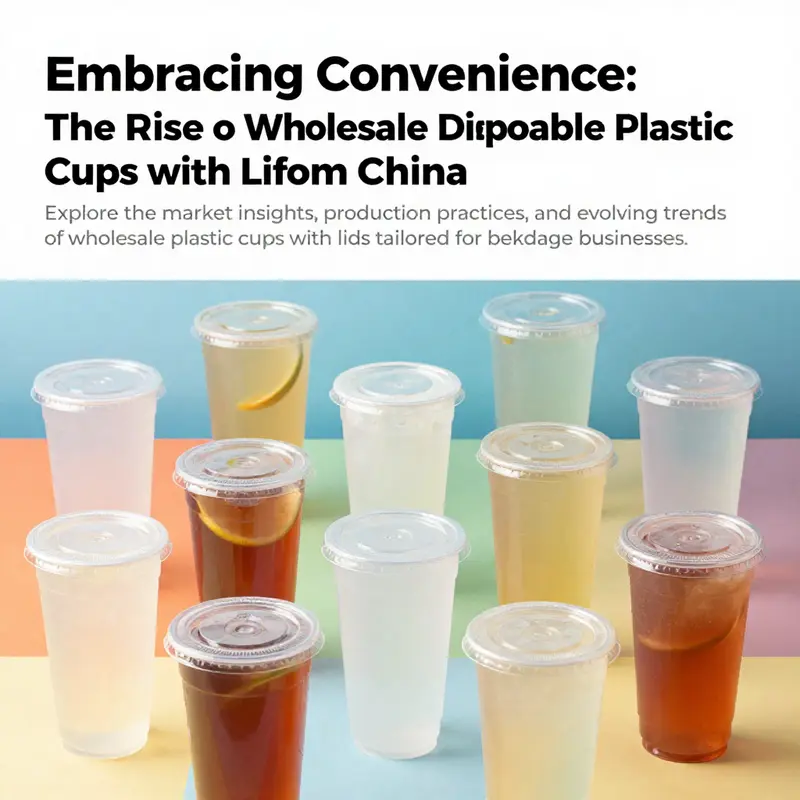
The demand for disposable plastic cups with lids is skyrocketing, particularly among businesses like bubble tea shops, restaurants, food trucks, and event planners. These versatile products not only offer convenience and hygiene but also come in various designs and sizes to meet the unique needs of any beverage service. Understanding the market landscape, production processes, economic factors, environmental impacts, and future trends can help businesses make informed decisions when sourcing these essential items from China. Each chapter will delve into a specific aspect of wholesale plastic cups with lids, providing a comprehensive overview tailored for professionals in the beverage and catering industries.
null

null
From Resin to Rim: The Integrated Manufacturing Journey of Wholesale Plastic Cups with Lids in China
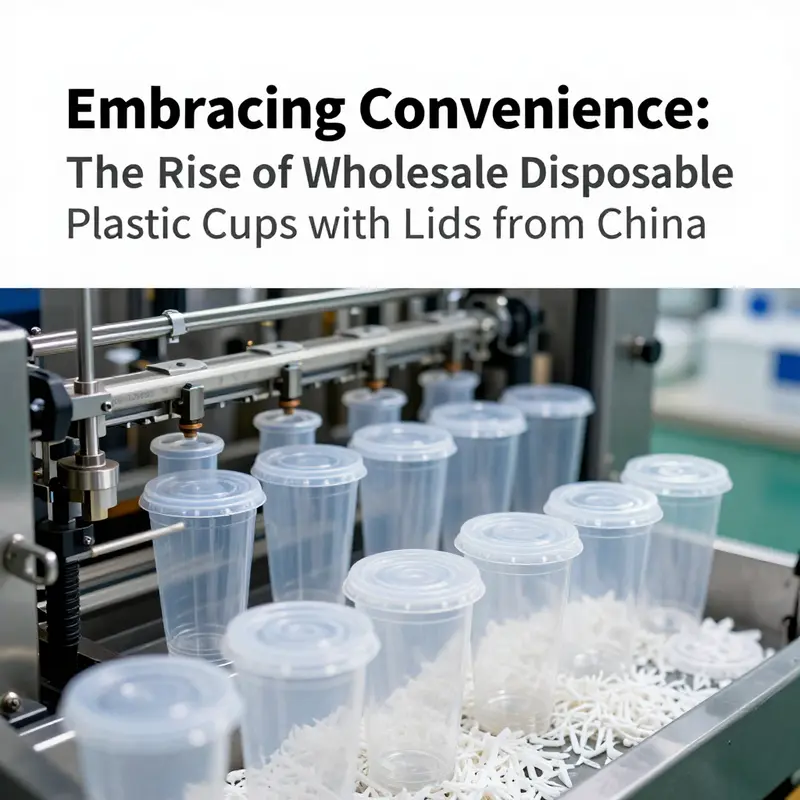
The scale of wholesale plastic cups with lids destined for markets across the globe rests on a tightly choreographed sequence that begins long before the first warmed resin touches a mold and ends only when cartons are stamped with stability and ready for shipment. In China, a country known for a dense network of suppliers and a mature ecosystem for plastics, the journey from resin to rim is shaped by both industrial discipline and relentless cost-to-performance optimization. The market dynamics are not only about raw materials and machines; they hinge on a shared understanding of safety, standardization, and the ability to translate a single design into millions of consistent, reliable units. The demand for disposables in bulk has fostered a production rhythm that respects tight tolerances, robust quality control, and compliance with food-contact requirements that govern every stage of a cup’s life—from resin selection to the moment a lid snaps shut on a finished product bound for a wholesaler or retailer. In this environment, manufacturers balance speed with accuracy, scale with customization, and the imperative to reduce waste with the necessity to deliver cost-effective, recyclable or recyclable-like solutions where possible, all while meeting the expectations of customers that span varied regulatory landscapes.
Material choice sits at the core of this balance. The primary resins used are polypropylene (PP) and, in some cases, polycarbonate (PC) for specific applications. Yet, PC is avoided for infant-facing products due to health concerns, and the broader emphasis is on food-grade resins that meet strict standards for safety, stability, and performance under heat and cold. The governing framework in many Chinese operations includes widely recognized benchmarks for food-contact materials. These standards guide resin selection, influence additive packages, and shape how the resin is handled through the line. The conversation around materials is therefore not only about price or appearance; it centers on predictability in performance, consistent molding behavior, and the assurance that a cup or lid will perform as required in a variety of service environments—hot beverages, cold drinks, or long-haul transport across climates. The result is a portfolio of options that can be matched to customer needs, whether a basic, economy-focused line or a premium set with branded finishing options and enhanced lid designs.
The core manufacturing technology driving the body of the cup and its lid is injection molding. This technique remains the backbone of high-volume production because it delivers precise geometry, uniform wall thickness, and repeatable cycles at speed. The process starts with carefully prepared resin pellets melted in controlled zones, then injected at high pressure into steel molds designed to capture intricate features such as outward curves, ergonomic contours, and lips that ensure a snug fit with the corresponding lid. For lids, the molds often incorporate more complex features—recesses, grooves, and locking geometries that must perform reliably under repeated use and handling. The alignment between cup and lid is a critical metric; even tiny deviations in wall thickness or lid diameter can cascade into poor sealing or misfit, which in turn affects consumer perception, leak resistance, and overall product reliability. To support this, manufacturers invest in precision molds with tight tolerances, sophisticated cooling circuits, and controlled ejection sequences that minimize part deformation during cycle transitions. The outcome is a consistently shaped cup and lid pair that meets dimensional tolerances across thousands or millions of units.
While injection molding remains central, automatic thermoforming lines play an increasingly important role, especially for high-volume lid production. In this pathway, sheets of PP are heated to a pliable state and formed into lid shapes within a mold, often followed by trimming and ejection. This method complements injection molding by offering efficient handling and rapid ramp-up when volumes are large and design variants are needed. The efficiency gains come from continuous, largely automated cycles that pair with downstream finishing processes. In practice, an integrated line may combine injection-molded bodies with thermoformed lids, enabling a seamless flow from raw material to finished component. The equipment used in these lines emphasizes reliability and repeatability: robust heating zones, uniform vacuum or pressure application, precise cutting, and fast, clean removal of formed parts. In theory and in practice, such lines can deliver impressive throughput, while also accommodating subtle changes in lid geometry or printing areas without sacrificing overall line balance.
Automation pervades the entire operation. Modern production facilities leverage step-motor-driven material handling for exact feed rates and synchronized movement, PID temperature controls to maintain zone stability within tight margins, and automated stackers to reduce manual handling and improve work-in-process visibility. The automation stack is further enhanced by sensors and, increasingly, IoT-enabled modules that feed production data into centralized monitoring dashboards. These systems monitor parameters in real time, enabling operators to spot deviations before they translate into defects. The result is a more predictable production rhythm and a faster path to corrective action when needed. In this setting, quality assurance becomes an ongoing practice rather than a final check, with inline inspection tools ensuring that wall thickness, lid depth, and sealing surfaces stay within spec. The net effect is a value proposition that blends high throughput with robust quality, an essential combination for wholesale buyers who rely on consistent performance when they order tens or hundreds of thousands of cups and lids at a time.
Post-processing completes the packaging story. After forming, the cups and lids often receive branding through printing, which can be applied via heat transfer or screen printing. The printing step is performed with care to prevent marks from interfering with the fit and seal of the lid, and to ensure legibility of branding, product information, and safety warnings. Post-printing handling is then followed by protective packaging, typically in oriented polypropylene (OPP) bags or other barrier film, before the parts are grouped into retail-ready packaging or wholesale cartons. The cartons themselves are chosen to safeguard the products during international shipping, with attention paid to weight distribution, stacking strength, and corrosion resistance within the packaging line. Once packed, the wholesale products travel through regional logistical hubs—predominantly in coastal provinces such as Zhejiang and Guangdong—where supply chains are optimized for rapid export. The reputation of these regions rests on their ability to coordinate material inflows, molding and forming operations, printing and packing lines, and a dense network of downstream distributors that feed global markets with a steady cadence of orders and replenishments.
The industrial landscape behind these processes is not merely a set of machines and routines; it is a tightly interwoven system of suppliers, standards, and operational practices that allow a single design to become a mass-produced commodity with reliable, predictable performance. When buyers consider wholesale plastic cups with lids, they are, in effect, buying into a tightly engineered pipeline that translates resin into a sealed, branded, ready-to-ship product. The line between customization and standardization is navigated by offering variations in lid design, printability, and packaging configurations while preserving essential fit, seal integrity, and safety compliance. For readers seeking a sense of the broader category and its evolving capabilities, the plastic cups category provides a useful reference point: https://cupbowlpack.com/product-category/plastic-cups/. This link offers a window into the range of shapes, sizes, and finish options commonly pursued in wholesale operations, illustrating how a single product family can be diversified to address different buyer needs while maintaining consistent quality across thousands of units.
As a final note, those seeking deeper context on how standards shape every stage—from resin selection to final inspection—may turn to external resources that summarize the framework of food-contact materials and their regulation. For a concise overview of how food-contact materials are governed and tested, see an external resource such as the article on food contact materials: https://en.wikipedia.org/wiki/Foodcontactmaterials. This broader view helps connect the day-to-day realities of the Chinese manufacturing floor with international expectations, ensuring that the chain from resin to rim remains aligned with safety, performance, and sustainability goals across markets.
Economic Currents Shaping China’s Wholesale Market for Lidded Disposable Plastic Cups
The wholesale market for lidded disposable plastic cups in China operates at the confluence of material costs, production efficiency, and evolving consumer demand. It is not a single-cycle tale of price erosion but a layered narrative where volatility in raw materials, shifts in manufacturing discipline, and shifts in end-market needs continually redraw the cost contours and the value that suppliers must deliver. At the heart of the supply chain are the polymers that form the cups themselves. Polypropylene and polyethylene are the baseline feedstocks, chosen for their chemical compatibility with food safety standards, their resilience, and their relative clarity in local processing. When global oil prices move, the cost to transform these feedstocks into finished cups follows suit. This linkage means wholesale prices swing not only with the domestic Chinese market but with fluctuations in international energy markets, currency movements, and the availability of freight capacity. The dynamic is broader than a single material bill of materials; it is a reflection of global supply rhythms that Chinese manufacturers monitor daily, adjusting capacity, inventory, and pricing strategies in near real time. When buyers skim through price sheets, they sense a pattern that repeats with the oil-to-plastics cycle, a pattern that suppliers translate into tighter margins during supply squeezes and more competitive pricing when feedstocks loosen. The economy of scale cannot be overstated here. Large, integrated producers can amortize fixed costs across high-volume runs, leveraging automated lines, sophisticated mold-management systems, and standardized lids that fit a range of cup diameters. This efficiency translates into lower unit costs, enabling these players to sustain competitive bids in a crowded market. By contrast, smaller manufacturers or those with less optimized processes face pressure on margins, especially when volatility expands. In such moments, procurement teams seek bigger order sizes or longer-term contracts, hints of which ripple through the wholesale platforms where a single supplier can claim broad coverage across sizes, with a menu of lid configurations to match. Labor costs and overheads round out the economic picture. As China advances along its own path of higher-value manufacturing, labor wages rise, even as automation helps to tamp down per-unit labor input. The economic calculation for a lid-optional or lid-inclusive cup thus weighs not only the material price but also the labor hours required to assemble, test seal integrity, and conduct leak-proof trials. Regulatory compliance—covering food contact safety, occupational safety, and environmental stewardship—adds layers of cost but also signaling value to buyers who need dependable, certified products. For manufacturers, compliance is not a barrier to entry but a baseline expectation that shapes production scheduling, supplier audits, and batch traceability. On the design frontier, suppliers are balancing durability with cost. Food-grade PP formulations have evolved to deliver sturdier cups and tighter lid fits, reducing spillage risk for both hot and cold foods and beverages. The improvement in lid-seal technology—often through improved joint geometry or gasket materials—adds perceived value, particularly for delivery and take-away services. Yet, each design enhancement can push the base price higher, a trade-off that buyers weigh against the savings generated by reduced breakage, easier stacking, and efficient packing. A key design consideration is the stackability and nestability of cups. Stackable configurations reduce warehousing footprints and shipping costs, sometimes by substantial margins. In some cases, manufacturers openly advertise storage and transport efficiencies that can shave up to roughly thirty percent off cumulative logistics costs. For buyers, those savings can offset modest increases in unit price, transforming packaging from a simple container into a strategic logistics tool. The market’s demand side reflects rapid growth in quick-service restaurants, cafes, and the booming last-mile delivery ecosystem. The demand for hygienic, transport-friendly packaging has become a baseline expectation. In a high-volume environment, the ability to quickly batch-produce cups with lids, maintain uniform tolerances, and offer printed or plain variants can be a differentiator. The competitive landscape intensifies as more suppliers participate on large wholesale platforms, creating price transparency and a broader spectrum of contract options. This competition incentivizes process improvements, more rigorous quality controls, and the continual introduction of new packaging configurations that meet evolving consumer expectations. Sustainability pressures are now a persistent undercurrent shaping cost architecture. Governments and consumers alike are increasingly attentive to the environmental footprints of disposable packaging. While most current production still leans on conventional polymers, the industry is steadily testing and investing in alternatives such as biodegradable polymers or enhanced recycling processes. Those materials and methods promise a greener profile but typically come with higher production costs, at least in the near term. The economic narrative, therefore, is not merely about price per cup. It is about total cost of ownership: the price of the cup and lid, the reliability of supply, the opportunity costs tied to storage and handling, and the environmental costs that may influence organizational purchasing policies. For procurement professionals, the calculus involves balancing short-term price sensitivity with longer-term commitments to stability and sustainability. Market signals are multidimensional: contract terms, minimum order quantities, and the breadth of available lid configurations all convey strategic intent as much as price signals. Suppliers who can harmonize reliable supply with flexible product configurations—different lid types, varied diameters, optional printing, and a spectrum of thicknesses—position themselves to capture long-term partnerships with restaurants, meal-delivery networks, and institutional buyers. The place of branding and customization should not be underestimated. While generic packaging serves many needs, brands and operators increasingly seek consistent quality, predictable performance, and occasional on-cup branding or messaging that aligns with marketing objectives. This push toward configurable packaging feeds into the broader economics by requiring more versatile production lines, tested quality-control protocols, and more robust supplier relationships. A practical glance at sourcing patterns reveals a sector that thrives on scale but values reliability and predictability. Buyers looking to source on a wholesale basis often navigate a landscape punctuated by a handful of large producers complemented by numerous mid-sized and smaller players. The breadth of offerings—from the simplest unprinted cups to those with complex sealing lids and optional print capabilities—appeals to a wide array of buyers, from street food vendors to hotel banquet services. A useful touchstone for understanding how the market functions in practice can be found in the broader catalog of packaging and disposable tableware online. For a glimpse into the range of products and configurations available, you can explore the Plastic Cups category. Plastic Cups. This resource illustrates how suppliers organize offerings around sizes, lid compatibility, and printing options, while also hinting at the importance of standardized interfaces that simplify both production and customer procurement. The economic tug-of-war in China’s wholesale market for lidded disposable cups is thus a tapestry of cost dynamics, efficiency gains, and strategic choices driven by end-user demand and sustainability expectations. It is a landscape where the price of a single cup cannot be read in isolation; it must be understood as a node within a network of feedstock volatility, production capability, labor conditions, regulatory costs, and evolving consumer priorities. Looking ahead, the trajectory points toward greater automation, more integrated quality assurance across units and shipments, and a gradual but persistent pivot toward materials and processes that reduce environmental impact without sacrificing performance. Buyers who monitor these trends with an eye toward total cost of ownership will likely secure more stable supply, predictable pricing bands, and packaging options that align with broader corporate sustainability goals, even as the market welcomes new players and new configurations. External resource: https://www.alibaba.com/product-detail/Wholesale-disposable-dessert-cups-with-lids_1600792584534.html
Circular Pressure and Policy Currents: Environmental Realities Shaping China’s Wholesale Disposable Cups with Lids
The wholesale market for disposable cups with lids in China sits at a critical crossroad where mass production, consumer habits, and public policy converge. The sheer scale of output—driven by a booming ready-to-drink culture and the demand for convenience—has made these cups a visible metric of modern packaging. In a landscape where countless factories churn out PP- and PLA-based designs in sizes from tiny 1-ounce swizzles to expansive 32-ounce servings, the choices offered to buyers—lids, no lids, or printed branding—carry environmental implications as much as commercial ones. As buyers seek reliability and customization, they also increasingly weigh durability, end-of-life handling, and the reputational costs of contributing to waste streams. This is the broader backdrop against which price, speed, and variety move in lockstep with a rising demand for responsible packaging practices.
Material choice is a foundational driver of both performance and perception. polypropylene, with its heat resistance and cost efficiency, remains a staple for cups intended for hot beverages and quick-service environments. Polylactic acid, a plant-based alternative, enters the narrative as a signaling device for sustainability; yet its real-world benefits hinge on the local waste infrastructure. In practice, PLA’s composting requirements mean that its environmental advantages are realized only when industrial composting facilities are accessible and utilized. The packaging surface carries more than just branding; it becomes a communication tool about a company’s stance on waste and resource use. When buyers evaluate options, they weigh not only the lid design and stackability but also how the material performs during transport and how it behaves at the end of life in Chinese waste streams. The capacity to offer a lid that seals securely and is easy to stack can reduce spillage and breakage during distribution, while also shaping downstream recyclability or compostability. For those exploring the broader spectrum of disposable drinkware, the disposable drinkware category provides a useful cross-section of what is available beyond cups alone and can inform decisions about compatibility with lids, printing, and packaging formats.
The environmental footprint of these cups is not a distant abstraction. In 2023, Chinese consumers reportedly used more than 21.3 billion single-use cups. The scale translates to roughly 676 cups discarded every second, a staggering figure that underscores the urgency of rethinking how these products are designed, sold, and managed after use. The most visible consequences are urban waste and increased pressure on already stressed municipal systems. A large portion still finds its way to landfills, where the decomposition pathways are slow and the environmental persistence of plastics remains a concern. Global recycling rates offer little comfort here; only around one in nine waste items are recycled in practice, and the system struggles to absorb the volume of single-use items from growth sectors such as beverage service and on-the-go consumption.
The microplastic dimension adds another layer of complexity. When cups escape collection streams and break down in the environment, microplastics can infiltrate waterways and ecosystems, with potential implications for human and ecological health. The carbon footprint attached to both production and disposal adds pressure for a shift toward reuse-oriented models. In conversations about lifecycle impacts, reuse systems—when implemented at scale with proper cleaning, return logistics, and consumer participation—tend to outperform single-use approaches across climate, resource depletion, and ecosystem damage indicators. These insights echo the broader industry call to move beyond material substitution alone and toward circular practices that optimize use cycles and minimize waste.
Even materials categorized as biodegradable or compostable do not automatically equate to a lower environmental burden. The lifecycle realities of PLA, for instance, reveal that energy use and emissions can remain substantial when the material is not managed within a dedicated industrial composting framework. In China, where such infrastructure is unevenly distributed, the realized benefits depend less on the label and more on the local capability to separate, collect, and treat packaging streams efficiently. This nuance reinforces a central takeaway: the environmental performance of a disposable cup hinges on the system in which it circulates, not merely the material from which it’s made. As notable voices in the field suggest, repeated use and well-designed circular systems can deliver superior outcomes. Their message—circulation over disposal—frames policy debates and business strategies alike.
China’s regulatory landscape has formally recognized the need to transition away from a linear take-use-dispose model. Since 2021, a nationwide push has aimed to ban certain single-use plastics that complicate waste management and pollute urban environments. The emphasis is not simply on prohibiting items but on reshaping the ecosystem around them: higher-value options, better waste collection, and cleaner disposal streams. Local enforcement has varied, with cities like Shanghai and Beijing implementing stricter controls on restaurants and food-service operators to curb disposable-container usage and to steer customers toward more sustainable choices. These local actions are complemented by a broader national agenda that seeks to harmonize reduction targets with the practical realities of a highly decentralized market.
A pivotal development arose in 2025 with the introduction of a national framework to guide reusable cup systems. The Circular Cup Practice Seminar, held in Zhoushan, Zhejiang, announced the Circular Cup Model Pilot Research and Operational Guidelines. These Guidelines translate international best practices into a China-specific blueprint for scale. They outline deposit systems, reverse logistics, standardized cleaning protocols, and digital tracking mechanisms designed to ensure cups return for reuse rather than becoming waste. The document emphasizes collaboration among businesses, municipalities, and NGOs, and it signals a policy environment that rewards those who invest in circular solutions with operational efficiencies and stronger brand trust. Importantly, the guidelines acknowledge the need for scalability and context-specific adaptation, recognizing that a one-size-fits-all approach is unlikely to succeed in a country of China’s regional diversity.
Incentives for businesses are shaping the market’s evolution. Public-private pilots, subsidies for circular initiatives, and partnerships aimed at building more robust take-back networks create a favorable climate for wholesale suppliers who can align with reuse-based models. For suppliers, the transition may involve retooling packaging lines, investing in cleaning and sterilization capabilities, and embracing digital platforms for tracking and verification. It also opens opportunities for value-added services, such as standardized printing on reusable cup formats or specialized lid designs that improve durability in repeated use. The ultimate objective is to move beyond a single-use mindset toward a sustainable, scalable system that preserves consumer convenience while reducing environmental footprints. In this context, an integrated approach that connects manufacturing decisions, distribution logistics, and consumer engagement becomes essential.
The regulatory and environmental narrative is not isolated from global trends. International frameworks and research institutions emphasize that reusable packaging systems outperform single-use alternatives across multiple dimensions when implemented correctly. The alignment with global guidance helps ensure that China’s reforms resonate with buyers who operate across borders and rely on consistent standards. For wholesale buyers and manufacturers, this means adopting practices that not only meet regulatory requirements but also communicate a clear commitment to sustainability. It signals reliability to retailers and consumers alike, and it helps build trust in a market where transparency about materials, lifecycle impacts, and end-of-life options matters as much as price and lead times.
In sum, the current environment around disposable cups with lids in China reflects a dynamic interplay of production capability, material choice, and regulatory ambition. The scale of production continues to grow, but so does the push for circularity and accountability. The wholesale sector—comprising countless manufacturers, distributors, and buyers—stands at the center of this transition. By embracing circular models, investing in end-of-life infrastructure, and collaborating across sectors, the market can transform from a linear supply chain to a resilient system where reuse and responsible disposal coexist with business growth. This transition does not erase the convenience and affordability that drive demand for disposable cups; it reframes them within a broader mandate to protect urban environments and ecosystems while supporting a competitive, innovative industry.
External resource: Ellen MacArthur Foundation – New Plastics Economy (https://www.ellenmacarthurfoundation.org/)
From Regulation to Reinvention: How China’s Wholesale Disposable Cups with Lids Will Transform
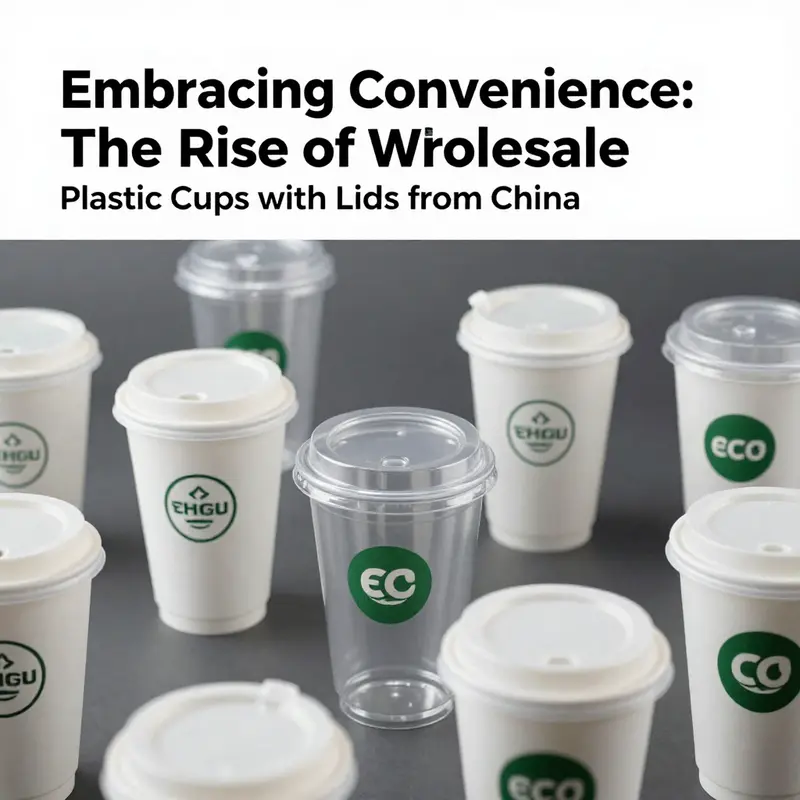
China’s wholesale market for disposable plastic cups with lids is shifting from sheer scale to smarter value. Regulatory pressure, material innovation, supply-chain overhaul, and evolving buyer expectations are converging to reshape how cups are sourced, sold, and repurposed. For wholesalers the change is not gradual; it is structural. Success will come from integrating compliance, sustainable materials, functional upgrades, and digital distribution into a coherent offering that buyers trust and value.
Regulation is the engine. National standards and the so-called “Plastic Ban 2.0” have turned compliance into the baseline for survival. Wholesalers can no longer treat degradable claims as marketing extras. Certification, traceable material origins, and lifecycle documentation are now essential purchase requirements. This raises the bar for supplier selection and forces long-term contracts with manufacturers that can guarantee certified bio-based alternatives. The result is fewer, deeper supplier relationships, replacing broad, low-cost sourcing networks with strategic partnerships that prioritize validated sustainability and predictable lead times.
Material choices define the new product set. Polylactic Acid (PLA) and Polyhydroxyalkanoates (PHA) are moving from niche to mainstream. Their adoption already accelerated from single-digit shares to meaningful penetration, and projections show continued growth. These materials bring different handling needs, performance profiles, and cost points compared with polypropylene or polystyrene. Wholesalers must therefore retool product portfolios: offer multiple material grades, explain end-of-life pathways, and price transparently to reflect true costs. Smart assortment planning means stocking PLA and PHA variants alongside carefully selected high-performance composites that meet heat-resistance and sealing requirements for hot beverages.
Functionality and user experience are now critical differentiators. Buyers expect disposable cups with lids to perform reliably—no leaks, no collapse under heat, and consistent lid fit across batches. Advances in coating technology and multi-layer constructions deliver improved thermal stability and barrier properties without reverting to non-degradable layers. For premium channels such as specialty tea and coffee, demand favors cups that preserve aroma, resist condensation, and support branded printing. Wholesalers should prioritize manufacturers that invest in functional innovation and are willing to provide technical sheets, testing data, and batch traceability to reassure large buyers.
Digital platforms and modern procurement models are rewriting distribution economics. B2B e-commerce is replacing fragmented dealer networks with efficient, transparent procurement channels. These platforms enable bulk ordering, automated inventory replenishment, and better analytics on consumption patterns. Wholesalers that integrate with large procurement platforms can reduce transaction friction and increase visibility to major foodservice buyers. At the same time, maintaining direct relationships with niche buyers remains valuable: bespoke orders, private-label runs, and limited-edition designs still flow through trusted distributors who can manage smaller minimums and customized logistics.
Specialization is a high-margin strategy. As demand fragments across events, retail, foodservice, and branded merchandise, generic cups lose appeal. Younger consumers in particular demand design, story, and sustainability credentials. Wholesalers can capture premiums by offering value-added SKUs: custom-printed runs for festivals, themed packaging for seasonal promotions, and differentiated lid styles for specific beverage types. These options command 15–25% higher prices, but they also require agile manufacturing partners, flexible minimum order quantities, and creative design capabilities. The wholesalers who succeed will be those who can bundle product, printing, and logistics into a single seamless purchase experience.
Lifecycle thinking is replacing linear disposal. The circular economy model affects procurement and sales strategy. Buyers increasingly ask for products that fit into take-back, composting, or industrial recycling programs. Wholesalers who can provide documentation of end-of-life pathways, partner with waste management services, or participate in collection schemes will stand out. Offering products designed for a low-carbon recycling closed loop adds a competitive edge, but it also demands new competencies: conducting full lifecycle assessments, auditing downstream handling, and communicating measurable environmental benefits to buyers.
Operationally, wholesalers must manage complexity without losing margins. Handling multiple materials, ensuring certification, supporting customization, and integrating digital ordering all increase operational overhead. Smart inventory strategies—such as regional stocking centers and just-in-time replenishment for high-turn SKUs—will lower carrying costs. Clear product categorizations, predictable lead times, and transparent pricing models help buyers make informed choices and reduce return rates. Investing in technical sales staff who can translate material properties into application guidance will shorten sales cycles and reduce costly mismatches.
Trust and transparency will be the new currency. As buyers demand verifiable sustainability, wholesalers must provide accessible documentation: certificates, test reports, and supplier audits. Traceability tools, including QR codes linking to material certificates and disposal instructions, enhance buyer confidence. Wholesalers that communicate honestly about material trade-offs—such as compostability conditions or industrial versus home-compostable distinctions—reduce buyer confusion and build loyalty.
Partnerships matter more than ever. Collaboration across manufacturers, logistics providers, waste managers, and digital marketplaces creates the integrated solutions that modern buyers seek. Wholesalers that broker these partnerships effectively can position themselves as solution providers rather than mere product suppliers. This means offering bundled services: packaging customization, certified materials, flexible minimums, and end-of-life recovery options.
The bottom line is clear: the future Chinese wholesale market for disposable cups with lids will be defined by responsible innovation. The era of anonymous, cheapest-first sourcing is ending. Sustainable materials, functional improvements, digital procurement, and full-lifecycle services will determine market winners. Wholesalers who align their operations to these realities—by vetting compliant suppliers, expanding green portfolios, investing in digital channels, and creating circular partnerships—will secure profitable, durable demand in a market that now values performance, provenance, and planetary care.
For wholesalers exploring product categories and customization options, a useful internal resource is the disposable lids and related product listings that show typical SKU structures and accessory choices. See more on disposable lids and accessories here: https://cupbowlpack.com/product-category/disposable-lids/.
For a detailed quantitative outlook and material segmentation supporting these trends, refer to the market report: https://www.qyresearch.com.cn/reports/397297/disposable-plastic-cup-lid-market-global-and-china
Final thoughts
The market for wholesale plastic cups with lids in China serves as a dynamic hub for businesses seeking convenience and quality in their beverage services. By understanding the market landscape, production methodologies, and the socio-economic and environmental implications, stakeholders can position themselves advantageously. Staying ahead of future trends will not only help ensure compliance with regulations but also attract environmentally-conscious consumers. Selecting reliable suppliers and innovative products can significantly improve operational efficiency and customer satisfaction.