
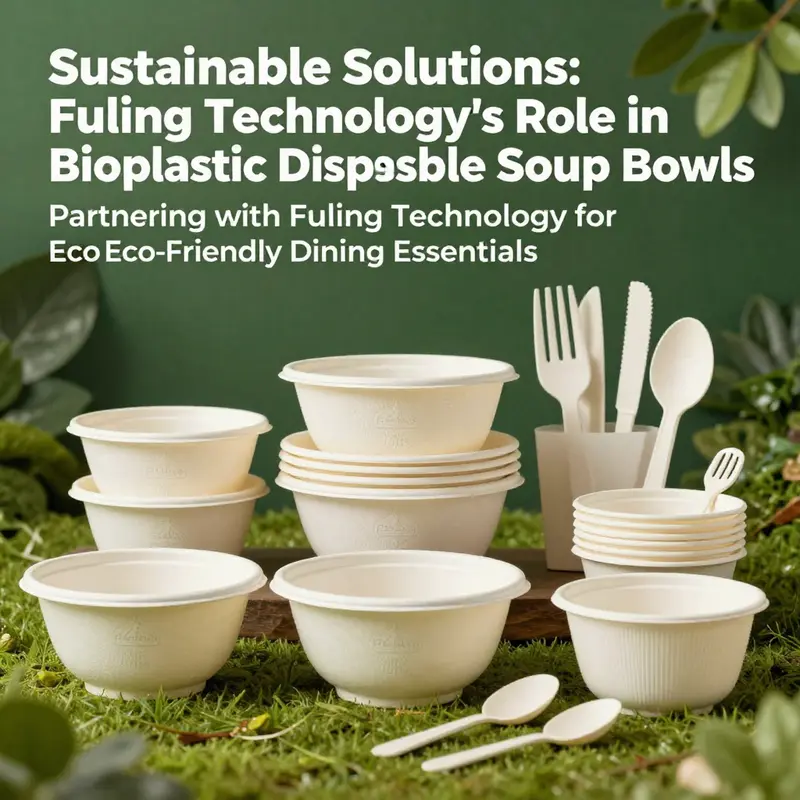
In an era where sustainability is paramount, Fuling Technology stands out in the production of bioplastic disposable soup bowls for various sectors, including bubble tea shops, restaurants, food trucks, and event planners. Specializing in both plastic and biodegradable materials, Fuling offers a comprehensive range of dining solutions that align with the growing demand for eco-conscious products. This article delves into the pivotal role of Fuling Technology in the bioplastic market, exploring its manufacturing processes, the dynamics of the market it operates in, the environmental impact of its offerings, and the regulatory landscape influencing its innovations. Each chapter will guide you to understand how Fuling’s commitment to sustainability can elevate your business operations.
From Research Labs to Global Kitchens: How a Chinese Bioplastic Soup Bowl Factory Is Shaping Sustainable Dining
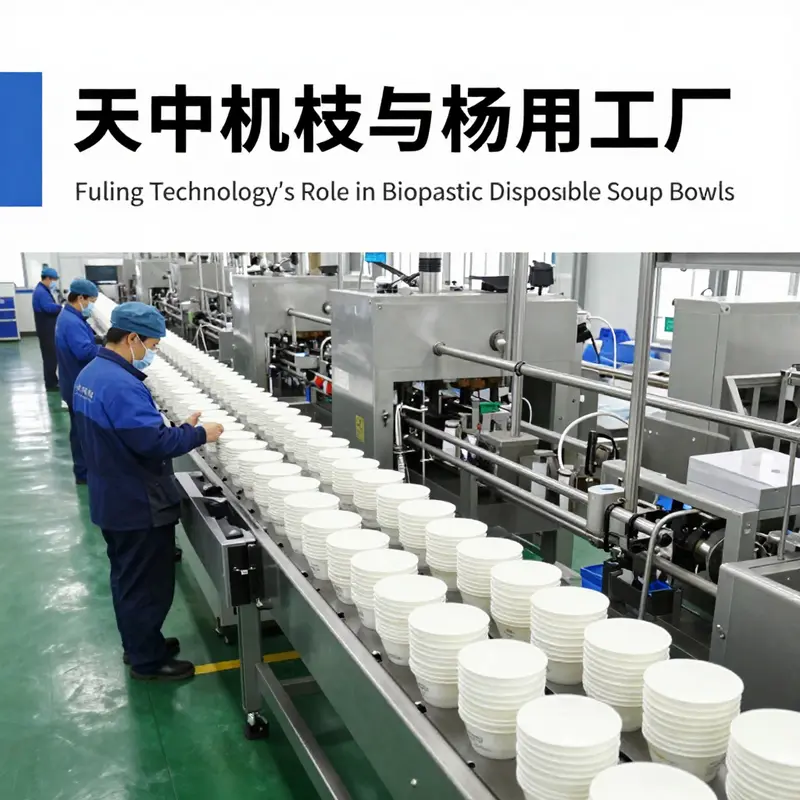
As the world moves toward greener packaging, the discourse around single-use dining ware has become central to industrial strategy. In China, a country navigating rapid urbanization, a growing consumer appetite for convenient meals, and tightening environmental standards, a bioplastic soup bowl factory has emerged as a focal point of this shift. At the heart of this development sits a company that blends relentless R&D with scalable manufacturing, turning laboratory insights into high-volume, consumer-facing products. This transition from research bench to production line is not merely a matter of increasing output; it reflects a broader redefinition of how disposable tableware can function within a circular economy. The factory’s trajectory illustrates a deliberate move away from conventional plastics toward materials that promise end-of-life clarity, safer food contact performance, and regulatory alignment across multiple jurisdictions. The implications extend beyond a single plant or a single material—this is a window into how China’s bioplastic sector is evolving to meet global demand while addressing the environmental externalities that have long shadowed disposable dining. Within this landscape, the role of a leading Chinese bioplastic disposable tableware producer becomes a case study in how environmental ambitions translate into economic realities, and how such a company can anchor a national strategy to reduce plastic waste without sacrificing convenience for millions of diners. To understand the significance of this factory, one must first appreciate the scope of its production footprint. The company has built a network of bases that span both domestic and international markets, a strategic architecture designed to balance proximity to major consumer hubs with the resilience that comes from diversified supply routes. In China, core production centers ring a key coastal province, with additional facilities positioned to optimize logistics, energy management, and access to raw materials. The overseas footprint extends to the United States, Mexico, and Indonesia, signaling an intent to shorten supply chains, reduce lead times, and respond more nimbly to regional preferences and regulatory requirements. Such geographic breadth is not incidental; it reflects a deliberate industrial policy aimed at creating a globally integrated platform for biodegradable dining ware. The product family mirrors this ambition. It encompasses fully biodegradable PLA-based bowls, paper-based alternatives, and reusable or recyclable options crafted from PP or PET. The breadth of choices is essential because it enables the company to serve diverse markets—regions with strict compostability standards, others that prioritize recyclability, and several that demand a combination of both. It also affords a practical path to phase in bioplastics where they offer the strongest benefits while preserving familiar performance traits, such as heat resistance, rigidity, and moisture management, that delineate a user experience in a takeout setting. Crucial to the factory’s credibility is its posture toward quality and safety. Bioplastic materials used for food contact must pass stringent tests, not only for environmental fate but also for food safety and regulatory compliance. The factory’s portfolio includes products that have secured a suite of international and national certifications, including recognized standards for compostability and biodegradability. These certifications are not decorative badges but operational constraints that shape every stage of the value chain—from material formulation and extrusion or molding to packaging, labeling, and distribution. In practice, this means meticulous process control, validated aging studies, and robust chain-of-custody documentation that trace products from resin or pulp to finished bowls and lids. Such traceability is indispensable when serving global fast-food chains and large retailers, where regulatory setbacks translate into costly delays and erode consumer trust in environmental claims. Behind the scenes, the factory operates as a hub of advanced research and engineering. It stands among the leaders who have taken on an active role in shaping the standards that govern disposable degradable tableware in China and beyond. The company has positioned itself as a principal drafting contributor to the national standard for the general technical requirements of disposable degradable dining ware. This engagement is more than symbolic; it aligns corporate practice with regulatory expectations, ensuring that new materials and processing methods can be introduced with a clear compliance pathway. To support this leadership position, the company collaborates with top scientific institutions to push the frontiers of bioplastic technology. A dedicated research ecosystem—often described as a campus-like setup within the industrial complex—hosts a spectrum of analytical equipment and test rigs. Facilities equipped with Fourier-transform infrared spectroscopy, elemental analyzers, and other high-precision instruments speak to a discipline of rigorous quality assurance. Beyond instrumentation, the company holds a portfolio of invention and utility patents that create a protective moat around core processing know-how. This intellectual property strategy is not about hoarding ideas; it is about ensuring consistent performance, reducing the risk of material variability, and providing a platform that can adapt to evolving formulations without compromising safety or efficiency. In tandem, an institute-affiliated workstation with experts from the field of biodegradable materials anchors ongoing research into new blends and bio-based feedstocks. This ecosystem—industrial scale paired with academic collaboration—positions the factory not merely as a supplier but as a co-creator of standards and breakthroughs in the bioplastic space. The operational heartbeat of the plant is translating a wide range of environmental objectives into practical packaging solutions. Five domestic bases anchor a diversified supply capability, while overseas locations confer access to regional demand patterns and regulatory environments. The product mix is designed to meet different market needs: fully degradable PLA-based bowls that align with industrial composting schemes, paper-based bowls for easy end-of-life separation, and recyclable PP or PET versions for markets with strong recycling infrastructures. Such flexibility reduces the risk that a single material choice will fail to gain traction in a particular regulatory or cultural context, thereby enabling the company to maintain a steady stream of sustainable options for foodservice operators that want to reduce their environmental footprint without compromising the dining experience. The value proposition extends beyond environmental metrics to economic and logistical realities. Bioplastic and paper-based packaging can offer compelling advantages in terms of food safety, sensory neutrality, and brand alignment with environmental narratives. The factory’s production design emphasizes scalable manufacturing processes, standardized operating procedures, and robust supply-chain validation to ensure consistent quality across volumes. This is particularly important given the scale at which global quick-service and retail brands operate. A reliable supply of safe, compliant, and consistently performing bowls reduces the risk of disruption and strengthens procurement profiles for buyers who must meet multiple regulatory regimes, including those governing food-contact materials, labeling, and end-of-life specifications. In this context, the factory’s export-oriented approach is not an afterthought but a core competency. It enables serving markets with distinct waste-management ecosystems—from curbside composting to large-scale material recycling programs—and calls for lifecycle assessment and rigorous performance testing. The end result is a suite of options that helps operators communicate a credible sustainability story while maintaining the efficiency and predictability demanded by high-volume operations. The narrative of this bioplastic soup bowl factory would be incomplete without acknowledging the broader industry ecosystem in which it operates. Its leadership in green design and sustainability labels, including recognition as a national-level manufacturing champion and a pioneer in green factories, signals strategic alignment with government drives toward cleaner production. The factory’s collaborations with academies and research centers, and its commitment to a traceable pathway from raw material to finished consumer item, illustrate how industrial leadership can harmonize with environmental goals, shaping the standards, the certification landscape, and the procurement expectations of major international buyers. The social and environmental return on this alignment is evident in cleaner waste streams, lower emissions from single-use packaging, and a model of industrial resilience that can adapt to fluctuating feedstock prices and evolving policy landscapes while meeting the needs of global foodservice partners. The takeaway for readers analyzing China’s bioplastic disposable soup bowl sector is clear: this is no longer a niche but a strategic component of sustainable gastronomy. The factory’s global reach, its standard-setting influence, its QA infrastructure, and its collaborative approach to material science demonstrate how a China-based producer can influence domestic and international supply chains. The emphasis on end-of-life solutions—industrial composting and recycling-friendly designs—embodies a holistic philosophy: the goal is not simply to replace conventional plastics with a greener substitute but to embed the entire lifecycle within a governance framework that prioritizes safety, performance, and environmental accountability. This is the essence of how a modern bioplastic soup bowl factory operates in China today, aiming for scale with stewardship, profitability with responsibility, and speed with sustainability. For readers seeking concrete examples of packaging options gaining traction, consider durable, heat-tolerant takeout vessels that work across varied service contexts. The evolution of these products, driven by material science breakthroughs, regulatory clarity, and consumer receptivity, creates a path for continuous improvement. As markets demand transparent claims and verifiable environmental benefits, the intersection of industrial capability, academic collaboration, and rigorous testing remains the engine of progress. Brands adopting such capabilities will be better positioned to tell credible sustainability stories, maintain cross-jurisdictional compliance, and deliver the convenience modern dining requires while reducing the environmental footprint of disposable tableware. Internal resource and external references illuminate this landscape further. A representative example can be found in industry catalog entries describing disposable kraft paper soup cups with lids, illustrating how a simple design adaption can align with consumer expectations and waste-management infrastructure. 26oz kraft paper soup cup bowls with paper lid. This contextual link helps illustrate practical considerations—heat resistance, lid compatibility, and stackability—that influence the deployment of bioplastic and paper-based ware in high-volume foodservice. While market specifics will always vary by locale, the overarching trajectory remains clear: manufacturing ecosystems that integrate R&D-driven material choices, robust certification regimes, and global distribution networks will continue to define the standard for sustainable disposable dining in the 21st century. External reference for further context: https://www.fuling.cn/Products
From Corn to Compost: Inside China’s Bioplastic Soup Bowl Factory
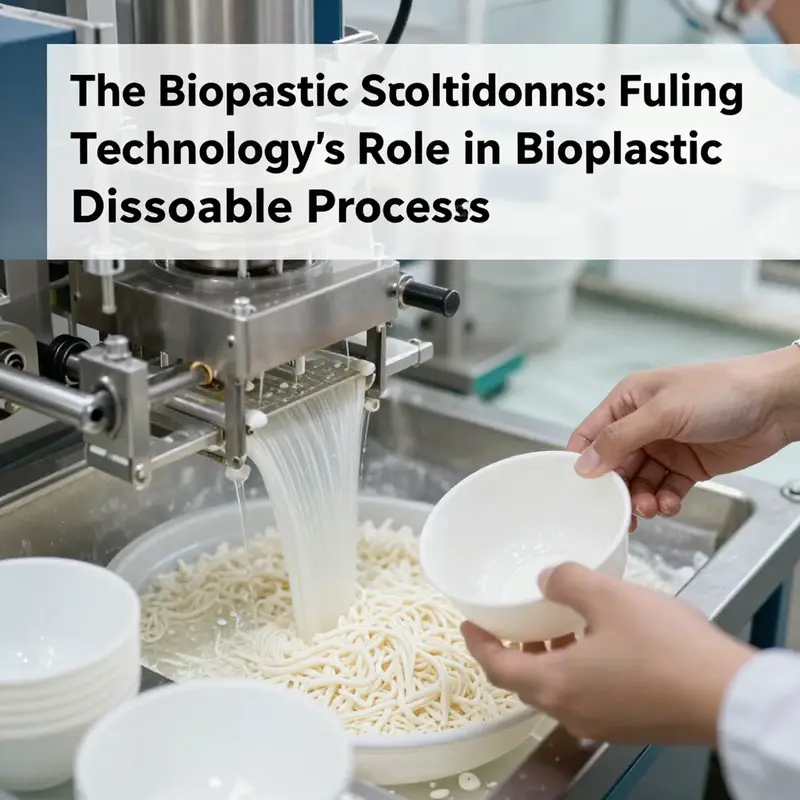
A modern bioplastic soup bowl factory in China presents a portrait of how material science, precision manufacturing, and rigorous safety standards converge to redefine single-use dining ware. The plant described in the research materials operates at the intersection of research and scale, where the promise of renewable resources meets the discipline of mass production. In such a facility, the journey begins long before the first meaningful extrusion or injection; it starts with a careful choice of feedstock, moves through tightly controlled processing steps, and ends in a finished product that must perform reliably in hot service, while also aligning with recognizable environmental credentials. The narrative that unfolds is not about a single machine or a single material, but about an integrated system designed to turn renewable polymers into dependable, disposable tableware capable of withstanding the pressures of high-volume service and the scrutiny of global standards.
At the core of this system is a feedstock that embodies the shift toward sustainability: polylactic acid, or PLA, derived from renewable resources such as corn starch. PLA is not just a polymer; it is a statement about a supply chain that aims to shorten the distance between farm and consumer, reducing the reliance on fossil-based plastics. In the factory setting, high-purity PLA pellets are carefully sourced and blended to achieve precise mechanical and thermal properties. The blend is tuned so that bowls can tolerate hot liquids, resist minor deformation under typical table service conditions, and maintain a surface finish that customers associate with quality. The blending step is more than a recipe; it is the product of ongoing research and tight quality controls that ensure consistency from batch to batch. Once the resin is prepared, it is fed into injection molding machines that form the daily workhorse of the facility. These machines, part of automation-rich production lines commonly found in Zhejiang’s bustling industrial clusters, heat the PLA to its melting point and inject it into precisely designed mold cavities. The molds themselves are engineered with tight tolerances to preserve the geometry that enables a bowl to hold soups and broths without leaking, warping, or collapsing under heat. The process is not a single act but a coordinated sequence where temperature, pressure, residence time, and mold cooling all converge to produce a product that is dimensionally stable and ready for performance testing.
The moment the bowls emerge from the mold, the journey enters a second phase: cooling and quality recognition. Immediately after demolding, the articles proceed along automated lines to controlled cooling stations. The stability of the polymer under rapid cooling is essential; any residual stress can lead to distortion when the bowls encounter hot contents. In a factory of this type, the emphasis on precision does not end with the physical part. The organization’s R&D center, equipped with more than one hundred advanced instruments, underpins a comprehensive testing regime. Fourier Transform Infrared spectroscopy (FTIR) reveals the chemical integrity of the polymer chain and helps verify that the material remains within specification for food-contact safety. Gas chromatography (GC) is used to ascertain the absence of volatile contaminants that could migrate into food or degrade sensory properties. Precision balances ensure that additives, fillers, and trace components stay within strict limits, preserving both performance and safety.
Beyond these analytical techniques, the testing regimen extends to microbial assessments and physical tests that simulate real-world use. These evaluations are aligned with international standards that govern bioplastics and compostable materials. The factory’s approach to conformity is not limited to a single guideline; it encompasses multiple references such as global certification schemes that address the safety of materials intended for contact with food. The result is a product that can endure temperatures upward of 100°C (212°F) without warping or compromising the integrity of the container. In practice, this means a bowl can be filled with hot liquids, transported, and served without risk to the consumer, while the material remains compatible with standard cleaning and disposal cycles under appropriate composting regimes. The emphasis on food safety is complemented by a commitment to environmental stewardship that runs through every stage of production.
Sustainability, in this setting, is not a marketing phrase but a systemic requirement. The operations adhere to ISO 14001 environmental management standards, which frame the factory’s approach to resource use, emissions, waste, and continual improvement. The end products carry certifications such as OK Compost HOME and BPI, signaling performance in home and industrial composting environments within a defined period. These certifications are more than symbols; they embody a commitment to lifecycle thinking, guiding decisions from material selection to end-of-life pathways. The environmental narrative is reinforced by ongoing collaboration with research institutions, including partnerships with national science organizations. Through joint efforts with the Chinese Academy of Sciences’ Institute of Chemistry, the facility participates in advancing bio-based polymer formulations and investigating degradation mechanisms. This collaboration reflects a broader strategic aim: to enhance biodegradability without compromising the material’s mechanical performance during use. It is a delicate balance, because the goal is to accelerate breakdown once the product has fulfilled its service life, not during the time it is in the hands of a hungry consumer.
The scale and sophistication of the factory’s operations illuminate how a bioplastic portfolio can evolve from feedstock to finish in a way that meets both commercial demand and environmental expectations. The PLA-based bowls are part of a wider spectrum of disposable tableware that the organization develops and markets, including items designed for takeout and single-use settings where convenience and reliability are valued. The design philosophy centers on modularity and manufacturability: components are optimized for the molding process, the resulting parts exhibit uniform wall thickness, and the surface finish is engineered to resist heat staining and maintain a clean appearance even after repeated cycling through washing and brief exposure to heat. The emphasis on tight tolerances is not merely about aesthetics; it is about ensuring a consistent user experience across millions of units and minimizing waste that can arise from poorly fitting lids, warped rims, or compromised seals.
A crucial element of this ecosystem is a deep understanding of the interaction between the material, the design, and the end-use environment. The bowls must not only hold hot liquids safely but also maintain their form during handling and transport. They must perform in a variety of climates and service contexts, from fast-service outlets to more relaxed dining scenarios, while still meeting rigorous compostability criteria. The research and development program supporting this factory continually probes the degradation behavior of PLA-based systems, seeking formulations that deliver predictable composting timelines without sacrificing the material’s integrity while in service. The collaboration with scientific partners helps translate laboratory insights into production-ready materials that satisfy both regulatory requirements and consumer expectations. This synergy between science and shop floor practice is what turns a theoretical promise into a reliable product line.
In the broader landscape of packaging, the factory’s position highlights a shift away from purely fossil-based solutions toward systems that can be sourced from renewable feedstocks and disposed of in controlled composting streams. Such a transition is not simply about replacing one resin with another; it is about rethinking the packaging lifecycle to reduce environmental impact and to align with evolving regulatory expectations and consumer values. The production lines embody this shift by integrating environmental management with manufacturing discipline. The facility’s operators, engineers, and researchers work in concert to ensure that every bowl leaving the line reflects a careful balance: it performs when in use, and it responsibly enters a composting pathway when it has fulfilled its purpose.
To illustrate how this approach sits alongside broader industry practices, consider the varied packaging ecosystems that surround hot-food takeout. The supplemented materials emphasize compatibility with heat, ease of use, and the ability to degrade in composting environments. A practical example in the sector can be found in related disposable formats that aim to minimize waste while preserving user convenience. This chapter, while centered on a bioplastic bowl, resonates with the larger conversation about designing takeout packaging that can integrate with municipal composting programs or home composting where feasible. The technical and logistical challenges are real: feedstock supply stability, polymer performance during service life, and the validation of compostability claims across diverse waste-management infrastructures require rigorous attention and ongoing refinement.
For readers who want a concrete example of the kinds of disposable packaging objects that sit alongside bioplastic bowls in a sustainable portfolio, a related product line demonstrates how lids, liners, and bowls can be coordinated to deliver a seamless consumer experience while maintaining compostability credentials. This broader context helps reveal how a factory such as the one described can evolve to meet shifting demand for greener dining ware without sacrificing reliability in everyday operation. The journey from corn starch to a finished, heat-tolerant bowl is thus inseparable from a wider strategy that embraces continuous improvement, cross-disciplinary collaboration, and a commitment to responsible end-of-life management. In sum, the factory embodies a practical blueprint for how bioplastics can be scaled in a way that respects performance, safety, and sustainability.
External resource: https://www.fuling.com.cn
Internal note for readers seeking related product context: disposable kraft paper soup cup with paper lid
null
null
Green Ambitions, End-of-Life Realities: The Environmental Footprint of Fuling’s Bioplastic Disposable Soup Bowls
Across a landscape of modern manufacturing in China, a particular line of bioplastic disposable tableware has emerged as a strategic response to mounting pressure for sustainable packaging. The factory in focus, driven by rigorous research and development, stands at the intersection of two ambitious aims: to reduce dependence on fossil resources and to offer end-of-life options that lessen the burden of waste on soil and water. The chapter that follows does not merely catalog the technical feats of creating a biodegradable soup bowl; it also maps the environmental footprint of these products across their life cycle. It weighs the genuine gains against the practical constraints that accompany scaling a bioplastic solution in a world built on linear consumption. In doing so, it anchors the discussion in a broader ideal—the shift toward a circular economy where packaging materials are designed, used, and disposed with systemic recovery in mind—yet it remains grounded in the realities of what it takes to turn that ideal into everyday practice.
The primary environmental advantage of these bioplastic bowls lies in their raw material base. By drawing on renewable feedstocks such as sugarcane bagasse and corn starch, the bowls reduce the volume of fossil resources diverted into single-use ware. The shift from petroleum-based polymers toward plant-derived polymers is not simply a substitution of inputs; it is a statement about resource resilience. Renewable feedstocks carry the potential to lower lifecycle greenhouse gas emissions when compared with conventional plastics, particularly when agricultural practices are managed to minimize nitrogen losses and when processing energy is sourced from cleaner electricity. In the factory, this logic translates into a value chain that emphasizes not only material innovation but also green design that reduces energy intensity in production, eases the burden of material scarcity, and signals to purchasers a commitment to sustainable procurement. The fully degradable line, certified by recognized bodies, reinforces the perception that the product can close its life circle in the appropriate system. In the American and German certifications referenced in the materials, the endorsement of industrial compostability serves as a practical acknowledgment that disposal will occur in facilities designed for high-temperature, moisture-rich microbial action. For stakeholders seeking to minimize persistent plastics in land and water, such certification is meaningful because it aligns product design with the realities of end-of-life infrastructure.
Yet certification does not erase the need for careful interpretation of what “degradation” means in real-world contexts. The environmental benefits of compostability hinge on access to industrial composting facilities and robust waste separation. In a city that lacks reliable composting collection, or in a consumer household where composting is not practiced, these bowls may experience a slower or incomplete breakdown. The literature on bioplastics consistently cautions that the end-of-life outcome is conditional on the waste management system available to users. The reality is that a lot of so-called biodegradable or compostable plastics end up in regular municipal waste streams or landfill, where temperatures and moisture conditions do not reach industrial composting thresholds. In such cases, the environmental advantage can be muted, and the potential for microplastic formation, though reduced, cannot be entirely discounted. The chapter’s gaze therefore shifts from the material chemistry to the logistics of waste handling, and it treats the system as a whole. It is not enough to claim reduced persistence in nature; one must ensure that the entire supply chain—from production to post-consumer recovery—supports the intended fate of the material.
A second area where environmental claims require scrutiny is land use and agricultural impact. The feedstocks that underpin these bioplastics—sugarcane and corn—are crops whose cultivation patterns carry ecological and social implications. Even when inputs are non-GMO, scaling up production raises questions about land competition, water use, and biodiversity. Sugarcane bagasse, a byproduct of sugar extraction, represents a form of value capture from existing processing streams, potentially improving resource efficiency. Corn starch, while abundant, poses debates about agricultural footprint and the opportunity costs of land and water resources. The supplier’s emphasis on renewables must be balanced with transparent accounting of farming practices, fertilizer use, and yield outcomes. A truly sustainable packaging pathway requires not only cleaner processing but also responsible feedstock governance and commitments to traceability. The factory’s emphasis on green design should extend to supplier criteria that encourage regenerative agricultural approaches, reduced chemical inputs, and adherence to environmental safeguards, particularly as the scale of adoption grows.
Beyond the feedstock and the end-of-life questions lies the complexity of measuring true environmental performance through a lifecycle perspective. A comprehensive lifecycle assessment—encompassing feedstock cultivation, polymerization, fabrication, distribution, consumer use, and end-of-life processing—offers the most credible framework for understanding where genuine gains occur and where trade-offs emerge. The literature on bioplastics emphasizes that the environmental profile cannot be reduced to a single event, such as compostability certification. Teasing out the energy and emissions embedded in sugarcane or corn farming, the chemistry of converting bio-polymers into usable bowls, and the logistics of global supply chains is essential to avoid overstatement of benefits. For a factory operating at scale with global clients, the ability to publish and update an evidence-backed lifecycle analysis becomes a differentiating factor. It clarifies whether the reduction in fossil fuel input translates into a net reduction in greenhouse gases when conversion losses, land-use changes, and transport emissions are accounted for.
The factory’s current consumer-facing identity—as a major supplier to fast-food and take-away networks—adds another layer to the environmental story. The demand side matters as much as the input side. Large buyers bring scale and accountability; they can demand performance improvements that extend beyond the lab to the recycling and composting ecosystems that receive these bowls after use. The green design initiatives that the factory highlights are more credible when they are embedded in a broader procurement approach that aligns product development with waste collection, sorting, and processing infrastructure in the regions where the bowls are sold. It is here that the synergies between material science and public policy become visible. Standards, certifications, and reporting practices help translate environmental intent into verifiable outcomes. The link between research excellence inside the factory and environmental accountability in the field is not accidental; it is the consequence of deliberate alignment with a circular economy mindset that recognizes the necessity of recovery streams as well as production efficiencies.
In this context, the chapter also contemplates the practical implications for consumers and waste managers. Consumer education plays a role in shaping disposal habits. If a user believes the bowl will simply vanish after disposal, there is a risk of misinterpretation that can undermine environmental benefits. Clear labeling about industrial composting needs, local facility availability, and proper separation of food residues can make the intended end-of-life pathway more predictable. Waste managers, on the other hand, must integrate these materials into their processing plans, ensuring that collection networks can deliver feedstocks to appropriate facilities while maintaining high standards of contamination control. The interplay of consumer behavior, policy incentives, and infrastructure investment ultimately determines whether the environmental advantages of bioplastic disposable bowls are realized at scale. If a region lacks industrial composting capacity, the bowls may default to conventional waste streams, reducing or negating the anticipated environmental improvement.
The foregoing reflections do not diminish the value of shifting toward renewable, compostable packaging. They instead foreground a practical truth: environmental stewardship in packaging requires harmonizing material innovations with end-of-life realities. As the factory continues to innovate in green design and expands its reach across markets, it can strengthen the environmental narrative by deepening collaboration with waste management partners, investing in transparent lifecycle analyses, and maintaining rigorous supply-chain standards. The chapter thus presents a nuanced portrait of bioplastic soup bowls as a meaningful step toward sustainable packaging—one that holds real promise when paired with robust end-of-life infrastructure, careful feedstock stewardship, and ongoing commitment to lifecycle accountability. For readers seeking a concrete example of how such a product is positioned within a broader ecosystem of eco-friendly ware, consider exploring the related product page that highlights an eco-friendly kraft paper disposable serving bowl and its role in responsible take-away packaging. eco-friendly kraft paper disposable serving bowl.
In sum, the environmental footprint of Fuling’s bioplastic disposable soup bowls reflects a prudent balance between sustainable material choices and the genuine constraints of end-of-life infrastructure. The shift away from fossil resources is real and measurable, and certifications attest to functional compostability under optimized conditions. However, the sustainability story depends on the surrounding system: farming practices that minimize ecological disruption, processing that optimizes energy consumption, and waste streams that reliably deliver post-consumer materials to appropriate treatment facilities. As the world’s appetite for convenient, safe, and environmentally conscious dining ware grows, the challenge for manufacturers becomes ensuring that the entire chain—from field to facility—aligns with the principle that materials are designed not just for use but for responsible recovery. The chapter’s analysis therefore embraces both the promise and the limits of bioplastics, arguing for continued investment in cross-sector collaboration, rigorous lifecycle assessment, and policy frameworks that reward genuine circularity rather than surface-level symbolism. External reading: https://www.bioplastics.org/bioplastics/.
Policy Currents and Consumer Calibration: Redefining China’s Bioplastic Disposable Soup Bowl Factory
A quiet but relentless shift is unfolding in China’s bioplastic disposable tableware sector, where policy signals and changing consumer expectations meet at the same crossroads. The factory floor, long tuned to the rhythms of speed and low cost, is now learning to speak a more disciplined language of compliance, performance, and experience. This convergence does not merely redraw the competitive map; it reframes what counts as value in a market where sustainability has moved from a niche promise to a baseline requirement. The regulatory and consumer currents fueling this change are distinct in origin yet inseparable in effect. Together they compel a new operating logic for the bioplastic disposable soup bowl ecosystem, one that values rigorous standards, material science breakthroughs, and design that delights as much as it preserves the environment.
Regulatory trends arrive first as a clear mandate: the ban on non-biodegradable plastics has moved from a political priority to an economic one. The national policy sweep, underpinned by strategic guidelines released over the past few years, explicitly constrains the production, sale, and use of traditional plastic tableware made from polystyrene and conventional polyolefins. In practice, this means soups cannot be served in un-certified or non-biodegradable vessels without facing regulatory risk. The practical implication for manufacturers is immediate and tangible: non-compliant materials become non-viable from the outset. To stay legal and competitive, factories must transition to certified biodegradable and compostable alternatives, materials that break down under defined industrial or home composting conditions. The shift is not just about choosing a green material; it’s about demonstrating conformity to standards that ensure performance and safety throughout the product life cycle.
A cornerstone of this transition is the establishment of recognized benchmarks. Materials like PLA and PBAT blends, or plant-based fibers such as bagasse and bamboo, are not merely substitutes. They are part of a compliance system that requires traceable supply chains, verifiable compostability, and alignment with international standards such as ISO 18606 and ASTM D6400. The adoption of these standards signals that a supplier’s product can be trusted to perform under heat, to resist leakage, and to degrade as intended in appropriate environments. That assurance is critical for both regulators and end users who want to avoid greenwashing and ensure a genuine reduction in plastic waste.
With compliance demands come substantial costs. Upgrading extrusion lines, investing in high-precision molding technologies, and implementing robust quality-control regimes are no longer optional. Each new facility needs calibrated testing protocols, environmental monitoring, and third-party certifications that attest to biodegradability and safety. The capital outlay can be substantial, especially for smaller players who must balance regulatory timetables with cash flow. As the regulatory net tightens, the competitive field begins to favor larger, more established manufacturers with stronger R&D capacity and more sophisticated manufacturing ecosystems. This is not a retreat of competition but a consolidation that raises the barrier to entry and accelerates scale efficiencies for those who can invest in the right capabilities.
The regulatory wave is not static; it signals a long-term direction that reduces the appeal of old, cheap plastics in favor of durable, certifiable alternatives. This creates a protected and growing market for bioplastic and plant-based soup bowls that meet the dual tests of compliance and consumer acceptance. When policy provides a clear roadmap—quantified standards, defined timelines, and transparent enforcement—factories can align investments with anticipated demand rather than chasing shifting incentives. In this sense, regulation becomes a market catalyst that helps stabilize planning horizons for capital expenditure, research priorities, and supplier development.
On the consumer side, demand now travels through more refined channels. Urban Chinese consumers are increasingly environmentally conscious, and their choices reflect a broader shift in social norms. The environmental premium attached to a bioplastic or plant-based bowl is no longer an optional add-on but a default expectation. This change is driven by heightened awareness of the environmental footprint of packaging and by a willingness to pay for options that demonstrate responsibility. Yet environmental concern alone does not suffice. Today’s consumer also demands reliable performance: bowls must hold hot soups without deforming, resist leakage, and present a clean safety profile. The fear of heat-induced deformation or chemical leachates has diminished as materials science has produced blends with better heat resistance and reduced additives. Consumers want a product that not only behaves well in use but also feels trustworthy—free from BPA and other controversial substances—and that matches their personal aesthetics.
Simultaneously, the market has become more discerning about design and experience. Sustainable packaging is no longer a plain container; it is a platform for brand storytelling and customer engagement. A bioplastic soup bowl is evaluated for its tactile quality, its coating’s appearance, and its compatibility with branding or customization. The packaging ecosystem now rewards solutions that combine form and function: bowls that look appealing on shelves or in delivery imagery, that stack efficiently, and that showcase a company’s environmental commitments through design choices and messaging. In other words, sustainability becomes a feature, not a back-end attribute, and consumer expectations push manufacturers toward products that are both responsible and attractive.
These consumer expectations intersect with regulatory requirements in ways that sharpen the competitive edge for those who can deliver. The most successful players blend material science advances with disciplined manufacturing practices to produce bowls that perform under heat and maintain integrity during shelf life and handling. This means ongoing investment in research and development to refine polymer blends, to test and validate compostability under real-world conditions, and to optimize processing for quality and consistency. It also means rethinking the supply chain: sourcing sustainable feedstocks that are reliable, scalable, and affordable; integrating suppliers who can meet certification demands; and ensuring traceability and transparency across the lifecycle of each product.
From a manufacturing perspective, these trends catalyze several strategic shifts. First, there is a move toward more closed-loop, quality-assured processes that can demonstrate compliance at every stage—from raw material intake through finished product testing. Second, factories are adopting more precise molding and forming technologies to achieve the heat resistance and dimensional stability required for hot-fill applications. Third, the workforce is evolving; operators, quality engineers, and materials scientists collaborate more closely to navigate the complexities of biodegradable polymers and their performance envelopes. The result is a manufacturing environment that prioritizes reliability and safety as much as throughput and cost.
This transformed landscape also creates opportunities for design and branding to play a larger role in value creation. If a bowl can be molded to incorporate branding through color, texture, or surface finish while maintaining compostability and safety, it becomes a direct conduit for consumer loyalty. The design process now balances aesthetics with functional criteria—heat handling, leak resistance, and biodegradability—so that style does not compromise performance. In this context, product development becomes a holistic discipline that spans chemistry, mechanical engineering, and user experience. The most effective teams treat sustainability as a core value rather than a marketing hook, ensuring that every design decision contributes to environmental outcomes and consumer satisfaction alike.
An internal reference point for many players is the broader market analysis, which emphasizes how regulatory mandates and consumer demand are mutually reinforcing forces shaping the future of bioplastic disposable tableware. The analysis highlights that policy clarity and market confidence are prerequisites for scaling up a sustainable packaging ecosystem. When regulators provide consistent expectations and when consumers reward responsible choices, the industry can push forward with material innovations, process improvements, and design excellence. The practical implication for a China-based bioplastic soup bowl factory is clear: align with regulatory milestones, invest in material science, and design products that delight as they protect the planet. A practical example within the ecosystem is the availability of plant-based and biodegradable options that meet stringent compostability standards while delivering dependable performance in hot, messy, and fast-paced dining contexts. With such options, a factory can diversify its material portfolio, reduce risk associated with regulatory shifts, and offer customers a compelling, value-driven package.
The broader forecasting and policy landscape also emphasizes the importance of credible external resources to guide strategic decisions. For readers seeking a comprehensive market outlook that captures the regulatory and consumer dynamics described here, a leading global research report provides detailed analysis, trends, and projections for both the international and Chinese bioplastic disposable tableware market. This external resource helps frame where the industry is headed and why the current regulatory and consumer convergence matters for factory planning and investment decisions. For further context, see the external reference listed at the end of this chapter.
Internally, many factories are turning to adoptable, modular solutions to keep pace with evolving standards. They are testing new polymer blends that blend the rigidity of traditional plastics with the compostability of bio-based materials, while also pursuing innovations in barrier properties to prevent leaking and protect contents. They are retooling molds and extrusion lines to handle more complex geometries and to produce bowls with consistent wall thickness and heat tolerance. They are implementing more rigorous supplier qualification procedures to ensure the reliability of bio-based feedstocks and the absence of contaminants that could compromise compostability. They are building digital dashboards for traceability, enabling faster audits and more transparent reporting to regulators and customers alike. In short, regulatory discipline and consumer sophistication are catalyzing a more scientific, more design-forward, and more resilient bioplastic soup bowl industry in China.
For practitioners in this space, the path forward is not about chasing the cheapest solution but about delivering a credible promise: a product that performs when it matters, degrades as intended, and communicates its environmental credentials clearly to the consumer. The balance between compliance costs and market opportunity will continue to tilt toward those who can couple robust R&D with intelligent manufacturing and thoughtful design. The evolving regulatory framework provides a predictable horizon, while consumer expectations drive continuous iteration. Together, they create a durable trajectory for a sector that aims to reduce plastic pollution without sacrificing the everyday conveniences that soup bowls have long provided.
Internal link reference: a practical example of compliant, eco-friendly packaging design within the broader ecosystem can be found through a dedicated resource that highlights kraft-paper, eco-friendly, and customizable take-away packaging options. senang-kraft-paper-octagonal-bowl-1200ml-waterproof-eco-friendly-disposable-salad-bowl-for-snack-cookie-warm-cold-food-pet-lid.
External resource: Global and China Bioplastic Disposable Tableware Market Analysis Report 2026: https://www.grandviewresearch.com/industry-analysis/bioplastic-disposable-tableware-market
Final thoughts
Fuling Technology’s dedication to bioplastic disposable soup bowls not only meets the urgent needs of today’s environmentally conscious consumers but also provides a competitive edge to businesses across multiple sectors. By aligning with Fuling’s sustainable practices, companies can enhance their operations while contributing positively to the planet. As the demand for eco-friendly solutions continues to grow, Fuling stands ready to support enterprises seeking reliable, high-quality bioplastic products.