
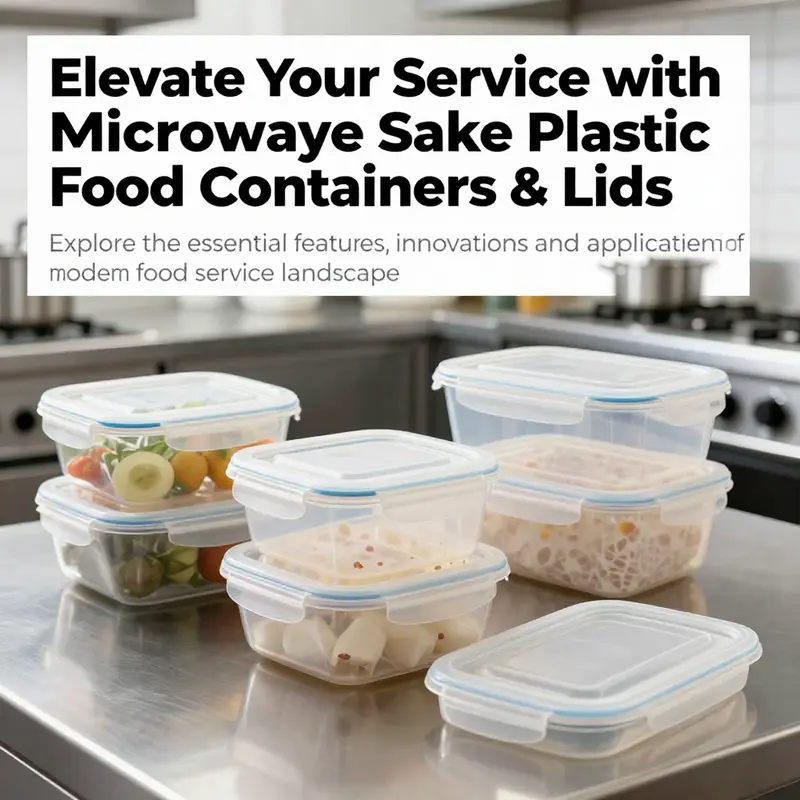
In today’s food service environment, the choice of packaging plays a crucial role in both safety and customer experience. Microwave safe plastic food containers offer businesses—from bubble tea shops to catering services—an effective solution for serving, storing, and transporting meals and beverages. This article delves into the fundamental safety standards and core features of these containers, highlighting their innovative designs and functionalities that significantly enhance user experience. Furthermore, we will explore various applications and emerging trends, providing insights into how these containers can benefit your business and align with industry demands.
Core Characteristics and Safety Foundations: Understanding Microwave-Safe Plastic Food Containers and Lids
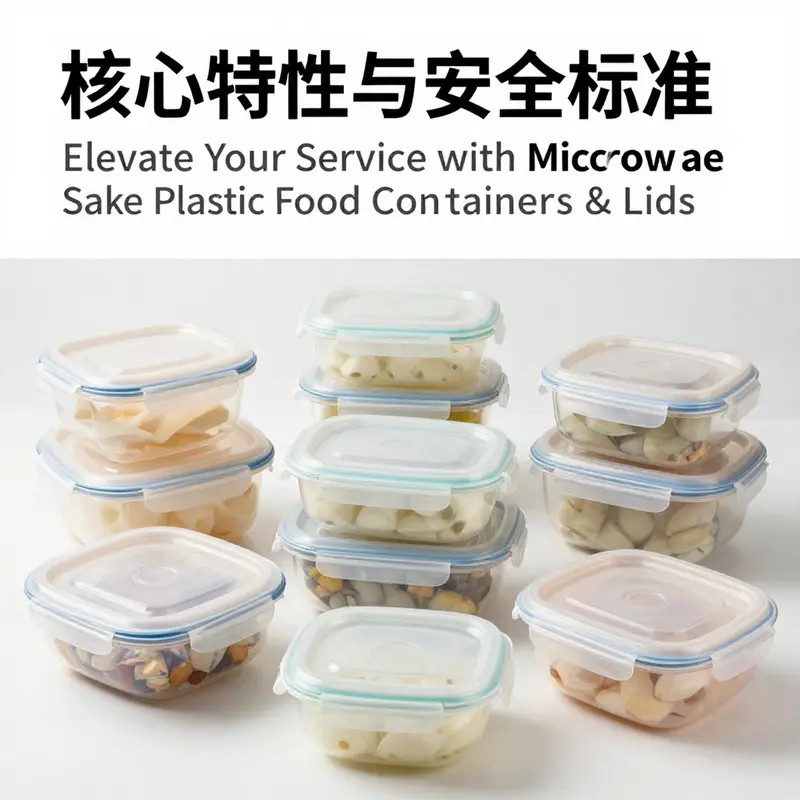
At the heart of microwave-safe plastic food containers and their lids lies a careful balance between performance and safety. This balance is not merely about whether a container looks sturdy enough to hold hot soup, but about the material science that governs stability, the explicit labeling that guides use, and the practical design decisions that influence everyday meals. When the microwave operation is in play, plastics must withstand brief peaks of temperature, resist chemical migration, and maintain their structural integrity without compromising the food they touch. In this light, the discourse around core characteristics and safety standards becomes a guide for both manufacturers and discerning consumers, ensuring that convenience does not come at the expense of health or environmental responsibility. The central pillar of this discourse is the selection of material, because, in practice, the material determines how heat is managed, how chemicals behave under stress, and how confidently a user can reheat leftovers without second thoughts. Polypropylene (PP) has emerged as the preferred material for most microwave-safe plastic containers. Its high heat resistance and chemical stability set it apart from other common plastics. A substantial portion of mainstream products rely on food-grade PP because it can withstand high localized temperatures that may occur during reheating, typically surpassing 100 degrees Celsius and often exceeding 110 degrees Celsius with certain polymers. This robustness means that a container can perform its primary function—holding food during heating—without deforming, warping, or releasing substances that would otherwise migrate into the food. The emphasis on PP is not merely a matter of tradition; it rests on solid technical reasoning. When PP is labeled for microwave use, it signals that the material has undergone evaluation for heat transfer behavior, contact with various food matrices, and long enough exposure to repetitive heating cycles. This is particularly important for fats, oils, and acidic components, where interactions between food and packaging can be more complex. In the context of safety, a more precise emphasis falls on a subset still widely recognized in the trade: PP5, the designation that indicates a type of PP with particular resin characteristics and safety margins suitable for direct food contact under heating scenarios. The presence of a PP5 marking is a tangible cue for quality and reliability, bridging the gap between theoretical heat resistance and practical performance in a kitchen setting. Beyond the material itself, the chain of safety extends into the labeling that accompanies these containers. Clear, unambiguous labeling such as “microwave safe” or the more explicit pictograms compliant with regional standards matters greatly. In Europe, for instance, the presence of a specific glass-and-fork symbol or equivalent endorsements on the packaging communicates conformity with established safety criteria. In the United States, FDA clearance for materials intended for food contact provides a parallel assurance to the consumer. In China, CIQ certification serves a similar purpose, signaling alignment with national requirements for food-contact plastics. Together, these markings are not mere tags; they are the practical means by which a user can distinguish between containers designed for microwave heating and those that are not. The difference between a container that is verified for microwave use and one that is not is not merely about a single moment of exposure. It also encompasses broader questions of long-term stability and repeated use. Even when a container is marketed as microwave safe, it is essential to observe recommended heating times and to monitor for any signs of wear. The discussion of safety cannot be complete without acknowledging ongoing developments in sustainability. A growing segment of the market is exploring biodegradable or bio-based alternatives, such as polylactic acid (PLA) and starch-based materials. These options align with global sustainability trends and can deliver a closed-loop life cycle when used appropriately. Yet, this introduces additional considerations: while some degradable options may exhibit favorable environmental profiles, their behavior under microwave heating can differ from that of conventional PP. The practical takeaway is that any biodegradable option positioned for microwave use must accompany robust testing that demonstrates heat resistance and food-contact safety at the temperatures typical of reheating scenarios. The emphasis on environmental performance does not replace the need for careful compliance with safety standards. Another critical area concerns the design features that influence user experience as well as safety. A modern microwave-safe container is not just a box; it is a tool that supports a spectrum of everyday tasks, from meal prep to on-the-go convenience. Anti-slip interior textures, such as hexagonal wall patterns, are more than minor ergonomic enhancements; they contribute to stability, reducing the likelihood that soups or sauces will slosh or spill during handling or when the container is moved from fridge to microwave. The interior geometry, in combination with a well-executed lid system, helps maintain food integrity by preventing uneven heating and by facilitating a more uniform heat distribution within the container. In some designs, the lid is crafted from a high-transparency PP that allows users to visually confirm the contents without opening the seal. This feature can extend freshness by enabling quick checks while keeping the container closed for longer periods between uses. However, the lid itself introduces a separate set of considerations. Materials used for lids may differ from the main body, and the lid should, ideally, either be identical in heat tolerance or clearly marked as microwave-safe. A common pitfall is assuming that the body’s safety guarantees apply to the lid as well; a lid made from a different polymer, especially one with lower heat resistance, can deform or contribute to unintended heat transfer dynamics that alter cooking or reheating results. The most conservative practice—removing the lid before microwave heating—emerges as a prudent default in many guidelines. If a lid must be used, it should carry its own microwave-safe designation and be free from damage or signs of deformation. This precaution helps maintain a reliable barrier against steam buildup that could compromise the seal or cause pressure-related issues inside the unit. The safety framework for these containers also stresses operational boundaries: even when the container is deemed suitable for microwave use, it is not a license for continuous heating at extreme conditions. Time thresholds are conservative and designed to minimize aging effects on the polymer. A typical precaution is to avoid prolonged heating beyond several minutes. In practice, shorter, carefully timed reheating sessions help preserve the polymer’s mechanical properties and reduce the risk of long-term leaching or structural fatigue. When discussing chemical stability, the concern extends beyond the primary polymer to include potential migration of additives, residual monomers, or plasticizers. The goal is to minimize any migration that could contaminate the food, which is why attention is paid to avoiding materials known for higher migration tendencies and ensuring that the packaging has undergone rigorous migration testing under model heating scenarios. Plastics used in microwave-safe containers are designed to resist migration under routine conditions; nonetheless, it remains prudent to avoid contact with highly acidic or highly fatty foods for extended periods, as such conditions can influence migration behavior and accelerate wear. In addition to these technical dimensions, the safety framework invites a broader ethical and regulatory awareness. Consistent adherence to standards such as relevant national and international guidelines provides a shared assurance across supply chains. For example, in China, the national standardization framework explicitly recognizes polypropylene as a primary material suitable for microwave heating, reflecting the material’s robust performance envelope and compatibility with food safety expectations. This kind of regulatory alignment reinforces consumer confidence and helps communicators articulate why certain products perform reliably under heat. The design philosophy behind modern containers also intersects with the realities of mass production and consumer markets. A practical approach to meeting diverse needs includes offering a broad spectrum of sizes, from compact portions to larger family servings, with standard dimensions that fit typical refrigerators, freezers, and microwaves. The functional rationale for size variety is not merely about convenience; it also addresses the need to minimize waste by providing appropriately scaled options for different meals and household routines. In parallel, manufacturers often extend customization options to color, shape, and packaging configurations to support brand expression in the restaurant and retail environments. While customization fosters identity and market differentiation, it remains essential that the fundamental safety properties—heat resistance, chemical stability, and clear labeling—remain intact across all configurations. This is where testing regimes, certifications, and ongoing quality control processes prove indispensable. From a consumer standpoint, the practical implications of these core characteristics translate into a straightforward decision framework. Look for containers that clearly state microwave suitability and carry standardized marks or labels that align with recognized safety frameworks. Check that the body material is PP5 or an equivalent, and examine the lid’s compatibility and labeling as part of the overall safety assessment. Careful handling extends the usability and safety of these products, reinforcing a cycle of safe heating and healthy consumption. The market context in early 2026 reflects a spectrum of possibilities: conventional PP-based containers dominate mainstream options, with a growing subset of biodegradable or compostable alternatives entering specific product lines. Price stratification often tracks batch sizes and features, with small orders commanding higher unit costs and large-scale orders benefiting from economies of scale. Yet, despite price differences, the universal thread remains: if a container is intended for microwave use, it must demonstrate heat tolerance, stability, and a traceable compliance path. In mainstream supply chains, customers increasingly expect not only performance but also traceability—clear provenance for materials, explicit migration data, and accessible certifications. Suppliers respond by maintaining robust documentation and offering samples for assessment. The possibility of free samples sometimes exists, with a nominal sampling fee that is refundable upon order. This practice aids procurement teams and individual households alike in evaluating fit for purpose, confirming whether a particular design meets caloric and culinary needs without compromising safety. For readers exploring non-plastic options, the landscape may show a spectrum of alternatives, including paper-based or bio-based packaging solutions that still offer microwave compatibility under specific conditions. The broader takeaway is that the safest path is to treat heating with plastic containers as a designed process, not a default assumption. Practically, this means respecting material-specific limits, adhering to labeling, and observing guidelines for time and temperature. The conversation around core characteristics thus centers on four pillars: material selection with PP and the PP5 subset for heat stability; explicit, standardized labeling that communicates safe microwave use; a lid strategy that acknowledges potential material differences and the risks of deformation or leaching; and a thoughtful approach to usage limits and food interactions that guards against accelerated aging or unintended chemical exposure. Together, these elements form a cohesive safety foundation that supports the broader goals of convenience and health in modern food culture. For readers who want to explore related packaging options while keeping safety at the forefront, a useful point of reference is a non-plastic packaging alternative that demonstrates how design and materials influence performance in real-world contexts. See this kraft-paper octagonal bowl with lid as a case in point for how alternative packaging can address convenience, sustainability, and safety considerations in parallel to plastic-based solutions. You can view the non-plastic option here: https://cupbowlpack.com/product/senang-kraft-paper-octagonal-bowl-1200ml-waterproof-eco-friendly-disposable-salad-bowl-for-snack-cookie-warm-cold-food-pet-lid/. This link illustrates how form and function can be engineered to support a broad range of meals while keeping different safety and environmental priorities in focus. The overarching message is that the microwave-safe plastic container landscape is characterized by deliberate material choice, transparent safety signaling, and thoughtful design that respects both heating dynamics and consumer expectations. In the end, the goal is a confident, informed usage pattern: select PP-based, microwave-certified containers with compatible lids; confirm labeling and certifications; use moderate heating times; avoid aggressive interactions with acidic or highly fatty foods; and recognize that ongoing dialogue between standardization bodies and manufacturers continues to improve both safety and user experience. When these factors align, the everyday act of reheating becomes a routine that supports healthy meals, avoids confusion, and respects the evolving priorities of safety and sustainability in 2026. External reference and further reading can be found at the following external source, which provides a broader view of microwave-safe plastic containers and related certifications: https://www.alibaba.com/product-detail/Biodegradable-plastic-food-containers-microwave-safe_1601821378306.html?src=hp
Designing Comfort and Safety: How Modern Microwave-Safe Plastic Containers and Lids Elevate Everyday Mealtime
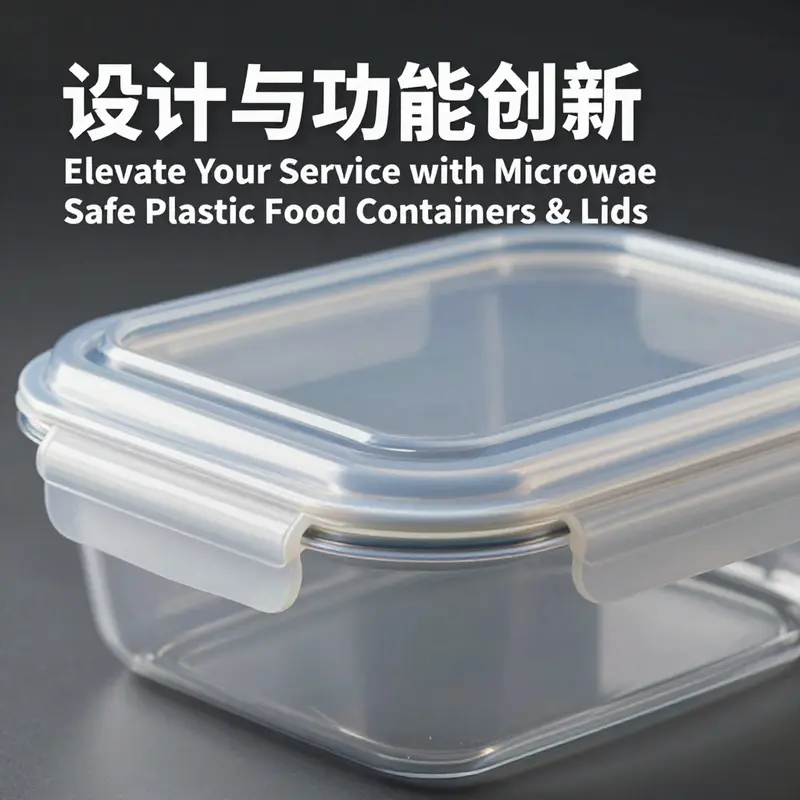
In the choreography of daily meals, the humble microwave safe plastic container and its lid play a quiet, yet pivotal role. They are not merely vessels; they are interfaces between heat, food, health, and habit. The pace of life invites a seamless transition from refrigerator to microwave to table, and the best designs anticipate this flow. They embrace the dual demands of safety and convenience, while also recognizing that the eating experience is shaped as much by small details as by big innovations. The chapter that follows peels back the layers of these containers, moving beyond surface features to reveal how material science, clever engineering, and human-centric design converge to raise the standard of everyday food preparation, storage, and reheating. At the core is a simple principle: containers must withstand heat without releasing unwanted substances, yet they must do so with a touch that makes meals feel easier and more enjoyable rather than an afterthought to safety compliance.
Material safety remains the foundation on which all other improvements rest. The most widely adopted core material in modern microwave safe containers is a food-grade polypropylene, selected for its robust high-temperature stability and general compatibility with common food types. The absence of BPA is no longer optional but expected, because consumers rightly demand packaging that avoids endocrine disruptors and other potential hazards. Beyond the raw material, authoritative performance standards demand that these plastics be certified for contact with food by recognized regulatory bodies and adhere to defined temperature ranges. A solid microwave safe container should be assessed for its operating window, commonly expressed as a safe range from well below freezing to well above room temperature, with -20°C to 120°C being a typical benchmark. In practice, this translates into predictable behavior during cold storage, thawing, heating, and even gentle oven-like warming, while keeping chemical migration to a minimum. In parallel, there is a growing segment that explores alternatives to conventional plastics, including biodegradable options such as polylactic acid and starch-based composites. These materials appeal to sustainability-minded buyers who seek to close the loop on packaging life cycles, especially for brands focused on minimizing waste. Yet the core conversation still centers on safety and performance, because even within a single category, the interplay of additives, processing technologies, and stabilization agents can influence how heat is managed and how well the container endures repeated heating cycles without changing the internal environment of the food.
Beyond the raw materials, the architecture of the container—its geometry, seals, and mechanical interfaces—defines how it behaves under real-world use. A well-designed microwave safe container balances containment with venting, sealing with accessibility, and rigidity with lightness. Consider the concept of dynamic venting, where a container or its lid incorporates a controlled release mechanism that prevents pressure from building up to dangerous levels during heating. This is not merely about preventing an explosion myth; it is about enabling efficient heating across a range of foods, from watery soups to thicker stews, without forcing awkward manual intervention. The venting system must be intelligent enough to respond to internal steam while remaining reliable across thousands of cycles. In other words, a great container learns to breathe in a measured way, preserving safety without sacrificing convenience.
Equally important is the retention of a tight seal that also remains easy to operate with one hand. A robust sealing system often combines multiple features: a reliable gasket or elastic seal, precise geometric alignment, and a locking mechanism that can accommodate thermal expansion while resisting leaks. For reusable systems that must endure repeated use, the seal should provide strong resistance to thermo-mechanical stress yet deliver a satisfying tactile feedback when engaged. This tactile cue—the audible and physical confirmatory bite of a lock—builds user confidence, particularly in busy mornings when a user might juggle a hot container while grabbing a bag and heading out the door. In many contemporary designs, this reliability is reinforced by a four-point locking scheme combined with a center pressing actuation that creates a decisive seal. The result is a container that remains secure even when carried sideways in a crowded bag or gently jostled during transit, while still offering straightforward access when it is time to eat.
The lid itself plays a starring role in the user experience. A translucent or high-transparency lid has long been valued because it lets consumers peek at the contents without peeling back the seal and releasing precious freshness. The visual feedback nurtures trust: you can tell at a glance whether leftovers have retained their color and texture, and you can gauge whether the portion looks appropriate for reheating or needs a stir. In addition to visibility, the lid must contribute to freshness, and that often means a tight seal that minimizes air exchange and preserves flavor while enabling steam to escape in a controlled fashion. The combination of transparency and sealing efficiency is not merely about aesthetics; it reinforces practical meal planning by reducing the need to open and reseal during storage and reheating. For households juggling multiple meals or for offices sharing a pantry, the reliability of the lid becomes a quiet promise that foods will remain discrete in aroma and taste while still being readily accessible when needed.
A growing trend in modern containers is the use of multi-chamber or partitioned designs. This approach addresses the increasingly common desire to separate components of a meal to avoid cross-flavor contamination and to support balanced nutrition. A well-executed partition system keeps proteins, starches, and vegetables from mingling, which is particularly valuable for meal-prep routines and dietary controls. It also enables a degree of modularity in how portions are assembled, making it easier to switch between meal types without swapping containers. The inner geometry can be optimized to minimize movement during transport and to keep liquid foods contained, while still allowing for simple disassembly for cleaning. The design philosophy here is to create a flexible, hygienic platform that supports a range of daily routines rather than one rigid use-case. Such modularity speaks directly to a modern consumer who expects packaging to accommodate a week’s worth of varied meals.
The spectrum of sizes offered by contemporary microwave safe containers further underscores the desire to serve diverse use cases. Families require larger volumes for leftovers, while individuals may prefer compact options for single servings. The large family of capacities often spans from roughly 460 milliliters up to more than 2 liters. This wide range helps kitchen planners, health-conscious users, and food service operators tailor packaging to the precise needs of a recipe, portion, or menu item. In practical terms, a representative set might include a compact 460 ml option suitable for snacks or small leftovers, a mid-range 600–900 ml container for lunch portions, and a larger 1.5–2 liter vessel designed for soups or family meals. The dimensions are chosen with refrigerator and microwave compatibility in mind, ensuring that containers fit standard shelves and microwave cavities without forcing users to rearrange spaces. For example, a typical mid-sized model might measure around 210 by 135 millimeters with a modest height, carefully balancing internal capacity with external footprint so it nests efficiently with other containers when stored or stacked in a kitchen cabinet.
The capacity diversity is not the sole anchor for practical use. Customization remains a significant lever for brands and institutions that aim to convey a specific identity or to fit a particular workflow. Manufacturers commonly offer options to adjust color, shape, and even the packaging method to align with brand aesthetics or regulatory requirements. Some buyers use branded lids or color-coded partitions to support dietary plans, while others use shaped containers that optimize stacking in a catering operation. This flexibility is not a luxury; it is a practical response to a market where customers demand both function and identity from a single reusable or recyclable container. The growing willingness to tailor packaging speaks to a broader shift toward lifecycle thinking, where businesses consider not only how a container performs during a single meal but how it integrates with the consumer’s broader habits and values.
From an operational perspective, suppliers and manufacturers frequently highlight the economics of scale in relation to these containers. Bulk purchases reduce per-unit costs, enabling both food service operators and households to access safer and more durable options at attractive prices. The price dynamics commonly show a steep drop as order volumes rise, which makes high-quality, safety-forward packaging accessible to a wider audience. In addition to price, suppliers often provide warm introductions to sample programs that let buyers evaluate fit and performance before a larger commitment. For instance, a batch of free samples, with a nominal handling fee, can help decision-makers assess heat resistance, seal integrity, and ease of use in real-world scenarios. This practical step reduces risk for brands seeking to elevate their packaging standards without committing to large inventories upfront.
The conversation about material safety and design would be incomplete without addressing environmental considerations. A notable portion of the market is experimenting with biodegradable or compostable alternatives, such as polylactic acid or starch-based polymers, designed to offer a more sustainable end-of-life profile. These options are shaped by consumer demand for eco-friendly packaging and by regulatory trends that encourage reduced plastic waste. Yet the challenge remains to balance biodegradability with the performance requirements of microwaving, sealing, and mechanical durability. In some cases, designers combine traditional plastics with bio-based components to create hybrid solutions that maintain heat resistance while enabling a more responsible disposal pathway. The evolving landscape invites ongoing dialogue among material scientists, designers, and end users, as well as continuous testing to ensure that safety standards are met across diverse heating scenarios and food types.
A practical look at the user experience reveals how much lighter the cognitive load becomes when a container is designed to be intuitive. Six-sided interior textures, for instance, can improve grip and reduce slippery handling during pouring or draining, especially for hot liquids. The tactile feedback from a well-executed grip design—a combination of geometry, surface texture, and edge radius—helps users keep a firm hold when hands are wet or greasy. The aim is to eliminate awkward moments when a lid must be opened with one hand while a plate or utensil is held in the other. In parallel, the relatability of a high-transparency lid goes beyond aesthetics; it enables a quick assessment of the food’s color and quality without triggering a temperature spike by unnecessary opening. When these elements align, the user experience becomes less about managing risk and more about enjoying predictability, which in turn reinforces safe reheating practices and reduces waste due to misjudged portions or spoiled leftovers.
A forward-looking component of the design narrative is the growing potential for digital integration. Packaging could carry traceability information through QR codes or near-field communication chips, letting consumers access sourcing data, heating guidelines, storage tips, or even curated recipes tailored to the container. This digital bridge complements the physical design by extending the container’s value beyond its immediate use. Rather than a static vessel, the packaging becomes a conduit for education, inspiration, and accountability. Such integrations support brands that want to demonstrate responsibility and transparency, helping consumers feel confident about what they heat, store, and consume. The convergence of material science, mechanical engineering, human factors, and digital enhancements signals a future where a simple microwave safe container becomes a nexus of safety, convenience, and lifestyle insight.
In practice, every design choice feeds into the lifecycle of the product. From the initial selection of food-grade polymers to the finished lid geometry and the decision to adopt a venting feature, each step weighs safety against usability. The target outcome is a seamless experience where users do not have to second-guess the container’s performance. They simply heat, eat, and store with a sense of assurance that the packaging has been engineered with their health and comfort in mind. In this way, the modern microwave safe container transcends its physical boundaries. It becomes a mindful extension of the kitchen, one that respects both the science of heating and the everyday rituals that make meals meaningful. The narrative is one of continuous improvement—a design ethos that refuses to separate safety from delight, or durability from simplicity. When these strands come together, the act of reheating and enjoying a meal becomes an experience that supports healthier choices, cleaner storage habits, and a more conscientious approach to consumption.
For readers exploring practical options, consider that a single product family can provide a spectrum of features aligned with these principles. A container designed for soups and sauces may emphasize robust sealing and optimized venting to accommodate steam. A multi-compartment box might prioritize odor control and modular stacking to prevent cross-flavor transfer. A transparent lid with reinforced edges can combine visibility with durability, reducing the likelihood of cracks or warping under repeated heating cycles. Across these variants, the underlying thread remains consistent: safety, reliability, and user-centric design are inseparable, each reinforcing the other to deliver a superior mealtime experience. The result is not a single ideal container but a thoughtful ecosystem that supports diverse cooking, storage, and reheating routines while maintaining the highest standards of safety and practicality.
As this design narrative unfolds, it is worth noting how such packaging choices align with broader consumer expectations for health, convenience, and responsibility. The shift toward BPA-free, heat-stable materials aligns with heightened awareness about leaching and endocrine disruption. The emphasis on transparent visibility, secure yet accessible closures, and multi-functional interior layouts reflects a desire for products that reduce waste, simplify routines, and encourage healthier portions. The integration of digital touchpoints adds a layer of empowerment, offering consumers an easy path to verify provenance, reheating instructions, and nutritional information. Together, these elements form a holistic approach to packaging that respects the realities of modern life while elevating the standard of safety and usability.
For readers who want to explore concrete examples that illustrate these principles, one practical reference point is the way some packaging providers articulate the attributes of microwave-safe, food-grade containers. These references highlight heat resistance performance, compliance with regulatory standards, and the balance between sustainability and functionality. They also reveal a market that is increasingly comfortable with traceable, clearly labeled materials that reassure consumers about what they are heating and consuming. The conversation thus shifts from a narrow focus on mere containment to a broader appreciation of how packaging design can support healthful eating habits, efficient meal routines, and responsible consumption patterns. In this sense, the modern microwave-safe container is not just a vessel; it is an enabling technology for mindful, practical dining in a fast-moving world.
To connect these design principles with tangible choices, a concrete example of how packaging features translate into real-world benefits can be found in product lines that emphasize both safety and usability. Consider a set that offers a range of volumes from compact to family-sized, each with a transparent lid, a secure locking mechanism, and an interior geometry optimized to minimize spillage and ease cleaning. The six-sided interior texture may further contribute to grip and stability, particularly when the container is being shaken during transportation or when liquid foods are being poured. In addition, the capability to customize colors, shapes, or branding elements enables meal programs, cafeterias, and catering businesses to align packaging with nutritional labeling, dietary plans, or service style. In short, design is not just about how a container looks or feels; it is about how it functions across the entire lifecycle of a meal—from preparation and storage to heating and final disposal.
Embracing these innovations does not demand a leap of faith; it invites a careful, evidence-based approach to selecting packaging that matches a user’s needs. For households, a few thoughtfully chosen containers can streamline a week of meals by reducing the time spent sorting leftovers, reassembling portions, or hunting for the right lid. For food service and catering operations, the same principles translate into batch reliability, space-efficient storage, and a professional presentation that reinforces brand trust through consistently safe and convenient packaging. This integrated view—where material safety, mechanical design, user experience, and lifecycle considerations coalesce—helps explain why the modern microwave safe container is more than a practical accessory. It is a thoughtfully engineered system that supports healthier eating, cleaner kitchens, and a more sustainable approach to food packaging.
Internal reference for practical packaging options and microwavable design features can be found in a product page dedicated to microwave-friendly, food-grade packaging solutions. This reference captures the essence of safe heat resistance, clear visibility, and reliable sealing in a real-world context. internal reference to microwavable kraft paper container. While the page describes paper-based solutions, the design philosophy it reflects—safety, ease of use, and adaptability—resonates with the broader conversation about plastic microwave safe containers and their lids. The link illustrates how brands communicate functionality and safety to buyers who seek practical, immediately actionable packaging choices.
External reading can enrich this discussion with market perspectives and performance benchmarks. For those who want a broader view of compliant, biodegradable, and microwavable packaging options in the industry, external references offer data points on heat resistance, migration testing, and global certifications. A widely cited source provides a snapshot of how biodegradable and traditional plastic materials converge to meet safety standards while expanding the sustainability narrative for modern packaging. External resource: https://www.alibaba.com/product-detail/Biodegradable-plastic-food-containers-microwave-safe_1601821378306.html?src=hp
The chapter above maps a cohesive trajectory for how microwave safe plastic containers and lids have evolved from simple containment devices into integrated, user-friendly systems. It highlights how material choices, mechanical design, and digital considerations work in tandem to deliver safer, more convenient, and more sustainable meal solutions. In doing so, it points toward a future where form and function are harmonized through thoughtful engineering and a deep understanding of everyday cooking and eating habits. The result is not just safer food storage and reheating but an enhanced everyday dining experience that respects health, time, and the environment.
从厨房到市场的连结:微波安全塑料容器与盖子的多场景应用与市场动向
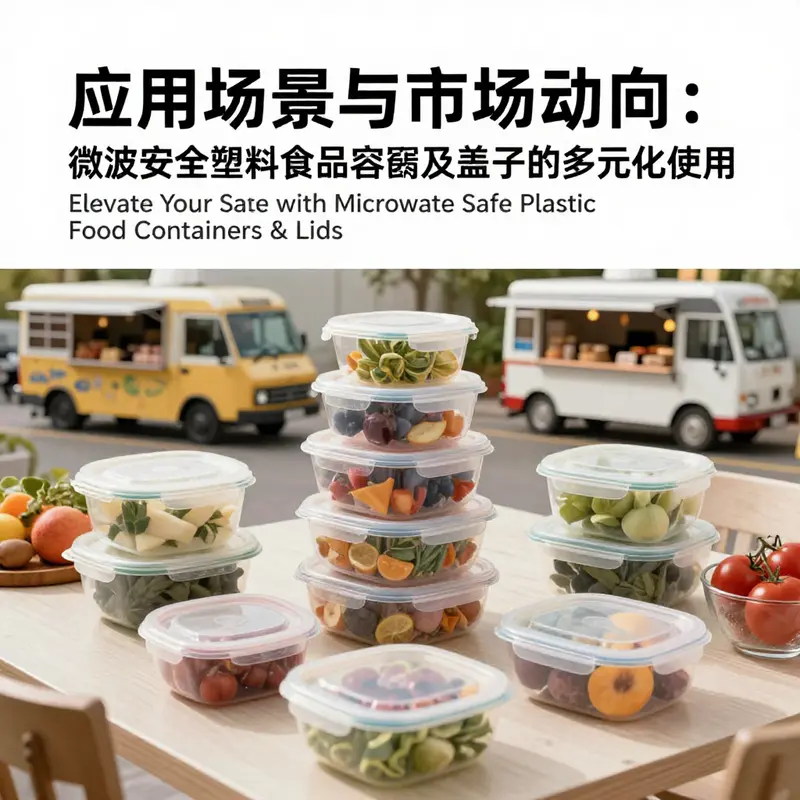
在现代家庭和商业运营的交汇处,微波安全塑料容器及盖子不仅仅扮演加热或储存的工具角色。它们已成为推动生活便利、健康管理与可持续消费的重要载体。通过对材料稳定性、认证体系、设计创新以及应用场景的综合考量,我们可以看到这类容器如何在日常生活的各个环节中实现无缝对接,并在市场需求、政策监管与消费者偏好之间形成协同演化。核心在于材料的可靠性、密封性与用户体验的协同提升,同时也要兼顾生产端的成本效益与环保诉求的平衡。本文以应用场景与市场动向为主线,展开对微波安全容器与盖子在家庭、外卖服务、办公室与户外场景中的作用、挑战与机遇的综合解读,力求呈现一个既贴近生活又具备前瞻性的全景图景。与此同时,我们也会关注设计与工艺的前沿趋势,以及在全球供应链与监管框架下,厂商如何通过创新来提升产品的安全性与可持续性。若将工程技术与日常生活映射,便能看到一个跨越厨房、餐饮服务与消费电子的共同语言,这种语言由材料选择、结构设计、使用场景匹配与认证体系共同谱写。为了帮助读者在实际采购与选型时形成清晰的判断,我们将通过对典型场景的深入描绘,揭示不同用户群体在微波安全容器方面的痛点与诉求,以及行业在标准化、透明度与创新设计方面所作的努力。
在家庭层面,微波安全容器的吸引力首先来自对食品安全的信任与对日常操作便利性的追求。材料通常选择食品级聚丙烯(PP),因为它在高温环境下保持稳定性,且化学性质对食品友好。这意味着在冰箱中储存、在微波炉中加热以及在餐桌上短暂的香氛散发之间,容器都能维持相对恒定的物理与化学状态,从而减少有害物质的迁移风险。对家庭用户而言,标注清晰的温度承受范围、耐化学性与清洁便捷性,是选择的重要参考点。此外,若容器具备透明密封盖,用户甚至不需要打开盖子就能快速查看内部食物的状态,这在忙碌的日常中无疑提高了效率与体验。
在设计层面,近年来的创新往往聚焦于提升使用场景的韧性与灵活性。比如在容器的内壁引入六边形纹路或其他非对称结构,能够显著提升防滑效果,特别是在盛装汤汁、酱料或油脂较高的食物时,减少食物在移动过程中的冲击和洒出风险。这类防滑结构在大量日常使用场景中表现出实际意义,有助于家庭、办公室和外卖场景的稳定性。另一方面,透明密封盖的出现不仅提升了可视性,还通过优化密封设计帮助延长保鲜期,同时降低在微波加热过程中的水分蒸发与食物干燥风险。多腔分隔的设计则以健康饮食管理为目标,便于将主食、蛋白质与蔬菜分开储存,既避免了串味,也使个人营养摄入更易实现均衡。这些设计趋向共同指向一个原则:容器不再只是单一的“加热工具”,而是成为一个多功能、可定制、与生活节奏同步的载体。
从材料与认证的角度看,安全是这类产品的核心底线。主流材料依然以食品级聚丙烯为主,原因在于其在高温下的稳定性及较低的有害物质释放风险。与此同时,全球市场对认证的要求日益严格。美国FDA、欧盟CE/U、以及中国的CIQ等认证体系为产品的合规性提供了权威背书。越来越多的厂商也在推动“全链路安全认证”策略,不仅在材料级别给出清晰标识,还提供第三方测试报告,验证在高温微波环境中的微塑料释放远低于国际标准限值。这些认证与报告成为对消费者的信任投资,也是品牌竞争力的重要组成。
在环境与可持续性方面,市场趋势正在从“单次使用”向“可重复使用与可降解材料并存”的方向演进。尽管聚丙烯仍是市场主流,但针对环保诉求,部分高端产品开始探索聚乳酸(PLA)或热塑性淀粉基材料等可降解选项,努力实现更广泛的环保闭环。这样的材料转型不仅符合全球可持续发展趋势,也为包装行业带来新的工程挑战,包括材料兼容性、回收流程、成本结构等,需要行业共同探索解决方案。
在应用场景方面,微波安全容器的用途日益多元。家庭场景中,除了“冰箱到微波炉”的无缝切换,容器也被用于儿童餐、预制餐与冷藏/冷冻食品的分装管理。办公场景则强调便携与耐用,成为上班族与学生群体的常备选择。外卖与快餐行业则以一次性或可重复使用的包装为核心,在提升美观性与实用性的同时,也在品牌形象传达方面发挥作用。对餐饮企业而言,容器的外观、色彩与印刷、容量的灵活性,以及与盖子、分格等附件的组合设计,直接影响到用户体验和品牌认知。随着多场景需求的叠加,供应链上对不同形态、不同容量、不同材质组合的需求也在持续扩大。
价格梯度的存在为不同规模的采购提供了可能。小批量采购通常以相对较高的单价出现,但随着产能扩大、生产效率提升,单位成本显著下降。对于企业而言,批量优势不仅体现在价格,还体现在交货周期、样品试用政策与定制服务的可得性上。对品牌方和零售商而言,拥有一个稳定的供应通道和透明的成本结构,是实现长线增长的关键。值得注意的是,市场上仍存在一些宣传与信息透明度方面的挑战。消费者在选择时应关注材质标识、热阻数据、可重复使用性以及是否明确标注“仅限微波炉使用”等安全提示。对平台运营者而言,建立清晰的信息披露机制、提供可核验的检测报告,是维护市场秩序、保护消费者的重要手段。
在跨界融合与未来发展方面,微波安全容器领域呈现出向“智慧包装”方向发展的趋势。传感技术、材料科学与数据化追溯的结合,使得容器不仅能承载食品,还能在仓储、运输和使用过程提供数据支持。例如,未来的容器可能通过嵌入式标签或涂层实现对温度、湿度与时间的记录,帮助消费者更好地管理食品安全与风味保鲜。这样的技术集成不仅提升了使用体验,也为餐饮企业的运营管理带来新的工具。与此同时,环保瓶颈如回收难度、可降解材料的成熟度与成本控制,仍然是行业需要面对的现实挑战。行业内的协作需要在标准化、回收体系与教育引导方面共同推进,才能实现真正意义上的“闭环”价值。
在市场动向的层面,消费者对于食品安全与健康管理的关注持续升温。市场研究显示,越来越多的品牌开始在产品叙事中强调“全链路安全认证”和“材料可追溯性”——这不仅关系到消费者的信任,也影响到企业的风险管理与市场定位。此外,产品设计从单一功能向“多功能、易清洁、可堆叠与可拆解清洗”的方向演进,以满足小空间家居和快速商业运营的需求。外观设计也从简单的实用性转向美学与品牌一致性,例如通过统一的模具设计、色泽与印刷风格来提升品牌识别度。
尽管市场前景广阔,行业内的法规与监管环境仍在演进。各地区对食品接触材料的限制、对微塑料的关注以及对回收利用率的要求,都会直接影响生产工艺、材料选择与产品定位。为确保合规与长远发展,企业需要建立健全的材料认证链条、可追溯的供应商体系以及透明的标签标识体系。对于采购方而言,选择供应商时应优先考虑那些能够提供完整检测报告、明确热阻数据与认证证书的伙伴,以降低风险并提升采购成功率。
在总结这一路线图时,可以看到微波安全塑料容器与盖子正从单一工具转变为综合解决方案的一部分。它们在家庭日常与商业运营之间架起了一座桥梁,连接了安全性、功能性、设计美感与环保理念。这一转变不仅回应了消费者对更高生活质量的追求,也反映出行业对可持续、透明与创新的共同承诺。随着材料科学、加工工艺与智能包装技术的持续发展,未来的容器与盖子将继续扩展其应用边界,成为智慧厨房与高效供应链不可或缺的核心组件。
若你愿意进一步了解一个具体的产品形态及其在市场中的定位,可以参考一个代表性包装方案所体现的设计思路与应用场景。该方案展示了在微波安全、食品级材料以及密封性能方面的综合表现,帮助读者从宏观趋势过渡到具体指标的理解。你也可以通过这类资源直观感知当前行业在“可降解材料、透明密封、分格设计”和“全链路认证”方面的发展趋势。 带盖的纸质汤杯(26oz,纸盖) 同样揭示了包装行业在提升用户体验、确保食品安全与实现品牌诉求方面的综合思考。
在未来的章节中,我们将继续探讨设计与工艺如何在微波安全容器中落地,其中包括:如何通过结构优化来提升耐用性与堆叠性、如何结合可重复使用理念来降低总体生命周期成本、以及如何在全球供应链中实现更高效的材料回收与再利用流程。通过对不同场景的持续观察与数据驱动的分析,我们可以更准确地把握市场脉搏,帮助企业在竞争中保持敏捷与前瞻性。
外部参考资料:为进一步了解市场趋势与行业分析,请参阅权威媒体对微波安全容器市场与消费行为的报道与解读。 https://www.sohu.com/a/754893285_121347
Final thoughts
In summary, microwave safe plastic food containers have become indispensable in the food service industry, satisfying both safety and functionality needs. Their compliance with safety standards, innovative designs, and versatility across various food service environments make them ideal choices for businesses. As consumer demand for convenience and quality continues to rise, investing in these containers not only enhances service offerings but also supports sustainable practices, positioning your business as a leader in the competitive market. Embracing these advancements can set the stage for improved customer satisfaction and operational efficiency.