
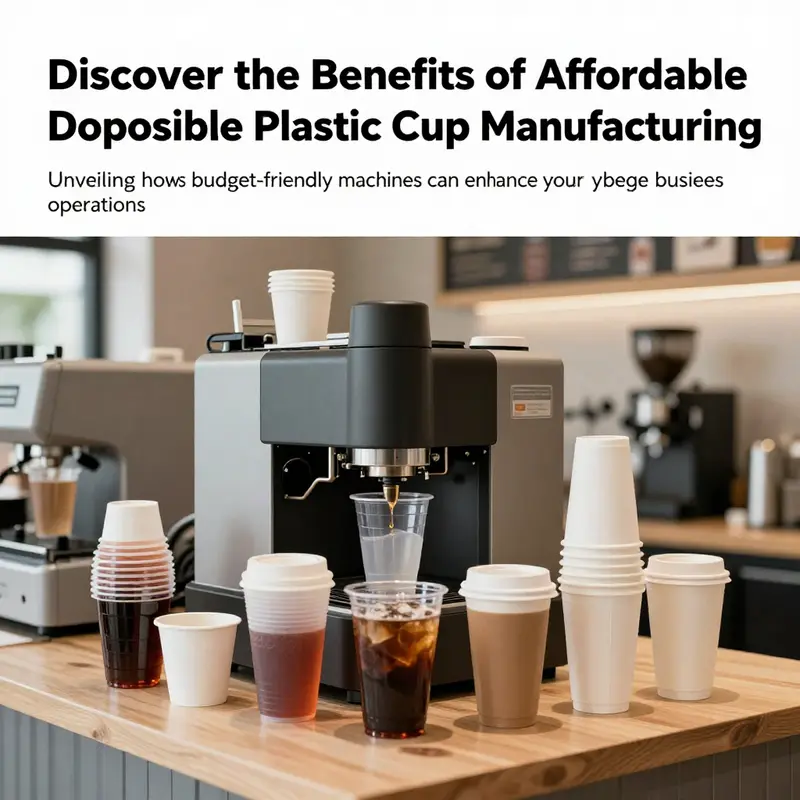
In today’s vibrant food and drink industry, the demand for efficient and cost-effective solutions is paramount. The cheap price disposable plastic cup making machine emerges as a game-changer for bubble tea shops, beverage chains, restaurants, food trucks, catering services, event planners, and procurement teams. This article delves into the technological innovations behind these machines, the economic impact they’re creating, and the environmental considerations to bear in mind. Moreover, we’ll explore emerging market trends shaping the future of disposable plastic production, providing essential insights for your business decisions and growth strategies.
Lean, Cheap, and Capable: Navigating Low-Cost Disposable Plastic Cup Making Machines
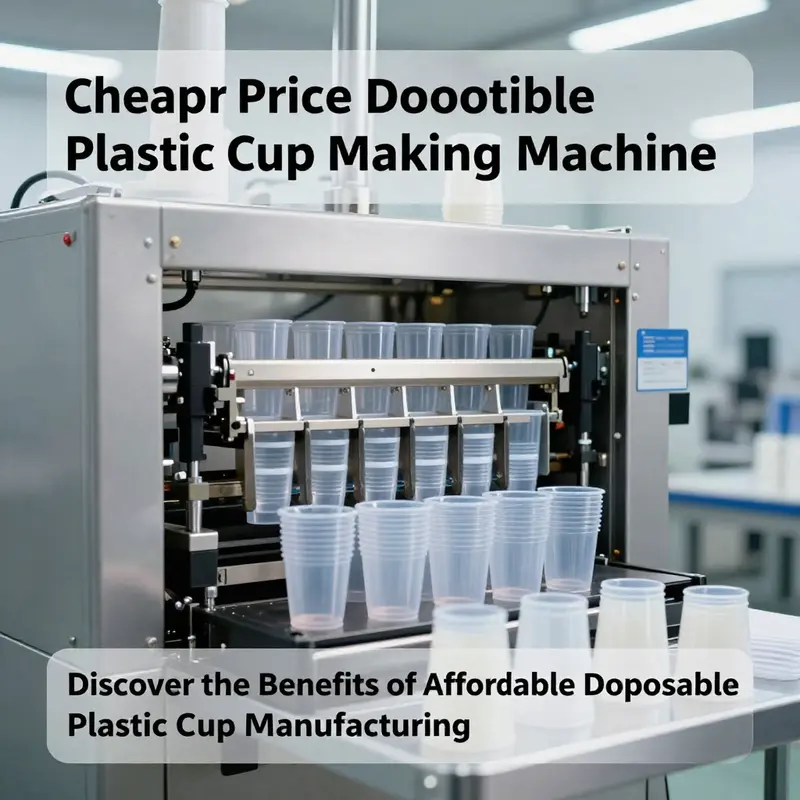
Disposable plastic cups are more than a convenience; they are a logistical instrument that helps countless businesses move from supplier to customer with speed and simplicity. In markets where price pressure interlocks with the need for reliable throughput, the emergence of cheap-price disposable plastic cup making machines has reshaped what counts as feasible. This chapter follows the logic of scale, material, and process to illuminate how these machines fit into modern production decks without pretending that cost alone solves every challenge. The central thread is simple: productivity, quality, and cost do not have to live in separate corners of a factory. They can exist in a single, carefully configured line that matches demand with disciplined operation, even when the starting price is modest.
At the heart of the conversation about low-cost cup machines is scale. The market segments these machines into small, medium, and large formats, each with distinctive implications for investment, space, and output. Small-scale models are often the choice of startups, neighborhood cafés, or local food vendors testing a concept. They tend to be compact, affordable, and nimble, delivering a daily volume in the low thousands of cups. The value here lies not just in the sticker price but in the reduced footprint and simpler maintenance that lets a new venture learn the levers of demand without overcommitting. Medium-scale machines step up the game with higher automation and better consistency, translating into tens of thousands of cups each day. This tier serves regional distributors or mid-sized food-service operators who need predictable quality and steadier throughput without constructing an industrial footprint. Large-scale machines, by contrast, are designed for industrial manufacturers. They promise capacity well beyond fifty thousand cups per day and frequently integrate into fully automated lines with sophisticated quality-control regimes. The progression from small to large is not simply about speed; it is about aligning the line with projected market demand, growth plans, and the cash flow realities of the business. In practice, the choice of scale is a negotiation between current capacity and a realistic trajectory of orders, with the machine acting as a lever that can be adjusted as demand shifts.
A second axis of this decision is material. Plastics commonly used for cold beverages include polyethylene (PE) for its flexibility and durability, and polypropylene (PP) for its heat resistance, which becomes important as some cups are used for hot drinks or microwavable applications. The interface between material choice and machine design is tighter than it might appear. The forming world of these machines is engineered to handle different resins with varying melt-flow characteristics and cooling requirements. When PP is selected, for example, the line must maintain stable cycle times and robust ejection while resisting deformation at higher temperatures. PS, PET, HIPS, and even PVC can be part of a machine’s repertoire, but each material prescribes its own set of settings, from molding temperatures and dwell times to cutting, trimming, and sealing strategies. The modern affordable lines market themselves on material versatility as much as price, and that versatility is not a net gain unless it is matched by reliable automation that can adapt quickly to different blends without retooling on every run.
Automation is where cost-effective production often earns its keep. The modern cheap-price cup maker typically features automated multi-station processing that minimizes operator intervention. This is not magic; it is careful engineering that sequences forming, trimming, stacking, and sometimes even lid or sleeve attachment in a rhythm that keeps the line moving. The benefit—reduced labor intensity and more consistent output—becomes especially meaningful in high-volume settings or where skilled operators are scarce. In practical terms, automation translates to fewer defects caused by human variability and tighter control over cycle-to-cycle consistency. When these lines are configured with integrated quality-control checkpoints, the production team can detect deviations early and adjust parameters before waste compounds. This is where the modern economy of scale shines: the initial savings on purchase price can be amplified manyfold by energy efficiency, longer tool life, and reduced scrap, yielding a more favorable total-cost-of-ownership over the equipment’s useful life.
Efficiency in these machines is often framed in two ways: throughput and uptime. Throughput speaks to the number of cups produced per hour, and as the cited results show, modern lines can reach impressive rates—up to five hundred cups per hour in some configurations. This is not a claim of universal performance; it is an indication of what cost-conscious lines can achieve when designed with smart cooling, precise forming, and robust feeding systems. Uptime, on the other hand, speaks to how often the line runs without unplanned stops. Here, the value of CE certification and compliance is not merely bureaucratic. It signals that the equipment adheres to defined safety and quality benchmarks, which often correlates with more predictable maintenance cycles, better traceability of components, and a more reliable supply chain for spares. For small and medium operators, the combination of manageable upfront cost and scalable automation can create a compelling ROI story as demand grows or as product mix evolves.
The question of what to buy is rarely answered by price alone. Instead, it is a careful synthesis of expected volumes, product specifications, and supply chain realities. A business plan that anticipates seasonal peaks, promotional cycles, or regional expansion will naturally push toward an intermediate or even large-scale line sooner rather than later. But the beauty of the low-cost market is its flexibility. It allows a company to start lean and then increase capacity by integrating additional modules, upgrading stations, or expanding the line with minimal disruption to ongoing production. In addition, the right machine will support a broad material matrix, enabling a brand to adapt to a shifting regulatory or consumer landscape—whether that means migrating from standard polystyrene to a recyclable PET or to a more sustainable, bio-based option when market signals demand it. The trade-off is not the absence of complexity but the presence of a well-structured decision framework that prioritizes compatibility with the business’s growth trajectory and geographic reach.
A critical yet sometimes overlooked factor is the environment in which the machine operates. Operating costs extend beyond the electricity consumed by the line and the water used in cooling systems. They include the energy of heating elements, the efficiency of the drives, and the maintenance cadence required to keep cycle times stable. In a low-price acquisition, it is easy to underestimate ongoing costs, but the best providers couple competitive purchase prices with transparent maintenance schedules and readily available spare parts. This reduces the risk of expensive downtime and ensures the line remains productive as materials, standards, or flavors change. As a practical matter, operators should inquire about cooling-system efficiency, the life expectancy of forming molds, and the ease with which components can be replaced. These details become more important as the line ages and the volume demands diversify. The procurement conversation should also cover service models—whether remote diagnostics, on-site support, or modular upgrades are available—so that the initial savings do not become a bottleneck for long-term performance.
The decision-making framework must also account for the end-use environment and packaging ecosystem. Cups destined for cold beverages have different performance requirements than cups intended for hot drinks or microwavable applications. The material mix, wall thickness, and sealing methods influence not only performance but also the speed at which the machines can operate without compromising quality. In some markets, regulatory constraints may favor certain materials or configurations, influencing the choice of machine and its downstream capabilities, such as compatibility with lid attachments or downstream stacking and packaging lines. The objective remains to align the production line with both current demand and the strategic intention to scale, while maintaining reliable quality and predictable lead times for customers.
To illustrate how these considerations play out in practice, consider the way a line may be configured to accommodate both current sales and a future expansion. A shop starting with a compact, low-price thermoforming setup can begin with high-volume cold cups and gradually pivot toward hot-fill or microwaveable variants as demand matures. The automation architecture—multi-station forming, trimming, and stacking—enables a gradual increase in complexity without requiring a complete retooling. The material library—PE, PP, PS, PET, and even HIPS—ensures the line has the flexibility to adapt to customer preferences and regulatory shifts. With CE certification and standardized safety practices, the line remains attractive not only for domestic markets but also for global customers who require consistent quality and traceability across plants and shifts. The net effect is a production asset that starts lean yet retains horizon flexibility, enabling a business to respond to opportunities as they emerge rather than react to constraints after a costly investment.
Among the practical tools for buyers is the ability to examine a real-world example of a cost-conscious take-away line. This can be done without sacrificing supplier checks or safety. For readers seeking a concrete reference to a cost-conscious packaging component, a detailed product page is available as an internal resource. This page offers a snapshot of the material compatibility, automation level, production capacity, and safety certifications that characterize modern low-cost lines, and it serves as a reminder that even budget-focused options can deliver robust performance when thoughtfully integrated into a broader manufacturing strategy. See the resource here: food-grade-take-away-bowl-with-lids-packing-food-single-wall-fast-food-salad-bowls.
Of course, the decision to pursue a cheap-price machine must be tempered by careful due diligence. A buyer should verify the supplier’s capabilities in terms of after-sales support, spare parts availability, and the expected life cycle of critical components such as forming molds and cooling modules. Asking for a maintenance schedule, typical downtime, and the average time to replace key wear parts can help translate an attractive upfront price into predictable operating costs. It is also prudent to cross-check the machine’s compatibility with the intended packaging ecosystem—lids, trays, or sleeves—and to ensure the line can be integrated with downstream equipment for printing, labeling, or palletizing if needed. These practicalities matter most when a business aims to scale quickly or to maintain a steady cadence of orders that require consistent lead times.
The allure of a cheap-price disposable cup-making solution is not merely the lure of a low sticker price. It is the possibility of building a capable, scalable production capability without surrendering margins to capital lock-up. The path to success is not a single purchase; it is a staged, strategic bet on a production architecture that can absorb demand fluctuations, align with material preferences, and sustain quality over time. In doing so, a business can deliver reliable products to customers while maintaining cost discipline. The key is to design a production system that treats affordability as a feature, not a constraint—one whose automation, material flexibility, and scalable capacity create a path from a lean start to a resilient, growing operation.
External resource for broader context: https://www.alibaba.com/product-detail/Wholesale-cheap-price-disposable-plastic-glasses_1600524795873.html?spm=a2700.1.wlso00.1.1b3c5d6fVnFkYj&fsb=y&scm=1007.14974.354736.0&src=singleResultCard&searchText=cheap%20plastic%20cup%20making%20machine
Affordable Precision in Plastic Cup Making: Innovation and Access in Cheap-Price Disposable Cup Machines
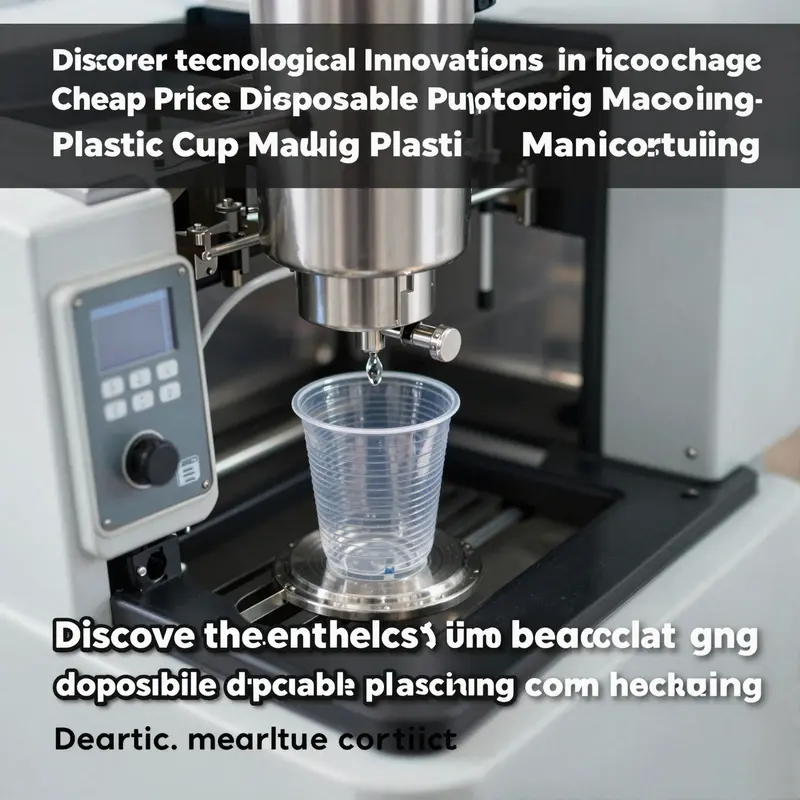
Across the factory floor, a quiet revolution is unfolding around machines that turn flat sheets of plastic into standardized disposable cups at a price point accessible to small and medium-sized enterprises. The cheap-price disposable plastic cup making machine is not a single device but a convergence of affordable automation, modular design, and streamlined workflows aimed at delivering high throughput without burdening operators with prohibitive capital costs. In this climate, manufacturers pursue a careful balance: they seek machinery that can handle common plastics—such as PS, PP, and PET—reliably, while maintaining dimensional accuracy and uniform wall thickness. The result is a class of thermoforming systems that emphasize both simplicity and resilience, translating into predictable performance, lower material waste, and a cost of entry that enables scalable production for cups, lids, and related containers. The narrative of these machines is not merely about speed; it is about how precision, automation, and accessibility intersect to open industrial capabilities to a broader spectrum of producers, from regional manufacturers to emerging startups chasing mass production with limited upfront capital.
At the core of these systems lies programmable logic controller (PLC) automation, a development that makes the thermoforming process far more predictable and less wasteful. The PLC orchestrates the timing of sheet heating, forming, trimming, and stacking with a consistency that is hard to achieve with older, purely mechanical setups. By tightly controlling cycle timing and forming temperatures, PLCs minimize scrap and ensure that each cup meets tight dimensional tolerances. This precision matters not only for the consumer experience—where a cup with an inconsistent lip or base can compromise stacking, sealing, or pouring—but also for downstream automation, where wrong dimensions ripple across the production line, causing jams and downtime. The upshot is a reduction in material waste, lower operating costs, and a steadier production tempo that helps keep overheads in check for smaller plants.
Complementing PLC control, servo drive systems have emerged as a key efficiency driver. Servo motors deliver rapid, smooth motion with higher torque and better energy efficiency than traditional motor-driven architectures. In practice, servo-driven thermoforming cells can shave cycle times and reduce energy consumption per cup produced. The result is a higher output rate, commonly reported in the mid-hundreds of cups per hour, without a corresponding spike in electricity use. For operators, the immediate benefit is a more predictable throughput that scales with demand, whether the line runs continuous shifts or swings into peak season. The longer-term payoff is a lower cost per cup, a crucial consideration when margins are razor-thin and competition centers on price and reliability as much as on design.
A further floor-level innovation is the modular and tilting mould design. Modularity allows rapid changeovers between cup sizes and shapes with minimal downtime. Operators can swap moulds without dismantling large portions of the line, preserving the rhythm of production and avoiding the lulls that plague less adaptable equipment. Tilting moulds, in particular, provide easier ejection and more uniform formation, reducing the risk of defects that can snowball into reject backlogs. This flexibility is especially valuable for SMEs that need to diversify their product range—maybe a standard 8-ounce cup today and a 12-ounce variant next week—without investing in a whole brigade of separate machines. It is a practical embodiment of the broader principle that affordability does not have to come at the expense of versatility.
Alongside these functional advances, modern low-cost machines carry certification and warranty as a core component of their value proposition. CE certification signals adherence to essential safety and performance standards, offering a layer of assurance that a machine will operate within established limits and that operators can work with it with confidence. A one-year warranty, common in this segment, further reduces the perceived risk of a capital purchase for smaller outfits. These protections are not merely bureaucratic box-ticking; they translate into tangible peace of mind for buyers who may lack large service contracts yet insist on reliable uptime and predictable maintenance costs. When every hour of operation matters to cash flow, such assurances transform a capital expense into a sustainable production asset rather than a financial gamble.
User-friendly interfaces are another thread weaving through these systems. Touch-screen controls simplify setup and run-time adjustments, lowering the skill threshold for operators and enabling quicker response to process deviations. In addition, many machines now offer remote-monitoring capabilities via the Internet of Things (IoT). Operators can detect anomalies early, track energy usage, and adjust parameters without being physically present at the machine. This kind of digital visibility is not exotic luxury; it is a practical tool for keeping lines running, diagnosing intermittent issues, and planning maintenance during periods of lower demand. The objective is clear: convert complex automation into accessible, maintainable routines that yield consistent results and reduce the likelihood of sudden, costly outages.
Market access for these affordable, technology-forward thermoformers is increasingly straightforward, driven in part by global sourcing platforms and digital marketplaces. Suppliers present fully automatic, high-speed thermoforming solutions that target mass production with a relatively modest investment. While price points vary with configuration, it is not uncommon to see turnkey systems offered in a range that new entrants can contemplate, provided they align their production planning with realistic capacity and service expectations. The price-performance equation is compelling: producers gain high-throughput capability and consistent quality while avoiding the capital lock-in that once limited market entry for smaller firms. This democratization of manufacturing capability is accelerating the growth of local packaging ecosystems and enabling companies to pursue scale without sacrificing agility.
From a materials perspective, the ability to work with standard plastics such as PS, PP, and PET ensures compatibility with a broad range of product specs, end-use requirements, and recycling streams. The choice of material affects surface finish, rigidity, heat resistance, and barrier properties, information that operators need when integrating cups into a broader packaging and distribution system. Given the cost-conscious nature of these machines, suppliers emphasize robust control over material waste and consistency in wall thickness, both of which are crucial to ensure cups perform under typical use—from hot beverages to cold drinks and, in some cases, sealing applications with compatible lids. The emphasis on material compatibility is not merely about the cups themselves; it is about how the entire stack—from sheet stock to finished cups and their lids—interacts with downstream processes such as filling, sealing, and labeling. Small improvements in waste reduction and dimensional uniformity can translate into meaningful cost savings over thousands of cups per shift.
Another dimension of the discourse around affordable cup-making machines is the strategic use of capital to drive return on investment. Even when initial outlays are constrained, the combination of higher throughput, lower energy consumption, and reduced waste can shorten payback periods. In practice, this means businesses can pursue broader product scopes, test new markets, or expand into adjacent container formats without requiring large, multi-year capital commitments. The affordability does not end at the machine’s price tag; it extends to maintenance planning, spare parts availability, and the ease of finding technicians with a baseline competence in automation and plastics processing. In many regions, suppliers recognize the importance of local service networks and offer modular components or training programs designed to minimize downtime and keep lines moving during periods of expansion or retooling.
The technology narrative here is complemented by a pragmatic view of market dynamics. The availability of cheap, automated cup-making solutions enables regional manufacturers to participate more fully in the global supply chain for disposable cups and related containers. The ability to scale from pilot runs to full production with a single line, rather than multiple, reduces logistics complexity and accelerates time-to-market for new products. Suppliers frequently frame these machines as turnkey solutions that support a broad spectrum of outputs—from standard drinking cups to symmetrical containers used for beverages, soups, and snacks. The emphasis remains on achieving reliable performance at lower total cost of ownership, a goal that resonates with businesses navigating fluctuating demand, regulatory considerations, and evolving consumer preferences toward convenient packaging.
For readers seeking concrete market context, a widely cited reference point shows how such systems are positioned within the procurement landscape. This example highlights features like multi-material compatibility, automated multi-station handling, and CE-compliant safety frameworks, while also noting the potential for high-capacity output—often cited in the realm of several hundred cups per hour. While individual offerings vary by configuration, the underlying trend is clear: affordable thermoforming lines are increasingly capable of delivering consistent, scalable production that aligns with the needs of SMEs seeking steady growth without overwhelming upfront risk. To ground this discussion in real-world market references, you can explore a representative listing on a major global marketplace that summarizes these capabilities and confirms typical production scales and certifications. For a practical sense of how such product pages frame these offerings, see this example: hot-sale-customized-disposable-single-wall-paper-ice-cream-cups-with-lid-eco-friendly-food-grade.
Ultimately, the story of cheap-price disposable plastic cup making machines is about more than price. It is about empowering a broader set of producers to participate in high-volume packaging with predictable quality, supported by automation that emphasizes reliability and ease of use. It is about engineering choices that favor modularity, speed, and energy efficiency, while ensuring that machines arrive with safety certifications and serviceable warranties. It is about creating an ecosystem where small teams can operate lines that rival larger plants in consistency and output, and where the barrier to entry does not compromise the ability to scale. In that sense, affordable thermoforming platforms are not simply machines; they are a gateway to expanded production capacity, better product quality, and more resilient supply chains.
External resource: https://www.alibaba.com/product-detail/Wholesale-cheap-price-disposable-plastic-glasses_1600524795873.html?spm=a2700.1.wlso00.1.1b3c5d6fVnFkYj&fsb=y&scm=1007.14974.354736.0&src=singleResultCard&searchText=cheap%20plastic%20cup%20making%20machine
Frugal Machines, Expanding Markets: How Affordable Disposable Cup Makers Are Reshaping Global Food-Service Packaging

A tremor runs through the small- to mid-scale manufacturing landscape whenever a new class of equipment tightens its grip on a longstanding bottleneck. In the realm of disposable cup production, affordability has ceased to mean compromise. Cheap price disposable cup making machines are redefining who can enter the market, how quickly they can scale, and what quality standards must be met to stay competitive. The arc of this story traces a simple, impactful pattern: when capital barriers shrink, entrepreneurs and regional suppliers push aggressively into a broader sector, testing ideas, expanding reach, and pushing the envelope on efficiency and safety. The result is not a single transformation but a chorus of changes sweeping through the food-service ecosystem, from corner kiosks in fast-growing towns to bustling urban centers in developing regions. This shift is not merely about lower sticker prices. It is about intelligent automation, material versatility, and an enablement of rapid experimentation that previously required a much larger investment and longer lead times. The new generation of compact, automated forming machines can handle a range of plastics—from standard PS and PP to PET and other film-friendly variants—while keeping the process simple enough for smaller teams to operate with minimal disruption. Automation has moved beyond a luxury feature for large factories. It is now a practical determinant of profitability for startups and regional distributors that want predictable throughput without tying up capital in oversized, complex lines. These machines typically deliver a daily output measured in the low thousands up to tens of thousands of cups, depending on the configuration and the range of cups being produced. For operators, the promise is clear: the ability to tune capacity to demand, rather than significantly overbuilding to accommodate peak cycles. When demand spikes, a compact, automated system can be expanded incrementally, avoiding the inertia that often accompanies larger plant retrofits. A single line with multi-station processing can substantially reduce manual intervention. In practice, this means fewer labor hours per unit and a tighter grip on consistency across batches. Operators can maintain stable quality while still reacting nimbly to changing market conditions. The practical effect is a lower barrier to entry that aligns well with the way many food-service ventures grow: start small, scale gradually, and maintain a tight connection between supply and demand. The affordability narrative, however, extends beyond purchase price. The total cost of ownership—consumables, maintenance, energy, and waste handling—tends to follow a similar curve. Efficient machines designed for continuous operation emphasize reliability and low downtime. This reliability translates into higher uptime, more predictable scheduling, and lower risk of unplanned outages that can undermine a budding business’s cash flow. In markets that prize speed and simplicity, the ability to set up a line quickly—and to switch between cup formats with minimal retooling—becomes a differentiator. A family-run takeaway, a street-food stall, or a regional distributor can launch with a compact automation footprint and ramp up as demand grows. The value proposition rests on several interlocking pillars. First is cost-effectiveness. Even modest-scale machines can produce 1,000 to 20,000 cups per day, aligning capacity with local demand curves and helping avoid overproduction. Second is versatility. The more materials a machine can handle, the more suppliers and customers it can serve, from traditional thermoformed cups to more specialized designs. Third is automation. Reducing operator intervention by up to around 40 percent through automated multi-station workflows helps maintain consistency and reduces the skill burden on operators. Fourth is scalability. High-output capabilities—up to several hundred cups per hour in more automated configurations—mean a single line can grow to meet rising needs without the upheaval of major reconfigurations. These factors converge to broaden the set of potential buyers. Startups in emerging economies, local vendors serving informal food-service spaces, and regional distributors can secure production capacity that once resided behind the doors of larger, capital-intensive factories. The geographic dimension of this growth is equally telling. In regions undergoing rapid urbanization, such as parts of Southeast Asia, the Middle East, and Africa, the combination of rising consumer demand for convenient, hygienic packaging and the proliferation of small, mobile food operations creates a fertile market for affordable cup-making solutions. The influx of compact lines supports not only greater variety and accessibility but also improved supply chain resilience. When packaging equipment is closer to the end users—placed within distribution hubs, markets, or municipal kitchens—logistics costs shrink, delivery times shorten, and the risk of stockouts lowers. The internal economics of this shift hinge on a balance between price, capacity, and quality, a balance that suppliers and buyers negotiate through careful supplier selection, process design, and ongoing optimization. The supplier landscape emphasizes three practical attributes: certification, adaptability, and support. Even as a buyer searches for a price that fits a lean budget, the importance of safety and compliance remains non-negotiable. Certifications such as CE, ISO, and other recognized standards serve as a global passport to markets that demand reliability and traceability. In addition, the ability to adapt to multiple materials means a single machine can serve a wider customer base, reducing the need for multiple, specialized lines. Automation features—such as synchronized feeds, multi-station form-fill-cut sequences, and integrated quality checks—help reduce operator variance and ensure consistent cup performance from batch to batch. The economic impact of this market shift is perceptible not just in the bottom line but in broader productivity and employment dynamics. Allowing small operators to scale responsibly, while maintaining price discipline, can improve margins in a market segment historically driven by tight competition and thin profits. The ability to produce up to 500 cups per hour in some configurations—paired with lean workflows—offers a compelling growth path for operations seeking volume without a heavy escalation in fixed costs. Those numbers serve as a benchmark for evaluating a buying decision: what throughput is needed to meet local demand, what is the expected mix of cup sizes, and how will maintenance requirements affect uptime? In many cases, a modest upfront investment in a compact, automated line yields meaningful economies of scale as output grows and per-unit costs fall. A rough price range—illustrative rather than prescriptive—shows how this math can work. Automatic forming machines designed for disposable cups have been observed in market discussions at mid-five-figure price levels. While the initial outlay is non-trivial, the corresponding production capability can justify the investment through improved efficiency, standardized quality, and the ability to serve a growing customer base that expects dependable packaging. The longer-term payoff lies in the reduced per-unit cost that comes with higher volumes, better process control, and lower labor intensity. Beyond dollars and cents, the integration of these affordable systems dovetails with sustainability narratives that are increasingly significant for buyers and policymakers. Fully automated lines support tighter control of material usage, less scrap, and more consistent product quality, which in turn reduces waste and energy spent per cup. Manufacturers have begun to explore how lines can adapt to evolving packaging trends—such as recyclable or biodegradable liners, or the use of more sustainable plastics where permitted—without sacrificing throughput. In essence, the market is moving toward a more democratic model of production. The barrier to entry is lower, but the expectation for reliability and governance remains high. Buyers are encouraged to evaluate not only price and capacity but also the supplier’s willingness to offer support, training, and spare parts in a way that minimizes downtime. When contemplating a first purchase, a buyer should weigh the potential for future upgrades and the ease with which a line can be reconfigured for different cup formats. This adaptability can be a strategic advantage as regional tastes, regulatory requirements, or even seasonal demand shifts dictate changes in packaging choices. To illustrate the practical sourcing landscape, a representative example of the affordability narrative can be found in a range of options that foreground cost-conscious, versatile designs suitable for varied materials and cup formats. These offerings often emphasize automated efficiency, robust safety features, and a modular approach that allows operators to scale by adding stations or extending lines rather than replacing entire systems. For readers seeking a concrete reference to broader market dynamics and supplier capabilities, a widely cited external resource provides a snapshot of price ranges and capabilities in the current market. External resource: https://www.alibaba.com/product-detail/Wholesale-cheap-price-disposable-plastic-glasses_1600524795873.html?spm=a2700.1.wlso00.1.1b3c5d6fVnFkYj&fsb=y&scm=1007.14974.354736.0&src=singleResultCard&searchText=cheap%20plastic%20cup%20making%20machine
Internal link for further context on affordable, eco-friendly disposable packaging options can be helpful here. A representative listening point for industry readers is the affordable range of eco-friendly disposable designs that aligns with lower-cost production lines: cheap-eco-friendly-disposable-kraft-paper-salad-bowl-with-pp-lid-camping-use-multi-size-customizable-logo. You can explore this option here: https://cupbowlpack.com/product/cheap-eco-friendly-disposable-kraft-paper-salad-bowl-with-pp-lid-camping-use-multi-size-customizable-logo/
The Footprint of Frugal Manufacturing: Environmental Realities of Cheap-Price Disposable Plastic Cup Machines

When a business pursues cheap price disposable plastic cup making machines, the immediate appeal is clear: high throughput, low upfront cost, and the promise of rapid scale. Yet the environmental realities stitching the entire lifecycle of the cups into the cost equation cannot be ignored. These machines enable a vast, inexpensive supply of single use cups, but they also unlock a production system that pushes waste management, material choices, and regulatory compliance into sharper relief. The environmental considerations surrounding these machines are not externalities; they are integral to decisions about process design, material selection, and end of life management. The narrative around frugal manufacturing thus begins with a fundamental question: what happens after the cups are used, and who bears the consequences of their afterlives?
Material selection sits at the heart of this question. Many affordable cup making machines are designed to process conventional thermoplastics such as polystyrene, polyethylene, and polypropylene. These materials are prized for their low cost and the well understood processing properties, which support fast cycle times and high volume output. However, they are primarily derived from fossil fuels and are not inherently biodegradable. Polystyrene cups, for instance, offer clarity and stiffness that suit cold beverages, but their environmental persistence is a persistent concern. The health and safety implications tied to certain leachable substances, particularly when cups encounter heat or prolonged contact with hot liquids, have drawn scrutiny in various regions and consumer advocacy discussions. In this context, the appeal of inexpensive production must be weighed against long term ecological and public health considerations. The literature on disposable cup ecosystems emphasizes that even widely available cups can carry hidden costs, including potential chemical exposure and long residence times in landfills or natural environments.
Against this backdrop, there is a growing shift toward sustainable alternatives that can be processed by modern cheap price machines. Advances in material science are expanding the range of feedstocks that such machines can handle, including recyclable or biodegradable options like polylactic acid and certain polyethylene terephthalate formulations. The ability of a single machine to process multiple plastic types PS, PP, PET, HIPS, and even PVC in some configurations offers producers a way to adapt to evolving consumer preferences and regulatory landscapes. This flexibility matters because many jurisdictions are tightening restrictions on single use plastics or banning specific materials altogether. The environmental calculus thus becomes not only about the cost of the machine but also about how its material compatibility shapes the ultimate fate of the cups. If a machine can efficiently process biodegradable or recyclable materials, it opens pathways to products that align more closely with circular economy goals, even if the initial purchase price remains attractive.
A crucial component of the environmental dialogue is production efficiency. High capacity, automated machines promise not just higher output but also more efficient energy use per unit produced. Features such as multi station processing and optimized cycle times reduce the energy footprint of each cup when scaled to production volumes. In markets where energy costs are a meaningful factor, even modest gains in efficiency translate into lower lifecycle emissions. Compliance with safety and quality standards such as CE certification often signals more than procedural rigor; it can reflect environmental performance criteria embedded in the design, testing, and maintenance practices of the equipment. Efficiency matters in two directions: it lowers the direct energy use of manufacturing and it reduces the indirect environmental impact by making it feasible for producers to meet increasingly stringent waste and recycling targets without sacrificing throughput. The tension for buyers then becomes balancing upfront cost, throughput, and long run environmental cost per cup.
Yet the most stubborn and arguably fundamental issue remains the single use nature of these products. Even when cups are made from recyclable materials, recycling infrastructure and consumer behavior do not automatically follow. A significant portion of disposable cups ends up outside formal recycling streams, contributing to litter and waste even in regions with established collection systems. The broader ecological footprint of disposable cups thus hinges less on the mechanical capability of the machine and more on the post consumer chain: what fraction of cups gets recycled, what fraction is diverted into composting or energy recovery, and what happens when those streams fail to capture the material. Reusable alternatives, while environmentally favorable in many analyses, introduce their own set of logistical requirements cleaning, storage, and the potential for lower consumer adoption in high turnover environments. The practical takeaway is that the environmental virtue of a cheap price machine is not guaranteed by the machine itself but by how producers connect production to post consumer management within a circular economy framework. This connection requires deliberate design choices, supplier collaboration, and a concerted effort to shape consumer behavior and infrastructure that can accommodate various end of life paths.
From a strategic perspective, the choice of materials and the end of life plan are inseparable from the machine’s economic logic. A machine marketed on low upfront cost becomes most compelling when the materials it processes and the waste streams it generates align with long term cost savings through recycling streams and environmental compliance credits. If a producer selects a machine that can accommodate not only PS, PP, and PE but also PET or even PLA blends, the business gains resilience in a market increasingly attentive to sustainability signals. The capability to switch materials in response to regulatory changes or shifts in consumer demand reduces the risk of stranded capital should a jurisdiction ban a particular single use plastic. Meanwhile, partnerships with recyclers, waste managers, and municipal programs can transform what was once waste into a feedstock for new products, closing the loop on the plastic cup life cycle. In this sense, the machine’s value proposition expands beyond sheer volume to include adaptability, supply chain resilience, and alignment with evolving environmental standards.
The environmental discourse around cheap price disposable cup making machines also invites a nuanced view of performance beyond the machine’s immediate outputs. Efficiency should be measured not only by cups per hour but by material yield, energy intensity, and the robustness of the end-of-life pathway. A machine that supports multi material fabrication must also be matched with process controls that minimize scrap, optimize polymer usage, and reduce VOC emissions during production and post processing. The environmental footprint of the production line, from raw material handling to shipping and installation, deserves careful accounting. When a processor invests in equipment with strong safety certifications and energy efficient components, this often correlates with better environmental performance and reduced risk of downgrading processes due to regulatory or reputational pressures. These are not mere compliance footnotes; they are practical outcomes that influence long term operating costs, brand risk, and even local community acceptance of manufacturing activities.
To ground this discussion in a broader market reality, it helps to consider examples of how suppliers frame the value of cheap price machines in terms of flexibility and scale, while also acknowledging the environmental trade offs that come with mass production. The market offers machines that claim the ability to process multiple plastics with varying cycle times and automation levels, enabling facilities to respond to demand spikes without retooling. But the environmental impact of that flexibility depends on downstream choices. If a producer commits to high efficiency operation, robust sorting and recycling, and a clear plan for end of life management, the cheap price machine can function as a pragmatic lever for responsible growth rather than a mere means to churn out low cost packaging. Conversely, if end of life considerations are peripheral or neglected, the same equipment can catalyze a dilatory loop of waste that undermines public trust and invites tighter regulation.
For readers seeking a concrete illustration of the broader ecosystem in which these machines operate, an overview of the competitive landscape and supplier capabilities provides essential context. The available information shows an emphasis on affordability and throughput, with specifications that highlight multiple material compatibility and automated workflows. This combination speaks to a market that prioritizes scale while gradually integrating sustainability features, a trend that aligns with regulatory movements and consumer expectations evolving around single use plastics. As producers evaluate options, they should consider not only the machine’s price tag and capacity but also the compatibility with sustainable feedstocks, the availability of end-of-life partnerships, and the potential to demonstrate environmental stewardship to customers and regulators alike. The interplay among material choice, machine capability, and waste management is where the true environmental cost or savings of a cheap price cup making operation is ultimately realized.
To explore broader perspectives on sustainable options linked to these discussions, you can look at eco friendly paper cup alternatives, which illustrate how material choices drive different environmental outcomes even within the same production framework. This contrast highlights how shifting from plastic to paper can change the lifecycle profile of beverage containers, particularly in terms of feedstock origins, processing energy, water use, and end of life treatment. The paper based option does not eliminate environmental considerations; it reframes them, often emphasizing recyclability in infrastructures that are different from those for plastic cups and underscoring the importance of consumer behavior in ensuring proper collection. The key takeaway remains that the environmental performance of any cup making operation is inseparable from the broader system in which it competes and from the partnerships that support end of life pathways.
In closing, the case for or against cheap price disposable cup machines cannot be reduced to upfront price alone. The environmental costs embedded in material selection, energy use, waste generation, and end of life management accumulate over the machine’s operating lifetime. A pragmatically designed machine that prioritizes material flexibility, energy efficiency, and strong recycling partnerships offers a route to responsible growth rather than a mere replication of disposable practice. Conversely, neglecting end of life infrastructure, ignoring consumer sorting behavior, or relying on a single stubborn feedstock can lock producers into a path that degrades local environments and invites tighter policy constraints. For buyers, the responsible choice is to balance price and throughput with a deliberate plan for circular economy outcomes, including collaborations with recyclers, investments in process controls to reduce scrap, and transparent reporting on environmental performance to customers and regulators alike.
The Waning Horizon of Cheap Price Disposable Plastic Cup Machines: Navigating Regulation, Demand Shifts, and Green Packaging
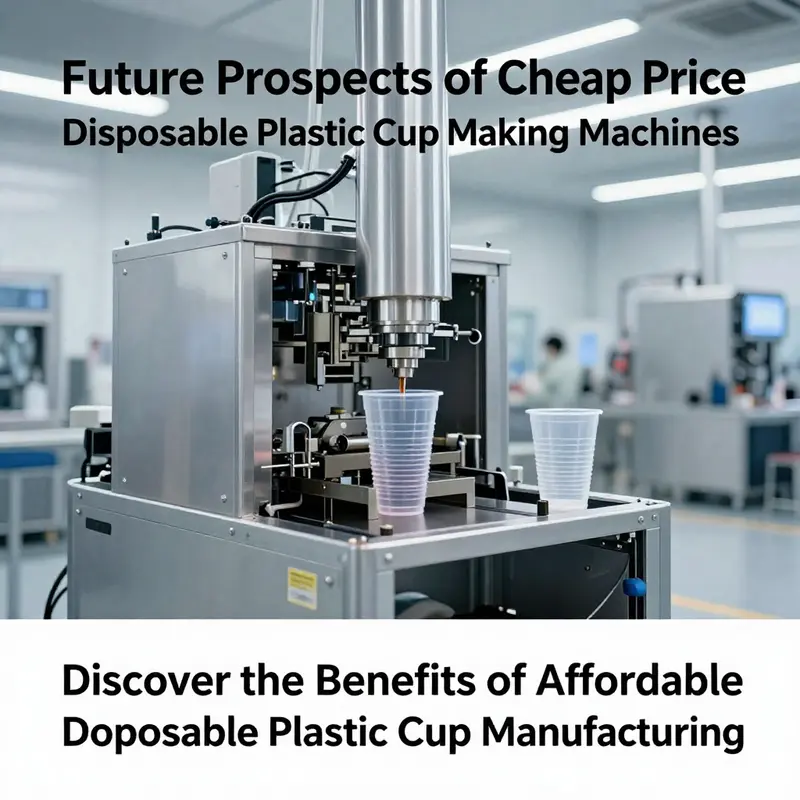
A chapter about the future prospects of cheap price disposable plastic cup making machines cannot ignore the simple arithmetic of supply and demand overlaid with the planet’s tightening rules. For years, the appeal of low-cost, high-speed plastic cup production lay in the ease with which a solvent- and glue-based supply chain could churn out large volumes of single-use cups for quick-service restaurants, beverage delivery, and takeaway brands. The machines that facilitated this output were prized for their affordability and straightforward operation. They turned raw resin into a finished product with speed, and producers could scale up or down with relative ease. Yet as the market matures, the calculus is shifting. The same forces that once rewarded cheap production are now underwriting a reallocation of investment toward greener materials, cleaner processes, and smarter automation. The narrative no longer centers on the cheapest option; it centers on the most compliant, most adaptable, and most sustainable pathway to packaging efficiency in a world increasingly ruled by environmental stewardship and circular economy targets. In this evolving landscape, the prospects for very cheap plastic cup machinery are increasingly uncertain, particularly in regions where policy and consumer expectations are moving in the direction of sustainability rather than convenience alone.
Regulatory pressure has become the most definitive throttle on the long-term viability of inexpensive plastic cup lines. The European Union, through its Single-Use Plastics Directive, has given regulatory bodies a clear roadmap: phase out or restrict a range of single-use plastics, including cups, by upcoming deadlines. The directive pushes manufacturers and suppliers toward paper-based, compostable, or otherwise sustainable alternatives. Beyond Europe, many other jurisdictions have tightened bans and restrictions on non-recyclable or non-compostable cups. The consequence for producers who still rely largely on cheap plastic cup lines is not merely a price notch or a temporary market dip; it is a strategic pivot away from resin-based cups toward materials that can be recycled, composted, or otherwise tested for environmental compatibility at scale. In major markets, this regulatory push is being reinforced by stricter waste management and extended producer responsibility schemes, which increase the cost and complexity of operating low-cost plastic cup lines. The regulatory trajectory is not a minor adjustment; it is a structural realignment that favors machinery capable of handling compliant materials like PLA, bio-based films, or fully paper-based solutions.
The market’s response to these regulatory signals is a shift in demand that mirrors the policy trajectory. In places where governments are actively discouraging single-use plastics, buyers are prioritizing packaging solutions with lower environmental footprints, even if the upfront costs are higher. Eco-friendly packaging solutions—paper-based cups with water-resistant coatings, compostable plant-based cups, and even reusable cup systems—are gaining traction in both hospitality and delivery segments. The shift is amplified by consumer awareness, which increasingly links packaging choices to broader concerns about carbon emissions, litter, and resource depletion. The result is a demand pattern that rewards manufacturers who can offer high-quality, batch-consistent paper or compostable cups with competitive pricing, or who can provide cost-efficient, automated lines that enable rapid conversion from plastics to greener materials. In the eyes of many buyers, the true value lies not in the initial price tag of the machine, but in the total cost of ownership, including waste handling, end-of-life considerations, and the ability to switch materials without a complete capital overhaul.
Technological advancements in green packaging equipment are accelerating the transition. Modern automated lines are designed with energy efficiency and material versatility in mind. Full servo-driven systems, for example, can cut changeover times dramatically and improve precision, which reduces waste and boosts overall throughput. In the realm of sustainable packaging, ultrasonic sealing has emerged as a key enabler for paper-based cups and PLA-coated films, because it eliminates the need for adhesives that complicate recycling streams and raise the environmental burden. Digital printing integration on cup machines further enhances the allure of green packaging by enabling on-demand customization without the waste associated with traditional print runs. These capabilities do more than just improve sustainability; they expand the business case for green cups by enabling branding opportunities and on-shelf differentiation, which can offset the higher material costs with added value. The convergence of automation, energy efficiency, and multi-material capability makes sustainable packaging not only environmentally preferable but economically viable in a broader range of contexts.
Market transformation and industry consolidation are also reshaping the competitive landscape. The low-cost, single-material plastic cup paradigm is increasingly confronted by a bifurcated market: on one side, nimble players that retrofit or retool to handle biodegradable or paper-based solutions; on the other, large manufacturers that offer integrated systems combining material science, automation, and sustainability features. The latter category often includes three-layer composite paper cup machines designed to provide heat resistance, durability, and recyclability, enabling performance in demanding settings where hot beverages or microwave use are commonplace. For many producers, this evolution means moving away from a simple “cheap cup today” mindset toward a strategic portfolio that can accommodate changing regulations and evolving consumer expectations. The days of relying solely on the cheapest machinery to chase market share are giving way to a more nuanced approach: invest in adaptive capabilities, cultivate expertise in eco-friendly materials, and align with standards that ensure compatibility with recycling and composting streams.
From an economic standpoint, the transition is not merely about higher upfront costs. The long-term economics of cheap plastic cup machines become less favorable when regulatory fines, extended producer responsibility fees, and the need for frequent material conversion are factored in. Early adopters of greener lines may incur higher capital expenditure, but their operating costs can be lower over time due to reduced waste, lower energy consumption, and less dependence on volatile plastic resin pricing. In markets where regulations are strict and consumer demand tilts toward sustainability, the total cost of ownership for a versatile, automated line handling both traditional and green materials can be competitive, or even superior, to maintaining multiple, separate, low-cost systems. This economic reality incentivizes manufacturers to view line expansion not as a single product purchase, but as a phased capability build-out—starting with a flexible, high-throughput baseline and gradually integrating eco-friendly modules that broaden compliance, performance, and brand value.
For buyers and operators contemplating a future beyond the era of ultra-cheap plastic cups, the strategic takeaway is clear. The most resilient suppliers will be those who can couple affordable economics with material versatility and regulatory compliance. A practical path involves selecting lines that can run both conventional plastics and sustainable substrates, enabling a single facility to pivot in response to policy changes without incurring prohibitive downtime or capital penalties. This flexibility is not merely a hedge against risk; it is a competitive differentiator in a market that increasingly rewards adaptability and responsible stewardship as much as it does price. In this light, even cost-conscious buyers are likely to gravitate toward options that deliver predictable throughput, low energy use, and compatibility with recycling or composting streams, rather than chasing the cheapest upfront machine regardless of long-term consequences. The conversation around cheap plastic cup production, therefore, is evolving from “how cheap can we make it?” to “how can we produce it responsibly, at scale, and with the ability to adapt as rules and tastes change?”
In practical terms, manufacturers have started to explore hybrid strategies rather than a binary choice between plastic and paper. Some operators are experimenting with retrofitting existing lines to handle alternative substrates, mitigating the risk of stranded capacity as regulation tightens. Others pursue modular automation platforms that can be upgraded with ultrasonic sealing, on-line coating for water resistance, or digital branding, all while maintaining a core throughput that keeps costs in check. These approaches reflect a broader industry shift toward integrated solutions that blend material science, process control, and sustainability goals. For buyers, the shift means assessing suppliers not only on price and capacity but on their ability to deliver a coherent package: equipment that can grow with evolving standards, a spare-parts ecosystem that supports long-term uptime, and technical support that helps translate regulatory requirements into practical manufacturing steps.
As the chapter of cheap plastic cup machines closes in many markets, the opportunity space opens in others. Regions with less stringent regulation, or with evolving policy that favors lightweight, recyclable packaging rather than outright bans, may still find room for cost-effective lines, especially when they are paired with responsible waste management practices. Yet the forward-looking projection is not a return to the past. It is a transition toward intelligent, green, scalable packaging solutions that can meet today’s needs without compromising tomorrow’s options. In this sense, the industry’s future does not hinge on clinging to the last vestiges of cheap plastic production but on embracing a broader, more resilient vision: packaging that respects environmental boundaries, supports circular economy goals, and leverages automation to keep costs predictable even as materials and regulations shift. For stakeholders who want to stay ahead, the message is not to fear regulation or to abandon low-cost thinking entirely, but to reframe cost efficiency around sustainability, adaptability, and long-term value.
To situate this shift in concrete terms, consider how the current market presents itself to the buyer seeking affordable, compliant, plastic-free options. The availability of cost-competitive, eco-friendly paper cups demonstrates that affordable packaging does not have to come at the expense of environmental responsibility. One accessible example is a widely available paper cup that emphasizes plastic-free construction and food-grade safety for take-away applications. For readers exploring practical choices, this kind of offering serves as a benchmark for what a green, cost-conscious alternative can look like in real-world terms. The link to such options may be found here: senang01-best-price-8oz-double-packaging-plastic-free-single-wall-craft-paper-food-grade-disposable-cup-for-wine-mineral-water. This example illustrates how market incentives align with material innovation to produce not only a sustainable product but a compelling business proposition for a new generation of packaging lines.
Ultimately, the story of cheap price disposable plastic cup machines is not a tale of doom for the industry but a narrative of transformation. The low-cost paradigm is receding as a dominant model, replaced by a framework where price is balanced with regulatory compliance, material versatility, and intelligent automation. In this framework, success belongs to those who view sustainability as an integral component of profitability, rather than as a ledger line to be minimized. The industry’s trajectory points toward greener, more capable equipment that can produce paper-based or compostable cups with the same reliability once reserved for plastic—and to new business models that emphasize retrofitability, modular upgrades, and service-based value. The transition is complex, but it is also an opportunity to redefine what “cheap” means in the cup-making world: not merely the upfront cost of a machine, but the total cost of ownership, the lifecycle impact of the product, and the adaptability of the production system to a future where regulatory-aligned, sustainable packaging is the standard rather than the exception. External references illuminate the broader industry shift that underpins this transformation and offer a roadmap for stakeholders seeking to understand where the market is headed and how to position themselves to thrive in a green, automated era. For a deeper industry overview, see the external resource: Rui’an Mingyuan Machinery Co., Ltd. – Paper Cup Machine Manufacturer.
Final thoughts
As the demand for efficient and sustainable solutions grows, the cheap price disposable plastic cup making machine stands as a vital asset for various sectors in the food and beverage industry. By understanding the advancements in technology, market dynamics, and eco-friendly practices, businesses can harness the potential of these machines to thrive in a competitive environment. Investing in quality cup-making machines not only streamlines operations but also addresses growing consumer awareness around environmental sustainability—making it a win-win for your business and the planet.