
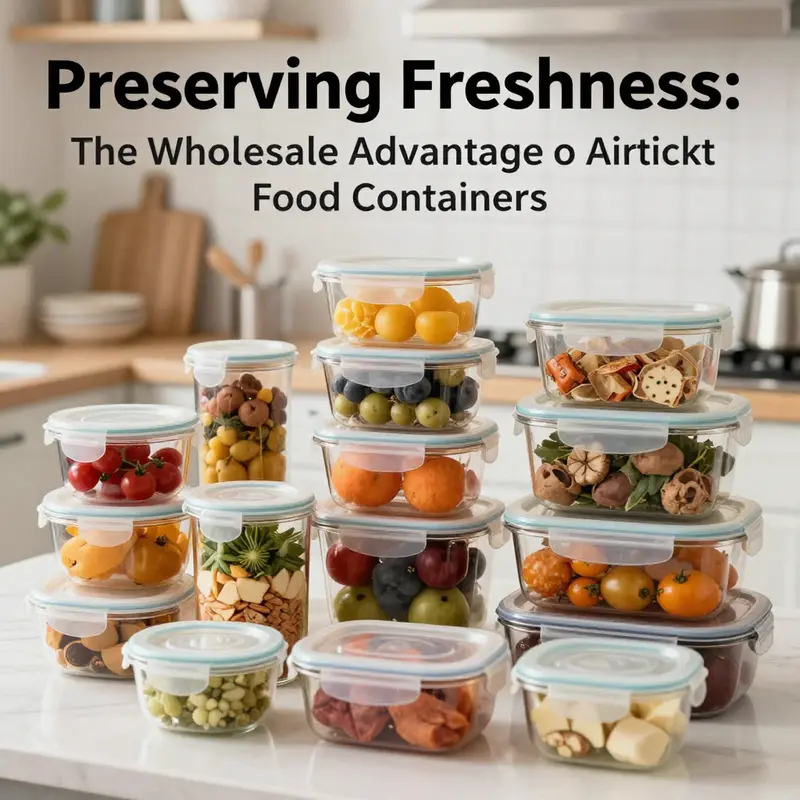
Airtight food containers have become an essential element for businesses ranging from bubble tea shops to catering services. Their ability to maintain freshness and protect against moisture and odors makes them a preferred choice for food storage. This article delves into three pivotal chapters: the market dynamics driving the demand for these containers, the latest innovations available in the wholesale landscape, and the vital quality standards and regulations that govern their use. As we explore each section, you’ll gain insights that can elevate your food storage strategies and optimize your business operations.
Navigating the Market Currents: The Dynamics Shaping Airtight Food Containers in Wholesale
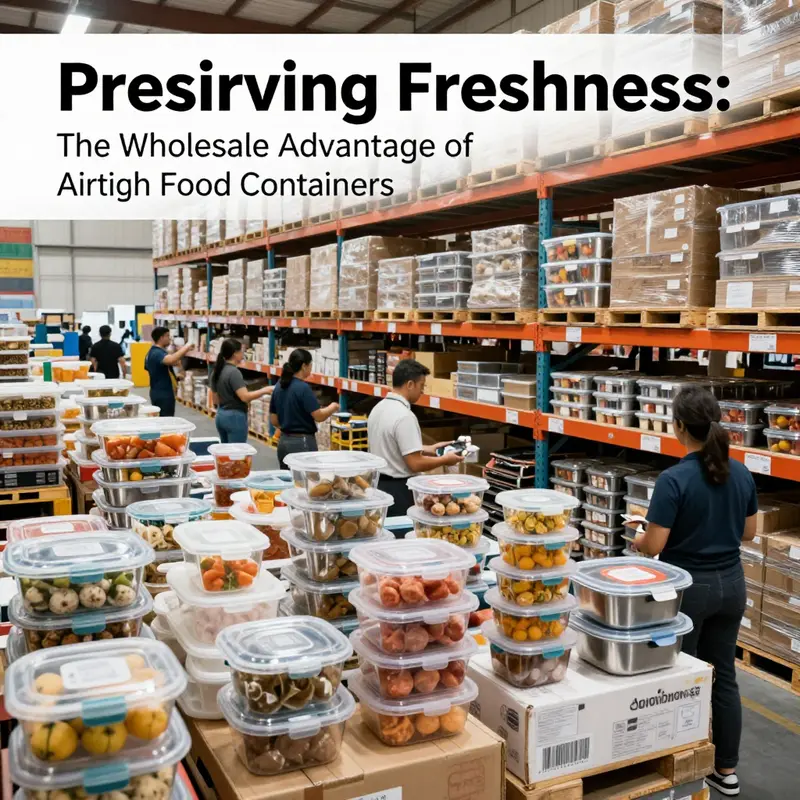
The global market for airtight food containers in wholesale channels is not merely a reflection of consumer appetite for freshness; it is a battlefield of material science, logistics, regulatory compliance, and strategic sourcing. As retailers, foodservice operators, and manufacturers align around the imperative to reduce waste, preserve flavor, and streamline operations, airtight storage becomes a central axis of value creation. Forecasts point to a dominant share of the broader food storage container market converging on airtight designs, underscoring how profound an influence this category now exerts on procurement strategies. What appears as a simple container is, in fact, a nexus of performance criteria, supply chain considerations, and brand trust in a market where every seal, every material choice, and every packaging decision communicates quality to buyers and end users alike.
In this landscape, consumer expectations have evolved beyond basic containment. Freshness and aroma retention have moved from desirable features to baseline requirements for many product categories. Dry goods must stay dry, spices should retain their volatile oils, and prepared meals need to hold heat without leaking moisture or odors into the fridge or pantry. The wholesale sector has responded with a tiered offering that ranges from cost-conscious, high-volume plastic options to premium glass and metal designs, each with its own trade-offs in heat resistance, recyclability, and durability. The push toward microwave-safe, stackable configurations is not accidental. It reflects a sophisticated understanding of kitchen workflows, where cooks in bustling cafes, hotel kitchens, and catering operations value equipment that can be easily stored, transported, heated, and reused. In effect, the market dynamics pursue a seamless blend of performance, practicality, and economy, with a strong emphasis on long-term total cost of ownership rather than upfront price alone.
The forecast that airtight containers could account for a substantial portion of demand by the early 2030s rests on several converging forces. First, consumer behavior has shifted toward meal-prep and bulk buying, particularly among busy households and institutional buyers. When preparation routes demand predictable portioning and reliable sealing, wholesalers who can supply containers that preserve moisture while resisting odors and flavors gain a competitive edge. Second, advances in sealing technology and material science have widened the spectrum of acceptable applications. Containers now span from lightweight BPA-free plastics to borosilicate glass and durable steel options, each designed to meet specific temperature ranges, chemical stability, and mechanical demands. Third, the efficiency imperative in professional kitchens—where inventory turns, waste reduction, and consistent presentation matter—drives demand for stackable, nestable, and space-optimizing designs. The more a container can compress a back-of-house footprint while maintaining performance, the more attractive it becomes to procurement teams responsible for large orders and multi-site rollouts.
From a buyer’s perspective, the wholesale market presents both opportunity and risk. The opportunity lies in access to a broad spectrum of materials and designs that can be tailored to different segments, whether it is the dry-goods storage needs of a convenience store, the heat-and-serve requirements of a catering operation, or the humidity control demanded by spice rubs and dried herbs. The risk, conversely, centers on ensuring compatibility with safety standards, environmental commitments, and logistical realities. The safety dimension is non-negotiable in most jurisdictions. Containers must meet or exceed food-contact standards, with non-toxicity, chemical stability, and heat resistance appropriate for their intended use. The environmental dimension is increasingly prominent as buyers demand recyclability and reduced ecological footprint in both product design and end-of-life handling. Logistical considerations—such as weight, breakage risk during transit, MOQs, and lead times—play a decisive role in wholesale purchasing, particularly for mid-sized distributors who balance breadth of offering with operational efficiency.
To navigate these dynamics, wholesalers and manufacturers are differentiating themselves through a combination of design innovation and service sophistication. Innovation now emphasizes not just sealing mechanisms but also the ease with which containers integrate into existing workflows. Features like gasket-based seals that resist temperature fluctuations, venting systems that manage pressure changes in microwave reheating, and interiors designed for easy cleaning are increasingly common. At the same time, the industry is moving toward materials that align with consumer preferences for safer, more sustainable options. BPA-free plastics, heat-tolerant glass, and corrosion-resistant metals are anchored in a broader trend toward chemical stability and long-term safety, even as some buyers weigh the benefits of recyclable materials against the practical realities of shipping and handling.
Customization has emerged as a critical differentiator in wholesale markets. Several buyers seek branding opportunities that elevate their private-label programs or restaurant partnerships. In practice, customization can include silk screening, labeling, or painted markings that withstand freezing or microwaving. For wholesalers, this means standing up capabilities that can accommodate smaller MOQs while still offering cost efficiency at scale. The market has responded with modular packaging lines, scalable customization options, and flexible logistics that enable faster time-to-market, even for orders that begin with modest quantities. The result is a more responsive ecosystem in which buyers can align product attributes with brand promises, ensuring that the functional performance of airtight containers travels in lockstep with consumer expectations for safety and quality.
The supply chain realities surrounding airtight containers further shape market dynamics. Sourcing decisions now weigh a mosaic of considerations: raw material availability, supplier lead times, manufacturing capacity, and the environmental and regulatory regimes across regions. The plastic segment, while cost-effective and highly scalable, poses questions about recyclability and end-of-life disposal. Glass and metal offer superior durability and recyclability but carry higher shipping costs and greater risk of breakage. Each material set must be evaluated against a buyer’s particular application, travel requirements, and storage conditions. This is where logistics optimization becomes a strategic differentiator. Wholesalers that can consolidate shipments, minimize handling, and provide reliable packaging protection throughout the distribution chain reduce total landed cost and protect margins for both themselves and their customers.
Regulatory and safety standards anchor many of these decisions. In markets with stringent food-safety norms, containers must comply with recognized certifications that validate their suitability for contact with food and their resilience under thermal stress. The emphasis on chemical stability guides material selection, particularly for products intended for reheating or long-term storage. The shift toward microwave-safety is not merely a convenience; it is a regulatory and consumer expectation that enhances the viability of ready-to-eat or ready-to-heat offerings. Buyers increasingly seek assurances that packaging will perform consistently from freezer to plate, without leaching substances or compromising flavor and texture. In response, manufacturers invest in testing and certification programs that provide a credible signal of quality to wholesalers and end users alike. The resulting ecosystem favors suppliers who can couple rigorous compliance with practical, cost-effective manufacturing and reliable delivery.
On the demand side, consumer preferences for odor control and freshness are fueling product differentiation in seal technology and interior textures. Containers designed with improved barrier properties help preserve aromas and prevent moisture intrusion that would degrade dry goods or spice blends. For the wholesale buyer, these technological improvements translate into longer shelf life, which reduces spoilage risk and improves inventory performance across channels. The premium segment is especially sensitive to these attributes, where customers seek containers that promise not only function but also a perception of higher value through glass clarity, color-fast plastics, or metal finishes that convey durability and premium quality.
Customization and branding intersect with sustainability in meaningful ways. Buyers are increasingly evaluating containers for their lifecycle impact, including recyclability and the feasibility of reuse. This shift pushes manufacturers to develop designs that can be easily dismantled for recycling and to explore alternative materials that offer comparable performance with a smaller environmental footprint. Yet the market must balance these green ambitions with practical considerations: the economics of recyclable materials, the weight of shipments, and the compatibility of redesigned containers with existing machinery and packaging lines in foodservice operations. The result is a nuanced negotiation where eco-friendliness does not come at the expense of reliability or affordability. In wholesale terms, suppliers who articulate a clear value proposition—combining performance, cost, and sustainability—are best positioned to win multi-site contracts and long-term distribution relationships.
As wholesalers look ahead, the interplay of technology, safety, and sustainability will continue to shape market dynamics. The ongoing refinement of sealing mechanisms, the evolution of materials science, and the adoption of circular economy principles will redefine what buyers expect from an airtight container. At the same time, the wholesale channel will increasingly rely on data-informed procurement. Real-time visibility into inventory levels, demand forecasting, and supplier performance will enable buyers to optimize orders, reduce obsolescence, and improve service levels across networks. In this context, the role of wholesalers extends beyond transactional supply to become strategic partners who align packaging capabilities with other parts of a buyer’s ecosystem. This alignment supports faster product launches, more consistent quality, and a smoother path from warehouse to consumer.
Within this evolving framework, the choice of container becomes a reflection of a broader organizational philosophy. A retailer focused on sustainability will favor designs that balance durability with recyclability and minimize single-use waste across categories. A large catering operation, by contrast, may prioritize durability, microwave safety, and stackability to maximize throughput in a high-volume setting. A small boutique brand might lean toward customization options that reinforce its identity while maintaining a lean inventory profile. The common thread across these divergent strategies is a shared commitment to preserving freshness, reducing waste, and delivering reliable performance under pressure. This is what makes airtight containers more than mere storage devices; they are enablers of taste, safety, and operational efficiency that can unlock value across the entire supply chain.
Amidst these dynamics, buyers and suppliers alike must stay attuned to the realities of cost, risk, and opportunity. The wholesale market rewards those who can harmonize price with performance, logistics with service, and branding with safety. It rewards those who can translate the science of sealing and the art of material selection into tangible benefits for kitchens, retailers, and households. It also rewards adaptability: the capacity to respond to shifting demand, regulatory updates, and evolving consumer values without compromising on quality. As the market matures, the most successful players will be those who embed flexibility into their sourcing strategies, invest in robust testing and certification programs, and cultivate collaborations across channels that accelerate the path from concept to shelf to consumer. In short, airtight containers in wholesale are not simply containers; they are strategic assets that reshape how products are stored, shipped, and enjoyed.
To illustrate how this plays out in practice, consider the breadth of application scenarios that wholesalers must support. Containers designed for pantry staples like grains and dried herbs require robust moisture barriers and long shelf life, paired with cost-effective pricing for bulk purchases. Those intended for spices must prevent volatile oils from escaping while resisting staining and odor transfer. For ready-to-heat meals, the emphasis shifts toward microwave compatibility and durable sealing that can withstand repeated reheats without warping or leakage. Pet-food storage adds another dimension, where durability, odor control, and ease of cleaning become paramount. The market increasingly segments by these use cases, pushing suppliers to offer curated lines that meet precise performance envelopes while staying aligned with overall sustainability goals and regulatory compliance across regions.
In closing, the wholesale market dynamics surrounding airtight food containers reflect a sophisticated balance of technology, safety, and logistics. Growth is driven by a durable demand for freshness, convenience, and waste reduction, alongside a willingness to invest in better sealing, cleaner design, and smarter packaging solutions. The competitive landscape rewards those who translate these capabilities into reliable supply, consistent quality, and scalable customization. As buyers navigate MOQs, lead times, and certification paths, the containers they select become more than storage devices; they become enablers of brand promise, kitchen efficiency, and responsible consumption. This is the core of the market dynamics shaping airtight food containers wholesale: a continuous negotiation among performance, cost, and sustainability that ultimately supports a more efficient, flavorful, and less wasteful food system. For readers exploring concrete product options within this broader narrative, one versatile example in wholesale packaging is a kraft paper octagonal bowl with lid kraft-paper-octagonal-bowl-1200ml-waterproof-eco-friendly-disposable-salad-bowl-for-snack-cookie-warm-cold-food-pet-lid. And as the ecosystem evolves, buyers should keep an eye on the broader sourcing landscape, where platforms with proven track records in wholesale packaging can help connect demand with supply while maintaining a focus on safety and ecology. External resources continue to evolve as well, with global marketplaces increasingly shaping price discovery, availability, and service levels across the spectrum of airtight storage solutions. For ongoing reading on wholesale dynamics and platform-enabled sourcing, reference a broad external resource in this space: https://www.alibaba.com/.
Chapter 2: Sealed for Scale—Innovations Transforming Wholesale Airtight Food Containers
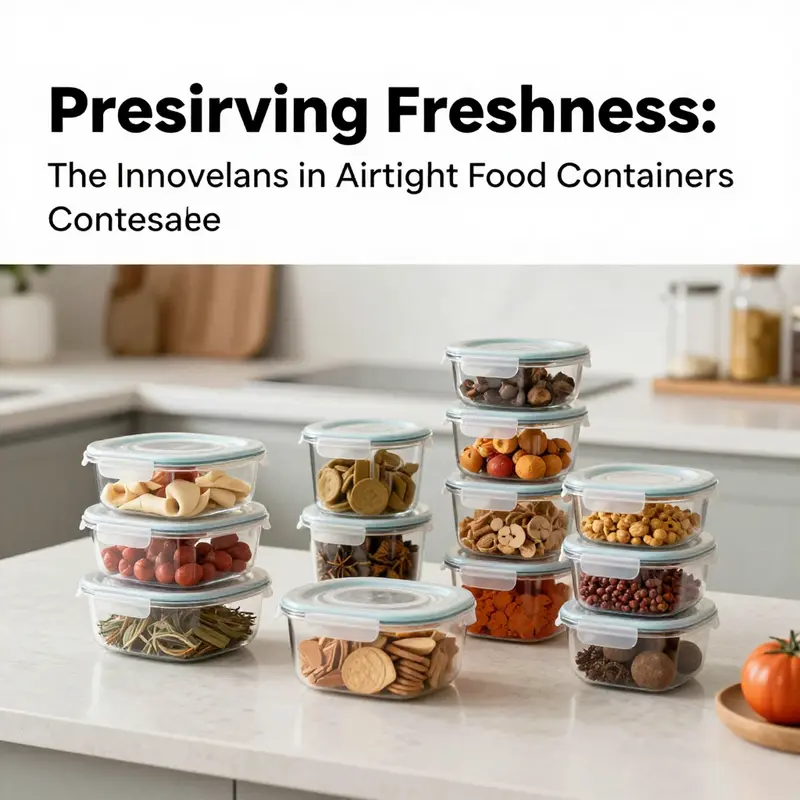
Airtight food containers have moved beyond simple storage to become core components of wholesale food operations. Buyers in food service, distribution, and retail demand scalability, traceability, and sustainability, not just freshness preservation. Innovations that combine performance with efficiency are reshaping how wholesale suppliers design, manufacture, and offer airtight containment at scale.
The strongest trends include extending shelf life, improving supply chain visibility, and reducing environmental impact while maintaining ease of use and throughput in kitchens, warehouses, and backrooms.
The most conspicuous leap in the wholesale space is the integration of vacuum sealing within bulk containers. Vacuum sealing creates a controlled microenvironment that slows oxidation and microbial growth, enabling longer hold times for bulk coffee, grains, dried herbs, and ready-to-portion products in multi-location networks. Manufacturing now supports durable, cost-effective vacuum sealed units at high volumes with robust sealing systems and materials that withstand temperature fluctuations and stacking.
Smart packaging follows, with time temperature indicators and digital identifiers embedded to support real time tracking, inventory synchronization, and visibility of batch information and expiration dates. For wholesalers, these indicators enable data driven decisions and easier communication of sourcing details to buyers via mobile devices. Cost, software compatibility, and data security remain considerations, but when implemented thoughtfully they bridge production realities with downstream trust.
Sustainability is a core criterion. Recyclable and biodegradable materials are being used in base polymers and reinforcements while preserving airtight performance. Plant-based plastics and molded fiber options are tested for heat resistance and long-term durability. Interlocking and nesting designs reduce material usage and shipping volume, lowering weight and carbon footprint while maintaining seal integrity.
Modular and multi-compartment systems help accommodate multiple ingredients or portions in a single shipment, improving production line efficiency, simplifying SKUs, and reducing tooling needs for variations. These systems also support standardized platforms and make customization more scalable without sacrificing performance.
From a safety perspective, high quality containers use materials such as borosilicate glass or tempered plastics for heat resistance, and the seals remain reliable across cleaning cycles and temperature changes. Compliance with food-safety standards signals quality and reduces risk for buyers.
Customization remains important: branding, labeling, color coding, and lid designs support private label programs while balancing minimum order quantities and lead times. Wholesale buyers seek a cohesive value proposition: reliable airtight performance, safety, and supply reliability alongside brand differentiation.
The channel landscape spans wholesale distributors, large importers, and direct supplier arrangements, often with MOQs and tiered pricing. The aim is a turnkey packaging ecosystem that integrates with production schedules, storage facilities, and logistics networks while remaining cost efficient.
In practice, buyers balance performance, material safety, and lifecycle considerations; modularity and customization can reduce SKUs and procurement complexity while preserving airtight integrity.
For readers seeking concrete examples, eco-friendly bases and secure seals demonstrate how packaging can meet operational needs while aligning with environmental expectations. Waste reduction and recycling compatibility are increasingly prioritized in product design.
In sum, the wholesale future of airtight containers is shaped by high performance sealing, embedded intelligence, sustainable materials, and flexible design that scales with food service, retail, and manufacturing. Those who adopt an integrated approach will be well positioned to deliver shelf life, visibility, and responsible stewardship while maintaining reliability.
Internal note: for readers exploring sustainable options, kraft paper based lids enabled containers provide practical solutions for certain cold-to-warm service contexts. Example: kraft paper octagonal bowls with lids.
External resource: for a broader view on scale manufacturing and sealing technology, see a catalog of vacuum sealed food containers.
Beyond the Seal: How Global Quality Standards and Regulations Shape Wholesale Airtight Food Containers
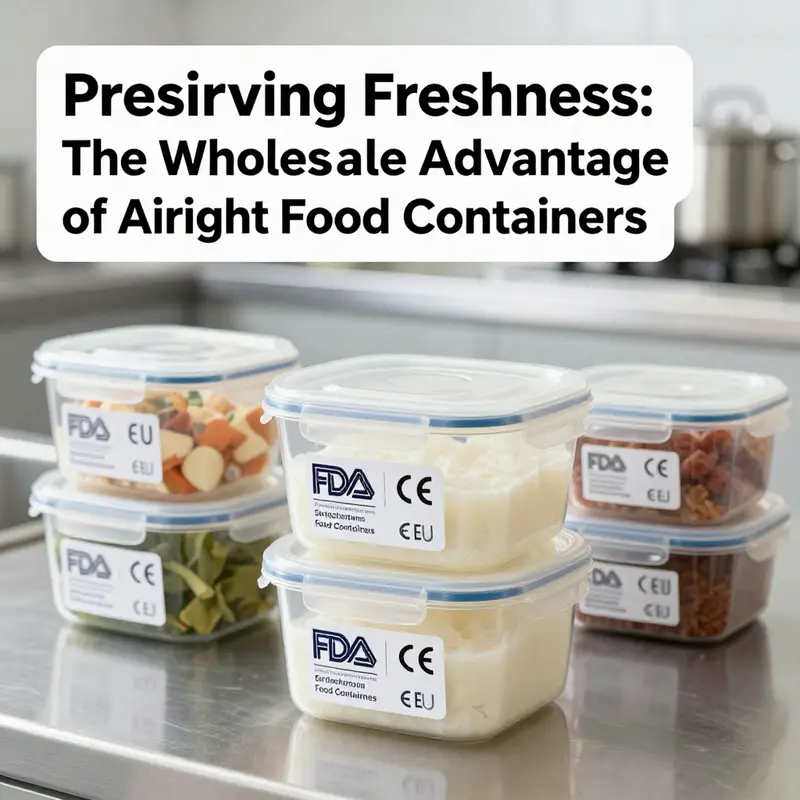
The wholesale market for airtight food containers sits at the intersection of function and governance. In practice, these containers are not merely vessels; they are the final link in a chain that must preserve freshness, prevent contamination, and maintain safety from processing through storage and service. The implications of quality standards and regulations ripple across the supply chain, influencing material choices, design features, labeling, and even the way products are marketed to a global audience. For wholesalers, understanding this regulatory fabric is not a cosmetic concern but a core competitive advantage. It translates into reliable sourcing, predictable performance in the field, fewer recall risks, and stronger trust with buyers in food service, retail, and institutional channels. The regulatory environment is not static; it evolves with science, environmental priorities, and evolving trade expectations. In this sense, airtight containers operate within a living system of compliance that commands attention from design brief to the moment a product lands on a store shelf or a restaurant back bar. The conversation begins with material safety and chemical migration, the concerns that underwrite most food-contact regulations, and extends into labeling, end-of-life responsibility, and the technical realities of sealing performance under heat, cold, and daily wear. Each of these dimensions matters in wholesale, where large orders move quickly, where varied use cases exist—from dry pantry storage to perishable leftovers—and where buyers expect to see consistent quality, not merely bold marketing claims. The regulatory architecture guiding airtight containers is both universal and jurisdiction-specific, a mosaic of global standards that wholesalers must navigate with discipline and foresight. The most fundamental question is simple and practical: what substances could leach into food from an airtight container, and under what conditions? The answer depends on material and formulation, but it also depends on testing practices and the expectations set by regulators in major markets. The global conversation around food-contact materials highlights two intertwined concerns: material safety and chemical migration. In many markets, regulators regulate substances that can migrate from container walls into food under normal conditions of use, including heat exposure. The testing framework typically distinguishes between total migration limits and specific migration limits for particular substances. For instance, a container designed for hot-filled or microwaved use must demonstrate that its resin or glass, coatings, and closures do not transfer substances in amounts that could pose a risk with typical consumption. In the United States, the regulatory lens is anchored by the authorities responsible for food-contact substances and their use in packaging. The FDA’s posture emphasizes that materials intended for contact with food must not release harmful compounds during intended use. The practice of evidence-based testing—migration testing, compatibility assessments, and long-term stability tests—helps ensure that a wholesale supplier’s claims align with what regulators consider safe. Beyond the U.S., the regulatory world grows more complex as markets converge. In Europe and the United Kingdom, the Framework Regulation on Food Contact Materials sets the overarching safety requirements for all materials intended to contact food. This framework is complemented by national implementations and by market-specific expectations, such as those tied to end-of-life responsibilities under packaging waste regulations. The UK’s 2024 Packaging and Packaging Waste Regulations, for example, assign responsibilities to producers to address recyclability and environmental impact. This is not merely a sustainability concern; it is a regulatory driver that shapes material choices, adhesive systems, and even labeling practices that reflect a product’s end-of-life journey. In the EU, EC No 1935/2004 provides the general safety requirement for materials in contact with food and reinforces the need for airtightness and resistance to degradation. For wholesalers, alignment with these standards often means pursuing certifications, maintaining auditable supply chains, and ensuring that all components—from the resin or glass to closures and seals—meet a coherent set of safety criteria. The regulatory landscape also introduces tangible inspection outcomes that affect market access. National and regional authorities conduct regular supervision and random inspections to verify compliance. A notable illustration from a recent national inspection program highlights the importance of barrier performance and seal integrity. In that investigation, hundreds of batches of various food-contact products were sampled, and a portion was found non-compliant due to issues like excessive total migration levels and poor barrier performance. The penalties included seizure of non-conforming goods and mandated corrective actions by manufacturers. While this case study originates from a specific national context, it has broad implications for wholesalers: non-compliance is not a theoretical risk, but a real-world constraint that can disrupt supply, erode buyer confidence, and necessitate costly corrective actions. To prevent such outcomes, wholesalers must adopt a proactive regulatory stance. That means selecting suppliers who can demonstrate robust testing regimes, maintain traceable materials, and provide documentation that maps neatly to the regulatory expectations of major markets. It also means recognizing that different markets impose different framing and documentation. For example, labeling requirements can differ significantly by jurisdiction, even when the core safety standards are aligned. In some jurisdictions, labeling must clearly indicate that a container is suitable for specific uses, such as microwaving or freezing, while in others, the emphasis may be on allergen disclosures and storage recommendations that preserve the container’s airtight integrity. Hong Kong, for instance, has labeling regulations that require pre-packaged foods to clearly present ingredients, allergens, and storage instructions, and to accompany any “best before” or “use by” statements with appropriate guidance. These labeling expectations can influence how wholesalers present product information to buyers, and they can also shape the packaging solutions that manufacturers offer through customization programs. Customization, in turn, becomes a strategic lever in wholesale markets. The capacity to add branding, silk-screening, labeling, or color-coded markings can be aligned with regulatory requirements while creating product distinctions for retailers or food-service operators. However, brand customization cannot come at the expense of compliance. The resin types used in plastic containers, in particular, require careful attention. In a risk-managed supply, resin choices are not simply about performance or aesthetics; they are about safety. The literature highlights the distinction between certain resins such as melamine formaldehyde (MF) and urea formaldehyde (UF). In practical terms, MF-based systems are generally considered safer for direct contact with food when properly processed and certified, whereas UF-based systems are discouraged for food contact because of their higher potential for migration and leaching under certain conditions. This binary is not a universal rule, but it serves as a useful lens for wholesalers evaluating plastic-ware suppliers. It is paired with a broader expectation that plastics used in food-contact applications are non-toxic, exhibit stable mechanical properties, resist deformation under typical handling, and withstand the temperature spectrum common to consumer and commercial use. Glass and metal containers bring different regulatory profiles. Borosilicate and tempered sodium-calcium glass, for example, are notable for their heat resistance across microwave, oven, and freezer environments, making them suitable for a range of storage needs. Their chemical stability and inertness also contribute to favorable migration profiles. Steel and other metal materials require corresponding standards regarding corrosion resistance, seal integrity, and the long-term reliability of lids and gaskets. The material choice is thus a crucial facet of the wholesale decision, with impact extending from manufacturing cost to the consumer experience and, ultimately, compliance with market-specific safety and labeling standards. Another axis of regulation concerns the lifecycle of packaging. The UK’s packaging obligations push manufacturers toward designs that facilitate recyclability and minimize environmental impact at end-of-life. This is not purely a matter of corporate responsibility; it is a regulatory imperative that affects what wholesalers source and how they design or assemble product lines. End-of-life considerations can influence adhesive choices, coatings, and even the selection of sealants used to maintain airtightness, as some materials complicate recycling streams or require specialized collection schemes. In this context, a wholesale strategy that prioritizes compatibility with recycling infrastructure may enjoy easier access to markets where producers must demonstrate the environmental credibility of their packaging. The practical implications for wholesalers extend beyond material properties and into the realm of supply chain governance. The ability to source products that comply with multiple regulatory regimes requires robust supplier audits, documented test results, and transparent material declarations. Third-party testing laboratories, certification programs, and site inspections provide the objective evidence buyers need to confirm that a container meets safety, labeling, and environmental standards. The complexity of a truly compliant offering is enhanced when manufacturers maintain end-to-end traceability—from raw materials to finished goods and packaging components. In practice, this means a wholesale supplier should be able to present a material declaration for each component, a migration testing summary for intended use scenarios, and labeling that reflects the regulatory expectations of the markets served. It also means being prepared to adapt to evolving requirements. When a market introduces a new or amended standard, the fastest way to maintain continuity is to have a transparent change-management process, with clear impact assessments, updated product specifications, and timely communication with buyers. For wholesalers, this is not merely a compliance expense but a strategic capability. It enables a faster response to new customer requirements, reduces the risk of non-compliant shipments, and supports brand credibility across international trade routes. The regulatory landscape also interacts with the availability of wholesale-grade options and customization capabilities. Suppliers may offer a broad range of materials—plastic, glass, stainless steel—each with its own compliance profile and testing needs. Across these materials, the sealing technology, whether it is gasket design, cap thread quality, or interference-fit closures, must meet standards for airtightness under realistic use conditions. Air and moisture barriers are tested not only in isolation but also under cycles of heating and cooling, simulating real-life handling in kitchens, catering operations, and consumer homes. A strong compliance posture includes clear, verifiable data on how a container maintains its seal when subjected to repeated opening and closing, as well as how it performs in the presence of high humidity, acidic foods, or fatty contents. These performance considerations matter in wholesale because they determine the life cycle cost of the product for retailers and food-service operators. A container that preserves freshness over extended storage reduces waste, a benefit that resonates with buyers who manage large inventories or operate high-turnover kitchens. The intersection of regulatory compliance and product performance thus becomes a narrative wholesalers can use to differentiate offerings. Yet compliance is only one dimension of the wholesale decision matrix. Market access is increasingly dependent on transparency and efficient information flow. Buyers expect clear documentation about safety, labeling, and sustainability claims. They also expect support in understanding how a product should be used, stored, and disposed of, especially when it involves flexible plastics, coatings, or composite materials that complicate recycling. This expectation highlights the value of internal and external links that guide buyers toward more detailed resources. For example, a practical reference to a disposable kraft paper takeaway box with a clear lid illustrates how packaging choices align with branding while still meeting regulatory demands. The linked resource provides a tangible example of how a simple design decision—adding a lid and a label, for instance—maps onto broader governance, migration, and labeling considerations. See this example for a concrete sense of how packaging design interacts with compliance in a wholesale context: Disposable kraft paper takeaway box with clear lid. Beyond the immediate compliance requirements, wholesalers should remain mindful of broader shifts in packaging policy that influence product development and supplier relationships. The global trend toward sustainability aligns with regulatory priorities in many jurisdictions. The UK’s packaging regulations and the EU framework reinforce the need to consider recyclability and environmental impact as part of the product’s regulatory journey. Wholesalers who incorporate circular design practices—such as selecting materials that minimize migration risk, enabling easier separation of components, and providing clear recycling instructions—will be better positioned to meet changing expectations and maintain access to key markets. The regulatory story is not only about restrictions and penalties; it is also about enabling reliable trade. When wholesalers work with suppliers who are transparent about testing, certifications, and supply-chain provenance, they build a foundation of trust that helps retailers and food-service operators do their jobs more effectively. In turn, this trust supports broader market growth for airtight containers as a category, particularly in wholesale channels that value scale, consistency, and risk-managed sourcing. For a practical reference point on the regulatory landscape, readers can consult the U.S. Food and Drug Administration’s guidance on food-contact substances, which outlines the key principles guiding safe use of materials in contact with food. This external resource provides context for the migration testing and material-safety expectations that underpin wholesale decisions. See: https://www.fda.gov/food/food-contact-materials/food-contact-substances. The wholesale journey through quality standards and regulations thus unfolds as a discipline of careful material selection, rigorous testing, precise labeling, and thoughtful design for end-of-life. It requires a steady hand on the tiller of change, a willingness to collaborate with suppliers to maintain compliance across geopolitical landscapes, and a clear-eyed view of how packaging choices translate into real-world outcomes for kitchens, retailers, and households. When these elements align, airtight containers become more than sealed volumes; they become reliable components of a safe, sustainable, and trusted food system. The resulting value proposition for wholesalers is clear: a compliant, well-documented, and adaptable offering that reduces risk, supports brand integrity, and underpins a scalable path to serve diverse markets with confidence. The regulatory conversation, in this sense, is less about inertia and more about strategic capability—an ongoing investment in the reliability that buyers demand and regulators expect. As markets continue to converge and standards evolve, wholesalers that prioritize cross-market compatibility, robust documentation, and transparent communication will play a central role in shaping the future of airtight food containers. In this way, the subtle art of sealing—what happens at the interface of lid, wall, and sealant—becomes a measurable, auditable, and ultimately business-enabling practice that translates science and policy into everyday consumer safety and trust. The practical takeaway for wholesale decision-makers is straightforward: cultivate supplier partnerships that can demonstrate tested safety, clearly labeled usage guidance, and consideration for end-of-life impact; demand documentation that maps to major regulatory regimes; and pursue certifications that validate a product’s conformity to those regimes. In doing so, wholesale buyers can navigate the regulatory maze with greater clarity, reduce the risk of non-compliant shipments, and offer customers a durable promise of safety and quality that extends beyond the seal itself. This is the essence of responsible wholesale practice in airtight food containers, where regulation and performance converge to sustain trust across markets and over time. To ground these ideas in tangible terms, consider the broader supply-chain choices that accompany regulatory compliance. The wholesale market rewards suppliers who can provide transparent material declarations, migration test results, and clear labeling that aligns with regional requirements. It rewards those who invest in design considerations that improve seal integrity and heat resistance without compromising recyclability. It rewards those who recognize that packaging is not only a product attribute but a signal of safety, environmental stewardship, and professional reliability. As such, wholesalers should view standards and regulations not as barriers, but as a shared language that enables efficient collaboration, consistent product quality, and a scalable pathway to serve customers around the world. And while the regulatory landscape will continue to shift, the core principles—protecting food safety, preserving product integrity, and enabling responsible packaging—remain constant anchors for decision-makers across wholesale. The synthesis of these ideas into procurement and product-development practices will influence how airtight containers perform in kitchens, storerooms, and retail environments for years to come. In this light, the chapter that follows will further explore the logistical and strategic implications of these standards for wholesale operations, bridging the science of materials and the commercial realities of global distribution. It will offer practical frameworks for supplier assessment, testing rationales, and documentation workflows that help ensure compliance across markets while preserving the flexibility that wholesale buyers require to respond to varied customer demands. The objective is not to reduce choice to a single path but to illuminate how quality standards and regulations shape that path—guiding wholesalers toward products that meet safety expectations, satisfy labeling obligations, and align with sustainability goals, all without sacrificing the airtight performance that customers rely on every day. For those who want a concrete example of packaging design that sits comfortably within this regulatory matrix, consider the broader ecosystem of take-away packaging that includes containers with clear lids and branding opportunities. Such designs must still respect food-contact safety, sealing performance, and end-of-life considerations, while offering branding versatility a retailer might value. The practical takeaway for buyers and suppliers alike is to view packaging choices through a compliance-forward lens, ensuring that each component—from wall material to lid gasket to labeling—contributes to a safe, durable, and recyclable whole. This approach helps wholesalers deliver value that is not only measured in cost per unit but also in risk mitigation, brand credibility, and the long-term sustainability of their offerings. In summary, the quality standards and regulatory environment surrounding airtight food containers wholesale demand a holistic perspective. They require attention to material safety and migration, thorough testing, robust labeling, and forward-thinking design that embraces recyclability and lifecycle responsibility. They reward transparency and certification, and they elevate the wholesaler’s role from supplier to partner in a system where safety, efficiency, and trust are the currencies of success. The end result is a market where airtight containers do more than keep contents fresh; they embody a disciplined, standards-driven approach to packaging that supports safe, sustainable, and scalable food systems across borders. External resources will always be part of this landscape, and staying connected to leading guidance—such as the FDA’s Food Contact Substances documentation—can help wholesalers align internal processes with regulatory expectations and market needs in a practical, measurable way.
Final thoughts
Airtight food containers are not just a trend; they are crucial tools for maintaining the quality and safety of food in various service environments. As we’ve explored, understanding the market dynamics, embracing innovations, and adhering to strict quality standards can significantly enhance your operational efficiency and food safety. By investing in these robust storage solutions, businesses can ensure freshness, reduce waste, and ultimately provide better service to their customers.