
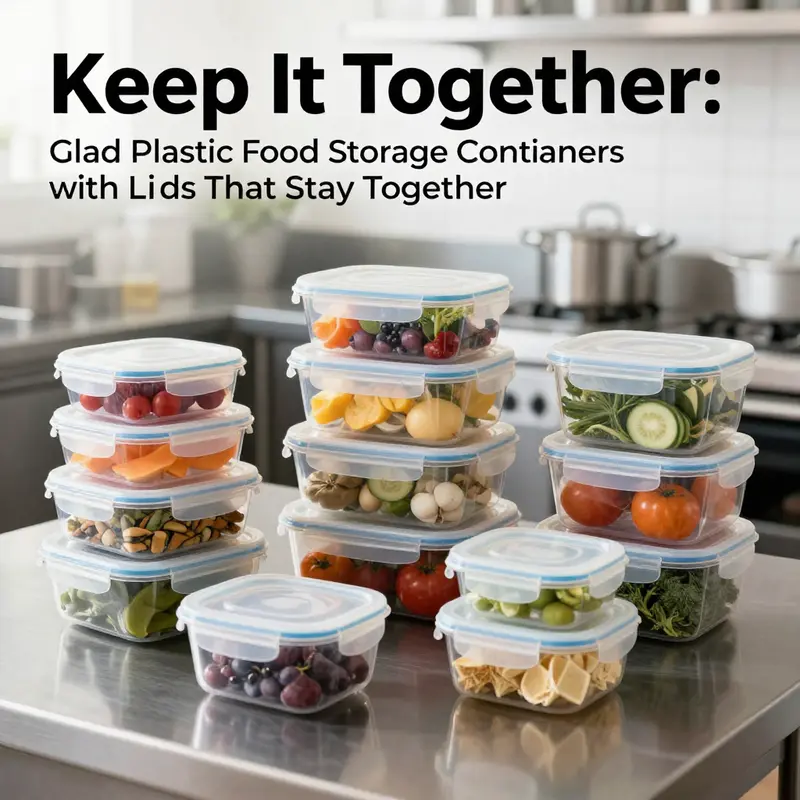
In the bustling world of food service, effective storage solutions are paramount. Glad plastic food storage containers with interlocking lids not only prevent spills but also facilitate seamless organization for businesses like bubble tea shops, restaurants, food trucks, and catering services. This article will delve into the key features of these containers, highlighting how their innovative design supports space-saving and efficient practices. Throughout this piece, we’ll explore the convenience of interlocking lids, their impact on organization, and the versatility and safety these containers offer, essential for anyone in the food service industry.
Locking Lids, Lasting Freshness: The Quiet Mastery of Interlocking Containers That Stay Paired
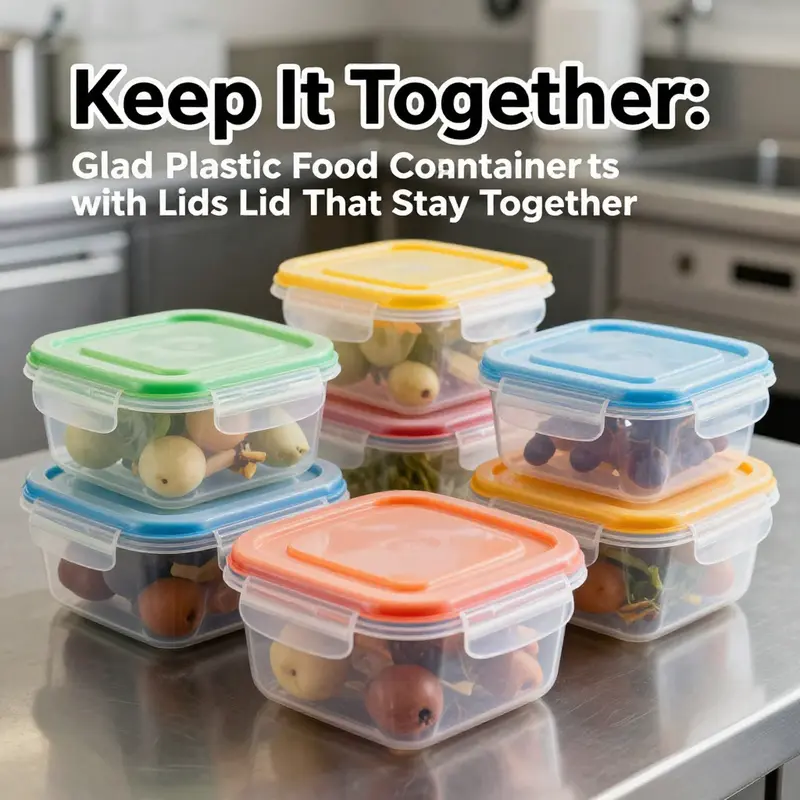
A well-ordered kitchen is more than a neat shelf and a tidy drawer. It is a small system in which every tool serves a practical purpose, every container earns its keep, and every lid knows exactly where to find its partner. The interlocking lid design, which keeps lids attached to the corresponding containers even when they’re not in use, is one of those quiet innovations that changes daily routines without shouting about it. It is not merely about keeping food fresh; it is about sustaining an ethic of organization, efficiency, and reliability in a space that is constantly under pressure from everyday life. When you reach for a storage solution that has lids that snap securely into place and lock together for easy stacking, you experience a subtle shift in how you interact with your food, your week, and your kitchen itself. You are choosing a system that respects your time and your space, a system designed to reduce waste, frustration, and clutter, while increasing the chances that leftovers, prepped meals, and staple ingredients stay exactly as you prepared them.
At the core of this design is a precise threading alignment system. It may sound technical, but the effect is profoundly simple: lids that align perfectly with their containers every time you twist them on. The threading is not just about a snug feel; it ensures a consistent seal. When a lid threads cleanly onto a container, it creates a tight seal that minimizes air exchange. That seal matters for freshness, for aroma control, for preventing leaks in transit, and for keeping your refrigerator or freezer organized by reducing the number of containers you have to recheck for freshness day after day. The mechanism works like a well-tuned lock-and-key pair. You bring the lid to the opening, give it a twist, and the threads engage with predictable resistance, allowing the lid to snap into place with a satisfying confidence. There is no guesswork, no wobble, no routine test to see if a lid will stay put when you carry a container across the kitchen or drop it into a grocery bag for the commute to work. The lid becomes, in a sense, an extension of the container’s body, designed to stay with it through the cycles of meal prep and daily life.
That snug fit is more than a matter of convenience. It translates directly into food safety and waste reduction. A lid that seals properly reduces the risk of accidental spills in the fridge or during transport, which can ruin not only the contents but nearby shelves and the textures of other foods. It also slows the rate at which food loses moisture and aroma, preserving flavor for longer. The importance of a tight seal is amplified when you are storing soups, sauces, chopped vegetables, or marinated ingredients that you intend to use over several days. By locking air out, the container helps maintain the integrity of flavors and textures, so reheated meals taste closer to their freshly prepared state. In practical terms, that means less tossing out of stale sauces, softer vegetables, or unappetizing leftovers. It means you can prep with confidence, knowing your future self will thank you for the care you took now.
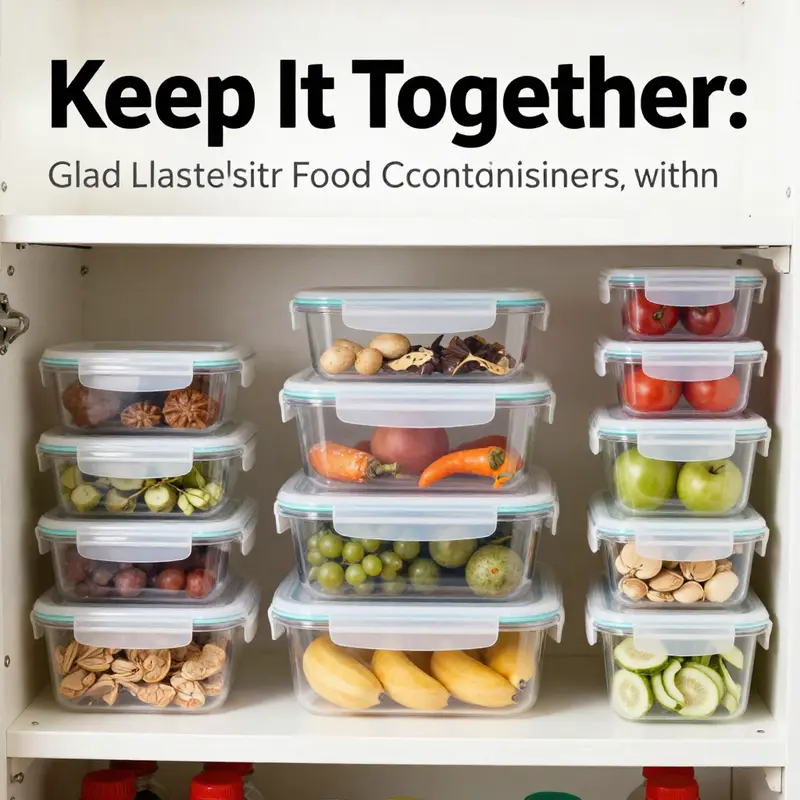
The interlocking design extends beyond the act of sealing to the realm of spatial efficiency. When lids are designed to stay with their containers, the clutter that tends to accumulate in cupboards and drawers is significantly reduced. The lids can be nested or stacked together in a tidy, compact bundle, freeing up valuable shelf space for other kitchen essentials. This space-saving feature is not a flashy gimmick; it is a thoughtful response to real constraints. In many homes, the pantry or cabinet where storage containers live has limited depth, irregular gaps between items, and a tendency to become a chaotic jumble when lids are separated from their matching bases. An interlocking system that allows lids to nest and lids to snap onto containers in a controlled fashion creates a more predictable storage habit. It becomes easier to see what you have, retrieve the exact container you need, and put it away without creating a new puzzle each time you search. When you stack containers with their lids aligned, you often gain a vertical efficiency that makes a surprising difference in how much you can store in a given cabinet or shelf. You do not need to measure every square inch of your kitchen; you simply let the design do the optimization for you.
The organizational benefits are especially pronounced for meal-prep routines. A typical week starts with an influx of prepped ingredients: roasted vegetables, marinated proteins, grains, and sauces assembled in advance for quick lunches and dinners. With lids that interlock and seal, you can pre-portion meals into compatible container pairs, keeping each meal’s components together rather than scattered across mismatched lids and bases. This integrated approach reduces the risk of mismatched sets—an all-too-common source of kitchen frustration when you need to reassemble meals at the last minute. When you reach for a bag or a box midweek, you are not rummaging through a sea of mismatched lids; you are selecting an intact pair that already knows its partner. The result is a smoother, more predictable cooking rhythm, where the act of packing a meal becomes a straightforward sequence rather than a scavenger hunt.
A lid that stays with its container also supports a broader philosophy of long-term reuse and durability. The materials chosen for these sets are designed to withstand repeated cycles of washing, reheating, and refreezing, without losing their grip or deteriorating under normal kitchen use. This is not about a single heroic performance; it is about consistent reliability over time. You can transfer sauce-filled containers from fridge to microwave with a sense of confidence, provided you follow the care guidelines that keep seals strong. The ability to use these containers in the microwave, freezer, and dishwasher—where appropriate—adds to their versatility. They become a single, adaptable tool that serves many roles: storage for leftovers, meal-prep vessels, and portable containers for lunches and picnics. The more you rely on a system that remains secure and clean through a week of use, the more you appreciate how it supports your daily routines rather than complicating them.
Quality in this design is not only in the mechanism but in how it communicates through everyday action. A lid that snaps on with a decisive click communicates a sense of assurance. It says: I’ve been designed to stay put when you carry me, to resist the jostling of a crowded fridge, and to return to the same state after a cycle in the dishwasher or freezer. The tactile experience matters—constant, predictable feedback when the lid is correctly seated reinforces good habits. The best interlocking lids also offer a degree of ease when you need to separate them for cleaning or reconfiguration. A simple twist, a gentle tilt, and the lid lifts away without requiring brute force. This balance between secure attachment and user-friendly disengagement is a hallmark of thoughtful design. It recognizes that a kitchen is a living space, a place where people come and go, where hands are often wet or gloved, and where a tool’s reliability can save you extra minutes and moments of stress every day.
Designers also consider the visual language of the product family. Even when not claiming a brand identity, they understand how color, pattern, and shape influence our behavior. A lid that matches its container in color or pattern reduces the mental load of finding a lid at a glance. This is not vanity; it is cognitive ergonomics at work. When you see a cohesive set, you can move through meal prep quickly and with fewer hesitations. In a busy household, where several people are preparing meals at once, the ability to identify the right container at a glance makes a meaningful difference. There is something satisfying about a matching set, something that extends beyond aesthetics to a feeling of order and confidence. The lids that stay with their containers reinforce this order every time you reach for a storage solution, transforming what could be a simple act of scaffolding food into a small daily ritual of organization and control.
It is also important to acknowledge the practicalities that invite long-term adoption. The materials are typically BPA-free, offering peace of mind about what comes into contact with food. Reusability is a central virtue: these containers are designed to be cleaned and reused many times, reducing the need for disposable alternatives and supporting a more sustainable kitchen footprint. Reuse brings its own patterns of care. Regular washing, careful handling in the dishwasher when permitted, and occasional checks for wear on the threading or seal regions help maintain performance. The interlocking system does not require special tools or maintenance; it relies on straightforward use and routine cleaning. Yet the ongoing health of the threading alignment and the integrity of the seal depend on mindful use. Avoiding exposure to extreme heat or harsh abrasion, for instance, helps preserve the precise engagement that keeps lids attached and aligned to their containers. The goal is not merely a strong initial seal; it is a stable, reliable partnership over many months of use.
Beyond the nuts and bolts of the locking mechanism, the interlocking lid design has broad implications for kitchen psychology. A system that encourages you to keep lids with their containers reduces the cognitive friction that often accompanies storage tasks. When the lids and bases are paired, there is less rummaging, less misplacing, and less time wasted searching for the missing half of a set. This has a ripple effect on grocery planning and weekly routines. You are less likely to buy duplicates of the same item because you cannot locate a missing lid; you are more likely to complete your meal-prep cycles with a sense of closure and control. Over time, this can influence how you shop, how you plan your meals, and how you allocate time for kitchen chores. It is a subtle shift, but one that can improve not only efficiency but also the sense of satisfaction that comes from a well-run kitchen.
Almost any kitchen task benefits from a design that respects space and routine. When you remove the fear of leakage and the frustration of hunting for the right lid, you free up mental bandwidth to focus on food—on planning, seasoning, and experimenting with new recipes. The interlocking system, with its robust seal and nestable lids, invites you to store more foods in the same space, to experiment with batch cooking, and to approach leftovers with renewed confidence. It supports a cycle of cooking, storing, and reheating that feels almost seamless, minimizing the friction that tends to accumulate in busy households. You do not simply store food; you curate a mini ecosystem in your kitchen where every piece of the system knows its place and its partner. In such an environment, the act of cooking becomes less about logistics and more about nourishment, creativity, and consistency.
The everyday benefits extend to how you manage the pantry and the fridge. A clearly organized stack of containers with lids that stay together creates a visual cue that helps reduce waste. When you can see at a glance how many containers you have, what sizes you possess, and which lids belong to which bases, you are more likely to plan ahead, use what you have, and rotate items before they reach the end of their shelf life. This visual clarity matters because it makes the invisible work of storage visible. It is the quiet, steady role of design to support disciplined habits: choosing the right size for a batch, labeling if you wish for added clarity, and reuniting a used container with its lid after a meal. All of this contributes to a kitchen that runs with less fuss and more predictability, which in turn reduces the emotional and material costs of food waste.
In sum, the interlocking lids that stay coupled with their containers embody a philosophy of kitchen design that prioritizes reliability, efficiency, and care for daily life. They are not flashy gadgets; they are practical systems that honor the time, effort, and resources you invest in food and meals. They translate careful engineering into everyday usefulness. They translate a commitment to organized spaces into a way of living that feels manageable, even in moments of hustle. The result is a kitchen environment where you can prepare, pack, and store with confidence, knowing that your containers and lids will perform as a cohesive unit from fridge to table and back again. This is the essence of a storage solution that truly earns its keep: a thoughtful pairing of lid and base that stays together, holds tight, saves space, and makes its owner’s life just a little easier with every use.
For readers who want to explore further, you can consult a widely used reference in the broader conversation about sealed storage and meal-prep ecosystems. External resource: https://www.amazon.com/Glad-Food-Storage-Containers-Soup/dp/B001E4B72K
Space-Smart Design: How Interlocking Lids and Nestable Bodies Revolutionize Plastic Food Storage
The rhythm of a busy kitchen depends less on raw capacity and more on the fidelity of the system that tucks everything away when it’s not in use. In a world where leftovers, meal-prepped lunches, and dry pantry staples accumulate with equal urgency, a set of plastic food storage containers with lids that stay together becomes more than a convenience. It becomes a way to translate the daily chaos of cooking into quiet, dependable order. The really effective designs do more than hold food; they choreograph space. They reduce decision fatigue, streamline routines, and turn the act of sealing and storing into a single, almost invisible motion. The core elements of this choreography are interlocking lids and nestable bodies—features that transform clutter into a compact, accessible system. When a container’s lid snaps onto its base with a confident click, and that lid locks in place with the others from the same set, the pieces become a unified module rather than disparate parts scattered across a shelf. The result is a kitchen that breathes, because the storage system breathes with it, expanding when you need more, and folding neatly away when you don’t.
From the moment you handle a well-designed set, the ergonomics are unmistakable. The lids are not a loose afterthought but an integral component that guides how you use the product. They snap securely onto the containers, forming a tight seal that keeps spills at bay and odors contained. This is especially important in a fridge or freezer where a single misplaced lid can send a cascade of mismatched containers tumbling into motion during a door slam or a quick reach for a snack. But the practical value extends beyond preventing accidents. When the lids are designed to lock together with their corresponding bases, you gain a lightweight, portable, and highly organized unit that stacks with assured stability. A simple tilt or pull doesn’t dislodge the entire tower; the reinforced edges and uniform dimensions keep each unit aligned, creating a neat, visually calm cabinet, pantry, or deeper refrigerator shelf.
The geometry of these systems matters just as much as the mechanical feel of the snap. Nestable designs mean empty containers can tuck inside one another, dramatically reducing what would otherwise occupy precious cabinet and shelf real estate. In a typical kitchen, vertical space is a premium. A stack of nestable containers slides into a single column, and the lids—carefully sized to remain paired with their bases even when stored separately—reclaim horizontal space without sacrificing readiness. This is where the space-saving virtues really become visible in daily life. The average user can accommodate far more meals, ingredients, and snack options in the same footprint, which translates into fewer trips to the pantry and a more organized, less cluttered kitchen workspace.
The clarity of the plastic body is another intelligent detail. Clear or transparent containers let you see what’s inside at a glance. No more lifting lids to check whether the yogurt has survived the week or whether the sauce still holds its color. Visibility reduces unnecessary opening and closing, a small kindness to the food’s freshness and to the user’s patience on a busy morning. The combination of a seal that locks in aromas and a body that shows contents at a glance creates a streamlined workflow: grab, twist, twist back, and stack. The visceral ease of this motion is what keeps a storage system steady in the hands of a family, a college student, or a professional who is juggling dinners with late meetings.
Material choices strengthen the promise of durability and safety. Most of these containers are made from BPA-free #5 polypropylene, a robust resin prized for its toughness, clarity, and resistance to cracking over time. This material handles the temperature extremes of a modern kitchen, remaining stable in the freezer, tolerating reheating in the microwave (within recommended guidelines), and standing up to the dishwasher’s cycles. The BPA-free label isn’t just a marketing slogan; it’s a practical reassurance that the containers won’t leach unwanted chemicals during normal use. This safety profile matters because the containers live in close proximity to food, and the design aims to minimize any risk while maximizing long-term value. The resilience of the lids—designed to click securely into place and hold their shape through repeated cycles of opening and closing—assures that the system remains intact after months of daily use. The combination of a tough, food-safe resin with an intelligent lid geometry and a thoughtful nesting strategy creates a practical toolkit for meal prep, storage, and organization.
But the value of these systems extends beyond safe materials and mechanical reliability. They also offer a broad palette of sizes and configurations tailored to real-life patterns of use. For families with a rotating schedule of meals, a mix of medium and larger square or rectangular containers covers most leftovers: a batch of roasted vegetables, a portion of grain bowls, or a half-pot of soup can each find a matching lid that snaps firmly into place and stays paired when the set is put away. For dry pantry staples like nuts, seeds, or grains, the square or rectangular shapes optimize shelf-parking—the straight edges leave less wasted space, and the uniformity makes stacking more predictable. The lids for these configurations are designed to snap on snugly, forming a reliable seal that supports freezer storage while still being easy enough to open with one hand when needed. This combination of form and function—size variety, stable stacking, and dependable sealing—turns a simple storage solution into a practical system you can rely on.
The concept of color and pattern coordination, which some contemporary sets explicitly embrace, adds a subtle but meaningful dimension to organization. When lids match their corresponding containers in color or pattern, the cognitive load of finding the right lid is drastically reduced. This is not mere aesthetics; it’s about building an intuitive routine. The brain likes to work with consistent cues, and when you can reach into the cabinet and select a container whose lid you recognize immediately, you save seconds that accumulate into real time over weeks and months. A cohesive matching system reinforces the habit of keeping lids with their bases, rather than letting them drift into other drawers or the back of the fridge. In a well-designed set, the visual coherence and tactile assurance of the snap together action work in harmony to turn storage from a chore into a quick, confident step in the day’s rhythm.
The practical utility of these features is most evident in the rituals of meal preparation and leftovers management. For someone who preps meals for the workweek, the ability to portion meals into uniformly sized containers with secure lids means you can pull out a complete, ready-to-reheat lunch with a single motion. The lids, locked to their bases, reduce spill risk during commutes, home moves, or even a crowded dishwasher cycle. When you return to the fridge after a long day, you won’t be rummaging through mismatched haphazard jars; you’ll see a disciplined lineup of translucent bodies and sealed lids, aligned and ready for use. The same logic applies to the pantry, where dry goods can be stacked vertically and accessed without displacing other items. A well-designed set becomes not just a place to put food away, but a system that supports the mental clarity that a busy household needs.
Consider the everyday choice of what to store and how to store it. If you’re dealing with multiple dishes across a week—soups, sauces, stews, and a variety of chopped vegetables—a modular system with interlocking lids lets you scale up or down with minimal disruption. You can allocate a few larger containers for bulk-prepped meals and complement them with several medium options to handle a la carte portions or snacks. The nestable nature of the empty containers matters here; when you’re not using the full set, the containers can be nested to a compact footprint, freeing cabinet space for other kitchen tools. The lids, designed to stay with the appropriate bases, can be stored alongside the units in a shallow bin or on a lid rack that keeps them upright and visible. This configuration preserves the ease of access that makes daily life more predictable and less stressful, a small but meaningful contribution to the routine of cooking and eating well.
Beyond the practicalities, there’s a relational dimension to a storage system of interlocking lids. When families adopt a shared language around “the set,” containers, and lids become familiar companions rather than anonymous boxes. Kids learn to put the lids with their corresponding containers, contributing to a sense of responsibility and order. The sense of ownership that comes with a well-organized system fosters pride in the kitchen as a space that supports health, creativity, and efficiency. And because these containers are built to endure, they become trusted tools that can transition from the fridge to the freezer to the dishwasher and back again, silently supporting weeknight meals and weekend batch cooking alike.
In the broader design conversation, the emphasis on interlocking lids and nestable bodies reflects a shift toward efficiency without sacrificing accessibility. The architecture is deliberately modular, enabling a scalable approach that can grow with changing family sizes, new dietary routines, or shifts in cooking frequency. This kind of forward-thinking design is valuable not only for households but also for offices, student apartments, or shared living spaces where crowding often makes organization essential. The capacity to mix and match sizes within a single cohesive system reduces the need for supplementary storage solutions, such as extra bins or lids that don’t fit anything else. It simplifies the inventory of food storage and reduces the cognitive load required to maintain order. The practical benefits flow naturally into daily life: fewer spills, quicker reheats, more reliable portion control, and a pantry that communicates its contents at a glance.
For readers seeking a tangible example of how this design philosophy translates into a product mix, consider a widely used configuration that emphasizes a 25-ounce medium capacity square container set with five units and matching lids. While the specifics vary by manufacturer, the principle remains consistent: the lids are designed to snap tightly onto the containers and to lock together with their matching pieces when stored away. This keeps the entire system organized and positioned for immediate use, whether you’re sorting leftovers into a week’s worth of lunches or preparing ingredients for a future dinner. The conservative use of durable, heat-tolerant plastic means you can repurpose containers across meals, from a hearty soup to a cold pasta salad, without worrying about compromising the seal or the container’s integrity.
From a practical standpoint, maintenance and care matter as much as design. Regular cleaning is straightforward because these containers are typically dishwasher safe, and the lids, being part of a stable locking system, resist warping and misalignment after repeated cycles. It’s sensible to inspect the edges for nicks or cracks during routine cleaning; a small crack in a lid can undermine the seal, and a warped lid can disrupt nesting. Yet the overall durability remains robust, and the investment in a well-designed set often pays dividends in the form of fewer replacements and less wasted food due to spoilage or leakage. A thoughtful consumer can select sizes that mirror typical meal portions, enabling a once-over routine each week to replenish and reorganize: One day for a quick inventory, another for a quick wash, and another for restocking the fridge with a neatly stacked array of food-safe containers that stay paired and ready.
The narrative of space efficiency and organization culminates in a broader appreciation for how design choices shape daily habits. A system built around interlocking lids and nestable bodies encourages discipline in storage, makes the kitchen more usable, and supports healthier cooking and meal planning. It’s not about squeezing every last square inch of space at the expense of usability; it’s about orchestrating a balanced environment where form and function converge. When the containers are easy to clean, easy to seal, easy to stack, and easy to locate, your kitchen itself becomes a responsive partner in your food routines. You can devote more energy to cooking and less to fighting with the storage system—more space for creativity, more time for sharing meals, and less mental clutter from disorganized shelves.
To connect this discussion to practical sourcing and cross-material awareness, you can explore related storage options that align with the same principles of cohesion and space efficiency. For an example of how complementary packaging designs approach lid compatibility and easy accessibility, you can read about a related take-away container solution here: in-stock new-design salad rectangle take-away kraft paper octagonal box with lid. This cross-category reference illustrates how the logic of matching lids and stable stacking applies across different materials and applications, reinforcing the idea that a coherent storage ecosystem is a universal asset in organizing spaces.
As you reflect on the practical implications, it’s worth noting how these design principles translate into real-world efficiency. The interlocking lid mechanism reduces the risk that a container loses its partner during a busy weekday. The ability to lock lids together when not in use keeps lids from becoming an untraceable nuisance in a drawer or on a shelf. The nestable design, meanwhile, preserves vertical real estate, enabling deeper or taller storage configurations without expanding the footprint of your cabinet. And the transparent bodies ensure you don’t guess what’s inside, which reduces the number of times you’ll need to pull a container out just to see what’s inside. The cumulative impact is a system that supports smoother routines, fewer interruptions, and a kitchen environment where order is the baseline rather than the exception.
In the end, the promise of these containers rests on a simple truth: good storage design makes everyday cooking and eating easier. It respects the foods you prepare, the time you spend in the kitchen, and the space you have available. When you can seal and stack with confidence, when you can locate a lid that belongs to a specific container in seconds, and when empty units nest away compactly, you’re not just storing food—you’re shaping a habit of efficiency. It’s a quiet optimization, but one with a tangible payoff: fewer leaks, less wasted food, and more predictable meal planning. This is the essence of space-efficient kitchen design: a system that disappears into your daily routine because it is reliable, intuitive, and durable enough to keep pace with a busy life.
External resource for broader context on plastic packaging safety and regulatory considerations: https://www.fda.gov/food/packaging-labeling
null
null
Final thoughts
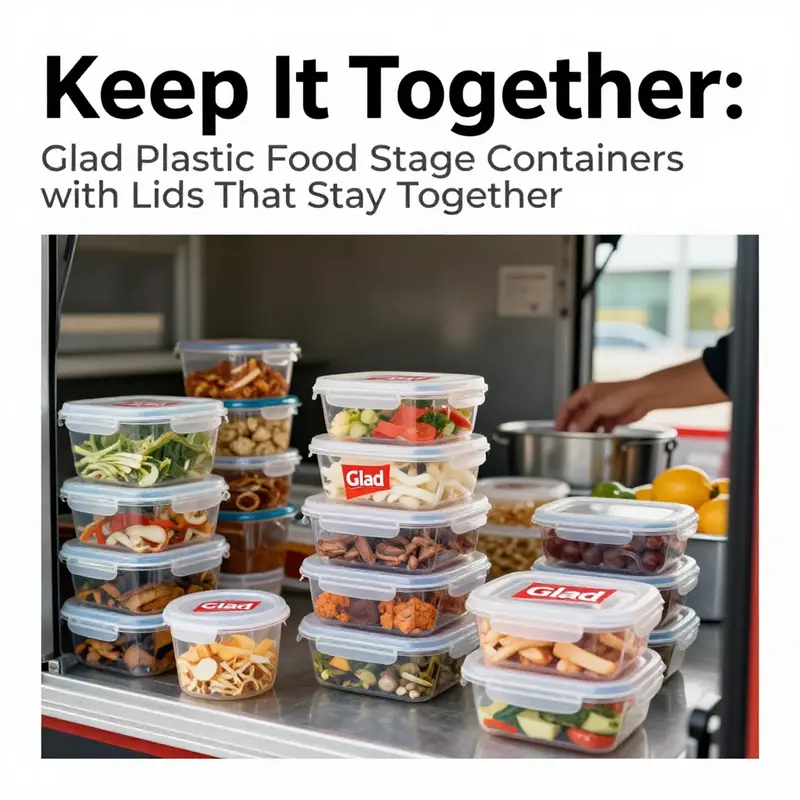
Glad plastic food storage containers with lids that stay together stand out as essential tools in the food service industry. Their interlocking lid design not only safeguards contents against spills but also promotes better organization and efficient use of storage space. As businesses strive to optimize operations, investing in these containers can yield significant benefits, enhancing both food safety and presentation. Ultimately, the combination of practicality and versatility makes Glad containers a must-have for any food service operation looking to streamline their storage solutions and elevate their service.