
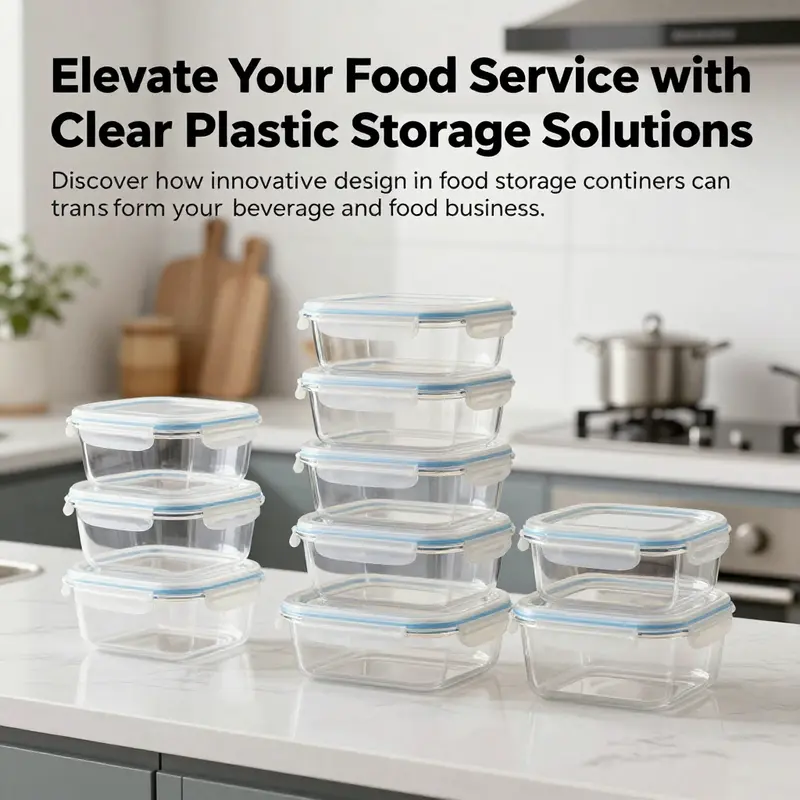
As the food and beverage industry grows, operational efficiency becomes paramount for success. Clear plastic food storage containers, particularly those designed by Made By Design, combine functionality and aesthetic appeal. This article explores their core features and benefits, market applications, and innovations in sustainability. By understanding these factors, businesses like bubble tea shops, restaurants, food trucks, and event planners can streamline their operations and enhance customer satisfaction.
Clear by Design: The Design Philosophy Behind Transparent Plastic Food Storage Containers
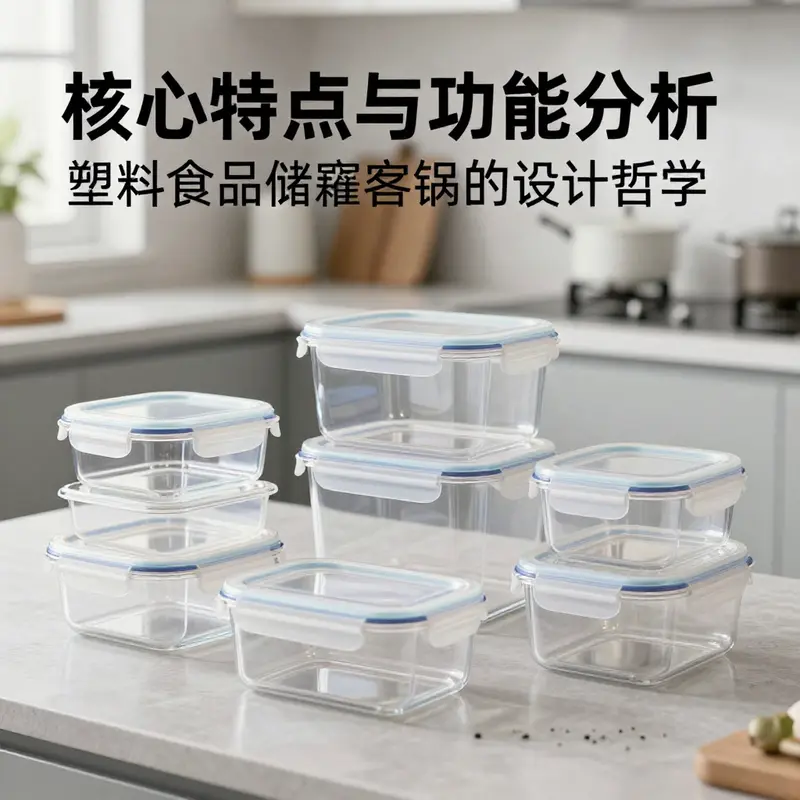
The design of plastic food storage containers that are truly clear is rarely a single moment of inspiration. It emerges from a careful dialogue between material science, human behavior, and the realities of everyday life in kitchens, cafeterias, and service spaces. When we speak of a container that is transparent, we are not merely describing a cosmetic feature. The clarity of the material becomes a conduit for trust, efficiency, and responsibility. It allows cooks to see what they have, when it is fresh, and how much remains, without opening lids and exposing contents to air. Yet transparency is not merely about appearance. It is a design constraint that carries expectations: it must stay clear over repeated cycles of washing, it must resist staining from sauces or spices, and it must maintain its shape under a spectrum of temperatures, from the cold of the fridge to the heat of a quick microwave reheating, all while remaining safe for contact with food. In the best executions, the resulting product is more than a container; it is a lightweight, durable assistant that helps reduce waste, enhance meal planning, and simplify the choreography of daily life in food-centric spaces.
To understand the design philosophy behind these containers, we must first ground the discussion in the material world in which they live. The modern clear plastic container is the product of a long arc that moved away from once-common concerns about cost alone toward a more sophisticated balance of safety, performance, and environmental stewardship. This trajectory begins with material choices that prioritize food safety. Not all plastics are equal when it comes to contact with food, especially for long-term storage, reheating, or exposure to oils and acids. Materials deemed appropriate for repeated contact and potential heat exposure must meet stringent standards. Yet the conversation is not static. Advancements in polymer science have introduced formulations that pair high clarity with improved impact resistance, better chemical stability, and safer interaction with heat. In practical terms, this means containers can be both transparent and robust, offering a clear view of the contents while resisting the micro-scratches and clouding that over time would undermine the very feature that makes them so useful.
At the heart of the design philosophy is a fundamental question: how can a simple vessel do more with less? The answer lies in embracing lightweight yet high-strength structures. Modern container design leverages the physics of thin walls reinforced with carefully placed ribs and curves that distribute stress efficiently. Rather than a bulky form that consumes space and adds weight, the container achieves durability through smart geometry. In some cases, the container’s body features subtle texturing or internal geometry that reduces surface area for staining while maintaining a transparent exterior. The result is a product that feels sturdy in the hand, inspires confidence in the kitchen, and travels through the food supply chain with less energy cost per unit of storage. The emphasis on lightweight construction also translates into practical benefits for households and workplaces: easier handling, reduced fatigue, and lower packaging and shipping costs that ripple through the entire value chain.
Clear visibility comes with its own set of design tradeoffs. While the primary appeal is the ability to see what is inside without opening the lid, visibility must be maintained across repeated dishwashing cycles, which can be harsh on plastic surfaces. The design challenge is to select materials and coatings that resist clouding from soap residues, oils, and food pigments. It is equally important to ensure that the container does not impart flavors or odors onto stored foods, a problem that has historically plagued some plastics. The modern approach emphasizes food-grade safety and odor control as inseparable from visual clarity. The result is a container whose transparency remains faithful to the actual contents, encouraging accurate inventory, reducing misidentification, and ultimately supporting nutrient-conscious decisions.
Closely tied to material selection is the issue of thermal performance. A container may need to withstand a broad temperature range—from cold refrigeration to hot dishwashers or microwave reheating—without deforming or releasing unwanted substances. The design philosophy treats temperature resilience as a core performance criterion rather than a peripheral capability. The practical implication is the adoption of polymers that exhibit stable glass transition temperatures and good thermal shock resistance. This ensures that a container pulled from an 8-hour fridge can tolerate a quick transition to a hot washing cycle or a brief heating in a microwave, all without compromising structural integrity or safety. The durability afforded by this thermal competence reduces the need for replacement and supports a longer overall product life, aligning with growing consumer expectations for sustainability.
A key dimension of the design is the sealing system. A clear container without a reliable lid is like a book with a torn cover: the reader understands the contents, but the experience is compromised. Lids and seals must deliver a dependable barrier to protect freshness while remaining user-friendly. The best systems minimize the effort required to close and reopen, a meaningful consideration for families, students, and professionals who juggle multiple containers in a single day. A well-engineered seal guards against leaks and odors, preserves textures, and slows the progression of moisture loss or gain. The geometry of the lid, the interaction between gasket and groove, and the tolerances of the molding process all contribute to a seal that remains dependable after countless cycles of use. In practice, this translates into lids that fit snugly with a satisfying snap, a tamper-evident feel that reinforces trust, and a design that discourages improper sealing due to complexity or awkward handling.
The ecosystem of sets and stackability further shapes the design philosophy. Most households prefer multi-piece configurations that offer a range of volumes to cover diverse storage needs—from small snacks to large leftovers. A coherent design language across the set is essential for efficient space management. When the containers share common lid geometry and consistent wall thickness, users can mix and match without sacrificing performance. This standardization also simplifies manufacturing, reduces the cognitive load for shoppers, and supports easier organization at home or in a restaurant line. The visual language of clear walls and uniform rims makes it easier to assess the status of contents at a glance, which in turn reduces overstocking and waste. Moreover, the stackable form factor is not superficial décor; it is a deliberate solution to real-world constraints. In crowded kitchens and service environments, space is a precious resource. A container that nests neatly without wobble or fear of tipping contributes to workflow efficiency, organizes pantry or bar areas, and helps staff and home cooks manage inventory with clarity and confidence.
The ergonomic dimension of design — how a container feels in the hand and how naturally it integrates into daily routines — is often underestimated. A transparent container that is easy to grip, easy to unlatch, and easy to stack provides a tangible improvement in everyday life. The shape of the body, the curvature of the corners, and the tactile quality of the lid all affect usability. For busy kitchens, where time matters and mistakes are costly, the smallest ergonomic choices compound into meaningful gains. A lid that can be opened with one hand, a wall that is easy to wipe, and a shape that slots into a refrigerator shelf without shifting all contribute to the reliability of food storage as a practice rather than a mere object.
The conversation about design for storage inevitably nods toward sustainability. The modern clear container is designed for longevity, with material choices and construction methods that favor durability over disposability. Yet sustainability is not about a single material or a single decision; it is about the entire lifecycle. It begins with the ability to recycle or repurpose and extends to the capacity to avoid waste through reuse. Design teams increasingly seek to maximize the use of recyclable resins and to minimize additives that complicate recycling streams. When recycled content is introduced, it must not compromise clarity or safety; it must integrate seamlessly with existing recycling infrastructures. Some formulations now include recycled post-consumer content without sacrificing the visual and functional performance that users expect. Beyond the material itself, the design encourages a culture of reuse: containers that can withstand regular dishwashing, exposure to heat, and repeated filling without cracking or clouding. In this light, the container becomes part of a circular narrative: it holds food today, travels to the next home tomorrow, and participates in a broader system that aspires to minimize single-use plastics.
Another layer of the philosophy concerns the relationship between container design and the broader logistics and supply chain realities of modern food systems. Clear containers are often deployed in environments that demand reliability under rapid turnover and high throughput. Restaurants, hotels, and cafeterias rely on uniform dimensions and predictable performance to streamline workflow. The design thus leans into manufacturing processes that emphasize precision and repeatability. Injection molding, for instance, supports tight tolerances and consistent wall thickness across thousands or millions of units, delivering uniform clarity and fit. This consistency matters in display aisles, on banquet tables, and in pantry alcoves, where variations in a single batch can disrupt efficiency. The end result is a family of products that behaves as a coherent system rather than a collection of individually optimized but incompatible parts. This systems thinking informs nearly every decision—from the choice of polymer and its additives to the exact geometry of the sealing groove and the thickness of the lip around a lid.
In discussing this design philosophy, it would be incomplete not to acknowledge the aspirational dimension: the stories we tell about the containers we use. A clear container is more than a tool; it is a symbol of organization, predictability, and care. When a user can see precisely how much rice, how many berries, or how much sauce remains, they can plan meals, schedule grocery runs, and reduce waste. The visibility of contents becomes a form of behavioral nudge toward mindful consumption. The design thus participates in a broader social aim: to align everyday practices with a more sustainable relationship to food. This is not merely about aesthetics or convenience; it is about cultivating habits that respect resources and minimize harm to the environment.
To bring these ideas to life in real-world settings, designers must balance competing priorities. They must ensure the container is not only clear and safe but also affordable for widespread adoption. The best designs manage complexity behind the scenes, presenting a straightforward front end to the user. A simple, intuitive lid system, a clean, legible marking for capacity, and a shape that makes sense on a kitchen shelf all contribute to a positive user experience. Yet beneath that simplicity lies a sophisticated set of engineering choices: material science informed by safety standards, structural geometry that optimizes strength and weight, and manufacturing processes that guarantee reproducibility and cost-effectiveness. The result is a container that delivers on its promises repeatedly, without demanding extra effort from the user or leaving a heavier footprint on the planet.
As designers continue to respond to evolving expectations in households and professional kitchens, the core principles remain resonant: prioritize safety and clarity, design for efficiency and ergonomics, build for durability and reuse, and align product development with the realities of supply chains and environmental responsibility. The clear plastic food storage container, when observed through this lens, reveals itself not as a mere vessel but as a carefully engineered system that supports healthier, more organized, and more sustainable food practices. It stands as a small but meaningful example of how thoughtful design can elevate everyday objects into reliable partners in daily life, guiding choices, reducing waste, and reinforcing a culture of mindful preparation. The next generations of such containers will likely push these ideas further—introducing smarter sealing technologies, better compatibility with diverse dishwashers and microwaves, and even more sustainable materials—while keeping the simple, honest clarity that makes them so valued in kitchens around the world.
External reference for further reading on materials and packaging design principles that influence this kind of transparency and sustainability: Why are most drink bottles round, but milk cartons square?
Transparent Design, Lasting Freshness: How Clear Plastic Storage Containers Shape Market Demand and Consumer Habits
Clear plastic storage containers, when designed with intention, reveal more than contents. They offer a visual shorthand for organization, hygiene, and efficiency, turning kitchen shelves and restaurant backrooms into systems rather than scattered shelves of mismatched boxes. In examining how these containers perform in the market, it becomes clear that consumer value rests on a blend of visibility, sealing performance, durability, and the environmental footprint of the materials and processes used. The design intent behind clear plastic storage is not merely to show what is inside but to reinforce trust: the perception that what is stored is safe, accessible, and easy to manage over time. This perception then translates into a broad spectrum of applications, from the home pantry to the intricate logistics of food service operations, and even into the evolving discourse about sustainable materials and health considerations that shape purchasing choices.
In the home environment, the appeal of a transparent container starts with quick recognition. When a cupboard door opens, a well-chosen selection of clear boxes allows a person to scan for staples, leftovers, fruits, or vegetables without pulling lids off every single container. The streamlined field of vision reduces cognitive load: shoppers can inventory what’s inside without interrupting meal planning. This is particularly valuable for households that manage diverse ingredients across families, meal-prep routines, and seasonal storage. The breadth of sizes in a set—an idea underscored by widely adopted multi-piece configurations—supports efficient utilization of fridge, freezer, and pantry space. Smaller containers tuck into gaps, mid-sized ones nest or stack with reduced footprint, and larger vessels stand ready for bulk ingredients. In kitchens where time is pressed, the ability to identify content through a transparent wall translates into faster decision-making and less waste, because leftovers are more likely to be tracked and consumed before spoilage.
From a functional standpoint, the sealing mechanism remains a focal point. Consumers increasingly weigh the trade-offs between airtight performance and ease of use. A seal that keeps food fresh, blocks odors, and resists leaks while remaining simple to operate across a family’s daily routines tends to win loyalty. This preference has driven the market toward containers whose lids are designed to click or snap into place with tactile feedback, while still accommodating a straightforward opening without wrestling or awkward alignment. The emphasis on practicality is not a retreat from design elegance; rather, it is a synthesis of form and function. The containers’ transparency works in tandem with the seal to provide a simple, reliable user experience: you can see that a dish is clearly labeled and properly closed, and you can trust that the seal aids in maintaining freshness without requiring specialized cleaning or extra steps.
Durability under daily use matters as well. Clear plastic storage solutions are expected to withstand a range of temperatures—from a cold refrigerator to a warm microwave or dishwasher, depending on the material and construction. The reliability of these containers becomes part of a household’s daily choreography: they support planning ahead, enable batch cooking, and encourage the reuse of containers for different meals and ingredients. When a product stands up to repeated use, it reinforces the perception of value, which in turn drives longer-term adoption across households that seek cost efficiency and reduced waste. The benefit is not merely in keeping food fresh; it is also in the ability to maintain a tidy, predictable storage system that reduces spoilage and improves the overall food management experience.
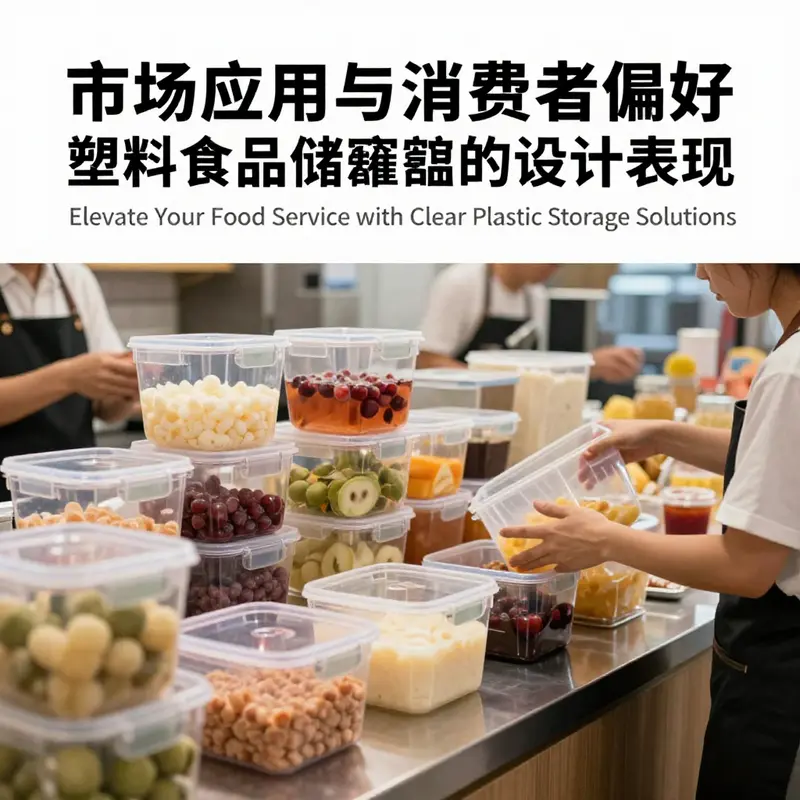
The market context for clear plastic storage extends into professional settings as well. In food service, logistics, and hospitality, the need for standardized, scalable storage solutions is acute. Containers designed to be stackable and nestable optimize warehouse and kitchen spaces, enabling easier handling during transport, prepping, and service. Standardized dimensions facilitate compatibility with racks, bins, and trolleys, which in turn reduces handling time and the risk of mix-ups in busy environments. The capacity to store a range of ingredients—from dry goods to prepared items—within the same family of containers helps streamline inventory management, enhance traceability, and improve the consistency of portioning and service. Clear walls support rapid visual checks for fill levels, enabling staff to monitor stock more efficiently and respond to demand fluctuations with fewer delays.
In the broader supply chain, the role of clear plastic containers extends to the way goods move from farm to table. For many distribution scenarios, the ability to inspect products through the container walls reduces the need for frequent repackaging or unpacking in transit, which can compromise hygiene or expose produce to contamination. The structural integrity of these containers, particularly when formed through reliable molding processes and finished with secure closures, contributes to safer handling across loading, unloading, and stacking operations. The ease of cleaning is another practical advantage: smooth surfaces with rounded corners minimize crevices where residues could accumulate, making routine sanitation more effective and less time-consuming. All of these attributes—clarity, secure sealing, durability, and cleanability—converge to support a more efficient and safer flow of goods through diverse stages of the food ecosystem.
Consumer preferences around plastic storage are shaped by a confluence of functional demands and ethical considerations. Across households and professional settings alike, there is growing scrutiny of container materials and their long-term health implications. The conversation has moved beyond simple performance metrics to include concerns about chemical migration under heat, the potential release of substances during microwaving, and the broader environmental footprint of plastics. While many consumers still trust common food-grade plastics for everyday storage, there is a rising interest in alternatives and safer practices that minimize exposure to potential contaminants. This has contributed to a spectrum of consumer decisions: some participants insist on glass or silicone as a non-plastic alternative for reheating or for storage of acidic foods; others seek containers marketed as free from specific additives or manufactured from more recyclable polymers. The tension between convenience and safety does not invalidate plastic storage altogether; instead, it pushes designers to innovate with materials, production methods, and lifecycle thinking that address legitimate health and environmental concerns.
Transparency in design also supports a more sustainable consumer mindset. When contents are visible, users are more likely to manage quantities and rotate stock to minimize waste. Transparent containers enable better labeling and organization, whether in a refrigerator, a pantry, or a restaurant pantry, and they often pair well with straightforward, durable lids that can be washed and reused without losing their grip or seal quality. The stacking and nesting behavior reduces clutter and improves space efficiency, which is particularly valuable in compact living spaces and urban kitchens where every square inch matters. The long-term sustainability story for clear plastic storage is tied not only to the reuse of containers but also to the design philosophy that supports repairability and end-of-life decisions. In practice, this means choosing materials that are widely recyclable, avoiding additive recipes that complicate recycling streams, and designing for disassembly when possible so components can be separated and processed appropriately at the end of a container’s life.
In this design-conscious milieu, the idea of a “made by design” approach surfaces as a guiding principle. The phrase evokes a commitment to crafting the container with intentional choices that align with how people actually use and care for food items. It implies attention to edge details that improve cleaning and handling, as well as a thoughtful balance between transparency and privacy—where certain contents might benefit from color-coded lids or internal labeling space, while still allowing the bulk of the container walls to remain crystal clear for rapid content recognition. The design narrative embraces not just what the container looks like but how it behaves in real-world routines. It treats the container as a tool that supports healthier eating habits, reduces food waste, and simplifies everyday work in kitchens of all scales. The result is a product ethos that blends aesthetic clarity with practical resilience, echoing a broader shift toward user-centric design that respects both human habits and ecological considerations.
One practical lesson from market behavior is that consumer trust often hinges on a container’s predictable performance over time. When a consumer purchases a set of clear containers, they expect compatibility across sizes, a lid system that consistently seals, and material choices that tolerate routine cleaning in household appliances. If a container fails—for instance, if the lid becomes loose, if the plastic suffers clouding after repeated dishwasher cycles, or if the seal deteriorates under cold or warm conditions—the perception of value rapidly diminishes. Designers respond by aligning material science with user feedback, refining thickness, improving gasket fit, choosing low-maintenance finishes, and ensuring that the product can survive the rigors of daily use without sacrificing clarity. Such iterative improvements reflect a product development philosophy that learns from real-world practice, not merely from theoretical performance. The consumer’s lived experience then informs the evolution of the entire line, encouraging a family of containers that not only store foods efficiently but also sustain trust over years of routine use.
In the context of the broader conversation around sustainability and health, the market is increasingly receptive to transparency about the container’s lifecycle. Consumers want to know what a container is made from, how it is manufactured, and how readily it can be recycled at end of life. This demand pushes suppliers to provide clearer material declarations, more robust labeling, and, where possible, compatibility with recycling streams that reduce the burden on landfills. It also incentivizes the exploration of alternative materials that maintain the advantages of transparency and durability while offering improved safety profiles for heated applications or long-term storage. The shift toward safer, more sustainable options does not occur in a vacuum. It intersect with ongoing research, regulatory developments, and evolving consumer expectations that collectively shape how products are designed, marketed, and used across markets.
Design trends within clear plastic storage containers reveal a convergence of form and function that is as pragmatic as it is aspirational. Circular shapes and soft-edged corners help with cleaning and reduce wear on seals, while flat, uniform profiles enable efficient stacking. The lenses of transparency are calibrated to reveal content without revealing every internal mismatch or discoloration over time. This combination of clear visibility and practical ergonomics makes the containers reliable tools for daily life and for professional settings where precision and hygiene are paramount. The design language, while rooted in plastic, increasingly borrows lessons from safer, durable materials and from processes that emphasize recyclability and lower environmental impact. In practice, this means that designers are not merely selecting a polymer and a lid style; they are orchestrating a system that harmonizes content visibility, sealing reliability, temperature resilience, ease of cleaning, and end-of-life considerations.
From a consumer decision-making perspective, the preference for clarity and practical functionality tends to correlate with perceived value and overall satisfaction. Buyers appreciate packages that feel intuitive: the right sizes for the right foods, lids that snap securely with minimal effort, and a clear view of what’s inside so menial tasks like meal planning and grocery shopping become streamlined rather than tedious. This is especially true for households that adopt batch cooking or meal-prep routines, where the ability to quickly identify leftovers and their freshness status supports healthier choices and reduces waste. In professional contexts, the payoff is measured in time saved, reduced error rates, and a smoother workflow that aligns with trained staff expectations and established sanitation protocols. Clear plastic storage, when designed well, becomes a quiet workhorse that quietly underpins efficiency rather than a flashy accessory that demands attention.
The narrative around health and safety continues to influence design choices. While most consumer plastics used for food storage are formulated to be food-safe, the contemporary risk conversation emphasizes the need to minimize potential chemical leaching during heating, and to avoid additives that could complicate recycling or pose health concerns. This has spurred designers to consider alternative materials and to favor configurations that preserve performance while addressing concerns about exposure. Some households opt for non-plastic options for reheating or long-term storage, particularly for acidic or fatty foods, which has spurred a gradual diversification in product lines away from a single-material solution toward hybrid and multi-material systems. This diversification mirrors the broader market’s move toward more holistic packaging ecosystems—where containers can work in harmony with other storage media, including glass, silicone, and compostable or recyclable options—without sacrificing the core advantages of clarity and reliability. The overarching aim is not to replace plastic outright but to refine its role within a broader toolkit of storage solutions that meet varied needs while aligning with health, safety, and environmental standards.
As the market continues to evolve, so too does the language of design. Clear containers embody a design philosophy that foregrounds user empowerment: the ability to see, access, and manage food with confidence; the ease of integration into existing kitchen systems; and the resilience required to endure the daily rigors of home and work life. This philosophy is consistent with the broader trend toward intelligent ergonomics, where shapes, textures, and closure mechanisms are conceived to reduce friction and error. It also resonates with a growing expectation that products should be long-lasting and adaptable, capable of serving multiple roles within a family of accessories rather than occupying a single-use niche. The net effect is a market that rewards products that consistently deliver on visibility, reliability, and value, while remaining mindful of health and environmental considerations that increasingly shape consumer loyalty and purchase intent.
For those who want to explore how these principles translate into tangible product options elsewhere in the ecosystem, an example from a related packaging category demonstrates how clear visibility and flexible sizing can coexist with robust protection and hygiene. This reference highlights a family of square and rectangular clear containers with lids designed to minimize leakage and optimize space, offering practical guidance for anyone seeking to implement similar systems in kitchens, cafeterias, or merchandising contexts. The example illustrates how the same design logic—clarity, sealing reliability, and modular sizing—can be applied across scales to improve efficiency and reduce waste. It also underscores the importance of maintaining an honest dialogue with consumers about material choices, safety considerations, and the environmental implications of container design. Such transparency helps build trust and fosters continued engagement with products that are designed to fit into real-world workflows while meeting evolving expectations around health and sustainability.
In closing, the design performance of clear plastic storage containers emerges from a delicate balance of visibility, sealing performance, durability, and environmental responsibility. The home and the professional kitchen share a common desire: a storage solution that makes content legible at a glance, protects freshness, endures daily use, and respects the broader social and ecological context in which it is deployed. Designers who embrace this balance are crafting containers that do more than hold food. They support healthier eating habits, reduce waste, simplify daily routines, and contribute to a more thoughtful, sustainable approach to everyday packaging. The future of such containers lies not in choosing one attribute over another but in weaving together clarity, reliability, and lifecycle thinking into a cohesive system that serves diverse users—from busy families to high-demand hospitality environments—while addressing the genuine health and environmental concerns that shape consumer trust in the years to come.
For readers interested in a deeper dive into related packaging trends and to observe how cross-cutting design principles manifest in contemporary product lines, one external reference provides an broader industry perspective on materials and safety discussions. See the linked resource for further context on how transparency in design intersects with health considerations and sustainability efforts in the packaging sector: https:// Alibaba.com: Holar 3-Size All Clear Square Plastic Food Storage Container.
Internal link note: for an example of how clear plastic packaging intersects with practical pastry and dessert container design in related packaging ecosystems, see this related discussion on a packaging-focused blog: clear plastic container packaging options. This link offers a concrete instance of how clear, multi-size packaging concepts translate to real-world applications, complementing the broader design narrative described here.
null
null
Final thoughts
The combination of practical design and aesthetic appeal in clear plastic food storage containers makes them an indispensable tool in the food and beverage industry. Whether for a bubble tea shop, restaurant, or catering service, these containers facilitate efficient ingredient management while enhancing the presentation of your offerings. As the industry continues to evolve, embracing sustainable and innovative storage solutions will not only meet consumer demands but also elevate the overall dining experience.