
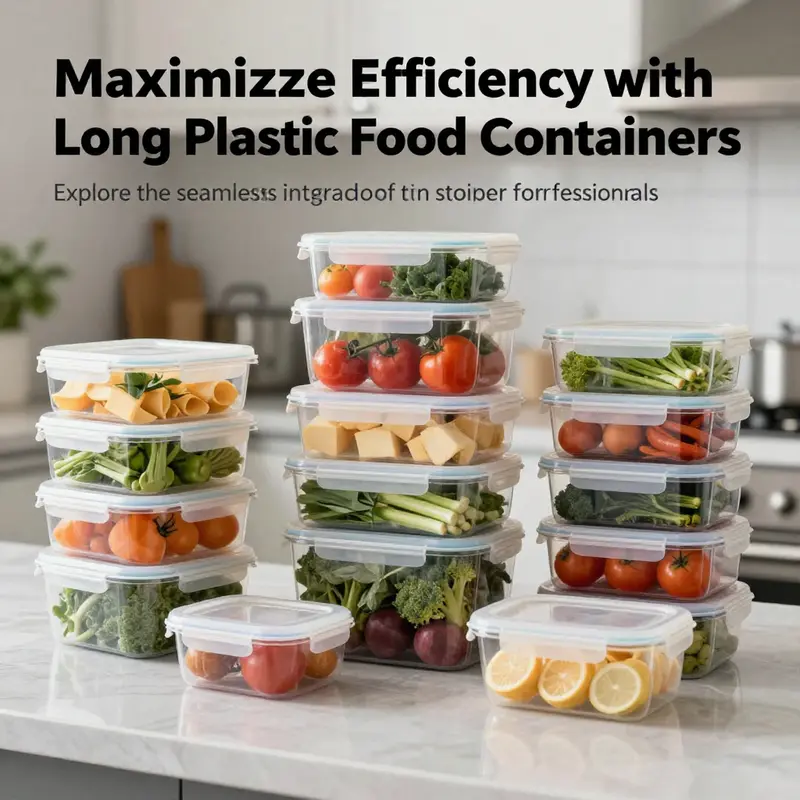
Long plastic food containers are essential assets in various industries, especially for bubble tea shops, restaurants, food trucks, and catering services. Their capacity to store, manage, and transport food safely and efficiently makes them invaluable in daily operations. Through this article, we will delve into the material composition that ensures safety and durability, the thoughtful design features that enhance functionality, and the diverse applications across multiple sectors. Each chapter will build a holistic view of how these containers not only meet but exceed the demands of modern cuisine and event management.
Long Form, Strong Seal: The Material Science Behind Elongated Food Storage Containers
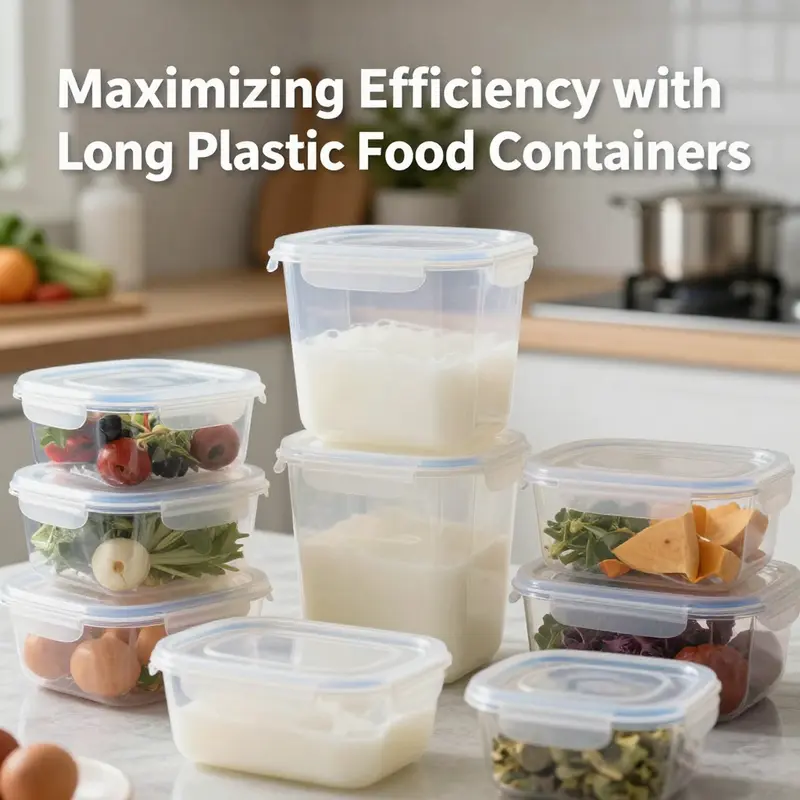
Long plastic food containers sit at a practical crossroads where everyday kitchen routines meet the science of safety and efficiency. They are engineered systems that balance heat tolerance, mechanical durability, odor and moisture barriers, and end-of-life considerations. In households and food-service operations, the material choices and geometric design determine how long food stays fresh, how easily it can be reheated, and how the waste stream can be managed after use. At the heart of many long containers is polypropylene, coded as #5, valued for predictable performance in common kitchen conditions and compatibility with typical handling and reheating practices. PP offers a robust balance of stiffness and toughness and, with the right lid interface, can withstand microwave reheating in many applications. The elongated, rectangular geometry supports efficient stacking, space optimization, and uniform cooling or heating, while the lid system minimizes oxygen ingress and moisture loss to help preserve flavors and textures. The seals and gasket geometry around the lid are critical to maintaining a reliable barrier against moisture loss and odor migration during fridge storage, freezing, and reheating.
Beyond PP, other plastics such as HDPE, LDPE, and PS occupy different niches: HDPE for rigid, impact-resistant bodies; LDPE for flexible liners and seal interfaces; and PS for some cold-pack applications where heat exposure is limited. The choice among these materials reflects trade-offs in heat tolerance, chemical resistance, stiffness, and cost. Clear labeling of resin codes, microwave compatibility, dishwasher safety, and freezer tolerance supports safe and effective use. In China, GB 4806.1—2016 formalizes the safety framework for food-contact materials, outlining permissible substances, labeling expectations, and general safety requirements to reduce migration risk during typical handling, storage, and reheating. End-of-life considerations, including recyclability and recyclate content, shape design choices to balance performance with environmental impact.
In practice, long storage containers enable meal prep, bulk cooking, and efficient transport in both home kitchens and food-service settings. The lid and seal system is a critical partner to the body, with designs aimed at minimizing open-air exposure during transit and storage, preserving organoleptic quality, and supporting quick service when meals reach consumers. As consumer demand shifts toward sustainability, many producers pursue recyclable materials, disassemblable packaging, and clearer labeling to keep plastics in the circular economy. The regulatory context provided by GB 4806.1—2016 helps ensure materials stay within safety margins and do not introduce harmful migrants under ordinary use. Overall, the material science behind elongated containers centers on achieving a durable, safe, and environmentally conscious storage solution that balances performance with practicality.
Elongated Efficiency: How Design and Function Shape Long Plastic Food Containers in Modern Kitchens
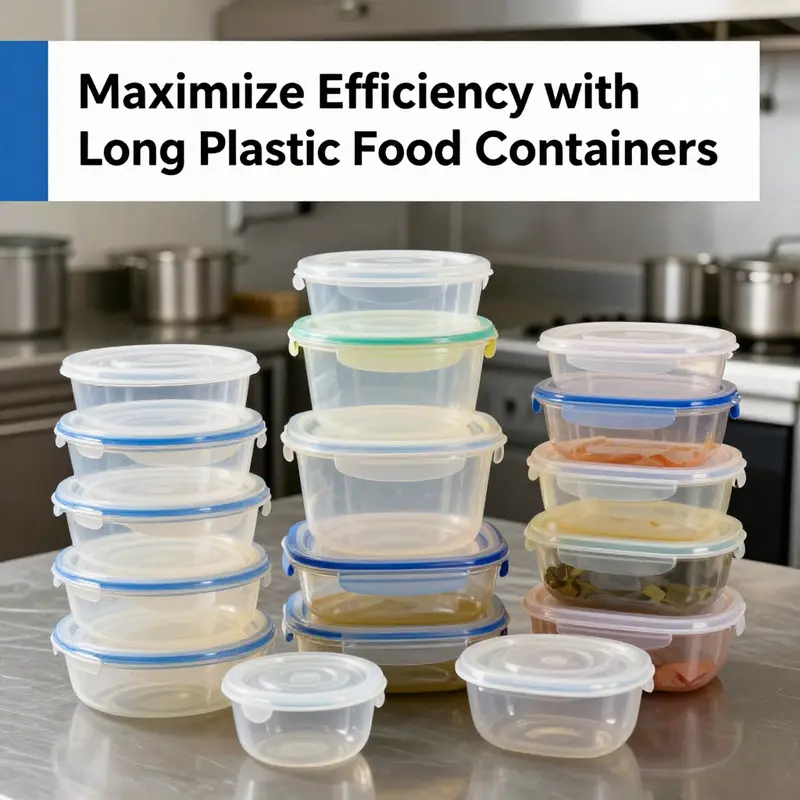
Long plastic food containers are more than simple repositories for leftovers. They are the architecture of storage, a quiet yet essential choreography that makes kitchens—whether in homes, restaurants, or food-service operations—more predictable, efficient, and hygienic. The elongated form is a deliberate design decision that maximizes space usage and aligns with how people organize food by category, meal, or prep phase.
Materials such as polypropylene (PP) and high-density polyethylene (HDPE) are the workhorses of this category. They offer strength and resistance to moisture and odors, helping foods stay fresh longer and reducing flavor migration between items. Many containers are BPA-free and formulated to minimize the migration of substances. These plastics can endure daily kitchen rigors, including washing cycles, cold storage, and occasional reheating.
Design features emphasize sealing, visibility, and interior geometry. Airtight or locking lids with gasket-like seals help preserve flavor and prevent leaks during transport. Transparent walls make contents identifiable at a glance, supporting faster stock checks and reduced door openings. Interior dividers, where present, support portion control and neat separation of components; smooth interiors ease cleaning and sanitation.
Durability and versatility are central to long containers. They are often designed for freezer and microwave compatibility, while thick walls and reinforced rims resist cracking and warping after repeated use. Dishwasher safety can vary, so users choose models that fit their workflow and equipment while balancing efficiency and safety.
For sustainability and responsible use, recyclability and end-of-life considerations matter. PP and HDPE are widely recyclable in many municipal streams, though local capabilities vary. Clear labeling for heating, cleaning, and safety helps keep storage practices aligned with health standards. When selecting containers, match capacity, portability, and appliance compatibility to the specific setting, from home kitchens to large-volume catering.
The Long Reach of Utility: How Elongated Plastic Food Containers Shape Storage, Service, and the Food Chain

Elongated plastic food containers sit at the intersection of practicality and process. They are not merely vessels for holding food; they are tools that shape how kitchens are organized, how meals move from prep to plate, and how perishable goods traverse the miles from producer to consumer. The enduring appeal of these long, rectangular or extended forms lies in their capacity to maximize space while protecting freshness. In a world where efficiency often determines outcomes, the simple choice of container geometry can ripple through myriad operations, from a home fridge to a multinational distribution network. At their core, these containers are built from food-safe polymers, most commonly polypropylene and high-density polyethylene. These materials are prized for their durability, moisture resistance, odor control, and robust performance across a spectrum of storage conditions, including refrigeration, freezing, and, in many cases, microwave use. The materials themselves carry a promise of safety and longevity, but it is the orchestration of design features—form, seal, and compatibility with daily workflows—that truly makes long plastic containers indispensable in modern kitchens and food-service operations alike.
The shape of a long container is never incidental. Rectangular and elongated profiles yield remarkable space efficiency. They nest neatly on shelves, maximize vertical storage in refrigerators, and allow for tight stacking in cold rooms and drying racks. The lateral dimensions work with a logic of organization: similar volumes line up in neat rows, portions align with standard meal sizes, and visibility remains straightforward when the lids are transparent. Designing a lid that seals effectively against oxygen ingress without complicating daily use is a central engineering challenge. Airtight or gasketed lids become a focal point because oxygen exposure is a primary driver of spoilage and bacterial growth in perishable items. A reliable seal translates into longer shelf life for cooked meats, dairy products, and cut fruits and vegetables, reducing waste and improving service consistency. It also minimizes the risk of cross-contamination, which is essential in both home kitchens and high-volume operations.
Manufacturers emphasize food-grade safety and durability in their materials choices. Polypropylene and HDPE are favored for their resistance to moisture and odors, ease of cleaning, and compatibility with common handling methods. These plastics provide a forgiving balance between rigidity and impact resistance, which matters when containers are stacked, transported, or dropped during busy service periods. The option to make containers microwave-safe is another practical attribute, enabling reheating without transferring food to another dish. When this feature is available, it can streamline meal prep in households and reduce the number of steps in a service operation. Dishwashability also features prominently, especially in commercial contexts where repeated cleaning cycles must preserve seal integrity and surface finish. A container that warps or loses its seal after several dishwashing cycles undermines efficiency and increases the risk of food safety issues.
The market recognizes a tiered spectrum of performance. Premium lines emphasize BPA-free plastics, more robust locking or snap-on lids, and seals designed to resist heat, cold, and repeated washing without degradation. For many buyers, the reassurance of a durable seal and a long service life translates into fewer replacements and less downtime for staff or households. Smaller or lower-cost options may offer adequate performance for non-perishable or less-perishable items, but they often exhibit compromises such as weaker latches, less reliable gasket materials, or a tendency to warp after multiple cycles. These differences matter in practice: a warped lid can compromise seal integrity, alter portion sizes, and complicate stacking. In a busy kitchen, such issues multiply quickly, affecting both throughput and food safety.
Beyond materials and seals, the architectural design of long containers also supports a wide array of applications. Their elongated footprint suits bulk storage and large-volume preparation, enabling batch cooking and meal prepping with minimal waste. In the context of institutional settings and food service operations, built-in compartments or modular dividers can help maintain portion control and nutritional balance, a feature that aligns with the increasing emphasis on standardized meals in hospitals, schools, and corporate cafeterias. The versatility extends to display and service in retail environments where ready-to-eat meals, salads, and pre-portioned items rely on clear walls to reveal contents quickly to shoppers. See-through walls allow for rapid content identification, a small but meaningful benefit in fast-paced retail settings where customer decisions hinge on visibility and perceived freshness.
The long container’s compatibility with cold chain logistics is another cornerstone of its broad applicability. In both retail and food manufacturing, maintaining the cold chain is essential to safeguarding quality and safety. The ability of these containers to perform in refrigeration, freezing, and even low-temperature transport reduces the likelihood of thaw cycles, cross-contamination, and texture degradation. In addition to heat tolerance and moisture resistance, practitioners often look for chemical stability, ensuring that the container’s material does not interact with food components, flavors, or aromas during transit. A well-chosen container helps preserve sensory attributes—crispness in vegetables, creaminess in prepared dishes, and the integrity of sauces—factors that influence consumer satisfaction and brand trust.
A crucial, sometimes understated consideration is durability across high-volume workflows. In restaurants, catering services, and large kitchens, containers must tolerate frequent handling, stacking, and transport, sometimes under less-than-ideal environmental conditions. This resilience reduces the labor cost of replacing damaged containers and lowers the risk of spillages or leaks. It also supports sustainability goals by extending service lifespans and enabling more efficient reuse cycles. When durability is paired with recyclability, the environmental footprint of food packaging advantages scale across a business’s operations. The conversation around sustainability often involves trade-offs between durability, reusability, and end-of-life options. In practice, a well-designed long container aims to balance these factors: it should endure routine use, enable safe handling, and be compatible with recycling streams or other responsible disposal practices.
In practice, the diverse applications of long plastic containers reveal their role as a backbone of modern food economies. In manufacturing and distribution, these containers enable bulk storage and secure transportation of ingredients and finished products. The sturdy construction supports rugged handling and protects goods during transit, while gasketed lids contribute to preserving product quality in storage and during short-term shipments. In retail, the containers support the presentation of ready-to-eat meals and pre-portioned foods with an eye toward visibility and orderly shelf organization. The modularity of these designs helps retailers optimize space, reduce clutter, and speed up the fulfillment process during peak hours. In healthcare and institutional food service, the emphasis shifts toward meal prep, portion control, and strict hygiene. Containers tailored for these settings help ensure nutrition balance, minimize waste, and support compliance with hygiene protocols that govern patient and resident meals.
Catering services and commercial kitchens rely on containers that can handle rapid reheating, efficient storage, and long-term preservation of ingredients and prepared items. The right long container can function as a temporary cold-storage solution, a reheating vessel, and a transport carrier rolled into one. This multifunctionality is particularly valuable in high-volume environments where the same piece of equipment must perform across multiple steps of a service cycle. In agricultural and processing contexts, these containers facilitate sorting, storing, and transporting raw products and intermediate goods. The ability to handle bulk quantities reduces handling steps, minimizes product damage, and supports smoother supply chains from field to table. Across all these contexts, the thread that ties them together is a shared emphasis on safe materials, reliable seals, and thoughtful design aligned with the rhythms of production and service.
The narrative around long plastic containers also intersects with ongoing conversations about sustainability and lifecycle management. While these containers offer practical advantages in durability and reusability, there is a broad recognition that the environmental calculus extends beyond a single use. Manufacturers increasingly pursue recyclability and eco-friendly practices in production and packaging. In some cases, design strategies focus on reducing material usage without sacrificing performance, while in others, emphasis falls on enabling efficient recycling or composting at end of life. These strategic shifts respond to consumer demand for responsible packaging and to broader regulatory and market pressures that reward transparent material choices and responsible waste management. In contexts where reuse is feasible, organizations implement systems for washing and reusing containers, tracking usage cycles, and coordinating logistics to keep the chain of custody intact from kitchen to destination. The result is a packaging ecosystem that strives to combine efficiency with accountability, ensuring that the functional advantages of long containers do not come at an unacceptable environmental cost.
In practical terms, the selection of a long plastic container is less a choice of a single feature and more a deliberation among several interwoven criteria. Food safety must be intrinsic to the material and construction. Durability is essential for consistent performance through handling, stacking, and transport. Seal integrity protects freshness and minimizes contamination risk. Temperature tolerance and chemical stability preserve flavor, texture, and aroma. And, increasingly, end-of-life considerations shape decisions about recyclability and waste minimization. Buyers weighing these factors often balance cost with lifetime value, recognizing that a higher upfront investment in a robust, well-sealed container may yield lower long-term costs through reduced waste, fewer replacements, and smoother operation. In sum, the utility of long plastic containers lies not only in their capacity to hold food but in their ability to integrate with workflows, safeguard quality, and support responsible stewardship of resources across the food economy.
The breadth of applications across industries reinforces a simple point: these containers are not passive tools but active participants in the daily choreography of food. They enable bulk storage for efficiency, support portion control for nutritional balance, and provide versatile service options that align with both consumer expectations and operational realities. Their continued evolution—through material science refinements, sealing technologies, and design innovations—will likely keep them at the center of supply chain resilience and kitchen pragmatism for years to come. In a climate of rising demand for speed, safety, and sustainability, the long plastic container represents a pragmatic, scalable solution that travels well from factory floor to consumer hands, echoing the rhythms of production and consumption in a world that moves fast, eats often, and relies on reliable packaging to do so.
For readers who want to explore concrete instances of how these designs translate into everyday feasibility and industry-specific practice, a practical example can be found in the online catalog of a supplier that features a range of take-away bowls with lids designed for single-wall, fast-food, and salad applications. take-away bowl with lids. This page illustrates how the same fundamental container concept is adapted across sizes and use cases to fit different service models, from compact lunch portions to bulk meal-prep solutions. The page also highlights the ongoing emphasis on food-grade safety and practical lid designs that ensure secure sealing during transport and service, reflecting broader industry priorities in durability and hygiene.
As the field continues to mature, the conversation around long plastic containers remains one of balance. Balance between efficiency and safety, between durability and recyclability, between the realities of high-volume operations and the ideals of sustainable packaging. The trajectory suggests more sophisticated sealing systems, smarter materials that withstand repeated dishwashing and microwaving without degrading, and more thoughtful approaches to end-of-life management. In the end, these containers embody a simple but powerful idea: well-designed containers that respect space, protect food, and align with responsible practices can significantly elevate the entire chain—from preparation to service to sustainability. The long container, long in reach and wide in implication, remains a quiet yet essential enabler of modern food systems.
External reference: For further technical specifications and market insights on industrial-grade plastic food containers, see the guide from a leading plastics packaging resource: https://www.polyconindustries.com
Final thoughts
Long plastic food containers represent a critical component in the operational toolkit of bubble tea shops, restaurants, food trucks, and catering services. By understanding their material composition, design features, and tremendous applications, industry professionals can optimize their food storage solutions, ensuring efficiency and safety. Ultimately, investing in high-quality containers not only streamlines kitchen processes but also enhances customer satisfaction through better food preservation practices. As the culinary landscape continues to evolve, so too does the demand for effective and reliable storage solutions, making long plastic food containers a wise choice for any food-related business.