
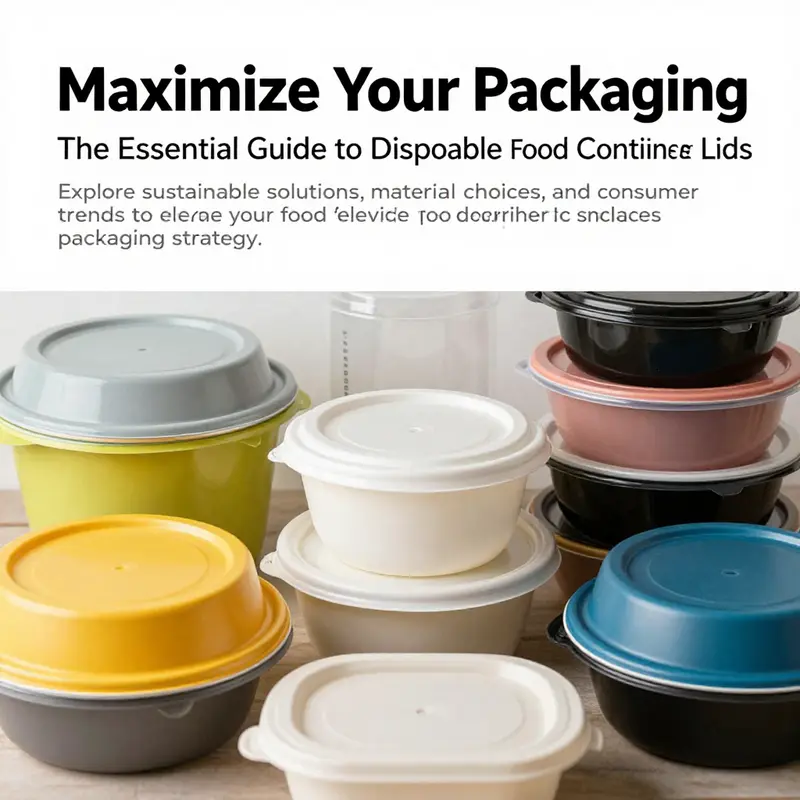
In a world increasingly focused on sustainability, disposable food container lids are crucial for businesses in the food service sector. From bubble tea shops to catering services, choosing the right lid can influence customer satisfaction and reflect your brand’s commitment to the environment. This article delves into key aspects of disposable food container lids, including sustainability practices that resonate with modern consumers, a breakdown of materials and manufacturing processes, cost analysis to inform your purchasing decisions, adherence to regulatory standards for safety, and insights into consumer trends that can help you stay ahead in a competitive market. Each chapter addresses different facets of this important topic, equipping you with the knowledge needed to make informed choices for your business.
null
null
Fixtures of Convenience: How Materials and Manufacturing Shape the Performance and Sustainability of Disposable Food Container Lids
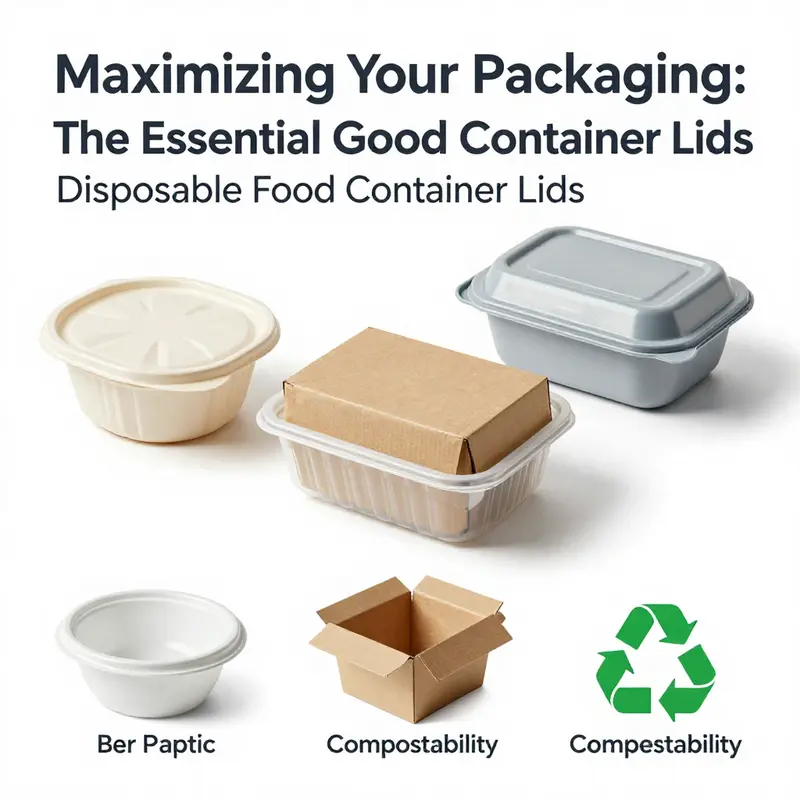
The lid is the interface between the meal inside and the world outside. It travels with the container from kitchen to curbside to home, offering a seal that keeps moisture in and aroma out, a barrier that guards against spills, and a surface that can bear heat during transport. Yet lids are more than safeguards; they influence shelf life, food safety, and the consumer perception of a brand. In the landscape of disposable packaging, lids are chosen as a system with the tray or cup they cap. The decision is not merely about containment; it is about the life cycle that follows the moment of purchase, including how the lid can be recovered, repurposed, or composted. The choices made in lid design echo through kitchens, retail spaces, and waste streams, shaping both everyday convenience and long term environmental responsibility. As the market evolves, so do the materials options, the manufacturing methods, and the regulatory expectations that tether performance to safety and sustainability.
Plastics form a substantial portion of lid production, and their appeal rests on a triad of properties that matter for containers that heat, hold, and travel. Polypropylene, a workhorse in many lids, combines heat resistance with the ability to form a tight seal. It keeps hot foods from deforming while resisting the spread of moisture and odors. Polypropylene also lends itself to high speed manufacturing, a critical factor when volumes run into millions of units. Polystyrene offers rigidity and ease of molding, which makes it useful for certain shapes and applications, but it generally has lower heat tolerance. Polyethylene terephthalate is frequently chosen for cold applications and when clarity is desirable for viewing contents through the lid. The practical implications of these material choices extend beyond performance; they determine how a lid is manufactured and how it handles heat during microwave reheating, if that use is supported. The common manufacturing methods reflect this complexity. Injection molding enables precise dimensional accuracy and robust seals, which in turn reduce the risk of leaks. Thermoforming uses heated sheets pressed into mold shapes to create lids that can cover a range of cup and container geometries at scale. The design engineer must balance tolerances, cycle times, and material behavior under temperature fluctuations to avoid warping or seal failure. In many facilities, the choice between injection molding and thermoforming also dictates capital expenditure, waste generation, and the ability to customize for different clients.
Fiber based materials have risen in prominence as brands seek compostable and biodegradable options. Molded fiber lids, shaped from recycled paperboard or bamboo pulp, offer a pathway toward end of life that aligns with circular economy goals. The process begins with pulping, then forming the material into a lid shape, followed by curing. Some designs incorporate thin barrier coatings to improve moisture resistance while preserving the compostability of the base fiber. The environmental story here is nuanced. On one hand, molded fiber can reduce reliance on fossil based polymers; on the other hand, the barrier performance and the infrastructure required for industrial composting or dedicated recycling streams become critical to determining the true sustainability impact. When properly integrated into a compatible system, fiber lids can perform well in short term storage and light takeaway settings, while signaling a commitment to responsible packaging.
Coated paperboard lids represent another approach that blends familiarity with functional performance. Paperboard provides a familiar tactile experience and is highly adaptable to branding and printing. A polyethylene or similar coating is often applied to boost moisture and grease resistance, which is especially important for hot or oily foods. The coating improves the lid’s functional reliability but can complicate recycling, as some facilities require separation of polymer layers from the paper substrate. In regions where recycling streams are mature, coated paperboard may be accepted with specific processing steps; elsewhere, disposal choices hinge on local infrastructure. The outcome of this coating strategy is thus contextual. It relies on a network of facilities that can sort and treat materials in a way that preserves both the usefulness of the lid and the opportunity to recover value at end of life.
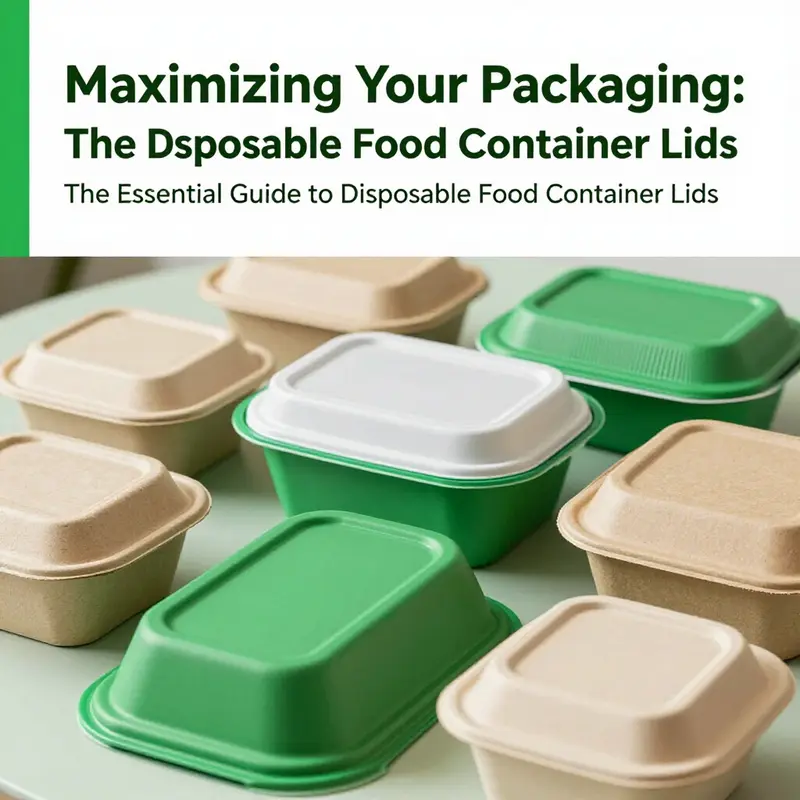
The drive toward sustainability has brought bagasse based lids into clearer focus. Bagasse is a byproduct of sugarcane processing, and its fibrous composition lends itself to forming sturdy, compostable lids. These lids often have a natural beige appearance that signals a bio based content. In practice, performance depends on lid geometry, thickness, and whether a barrier layer is incorporated. Bagasse lids are well suited to short term storage and to settings that can access industrial composting; their recyclability or compostability in curbside streams varies with local facilities. The emergence of bagasse and similar bio based materials reflects a broader shift in the food service industry toward packaging options that reduce plastic while trying to preserve safety, functionality, and consumer appeal. This trend does not eliminate trade offs; it reframes them, placing equal emphasis on processing capabilities, supply chain readiness, and local waste handling capabilities that determine whether a bio based lid truly fulfills its environmental promise.
In discussing materials, it is essential to recognize the economics that accompany performance. Paper based or biodegradable lids frequently carry a higher price point than conventional plastic lids, reflecting raw material costs and the complexities of producing and disposing of these options. For operators, the calculation often involves more than sticker price. Waste handling costs, consumer expectations about sustainability, and compliance with tightening rules on single use plastics all influence the decision. While some lids are marketed as reusable or freezer safe, the reality for most disposable lids is that they are designed for single use. This reality does not diminish their value in enabling convenient take away and safe storage; it simply highlights that choices must account for through life performance, including how the lid stands up to microwaving, freezing, or repeated handling during delivery and storage.
Manufacturing standards anchor lid choices in safety and reliability. In the United States, food contact material regulations require that substances migrate into food within acceptable limits, ensuring that packaging components do not pose health risks. Beyond migration, the key technical specifications include dimensional accuracy, which ensures a proper fit onto the corresponding container, sealing integrity to prevent leaks and contamination, and thermal stability to withstand temperature changes during storage and reheating. These standards do not exist in a vacuum; they are part of a global framework that guides suppliers and brands alike. A diameter that fits perfectly on one cup may not perform as well on another, so tolerance stacking and compatibility testing are routine parts of development. Global brands often align with multiple regulatory regimes, and that alignment shapes packaging design, sourcing strategies, and the choice between a plastic, fiber, or coated paper approach. Understanding these standards is essential to select lids that balance cost with performance, while also supporting corporate commitments to safety and sustainability.
The design of a lid sits at the intersection of container geometry, material science, and consumer expectations. A practical pairing that shows how these elements converge is a fiber or paperboard container with a matching lid that delivers a reliable seal and a cohesive aesthetic. The engineering behind this pairing requires careful tolerancing to ensure consistent fit across batches and compatibility with different liquids and foods. Injection molded PP lids can deliver very precise diameters and robust seals across a broad range of cup and container geometries, enabling reliable performance in high velocity production lines. For applications that prioritize compostability, molded fiber lids paired with compatible fiber trays provide a coherent system that aligns with sustainability narratives. This is the kind of integrated packaging system that brands highlight when communicating their environmental goals to customers. For a concrete example of an integrated lid and container system, see the kraft paper octagonal bowl with PET lid, which demonstrates a molded approach that blends material choice with functional design. kraft paper octagonal bowl with PET lid.
End of life remains a decisive factor in lid selection. Paperboard and bagasse based lids may be compostable in industrial facilities or accepted in limited compost streams. Plastics pose ongoing questions about recyclability, especially when coatings or laminates impede material separation. Some lids are designed for microwave use, enabling direct reheating, while others require separate handling to avoid heat related deformation. The environmental profile of each option is thus a function of material choice and the processing infrastructure available in the area where the packaging is used. The overarching sustainability metric depends on how containers and lids are collected, separated, and treated after use, as well as the clarity of labeling that informs end users about disposal options. The design challenge is not simply to minimize material use, but to optimize the entire system for practical disposal and realistic recovery in the local waste stream.
To navigate this landscape, industry professionals continually consult safety data and material specifications from regulatory bodies and industry guidelines. They monitor evolving standards for food contact materials and engage in migration, leaching, and performance testing under realistic use conditions. This knowledge informs decisions about when to deploy a plastic lid versus a bio based alternative and how to design lids that reduce material use without compromising seal quality or heat resilience. Collaboration with suppliers becomes a core competency, whether optimizing lamination and barrier coatings on paperboard lids or developing fiber formulations that resist moisture while remaining compostable. The design process thus becomes a collaborative conversation among engineers, packaging developers, sustainability specialists, and procurement teams, all aligned toward a solution that works across markets and travels through multiple stages of the supply chain.
Looking forward, the horizon holds potential for greater standards harmonization, transparent labeling of end of life options, and continued innovation in barrier technologies and coatings. Advances in bio based polymers, barrier films, and fiber technologies will push the envelope for disposable lids. The challenge lies in pairing performance with environmental responsibility within a global economy where facilities and regulations differ across regions. As consumers demand cleaner packaging and regulators tighten restrictions on single use plastics, the lid becomes not just a product component but a signal of corporate values and supply chain resilience. This awareness pushes manufacturers to pursue lid designs that ease adoption across markets while brands craft credible sustainability narratives that resonate with customers who expect packaging to do more than contain a meal.
External resources provide broader context for safety and compliance. For regulatory context and detailed guidance on how food contact substances are evaluated, see the FDA materials on food contact substances. FDA guidance on food contact substances.
Lid Economics at Scale: Weighing Cost, Sustainability, and Service in Disposable Food Packaging
Lids are the quiet gatekeepers of food safety, portion control, and customer experience. They seal in aroma, protect contents during transit, and help extend shelf life, yet their price rarely makes front-page headlines. A true cost analysis of disposable food container lids requires looking beyond the sticker price and into the total cost of ownership. Material choice, order volume, customization, and the downstream economics of waste management all ripple through a business’s balance sheet. In practice, the savings from selecting a cheaper lid are real only if the lid performs consistently, fits reliably, and aligns with the end-of-life infrastructure that a brand’s customers are prepared to support. When these elements are balanced with a company’s sustainability goals and service standards, lid cost becomes a strategic lever rather than a simple line item.
The most basic distinction in lid cost is the material family. Plastic lids, typically made from polypropylene or polystyrene, dominate the market by sheer volume. They are the lowest-cost option on a per-unit basis, especially when purchased in bulk. In real terms, standard plastic lids can range from roughly two to four cents per piece at very high volumes, with prices dipping on orders of twenty thousand or more. That kind of pricing makes plastic lids attractive for quick-service restaurants, large events, and any operation where the lid cost per unit is a material driver rather than a marginal concern. Yet even this seemingly simple equation hides nuance. Plastic lids vary in thickness, rigidity, and sealing capability. A marginally thicker lid or one with a tighter seal can reduce product loss, prevent spillages, and improve customer satisfaction, all of which translate into lower costs elsewhere in the operation, such as cleaner pickup areas or fewer complaints.
Compostable and PLA-based lids offer an alternative for businesses seeking to align packaging with environmental objectives. These options are generally more expensive than conventional plastics, reflecting higher raw material costs and the complexities of sourcing and processing plant-based polymers. The premium is not just for the material itself; it encompasses the manufacturing challenges of producing formulations that perform as well in heat resistance, seal integrity, and moisture management as traditional plastics. For a brand weighing sustainability against price, the decision often hinges on the total lifecycle cost: the premium paid today may be offset by reduced penalties, improved consumer perception, and the potential for waste-stream compatibility in cities with advanced composting or recycling programs.
Insulated lids, designed for thermal retention in premium meal delivery or catering contexts, represent a different corner of the spectrum. These lids can incorporate double-wall construction, vacuum insulation, or other high-performance features and are sometimes built from stainless steel or high-density plastics. The resulting price per unit can be significantly higher, sometimes several times the cost of standard plastic lids. The rationale is straightforward: maintaining temperature during transport can preserve quality, reduce food waste, and support a more demanding service standard. For operations prioritizing hot meals, a durable insulated lid can deliver value that justifies the upfront premium through enhanced customer experience and reduced spoilage.
Volume remains the primary price driver across all lid types. The economics of scale are blunt but predictable: bulk orders reduce per-unit costs by spreading fixed costs—like tooling, setup, and packaging—over more units. Typical supplier configurations align with MOQs that range from about one thousand to thirty thousand pieces. When a business accepts these minimums and commits to a larger forecast, the per-unit price for standard plastic lids can fall markedly. Conversely, smaller orders often carry higher unit costs because the overhead of procurement, handling, and possible customization remains fixed regardless of volume. Suppliers frequently note that lead times, packaging formats, and even the variety of lids available can shift with order size, underscoring the importance of demand forecasting in procurement strategy.
Customization adds another layer of cost and strategic value. Branding lids with logos or colors can enhance brand visibility and a cohesive food-service experience. But customization is not a purely aesthetic choice; it frequently involves setup fees, artwork approval cycles, minimums for print runs, and sometimes new molds or tooling. Beyond branding, functional features such as leak-proof seals, airtight closures, or tamper-evident mechanisms introduce material and manufacturing complexity. Each feature adds to the price, but it can also reduce loss from leaks, protect contents more effectively, or mitigate food-safety concerns in transit. A decision-maker must weigh the incremental cost of these features against the potential savings in product waste, customer trust, and regulatory compliance.
Market trends add a dynamic layer to cost analysis. Sustainability pressures push demand toward compostable and recyclable lids, with the trade-off of higher unit costs. In many regions, regulators are tightening single-use packaging standards and incentivizing recyclable or compostable solutions. While the environmental premium exists today, some brands view the long-term payoff as lower exposure to penalties, improved market access, and stronger consumer loyalty. The cost story is not complete without considering logistics. Freight, customs duties, and handling fees are typically excluded from base prices and can add a meaningful percentage to the landed cost of lids for international orders. Even platforms that offer secure payments and buyer protections rarely alter the base price; they simply influence the convenience and reliability of the procurement process.
In practice, a smart procurement approach blends cost with functional performance and sustainability objectives. For operations prioritizing raw-cost efficiency, standard plastic lids purchased in bulk provide the clearest immediate savings. The cost range around two to four cents per unit, combined with favorable MOQs, makes these lids the default choice for many high-volume operators. However, the cheaper option may not always translate into the best value. If a restaurant’s service model relies on extended delivery windows, or if the brand promises a premium, climate-conscious narrative, higher-priced options might deliver superior outcomes through better heat retention, reduced leach risk, and compatibility with advanced waste-processing infrastructure. In such cases, the incremental cost should be weighed against benefits like reduced spoilage, improved consumer perception, and the avoidance of environmental penalties.
The case for alternative lid materials or designs becomes more compelling when packaging choices must align with product integrity standards. For instance, a lid that seals more effectively can prevent leakage from soups and gravies during transport, a factor that reduces cleanup costs for delivery staff and post-delivery complaints. A reliable lid can also simplify inventory management—customers opening their containers without spillage is a subtle but meaningful driver of repeat business. When a lid underperforms, it manifests as a blend of tangible costs—lost product, damaged packaging, and customer dissatisfaction—that compound over time and erode margins in ways a single price tag cannot reveal.
This complexity invites a holistic view of supply chain decisions. Businesses should model the total landed cost of lids, accounting for base price, MOQs, customization, packaging, lead times, and logistics. They should also forecast the potential savings from higher-performance features, especially in segments where temperature control and integrity are critical. For organizations that emphasize sustainability, it is essential to quantify the environmental benefits or penalties associated with different lid types. A rigorous cost-benefit analysis may reveal that a higher upfront expense yields a lower total cost of ownership through reduced waste, improved brand equity, and easier compliance with evolving standards.
Material choice and design are only part of the equation. The way lids interact with containers, cups, and sleeves matters for user experience and operational efficiency. A lid that snaps on securely, resists popping off during transport, and remains user-friendly during quick-service workflows can reduce customer complaints and operational friction. Conversely, lids that are difficult to seal, misalign with container rims, or require special handling can slow down service and increase returns or waste. In high-volume settings, even small inefficiencies multiply across thousands of orders, reinforcing the case for rigorous pilot testing and supplier collaboration. The goal is a dependable, scalable solution that balances cost with performance under realistic use conditions.
The decision framework also benefits from a nuanced understanding of end-of-life processes. A lid’s environmental footprint depends not only on its material but also on a city’s waste-management capabilities. In places with robust composting or recycling programs, PLA or bagasse-based lids may offer meaningful environmental advantages despite higher upfront costs. In other regions, the lack of appropriate infrastructure can limit recyclability and despite best intentions, consumers may not dispose of lids in the proper stream. In these contexts, a transparent dialogue with suppliers about material composition, certification, and local waste facilities becomes part of cost management. The strategic takeaway is simple: price alone tells only a fragment of the story. The real value emerges when lids are evaluated as components of a broader packaging strategy that includes container design, messaging, disposal pathways, and consumer expectations.
For teams seeking concrete, actionable guidance, it helps to examine real-world material choices and their cost implications as part of a broader packaging plan. Consider a scenario where a business evaluates a kraft-based, eco-friendly lid designed to pair with a compostable container. The combination may command a moderate premium, yet it aligns with a sustainability narrative and may streamline waste management in compliant markets. The discussion can extend to branding and packaging aesthetics, where the same lid series supports product differentiation without sacrificing performance. In such cases, engaging suppliers early for testing, sampling, and pilot runs can reveal costs that aren’t apparent in catalog pricing. It is not just about obtaining the lowest price per unit; it is about achieving the right equilibrium between cost, quality, and strategic objectives.
In the end, the economics of disposable lids cannot be reduced to a single metric. They reside at the intersection of material science, manufacturing efficiency, supply-chain discipline, regulatory context, and consumer sentiment. The most economical choice is not always the cheapest option; rather, it is the option that consistently delivers on reliability, aligns with brand promises, and remains sustainable within the delivery ecosystem. For businesses that prize simplicity and scale, standard plastic lids in bulk continue to offer the strongest immediate value. For those pursuing a more purposeful packaging program, investments in higher-performance or more sustainable lids can yield dividends across cost, compliance, and customer loyalty. When suppliers, logisticians, and marketers collaborate with a shared forecast, lid cost becomes a controllable, optimizable variable rather than an unpredictable line on a quarterly report.
To connect the discussion to practical choice points, consider how material selection, volume commitments, and feature set together determine total cost and value. A simple calculation of per-unit cost only scratches the surface; integrating customization costs, freight, and end-of-life considerations provides a clearer picture of true affordability. With this lens, lid decision-making becomes a strategic component of a company’s packaging and sustainability program, shaping not only margins but the narrative that accompanies every meal delivered or taken away. For organizations aiming to balance cost with responsibility, the path forward is not a single answer but a disciplined, evidence-based process that evolves with production capabilities, waste systems, and consumer expectations.
eco-friendly kraft paper soup bowl with lid
External resource: https://www.amazon.com/gp/bestsellers/foods/123456789
null
null
Lids in Transit: How Consumer Demands Are Redefining Disposable Food Container Covers
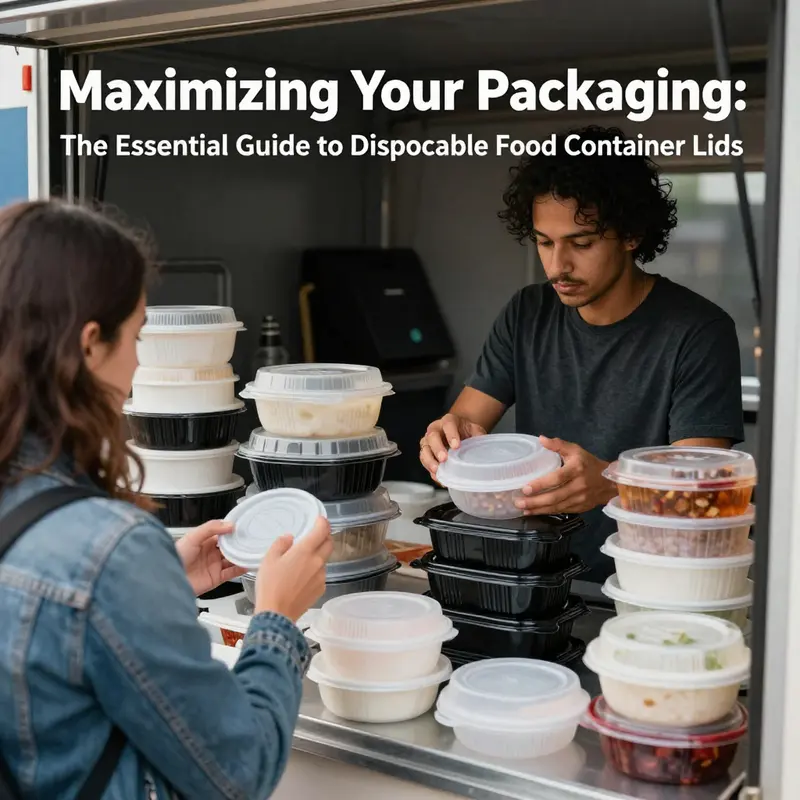
The lid is often the quiet, overlooked gatekeeper of a meal in motion. It keeps soup from spilling during a crowded commute, seals the heat so a curry travels without scent leaking into the car, and signals a moment of cleanliness when a warm bowl lands on a desk. Yet beneath this seemingly simple component lies a web of choices, tensions, and evolving expectations that reveal much about how consumers interact with packaging in a world of rapid takeaway and transplantation of meals from kitchen to doorstep. In recent years, the rise of food delivery and takeaway has transformed lids from a mere seal into a strategic interface between safety, convenience, and sustainability. Consumers no longer judge a lid solely by its ability to stay put; they assess how it behaves in transit, how easy it is to open without a spill, and how it aligns with broader concerns about the environment and personal health. The result is a market where the lid’s performance is analyzed in real time against a shifting backdrop of demands, from leak resistance to recyclability, from BPA-free safety to the aesthetics of branding on a product designed to be discarded after a single use.
One of the clearest drivers of change is the exponential growth of food delivery and takeout. When food travels from restaurant to consumer, the lid must function as a secure enclosure. It needs a reliable seal that resists vibration, temperature fluctuations, and moisture without requiring the consumer to wrestle with it or fear a spill en route. This operational requirement places a premium on design features that reduce the risk of leaks and drips—features such as tight-fitting rims, snug lids that resist shifting, and materials that resist deformation under heat. At the same time, the lid must remain user-friendly for a broad audience, including the elderly, the visually impaired, and hurried customers juggling multiple items. In practice, this means lids with intuitive pull tabs, easy-open mechanisms, or simple pliable edges that can be gripped and removed without a mess. The emphasis on usability mirrors a larger trend in consumer packaging: products must perform flawlessly in real-world, imperfect conditions, not just in controlled settings.
Alongside performance, convenience and sustainability shape consumer expectations in tandem. Convenience remains a primary driver—the lid should enhance, not hinder, the ease of eating on the go. But environmental awareness has become a decisive factor in purchase decisions. A growing portion of diners wants packaging that aligns with values around waste reduction, compostability, and low environmental impact. This has accelerated interest in materials like molded fiber and recycled paperboard for lids, which can be compostable or recyclable depending on local waste-management capabilities. Bagasse-based lids, made from the byproduct of sugarcane, illustrate this shift. They present a compelling narrative: a once-discarded plant residue transformed into a functional barrier between food and the outside world. The beige hue, the natural texture, and the claim of eco-friendliness resonate with consumers who want their meals to feel responsible, even as they chase speed and flavor. Yet this story is not without nuance. Compostability and recyclability are not universal; they depend on regional facilities, collection streams, and consumer participation. In some places, bagasse lids can be composted in industrial facilities, while in others they join the general waste because there is no appropriate stream to handle them. That gap between intention and infrastructure is a reminder that sustainability in lids is a systems problem, not a product problem alone.
The conversation about materials also reflects a broader migration away from purely plastic-based options. The market is increasingly embracing sustainable materials such as molded fiber and recycled paperboard for lids, driven both by consumer sentiment and the desire of food-service operators to demonstrate environmental responsibility. These choices often come at a higher price point than traditional plastic lids, which mirrors the differences in raw materials, processing, and end-of-life outcomes. The cost dynamics are nuanced, however. When brands communicate a clear sustainability narrative, the perceived value can offset additional cost for many customers, especially in segments where brand differentiation matters. The economic equation becomes part of the storytelling of the product: lid choices are not just about containment but about signaling a commitment to a responsible supply chain. In this context, the role of standards and regulatory guidance becomes critical. Industry bodies and regulatory agencies provide safety and performance benchmarks that help translate environmental claims into verifiable practices. For 300 ml disposable containers and related lids, references to FDA or EFSA guidelines illuminate safety profiles, heating tolerances, and compatibility with different food types. These standards guide manufacturers in choosing materials that perform under heat, resist migration of compounds, and maintain integrity under pressure—aspects directly relevant to consumers who reheat or store foods in containers with lids.
Health considerations have grown more prominent in consumer discourse. Public attention on chemical leaching from plastic lids, particularly when contact with hot or oily foods is involved, has sharpened demand for BPA-free options and other truly food-safe materials. While many shoppers may not articulate the chemistry with the same precision as regulators, the apprehension translates into concrete preferences: lids that minimize any potential risk and are labeled clearly as safe for contact with food at varied temperatures. In practice, this means a willingness to experiment with new formulations and frictionless interfaces that do not compromise safety for convenience. The push toward safer materials dovetails with a broader aspiration for transparency in labeling. Easy-to-read claims about material composition, heating limits, and disposal instructions can empower consumers to make informed decisions at the moment of purchase, creating a feedback loop that encourages brands to be forthright about what their lids are made of and how they should be managed after use.
Design innovation in lids has become a focal point for brands seeking to differentiate themselves in a crowded market. Consumers are drawn to lids that deliver more than a seal; they want smart, user-friendly design elements that improve the overall eating experience. Integrated handles, for instance, can reduce the risk of spills when users tilt the container to consume food directly from the lid or transfer contents to another dish for reheating. Easy-open mechanisms help people access contents quickly without fumbling, while clear labeling on the lid itself removes ambiguity about temperature safety and disposal instructions. Aesthetic opportunities are also increasingly explored. Lids can feature high-contrast print, branding elements, and even consumer-friendly icons that assist in recognizing microwave safety, recyclable status, or compostability. The interplay between form and function here is significant: a lid’s design can influence how confidently a consumer handles the container during transport and how readily it is recycled or composted after use. In many cases, the most effective designs balance reliability with minimal material use, aligning with broader goals of waste reduction without sacrificing performance.
Policy shifts and industry guidance continue to shape the lid landscape. As regulations tighten around single-use plastics in many jurisdictions, operators and manufacturers are compelled to rethink packaging configurations. This can create opportunities for alternative lid formats that are more easily recycled or composted, or for standardized lids that simplify sorting in municipal waste streams. The evolution of material standards, along with evolving consumer expectations, fosters a dynamic marketplace where lids become a measurable indicator of a brand’s environmental stewardship and operational discipline. In practice, this means more standardized testing for leak resistance, more precise specifications for temperature tolerances, and more explicit labeling about end-of-life options. The result is a packaging ecosystem that rewards those who invest in thoughtful lid design—lids that protect food on the journey, support sustainability claims, and engage consumers with clarity rather than ambiguity.
Against this backdrop, consumer perception remains a key barometer of success. People want lids that perform reliably, align with their environmental values, and convey trust. They want products that reduce the friction of use without adding complexity. They want packaging that narrates a responsible story—one that shows the brand cares about the entire lifecycle of the meal, from sourcing to disposal. To meet these expectations, some operators are pairing lids with branding opportunities, such as printed logos and color schemes on the lid surface, an approach that reinforces recognition while signaling a commitment to eco-friendly materials. For readers seeking an example of how sustainability and branding intersect, consider a line of eco-friendly, printed-logo paper cups with lids. These items illustrate how operators can align aesthetic appeal with a credible environmental message, reinforcing the idea that packaging choices are part of a larger brand promise rather than a mere afterthought. eco-friendly, printed-logo paper ice-cream cups with lids.
As the industry projects forward, the market for disposable lids will remain tightly coupled to delivery volumes and regulatory trajectories. The forecast landscape points to continued demand for lids that blend robust performance with responsible material choices. Forecasts emphasize a gradual shift toward compostable and recyclable formats, backed by improvements in waste-management infrastructure and clearer consumer guidance on disposal. However, progress will vary by region as infrastructure evolves at different paces and municipal programs expand their capacity to process new materials. In the meantime, manufacturers will likely continue experimenting with hybrids—combining barrier properties with compostability, or layering thin plastic films with renewable substrates to optimize performance and end-of-life outcomes. The consumer’s voice—articulating concerns about spill safety, convenience, and environmental impact—will remain a critical compass for these developments. The lid, in its modest way, embodies the balancing act of modern packaging: it must protect a meal during transit, accommodate diverse eating practices, and translate values into behavior at the moment of disposal. For those who study food systems, these lids are a microcosm of how everyday objects mediate the relationship between convenience and responsibility, pleasure and prudence, speed and sustainability. For a broader perspective on the evolving market dynamics and long-range forecasts, see the external resource linked at the end of this discussion. Disposable Lid Market Smart, Industry Size Forecast Report 2032.
Final thoughts
Choosing disposable food container lids is not just about functionality; it’s about reflecting your brand’s values and commitment to sustainability. As consumer preferences continue to shift towards eco-friendly options, understanding the sustainability of materials, compliance with regulations, cost implications, and emerging trends becomes paramount. This comprehensive approach will help you make informed decisions that enhance your business operations, satisfy your customers, and positively impact the environment. By aligning your choices with these insights, you position your brand to thrive in an era where responsible packaging is increasingly scrutinized and valued.