
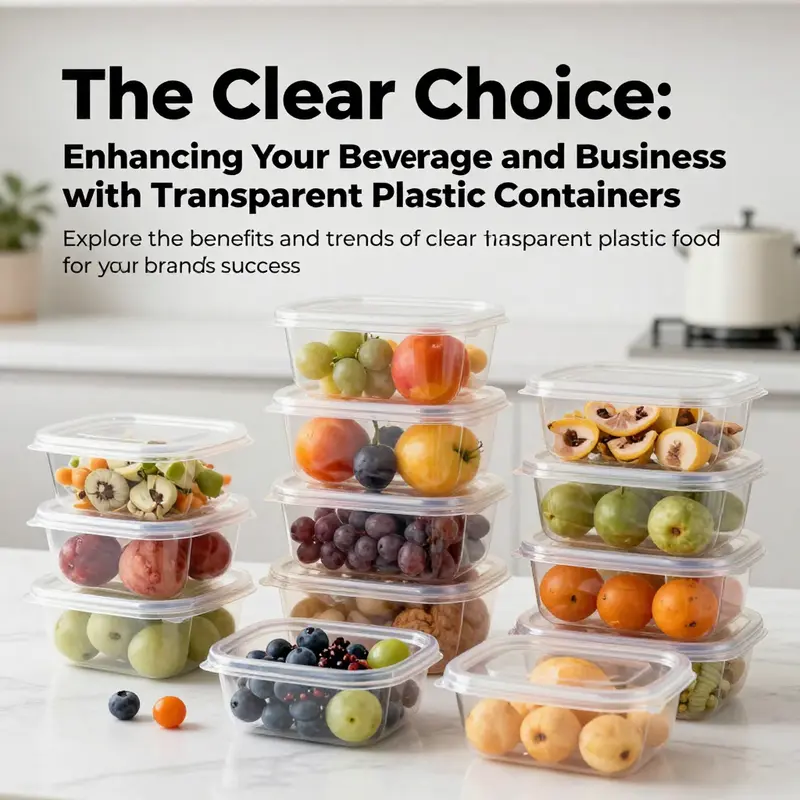
Clear transparent plastic food containers are rapidly becoming essential across food and beverage industries, from bubble tea shops to catering services. Their practicality complements the needs of operators seeking visibility, durability, and functionality, making them a preferred choice for those serving customers on the go or in events. This article will delve into the material composition, functional advantages, and market trends surrounding these versatile containers. By understanding these aspects, businesses can make informed decisions that not only enhance their service efficiency but also elevate customer satisfaction.
Clear by Design: The Material Foundations of Transparent Food Containers
The transparent plastic box that sits on a grocery shelf or slides out of a home pantry is, at first glance, a simple thing. Yet behind its unassuming appearance lies a carefully chosen material science that determines how well it protects, preserves, and presents the food inside. Material composition is not merely a label on a packaging spec sheet; it is the reason a container can withstand a microwave session, survive a freezer excursion, resist cracking in the hand of a hurried shopper, and still be recyclable at the end of its life. When we talk about clear, transparent plastic food containers, we are really talking about a family of plastics selected for a balance of clarity, strength, safety, and practicality. Each resin brings a distinct set of properties to the table, and the choice among them shapes everything from performance in busy kitchens to the environmental footprint of the packaging ecosystem. The conversation begins with PET, moves through polypropylene, and then expands to newer copolymers, each with its own story about transparency and durability. It also includes less common plastics that have fallen out of favor for direct food contact due to health concerns, regulatory scrutiny, or environmental constraints. Understanding these materials and their tradeoffs helps explain why a container that looks identical on a store shelf might behave very differently in real-world use. It also clarifies why certain containers are marketed as microwave-safe, while others are described as freezer-ready or dishwasher-safe, and why some are destined for single use while others are built for years of service. The material choices ripple through design decisions, manufacturing methods, and end-of-life outcomes, tying together safety, convenience, and sustainability in a way that is visible, but often overlooked, to the casual observer.
Petrochemical families underpin many everyday products, but in the realm of food packaging we lean toward plastics that offer transparency without compromising safety. PET, or polyethylene terephthalate, is a poster child for clarity and lightness. It is the material you see in beverage bottles and many single-use food containers because it is exceptionally transparent, easy to process, and relatively impact resistant. PET’s clarity is a double-edged sword: it makes the contents look appealing and appetizing, yet its performance can waver when subjected to repeated heating or high-temperature regimes. In practical terms, PET containers excel in cold storage and display, but they are not the best choice for hot fillings or repeated reheating, where deformation or clouding can begin to undermine the very visibility that makes the product attractive. For retailers and households that prize a crisp, clean presentation of delicate foods, PET often remains the first choice for short-lived, non-reusable packaging.
If the use case calls for reheating, stacking, and repeated use, polypropylene emerges as a natural alternative. PP is celebrated for its rigidity and its robust thermal resistance. It holds up under the heat of microwaves, the chill of freezers, and the demands of daily dishwashing; it can be subjected to repeated cycles of use without losing shape or clarity. This material also delivers a safer safety profile for many consumers because it is BPA-free in most contemporary formulations, a factor that has gained outsized attention in consumer conversations about food safety. In reusable meal-prep containers and in segmented designs that organize different foods within a single box, PP’s durability makes it a practical workhorse. Its surface finish can be tuned for smoothness and release, and its resistance to chemical migration supports a broad range of sauces, oils, and acidic foods. The tradeoff is that while PP can be reliably heated, it does not always achieve the same level of ultimate clarity as PET. In some designs, this is mitigated by using advanced clear co-polymers or careful molding processes to preserve visibility while maintaining resistance to scratching or hazing over time.
A newer material category that has gained traction in high-performance storage containers is Tritan, a copolyester known for a special combination of clarity, toughness, and chemical resistance. Tritan remains BPA-free and is marketed for its ability to tolerate hot liquids and repeated use. It tends to be more resistant to clouding than standard PET after multiple microwaving sessions, which makes it attractive for premium reusable containers and for contexts where a long product life matters. The material’s chemical resistance helps it stand up to a wider array of cleaners and sanitizers used in both home and professional kitchens, reducing the likelihood of surface staining and odor absorption over time. From a consumer perspective, Tritan offers the reassurance that the container will stay visually appealing and functionally reliable even after years of daily handling and frequent washing. Yet Tritan can be more expensive to produce, and its environmental profile depends on recycling streams capable of handling its specific resin family. When a brand commits to Tritan, it is making a statement about durability and reuse, even as it navigates the realities of supply, cost, and post-use processing.
PVC-based formulations occupy a more cautious corner of the discussion. Historically used in some packaging applications, PVC’s presence in direct food contact today is limited and heavily regulated. The health and environmental concerns surrounding certain plasticizers and additives have led to tighter controls, removals from mainstream food-contact use, and a focus on safer substitute materials. In modern clear container design, PVC is rarely chosen for new products intended for direct food contact, and when it appears, it is usually in applications that involve outer packaging or non-food-contact components rather than the primary food-contact layer. The evolving regulatory landscape and consumer demand for safer, more recyclable options have reduced PVC’s footprint in clear food containers, reinforcing a broader industry shift toward materials that offer clearer pathways to reuse, recycling, and odor-free performance.
Together, these materials illustrate how the same objective—transparency—requires distinct engineering compromises. The flat bottom, the curved sidewall, the lip for a tight seal, and the snap-on lid all interact with the resin to deliver leak-proof performance, stacking stability, and user-friendly handling. The choice of material affects how the container behaves in a hot environment, how many times it can be reused, and how or whether it can be recycled after its useful life. It also informs the design philosophy for manufacturers, which often means balancing competing demands: a crisp, crystal-clear appearance versus a rugged, dishwasher-safe form; a snug seal that resists spills versus a lid design that is easy to open with one hand; a structure that stays rigid in the freezer versus one that remains flexible enough to resist cracking at low temperatures. In commercial kitchens or bulk-packaging contexts, these choices translate into measurable costs and efficiencies, as well as practical outcomes like reduced waste, easier inventory management, and improved product safety.
Manufacturing methods themselves—blow molding for hollow shapes, injection molding for precise lids, and thermoforming for thin, large-surface trays—play a crucial role in how material properties are realized in the finished product. Clarity, for instance, is a function of polymer purity, orientation during forming, and the absence of scratches or micro-roughness on the inner surface. The way a material responds to heat during forming can also influence resistance to hazing; a well-controlled process yields a surface that repels smudges and fingerprints, a feature consumers often value when the container is used to display vibrant salads, desserts, or sauces. Even the method of sealing the lid—whether a simple snap fit, a tamper-evident band, or a hinge-and-lid configuration—depends on the material’s rigidity and fatigue properties. In some high-volume settings, a single resin might be paired with multiple lid designs to cater to different product lines, each tuned to optimize seal integrity, stackability, and shelf presence.
From a materials-management perspective, recyclability remains a central consideration. PET and PP are widely accepted in many curbside streams, though local guidance and resin identification coding often determine whether a given container can travel to a recycling facility. Tritan, while offering superb durability and clarity, may require separate recycling channels depending on regional capabilities. This matters not only for end-of-life stories but also for the way brands frame their packaging’s environmental credentials. The push toward circularity has spurred innovations in mechanical and chemical recycling that target these specific resins, and it has encouraged brands to design containers that are easier to separate from other materials or that align with certified recycling programs. In regions where regulations are strict or consumer expectations are high, even the choice of a virtually glass-clear container must contend with the realities of recycling infrastructure and the market for recycled resin.
The regulatory framework surrounding food-contact plastics guides material choices in meaningful ways. In the United States, FDA guidelines for food-contact materials provide a yardstick for what is permissible, under what conditions, and with what kinds of assurances about safety. The 21 CFR 177.1520 section, along with related subsections, outlines the kinds of polymers that can be used for direct contact with food and the conditions under which migration of substances must be controlled. These rules help ensure that a translucent or transparent container does not contribute unwanted compounds to food, even when it is warmed, refrigerated, or stored for prolonged periods. For consumer confidence, many manufacturers pursue third-party testing and certifications that demonstrate a lack of harmful migrants and robust performance under the expected life cycle of the product. This is especially important for containers that are marketed as microwave-safe or freezer-ready, where the thermal history can intensify diffusion or interaction between plastic and contents. In practice, a container’s material choice is as much about regulatory compliance as it is about performance.
For designers and purchasers, the decision tree for material selection often begins with the intended use case. A simple, single-serving container that will be displayed at room temperature and sold without heating requirements may prioritize optical clarity and light weight, making PET an ideal option for many applications. If the container is destined for microwaving and washing, PP offers a more durable solution with a broad safety margin. When a user expects years of reuse and frequent cleaning, Tritan emerges as a compelling candidate, provided the product’s life-cycle economics and recycling options align with sustainability goals. In contexts where strict health concerns or regulatory preferences minimize exposure to certain plasticizers, the shift away from PVC becomes a practical necessity. Each choice reverberates through the product’s price, its performance profile, and its end-of-life destiny, reminding us that the “clear” in clear plastic is a product of careful material science as much as clever design.
To illustrate how these material choices translate into real-world packaging, consider the interplay between transparency, leak resistance, and stacking efficiency. A container designed to hold liquids must resist seepage and seep without sacrificing the ability to show the contents visually. The solution often involves a multilayer approach or a high-quality seal made from elastomeric components that interact with the chosen plastic. Layering for barrier properties, maintaining a glossy, scratch-resistant surface, and ensuring compatibility with reheating directives are all part of a designer’s toolkit. On the retail side, the flat bottom and smart top indents improve stability in display cases and on transport pallets, ensuring that fragile contents remain intact during movement. Such design features are not afterthoughts; they are the practical consequences of selecting the appropriate resin, combined with a thoughtful approach to geometry and assembly.
A note on consumer experience ties the materials story to daily use. Clarity is not simply about looks; it is about trust. The more transparent a container is, the more a consumer can gauge the freshness and portion size at a glance. Yet clarity can degrade under heat, with fingerprints and smudges becoming more visible over time. The material choice governs how forgiving the surface is to handling, washing, and even to the occasional spill. Durability reduces the need for replacement and minimizes waste, but only if the container can endure the cleaning regime, resist odor retention, and remain safe across repeated cycles. In contrast, ultra-thin or overly brittle designs may save weight and cost in the short term but fail to meet the long-term demands of busy kitchens or takeout operations. Material science, in short, is about balancing fleeting aesthetics with durable function.
Within this landscape of choices, an explicit acknowledgement of a single, shared feature—the desire for clarity—helps anchor the broader discussion: the visible plastic form is rarely accidental. It is the result of material properties, molding processes, seal geometry, and life-cycle planning working in concert. The industry increasingly favors clear, safe, and recyclable options, while recognizing that no single resin perfects every use case. For instance, containers intended for hot fills and repeated microwaving may lean toward Tritan or advanced co-polymers, whereas those designed for display and light-duty storage might stay with PET if the end-of-life infrastructure supports it. The nuance matters; it influences how a product behaves in a grocery display, how a family repurposes leftovers, and how a brand communicates safety and responsibility to its customers.
To connect these technical insights with a concrete packaging scenario, consider a packaging option that blends transparency with structural resilience in a way that many readers will recognize, even if the exact materials differ by manufacturer. The option pairs a clear plastic interior with a thoughtfully designed outer assembly that includes a tamper-evident feature and a secure lid. In practice, such designs rely on precise control of material rigidity, surface smoothness, and edge geometry to minimize the risk of leaks while maximizing the shelf appeal of the contents. A packaging example that demonstrates the convergence of these qualities can be found in the broader family of disposable, biodegradable kraft-paper products paired with a clear plastic component. While the outer wrapper is paper-based, the internal clear plastic element is chosen to deliver visibility and containment without compromising the packaging’s compostable ambitions for the outer layer. This blend highlights how designers sometimes navigate mixed-material architectures to achieve both consumer appeal and functional safety. disposable-biodegradable kraft paper matt lamination clear plastic combo pastry dessert tiramisu cake food container packaging.
As the chapter closes on material composition, a broader takeaway emerges: the clear plastic container is not a single material thing but a system of materials, processes, and use contexts that together deliver visibility, protection, and practicality. The selection of PET, PP, Tritan, or other polymers is a decision that translates into everyday behavior—the ease of locating a meal in a busy fridge, the confidence in taking a sauce to go without spills, the assurance that a container can survive the dishwasher and still look pristine. It is a reminder that production choices, regulatory compliance, and consumer expectations are inseparable components of a packaging narrative whose core promise is not merely to hold food but to hold it safely, clearly, and sustainably.
For readers seeking to deepen their understanding of safety standards that govern these choices, authoritative guidelines from health authorities provide essential context about how materials interact with food. The FDA Food Contact Materials framework and related resources describe the permissions, limitations, and testing expectations that shape what resins are permissible and under what circumstances. They offer a map of what “safe for direct contact with food” means in practical terms, spanning migration concerns, heat exposure, and durability across lifecycles. Keeping these standards in view helps ensure that the pursuit of clarity does not come at the expense of safety or environmental responsibility.
In the end, the material composition of clear transparent plastic food containers is a story of balancing visibility with resilience, ease of use with safety, and cost with sustainability. The choices manufacturers make are guided by how the product will be used, how it will be cleaned, and how it will eventually be recaptured in a recycling system. When these elements align, the result is a container that remains visually appealing while performing reliably through countless meals, picnics, and takeout orders. For designers, retailers, and everyday users, that alignment is what makes a simple, clear container a dependable participant in modern food culture.
External reference: For a broader regulatory context, see the FDA’s guidance on food contact materials and related safety standards. FDA Food Contact Materials guidelines.
Seeing Through to Efficiency: The Functional Power of Clear Transparent Plastic Food Containers
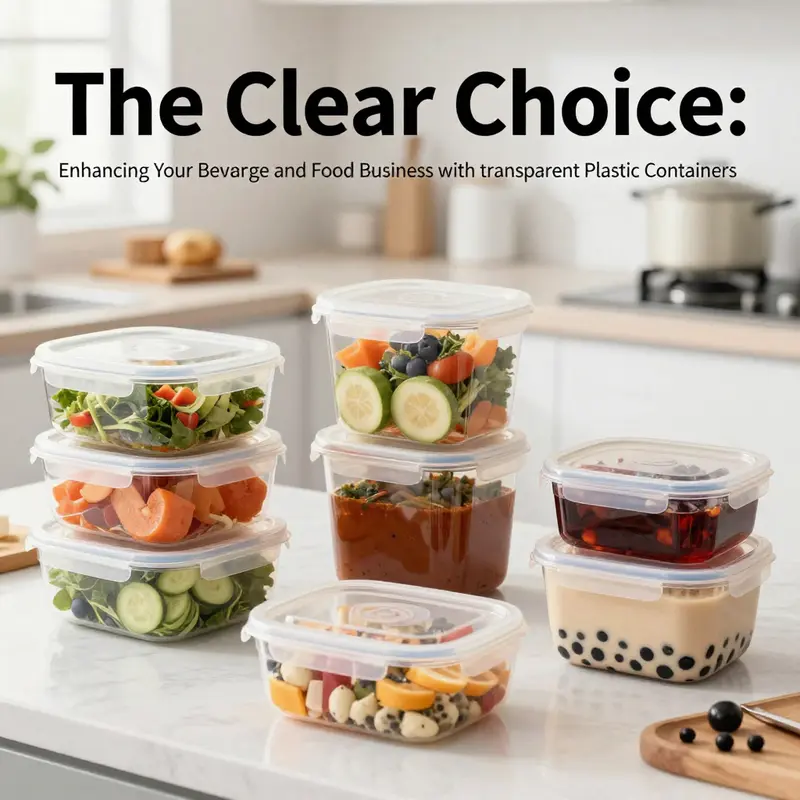
Visibility is a daily operational advantage that reshapes how kitchens, stores, and homes manage food.
When a container is crystal clear, the contents reveal themselves at a glance, and that simplicity ripples through every stage of handling. In busy delis, cafeterias, or home meal-prep routines, the ability to identify what sits inside without removing a lid reduces interruptions, speeds restocking, and lowers the risk of picking the wrong item. This is not just aesthetics; it is a core functional attribute that translates into fewer mistakes, tighter portion control, and a smoother flow from display to plate. The quick glance of a shopper or line cook becomes a moment of decisive clarity that compounds across the day.
The practical benefits of visibility extend beyond recognition. Clear containers help staff see inventory levels from a distance, simplify labeling decisions, and support more consistent portioning. In high-volume settings, the visibility advantage translates into faster service, lower mislabeling rates, and improved trust with customers who can see what they are buying.
Durability and resilience are the other side of this coin. Clear containers are typically made from materials such as HDPE or PS that offer robust structure and impact resistance. They are designed to withstand daily handling, busy service lines, and the rigors of storage and transport. Many are rated for freezer and dishwasher use and retain clear visibility after repeated cycles. Material choice also underpins chemical resistance, enabling exposures to sauces and moisture without staining or clouding.
Food safety is central to container design. Many clear plastic options meet FDA guidance for direct contact with food, reassuring operators that materials are appropriate for a wide range of products. Leak-resistant lids, snap-on closures, and tamper-evident features reduce spill risk during transit and storage. Thoughtful design helps prevent cross-contamination and supports hygiene standards in both retail and foodservice environments.
The practical design of these containers goes beyond lid security. Shapes and features are optimized for different foods and processes: cylindrical or square bases for stability; flat bottoms to improve stacking; secure sealing mechanisms to maintain freshness. Top indents and stacking guides maximize shelf space in stores and ease in dishwasher racks or prep lines. A well-made container supports a repeatable workflow with fewer equipment exchanges and tighter inventory control.
Environmental considerations are increasingly central. Recyclability remains a core attribute, and many clear containers are designed to be recycled in standard streams. Some suppliers are exploring biodegradable and compostable polymers derived from PLA or other materials, while balancing the need for durability and clarity. Regional infrastructure and recycling programs affect end-of-life options, but the objective remains: preserve transparency and performance without compromising environmental responsibility.
Versatility is another strength. A single container type can support prep, display, takeout, and storage across a range of foods—from dry goods to moist or oily items. This reduces the number of different vessels a kitchen or store must stock, lowering procurement costs and simplifying labeling and workflow. Clear visibility also supports merchandising, enabling product features to speak for themselves and guiding consumer choices with confidence.
Standards and technology continue to shape these advantages. Containers are increasingly designed for safe microwave or freezer use, compatibility with temperature cycling, and easy cleaning. Clear materials paired with robust seals and standardized dimensions create predictable performance, reduce waste, and enable consistent service quality across multiple locations.
In summary, clear transparent plastic food containers are more than vessels—they are tools for trust, safety, efficiency, and sustainability. They help kitchens operate with clarity, inventory with confidence, and customers with certainty, all while supporting responsible packaging practices that align with modern environmental goals.
Seeing Through the Shelf: Market Dynamics and Design Innovation in Clear Transparent Plastic Food Containers
Clear, transparent plastic food containers have quietly become the backbone of modern food handling, storage, and display. Their value rests not only in their ability to hold foods securely but in the way their clarity invites immediate recognition of content, portion, and freshness. When a shopper glances at a deli counter, a lunch box in a school bag, or a stacked assortment in a supermarket cooler, the sight of a crystal-clear vessel communicates information that words cannot. The content inside is legible before any lid is lifted. This instant visibility supports trust, accelerates decision-making, and reduces the cognitive load on both consumer and operator. Visibility is more than a convenience; it is a form of food communication. It helps keep ingredients honest in the eyes of the consumer, making it easier to evaluate color, texture, and even garnishing at a glance. In both home kitchens and commercial kitchens, the ability to identify contents without interfering with the packaging is a practical luxury that also serves as a procedural advantage. The design philosophy behind these containers is therefore not merely about containment; it is about creating a short, reliable line of sight between food, consumer expectations, and safety protocols that govern direct contact materials.
The modern market for clear transparent plastic food containers is driven by a convergence of practical needs and regulatory assurances. On the one hand, consumers demand convenience, portion control, and predictable reheating pathways. On the other hand, producers and retailers require packaging that can withstand the everyday rigors of storage, transport, and display, while maintaining food safety and minimizing waste. The typical materials—PET and other FDA-compliant plastics—are chosen precisely for their balance of clarity, rigidity, and safety. This combination supports a broad spectrum of activities, from home meal preparation to large-scale catering, where containers are used repeatedly in some settings or disposed of after use in others. The FDA’s food-contact standards provide the baseline assurance that the materials will not leach harmful substances into food, a critical criterion for consumer confidence. References to standards such as U.S. FDA 21 CFR 177.1520 often surface in supplier documentation, underscoring the industry’s emphasis on compliance and traceability. Consumers, increasingly aware of where packaging materials come from, respond not only to what they can see but to what they can trust. This trust is bolstered by the transparent design itself, which encourages accountability in ingredient sourcing and manufacturing practices as much as it encourages accountability in how the container performs in real-world use.
Yet the appeal of clarity extends beyond safety and trust. The market’s appetite for ease of use has spurred a broader shift toward multi-functional containers that move smoothly through the stages of handling—from prep to storage to reheating and even freezing. Multi-functionality is not a mere stacking of features; it is an integrated capability that respects the entire lifecycle of a food product. For households, this might mean containers that are microwave-safe and freezer-safe, enabling seamless transitions from fridge to oven or microwave to ready plate. For restaurants and takeout operations, the same containers must resist leaks when transporting sauces, maintain seal integrity during transfer, and endure repeated cycles of chilling and warming. In both contexts, the functional requirements align with regulatory assurances. When a container claims microwave- or freezer-proof performance, it must be backed by material resilience and design that minimize chemical interaction with contents, a promise reinforced by food-contact certifications and independent testing. The result is not simply a product but a dependable workflow element that reduces waste, protects quality, and supports customer satisfaction across channels.
Within this landscape, modular and compartmentalized designs have captured particular attention. Bento-style configurations, with their multiple sections and clear visibility, have found a strong foothold in East Asian markets and are increasingly embraced by global consumers seeking organized, aesthetically pleasing meal options. The modular approach makes it easier to present a varied plate within a single container, supporting balanced nutrition, color variety, and portion control. The translucence of the container becomes part of the presentation, offering a window into the meal’s composition and appealing arrangement. The stackability of these designs further reinforces efficiency in busy settings—grocery shelves, deli counters, school cafeterias, and corporate catering programs all benefit from space optimization. A flat bottom enhances stability on shelves and trays, while smart top indents improve stacking density in storage and display environments. Transparent walls maximize the visual impact of the contents, reducing the need for additional labeling or secondary packaging. In the end, the consumer experience is streamlined: identify, select, and transport with minimal friction, aided by the container’s own design language.
As economies of scale and consumer expectations push the market toward sustainable packaging, materials science plays a pivotal role in shaping the future of clear containers. Brands and manufacturers are increasingly turning to high-performance plastics such as Tritan and high-grade polypropylene to achieve a combination of clarity, durability, and reusability that aligns with contemporary sustainability goals. Consumers want packaging that can perform across repeated cycles, not just a single use. They are drawn to products that resist cracking, clouding, or losing clarity after multiple washings or temperature exposures. Recyclability is another crucial factor. While the use of traditional single-use plastics remains high in many takeaway contexts, there is a growing emphasis on recyclable and, in some cases, biodegradable alternatives that preserve the advantages of clear visibility without compromising environmental responsibility. The design challenge, therefore, becomes one of balancing clarity and performance with durability and end-of-life considerations. In this context, advanced materials provide a path forward, allowing for containers that stay visually appealing while delivering measurable gains in durability and reuse potential. The consequence is a packaging ecosystem that can support both premium experiences and duty-cycle requirements across food-service, retail, and home kitchens.
From a commercial perspective, the success of clear transparent containers often hinges on precision and reliability. Modern applications demand leak-proof construction and tight dimensional tolerances, sometimes at as precise as 1.0 millimeter, to ensure seamless stacking and shipping that minimize wasted space. This is particularly important in bulk packaging, deli operations, and food-delivery logistics, where even tiny misalignments can compound into costly inefficiencies. The ability to stack securely reduces pallet footprints, simplifies inventory management, and speeds up picking and packing processes. Consumers benefit indirectly through fewer damaged units and less product loss, which translates into more consistent quality and value. In the retail environment, the transparent wall functions like a live product catalog. Shoppers can compare offerings at a glance, gauge portion sizes, and assess the overall appearance of the product before purchase. The synergy between design precision and the shopper’s perception reinforces the idea that what is seen is what is trusted. Platforms that connect buyers with suppliers, including well-known marketplaces, highlight these innovations and provide access to a broad spectrum of shapes—rectangular, cylindrical, and even more specialized bento-style configurations—while maintaining compliance with safety standards and performance metrics. The result is a market that rewards containers capable of maintaining integrity through transport, display, and use, while remaining adaptable to various food formats and service models.
The broader supply landscape further reinforces how these containers fit into multiple business models. For home users, the appeal lies in products that support meal-prep routines, portion control, and easy organization, with the added reassurance of safety certifications that make them suitable for direct contact with food. For retailers and food-service operators, the emphasis shifts toward durability, leak resistance, consistent tolerances, and compatibility with cold-chain or heated processing, depending on the product category. Platforms that aggregate manufacturers’ offerings demonstrate a diversity of designs and capacities, from 500 milliliters to 2 liters, and from basic rectangular shapes to more complex, zero-spill solutions that are compatible with stacked displays. The common thread across these offerings is the combination of intact visibility and robust performance, enabling a reliable user experience that supports both operational efficiency and consumer trust. These trends are not isolated to one region; they reflect a global rethinking of how to balance visibility, safety, and sustainability in a world that values both speed and responsibility.
Within the ecosystem, the question of supplier reliability becomes central. Enterprises seeking dependable partners look for certifications that reassure food-safety compliance and material integrity. Clear, transparent containers that claim FDA-certification and related safety assurances gain a competitive edge, particularly in segments like meal-prep services, school nutrition programs, and hospitality. The availability of a broad range of shapes and sizes, coupled with demonstrable performance, helps buyers tailor packaging to a variety of foods—from sauces to salads to desserts—without compromising the product’s appearance or safety. In this sense, visibility is not only about the container’s transparency; it is also about clarity in the supply chain, from raw material sourcing to finished product testing and packaging stability. Consumers increasingly expect packaging to be a transparent partner in safety, sustainability, and efficiency, and the market responds with products that are designed to communicate reliability as clearly as they show the contents inside.
To illustrate how these dynamics translate into tangible choices for practitioners, consider a packaging option that blends clear plastic with sustainable finishes. This example demonstrates how design can harmonize clarity with responsible materials science, offering a practical blueprint for future products. disposable-biodegradable-kraft-paper-matt-lamination-clear-plastic-combo-pastry-dessert-tiramisu-cake-food-container-packaging. While the link sits outside the core plastic category, it illustrates how the industry increasingly seeks solutions that honor both visibility and environmental considerations. The takeaway is not to replace plastic with paper, but to use a layered thinking that aligns material choices with food safety, consumer expectations, and sustainability goals. The future will likely feature more hybrid packaging strategies, where clear, durable plastics are integrated with recyclable, compostable, or reusable components in ways that preserve the visual benefits while reducing the environmental footprint.
In the end, the market for clear transparent plastic food containers is not merely about containment; it is about enabling a more intuitive, efficient, and trustworthy food system. It is about offering containers that are as thoughtful as the meals they carry, designed to aid memory, speed, and sensory evaluation. It is about balancing the immediate gratification of seeing the food with the longer-term responsibilities of safety, hygiene, and environmental stewardship. It is about offering a transparent promise: that what you see is what you get, and what you get is reliable, safe, and ready for the next step in the food journey. As consumer habits continue to evolve toward more organized, visually appealing, and traceable meal experiences, these containers will keep evolving in tandem, combining sharper material science with smarter designs that honor both performance and planet. For readers seeking even more rigorous context on food-contact materials and regulatory expectations, the federal overview on food-contact materials provides essential guidance and a reminder that clarity in packaging is inseparable from clarity in compliance. https://www.fda.gov/food/food-contact-materials-ingredients/federal-regulatory-overview-food-contact-materials
Final thoughts
Clear transparent plastic food containers offer substantial advantages for various food and beverage businesses, exhibiting practicality, functionality, and a commitment to sustainability. Their material composition ensures safety and durability, while their design enhances customer experience through visibility and ease of use. As market trends shift towards environmentally friendly and efficient packaging solutions, incorporating these containers can significantly optimize operations while meeting consumer expectations for quality and transparency. Embrace the potential of clear plastic food containers to elevate your service ethos and meet the demands of a modern, environmentally conscious market.