
As consumers become increasingly conscious of their environmental impact, the demand for sustainable products has soared. Package-free recycled toilet paper is at the forefront of this movement, especially in industries where waste reduction is a priority. For bubble tea shops, restaurants, food trucks, catering services, event planners, and corporate procurement teams, integrating package-free solutions not only aligns with eco-friendly practices but can also enhance brand identity. This article delves into the innovations underlying package-free recycled toilet paper, the economic implications of adopting such products, their societal impacts, geopolitical considerations in production, and their extensive environmental benefits.
Beyond the Wrap: Innovations Shaping Package-Free Recycled Toilet Paper for a Circular Future
The idea of a package-free, recycled toilet paper rests on a simple, powerful premise: reduce waste at the source while preserving performance. It sits at the intersection of minimalist living and robust sustainability, where consumers want less clutter, less plastic, and less carbon in the supply chain, yet still expect a product that feels soft, holds together, and performs when it matters. In practice, these ambitions push manufacturers to rethink every link in the lifecycle—from the fiber they pulp to the way the roll travels from factory to faucet. The resulting innovations are not cosmetic tweaks but systemic changes that reframe what clean, responsible bathroom habits can look like in a world still dominated by single-use packaging and conventional packaging streams. The shift toward plastic-free, minimalist packaging is not merely a marketing angle; it is a strategic design choice that propagates through logistics, recycling streams, and consumer behavior. It challenges the old assumption that packaging is an afterthought and invites a broader consideration of how paper products are produced, shipped, and used in daily life.
One of the most visible realizations of this shift is the move away from plastic wraps toward packaging that is entirely paper-based. Cardboard boxes, paper wraps printed with soy ink, and minimal labeling reduce waste and simplify end-of-life processing. The absence of plastic wrap directly lowers the volume of plastic entering households and landfills, while the choice of inks—soy or water-based—minimizes chemical load without compromising legibility or brand communication. When done well, these solutions still convey a premium sense of care and quality. Consumers who are sensitive to chemical residues or who want compostable packaging can find reassurance in packaging that is free from inks, dyes, BPA, and other substances that complicate disposal or septic safety. The practical effect is a packaging system that is easier to sort, easier to recycle, and, in many cases, compostable in appropriate conditions.
The packaging story does not end with the outer wrap, however. The field has increasingly embraced zero-waste, bulk delivery models that move the product itself into the realm of circular economy thinking. In these models, toilet paper is available in bulk or loose-roll formats and is delivered in large, recyclable or returnable containers with no inner wrapping. The logistics resemble the way bulk liquids or dry goods are handled in some modern distribution networks, but with the added challenge of maintaining hygiene and roll integrity across multiple shipments. While fully package-free retail remains rare due to hygiene and logistics realities, the trend toward bulk, returnable, or reusable packaging is gaining traction in both commercial and community settings. Public restrooms and community centers have begun to explore refill stations or bulk-access points for recycled options, leveraging shared containers and established cleaning protocols to keep usage sanitary while avoiding the need for individual wrapping.
Certifications and standards provide essential guardrails in this transition. Industry bodies that recognize responsible manufacturing practices help reassure buyers that the push toward lower packaging has not come at the expense of social responsibility, worker safety, or environmental stewardship. Certifications such as those commonly cited in sustainable manufacturing—whether they reference supply chain governance, quality management, or environmental management—signal that producers align with recognized expectations around labor practices, product safety, and environmental performance. For the consumer, these marks translate into confidence that a brand’s minimal packaging is part of a broader commitment to responsible sourcing, waste reduction, and lifecycle thinking. The credibility bestowed by such certifications can be especially important in markets where waste-reduction claims are scrutinized and where buyers seek long-term partnership with suppliers who share their values.
Fiber processing technology further elevates the package-free, recycled proposition. Advances in deinking and bleaching have grown more precise and less hazardous, shifting away from chlorine toward oxygen-based and alternative bleaching methods. This evolution yields smoother, more uniform fibers that enhance the tactile experience without resorting to virgin pulp. Some manufacturers experiment with blending a small percentage of virgin bamboo or eucalyptus fibers to improve texture, strength, and resilience. The result is a recycled product that approaches the feel of premium virgin-pulp brands while preserving the ecological advantages of recycled input. Independent testing and sensory evaluation have shown that these premium recycled options can score within a narrow margin—roughly ten to fifteen percent—of top-tier virgin-pulp brands on softness and feel. Although the exact numbers vary by mill and blend, the trend is clear: improved fiber processing narrows the gap in user perception, allowing recycled paper to compete in the luxury or premium segments for many households and small businesses.
Beyond texture, performance remains central. Even as packaging becomes lighter and simpler, the product must hold together under wet conditions, resist tearing, and deliver a clean, reliable experience. Recycled fibers have historically faced concerns about strength and “butt crumble”—the tendency for weaker edges to shed fibers when used. Manufacturers addressing these issues deploy refined mechanical processing, optimized binder systems, and careful calendaring to help the rolls retain integrity during use. When the composition blends responsibly with a small share of high-quality fibers, the result is a toilet paper that delivers comfort without sacrificing ecological integrity. Independent researchers and consumer testers frequently report that the most successful package-free or minimally packaged recycled options achieve softness levels that approach the expectations set by premium virgin brands, while still offering the security of recycled content and the advantage of reduced packaging waste.
Consumer adoption of these innovations often hinges on trialability and visibility. Some suppliers offer zero-cost trial rolls or sample programs to reduce the perceived risk of switching to recycled options. This approach lowers the barrier to experimentation for households, co-ops, and small offices that want to measure performance before committing to a longer sequence of purchases. It also aligns with broader outreach to the eco-conscious consumer who values transparency about material choices and processing methods. In parallel, bulk delivery and refill initiatives enable users to access the product without the burden of new packaging with each purchase. Rather than purchasing a single wrapped roll, customers can participate in systems designed for container reuse and responsible disposal, echoing the broader circular economy impulse that motivates many modern sustainability efforts.
The interplay between packaging and product innovation creates a holistic proposition. If the packaging is plastic-free and the fibers are responsibly processed, then the end-of-life story looks very different from the traditional model. Cardboard boxes are more easily recycled in curbside streams or can be diverted to composting programs in appropriate municipal systems. Paper wraps printed with soy ink align with composting and recycling streams and offer a quiet appeal to buyers who care about aesthetics and minimalism. The absence of inks or a limited palette of non-hazardous inks reduces potential contaminants in compost and the environment, reinforcing the idea that a truly circular approach can extend beyond the warehouse into households and communities.
The potential benefits extend beyond environmental metrics. A reduced packaging footprint translates into lower logistics weight, which, in turn, can reduce transportation emissions and energy consumption across the supply chain. When packaging becomes part of the product design, it encourages producers to innovate in ways that reduce waste at every stage, from forest management and pulp processing to packaging, sorting, and end-of-life disposal. This integrative thinking is central to how package-free recycled toilet paper can become a practical choice for a growing segment of consumers who want to live with less waste without compromising everyday comfort. It also creates opportunities for educators, retailers, and community programs to demonstrate how small shifts in packaging can yield meaningful environmental dividends over time.
To illustrate how this thinking translates into real-world choices, consider the way bulk and refill ecosystems operate in practice. A growing number of facilities are reimagining restrooms and break rooms as hubs for sustainable paper access. In these settings, users bring their own containers or rely on reusable cores and carriers to obtain the paper in bulk, thereby minimizing packaging waste and supporting a culture of reuse. The model requires careful attention to hygiene, handling, and logistics, but it is feasible with clear protocols and consistent cleaning regimens. The result is a familiar product—the same recycled toilet paper people expect—delivered in a format that dramatically reduces waste and aligns with a zero-waste or circular mindset.
Even when larger shifts toward zero-waste packaging are still evolving, gradual steps can yield meaningful environmental gains. Taxonomies of packaging waste show that moving from plastic-wrapped rolls to paper-based wrapping, or from individual wraps to bulk packaging, can cut plastic use and improve recyclability. These steps do not demand an overnight transformation; they require steady commitments from manufacturers, distributors, and retailers who recognize that packaging is not a peripheral concern but a central element of product stewardship. In this sense, package-free recycled toilet paper is less a single product category and more a catalyst for systems thinking—an invitation to reassemble supply chains, consumer habits, and municipal waste streams around a shared priority: responsible resource use with no compromise on daily comfort.
Internal reference: a glimpse into related zero-waste packaging options can be found in bulk-friendly, paper-based disposables that emphasize recyclable or returnable containers. See for instance the bulk packaging concept in this product page senang05-disposable-26oz-kraft-paper-soup-cup-bowl-with-paper-lid-takeaway-lunch-packing-takeout-food-packaging-bucket. This example underscores how a packaging ecosystem can parallel the discipline of reduced-wrap paper products, even if the categories differ.
External resource for broader context: to explore a broad survey of plastic-free toilet paper options and related eco-friendly packaging approaches, see an independent overview that maps multiple brands and methodologies across the market: https://www.treehugger.com/sustainable-plastic-free-toilet-paper-18-eco-friendly-options/.
null
null
How Package‑Free Recycled Toilet Paper Shapes Society and the Circular Shift
Every choice about everyday items sends a signal. Selecting recycled toilet paper sold with little or no packaging does more than reduce waste at home. It nudges systems, markets, and cultures toward circular practices. The effects ripple outward, altering what manufacturers produce, how communities manage resources, and how citizens think about consumption.
Choosing package‑free recycled toilet paper reduces resource demands at multiple stages. When packaging is cut from the chain, fewer raw materials are needed for wrapping, fewer adhesives and inks enter the production stream, and fewer shipments carry excess volume. That lowers emissions tied to manufacturing and transport. It also decreases the volume of short‑lived materials in municipal waste systems. Over time, even modest shifts in household purchasing can translate into measurable reductions in landfill inputs and pollution. When recycled fiber replaces virgin pulp, the benefit compounds. Less pressure is placed on forests and energy‑intensive paper mills. This combination helps shrink the overall environmental footprint of personal hygiene on a community scale.
Beyond immediate material savings, package‑free options encourage a shift from linear to circular thinking. The circular model values reuse, repair, and material recovery. Package‑free recycled toilet paper aligns with those values by emphasizing reuse of fiber and minimal disposable extras. When consumers accept bulk shipments, refill stations, or loose rolls in recyclable boxes, they begin to expect supply systems that return materials into productive use. Retailers and service operators respond. They redesign logistics, invest in standardized refill containers, or offer bulk dispensers in public spaces. Those operational changes can scale. A single chain of refill stations, for example, can catalyze supplier agreements, new distribution routes, and shared standards for hygiene and container cleaning.
Behavior change is a crucial social outcome. Selecting package‑free items prompts people to evaluate routine habits. The simple act of choosing a minimally packaged roll asks the buyer to consider sourcing, lifecycle impacts, and disposal. This decision often sparks further inquiry, leading to broader sustainable choices. Households may adopt composting, shift to other recycled goods, or support local policies that favor waste reduction. Social norms evolve as these choices become visible. When neighbors, workplaces, or public facilities display bulk dispensers or unwrapped rolls, the idea of packaging as necessary diminishes. That visibility normalizes low‑waste options and lowers the barrier for newcomers.
Public education benefits from these shifts as well. Demand for package‑free products drives information sharing. Consumers want to know about fiber sources, certification, and hygiene practices for unpackaged goods. Brands and community groups respond by publishing clear, accessible materials. Educational campaigns can explain how recycled fiber is processed, what certifications mean, and how to handle loose products safely. This transparency builds trust. It also strengthens civic engagement. Local advocacy can leverage increased awareness to push for municipal support for refill infrastructure, better recycling collection, and incentives for producers who cut packaging.
At the industry level, interest in package‑free recycled toilet paper accelerates innovation. Manufacturers explore new production runs that minimize dust and contamination risks without individual wrapping. Logistics firms devise bulk packing solutions that protect goods while eliminating single‑use layers. Retailers experiment with display and storage methods that meet hygiene standards in stores and restrooms. These innovations often spill over into adjacent product categories, from paper towels to napkins and food service supplies. Suppliers invest in certifications for quality and environmental performance to reassure buyers. As demand stabilizes, economies of scale kick in. Costs fall, and sustainable options become competitive with conventional products.
Policy and infrastructure adapt alongside market and cultural shifts. Municipal authorities see opportunities to reduce material handling costs and environmental burdens. Public procurement standards can prioritize low‑waste supplies, encouraging agencies and institutions to adopt package‑free options. Schools, libraries, and municipal buildings often lead by example. When public institutions choose refill systems or bulk rolls, manufacturers and distributors follow. Infrastructure changes may include standardized refill containers, guidelines for sanitary handling, and integration with existing organics or paper recycling streams. These adjustments make it easier for the private sector and households to adopt low‑waste practices.
The societal story of package‑free goods is not only about winners. Challenges must be addressed to ensure equitable, practical adoption. Hygiene concerns worry many stakeholders. Shipping and retail handling require procedures that protect unpackaged rolls during transit and storage. Not every building can readily accommodate bulk dispensers. Some communities lack reliable recycling or composting systems, making end‑of‑life management of paper less effective. Cost is another factor. Early adopters may pay premiums until production scales up. For widespread adoption, solutions must be affordable and accessible.
Equity matters. Low‑income neighborhoods often face the highest barriers to sustainable options. Retail density, limited space for bulk buying, and constrained budgets make it hard to choose package‑free products. Addressing this requires intentional design. Community buying clubs, subsidized pilot programs, and partnership with social service organizations can expand access. Procurement policies for public housing and community centers can prioritize minimal‑packaging supplies. These measures spread benefits broadly and avoid perpetuating inequality in environmental choices.
Cultural dynamics shape how quickly package‑free options take hold. In regions where cleanliness and convenience are deeply associated with packaging, change is gradual. Marketing that connects minimal packaging with quality and safety helps. Visible endorsements from trusted institutions accelerate acceptance. Peer influence also plays a role. When friends and neighbors share experiences about bulk systems or refill stations, adoption increases. Storytelling that highlights both environmental gains and everyday practicality makes a compelling case.
Practical measures amplify societal benefits. Encouraging co‑op purchasing reduces costs and packaging per capita. Supporting local vendors who can supply loose rolls or reusable dispensers shortens supply chains. Establishing clear sanitation protocols for bulk handling addresses hygiene concerns for businesses and institutions. Educational outreach can guide consumers on storage, handling, and disposal. Each practical step reduces friction and helps integrate package‑free purchasing into normal routines.
The broader value is cultural. Choosing package‑free recycled toilet paper reframes ordinary purchases as acts of stewardship. It teaches people that small, consistent actions can reshape markets and policy. Over time, those micro‑decisions contribute to systemic change: fewer short‑lived materials in waste streams, more resilient local supply networks, and a stronger public expectation for sustainable options. That cumulative shift makes room for deeper transformations across sectors.
For those who want a practical example of related packaging alternatives, consider a recyclable kraft paper shopping bag as a visible, everyday substitute to plastic. Such products illustrate how shifting one packaging decision can stimulate related choices across retail and logistics.
Further reading on the environmental impact of recycling and material recovery is available from the EPA: https://www.epa.gov/sustainable-management-waste/understanding-impact-recycling
Borders in the Roll: The Geopolitics Shaping Package-Free Recycled Toilet Paper
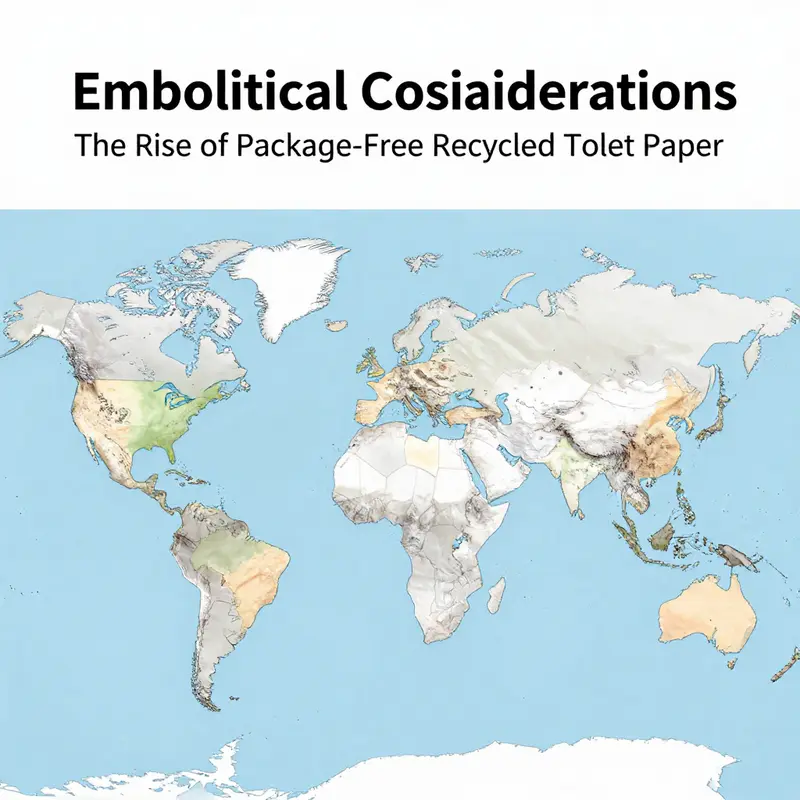
Sustainability narratives often spotlight how products are made and delivered, but the geopolitics behind package-free recycled toilet paper unfold in more subtle, consequential ways. The very idea hinges on cross-border flows of recycled fiber, the capacity of nations to collect and sort post-consumer materials, and the regulatory tapestries that govern waste management. When a brand envisions a truly minimal, even package-free, supply chain for a sanitary essential, it must navigate a world where policy, technology, and commerce do not always align. The result is a multilayered story of dependencies, resilience, and risk that shapes what can be produced, where it can be sourced, and at what cost to consumers and communities alike.
At the core of material supply is the post-consumer recycled paper itself. Recycled toilet paper relies on a steady stream of used paper that can be transformed into clean, usable fibers. In practice, this stream is highly uneven across regions. Countries with advanced sorting, contamination controls, and efficient collection networks export large volumes of recovered fiber to others that lack equivalent capacity or infrastructure. Trade policies, tariffs, and compatibility of recycling streams influence these flows as much as the color of the paper or the strength of the pulp. When policy shifts favor domestic processing or tighten imports to protect local industries, the ripple effects can reach brands pursuing package-free models that depend on consistent fiber quality. In such a landscape, the idea of a universal, borderless supply chain becomes less a guarantee than a carefully hedged forecast, where geographic diversification and long-term supplier partnerships become essential for stability.
Regulatory environments amplify or dampen these dynamics. Countries committed to circular economy principles—through binding mandates, extended producer responsibility schemes, or ambitious recycling targets—tend to cultivate more robust feedstock channels for recycled content. Conversely, jurisdictions with weaker enforcement or limited recycling markets may struggle to convert collected waste into market-ready fiber. This regulatory quilt matters for package-free configurations because the absence of internal packaging can place additional emphasis on material purity and the traceability of streams. Recycled fiber that enters a manufacturing line must meet consistent standards to ensure product performance, consumer safety, and hygiene in a market that increasingly expects proof of responsible sourcing. In practice, that means regulatory alignment across suppliers, mills, and distributors is not a luxury but a prerequisite for scale. Firms pursuing zero-packaging approaches often cultivate relationships with suppliers who hold recognized certifications and operate under environmental management systems that align with international norms. The interplay of national commitments and global standards ultimately helps determine which regions can sustainably supply the raw material needed for package-free configurations and which regions may remain episodic suppliers, subject to policy whims and market shocks.
The life cycle assessment (LCA) layer adds another, more analytical dimension to geopolitics in this space. LCAs seek to measure environmental impacts from cradle to grave, encompassing raw material extraction, processing, manufacturing, distribution, use, and end-of-life. When products cross borders, data standardization becomes an obstacle. The representativeness and completeness of data can vary widely across regions with different technologies, reporting practices, and enforcement regimes. For package-free recycled toilet paper, which attempts to minimize packaging at multiple points of the value chain, the LCA must confront questions that transcend national boundaries: How much energy is required to collect, sort, and transport recovered fiber in one country versus another? What are the cumulative greenhouse gas implications when a zero-w packaging approach shifts logistics from a traditionally wrapped product to bulk or bulk-delivered rolls? And how do geopolitical risks—such as resource scarcity in certain fiber markets or policy-driven disruptions—alter the long-term balance of environmental benefits versus potential burdens? The literature on LCA emphasizes the need for standardized cross-border data collection and methodological harmonization, acknowledging that long-term implications demand that we look beyond year-to-year changes and consider cumulative effects across multiple cycles of materials and trade.
International cooperation, therefore, is a practical imperative as much as a normative aspiration. Transparent sharing of data on fiber availability, recycling rates, and emissions is not merely a technical nicety; it is a governance mechanism that helps align expectations among producers, policymakers, retailers, and consumers. In a package-free ecosystem, cooperative frameworks can enable shared infrastructure—such as regional recycling hubs, bulk storage facilities, and refill stations—that reduce waste without creating new packaging footprints. They can also support common standards for hygiene, safety, and quality that reassure consumers while enabling retailers to stock bulk systems with confidence. The overarching message is that the transition toward package-free, recycled bathroom products cannot be fully realized without a cooperative international regime that stabilizes material flows, harmonizes data, and coordinates investment in recycling capacity. In practice, this means cross-border policy dialogue, mutually recognized certifications, and joint investments in infrastructure that make circularity both feasible and scalable.
The geopolitical lens also prompts thoughtful reflections on the practicalities of implementation. For instance, the feasibility of a package-free model depends on reliable bulk delivery systems and public infrastructure that can support refill stations or centralized bulk dispensing. Hygiene and logistical risk are not abstract concerns; they shape how far a region can go in minimizing packaging while maintaining sanitary standards. Advances in bulk-dispatch models—such as loose-ship bulk rolls delivered in recyclable containers—offer pathways to minimize packaging waste without compromising product integrity or consumer confidence. These innovations, however, require coordinated regulatory clearance for handling and transport of bulk paper products, alignment of end-use labeling, and consistent quality controls across suppliers. In regions where waste management policies encourage or even mandate high recycling rates, the push toward package-free products may ride more easily on a foundation of robust recycling ecosystems. In others, the policy environment may hinder the same progress, creating regional disparities in the availability of recycled fiber and the feasibility of zero-wrap packaging.
From a business perspective, geopolitics translates into risk management and resilience planning. Companies aiming to offer package-free recycled toilet paper must map fiber sourcing chains across multiple jurisdictions, assess exposure to policy shifts, and build buffers against supply disruptions. This often means diversifying the pool of suppliers, investing in local or regional recycling capacity, and pursuing certifications that demonstrate responsible stewardship. Standards such as recognized quality and environmental management systems provide signals to partners and customers that a company adheres to rigorous practices even as the market experiments with new packaging paradigms. The result is a more resilient operating model, one that can absorb the shocks of regulatory changes or trade disruptions while continuing to advance minimal-waste, circular economy objectives. Consumers, for their part, increasingly expect evidence of responsible sourcing, transparent reporting, and verifiable environmental performance. In a geopolitically complex landscape, such accountability helps distinguish brands that truly align with zero-waste ambitions from those that merely flirt with them.
The chapter’s trajectory is not about declaring a universal solution but about recognizing how global dynamics shape what is possible. It invites a broader conversation about how to balance the moral and environmental appeal of package-free recycling with the pragmatics of cross-border material flows, regulatory coherence, and data-driven decision-making. A related thread worth exploring in parallel is the design of packaging alternatives that minimize waste while preserving safety and hygiene across different climates and supply chains. For a related look at eco-friendly packaging solutions in bulk systems, see eco-friendly-printed-logo-paper-ice-cream-cups-with-lid. This linkage reminds readers that the pursuit of packaging minimization often coexists with innovations in other packaging domains, each shaped by the same geopolitical currents and regulatory horizons.
Finally, the literature on life cycle assessment for cross-border products emphasizes that the most informative analyses acknowledge geopolitical risk as part of the environmental narrative. Long-term, multi-regional evaluations must account for resource scarcity, trade volatility, and governance differences that could alter material availability and emissions trajectories. The interplay of these factors underscores why international cooperation—coupled with robust data standards and credible certifications—remains essential for scaling package-free, recycled bathroom products from niche experiments to mainstream supply chains. As researchers continue to refine methodologies, businesses and policymakers alike can use these insights to anticipate supply chain contingencies, design more resilient circular systems, and ensure that the pursuit of waste reduction remains compatible with public health, consumer trust, and planetary boundaries. For readers seeking a deeper methodological foundation, the Life Cycle Assessment framework and its evolving applications provide a rigorous, critical lens through which to evaluate cross-border environmental impacts and geopolitical risks with precision and prudence.
External resource for further reading: Life Cycle Assessment: A Comprehensive Review of Methodologies and Applications. This scholarly synthesis offers a detailed account of how cross-border data, policy enforcement, and diverse technological coverage influence lifecycle thinking in real-world products, including those seeking to minimize packaging and optimize material reuse. https://www.sciencedirect.com/science/article/pii/S095605352400123X
Beyond the Roll: A Comprehensive Look at the Environmental Benefits of Package-Free Recycled Toilet Paper
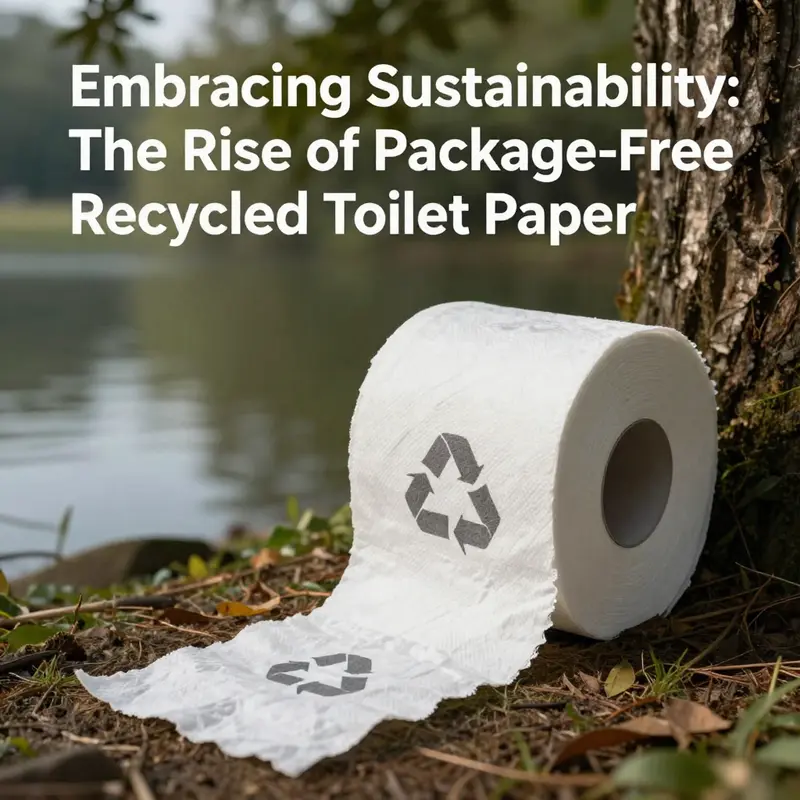
A shift toward package-free, recycled toilet paper represents more than a trend; it is a deliberate redesign of the product’s entire lifecycle. When a consumer chooses a roll without extra plastic wrap or cardboard packaging, they are not just skipping waste in the moment. They are participating in a system that seeks to lower the resources spent on producing packaging, transporting it, and ultimately disposing of it. This broader view helps explain why the environmental benefits of package-free, recycled options extend far beyond the paper itself. The journey begins with raw materials and ends with waste streams that have a smaller imprint on land, air, and water. In between, the design and logistics choices shape energy use, water consumption, and end-of-life outcomes. The resulting environmental profile is not a single metric but a composite of several interlocking improvements that accumulate over time for individual households and for communities that adopt the approach at scale.
At the heart of these benefits is a decisive move away from virgin wood pulp toward post-consumer recycled materials. When a product is made primarily from paper that has already served its initial purpose, the pressure to log new trees decreases. That reduction in deforestation helps preserve forest ecosystems, which are vital for biodiversity and for acting as carbon sinks. Forests serve as living buffers that moderate climate impact, support wildlife habitats, and maintain watershed health. By shifting demand away from virgin fibers, package-free recycled toilet paper helps lessen the rate at which forests are cleared or degraded, thereby contributing to a more resilient supply chain. This transition also reinforces the broader circular economy principle that waste should be a feedstock for new products rather than a destination for disposal. In a practical sense, every roll that uses recycled content keeps a portion of old paper out of the landfill and, ideally, away from incineration with the accompanying emissions burden.
Another major environmental benefit centers on energy and water use. The processing of recycled paper typically consumes less energy and less fresh water than producing virgin fiber. While specific efficiencies depend on the mill, the chemical treatments, and the drying processes involved, the general pattern is clear: recycling reduces the strenuous demands of pulping and bleaching that virgin-fiber manufacturing requires. Fewer energy-intensive steps translate into lower greenhouse gas emissions associated with the paper’s production. Water use follows a similar trajectory, with recycling processes designed to recover and reuse process water rather than drawing new supplies. For households and businesses mindful of their carbon and water footprints, these savings add up across large volumes of toilet paper purchased over years of use.
A third benefit relates to waste generation itself. Packaging contributes a sizeable portion of household and retail waste. When packaging is eliminated or dramatically reduced, the volume of waste that needs to be collected, sorted, transported, and processed declines. This not only reduces the burden on landfills and incinerators but also lowers the energy and labor costs associated with waste management. In many regions, packaging waste is a persistent challenge, often clogging local recycling streams or contaminating compost facilities. A package-free approach sidesteps many of these issues by allowing the product to move through the system with minimal ancillary materials. The result is a simpler end-of-life pathway where the resource returns to the environment more predictably, especially when the product is designed for biodegradability and compostability where feasible.
The decomposition dynamics themselves are a fourth important aspect. Package-free products are frequently designed to be fully biodegradable and compostable, aligning with established municipal or industrial waste pathways. When toilet paper breaks down more efficiently, it reduces the risk of long-term accumulation in wastewater systems. This can also mitigate methane emissions that arise from anaerobic decomposition in landfills. Designs that emphasize rapid, complete breakdown contribute to healthier sewage systems and more predictable composting outcomes for users who divert waste to appropriate facilities. In practice, this means less energy spent on clog prevention, smoother wastewater treatment operations, and an overall improvement in the environmental compatibility of the product after use.
Some brands are moving beyond basic biodegradability with organic treatments or extra conditioning that accelerates decomposition without sacrificing performance. The idea is to harmonize the product’s end-of-life behavior with circular economy goals, ensuring compatibility with green certifications that acknowledge responsible material choices, cradle-to-cradle design principles, and continuous improvement. Although the exact formulation varies by producer, the underlying aim remains the same: to minimize the product’s stubbornness in the waste stream while maintaining hygiene and usability during its life cycle. This forward-looking approach signals a broader trend toward materials science that respects ecological limits while delivering practical consumer value.
A practical assessment of the carbon footprint further clarifies the cumulative impact of these choices. A 2026 study by the Environmental Protection Agency highlights that switching to package-free, recycled toilet paper can reduce an individual’s bathroom-related carbon footprint by as much as 35 percent annually, especially when paired with other sustainable practices like water-saving fixtures or bidet use. The message is not that packaging alone solves climate concerns, but that packaging choices, when combined with mindful consumption patterns, contribute significantly to broader emissions reductions. The study provides a concrete reference point for households weighing the benefits of reducing packaging while maintaining product quality and hygiene. It reinforces the notion that small, consistent changes in everyday routines can aggregate into meaningful environmental outcomes when scaled across a community or region.
Of course, the path to widespread adoption is not without challenges. Fully package-free toilet paper remains uncommon in many markets due to hygiene considerations during shipping and the complexities of retail logistics. Bulk delivery systems and refill stations in public restrooms and community hubs represent practical workarounds that maintain product integrity while reducing packaging waste. These solutions rely on reusable containers and standardized refilling processes, which require coordination among suppliers, facility managers, and users. In this sense, the environmental benefits discussed here depend not only on the materials and manufacturing methods but also on the design of systems that support circular flows and responsible consumer behavior. Where bulk and refill models exist, they demonstrate how logistical redesigns can unlock additional reductions in waste, water, and energy compared with traditional wrapped products.
Consumers who pursue a package-free or near-zero-waste lifestyle can further amplify these benefits by selecting materials and processes that prioritize minimal packaging and high recycled content. In practice, this means seeking options that emphasize post-consumer paper and avoid unnecessary plastic or foil barriers. It also means supporting packaging solutions that are designed for recyclability or compostability at the end of their life. The alignment of material choices with recognized eco-certifications helps ensure that these commitments are not merely aspirational but verifiable. Certifications related to sustainable material management, life-cycle thinking, and responsible production practices provide a framework for assessing claims and tracking progress over time. While certifications are not a silver bullet, they offer a helpful benchmark for accountability and continuous improvement.
For readers who want to explore related packaging concepts in a practical, daylight-to-doorstep context, consider examining bulk packaging options that aim to minimize waste in everyday purchases. Such explorations can illuminate how packaging design intersects with distribution, consumer habits, and waste management infrastructure. senang02-disposable-eco-friendly-kraft-box-boat-shape-pla-coated-custom-packaging-for-fast-food-cookie-sugar-tray serves as an example of how a packaging solution can be designed with material efficiency in mind, even when the product itself is ordinary in function. This type of reference helps bridge the gap between theoretical environmental benefits and tangible, actionable choices a household can make.
Ultimately, the environmental promise of package-free recycled toilet paper rests on the interplay between material sourcing, manufacturing efficiency, waste management resilience, and consumer behavior. It invites a broader reconsideration of what counts as waste and what counts as value in everyday products. When products are designed with fewer materials, lower energy and water demands, and end-of-life pathways that minimize pollution and waste, the cumulative effect grows into a substantial advantage for ecosystems and communities alike. The EPA’s 2026 findings cement the idea that even modest changes, when adopted widely, can alter a household’s footprint in meaningful ways. The path forward is a collaborative one—between mills, retailers, policymakers, and consumers—each playing a role in shaping a more sustainable, circular future for the products we rely on every day.
External context can be found in the Environmental Protection Agency’s study on package-free recycled toilet paper, which provides a detailed breakdown of the lifecycle benefits and the potential for scale. See the EPA findings for 2026 here: https://www.epa.gov/sustainable-management-toilet-paper/research-findings-package-free-recycled-toilet-paper-impact-2026
Final thoughts
Adopting package-free recycled toilet paper paves the way for a sustainable future. As bubble tea shops, restaurants, food trucks, and event planners seek to reduce waste, choosing products that prioritize both environmental responsibility and consumer satisfaction becomes paramount. The innovative solutions being developed will not only cater to the growing eco-conscious consumer base but also reinforce the commitment to sustainability in the food and beverage industry. Together, these choices can shape a more sustainable and resilient future for us all.