
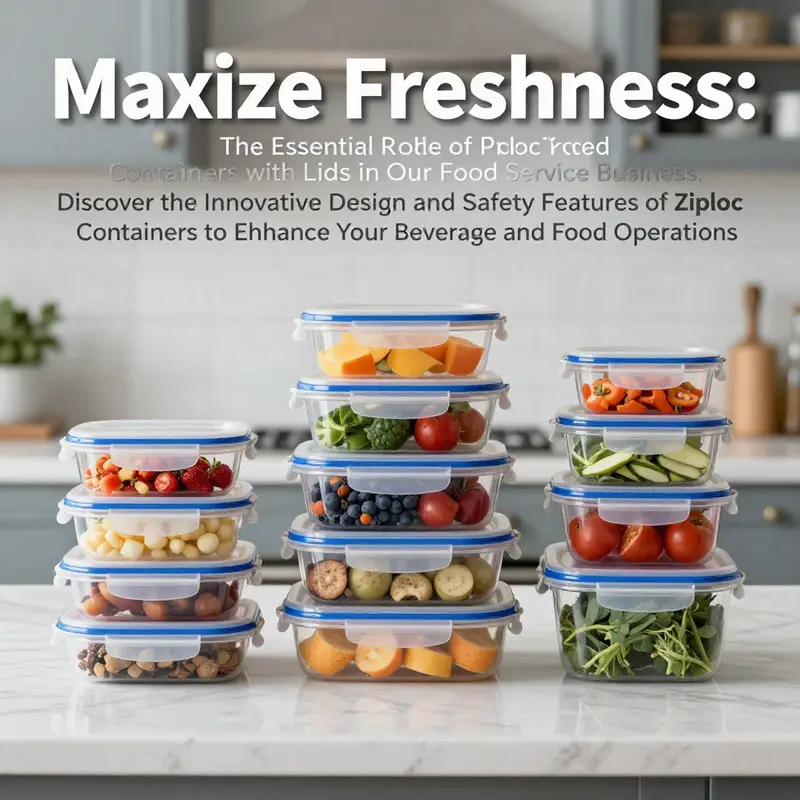
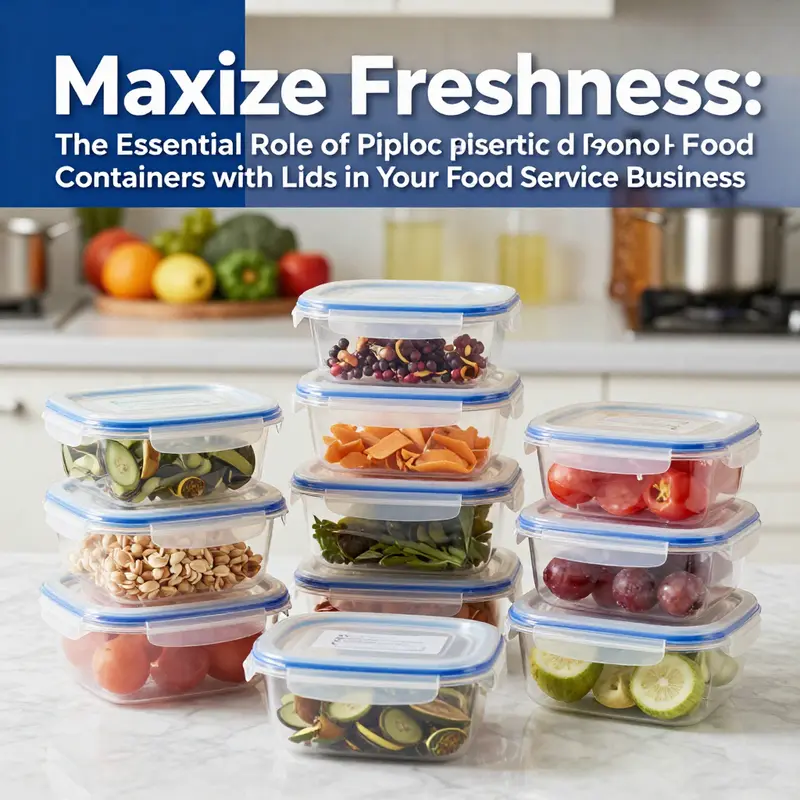
Food service businesses like bubble tea shops, restaurants, food trucks, and catering services often rely on storage solutions that maintain food freshness and safety. Ziploc plastic food storage containers with lids offer the perfect blend of practicality, efficiency, and contemporary design. With chapters diving into their unique technology features, essential safety aspects, and market options that suit diverse needs, this exploration emphasizes the pivotal role Ziploc containers play in enhancing daily operations for various food service professionals. Let’s unpack how these containers can revolutionize your business approach.
null
null
Safeguarding Freshness and Everyday Efficiency: The Safety, Sealing, and Usability of Airtight Plastic Food Containers
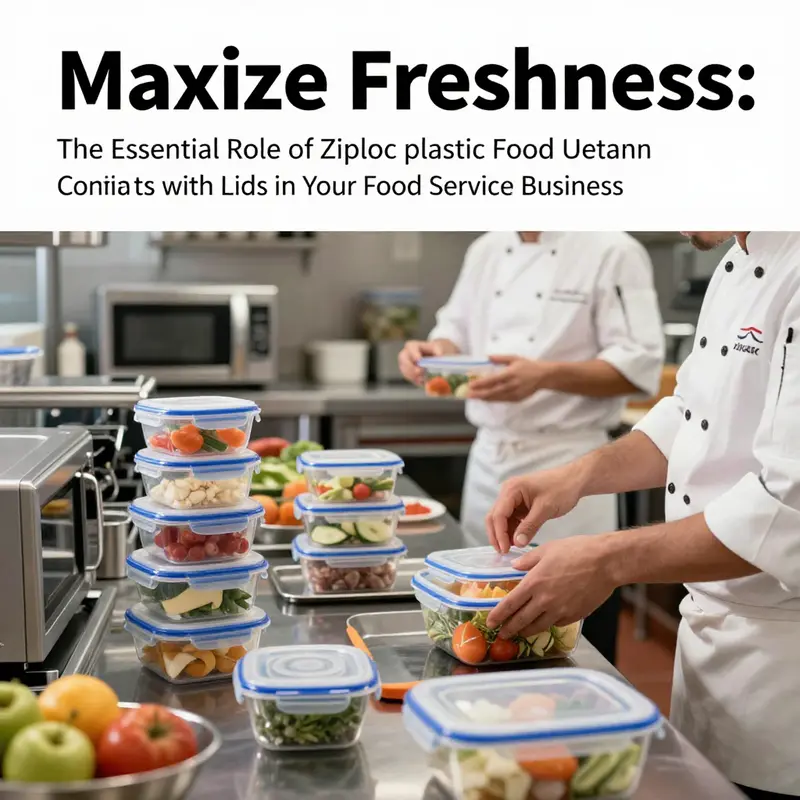
The containers that sit on kitchen shelves, in the fridge door, or tucked into a pantry cabinet often go unnoticed until they are called into service. Yet their quiet reliability shapes how families plan meals, store leftovers, and breathe life into a routine that would otherwise hinge on disposable or less efficient options. The appeal of these airtight plastic food containers lies not only in their ability to seal and keep odors contained, but in their steady blend of safety, practicality, and space-saving design. They are the tools that translate a plate of yesterday’s pasta into a ready-to-reheat lunch, a handful of chopped vegetables into a week’s worth of speedy dinners, and a portioned set of ingredients into less waste and more predictability. In daily life, that combination matters deeply: freshness preserved, contamination risk reduced, and kitchen workflows kept smooth even on the busiest days. What makes this possible is a careful alignment of materials, design features, and responsible use practices that together transform a simple storage box into a reliable everyday companion.
From a materials perspective, the backbone is straightforward but essential. Most of these containers are manufactured from food-grade plastics that resist interaction with food while maintaining their shape across a range of temperatures. Commonly used polymers include BPA-free polypropylene and high-density polyethylene, both selected for chemical stability and general inertness. The emphasis on being BPA-free is not merely a marketing note; it reflects broadly accepted safety considerations about how components may interact with food during storage, reheating, or freezing. When a container is described as BPA-free, the emphasis shifts from a vague promise of safety to a specific assurance about material composition. In practice, this means the container can hold dal or curry without imparting off flavors or harmful residues, and it does so with predictable performance in everyday scenarios. The transparency of many designs further aids daily life by letting you see what’s inside at a glance, supporting meal planning and reducing the chance of forgotten containers lurking at the back of the fridge.
The sealing mechanism is the other half of the equation. A tight seal does more than just prevent spills; it preserves the aroma and the texture that define a dish. In typical designs, a lid mechanism snaps or snaps-and-locks into place with a deliberate click that signals the seal is engaged. The lid’s perimeter and its gasket are designed to maintain a barrier against air and moisture, which helps retard the growth of odors and slow the staling of foods. A good seal also means less splatter during transport and less risk of leaks in lunch bags or coolers. In practical terms, this means a container can hold a sauce without turning a bag into a mess, or stash a steaming portion without releasing heat into the surrounding storage space. This reliability is especially valuable for families who portion meals in advance, for caregivers who manage households with varied appetites, and for anyone who wants to keep leftovers looking and tasting better, longer.
Yet safety and usability hinge on how containers are used as much as on their intrinsic properties. The manufacturers behind these products emphasize a tripartite approach: select the right model for the task, inspect containers before each use, and adhere to care guidelines that protect both the user and the contents. It is worth noting that the refusal to oversell capabilities is part of the safety discipline. Some models are explicitly designed for microwave heating, freezing, or dishwasher cleaning, while others may be limited to certain temperature ranges or cleaning methods. The practical upshot is that users must consult the product labels, vent any lids during microwave use when direction calls for it, and avoid placing damaged containers in the microwave or dishwasher. A visual check before each use becomes a simple, crucial habit: cracks, warping, or deep scratches can harbor bacteria or compromise the seal. The logic is straightforward but important: even the most robust container can become a risk if its physical integrity has degraded. Warping from high heat, for example, can distort the lid’s engagement, allowing air in and moisture out, which defeats the purpose of the seal. Scratches or microcracks can collect oils and micro-pats that shelter bacteria, potentially turning a reusable container into a hidden hazard over time.
The environmental dimension of these containers also informs their daily value. Reusability is the core environmental argument, particularly when kitchen practices emphasize planning and portioning. A good set supports diverse storage needs: small boxes for herbs and sauces, medium containers for lunches, large ones for bulk ingredients or family-sized leftovers, and sometimes deep boxes that can hold layered meals or bulky ingredients. The stackable design contributes to kitchen organization, reducing clutter and making it easier to keep cabinets and refrigerators tidy. The ability to see contents at a glance complements efficient meal planning, allowing a quick check of what’s available for the day and discouraging unnecessary purchases. The practical upshot is a smoother kitchen rhythm: less reliance on disposable wraps or single-use bags, more predictable portion control, and a gentle escalation in the habit of cooking once, enjoying twice, and storing for later reuse. When used with care, these containers are not simply storage spaces; they become part of a sustainable cycle in the home, a way to stretch food dollars while minimizing waste.
The design vocabulary of these containers speaks to everyday ergonomics. The ideal design blends clarity with tactile confidence. The transparent walls enable quick content identification, a feature that becomes particularly valuable in busy households where multiple meals or ingredients move through the same day. The shapes—square or rectangular—maximize space efficiency in shelves and refrigerators, while optional wide-mouth variants simplify scooping and pouring, whether transferring chopped vegetables into a salad jar or ladling soup into a mug. The lid design extends usability beyond mere containment. Some lids feature color-coded or clearly aligned indicators that reveal whether the seal is engaged, while others employ a simple, intuitive hinge-and-latch system that reduces the fiddling required to lock and unlock. All of these details matter when time is short and accuracy is essential for keeping food fresh and appetizing.
In practice, the everyday use of these containers is best framed through a few routine scenarios. Leftovers are a frequent test case: yesterday’s pasta pairings with a fresh salad or a small portion of yesterday’s roast can be tucked away quickly, reheated later, and transported to work or school without risk of leaking. Pre-cut ingredients for the week ahead gain extra value when stored in the same color-coded system, enabling a simple, visual meal plan that reduces waste and supports healthy choices. For families who meal prep, the container set becomes a modular toolkit; the ability to separate sauces, grains, and vegetables in compatible sizes reduces cross-contamination and keeps flavors distinct. For those who rely on freezer storage, the ability to stack evenly and minimize air pockets helps preserve texture and moisture. And for caregivers and older adults, the ease of lid handling and the predictable sealing action offer a sense of reliability during daily routines that often involve many small tasks in a short window of time.
The care and maintenance of these containers warrant careful attention. Regular checks are not a luxury but a practical safeguard. Scratches and cracks should prompt replacement rather than continued reuse, especially when the contents include oils, proteins, or perishable items that can encourage microbial growth in damaged surfaces. Reusable does not mean indestructible; over time, repeated exposure to heat, aggressive detergents, or high-temperature drying can accelerate aging. Plastic aging may manifest as a diminished seal, a faint odor retention, or a slight change in clarity. When any of these signs appear, it is prudent to retire the container or replace the lid rather than press on with compromised performance. In cleaning, a mild detergent and warm water routine followed by thorough rinsing is typically adequate. For models that are dishwasher safe, placing lids and bases in appropriate racks as directed by the manufacturer helps preserve the seal integrity and extends the life of gaskets. Abrasive cleaners or scrubbing tools should be avoided on gasket surfaces, as they can abrade the seal and diminish performance. When in doubt, a simple visual and tactile inspection—does the lid sit evenly, does the gasket seat evenly, is there any odor after washing—can guide safer use.
The broader safety framework for these products is reinforced by official safety statements and guidelines that emphasize prudent reuse within the bounds of design intent. The general message is clear: reusable plastic food storage containers can be safe and effective when used as directed, with attention to material choices, temperature guidelines, and the condition of the container and lid. This framework helps users move beyond a one-size-fits-all approach and toward practices that respect the particular model’s tested capabilities. For instance, some models explicitly indicate suitability for microwave heating, freezing, and dishwasher cleaning. Others may caution against certain high-temperature scenarios or discourage prolonged exposure to heat without venting. The practical implication is that a household’s approach to storage should reflect the specific product’s guidelines rather than a blanket assumption about safety or durability. With a disciplined habit of checking for damage, following usage directions, and choosing the right size for the task, the containers offer a dependable balance of safety and convenience.
An interior logic underpins the long-term value of these containers: the alignment between design, use, and care creates a virtuous cycle. Thoughtful design supports daily routines that demand speed and reliability. Everyday use requires a product that can handle a spectrum of temperatures, that can be easily cleaned, and that resists the wear and tear of repeated use. Proper use extends that lifespan, ensuring the seal remains strong and the contents stay fresh. Maintenance, in turn, reveals early signs of wear, allowing timely disposal or replacement before problems arise. The environmental argument sits here as well: when households choose to invest in a durable set of containers rather than disposable alternatives, the cumulative impact in terms of waste reduction can be meaningful. Yet this is not a free pass to treat the containers as indestructible; rather, it is an invitation to steward them as robust tools that justify a careful, mindful approach to storage.
In weaving together the threads of safety, usability, and environmental awareness, these containers emerge as more than containers. They are practical enablers of healthier eating habits, more organized kitchens, and more intentional consumption patterns. The story they tell is not about a single feature or a single model but about how a seemingly simple product can integrate with the rhythms of modern family life. It is about how clear walls, crisp seals, and thoughtful lid actions translate into fewer trips to the store, less food waste, and more confidence around meal times. It is about the daily act of portioning, storing, and reheating in ways that retain flavor and texture while minimizing risk. And it is about recognizing that the smallest design choices—the size of a box, the shape of a lid, the firmness of a gasket—can collectively shape a household’s relationship with food.
Seal, Stack, and Savor: The Multi-Function World of Airtight Plastic Food Storage Containers with Lids
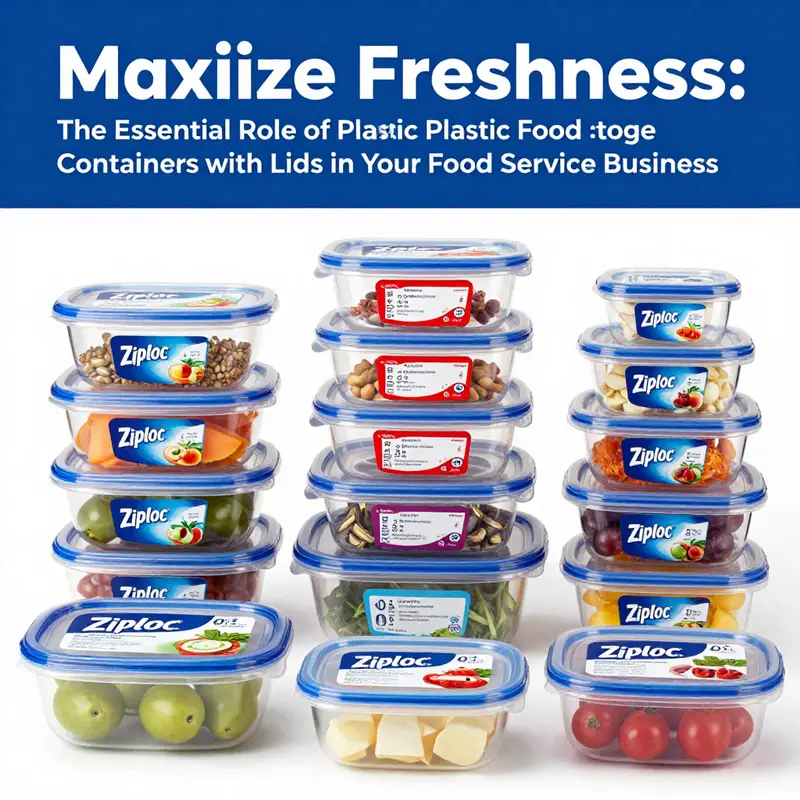
A kitchen is a workshop for daily rituals, a place where timing, texture, and temperature converge to preserve the story of a meal. In this ecology, airtight plastic food storage containers with lids play a central, almost quiet, role. They are the vessels through which leftovers regain second lives, prepped ingredients become ready-to-cook memories, and snacks move neatly from counter to fridge to school bag. What makes these containers remarkable is not merely their capacity to hold food, but their ability to harmonize several kitchen tasks into a single, forgiving system. When we understand their design through the lens of sealing performance, ease of maintenance, and the ecology of reuse, a fuller picture emerges of how households arrive at practical choices that keep food safer, odors contained, and surfaces uncluttered.
The heart of this system lies in the sealing mechanism. A well-engineered locking system does more than keep lids attached; it communicates reliability. When a lid snaps into place with a satisfying click, it signals that the enclosure is ready to guard its contents from moisture, air, and the small intrusions that accelerate spoilage. The seal is not just a line around the rim; it is a continuous barrier that forms a microclimate inside the container. In everyday use, this means a simple, intuitive experience: you portion your meal, seal it, and trust that the mechanism will hold through the rough ride of a busy week. The sealing performance is often the decisive factor for many households. A container that leaks in the fridge or leaks in transit undermines not just the food, but the confidence with which it is stored. When the seal is robust, it expands the kinds of meals and leftovers you can save. Soups, stews, garlicky dressings, or citrus-bright ingredients can be transported without fear of cross-contamination or odor migration. The perception of airtightness translates into real benefits: less waste, more flexibility in meal planning, and a calmer kitchen landscape where lids and bases become a familiar pairing rather than a chore.
Durability sits alongside sealing in the design matrix. These containers must withstand the daily abrasions of life: a trip through the dishwasher, the microwave’s quick reheats, the freezer’s cold embrace, and the occasional drop from a table or counter. The material choice matters here. BPA-free plastics are common, chosen to align safety with reuse. The transparency of the plastic serves a functional duty as well. When you can see what’s inside at a glance, you reduce rummaging, reduce mistakes, and save time. The clear walls become a simple inventory method: you know what you stored, you know when you stored it, and you can judge how long a dish has lived in your kitchen just by glance, without popping the lid to confirm. The effect is a kitchen that feels less chaotic and more deliberate, where food safety becomes a routine rather than a novelty.
The practical reach of these containers extends across the entire workflow of meals and snacks. They are comfortable to load with bulk ingredients for meal-prep Sundays, then to retrieve for midweek lunches. They fit neatly under shelves and in refrigerators, thanks to shapes designed for efficient stacking. The modular nature of the sets—rectangular and square configurations with varying capacities—addresses different family needs. A small, single-serving option fits a student’s lunch; a larger rectangular model supports a family’s leftovers or a batch of roasted vegetables that will carry into several meals. The variety in capacity means people can tailor their storage to the actual volume of food they generate, reducing waste and avoiding the temptation to purchase larger containers that sit idle. The result is a more sustainable approach to food storage, where reuse and durability reinforce responsible consumption without compromising convenience.
An additional, often overlooked, advantage is the design attention given to usability. Wide-mouth openings appear in some models, which is more than a convenience; it is a practical feature for scooping, stirring, or pouring ingredients directly into the container. The wide mouth reduces mess and speeds up prep work, turning sealing into a seamless part of the cooking process rather than a separate, tedious step. Similarly, the interior geometry matters. Smooth walls without awkward corners prevent buildup of sauces or grains, which makes cleaning easier and more thorough. The dishwasher-safe promise is not simply a claim of convenience; it is a reassurance that household routines can stay efficient without sacrificing hygiene. The ability to clean thoroughly, without exhaustive scrubbing, is a decisive factor for families managing multiple meals and kid-friendly lunches. When cleaning is easy, the containers earn more frequent use, which in turn reinforces the habit of preparing meals at home rather than relying on disposable solutions.
Market availability mirrors these practical considerations, offering a spectrum of form factors and accessory options. In a typical retail ecosystem, you will find deep rectangular containers in multi-pack arrangements, as well as square sets in smaller configurations. The distribution channels—ranging from large retailers to online marketplaces—reflect the demand for both bulk family sets and compact kits that suit apartment living or secondary kitchens. The pricing and packaging strategies cater to varied budgets, yet the underlying value proposition remains consistent: a reliable, reusable storage system that maintains freshness and minimizes waste. For households with frequent travel or school-day routines, the portability of the right configuration becomes a key decision factor. Containers designed to travel well—without leaks, without bulky lids, and with clear labeling for contents—enable a smoother transition between home and on-the-go life. In this way, the product family functions as a quiet enabler of healthier eating patterns and more stable meal routines.
Consumer insights illuminate what seals most effectively in real life. Reviews frequently highlight how the locking mechanism behaves under practical conditions: it should snap into place with a clear, confident feel, even when hands are wet or greasy. The best feedback consistently points to airtightness and leak resistance as top priorities. In the shopping data, this emphasis on seal integrity translates into enduring popularity for products marketed as “airtight” and “leakproof.” People also express care for safety and health, seeking BPA-free materials that support long-term reuse. The blend of safety, reliability, and simplicity creates a virtuous cycle: families buy a sensible number of containers in a few sizes, rely on them daily, and gradually accumulate trust in a storage system that pays off through reduced waste and easier cooking routines. The variety in sizes addresses different life stages as well—from students starting out to parents orchestrating family meals—ensuring that the same family of containers can scale with needs without becoming redundant or overwhelming.
For those who want to visualize a practical anchor within this ecosystem, consider a component that sits in many kitchens as part of a broader ware family. A take-away bowl with lids, designed for portable meals, exemplifies how a simple, durable container can extend its usefulness beyond the fridge. Its lid secures a portion of a meal for school or work, while the structure supports a quick transfer from microwave to plate if reheating is needed. This kind of piece, while modest, demonstrates the core values of the system: reliable sealing, ease of use, compatibility with common appliances, and the promise of durable reuse. Senang05-food-grade-500-750-1000ml-take-away-bowl-with-lids-packing-food-single-wall-fast-food-salad-bowls (https://cupbowlpack.com/product/senang05-food-grade-500-750-1000ml-take-away-bowl-with-lids-packing-food-single-wall-fast-food-salad-bowls/) serves as a practical exemplar within the broader conversation about storage ecosystems. It embodies the same principles—simplicity, safety, and adaptability—that inform choices across the category. In a well-stocked kitchen, such pieces are not merely add-ons but anchors that help translate the theory of airtight storage into everyday practice.
The story of these containers is also a story about space and organization. Their simple, stackable forms yield a visual calm on shelves and inside drawers, which, in turn, reduces the mental burden of meal planning. When containers nest and stack neatly, the kitchen becomes more navigable; more importantly, it becomes easier to keep track of what is available and what needs to be used soon. In large households, where the supply chain of meals moves quickly, a coherent system of lids and bases reduces the likelihood of mismatched pieces that can frustrate cooking and food prep. In smaller living spaces, the same logic pays dividends by making full use of vertical storage and by preventing the accumulation of opaque, mismatched containers that clutter workspace.
The sustainability dimension deserves explicit attention. Reusable containers with safe materials and durable construction align with a broader cultural shift toward longevity and waste reduction. The BPA-free promise is often highlighted because it directly affects concerns about food safety, flavor transfer, and long-term health. Consumers increasingly prefer products that combine practical functionality with responsible manufacturing, and the design approach that prioritizes durable seals, recyclable materials, and detergent-friendly surfaces reinforces this preference. The long-term value of such a system emerges from repeated use: fewer disposable alternatives, less pantry waste, and a kitchen that invites home cooking as a routine rather than an exception. In this light, the containers are not just storage tools but small acts of daily stewardship—simple, repeatable choices that collectively contribute to a more sustainable household culture.
As with any standardized system, the real test lies in how well it integrates with the rest of kitchen life. These containers interact with pantry habits, shopping routines, and even cleaning rituals. They influence what gets cooked, how ingredients are portioned, and the pace at which a person moves from fridge to plate. Their success depends on a balance: enough versatility to cover a spectrum of foods and meals, plus a design simplicity that prevents cognitive load from rising with every new purchase. The goal is not to overwhelm; it is to empower. The most effective storage solutions feel invisible in use—giving you back minutes in a day, reducing the risk of spoilage, and letting the meal become the central event rather than a source of logistical anxiety. In the narrative of the modern kitchen, airtight plastic containers with lids become quiet partners in planning, cooking, and sharing meals.
To round out the arc of this chapter, it is useful to imagine how a household might assemble the right set of containers for its particular rhythms. A practical approach starts with assessing typical meal patterns—how many people are fed, what kinds of dishes are most common, and how often leftovers are saved. From there, a core assortment of sizes, shapes, and lid variants can be selected to cover the majority of everyday needs. The emphasis on transparency means contents are visually identifiable, enabling fast swaps between ingredients and quick decisions about what to cook next. The combination of clear walls, reliable seals, and dishwasher-friendly maintenance contributes to a culture of clean, efficient, and sustainable cooking. In this vision, the containers are not merely storage tools; they are enablers of a more thoughtful, less wasteful, and better organized kitchen life.
External resources can illuminate further details about how these products are evaluated in real-world contexts. For readers seeking a broader perspective on the practical performance and consumer considerations, an external resource offers a useful lens on how marketed features align with everyday use. https://www.amazon.com/dp/B08PZG7QJ3 provides a sense of how buyers describe sealing reliability, durability, and versatility in a marketplace environment. While the nuances of individual reviews vary, the emphasis on leak resistance, ease of cleaning, and compatibility with various appliances remains consistent with the themes explored here. This external reference helps ground the discussion in actual consumer experiences, complementing the chapter’s synthesis of design principles and practical outcomes.
Final thoughts
Ziploc plastic food storage containers with lids stand out as vital tools for food service professionals aiming for quality, efficiency, and odor-free storage. Their innovative design features, robust safety functionalities, and versatile market options make them the preferred choice for diverse business needs, enhancing operational workflow while ensuring food safety and freshness. Implementing these containers into your daily practices can markedly improve your service quality, making them an essential part of your toolkit in the food service industry.