
In today’s eco-conscious world, businesses in the food and beverage sector face critical decisions regarding sustainability practices, notably in the recycling of paper packaging. As bubble tea shops, restaurants, food trucks, and corporate procurement teams aim to enhance their environmental footprint, understanding whether to recycle paper packaging with paper or cardboard becomes essential. Different types of paper packaging present unique recycling challenges and opportunities. This article explores this topic in depth, covering key aspects such as the types of paper packaging materials, challenges in the recycling process, and the environmental and economic impacts, ultimately guiding businesses toward responsible recycling practices.
Fibers in Flux: Reconsidering Whether Paper Packaging Belongs in the Paper Stream or the Cardboard Bin
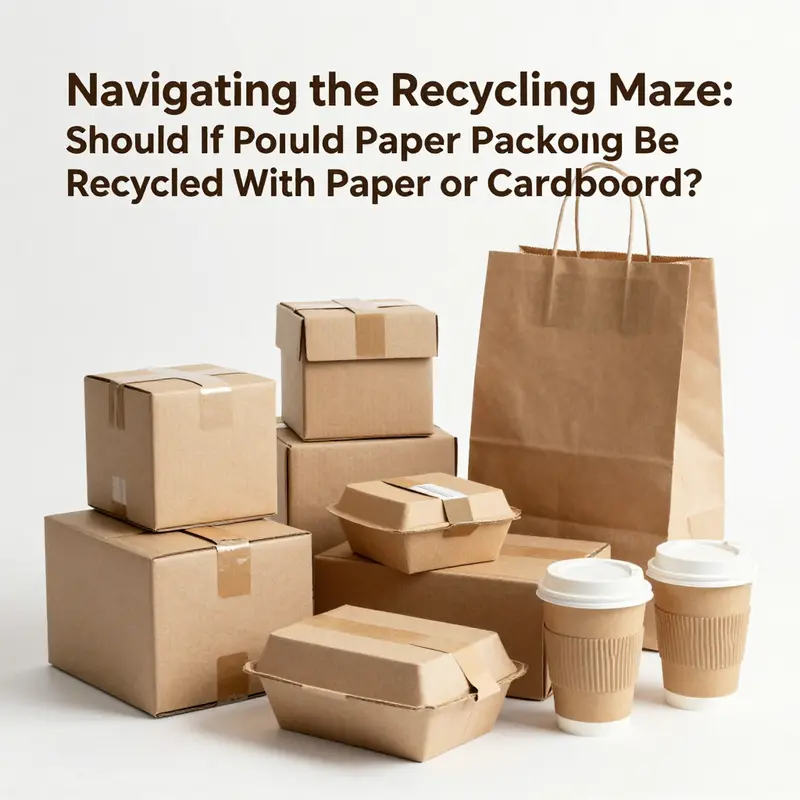
Deciding how to recycle paper packaging begins with understanding its makeup. Most everyday paper packaging is designed to be recycled in the paper or cardboard stream, yet the presence of coatings, laminates, or moisture can steer it toward a different fate. The central question—should paper packaging be recycled with paper or with cardboard?—unfolds as a practical puzzle whose answer rests on the material’s composition, the contaminants it carries, and the capabilities of local facilities. When this balance is understood, the act of recycling becomes less about a blanket rule and more about aligning each item with the stream best able to recover fibers while minimizing contamination.
At the heart of the issue is composition. Pure paper packaging, such as corrugated boxes, kraft boxes, and other paperboard containers, is designed to be fully recyclable within the paper or cardboard stream. These are the items most people recognize as the familiar fiber recycling load: shipping cartons, cereal boxes, and many paperboard food containers that are not spoiled or contaminated. In this ideal case, the path is straightforward: they belong in the paper/cardboard recycling bin, where the fibers can be separated, pulped, and reused to make new paper products. The underlying principle is simple: clean, dry, and fiber-rich packaging preserves the quality of the recycled material and reduces the need for virgin fibers.
Where the practice becomes more nuanced is with packaging that blends materials. Coated or laminated paper packaging—including items such as milk or juice cartons, and coffee cups with plastic linings—still contains a substantial paper component, often in the range of 70–80%. But these were engineered to serve specific functions: imprimés that resist moisture, protect contents, or provide a barrier to grease. The trade-off is that plastic or aluminum layers complicate recycling in standard municipal streams. In many regions, these multi-material packages are not accepted in the regular paper recycling bin; instead, they are directed to specialized facilities equipped to handle multi-material recycling. In practice, this means they can be recycled through dedicated programs or drop-off centers designed to process layers that must be separated before pulping.
To illustrate, consider cartons that are largely paper with a plastic or aluminum barrier. In some areas, such items are collected through separate streams or at facilities that can manage the multi-material structure. The fibers from the paper portion remain valuable, but the barrier layers require advanced processing, mechanical separation, and sometimes chemical treatment to recover usable fiber. The emphasis for the consumer remains clear: don’t treat all multi-materials as standard paper; check whether your local system supports multi-material recycling and, if so, follow the program designed for those packages. The public guidance often centers on not contaminating the stream with non-paper elements and ensuring that any barrier layers are properly directed to the right facility.
A common, concrete example of the complexity comes from the fact that many multi-layer packaging items are designed with a dual purpose: deliver a product safely and be recyclable in the right downstream stream. In practice, this translates to a system where a considerable proportion of the packaging is paper, yet the presence of a laminated layer or a metallic foil complicates the ability of ordinary mills to separate fibers efficiently. In such cases, the packaging should not be mixed with pure paper or cardboard. Instead, it should be directed to the specialized channel that has the capability to manage and separate these layers, thereby reclaiming paper fibers while diverting plastics or metals to the appropriate recycling stream.
The guiding principle, then, is to regard the local recycling framework as the decision-maker. Rules for what goes into the paper bin versus the cardboard bin vary by city or region. Some municipalities treat all paper-based packaging as a single stream, while others require separation of multi-material items. The best practice is pragmatic: consult local guidelines, which will indicate the correct destination for these packages. Likewise, the preparation steps matter greatly. Cleanliness is essential: remove food residue, grease, or liquids that would degrade fiber quality. A packaging item that is damp or contaminated can contaminate an entire batch of fibers, reducing the efficiency of recycling processes and potentially making the load unrecyclable in some facilities. Drying the item or letting it air out before recycling can help preserve fiber integrity, especially when a relatively dry packaging material enters the processing stream.
Another practical step is to flatten packaging before disposal. Flattening reduces volume, making it easier to handle and more space-efficient in collection bins and processing facilities. It also signals intent to recycling programs that the item is suitable for fiber recovery. Labeling can be beneficial when in doubt. Look for recycling symbols and any local guidelines printed on the packaging itself, and when uncertainty remains, seek guidance from local waste management services. The clean-dry-flatten sequence becomes a simple, repeatable ritual that helps maximize the quality and quantity of recovered fibers.
From an industry perspective, the story of paper packaging recycling is less about a universal rule and more about a spectrum of options that depend on the structure of the item and the capacity of the local processors. Materials that are pure paper or cardboard join the paper stream with minimal friction. Materials that incorporate plastics or aluminum require a different route, often involving specialized equipment capable of separating layers and reclaiming the fiber content. In this frame, the circular economy is reinforced by both design and infrastructure. Design choices are meaningful: if packaging is intended to be recycled in a particular stream, the materials chosen should align with what the local system can handle. Likewise, facility investments in separation technologies and in pilot programs for multi-material recycling reflect a broader commitment to extracting maximum value from every fiber while reducing waste to landfill.
The educational component cannot be ignored. Consumers naturally want to recycle correctly, but the rules are not always intuitive. Clear labeling, accessible local guidelines, and public information campaigns help bridge the gap between packaging design and recycling reality. When guidance is ambiguous, a conservative approach—treat multi-material items as not suitable for the standard paper stream—prevents cross-contamination and preserves the quality of recyclable fibers. In this sense, the decision about whether to recycle paper packaging with paper or with cardboard is not a static dictum; it is an adaptive practice that evolves with advances in recycling technology and shifts in municipal policy.
As packaging designers and waste managers collaborate to close the loop, the consumer’s role remains pivotal. A responsible recycling culture hinges on three elements: accurate composition, careful preparation, and awareness of local facility capabilities. When these are in place, the pathway for paper packaging becomes clearer. Pure paper and cardboard packaging stay within the traditional paper stream, preserving fiber value and simplifying processing. Coated or laminated items, while more complex, can be redirected to specialized streams that can handle multi-material structures, ensuring that the paper content is recovered where possible and that non-paper components are properly diverted. The vision is not to force a single rule on every package but to align each item with the most appropriate recycling route, guided by local infrastructure and the packaging’s own design.
For readers seeking practical context beyond the local rules, a broader industry resource highlights that paper packaging with multi-layer structures, like those used for beverages or specialty foods, can indeed be recycled through specialized systems and contribute to the circular economy, despite their complexity. This reframing helps explain why some items do not fit neatly into a single stream and why regional programs exist to handle diverse packaging formats. In this spirit, the following resource offers specific guidance on the collection and recycling of paper-based packaging and how communities can integrate these practices into everyday waste management. eco-friendly-printed-logo-buy-paper-cup-take-away-coffee-cup.
To ground the broader discussion in established practice, it is also helpful to connect with widely used guidelines that emphasize cleanliness and local customization. The Environmental Protection Agency provides comprehensive resources on household recycling practices, including how to prepare paper packaging for recycling and what to do when the packaging may contain non-paper components. Their guidance reinforces the core principles outlined here: prepare packaging so that it is clean and dry, understand the material composition, and follow the local rules that determine whether an item goes with paper or with cardboard. For deeper exploration, see the EPA’s recycling information portal: https://www.epa.gov/recycle.
In sum, the question of whether paper packaging should be recycled with paper or with cardboard does not yield a one-size-fits-all answer. It yields a nuanced decision, rooted in the packaging’s material makeup and the processing capabilities of the local recycling system. When packaging is pure paper, the paper stream is the natural home. When barrier layers complicate separation, the item may belong in a specialized stream designed to recover fiber content while responsibly managing the non-paper materials. The consumer—the thoughtful recycler—plays a critical role by ensuring cleanliness, reducing contamination, flattening where appropriate, and following local guidelines. This dynamic approach preserves fiber value, supports a resilient recycling infrastructure, and advances the broader objective of reducing waste while sustaining the materials that form the backbone of everyday packaging.
The Paper Packaging Dilemma: Navigating Whether to Recycle with Paper, Cardboard, or a Specialized Route
When a consumer tosses a roll of packaging into the recycling bin, the question often arises with little clarity: should this paper packaging be recycled with paper or with cardboard? The simplest answer—“the same bin for all” or “all paper goes here”—is appealing, but it overlooks the nuanced realities of modern packaging. A unified stream may seem efficient, yet the composition of many packages can render that approach ineffective or even harmful to the recycling process. The backbone of a robust recycling system is structural awareness: understanding what the material is made of, how it is formed, and what happens to it after it leaves the curb. Only then can individuals and communities maximize the recovery of fiber while minimizing contamination that can degrade fiber quality and force mills to discard whole bales. This chapter unfolds that complexity, moving from clear-cut cases to the more intricate multi-material realities that increasingly populate our shelves and mail.
At the heart of the dilemma lies material composition. Pure paper or cardboard packaging—think corrugated shipping boxes, kraft boxes, or solid paperboard cartons—consists almost entirely of cellulose fibers. When these items are clean and free of non-paper elements, they are genuinely recyclable in standard paper or cardboard streams. The simple criterion here is the absence of coatings, adhesives, or embedded barriers that are not easily separated during processing. In practice, that means items like a plain brown corrugated box or a cereal box, provided they are free from food residue and grease, can typically travel with other paper-based materials to a dedicated paper recycling facility. The value proposition is straightforward: these fibers can be de-inked, cleaned, and repurposed into new paper products, closing a loop that reduces virgin-fiber demand and energy use.
Yet the packaging landscape has evolved far beyond plain sheet and box forms. A growing share of paper packaging uses coatings or lamination to improve moisture resistance, shelf life, or barrier properties. Milk cartons, juice cartons, and many coffee cups carry a significant portion of their structure in paper, but their interior or exterior layers often include plastics or aluminum. Those coatings, while helping the package perform in its primary role, complicate recycling in ordinary mills. The typical paper stream cannot easily separate a plastic film from pulp, nor can many facilities efficiently strip away aluminum from the fiber without specialized machinery. In plain terms, the presence of non-paper layers disrupts standard recycling chemistry and can contaminate entire batches of recovered fiber. The result is not just a single item rejected; it can degrade the quality of multiple batches, imposing higher processing costs and reduced fiber yield.
That is not to say all multi-material packaging is doomed to a separate fate. In many regions, dedicated facilities exist to handle multi-material structures, often labeled as multi-material or composite recycling programs. These processes are designed to recover the different components, then recover or repurpose each material stream as appropriate. Even then, not all heterogeneous packaging is equally recoverable. The key is separation at the source and the recognition that a single bin for every paper item may compromise the efficiency and end-use quality of the recycled fiber. A practical yardstick emerges: if a paper-based item contains plastic film, foil, aluminum, or wax that cannot be peeled away or otherwise removed through standard processing, it likely belongs in a specialized stream rather than the general paper or cardboard bin. This principle helps prevent cross-contamination that would otherwise ripple through the recycling chain.
From a policy and municipal operations perspective, the decision to assign a paper-based package to the paper stream, the cardboard stream, or a separate multi-material stream hinges on local infrastructure. Some municipalities consolidate all paper-based packaging into one bin, relying on single-stream recycling facilities to do the sorting downstream. Others require explicit separation between cardboard and paper, or they mandate dropping off multi-material packages at specialized centers. In practice, residents and businesses benefit from following local guidance and, when in doubt, erring on the side of separation. The rationale is simple: misplacement not only reduces the chance of recovery but can contaminate other fibers, increasing the likelihood that a bale will be rejected at the mill. This is where the principle of source separation—sorting by material type before collection—demonstrates its value most clearly. It minimizes cross-contamination and enhances the opportunity for high-quality fiber to reenter the production cycle.
In the wake of these realities, several practical guidelines emerge that help align daily disposal with the broader aims of a circular economy. First, check local guidelines. Recycling rules vary widely across cities and regions. A rule that applies in one area may be outdated or even counterproductive in another. Second, practice cleanliness and dryness. Food residue, grease, and wetness degrade fiber quality and can promote odors, pest issues, and fungal growth in storage or processing facilities. Third, flatten and compact when appropriate. Box flattening saves space, improves stacking in processing lines, and enhances bale density. Fourth, if a packaging contains non-paper elements that cannot be removed by ordinary means, consider placing it in the appropriate specialized stream or drop-off point if one exists in your region. The goal is to reduce contamination and maximize the recoverability of the paper fiber.
These principles apply not only to cartons and boxes but also to containers that blur the line between paper and plastic. A coated or laminated sleeve around a paperboard carton, a sleeve with a wax coating, or a liner that acts as a moisture barrier can push the item into a gray area. Mixed-material packaging that includes a plastic window in a cardboard box or a foil-backed layer in a paper cup presents a dual challenge: it is partly recyclable as fiber, yet the non-paper layer complicates processing. In some places, such items are accepted in the paper stream if the non-paper fraction is minimal and can be effectively separated during recycling. In others, they are diverted to specialized facilities or drop-off sites specifically designed to handle multi-material packaging. The consistency of the approach across regions, however, remains a function of local infrastructure and policy. Hence the persistent call to consult local guidelines and to stay informed about program changes.
A more explicit example of complexity arises with cartons designed to be recyclable but layered with multiple barriers. Consider packaging that is composed roughly of paper (70–80%), with thin plastic or aluminum layers that provide barrier properties. These are not freely processed by typical municipal mills, but they are not beyond redemption. In many regions, these multi-layer structures are intentionally designed for recycling in specialized streams or facilities that have the capacity to separate the constituent materials and reprocess them appropriately. In effect, the system recognizes that a portion of the fiber can be recovered, while the other materials can be captured and repurposed in separate value chains. The industrial logic here mirrors the broader principle of design for recyclability: the packaging industry increasingly acknowledges that what is good for product performance can be reconciled with what is good for end-of-life recovery only when the materials can be sufficiently separated and recovered.
To bring this discussion into daily life, a practical takeaway centers on the idea of material awareness. When you pick up a box or a cup, ask a straightforward question: does it contain non-paper elements that can’t be easily removed in standard processing? If the answer is yes, seek out local guidance on whether it should go to a specialized recycling stream or be disposed of as another material. If you can remove the non-paper portion or if the packaging is plain and uncoated, you are likely in the clear to place it in the paper or cardboard stream, depending on the item’s primary material. In ambiguous cases, a conservative approach—sorting by material, or choosing the more conservative option offered by your recycling program—helps protect the integrity of the fiber recycling process.
For readers looking to see concrete examples within the broader landscape of packaging disposal, consider examining a real-world example of how households approach single-use paper products in contexts where multi-material packaging is prevalent. Food-grade disposable kraft paper soup cups with lids illustrate the practical tension between performance and recyclability. Such items often require clean, dry handling and, in some jurisdictions, separate collection due to their laminated interiors or plastic hinges. These considerations underscore the central theme of this chapter: there is no universal rule that cleanly categorizes every piece of paper packaging into a single bin. Instead, the optimal path depends on composition, contamination, and the capabilities of the local recycling infrastructure.
Ultimately, the road to improved fiber recovery relies on a blend of consumer diligence, municipal policy, and advanced processing. The modern packaging ecosystem is diverse, not only in the types of paper products produced but also in the recycling routes that exist to handle them. As designers and manufacturers increasingly pursue reusability and recyclability, the moment of decision at the curb gains clarity only when the packaging is predictable and the processing options are transparent. The current best practice remains grounded in local guidance, clean handling, and a willingness to separate when necessary. In that sense, the paper-versus-cardboard question is less a binary choice and more a call to align consumer behavior with the capabilities of the system that finally reclaims the material.
External resource for further detail on multi-material recycling and paper packaging collection can be found here: Tetra Pak – Paper Packaging Collection and Recycling.
Beyond the Bin: The Environmental Case for Recycling Paper Packaging with Paper and Cardboard
Every time a box or carton is placed in a recycling bin, a decision is made about the fate of the materials that carry our goods. The central question for many communities is not simply whether paper packaging can be recycled, but where it fits within the stream of paper versus cardboard. The real answer depends on the packaging’s composition, cleanliness, and the local infrastructure for recycling. In broad terms, pure paper and cardboard—think corrugated boxes, kraft boxes, and uncoated paperboard boxes—are the backbone of recyclable streams. They are composed of cellulose fibers that can be repurposed through standard pulping and paper-making processes. When these items are clean and free from contaminants, they belong in the paper/cardboard recycling bin, not in the garbage. Yet the landscape becomes more nuanced when coatings, laminates, or multi-material layers enter the picture. These layers—whether plastic, aluminum, or a combination—change the recyclability story and often require specialized facilities or collection programs. The difference in composition matters because recyclability hinges on the ability to separate materials and process them efficiently. In the simplest terms, if the package remains nearly pure paper or paperboard, the recycling system can handle it alongside other similar streams. If, however, the packaging includes a substantial coating or is part of a multi-material structure, it may demand a different route, one that some cities support only through dedicated programs or drop-off centers. A common example of this complexity is found in multi-layer cartons like Tetra Pak styles. These cartons are typically around 70 percent paper, with plastics making up roughly 20 percent and aluminum about 10 percent. They are designed to be recyclable, but not in every municipal program. In many regions, specialized collection and processing facilities accept these materials, helping to keep them out of landfills while sorting them for the appropriate recycling streams. In contrast, aluminum-laminated paper packaging or other packaging with inaccessible layers should not be mixed with regular paper recycling. The separation of layers is not easily accomplished in typical municipal mills, and contamination can reduce the quality and yield of recycled paper. This is why the best practice is not a blanket rule but a careful check of local guidelines. When in doubt, ask the local recycling authority whether a specific item belongs in the paper stream, the mixed-material stream, or a dedicated drop-off. The core guidance remains straightforward: clean and dry, flatten the packaging to save space, and ensure that any non-paper components are removed or placed in the appropriate stream. The emphasis on cleanliness cannot be overstated. Food residue, grease, or liquids can contaminate pulp and degrade the quality of the recycled fiber, forcing mills to reject bales or down-cycle materials. Even seemingly minor contaminants can cause problems downstream, so a quick rinse or wipe can make a meaningful difference. In many communities, the flattening of cardboard boxes improves processing efficiency by reducing volume and helping bale formation in recycling facilities. These operational details might seem small, but they compound across millions of packaging items to yield tangible environmental benefits. From a systemic perspective, the distinction between pure paper and multi-layered packaging has implications for circular economy design. When manufacturers and designers consider end-of-life pathways, they can choose materials and constructions that align with existing recycling infrastructure. This alignment reduces the likelihood of contamination and increases the efficiency of material recovery. Consumers, too, play a pivotal role. The everyday act of sorting according to local rules, properly cleaning packaging, and avoiding thin plastic films when possible strengthens the overall recycling system. The idea is not to segregate for its own sake but to optimize the flow of materials through the recycling mill, minimizing losses and maximizing the value of the recovered fiber. To illustrate the boundary between simple and complex packaging, consider the practical guidance available from major packaging researchers. They emphasize the need to verify local rules since programs vary widely across cities and regions. Some areas accept all paper-based packaging in a single bin, while others require separation by material type. The important point is to follow local guidelines to reduce contamination and improve throughput. The broader takeaway is that many paper-based packages can contribute to the circular economy, provided they enter the correct stream and are free from contamination. For example, even multi-layer paper packaging can re-enter the economy through specialized streams designed to handle multi-material recycling. In practice, you may encounter a packaging item that feels predominantly paper but carries a thin plastic lining or a lamination. Such items might still be recyclable in the right setting, though not everywhere. The key is to recognize these distinctions and act accordingly, rather than assuming all paper-based packaging is automatically accepted by every municipal system. To connect theory with a real-world example, consider the practical design and sourcing of kraft paperboard items. For readers looking for a tangible demonstration of how paper-based packaging can be produced and recycled in a way that supports the circular economy, a product example such as a kraft white cardboard muffin box with window can serve as a reference point. See the kraft white cardboard muffin box product page for a concrete sense of how durable, paper-based packaging can be designed for both functionality and recyclability. kraft white cardboard muffin box product page
From a broader environmental perspective, the recycling of paper and cardboard offers clear, quantifiable benefits. The EPA highlights that recycling one ton of paper can save about 17 trees, around 7,000 gallons of water, and roughly 4,100 kilowatt-hours of energy, compared with producing new paper from virgin pulp. These savings ripple through reduced air and water pollution associated with paper manufacturing. The takeaway is that the environmental advantages of paper and cardboard recycling are robust, especially when the materials are kept out of landfills where decomposition would produce methane, a potent greenhouse gas. When communities recycle both paper and cardboard together, they typically gain even greater efficiency because the two streams share similar fiber characteristics and can be processed using parallel industrial methods. However, this does not imply a disregard for contaminants. Food residue, grease, and certain plastic coatings must be addressed to safeguard the integrity of the recycling stream. Mixed paper and cardboard should be placed in the same recycling bin unless local guidelines specify otherwise. The overall aim is to harmonize local rules with universal waste-reduction principles: minimize contamination, maximize throughput, and keep fibers circulating for as long as possible. The environmental story is not merely about diverting waste from landfills; it is about sustaining resources and reducing energy and water use across the pulp-and-paper life cycle. In practice, communities that align their collection systems to this philosophy tend to realize the most beneficial outcomes. The system works best when there is clear communication among manufacturers, municipal programs, and consumers. When packaging designers intentionally select materials and coatings that are compatible with widely available recycling technologies, the pathway from consumption to reuse becomes smoother. Consider how consumer choices at the point of disposal influence downstream processing. If a package is coated with a material that cannot be separated efficiently, it may not be recycled in that jurisdiction, even if the paper content is substantial. This underscores the value of transparency in local guidelines and the necessity of accessible information for households. Packaging should ideally be designed with end-of-life in mind, making it easier to sort, separate, and reprocess. This alignment reduces the frequency of mis-sorted loads and helps mills produce higher-quality recycled fiber. The broader environmental impact emerges when millions of such decisions converge into a streamlined system that preserves fibers, lowers energy consumption, and minimizes pollution from production cycles. In short, when paper packaging is clean, free from non-paper coatings, and directed to the appropriate recycling stream—whether that be pure paper/cardboard or a specialized multi-material stream—the environmental dividends are meaningful. The public health, ecological, and economic benefits cascade from reduced landfill use and more efficient resource loops. The message for individuals, businesses, and policymakers is consistent: understand local rules, design packaging with recyclability in mind, and treat paper-based packaging as a valuable resource rather than as waste. The result is not just a cleaner environment but a more resilient system that can adapt to evolving packaging technologies and recycling capabilities. Understanding these dynamics helps clarify why the simple act of sorting paper packaging in the correct bin matters so much for the climate and for future product design. For more information on how recycling paper and cardboard works and why it matters, the EPA’s Understanding Recycling Paper and Cardboard resource provides a comprehensive overview: https://www.epa.gov/sustainable-management-waste/understanding-recycling-paper-and-cardboard
Economics in the Fiber Loop: Weighing the Costs and Benefits of Recycling Paper Packaging with Paper and Cardboard
When policymakers and waste managers talk about recycling, they often frame the choice in terms of environmental outcomes. Yet every decision also carries economic consequences. The question of whether paper packaging should be recycled with paper or cardboard sits at the intersection of material science and market forces. On one hand, paper and cardboard share a common origin in wood pulp and a core set of recycling processes. On the other, their physical forms and contaminant burdens determine how efficiently they can be recovered, processed, and sold. In many systems, the pragmatic answer hinges on the level of contamination, the presence of coatings, and the capabilities of local mills and specialized facilities. The result is not a one-size-fits-all directive but a spectrum in which economic efficiency and environmental goals align only when streams are kept as clean as possible and the right infrastructure exists to handle complexity. The discussion, at its heart, is about the fiber economy: how to keep valuable cellulose fibers circulating, not just divert waste from landfills, while balancing collection costs, processing overhead, and the market for recycled materials.
To understand the economics, it helps to begin with material characteristics. Pure paper packaging—think corrugated boxes, kraft boxes, or uncoated paperboard boxes—tollows a fairly straightforward recycling path. These items are designed for high recyclability, and when they arrive clean and dry, they transition efficiently through mills that separate and repulp the fibers for new paper products. Cardboard, while closely related, often carries different fiber characteristics due to thickness and stiffness. Yet both share a commonality: when they are free from food residue, grease, and excessive adhesives, the processing cost per ton remains relatively predictable. The more you deviate from that clean baseline, the more energy, water, and labor the plant must invest to extract usable fiber. These added inputs translate into higher costs and, sometimes, reduced revenue from lower-quality fiber. This dynamic is central to the economics chapter: the closer the reality of packaging aligns with the ideal of a clean paper stream, the tighter the economic feedback loop, and the greater the potential return for communities and businesses.
A counterpoint emerges as soon as coatings or laminates complicate the structure. Coated or laminated paper packaging—milk cartons, juice boxes, or coffee cups with plastic linings—generally contains a substantial proportion of paper yet bears layers of plastic or aluminum. In such cases, the immediate implication is not that the packaging is unusable, but that its recyclability becomes specialized. Municipal programs may not have the capacity to separate layers efficiently, so these items are sometimes diverted to facilities equipped for multi-material recycling. That capability comes with a price tag. The mills that handle multi-material streams require different sorting, higher-energy separation, and sometimes separate downstream processing to recover the plastic and aluminum components. The result is a higher per-ton processing cost, which can ripple through the pricing of recycled fiber and influence an area’s recycling rate targets. In some regions, the economics improve when these items are collected through dedicated drop-off centers or specialized programs rather than mixed in a single curbside stream. Although the bulk of paper content remains recyclable, the residual complexity adds a premium cost that must be absorbed by local authorities, haulers, and ultimately, the ratepayers.
From the perspective of modern facilities, many recycling operations are adopting mixed streams or single-stream approaches that blur the traditional dual-stream distinction. In itself, this shift carries economics both ways. On the one hand, mixed streams reduce the infrastructure burden at the curb and simplify household participation. Fewer separate bins and fewer sorting steps at the point of collection can lower collection and transportation costs and improve participation rates. On the other hand, mixed streams place more sorting and cleaning downstream, as the facility must separate contaminants and disaggregate coatings to recover usable fiber. When contamination is high, the quality of recycled fiber declines, which can reduce market value and increase processing costs. The overarching economic narrative thus becomes a balancing act: the savings from simpler collection must be weighed against the cost of maintaining fiber quality in the face of contamination and multi-material content. In other words, the economic viability of mixing paper and cardboard streams depends heavily on how well mills and processors can maintain fiber integrity in a market that values high-quality recyclates.
The collection and transportation dimensions further illuminate the economics. A single, consolidated recycling stream may reduce trip miles, fuel use, and handling, especially for curbside programs that serve dense urban zones with high throughput. In theory, aggregating paper and cardboard into one stream lowers the logistical barriers to recovery. Yet the savings are meaningful only if the downstream processing chain can manage the resulting mixture with acceptable efficiency. Where contamination rates are elevated—think of greasy pizza boxes or packaging with adhesive residues—the downstream cleaning and sorting costs rise sharply. Those costs can erode any transportation savings and, in some cases, tilt the balance toward a dual-stream approach where separation occurs closer to the consumer. The key takeaway is that the economics of stream design are not static; they shift with changes in contamination levels, coating technologies, and the capital that communities are willing to invest in sorting and upgrading facilities.
Quality is another well-worn economic lever. Recyclers seek fibers that yield high-value pulp for new products. Cleanliness and minimal contamination are not mere quality signals; they directly affect market value. When streams are riven with residues, adhesives, or mixed polymers, the fiber’s ability to be repulped into high-grade paper diminishes. This quality risk translates into a willingness to pay less for recyclables and higher processing costs to salvage what remains usable. The market feedback loop—quality informs price, which in turn drives investment decisions—helps explain why some programs push for stricter separation or more robust consumer education. Yet, the broader social objective of diverting material from landfills often motivates mixed-stream strategies, particularly where the cost of perfect separation would be prohibitively high for a given jurisdiction. The economic calculus becomes a negotiation between ideal fiber quality and the realities of budget, infrastructure, and participation.
Policy implications naturally follow from this calculus. In evaluating whether to push for strict separation or to embrace mixed streams, decision-makers weigh the costs of additional sorting against the benefits of simplified collection and potentially higher recycling rates. The EPA’s data-driven analyses on material recovery and recycling economics underscore a core insight: technology and innovation can shift the balance in favor of more efficient mixed-stream systems, but this is not a universal outcome. Regions with robust multi-material facilities and strong markets for high-quality recovered fibers may find mixed streams economically advantageous, while others with limited processing capacity may benefit more from cleaner, separated streams. The practical message is pragmatic: policy should be tailored to local capacity and market conditions, with continual reassessment as technologies and economics evolve.
Best practices emerge from this nuanced landscape. First, local programs should encourage consumers to keep packaging clean and dry, and to flatten boxes to optimize space in collection bins. Cleanliness reduces downstream cleaning costs and protects fiber quality. Second, guidance should reflect the actual composition of local waste streams. If a jurisdiction has facilities capable of handling mixed paper and cardboard, the single-stream approach may be economically sensible; if not, separation can yield better fiber value and lower overall processing costs. Third, packaging design becomes part of the economic conversation. Designers who minimize coatings and laminates that complicate recycling can improve both the environmental and economic performance of the stream. Fourth, programs should consider the role of specialized facilities for multi-material packaging. In areas where such infrastructure exists, diverting multi-material items to dedicated centers can keep overall costs in check while preserving opportunities to reclaim valuable materials.
In weaving together these strands—the material characteristics, contamination dynamics, facility capabilities, collection logistics, and market prices—the economic picture becomes clearer, yet still inherently local. The central insight remains consistent: while there are clear economic advantages to recycling paper and cardboard together, achieving those advantages hinges on maintaining low contamination, understanding the capabilities of local mills, and investing in the right mix of collection and processing infrastructure. When these elements align, the combined-stream approach can lower collection costs, simplify participation, and sustain robust fiber recovery. When they do not, the hidden costs of sorting, cleaning, and downgrading fiber can erode that economic edge. For communities, the practical path is to start with an honest assessment of local capacities, support consumer practices that preserve fiber quality, and cultivate partnerships with facilities capable of handling the particular mix of packaging waste their residents generate. In that sense, the economics of recycling become less about choosing paper versus cardboard and more about choosing the most efficient way to keep fibers in use, with the least cost to both the environment and the economy.
To illustrate the practical side of these considerations, consider the packaging ecosystem as a whole. For examples of kraft paper takeaway packaging options that illustrate how design and material choices influence end-of-life pathways, see wholesale brown kraft paper noodle box packaging. This internal reference highlights how seemingly small design decisions—in coatings, lamination, or closure methods—translate into different recycling realities at scale. wholesale brown kraft paper noodle box packaging.
The broader lesson connects back to the policy and environmental goals that shape waste programs. Mixed streams can be economically viable when contamination is kept low and when the processing infrastructure is matched to the stream design. Where multi-material packaging remains a challenge, targeted investments in specialized facilities and clear consumer guidance can preserve the integrity and value of recycled fibers. In every case, the orientation toward a circular economy remains intact: keep the fibers circulating, minimize contamination, and align collection with processing capacity to maximize the economic return of recycled materials. The path forward is iterative, informed by data, and responsive to local realities—an economic narrative that remains central to the future of sustainable packaging and waste management.
External resource for further context on processing advances and economic trade-offs in recycling technology and innovation: https://www.epa.gov/sustainable-management-waste/advancing-recycling-technology-and-innovation
How Local Rules Decide Where Paper Packaging Belongs: Paper Bin or Cardboard Stream?
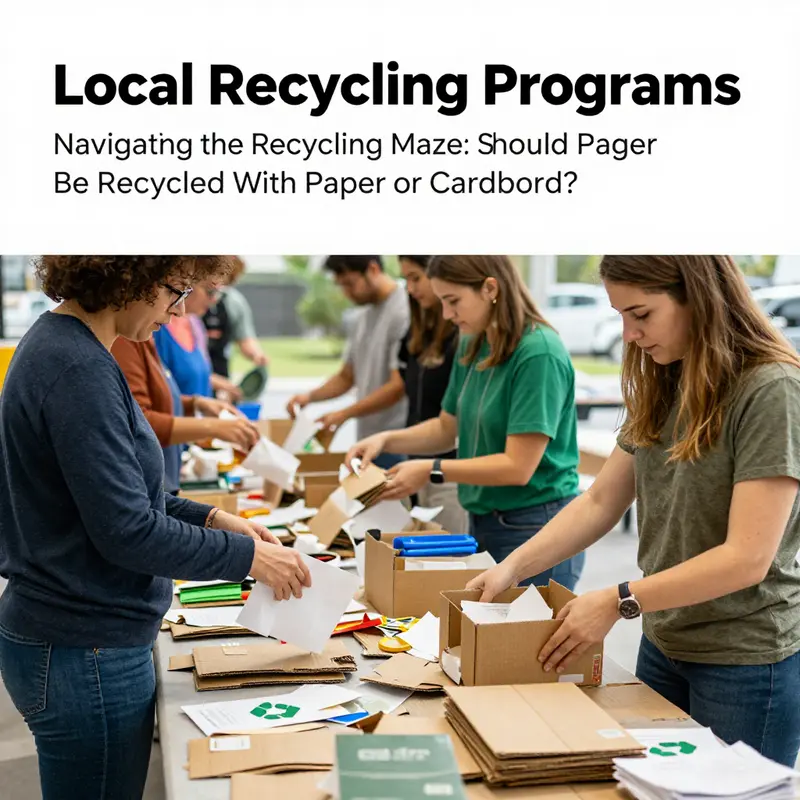
Understanding how your local recycling program sorts paper packaging makes recycling effective. The simple answer is not always the right one. Locally accepted practices depend on the composition and condition of the packaging, and on how your municipality operates its collection and processing systems.
Most communities treat thin paperboard and flexible paper packaging the same way they treat standard paper. Items such as paper bags, cereal boxes, and lightweight paperboard food cartons share similar fiber content with office paper. They are pulped and processed in comparable ways at many material recovery facilities. Corrugated cardboard, however, is physically different. Its thicker flutes and longer fibers make it more robust, and that difference affects how it is handled at scale. Many local programs therefore distinguish between lightweight paper packaging and heavy cardboard to protect the quality of both material streams.
How this matters in practice depends on whether your area uses single-stream or dual-stream collection. In single-stream systems, paper, cardboard and other recyclables are thrown into the same bin. The convenience is clear, but so is the risk: light, thin paper can become contaminated or crushed by heavy boxes. In dual-stream systems, paper and cardboard are collected separately, reducing contamination and preserving fiber quality. Where separation is required, flatten corrugated boxes and place them in the cardboard stream. Put thinner paperboard and paper packaging in the paper stream.
Contamination is the recurring issue across systems. Grease, food residue and liquids reduce the value of recovered fibers. Even a small amount of oil on a pizza box can render the surrounding fibers unsuitable for paper recycling. That means packaging must be clean and dry before it goes into the recycling stream. Rinse or scrape food-soiled containers, remove large food scraps and let wet paper dry. When in doubt, remove contaminated portions and recycle the clean parts.
A more complex problem is multi-layer and coated packaging. Many cartons and cups contain thin plastic or aluminum linings to provide a moisture barrier. These layers often cannot be separated in the standard pulping process. Yet the underlying fiber content can still be substantial, sometimes above 70 percent. Some regions have specialized facilities or collection programs that accept laminated paper containers and multi-layer cartons. These systems separate and process the plastic, aluminum and paper components, or they have pulping technologies that handle the composite material. Because availability varies, check local guidelines before tossing laminated cartons into your paper bin.
Practical identification helps. If the packaging is plain paper or paperboard, or if it tears and absorbs water easily, it will almost certainly be accepted with paper. If it is thick, corrugated, or has a fluted middle layer, it belongs with cardboard. If the surface is shiny, waxy or plasticky, it likely has a coating. Metalized or foil-like inner surfaces generally mean the item requires specialized handling and should not go into your normal paper stream. Remove plastic windows from boxes, and discard or recycle small mixed-material components separately where possible.
Volume and shape matter, too. A flattened corrugated box takes far less space and is easier for processing equipment to handle. Large quantities of cardboard are often collected at curbside if bundled or boxed. Small, crumpled bits of paper mixed with heavy boxes can jam sorting lines and lower the overall quality of the recovered material. Keep cardboard flattened and bundled when local rules request it. Keep light paper packaging loose, but dry and free of contaminants.
There are also edge cases worth noting. Paper cups with a thin plastic liner are accepted by some programs but not others. Tetra Pak-style cartons, which combine paper, plastic and aluminum layers, are recyclable in many regions through specialized drop-off programs or separate municipal streams. Snack pouches with metalized layers are rarely recyclable in standard systems and should be diverted to proper waste or manufacturer take-back schemes. When materials are not accepted curbside, look for local drop-off centers, retailer collection points, or community recycling events that handle composite packaging.
Small changes in behavior improve recycling outcomes. Flatten boxes. Rinse and dry cartons. Remove non-paper components. Keep contaminated items out of the paper stream. Learn the signs of coatings and laminations. These actions reduce the risk of contamination and improve the quality of recycled fiber, which in turn supports higher-value end uses for recycled paper and cardboard.
If you supply or use paper-based packaging frequently, choose alternatives designed for standard recycling. Products made from uncoated kraft paperboard or fully recyclable paperboard are more likely to be accepted in both paper and cardboard streams. For example, many suppliers offer kraft shopping bags designed to be recyclable with paper. Refer to the product information page for such bags to confirm recyclability and disposal recommendations: wholesale brown kraft paper bag product page.
Ultimately, the right bin depends on two things: the material and your local rules. The material determines whether it is compatible with standard pulping and sorting. Local rules determine whether the facility infrastructure can accept and properly process that material. Checking your municipality’s guidelines is therefore essential. Many local waste authorities publish accepted materials lists online, and some give examples of tricky items like laminated cartons or lined cups. When guidance is unclear, contact the local waste authority for clarity or use established drop-off programs for specialized materials.
Following these practical steps keeps paper streams clean and recyclable. Clean, dry and properly sorted paper packaging has a much greater chance of becoming new paper or board. Misplaced or contaminated materials increase processing costs, reduce quality, and sometimes divert entire loads to landfill. By learning how your local program operates and by preparing packaging before disposal, you help ensure that paper and cardboard truly re-enter the circular economy. For authoritative background on how recycled materials are processed and why sorting matters, refer to the EPA’s overview of recycling processes and material pathways: https://www.epa.gov/recycle/understanding-recycling-what-happens-recycled-materials
Final thoughts
Understanding the complexities of paper packaging recycling is vital for businesses aiming to enhance their sustainability practices. By recognizing the types of paper materials, the challenges involved, and the impact of local recycling programs, you can make informed decisions that not only benefit the environment but also support your business’s economic growth. Collaborate with your local recycling authorities to ensure that you are following best practices, maximizing the benefits of recycling, and contributing to a more sustainable future.