

Daily Chef Clear Plastic Cups offer businesses a versatile and durable solution for serving beverages. With their shatter-resistant design and various pack sizes, these cups are perfect for bubble tea shops, restaurants, food trucks, catering services, and more. In the upcoming chapters, we will explore the applications and benefits of these cups, the advantageous bulk purchasing options, and their robust material composition along with environmental considerations, providing a holistic understanding of why Daily Chef is the right choice for your beverage service needs.
Practical Uses and Clear Advantages of 9‑Ounce Clear Plastic Cups

Clear, lightweight, and sturdy, 9‑ounce clear plastic cups have become a quiet staple for three key audiences: families balancing convenience with safety, event hosts needing simple serving solutions, and food service operators who value consistent portioning. These cups merge practical design with broad usefulness. Their transparent walls let hosts and staff see what’s inside at a glance. Their shatter‑resistant construction reduces accidents and cleanup. And their common capacity hits a sweet spot for tastings, children’s drinks, and portion‑controlled servings.
Start with the basics: the 9‑ounce size. It’s large enough for standard soft drinks, juices, and cocktail samples, yet small enough to limit waste and help manage intake. This single size supports portion‑controlled service in environments where consistency matters: school events, daycare centers, corporate tastings, and buffet‑style setups. For caregivers, the volume is especially helpful for young children because it offers a predictable amount without overwhelming little hands. In food service settings, it makes inventory forecasting easier—two dozen servings is more predictable when each cup contains a fixed portion.
Durability is a defining benefit. The construction of these cups uses clear plastics designed to resist cracking and breaking under normal use. That makes them a safer alternative to glass in busy or outdoor settings. On patios, at picnics, or during festivals, the risk of shards and injuries declines dramatically when hosts choose a shatter‑resistant option. This practicality is not just about safety; it influences logistics. Fewer breakages mean less time spent sweeping and fewer lost items, and that efficiency has a direct impact on staffing needs and satisfaction.
The clarity of the material is more than cosmetic. Transparent cups let servers and guests quickly identify contents, which is invaluable at self‑serve stations and during tastings. Visual monitoring aids portion control, reduces accidental cross‑serving, and helps guests confirm drink choices without the need for opening lids or labeling every item. In a fast‑moving line at a concession stand or food truck, guests and staff can verify orders visually, speeding service and reducing errors.
Presentation benefits flow from that same clarity. A clean, modern look suits casual catering, backyard celebrations, and pop‑up food events. The simple silhouette of a clear cup showcases layered drinks, colorful mocktails, and desserts like parfaits without adding visual clutter. This makes them popular for displays where aesthetics are important but glassware would be impractical. Clear cups allow chefs and hosts to present plated items in individual portions—think mini trifles, layered salads, or spoonable appetizers—without sacrificing hygiene or ease of distribution.
Convenience runs through every angle of these cups. They’re lightweight and stackable, cutting down on storage space and making transport straightforward. For an outdoor event, the ability to stack hundreds of cups into a compact case saves vehicle room and reduces the number of trips between prep area and serving point. After use, they simplify clean‑up: disposable service reduces the need for washing and drying, freeing staff to focus on guest needs. For households, this means fewer dishes and less time spent in the sink after a weekend gathering.
Economics matter, especially when purchasing for larger crowds. Bulk pack options are widely available, from multi‑hundred counts for family and small event use to wholesale lots for festivals, catering companies, and institutions. Large orders drive unit price down significantly, which makes single‑use cups a cost‑effective choice for many large‑scale operations. When procurement teams calculate costs, they often find an attractive balance between per‑unit price and time saved on labor and utilities that would otherwise support reusable dishware.
Compatibility with accessories expands functionality. Many 9‑ounce clear cups are designed to accept snap‑on or dome lids, which add spill protection and make stacking filled cups safer. Lids also enable to‑go service, transforming a casual in‑house beverage into a portable item. This is essential for food trucks and takeout stations. Customizable lids provide branding opportunities too: printed lids or branded sleeves reinforce brand identity without adding heavy packaging. For some operations, the ability to add a clear lid that secures snugly is the difference between using the cup for on‑site consumption and offering it as a carryout item.
Portion control deserves another close look. Beyond children’s servings, portioning impacts cost control, nutritional tracking, and menu planning. A consistent cup size helps kitchens standardize recipes and maintain profit margins. When dish sizes are known and repeatable, waste drops and purchasing becomes more precise. This reliability supports operations that depend on predictable food and beverage outputs, including cafeterias, mobile vendors, and tasting events.
Hygiene and safety are straightforward advantages. Single‑use cups reduce cross‑contamination risks in settings where multiple people handle food and drink. They make it simple to provide a clean vessel to each guest without running a dishwasher or coordinating staff time. For temporary setups like pop‑ups or seasonal stands, the low overhead of disposable service reduces the barrier to entry while still allowing a sanitary guest experience.
Material differences subtly affect performance. Polystyrene and polypropylene are common. Polystyrene offers excellent clarity and rigid walls, ideal for crisp presentation. Polypropylene tends to be slightly more flexible and heat‑resistant. Knowing the material helps when planning use cases. For cold beverages and presentation displays, clarity is king and polystyrene often excels. Polypropylene can handle warmer fill temperatures and greater durability under stress. Understanding these material profiles lets hosts match cup choice to the event’s demands.
Storage and handling are practical considerations that shape usage. Stackability translates directly into efficient inventory management. Keeping a few extra cases on hand prevents last‑minute shortages. For long‑term storage, keep cups in a cool, dry space to maintain shape and clarity. Avoid prolonged sunlight on stored cups to prevent any warping or discoloration. Proper inventory rotation prevents older stock from lingering and ensures consistent quality at every event.
Sustainability questions frequently arise. Single‑use plastics face scrutiny, and it’s wise to account for environmental impact when planning. Some venues offset concerns by pairing disposable cups with visible recycling stations and clear signage that encourages responsible disposal. Others move toward compostable or paper alternatives for certain applications. If a paper option is desirable for some events, consider a tested paper cup product that offers plastic‑free construction while maintaining food‑grade standards; for an example of a plastic‑free paper alternative, see this resource on craft paper cups. Choosing the right mix—clear plastic for certain uses and paper or compostable options for others—lets hosts blend performance with environmental goals.
Regulatory compliance and safety standards are also part of the decision matrix. Food service operations must ensure that materials comply with local and national food contact regulations. Traceable supplier information and material declarations help procurement teams verify compliance. When selecting cups for hot or acidic beverages, verify the material’s suitability for the intended temperatures and contents to avoid leaching or deformation.
Customization opens creative and commercial possibilities. Clear cups lend themselves to simple branding through stickers, sleeves, or printed lids. For events looking to reinforce brand identity, a subtle logo printed on lids or a decorative sleeve can increase perceived value without a major investment. For catering businesses, offering branded cups for festivals and corporate events can be a low‑cost way to elevate presentation and leave a lasting impression.
Beyond beverages, think of creative uses. Clear cups are excellent for portioned desserts, condiment stations, and sampling programs. Small plated starters or layered desserts serve well in a disposable clear cup, which guests can carry while mingling. They also work as measuring tools in kitchens where cooks need quick visual checks of ingredient volumes during prep. For arts and crafts at community events, they can temporarily hold paint, beads, or small hardware, then be disposed of responsibly after the activity.
Practical event scenarios highlight their strengths. For a family reunion, a stack of clear cups simplifies beverage service and reduces the need for a dishwashing schedule. At a school fundraiser, the cups support portion control and provide a clear view for volunteers managing refill lines. For a farmer’s market or outdoor festival, the shatter‑resistant nature cuts cleanup time and liability. In a corporate tasting, the consistent size makes it easy to manage sample distribution and track consumption.
Cost planning is straightforward with bulk pricing. When purchasing in larger quantities, unit prices drop markedly. This makes wholesale orders attractive for recurring events or for organizations that host frequent functions. Procurement teams should calculate total cost of use, factoring in not just the unit price but the labor saved on washing, the cost of replacement glassware, and the reduced risk of breakage. For many organizations, this holistic calculation justifies disposable clear cups as the sensible choice.
Handling tips maximize value. When transporting filled cups, use trays with stabilizing rims or cups with compatible lids to avoid spills. For serving cold beverages, consider a sleeve or chilled serving station to reduce condensation and make holding more comfortable. If stacking filled cups briefly, ensure lids are secure or use a secondary stabilizing tray. For long events, provide covered disposal bins near seating areas to keep the environment tidy and speed cleanup.
Maintenance is minimal but meaningful. Keep unused cups in their original packaging until needed to avoid dust accumulation. During setup, open packages closest to serving time to preserve cleanliness. When recycling is available, empty cups of significant residue before placing them in bins. If recovery for recycling is not possible, look for local programs that accept mixed plastics or partner with a waste management provider to establish a collection plan.
Finally, pairing with complementary packaging expands service options. Using clear cups alongside compostable bowls, kraft takeout containers, and paper cups gives hosts a toolkit to match the right vessel to each menu item. This mix‑and‑match approach lets events maintain a consistent aesthetic where clarity and presentation matter, while still offering eco‑friendly alternatives where appropriate.
For additional specifications and to view a common 9‑ounce clear plastic cup offering, see this product listing: https://www.amazon.com/dp/B0BQYK6JZV
Bulk Buying Clarity: Navigating Large-Scale Purchases of 9-Ounce Clear Plastic Cups for Events and Everyday Use
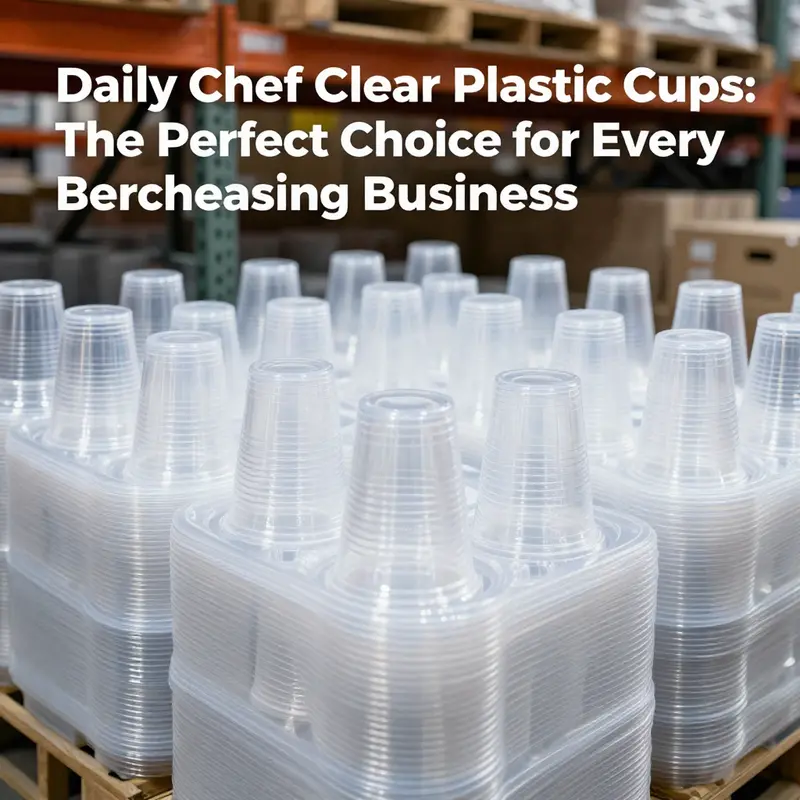
When planning for gatherings, cafeterias, craft-fair stalls, or busy households, the decision to buy clear plastic cups in bulk emerges as both practical and economical. The appeal rests on several converging factors: a stable supply that can weather peak seasons, predictable portion control that simplifies serving, and the ability to maintain a clean, orderly presentation across a range of settings. In the world of single-use serveware, a 9-ounce clear cup has become a reliable baseline. It is light enough to handle in large numbers, sturdy enough to withstand everyday use, and transparent enough to showcase a drink’s color and garnish without distraction. The material choice typically falls to polypropylene or polystyrene, two plastics that balance rigidity with cost and clarity. PP offers toughness and a degree of heat resistance, while PS usually provides exceptional optical clarity that makes beverages look appealing even in utilitarian settings. Either way, the goal is a cup that remains crystal-clear through service, resists warping when stacked or transported, and survives the occasional tumble without shattering. This is critical when serving to families with children, where durability and safety translate directly into fewer disruptions during events or at-home gatherings. The bulk purchasing point, then, is not merely about price per unit. It is about stabilizing a supply chain for days when the calendar fills with birthdays, school events, bake sales, or community fundraisers. A bulk approach reduces the risk of running out mid-event and minimizes last-minute price swings that can arise when stock is depleted and rapid replenishment is required. The rhythm of planning shifts from reactive ordering to proactive stocking, a transition that often yields significant cost savings over time and transforms the operational flow of servingware management. The economics of bulk purchase begin to reveal themselves when one considers the range of available package sizes. For smaller operations, a 240-count pack—commonly described as a bulk option in consumer marketplaces—can be sufficient to cover a sizable party or several school-day events. For larger venues or recurring demand, bulk orders stretch into hundreds of thousands of units, where unit prices can tumble into a more aggressive range. The math is straightforward: more units bought at a lower marginal cost reduces the per-event cost while still delivering the same quality and performance. In the most aggressive bulk scenarios, price points as low as a few hundredths of a dollar per cup become possible, especially when negotiating directly with suppliers who can meet tall-order quantities. Such price points, while impressive on paper, come with trade-offs that require careful planning. Minimum order quantities can be high, and lead times can stretch into weeks rather than days, depending on production schedules, factory backlogs, and regional shipping timelines. For a business that operates on a calendar of recurring events, those lead times demand a longer horizon for procurement. The procurement strategy thus becomes a balancing act: aligning the timing of orders with anticipated consumption, securing favorable unit costs without overcommitting capital to inventory, and ensuring that storage space is available and appropriate for delicate, transparent cups that must stay pristine until use. In practical terms, this means mapping out an annual or semi-annual usage plan. A venue that hosts monthly gatherings may find it prudent to pre-order several bulk shipments aligned with the busiest months, while smaller households could leverage quarterly bulk purchases to maintain a stable supply without tying up excessive cash or storage. The decision framework also considers how the cups will be used. For drinks meant for kids’ events, the appeal of a shatter-resistant design is amplified, and the choice of material—PP versus PS—can influence both durability and environmental considerations. For example, PP’s resilience makes it well-suited to environments where cups might be dropped or mishandled during high-energy activities, while PS’s high clarity can elevate the visual appeal of a beverage at more formal occasions. Each material choice corresponds to a slightly different cost profile and a different lifecycle impact, and responsible buyers increasingly weigh recyclability and local processing options as part of their bulk strategy. The packaging itself often becomes a factor of equal importance. Bulk orders typically arrive in large, stackable cartons that optimize space during storage and make transport more efficient. The stacking stability of clear cups is not merely a convenience; it reduces the risk of damage during transit and minimizes the likelihood of breakage in warehouse aisles. When it comes to lids, the compatibility of the cups with a range of lids—such as crystal-clear lids designed for larger beverage servings—offers a path to branding and enhanced presentation. Customization is not limited to cups alone; it extends to accessories that complete the serving experience. Branding can be embedded at multiple touchpoints, from printed lids to labeled packaging that identifies the event or organization. Yet, customization comes at a premium and can influence minimum order quantities and production timelines. Buyers who are pursuing branding should factor in these considerations when negotiating with suppliers. They must also consider the impact of customization on lead times, as personalized items typically require longer production windows. The interdependence of these elements—material choice, bulk quantity, pricing structure, and customization options—demands a planning mindset that is both strategic and flexible. In practice, the path to bulk buying often traverses a few common routes. First, marketplaces that cater to office supplies or party and event gear frequently list bulk options for 9-ounce clear cups in multi-pack configurations. These listings usually present a straightforward price per 240-count or 480-count set and offer a glimpse into unit costs, shipping estimates, and return policies. Second, wholesale or supplier portals that connect buyers with manufacturers can be the source of the best unit costs, especially for those seeking tens of thousands of cups. Third, direct-from-manufacturer channels may provide the most reliable long-term supply, with the added potential for negotiated terms, dedicated customer service, and more favorable freight arrangements. Each channel carries its own risk profile. Marketplaces can feature mixed quality and inconsistent packaging, so verification of product specifications—capacity, material, clarity, and lid compatibility—becomes essential. Supplier catalogs may vary in the precision of their product descriptions, and photographs may not capture subtle imperfections in clarity or stiffness. In contrast, direct-from-manufacturer orders can secure consistency but require a larger upfront commitment and more complex logistics coordination. For buyers weighing these options, the key is to align the procurement plan with the operational realities of their environment. A busy school or community center might prioritize predictable lead times and reliable replenishment rather than the absolute lowest per-unit price, recognizing that a shorter supply chain translates into less risk of disruption. A market stall operator or event planner, facing seasonal demand, may favor those bulk options that pair strong unit pricing with flexible shipping terms and scalable quantities. The financial calculus also deserves careful attention. It is not enough to compare sticker prices; buyers must compute the total cost of ownership, including shipping, handling, and potential breakage in transit. The savings gained from a lower unit price can quickly evaporate if a supplier’s freight terms are unfavorable or if the product arrives with damaged cups that require replacement. Conversely, a slightly higher per-unit cost from a trusted supplier may yield meaningful value through stronger packaging integrity, reduced waste, and more predictable delivery windows. In this calculus, the role of marketplace listings such as 240-count offerings on well-known retail platforms cannot be dismissed. They provide a practical test bed for smaller-scale bulk needs, letting buyers sample product quality and verify compatibility with existing lids and storage conditions before committing to larger orders. Similarly, the availability of substantial bulk options through international or wholesale channels broadens the horizon of possible outcomes. For buyers exploring this lane, it becomes crucial to verify that the cups meet local regulatory requirements for food-contact materials and that the packaging and labeling align with any applicable safety or labeling standards. The decision to pursue bulk purchases also intersects with branding strategy and customer experience. An event or venue that prioritizes a clean, cohesive aesthetic might invest in lids or seals that precisely match the cups’ color and clarity, while others may value the ease of quick-service dispensing over the appearance of the cup itself. In some cases, branding efforts extend beyond the cup and lid to include signage, napkins, and take-home packaging that reinforces a single, memorable visual identity. The interrelationship between functional utility and brand storytelling becomes a meaningful part of the bulk decision. For those who want to explore related packaging ecosystems, a broader look at packaging components can be instructive. For example, a related initiative that showcases how clear plastics pair with other materials to create versatile serving solutions can be informative. See the linked example: clear-plastic-combo-pastry-dessert-packaging. This reference hints at how clear plastics fit into a wider packaging strategy, where transparency, durability, and modularity intersect across cups, lids, trays, and companion containers. Such cross-cate- gory insights may guide a buyer toward a more integrated approach to bulk sourcing, one that accounts for the full ecosystem of single-use serveware rather than focusing narrowly on cups alone.
When a buyer lands on the decision to pursue bulk purchasing for these clear cups, it is worth acknowledging the landscape of available channels. On one hand, consumer-facing platforms occasionally carry 240-count packs that function as a practical threshold for many events or operations. These packs are easy to acquire, typically ship quickly, and provide an opportunity to compare the feel of the product—its transparency, edge clarity, and compatibility with common lids—without a heavy commitment. On the other hand, wholesale platforms and direct-from-manufacturer channels offer a bridge to extended supply agreements, volume-based discounts, and more predictable fulfillment cycles. The choice between these paths depends on how consistently the organization operates and how far in advance it can plan. A school district with a semesterly calendar might lean toward long lead times and bulk channels that guarantee stable delivery, while a pop-up shop or farmers’ market vendor might prefer the agility of smaller bulk configurations and flexible shipping terms. The reality is that price is seldom the sole determinant. Reliability, consistency of product performance, and the ability to scale with demand become deciding factors that justify the extra effort and potential complexity of negotiating bulk terms. Given these dynamics, buyers should approach bulk purchasing as a process, not a one-off transaction. The process begins with a clear forecast of usage, a simple but crucial piece of data that anchors the entire procurement plan. This forecast should consider event frequency, average cups per event, and the duration of seasonal peaks. It should also account for storage constraints—whether the cups will be stacked in a dry, cool warehouse, or stored in a more compact space behind a counter or in an off-site facility. It is not unusual for an organization to rotate suppliers or to pilot a new vendor with a smaller bulk test before committing to a longer-term agreement. A practical approach is to reserve one primary supplier for standard needs and to maintain auxiliary relationships for emergency coverage or seasonal surges. The internal alignment between procurement, operations, and finance is critical here. A smooth process relies on a shared understanding of lead times, quality standards, and total landed cost. By establishing transparent expectations about shipping windows, return policies, and defect resolution, teams can minimize friction when orders do not arrive as forecast or when a batch arrives with a minor defect that can be absorbed without interrupting service.
In the end, bulk buying of these clear cups is about confidence. It is confidence in the supplier’s ability to deliver what was promised, confidence in the product’s performance under typical service conditions, and confidence in the organization’s capacity to manage inventory, storage, and usage across multiple events. The best practice is straightforward: build a forecast, assess supplier options with a careful eye on total cost of ownership, and test the water with smaller bulk purchases before scaling up to larger, long-term commitments. As the calendar turns and the demand matrix evolves, the ability to rely on a steady supply of clear, shatter-resistant cups can become a quiet driver of efficiency, convenience, and consistency in service. And when the moment calls for branding or a more coordinated visual presence, the same procurement strategy can extend to lids and packaging that harmonize with the cups, reinforcing a unified, professional image across every service touchpoint. For readers who want to explore related packaging ecosystems and see how these clear components fit into broader serving solutions, consider visiting relevant packaging resources that demonstrate how transparency, durability, and modularity come together in modern take-away and event setups. External resources provide a broader context for bulk purchasing strategies and supplier evaluation, especially for high-volume needs. For further reading on bulk buying platforms and supplier networks, see Alibaba.
Clear by Design, Rethinking Material Footprint: A Deep Dive into the Make-Up and Environmental Realities of Everyday Clear Plastic Cups
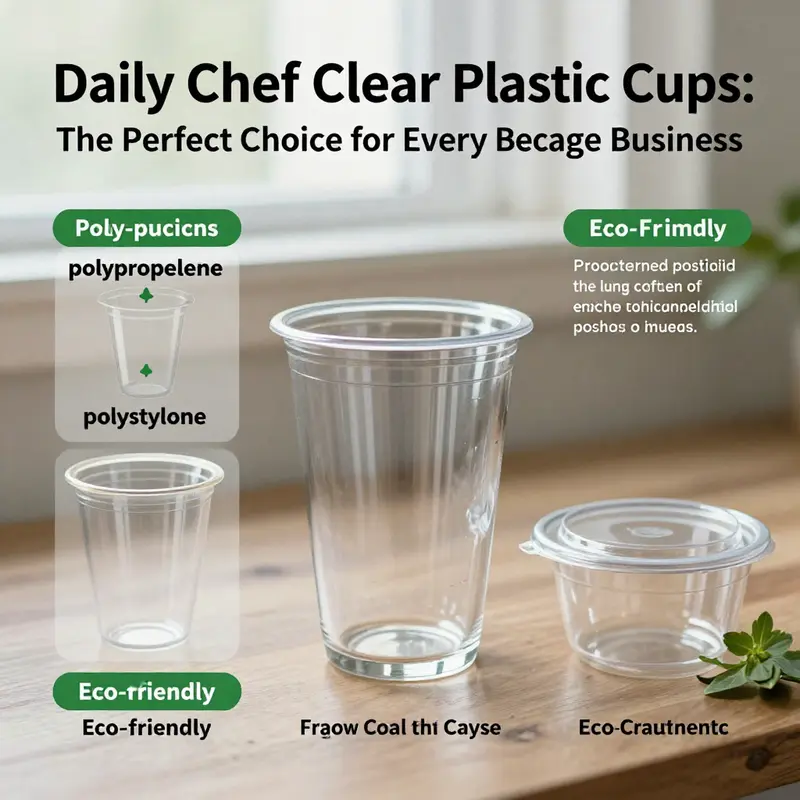
The everyday clear plastic cup is one of those objects that disappears into the backdrop of daily life even as it performs a surprisingly complex set of functions. It must be light enough to carry with one hand, clear enough to show the drink inside, and sturdy enough to resist accidental drops during hours of busy service, school events, picnics, and birthday parties. Behind that simplicity lies a web of material choices, manufacturing tradeoffs, and end of life considerations that influence not only performance but also the subtle but important footprint left on the environment. When we talk about a standard 9 ounce clear disposable cup designed for both indoor and outdoor use, we are really entering a conversation about polymer science, recycling streams, consumer behavior, and the evolving mathematics of waste. It is a conversation that matters not only to procurement managers and event planners but to households that seek a blend of convenience, safety, and environmental responsibility.
At its core, the material that gives a clear disposable cup its signature properties is a rigid thermoplastic. In practical terms, these cups are generally made from a plastic that can deliver high clarity, light weight, and a degree of shatter resistance that makes them suitable for kids and modal everyday use. The exact polymer used in many common clear cups is not always disclosed in consumer listings, but the characteristic traits point toward a family of polymers that includes forms of polyethylene terephthalate, commonly used for clear beverage containers, as well as polystyrene and sometimes polypropylene. Each of these materials brings a distinct balance of attributes. PET offers strong clarity and good moisture barrier properties, which make it a favored option for beverages. Polystyrene can deliver a very transparent look and a stiff feel, but its recycling streams can be more variable depending on local infrastructure. Polypropylene, when used, tends to add resistance to cracking and heat while maintaining a light weight, though it can slightly dull optical clarity in certain processing conditions. The practical upshot is that the exact resin code is often printed on the cup’s base or rim, signaling downstream recyclers how to handle the material. For the consumer, this means recognizing the resin code on a cup is not an idle detail; it is a signal about whether the item can be accepted by a local recycling program and under what conditions contamination risks rise.
The decision to rely on a clear cup in a given setting rests on more than the material’s appearance. Clarity is a running thread in the design, and it is not merely cosmetic. In display and serving contexts, transparency allows the beverage to remain visually appealing, inviting the eye to follow the color of the drink from the rim down to the bottom. But clarity is also a proxy for quality in the viewer’s mind. A crystal-clear surface can imply cleanliness and hygiene, two attributes that hold social weight in both casual and formal environments. Yet the shine of that clarity comes with tradeoffs. Some materials studied for disposable cups are highly recyclable in theory, but the practical reality depends on local facilities, the presence of mixed materials such as lids and seals, and consumer habits around rinsing or recycling immediately after use. These factors converge in a complex dance of design and disposal that shapes a cup’s overall environmental impact.
In environmental terms the conversation tends to orbit around recyclability, post-consumer waste, and the energy costs of production. PET is commonly marked with the recycling code number 1, a label that makes it familiar to curbside programs in many regions. This code alone does not guarantee that a given clear cup will be accepted by every recycling stream, but it does improve the odds in many communities. The bigger questions arise when cups are part of a mixed load that includes lids, sleeve seals, or printed coatings. Lids are often made from different plastics than the cups themselves, and the combination can complicate recycling. In mixed streams, separation is not always feasible at consumer level disposal points, which means that even recyclable cup materials may end up in landfills if contamination is not controlled. This potential outcome underscores a fundamental truth about single-use plastics: their environmental performance is inseparable from the surrounding disposal practices and recycling infrastructure.
A close look at the environmental considerations reveals a spectrum rather than a single verdict. On one end, the recyclability of a clear cup is enhanced when the material can be widely accepted by municipal programs and when the cup is free of coatings and multi-material laminates that hinder separation. On the other end, the production phase introduces energy use, water consumption, and emissions tied to the extraction and processing of the polymer resin, as well as the dyeing, molding, and finishing steps that give the cup its final shape and clarity. These stages are not isolated. They feed into a broader lifecycle whose outcomes depend heavily on how households and institutions manage post-use waste. In some communities, robust recycling rates and well-managed waste streams can significantly mitigate the environmental impact. In others, where recycling remains aspirational rather than routine, the advantages of recyclability can be constrained by practical barriers. For this reason many producers emphasize not merely the material but also the system that surrounds it, including instructions for disposal, partnerships with recycling providers, and, where feasible, the inclusion of post-consumer recycled content in new cups.
The bulk economics of clear cups reflect another layer of environmental consideration. Large-scale purchasing and bulk packaging bring a distinct set of advantages and risks. The feasibility of stocking 9-ounce clear cups in high-volume counts such as hundreds of units per pack, or thousands per case, translates into reduced per-unit energy and transportation costs when viewed at scale. The economics of bulk purchasing can have a direct influence on environmental outcomes. Fewer shipments and optimized packing reduce the carbon footprint per unit of product delivered. Conversely, if bulk packaging is overly heavy or includes multiple separate components that cannot be processed easily by recycling facilities, the benefits can be offset by end-of-life challenges. The selective use of packaging materials and the careful design of product kits become part of a broader environmental strategy, especially for events and institutions that aim to minimize waste throughout the lifecycle of a single-use item.
In the absence of a universal standard for compostability among clear disposable cups, many buyers lean into the closest available practical approach: compatibility with existing municipal recycling streams and the avoidance of unnecessary coatings. When a cup is marketed as recyclable, it often carries the implication that the resin type and the packaging’s overall construction are aligned with local capabilities. However the real world shows how policy and infrastructure shape outcomes. Some streams encourage recycling of clear PET cups but require that they are clean and free of contamination. Others have no explicit acceptance yet or discourage certain plastics altogether in favor of alternatives. For consumers and organizers, the implication is that clearer communication about disposal options becomes a valuable feature. Brands and suppliers that provide transparent guidance about how to recycle or dispose of used cups can help reduce the sense of ambiguity that often leads to disposal in incorrect streams.
Discussions of material make-up inevitably brush up against the topic of environmental certifications and third party assurances. The absence of explicit environmental certifications in some listings should not be interpreted as a lack of seriousness but as a reminder that verification often requires reaching out to the manufacturer directly or consulting official documentation. The recommendation to verify material composition by consulting the manufacturer’s official site reflects a broader best practice: the most reliable environmental data comes from primary sources. For a consumer or procurement professional, this means recognizing that product listings may omit precise polymer type, coatings, and any post-use treatment that could influence recyclability. The practical upshot is that a thoughtful purchasing decision should consider not only the immediate performance needs but also a credible plan for disposal, compatibility with local recycling, and the potential for improvements through supplier partnerships that emphasize recycled content and responsible end-of-life handling.
The environmental narrative of a clear cup is inseparable from the context of its use. In school or family settings, portion control can be aided by the cup’s consistent capacity, reducing over-pouring and the consequent waste. In outdoor events, where the chance of misplacement and litter increases, the preference for a sturdy, shatter-resistant option matters not just for safety but also for reducing the volume of broken-glass or brittle fragments that contaminate outdoor environments. Yet the same properties that make a cup practical can complicate waste management when a significant portion ends up in landfills. The challenge, therefore, is to balance practical everyday use with responsible disposal practices, and to navigate the tension between convenience and environmental impact with a clarity that matches the cup’s own transparency.
One way to translate this balance into practice is to consider the entire ecosystem that surrounds disposable clear cups. The packaging and accessory ecosystem matters. If a company or household purchases cups that can be paired with compatible lids that are themselves recyclable, the overall recyclability footprint improves. The presence of clear lids might simplify consumer understanding, but it also introduces a potential multi-material obstacle if the lid and cup are made from different plastics. In such cases, it is helpful to explore lids and cups that are designed to be recycled together within a local program’s accepted materials. This alignment can transform a potential complication into a straightforward recycling pathway. The design and supply chain choices that favor uniform materials, or the clear specification that components can be separated and recycled, stand as tangible actions that buyers can take to reduce the environmental burden of single-use serving ware.
Looking forward, the environmental considerations surrounding clear disposable cups are likely to evolve with technological advances and ongoing shifts in consumer expectations. Developments in polymer science may deliver materials that combine the same level of clarity and rigidity with improved recyclability and lower energy footprints. Innovations in post-consumer recycled content may reduce the life cycle impact by substituting virgin resin with reclaimed material without compromising safety and performance. Meanwhile, improvements in recycling infrastructure, including better sorting, more accessible recycling streams, and enhanced consumer education about contamination and rinsing, could tilt the environmental balance more decisively toward sustainable outcomes. In this sense, the conversation about material make-up is less about a static choice and more about a continuous optimization across product design, consumer behavior, and policy support.
Within the marketplace the practical takeaway for buyers who need reliable clear cups is to scrutinize not just the clarity and sturdiness but the entire lifecycle of the product. The 9-ounce size remains a practical standard for many beverage applications, offering a familiar portion while maintaining a manageable weight for handling and transport. For events that require substantial quantities, bulk options become economically attractive, and with the right recycling framework in place, the environmental consequences can be mitigated. The choice of material, while explicit in some product pages, often sits behind a curtain of supplier detail that invites inquiry. The most constructive approach is to pursue material transparency, verify recyclability claims with local programs, and actively participate in disposal best practices that maximize the likelihood of material being diverted from landfills.
To illustrate how readers can navigate these questions in a concrete way, consider the broader system in which a clear cup operates. The interplay between material composition and end-of-life handling becomes almost a case study in design for circularity. The better the alignment across resin type, lid compatibility, and recycling stream acceptance, the more likely it is that the cup will achieve its intended service life with a minimized waste footprint. This alignment does not happen by chance. It results from informed procurement decisions, responsible consumer behavior, and transparent communication from suppliers about what happens after use. In many settings, these factors converge to create a practical path forward: select cups that are compatible with locally accepted recycling codes, verify the presence of any post-consumer recycled content, and ensure that lids and other components can be processed in the same stream. Even small choices—such as rinsing cups lightly before disposal, keeping only beverage residue out of the recycling bin, and avoiding contamination with food waste that is not compostable in the local system—can accumulate into meaningful environmental benefits over time.
As this chapter threads through the realities of material make-up and environmental considerations, it is worth pausing to bridge the discussion with a related inquiry that has gained traction in packaging discourse. The idea of combining recyclable clear plastics with eco-friendly biodegradable or compostable materials in a single packaging solution has sparked ongoing investigation and debate. Some practitioners explore the potential of biodegradable kraft-paper based packaging in tandem with clear plastic components to deliver a hybrid solution that preserves user experience while addressing end-of-life concerns. The linked discussion at disposable-biodegradable-kraft-paper-matt-lamination-clear-plastic-combo-pastry-dessert-tiramisu-cake-food-container-packaging (https://cupbowlpack.com/product/disposable-biodegradable-kraft-paper-matt-lamination-clear-plastic-combo-pastry-dessert-tiramisu-cake-food-container-packaging/) offers one perspective on how such combinations might be marketed and structured. It is important to note that such hybrids still require careful evaluation of recyclability and cost, and they underscore why material transparency and system-level thinking remain central to sustainable practice. The anchor text here is chosen to reflect the exact URL path, providing a precise handle for readers who wish to explore this particular environmental approach further. This reference is not a verdict on the viability of all such hybrids, but a signal of the kinds of design decisions that will increasingly shape the material landscape of single-use serving ware.
The environmental story of clear disposable cups, then, is neither triumphalist nor defeatist. It is a nuanced account of how material choices influence performance, how end-of-life realities constrain or enable recycling, and how consumer behavior and infrastructure jointly determine the ultimate fate of these ubiquitous items. Readers who work within hospitality, education, or consumer events should approach procurement with a mindset that balances reliability with responsibility. The 9-ounce clear cup is not merely a vessel for a drink; it is a point of interface between the consumer, the product’s material origin, and the waste stream that follows. By attending to material composition, seeking clarity about resin codes, staying mindful of multi-material challenges, and aligning purchases with local recycling capabilities, buyers can contribute to a more sustainable cycle of use and reuse, even within the realm of single-use plastics.
What emerges, then, is a practical framework for thinking about these cups that transcends the obvious questions of capacity and price. It is a framework informed by polymer science, waste management realities, and the social responsibilities embedded in everyday choices. The objective is not to demonize convenience but to illuminate the pathways through which convenience and responsibility can coexist. In doing so, we acknowledge the environmental dimension of a familiar object and empower readers to make informed decisions that reflect both performance needs and stewardship values. The chapter does not end with a definitive verdict, but with an invitation to ongoing inquiry: to ask about resin type where possible, to seek recyclable solutions for each context, and to recognize the crucial role of consumers and institutions in shaping how these cups are used, disposed, and imagined in a world that increasingly values clarity not just in the material sense but in the choices that define a more sustainable future.
Final thoughts
Daily Chef Clear Plastic Cups emerge as an essential element for beverage businesses, offering versatility, bulk purchasing advantages, and reliable material that meets modern needs. By choosing these cups, businesses can enhance their service offerings while also considering environmental impacts. With their shatter-resistant design and compatibility with various lids, these cups support any occasion, making them a staple for catering, events, and everyday use.