
In the vibrant world of beverage service, from bubble tea shops to catering services, presentation and practicality go hand in hand. Cheap printed disposable paper cups have emerged as essential tools for brand visibility and efficient service. These cups not only provide an eco-friendly disposal option but also allow businesses to showcase their branding in a cost-effective manner. This article dives into the myriad features of these cups, including customization options, sizes, materials, eco-friendly choices, and insights on current market trends that can help enhance your service offerings.
Customization Options for Cheap Printed Disposable Paper Cups
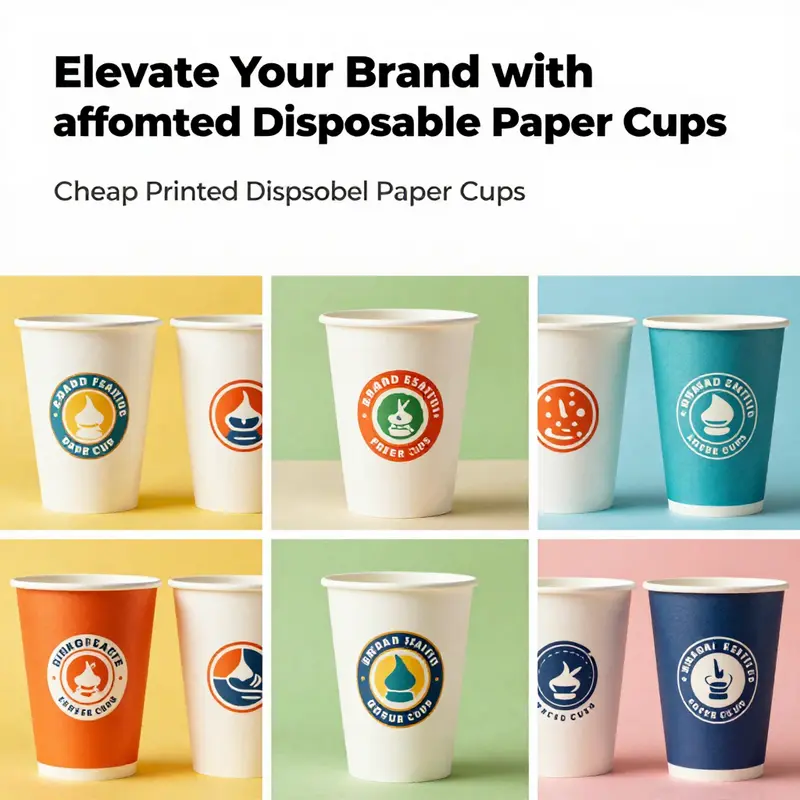
Customization options for cheap printed disposable paper cups are a core value proposition that transforms a low-cost container into a recognizable asset for a brand. In price-driven markets, imprinting logos, messages, and visuals directly onto the cup surface turns every hot drink into a mobile advertisement and a touchpoint that accompanies a customer through a day. The options are broad yet coherent, offering a ladder of choices scaled to fit different budgets, campaigns, and audiences. The cup becomes more than a vessel: it is a canvas, a moving banner, and a tactile reminder of a brand’s presence with every sip.
Logo and branding sit at the top of buyers’ lists. A logo, company name, or custom design on a cup signals identity and reliability. Repeated exposure builds recognition as cups circulate in offices, on commutes, at events, and in social spaces. This is about consistency and trust. Brands that maintain a cohesive look across packaging, signage, and cups create a seamless experience.
Color customization expands the effect beyond logo placement. Cups can be produced in virtually any color, aligning the cup to a brand palette. Color matters for first impressions and emotional resonance. A bold hue can evoke energy; a softer shade can convey warmth. Color accuracy matters since the cup is held and touched during service. Vendors often use color management to match brand standards from mockups to finished product.
Design flexibility goes beyond single-color branding. Custom designs range from simple monochrome prints to full-color graphics. Seasonal campaigns can wrap the cup in a motif or feature a campus landmark or QR code linking to a promotion. Text and imagery can be blended to tell a story without clutter. This flexibility supports cohesive campaigns across channels while preserving portability.
Printing method considerations. Flexographic printing is common for cup production because it offers cost efficiency at scale. For large runs, inks and fast cycles keep costs low while preserving legibility on curved surfaces. It supports high-contrast logos and intricate patterns if artwork is prepared with correct tension and layering. Trade-offs exist: fine lines or subtle gradients may require adjustments. In practice, campaigns balance eye-catching visuals with mass production realities, using bold, clean graphics that print reliably.
Cup construction and physics. Wall type, size range, and hot vs cold use affect perceived value. Single-wall cups are lighter and good for cold drinks; double-wall cups provide better insulation for hot drinks; ripple walls add grip and a distinctive tactile feel. The wall design can affect ink adhesion and print crispness. A well-planned customization balances aesthetics and function without sacrificing usability.
Materials and lining. Cups are usually paper with a protective inner lining to prevent leakage. The lining can influence print quality and durability, especially for hot beverages. PE lining is common, but eco-friendly options like compostable or recyclable membranes exist. Eco-conscious options can align with sustainability goals without compromising branding.
Time and volume. MOQs for custom designs are typically high, reflecting setup and production costs. A common baseline is around 50,000 pieces per design, with some room for negotiation on smaller lots. Samples may be available to confirm color accuracy and print fidelity. Sample fees may apply but can be worthwhile for high-visibility campaigns.
Eco-friendly options and sustainability. Biodegradable or recyclable cups are increasingly part of customization narratives. Printing with eco-friendly materials can reinforce a brand’s environmental stance. Durability under heat and moisture remains important. Reputable suppliers offer prints on recycling or composting-friendly materials, clear end-of-life labeling, and options that support a coherent environmental story.
Sourcing and procurement. Look for global marketplaces connecting brands with manufacturers capable of delivering customized cups at scale. Review proofs, compare printing options, and negotiate terms in a centralized way. The roadmap from idea to production can be planned around promotions, launches, or seasonal events. Collaboration between branding, procurement, and manufacturing is key to aligning artwork, materials, and logistics.
Practical example. Consider a lightweight branding kit emphasizing eco-friendly printing and a bold, legible message: a two-tone color scheme, a double-wall cup for hot beverages, a ripple texture for grip, strong typography, and concise tagline. Seasonal artwork can be refreshed while keeping core elements consistent, scalable to cafes, events, or corporate programs.
This is the practical route for readers exploring options. Start with eco-friendly, printed-logo cup options to see how color, typography, and graphics translate onto curved surfaces under heat and moisture. The ability to maintain print quality across sizes—from 6-ounce to 16-ounce and larger—ensures consistent visual language across the range. For ongoing exploration and procurement details, consult eco-friendly, printed-logo cup listings and supplier options.
In closing, customization of cheap printed disposable paper cups is a strategic lever for brand presence in a crowded, cost-conscious market. Logo fidelity, color control, design flexibility, and durable printing enable a cup to act as a portable storefront. The choice of wall type and eco-friendly materials all contribute to the cup’s narrative. The best approach ties design intent to production practicality, ensuring every sip reinforces recognition and trust. For direct sourcing and scalable options, explore global showrooms dedicated to cheap printed paper cups.
Sized for Every Sip: Navigating the Range of Cheap Printed Disposable Paper Cups
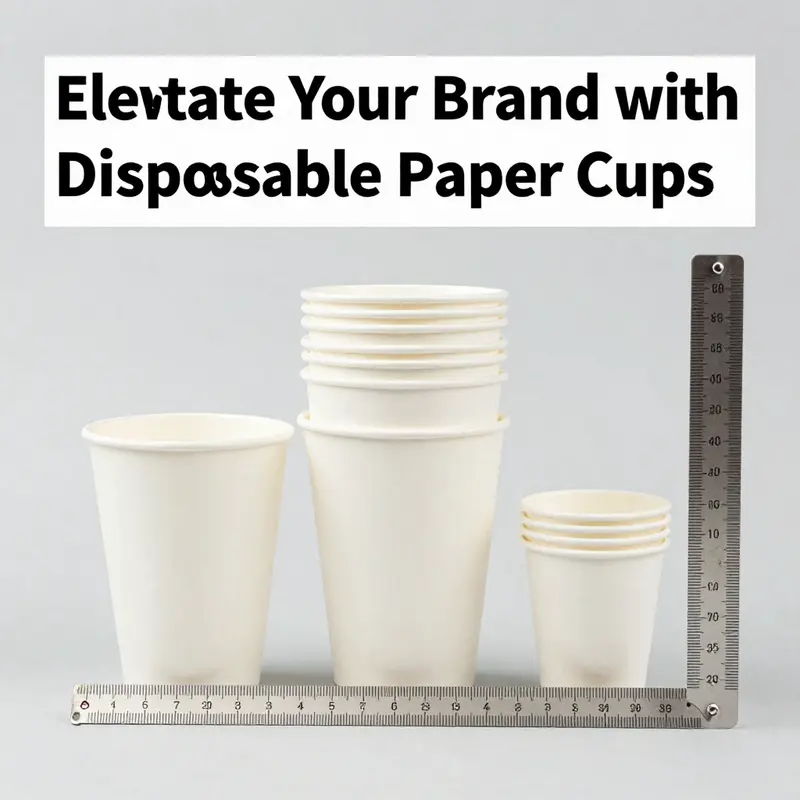
The spectrum of cheap printed disposable paper cups is not just a single line of products but a continuum that mirrors how people actually drink. From the tiniest trial portions that invite taste and curiosity to the larger servings that sustain a crowd, manufacturers have built a ladder of capacities that businesses can climb to match a given moment, a location, or a promotional aim. The sizes and capacities are more than numbers; they map to contexts—sampling at a pastry shop, refills at a quick-serve cafe, a banquet glass for a beverage station, or a simple, hygienic takeaway cup at an event. What begins as a practical packaging choice becomes a strategic tool for customer experience, branding, and waste management. In practice, buyers encounter a wide assortment that includes diminutive 3 oz cups, practical 4 oz and 6 oz options, the everyday 8 oz, and larger 12 oz and beyond, even stretching to 17.5 oz or 500 ml for special occasions. The availability of these sizes represents a deliberate design choice: to cover the moment you want a taste, a sample, or a full serving without forcing a single container to fit all needs. The math behind choosing a size is surprisingly nuanced. A 3 oz cup, roughly 85 ml, excels for cake tastings or small beverage samplings where the goal is to allow someone to try a flavor without committing to a full drink. A 4 oz cup, about 118 ml, is a broader sampler, often used for introductions to a juice or coffee line. For the quick coffee pickup or a small cold drink, a 6 oz cup—around 177 ml—offers enough quantity to satisfy a casual sip while keeping waste in check. When customers expect a real beverage experience, the 8 oz cup, about 237 ml, is the workhorse. It is the default for hot coffee, tea, or soft drinks in many cafés and convenience outlets. Then comes the 12 oz category, roughly 355 ml, which supports larger lattes, smoothies, or milkshakes and aligns with the standard sizes found in many retail and food-service environments. And for households or small offices that want a hot drink without reaching for a larger vessel, the 200 ml option—about 7 oz—has become a familiar alternative in supermarkets and home-use settings. In addition to these commonly printed capacities, some suppliers offer even larger or smaller variants to accommodate distinctive activities, promotional campaigns, or regional preferences. This broad range reflects not only consumer demand but the market’s recognition that beverages are served in environments as varied as the customers themselves. The practical implication for the buyer is that no single cup can perfectly fit every scenario. Instead, an assortment is often the most economical and efficient path. A well-considered mix empowers a business to manage peak times, promotions, and sampling events without being constrained by a one-size-fits-all approach. The result is a more flexible price structure, since bulk purchases allow for favorable per-unit costs, which is especially relevant when larger orders lower the incremental cost of each cup. In this sense, size becomes a lever for cost control as well as a vehicle for brand exposure when printing is involved. The printing capability is a major advantage that accompanies these sizes. Customization opens a pathway to brand visibility that travels with every drink. A cup printed with a logo, a slogan, or an event motif can act as a moving advertisement, a tiny billboard that reaches customers at the point of consumption and in transit. The design challenge is to balance the print area with legible branding while maintaining the integrity of the cup’s structure and insulation. For hot beverages, the cup must handle temperature without warping or leaking, while for cold drinks the barrier to moisture and condensation must be reliable. The material choice and construction are integral to this balance. Most cups are made from food-grade paperboard, commonly around 210 gsm or 230 gsm, and feature a polyethylene lining to resist liquid penetration. The lining is essential for containment but also raises questions about recyclability and eco-friendliness. To address growing environmental concerns, many suppliers now offer biodegradable or recyclable options, often marketed as eco-friendly. These variants may employ different coatings or inner linings to maintain liquid resistance while enabling waste reduction through recycling streams. The question of whether a given size is available in eco-friendly variants is not merely a marketing concern but a practical one. A 12 oz cup designed for hot coffee might come in a double-wall version that provides extra insulation, a feature particularly valued by customers who want to enjoy a hot beverage without burning their fingers. Single-wall variants are lighter and often cheaper, but double-wall builds are preferred for hot drinks because they maintain temperature more effectively and reduce heat transfer through the cup wall. The choice between single-wall and double-wall often hinges on the intended user experience and the beverage type. In contexts where insulation is critical, such as outer-belt service at outdoor events or in markets with cooler climates, double-wall designs can be a differentiator that customers notice and appreciate. When capacity is paired with branding, the result is a product that not only contains a drink but also communicates a message. The practical reality for buyers is that price and minimum order quantities (MOQs) are closely tied to size and customization. In bulk, unit costs drop, particularly when the requested print area is straightforward, and the complexity of the design does not escalate the set-up time. A typical MOQ for large-scale manufacturers tends to be around 50,000 pieces, a standard threshold that aligns with factory production lines and ensures efficiency. Yet even within those parameters, the per-unit price can vary widely based on the size selected, the sturdiness of the material, the sophistication of the print, and the overall finishing quality. Given the range of sizes—from intimate 3 oz samples to 12 oz servings and beyond—the opportunity to tailor a cup portfolio to a business’s sales channels and promotional calendars is substantial. A shop that frequently conducts tastings may maintain a rotating set of small cups to encourage sampling without overcommitting the kitchen or the bar. A cafe relying on take-away service might emphasize 8 oz and 12 oz options, while a catering operation could lean toward larger 12 oz or even 17.5 oz cups for lasting impressions at events. The selection process is not just about volume; it is also about the consumer experience. A well-chosen mix reduces spillage risk, optimizes for warmth or cold retention, and supports branding consistency across drink formats. An important but often overlooked detail is the actual fill level. In practice, labeled capacities are not always reached to account for spill risk and handling safety. The typical fill is around 80–90% of the stated capacity, especially for hot beverages. This margin preserves a margin of safety for transport and ensures predictable experience for consumers who sip directly from the cup without a lid. The lesson for buyers is straightforward: understand the practical fill performance of each size in your planned service context, then align that with the beverage type, expected serving duration, and the customer’s tolerance for heat or cold. The capacity story also intersects with sustainability. Eco-friendly options—whether biodegradable, recyclable, or made from alternative fibers—are increasingly available across size ranges. While a larger cup might be essential for certain beverages, the environmental calculus can influence whether to offer multiple sizes or standardize on a narrower set with eco-friendly variants. The procurement path is straightforward but requires mindful scanning of the options. Buyers typically begin with a broad search on major wholesale platforms that aggregate verified suppliers, provide pricing in real time, and support customization requests. From there, they can compare the trade-offs between print complexity, wall thickness, and insulation quality, always with an eye toward the per-unit cost that scales as quantity increases. Within this ecosystem, a top supplier profile suggests a track record of consistent quality, robust automated production, and a history of international clients for whom reliability and precision are essential. While such profiles offer confidence, the buyer’s due diligence should include samples of the target sizes and finishes, a check on packaging integrity, and a test of the print’s legibility and durability across the intended beverage temperatures. For readers who want to explore more practical examples of how these cups surface in the market, there is a relevant reference that discusses eco-friendly, printed-logo paper cups in multiple sizes—an option that highlights how 8 oz and 12 oz formats can be integrated into a cohesive branding strategy. eco-friendly, printed-logo paper coffee cups (8 oz and 12 oz). This link provides a tangible sense of how a brand can extend its identity across the most common hot-drink capacities while maintaining a practical price point for wholesale orders. For buyers who want to see a concrete listing of 200 ml cups in bulk and understand how those units are priced relative to other sizes, the broader market data points to a widely accessible source that catalogs disposable paper cups with print-ready options and bulk discounts. In the spirit of informed sourcing, the question of which size to choose ultimately loops back to the context of use. A tasting station at a bakery will lean toward 3 oz or 4 oz cups for compact tastings, while a coffee bar chain will rely on 8 oz and 12 oz cups to meet standard customer expectations quickly. A family-focused event might benefit from the versatility of 200 ml cups for multiple beverage types without forcing consumers to juggle different vessels. The range is precisely what makes cheap printed disposable paper cups so valuable: they empower businesses to balance cost, branding, and customer experience across a diverse set of scenarios. When a business plans its cup portfolio, it is not just choosing a container but mapping a consumer journey. The same cup that carries a logo may accompany a marketing banner on social media or be the visible part of a loyalty moment in a grab-and-go environment. The result is more than packaging; it is a touchpoint that carries the brand’s message from the moment a beverage is poured to the moment it is consumed. For readers seeking more direct catalog-style references to the size spectrum, an external marketplace listing provides a practical look at the 200 ml option and its competitive pricing in bulk, illustrating the affordability that underpins these choices. See the detailed listings and bulk pricing on the AliExpress platform: AliExpress 200ml disposable paper cups listing. The combination of accessible sizes, print capability, and scalable pricing continues to drive a robust market where even the most modest cup can become a powerful conduit for flavor, branding, and sustainable practice over time.
Layers of Simplicity: How Material and Construction Shape Cheap Printed Disposable Paper Cups
The cheap printed disposable paper cup occupies a paradoxical place in the modern beverage economy. On the surface, it looks like a simple, throwaway container. Yet behind that apparent simplicity lies a careful balance of material science, manufacturing discipline, and environmental consideration. The core idea is to deliver a lightweight, cost-effective vessel that can hold hot or cold drinks, carry branding, and survive delivery and use without failing. The chapter that follows examines the material and construction choices that make this possible, revealing how each layer—from the raw stock to the inner lining and outer decoration—contributes to a product that performs in a high-volume, price-sensitive market. Understanding these choices helps explain why suppliers can offer competitive per-unit costs while still meeting basic safety, hygiene, and functional requirements.
At the heart of these cups is the material definition: a lightweight paperboard that forms the main structural shell. In most cases, this shell relies on virgin-grade paperboard because it provides predictable stiffness, uniform thickness, and a clean surface for printing. Virgin fiber offers a reliable base that resists crushing and maintains form as hot or cold liquids are poured in. The objective is not to maximize thickness but to optimize rigidity and roll resistance for stacking, bagging, or bag-in-box handling typical of fast-service environments. The same material also dictates how well a cup accepts coatings and adheres to printing inks, two factors that influence both performance and appearance.
To resist liquid seepage, the inner surface of the cup must be coated. Historically, polyethylene (PE) has been the go-to lining because it creates a robust moisture barrier and is well suited to high-volume extrusion and lamination processes. PE-lined cups perform reliably in a range of temperatures and are familiar to manufacturers and users alike. However, as environmental awareness rises, the industry has sought alternatives that improve end-of-life options without sacrificing performance. Water-based coatings offer a lower environmental footprint and can be formulated to meet strict safety standards for food contact. They enable smoother adhesion of exterior inks and can reduce odor and ink migration during storage. Yet water-based coatings often require more careful process control to maintain barrier properties, especially when cups are filled with hot liquids or stored for extended periods.
A more ambitious and increasingly common option is the PLA lining. Derived from renewable resources such as cornstarch, PLA provides a compostable or industrially compostable alternative to conventional plastics. PLA linings help address concerns about single-use plastics while preserving liquid resistance. In practice, PLA must be chosen with the end-of-life infrastructure in mind. Industrial composting facilities, rather than home composting, are typically required to achieve material breakdown within an acceptable timeframe. For brands and events that emphasize sustainability, PLA offers a credible pathway to reduce reliance on fossil-based materials while maintaining performance in hot beverage applications. The choice between PE, water-based coatings, and PLA is not merely a chemistry decision; it is a strategic one that affects recyclability streams, consumer perception, and supplier capabilities.
The printing process itself shapes how a cheap printed disposable cup communicates a brand while standing up to the rigors of daily use. Offset printing on the outer surface is the dominant method for achieving vivid, durable designs that can resist fading as the cup is filled with beverages and handled by customers. The outer surface print must coexist with the interior coating, so ink adhesion and surface preparation are critical. A well-prepared substrate ensures color fidelity and long-lasting branding even after repeated stacking, washing (if applicable in certain reuse scenarios), and exposure to steam or condensation. In practice, printers optimize print layouts for a balance between coverage and waste, aiming to deliver striking visuals without driving up print complexity or cost. The result is a cup that can support high-visibility logos, promotional artwork, and seasonal graphics without breaking the bank.
The structural design of the cup goes beyond the shell and the lining. Single-wall cups are the most economical choice and suffice for many cold beverages. They rely primarily on the rigidity of the paperboard and the integrity of the internal coating to resist leaks. For hot drinks, double-wall constructions are often preferred. The annulus between two paperboard layers creates an effective insulation barrier that limits heat transfer to the hand, reducing user discomfort and the chance of accidental burns while sipping. This insulation also helps maintain beverage temperature for longer periods, which can enhance perceived value for the customer even when the product is affordable. The trade-off is higher material usage and slightly more complex manufacturing steps, but the payoff is clearer handling, improved customer experience, and a broader range of acceptable serving temperatures.
Capacity choices further define the practical use of these cups. Across the industry, common sizes span a spectrum that typically ranges from a compact 4 ounces up to larger servings around 20 ounces. Within this range, many suppliers group offerings into popular configurations such as small, medium, and large to accommodate beverage types from espressos and cappuccinos to iced drinks and smoothies. The sizing choice influences several material decisions: thicker boards improve stiffness for larger diameters, while thinner boards reduce weight and cost but may require more robust coatings to maintain barrier performance. The exact balance is driven by the intended beverage, service style, and the desired environmental footprint. When volume dominates, as in a busy cafe, the supply chain gravitates toward standardization. Standard sizes streamline production, reduce waste, and support predictable pricing. That predictability, in turn, allows buyers to forecast usage, track inventory more efficiently, and negotiate favorable terms.
Environmental considerations increasingly intersect with the material and construction choices. Eco-friendly options, including recyclable or compostable cups, are no longer niche offerings but a growing segment of mainstream supply. Recyclability is influenced by the combination of paperboard and coating; some coating technologies are designed to be compatible with certain recycling streams, while others may complicate processing. Similarly, industrial compostability can be a selling point for brands seeking to align with sustainability goals, but it relies on the existence of appropriate infrastructure. Clear labeling that informs users about disposal and composting options becomes part of the product’s value proposition. In practice, manufacturers often offer a menu of coatings and finishes, each with its own implications for end-of-life treatment. Buyers, in turn, weigh not only the immediate cost and performance but also how a cup fits into their broader environmental commitments and the expectations of their customers.
Cost remains a central driver in the design and selection process. The market’s pressure to keep per-unit prices low pushes suppliers to optimize every layer of the cup. This includes selecting the most cost-effective combination of paperboard grade, coating system, and printing process that still meets performance standards. Innovations in surface treatment improve adhesion, reduce peeling risks, and enhance heat resistance, enabling a reliable user experience without a premium price tag. In this context, the role of the outer print becomes twofold: it is a marketing asset that can elevate a brand, and it is a process variable that must remain stable across thousands or even millions of units. When executed well, the printing process contributes to the cup’s perceived value while the material design guarantees dependable performance in real-world use.
From the perspective of a buyer evaluating suppliers on wholesale platforms, these material and construction decisions translate into tangible considerations. A cup that uses PLA lining, for instance, signals an emphasis on end-of-life options, but buyers should verify whether the local waste streams support industrial composting. A PE lining might offer robust liquid resistance with a broad processing window but could limit recyclability in certain programs. Water-based coatings can offer a middle path, reducing reliance on fossil plastics while maintaining a strong barrier. Each choice nudges the overall cost, the ease of manufacturing, and the end user experience. The art lies in selecting a combination that respects the intended use, the available disposal options, and the brand’s promise, all while keeping production scalable for mass distribution.
For practitioners and decision-makers who want a concise reference point on procurement dynamics, the broader market context helps illuminate why these cups remain so prevalent. The availability of a wide range of sizes, coupled with reliable printing capabilities and scalable manufacturing, explains why coffee chains, event organizers, and quick-service venues repeatedly turn to these disposables. They offer a predictable, serviceable solution where margins are tight and customer expectations are high. The balance between performance and price is rarely a single factor; it is an outcome of how well the stock selection, coating strategy, and printing approach are aligned with the intended service scenario. When all these elements align, the result is a cheap printed disposable paper cup that delivers consistent function, a reasonable environmental profile, and visible branding that adds value to every served beverage.
As procurement professionals navigate this landscape, the choice of material and construction becomes a conversation about trade-offs, infrastructure, and customer experience. It is not just about the raw cost per unit but about how the cup performs in the wild—from loading dock to customer hand, from steam to condensation, from branding impact to disposal considerations. In this sense, the construction of the cup is a quiet engineer of everyday commerce, shaping how brands communicate with customers even in a moment of routine consumption. The chapter therefore closes not with a definitive verdict but with an invitation: to view each cup as a carefully engineered compromise that blends material science, production discipline, and market demand into a single, practical object that fits within a broader story of affordable, accessible beverage packaging.
For readers seeking a broader view of procurement and supplier ecosystems, a detailed product landscape can be explored on major wholesale platforms. These platforms provide direct access to verified suppliers, real-time pricing, and customization options that reflect the material and construction choices discussed here. The ability to compare coating types, wall constructions, and print configurations in one place helps buyers optimize both cost and performance across diverse markets.
External resource: https://www.alibaba.com/product-detail/Price-Disposable-Paper-Cup-Raw-Material-999_1601753879434.html
Internal reference: To explore a representative example of an eco-friendly printing proposition on a related product page, see the internal link to an example of an eco-friendly printed-logo paper cup in the associated supplier catalog: eco-friendly printed-logo paper cup (8-12 oz).
Eco-Friendly Choices in Cheap Printed Disposable Paper Cups
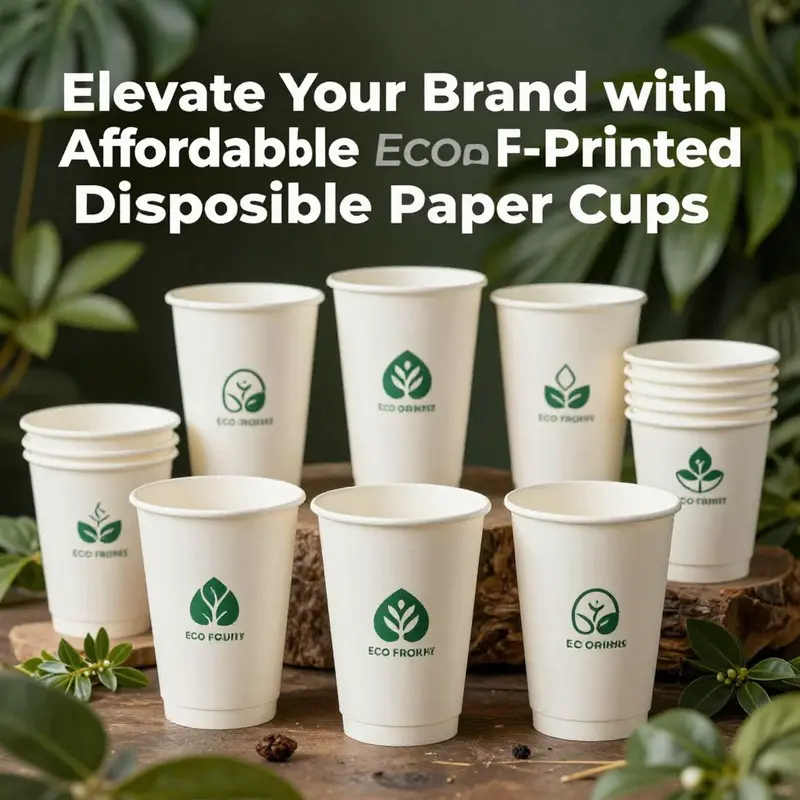
In the market for affordable disposable beverage cups, a quiet shift is taking place. Operators balance cost with responsibility, driving demand for economical cups that print well and perform in busy service environments. The goal is to deliver value without sacrificing clarity of branding or environmental intent. The approach relies on scalable production, practical coatings, and clear disposal guidance that matches local waste programs.
Two common structural options dominate the space: single wall and double wall. Single wall cups are most economical and work well for cold drinks, events, and promotional campaigns where insulation is not critical. From a procurement view, unit costs are typically the lever that scales messaging and reach when orders run into the hundreds of thousands. Double wall cups add insulation and a more premium touch for hot beverages, which can justify a slightly higher unit price while enhancing user comfort and reducing burn risk. Consumer perception often links double wall with higher quality, which can support sustainable coating choices if disposal remains aligned with local programs.
Material choices center on food grade paperboard with a coating that balances water resistance, safety, and end of life. Coatings may be plant based and designed to break down under composting conditions or to be recyclable in the right stream. Buyers should verify local composting and recycling capabilities and communicate clear disposal guidance to customers.
Printing and customization unlock value by turning cups into mobile branding without inflating costs. Most printers offer standard multi color processes and scalable runs, allowing bold logos and messages to reach large audiences. The economics improve as volumes grow, making it feasible to amortize branding across tens or hundreds of thousands of cups.
In short, cheap printed disposable cups can combine price, performance, and responsibility when suppliers are chosen with attention to materials, coatings, and local waste realities. The conversation today is not about choosing price over planet but about aligning scale with sustainable options to keep costs predictable while extending brand reach.
Currents in Cheap Printed Disposable Paper Cups
This chapter offers a concise overview of the market for cheap printed disposable paper cups, focusing on cost dynamics, branding potential, sustainability considerations, and supplier landscape. It highlights how bulk pricing lowers unit costs, the role of logo printing for brand visibility, and the importance of reliable supply chains. Buyers must balance affordability with food-grade safety standards and regional regulatory requirements, while recognizing that minimum order quantities can be high but economies of scale reduce total cost of ownership over time.
Final thoughts
Cheap printed disposable paper cups represent both a practical solution and an effective marketing tool for beverage businesses. Their customization options allow for enhanced brand visibility while their various sizes and eco-friendly alternatives cater to diverse consumer preferences. As market trends continue to evolve, partnering with reliable suppliers can ensure that your business remains competitive and environmentally conscious. Choosing the right disposable paper cups can ultimately set your brand apart in a crowded market, making the investment worthwhile.