
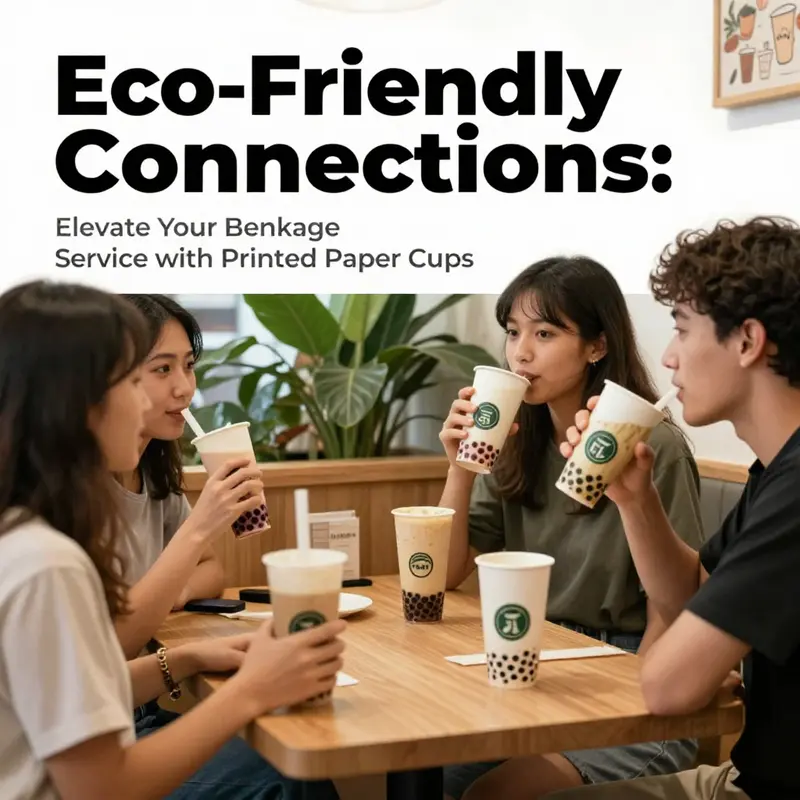
In a world increasingly focused on sustainability, printed eco-friendly paper cups are emerging as a vital choice for bubble tea shops, beverage chains, restaurants, food trucks, and corporate catering services. These cups not only provide a reliable option for serving both hot and cold beverages but also offer the opportunity to showcase your brand through customizable designs. Each chapter of this article will delve deeper into the multifaceted benefits of these cups, from the importance of custom branding and their exceptional temperature resistance to their eco-conscious design and sustainable sourcing processes. By understanding these elements, businesses can make informed decisions that align branding goals with environmental stewardship.
Branding That Flows with Every Sip: Custom Printing on Eco-Friendly Paper Cups
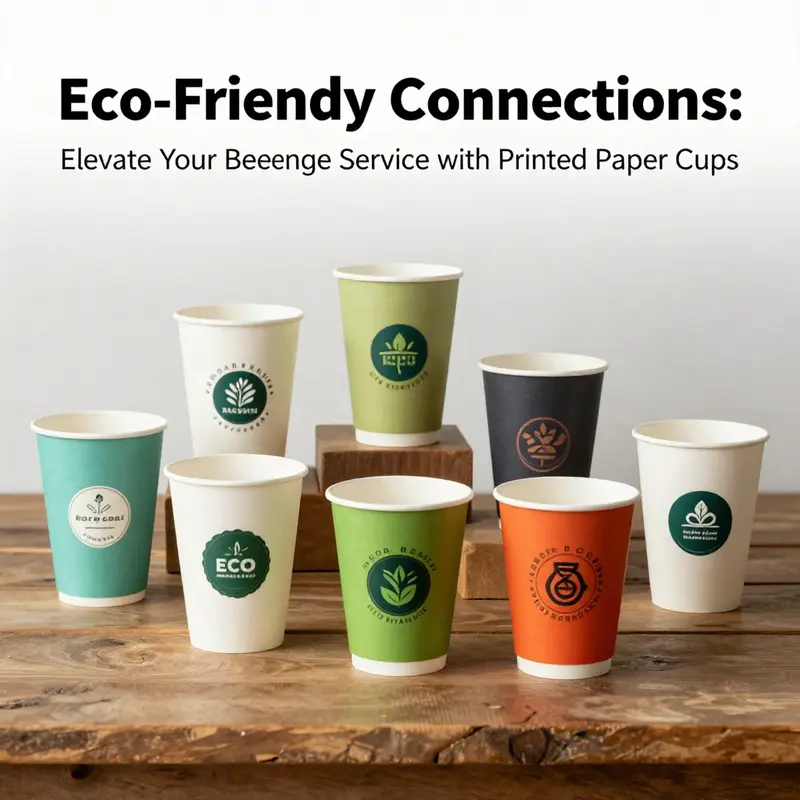
Branding That Flows with Every Sip: Custom Printing on Eco-Friendly Paper Cups
Brand owners are discovering that the cup itself can tell a brand story as powerfully as the product inside. Printed eco-friendly paper cups merge sustainability with opportunity. They are typically made from recyclable or compostable paper stock, and they often rely on a plant-based coating rather than a traditional plastic liner. The result is a container that performs reliably for hot drinks while foregrounding a business’s environmental commitments. The visual impact of high-fidelity graphics on a cup surface becomes a moving advertisement in hands, on tabletops, and in carry-out lines. For customers, the branding is not an afterthought; it is part of the experience, shaping expectations about quality and responsibility from the first glance. In marketplaces where consumers increasingly judge by sustainability, the cup becomes a visible pledge rather than a disposable afterthought.
Printing methods and surface science are central to this promise. Offset printing and flexographic printing are commonly used to reproduce logos, slogans, and subtle branding motifs with color depth and consistency that survive the rigors of daily handling. The materials chosen for the cup—recyclable or compostable stock with a plant-based barrier—are selected not only for their performance but for their compatibility with responsible end-of-life options. A robust printing surface allows for vibrant tones, fine line work, and multilingual messaging, which is crucial for coffee shops, tea houses, and event venues that operate across diverse communities. The coatings are designed to be ready for ink adhesion yet friendly to composting standards, meaning a well-branded cup can be disposed of in a way that supports organic waste streams rather than polluting landfills. The interplay between color, typography, and negative space on a curved surface is a challenge to designers, but modern printing systems deliver a level of precision and consistency that makes a brand’s identity feel intentional and premium. For hot beverages, the underlying substrate is engineered to resist heat and maintain shape integrity, so the cup remains legible and visually appealing from the first pour to the last sip.
Structural choices reinforce branding in practical ways too. Double-wall insulation is not just about keeping drinks hot or cold; it heightens the perception of value and care. The outer wall stays comfortable to touch, inviting customers to linger over a story printed in full color or a subtle brand motif that echoes a store’s interior design. The physical feel—thicker walls, a smooth roll at the rim, a satisfying snap when the cup is grasped—transforms a simple act of drinking into a guided brand moment. Some designs incorporate rolled rims to add rigidity and reduce spillage, while hollow-layer constructions enhance durability during transport, ensuring that branding and logos remain intact even after being carried through crowded lobbies or outdoor events. These practical details matter because they influence the repeated impressions that convert curiosity into loyalty. When customers recognize a familiar cup, their sense of brand memory strengthens; the cup becomes a mnemonic device for the experience itself, not merely a container.
From an environmental perspective, the shift to eco-friendly cups reframes branding as a sustainability story as well. The move away from plastic linings toward plant-based barriers means fewer non-renewable materials in the packaging mix, and many producers align with recognized composting standards. This alignment matters on several levels. First, it supports circular economy goals by enabling materials to re-enter the bio-based waste stream rather than accumulating in landfills. Second, it strengthens a brand’s credibility with consumers who want to see tallies of reductions in plastic use and waste. Third, it helps businesses differentiate themselves in crowded markets where graphic design and typography alone can no longer convey a company’s values. While not every facility can process compostable cups, a growing network of industrial composters and composting programs remains part of a broader ecosystem that rewards brands for choosing materials designed to break down responsibly. The clarity of the brand’s sustainability narrative—stapled to the surface of a well-printed cup—can become a differentiator that encourages repeat business and word-of-mouth referrals.
Sourcing and scale have become practical enablers of this branding approach. Suppliers now offer a range of sizes—typically from 4 oz up to 22 oz—so that a café can extend its branding across service moments from a quick espresso to a late-afternoon iced drink. The ability to switch between hot-and-cold formats without sacrificing print quality means a single design language can traverse menus and events, reinforcing recognition across touchpoints. The materials used are often sourced from renewable resources and manufactured under stringent environmental standards, further aligning with corporate commitments to zero-waste and circular economy goals. For brands testing designs, sample runs are accessible and affordable, with options that allow designers to evaluate color fidelity, ink adhesion, and surface texture before committing to a full production order. In some cases, sample costs are modest and can serve as a gateway to larger orders, enabling teams to iterate quickly and validate branding choices in real-world settings. This incremental approach reduces risk while speeding time-to-market for campaigns that rely on consistent, eye-catching packaging.
Although the surface is a primary canvas, the cup’s physical features also convey a premium feel. A well-branded cup can communicate a brand’s attention to detail through tactile cues and structural engineering. The combination of double-wall insulation and a smooth, confident grip creates a sense of value that customers carry with them beyond the counter. A cohesive design with crisp typography and balanced negative space invites customers to engage with the branding rather than simply notice it. In multilingual markets, the capacity to embed multiple languages in a single design supports accessibility and inclusivity, expanding reach without cluttering the visual field. The interplay between type, imagery, and the cup’s curvature can be leveraged to produce a sense of movement—curved text following the cup’s profile or subtle motifs that echo a brand’s motifs. The goal is not to saturate the cup with information but to convey a concise, memorable brand impression that complements the drink and the moment of service.
For practitioners in the field, the practicalities of implementing this branding strategy matter as much as the aesthetics. The customization process is designed to be flexible, accommodating varying budgets and brand guidelines. The ability to print directly on the cup surface means fewer steps in the packaging supply chain and fewer potential points of failure in branding. When a brand presents a consistent, well-executed visual identity on sustainable cups, it signals to customers that sustainability and quality are inseparable commitments. The same process that allows intricate logos, multilingual texts, and bold color palettes also supports the gentle, nuanced tones of a brand’s heritage imagery. In settings from intimate tea houses to high-volume event operations, the cups act as portable billboards that carry a brand’s message as readily as the beverages themselves. The branding becomes part of the customer journey, shaping perceptions at the very moment of consumption and contributing to a stronger, more cohesive brand experience over time.
To illustrate how these cups circulate in real markets, one can consider the practical pathways from concept to consumption. The offering supports a spectrum of branding opportunities, from seasonal campaigns to permanent identity elements embedded in everyday service. A single, well-executed design can travel across seasonal menus, limited-edition beverages, and corporate partnerships, adapting to different event themes and cultural contexts without losing cohesion. This versatility makes printed eco-friendly cups a versatile platform for marketing and storytelling, turning a disposable item into a seamless extension of a brand’s identity. The emphasis on compostable or recyclable materials does not imply compromise on appearance or performance. Instead, it invites brands to think about how a cup’s surface and form can carry forward a narrative that respects the environment and resonates with customers who value responsible consumption. The result is a packaging choice that supports marketing objectives while aligning with broader sustainability targets.
An essential note for brand teams is to be intentional about messaging on the cup beyond simple logos. Color palettes, language choices, and iconography should align with broader campaigns and store interiors. A consistent design language helps customers recall a brand whenever they encounter the cup, even in transit or at third-party events where a cup travels far beyond the original retail setting. In multilingual markets, the capacity to embed multiple languages in a single design supports accessibility and inclusivity, expanding reach without cluttering the visual field. The interplay between type, imagery, and the cup’s curvature can be leveraged to produce a sense of movement—curved text following the cup’s profile or subtle motifs that echo a brand’s motifs. The goal is not to saturate the cup with information but to convey a concise, memorable brand impression that complements the drink and the moment of service.
Finally, the question of alignment with environmental values is not only about the material choices but about the whole experience—from production to end-of-life. By selecting compostable or recyclable cups and printing with inks that are stable yet responsibly sourced, brands demonstrate accountability. Packaging becomes a narrative of care, one that customers carry with them as they use, reuse, and recycle. The brand’s environmental commitments thus become a texture within the experience, a subtle but enduring thread that connects tasting with values. In this light, custom branding on printed eco-friendly cups becomes more than a marketing tactic; it becomes a framework for communicating quality, responsibility, and engagement across a diverse customer base.
To peek behind the curtain at real-world materials and capabilities, businesses can explore catalogues and sample offerings available through responsible suppliers who emphasize eco-conscious designs. For those seeking practical examples of eco-friendly, logo-printed cups, a representative catalog can illustrate how design and sustainability converge in a single, portable format. The combination of branding potential, hot- and cold- beverage compatibility, and compostable or recyclable materials positions printed eco-friendly cups as a powerful packaging option for shops, events, and hospitality networks that want to project a modern, responsible identity on every sleeve and sleeve-side point of contact.
eco-friendly printed logo coffee cup
External resource: https://www.made-in-china.com/products-detail/CustomEcoFriendlyInsulatedPaperCupsPrintedOwmLogoDesignReusableCoffeeCupwithCup_Lid/1635789497.html
Between Heat and Habit: How Temperature Shapes the Promise of Eco-Friendly Printed Paper Cups
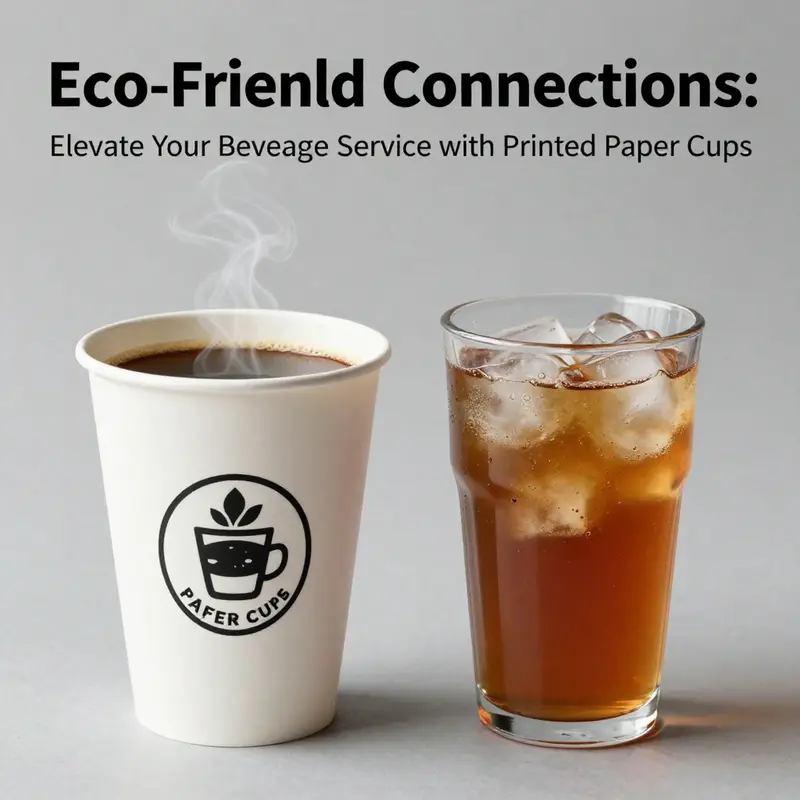
Temperature sits at the core of how printed eco-friendly paper cups perform in real-world service. In busy cafes or outdoor events, cups must cradle a hot beverage while keeping the hand comfortable and the experience clean from spills. The temperature dimension weaves together material science, sustainability credentials, and the daily rituals of consumption. It begins with the inner coating that seals the cup against moisture and grease, and it ends with the balance between environmental responsibility and human safety when heat enters the equation. The most common barrier is a film layer that guards the paper interior, usually polyethylene (PE) or a plant-based alternative designed to be more compatible with composting streams. The temperature reality for PE-coated cups is straightforward: polyethylene has a melting point around 110 degrees Celsius, and typical hot beverages hover just under that threshold, usually not exceeding 100 degrees Celsius. In normal use, this means the PE layer remains stable, preserving integrity and preventing leaks as the drink is sipped. The outer paper, strengthened by kraft fibers and sometimes a double-wall construction, resists deformation under heat and reduces heat transfer to the exterior surface, keeping the cup cooler to the touch and reducing the risk of scalding hands. These features are not mere technicalities; they shape how a brand promises a comfortable, safe experience while maintaining a clean, minimalist aesthetic that supports sustainable branding.
Yet the temperature story grows more nuanced when heat exposure becomes sustained or unusually intense. Research points to heat as a driver for microplastic release from disposable beverage cups. When hot drinks, especially those above about 60 degrees Celsius, are poured into cups with plastic linings, the thermal stress can soften or expand the polymer and potentially release microscopic fragments into the drink. The magnitude varies; some studies report thousands of microplastic particles per cup under certain conditions, though these cups still release fewer microplastics than fully plastic cups in head-to-head comparisons. This is not a condemnation of eco-friendly cups but a reminder that heat interacts with any polymer lining. It emphasizes safeguarding public health by understanding safe temperature exposure and end-of-life pathways.
At temperatures below the threshold where the plastic layer begins to fail, PE-coated cups can be a reasonable option when supported by robust recycling or composting infrastructure. Experts note that these cups are not pseudo-environmental products; with proper management they can be recycled with other waste paper streams, though separation can complicate pulping and fiber recovery. Where recycling networks are strong, the environmental benefits accrue when leakage risk is controlled and end-of-life options are clear.
Industrial composting also plays a pivotal role for plant-based coatings. Certifications such as OK Compost and the Biodegradable Products Institute signal acceptance criteria for compostability under controlled conditions. In practice, commercial facilities can manage the paper fiber and plant-based coatings in a way that reduces landfill burden compared with plastic-lined cups, but availability depends on local waste management and consumer participation. The choice of coating then informs end-of-life strategy, not only durability in busy service but the opportunity for brand storytelling around sustainability. Operators should consider printing and coating compatibility with heat during production and service, and provide clear consumer guidance on safe handling and disposal.
From a branding perspective, the ability to print vivid logos and multilingual messages on the cup surface is a practical advantage. Printing methods like offset or flexography enable expressive visuals without compromising barrier properties, so the coating must tolerate the printing process and maintain fidelity through hot and cold beverage life cycles. The chain from procurement to waste collection is part of the design challenge, and the temperature story invites brands to align product choices with end-of-life infrastructure and consumer behavior. If a cafe emphasizes compostability and accessible curbside recycling, plant-based coatings may be a strong fit; if a brand prioritizes a familiar leak-proof performance, PE-coated designs with strong recycling options might be preferred.
Ultimately temperature is a hinge that opens possibilities for stylish, responsible packaging. A practical takeaway is to evaluate both drink temperature and local waste capabilities. In regions with robust recycling streams, PE-coated cups can offer safety and branding today; in areas with mature composting, plant-based coatings may align better with circular economy goals. The conversation should include clear consumer guidance on heat contact and disposal to minimize risk and maximize recovery. Brand leaders can use temperature as a design constraint that informs material choice, end-of-life strategy, and messaging to consumers about responsible packaging.
Under Pressure and Purpose: The Structural Integrity of Eco-Friendly Printed Paper Cups
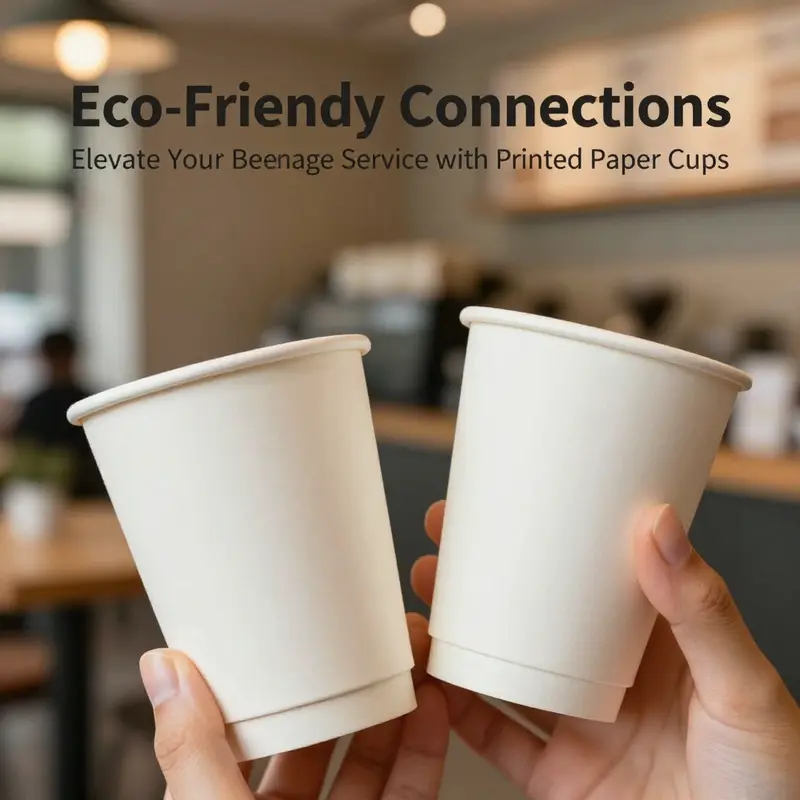
The structural integrity of printed eco-friendly paper cups sits at the intersection of material science, packaging engineering, and responsible design. These cups are not mere vessels for beverages; they are carefully engineered objects that must perform reliably under a range of real-world stresses. They must support hot liquids without leaking, cold drinks without sweating or deforming the exterior, and branding efforts without compromising the user experience. The answer lies in a holistic approach to materials, architecture, and manufacturing tactics that together create a resilient, safe, and compostable packaging option that aligns with sustainability goals.
At the core of these cups is a robust primary structure. A high-quality recyclable paperboard forms the backbone, chosen for its stiffness, resilience, and ability to hold its shape through the rigors of handling, stacking, and transport. This substrate must strike a balance between rigidity and weight, providing a form that feels substantial in the hand while keeping overall cup mass manageable for single-use logistics. The outer wall is engineered to keep the inner contents from compromising the user experience, and the inner wall must guard against liquid ingress without creating a barrier that becomes brittle or prone to cracking in varied temperatures. The interplay between these walls matters greatly when the cup is subjected to the heat of a freshly brewed beverage, the cold chill of an iced drink, or the pressure generated during efficient service and quick takeaway.
A critical component of liquid resistance in eco-friendly cups is the internal coating. Two primary pathways exist for barrier performance: polyethylene (PE) and polylactic acid (PLA). PE has long provided a dependable moisture barrier, excellent durability, and proven hot-liquid performance. It cushions the beverage against leaks and ensures the outer layers do not degrade under condensation or splash. PLA, a compostable alternative derived from renewable plant starches, aligns with the sustainability ethos of these cups. It offers a plant-based route to barrier properties, making compostability more straightforward for facilities that support industrial composting. Each coating option carries implications for end-of-life handling, performance under heat, and compatibility with various processing environments. The choice of coating, thickness, and the precise lamination technique collectively shape not just leakage resistance but also the cup’s behavior under microwave exposure, if such use is ever contemplated in specific service contexts.
Between the inner beverage chamber and the outer cup wall lies a hollow layer that is central to the structural narrative. This deliberate air or vacuum-like gap serves multiple functions that mutate the ordinary expectations of a disposable cup. First, it acts as an insulating buffer. The hollow region slows heat transfer from the hot liquid to the outer surface, meaning the exterior remains comfortable to the touch for longer periods. This insulation is not just a comfort feature; it reduces the risk of consumer burns and, over the course of service, softens the thermal load on the entire cup, helping maintain its shape and resisting deformation when handled with care or in transit. Second, the hollow layer contributes to structural stability. Under external pressure—from a stack of cups sliding against each other during shipment to the physical impact of a dropped container—the hollow design distributes stress more evenly across the wall, reducing chances of bulging, collapsing, or cracking. The result is a cup that retains its form even after it has been picked up, passed along a counter, and squeezed lightly by a barista’s gloved hand. This resilience translates directly into fewer leaks, less spill risk, and a smoother experience for customers who expect their hot coffee to stay inside the cup until they drink it.
Safety is inseparable from integrity when a hot beverage is involved. Anti-scalding features are often woven into the design through a combination of wall geometry, wall thickness, and surface finish choices. A well-executed outer surface remains cool to the touch even as the liquid inside remains at a high temperature. The user experience benefits from this design choice beyond comfort: it reduces the chance of accidental contact burns, a factor that becomes more important in busy settings such as cafés, events, and outdoor service where hands move quickly and customers may handle cups with gloved or bare fingers in a variety of temperatures. The practical outcome is a cup that performs reliably under heat while maintaining a visually appealing, brand-ready exterior that can bear print and color with confidence.
From a manufacturing standpoint, achieving optimal performance requires careful balancing of materials and coatings with thoughtful integration of the hollow layer and exterior geometry. The thickness of barrier coatings is central to performance. A thicker PE layer can enhance moisture resistance and heat tolerance but adds material mass and potential impact on recyclability. A PLA layer advances compostability but can introduce sensitivity to extreme temperatures and particular processing conditions. In some cases, the hollow layer’s dimensions must be tuned to preserve insulation without creating a risk of delamination or separation under strain. The stacking and nesting behavior of cups in a warehouse or transport trailer also plays a pivotal role; improper stacking can lead to denting or outer-wall deformation that compromises both aesthetics and function. Manufacturers therefore design for stackability that minimizes damage in transit, which in turn supports the structural integrity of the cup as it enters the hands of the consumer.
All of these engineering choices are underpinned by broader environmental considerations. The eco-conscious design of these cups aims to minimize landfill impact while supporting circular economy goals. Certification schemes and standards—such as those that recognize compostability in industrial facilities—frame expectations for end-of-life outcomes. The integration of renewable resources and responsible sourcing of raw materials further informs how these cups behave after disposal. The challenge is to deliver a product that meets demanding performance criteria for hot and cold beverages while remaining compatible with composting streams where feasible, and with recycling streams where appropriate. The balance is delicate: too much emphasis on barrier strength or rigidity can complicate recycling or composting, whereas too little can undermine safety and user experience. The best-in-class designs navigate this balance through a coherent design philosophy that treats structural integrity as a feature linked to sustainability, aesthetics, and operational practicality.
When viewed in practice, the cohesion of these design elements becomes apparent in the everyday use of printed eco-friendly cups. Baristas can pour into a cup without fearing rapid deformation or leakage as the cup encounters steam, splashes, or gentle knocks. Event organizers can rely on the same cup to maintain appearance in outdoor conditions, where wind, sun, and handling add layers of complexity to the packaging’s performance. The branding layer—the surface that carries logos, messages, and multilingual text—must survive printing processes without cracking or flaking as the cup undergoes moisture exposure and thermal cycling. In the design language of sustainability, these features are not independent modules but rather a single, integrated system where the material choices, barrier strategies, hollow insulation, and anti-scalding features converge to deliver a reliable experience. The practical implication is straightforward: when a consumer lifts a well-engineered eco-friendly cup, they encounter none of the anxiety associated with potential leaks, scalds, or compromised surfaces. They experience a product that honors both their safety and their values.
For practitioners and researchers alike, the key takeaway lies in recognizing how the layered, multi-faceted approach to structure translates into measurable performance. Tests that measure leakage under pressure, thermal resistance of the outer surface, and the retention of form after stacking illuminate how each element contributes to overall resilience. Ongoing innovations—such as optimizing the hollow layer geometry or refining barrier coatings so that compostability and safety coexist with mechanical strength—continue to push the category forward. In a market where branding and environmental stewardship are central to competitive advantage, the structural integrity of these cups is not a footnote but a core differentiator that enables consistent service quality while aligning with broader ecological commitments.
For readers seeking deeper context on sustainable packaging practices that underpin these materials, government and industry resources offer a broader frame of reference. The Environmental Protection Agency’s Sustainable Packaging Resources provide a comprehensive overview of eco-friendly packaging options and their benefits, helping to situate printed eco-friendly cups within a larger lifecycle analysis. This chapter, however, has aimed to illuminate how the convergence of substrate quality, barrier technology, hollow insulation, and safety-oriented design yields a packaging solution that can perform under pressure while remaining true to its environmental promises. In the end, the strength of these cups is not only in their ability to hold a hot or cold beverage; it is in their capacity to embody a responsible, resilient approach to modern packaging that respects people, products, and the planet.
Internal link to a practical example of eco-friendly branding in action can be found here: eco-friendly branding cup. This reference highlights how printed branding can be integrated without compromising structural performance or sustainability goals. For a broader context on environmental stewardship in packaging, see the EPA resource linked above as a contextual external reference: EPA Sustainable Packaging Resources.
Branding with a Conscience: Designing Printed Eco-Friendly Paper Cups for a Circular Economy
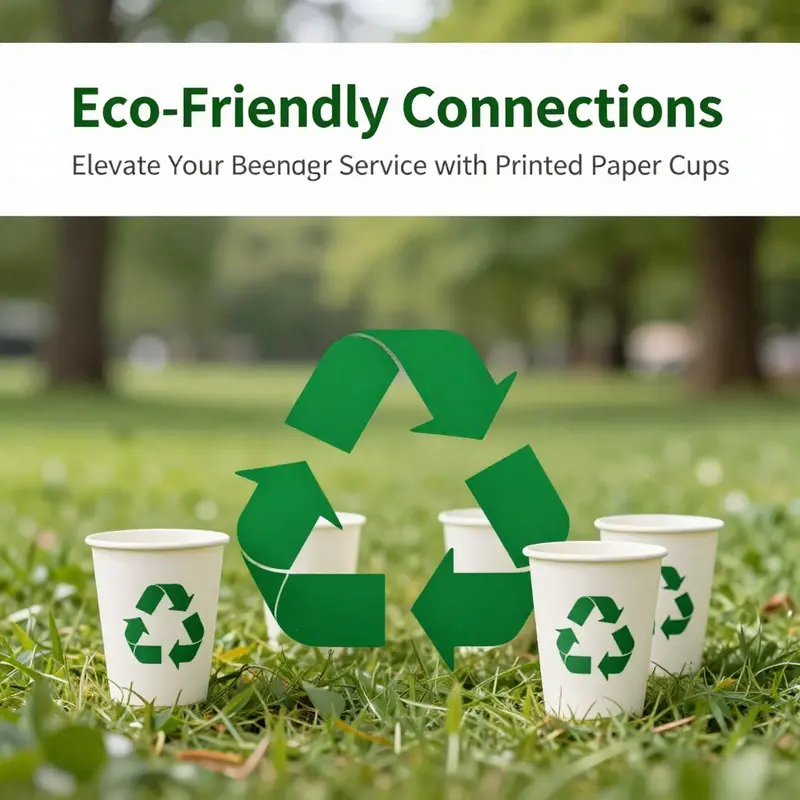
Every printed eco-friendly paper cup is more than a vessel for a drink; it is a statement of values, a touchpoint in a brand’s storytelling, and a functional module in a broader system aimed at reducing waste. The chapter you are reading unfolds how the design of these cups weaves together material science, production choices, branding opportunities, and end-of-life realities to create something that performs in the cup corridor of daily life while advancing a circular economy. At their core, these cups are crafted from renewable or recycled paper and are lined with plant-based coatings that replace traditional plastic barriers. Materials such as recycled fiber or sustainably sourced wood pulp are chosen not merely for their availability but for their lower environmental footprint over the product’s lifetime. The coatings, often plant-derived, shield the liquid from leaking while avoiding the toxic residues associated with conventional plastics, especially when the cup is used for hot beverages like coffee or tea. The promise is clear: a leak-proof cup that can, under appropriate conditions, return to the earth rather than linger in a landfill, contributing to microplastic pollution and resource depletion. The industrial composting facilities that handle these cups are equipped to manage the breakdown process, turning the cup into compost that can nourish new cycles of growth. Certifications such as OK Compost and BPI serve as verification that the cups meet established standards for compostability. Those certifications are not mere badges of compliance; they guide buyers who want a dependable path from disposal to composting, reducing the risk that a cup will require special handling or end up in a standard waste stream. In practice, this means a careful alignment of product design with waste management infrastructure. When a consumer disposes of a cup into a properly managed facility, the cup’s fibers break down into natural elements, leaving no toxic residues behind. The concept of fully compostable packaging is not just about ending a product’s journey cleanly; it is about ensuring that the materials responsible for making the cup can re-enter the planet’s nutrient cycles rather than becoming waste that persists for generations. This lifecycle focus is central to how brands think about sustainability as they adopt printed cups as a vehicle for messaging and identity. If a brand wants to tell a story of responsibility through its packaging, the ability to imprint a logo, cultural motif, or multilingual text directly on the cup surface becomes a powerful narrative tool. Custom branding, achievable through offset or flexographic printing, turns each cup into a portable billboard for green values, a canv it’s a canvas that travels with the drink and the consumer. The printing processes are chosen to balance color fidelity, durability, and environmental impact. Offset printing can deliver high-quality imagery with strong color density, while flexographic printing offers efficiency for long runs and diverse substrates. In tandem with sustainable materials, the printing methods enable vibrant branding without compromising the cup’s compostability. For the responsible brand, the surface becomes a storytelling medium—one that communicates more than a logo. It can convey multilingual messaging appropriate to the venue or audience, cultural motifs that reflect the event’s character, or seasonal campaigns that engage customers in new ways. The creative potential is vast, yet the practical demand is clear: the cup must remain confident in its performance across hot and cold beverages, and it must do so without sacrificing its end-of-life story. Structure is a key element of that confidence. Double-wall designs offer insulation and strength without transferring heat to the outer surface, reducing the risk of scalding and making hand contact more comfortable. This design choice is particularly important for hot beverages, where customers expect safety and ease of use. The outer surface, cooled by the insulating layer, remains comfortable to hold even when the drink inside is piping hot. The robust construction supports a wide array of applications—from bustling coffee shops and casual restaurants to outdoor festivals and corporate events—where single-use convenience meets sustainability goals. The material selection—renewable or recycled fibers and plant-based coatings—also shapes the cup’s end-of-life performance. Unlike traditional plastic-lined alternatives, these cups are designed to be fully compostable under industrial conditions, provided they are disposed of in appropriate facilities. This distinction matters because home composting conditions vary, and not all facilities are equipped to manage the same materials. The emphasis, therefore, is on the system: procurement choices that support certified compostability, manufacturing practices aligned with environmental standards, and a waste stream that funnels products into composting rather than landfills. The end-of-life narrative is where circular economy ambitions must meet practical realities. For businesses pursuing green branding, the symbolism of compostable packaging becomes a narrative device that resonates with customers who are increasingly mindful of waste and resource use. The cups’ lifecycle is an argument for responsible sourcing, transparent supply chains, and a commitment to reducing single-use plastic dependency. In addition to environmental considerations, operators appreciate the cups’ scalability. Market platforms and manufacturers can supply large volumes while maintaining environmental credentials. Bulk production can extend to the millions of pieces per month, with price breakthroughs that make sustainable packaging a viable option for large-scale operations. Still, buyers should verify certifications and ensure that the chosen cups carry recognized labels. This diligence helps prevent greenwashing and ensures that the disposal infrastructure can complete the intended loop. When a brand evaluates these cups, it is not merely selecting a container but aligning its identity with a broader narrative about care for the environment, responsible production, and consumer empowerment. The ability to print a logo or message on the cup surface is not just a branding advantage; it is a way to reinforce a brand’s green commitments at the moment of purchase, during the drink’s journey to the consumer, and at the point where the cup returns to the waste stream. For readers seeking a concrete example of how such a product range is presented to the market, one can explore an internal resource that discusses eco-friendly, printed-cup options and their branding capabilities. This resource highlights how a cup can carry a company’s image while remaining aligned with green principles, illustrating the practical synergy between design, branding, and sustainability. For those who want to explore supplier-scale opportunities and eco-certifications, a widely used sourcing platform offers verified manufacturers capable of high-volume production with green certifications. The scale and certification pathways are meaningful because they demonstrate that sustainability goals can be achieved without compromising supply reliability or cost efficiency. The balance between design flexibility and environmental responsibility is the crux of why printed eco-friendly cups matter: they enable brands to tell a consistent, credible story across every interaction—from the first glance at the cup’s branding to the cup’s ultimate end-of-life destination. The idea is not to oversimplify packaging as merely a vessel but to recognize it as a curated touchpoint that embodies a company’s values and a consumer’s growing expectations for responsible consumption. In this sense, these cups become ambassadors of sustainability, bridging creative branding with practical environmental stewardship. The chapter concludes with a simple reminder: when design, materials, and end-of-life strategies align, the cup can be both an effective branding tool and a contributor to waste reduction. The potential to influence consumer choices through packaging design is real, and with careful material selection, certifiable compostability, and thoughtful printing practices, printed eco-friendly paper cups can support a more circular economy without compromising performance. Internal linkage to practical product examples demonstrates how this theory translates into tangible options for brands seeking to communicate their green credentials while maintaining the reliability customers expect from their beverages. As the industry continues to evolve, the path forward lies in continued innovation in plant-based coatings, improved end-of-life infrastructure, and branding approaches that celebrate sustainability without sacrificing usability or aesthetics. External references can provide broader context on scalable manufacturing and certification standards, such as Alibaba’s listings for large-volume, eco-certified cups, which illustrate how demand can be met at scale while maintaining environmental commitments. For those seeking a broader technical perspective on compostability certifications and lifecycle considerations, see the external resource: https://www.alibaba.com/product-detail/Eco-Friendly-Disposable-Double-Wall-Paper-Coffee-Cup-with-Lids-Custom-Logo-Printed
From Forest to Cup: A Thorough Exploration of Sustainable Sourcing for Printed Eco-Friendly Paper Cups
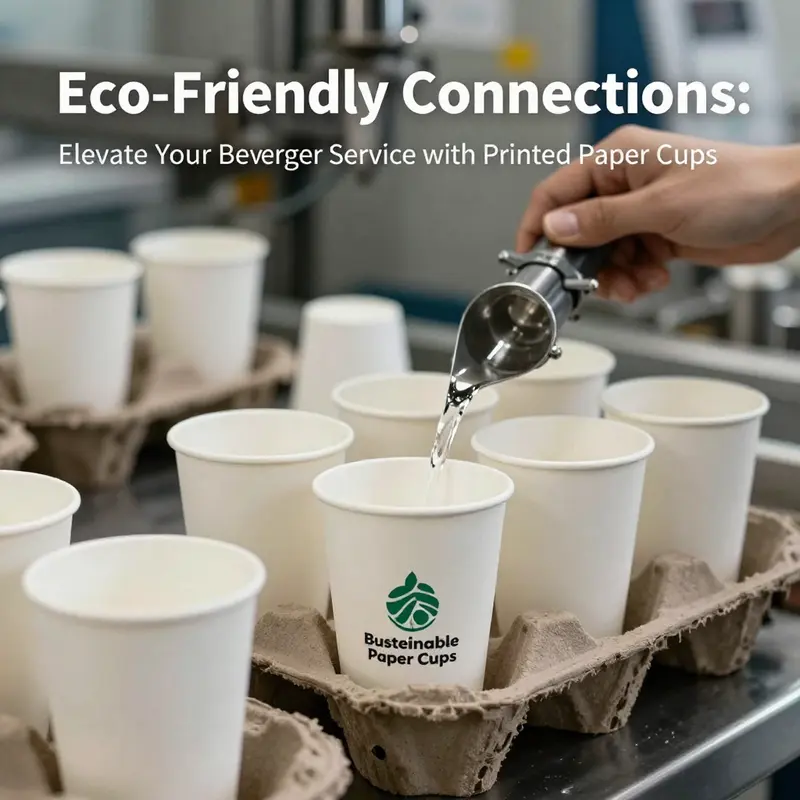
Every disposable object carries a hidden map: a traceable path from raw material to end of life. For printed eco-friendly paper cups, this map is particularly critical because the product sits at the crossroads of consumer rituals and environmental responsibility. A chapter about sustainable sourcing cannot merely skim the surface of design or branding. It must trace the soul of the cup through the choices that shape its footprint, from the forest that yields the pulp to the factory floor where ink dries, all the way to how the cup is disposed of in the waste stream. When markets demand both performance and purpose, sourcing decisions become a form of product stewardship. They determine not only whether a cup can hold a hot beverage without deforming or leaking, but whether the entire lifecycle aligns with broader goals of forest conservation, clean production, and waste reduction. This is the essence of sustainable sourcing for printed eco-friendly paper cups: a holistic approach that treats supply chains as living systems rather than as linear, disposable pathways.
The first and most visible decision in sustainable sourcing concerns raw materials. Paper cups can be made from virgin fiber harvested from responsibly managed forests or from post-consumer recycled content. The most credible pathways rely on third-party certifications that attest to responsible forest management and material traceability. Certifications like the Forest Stewardship Council (FSC) or the Programme for the Endorsement of Forest Certification (PEFC) are not merely symbols; they are governance tools that require ongoing compliance with environmental, social, and economic criteria. When a supplier commits to certified renewable resources, it signals a commitment to maintaining forest ecosystems while meeting the demand for single-use packaging. This is not about restricting supply; it is about ensuring that every acre of forest that yields pulp is counted, protected, and regenerated. The choice between virgin and recycled content also shapes performance. Recycled fibers can reduce the energy and water intensity of production, though the fibers may be shorter and require careful processing to preserve strength and printability. In either case, the goal is to avoid depleting high-value forests and to maximize the use of materials that would otherwise become waste.
Alongside the fibers, the inks used to imprint logos, messages, or cultural motifs on cups carry their own environmental weight. The shift toward eco-friendly inks—soy-based or water-based formulations, with low or zero volatile organic compounds—offers a meaningful improvement over traditional petroleum-based inks. Inks interact directly with the cup’s surface, and perhaps more critically, with the end-of-life scenario. In composting streams, the ink must not hinder biodegradation, nor should it introduce hazardous residues into the composting process. When sourcing inks, therefore, brands seek formulations that work harmoniously with the chosen fiber and coating system while meeting safety standards for contact with food. This requires close collaboration between fiber suppliers, coating formulators, and printing houses to ensure compatibility and performance across a range of temperatures and beverage types.
Coatings represent another pivotal sourcing decision. A growing share of eco-friendly cups uses plant-based coatings instead of conventional plastic liners. These coatings must provide leak resistance and heat resistance, especially for hot beverages like coffee and tea, while remaining compatible with composting or recycling streams. The challenge is twofold: achieving reliable barrier properties that prevent liquid seepage and preserving the ability of the cup to break down in appropriate facilities. The result is a nuanced design problem where chemistry, material science, and logistics converge. A coating that is too thick can compromise recyclability or compostability, while a coating that is too thin can fail during handling or in service. Sustainable sourcing thus involves selecting coatings that deliver the right balance of barrier performance, thermal stability, and end-of-life compatibility, all while sourcing those coatings from producers who themselves adhere to sustainable practices.
Manufacturing efficiency cannot be separated from sourcing choices. Energy-intensive production amplifies the environmental impact of even the most responsibly sourced materials. Sustainable sourcing programs often require collaboration across the supply chain to improve energy efficiency. This can include upgrading equipment to reduce electricity consumption, adopting heat recovery systems, and integrating renewable energy sources such as solar or wind where feasible. The life-cycle benefits multiply when manufacturing facilities invest in energy management systems, water reuse processes, and waste reduction initiatives. In practice, these improvements translate into lower greenhouse gas emissions per unit produced and a smaller burden on local energy grids. When suppliers pursue these gains, they create a ripple effect across the chain, making it easier for brands to meet ambitious sustainability targets without sacrificing performance or cost-effectiveness.
Transportation is another critical element of sustainable sourcing. The emissions associated with moving raw materials to factories and finished cups to customers can be substantial. Best-in-class sourcing programs emphasize low-emission transportation, route optimization, and, where possible, consolidation of shipments. This can mean prioritizing suppliers within a regional network to shorten transport distances or coordinating multi-modal logistics that reduce carbon intensity. The impact of transportation choices becomes even more pronounced when the cups are destined for outdoor events, street-front cafés, or hospitality locations where delivery windows are tight and reliability matters as much as sustainability. In all cases, the aim is to lower the carbon footprint of the entire supply chain while maintaining the reliability customers expect from single-use packaging.
In addition to these material and process decisions, sustainable sourcing hinges on transparency and verification. The most credible programs incorporate robust traceability, allowing brands to demonstrate to customers that each cup’s journey respects environmental and social standards. Verification often involves third-party audits, public disclosures of supplier lists, and certifications that cover both materials and manufacturing practices. This transparency builds trust with retailers, foodservice operators, and consumers who increasingly seek products that can be held accountable for their environmental claims. The effect is not merely reputational; it influences procurement strategies, supplier qualification, and the design of packaging that truly honors sustainable objectives.
The literature on sustainable sourcing also emphasizes the critical role of end-of-life outcomes. A cup’s environmental performance is inseparable from how it is disposed of after use. If the chosen materials are compostable, then access to industrial composting facilities becomes essential. If the cup is designed for recycling, then the coatings and inks must be compatible with the recycling stream. Industry practitioners recognize that consumer behavior, municipal infrastructure, and regulatory frameworks all shape outcomes. Therefore, the sourcing strategy must align with the available waste-management ecosystem. This alignment often requires collaboration with waste processors, certification bodies, and municipal programs to ensure that the cup can reliably return to the circular economy rather than ending up in a landfill.
The practical implications of sustainable sourcing extend to the business model itself. Companies must balance cost, performance, and environmental impact. Certifications and transparent supply chains add value by differentiating products in crowded markets. They also invite investment in continuous improvement: ongoing supplier development, refinement of materials, and innovations in printing and coating technology. When sourcing decisions are made with an eye toward reduced energy use, lower emissions, and responsible forestry, the entire lifecycle gains resilience. The result is a cup that not only performs well for hot and cold beverages but also embodies a commitment to responsible stewardship that customers can recognize and trust.
To illustrate how these principles translate into real-world practice, consider the broader ecosystem of suppliers and standards described in the research materials. The emphasis is on certified materials, non-toxic inks, energy-aware production, and minimized transport footprints. Such alignment supports not just regulatory compliance but also consumer confidence and market differentiation. It enables cafés, restaurants, and event organizers to offer branded cups that carry meaning beyond their surface aesthetic. A cup becomes a small ambassador for sustainable thinking, encouraging customers to consider the origins of packaging and the responsibility that comes with consumption. In this way, sustainable sourcing is not merely a compliance exercise; it is a strategic posture that integrates environmental integrity with brand value and competitive advantage.
For readers who want a concrete glimpse into how branding intersects with sustainability, there are pathways that demonstrate the feasibility of scalable, responsible production. A representative sample of printing and branding options shows that it is possible to imprint identities without compromising the materials’ environmental credentials. Transparent supply chains and robust certifications help ensure that branding does not overshadow sustainability; instead, branding can reinforce the message that the cup itself is part of a modern, responsible lifecycle. In practice, this means selecting partners who demonstrate alignment with forest stewardship, responsible chemical use, energy efficiency, and end-of-life support. It also means communicating these choices clearly to customers, so branding becomes an education about sustainability rather than a mere adornment.
As the chapter turns toward broader implications, one point becomes clear: sustainable sourcing for printed eco-friendly paper cups demands an integrated mindset. It calls for designers, procurement teams, and operations to speak a common language about materials, processes, and outcomes. It invites a culture of continuous improvement, where every choice—from the pulp supplier to the ink formulator, from the coating chemistry to the logistics partner—is evaluated through the lens of environmental performance, social responsibility, and economic viability. In short, sustainable sourcing is the backbone of a circular approach to single-use packaging. It is the mechanism by which the industry can deliver cups that perform reliably while respecting the health of forests, waterways, workers, and communities. And as the lifecycle considerations expand, the narrative of the cup transforms from a disposable item into a durable statement about how modern economies can reconcile growth with stewardship.
To weave this thinking into everyday practice, the chapter closes with a reminder of two essential ideas. First, sourcing decisions are not isolated events but ongoing commitments that require collaboration across the supply chain, from forest to facility to municipal program. Second, the ultimate measure of success lies in the end-of-life story: whether the cup can re-enter the materials loop or break down in a way that minimizes harm and maximizes resource recovery. When these ideas guide every return-to-availability decision, printed eco-friendly paper cups can fulfill their promise as both practicalware and platform for sustainability. For those seeking a concrete example of how branding and sustainability can coexist in a single package, a sample of eco-friendly printed-logo cups with thoughtful design and responsible sourcing is available for exploration through industry resources that demonstrate the intersection of texture, color, and lifecycle performance. This is not merely an aesthetic choice; it is a deliberate, measurable commitment to a more sustainable packaging future.
External resource: https://www.worldcentric.com/
Internal reference for further reading: For readers interested in seeing an example of branding integrated with sustainable cup design, explore the range of eco-friendly printed-logo cups with lids available through industry suppliers. These examples illustrate how sustainable materials, responsible inks, and thoughtful design can converge in a single product to support brand storytelling while advancing environmental goals.
Final thoughts
By embracing printed eco-friendly paper cups, businesses not only enhance their branding but also position themselves as leaders in sustainability. These cups serve as a perfect fusion of style, functionality, and eco-responsibility, appealing to consumers who are increasingly conscientious about their choices. As bubble tea shops, restaurants, food trucks, and event planners strive for a greener future, integrating printed eco-friendly paper cups into their service offerings is not just an option but a strategic move. Elevate your brand, delight your customers, and contribute positively to the planet—each cup truly makes a difference.