
In today’s dynamic food and beverage landscape, the need for efficient, cost-effective, and eco-friendly packaging solutions has never been more critical. The ODM plastic 6oz cup machine for disposable lids is at the forefront of this shift, enabling businesses such as bubble tea shops, restaurants, food trucks, and event planners to meet consumer demands while maintaining operational efficiency. This machine not only focuses on producing high-quality lids using advanced thermoforming technology, but it also embodies the industry’s transition towards sustainability. The subsequent chapters will explore its technology and functionality, the market dynamics influencing its adoption, supply chain considerations for production, environmental regulations governing its use, and the future trends set to shape this essential component of the disposable packaging landscape.
Precision in Motion: How ODM 6oz Cup Lid Machines Redefine Disposable Packaging

The ODM plastic 6oz cup lid machine sits at a quiet intersection where efficiency, precision, and quick-turn packaging converge. In a market that prizes convenience as much as consistency, these thermoforming systems are engineered to convert flat sheets into purpose-built lids that fit snugly onto small beverage cups. The core idea is straightforward: a lid that seals safely, opens easily, and can be produced at scale without compromising the integrity of the material. The dominant material in this lineage is a lightweight, durable polymer known for resilience under heat and during handling. In many lines, polypropylene serves as the backbone because it offers just enough stiffness to maintain a crisp edge and a low enough density to keep the overall package light. This combination is crucial for disposable tableware where grams per unit can influence shipping costs, shelf life, and user experience. Yet the real story is not simply about material choice; it is about how the machine orchestrates heat, form, and motion to deliver a consistent lid that matches a spectrum of cup dimensions and consumer expectations.
At the heart of modern ODM lid machines lies a full servo control system. This is not merely a matter of speed; it is about the precision of each cycle. Servo-driven actuators coordinate feeding, heating, forming, trimming, and ejection with a level of synchronization that minimizes waste and tightens tolerances. When a commercial line runs, even tiny deviations in lid diameter or tab position can translate into rejects or a compromised seal. A full servo setup reduces that risk, enabling tighter process windows and a steadier output. Operators can tune the system to accommodate subtle variations in incoming material thickness, while maintaining a high cadence. The result is a leaner production flow, a more predictable daily output, and a lower per-unit cost once the initial capital is amortized. In practice, this means manufacturers can pursue broader customization without sacrificing throughput.
The heating and molding stage is where the science of thermoforming reveals itself. A plastic sheet—commonly a polypropylene sheet, occasionally a polystyrene variant in some configurations—passes into a controlled heating zone. The goal is to soften the sheet evenly so it yields clean, repeatable features when drawn into a mold cavity. Vacuum pressure then pulls the softened sheet into the precise 6oz lid geometry. The mold design can incorporate features such as reinforced rims, airtight lacking seams, and functional tear tabs that facilitate opening without compromising a user’s grip. The shaping process demands exact thermal profiles, since over-softening can cause sagging or warping, while under-softening risks dents or incomplete molding. Through careful cycle control, the lid emerges with a consistent crest, a uniform edge, and a surface that accepts downstream finishing steps, including branding or texturing. The result is a lid that not only fits but feels right in the hand, a small but meaningful experience in a product category defined by mass production.
Automation completes the life cycle of a lid from sheet to finished product with minimal manual intervention. The feeding of raw material, the synchronization of heating, the precise forming sequence, and the final ejection are choreographed as a continuous, closed loop. This level of automation translates into labor savings and minimized human-induced variability. Operators can supervise multiple lines, respond rapidly to feed-rate changes, and reconfigure the setup for different cup diameters without extensive downtime. The workflow is designed to integrate with other components of a broader packaging line, whether a stand-alone unit or part of a larger assembly where lids meet cups just in time for filling and sealing. In such a context, the ODM approach—where equipment can be tailored to a brand’s specifications—emerges as a strategic advantage. Customers can request specific dimensions, surface textures, or opening features that align with their product design and packaging goals.
The design flexibility embedded in these machines is a practical response to the variegated needs of the beverage market. Lid styles can range from flat configurations that present a clean, low-profile look to dome shapes that maximize volume for beverages with oversized foam or whipped toppings. Tear-tab options afford consumers a straightforward opening method, a practical detail that reduces spill risk during transport. Beyond geometry, customization often covers the material family and functional coatings. PP is common for its strength and recyclability, but there is growing interest in compostable or bio-based options for brands aiming to placate environmental concerns. Even within a single production line, manufacturers might keep a mix of materials or switch among different sheet grades to balance performance with sustainability goals. From a brand perspective, the ODM approach opens doors to design-led differentiation: lids that bear subtle brand cues, local language cues, or color-coded openings to signal product lines or caffeine strength. All of this sits atop a robust set of tolerances that guarantee compatibility with standard cup dimensions—often in the vicinity of 80 to 90 millimeters in diameter—and ensure the lid’s bead and rim relationship remains consistent across thousands of cycles.
The capability to scale production is a cornerstone of the ODM paradigm. In practice, the machine’s geometry and control architecture support high-volume output while preserving quality. Speed is not merely about raw cycles per hour; it is about sustaining a stable rhythm, minimizing downtime for component changes, and delivering a reliable rate that planners can count on for demand forecasting. A line designed around an ODM lid machine can spool into continuous operation, with automated material handling, integrated cooling where necessary, and synchronized downstream equipment for trimming and quality inspection. In segments where disposable packaging is booming—driven by the demand for single-use, convenient solutions—the ability to maintain consistent lid performance while upping the daily count becomes a decisive business differentiator. This is especially true for small-to-mid-sized producers who seek a capital-efficient path to entry: the equipment can justify itself quickly through improved throughput and reduced labor costs, even as production scales to serve multiple retail partners or food-service channels.
Economic parameters for these systems reflect a careful balance between upfront investment and lifecycle value. The typical price range positions the ODM lid machine as an accessible option for many facilities, with a return on investment that often hinges on uptime and the breadth of customization achievable. A minimum order quantity of a single machine lowers the barrier for new entrants entering the disposable tableware market. In practical terms, a single installation can begin to pay dividends as soon as the line stabilizes and changeovers between lid designs become routine rather than disruptive. Ongoing operating costs—energy, wear parts, and maintenance—are offset by the automation advantages and reduced labor overhead. Of course, choosing a system also involves evaluating the compatibility of the lids with existing cup stocks, ensuring food-grade safety compliance, and confirming that downstream packaging lines can accommodate the chosen lid style without bottlenecks. The strategic fit rests on a manufacturer’s ability to couple these machines with flexible supply chains, enabling rapid response to shifting consumer preferences and seasonal demand.
From a broader perspective, the ODM concept promotes an ecosystem where suppliers can tailor equipment to meet diverse client requirements. This capacity for customization aligns with market expectations that brands will demand more than generic solutions. It invites thoughtful decisions about sheet materials, opening mechanisms, and surface treatments, all coordinated within a single automated platform. In practice, this means manufacturers can offer a portfolio of lid variants—some emphasizing ease of opening, others prioritizing heat resistance and stackability—without committing to multiple disparate machines. The result is a production environment that is not only efficient but also adaptable, able to pivot as packaging trends evolve toward more sustainable or user-friendly formats. That adaptability is the emotional core of ODM technology: the sense that a machine can grow with a brand, accommodating new cup sizes, new lid geometries, and even new regulatory or consumer expectations.
In the wider packaging narrative, it is useful to recognize the ecosystem around these lid machines. While plastic remains a dominant material for many disposable lids due to its barrier properties and cost efficiency, the industry increasingly explores complementary solutions such as eco-friendly paper cups with lids for mixed-material packaging strategies or brand-specific printing on lids for enhanced shelf appeal. Such considerations illustrate how a lid line fits into a broader production strategy, reinforcing brand identity while keeping production lean. The possibility of pairing a lid machine with other automated devices—whether for cup forming, labeling, or downstream sealing—illustrates how modular, interoperable systems can deliver end-to-end efficiency. This integrated approach helps explain why plant managers prize machines that can be tuned to a range of product specifications, instead of rigid, single-purpose units.
As a practical reminder of the value proposition, the capability to produce precise, well-fitting lids at a competitive price point remains central. The market’s preference for fast, reliable, and hygienic packaging solutions continues to push manufacturers toward automation that not only reduces labor costs but also improves consistency and traceability across lots. The ODM model embodies this by offering design freedom within a framework of repeatable performance. A well-configured lid line can deliver a steady stream of components that meet exacting tolerances, align with cup dimensions, and withstand the rigors of transport and handling—the trifecta that sustains consumer confidence in disposable tableware.
For readers exploring adjacent packaging formats, the broader conversation about compatible materials and aseptic handling highlights how the lid system interacts with other packaging choices. In some lines, brands experiment with combinations of compostable or recyclable materials to reduce environmental impact while maintaining performance. In others, the emphasis shifts toward quick-change tooling and digital design iterations that shorten development cycles for new lids and branding options. The common thread is a focus on reliability, customization, and speed, all enabled by servo-driven automation and meticulous process control. This is the core value proposition of the ODM 6oz cup lid machine: a capable platform that can be tuned to a brand’s evolving packaging strategy while delivering consistent, high-quality lids at scale.
To learn more about the broader implications and technological details of this kind of equipment, see this resource on full-servo thermoforming systems designed for disposable lids. For a broader look at related packaging options, you can explore eco-friendly paper cups with lids, which demonstrates how lid technology can harmonize with sustainable materials and branding goals. eco-friendly paper cups with lids.
For practitioners seeking a deeper technical backdrop and up-to-date specifications, a detailed external resource on servo-driven thermoforming equipment is available here: Full servo thermoforming machine for disposable lids.
This blended view—anchored in material science, control systems, and market dynamics—helps explain why ODM lid machinery is more than a single-purpose device. It is a flexible platform for design, a bridge between product concept and mass production, and an accelerator of brand storytelling through packaging. As consumer expectations continue to evolve toward speed, cleanliness, and sustainable choices, the ODM approach to 6oz cup lids will likely grow more integrated with the rest of the packaging line, enabling producers to respond rapidly to new cup sizes, new lid configurations, and new environmental standards without sacrificing the core benefits of precision and throughput.
ODM 6oz Cup Lid Machines in Motion: Market Currents, Customization, and the New Disposable Packaging Economy
Across the spectrum of disposable packaging, a quiet yet powerful shift is taking shape where design, production speed, and environmental considerations converge. The ODM plastic 6oz cup lid machine stands at the center of this shift, acting as a catalyst that translates evolving consumer habits into tangible manufacturing capability. The chapter you are reading traces how market dynamics, technological advances, and business models intersect to redefine what is possible in the realm of disposable lids for 6oz cups. It is a story of efficiency meeting customization, where economies of scale make room for bespoke solutions and where sustainability expectations push the pace of material and process innovation without sacrificing affordability or reliability.
At the heart of the market dynamics is a steady rise in convenience-driven consumption. Coffee, tea, and other heat- or cold-beverage offerings increasingly rely on single-use cups and lids that can withstand the rigors of busy service lines, drive-thru windows, and same-day delivery. This demand is paired with a broader trend toward automation. Small and medium manufacturers, once constrained by labor costs and the complexity of custom tooling, now seek automated thermoforming solutions that deliver consistent lid geometry, tight tolerances, and repeatable finishes. Automation reduces the variability that can creep into manually produced lids and thereby minimizes incidents of fit issues or leaks that would undermine a brand’s credibility. In practice, that translates into predictable output, lower rejects, and easier quality control across batches.
The economics of these machines further reinforce their appeal. An automated, high-speed lid-forming line for disposable PP lids is priced in the range of tens of thousands of dollars, which places it well within reach for both emerging entrants and established producers expanding capacity. For many operators, the allure lies not just in the price tag but in the total cost of ownership: the combination of a compact footprint, low labor intensity, and the potential to scale output in line with demand. A single, fully automated setup can deliver production on the order of thousands of lids per hour, enabling a rapid payback period for facilities upgrading from semi-automatic or manual processes. In industry terms, such lines are described as capable of reaching high-throughput benchmarks, with some configurations advertised to approach multi-thousand units per hour depending on format, material, and downstream finishing requirements.
One of the defining dynamics of the ODM approach is customization. The ODM model decouples the hardware from the design brief, allowing customers to specify lid diameters, locking features, liner compatibility, and other functional aspects that align with their cup designs. For clients who have already invested in 6oz cups of a particular diameter, the ODM option makes it feasible to standardize a new lid size without retooling the entire production line. This is crucial in a market where brands compete not only on price and speed but also on the fit and finish of their packaging. A lid that matches a cup perfectly can enhance sealing performance, reduce material waste, and support brand differentiation through precise branding or micro-embossing where appropriate. In the broader sense, ODM enables faster time-to-market by leveraging shared design and manufacturing platforms while allowing for the tweaks necessary to accommodate different cup geometries or regulatory considerations.
From a materials perspective, polypropylene remains the workhorse for disposables of this kind. Its durability, lightweight performance, and heat resistance make it well suited to the rigors of hot liquids and the mechanical handling typical of automated lines. The technology also supports the pursuit of sustainability, as PP is compatible with recycling streams and can be formulated with various fillers or barrier properties to optimize performance. Yet the industry is increasingly aware that sustainability is not a single material choice. Biodegradable or compostable alternatives such as PLA or bagasse fibers are gradually entering the conversation, especially for brands seeking to position themselves as eco-friendly. The catch is that these materials often require adjustments in molding pressures, cycle times, material handling, and downstream disposal considerations. Machines designed with adaptability in mind—capable of handling different resins or composite materials without a complete rebuild—stand to outperform rigid systems that lock customers into a single material path.
The market’s interest in eco-friendly options does not occur in a vacuum. Regulatory expectations and consumer scrutiny around plastic waste have intensified, urging producers to balance performance with environmental stewardship. This has two practical implications for lid production. First, the forming process must maintain precise control over wall thickness and geometry to ensure consistent sealing and stacking efficiency in packaging lines. Second, the supply chain must be able to adjust quickly to shifts in material availability or regulatory constraints. The ODM approach, with its emphasis on modularity and design flexibility, supports this adaptability. It enables manufacturers to experiment with alternative materials while retaining a familiar production framework, thereby reducing the risk and cost typically associated with material transitions.
The economic impact of deploying ODM lid machinery extends beyond immediate production gains. Regionally, the adoption of automated, cost-efficient lines can stimulate job creation, particularly in manufacturing ecosystems that combine skilled operation with accessible maintenance services. While automation can reallocate labor toward oversight, quality assurance, and packaging integration activities, it also lowers barriers for new entrants to join the disposable tableware value chain. The ability to start with a single machine and scale up as demand grows lowers the barrier to entry and encourages entrepreneurial activity in smaller markets. In this sense, ODM lid machines contribute to a distributed manufacturing model, where local or regional facilities provide rapid response to customer orders, shorten supply chains, and reduce transportation emissions associated with longer-distance production.
A key strategic advantage of the ODM model is its facilitation of customization at scale. Brands can deploy lids that not only fit their specific cups but also reflect branding through embossed marks, color-matched rims, or consumer-friendly features like easy-open peels or improved resealability. The capacity to negotiate design and manufacturing parameters through an ODM arrangement can trim research and development costs, accelerate prototyping, and shorten the lead time from concept to mass production. In a market where speed-to-market can determine the difference between leading and trailing, this acceleration is not merely convenient; it is economically decisive. It also aligns with the broader trend of digital marketplaces and direct supplier networks that connect designers, manufacturers, and buyers in an ecosystem that rewards rapid iteration and reliable delivery.
To illustrate the integration of design and production, consider the journey from a cup specification to a finished lid on a high-speed line. The process begins with a thermoforming cycle that shapes PP sheet into a lid with the desired profile and gasket features. Precision is critical; even small deviations in diameter or curvature can cause misalignment on a downstream capping or sealing station. Modern machines compensate for such variances with closed-loop control systems, which monitor temperature, forming pressure, and dwell time in real time. This feedback loop ensures consistent lid geometry across thousands of units per hour. The downstream stack-and-pack phase then arranges lids for automated feeding into cup lines, minimizing handling and reducing the risk of dust or surface defects that could compromise seal integrity or product presentation. In such a tightly integrated system, a seemingly minor adjustment—say, a 0.2 mm change in wall thickness—can ripple through the production line, highlighting the importance of robust engineering and responsive after-sales support that is often embedded in the ODM service package.
Within this evolving landscape, the discourse around sustainability remains central. Companies are not simply seeking lighter lids; they are seeking processes and materials that minimize environmental impact while maintaining performance. The transition toward biodegradable materials requires equipment that can handle new resins or pulp-based compositions without sacrificing cycle times or lid accuracy. The capacity to retool quickly, to swap out tooling, or to adjust process parameters without extensive downtime, becomes an essential feature of a modern ODM line. In practice, this means that a vendor’s value proposition includes not only the initial machine price but also the ease with which the line can be upgraded to accommodate alternative materials or evolving packaging standards. The result is a more resilient manufacturing footprint that can respond to regulatory shifts and consumer preferences without forcing a costly capital renovation.
As the market continues to digitalize and globalize, the role of ODM lid machinery in shaping the disposable packaging economy becomes more pronounced. The ability to couple rapid customization with scalable throughput enables a more dynamic supply chain. Brands can differentiate themselves through lid design, while producers benefit from predictable, high-volume output and the freedom to adapt to changing material landscapes. The broader economic implications include enhanced regional manufacturing activity, the growth of service and maintenance ecosystems around these lines, and the potential for new business models that emphasize design-to-production synergies. In this sense, the ODM 6oz cup lid machine is not just a machine; it is a strategic asset embedded in a wider system that connects consumer needs, material science, manufacturing efficiency, and sustainability goals.
For readers seeking a concrete touchpoint on how design considerations translate into real-world packaging options, consider exploration of eco-friendly lid solutions available through industry content and supplier networks. See eco-friendly disposable cups with lid for a sense of how lid features can complement cup styling and branding while offering practical compatibility with emerging materials and recycling streams. This internal reference is a reminder that the journey from a 6oz cup to a complete, market-ready packing solution is as much about design philosophy and supplier collaboration as it is about machine capability.
Looking ahead, the trajectory for ODM lid machinery points toward greater customization, smarter process control, and more adaptable material pathways. The balance between cost, speed, and sustainability will continue to steer investment decisions, with buyers seeking lines that offer modular upgrades, easy reconfiguration for new cup sizes, and the capacity to accommodate evolving regulatory and environmental standards. In this context, the ODM approach remains a powerful vehicle for transforming consumer convenience into industrial capability. It helps manufacturers enter the disposable packaging arena with agility, scale, and a clear path toward responsible packaging practices that stakeholders—consumers, brands, regulators, and investors—will increasingly demand. External resources and industry analyses further underscore that the future viability of this market rests on the ability to innovate across materials, tooling, and process orchestration while maintaining the reliability that high-volume packaging requires.
External resource: https://www.alibaba.com/product-detail/OEM-ODM-Plastic-Cup-Lid-Making-Machine-Disposable_1600276114377.html
Weaving Supply Chains for ODM 6oz Cup Lids: From Materials to Market Compliance
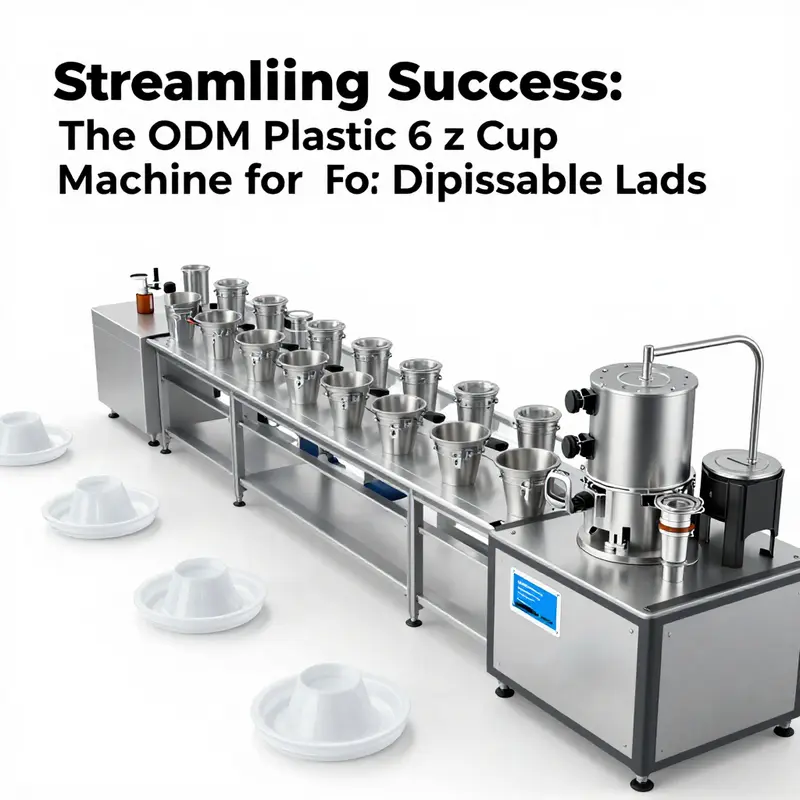
The supply chain surrounding an ODM lid-forming line for 6-ounce cups is less a single machine choreography and more a synchronized ecosystem where each feeding stream—machinery, input materials, design collaboration, and logistics—must harmonize with market demand for convenience, safety, and sustainability. The rise of disposable packaging driven by on-the-go consumption has pushed manufacturers to balance speed and precision with responsible sourcing and compliance. In this landscape, the ODM approach—designing and producing to a client’s specifications—offers a pathway to tailor lid geometry, fit, and aesthetics while maintaining a robust, scalable production rhythm. At the heart of this chain lies the formable lid itself, typically crafted from polypropylene for its light weight and resilience, yet increasingly scrutinized for environmental impact. The ability to produce up to about a thousand lids per hour on a well-tuned line is not merely a throughput figure; it is a telling gauge of how well the entire supply chain can absorb demand swings, respond to shifts in material availability, and align with evolving regulatory expectations.
From the outset, machinery sourcing anchors the supply chain in reliability and predictability. Automated lid-forming lines commonly emphasize certifications, control systems, and warranty coverage that reduce unscheduled downtime. A capable line will often feature CE certification, a programmable logic controller (PLC) for precise cycle control, and a standard warranty period that provides a safety net against premature wear. The functionality is more than speed; it is consistency. The equipment is designed to handle common input materials such as polypropylene and polystyrene, both favored for their balance of stiffness, thermal tolerance, and weight. In practice, suppliers emphasize line stability, ensuring that every lid produced adheres to tight tolerances so that cups and lids seal reliably without distortion or leakage. When a manufacturer contemplates a multi-shift operation or a broader product mix, the choice of a modular, upgradeable line becomes a strategic decision, reducing the risk of bottlenecks as demand expands across different lid geometries or cup sizes.
Material procurement sits at the center of quality, cost, and environmental strategy. PP pellets, PS resin, and related polymers are the raw inputs that determine not just the lid’s performance at room and hot-fill temperatures, but its compatibility with downstream recycling or composting streams. Proximity to material suppliers matters because it translates into shorter lead times and lower transport emissions, especially for just-in-time manufacturing models that aim to minimize inventory without compromising service levels. Regions with a dense network of plastics suppliers enable faster qualification cycles, better price discovery, and easier scoping of alternate resin grades to meet specific client requirements, such as varying melt flow indices or impact strength. The geographic component of sourcing also interacts with geopolitical factors, tariff regimes, and trade logistics, all of which shape cost stability across a year. As sustainability pressures mount, more producers are exploring compostable or biodegradable alternatives, such as PLA or bagasse-derived materials. These options require different processing parameters and may necessitate redesigned mold sets or even a reflow of the entire line to preserve cycle times and part-to-part consistency.
ODM capability integration is where the design and manufacturing ecosystems truly converge. An ODM supplier’s value proposition rests not only on delivering a lid that fits a 6-ounce cup but on providing end-to-end service that can include custom design, graphic branding via flexible printing, and packaging customization. The process typically begins with collaborative design discussions that set tolerances, draft mold concepts, and align on fit, seal, and stacking behavior. Mold design, a critical determinant of part quality, must account for thermal expansion, injection or thermoforming dynamics, and ejection geometry so that lids release cleanly without blemishes that could compromise seal integrity. Prototyping becomes a testing ground for fit across a spectrum of cup diameters and rim geometries, ensuring that customers who request variations—such as slightly different sealing profiles or vent features—are served without sacrificing production efficiency.
The messaging around these capabilities often highlights integrated production steps: from mold design to logo printing and even packaging. A practical example of integrated packaging with a plastic lid can be seen in this example: best-selling-disposable-rectangle-kraft-paper-salad-bowl-with-pp-lid-750ml-for-cookie-and-sugar-takeaway-containers. This linkage illustrates how a single ODM-capable supplier can coordinate lid production with downstream packaging needs, emphasizing the importance of cross-functional collaboration. Such capabilities minimize handoffs and reduce cycle times, enabling a smoother transition from prototype to high-volume production while preserving branding consistency and package integrity. In practice, the most effective ODM partnerships manage tolerances not only for the lid’s inner diameter and height but also for finishing processes, such as edge trimming, surface texturing, or gloss, which can affect the lid’s appearance and consumer perception. The success of these efforts hinges on clear communication channels, shared quality metrics, and a willingness to iterate on mold geometry, pilot runs, and small-batch validation tests before ramping up to mass production.
Logistics and inventory management complete the loop of a responsive supply chain. Minimum order quantities for customized ODM projects can be substantial, often ranging into tens of thousands to hundreds of thousands of pieces, depending on the level of customization and the supplier’s manufacturing footprint. Planning must account for lead times, tool maintenance windows, and the possibility of batch changes when switching to alternate resin grades or pursuing new certifications. Inventory strategies frequently combine on-site warehousing with regional distribution centers to optimize delivery times and reduce risk from delayed shipments. In today’s market, secure trading services and track-and-trace systems reduce the likelihood of quality issues slipping through the cracks or shipments getting stranded in transit. Compliance with certifications such as ISO 22000:2005 and third-party testing regimes becomes a pipeline requirement, particularly for products intended for direct contact with food. These certifications illuminate a broader narrative about food safety, hygiene, and consumer trust, underscoring that the supply chain is as much about governance as it is about throughput.
Alongside the traditional considerations, sustainability and regulatory alignment increasingly shape every link in the chain. The industry’s environmental focus has shifted the conversation from solely maximizing run rates to balancing efficiency with material choice, end-of-life impact, and the feasibility of recycling streams. Although PP remains a widely adopted material for its durability and lightness, manufacturers are testing and validating alternative inputs that may reduce environmental footprints or enable easier recyclability. The supply chain must remain adaptable to these shifts, ready to re-qualify suppliers, adjust processing windows, and revise mold configurations to accommodate new material behavior. In practice, this adaptability means not only engineering resilience into the machinery and processes but also securing long-term supplier relationships that enable predictable pricing, stable supply, and collaborative problem solving when material constraints arise.
The interplay of these elements—machinery, materials, ODM collaboration, logistics, and sustainability—creates a cohesive, scalable model for producing disposable lids at the 6-ounce scale. Compliance and safety threads run through every decision, from the choice of resin to the way a lid seals and how it is printed or branded. The end goal is to deliver a reliable product that protects contents, preserves temperature, and communicates brand identity without compromising safety or increasing waste. For teams building new capacity, this means mapping each link in the chain to a clear set of performance metrics: cycle time, punch tolerance, seal integrity, dimensional stability across shifts, and the ability to accommodate demand volatility. The best plans anticipate not only current needs but emerging patterns, such as shifts toward compostable packaging or more aggressive packaging logs enabled by digital traceability. In this sense, the ODM 6-ounce cup lid production line becomes more than a manufacturing asset; it is a strategic platform for agility, compliance, and responsible growth.
External resource: For supplier verification and further insights into global sourcing practices, see the Alibaba.com verified supplier directory. (https://www.alibaba.com)
Regulatory Currents and Circular Ambitions: Sustainability in ODM 6oz Cup Lid Manufacturing
Regulatory currents are no longer a backdrop but a driving force shaping every turn of the ODM plastic 6oz cup machine built for disposable lids. In a sector defined by speed, cost pressures, and the demand for hygienic, food-contact-ready components, the regulatory frame presses manufacturers to tighten emissions, rethink materials, and redesign for end-of-life. The most consequential shifts happen where the law intersects with the lifecycle of a lid—from the moment resin is chosen to the post-consumer fate of the packaging that carries a cold drink, a hot coffee, or a refreshing smoothie. In this landscape, the path to sustainability is a careful duet between compliance and innovation, with ODMs positioned to negotiate both the letter of the rules and the evolving expectations of customers and communities.
First comes the regulatory discipline surrounding manufacturing emissions and the handling of substances used in lid production. Volatile organic compounds (VOCs) and other hazardous substances are under tighter scrutiny as societies push for cleaner air and safer water. Regulations commonly demand low-VOC or water-based adhesives and coatings whenever there is a direct or indirect food contact concern. For a line dedicated to producing lids, that means engineering choices about inks, coatings, and sealants must prioritize minimal VOC content while maintaining adhesion, durability, and food-safety standards. In many jurisdictions, this regulatory pressure is reinforced by broader environmental laws that govern industrial discharges and air quality, compelling operators to capture and treat emissions and to monitor solvent usage with transparent reporting. The practical implication for ODMs is clear: material selection and process chemistry must be revisited frequently, not just to pass audits but to sustain long-term reliability as regulations tighten further.
Beyond compliance, sustainability has become a value proposition that can differentiate an ODM in a crowded market. Consumers today expect manufacturers to move toward recycled-content strategies and to validate the environmental benefits of their products. The research landscape highlights a notable pivot toward recycled resins such as recycled PET or other certified post-consumer streams. Adopting recycled content is not a simple substitution; it involves rigorous quality control to maintain the mechanical integrity of lids, ensure food-contact safety, and meet performance criteria under a range of temperatures and handling conditions. More importantly, the carbon footprint of these materials often decreases substantially, with industry estimates pointing to greenhouse gas reductions—sometimes up to about 70%—when recycled resins replace virgin feedstocks. This is not a theoretical gain but a practical lever that ODMs can pull to reduce the lifecycle impact of their products while still delivering the reliability required in fast-food and take-away settings.
Machine technology itself has become a key driver of sustainable practice. Modern ODM lines for 6oz cup lids emphasize modularity, energy efficiency, and reduced waste through precision control. Modular configurations allow operators to tailor a line to current demand while enabling upgrades as standards evolve or as new materials are introduced. Energy-efficient servo systems, optimized cycle times, and smarter scrap management reduce both energy use and material waste, preserving resources without compromising throughput. In the broader ecosystem, the design principles of these machines often align with circular economy models: minimize non-recyclable components, avoid solvent-laden processes, and enable easier end-of-life separation. Although the lids themselves remain a plastics-based solution in many markets, the way they are manufactured increasingly mirrors the same pursuit of recyclability and reduced environmental burden found in other packaging sectors. This alignment is not accidental; it reflects a growing recognition that sustainability must be integrated into the core of equipment design, not appended as a downstream courtesy.
A lifecycle perspective is essential when thinking about how to integrate sustainability into ODM operations. The lifecycle begins with raw material sourcing, where the choice of polymers, additives, and fillers determines not only performance but recyclability and compatibility with post-consumer recycling streams. Polypropylene remains a common base due to its favorable balance of strength, chemical resistance, and lightweight properties. Yet even here, the push toward circularity invites questions about additives, colorants, and barrier layers that can complicate recycling. The end-of-life stage raises additional considerations: can the lid be efficiently separated from the cup during recycling? Are any coatings or adhesives compatible with standard recycling processes? Do the materials carry certifications that assure recyclers and regulators of safety and environmental performance? Answering these questions requires a design-for-recycling mindset that guides material selection, joint technology decisions, and even the way lids are molded and trimmed during production. If the process can minimize composite layers and avoid non-recyclable laminates, it stands a better chance of fitting into established post-consumer streams.
The regulatory narrative also interacts closely with corporate responsibility. As companies publicly report on sustainability goals, ODMs increasingly adopt supplier codes of conduct, traceability systems, and life cycle assessments to demonstrate progress. The ability to document a credible reduction in emissions, quantify the share of recycled content, and show recyclability improvements often translates into preferred supplier status for large manufacturers and retail brands that are themselves under pressure to meet environmental commitments. In practice, this means an ODM must invest not only in new hardware and materials but also in data collection, process monitoring, and third-party verification. The transparency demanded by regulators and customers makes robust data handling an essential compliment to high-precision molding and forming capabilities. A line that cannot provide traceable metrics may struggle to gain the long-term contracts that sustain high-output production.
The cross-border nature of environmental regulation adds another layer of complexity. Regulatory expectations differ from one market to another, and the ODM model—by design—offers flexibility to accommodate regional requirements. A machine configured for a single, standardized process may be less adaptable for markets with divergent rules on packaging waste, chemical use, and end-of-life stewardship. Conversely, an ODM that builds adaptability into its cores—the choice of process chemistries, the ability to switch resin types with minimal downtime, the integration of low-emission adhesives, and the capacity to implement modular upgrades—can weather regulatory shifts more gracefully. This adaptability aligns with a broader industry trend toward resilience: facilities that can recalibrate to evolving standards without expensive retooling are better positioned to maintain consistent output and cost control.
Within this regulatory and sustainability frame, there is a compelling case for evidence-based design choices. The use of water-based coatings, low-VOC adhesives, and color additives that do not impede recycling streams can be the difference between a lid that becomes part of a closed loop and one that terminates prematurely in a landfill. The research results underscore the potential community and environmental benefits when manufacturing choices favor recyclability and reduced emissions. For example, embracing recycled-content resins can simultaneously lower the demand for virgin fossil fuels and shrink the greenhouse gas footprint of the lids’ production. The practical payback, of course, includes not only compliance costs avoided but potential savings from energy efficiency, reduced waste management needs, and the appeal of greener credentials to customers who prioritize sustainability in their supply chains.
The integration of internal practices with external expectations often requires careful communication and collaboration across the value chain. ODMs must engage with material suppliers to secure certified recycled inputs, with coating and adhesive suppliers to ensure low-VOC performance, and with recyclers to understand post-consumer realities. This collaborative posture supports a more predictable regulatory trajectory and helps ensure that sustainable innovations are scalable rather than niche. It also creates opportunities for new product configurations that keep pace with consumer preferences for environmentally responsible packaging. For instance, a lid design that minimizes non-recyclable components or simplifies separation at the recycling plant can translate into tangible regulatory risk reductions and improved end-of-life outcomes.
As we consider the path forward, a practical takeaway emerges: sustainability in ODM lid manufacturing is not a single choice but a choreography of decisions across materials, processes, and partnerships. It requires a disciplined approach to material selection, with attention to both performance and recyclability. It calls for process technologies that support low-emission production and efficient energy use, paired with modular architectures that allow for upgrades aligned with new standards. It invites supply-chain collaboration that builds traceability, reduces risk, and accelerates the adoption of recycled content without compromising safety or quality. And it asks for a narrative that connects regulatory compliance with real-world environmental benefits, so stakeholders—from plant floor operators to end customers—can see how a lean, adaptable line contributes to a cleaner, more responsible packaging system.
For practitioners and scholars alike, the evolving regulatory and sustainability landscape offers a compact lesson: the ODM 6oz cup lid is not only a container component but a signal of how manufacturing can harmonize efficiency, safety, and responsibility in a world of growing environmental expectations. The chapter of regulation does not end with a stamp on a compliance sheet; it continues in the way a line is designed, operated, and continually improved to meet fresh standards and ambitious sustainability targets. In this sense, ODMs are uniquely positioned to translate policy ideas into tangible, scalable actions—embedding sustainability into the core of the work, from material choice to machine architecture, from process control to post-consumer outcomes.
Internal link note: As the industry expands its horizons, many producers emphasize options that marry eco-friendly aesthetics with responsible packaging. For a sense of how branding and sustainability can intersect in disposable packaging, see the page on eco-friendly printed logo paper cups with lids. This resource illustrates how design and material choices can harmonize branding with environmental goals while remaining compatible with established recycling streams. eco-friendly-printed-logo-paper-ice-cream-cups-with-lid
External resource: For a broader governance framework that underpins many of these practical moves, see ISO 14001 Environmental Management Systems, which provides the standards-based context for environmental performance improvement and lifecycle thinking in manufacturing. https://www.iso.org/iso-14001-environmental-management.html
Precision, Promise, and a Greener Pace: The Next Phase for ODM 6oz Cup Lids in a World of Automated, Sustainable Packaging
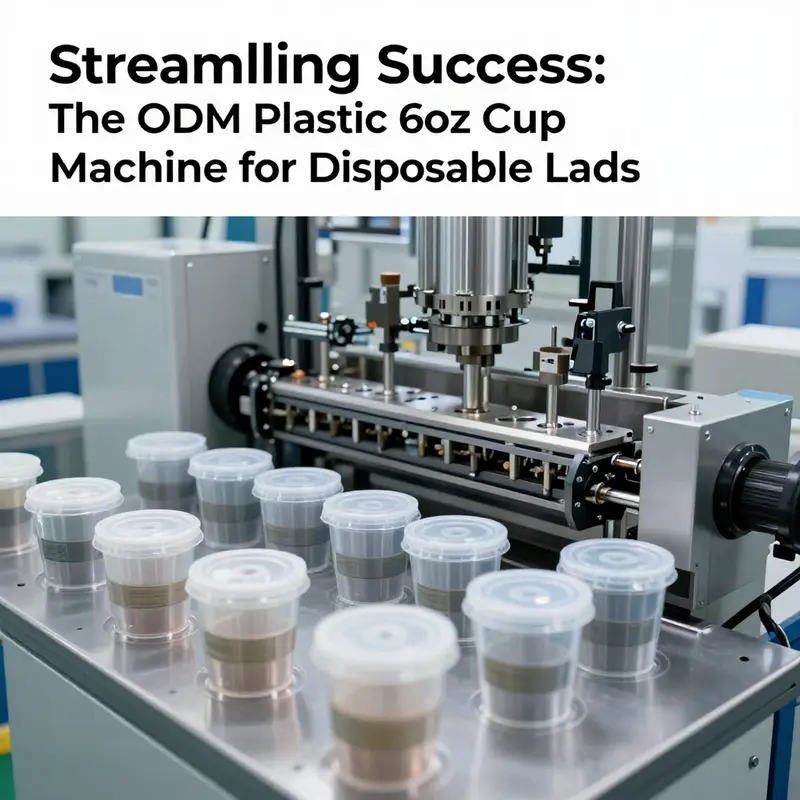
The ODM plastic 6oz cup machine for disposable lids sits at a pivotal crossroads where the appetite for quick, convenient packaging meets a rising chorus of environmental accountability. In this space, the lid is not just a cap; it is a performance component that seals in product integrity, enables reliable stackability, and communicates a brand’s commitment to responsible manufacturing. The technology that drives these lids—thermoforming with servo-driven optimization and intelligent process control—has evolved from a mere means of shaping plastic into a disciplined system that balances speed, precision, and material stewardship. When a 6oz cup needs a lid, every millimeter of fit matters. The lid must nestle into the cup edge with consistent clamping force, resist wicking and deformation during transport, and stand up to the rigors of hot and cold fill alike. The ODM approach elevates this from a commodity operation to a tailored supply chain partnership, where machines can be calibrated to specific customer specifications without sacrificing throughput or quality.
Sustainability pressures shape not just the materials chosen but the entire production philosophy. Global regulations tightening restrictions on single-use plastics, particularly polystyrene and expanded polystyrene foams, have compelled manufacturers to reevaluate feedstocks and processing windows. Polypropylene, long valued for its durability and light weight, rises in prominence, not as a panacea but as a versatile platform. It can serve as a reliable base for lids that perform under repeated cooling cycles and stacking, while still offering recyclability with the right post-use stream. Yet even PP is not a universal answer. The future lies in multi-material compatibility that expands beyond PP and the traditional plastics to include compostable options like polylactic acid and bagasse—the sugarcane fiber byproduct that has found renewed utility in disposable tableware. The capability to process such divergent materials on an ODM platform demands a careful orchestration of temperature profiles, cooling cycles, and tooling geometries. It also calls for a design ethos that embraces modularity so that a single machine can pivot between PP lids for standard cups and PLA or bagasse lids when regulatory or brand strategy requires it.
The technical core of this evolution is automation that behaves like a smart partner rather than a brute force producer. The RS-800-500, a reference point in modern thermoforming, embodies this shift toward a fully automated, servo-driven workflow. It represents more than speed; it is about predictability and sustainability at scale. Real-time monitoring tracks sheet thickness, forming depth, and cooling rates, while predictive maintenance anticipates tool wear and heating anomalies before they disrupt production. IoT connectivity connects the machine to the broader supply chain, enabling OEMs and ODMs to optimize uptime, minimize waste, and align output with fluctuating demand. In practical terms, this means a plant can run tighter schedules with fewer unplanned interruptions, which is crucial when throughput goals can reach around a thousand lids per hour. The economic logic remains compelling—the initial investment, typically in the mid-range of tens of thousands of dollars, is offset by lower labor costs, reduced scrap, and faster time-to-market for new lid designs.
Design flexibility is no longer an optional feature; it is a market necessity. Modern ODM lids are not only functional; they are brand touchpoints. Digital pre-press workflows allow rapid prototyping of lid geometries and die lines, while modular tooling systems let manufacturers swap in new cavity configurations without a full rebuild. This adaptability is essential as consumer expectations shift toward more ergonomic lids, better splash resistance, and opportunities for on-lid branding with subtle textures, micro-embossing, or color accents. A lid can become a canvas for a brand’s narrative—an opportunity that aligns with the broader move toward premiumization in disposable packaging without forsaking recyclability or compostability where available. In tandem with smarter tooling, the ability to pre-validate fit and performance through virtual simulations reduces physical trial runs, speeding up development cycles and enabling faster responses to regulatory changes or customer requests.
The economic and logistical realities of ODM plastic lid production also shape strategy. A machine in this class typically presents a cost window around forty-eight to fifty thousand dollars, a figure that positions it as accessible to startups as well as established manufacturers expanding their lines. Crucially, the minimum order quantity of a single machine invites new entrants to test-market a concept with modest capital risk. Yet cost considerations are not only upfront; operating expenses, energy use, and maintenance are bundled into the decision calculus. The energy efficiency gains from servo-driven systems, advanced heating control, and optimized cycle times translate into lower operating costs over the machine’s lifecycle. Waste minimization is another key lever. Precise forming reduces flash and split lids, while refined cooling cycles prevent warpage and the need for rework, preserving material value and improving yield. Across the supply chain, this translates into more predictable delivery timelines and greater supplier resilience in the face of global disruptions.
As markets calibrate to environmental expectations, the conversation around lids expands beyond end-of-life disposal. Some regions impose stricter disposal and recycling standards, while others pursue composting pathways that can accommodate specific feedstocks like PLA or bagasse. The challenge lies in aligning lid design and material choice with the appropriate end-of-life infrastructure. For brands, this means transparency about material composition and compatibility with curbside recycling or industrial composting where available. It also means embracing lifecycle thinking. A lid that performs superbly in the kiln of manufacturing but cannot be recycled in its intended market undermines long-term sustainability goals. Consequently, ODM players are investing in material research and collaborations that map material choices to feasible recycling streams, ensuring that performance does not come at the expense of recyclability. In practice, this translates to a lid design that minimizes mixed-material complexity, or that clearly designates which components are recyclable or compostable in specific regions. Even with such complexity, the modularity of modern machines supports rapid transitions between materials as regulatory frameworks evolve.
The broader industry context reinforces a trend toward smarter, more connected factories. The promise is not merely automation for greater output but an integrated system that supports end-to-end quality, traceability, and compliance. When a lid is produced, data streams record every step—from sheet feed and platen pressure to cooling rate and inspection outcomes. This data-driven approach enables continuous improvement and tighter supplier collaboration. For customers, it means consistency of fit, a reduced risk of rejects, and the confidence that their branding and packaging meet both consumer expectations and regulatory requirements. The ability to connect lid production to downstream packaging lines, filling processes, and logistics creates a cohesive ecosystem where incremental improvements compound to deliver better margins, less waste, and more sustainable operations.
In this evolving landscape, the role of the ODM provider extends beyond machinery and into partnership. A successful relationship hinges on understanding a brand’s sustainability story, regulatory landscape, and market timing. The capacity to offer multi-material processing, rapid tooling changes, and digital pre-press workflows positions ODMs as strategic collaborators in a world that prizes both efficiency and responsibility. This approach also yields benefits for a global supply chain: standardized yet adaptable lid platforms can be deployed across diverse markets, with regional coatings, color options, or branding features tailored to local preferences. The result is not a one-size-fits-all machine but a family of adaptable systems that can sustain consistent performance while honoring regional packaging laws and consumer expectations.
For readers seeking a concrete glimpse into how these principles translate into machine specifications and market practice, the RS-800-500 example provides a practical lens on capability, control, and connectivity. It highlights how modern thermoformers leverage servo technology to deliver high-speed, precise forming, with the flexibility to handle a spectrum of feedstocks. The integration of real-time monitoring and predictive maintenance reduces downtime and waste, aligning operational realities with sustainability goals. Importantly, this is not a single-model narrative; it signals a broader trajectory toward truly networked, intelligent manufacturing in disposable packaging. In this sense, the ODM 6oz cup lid story becomes a microcosm of a larger industrial shift—from standalone equipment to an interoperable, data-rich, circular-economy-oriented ecosystem.
This chapter’s thread remains tightly woven with the larger article: the ODM 6oz cup machine for disposable lids embodies a practical response to market demand for reliable, scalable, and responsible packaging solutions. It is the convergence point where design freedom, production efficiency, material science, and environmental stewardship meet. The future will reward players who treat lid production as a dynamic system—one that can pivot quickly to accommodate new materials, adapt to shifting regulations, and deliver consistent quality across global supply chains. In practical terms, brands will demand lids that not only fit perfectly and seal reliably but also align with regional waste-management realities and consumer values. ODMs that can deliver on that blend of precision, adaptability, and transparency will shape the next wave of disposable packaging, turning a small, nearly invisible component into a keystone of sustainable, scalable industry practice.
To explore the evolving technical landscape and confirm the kinds of capabilities that foretell this future, see the RS-800-500 fully automatic thermoforming machine as referenced in industry literature: https://www.alibaba.com/product-detail/RS-800-500-New-Generation-Full-Servo_1600432795926.html. For a sense of practical consumer-facing packaging solutions that align with these trends, you can peruse an example of eco-friendly, printed lids that accompany take-away cups in related formats. This internal reference highlights how brands leverage lid design and branding to reinforce sustainability messages while maintaining performance, a reminder that the lid is as much a branding surface as a functional seal.
External resource: https://www.alibaba.com/product-detail/RS-800-500-New-Generation-Full-Servo_1600432795926.html
Final thoughts
The ODM plastic 6oz cup machine for disposable lids emerges as a game-changer for businesses operating in the fast-evolving food and beverage industry. By integrating advanced technology with a focus on sustainability, it not only enhances production efficiency but also aligns with the growing consumer demand for eco-friendly packaging solutions. As the market continues to evolve, understanding the intricacies of this machine—from its functionality and economic impact to supply chain implications and future trends—equips businesses with the knowledge necessary to thrive in a competitive landscape. Companies that leverage these innovations can position themselves as leaders in sustainability and efficiency, ensuring their place in the future of disposable packaging.