
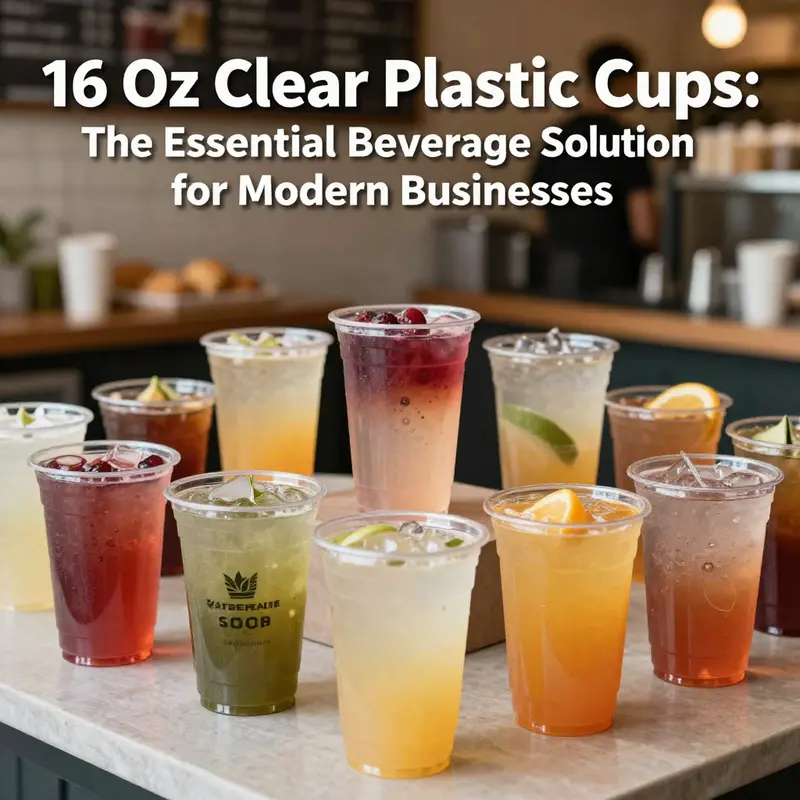
For businesses in the foodservice industry, choosing the right beverage cup can enhance customer experience and brand visibility. The 16 oz clear plastic cup has become a popular option, especially in bubble tea shops, restaurants, food trucks, and catering services. This versatile drinkware not only showcases the vibrant colors of beverages but also offers functionality and reliability. In the upcoming chapters, we’ll delve into the material properties, design variations, customization options, sourcing opportunities, and future market trends of these essential cups, providing you with a comprehensive understanding to better serve your customers.
Material Matters: How 16 oz Clear Plastic Cups Perform in Foodservice
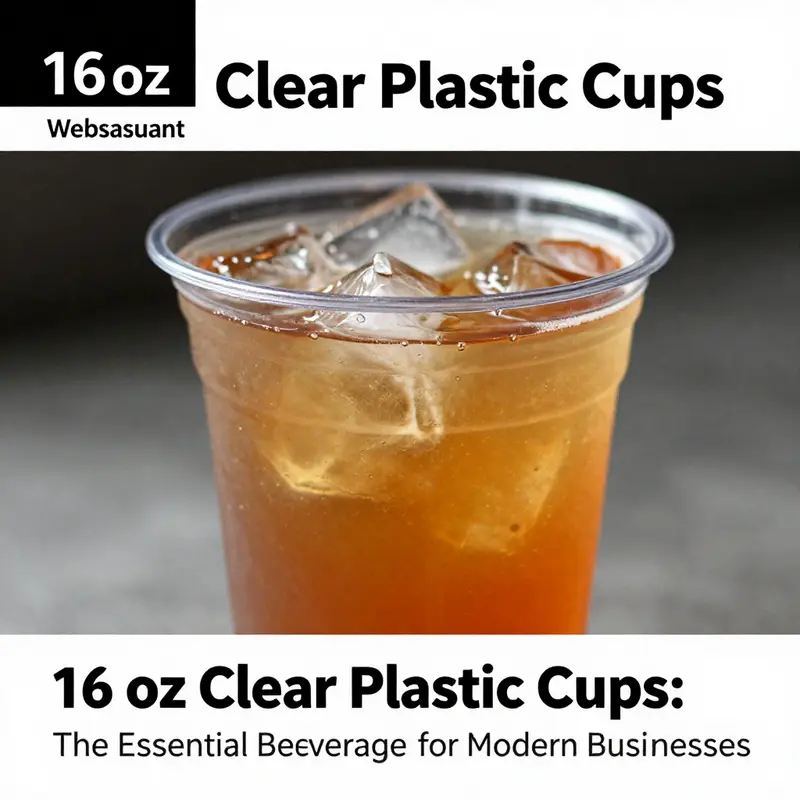
Material matters when you choose 16 oz clear plastic cups for foodservice. The right polymer affects clarity, strength, temperature tolerance, recyclability, and customer perception. This chapter explains how common materials compare and why those differences matter for everyday operations. It also outlines practical trade-offs to help buyers make informed choices that balance cost, performance, and sustainability.
Clear plastic cups in the 16 oz size are most often made from three polymers: PET, PP, and PS. Each brings a distinct set of properties that influence how a cup performs with different beverages and in different settings. Understanding those properties helps match the cup to the intended use. It also reduces waste from returns, breakage, or misuse.
PET, or polyethylene terephthalate, is prized for clarity and toughness. Its transparency rivals glass, so it showcases beverages well. That visual clarity enhances cold drinks like iced tea, soda, and milkshakes. PET resists shattering, which reduces brittle failures during handling and stacking. It is also food-grade and formulated without BPA. For outlets concerned about presentation and safety, PET is a strong choice.
Beyond appearance, PET has good barrier properties against moisture and carbon dioxide. This helps fizzy drinks stay lively and cold liquids avoid rapid warming. The material is lightweight yet structurally sound, which supports stackable designs for compact storage. Single-wall PET cups provide a reliable balance between low weight and sufficient rigidity for most cold beverage service.
A common variation is double-wall PET construction. Double-wall cups improve insulation without adding heavy weight. They reduce condensation on the outside surface, keeping counters and customers drier. That reduction in sweating also makes the cup more comfortable to hold. For event catering or outdoor service, double-wall PET can raise perceived quality while extending chill time for cold beverages.
PP, or polypropylene, is a different performer. It is stronger and more heat-resistant than PET. Clear PP variants offer decent transparency, though often not as glass-like as PET. PP’s key advantages are temperature range and chemical stability. It is microwave-safe and freezer-safe when formulated for those uses. For businesses that need cups for mixed hot and cold service, or for reusable meal prep containers, PP’s flexibility and heat tolerance become decisive.
PP also withstands repeated handling better. Some catering operations prefer clear PP when they need greater durability and occasional reuse. It is less brittle than PS and resists cracking under stress. The combination of microwave safety and structural resilience makes PP a versatile option beyond single-serve cold drinks.
PS, polystyrene, is widely used because it is inexpensive and offers excellent clarity at low cost. Its clarity is often comparable to PET, making it acceptable for display-oriented applications. However, PS is brittle and performs poorly with heat. It is unsuitable for microwaving and can crack under impact. Environmental concerns also weigh against PS, as it is harder to recycle and less often accepted in curbside programs.
Given those trade-offs, PS often sees use in low-cost, single-use cold food packaging such as deli items and salads. Where price is the primary driver and heat exposure is minimal, PS can be appropriate. For any service that needs durable handling or thermal resistance, alternatives should be considered.
Safety and regulatory compliance are critical across all materials. Food-grade certifications ensure that polymers are formulated to avoid harmful additives and to comply with migration limits. Most reputable suppliers provide documentation of food safety testing. Buyers should verify such certifications when sourcing cups for food contact. Dimensions, wall thickness, and maximum recommended temperature are also typically specified. These technical figures help ensure chosen cups match operational requirements.
Recycling and sustainability are increasingly important to customers and operators. PET scores well because it is widely recyclable and has an established collection stream. Clear PET fetches higher recycling value than mixed or colored plastics. PP is recyclable in many jurisdictions, but collection infrastructure varies. PS recycling is more limited and less economically attractive. For operators targeting lower environmental impact, selecting materials that align with local recycling practices reduces waste and supports corporate sustainability goals.
Customization and accessory integration also depend on material. Cup lids, straw compatibility, and branding options differ by polymer. PET and PP both accept printing and heat-sealing for branded lids and tamper-evident closures. Double-wall designs and thicker-wall PP enable more reliable lid engagement, which improves portability and reduces spills. If branding is important, confirm that the chosen polymer supports the desired printing method and adhesion.
Practical decisions often come down to matching use case to material. For high-visibility cold beverages, choose a clear, shatter-resistant material with good recyclability. For mixed-temperature use or repeat handling, prefer a heat-resistant polymer with stronger mechanical properties. For ultra-low-cost single-serve cold items, weigh the price advantage against recyclability and brittleness.
Storage and logistics are affected by design choices tied to materials. Stackable cups save space, and polymers that resist deformation during transport reduce losses. Thicker walls increase rigidity but raise material costs and weight. Double-wall alternatives add insulation but also bulk. When ordering in bulk, check supplier specifications for stack height, nested density, and pallet configuration to optimize inventory space.
Finally, consider the full lifecycle. Material choice affects sourcing, transport emissions, end-of-life options, and customer perception. Selecting a polymer that matches local recycling capabilities and operational needs reduces total cost of ownership. If a business wants compostable or fiber-based alternatives for certain uses, those options often require different handling and lid strategies. For hybrid systems, combining clear plastic cups for cold drinks with compostable bowls for hot dishes can balance performance with sustainability goals.
For examples of clear containers paired with PP lids and food-grade compatibility, see disposable salad bowls with PP lids. For detailed technical specs and manufacturer listings of 16 oz clear cups in PET and other polymers, consult the product listing below.
https://www.alibaba.com/product-detail/500ml-PET-Plastic-Cups-16oz-Clear_1600443281782.html
Design Variations in 16 oz Clear Plastic Cups: Form, Function, and Customization for Foodservice
Design Variations That Matter for 16 oz Clear Plastic Cups
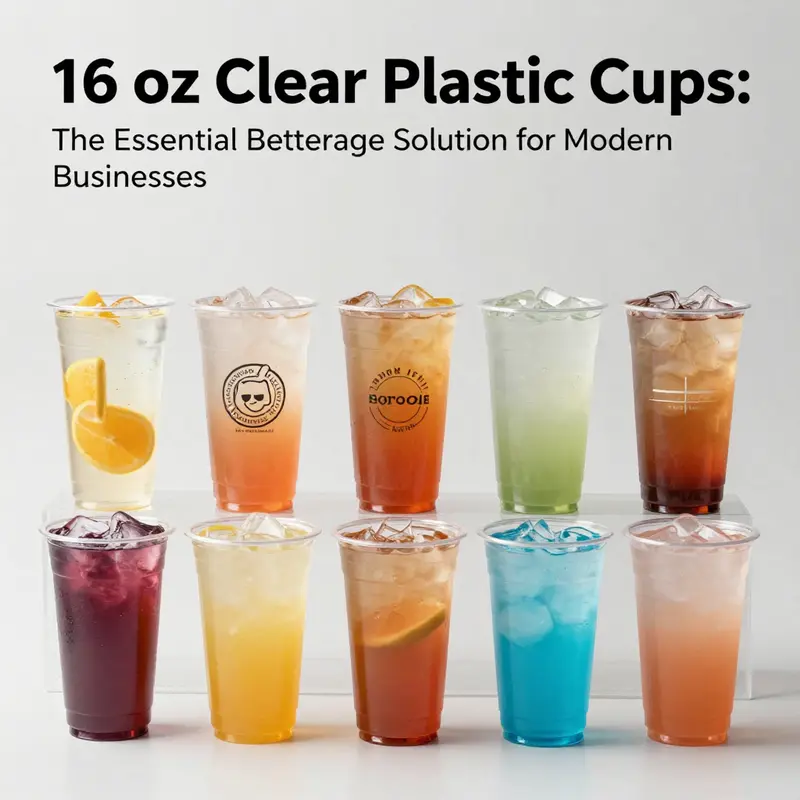
A 16 oz clear plastic cup looks simple at first glance, but its design choices shape performance, cost, and customer perception. Material selection, wall structure, rim profile, lid compatibility, and print options all influence how a cup behaves on a busy counter, at an outdoor event, or during a large catered service. Understanding these variables helps buyers match a cup to a use case, manage inventory, and align packaging with brand and sustainability goals.
Material is the foundation. Polyethylene terephthalate (PET) is prized for its clarity and rigidity. PET lets product color and texture shine, making beverages visually appealing while remaining durable enough for stacking and transport. Polystyrene (PS) is less common for premium clear cups but offers cost advantages where clarity and rigidity suffice. Polypropylene (PP) appears when heat resistance and flexibility are required; it’s a better option if a cup might see warmer liquids or short-term reheating. Each polymer brings trade-offs: clarity, stiffness, resistance to cracking, and recyclability differ. Businesses must weigh immediate cost savings against longer-term value from improved clarity, fewer returns from damaged goods, and higher customer satisfaction.
Wall construction and thickness are closely linked to handling and insulation. Single-wall 16 oz cups are lightweight and economical, ideal for cold drinks served quickly. Double-wall designs add an insulating air layer, slowing temperature transfer and reducing condensation. This improves hand comfort and prevents rings on tables, which matters at events and in sit-down environments. A slightly thicker single-wall cup can hit a middle ground—added sturdiness without the higher cost of true double-wall molding. Designers also vary rim geometry: a rolled or reinforced rim adds strength for stacking and creates a better seal with lids, while a thinner rim can reduce material cost and ease drinking.
Lids transform a simple cup into a secure takeaway vessel. Flat-top domes, with their low-profile center, strike a balance between spill resistance and stackability. Fully domed lids leave room for whipped toppings or tall straws, but they raise shipping volume and can complicate stacking. Many lids now include snap-fit seals engineered to mate with specific rim profiles; mismatched lids and rims cause leaks and increase waste. Tamper-evident options and straw-friendly seals are further customizations that improve safety for delivery and convenience for drive-through service.
Branding and aesthetics drive many customization decisions. Clear cups are a natural canvas for logo printing, while tinted or colored cups support seasonal promotions or product differentiation. Print methods range from simple pad printing to full-wrap sleeve printing. Pad printing is cost-effective for small logos, while shrink sleeves allow full-color, high-resolution graphics. When selecting print techniques, buyers should consider dye migration, ink adhesion to PET, and how washing or condensation might affect appearance. Clear cups with minimalist printing preserve product visibility and reduce printing costs; heavier branding improves recognition but adds lead time and often increases minimum order quantities.
Stacking and nesting behavior influences storage and back-of-house workflow. Deep nesting reduces storage footprint, which matters for high-volume outlets and food trucks with limited space. However, tightly nested cups can be harder to separate quickly during rush periods. Some cup designs include interlocking ribs or anti-stick features that prevent vacuum locks when removing a cup from a stack. These small design choices can shave seconds off service time and reduce employee frustration.
Sustainability is reshaping design priorities. PET is widely recyclable when collected properly, and certified compostable or bio-based materials are gaining attention. However, not all clear compostable materials offer the same clarity or cold-strength as PET. Consumers and regulators increasingly demand evidence: certifications such as BPI or equivalent regional standards signal credible compostability. Buyers should also evaluate the local recycling infrastructure; a recyclable cup is only environmentally effective if it actually gets recycled. For many operators, hybrid strategies work best—using recyclable PET where recycling is reliable, and switching to compostable or paper-based options in settings where organic waste collection is robust. For those exploring alternatives, a nearby comparison is the disposable single-wall paper cup (8–32 oz), which shows how paper designs address compostability while sacrificing transparency and, sometimes, cold performance.
Operational considerations hinge on cost per use and performance. Bulk pricing favors standard, undecorated 16 oz clear cups, while custom-printed runs raise unit cost and require forecasting to avoid excess stock. Lead times are longer for customized items; seasonal promotions and event-driven spikes need early planning. Cold-chain and shipping constraints also matter: clear cups with thicker walls or domed lids take more space and add freight cost. Conversely, lightweight single-wall cups reduce shipping cost but may increase breakage and customer complaints.
Finally, regulatory and health considerations influence material and design choices. Food-contact approvals vary by region and by material. Clarity may not be the only desirable trait—resistance to staining from iced teas, prevention of leaching with acidic beverages, and the robustness of printed inks under condensation all affect compliance and customer safety. Choosing materials and inks that meet relevant food-safety standards reduces the risk of recalls and reputational damage.
Design variations in 16 oz clear plastic cups are not cosmetic extras. They are deliberate choices that affect usability, cost, brand expression, and environmental impact. Matching material and structure to service style yields better consumer experiences and smoother operations. Consider clarity and rigidity for showcase drinks, thicker or double-wall construction for improved insulation and comfort, and lid compatibility for safe takeaway service. Factor in printing method and minimums for branding projects, and align sustainability claims with local waste systems to ensure real impact. For more technical performance details and a breakdown of material properties, see this external resource: https://www.supplychainworld.com/16-oz-clear-pet-plastic-cups-guide-performance-properties-and-types-for-industrial-applications/.
Branding Clarity: Creative Customization for 16 oz Clear Plastic Cups on Websaurant
Branding Clarity: Creative Customization for 16 oz Clear Plastic Cups on Websaurant
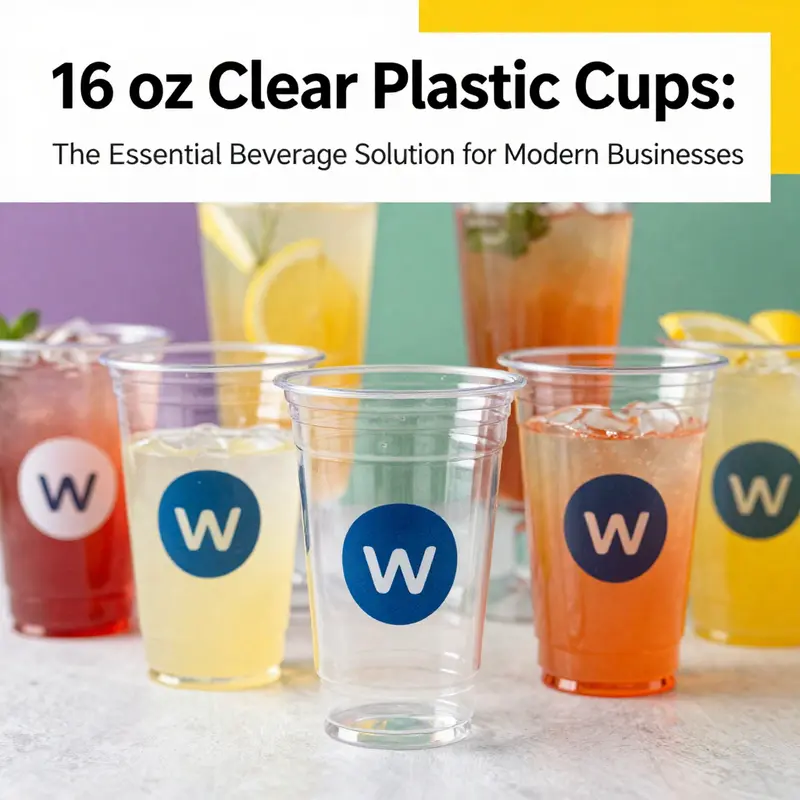
Customizing 16 oz clear plastic cups transforms a simple vessel into an extension of a brand. These cups already offer visual appeal through transparency, so customization should amplify what customers see. Thoughtful branding increases perceived value, supports recall, and turns routine purchases into promotional opportunities. The goal is to balance aesthetic impact, functionality, and cost so the final cups serve marketing goals and everyday service needs.
Customization begins with choosing the right material. PET provides exceptional clarity and gloss, making colors and beverage layers pop. PP offers greater heat resistance when needed, while PLA supports compostable messaging for eco-conscious customers. Each material affects printing options and finish. PET accepts vibrant inks and maintains a high-shine look. PLA and PP may require different pre-treatment or ink formulations to ensure adhesion and durability.
Printing and branding methods vary to match budgets and design needs. Screen printing yields bold, opaque colors and works well for logos and simple graphics. It is cost-effective at scale. Digital printing handles photographic images and gradients, enabling complex seasonal or promotional artwork with fast turnaround for short runs. Heat-applied labels deliver full-wrap coverage and photographic detail. They are ideal when the design must cover the whole cup surface without affecting clarity in other areas.
When designing for a clear cup, contrast matters. Dark inks and white underbases make logos visible over light beverages. For drinks with layered colors, consider partial transparency in the artwork to let the drink become part of the design. Placement is important: center-front logos remain readable when customers hold the cup, while wraparound designs invite engagement from multiple angles. Reserve a small clear window or unprinted band where required—this preserves the cup’s natural transparency and lets customers view the beverage.
Lids and functional add-ons extend branding space and improve usability. Dome lids with printed rims or custom-colored seals create additional touchpoints for logos or taglines. Leak-proof flat lids and sip closures can be molded in brand colors. Clear lids maintain visual continuity, while tinted lids subtly reinforce brand palettes. Straws, sleeves, and custom stir sticks present low-cost branding options that enhance tactile experience.
Packaging and bundling choices affect both perception and logistics. Branded sleeves or shrink bands can be applied to stacked cups, protecting printed surfaces during shipping. Custom boxes with printed art enhance unboxing for wholesale buyers and event planners. Consider shipping-friendly packaging that minimizes movement and avoids abrasion to maintain print quality. Many suppliers offer bespoke packaging configurations for retail display or bulk storage.
Ordering logistics influence cost and speed. Minimum order quantities vary by supplier and printing technique. Screen printing often requires higher minimums but lowers unit cost at scale. Digital printing supports shorter runs but increases per-unit price. Requesting samples early helps validate color, print adhesion, and lid fit. Suppliers commonly provide physical samples for a shipping fee, allowing checks for fit and finish.
Lead times depend on artwork approval, material availability, and print method. Provide high-resolution vector files and clear color references to speed approvals. Ask suppliers for color proofs and small sample runs when introducing new inks or substrates. Confirm packaging preferences such as counts per sleeve, box dimensions, and palletization to avoid surprises at delivery.
Beyond aesthetics, compliance is essential. Use food-safe inks and materials that meet food-contact regulations. Confirm that any coatings are safe for cold beverages. If recyclability is a brand promise, ensure the chosen inks and labels do not contaminate recycling streams. Clear PET often recycles widely, but labels and adhesives can complicate the process. If compostability is the priority, choose PLA and matching compostable lids and inks.
Sustainability messaging deserves careful execution. Plain calls to recycle are helpful, but specificity is better. Indicate whether the cup is recyclable, the lid is compostable, or if parts need to be separated. Minimalist stamped recycling symbols keep the design clean while delivering clarity. For brands pairing clear cups with paper bags or sleeves, coordinated eco materials deepen the message. For example, combining a clear cup with a customizable kraft paper bag strengthens a cohesive, eco-aware identity. You can explore customizable kraft paper bags for coordinated packaging here: customizable kraft paper bags.
Smart branding also anticipates the customer experience. Condensation can blur prints and reduce grip comfort. Double-wall designs reduce condensation and protect prints near the cup rim. Textured or embossed bands give secure grip and create premium tactile cues. For events, printed dates, limited-run artwork, or numbered series can drive collectability and social sharing.
Cost control strategies matter when customizing. Consolidate designs across multiple SKUs to reduce plate setup costs for screen printing. Plan seasonal or campaign variations as add-ons rather than full redesigns. Negotiate packaging and freight terms for bulk purchases and ask suppliers for volume tiers. Compare printing methods not only on price but on lifespan and resistance to handling.
Finally, supplier practices shape the partnership. Look for vendors offering responsive communication, sample policies, and transparent payment and shipping terms. Confirm return and refund policies in case of defective prints or logistics issues. Secure digital proofs, then follow up with physical samples. A smooth approval process prevents costly reprints.
Customization transforms clear 16 oz plastic cups into persuasive brand tools. Thoughtful material selection, targeted printing strategies, and functional enhancements produce cups that look attractive, perform well, and support broader packaging goals. By harmonizing aesthetics, sustainability, and logistics, businesses can create branded cups that enhance customer experience and reinforce brand identity.
External resource: https://www.alibaba.com/product-detail/Fuling-PET-CUP-16-oz-Clear-Plastic_1600377295843.html
Strategic Sourcing of 16 oz Clear Plastic Cups: Supplier Hubs, Selection Criteria, and Practical Steps
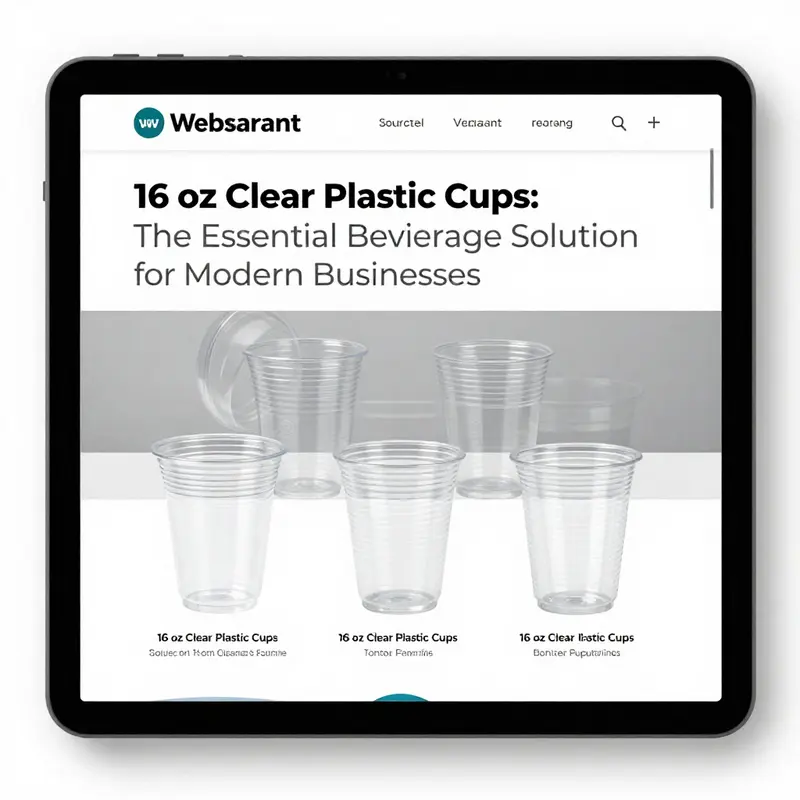
Sourcing 16 oz clear plastic cups involves more than price comparison. Buyers must balance clarity, strength, compliance, lead time, and customization. The market centers on large manufacturing hubs that deliver scale and variety, but choosing the right partner requires a disciplined approach. This chapter walks through where these cups are made, what to evaluate in a supplier, and practical steps to convert a requisition into reliable inventory.
China is the primary manufacturing base for rigid clear cups. Its clustered supply chain gives buyers access to PET, PP, and PS options, plus PLA for compostable applications. Different provinces bring distinct strengths. Guangdong concentrates PET producers and integrated downstream operations. Zhejiang favors automation, precision printing, and smart quality checks. Jiangsu produces advanced food-grade resins and eco-enhanced blends. Inland regions such as Sichuan offer lower-cost production for high-volume, lower-spec orders. Understanding these specializations helps align requirements with a factory’s strengths.
Material choice drives both product performance and regulatory obligations. PET delivers superior clarity and strength, with good recyclability in many markets. PS can be economical but is more brittle. PP offers heat resistance and can be useful for warmer drinks. PLA offers biodegradability for composting streams but needs specific waste infrastructure. Ask suppliers for resin certificates, material safety data sheets, and test reports tied to lot numbers. Confirm compliance with food-contact regulations that apply in your target market, and insist on traceability from pellet to finished cup.
Beyond material, focus on functional features. Double-wall cups reduce condensation and provide insulation. Stackability and uniform rims help automated filling and packing lines. Lid compatibility is crucial for takeaway service. Printing methods vary: flexo printing works for bold brand art at scale, while digital or pad printing may suit small batches or multi-color runs. Clarify printing tolerances, color-matching procedures, and mockup approvals before production starts.
Supplier selection should be methodical. Start with documented capability rather than lowest price. Request the following as part of your initial evaluation: factory tour videos or independent audit reports, machinery lists with annual output figures, a sample of recent inspection records, resin batch certificates, and a clear description of in-line quality control steps. Use a simple scoring matrix to rate quality systems, compliance documentation, capacity, and communication responsiveness.
Operational agility wins long-term. Expect the first manufactured order to take longer because of tooling, sampling, and approvals. Typical lead times range from 30 to 45 days for new orders. Once tooling and approvals are complete, repeat production can drop to 7–15 days for standard inventories. Confirm which port the supplier uses, and review shipping options—air for urgent replenishment, sea for cost efficiency. Clarify payment terms early. Common terms include a deposit with balance prior to shipment. Build these timelines and costs into your reorder planning.
MOQ and pricing patterns vary by factory and customization level. High-volume flexo printing typically carries higher minimums. Plain, unprinted cups often offer the best per-unit price. Negotiate freight terms, palletization methods, and protective packaging to prevent warping during transit. Also ask about packaging configurations that match your distribution model, such as inner boxes sized for retail shelving or bulk cartons for foodservice operations.
Quality and compliance checks are non-negotiable. Insist on third-party laboratory testing for migration, heavy metals, and microbiological safety if relevant. Ask for a Certificate of Inspection or similar verification that ties to the shipment. Where available, obtain a Certificate of Inspection signed by recognized inspection bodies. For exports, clarify customs paperwork requirements and whether the supplier will assist with documentation such as commercial invoices, packing lists, and certificates of origin.
Samples and pilot runs protect your brand and operations. Start with physical samples to check clarity, rim finish, stacking, and lid fit. Run trial fills through your dispensing equipment if possible. For printed cups, approve color swatches and press proofs. Consider a small pilot production run to validate logistics, packaging, and transport resilience before scaling.
Sustainability and risk mitigation are increasingly relevant. If recyclability matters, verify that the cup’s resin is accepted by the recycling streams in your end markets. If you pursue compostable solutions, ensure both the material and the waste management infrastructure are compatible. Ask suppliers about recycled-content options and closed-loop programs. Diversify suppliers by geography when feasible. Keep a backup factory that can absorb partial orders in case of disruption.
Communication and commercial terms close the loop. Define service-level expectations in writing. Include lead times, defect allowances, and a defined process for non-conforming goods. Establish KPIs such as on-time delivery rates, defect rates per million, and sample approval windows. Regularly review performance and adjust orders accordingly. Strong relationships with a few vetted suppliers will outperform spot buys from unknown sellers.
Finally, explore complementary packaging lines that align with business goals. If your brand emphasizes eco-friendly packaging, evaluate paper-based or kraft alternatives for cold products. For businesses that want to present sustainable choices to customers, consider reviewing available recyclable or compostable cup alternatives such as those described in the linked product page for paper cups and similar formats. This can help you plan dual offerings for different customer segments: a crystal-clear PET cup for visibility, and a kraft or paper option for sustainability-focused channels. paper cup alternatives
For technical specifications and a deeper look at material performance across different cup types, consult the industry guide on PET cup properties and types. https://www.supplychainworld.com/16-oz-clear-pet-plastic-cups-guide-performance-properties-and-types-for-industrial-applications/
Where Demand Meets Sustainability: The Future of 16‑oz Clear Plastic Cups on Websaurant
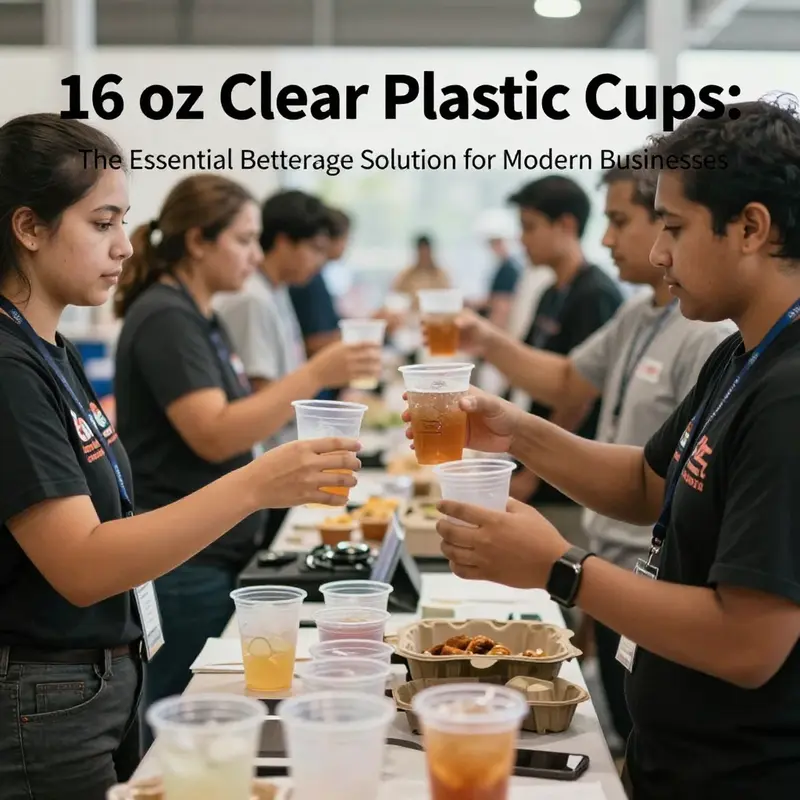
Market dynamics are reshaping how buyers select 16‑ounce clear plastic cups. Convenience, clarity, and cost made single‑use clear cups a staple in foodservice. Now sustainability concerns, regulatory change, and new materials are altering demand and supplier offerings. This chapter examines those forces, and what they mean for sellers and buyers using Websaurant and similar procurement channels.
Across cafes, concession stands, catering operations, and event venues, clear cups remain favored for cold beverages. Their transparency showcases drinks, aiding point‑of‑sale appeal. Physical properties of PET give these cups strength and clarity at low weight. That combination keeps single‑use clear cups relevant despite growing environmental scrutiny. At the same time, manufacturers and distributors are adapting product lines to address new expectations.
Regulation and consumer sentiment are primary drivers. Local bans and restrictions on non‑recyclable plastics are becoming more common. These policies push foodservice operators to evaluate alternatives. Consumers increasingly prefer packaging with a visible sustainability story. They expect recyclability, certified compostability, or reuse programs. Manufacturers react by reformulating materials, improving recycling pathways, and offering reusable solutions. The result is a market where single‑use and reusable options coexist.
Material innovation has accelerated. PET still dominates for clear cups because of its clarity and established recycling stream. Recycled PET (rPET) blends reduce virgin resin use and help suppliers meet buyer sustainability targets. Meanwhile, compostable polymers such as PLA have become viable for cold beverage service. PLA offers a lower carbon footprint when sourced from renewable feedstocks. However, PLA requires industrial composting to break down effectively. That constraint limits its suitability in many regions. Hybrid approaches combine PET clarity with thin biodegradable liners or use barrier coatings that balance shelf life with end‑of‑life considerations.
Beyond material choices, design changes respond to practical needs. Double‑wall cups improve insulation for cold drinks and reduce condensation. Stackable profiles save storage space and speed service. Leak‑resistant lids and universal straw ports support takeout and delivery. These features meet operational goals while improving guest experience. Suppliers that pair clear cups with compatible lids, carriers, and lids that seal tightly win repeat orders. The emphasis now is on systems, not just single items.
A notable trend is the rise of branded reusable cups. Many businesses trial reusable programs at festivals, campuses, and corporate sites. Reusables offer clear waste reduction benefits and become marketing touchpoints when custom printed. Durable 16‑oz options, often made of Tritan‑like copolyesters or heavyweight PP, bridge the gap between disposability and permanent glassware. For many operators, reusables reduce long‑term packaging spend once logistics are optimized. They also align with corporate sustainability commitments.
Procurement channels reflect this evolution. Digital marketplaces and wholesale platforms make it easier to compare materials, certifications, and pricing. Buyers prioritize suppliers with transparent supply chains, fast lead times, and compliance documentation. Certifications such as FDA food safety approvals and ISO9001 quality management are baseline expectations. Some large buyers also request chain‑of‑custody records and recycled content verification. This trend rewards suppliers that invest in traceability and third‑party testing.
Customization remains a growth lever. Clear cups lend themselves to sleeve printing, shrink labels, and tamper bands. For low minimums, digital printing opens branding opportunities for smaller operators. At scale, offset and flexo remain cost effective for bulk orders. Customization supports loyalty programs and seasonal promotions. It also enables communication about proper disposal or reuse, reinforcing brand sustainability claims on packaging.
Regional differences matter. Recycling infrastructure varies widely across North America, Europe, and developing markets. In regions with robust recycling, PET cups with high recyclable rates remain viable. Where composting is accessible, PLA and other compostable options gain traction. In areas lacking waste infrastructure, reusable systems and durable foodservice ware present the most meaningful waste reductions.
Price pressure is persistent. Resin costs, energy prices, and shipping expenses shape final unit price. Inflationary pressures on packaging materials spur product innovation that reduces material use without sacrificing performance. Lightweighting and optimized stacking reduce shipping volume and cost. Suppliers able to deliver predictable pricing and flexible order sizes gain a competitive edge.
End‑of‑life strategy is becoming part of the product decision. Offering takeback programs, partnering with local recyclers, and educating customers improve circularity. Some operators integrate a blended approach: recyclable single‑use cups for high‑turnover settings, compostable or biodegradable options for composting facilities, and branded reusables where logistics permit. This layered strategy helps manage cost and environmental impact.
For businesses sourcing through Websaurant and similar marketplaces, practical steps improve outcomes. First, prioritize suppliers that publish material specifications and certifications. Second, balance unit cost with total cost of ownership. Third, test new materials in small pilots before full rollout. Fourth, leverage customization for both branding and disposal guidance. These steps reduce risk while meeting changing customer expectations.
Alternative packaging forms are relevant to the conversation. Many operators now pair clear cups with paper or kraft containers for food service. Those options can reduce plastic use across an operation. For example, operators moving food containers to recyclable kraft paper may reduce overall plastic waste. See an example of a paper cup alternative with 16‑oz sizing: senang01 disposable single-wall food-grade paper cup (8oz–16oz).
Looking forward to 2033, expect a hybrid market. Recyclable single‑use clear cups will retain demand where recycling is feasible. Compostable and biodegradable options will grow where infrastructure supports them. Branded reusables will expand in event, corporate, and institutional settings. Companies that offer flexible sourcing, supply chain transparency, and certified materials will capture the most growth.
Manufacturers and distributors on Websaurant must be agile. They need to present clear material stories, offer compatible accessory systems, and support buyers with testing data. Those that combine performance, customization, and sustainability will meet evolving buyer needs while preserving the core advantages of clarity and convenience that made the 16‑oz clear plastic cup essential.
For up‑to‑date production trends and procurement opportunities, consult market analysis on manufacturing platforms such as Made‑in‑China for supplier details and sourcing insights: https://www.made-in-china.com/products/16-oz-clear-plastic-cups
Final thoughts
In summary, the 16 oz clear plastic cup is a crucial asset for businesses aiming to deliver not only quality beverages but also a memorable customer experience. With its varied designs, customizable options, and sustainable materials, this product stands out in the competitive landscape of food service. By understanding its material properties, design variations, and sourcing avenues, businesses can make informed decisions that enhance both brand identity and operational efficiency. As market trends evolve, investing in these versatile cups will undoubtedly keep your beverage offerings fresh, appealing, and environmentally responsible.