
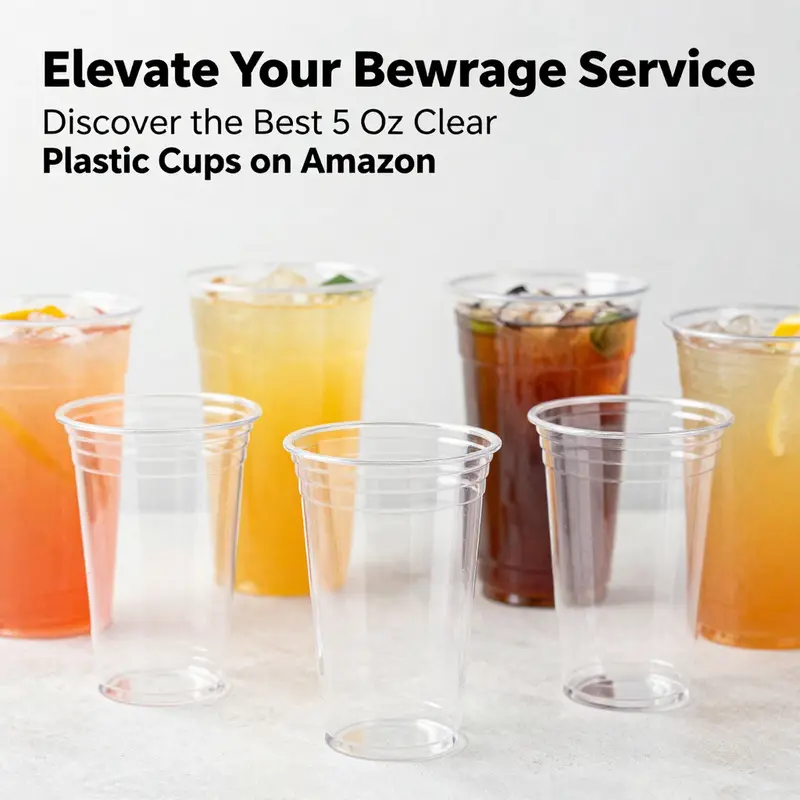
In the bustling world of beverage service, choosing the right disposable cups can make all the difference. Particularly for bubble tea shops, restaurants, food trucks, catering services, and event planners, 5 oz clear plastic cups offer both functionality and aesthetic appeal. Made from BPA-free materials, these cups not only enhance customer experience by showcasing your beverages but also ensure safety for everyday use. This article will explore three leading options available on Amazon, focusing on GUSTO’s special features, the versatility offered by SIUQ’s packs, and the immense value found in Clawsoff’s bulk offerings. Each section emphasizes the importance of selecting the right cups for operational efficiency and guest satisfaction.
Seeing Through Convenience: The 5-Ounce Clear Plastic Cups on Amazon and the Quiet Strength of Simple Design
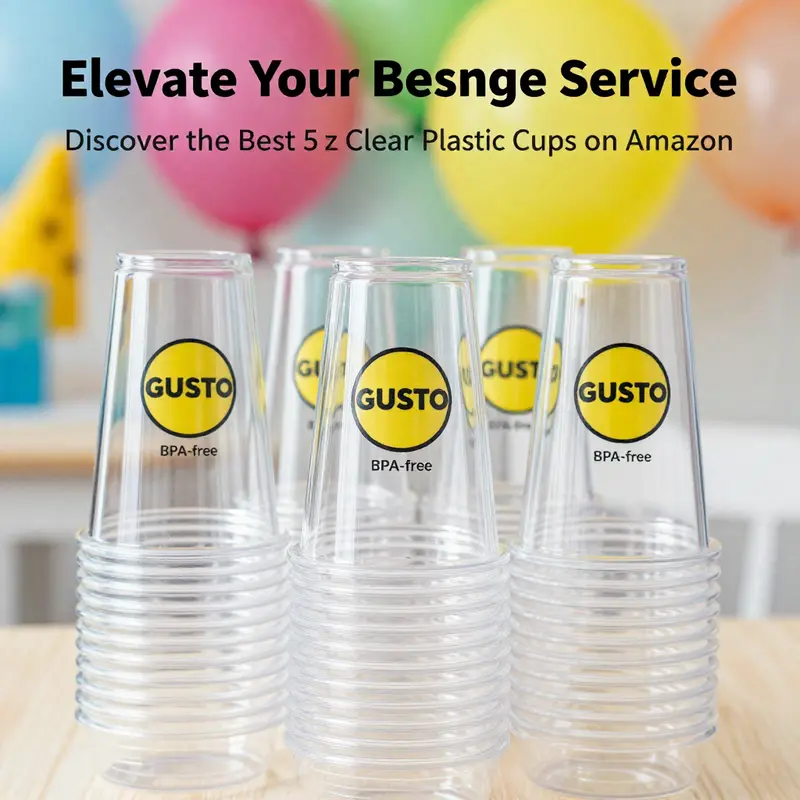
The 5-ounce clear plastic cup occupies a quiet, reliable corner of modern dining and event planning. It is not the star of the show, but its clarity, portability, and predictable performance allow hosts to focus on what truly matters: the experience surrounding the beverage or treat, not the vessel that carries it. In its simplest form, this cup is a tool for presentation and practicality. Yet when you look closely, you begin to notice how many decisions hinge on the tiny material choices, the details of lid compatibility, and the way bulk packaging can reshape an entire logistics plan. On Amazon, where most purchases happen in a rain of product images, reviews, and shipping options, the 5-ounce clear cup becomes a case study in how form and function align for everyday use as well as for larger events. It is easy to overlook its significance, especially when the conversations around disposable ware tend to drift toward novelty or big-ticket catering gear. But a well-chosen 5-ounce cup can reduce stress, simplify inventory, and elevate the perception of care in any setting—from a casual family gathering to a tightly run corporate reception. The key is understanding what makes these cups both unobtrusive and dependable, and then mapping those qualities onto the specific demands of a given scenario.
Materials and safety sit at the top of the list because they directly impact the consumer’s confidence and the organizer’s risk management. Most 5-ounce clear cups on the market are made from BPA-free plastic, whether polypropylene or PET. This safety orientation is not merely a trend; it reflects broader regulatory expectations and consumer demands for tasteless, odorless cups that do not interact with beverages in surprising ways. The material choice also influences performance: PP tends to be tough, with good resistance to cracking under everyday handling, while PET can offer enhanced clarity and a slightly higher heat tolerance in some formulations. For the buyer, the dialogue about safety naturally extends into how the cup behaves in real-world conditions. A cup that preserves the beverage’s integrity—no off-flavors seeping from the plastic, no strange aftertaste lingering after the last sip—heightens the overall experience and reduces unnecessary complaints, especially when samples or desserts are served in large quantities.
The visual appeal of a cup matters as soon as it’s placed on a table. Crystal-clear plastic that shimmers under party lighting enables observers to see the exact color and texture of the beverage or dessert inside. This is not cosmetic fluff; it has a practical payoff. In events where presentation lines up with branding or a thematic color palette, the cup becomes a transparent showcase for the liquid, fruit, or garnish. The clean, glossy finish lets the true hue of a drink—whether it is a bright citrus infusion, a creamy cappuccino, or a jewel-toned dessert—shine through. That clarity also makes the cup a versatile vehicle for samples and tastings, where the viewer’s perception of color, light, and texture can influence appetite and choice. When customers can clearly view what’s inside, they feel more connected to what they are about to consume, which can translate into higher engagement and reduced hesitation in choosing a sample size.
Durability follows as a practical concern that often separates a satisfactory purchase from a regretful one. A cup that cracks or deforms under normal handling can ruin an event, especially when lots of cups are moved, filled, and reused in quick succession. Good 5-ounce cups prioritize a balance between rigidity and lightness. They must resist cracking when stacked, carried, or slid into storage crates, while remaining light enough to keep a participant from feeling as if they’re lugging around a heavy load. This durability is particularly important for vending or sampling scenarios, where cups may be subject to wider temperature fluctuations, repeated filling, and frequent transport between venues. A durable cup reduces waste—fewer cups that fail in transit or during a service window mean fewer replacements and less frustration for event staff.
A related and equally important feature is leak resistance. For cups that travel, whether in a carry-on cooler or a booth at a trade show, spill prevention is essential. The options for securing a beverage during transport include dome lids or flat lids, particularly for variants made to accommodate both cold and hot liquids. Tight-seal lids prevent leaks when a cup is jostled in transit, yet they must remain easy to remove for quick service. A lid that is too tight or too fiddly can slow down line speed and frustrate guests. The best configurations strike a balance: a reliable seal that keeps beverages fresh and prevents leaks, paired with simple, intuitive removal that staff can execute efficiently. For organizers, this means choosing a cup-and-lid pairing that aligns with the service model—whether it’s a self-serve station, pre-packaged samples, or a catered service where crew members move quickly from station to station.
A cup’s space efficiency becomes relevant when planning for bulk orders and storage. The stackable design of many 5-ounce cups is not merely a convenience; it is a logistical enabler. Stacks save precious storage space in kitchens and warehouses, and they simplify packaging for delivery to venues. This compactness has downstream effects on shipping costs, stock rotation, and even the ease with which staff can set up or tear down an event. The ability to nest cups without damage also reduces the risk of breakage during transit, a common concern for large orders. In the planning phase, organizers often translate guest counts into a ballpark number of cups needed per service window. A stackable cup translates into predictable inventory and smoother distribution during peak service moments, whether the event is a wedding reception, a corporate expo, or a neighborhood festival.
Beyond raw materials and mechanical performance, the versatility of the 5-ounce clear cup enables it to function across a spectrum of beverages and even non-beverage uses. While its primary role remains serving drinks, it can double as a vessel for small portions of desserts, samples in a tasting menu, or a container for condiments at a buffet. The 5-ounce size is small enough to be portion-controlled yet sturdy enough to hold liquids and light toppings without collapsing under weight. For venues that blend beverage service with other experiential elements—such as a dessert bar, a DIY cocktail station, or a candy buffet—the cup’s clarity supports creative presentation. Guests can distinguish flavors and textures at a glance, which enhances the overall sensory narrative of the event without requiring additional accessories or complicated display arrangements.
When shopping on Amazon, buyers quickly encounter a spectrum of bulk packaging options that reflect different consumption scales. The 500-count configuration might suit a mid-sized party line or a small restaurant that offers samples to guests. A 600-count pack may be favored by a catering operation preparing for a recurring weekly event, while even larger quantities, such as 1,500 cups in a single order, speak to venues planning for periodic or repeated themes. The economic logic behind bulk purchases is straightforward: the per-unit cost drops as quantity rises, provided that the cups meet a baseline standard of safety, clarity, and usability. Yet price alone does not determine value. The best choices balance cost with reliability, the availability of compatible lids, and the vendor’s reputation for consistent quality across batches. A smart buyer will cross-check product descriptions for material composition, lid compatibility, temperature tolerance, and storage recommendations. They will also look for reassurance in reviews about how the cups perform under real-world conditions—how they hold up to long days of service, how lids seal during transport, and whether the cups maintain their clarity after repeated use in a catering environment.
In this light, the 5-ounce clear cup is best understood not as a single product but as a modular component of a broader service ecosystem. It interacts with lids, trays, ice and heat management, and the physical layout of a service station. It interacts with the staff who fill, seal, and deliver beverages, and with guests who form impressions of hospitality based on the ease and elegance of the service. The same cup that holds a kid-friendly fruit smoothie at a birthday party can also carry a sample of a new dessert at a corporate tasting. The success of either scenario pivots on simple truths: the cup must be safe to use, visually appealing enough to showcase its contents, robust enough to survive transport and handling, and affordable enough to be deployed at scale. These are not glamorous considerations, but they are essential to the smooth operation of any gathering where disposable tableware plays a supporting role.
For those who want to see concrete examples of how these cups find homes in bulk supply chains, consider the wider ecosystem of suppliers that offer compatible accessories and bulk packaging. The ease of acquiring not only the cups but also the lids, straws, napkins, and storage solutions helps transform planning from a series of ad hoc purchases into a coherent procurement strategy. A thoughtful buyer may explore a few complementary options—standard dome lids for longer events, flat lids for quick service or display cases, and a range of straw sizes to accommodate different beverage types. These accessory considerations are the practical glue that binds a good cup to an excellent service experience. The ability to order everything in one place, with consistent sizing and reliable delivery timelines, reduces the cognitive load on organizers who already juggle multiple moving parts. The end result is a more streamlined operation and a more confident guest experience, anchored by a cup that remains faithful to its role throughout the day.
In the broader Amazon ecosystem, the 5-ounce clear cup appears as part of a marketplace that prizes convenience, speed, and breadth of choice. Buyers can compare different materials, caps, and packaging counts with a few clicks, guided by product descriptions, images, and user feedback. The best listings translate a technical specification into an actionable buying decision: a clean, odorless interior ensures beverage integrity; a transparent exterior supports effective merchandising and presentation; a reliable seal minimizes spill risk; and bulk options align with logistical realities of everyday venues and large-scale events. In this context, choosing a 5-ounce clear cup becomes a strategic exercise in balancing form and function. The ideal pick is the one that best supports the event’s illumination—its color, its flow, its tempo—without demanding unnecessary compromises in safety, clarity, or budget.
To bring this discussion full circle, the decision to select a particular 5-ounce clear cup for Amazon purchasing ultimately rests on clarity about the intended use, the audience, and the service model. If the aim is to present vibrant beverages with minimal distraction, a cup that emphasizes visual clarity and lid compatibility can elevate the guest experience. If the goal is to maximize throughput and minimize waste at a high-volume event, durability, stackability, and bulk price per unit become the dominant criteria. For a casual, everyday home use, the focus might shift toward ease of storage and straightforward disposal, with an emphasis on safety and odor neutrality. Across these contexts, the core strengths of the 5-ounce clear cup—clarity, safety, practicality, and scalability—remain constant. Its true power emerges not from a singular feature but from how well its design accommodates the rhythms of service, presentation, and guest delight. In a marketplace that prizes novelty, the cup’s reliability is a reminder that good design often hides in plain sight, quietly supporting moments of connection, celebration, and everyday refreshment.
As you refine your Amazon shopping list, consider pairing the 5-ounce clear cup with resources that illuminate bulk procurement and practical usage. For an example of bulk packaging options in a related category, see senang05-food-grade-500-750-1000ml-take-away-bowl-with-lids-packing-food-single-wall-fast-food-salad-bowls. This reference point helps anchor expectations about how bulk packaging can align with per-unit cost, storage efficiency, and service speed, while remaining within a compatible product ecosystem. Exploring such listings can clarify how different suppliers frame volume discounts, minimum order quantities, and shipping timelines, all of which influence the day-to-day realities of event planning and restaurant operations. For a broader sense of how these choices translate into real-world usage, the external resource linked below provides additional context on the broader market for clear disposable cups and their role in catered and retail settings.
External resource: https://www.amazon.com/GUSTO-Clear-Plastic-Disposable-Parties/dp/B0B7ZVQW3F
Small in Size, Large in Service: The 5 oz Clear Plastic Cup as a Versatile Hub of Modern Deliveries
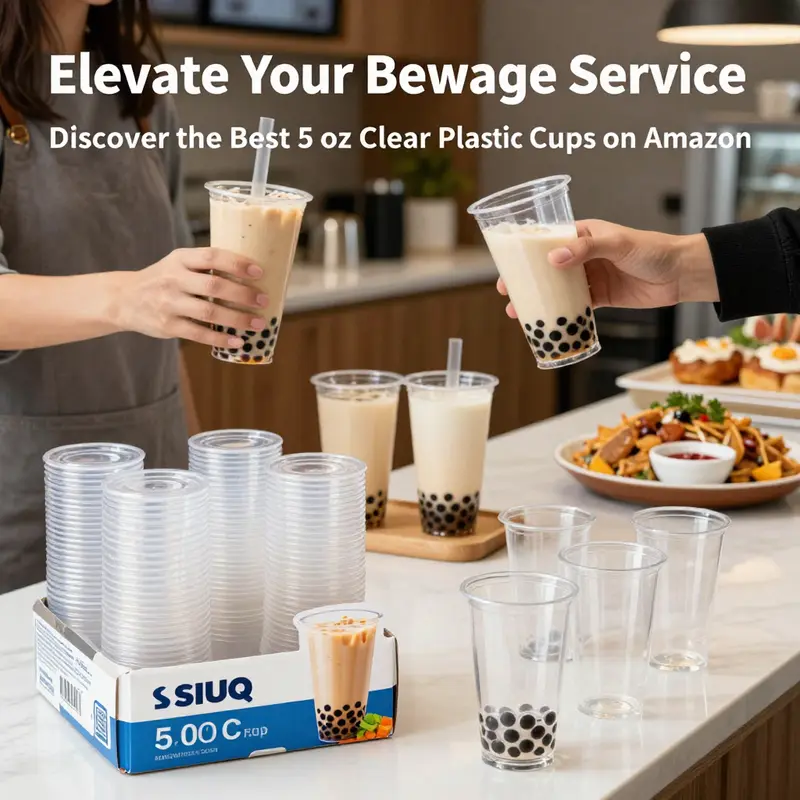
In the quiet economy of everyday crafting and service, a small transparent cup quietly anchors many moments where taste, presentation, and practicality intersect. The 5 oz clear plastic cup—a compact, unobtrusive vessel—has become a staple across homes, events, and small businesses. Its form invites use without demanding attention; its clarity offers a canvas for color, texture, and texture of the liquid or dessert it carries. In the Amazon landscape, this cup earns favor not for flash but for dependable performance, especially when it comes in bulk. The SIUQ 600 Pack of 5 oz Clear Plastic Cups embodies a blend of safety, durability, and convenience that aligns with how many people actually run everyday operations, from a neighborhood gathering to a larger, more organized function. The appeal rests not only in what the cup holds but in what it does for the person who chooses it.
Material safety is a keystone of confidence. The cups are designed with food-grade, BPA-free polypropylene, a choice that ensures the contents emerge unaltered in taste and odor while remaining within strict food-safety standards. This emphasis is not a marketing flourish; it translates into practical peace of mind. When a host offers a tasting at a trade show or a wedding reception, guests notice the crisp, clean taste of the beverage rather than any plastic aftertaste. For families serving kids at a birthday party, the reassurance that the cup material is free of unwanted additives is a comforting assurance that the focus stays on celebration, not safety concerns.
Beyond safety, the physical resilience of these cups matters just as much as their inertness. They are built to withstand typical handling pressures—grip, stacking, and the occasional clink of a crowded event line—without bending or cracking under normal use. This durability makes them a reliable choice for busy environments like cafeterias, clinics, schools, or large-scale catering. The 5 oz scale is small enough to encourage controlled portions, which can be particularly valuable when samples, tastings, or demonstrations are part of the program. Small portions reduce waste and help organizers manage inventory with greater precision, while still delivering the experiential impact of observing color and clarity through the cup’s transparent walls.
The size itself invites a spectrum of uses that extend well beyond drinking. A 5 oz cup can function as a quick rinse cup in a restroom, a tester for cosmetic or culinary samples, or a compact container for holding condiments at self-serve stations. The transparency adds a stage-like clarity to the presentation: observers can immediately gauge how much remains, how fresh a beverage looks, or how a dessert’s hue shifts as whipped cream or syrup is added. Because the cups are free of heavy decoration, their form stays understated and versatile, a feature that can be especially meaningful in settings where a uniform aesthetic matters more than fashion-forward design.
In the world of bulk buying on Amazon, the SIUQ 600 Pack embodies a practical balance between quantity, price, and usability. A bulk pack is not merely a convenience; it is a strategic choice for efficiency and waste reduction. Fewer reorder cycles mean less downtime during events and fewer interruptions to service. In operations where every moment counts, having a steady supply of ready-to-use cups can translate into smoother flow—fewer pauses for restocking, less crowding at a service counter, and more time to concentrate on the guest experience. The environmental benefit is also worth noting in a broader thinking about efficiency: bulk purchases can contribute to reduced packaging redundancy and less frequent shipments, which, when considered across a venue or organization, fosters a more sustainable operating rhythm.
The design of these cups underscores a philosophy of utility over ornament. The smooth, cylindrical profile is unadorned but highly functional, which simplifies stacking and storage in crowded kitchen lockers, cafeterias, or event backrooms. When space is at a premium, the ability to nest and stack without snagging or wobbling becomes more than a convenience; it is a practical necessity. The lack of extraneous detailing means the cups maintain their integrity as a neutral platform for beverages and samples, allowing hosts to tailor the presentation—whether by labeling, adding lids, or pairing with tasting spoons or small napkins—without fighting against an incongruent cup form.
Versatility, in this sense, is not a fashion attribute but a workflow attribute. In a party atmosphere, the cups can transition from beverage service to a dessert or hors d’oeuvre vessel as needed. In a trade show or wedding setting, they support a broad array of tasting experiences—from fruit-infused waters to delicate syrups—without forcing a change of vessels as the program evolves. Even in more utilitarian contexts, such as public restrooms or clinics, the same cup can serve as a hygienic, discrete container for rinsing or quick mouthwash samples. The ability to adapt to several roles reduces the cognitive load on staff and organizers, allowing them to plan more effectively and respond more quickly to shifting needs.
The consumer mindset here extends to the economics of scale. A 600-pack, particularly within the Amazon ecosystem, is designed to reduce the friction of replenishment. It helps organizations avoid frequent small orders that can rack up costs and complicate inventory tracking. The pricing dynamic often reflected in these bulk listings makes sense for settings where the cups are not a one-off purchase but a regular component of ongoing operations. In schools, clinics, and hospitality venues where cups are used daily, a bulk pack becomes a steadying financial instrument, turning what might feel like a recurring expense into a predictable line item in a budget. The practical benefit sits alongside an ethical one: with a bulk approach, fewer shipments and smaller, more frequent packaging cycles can contribute to reduced waste and more efficient resource planning.
The decision to choose a particular 5 oz cup often hinges on a blend of criteria rather than a single attribute. For some buyers, the priority is clarity—the glass-like visibility of the liquid inside, which makes it easy to identify beverages at a glance. For others, it is safety—the BPA-free guarantee—the bedrock on which their brand’s trust is built, especially when serving samples to a mixed audience with varied sensitivities. For many, it is the balance of durability and lightness; a cup that feels sturdy enough to withstand a few drops or a quick tumble yet remains light enough to be carried in bulk is ideal for fast-paced service environments. And for all, the price-per-cup metric and the total cost of ownership—considering storage, transport, and waste—often ends up being the deciding factor. The SIUQ 600 Pack intersects all these considerations in a way that many operators find compelling, especially when long-term or recurring needs are in play.
All of these points come into sharper relief when one considers the broader ecosystem of disposable cups on the market. While many vendors offer similar sizes, the combination of a BPA-free PP formulation with a sturdy yet lightweight profile tends to emerge as a common denominator among reliable options. The clear plastic appeal remains constant—visibility that invites curiosity and engagement, whether a guest is sampling a new beverage or simply enjoying a favorite drink during a casual gathering. In a social context, the cup becomes almost invisible—present in service and function but not in distraction—yet its impact is real: it shapes how people experience what is offered, how they quantify portions, and how smoothly a service operation runs.
An important note for readers who are exploring related options is that there are many count configurations beyond 600 units. The marketplace teems with choices—from hundreds to thousands—each with its own cost calculus. The value proposition, however, remains consistent: when a product combines safety, clarity, and practical design with bulk efficiency, it is well aligned with the challenges and opportunities of modern serving environments. The 5 oz size offers a sweet spot for portion control and presentation, without forcing a dramatic shift in how beverages, samples, or small treats are served. In this sense, the cup functions as a flexible backbone for a variety of experiences: simple, dependable, and quietly capable.
For readers who want to explore related disposable-cup options in a broader sense, there is additional context to consider in parallel with plastic cups. A relevant resource that examines similar categories—packaged disposables with a focus on affordability and practical design—can be found in this internal reference: Best-price-8oz-disposable-paper-cup. This internal link provides a broader lens on how different materials and packaging choices influence decisions in real-world settings. You can follow that link to compare sizing, material choices, and value propositions across related products, which can help inform a purchase strategy that fits a specific venue, audience, or budget.
External resource: for a direct product-oriented reference that showcases how a widely used 5 oz format looks in a live marketplace, see the Amazon listing for the specific 5 oz clear plastic cup set discussed in the research results. This external source offers a practical glimpse into how bulk packaging, material claims, and usage notes translate into user experiences in real-world settings. https://www.amazon.com/dp/B0CZ3KX9L8
Crystal Clarity in Bulk: The Practical Case for 5 oz Clear Plastic Cups

The allure of a small, transparent cup often lies in its quiet reliability. When the cups are 5 ounces in capacity and made from clear, BPA-free polypropylene, the appeal grows from practical to strategic. In the world of shopping on large marketplaces, bulk options that combine safety, visibility, and durable construction become more than a convenience; they become a logistical decision that shapes how events unfold, how products are sampled, and how daily routines are managed. This chapter unpacks why a bulk pack of 5 oz clear plastic cups—such as a sizable 1,500-count offering—can become a cornerstone for both personal use and professional setup, and how the decision to buy in bulk translates into tangible benefits across time, space, and budget.
From a material standpoint, the core promise of these cups rests on safety and performance. They are typically crafted from BPA-free polypropylene, a composition well regarded for its food-grade credentials and straightforward resistance to everyday handling. The absence of BPA reduces concerns about unwanted flavors or odors contaminating beverages or simple mixtures held within the cup. This is not just about compliance with basic food-safety standards; it is about preserving the integrity of what you pour—whether it is a sparkling beverage at a birthday gathering, a small sample of a new product at a trade show, or a measured amount of mouthwash in a hospitality setting. The plastic’s resilience further supports a broad range of temperatures and handling scenarios. While not designed for long-term thermal cycling or microwave use, these cups readily accommodate everyday beverages and samples at room temperature or slightly warm conditions without leaking or cracking under normal event-day pressures.
The visual clarity of these cups plays a critical and often underestimated role in presentation. The glass-like transparency lets the liquid’s hue and texture take center stage. For beverages, this means you can showcase the color of fruit-infused drinks, layered desserts, or delicate samples without any distraction from the cup itself. For tastings or sampling stations, the clean, unobstructed view can entice guests to sample more readily, while for retail or promotional events, the cups can function as a display vehicle—serving not only as receptacles but as a transparent stage on which color, bubbles, and textures are front and center. Even in everyday contexts, the aesthetic of crystal-clear cups can elevate a simple glass of water or a fruit-infused sip into something slightly more celebratory. And because the cups are disposable, the emphasis on beauty does not come at the expense of convenience; the post-event cleanup is straightforward, letting hosts refocus attention on guests rather than on a mountain of dishes.
Beyond appearance, the versatility of a 5 oz clear cup makes it an all-purpose tool. At parties and gatherings, they perform admirably as standard beverage vessels for sampling stations, kid-friendly servings, or bite-sized desserts. Their compact size makes them well suited for tasting portions at corporate events, showcases, and charity functions where the flow of guests requires quick, easy, and hygienic service. In smaller venues or temporary setups, the cups also serve a dual role: they can function as practical mouthwash cups for restrooms, serving tiny cosmetic or hygiene samples at beauty pops, or even tiny organizers for small items like mints, seeds, or snack bits during a workshop. The breadth of utility is anchored by the cups’ compatibility with common lids and toppers that marketplaces offer, enabling a simple upgrade from everyday use to more formal service without compromising the streamlined, single-use format.
Choosing bulk cups is not merely a question of how many you buy; it is a decision about how you plan operations. A 1,500-count pack reduces the frequency of reorders, a crucial factor for event planners, caterers, schools, and busy offices. When a single purchase covers a season of events or a year of daily use in a break room, the administrative overhead of purchasing—frequent checkouts, order tracking, and supplier communications—diminishes substantially. The cost-per-unit advantage becomes a reliable lever for budgeting, especially for organizations that must forecast needs weeks or months in advance. The math often favors bulk when the cups are standard, compatible with a broad range of lids and accessories, and stored properly in a dry, cool space. The savings extend beyond price per cup; bulk buying can reduce packaging waste per serving, as a single, larger shipment replaces many small shipments over time, easing supply-chain logistics and reducing the carbon footprint associated with multiple outbound freight movements.
In practice, the real-world impact of bulk purchases shows up in multiple ways. For households hosting frequent gatherings, a 1,500-count pack means fewer last-minute runs to a store and more time spent in planning and enjoying the event. For small businesses, it translates into predictable inventory levels, steadier service during peak seasons, and a dependable baseline that reduces the risk of stockouts during promotions or community events. The durability of the cups, coupled with a secure fit for standard lids and accessories, minimizes the risk of leaks and mishaps that can stain a moment or derail a service flow. Even for organizations that emphasize sustainability, the disposable nature of these cups is balanced against the efficiency of bulk storage and the practical realities of serving large groups with speed and consistency.
A practical note often accompanies the decision to buy in bulk: storage and handling. A pack of 1,500 disposable cups requires a stable, dry space where they can be stacked safely without warping or bending. The packaging typically uses bulk-friendly cartons designed to protect the cups during transit and storage while allowing easy access when events demand rapid replenishment. For organizers who move between locations—catering events in multiple venues, school festivals, or corporate conferences—the lightweight nature of the cups makes transport simpler than heavier glassware, while their compact 5 oz capacity ensures that even a large quantity can be used efficiently without over-serving or waste. The user experience—the moment a server reaches for a cup with confidence, knowing it will perform as expected—extends beyond the physical product to the confidence with which an organizer can invite guests to partake.
In the broader ecosystem of disposable drinking vessels, these cups occupy a pragmatic middle ground. They are not the plainest options, nor are they the most ornate; instead, they offer a reliable blend of safety, visibility, and utility at a price point that makes bulk purchasing attractive for a wide range of buyers. For those evaluating alternatives, it can be instructive to compare a paper-based disposable option that serves similar roles. The paper-cup category, while distinct in feel and temperature tolerance, shares the same emphasis on single-use convenience and quick service. If the aim is to explore a different material aesthetic or a distinct environmental footprint, a broader look at the disposable cup landscape can be valuable, and a related option can be explored through an affordable bulk listing such as the “best-price-8oz-disposable-cup” entry, which highlights a different material set and price point while maintaining the same core benefits of bulk availability and disposable convenience. best-price-8oz-disposable-cup.
When selecting a bulk option, several practical criteria enter the decision. Count is the most obvious, but it should be balanced with packaging quality, lid compatibility, and the overall reputation of the supplier. In the context of online marketplaces, user reviews and product descriptions often provide useful cues about leakage resistance, edge finish, and the ease of stacking when in storage. A well-made 5 oz cup should have a smooth interior and rounded rims that make sipping comfortable while also resisting cracking under normal handling. The exterior clarity should remain consistent with little clouding or dulling even after a few uses of the internal contents. The presence of BPA-free certification, if disclosed, can be an extra assurance for buyers who are particular about food-contact safety, especially when cups are used for samples or consumer tests. In other words, the practical value of these cups comes not only from their immediate function at the table but also from the reliability they provide in operational planning, event execution, and ongoing daily use.
The conversation around bulk disposables often touches on environmental considerations. While disposable cups are, by definition, designed for single-use convenience, buyers increasingly weigh the trade-offs between convenience and waste, transportation efficiency, and end-of-life options. BPA-free PP cups typically align with widely accepted recycling streams where local facilities accommodate polypropylene. However, the actual recyclability depends on regional programs and on whether the cups are contaminated with liquids or food residues. Practical strategies for responsible use include pre-sorting and storing cups in sealed containers to minimize contamination, encouraging customers or participants to dispose of cups in designated recycling bins, and coordinating with local waste services to understand curbside recycling capabilities. These steps do not negate the convenience of bulk purchases but do help align bulk consumption with broader sustainability practices.
For readers who are positioning bulk cups within a broader portfolio of disposable solutions, it is useful to consider how this particular product complements other formats. The 5 oz cup is well-suited for sampling programs, small portions, and compact beverage servings that require quick service without the burden of larger glassware. It can pair with lids designed for spill resistance during transport or be used in layered demonstrations that benefit from a transparent vessel. The flexibility of a bulk option means it can support a wide range of campaigns—corporate events, school activities, marketing tastings, and hospitality pop-ups—without requiring specialized equipment or demanding long-term commitments.
In closing, the practical case for a bulk pack of 5 oz clear plastic cups rests on three pillars: safety and reliability, visual appeal, and operational efficiency. The BPA-free PP construction provides a dependable, food-grade option that supports both hot- and cold-liquid presentations within reasonable expectations. The crystal-clear design elevates presentation and allows for accurate assessment of color, texture, and portion. The bulk quantity delivers cost-per-unit savings, reduces reorder frequency, and streamlines event logistics, from storage to service. Taken together, these cups become more than a mere purchase; they become a stable, scalable element of event planning, daily operations, and consumer-facing activities where speed, clarity, and confidence must coexist.
External resource: https://www.amazon.com/dp/B0C3JQYKZL
null

null
Final thoughts
The ability to effectively serve beverages hinges significantly on the choice of cups, especially when it comes to the demands of bubble tea shops, food trucks, and event planners. The 5 oz clear plastic cups available on Amazon present a variety of options that cater to different needs – whether you prioritize bulk purchases, versatility, or specific features. With safe materials and multifunctional uses, these cups make it easy to elevate your beverage offerings while maintaining quality and safety. With brands like GUSTO, SIUQ, and Clawsoff leading the way, there’s an ideal choice for every beverage service provider.