
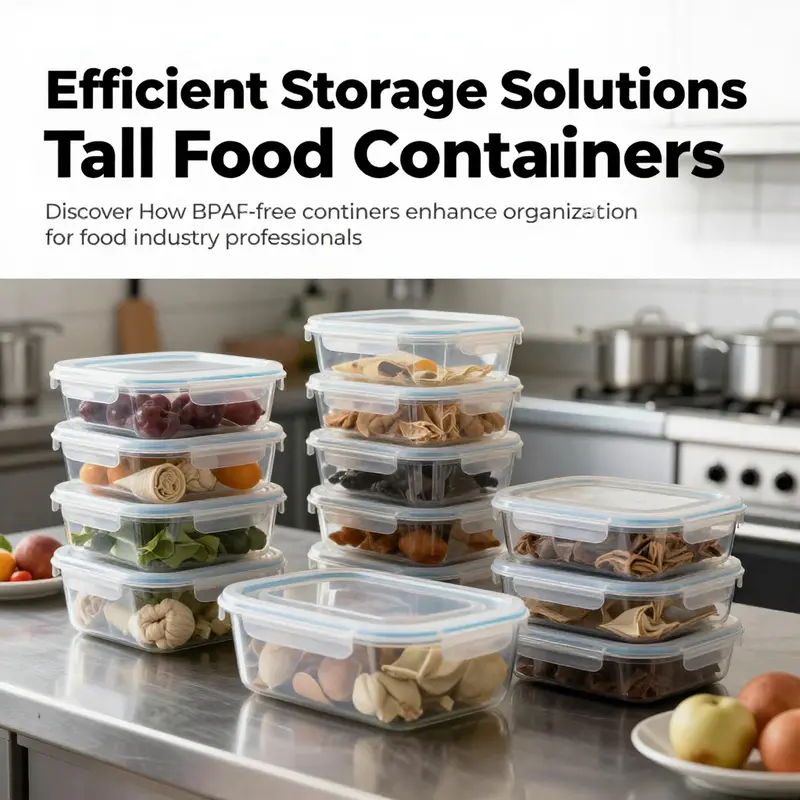
Rubbermaid Tall Food Storage Containers present an exceptional solution for organizations ranging from bubble tea shops to catering services. Constructed from high-quality, BPA-free plastic, these versatile storage options not only enhance efficiency but also ensure safety and reliability in food handling. This article delves into their unique features, practical applications, and real-world performance, providing crucial insights for business owners seeking optimal storage solutions. Each chapter will explore different aspects of these containers, including their construction, efficiency, consumer insights, and practical uses, giving you a comprehensive understanding of how they can elevate your food storage practices.
Crystal Clarity, Secure Seals, and a Lean Pantry: Redefining Kitchen Organization with BPA-Free Tall Food Storage
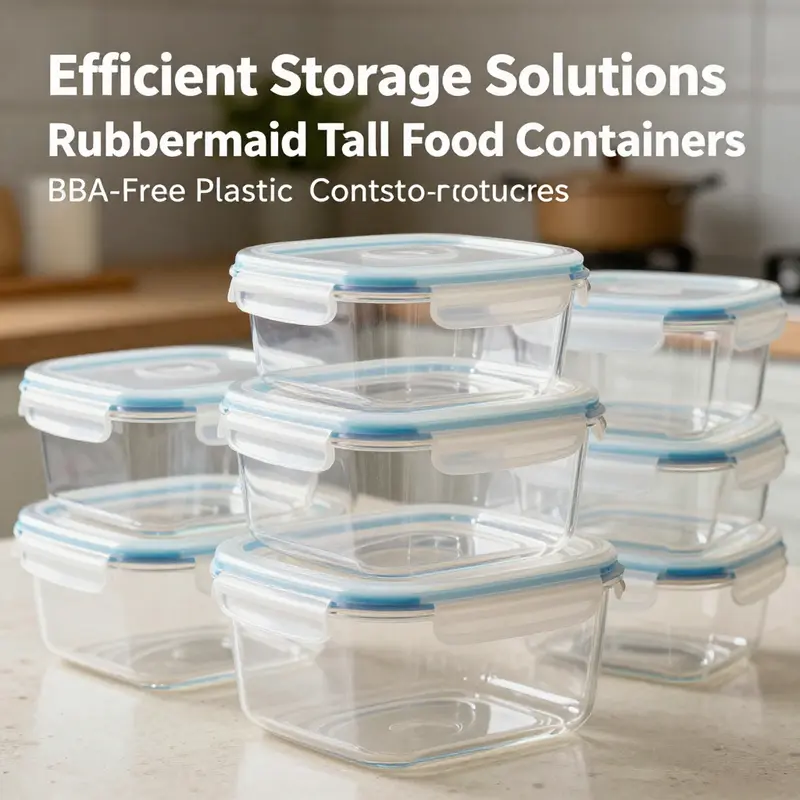
In the heart of every well-run kitchen, the rhythm of daily life hums around leftovers, batch meals, and the careful rotation of staple items. Tall food storage containers, made from BPA-free plastic, have become the invisible scaffolding of this rhythm. They are not merely vessels; they are design systems that translate the messy, irregular reality of food storage into something orderly, predictable, and hygienic. The core of their appeal lies in material and form: Tritan plastic that resists shattering, clarity that makes content instantly recognizable, an airtight seal that keeps flavors contained, and a modular footprint that unlocks a new potential for space-saving organization.
Tritan, a name that often appears in conversations about safe kitchen plastics, is more than a marketing term. It represents a material choice that blends durability, chemical safety, and optical quality. BPA-free means the absence of bisphenol A, a chemical that has raised concerns about endocrine disruption. But beyond the absence of a chemical, Tritan brings real-world benefits. It maintains clarity over time, resisting the yellowing that can plague other plastics. It is light enough to be easy to handle daily, yet sturdy enough to stand up to the bumps of busy kitchens, the inevitable nicks of a rogue spoon, or the sudden jolt of a crowded fridge door. The result is a container that looks as pristine after a week of leftovers as it did when first unboxed, reinforcing both hygiene and aesthetics in equal measure.
The tall silhouette of these containers is more than a stylistic choice; it is a practical response to the ways we store and use food. In a refrigerator, tall containers slot into niches that shorter, wider options cannot. They stack with ease, letting rows of jars and cartons line up with crisp symmetry. In a pantry, their height creates a vertical dimension that frees shelf space for other essentials. The modularity is not accidental. It is a deliberate feature that acknowledges the unpredictable cadence of meal planning. one week might involve three batches of roasted vegetables, another just a single batch of grains. The containers adapt to this cadence, aligning with the rhythm rather than demanding it.
At the heart of the user experience are three tightly knit systems: the material, the lid, and the geometry. The material, as discussed, is BPA-free Tritan, which communicates a sense of permanence. It is crystal clear, offering 360-degree visibility. The ability to identify content without opening a lid is not merely convenience; it is a practical safeguard against food waste. When you know at a glance what sits at the back of the fridge, you are less likely to forget aging leftovers or neglect to use a batch before it loses its peak quality. In that way, clarity translates into less waste and more mindful cooking, outcomes that matter to households trying to balance flavor with fiscal and environmental considerations.
The lid is where the notion of security attaches itself to everyday use. An airtight, leak-proof seal is no trivial feature. It changes the way you transport meals, save sauces, and protect the delicate flavors of ingredients that can sag when exposed to air. The secure latch mechanism feels almost ceremonial in its reliability. It is a tactile cue that you can trust the container with almost anything—from a Sunday batch of marinated chicken to a Friday night portion of pasta salad that’s heading to a coworker’s desk. The seal, of course, must be tested against reality: tiny spills in transit, sudden jostles in a crowded grocery bag, a refrigerator door that swings a little too eagerly. The measured feedback of a latch that snaps back into place with a positive click is more than a feature; it is a reassurance that the contents remain contained.
Underneath the latch, many designs incorporate a venting mechanism that speaks to a nuanced understanding of reheating. The built-in vents are modest but mighty details. They allow steam to escape when the lid remains in place during microwave reheating, reducing the risk of pressure buildup and splatter. The user can warm a meal without wrestling with a makeshift lid removal and an inevitable surface mess. This is not a trivial convenience; it reflects a kitchen reality where speed and cleanliness must coexist. You can reheat a portion of stir-fry or a mound of rice without sacrificing the crispness of the dish on top or the integrity of the container itself. When you consider the arc of a typical week, such small conveniences accumulate into substantial time savings, less cleanup, and a more reliable meal-prep routine.
The real magic of tall food storage containers, however, emerges when we consider how they live inside a kitchen ecosystem. The design is inherently modular: sloped sidewalls, uniform latch placement, and consistent lid geometry enable a grid-like stacking pattern. When these containers nest together or stand side by side, they behave like members of a carefully choreographed ensemble. This is not simply about saving space; it is about reimagining the pantry’s architecture. When a cupboard or a refrigerator is organized around a few standard shapes and sizes, the act of cooking becomes easier, more predictable, and more enjoyable. The process of retrieving an ingredient becomes a simple, almost ritual action—one that reduces friction and invites experimentation rather than relegating it to a sporadic, uncertain event.
The empty moment before you open the fridge door is revealing. Clarity becomes a translator for memory. You can tell at a glance whether the bag of greens has started to wilt, whether the batch of soup still holds the bright color of the afternoon it was made, or whether the chopped onions have crossed into the realm of potential waste. This transparent design offers more than cosmetic appeal; it is a practical advantage that integrates with a modern, time-starved lifestyle. The containers do not pretend to be something they are not. They acknowledge that the kitchen is a place of constant change and flow—a place where plans shift with the week’s groceries, where leftovers multiply at a rate that would overwhelm lesser systems, and where a well-chosen storage platform can make the difference between turning a bulk purchase into a week’s worth of nourishing meals and watching it languish in a bag on a shelf.
Material safety, durability, and performance are not isolated concerns; they are components of a philosophy of kitchen design that values reliability and sustainability. BPA-free plastics, particularly Tritan, resist the compromises that often accompany cheaper solutions: cracking in cold conditions, odors absorbing into the container walls, or discoloration after repeated use. The choice to use a material that remains clear, even after many cycles of washing and use, signals a deeper commitment to longevity. In this sense, the containers are not a disposable convenience. They are a long-term investment in organization that pays dividends in repeated meal prep, efficient storage, and the practical reality of feeding a family with minimal waste.
From the user’s perspective, the experience is reinforced by the visual language of the product. The crystal-clear walls offer more than identity; they foster accountability. When a family member can see exactly what is inside a container, there is less guesswork and less bad memory to compensate for. The result is a kitchen culture of responsibility: you remember to label, you recall to check dates, and you are reminded to rotate the stock as part of a routine rather than a dreaded last-minute scramble. In a world that often asks us to balance speed with mindfulness, this is a welcome marriage of efficiency and care. The design invites you to lean into the practice of thoughtful storage rather than treating containers as mere afterthoughts.
The practical benefits ripple into everyday routines as well. For meal-prep enthusiasts, tall containers provide a stable home for prepped ingredients that would otherwise accumulate in mismatched bowls or plastic bags. The airtight seal protects the texture of crisp vegetables, makes sauces portable for lunches, and keeps grains fluffy rather than lumbering into cloying, clump-prone masses. When transporting meals, the leak-proof claim becomes a meaningful assurance. A family trip to a park, a coworker’s lunch, or a school event becomes a smoother, more reliable experience when the container you carry doesn’t leak or spill. The simplicity of the design helps keep the focus on the food itself—the flavors, textures, and aromas you worked so hard to bring together.
In conversations with home cooks and organization enthusiasts, the appeal of these containers often centers on a few well-orchestrated design decisions rather than on a laundry list of features. The lids align with the bodies in a uniform choreography; the edges seat tightly with a soft, reassuring snap; and the translucent walls let light pass through, making the contents appear clean and inviting. These are not mere product details; they are attempts to align kitchen tools with real behavior—how people cook, store, and move about a small apartment or a busy family home. It is this alignment that sustains belief in the utility of tall storage solutions: they promise a kitchen where leftovers are respected, where ingredients are easy to locate, and where the daily task of food storage becomes not a hindrance but an enablement of good routines.
No discussion of tall, BPA-free storage would be complete without acknowledging the interplay between form and function in a broader philosophy of modern kitchens. The rise of transparent containers has been part of a longer movement toward clear expectations in food storage. People want to know not only what is inside but how long it has been there. Visibility reduces the cognitive load, which, in turn, can improve adherence to safe cooking practices and date labeling. The same principles apply to the lids and their seals. When you can see that the seal is intact, that the latch is securely closed, and that the contents look unaltered, confidence follows. This combination of clarity and security is not a luxury; it is a practical response to the realities of busy households where meals are prepared in advance and consumed over several days.
Beyond the kitchen, these containers echo a broader trend toward durability and reusability. In a world increasingly concerned with waste, reusable storage that lasts longer than a season carries not just value but responsibility. The BPA-free claim is a reassurance about contact safety, but the durability of Tritan also helps minimize replacement cycles. If you can rely on a single set of tall containers to serve as the backbone of your weekly meal-prep routine for years, the net environmental impact includes fewer disposables, lower replacement costs, and a moral benefit of choosing fewer, better-made tools rather than many cheaper ones that fail early. The sum of these benefits—safety, visibility, secure sealing, space efficiency, and longevity—coalesces into a compelling case for adopting tall, BPA-free storage as a central organizational strategy in domestic life.
To look beyond the immediate benefits, there is also a sense in which these containers act as a gateway to healthier cooking habits. When leftovers are easy to store, easy to identify, and easy to reheat, people are more likely to plan meals with fresh ingredients rather than default to processed choices born out of convenience. The modular, compatible design makes it more feasible to set up weekly meal-prep sessions, to batch-cook on weekends, or to portion meals for a busy workweek. The kitchen becomes a staging area where intention is transformed into action, where ideas about nutrition and balance are translated into practical containers that support recipes, portions, and timing. It is not the containers alone that deliver healthier habits, but the way in which they shape behavior by reducing friction and enabling consistency.
For those who value the aesthetics of a well-organized kitchen, the containers deliver a quiet elegance that complements modern interiors. The clear walls and clean lines reflect light, making the shelving and the fridge feel more expansive. This is not about vanity; the improved perception of space and order can influence how people use their kitchen. When the environment feels calm and predictable, there is an invitation to approach cooking with curiosity rather than anxiety. A tidy pantry with clearly labeled, evenly sized containers is more than a storage solution; it is a framework for intention—an environment that supports creative cooking while preserving the integrity of ingredients.
The journey of understanding these tall, BPA-free storage solutions thus unfolds as a convergence of safety, convenience, and stewardship. The materials convey safety and longevity; the design conveys organization and space efficiency; and the user experience weaves these threads into daily routines that feel less chaotic and more manageable. In this sense, the chapter does not stand alone. It exists as part of a larger narrative in which households adapt to evolving needs with practical, durable tools that honor the work that goes into cooking and preserving food. The tall containers become a reliable partner, quietly enabling a kitchen culture where meals are planned, prepared, and enjoyed with clarity, precision, and care.
As you consider selecting a set for your home, it is worth weighing the combination of features against your actual routines. If you frequently batch-cook and portion meals for the week, the tall format and the airtight lids offer a clear advantage. If you want a versatile system that can transition from freezer to microwave without removing the lid, the built-in venting and the sealing mechanism provide practical reassurance. If your priority is minimizing the footprint on your shelves while still preserving food, the modular stacking becomes a real differentiator. And if the desire for transparency matters—so that you can identify contents at a glance—then the crystal-clear walls are not just a superficial detail but a functional pillar of your storage approach.
In the end, a kitchen is a story told through the arrangements of its everyday tools. The choice to adopt tall, BPA-free storage is a quiet but meaningful statement about how you value efficiency, safety, and respect for the ingredients you bring into your home. It is a commitment to a more deliberate cooking life, where the space you have is used thoughtfully, where leftovers are given a second, or even a third, chance, and where every meal starts with a clear view of what you have on hand. This is the value proposition of a well-designed storage system: it reduces waste, it simplifies daily routines, and it invites more mindful cooking. The tall containers, with their focus on clarity, secure sealing, and modular flexibility, embody that proposition in a way that few other kitchen tools can. They are, in essence, a practical philosophy in plastic—a durable, safe, and aesthetically satisfying way to meet the everyday needs of modern eating.
To return to the practical, the next steps are simple: consider your current storage challenges, measure your shelves and fridge height, and envision how a set of tall containers could reshape your flow. Do you want to see every ingredient at a glance, curb the number of mismatched containers in your cabinet, or simplify the way you pre-portion meals for the week? The answers lie in how you balance visibility, security, and space. With the right configuration, a kitchen can transform from a chaotic repository of items into an organized, predictable space where the act of cooking is both easier and more enjoyable. The science behind shelf organization is, in the end, a story about reducing friction, and the practical result is a home that feels calmer, cleaner, and more capable of delivering consistent, home-cooked nourishment.
For those who appreciate tactile reassurance, the feel of a latch that snaps into place and the sight of an unobstructed, crystal-clear container can become a daily cue to lean into better storage habits. A small, reliable set of tall containers can anchor a kitchen, prompting better planning and more thoughtful consumption. It is a small but meaningful upgrade—one that respects the ingredients you buy, the meals you prepare, and the people you feed. When the lids seal with confidence, and the walls stay clear and bright through countless cycles, you gain a sense of control that extends beyond food storage. The kitchen becomes more than a collection of tools; it becomes a well-ordered space that supports nourishment, creativity, and well-being.
Internal link note: senang kraft-paper octagonal bowls with lids
External resource: https://www.amazon.com/dp/B07VJZ5Q2X
Vertical Precision: BPA-Free Tall Storage for Modern Kitchens
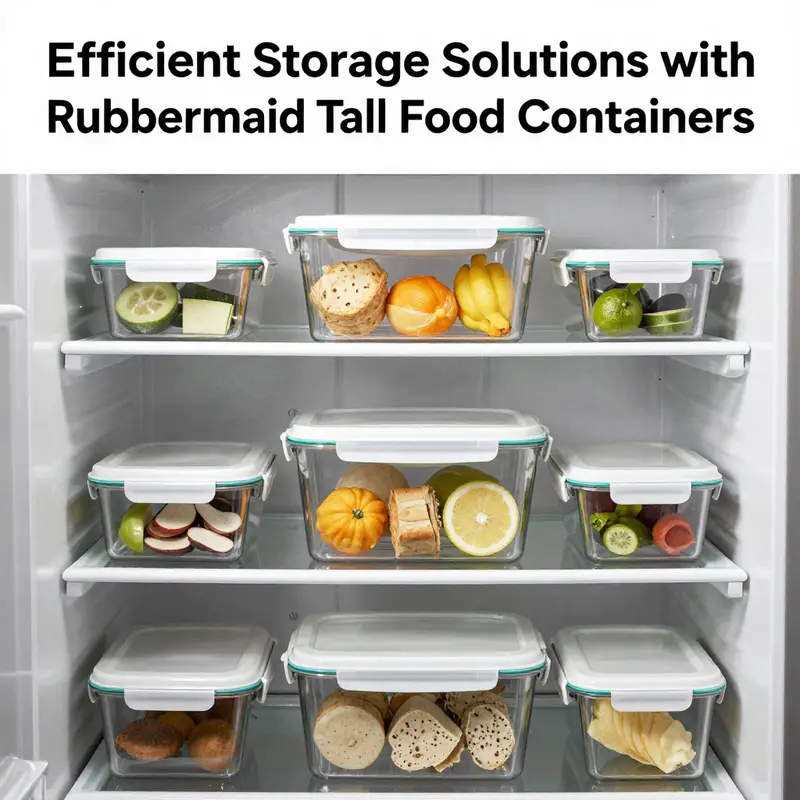
Tall storage containers bring order to busy kitchens. Their vertical posture uses shelf heights efficiently and makes contents visible at a glance. Made from BPA-free plastic, they mimic glass clarity without fragility. This visibility reduces rummaging and waste, while the tall form fosters a clean line of sight across pantry and fridge.
The design prioritizes modularity: stackable bases and lids that seal tightly, with vents for microwave reheating. Airtight seals preserve freshness and guard against cross-contamination, while vented lids enable safer reheating without removing the lid. The containers are described as safe for refrigerator, freezer, microwave, and top-rack dishwasher use, supporting a full cycle from storage to cleanup.
Care and maintenance matter: dishwasher-safe and stain-resistant materials simplify cleaning, and odor resistance helps keep the kitchen smelling fresh. When you rotate stock and label groups of items, the vertical system helps you plan meals and reduce waste.
In practice, these containers fit standard pantry and fridge shelves, nesting when not in use to save space. They support a sustainable approach to storage by reducing reliance on disposable packaging and enabling long-term reuse.
Tall, Clear, and Trusted: What Shoppers Say About BPA-Free Plastic Storage Containers for the Modern Kitchen
In the kitchen, clarity often translates to confidence. When shoppers evaluate tall, BPA-free plastic storage containers, they are not merely judging a single feature but weighing a constellation of design choices that affect everyday use. The most commonly cited strengths in consumer feedback center on durability, practicality, and a sense that these containers have been designed with real life in mind. Reviewers repeatedly describe the tall profiles as a smart response to the problem of bulky, awkward jars that dominate shelves and cramp the fridge. Tall containers offer an efficient way to store leftovers, meal-prepped components, or produce upright in a way that maximizes space without forcing a compromise on accessibility. The transparency of the plastic is frequently highlighted as a benefit, because it lets the contents speak for themselves without the need to pry lids or unwrap wrappings. Although glass remains a premium option in some households, many buyers appreciate that BPA-free plastic provides the familiar glass-like clarity without the weight, the risk of cracking if dropped, or the anxiety that comes with handling delicate vessels in a busy kitchen.
A pivotal theme in consumer chatter is safety. The BPA-free promise resonates with families who want dependable containers that align with a cautious approach to everyday food storage. The discourse around material safety—specifically the choice to avoid Bisphenol A in favor of BPA-free plastics—appeals to buyers who balance price, durability, and peace of mind. The practical upshot is a growing comfort with plastics that blend the warm convenience of microwavable reheats with the assurance of safe storage across a range of temperatures. For many, this means choosing containers that can withstand the rigors of daily use—being carried to work, buckled into car seats on commutes, or stacked in the back corner of a crowded refrigerator—without showing scratches, stains, or lingering odors. The reviews emphasize that the material choice, often a durable, impact-resistant polymer, contributes to longevity and value, reducing the frequency with which households need to replace their storage solutions.
Beyond the material story, the lid design emerges as a crucial differentiator. Reviewers consistently flag lids with secure latches as a standout feature, particularly when the containers are used for transporting meals or carrying liquids. The tight seal is routinely described as leak-resistant, a quality that matters for liquids like soups, sauces, or dressings that could otherwise seep into bags or other food items. In many feeds, consumers highlight the convenience of a gasket or a stable locking mechanism that remains reliable after repeated use. The bottom line is simple: a dependable seal translates into fewer spills and more confidence when taking leftovers to work or school. Alongside the seal, the presence of venting features—lids that allow safe vented microwaving—appears frequently in positive reviews. This design detail lets users reheat meals directly in the container without removing the lid, reducing the mess that often accompanies reheating and making mid-day meals easier to manage. The combination of an airtight seal and practical venting is repeatedly celebrated as a simple but transformative improvement over earlier generations of plastic storage.
Another recurring thread in consumer conversations is the practical size and modularity of tall storage options. The general consensus is that these containers strike a balance between capacity and footprint. The taller profiles tend to accommodate more generous portions, which is especially appealing to people who meal-prep for several days at once or who batch-cook for the entire family. The capacity is often cited in terms of cups or liters, with feedback highlighting how the right size assortment can eliminate the need to juggle multiple containers to fit a week’s worth of leftovers or pantry staples. The modular design—containers that stack neatly, with or without lids—appears as a major space-saving advantage in both refrigerators and cabinets. Shoppers repeatedly point out that a coherent set with a consistent lid system makes organization simpler and more intuitive. In homes that value a tidy, visible pantry or fridge, the tall containers act as the backbone of order, allowing a rapid scan for what’s available and what needs to be used first.
Durability, another pillar in consumer commentary, is frequently tied to real-world scenarios: transit, daily commutes, and the inevitable dings and drops that come with busy schedules. Reviewers describe these containers as very durable, able to withstand the rough handling of day-to-day life, including trips to work, school, or the gym. The wash test—many readers run containers through the dishwasher at top racks or through frequent handwashing—also yields consistently favorable impressions. The plastic’s resilience to heat and cold, combined with resistance to staining and lingering odors, reinforces a long-term value proposition. In practice, this means fewer replacements and less concern about food odors embedding in the plastic after repeated use. The odor-resistance attribute is not merely cosmetic; it translates into a cleaner sense of kitchen hygiene over time. For households that store a wide range of foods—from tomato sauces to curry-based meals—keeping odors at bay is as important as maintaining a pristine appearance, and consumer feedback routinely notes satisfaction on this front.
The feedback also sheds light on the user experience surrounding lid handling. A common observation is that lids should open easily from multiple angles, not just a single, predetermined orientation. This becomes especially meaningful in the context of a fast-paced kitchen, where a parent juggling a child or a cook rushing to finish a meal can benefit from a lid that does not require a precise alignment every time. Satisfaction rises when the lids are straightforward to remove and secure, a feature that reduces frustration and promotes consistent use. The positive sentiment around this ease of use reinforces a larger narrative about design that respects everyday rhythms—how people actually move through kitchens during meal preparation, cooking, and cleanup.
Among the most practical benefits cited by reviewers is reheating convenience. The combination of a microwave-safe container and a vented lid addresses a common pain point: the need to reheat without creating a mess or overheating delicate components. The venting mechanism is frequently described as a thoughtful addition that protects against splatters while still enabling rapid reheating. In households where leftovers are a staple, this capability translates into tangible time savings and a more pleasant reheating experience. The ability to reheat directly in the container, rather than transferring food to another dish, resonates with busy routines and reduces the number of steps between plate and palate.
Another dimension of consumer sentiment centers on the containers’ adaptability for different storage tasks. The same tall, clear vessels that hold leftovers also serve well for batch-prepping dry goods or organizing produce. The stacked arrangement, a natural outcome of the tall silhouette, makes it easier to see what is stored and to rotate items according to freshness. In pantries and refrigerators that benefit from clear labeling and easy access, the tall containers contribute to a sense of order as well as efficiency. When combined with a uniform lid system, the stacking becomes more reliable, enabling a cohesive look that helps families maintain routine, reduce waste, and plan meals with greater confidence.
Value perception—an often underappreciated driver of consumer satisfaction—ties these practical benefits to price and longevity. Reviewers commonly connect the idea of long-term value with the combination of BPA-free safety, clarity, durability, and the convenience of a dependable seal. The result is a sense of getting more than what is paid for, a feeling strengthened by the ability to repurpose containers across a wide range of uses, from storing soups and stews to packing school lunches or taking ingredients to a friend’s house. When such experiences accumulate, shoppers are more likely to recommend the product to others, forging a positive loop of trust that extends beyond a single purchase.
From a broader perspective, these consumer narratives demonstrate how a well-executed plastic storage solution can influence everyday habits. Home cooks and meal-preppers often describe a newfound ease in planning and maintaining healthy routines because they can trust that the containers will perform as promised. This reliability lowers the friction associated with meal planning and reduces the cognitive load involved in deciding what to store, how to reheat, and how to keep food fresh. In turn, the kitchen experience becomes less about wrestling with storage and more about the confidence to experiment with new recipes, to batch cook, and to keep ingredients visible and accessible. The cumulative effect is a quieter but meaningful shift in how households approach leftovers, meal prep, and pantry management.
For readers who want to explore related storage options while keeping a close eye on sustainability and design, one example in the broader ecosystem demonstrates how eco-conscious packaging can intersect with everyday practicality. Eco-friendly printed-logo paper cups with lids provides a reference point for how a retailer can blend functional performance with a design-forward, user-centered approach in another category of kitchen containers. This linked example underscores that the culinary world increasingly rewards containers and packaging that balance usability, safety, and aesthetics across different use cases. It also highlights how consumer preferences for clear visibility, reliable seals, and hassle-free maintenance echo across product lines, reinforcing the idea that thoughtful engineering in one segment often resonates with shoppers across the broader storage landscape.
Looking ahead, the consumer narrative around tall, BPA-free plastic storage solutions suggests a continued emphasis on simplicity and resilience. Buyers seem to value sets that offer a cohesive system: consistent lid designs, modular shapes, and clear, durable bodies that resist staining and odors over time. In practice, this translates to fewer misfit lids, easier stacking, and more predictable performance across the lifecycle of a kitchen system. As households continue to embrace meal prep, leftovers, and organized pantries, the appeal of tall, user-friendly containers likely endures. The conversations also point to ongoing opportunities for innovations that further reduce the risk of leaks, enhance microwave safety, and extend lasting clarity even after repeated cycles of freezing, microwaving, and dishwashing. In short, consumer feedback signals that the core values—durability, safety, practicality, and space efficiency—remain the true drivers of satisfaction in this category, with the tall format occupying a central role in how homes manage food today.
External resource: https://www.fda.gov/food/food-packaging-guidance/bpa
Sealed Fresh, On the Move: Mastering Meal Prep, Storage, and Transport with BPA-Free Tall Food Containers
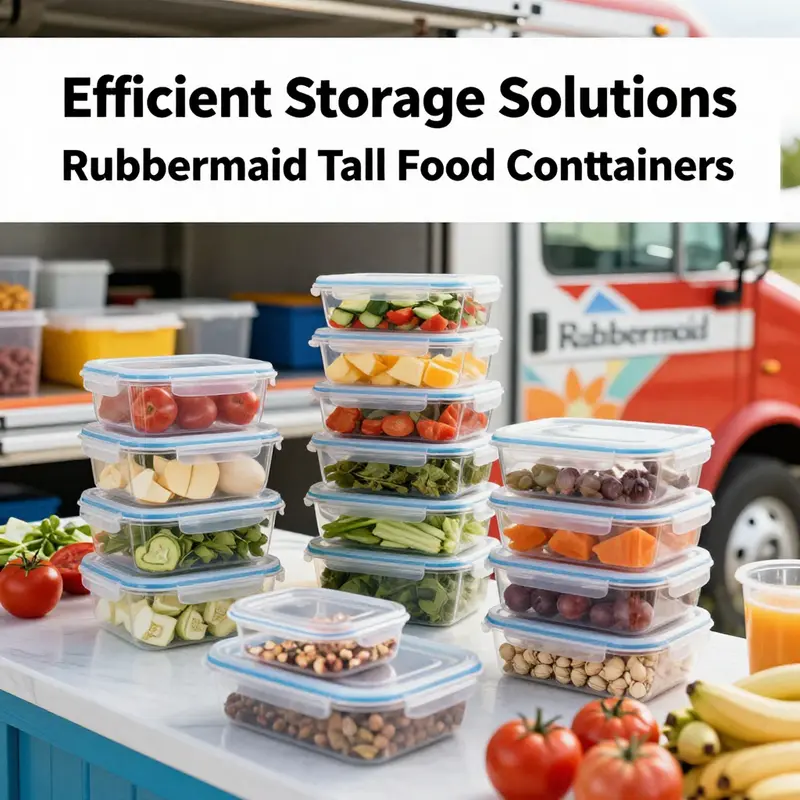
A well-designed set of tall, BPA-free plastic containers can feel like a quiet partner in a busy kitchen. They do more than hold food; they shape a daily habit of organization, portion control, and efficient meal preparation. When the containers are built from a durable material that resembles the clarity of glass but withstands the realities of a modern home—drops, spills, and the chill of the refrigerator—they stop being just storage and become a practical framework for healthy eating. The BPA-free construction matters in more ways than one. It reduces concerns about unwanted chemical exposure and aligns with a broader commitment to safer, easier food handling. The material choice also contributes to a lightweight profile that makes stacking, carrying, and reorganizing pantry space feel less like a chore and more like a simple, repeatable routine. The result is a set of tall storage options that blend robustness with everyday practicality, a combination that suits both the kitchen and the crowded world of meal planning on the go.
At the heart of these containers lies a design built for daily use. The tall silhouette isn’t just about aesthetics; it optimizes capacity while preserving a compact footprint. Each container holds enough to portion a substantial meal without crowding the refrigerator shelf. This is particularly valuable when you’re building a week’s worth of lunches or batch-cooking grains, proteins, and vegetables that can come together in a balanced plate with minimal fuss. The combination of large capacity and modular form supports a straightforward approach to meal planning: prepare once, portion wisely, and reheat with confidence. The ability to portion out grains, beans, lean proteins, and roasted vegetables into clearly defined units encourages mindful eating. When meals are already measured, color-coded by ingredient or day of the week, snacking lose its impulse-driven nature and becomes a structured part of the plan.
Clarity matters as much as capacity. The transparent walls give you a quick read on contents without pulling lids and weighing guesses. This visibility speeds up grocery checks, reduces waste, and minimizes the need to unlatch lids just to confirm what’s inside. It’s a small but meaningful advantage that compounds as you arrange containers in the fridge, freezer, or pantry. Stacking becomes a straightforward exercise in order: several tall containers line up neatly, their lids forming an even, predictable grid above them. The interlocking, secure lids are not just a feature; they are a promise of reliability. The latches lock into place with a confident snap, producing an airtight seal that helps lock in freshness and keeps odors from mingling with other foods. A well-sealed lid is especially important when you’re transporting meals or storing potent ingredients like garlic, onions, or curry spices. The seal helps maintain the integrity of flavors and textures, so reheated dishes still feel accessible and appetizing rather than flat or overrun with the smell of the fridge.
A distinctive advantage of this type of container is the built-in vent under the latch system. This vent makes microwave reheating more practical because you can heat without removing the lid. The idea is simple: heat, steam escapes gradually, and splatters stay contained by the lid’s edge and seal. This feature matters when you’re juggling busy mornings or late work nights, trying to reheat a homemade lunch while managing a dozen other tasks. It’s a small detail that communicates thoughtful engineering—the kinds of details that matter when you’re aiming for consistency in your eating routine. The ability to reheat directly in the container without transferring food to another dish reduces washing, speeds up the process, and keeps your rhythm intact. For anyone who has burned out on the ritual of constant dishwashing between reheats, that vented lid is a practical ally that supports a smoother day.
Dishwashing and care are also important components of the overall experience. A key advantage of these BPA-free tall containers is their compatibility with common cleaning routines. They are generally top-rack dishwasher safe, which means you can skip meticulous handwashing after every use. That compatibility with standard dishwashing cycles adds a layer of convenience that pairs nicely with the containers’ other strengths: they’re designed to withstand the freezer and the microwave alike, resisting stains and odors that can cling to other plastics. When you’re assembling a batch of meals for the week, the ability to wash a dozen containers in one wash cycle matters. It is not merely about cleanliness; it is about preserving the precision of your meal-prep system. Odor and stain resistance help keep the containers looking fresh, which in turn reinforces consistent usage and reduces the temptation to replace worn or discolored pieces. The practical outcome is a set of containers that stays visually reassuring and functionally reliable through repeated cycles of use.
But the value of tall, BPA-free storage extends beyond the kitchen’s four walls. The same features that make these containers ideal for leftovers and batch cooking translate neatly into transport and travel. When you need to bring meals to work, school, or a weekend road trip, the secure seal and solid lid construction minimize the risk of leaks and spills. The interlocking lids lock into place with a confidence that helps prevent accidental openings during transit, a common concern when containers are tossed into bags and backpacks. The large but manageable capacity supports portioned meals that can fuel a busy day without requiring multiple containers for different food groups. This is where planning and practicality meet: you line up a week’s worth of lunches, each container filled with a balanced mix of grains, lean protein, and vegetables, knowing it will travel well and reheat cleanly.
Beyond portion control, the containers shine when you’re storing dry goods or bulk ingredients. They provide a clean, space-efficient home for cereals, rice, pasta, or legumes, helping to keep pantry items visible and accessible. The transparent walls make inventory trivial and reduce the likelihood of forgotten ingredients pushed to the back of a shelf. In a pantry that stretches to accommodate a growing family’s needs, the ability to stack these tall containers is a real space saver. The snug lids and airtight seals protect against moisture and maintain the quality of dry goods, which is especially important for grains and legumes that benefit from minimal exposure to air. This kind of protection is part of a broader strategy to minimize waste, a practical thought that extends from meal prepping to grocery budgeting.
Lid design and seal performance also carry over into the everyday drama of a busy kitchen. When time is tight, you don’t want to second-guess whether a container will stay closed or whether a lid will pop open in the fridge’s door. The secure latches reduce the chance of accidental openings during fridge zips and door swings, preserving the integrity of meals and preventing messy mid-refrigerator escapes. Pair that reliability with a lid that is easy to snap on, and you have a setup that respects the user’s time and energy. The trust that comes with a dependable seal allows you to plan more ambitious meals without worrying about their safety en route to your next stop. In practical terms, you can batch-cook hearty dishes such as stews, curries, or roasted vegetables and know that the flavors and textures will be preserved when you’re ready to eat or share.
From the perspective of everyday life, these tall containers offer a compelling blend of durability, ease, and versatility. They are designed to withstand the refrigerator’s cold, the freezer’s chill, and the dishwasher’s wash cycle, yet they remain approachable enough for casual, everyday use. The clear walls promise a quick audit of what’s inside, which helps keep the kitchen organized and reduces the cognitive load associated with meal planning. When you’re managing a household with varied schedules, the time saved on searching for ingredients and the peace of mind that comes with a consistent, leak-free solution add up over weeks and months. It’s not just about storing food; it’s about maintaining a system that supports healthier choices and a more predictable routine. A well-chosen storage set can be a quiet engine of meal prepping, turning an ambitious plan into a reliable, repeatable practice.
The practical virtues extend to the design’s adaptability. The tall shape is not merely a vertical statement; it interacts with different storage environments in meaningful ways. In a crowded refrigerator, they fit alongside glass jars, bottles, and other containers without dominating the door shelves. In a freezer, the sturdy walls preserve the integrity of soups, stews, and stock-based meals as they shrink and expand with temperature changes. In a pantry, the uniform height and consistent lid style create a predictable, easy-to-navigate landscape. This level of consistency matters when you’re stocking up on bulk ingredients or prepping for a week of meals that must feel cohesive when plated. The result is a system that evolves with your cooking and shopping patterns, rather than one that demands constant reorganization.
To connect these practical capabilities with the broader aim of safe, convenient food storage, consider how the BPA-free material choices align with everyday concerns about health and safety. The use of food-grade plastic designed to resist staining and odors helps keep flavors genuine and ingredients uncontaminated by lingering plastics. This is especially important when you’re storing flavorful, strongly scented foods like garlic or onion-heavy dishes, or when you’re preserving foods like sauces and curried blends where you want the taste to shine after reheating. The clarity of the plastic further supports mindful usage by letting you see at a glance whether leftovers have been kept long enough to warrant a reheating decision, allowing you to minimize waste through responsible consumption.
In practice, a well-planned set of tall containers becomes an everyday toolkit for healthy eating. They enable you to batch-cook on weekends and carry hearty lunches when you’re away from home. They support a structured approach to grocery shopping and meal scheduling, where each container’s contents are predictable, visible, and easy to reheat. They encourage a disciplined yet flexible routine: you pre-measure portions, you label and stack, you move through the week with the confidence that your meals will stay fresh, and you arrive at each mealtime with food that tastes as intended. And because the containers are designed to be durable and easy to clean, they invite a long-term habit rather than a short-lived convenience. This is a subtle but powerful distinction—the kind of practical reliability that quietly underpins healthier eating patterns and better pantry management.
Finally, there is a sense in which dictating food storage becomes an act of care for yourself and others. A well-organized kitchen, with containers that seal tightly and keep food fresh, reduces stress around meal times. It simplifies dinner prep after a long day. It also makes packing lunches for children or feeding a partner easier, since you can prepare a week’s worth of meals in one deliberate session and reheat them in the same vessel, without juggling multiple dishes or transfer steps. The tall containers, with their clear walls and dependable lids, become a reliable partner in daily life. They encourage you to trust your routine, to rely on a simple, repeatable method for keeping food safe, delicious, and accessible when you need it most. In that sense, these BPA-free, high-clarity containers are more than containers; they are facilitators of healthier choices, of time saved, and of a kitchen that supports a busy life without sacrificing quality or flavor.
For readers curious about how this approach translates into broader storage solutions and materials, consider exploring related options that pair with the same principles of durability, safety, and practicality. A related category of entry-level, eco-conscious container options—though constructed from different materials—often emphasizes similar priorities: airtight seals, microwave safety, reusability, and ease of cleaning. The overarching message stays consistent: a storage system built around watertight lids, transparent walls, and dishwasher-friendly maintenance can streamline cooking, reduce waste, and promote more consistent meal routines. As you weigh the benefits of tall, BPA-free options for meal prep and transport, you may also encounter complementary designs—such as compact, stackable units and bulk-storage solutions—that reinforce the same organized approach in other areas of the kitchen.
To help you connect with related possibilities and see how these concepts translate beyond one brand or one kitchen, you can explore a broader family of containers that emphasize durability, safety, and practical design. A relevant resource in the broader ecosystem discusses durable, eco-conscious food packaging that emphasizes safe materials and practical usability in everyday settings. For a broader view of container design and materials, see this external resource: https://www.rubbermaid.com/en-us/products/food-storage/rubbermaid-freshworks-food-storage-containers.html. This reference highlights how thoughtful engineering translates into reliable performance across the daily lifecycle of stored meals, from batch cooking to on-the-go transportation.
If you’re curious to see how alternative materials handle similar challenges, it can be useful to look at options designed to be compatible with a range of foods and uses, from breakfast oats to weeknight casseroles. In practice, the choice often comes down to how you balance factors like weight, visibility, cleanup, and the ability to withstand freezing or microwaving without compromising texture. The tall, BPA-free option remains appealing precisely because it marries the best aspects of a clean, modern look with a pragmatic, versatile performance. The result is a storage system that not only protects food but also respects the realities of a busy life—where meals are prepped, shared, heated, and enjoyed in a rhythm that rewards simple, reliable design.
In closing, the practical uses of tall, BPA-free storage go beyond mere containment. They shape a workflow around meal prep and food transport that emphasizes consistency, health, and efficiency. They provide a durable, clear canvas for portion control and meal planning, while their leak-proof, vented lids offer peace of mind when meals travel to work, school, or a weekend away. They integrate seamlessly into a kitchen where space is precious, where leftovers are valued, and where the goal is to eat well with less effort. The tall form factor, the airtight seal, the microwave-friendly vent, and the dishwasher-safe ease together form a cohesive system that supports better eating habits without adding complexity. In a world that often demands multitasking, that is a meaningful advantage worth choosing when you set up your next batch of meals.
Internal link reference for related storage options: kraft-paper-octagonal-bowl-pet-lid-waterproof-eco-friendly-disposable-customizable-snack-pet-food-salad-containers-1l
External resource for broader design context: https://www.rubbermaid.com/en-us/products/food-storage/rubbermaid-freshworks-food-storage-containers.html
Final thoughts
Rubbermaid Tall Food Storage Containers represent an invaluable asset for food service professionals including bubble tea shops, restaurants, and catering organizations. Their BPA-free construction prioritizes safety, while features like stackability and airtight seals enhance efficiency and convenience. By incorporating these containers into your operational practices, you can streamline food storage, promote freshness, and foster an organized workspace. Investing in durable, reliable storage solutions not only elevates your service but also enhances your brand’s reputation for quality and care.