
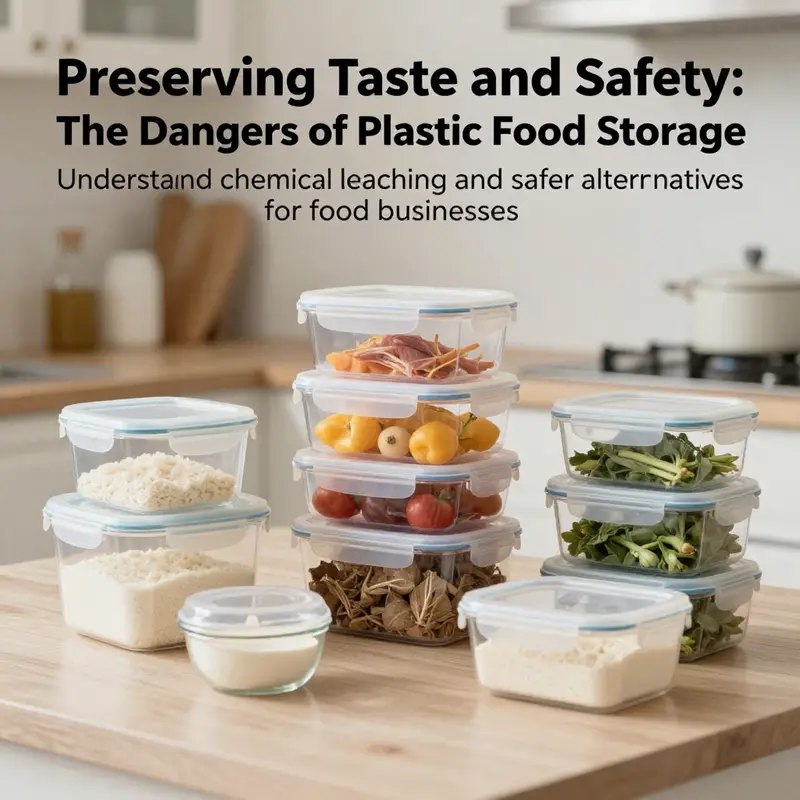
The convenience of plastic containers for food storage is undeniable, especially for businesses like bubble tea shops, restaurants, and food trucks that require efficient solutions. However, as the understanding of food safety evolves, so does the scrutiny of materials used in food service. This article delves into the risks associated with plastic food storage containers, primarily focusing on chemical leaching and the health implications of prolonged use. Additionally, we’ll explore optimal alternatives that enhance food safety without compromising convenience, setting the stage for a healthier approach to food service. Each chapter provides insights and actionable strategies for food professionals to ensure client satisfaction and safety.
The Silent Migration: Understanding Chemical Leaching in Plastic Food Storage and Safer Paths Forward
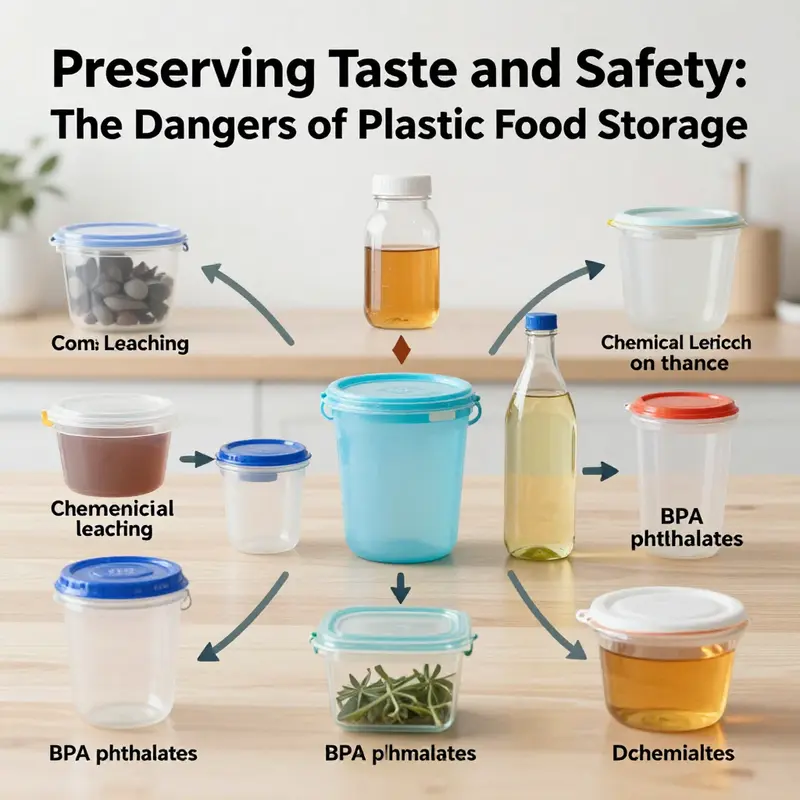
Every kitchen carries a quiet, invisible drama. Food sits in a container, and a slow exchange begins—the contents mingle with the container’s own chemistry. In many households, plastic containers are the everyday stage for this exchange. The convenience of stacking, sealing, and refrigerating is undeniable, yet the science behind what happens at the boundary where plastic meets food tells a more complicated story. The chapter that follows does not wage war on plastic itself; it seeks to describe the leaching process in plain terms, explain which factors push chemicals from containers into food, and outline practical paths that balance everyday practicality with long-term health and environmental considerations. The central question is simple but consequential: when and how much do plastic containers satisfy our storage needs without gifting our meals with unintended chemical guests? The evidence, drawn from controlled studies and real-world observations, suggests that the answer is nuanced and context-dependent. Chemical leaching is not a single, one-size-fits-all event. It is a composite of substances, conditions, and time scales, with varying implications for different people and different foods. To unravel this, we begin with what tends to migrate from plastics and why this migration occurs at all. The material basis of plastics is a blend of polymers and additives. The additives included to improve durability, flexibility, color, or shelf life do not always stay put. Some of them are small, oily molecules designed to slip through the polymer matrix under certain conditions. Phthalates, once common as plasticizers, have raised alarms for years because they can interfere with hormonal signaling in organisms. Bisphenols, especially BPA, and its close relatives BPS and BPF, have drawn particular attention due to their capacity to act as endocrine disruptors. Endocrine disruptors mimic or block hormones, potentially reshaping development, reproduction, and metabolism. Even though the term is technical, its implications touch everyday life: the estrogen-like activity of some bisphenols has been linked to a variety of health outcomes, particularly with long-term, repeated exposure. In many households, the presence of such chemicals is not a dramatic exposure event but a gradual accumulation over months and years. The complexity multiplies when one notes that products marketed as BPA-free can still pose concerns. Substitutes like BPS or BPF can exhibit similar biological effects, at least in certain experimental settings. This is not an argument for panic, but a reminder that “safety labels” do not always capture the full landscape of risk. The 2019 study in the Journal of the Endocrine Society offers a stark reminder: under real-world conditions—microwave heating, repeated use, and typical household storage—many plastic containers released endocrine-disrupting chemicals, including those marketed as safe or BPA-free. The takeaway is not that plastics are categorically dangerous; rather, it is that the safety of plastics hinges on context—temperature, duration, the acidity or fat content of the stored food, and the integrity of the container’s surface. Heat is one of the strongest accelerants of chemical migration. When a plastic container is used to hold hot food or is placed in a microwave, the temperature gradient across the polymer matrix shifts. Molecules that were immobilized can gain mobility. The increased molecular motion facilitates diffusion of additives toward the surface and into the food. The kind of food matters, too. Acidic foods—such as tomato sauce, citrus juices, or pickled items—tend to encourage more leaching than neutral or mildly alkaline foods. Fats can play a similar role, with oil-rich foods offering a medium through which lipophilic additives migrate more readily. The duration of contact compounds that long-established in a container matters to the amount of leaching. A few minutes in a microwave might yield modest migration, but days or weeks of storage can produce a cumulative impact. The main science-driven insight here is simple: leaching is a function of material properties, the chemical nature of the food, and exposure conditions. When these converge in the kitchen, the resulting migration can be nontrivial. The general public often encounters leaching as a concern in everyday life because the signs of container wear or changes in food are easy to notice but easy to misinterpret. The indicators of compromised plastic integrity paint a practical picture. Cloudy or discolored containers, visible scratches, deep grooves, warps, or a lid that no longer fits tightly are not cosmetic flaws. They signal that the polymer network has been physically stressed. This degradation affects safety on two fronts. First, micro-damage can provide micro-niches where bacteria can colonize, raising contamination risk. Second, worn surfaces can release tiny plastic particles into food, with uncertain health implications. Odor retention is another practical red flag. If a container carries a persistent aftertaste or smell, it can reflect ongoing interactions at the polymer-food interface. The hesitation to use such containers for fresh storage is not merely about taste; it is about the underlying likelihood of continued chemical movement. The regulatory space provides important context for these concerns. The U.S. Food and Drug Administration has long maintained that approved plastics are safe for their intended uses. The logic is anchored in standardized testing designed to simulate typical conditions. Yet critics of this approach point to gaps in how testing handles long-term exposure, low-dose exposures, and cumulative effects from repeated use. The discrepancy invites a cautious approach: while plastic remains a widely used material, its safety is conditional, not absolute. The practical implications of this nuance are clear. When a household considers food storage choices, it makes sense to prefer non-plastic options for long-term storage or for foods that are particularly prone to leaching. Non-plastic materials such as glass, stainless steel, and ceramic resist the migration of many additives more effectively than plastics. They may require more careful handling—glass can break, stainless steel can be costly, and some ceramics can chip—but the upside is a lower risk of chemical transfer and a longer, more durable shelf life for certain foods. It is also worth noting that even within plastics, some types are considered to be safer than others. Types #1 (PET), #2 (HDPE), and #5 (PP) plastics are often recommended for consumer use because their chemical composition and barrier properties tend to reduce leaching under typical conditions. However, no plastic is immune to degradation with heat or after repeated cycles of washing, microwaving, or scrubbing with abrasive cleaners. The broader lesson here is about prudent use rather than blanket avoidance. If plastic use is unavoidable, certain best practices can minimize risk: do not microwave plastics unless explicitly labeled microwave-safe; avoid heating foods high in acidity or fat in plastic containers; do not store hot foods in plastic for extended periods; replace containers when they show wear or odor retention; and reduce the duration of contact between the food and the plastic surface. A practical orientation toward safer storage borrows from both science and daily life. The goal is not to demonize plastics but to ensure that storage choices align with how risk actually behaves in practice. This requires a nuanced calculus, balancing the everyday benefits of plastics against long-term health considerations and the environmental footprint of the materials we rely on. In this light, a broad set of safer storage trajectories emerges. Non-plastic materials—glass, stainless steel, and ceramic—offer durable, inert storage options that minimize chemical migration. Glass is inert, readily cleaned, and compatible with a wide range of foods. Stainless steel is sturdy, often reusable for years, and resistant to staining or odor absorption, though its suitability for acidic foods depends on container design. Ceramic can be excellent, especially for room-temperature storage or serving, but must be vetted for glaze safety and durability. Among plastics, if one must choose, selecting containers made from PET, HDPE, or PP with careful usage remains preferable to older, more permeable variants. Importantly, though, the label “BPA-free” should not be treated as an unassailable guarantee of safety. Substitutes may carry their own risks, and the science is still evolving. A broader cultural and environmental shift supports safer storage beyond individual choices. The drive toward safer food storage dovetails with a growing awareness of the environmental costs of single-use plastics. Individuals can embrace reusable containers, reduce overall plastic consumption, and favor materials that are durable and repairable. This is not merely a personal health choice; it is a public health and environmental consideration that aligns with a preventive approach to well-being across generations. The inside story of these decisions is also a reminder of trade-offs that modern households negotiate every day. Convenience often comes at a hidden cost, especially when it involves the subtle chemistry at the interface of plastic and food. The long arc of health outcomes invites a preventive posture: trim the risk by minimizing exposure, especially for vulnerable populations such as young children, pregnant people, and people with endocrine-sensitive conditions. As with many risk-management challenges, context matters. Short-term storage of non-acidic meals in a clean, undamaged plastic container is not the same as long-term storage of hot, fatty foods in a faded, scratched container. The key is to recognize that leaching is not a single hazard but a pattern of potential exposures that accumulate over time. This recognition helps translate science into everyday action. People are guided not merely by fear but by informed choice. The study cited earlier helps anchor this framework in empirical reality. In a real-world test of common containers, researchers found that nearly all tested plastics released chemicals with endocrine-disrupting properties when subjected to typical household conditions, including microwave heating. The finding underscores a crucial point: public assurance about safety is not the same as verifiable safety in every usage scenario. This has tangible implications for consumer behavior. It encourages a conservative approach to plastic use, especially for foods that are acidic, fatty, or heated. It also invites manufacturers to pursue safer formulations and better durability. It invites regulators to close gaps in testing and to consider the cumulative exposure that households experience over years of use. It invites scientists to refine their methods, to track which additives migrate under which conditions, and to map how changing food patterns influence leaching. The practical implications for readers are straightforward: when you plan meals, consider how you store them. If the meal will be reheated or stored for long periods, it is prudent to use glass or stainless steel. For quick, cold storage of non-acidic foods, high-quality sealed plastic containers may suffice, but you should inspect them regularly for cloudiness or odors and replace them proactively. If you do need to reuse plastic containers, be mindful of the container’s age and condition. Avoid reusing containers beyond their intended purpose and avoid repeated cleaning that can abrade the surface. When possible, transition toward non-plastic storage options and keep plastics for the shortest practical time. The idea is not to create a new rulebook but to cultivate habits that reduce risk without sacrificing everyday practicality. The broader implication of this knowledge is a pathway toward healthier homes. As one environment health researcher has pointed out, switching to non-plastic storage options can be one of the simplest yet most impactful changes households can make for both personal health and planetary well-being. The shift is not a drastic, single-event change but a gradual transition that preserves convenience while reducing risk. In this spirit, information matters as much as option. To help readers apply these insights practically, consider how to approach a kitchen overhaul. First, audit the containers in daily use. Set aside anything marred by cloudiness, scratches, warping, or odors, and replace them with durable, non-plastic alternatives when feasible. Second, segment the pantry and fridge by storage material. Reserve glass, stainless steel, and ceramic for hot foods and for long-term storage, while using alternative plastics only for short-term, low-risk tasks. Third, when selecting any plastic container for occasional use, choose products with explicit microwave-safe labeling and restrict their use to non-heated foods whenever possible. Fourth, keep an eye on labeling and be wary of the “BPA-free” badge; investigate the presence of substitutes such as BPS or BPF and weigh the evidence about their safety in your own family’s context. The narrative of leaching, however unsettling it may sound in its technical terms, is not an indictment of everyday life. Rather, it is a guide to align daily habits with the best available science. It invites readers to adopt a flexible, informed approach—one that respects the practical benefits of containers while remaining vigilant about health risks. In the end, the path forward blends science, practicality, and responsibility. It invites a deliberate balance between convenience and caution, between the quick solution and the longer-term goal of reducing chemical exposure. The most meaningful shift is a daily commitment to safer storage choices, a willingness to replace worn containers, and a readiness to explore non-plastic options that preserve flavor, nutrition, and safety over time. The landscape is not binary; it is a spectrum of risk and resilience, where small, consistent changes accumulate into healthier meals and a healthier environment. The broader message is clear: safer storage is attainable through mindful packaging decisions, better materials, and a culture of regular inspection. As a community, families can adopt practices that minimize unnecessary chemical exchange and maximize the integrity of what we eat. To explore practical options beyond plastics while honoring the research that informs these choices, a practical resource on safer packaging materials provides a helpful entry point. For readers seeking non-plastic storage options that minimize direct plastic contact, consider a catalog of non-plastic packaging solutions and read about non-plastic storage pathways here: senang05-food-grade-disposable-kraft-paper-12oz-porridge-bucket-portable-microwavable-paper-soup-cup-with-lids. This link anchors a broader conversation about materials that are designed for food safety without relying on plastics that may migrate chemicals under certain conditions. It is a practical step for households seeking to reduce plastic exposure while staying aligned with day-to-day needs. The journey toward safer food storage is ongoing, informed by evolving science, and guided by everyday choices that accumulate over time. Readers can translate this science into habits that protect health without sacrificing convenience. The promise of practical safety is not a distant ideal but a reachable standard for kitchens that value both nourishment and well-being. External resources complement this discussion, offering deeper dives into the mechanisms, regulatory perspectives, and evolving alternatives to plastic-based storage. For those who want to explore beyond the chapter’s scope, a peer-reviewed resource from environmental health research provides in-depth analyses of chemical leaching from plastic food containers under real-world conditions. This external link offers a more technical view of the interplay between microwaving, storage duration, and chemical migration, enriching the reader’s understanding of the topic: https://www.ncbi.nlm.nih.gov/pmc/articles/PMC6487735/.
Rethinking the Pantry: The Hidden Health Costs of Long-Term Plastic Food Storage
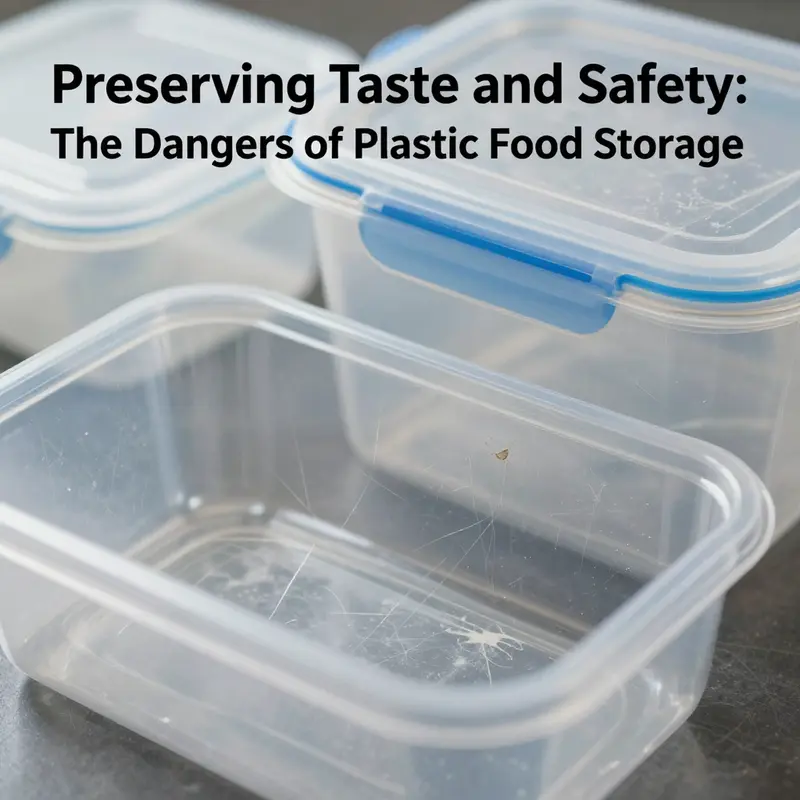
Everyday kitchens offer plastic storage as a quiet convenience, but the health implications of long term plastic contact with food deserve careful thought. The safety landscape is not about a single toxin but about a pattern of exposure that unfolds over years of routine use.
Chemical migration is a central concern. Plastics contain additives that give them their familiar properties, and these substances can migrate into foods under real life conditions. BPA and various phthalates have drawn attention for their potential to influence hormone signaling. The extent of migration depends on the polymer type, the food involved, and the temperature to which the container is exposed. fatty or acidic foods and hot contents are more likely to push these substances into the meal. Heat amplifies movement, so heating or microwaving in plastic can markedly raise leaching rates. The overall risk is about cumulative exposure rather than a single event.
As the conversation has evolved, substitutes have appeared for BPA. Many products marketed as BPA free use other compounds such as BPS or BPF. These substitutes can behave in the human body in ways similar to BPA, including potentially disrupting hormonal balance. A label claiming BPA free is not a guarantee of absence of risk, so consumers face a nuanced task: try to identify materials with a demonstrably lower risk profile or choose non plastic options when long term storage or heating is involved.
Beyond chemical migration, wear and tear of plastic containers raises physical concerns. Repeated washing, frequent heating, and everyday use can lead to clouding, scratches, or cracks. These defects create microenvironments where microbes can hide and where small fragments may shed into food. Microplastics are a growing area of study with potential implications for inflammation and organ health, though researchers are still learning how small particles affect the body over time. The story here is not a sudden crisis but a gradual shift in the vessel that holds meals.
Heat itself intensifies risk. When hot foods are placed in or heated in plastic, the thermodynamics of migration shift in favor of faster transfer of substances. The practice of microwaving or pouring hot liquids into plastic containers creates a dynamic environment that makes leaching more likely. The practical response is straightforward: minimize heating in plastic, and if reheating is necessary, transfer food to glass, ceramic, or stainless steel containers before heating.
Practical choices matter every day. Not all plastics carry the same risk, so knowing the material and its heat tolerance helps. Inspect containers for clouding, scratches, or lingering odors and retire those that show wear. Avoid storing hot or fatty foods in plastic for extended periods, and favor non plastic options for long term storage when possible. When plastic must be used, select food grade containers and use them for short term storage at cool or room temperatures. Keeping a mixed set of glass or stainless steel options for daily use is a simple habit that reduces cumulative exposure over time.
The broader context matters as well. A culture of disposable plastics aligns with convenience but leaves a larger environmental footprint and a broader web of exposure through ecosystems. Reducing reliance on single use plastics and choosing durable, easy to clean containers can support both personal health and environmental goals. Safer storage is not about perfection but about thoughtful, incremental changes that fit real life and budget while still protecting health and the planet. For further reading on plastics and health, consult credible resources such as the NIEHS plastics safety pages.
Beyond Plastic: Reimagining Safe, Enduring Food Storage

Storing food is as much about protecting health as it is about preserving flavor and reducing waste. The momentum behind moving away from plastic containers grows from a simple observation: plastics can release chemicals into food, especially when heat, acidity, or fats turn the contact into a one-way transfer. Over time, microabrasions accumulate, and a container that once seemed sturdy starts to look cloudy, stained, or scratched. The risk is not only chemical leaching but also the physical degradation that invites microbes and odors to settle in. In navigating these realities, households are seeking alternatives that reduce exposure to questionable additives, resist wear from everyday use, and align with a broader aim of sustainability. The chapter that follows does not pretend to offer a single silver bullet. Rather, it presents a cohesive vision of practical, safer options that work together to minimize risk, extend shelf life, and support a healthier home environment. The core idea is to shift from reliance on a single plastic-based system to a diversified approach that uses materials with favorable chemical and physical properties while remaining affordable and convenient for daily life.
Glass is the top choice in many health-minded kitchens because it is inert and non-reactive. When you store acidic foods like tomato sauce, lemon juice, or vinegar-based dressings in glass, the likelihood of chemical transfer into the food is negligible compared with plastic. The same holds for oils and hot foods: glass can be heated, cooled, frozen, and microwaved (in appropriate containers with safe lids) without the same risk of material migration. Glass does not absorb flavors or odors, which means your sauces and leftovers retain their true taste rather than picking up traces of prior contents. In addition, glass continues to perform well after repeated washings in the dishwasher, and it does not degrade with time in the same way that plastics do under heat or abrasion. These properties contribute to a sense of long-term reliability that many households crave when planning weekly meals and batch cooking. From a health perspective, the move to glass aligns with preventive health goals by reducing chronic, low-level exposure to endocrine-disrupting compounds commonly associated with certain plastics. This alignment makes glass a natural anchor for a safer storage strategy, particularly for foods that are heated, stored for extended periods, or given to children with developing systems in mind.
Yet no material is perfect, and glass must be handled with care. Its strength lies in inertness, not in resistance to impact. A dropped jar can shatter, and a loose lid can compromise the seal and invite moisture or odors from the fridge or freezer. To mitigate these risks, many glass containers are designed with robust, tight-fitting lids—preferably with gasket seals that prevent leaks and protect flavor. The practical implication is that households should choose glass sets that include a well-fitting lid system and consider storage racks or organizers that minimize the chance of accidents. Glass also tends to be heavier than plastic, which is a factor for households that transport meals to work or school. In such cases, careful handling and a lightweight, tempered design can ease daily use while preserving the safety profile that glass offers.
For those who prioritize flexibility and portability, silicone storage bags and trays present a compelling bridge between glass and plastic. Silicone is durable, pliable, and capable of withstanding a wide temperature range. When heated, silicone does not release the same kinds of chemicals that some plastics may, and it can be used in the oven, microwave, and freezer. This versatility makes silicone an excellent option for a range of applications—from storing small portions of sauces to freezing individual servings of soup for later. Silicone bags are particularly appealing for saving space in the freezer and in backpacks or bags for on-the-go meals. The material’s resilience means fewer replacements over time, which translates into both cost savings and reduced environmental impact when used thoughtfully. Importantly, the quality of silicone matters. Cheaper grades may contain fillers or dyes that could stain or degrade over time. High-quality silicone that is food-grade and free of fillers performs well in dishwasher cycles and remains resilient after repeated cycles. When you opt for silicone, you should also pay attention to the seams and closures. Bags that seal effectively prevent leaks and keep odors contained, which is essential for minimizing cross-contamination in crowded refrigerators.
A separate benefit of silicone lies in its non-porous surface, which makes it easier to clean and less likely to harbor bacteria compared with some porous plastics. Nonetheless, maintenance is still essential. Rinse thoroughly, wash with mild soap, and allow air drying in a clean area. Avoid exposing silicone to sharp heat shocks or abrasive scouring tools that could dull its surface over time. In the long run, silicone tends to hold up very well, but like any reusable option, it requires attention to wear and tear. If a bag or tray shows signs of cracking, discoloration, or a persistent odor, it’s wise to retire it from service to avoid compromising food safety. Silicone can also be used to create flexible, space-saving solutions for awkwardly shaped leftovers or sauces that don’t fit neatly into rigid containers. This adaptability is particularly helpful for households that cook in bulk and portion out meals for quick reheating later in the week.
Stainless steel and other metal containers offer another durable, dependable path for long-term storage, especially for dry goods like flour, rice, sugar, and cereals. Metal is an excellent barrier against light and air, which helps preserve the fragrance and freshness of pantry staples. Its high durability resists dents and scratches, so pantry systems can remain orderly for longer periods. Metals do not warp in the refrigerator or freezer, and many metal containers are designed with airtight lids that further extend shelf life by limiting exposure to air and moisture. The practical advantage of metal for dry goods also includes reduced absorption of flavors or odors, so items stored for extended periods stay closer to their original quality. However, metal is not always the best choice for liquids or foods with strong acidity, unless the container features an appropriate lining or coating designed to resist corrosion. For acidic or highly reactive ingredients, such as citrus-based sauces or tomato products, it’s important to confirm that the metal container is specifically designed for such contents. In everyday kitchen use, metal containers can be paired with glass or silicone lids to maximize safety and minimize risk of leaks.
Beeswax wraps provide a complementary, low-waste option for covering bowls, wrapping sandwiches, or protecting produce when a rigid container is not necessary. These wraps are made from cotton fabric infused with beeswax and other natural oils, creating a flexible, reusable barrier that is both biodegradable and antimicrobial to a degree. They are especially valuable for short-term storage, cold environments, and items that do not require a tight seal. Beeswax wraps shine when used to cover bowls or to wrap items such as celery, lemons, or cheese. They help reduce reliance on single-use plastic wrap for many day-to-day tasks. But wraps have their limits. They are not suitable for raw meat or for hot foods, since heat can soften the wax and compromise the wrap’s integrity. They are best used for room-temperature storage or in the refrigerator for shorter intervals. They also require regular reconditioning with a light reapplication of beeswax or other natural waxes to maintain their protective properties. Despite these limitations, they act as an elegant, environmentally friendly bridge between the more rigid storage options and the flexible needs of daily meal planning.
The shift toward these alternatives is not just about selecting a single material. It is about building a practical storage ecosystem in your kitchen. A glass container can house the main components of a meal, a silicone bag can hold sauces or snacks, metal tins can organize pantry staples, and beeswax wraps can cover bowls when you want quick access without creating waste. This layered approach reduces the number of plastic items you rely on while preserving the convenience that households expect. It also aligns with broader environmental goals by enabling longer lifespans for each item, which translates into fewer replacements and less waste. From a health perspective, each material has unique advantages. Glass minimizes chemical exposure, silicone minimizes heat-related leaching when of good quality, metal preserves dried goods from light and air, and beeswax wraps reduce the need for disposable wraps. Together, they form a practical repertoire that accommodates different foods, temperatures, and usage patterns.
In the conversations around safe storage, a common concern is the still-pervasive belief that “BPA-free” equals complete safety. The reality is more nuanced. Substitutes such as BPS and BPF can behave similarly to BPA in the human body, and research suggests they may carry comparable health risks over time. This insight reshapes how people evaluate storage decisions. Rather than trusting a label, it makes sense to consider the food’s acidity, temperature, and fat content, which influence the likelihood of chemical migration. It also encourages preference for materials with thresholds that minimize contact-based transfer, especially for hot foods or long-term storage. The practical takeaway is to favor inherently inert materials for heating or long-term storage and to treat any plastic item with skepticism when it has exposed seams, deep scratches, or signs of clouding after repeated use. By focusing on glass, silicone, metal, and natural wraps, households can reduce exposure risks while maintaining everyday convenience.
For readers seeking a holistic plan, the pathway is straightforward. Start by replacing the most frequently used plastic containers with glass for hot or acidic foods and for meals intended to be reheated. Introduce silicone bags or trays for bulk portions, sauces, and flexible storage needs. Use metal containers for dry goods and pantry organization, with transparent or clearly labeled lids to preserve visibility and freshness. Introduce beeswax wraps for short-term covers, snack wraps, and non-liquid items where a rigid container is unnecessary. Consider these steps as a gradual transition rather than a one-time overhaul. The key is to maintain a balance between ease and safety, recognizing that every home operates within its own time frame and budget. A measured, incremental approach increases the likelihood of long-term adherence and meaningful reduction in reliance on plastic.
As part of a broader narrative on healthier storage habits, it is important to acknowledge the social and ecological dimensions. Safer storage choices reduce the release of microplastics into the environment when containers are discarded or degraded. A diversified material strategy helps households align with sustainable practices by extending the life of containers and minimizing waste. The environmental dividend is not merely the absence of plastic in the kitchen but a broader reduction in the demand for new plastics, which in turn limits the energy and resources required for production, transportation, and waste management. In practical terms, this means fewer trips to the store for replacements, less clutter in the kitchen, and an overall sense of control over how one’s food system impacts the planet. The moral dimension becomes tangible when families discuss the kinds of containers they want to pass down to future generations—containers that are safer, durable, and easier to repair than single-use plastics.
For readers who are curious about specific options that support a shift away from rigid plastic, there is a spectrum of paper-based and bagasse-based solutions that deserve attention. These options provide sturdy, lightweight alternatives for carrying, storing, and serving foods without the same risk of chemical exposure associated with certain plastics. If you are exploring such paths, you may come across durable, heat-tolerant paper products designed for multiple uses and designed to be compostable or recyclable at the end of their life cycle. To illustrate a practical entry point, consider the kraft paper octagonal bowl with a lid, which offers a sturdy, low-waste option for short- to medium-term storage and for take-away meals. This type of container represents a bridging strategy between traditional rigid containers and fully disposable options, enabling households to reduce plastic dependence while maintaining the convenience of ready-to-use receptacles. For more information on this kind of option, you can explore the kraft-paper-based container page that describes dimensions, sealing capabilities, and care guidelines. kraft paper octagonal bowl with lid.
The broader point is clear: choice matters, and it is not a matter of replacing plastic with a single superior material. It is about assembling a set of reliable, low-risk tools that fit different moments in daily life. The more intentionally you design this set, the more you protect your health, reduce environmental impact, and enjoy the flexibility you need for meal planning, leftovers, and on-the-go living. The chapter you have read is meant to be a guide, not a dictate. It invites you to reimagine how your kitchen storage works, to test a few new options, and to observe how they perform across different foods, temperatures, and routines. In the end, the aim is not perfection but progress: fewer chemical exposures, less waste, and a more resilient approach to food storage that serves both family health and planetary wellbeing.
External resource: For a broader, publicly available overview of BPA and related substances, see the FDA BPA Q&A. FDA BPA Q&A.
Final thoughts
In the food service industry, prioritizing the health and safety of customers is paramount. The risks associated with plastic food storage containers—particularly chemical leaching and long-term health impacts—cannot be overlooked. As alternative materials like glass, stainless steel, and ceramics become more accessible, food businesses have a unique opportunity to enhance their service by adopting safer practices. Transitioning away from plastic not only safeguards health but also aligns with growing consumer demand for environmentally friendly options. By making informed choices today, businesses can contribute to a safer and healthier future for their clients while upholding the quality and integrity of the food served.