
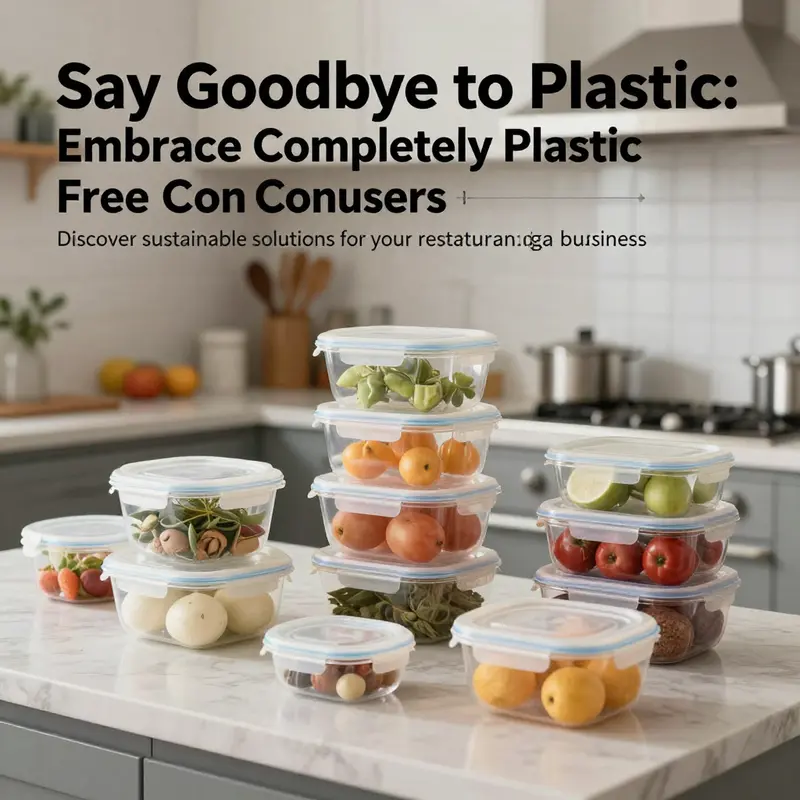
As businesses in the food and beverage sector increasingly prioritize sustainability, the demand for completely plastic-free food containers has surged. These containers not only contribute to a healthier environment but also align with the values of conscious consumers. Glass and stainless steel options are gaining traction, offering durability and eco-friendliness while ensuring food safety. This article discusses various plastic-free container options, starting with glass containers, their benefits, and their applications in various food establishments. We will explore the role of glass jars, advantages of stainless steel, and how adopting these solutions can help you move towards a zero-waste kitchen.
Clear, Safe, and Sustainable: How Glass Containers Can Lead a Completely Plastic-Free Kitchen
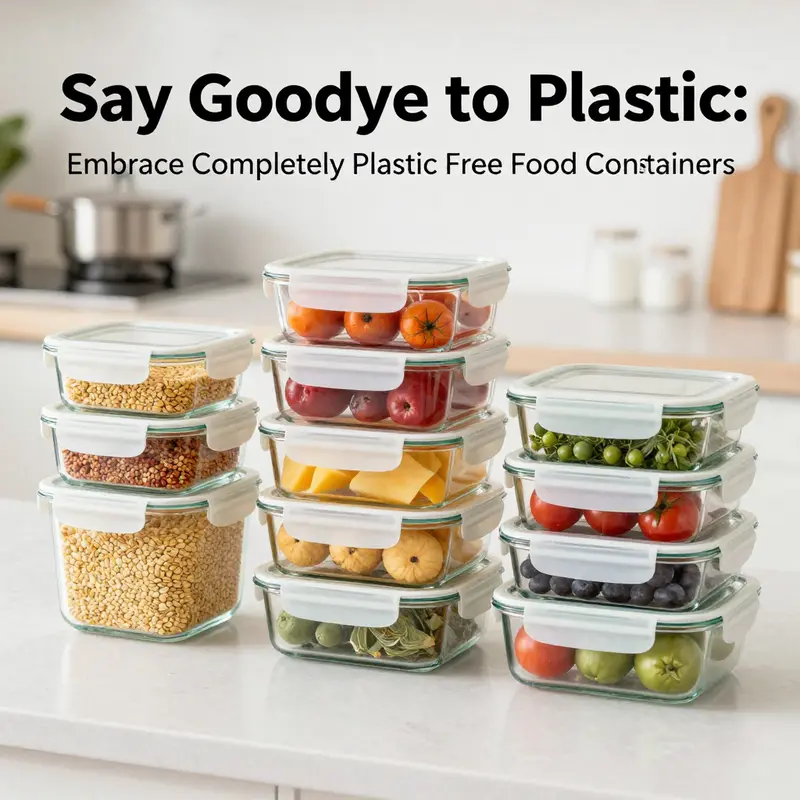
Transitioning toward a completely plastic-free kitchen begins at the shelves that hold what we eat. Containers are more than just vessels; they shape how we store, use, and ultimately waste food. Plastic is convenient, yet it carries long-term concerns about chemical exposure and environmental burden. Even when labeled as microwave-safe or dishwasher-safe, plastics can shed chemicals with heat and over time, and small fragments can become microplastics that move through our kitchens and beyond. In this context, the choice to pursue a plastic-free solution becomes a health and stewardship decision. A growing number of households are turning to glass storage as a foundational element of a zero-waste pantry. Glass, when paired with non-plastic lids or seals, offers a pathway to reduce exposure to potentially harmful substances while simplifying disposal and recycling in a system that values durability over disposability. The move is less about a single purchase and more about a redesigned storage philosophy that aligns health with environmental responsibility.
A core reason glass stands out is its material character. Borosilicate or tempered glass, when manufactured and used correctly, is inert and non-porous. That means it does not readily absorb flavors or odors, and it resists staining. More importantly, it does not readily leach chemicals into food under typical conditions—an essential feature for anyone who heats, cools, or stores meals in the same container over time. This inertness is not simply theoretical; it translates into practical advantages for daily life. Foods stored in glass containers retain their original taste and appearance longer, and leftovers do not pick up traces of previous meals. For families preparing meals in advance, this clarity helps reduce waste by making it easier to identify what’s inside and when it was prepared. The transparency of glass is not merely aesthetic; it is a functional ally in a kitchen designed to minimize waste.
From a safety perspective, glass’s resistance to chemical leaching means fewer concerns about substances migrating into food during heating or prolonged cold storage. The common fear around plastics—such as the release of certain additives when heated—drives many households to relegate plastics to secondary roles or eliminate them entirely. Glass also eliminates the uncomfortable paradox of using plastic for the sake of convenience while trying to maintain a healthful diet. With glass, the typical life cycle is simple: wash, reuse, and store. There is no need to micromanage the risk of microplastics migrating into soups or sauces because, in most everyday scenarios, glass and its non-plastic sealing components present a more stable, predictable barrier between food and the environment.
A practical reality accompanies the promise of glass: it handles the cooking and cooling loop with confidence when used with appropriate lids and seals. High-quality glass containers designed for kitchen use can be heat-safe across a broad range of temperatures. They can go from the freezer to the oven (in the absence of plastic lids) and into the microwave with the lid removed or replaced by a non-plastic seal. The lids themselves are typically metal or silicone, chosen to maintain an airtight seal without introducing a plastic barrier between food and the container’s interior. This setup creates a robust, reusable system that preserves flavor, protects nutrients, and reduces dependence on disposable packaging. The compatibility with common kitchen appliances—freezers, microwaves, ovens, and dishwashers—adds a level of versatility that makes glass a practical choice for everyday use rather than a niche option for special occasions.
The choice of specific glass can further enhance performance. High-quality borosilicate glass stands out for its resistance to thermal shock, which makes transitions between hot and cold safer and more reliable. Tempered glass offers additional strength for handling and transport, reducing the likelihood of cracks during routine use. In contrast to many plastics, glass remains stable under repeated heating and cooling cycles, a feature that translates into longer container life and less frequent replacement. The outcome is a kitchen that feels calmer and more predictable, because the containers you rely on behave consistently, season after season. When a kitchen operates on this level of reliability, it becomes easier to plan meals, portion leftovers, and store pantry staples in ways that keep quality intact for longer.
The practical value of glass storage extends beyond safety and durability. It also supports organization and clarity—two often-overlooked drivers of reduced waste. Transparent glass makes it simple to scan the contents at a glance, identify portions, and gauge how much food remains. This visual accessibility helps you plan meals more efficiently and avoid unplanned trips to the store for ingredients you already have. It also reduces the cognitive load of meal planning, because you are less likely to misjudge what is stashed on a shelf or in the fridge. The net effect is fewer spoiled ingredients and a leaner, more intentional kitchen routine. In addition, glass vessels come in a variety of shapes and sizes that are purpose-built for different tasks. Wide-mouth jars excel at storing dry goods like grains, pasta, and beans; tall, slender jars suit spices and small ingredients; and rectangular or square glass containers optimize fridge and pantry shelving by maximizing space. The modularity and adaptability of these vessels encourage a layered storage approach where function drives form, rather than a one-size-fits-all plastic solution.
To realize the full health and environmental benefits of a glass-forward kitchen, it helps to choose non-plastic lid systems. Metal lids with silicone gaskets, or silicone-sealed metal clamps, give the same airtight performance you expect from plastic without introducing the substance concerns associated with many plastics. When you heat food in glass, removing the lid or using a non-plastic seal ensures that you can safely reheat without exposing the meal to potential plastic-derived compounds. This approach requires a thoughtful set of containers and lids, but the payoff is substantial: a simple, repeatable routine that supports both health and sustainability. The goal is not to condemn all plastic usage but to reimagine food storage around materials that stay faithful to your health intentions and your environmental values.
Beyond the material advantages, glass storage also complements a broader shift toward a healthier kitchen ecology. A starting point is a kitchen waste audit—an exercise recommended by experts as a practical first step toward eliminating plastic in storage. The audit invites you to inventory your current containers, identify where plastic is embedded in your daily routines, and map replacements that align with a plastic-free goal. By tracing plastic’s footprint from purchase to disposal, you can plan a gradual but decisive pivot toward glass and other non-plastic options. This approach preserves the sense of progress and avoids overwhelming change, while steadily shrinking the proportion of plastic in the kitchen.
The end goal is not merely a swap of materials; it is the creation of a cohesive storage system that supports cooking, preserves health, and minimizes waste. Glass containers, with their inert composition, non-porous interior, and compatible lid options, become the backbone of this system. They offer the reliability needed for everyday life—reheating leftovers, refrigerating soups, drying grains, and organizing spices—without compromising safety or flavor. As you assemble a glass-centric collection, you begin to understand that the path to a truly plastic-free kitchen is a journey of small, deliberate choices, each reinforcing the next: choose glass, pair it with non-plastic lids, wash and reuse, and gradually reduce plastic in the pantry.
To illustrate a practical move forward, consider the idea of integrating a flexible, plastic-free storage solution for smaller portions and travel-friendly needs. Silicone-based, non-plastic alternatives can complement glass by providing durable, pliable options for sandwiches, snacks, and freezer portions. While these silicone items are not plastic-free in the strict sense, when chosen with safe, non-toxic materials and kept separate from heat sources that could degrade their integrity, they offer a compatible, low-risk bridge between full-glass storage and everyday convenience. The combination creates a balanced system for a busy household: glass for main storage and non-plastic lids for long-term freshness, with silicone accessories as practical helpers for on-the-go meals and frozen portions.
If you are curious about concrete examples of plastic-free packaging options in a broader sense, consider exploring related eco-friendly options that align with this shift. For instance, a page focused on paper-based, eco-friendly containers and cups offers a window into how non-plastic materials can meet everyday needs without sacrificing usability. This connected reading can deepen understanding of how alternative materials perform in real kitchens, and how a kitchen that prioritizes non-plastic storage can still accommodate comfortable, modern living. You can visit a related resource here for a broader view of eco-friendly packaging options: https://cupbowlpack.com/product/senang07-eco-friendly-printed-logo-paper-ice-cream-cups-with-lid-ice-cream-paper-bowl-paper-ice-cream-cups-with-lid/
Ultimately, the transition to glass storage is not a mere swap of materials; it is a reimagining of how we interact with our food. It invites us to slow down a little, to acknowledge the environmental footprint of the containers we reach for, and to choose simplicity, safety, and longevity. The shift also brings a clearer sense of ownership: when you can see what’s inside, you can better manage portions, plan meals, and reduce waste. A plastic-free kitchen becomes, in effect, a practical stewardship practice—a daily routine built on reliable glass, thoughtful lids, and a growing awareness of how storage choices influence health, taste, and planetary well-being.
For readers who want to ground these ideas in a broader sense of evidence and guidelines, a helpful external resource provides general information about glass storage and safety. It summarizes how glass compares with other materials in terms of chemical stability and heat tolerance, while also acknowledging practical considerations for everyday use. See this external resource here: https://www.amazon.com/dp/B0CQXVJZ8W . This link points to a widely accessible reference that complements the guidance offered here, helping readers weigh the trade-offs and envision how a completely plastic-free kitchen can function in real life.
In sum, glass containers—especially those crafted from borosilicate or tempered glass and paired with durable, non-plastic sealing lids—offer a compelling, sustainable pathway to a completely plastic-free food storage system. They support safer cooking and storage, reduce the environmental load of disposable packaging, and bring clarity and elegance to the modern kitchen. By prioritizing glass and embracing a kitchen waste audit as a starting point, households can progress toward zero-waste practices with confidence, simplicity, and tangible health benefits. The journey is iterative, but every reusable glass container, every properly sealed jar, and every carefully planned meal reinforces a broader commitment to a healthier, more sustainable relationship with food and with the planet.
Glass as the Quiet Cornerstone: Why Jars Shape a Completely Plastic-Free Kitchen
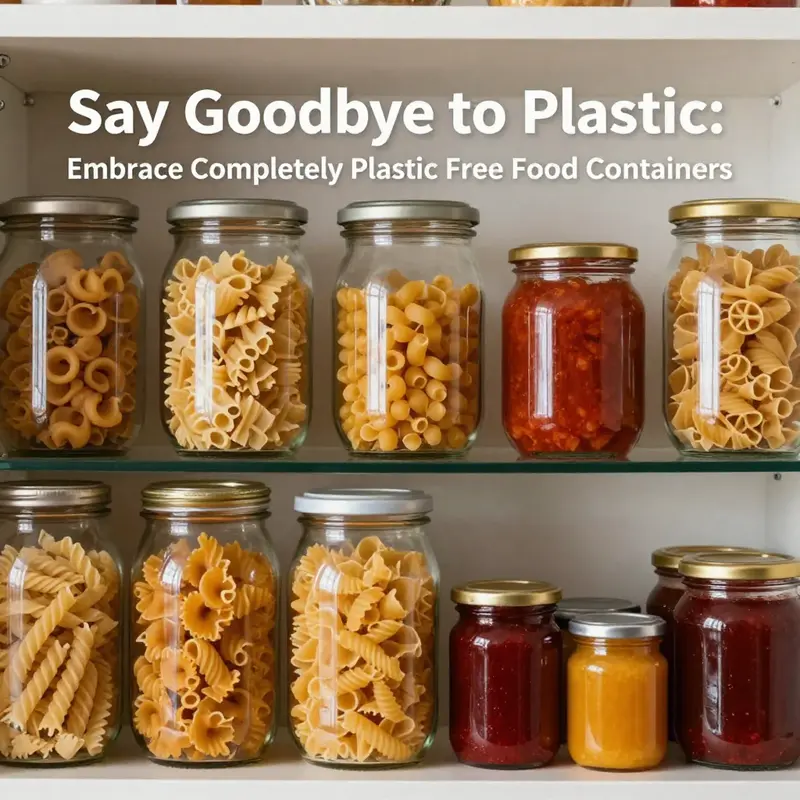
The kitchen often feels like a battleground between convenience and conscience. In the pursuit of a completely plastic-free food storage system, glass jars emerge not as a fad but as a quiet, enduring cornerstone. They are simple in form, yet robust in function. Their power does not rest in glamour or novelty but in a careful alignment of safety, durability, and practicality that supports a real shift toward zero-waste living. Glass, at its core, is inert. It does not react with food, it does not absorb flavors or odors, and it does not leach chemicals, even after repeated use or when faced with heat and acidity. This chemical stability matters because it means the act of storing food—whether leftovers in the fridge, dried goods on a pantry shelf, or jars of homemade preserves—remains clean and predictable over time. For households seeking to minimize chemical exposure, the reassurance that a reused jar will not introduce unwanted compounds into a meal is not minor; it is foundational.
The practical advantages of jars extend beyond their inertness. They are transparent, which makes contents instantly visible without opening the container. In a busy kitchen, where cooks reach for ingredients by instinct, being able to glance at a shelf and identify what’s inside saves time, reduces waste, and smooths the rhythm of cooking. Airtight seals further extend that rhythm by preserving freshness and limiting the ingress of oxygen and moisture. When you refill a jar with a homemade sauce, a bulk-bought dry good, or a seasonal preserve, the seal becomes a simple, dependable guardian of flavor and texture. There is a subtle but meaningful difference between a container that keeps moisture out and one that does not, and glass jars with well-designed lids offer a reliable line of defense against staleness and spoilage.
Another strength lies in glass’s compatibility with a wide range of temperatures. High-quality tempered or borosilicate glass can tolerate thermal shocks that would make plastic warp or crack. This resilience expands their utility: you can chill and freeze jars with confidence, then move to the oven or microwave with appropriate precautions. The ability to go from fridge to oven or microwave, when permitted by lid design, can greatly reduce the number of containers needed for different tasks. In practice, this means fewer items to buy, clean, and store. It also means fewer occasions to reach for plastic-based options that have a higher risk of releasing additives under certain conditions. This practical versatility is particularly valuable for families who batch-cook, meal-prep, or preserve seasonal harvests.
Cost considerations also favor glass jars as a long-term investment. Although the upfront price of sturdy jars and compatible lids might be higher than the cost of a disposable container, their durability and renewability make them economical over time. A jar that has been properly cared for can cycle through countless uses, shrinking the per-use cost and, importantly, continually reducing the demand for new plastic packaging. When we imagine the lifecycle of a jar—from repurposed packaging in a grocery aisle to a long home tenure—it becomes clear how a simple architectural choice in the kitchen resonates with broader environmental goals. Glass jars form a practical bridge between individual action and systemic change, offering a tangible, repeatable step toward a circular approach to food storage.
Yet no material is perfect in isolation, and the real challenges of a plastic-free kitchen—weight, fragility, and breakage risk—must be acknowledged. Glass jars are heavier than many plastic alternatives and can break if dropped. This fragility is not a fatal flaw; it is a factor to be managed through thoughtful handling, appropriate storage strategies, and, where possible, selecting shapes and lid configurations that minimize risk. A well-organized pantry, with jars placed in cushioned ledges or baskets, reduces the likelihood of accidents. The bundled advantages of glass—its non-porous surface, its resilience against chemical leaching, and its long lifespan—often outweigh these drawbacks for families committed to a healthier home environment. The key is to treat glass as a durable ally rather than a fragile inconvenience. When a kitchen is arranged to support careful use—stacked in a way that makes access safe, lids stored alongside with a clear labeling system—the risk of breakage becomes a manageable consideration within a broader practice of mindful consumption.
The environmental implications of choosing glass also deserve careful attention. The global plastics narrative—about mountain-scale production and limited recycling—pulls many households toward better choices. It is sobering to recall that billions of tons of plastic enter the economy each year, and worldwide only a fraction is recovered and recycled into new products. The figures circa the mid-2020s emphasize the scale of the problem: hundreds of millions of tons produced annually, with a disappointingly small percentage returning to the loop. When households decide to reuse glass jars, each repurposed container displaces a potential new plastic product. The impact compounds as jars escape the single-use cycle altogether, becoming a standard, everyday instrument of waste reduction. In this light, jars do not merely store food; they enact a philosophy of stewardship—one jar at a time.
This philosophy also aligns with ongoing shifts in consumer expectations and policy. As governments and companies increasingly address single-use plastics, the kitchen emerges as a weighty site of transformation. The use of glass jars dovetails with broader aims to minimize plastic footprints, support recycling streams, and encourage durable, repairable design. The jar’s lifecycle—from incoming glass to reuse to recycling—fits naturally within a circular economy model. When households reuse jars from common grocery purchases, such as jars that once contained sauces, pickles, jams, or olives, they give each container a second life rather than consigning it to landfills. This repurposing is not merely about saving money or space; it embodies a cultural commitment to waste prevention and mindful consumption. In many households, repurposing is not a trend but a habit—a quiet, daily demonstration that the act of storage can be both practical and principled.
The social and cultural resonance of glass jars often goes beyond the kitchen. Canners and home preservers have long celebrated jars as vessels of memory—of seasonal harvests, family recipes, and the satisfaction of turning abundance into sustained nourishment. When a family opens a jar of what was once cherries or tomatoes grown in their own garden, the moment is not only about flavor. It is about continuity, autonomy, and a palpable connection to the food system. This connection strengthens a shift toward plastic-free practices by embedding storage choices within personal narratives of care for people and planet. In the context of a complete transition away from plastic, jars become more than containers; they are symbolic artifacts of a more deliberate, resilient household ecosystem.
The practical act of storage—organizing jars, labeling contents, and choosing the right lid for the job—deserves a closer look because that discipline shapes the user experience. A simple system can make durability and safety intuitive. Dry goods stored in clear jars are easy to monitor, reducing the likelihood of forgotten items expiring in the back of a cabinet. Leftovers gain a longer, more predictable shelf life when sealed properly. Spreads, sauces, and ferments stay vibrant because their exposure to air is minimized. With clear labeling, a family can track rotation, ensuring that the oldest jars are used first, a simple but effective habit that reduces waste and keeps flavors fresh. This habit formation is not a one-off tactic but a shift in daily routines that reinforces the overarching goal: a kitchen that minimizes plastic through thoughtful design and consistent practice.
As the adoption of glass jars grows, a broader cultural conversation emerges about what it means to live without plastic in the kitchen. The movement moves beyond the reduction of waste to embrace a philosophy of design literacy—understanding why certain materials behave the way they do under heat, light, and moisture; recognizing how lids seals can be trusted to protect freshness; and appreciating the artistry in selecting jar shapes that balance accessibility with space efficiency. It invites questions about how to adapt to busy schedules, how to prepare meals in advance without sacrificing quality, and how to integrate jars with other non-plastic systems such as paper or plant-based packaging where appropriate. The aim is not to eliminate every plastic contact in the kitchen overnight but to create a robust, flexible framework that makes plastic-free storage both feasible and appealing for real life.
At this juncture, an explicit, practical first step helps many households begin the transition: evolve the routine of storage from plastic-dependent to glass-based slowly. Start with a few versatile jars for leftovers and pantry staples, then expand to include jars with secure, easy-to-clean lids for different use cases. The commitment to reuse, clean, and store in glass becomes self-reinforcing as the jars become familiar, reliable, and aesthetically pleasing on the shelf. In this gradual shift, the kitchen begins to reflect a larger philosophy of mindfulness—about what we bring into our homes, how we treat resources, and the kinds of food stories we want to tell through our daily choices. The result is a kitchen where plastic is no longer the default, but rather a deliberate choice among a range of options that honor safety, health, and environmental accountability.
To underscore the practical journey, consider the concept of a kitchen waste audit, a simple inventory of where plastic-use occurs and where it can be replaced with glass or other non-plastic solutions. As guidance issued in late 2026 suggested, auditing the pantry, fridge, and prep areas helps identify the plastic-reliant spots in daily routines and reveals opportunities for substitution. Such audits can reveal unexpected places where a glass jar can replace a plastic container, or where a bulk purchase can be decanted into a jar to reduce packaging waste. The act itself becomes a small ritual of stewardship—one that draws attention to material choices and their cascading effects. When people see how a single jar can streamline storage, preserve freshness, and cut waste, the case for a plastic-free kitchen becomes tangible rather than abstract.
In the broader arc of the movement toward zero waste and safer homes, glass jars stand as a practical, scalable approach. They are not a blanket solution to every plastic problem, but they provide a sturdy platform on which to build more ambitious routines. They invite households to imagine a kitchen where efficiency and ethics walk hand in hand, where the choice of storage vessel reflects a commitment to health, to clarity of contents, and to a sustainable relationship with the materials we reuse and recycle.
For those curious about the rationale behind glass as a preferred alternative, consider the following perspective from a forward-looking materials researcher who frames this choice as an act of stewardship. “Every reused jar is a small act of environmental stewardship,” a reminder that simple, repeated choices can accumulate into meaningful change. The science backs this up: glass is non-porous, chemically stable, and highly recyclable, qualities that support long-term use without compromising safety. It is not just about eliminating plastic; it is about embracing a storage system that aligns with a healthier, more sustainable kitchen culture. The path may be incremental, but it is steady and resilient, allowing families to tailor their approach to their needs, budgets, and culinary ambitions while moving toward a fully plastic-free storage regime.
In sum, glass jars represent more than vessels for food. They symbolize a shift toward a kitchen that values durability, transparency, and responsibility. They offer a practical, scalable, and deeply human way to rethink how we store, preserve, and enjoy food. The transition is not merely technical; it is cultural—an invitation to reimagine everyday routines as acts of care for ourselves, our communities, and the planet.
External reading on the broader environmental logic of glass in food storage helps ground this narrative. See an external analysis of why glass can be the smarter choice compared with plastic containers: Glass vs Plastic: Why Glass Is the Smart Choice. https://www.sustainablekitchen.org/glass-vs-plastic-food-containers-why-glass-is-the-smart-choice
Internal reference for practical packaging alternatives and how households begin to exchange plastic-based tools for non-plastic options can be explored further through a range of product pages. One example that aligns with the minimalist transition is a page focusing on eco-friendly disposables and kitchen tools, which offers a view of how complements to glass storage—like sustainable utensils and accessories—fit into a broader plastic-free workflow. See the page about eco-friendly bamboo cutlery and related tableware for a sense of how non-plastic additions can accompany jar-driven storage: senang05-disposable-eco-friendly-biodegradable-fork-spoon-knife-bamboo-utensils-dinnerware-cutlery-tableware-set-napkins.
Stainless Steel as the Quiet Pillar of a Truly Plastic-Free Kitchen
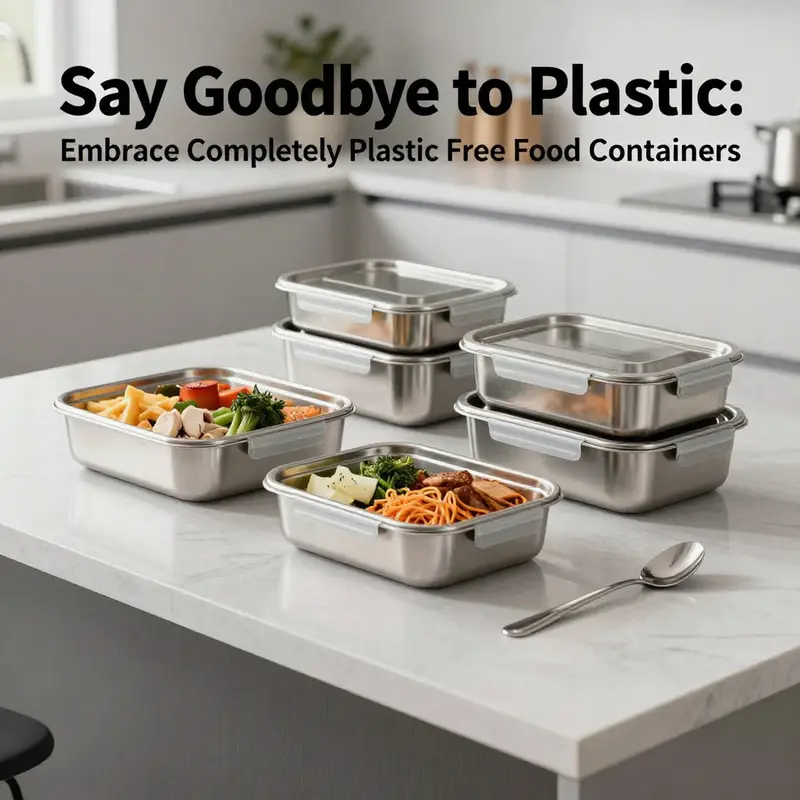
In the evolution of a zero-waste kitchen, materials matter as much as usage patterns. The push toward completely plastic-free food containers challenges households to rethink not only what they store food in, but how those choices ripple through health, hygiene, and the broader environment. Among the options that consistently emerge as robust, reliable, and healthful, stainless steel stands out as a quiet pillar. It is not flashy like some newer composites, yet its practical advantages align closely with the core aims of a plastic-free regime: to minimize chemical exposure, reduce waste, and extend the usable life of every vessel. When we place stainless steel within the larger spectrum of plastic-free storage—alongside glass and metal with careful design—it becomes clear why many households gravitate toward it as a default for daily meal prep, transport, and long-term storage. The narrative of stainless steel is not merely about durability; it is about a material identity that fits squarely with a healthful, environmentally mindful lifestyle.
The first and most immediate virtue of stainless steel is chemical inertness. Food contact safety depends on the absence of unwanted migration into what we eat. In practical terms, stainless steel does not leach organic compounds or plasticizers into foods, even when heat is involved or when the container holds acidic ingredients like citrus, tomatoes, or vinegar-based dressings. This is not a theoretical claim but a lived experience for families who prepare and portion meals for the week. The durability of stainless steel compounds with heat amplifies the advantage: unlike some plastics that can degrade, warp, or soften under repeated temperature shifts, stainless steel preserves its integrity. In storage terms, this means a container that remains a neutral vessel, preserving the intended flavors and nutritional content rather than imparting any metallic or off-taste over time. For households with children, where meals are prepared in advance and stored in the fridge or freezer, the inertness of stainless steel plus the absence of BPA- or phthalate-containing plastics becomes a practical cornerstone of food safety.
Durability is the next defining feature. Stainless steel containers are designed to endure the clatter of a busy kitchen, the dents of a dropped lunch bag, and the daily cycle of washing and reuse. They resist odors and flavor absorption far more effectively than many plastics. This is a meaningful benefit for people who batch-cook and then reheat portions later in the week. Because metal does not readily retain smells, the original taste of stored foods is less likely to be altered by previous contents. In real-life terms, this translates to less effort spent masking lingering odors in a fridge, and less need to rotate containers to prevent cross-contamination of flavors. The long-term simplicity of care—stainless steel is generally straightforward to clean and can be scrubbed without fear of micro-scratches that harbor residues—adds to its appeal in a plastic-free kitchen.
Longevity is a quiet, persuasive argument for stainless steel. Plastic containers may crack, cloud, or degrade, adding to the volume of disposables over a lifetime. Stainless steel, however, tends to retain its form and function for many years. The material’s hard-wearing nature means fewer replacements and less waste, a core consideration for households seeking to reduce their environmental footprint. When a stainless steel container finally reaches the end of its usable life, it enters a circular economy with high recyclability. The metal’s value is preserved through recycling streams, often with energy inputs that, while not negligible, still favor long-term reuse over the constant production of new plastics. This longevity aligns with a philosophy of end-to-end sustainability: a container that lasts, performs reliably, and can be diverted cleanly from the waste stream when retirement becomes necessary.
Corrosion resistance is another essential attribute. Stainless steel resists rust and bacterial growth when properly maintained, contributing to hygiene and the container’s durability in cold, warm, or humid environments. This is particularly important in industrial or high-demand settings where containers may be exposed to varying temperatures and moisture levels. The corrosion resistance also reduces the risk of micro-contaminants that can jeopardize food quality, a concern that weighs heavily in both home kitchens and professional environments where safety standards are rigorous. A container that resists corrosion over time makes it easier to sustain a consistent, plastic-free storage system without compromising food safety.
Airtight and leakproof sealing, when paired with thoughtful lid design, completes the core functional package. Stainless steel itself provides the sturdy body, but the sealing performance hinges on high-quality, food-grade seals and lids. In most plastic-free configurations, the lids are made from food-grade silicone—a material that, while not plastic in the conventional sense, is a polymer that offers excellent flexibility and durability. Clear platinum silicone lids, in particular, are prized for their longevity and reliable seal. A truly airtight, leakproof container protects contents from moisture and oxygen—two key factors in spoilage, mold growth, and clumping during storage. The combination of a metal vessel and a silicone lid delivers a performance profile where freshness is preserved without reliance on plastics. In daily life, this means safer, longer-lasting meals for busy families or office workers who prepare meals ahead of time and need to transport them securely without spill risk.
One practical nuance often discussed in consumer conversations is microwave compatibility. It is common to assume metal containers are off-limits to microwaves, and in many cases that is true. However, the design landscape for stainless steel storage acknowledges this reality with nuance. Some stainless steel containers designed for hot meals incorporate vented features and specialized lids that can accommodate brief reheating in microwaves, or are paired with components that allow safe microwaving under specific conditions. The takeaway is simple: if reheating in a microwave is essential, readers should look for designs that explicitly specify microwave suitability and follow manufacturer guidance. In settings where microwaving is not desired or necessary, stainless steel offers a robust, reusable solution that eliminates plastic contact altogether, without compromising on convenience.
The environmental story of stainless steel is compelling when we consider its lifecycle. Plastic-based containers contribute to a stubborn waste stream and carry concerns about persistent microplastics in ecosystems. Stainless steel offers a different lifecycle paradigm: near-infinite recyclability. At the end of a long, useful life, stainless steel can be recycled into new products without a loss of quality. This characteristic makes it highly compatible with a circular economy approach. While the energy required to melt and reform steel is nontrivial, the long lifespan of steel containers means fewer replacements and less annual waste compared with single- or short-use plastics. In a broader sense, choosing stainless steel is a statement about how a household defines value: not just the immediate convenience, but the future of resources and the ongoing health of the planet.
The question of design fidelity matters as well. A plastic-free kitchen does not demand a monastic level of minimalism. It invites thoughtful, user-friendly designs that integrate smoothly with daily routines. Stainless steel containers shine here because they can be engineered with ergonomic features that support the rhythms of modern life: easy-to-grip shapes, stackable forms that maximize storage space, clear labeling or color-coding that reduces decision fatigue, and compatible lids that seal securely yet are simple to open. When combined with glass storage for particular types of contents—say, sauces, dressings, or snacks stored in transparent vessels—stainless steel complements rather than competes. The overarching principle is cohesion: a set of containers that work together, each chosen for its strengths, to eliminate the need for plastic-derived alternatives.
To illustrate how these pieces translate into everyday practice, consider a typical week of meals. A family might batch-cook grains, proteins, and vegetables, storing portions in stainless steel containers with silicone lids for the fridge. The metal interior keeps flavors from mingling across meals, and the silicone seal protects against moisture while preserving texture. Leftovers can be reheated according to the design’s guidelines, or cooled and moved to a separate container for the freezer. When a portion is transported to work or school, the container’s rugged build resists the knocks of a backpack and the risk of leakage. Over time, this pattern reduces reliance on disposable plastics—not merely by substitution, but by layering durable materials that perform consistently across cold storage, reheating, and portable use. The cumulative effect is a kitchen that feels calmer, more predictable, and less dependent on disposables generated from plastic packaging.
A note on maintenance reinforces the practicality of stainless steel. Regular cleaning, avoiding abrasive cleaners when matte or brushed finishes are involved, and checking seals for wear extend a container’s life. Dishwasher safety varies by lid design, so users should follow care instructions and consider air-drying lids to prevent warping. With proper care, stainless steel containers maintain their appearance and functionality for many years, creating a reliable backbone for a plastic-free storage strategy.
Another facet worth considering is the role of education and habit formation in sustaining a plastic-free system. The switch from plastic to metal or glass is not just a physical change but a behavioral one. It invites reevaluation of how containers are chosen, how food is stored, and how waste is managed in the kitchen. This is where a practice such as a kitchen waste audit—recommended in contemporary zero-waste discourses—can be transformative. By tracking what packaging is used, where plastic leaks into the storage system, and what could be swapped for non-plastic alternatives, households gain concrete data to guide future purchases. In this sense, stainless steel is not an isolated choice but part of a broader strategy that foregrounds intentional consumption, durability, and responsible end-of-life outcomes. A well-executed audit helps ensure that the plastic-free commitment is not a onetime decision but a sustained, evolving practice.
For readers seeking a concrete reference to a plastic-free storage solution that embodies these principles, a practical example can be explored through a dedicated product page designed around 100% plastic-free design in a take-away context. It illustrates how a stainless steel interior, combined with a silicone sealing lid, can deliver both performance and portability in a single vessel. senang05-food-grade-500-750-1000ml-take-away-bowl-with-lids-packing-food-single-wall-fast-food-salad-bowls. This link provides a real-world touchpoint for readers who want to connect the theory of plastic-free storage with a tangible product design focused on health, reuse, and environmental responsibility.
The broader literature on material science and food packaging supports the emphasis on steel as a safe, recyclable, and durable option. An authoritative comparison of materials used in food handling and storage underscores stainless steel’s advantages in chemical inertness, longevity, and hygiene. While glass remains a strong competitor—offering visibility and an utterly inert surface—the choice between glass and stainless steel often hinges on context: home kitchens with frequent reheating and transportation, or professional settings requiring rugged containers that survive repeated handling. The chosen material should fit the user’s routine, the types of foods stored, and the desired balance between visibility (glass) and resilience (steel). In designing a completely plastic-free system, it is not a contest between materials so much as a thoughtful curation of a family of containers that collectively reduces plastic exposure while supporting health and sustainability.
This integrated approach has practical implications for both households and the environments they inhabit. When families adopt stainless steel as a major component of their plastic-free toolkit, they reduce the cumulative demand for plastic packaging, shrink the volume of waste destined for landfills, and promote a culture of reuse and repair. The result is a kitchen that feels sturdier, more predictable, and aligned with a long-term commitment to health and ecological stewardship. The conversation about stainless steel is not about a single miracle material; it is about recognizing how a durable, inert, and reusable vessel can anchor a daily practice that respects both human health and planetary boundaries. And as design continues to evolve, stainless steel remains a steadfast reference point—a material that balances practical everyday needs with the ethical imperative to minimize plastic in our food systems.
External reference: For readers seeking a broader understanding of material composition, standards, and industrial benefits in food storage, see an in-depth discussion of stainless steel versus plastic belts in food applications. This resource provides a comparative lens on how different materials behave under industrial conditions and why stainless steel is favored in many high-stakes environments. Understanding 12l Food Storage Container: Composition, Standards, and Industrial Benefits
From Glass to Steel: A Practical Path to a Plastic-Free Kitchen That Safely Keeps Food Fresh and Waste Low
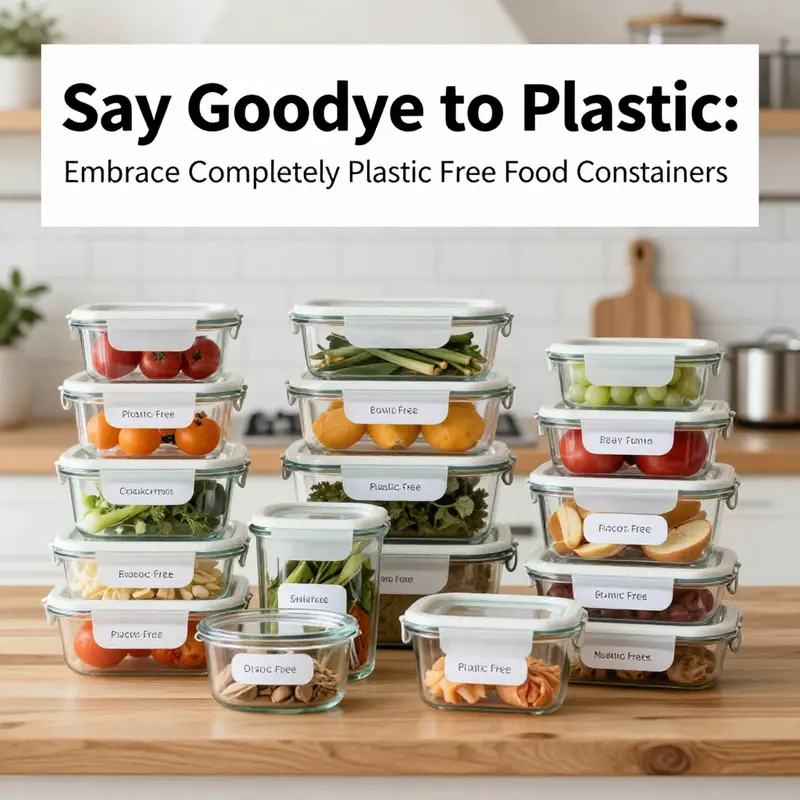
Transitioning toward a zero-waste kitchen begins with a deliberate shift away from plastic-based storage toward durable, reusable, and plastic-free options. This chapter threads together the science of safer storage, the practical realities of daily use, and the broader value of a circular design that keeps materials circulating rather than piling up in landfills. It is not merely about choosing one material over another; it is about aligning everyday habits with a design ethos that minimizes chemical exposure, supports food safety, and reduces environmental impact over the long arc of a product’s life. In this sense, the path to a plastic-free kitchen flows from the deepest concerns of health and sustainability into the smallest, day-to-day decisions about how we store, heat, transport, and eventually dispose of our food containers.
At the heart of this transition is the choice of material. Glass sits at the center of the plastic-free vision because it is chemically inert, highly durable, and remarkably transparent, which makes it easy to see what is inside and avoid letting leftovers languish forgotten in the back of the fridge. When paired with a lid that is metal-backed or made from solid, non-plastic materials, glass becomes a nearly perfect storage vessel for a wide range of foods—from chopped vegetables and sauces to soups and even prepped meals. The transparency of glass also has a psychological benefit: it reduces the tendency to overbuy or misplace items, because you can quickly assess what’s on hand. Temperature tolerance adds another layer of practicality. Glass containers with metal or glass lids stand up to cold storage in the fridge or freezer, and many are designed for reheating in a conventional oven or on a stove rather than in a microwave, where metal parts would be inappropriate.
Stainless steel is another pillar of a plastic-free pantry. Steel is exceptionally durable, resistant to impact, and easy to sanitize. It shines in households that value travel-friendly solutions or outdoor use, where the hard wear-and-tear of daily life can otherwise promote breakage in fragile glassware. A well-made steel container can keep leftovers fresh for days and be washed in the sink or dishwasher without concern for cracking or warping. However, steel has its limits: it is not microwave-safe, and some designs rely on silicone or other seal materials to achieve a tight seal. The goal, again, is to minimize those plastic-derived components; a simple, metal-to-metal seal with no plastic parts is ideal, as it reduces potential migration concerns and keeps the lifecycle cleaner from source to end of use.
Other materials deserve consideration as well, especially when the goal is a fully plastic-free system. Ceramic and porcelain vessels with metal or cork lids provide a non-plastic option that can look and feel timeless in a kitchen. They handle heating in ovens well and tolerate long-term storage, though they can be heavier and more prone to chipping than glass or steel. Wood and bamboo, when properly finished with non-toxic coatings, offer an appealing aesthetic and a lightweight alternative that can be kinder to delicate hands and smaller spaces. Yet, for all of these materials, the safety of the finish and the absence of glued or plasticized components in lids are essential criteria. Every choice should be screened for potential leaching, long-term durability, and the ease of cleaning, because residue from imperfect cleaning can undermine both safety and flavor.
The practical realities of a plastic-free kitchen also demand attention to the way containers are sealed and cleaned. A true plastic-free seal means metal, cork, or other non-plastic components that won’t shed microplastics into food or release unwanted chemicals over time. A robust seal is not just about preventing leaks; it preserves the flavor, texture, and nutritional quality of stored foods. Glass containers with metal rims or lids can provide tight seals that are simple to inspect and maintain. For steel or ceramic options, the lid design matters as much as the material. A straightforward, durable closure—free of plastic gaskets or liners—simplifies sanitation and helps ensure a long service life. The result is a system that rewards regular use and reduces the temptation to substitute disposable packaging for convenience.
Cleaning regimes are another critical thread in the tapestry of plastic-free storage. Glass and metal containers tolerate high-temperature washing, which is a boon for households seeking rigorous sanitation. A well-designed glass jar or steel lunch box can be dishwasher-safe, provided the lids and seals are compatible with that environment. This compatibility reduces the friction often associated with maintenance, which, in turn, supports sustained use. When hand-washing is preferred or required, the same principles apply: a simple, non-abrasive approach preserves the surface and seal integrity, while avoiding acidic or corrosive cleaners that might degrade metal or glass coatings over time. In essence, ease of cleaning translates into sustained behavior; it lowers the barrier to reuse and, by extension, lowers overall waste.
Reusability is not merely a mechanical attribute; it is a cultural one. Choosing containers designed for long life nudges households toward a mindset of stewardship rather than disposability. This is where the broader design philosophy of circular economies comes into play. When you invest in containers whose materials are highly recyclable at the end of their life, or that come with take-back programs and refill options, you acknowledge a lifecycle story rather than a single-use chapter. It is not only about the container itself but about the ecosystem around it—how packaging for the container is designed to be recyclable, how post-consumer materials are incorporated into new products, and how items are returned or repurposed when they finally reach the end of their useful life. The emphasis is on continuity: keeping materials circulating in a way that minimizes loss and maximizes safety and value.
For households curious about narrowing the space between intention and action, practical steps matter as much as the theoretical framework. A productive starting point is a kitchen waste audit. By systematically identifying every plastic packaging item that accompanies food storage and comparing it against a checklist of non-plastic alternatives, a family can map a concrete path toward replacement. The audit doesn’t demand perfection all at once; it creates a stepping-stone approach where additional pieces are swapped out as convenience and resources allow. In the process, you begin to see where the stubborn plastic entries lie—perhaps in wraps and bags used for bulk items, or in the lids that accompany some metal or glass containers—and you replace them with clearly defined, durable options that fit your space, budget, and cooking style.
A practical illustration of the plastic-free path is the use of glass jars or stainless steel tiffins to manage leftovers, meal-prepped portions, and dry goods. Leftovers stored in a glass jar keep flavors crisp, and the clear walls help you avoid letting food slip past its prime. Meal-prep portions can be portioned into uniform steel or glass boxes, simplifying portion control and reducing the need for single-use bags or wraps. For dry goods—rice, beans, nuts, or grains—the appeal is even stronger: glass or steel containers with straight sides maximize capacity and minimize air exposure, extending freshness and reducing spoilage. When it comes to portability, metal lunch boxes and glass jars offer a sturdy, reliable solution that can travel to work, school, or the family picnic without the waste of disposable wrappers or single-use plastics.
Of course, any transition of this scale invites practical questions. How do you handle hot foods without risking spills or burns in a bag or a purse? What about microwaving, since many households rely on quick reheating for lunches? The answers lie in the configuration of the container set. For hot foods, a glass container with a metal lid and a snug seal can be warmed in a conventional oven or on a stovetop—never in a metal-lidded microwave, which could damage the appliance and pose safety risks. For reheating in a microwave, the best option remains a glass or ceramic container designed for microwave use, with a lid that vents steam and does not rely on a plastic gasket. These practices safeguard both the user and the container in equal measure.
Beyond the household, there is a larger narrative about sourcing and lifecycle design. When selecting plastic-free containers, consider the broader sustainability profile of the brand and its materials strategy. Seek products whose packaging is recyclable or compostable, whose components are designed for longevity, and whose lifecycle includes take-back or recycling programs that ensure the container is reclaimed rather than abandoned after a single use. This approach aligns daily cooking and storage habits with a circular framework, transforming a simple kitchen decision into a contribution to a more sustainable economy. It also signals to manufacturers that consumer demand favors long-lasting, repairable, and end-of-life-conscious products, which can influence industry-wide improvements over time.
To illustrate one of the practical options that exists within this plastic-free landscape, imagine a line of bagasse-based bowls and dinnerware. Bagasse, the pulp leftover after extracting sugarcane juice, provides a sturdy, plant-based alternative for single-use or reusable serving vessels. While these products are often marketed as disposable, their composition is fundamentally different from conventional plastics and can be designed for composting under appropriate conditions or for extended reuse with proper care. This category demonstrates that plastic-free storage does not imply a loss of convenience; rather, it reframes convenience around materials that align with natural cycles rather than petroleum-based feedstocks.
Final thoughts
Shifting to completely plastic-free food containers is a significant step towards sustainability for any food service establishment. Glass containers offer reliable storage that protects the quality of food without the risk of chemical leaching, while stainless steel provides a durable and lightweight alternative. By adopting these eco-friendly solutions, businesses can not only appeal to environmentally conscious consumers but also position themselves as progressive leaders in their industry. Commit to a greener future today and embrace the change towards a zero waste kitchen.