
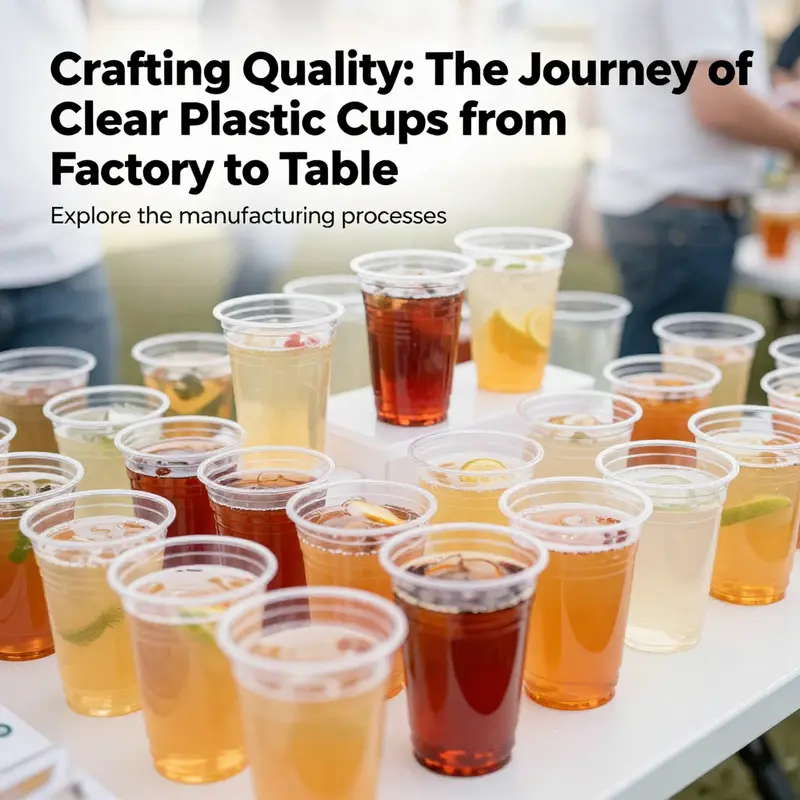
Clear plastic cups are more than just vessels; they embody convenience and customization, catering to a diverse array of businesses from bubble tea shops to corporate event planners. As demand escalates for safe and stylish beverage solutions, understanding the production landscape becomes crucial. This article will take you through the intricate manufacturing processes that shape these cups, shed light on the economic contributions of clear plastic cup factories, explore technological innovations driving production efficiency, and delve into environmental considerations. Each chapter contributes to a comprehensive view of this vibrant industry, which plays a vital role in meeting the needs of modern businesses.
Molded Clarity: The Hidden Mechanics Behind Clear Plastic Cups in China’s Factories
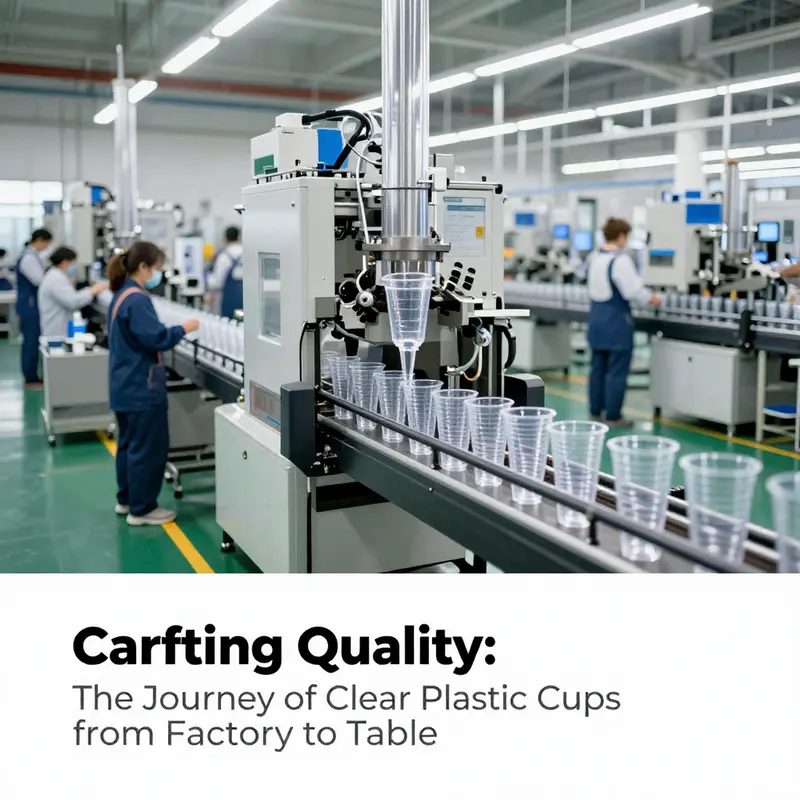
Clear plastic cups are more than simple, translucent receptacles. They are the culmination of tightly choreographed processes, relentless automation, and a regional ecosystem that stitches together resin, tooling, and turnkey scalability. In China, where major production hubs cluster in provinces such as Fujian, Guangdong, Zhejiang, and Jiangxi, two core methods—injection molding and thermoforming—drive most of the output. These processes are not just about making a cup; they are about ensuring uniformity of wall thickness, optical clarity, rim integrity, and the ability to scale from a few thousand units to tens of millions in a matter of weeks. The narrative of how these cups come to market is thus a story of precision equipment, standardized procedures, and a supply chain that can translate a buyer’s design or a company’s packaging requirement into a tangible, food-contact–safe product.
In the world of clear cups, the materials themselves set the stage for the process. PET and PP are the most common polymers because they balance rigidity with clarity and are compatible with high-speed production lines. PET cups offer excellent transparency and stiffness, making them ideal for visible beverages and premium presentation. PP cups, lighter and more heat-tolerant, excel in disposable scenarios where cost-per-unit matters and where microwave or dishwasher compatibility becomes a selling point. The engineering teams that run injection molding machines in cities around Fuzhou and Guangzhou understand that even a tenth-millimeter deviation in wall thickness can affect stability during pouring, stacking, or carrying. They program molds, monitor cycle times, and fine-tune cooling channels to ensure consistent optical clarity across millions of parts each month. The result is a family of cups whose performance remains predictable, especially under the heavy demand of bulk orders and seasonal promotions.
Thermoforming sits alongside injection molding as another pillar of the industry’s capacity to deliver at scale. This method starts with a sheet of plastic that is heated until pliable, then shaped over a mold by vacuum or air pressure. It is particularly well suited for lightweight, single-use clear cups produced in very high volumes. In Zhejiang and Shenzhen, fully automated thermoforming lines often integrate cutting, forming, and stacking into a single continuous sequence. The automation minimizes human touchpoints, reduces defects, and accelerates throughput without sacrificing the uniformity that buyers expect. The convenience of thermoforming is not just cost-driven; it is the ability to respond quickly to large orders during peak seasons, when event organizers, caterers, or beverage brands need reliable supply lines that won’t bottleneck the production schedule.
Across both methods, quality assurance is the constant thread. In practice, this means systematic checks at multiple stages—raw material verification, in-line process control, and post-maste inspection. Across Zhejiang and Taizhou’s facilities, for example, the quality teams scrutinize rim uniformity to ensure stable stacking and safe pouring, wall thickness to prevent distortion under pressure, and material integrity to avoid any migration that could affect food contact safety. The modern QC rooms use real-time data dashboards, laser measurement systems, and spectrometric analysis to catch deviations before they become customer complaints. When customization enters the picture, the challenge increases. Digital printing, for instance, can be integrated directly into some production lines, allowing a factory to switch from a standard cup to a logoed design with relatively quick changeovers. That capability is especially valuable for event-driven campaigns or limited-edition beverage programs, where time-to-market matters almost as much as unit costs.
Another layer shaping the sector is the supply chain’s tight integration. Chinese suppliers benefit from proximity to raw materials, mold making, and logistics networks that shorten lead times and reduce risk. The geographic clustering means that when a buyer requests a change in dimensions, color, or branding, the feedback loop from design to tooling to production can be compressed into days rather than weeks. For international buyers, this translates into faster iterations, more accurate quotations, and greater confidence that samples will resemble mass-produced parts. It also means that environmental and safety standards can be embedded early in the process. Regulators and retailers often require documentation of material composition, food-contact compliance, and sanitation protocols—areas that modern factories address through supplier qualification programs and traceable production records.
Two case profiles illuminate how these processes translate into realized product offerings and reliable supply. The first is a Fujian-based operation located in Fuzhou, renowned for its customization capabilities and a strong cost-performance proposition. This factory specializes in a 16-ounce double-wall acrylic cup that comes with a lid and straw, a combination designed for bulk distribution with minimum orders of 3,000 units. The monthly capacity of about 50,000 units positions it well for mid-size campaigns and regional promotions, while its payment options—wire transfer, Western Union, and PayPal—reflect a willingness to align with global buyers who require flexible financial terms. Acrylic, with its optical clarity and impact resistance, represents a slightly different material family than PET or PP. It demands precise mold design and careful handling to preserve transparency and polish through repeated washing or extended display. The factory’s emphasis on customization—an attribute noted in its Alibaba listing—speaks to a market demand for branded packaging, event-specific colors, or tailored lid configurations that can differentiate a product in crowded aisles or online storefronts.
The second profile centers on a Zhejiang-based entity in Dongyang, a hub noted for its focus on safety and durability. This operation specializes in clear cups that are BPA-free, a non-negotiable requirement for consumer-facing products that host beverages or cold foods. The durability and dishwasher safety of their cups make them suitable not only for daily use but also for events, catering, and corporate hospitality where repeat washing and cycle reliability matter. The company emphasizes adherence to environmental and safety standards, highlighting a strategic alignment with global expectations for food-contact materials, proper disposal pathways, and compliance with stringent quality controls. Like the Fujian facility, this factory maintains direct Alibaba channels for pricing inquiries and sample requests, underscoring a business model that favors transparent, scalable engagement with international buyers.
Taken together, these profiles illustrate how two different material focuses—the acrylic suit of the first and the BPA-free plastic of the second—sit within a larger ecosystem that prioritizes speed, customization, and measured quality. They also reflect a broader trend in China’s clear cup market: the capacity to blend high-throughput production with the flexibility to adapt a line for a particular customer’s branding or event needs. The factories do more than press a button and pour resin. They maintain mold libraries, calibrate robots for multiple product SKUs, and coordinate with downstream packagers and logistics partners to ensure that a pallet’s path from factory floor to retailer shelf stays efficient and predictable.
For buyers, the practical implication is straightforward. A firm seeking a steady supply of transparent cups can lean on injection-molded lines for rigid, high-clarity cups that carry integrated features such as handles or lid-fitments, while thermoformed lines can deliver fast, cost-efficient runs of lightweight cups suitable for single-use scenarios. The geographic clustering reduces lead times and enables swift R&D feedback, so a buyer can test a new lid style, a different rim diameter, or a logo placement without incurring prohibitive delays. And because these factories typically accept multiple payment methods and maintain robust communication channels on Alibaba, buyers gain a reliable on-ramp for initial sampling and staged ramp-ups toward full-scale production.
In this context, the two highlighted factories—one in Fuzhou and the other in Dongyang—embody the spectrum of capabilities that define the modern clear cup industry. The Fuzhou operation exemplifies the customization and capacity leverage that attract brands seeking distinctive presentation and branded packaging at scale. Its focus on a double-wall acrylic cup with a lid and straw shows how a manufacturer can pair a premium material with a practical, market-ready configuration. The Dongyang facility, with its emphasis on BPA-free, durable, dishwasher-safe cups, reflects the market’s insistence on safety and longevity, especially for cups that travel through busy events or family households at home. Both are illustrative of a broader pattern: production ecosystems that connect design, tooling, material science, and regulatory compliance to deliver reliable products that meet diverse consumer and commercial needs.
Embedded within these voices is a practical realism about timelines and costs. The injection-molding routes favor precision and long-run efficiency, but the upfront costs for molds and the complexity of color or logo customization can require careful negotiation on lead times and minimum orders. Thermoforming, while often less expensive per thousand units for very large runs, demands equally precise workflow management to exploit its speed advantages. The factories’ reported practices—tight QC, rapid responses from Zhejiang facilities, and digital printing capabilities—signal a mature industry that has learned to balance these trade-offs by distributing tasks across specialized lines and by adopting modern digital tools that translate design intent into finished products with minimal error.
Against this backdrop, the two Alibaba-listed operations simulate a practical template for how buyers can approach sourcing. They offer a direct line of communication for pricing, samples, and customization inquiries. The cost-performance narrative they embody is not just about unit price; it is about the total value delivered through scalable production, reliable quality, and the flexibility to respond to changing demand. The acrylic-focused Fuzhou facility shows how a supplier can monetize design-driven requirements while maintaining a robust monthly throughput. The Dongyang plant demonstrates how safety-focused, durable cups can align with consumer use patterns and regulatory expectations without sacrificing the efficiency demanded by mass distribution.
For researchers, buyers, and industry observers, the core takeaway is that the clear cup market is less a single, monolithic process and more a portfolio of interlocking capabilities. It is the synergy between material choice, process selection, and a supplier’s operational discipline that defines success. When a buyer communicates a desired performance, a set of constraints—whether it’s heat resistance, transparency, stacking stability, or dishwasher durability—a knowledgeable factory network translates those constraints into a concrete production plan. That plan includes mold design or sheet forming, machine programming, quality-control checkpoints, and the logistics orchestration that moves product from line to warehouse with traceability.
As a bridge to further reading, consider how similar capabilities are deployed in other cup formats and materials, including the craft-paper and biodegradable segments that populate adjacent packaging markets. The broader conversation about customization, digital printing integration, and rapid sampling continues to evolve, driven by customer expectations for branding, sustainability, and convenience. For readers seeking a deeper, technical primer on production methods and supplier capabilities, an external guide offers a structured overview of bulk clear cups with lids, procurement, and pricing within the Chinese manufacturing landscape. Senang disposable double-wall craft paper cups provides a related case of customization and scalability in a closely related cup category that complements the glass-clear world of PET, PP, and acrylic cups.
To access a broader technical synthesis of supplier capabilities and procurement strategies, see the detailed reference on industry practices and lead-time optimization: https://www.supplychaininsights.com/bulk-clear-cups-with-lids-supplier-guide-china-manufacturing-pricing-procurement/. This external resource frames the production logic described here within a wider market context, including supplier evaluation criteria, sample testing, and the metrics that buyers use to compare factories across regions.
Economic Currents in the Clear-Cup Corridor: How Factories Shape Jobs, Markets, and Circular Futures
The economic footprint of clear plastic cup factories extends far beyond the walls of any single plant. It ripples through local labor markets, regional supplier networks, municipal waste systems, and national policy debates. In this chapter, we trace how high-volume, low-cost production of disposable cups operates as an economic engine in Asia and beyond, while also revealing the pressures that threaten its long-term viability. The picture is not simply one of supply and demand; it is a study in how manufacturing systems adapt to shifting consumer expectations, regulatory landscapes, and the growing imperative to align economic activity with environmental stewardship.
At the heart of this story is the scale and velocity with which these facilities operate. Clear plastic cup production—particularly for generic, widely used formats—thrives on efficiency, continuous upgrading of machinery, and a tightly tuned supply chain. In practice, a typical operation in this segment combines raw-material procurement, mold design and tooling, extrusion and forming lines, quality control, and a robust packaging and logistics network. The economic logic rests on turning bulk inputs into standardized products at a fixed cost per unit, while maintaining the reliability that downstream buyers—from restaurants to event organizers—depend on. In this global marketplace, a facility may offer bulk ordering with thresholds that begin in the thousands, while monthly capacities push into tens of thousands of units. Those numbers are more than corporate milestones; they map directly onto regional employment, supplier demand for additives and resin, and the capacity of local freight corridors to move finished goods to markets across borders.
Two prominent factories in this sector illustrate the archetype of modern plastic-cup manufacturing. Both emphasize scalability and reproducibility, yet they converge on distinct strategic emphases. One tends to foreground customization and service to bulk buyers, leveraging a production footprint that can flex to accommodate specialized features, from lid integration to branding opportunities that appeal to large order consumers. The other centers on safety and durability, with explicit attention to consumer protection standards and compatibility with fast-paced service settings where cups must endure the rigors of frequent reuse or dishwasher cycles in certain contexts. While these descriptions name real-world players, the underlying economic principles apply broadly: the ability to deliver consistent quality at scale underpins both regional employment and the reliability of supply chains that feed adjacent industries such as packaging, printing, and distribution.
From a regional lens, the economic contribution of clear plastic cup factories often materializes as a combination of direct employment and the broader job creation enabled by supplier ecosystems. In economies with dense manufacturing clusters, these plants hire operations staff, machine technicians, quality controllers, and maintenance teams. They also drive demand for a web of ancillary services—logistics, warehousing, cleaning and sanitation, and facility maintenance. Beyond direct payrolls, the factories spur demand for resins, additives, and transforming equipment produced by upstream suppliers. In many coastal or inland manufacturing hubs, a network of small and medium-sized enterprises (SMEs) gains work through subcontracts or secondary contracts, reinforcing regional development and export capabilities. This impact tends to be most visible in regions where plastics manufacturing has matured over years, and where skilled labor pools emerge around polymer processing, tool-and-die work, and predictive maintenance systems.
The economic significance also manifests in the way these plants interface with global demand. The cups they produce support a broad spectrum of daily activities—homely meals at offices, quick-service restaurants, social gatherings, and outdoor events—where disposable solutions offer convenience and speed. When demand surges, as it often does in peak seasons or during large-scale urban events, factories respond by ramping up shift schedules, extending production runs, and optimizing changeovers between product variants. This agility is not merely a technical feat; it is a measurable contributor to regional output in gross domestic product terms and a critical support pillar for the logistics corridors that link suppliers to buyers across provinces and countries. The capacity to turn a stable order book into reliable monthly output translates into predictable employment and steady cash flow for workers, suppliers, and logistics partners alike.
But the economic story does not rest on jobs and volumes alone. It intersects with environmental costs that bear down on public finances and policy decisions. The immense scale of single-use cup consumption—estimates of tens of billions of units annually in major consuming markets—creates substantial waste management burdens. In large urban centers, municipal recycling systems and waste-hauling networks must absorb constant streams of discarded cups, often mixed with other forms of packaging. The handling, sorting, and processing of this material require funding, infrastructure upgrades, and policy support. The associated carbon footprints—from resin production to end-of-life disposal—become a chorus of alarms that policymakers cannot ignore if they aim to balance economic growth with climate commitments. The economic implications of these environmental costs include not only direct cleanup expenses but also opportunity costs. Public funds that could otherwise be deployed toward health, education, or infrastructure must be diverted to waste-management initiatives or to subsidies and incentives aimed at encouraging circular solutions.
Against this backdrop, regulatory developments have begun to tilt the playing field. Governments facing the environmental externalities of plastic cups are exploring measures that could reshape the relative viability of disposable packaging. One line of inquiry involves excise taxes on plastic containers, intended to reflect the true cost of environmental harm and to incentivize a shift toward more sustainable practices. While such taxes may generate new revenue streams, they can also reduce other tax bases, like value-added tax (PPN) and corporate income tax (PPh badan), depending on how the policy is structured. A 2026 study of beverage sectors in several economies underscores these fiscal dynamics, illustrating how governments weigh environmental costs against revenue considerations and competitive impacts. The financial calculus for manufacturers, distributors, and retailers thus increasingly includes policy risk alongside raw-material costs, labor, and logistics.
Beyond policy, consumer preferences are evolving toward circular economy models. The long-run economics of clear plastic cups face a conceptual and logistical challenge: can a system built on single-use, low-cost items deliver sustainable profitability when markets gradually tilt toward reuse and recovery? Empirical work on circular cup systems suggests that reuse can become economically advantageous in the right configurations. Consider, for example, scenarios in which a container is used repeatedly—some models show meaningful reductions in greenhouse gas emissions and fossil-fuel consumption after as few as 20 uses, compared with single-use equivalents. As the literature broadens, the argument strengthens that the environmental case for reusable systems can translate into a compelling business case for some operators: if the lifecycle impacts of repeated use are managed through durable materials, efficient cleaning, and robust logistics, a circular model can reduce overall cost-per-use and enhance corporate reputation, potentially unlocking premium pricing or preferential procurement arrangements.
The Greenpeace perspective adds a further layer to this assessment. When reusable options are adopted widely—especially in contexts where cups can be reliably returned, cleaned, and redistributed—environmental indicators such as climate impact, resource use, and ecological toxicity show improved outcomes relative to single-use alternatives. The organization’s 2023 analyses of circular cup initiatives in China and similar markets highlight that transition pathways exist for stakeholders across the supply chain. From the viewpoint of the factory floor, this means that long-term viability may hinge on the ability to participate in, or even lead, the transition toward reusable packaging ecosystems. For a segment that has historically specialized in delivering the lowest-cost, high-volume outputs, this represents a strategic inflection point. It is no longer sufficient to optimize for speed and price alone; manufacturers must also court design flexibility, compatibility with cleaning regimes, and partnerships that harden their position in a changing regulatory and consumer landscape.
Within this broad landscape, the role of information networks and online marketplaces becomes increasingly important. The visibility provided by global sourcing platforms enables buyers to compare specifications, lead times, and payment terms across multiple suppliers. It also exposes producers to greater competitive pressure, as buyers can more easily switch suppliers if quality or reliability falters. The trade-off for manufacturers is that price competition intensifies, encouraging continuous process improvements, automation, and the pursuit of measurable quality control outcomes. In this ecosystem, even suppliers that emphasis customization or safety must balance the costs of specialized tooling with the benefits of scale and repeatable performance. The digital infrastructure surrounding these operations thereby complements the physical plant by expanding the reach of producers into new markets and helping them capture longer-run demand with greater predictability.
For researchers and policymakers, these dynamics underline an essential, practical point: the economic health of clear plastic cup factories cannot be decoupled from the broader systems in which they operate. Supportive infrastructure—reliable feedstock supply chains, efficient waste management, and transparent regulatory regimes—amplifies the positive economic effects of production. Conversely, bottlenecks in any layer—whether it is a shortage of polypropylene and polystyrene resins, or a lag in recycling facility capacity—can dampen growth, raise costs, and spur slower investment in upgrading equipment or adopting innovative materials. The interaction between factory capabilities and public policy thus becomes a key determinant of regional resilience. If local governments create a predictable, business-friendly environment while also encouraging recycling and reuse, the factories’ economic contributions can be magnified through downstream employment, higher-value manufacturing, and export opportunities.
An important practical observation emerges when we examine the supply chain components that feed these production lines. The raw materials—polymers and additives—arrive through import channels that pass through customs and logistics hubs, where tariffs, inspection regimes, and transportation costs shape the final price. The machinery and molds used to shape cups represent capital-intensive investments whose depreciation cycles influence long-term profitability. Maintenance, energy consumption, and downtime control the efficiency with which plants convert resin into finished cups. In this environment, even small improvements in uptime or cycle times can yield outsized economic benefits, allowing a plant to increase its monthly output without a corresponding rise in operating costs. These efficiencies accumulate across the sector, lifting regional competitiveness and contributing to a resilient industrial base that can absorb shocks—from raw-material price spikes to disruptions in global trade routes.
The role of cross-border trade cannot be understated. The global market for disposable cups hinges on the ability of manufacturers to serve a diverse set of buyers—from large-scale food service operators to community events—while maintaining cost discipline. Platforms and marketplaces that connect buyers and suppliers reduce search costs, compress procurement cycles, and provide price transparency that supports rational decision-making. This environment rewards suppliers who can demonstrate consistent quality, reliable delivery, and clear, auditable compliance with safety and environmental standards. It also elevates the importance of traceability, documentation, and certifications that reassure buyers regarding both product performance and regulatory compliance. In a sector where the product is simple in form but complex in logistics, the capacity to deliver on time and to specification becomes a strategic differentiator that translates into steady revenue streams and sustainable employment across communities connected to the manufacturing ecosystem.
From the perspective of the broader economy, the sustained operation of clear plastic cup factories remains a balancing act. On one side lies the demand for affordable, convenient solutions that meet daily needs for homes, offices, and hospitality venues. On the other side stands the imperative to reduce environmental impacts, improve recycling rates, and implement circular business models that can endure tightening regulatory regimes. The tension between these forces is not a contradiction but a driver of innovation. It prompts manufacturers to rethink material choices, explore durable and recyclable resins, and invest in designs that facilitate cleaning, returning, or repurposing components. It also encourages collaboration with waste-management operators, municipal authorities, and consumer groups to design systems that support reuse without sacrificing practicality or economic viability.
In the near term, the future of clear plastic cup factories is likely to hinge on their willingness to participate in or even lead circular economy initiatives. This requires strategic investments—be it in more durable tooling to extend the life of molds, in automated inspection and quality-control systems to sustain consistency at scale, or in partnerships that consolidate the downstream steps of the lifecycle, from cleaning to redistribution. It may also involve exploring alternative materials or coatings that improve recyclability or reduce energy consumption during production. The payoff for such investments is not merely environmental; it is economic resilience. Factories that align with circular principles can access new markets, differentiate themselves through sustainability credentials, and reduce exposure to policy risk by embedding themselves within systems designed to preserve value through reuse and recovery.
As generations of workers and managers navigate this evolving terrain, the importance of transparent communication with buyers becomes clear. Businesses that provide clear information about batch sizes, lead times, and quality assurances—along with straightforward terms of payment and sample access—build trust and foster long-lasting partnerships. The industry’s adoption of direct inquiry channels via globally accessible platforms, including major marketplace ecosystems, helps ensure that suppliers can meet the growing expectations of customers who require reliable, scalable, and traceable production. This dynamic of openness not only strengthens the economic backbone of the sector but also supports the broader regional economies where these factories operate.
In closing, the economic impact of clear plastic cup factories is a mosaic of employment, supplier networks, waste-management costs, regulatory pressures, and evolving consumer preferences. The sector’s current strength comes from its ability to deliver affordable, dependable products at scale, a capability that underpins daily life and commercial activity around the world. Yet sustainability-minded policy shifts and rising demand for circularity place a premium on adaptability. The most successful factories will be those that combine efficient mass production with thoughtful investment in recyclability, material innovation, and collaborative infrastructure. In doing so, they will not only sustain their own economic value but also contribute to the resilience and ingenuity of the broader systems they inhabit.
For readers seeking a broader perspective on how circular-cup initiatives are evolving in Asia and how these ideas intersect with global campaigns to rethink disposable packaging, see the Greenpeace discussion on circular cups in China. This external resource provides a complementary view of the environmental stakes and the policy pathways that could redefine the economics of disposable cup production in the years ahead. Greenpeace Yangshuo on Circular Cups in China. In addition, the chapter’s exploration of sector dynamics benefits from a closer look at related market information and supplier networks available through industry portals. For readers interested in related packaging options and supplier profiles, one internal resource offers practical context on scalable, customizable disposables and the role of design in driving value across food-service channels. See this example page for a concrete illustration of how suppliers present capabilities and pricing to prospective buyers: https://cupbowlpack.com/product/senang01-hot-sale-customized-disposable-single-wall-paper-ice-cream-cups-with-lid-eco-friendly-food-grade/.
From Clarity to Craft: Innovations Redefining Clear Plastic Cup Manufacturing
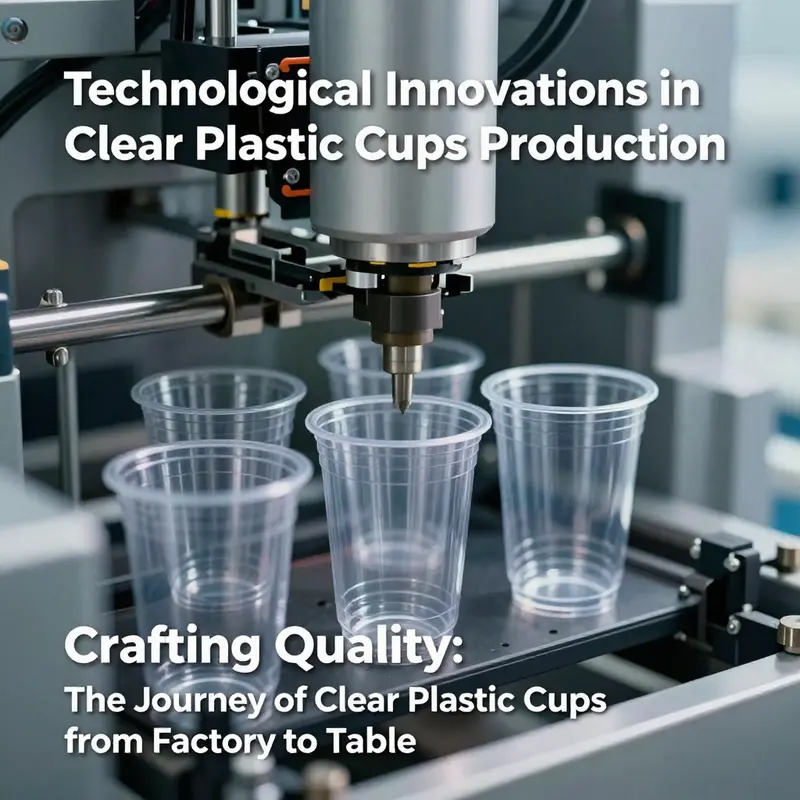
Clear plastic cups are ubiquitous, yet the stories behind their manufacture reveal a delicate balance of material science, precision engineering, and sustainability. As of early 2026, the production landscape emphasizes high-volume capability with reliable quality and growing emphasis on customization and responsible design. Factories at the intersection of design freedom and operational efficiency have become particularly influential, acting as ecosystems that merge advanced materials, smarter tooling, and digital branding to create a product that serves brands, retailers, and events while meeting safety and hygiene standards.
The modern cup has evolved from a simple single-use vessel to a packaging solution that addresses real-world use cases: maintaining beverage temperature, reducing exterior sweating, and withstanding stacking and transport. Double-walled designs, sometimes paired with foam insulation, illustrate how insulation supports broader use environments, offering practical thermal retention for hot and cold drinks while remaining comfortable to touch. In practical terms, this expands when and where cups can be used, from festivals to take-out service.
Material choices such as PET and PP shape performance, processing, and interaction with lids and sleeves. PET offers clarity and shatter resistance, while PP emphasizes toughness and durability for longer-form usability in demanding handling scenarios. The industry links polymer choice to packaging solutions that preserve product integrity in transit and in automated lines. Digital printing enables vibrant branding and even QR codes for campaigns, enabling mass customization without sacrificing speed. OEM partnerships allow handling bulk orders with consistent color quality and precise graphic alignment.
Sustainability remains central, with recycling innovations and the exploration of more sustainable polymers to support a circular economy. The focus is to reduce environmental footprint, optimize the supply chain, and improve end-of-life handling through better material separation and packaging design that minimizes leakage and contamination.
Globally, production tends to balance high-volume standardized output with nimble customization. Facilities invest in modular automation for rapid changeovers and inline inspection to maintain consistency when producing thousands of units per hour. The best performers combine automation with skilled oversight in quality assurance, defect analysis, and branding-specific printing, recognizing that the precision of branding requires human expertise alongside machines.
In supplier ecosystems, transparency around lead times, pricing, and samples helps buyers navigate large orders. Platforms connecting buyers and manufacturers enable design consultation, material selection, and post-sale support. Custom 3D modeling for lid-fit and stackability, along with packaging options, extend shelf life and protect against contamination in transit. Such clarity around processes and terms builds confidence across borders.
For readers seeking practical examples, supplier pages demonstrate how digital branding and scalable production converge—logos, color schemes, and QR codes integrated with consistent throughput for large campaigns. This is particularly relevant for OEM arrangements demanding bulk quantities and reliable alignment between printed graphics and the product.
Watching the Water: Environmental Realities and the Path Toward Cleaner Production in Clear Plastic Cup Factories
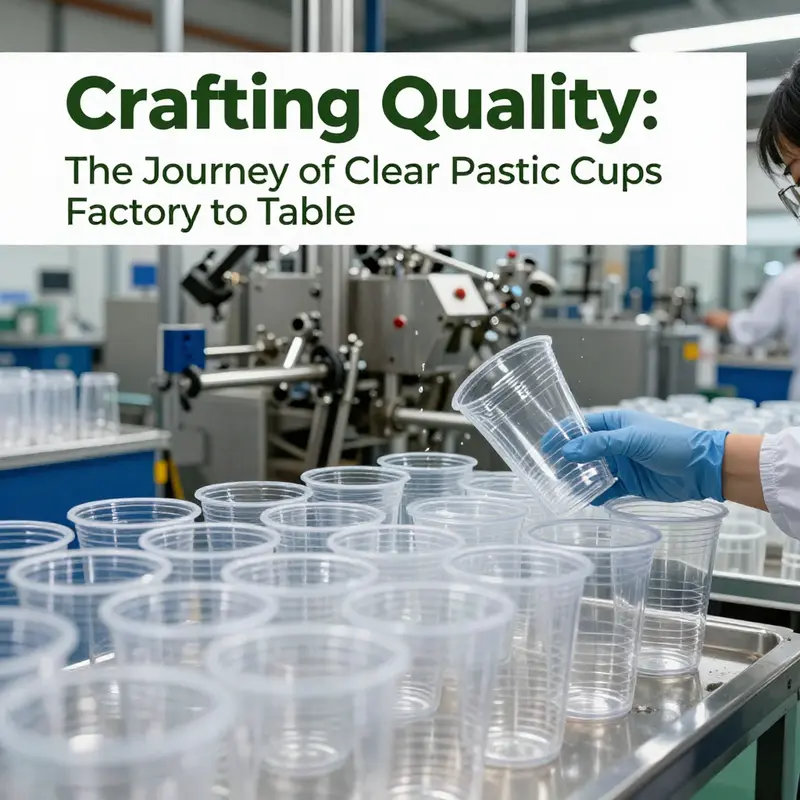
Clear plastic cups sit at the intersection of daily habit and industrial consequence. Their ubiquity makes them easy to overlook, yet every unit is born from a chain of choices that starts with resin, moves through energy and water use, and ends in end-of-life decisions that ripple through ecosystems and communities. In the landscape of clear plastic cup manufacturing, two facilities in China illustrate how a modern producer negotiates demand for customization, safety, and efficiency while facing the heavier burdens of environmental responsibility. One is located in the southeast coastal economy of Fuzhou, another in the more interior, industrious belt of Zhejiang. Both are described as capable of high-volume output and flexible service, capable of handling bulk orders and offering tailored solutions for clients seeking brand conformity, unique shapes, or specific performance criteria. The arc that connects these factories to the broader global market is not defined by product names or flashy features, but by the tacit standards they set for waste, energy, and material choice. It is through these standards that the chapter of environmental consideration becomes a practical chapter for anyone evaluating the true cost of disposable drinkware at scale.
Wastewater discharge is the most visible environmental frontier for cup factories. The processes used to manufacture clear plastics routinely involve solvents, cleaning agents, and additives that can contribute residual chemicals to effluent streams. In facilities that operate at high capacity, even modest daily discharges can accumulate into a notable local load if the effluent is not properly treated. The issue is not abstract: nearby rivers, lakes, and groundwater can bear the brunt of imperfect containment, with potential effects cascading through aquatic food webs, from microorganisms up to larger organisms that rely on clean water for breeding, feeding, and migration. The danger extends beyond a single plant. When multiple factories share watershed resources, the cumulative impact grows, making upstream-downstream accountability a collective obligation rather than a series of isolated rights and responsibilities. In this context, environmental performance becomes a competitive factor as much as a regulatory obligation.
The environmental footprint of any disposable cup begins long before the first pour. A lifecycle perspective demands attention to material choice, energy intensity, and the extraction of raw resources. In the body of comparative research on disposable cups, two polymers frequently surface: polypropylene and polylactic acid. A robust lifecycle assessment contrasts their profiles across stages from extraction to end-of-life disposal. Polypropylene, a petroleum-derived polymer, typically offers strong mechanical performance and cost advantages but carries energy-intensive production steps and fossil-energy dependence. Polylactic acid, often touted for its bio-based origins, can reduce certain emissions when sourced from renewable feedstocks, yet its end-of-life behavior is highly sensitive to waste management infrastructure. The study in question synthesizes complex trade-offs: material selection drives energy intensity, processing conditions influence emissions, and end-of-life pathways determine ultimate environmental performance. No material choice exists in a vacuum; the broader system—the availability of recycling streams, composting opportunities, and consumer behavior—modulates the realized benefits or drawbacks of a given polymer. In other words, the environmental story of cups is never contained to the factory floor. It extends into the collection system, municipal wastewater treatment, and the behavior of litter in the landscape.
Manufacturers respond to these pressures in diverse ways, and the two exemplar factories reflect different emphases within a shared aim: reliable supply combined with a cognizant approach to environmental stewardship. In Fujian, the facility markets itself on customization and cost performance. Production capacity is described in terms of monthly throughput, enabling it to fulfill bulk orders efficiently while offering a spectrum of design options to align with client branding and functional requirements. The emphasis on customization can be a gateway to reducing waste downstream by ensuring cups meet exact needs, thereby reducing overproduction and the volume of surplus stock that eventually finds its way into waste streams. A facility that can tailor dimensions, lids, or associated accessories can also tailor performance characteristics such as stacking efficiency, insulating properties, or durability. Yet customization cannot be deaf to the realities of environmental pressure. If a factory can minimize rejects through precise tooling and process control, it reduces scrap, lowers energy per unit, and curtails solvent usage associated with rework. In practical terms, this translates into a better environmental profile not only on paper but in the real-world flow of materials through the plant.
In Zhejiang, the other exemplified operation foregrounds safety and material purity. Its clear plastic cups are described as BPA-free, a designation that resonates with consumer safety expectations and regulatory scrutiny in many markets. Durability and dishwasher safety are highlighted as hallmarks, pointing to products designed for repeated use in specific contexts, even if their primary purpose remains single-use convenience. The emphasis on safety and design signals an awareness that consumer perception of risk can influence disposal behavior. A product that is perceived as safer, or easier to reuse under certain conditions, interacts with environmental outcomes in nuanced ways. For instance, dishwasher-safe performance can enable longer service life, potentially reducing the need for frequent replacements. On the other hand, dishwasher cycles themselves consume energy and water, a reminder that safety certifications do not automatically translate into lower environmental impact absent a holistic view of the full lifecycle.
Both factories’ openness to direct inquiries and sample consideration, a standard practice in many global manufacturing hubs, underscores a broader transparency imperative in this sector. When buyers can assess samples, review material specifications, and evaluate manufacturing processes, they gain a clearer sense of how environmental considerations align with product performance and cost. However, the pathway from factory floor to consumer is mediated by a web of suppliers, distributors, and brand owners, all of whom hold a thread of responsibility for environmental outcomes. The supply chain dynamic means that even if a facility operates with strong internal controls, the downstream stages—packaging, distribution, and end-of-life handling—shape the ultimate carbon and ecological footprints. In practice, that chain invites a suite of strategies: adopting energy-efficient equipment, pursuing water recycling where feasible, optimizing coating and cleaning regimes to minimize solvent waste, and investing in filtration and treatment systems to reduce residual contaminants before discharge. These choices are not abstract; they map directly to the local environments in which the plants sit and to the reputational stakes that accompany today’s sustainability expectations.
A crucial insight from lifecycle-oriented research is that the environmental advantages or drawbacks of disposable cups hinge not only on material selection but also on the integrated systems that manage production, use, and disposal. The comprehensive view invites manufacturers to consider improvements across stages. At the plant level, this can mean upgrading to energy-efficient extrusion lines, implementing closed-loop water systems, and capturing heat from processes to preheat incoming streams. It can also mean better raw material stewardship, including supplier audits for residual contaminants and adherence to best-practice effluent management. Taken together, these measures can meaningfully reduce emissions, conserve resources, and limit the release of microplastics into aquatic environments—a concern that is increasingly scrutinized by regulators and communities living near production sites.
This broader view helps explain why the chapter’s focus extends beyond the mere existence of two factories and their production capacities. It invites readers to ask, at the level of corporate practice and policy, how environmental considerations are woven into the decision to scale up, customize, or diversify product lines. Do facilities commit to wastewater pre-treatment and filtration, or do they rely on downstream treatment alone? Do they explore opportunities for material substitution that preserve performance while easing end-of-life handling? Do they participate in or support recycling infrastructure that can handle their products after use? These questions do not have easy answers, but they are essential to evaluating a factory’s overall environmental responsibility. In the case of the two highlighted operators, their stated strengths—one in customization and efficiency, the other in safety and design—signal two complementary routes to integrating environmental thinking into everyday manufacturing practice. Neither route absolves the industry of its responsibilities; both paths, if pursued with rigor, can help shift the sector toward a system where performance, safety, and environmental integrity advance in tandem rather than at odds.
Against this backdrop, the notion of lifecycle thinking becomes a practical guide for decision-makers. When evaluating a potential supplier of clear plastic cups, buyers increasingly look for signs of environmental due diligence that complement quality and cost. A factory’s willingness to disclose process details, wastewater treatment practices, energy consumption metrics, and material provenance signals a commitment to responsible operation. It is not enough to offer BPA-free cups or to tout high-throughput capabilities if those claims sit alongside opaque waste streams, high solvent usage, or a lack of end-of-life clarity. In a market where brands strive to meet stringent sustainability targets, the capacity to articulate and substantiate an environmental plan matters as much as the ability to deliver on demand. In this sense, the environmental considerations discussed here are not peripheral notes but core criteria that shape the very feasibility of scaling production while preserving ecological integrity.
To deepen understanding, readers can explore broad analyses that compare disposable cup materials across the full lifecycle, from extraction through disposal. The cited research emphasizes how material choice, energy use, resource extraction, and emissions intersect with end-of-life outcomes. It is through these intersections that the conversation about environmental responsibility evolves from a sustainability sidebar into a central business discipline. For a detailed, technical examination of the environmental and littering impacts of disposable cups made of polypropylene and polylactic acid, see the external resource provided at the end of this chapter. While the specific quantitative results are technical, the qualitative takeaway remains clear: the sustainability file for disposable cups is a composite of material science, process engineering, and waste-management infrastructure—all of which must be aligned to achieve meaningful environmental progress.
As the industry continues to mature, the story told by factories like those in Fujian and Zhejiang offers a microcosm of a larger shift. Customization and safety are no longer simply market differentiators; they are entry points for implementing responsible manufacturing practices. When a plant knows its water usage down to specific process streams, when it tracks energy intensity per unit of output, and when it documents how effluent is treated before discharge, it builds credibility with clients who are increasingly accountable to their own consumers and investors. The environmental considerations outlined here, therefore, serve a dual purpose: they illuminate the real-world constraints and possibilities of manufacturing at scale, and they provide a framework for evaluating how well any given facility can meet evolving expectations for environmental stewardship without sacrificing product performance or cost efficiency. In other words, the environmental narrative of clear plastic cup factories is not a moral appendix to production. It is a central thread that binds design, process, and policy into a coherent model of sustainable growth.
For readers seeking practical insight into industry-related alternatives and greener packaging options that intersect with this discussion, one useful entry point is a related online resource that highlights eco-friendly paper cup solutions. This internal link provides a comparative perspective to the plastics discussion by offering access to alternatives that can influence the decision-making process when brand owners plan for sustainability across product lines. See the linked page here for more on eco-friendly paper cup options.
External resource: For a detailed, technical examination of the environmental and littering impacts of disposable cups made of polypropylene and polylactic acid, refer to the study available here: https://www.sciencedirect.com/science/article/pii/S0956054223001876
Final thoughts
The journey of clear plastic cups from factory to the point of sale highlights a blend of manufacturing excellence and economic significance. As businesses continue to seek safe, visually appealing, and environmentally responsible solutions, the factories that produce clear plastic cups are essential partners in ensuring quality and sustainability. Engaging these manufacturers—from exploring production processes to addressing environmental concerns—empowers beverage chains, catering services, and event planners to make informed decisions that align with their brand values while meeting customer expectations.