
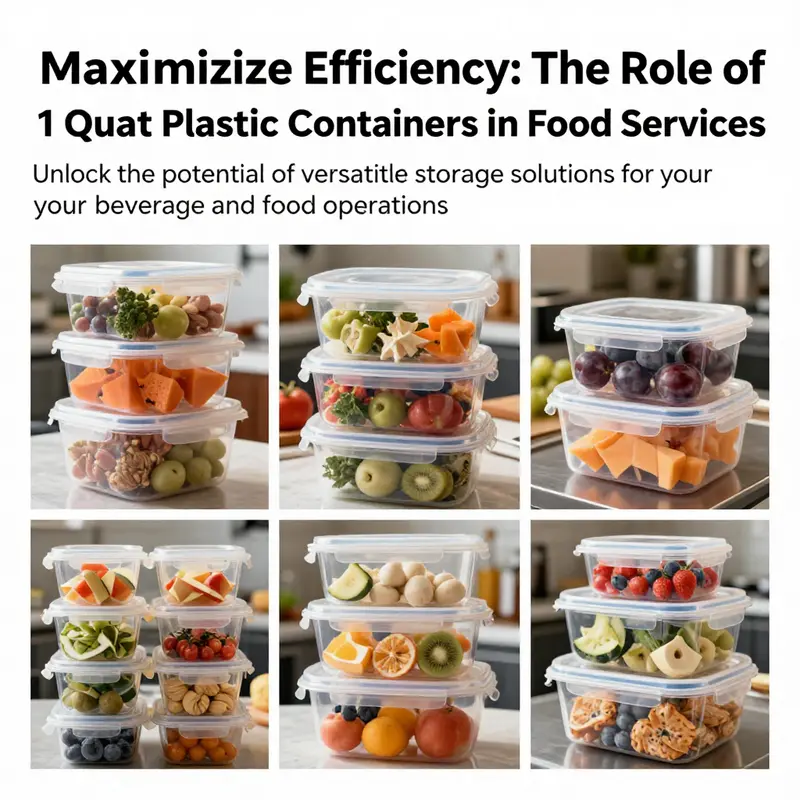
For beverage chains, restaurants, food trucks, and catering services, the efficiency and organization of food storage can significantly impact service quality and customer satisfaction. Enter 1 quart plastic food containers—durable, lightweight, and versatile storage solutions that cater to a variety of culinary needs. In this discussion, we’ll delve into the abundant benefits and features of these containers, explore their various types and designs, analyze market trends and consumer preferences, and highlight practical applications that showcase their effectiveness in everyday use. Ultimately, our aim is to equip food service professionals with insights into how these containers can elevate operational efficiency and enhance their service offerings.
Clarity in the Kitchen: The Enduring Value and Versatility of 1-Quart Plastic Food Containers
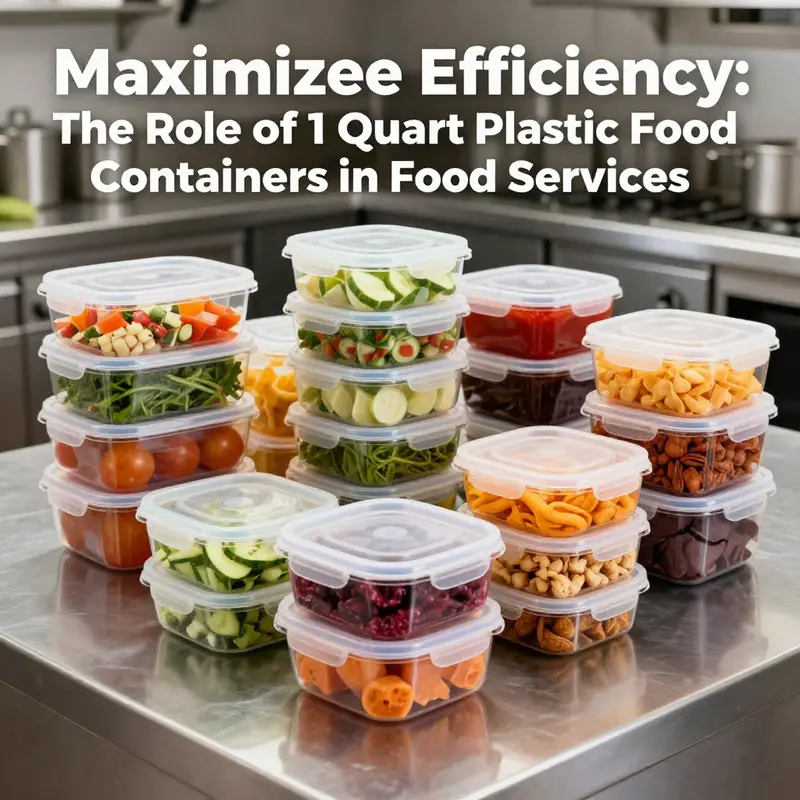
Clear, dependable storage often hides in plain sight. The 1-quart plastic food container, compact in size but expansive in utility, has earned a quiet reputation as a workhorse in both home kitchens and commercial backrooms. Its appeal rests not on flashy features alone but on a bundle of practical advantages that align with how people cook, store, transport, and preserve food across a busy week. From the moment a user lifts a container from the shelf, the design speaks to a philosophy of everyday efficiency. Materials like polypropylene and PET are chosen for their food-grade safety and resilience. These polymers deliver a balance between lightness and strength, resisting cracks and deformation even under repeated handling. A container that weighs little and travels well can change how a household approaches meal prep and leftovers, turning what might be a cluttered fridge into an orderly system. The core material choice matters more than mere durability. It shapes how a container can perform across the kitchen’s diverse tasks, from cradling delicate sauces to holding bulky prepped ingredients. When you select a 1-quart option, you’re prioritizing a reliable baseline that supports broader cooking ambitions rather than an isolated use case. The right plastic container blends seamlessly with the rhythm of daily life, becoming invisible enough to forget until you need it. Yet its presence is felt every time you reclose a jar of soup, portion out a meal, or shuttle ingredients to a coworker, classroom, or dinner guest. In that sense, the value of a 1-quart container extends beyond the item itself and enters the realm of practical choreography in the kitchen. Its design speaks to a simple truth: when a storage solution behaves consistently, it reduces friction and expands what you can achieve with limited space and time. The material, the shape, and the lid all work in concert to create a reliable system that users can trust. The tactile experience matters, too. The transparent walls provide immediate visibility, a feature that saves time and eliminates guesswork during meal prep and inventory checks. You can scan the contents from across the room, note how many portions remain, and plan for the next grocery run without opening multiple containers. This visibility is not a mere convenience; in busy environments like delis or meal-prep operations, it translates into faster service, fewer mistakes, and less waste. Food safety and hygiene sit at the heart of the container’s design. The sealable lids are designed to be leak-proof, a crucial feature when transporting liquids, semi liquids, or items that require an airtight seal to preserve freshness. Such a feature reduces the risk of cross-contamination and spills during transit, which is particularly valuable in settings where containers travel from kitchen to car, classroom to office, or prep area to storage rack. The ability to maintain integrity during freezing, reheating, or refrigeration further extends the container’s usefulness. When a container can withstand the cold of a freezer and the heat of a microwave, a cook gains a single, versatile tool rather than a mismatched set of devices. The compatibility with common kitchen appliances is a practical boon. In a bustling kitchen, every minute saved—whether from quick reheating, simple cleaning, or rapid loading into a dishwasher—adds up. The 1-quart form is deliberately compatible with standard dishwashers, making cleanup predictable and efficient. This compatibility matters not only for home cooks but also for food-service operations that must balance throughput with hygiene. The familiar shape, usually featuring flat sides and right-angle corners, maximizes storage efficiency. When multiple containers nest together, their flat sides minimize wasted space in cabinets and on shelves. In transport, the same flat geometry supports tight packing for delivery or catering, enabling more units to fit into a single insulated bag or cooler. The flat sides also create uninterrupted surfaces for labeling and branding. In retail contexts, labeling is often essential for inventory control and customer clarity. A square or rectangular profile offers more contact area for printed information without crowding, which is helpful for both staff and patrons who want to identify contents at a glance. Even the choice of transparency contributes to how these containers fit into a broader system of organization. Clear walls allow users to identify contents quickly, enabling better portion control and more predictable meal planning. The ability to see what’s inside reduces the impulse to open multiple containers in search of a preferred item, which in turn cuts down on unnecessary handling and potential contamination. Beyond visibility, the 1-quart container embodies a broader ethos of reuse and long life. These containers are designed for repeated use, with easy cleaning that supports sustained cycles of storage and prep. When a container lasts through many dishwashing cycles without clouding or warping, it earns trust through every use. The repeated-use potential is a cornerstone of kitchen practicality. It aligns with responsible consumption patterns, especially in home kitchens seeking to minimize waste and manage costs. In commercial settings, durability translates into predictable performance under heavy load. The containers withstand the rigors of a fast-paced environment where assets must withstand frequent handling, stacking, and long service hours. Hygiene standards in industrial contexts often demand materials that resist staining and odors. The durable plastics employed in 1-quart containers help maintain a clean, neutral baseline that does not easily harbor residue when properly cleaned. This is not merely about aesthetics; it’s about predictable sanitation. The design also supports flexibility in use. A single quarter-liter step up or down in a prep line can redefine how a menu is assembled, how a kitchen tests for new recipes, or how a household reorganizes a pantry after a week of shopping. The ability to store dry goods like spices and snacks with a sealable lid makes the container versatile beyond liquids. It is a container that can handle both dry and wet items with equal ease, a feature that underscores its multi-functionality. The market for these containers reflects a broad spectrum of needs. For households, the primary concerns are reliability, ease of use, and the capacity to fit in with everyday routines. For restaurants, delis, and meal-prep services, the emphasis shifts toward durability, ease of handling in high-volume workflows, and the ability to standardize packaging across countless orders. A uniform quart-sized solution can simplify inventory, reduce variance in packaging, and streamline training for staff who handle, label, and store products. In such environments, even small inefficiencies become magnified costs. The enduring appeal of the 1-quart container, then, lies in its balance of simplicity and capability. It avoids gimmicks while delivering a robust set of features that users can rely on. It is a tool that helps people think clearly about storage, not clutter their minds with choices that complicate the kitchen workflow. The design speaks to a practical philosophy: keep it straightforward, keep it sturdy, and keep it adaptable to the many forms food storage takes in daily life. While the modern kitchen leans toward more specialized options for niche tasks, the 1-quart container remains a reliable anchor. It can support meal-prep routines, portion control strategies, and pantry organization plans that rely on repeatable processes. In this sense, the container functions as a quiet facilitator of habit formation. It fosters regularity in how ingredients are stored, how leftovers are portioned, and how meals are planned. The container’s transparency, its leak-proof lid, and its compatibility with common kitchen workflows create a dependable framework that users can rely on. The interplay of material choice, lid integrity, and geometry contributes to a feedback loop: the more durable and clear the container, the more confident the user feels planning ahead, which in turn encourages better storage practices. This is a subtle but meaningful impact on reducing waste and enhancing food safety. In a broader sense, the 1-quart plastic container embodies a realistic approach to modern storage challenges. It acknowledges the limits of space, the needs of busy schedules, and the demand for hygienic, economical solutions. The result is a container that does not demand attention in its own right, yet rewards attention spent on it by delivering steadiness when it matters most. For readers seeking further context on specifications, types, and applications, a comprehensive guide that surveys the landscape of 1-quart plastic containers provides a deeper frame. This resource offers extended details about materials, sizes, and the nuances that affect performance in both home and commercial use. External resources: https://www.katom.com/food-service-supplies/containers/1-quart-plastic-food-storage-containers
Internal resources can also offer related perspectives on storage options that complement plastic containers. For those exploring alternatives to rigid containers while maintaining portability and practicality, a related page delves into other take-away and storage formats. 1L snack containers, for example, illustrate how form factors adapt to different requirements without sacrificing core benefits like visibility, sealing, and durability. See the related internal resource here: 1L snack containers. This link showcases how a similar design language—clear visibility, secure lids, and robust construction—can extend beyond rigid plastics to a wider ecosystem of storage solutions that food-focused teams and households rely on when planning meals, packing lunches, or organizing a pantry. The broader lesson remains consistent: regardless of material, thoughtful geometry, reliable sealing, and simplicity in use elevate any storage solution from a mere receptacle to a trusted ally in daily routines. In the end, the 1-quart plastic container remains compelling because it meets real needs with steady performance. It acts as a reliable anchor in the kitchen, a durable partner in the back-of-house, and a practical tool that helps people make better use of what they have. Its value emerges not from novelty but from continuity—the security of knowing that a well-designed container will perform again and again, season after season, in a world where food, space, and time are precious resources. For readers who want a deeper technical dive into the specifications and applications, a detailed guide is available that expands on materials, variants, and use cases in a broader context. External resources: https://www.katom.com/food-service-supplies/containers/1-quart-plastic-food-storage-containers
null
null
Market Winds and Palates: The Evolving Promise of 1-Quart Plastic Food Containers

Across kitchens, break rooms, and prep stations, the humble 1-quart plastic food container plays a quiet but pivotal role in how people store, transport, and transform food. These containers sit at a crossroads where daily convenience meets industrial scale, where the preferences of busy households converge with the demands of modern food service and food safety regulation. The market for these containers has grown in step with broader shifts in how we eat, what we value in packaging, and how we imagine the lifecycle of a single meal. In 2024, the global plastic food container market valued at about five billion dollars signaled a steady appetite for practical, affordable solutions. Projections that extend to 2032 place the market near nine billion dollars, reflecting a compound annual growth rate just over seven percent. Those numbers are not mere statistics; they map real changes in how families portion, preserve, and reheat meals, and how businesses design packaging to fit a fast-paced, standardized world of food distribution. The 1-quart niche, in particular, benefits from its versatility and its readiness to scale up or down to different needs, from ingredient storage and meal-prep batches to takeout containers that keep sauces separated from salads until the moment of consumption.
A first through line in current trends is the acceleration of convenience and portion control. Consumers increasingly seek single-serving or family-sized options that are easy to store in a fridge or freezer, simple to transport, and straightforward to reheat without compromising texture or flavor. This preference dovetails with broader market dynamics in the plastics sector, where lightweight, durable, and cost-efficient materials dominate the landscape. In practice, this means a durable container that can withstand regular handling, is compatible with common kitchen workflows, and supports predictable portioning for meal plans or stock rotation. When a user can grab a clearly labeled, stackable quart and know it will perform consistently, brand trust begins to form not through flash but through reliability. The result is less waste, faster service, and a smoother transition from prep to plate.
Material choice remains a central driver of both performance and perception. PP and HDPE have long been workhorse materials, valued for their resistance to cracking, impact tolerance, and heat endurance—qualities vital for everyday use in busy homes and bustling kitchens. Yet consumer minds are increasingly tuned to safety and sustainability. A growing segment of buyers seeks BPA-free options and recyclable materials, even as they demand price parity with traditional plastics. The market responds by expanding the palette to include #PET and PP variants that balance safety, recyclability, and cost. In a market where plastic still holds roughly half of the overall container share, these material shifts matter because they impact the container’s end-of-life story as well as its compatibility with a range of processes—from freezer storage to microwaving. The convenience of a single quart is multiplied when the container also supports a wide array of kitchen activities without requiring multiple form factors.
Design sensibilities around these quart containers are shifting toward functional and sustainable aesthetics. The everyday object is being reimagined to reduce waste and to extend shelf life through smarter sealing and labeling. Many lids now promise leak-proof performance, a feature that is essential for transporting liquids, semi-liquids, and components that benefit from airtight preservation. The combination of a reliable seal and a robust body translates into less leakage, fewer spoilage incidents, and more confident transport for school lunches, office meals, or restaurant takeouts. In turn, this reliability fosters brand loyalty, because users feel they can count on a container to perform whether it’s in a microwave or a freezer, on a pantry shelf or in a backpack during a commute.
Another frontier is the push toward lightweight, recyclable formulations and hybrid packaging that blends recycled content with high-performance resins. Even as plastic remains predominant due to its cost efficiency and durability, there is a clear push toward sustainability within the segment. The trend toward recyclable materials is not just about end-of-life disposal; it also reflects a broader ecosystem approach where suppliers, manufacturers, and retailers seek to minimize the environmental footprint of everyday containers. In practice, this has encouraged the use of materials that can be readily processed by common recycling streams, along with clearer labeling to help consumers sort correctly. The rise of eco-conscious packaging options does not force a trade-off with performance. Instead, it challenges designers to optimize wall thickness for strength and to refine seals and geometry for stackability without adding weight or bulk. The consumer experience benefits from sturdy, easy-to-handle containers that also align with a growing sense of environmental accountability.
Beyond the standard rectangular or square profiles, there is a noteworthy expansion in form factor variety, including cylindrical, wide-mouth designs that resemble jars. These shapes can simplify access to contents like soups, dressings, sauces, and dressings mixed with greens or grains. The practical advantage is clear: wide mouths facilitate scooping, stirring, and portioning, while tight-sealing lids help maintain freshness during transport or storage. In real-world kitchens, the choice of shape often mirrors the user’s routine. A jar-style quart can become a favored option for a weekly batch of soups or sauces, where the ease of access and spill resistance matters just as much as the ability to reheat directly in the container. For meal-prep operations and delis, such flexibility supports diverse menus without forcing every buyer to adopt a single container archetype.
Retail channels and consumer access also shape how these containers evolve. In-store, online, and wholesale avenues converge to create a broad spectrum of options, with price varying by material quality, brand, and included features such as stackability or BPA-free certification. The accessibility of quart containers through major retailers and online marketplaces helps normalize their use in both home kitchens and professional settings. This democratization of access intensifies competition and pushes brands to differentiate less on price and more on value—through dependable performance, superior labeling options, and compatibility with kitchen appliances like microwaves, freezers, and dishwashers. The practical takeaway for consumers is simple: the quart size remains a pragmatic default for everyday storage, but the expectations of what comes with it—leak-proof performance, microwave safety, freezer resilience, and easy stacking—are all increasingly standardized across brands.
In contemplating what drives choice, it is worth considering how a consumer evaluates durability, compatibility, and convenience. Durability translates into the container’s ability to resist cracking, deforming under load, and surviving repeated cycles in a busy kitchen. Compatibility refers to the container’s willingness to play nicely with microwaves, freezers, and dishwashers, along with its fit within a given pantry or refrigerator system. Convenience encompasses lid reliability, ease of handling, and the practicality of lid removal and re-sealing, which matter during daily routines that involve commuting, school lunches, or late-night recipe experimentation. When a quart container checks all these boxes, the result is not merely a storage solution but a trusted companion in daily rituals—an everyday technology that supports the flow of meals from prep to plate.
In the realm of consumer behavior, the trend toward single-serving or family-sized options has particular resonance. For households, the quart size often represents a compromise between bulk buying and the desire for portion-controlled meals. For meal-prep services and restaurants, it provides a predictable unit that can be packaged, labeled, and delivered with consistency. The flexibility of the quart container makes it adaptable to sauces, soups, grains, and mixed salads, reinforcing its value across a spectrum of culinary needs. In this sense, the container’s design and material choice are less about novelty and more about dependable performance that aligns with modern lifestyles—an undercurrent that supports both the speed of service and the mindfulness toward waste reduction through better portioning.
As the market continues to mature, several emerging patterns invite close attention. Eco-conscious packaging is not a fad but a trajectory that will influence raw material sourcing, production methods, and end-of-life strategies. The use of lighter formulations and recycled content, while preserving barrier properties and mechanical strength, challenges manufacturers to rethink resin systems and molding processes. The shift toward recyclable materials also carries implications for label design and color choices, since visibility in recycling streams depends on clarity and standardization. These considerations matter to consumers who want clarity on what to recycle and how to dispose of damaged or empty containers responsibly. In this evolving landscape, design becomes a form of communication as much as a function of containment: clear, consumer-friendly labeling helps minimize contamination in recycling streams and reduces the guesswork that often accompanies waste sorting.
For those seeking a tangible glimpse of how these trends translate into product choices, one example line of takeaway bowls illustrates the breadth of options within the quart category. In this context, a single packaging family may offer a range of sizes, materials, and lid configurations designed to meet different needs—from quick-service takeout to home meal-prep storage. The lesson for designers and manufacturers is that the quart container must be reliable, versatile, and compatible with a wide array of workflows. A container that performs well in the freezer, can be reheated safely, and seals leak-proofly without creating friction during daily use will earn trust across both household and commercial users. The market’s direction toward sustainability and functionality suggests that future quart containers will continue to blend performance with responsible material choices, without sacrificing the simplicity that has made them a staple in kitchens everywhere.
For readers who want to explore more about how the industry foresees growth and shifts in consumer demand, an external market perspective offers a broader view of the forces shaping plastic food containers across categories and regions. The share and growth outlook underscore how convenience, safety, and sustainability remain intertwined in driving product development, retail strategies, and consumer education. See the external resource for a comprehensive forecast and deeper analysis of market dynamics: https://www.marketresearchfuture.com/reports/plastic-food-container-market-2457. In addition to the macro perspective, a specific example of how a single container family is designed to balance these forces can be explored through one internal product profile that emphasizes lid reliability, stackability, and safety labeling. For a focused look at a related packaging option that aligns with the same themes, you can refer to this example page: Senang05 food-grade takeaway bowls. Senang05 food-grade takeaway bowls. This connection between macro trends and on-the-ground product design illustrates how consumer expectations and industry capabilities converge in the everyday act of storing and transporting food. The quart container thus embodies a broader narrative about how modern life negotiates convenience, safety, and sustainability in a single, portable package.
From Fridge to Bento: Harnessing the Everyday Versatility of 1-Quart Plastic Food Containers
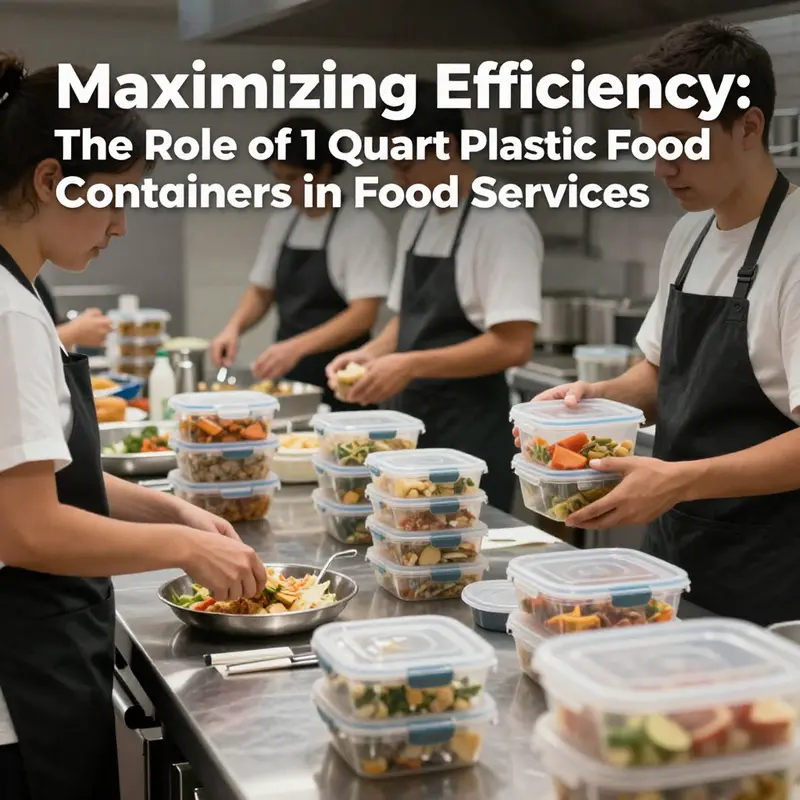
A simple, reliable container can quietly shape the rhythm of a kitchen day. The 1-quart plastic food container sits in that role with unassuming steadiness. It is light enough to lift with a finger, sturdy enough to withstand a busy routine, and clear enough to reveal what lies inside without opening every lid. In kitchens from bustling home cook spaces to modest delis, the 1-quart size has earned its keep not by shouting for attention but by delivering dependable performance across a wide spectrum of needs. These containers are commonly fashioned from durable, food-grade plastics such as polypropylene (PP) or high-density polyethylene (HDPE), with some models leaning toward PET for clarity and rigidity. The result is a vessel that can hold the everyday essentials—ingredients, sauces, leftovers, prepped meals—and do so without demanding constant replacements. The design aims to balance accessibility with resilience, which is why many such containers feature sealable lids that provide an airtight, leak-resistant seal. In practice, that seal translates into real-world benefits: liquids stay put on the move, dressings and sauces remain fresh, and the fear of spillovers during transport dwindles to a manageable worry rather than a daily anxiety.
Aesthetics play a quiet but meaningful role here as well. Clear bodies make it easy to spot what’s inside at a glance, supporting quick meal planning and inventory checks. Opaque options can simplify stacking and organization, particularly in shared kitchen spaces or in a pantry where uniformity helps maximize shelf real estate. The lids themselves matter just as much as the containers. A snug, dependable seal keeps air from accelerating stales, a crucial factor when households store sauces, soups, or marinades. And when the lid is designed for compatibility with common kitchen appliances, the container becomes a true multitasker: it can be reheated, frozen, or washed in the dishwasher, depending on the material grade and the specific product line. The practical upshot is a versatile workhorse that reduces clutter while expanding the range of tasks it can handle.
In daily food storage, the 1-quart container excels in handling both dry goods and liquids. For dry goods—flour, sugar, spices, grains—the clear or lightly tinted bodies make organization intuitive. A stack of neatly labeled 1-quart jars can transform a crowded cabinet into an orderly, navigable system, making it easier to monitor what’s running low and what needs restocking. For liquids, the same design features shine: airtight lids, robust seals, and flexible compatibility with refrigerated storage mean making and preserving homemade sauces, broths, or baby foods becomes straightforward rather than burdensome. The capability to freeze liquids without fear of cracking or leaking adds another layer of practicality, especially for home cooks who batch-cook and reuse leftovers across a week’s meals. The ability to thaw and reheat directly in the same container is a convenience that compounds over time, particularly in households balancing demanding schedules with a desire to minimize waste.
Meal prep and portion control are among the most transformative uses of these containers. The quart size is inherently generous, but it also supports mindful portioning. By dividing a week’s worth of ingredients into uniform, clearly visible portions, families can simplify grocery budgeting, reduce plate waste, and maintain consistency in meal timing. When reheating is necessary, the option to do so directly in the container, if the material grade permits it, makes sense for urban workers or busy caregivers who need to streamline cleanup. The portability of a sealed container means meals can accompany commuters, students, and shift workers with less risk of spills or spoilage. In essence, these containers become a practical extension of the kitchen’s planning discipline, turning bulk buying into manageable, daily routines rather than large, daunting tasks.
Commercial kitchens and food-service operations rely on the same principles but at a larger scale. Storing ingredients in 1-quart portions supports precise inventory management and consistent recipe execution. When taken to the takeout counter, such containers offer compact portioning for sauces, dressings, and side dishes, reinforcing a standard of service that is predictable for staff and customers alike. In these environments, the ability to withstand the rigors of freezer storage and dishwasher cycles becomes a significant advantage, ensuring hygiene and efficiency without sacrificing speed. The containers’ stackability contributes to a tidy line of sight in cramped kitchens, while embedded features like built-in lids or snap-on caps can further streamline service, reduce breakage, and speed up the turnover that is crucial in busy operations.
Space efficiency is not solely about how many items fit in a cabinet. It’s about how easily a kitchen can reorganize around changing needs. The 1-quart format naturally nests and stacks, which helps maximize every inch of counter space and cabinet depth. In sets, you’ll often find designs that optimize stacking, with racks or built-in compartments that keep lids aligned with their bases. The net effect is a system that scales with the user’s needs—from a few containers kept for everyday foods to larger, organized collections used for meal-prep services. An additional payoff occurs when these containers are compatible with a wider ecosystem of kitchen tools, such as microwave-safe variants for reheating or freezer-safe variants for long-term storage. This compatibility reduces the number of different storage options a household must maintain, which simplifies decision-making and keeps clutter to a minimum.
Beyond routine kitchen tasks, 1-quart containers prove their worth in more specialized settings. They are surprisingly adaptable for travel kits, small-batch snacks, or sample-sized desserts for events. In these scenarios, their durable build, secure lids, and easy-to-carry dimensions make them ideal for portioning out items in advance, whether for school lunches, office snacks, or vending. A jar-style variant with a wide mouth and screw-top lid, for example, supports dressings, soups, and sauces where easy access is key. Such designs also appeal to users who value spill resistance during transport, a feature that becomes particularly important when meals are packed for car trips, picnics, or commutes. The broader takeaway is that the 1-quart size is not limited to conventional kitchen storage; it adapts to the ways people live, travel, and share meals with others.
From a practical standpoint, material choice matters, and it shapes how the container behaves across use cases. While many containers rely on PP or HDPE for durability and chemical resistance, PET variants emphasize clarity and rigidity, supporting a different set of use cases. Each material brings its own set of advantages and caveats. PP is often forgiving in microwaves, offering a safer reheating option for many foods. HDPE tends to be tougher at lower temperatures, making it well-suited for freezer storage and rough handling. PET’s crisp clarity helps in quickly identifying contents without opening the lid, a feature that appeals to organized households and restaurants aiming for quick service. Of course, care is required with any plastic container intended for repeated use. Avoid exposing containers to high-temperature environments unless the manufacturer explicitly approves microwave or dishwasher use for that specific product, and always follow guidance about safe reuse and eventual recycling.
Safety and sustainability sit at the heart of the everyday decision to use these containers. BPA-free certification became a standard expectation for many consumers and institutions, and while modern formulations often omit BPA, it remains important to verify that the chosen product is labeled appropriately. Similarly, while the convenience of washing in a dishwasher may seem obvious, it is wise to observe the upper rack recommendations and avoid harsh detergents that could degrade seams and seals over time. Reuse of sturdy containers is a practical strategy for reducing waste, but it should be balanced with hygiene—thorough cleaning between uses and careful inspection for cracks or clouding, which can harbor bacteria or compromise seal integrity. When the container has outlived its usefulness, recycling programs that accept the particular plastic resin offer a responsible path forward, closing the loop for future production cycles.
The decision-making process around selecting a 1-quart container hinges on several factors. Durability is the first, followed by compatibility with kitchen appliances and storage conditions. If reheating is anticipated, confirm microwave-safety for the specific material grade. For households that govern portioning and meal-prep routines, the ability to nest and stack with a predictable footprint translates into tangible space savings. Where portability matters, the lid’s seal strength and the container’s ergonomic grip contribute to a smoother daily routine. And while this chapter has focused on practical usage, it’s worth noting that the broader ecosystem of storage options remains available. For irregularly shaped items or bulk staples that don’t fit a rigid container, flexible options like quart-size bags can be a helpful complement, though they lack the rigid structure and long-term reuse potential of hard-sided containers in many cases.
In exploring the everyday utility of 1-quart plastic containers, one can see how a seemingly modest tool can shape practical habits. The small acts—dividing a week’s lunches, storing a batch of sauces, organizing a pantry, or packing a compact travel kit—accumulate into a smoother, more predictable routine. The containers’ lightweight construction, coupled with durable lids and versatile materials, turns what could be a cluttered process into an orderly, repeatable system. Even as households plan for the next week’s meals, these vessels offer a quiet confidence: ingredients and leftovers can be preserved with care, transported with minimal risk of spills, and accessed with ease when hunger or appetite demands quick action.
In sum, the 1-quart plastic food container is a compact instrument of organization and efficiency. Its appeal rests not in a flashy feature but in dependable performance across the everyday tasks that define modern cooking and food management. From keeping pantry staples neatly visible to enabling precise portion control for busy families, from supporting bulk meal prep to facilitating takeout and catering operations, this size occupies a consistent, practical niche. The result is a small but meaningful contributor to how people plan, store, and enjoy food with less waste and more reliability.
For readers who want to see a concrete example of a container within this segment, a related option can be explored through a purpose-built, lid-equipped product designed for snack, pet food, and salad applications. You can examine a representative design here: 1L snack-pet-food-salad containers. While the material philosophy of this example leans toward disposable and kraft-based packaging, the underlying idea—compact, leak-resistant, and versatile storage that supports organized, on-the-go use—embodies the core value of the 1-quart container family: practical design that serves everyday needs without demanding a lot of attention.
As readers consider the next purchase, the guiding questions remain practical: Will the container resist cracking under frequent use? Is the lid dependable for liquids? Can it withstand the dishwashing cycle or the freezer’s chill? Does the design support easy stacking in a crowded cabinet? Can it be used for reheating in a microwave if needed? And, perhaps most importantly, does it align with a broader approach to sustainability and responsible packaging use? When these questions are answered affirmatively, the 1-quart plastic container earns its place not as a mere utensil but as an enduring ally in the kitchen workflow. In this sense, the quart-sized container becomes not just a storage solution but a facilitator of better cooking habits, smarter organization, and more confident food handling across life’s varying rhythms.
External resource: For a broader understanding of safety considerations in food packaging and how plastics are regulated for contact with food, see the official guidance from public health authorities and regulatory agencies at this external link: https://www.fda.gov/food/packaging-labeling-standards/food-packaging-safety
Final thoughts
With their impressive versatility, 1 quart plastic food containers prove essential for beverage chains, restaurants, food trucks, and catering services. By understanding their benefits, design options, market trends, and practical applications, businesses can make informed decisions that enhance food storage and service efficiency. Leveraging these containers not only optimizes space and resources but also contributes positively to customer experience. Make the most of your operations by exploring the capabilities of these indispensable kitchen staples.