
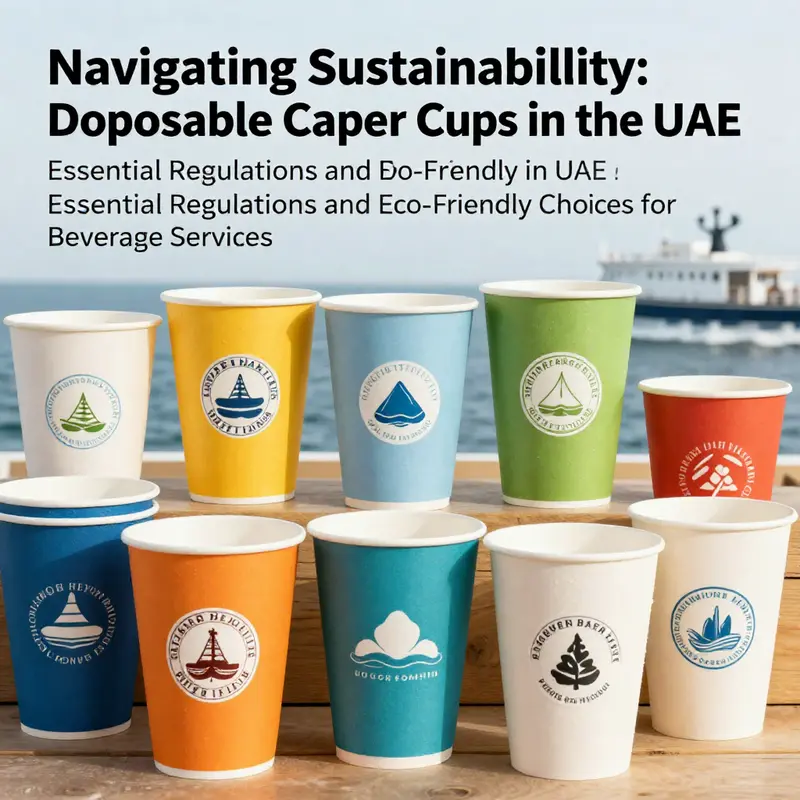
As dining options diversify aboard ships in the UAE, the choice of disposable paper cups becomes vital not only for service efficiency but also for environmental consciousness. Understanding the regulations surrounding these products, particularly in relation to maritime ecosystems, is crucial for bubble tea shops, beverage chains, and other food service sectors. This article explores the stringent regulations governing disposable paper cups for ships, highlights eco-friendly alternatives available in the UAE, and delves into effective procurement channels to ensure compliance and sustainability. By grasping these elements, businesses can better align with market demands while contributing to a greener marine environment.
From Shore to Sea: UAE Regulation and the Rise of Paper Cups on Ships
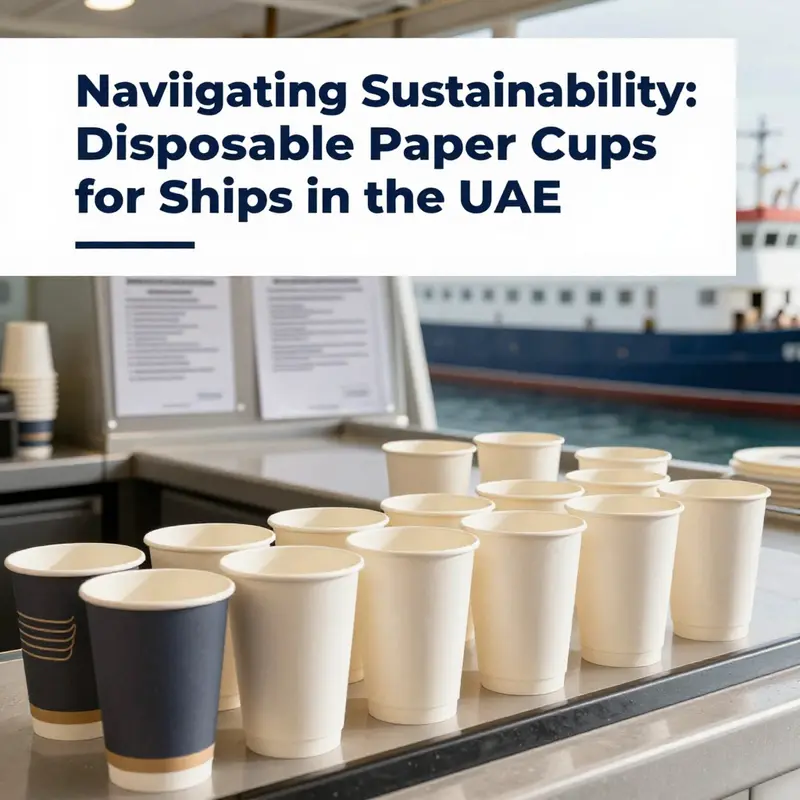
The UAE’s ports and coastal economy anchor regional trade, and policy makers have started to treat disposable cups as a strategic point of environmental and operational control. With Ministerial Decision No. 45 of 2023 guiding the Regulation of Single-Use Plastics in the UAE, the shift from plastics toward recyclable or compostable alternatives is being implemented in maritime environments as well as land-based settings.
This regulation has a dual focus: prohibiting plastics in single-use form where feasible and driving the adoption of paper-based cups that can be captured by local waste streams. It also requires robust documentation to prove end-of-life pathways and to ensure that materials, coatings, and labels support traceability along the supply chain. In practice, ships must choose cups that are leak resistant, food-safe, and compatible with UAE waste-management infrastructure, including recycling networks or industrial composters where available.
For ships, the practical implications include waste segregation on board, clear labeling of cups and liners, and procedures that keep cup waste separate from other streams. Ports and waste managers must be ready to receive and process these streams, and crews must be trained to store, handle, and dispose of cups in compliance with the law, even during peak service windows.
Procurement teams now evaluate not only price and performance but also supply chain transparency and end-of-life assurances. Suppliers are expected to provide material declarations, coating specifications, and evidence of adherence to UAE customs and environmental controls. The result is a more intentional cargo of cups that align with environmental goals and maritime safety requirements.
From a materials science perspective, efforts focus on paper substrates with food-grade coatings that resist leakage and moisture while enabling recycling or composting at scale. The aim is to balance durability on board with responsible disposal, avoiding microplastics and supporting circular economy objectives.
Ultimately, the cup becomes a tangible indicator of broader maritime sustainability ambitions in the UAE: a small but meaningful element that links procurement, ship operations, port waste management, and environmental accountability in a way that does not compromise service quality.
Sailing Toward a Greener Deck: How the UAE Is Redefining Disposable Paper Cups for Ships
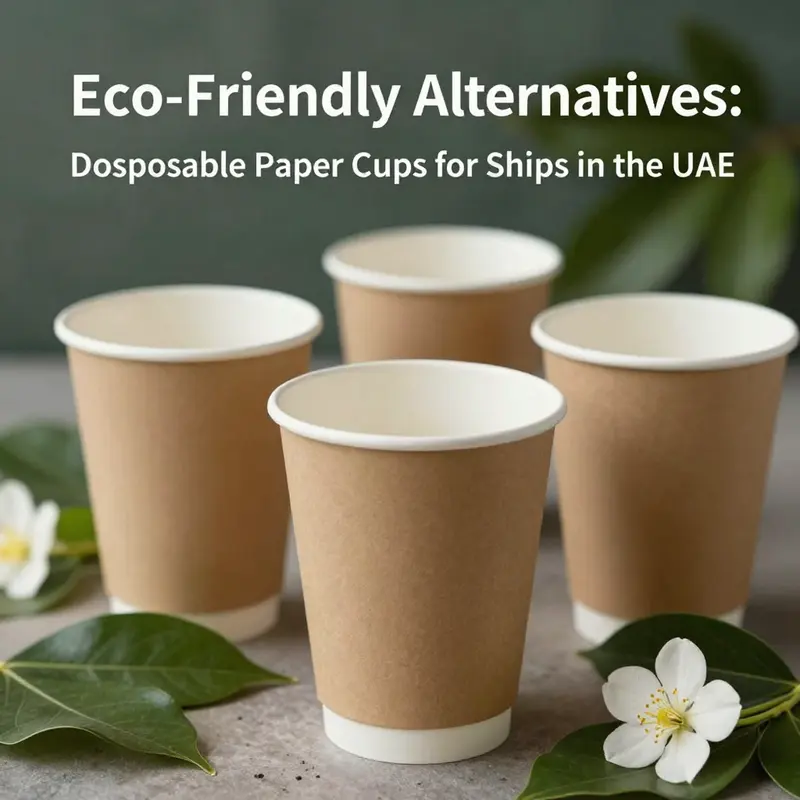
In the bustling cradle of modern maritime trade, the United Arab Emirates is steering more than ships and freighters toward new routes. It is guiding a cultural and regulatory shift in how everyday tableware is chosen, used, and disposed of aboard vessels and in offshore facilities. The move away from single-use plastics toward compostable, paper-based alternatives is not a peripheral trend but a central strategy tied to environmental protection, public health, and the economic realities of operating in some of the world’s busiest port corridors. As ships dock at Dubai, Jebel Ali, or Khalifa Port, and as crew members gather on deck to drink coffee or tea, the choices made at the point of service reverberate through supply chains, waste streams, and ultimately the Gulf’s delicate marine ecosystems. The newer generation of disposable paper cups is being shaped by a blend of regulation, certification, material science, and practical on-board logistics—an intricate dance that must succeed in the unpredictable conditions of the sea, where humidity, temperature fluctuations, and cramped storage spaces are the norm rather than the exception.
The UAE’s approach to disposable tableware on ships is inseparable from its broader environmental policy landscape. A landmark change looms on the horizon: an announced prohibition on most single-use plastics, scheduled to take effect on January 1, 2026. This ban is not a mere signaling of intent; it is a concrete constraint that pushes ship operators, suppliers, and port facilities to seek viable, scalable alternatives. In maritime contexts, this means fast transitions to paper cups made from renewable resources, with coatings that keep liquids from leaking while still allowing for legitimate end-of-life processing. The shift aligns with international and regional expectations for environmental stewardship, including the careful labeling and communication of environmental claims. To ensure that what is claimed about a product’s environmental footprint is accurate and verifiable, many cups designed for maritime use carry certifications and declarations in line with ISO 14025. These environmental claims standards help buyers navigate a labyrinth of marketing messages and ensure that the cups truly perform as promised in both on-board operations and downstream waste streams.
Material innovations are at the heart of the transition. The modern eco-friendly cup is far from a simple paper vessel. It is frequently crafted from plant-based fibers—such as sugarcane bagasse or a corn-starch blend—and coated with water-resistant layers that do not compromise safety or recyclability. In many cases, coatings are plant-derived and designed to meet strict health standards, offering a reliable barrier against leakage and moisture while remaining compatible with industrial composting streams where available. The UAE’s environmental authorities and standards bodies have stressed the importance of compatibility with certified composting facilities, recognizing that not all “biodegradable” or “compostable” products behave the same in every environment. Some labels indicate OK Compost or TÜV Austria certifications, signaling that the cups have undergone specific testing and meet criteria for biodegradation and compostability in appropriate facilities. This is especially relevant for maritime contexts, where cups must navigate a spectrum of temperatures and humidity that can affect both performance and the rate of decomposition after disposal.
On vessels, the practical requirements of disposable cups extend beyond their ability to hold a hot beverage without leaking. A cup must withstand a range of temperatures—from the chill of a cabin interior to the heat of a galley during meal service—and endure the humidity that permeates shipboard spaces. It must also fit within the constraints of limited storage and the need for efficient waste management. Containers may be stacked, transported alongside other supplies, and opened and refilled during long voyages. Because of intense on-board work schedules and limited crew time, cups are designed for quick use, straightforward disposal, and predictable performance even when subjected to rough sea conditions or sudden changes in ambient temperature. These operational realities shape the selection criteria that drive procurement decisions on ships and at maritime facilities in the UAE.
In practice, this translates into a procurement ecosystem that blends regional resilience with global supply networks. UAE-based maritime supply companies—supported by a regulatory framework that emphasizes traceability and environmental compliance—offer a spectrum of compostable and biodegradable cups. These cups are commonly made with food-grade coatings that are water-resistant but designed to degrade under industrial composting conditions. The coatings themselves are a focal point of innovation, balancing barrier performance with end-of-life considerations. When a ship loads provisions at a UAE port, buyers demand documentation that confirms the product safety and environmental claims. Typical requirements include packaging details, proof of adherence to UAE Customs and Environmental Protection Agency (EPA) requirements, and certifications such as FDA or EU-compliant safety standards. These documents give port authorities and customers confidence that the cups won’t introduce contaminants into waste streams or compromise health in galley operations.
The UAE’s regulatory posture is complemented by a growing ecosystem of certified, sustainable packaging options. In this landscape, a manufacturer may offer a disposable cup made from recycled content or plant-based fibers, with a PLA-based coating or a sugarcane fiber barrier that performs as well as conventional plastics under maritime conditions. These solutions are designed not only to meet the immediate needs of hot beverages and cold drinks but also to accommodate a longer service life on board, where the flow of cups can be steady and predictable. For operators who aim to minimize plastic pollution, compostable and biodegradable cups present a compelling option because they can be diverted to industrial composting facilities after discharge rather than contributing to long-lived plastics in the marine environment. The shift is reinforced by collaboration among ports, shipping companies, and waste-management entities to ensure dedicated streams for compostable packaging and to reduce cross-contamination with conventional waste.
The procurement landscape, too, reflects this transitional period. In the UAE, buyers can source cups through specialized maritime supply channels that understand the nuances of shipboard life, storage limitations, and compatibility with on-site waste handling. These suppliers often partner with manufacturers in nearby regions and beyond, enabling bulk orders that meet the cost pressures of fleet-wide adoption while maintaining strict compliance with local import regulations. Online platforms—where bulk orders are common—offer further flexibility, enabling smaller operators or offshore facilities to access compostable options in the quantities required for ships and reception facilities. The balance remains delicate: the need for reliable supply and predictable pricing must be weighed against the environmental impetus to move toward more sustainable alternatives. In this choreography, brands and suppliers must prove the authenticity of their environmental claims, typically through third-party certifications and robust documentation. The emphasis on traceability and verification is particularly important in maritime contexts, where the products will be used repeatedly and disposed of in a system that may involve distant ports and varying waste-collection capabilities.
An essential note about the design and application of these cups is their relationship to the broader packaging ecosystem that serves ships. The maritime environment is not a consumer retail setting; it is a controlled logistical environment where every item must be assessed for performance, safety, and compliance with port waste-management rules. Some innovations extend beyond cups to other forms of paper-based packaging designed for on-board use, including boat-shaped kraft boxes and lids that can accompany meals or snacks. These packaging elements, while not cups themselves, illustrate how paper-based solutions can function collectively within a ship’s pantry, offering integrated waste streams that facilitate separation and disposal. For instance, one example of such maritime packaging is a disposable eco-friendly kraft box shaped to resemble a boat, which is coated for durability and designed to minimize moisture transfer. These offerings reflect a growing awareness that ships require cohesive packaging ecosystems rather than isolated products. You can explore an example of this type of packaging here: boat-shaped kraft box for maritime packaging.
The broader sustainability agenda is not merely about materials and certifications. It encompasses how ships manage waste, how port facilities handle discarded tableware, and how crews are trained to separate and dispose of compostable items properly. Waste management on ships is a complex discipline that integrates galley routines with shore-side waste facilities, particularly as UAE ports ramp up their own green ambitions. The policy direction encourages ships to participate in waste-collection programs that distinguish compostable packaging from non-recyclable and non-compostable waste. This separation is not just a best practice; it is a practical necessity for ensuring that compostable cups arrive at facilities equipped to process them, rather than mixing with conventional refuse that may be incinerated or landfilled. The result is a system in which the environmental advantages of compostable tableware become tangible, measurable outcomes—reductions in plastic pollution, lower carbon footprints, and a more circular approach to resource use on the water.
Beyond the material and procedural considerations, there is a strategic dimension to adopting eco-friendly disposable cups on UAE ships. Fleet operators must weigh the total cost of ownership, including purchase price, storage space, waste-disposal fees, and potential penalties or incentives tied to environmental performance. While compostable cups may carry a higher upfront cost than traditional polystyrene or standard plastic options, they can reduce long-term environmental liabilities and align with regulatory expectations that increasingly favor reduced plastic pollution and more responsible end-of-life management. This is particularly relevant for operators that run regressive supply chains, where waste streams converge at a limited number of ports. In this context, the value proposition of plant-based, compostable cups can be framed not just in terms of compliance, but in terms of operational resilience and reputational capital. A ship that ships green practices and maintains clear waste streams can benefit from smoother port calls, increased acceptance by eco-conscious buyers, and alignment with the UAE’s long-term sustainability goals.
The UAE’s sustainability guidelines—emanating from the Ministry of Climate Change and Environment and extended through national and port-level programs—provide a framework within which these packaging choices play out. While the specifics of each cup design may differ, the underlying principles stress environmental responsibility, health and safety, and compatibility with existing waste-management infrastructures. This alignment is not accidental; it reflects a national strategy to reduce marine litter, protect coastal and offshore ecosystems, and position the UAE as a regional leader in sustainable maritime operations. For readers seeking a high-level overview of the sustainability initiatives shaping these decisions, the official guidelines offer a concise map of priorities and regulatory expectations.
From a practical vantage point, the forward motion is clear. The 2026 plastic ban catalyzes experimentation with alternative materials, yet it also imposes discipline: all suppliers must demonstrate credible environmental claims, and buyers must verify certificates and compliance documents before shipment. The supply chain’s responsiveness is evident in how quickly the market pivots to compostable materials, how coatings derived from plant-based sources improve performance, and how shipboard protocols adapt to ensure that compostable cups are disposed of properly and entered into appropriate industrial streams when available. This is as much a cultural transformation as a technological one. Crews acclimate to new cups, galleys adjust their workflows to accommodate different loading and storage conditions, and maintenance teams ensure that any new packaging integrates with ship systems and port-based waste facilities. In essence, the maritime world is learning to treat disposable cups not as disposable waste but as a component of an integrated environmental strategy that spans oceans, coastlines, and land-based waste facilities.
As the UAE continues its trajectory toward a more sustainable maritime footprint, the role of consumer-grade yet industrially robust cups becomes emblematic of a broader shift. It marks a move from convenience-driven consumption toward stewardship-driven practice, where every cup used aboard a vessel is a step toward reducing plastic pollution in the sea that washes the region’s shores. This is not merely about compliance; it is about reimagining everyday choices as part of a resilient maritime economy that can thrive within planetary boundaries. The cups, coatings, and certifications together tell a story of progress—a narrative in which the sea and the ships that traverse it become participants in a green transformation rather than spectators to a wasteful habit.
For those navigating this evolving space, the procurement and deployment of eco-friendly cups on ships demand a careful balance of trust, traceability, and practicality. Buyers should seek documentation that confirms product safety and environmental performance, including labeling that aligns with FDA or EU safety standards where applicable, clear packaging details, and evidence of adherence to UAE customs and EPA requirements. Shipping teams should cultivate preferred supplier relationships that can deliver consistent quality at scale, with a transparent cascade of specifications from raw materials to final packaging. At the same time, a ship’s waste-management plan should be updated to integrate compostable cups into the appropriate streams, reducing contamination and ensuring that onshore facilities can effectively process the materials when the cups reach shore facilities.
In closing, the UAE’s march toward eco-friendly disposable cups for ships is more than a compliance story. It is a narrative about how a modern port economy reconciles the demands of global trade with the imperative to protect marine environments. It is about material science that substitutes plastics with plant-based alternatives without compromising performance or safety. It is about the logistics of on-board service and offboard disposal, and about a regulatory ecosystem that rewards transparency, certification, and responsible stewardship. In this evolving landscape, every cup becomes part of a larger system—a system that keeps ships moving, keeps coasts clean, and keeps the greater maritime world moving toward a sustainable horizon. For readers seeking more on sustainable materials and their applications in marine environments, consult the UAE Ministry of Climate Change and Environment’s sustainability initiatives for a broader policy context and guidance on best practices. For a concrete example of related maritime packaging innovations, consider the boat-shaped kraft packaging option linked above, which illustrates how paper-based solutions can be integrated into a shipboard supply chain while maintaining environmental performance and practical usability.
External resource: https://www.moccae.gov.ae/en/sustainability-initiatives
Charting the Course: Securing Disposable Paper Cups for Ships in the UAE
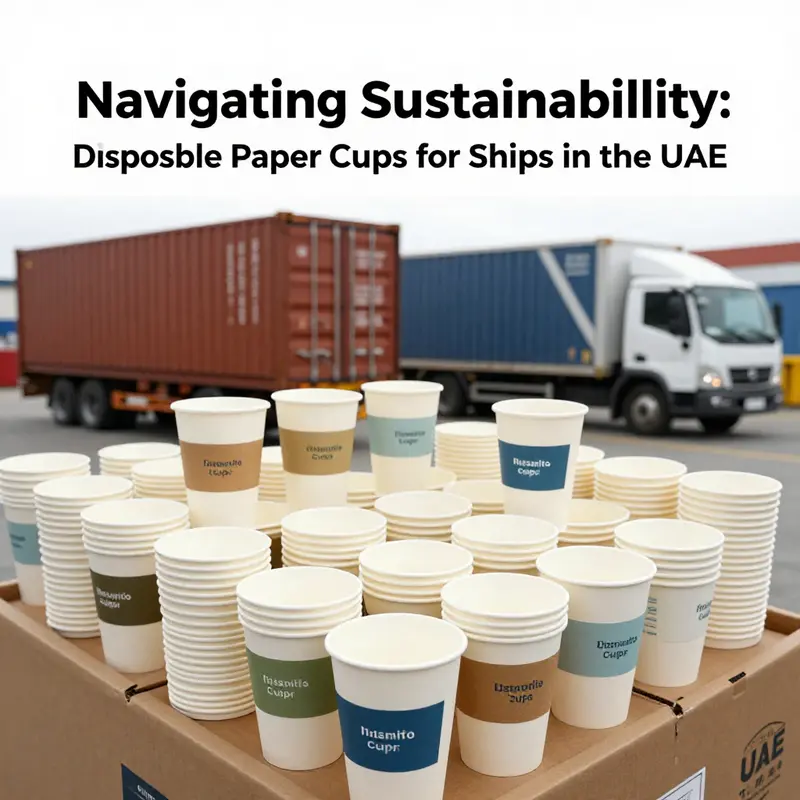
The maritime world in the United Arab Emirates operates at the intersection of global trade and strict environmental stewardship. Vessels that ply the Persian Gulf and the Arabian Sea must balance the practical needs of daily life at sea with the country’s robust standards for safety, hygiene, and waste management. The choice of disposable paper cups on ships is not a mere preference; it is a decision scaffolded by regulatory requirements, climate realities, and the evolving expectations of port authorities, regulatory bodies, and ship operators. In this context, the procurement of cups becomes a careful test of supply chain resilience, compliance, and environmental responsibility. The journey from a supplier’s warehouse to a ship’s galley is shaped by the unique conditions at sea—salt air, high humidity, frequent temperature fluctuations, and the imperative to prevent leaks and contamination during long voyages. These factors converge to demand a class of products that can endure the maritime environment while meeting strict health and environmental criteria. The UAE’s ports, from the skyline-dominated hubs of Dubai to the more measured, administratively rigorous facilities around Abu Dhabi, implement waste management protocols aimed at protecting marine ecosystems. These protocols influence not only how cups are disposed of but also what types of disposable dinnerware are deemed appropriate for shipboard use. In practice, this translates into a preference for paper cups that are food-grade, leak-proof, and compatible with recycling streams or industrial composting where available. It also means that cups must carry appropriate certifications that can be traced in a chain of custody from the factory to the ship. Certifications that matter include environmental claims substantiation under ISO 14025, as well as safety and health certifications such as those from FDA or EU-compliant bodies, depending on the jurisdiction of the supplier and the vessel’s loading port. The environmental dimension matters deeply here. If a cup is marketed as compostable or biodegradable, it must carry credible certification from recognized bodies that the product will break down under industrial composting conditions within an accepted timeframe. In the UAE, where industrial composting facilities are increasingly integrated into the waste management infrastructure, having credible third-party certifications from bodies such as TÜV Austria or OK Compost is a significant quality signal. The broader narrative is one of synchronizing environmental claims with verifiable performance. For shipboard use, this means cups with water-resistant coatings derived from plant-based materials such as polylactic acid or sugarcane fiber, which can resist leakage while remaining compatible with food safety standards. Yet the practical realities of the sea also require these coatings to withstand humidity, salt exposure, and the temperature variations that ships encounter as they move between sea spray and air-conditioned interiors. Beyond coatings, cup design matters. A cup that performs well in a climate-controlled galley but leaks when seated on a sun-warmed deck is not fit for purpose. For this reason, the procurement conversation often centers on leak-proof integrity, structural rigidity, and the compatibility of lids or sleeves with the cup size. In addition to performance, the chain of custody and traceability are vital. Ship operators must confirm that the supplier can provide documentation detailing product safety certificates, packaging specifications, and proof of adherence to UAE customs and environmental protection guidelines. The objective is a streamlined procurement loop where the cups meet health and safety standards, align with waste management policies, and minimize risk to crew, passengers, and the marine environment. The procurement journey in the UAE begins long before a purchase order is signed. It begins with a clear definition of needs—size variations that reflect beverage offerings on board, such as 8-ounce, 12-ounce, and 16-ounce cups, and considerations for hot or cold beverages. It then moves into a debate about materials and coatings. If the vessel operates in routes with limited access to industrial composting, a supplier’s emphasis on recyclable packaging and responsible end-of-life management can be a deciding factor. In today’s market, many maritime operators are increasingly exploring eco-friendly alternatives to traditional plastic-laden disposables. The shift toward compostable or biodegradable paper cups, certified by independent bodies, is part of a broader strategy to reduce plastic pollution in port environments and along shipping lanes. The UAE’s environmental and safety standards push suppliers to design cups that not only comply on paper but also demonstrate responsible sourcing of materials. A plant-based coating that renders cups leak-resistant should be compatible with the crew’s safety protocols, including food-contact approvals and migration limits set by health authorities. This relationship between material choice and regulatory compliance often informs the selection of a supplier who can demonstrate a robust traceability program and a transparent documentation suite. In practical terms, securing cups for ships in the UAE often unfolds through four broad channels, each with its own strengths and risk considerations. The first pathway is direct engagement with manufacturers who offer OEM production and customization. Ship operators can work with a factory that can produce cups in standard sizes while also accommodating branding, color, and packaging preferences. The advantages of this route include customization flexibility, predictable lead times for bulk orders, and direct pricing that can reduce total landed cost. The trade-off is the need for careful due diligence, including verifying certifications, factory audits, and clear shipping terms that align with the vessel’s schedule. In this context, the importance of documentation cannot be overstated. Operators expect to receive certificates for environmental claims, packaging details, and evidence of regulatory compliance in line with UAE import practices and health and safety mandates. The second channel comprises local UAE distributors and wholesalers who specialize in marine supplies and hospitality goods. These distributors are usually well-versed in the logistical peculiarities of provisioning ships. They can provide ready-to-use inventory, quick reorder cycles, and a familiar channel for port-based crews who value reliability and consistent product availability. The advantage here is reduced lead time and a connection to regional service networks. The third channel is global B2B marketplaces, which offer access to a broad range of suppliers across geographic regions. This pathway enables competitive pricing through bulk purchases and enables a vessel operator to compare multiple options in one place. The realities of this option include the need for careful supplier verification, attention to shipping terms, and an explicit plan for conformity with UAE customs and environmental requirements. The final channel is the specialized marine provisioning firms. These firms maintain inventory designed to meet the needs of long voyages, with a focus on hygiene, regulatory compliance, and portable, ship-ready packaging. They can coordinate with on-board stores, crew supply needs, and periodic resupply schedules, delivering an integrated solution that reduces the complexity of on-time provisioning. No single channel holds all the answers; the best procurement approach often blends elements from each channel. A practical strategy starts with identifying one or two core suppliers who can meet the ship’s baseline requirements for safety, performance, and regulatory compliance. These core partners can be complemented by local distributors who understand the UAE’s port ecosystems and can offer rapid replenishment for routine needs. For long voyages or vessel clusters that operate across multiple ports, it can be beneficial to establish relationships with provisioning firms that have established workflows for marine customers, including standardized documentation and ready-to-use packaging configurations for different ship types. When assessing potential suppliers, several criteria command attention. First, the cups must be food-grade and leak-proof, with coatings that resist moisture, oil, and salt air. Second, the product must carry credible environmental certifications that align with the intended end-of-life pathway. Third, the supplier should provide clear documentation on packaging, labeling, and compliance with UAE customs and environmental protection guidelines. Fourth, lead times, shipping options, and the ability to handle bulk orders with predictable pricing are essential for crew schedules and voyage planning. Fifth, the supplier should demonstrate a track record of reliability in the maritime sector, including experience with long-haul provisioning and the ability to respond to urgent replenishment needs. The UAE’s regulatory landscape also places emphasis on traceability, ensuring that product claims about compostability or recyclability can be substantiated. For windward crews and officers who must audit the supply chain, vendor transparency is a critical criterion. This means not only having the right certifications but also being able to verify the origin of materials, the manufacturing process, and the environmental impact across the product’s lifecycle. A well-nurtured procurement practice addresses these aspects by requesting, from every potential supplier, a brief that includes environmental certifications, HACCP-like safety assurances, and a detailed bill of materials for the cup and its coatings. In addition to regulatory compliance, operators with an eye toward sustainability may adapt their procurement to support broader waste management programs at the port and in the ship’s home base. In this regard, cooperation with port authorities and waste management facilities can be advantageous. A supplier who offers clearly defined end-of-life solutions—such as guidance on industrial composting facilities or recycling streams in the UAE—provides value beyond the container itself. The result is a more resilient, responsible supply chain that aligns with national environmental objectives while meeting the practical needs of crew and passengers. The sourcing conversation is not just about price or compliance; it is about risk management and operational reliability. A robust supplier relationship includes clarity on sampling procedures, with free samples often offered but the buyer paying postage, as is common in international trade. The potential buyer should evaluate samples for leak resistance, heat tolerance, and the integrity of any lids or seals in a controlled test. The test should replicate real-world conditions on board—hasty tea breaks, coffee service during watch changes, and hot beverages carried in busy galleys where movement can jostle vessels. If a supplier is open to customization, this can be a route to improved fit for the vessel’s daily routines. Printing, color matching, and packaging customization can enhance branding and crew engagement, but these features must be balanced against manufacturing lead times and incremental costs. To help navigate these choices, many operators rely on industry channels that provide a degree of standardization while leaving room for customization. The shipboard environment rewards a practical mindset: choose cups that can be stacked efficiently on board, stackable packaging that minimizes space, and liners or sleeves that reduce spillage risk. It also remains essential to maintain a careful inventory system that flags changes in demand, seasonal variations in catering needs, and the occasional surge in crew or passenger volume. In practice, a well-structured procurement plan for ships in the UAE might begin with a demand forecast aligned to voyage schedules, port calls, and provisioning windows. It would then map out preferred cup sizes and coatings, identify core suppliers who can meet the safety and environmental criteria, and establish a testing protocol to validate the cups under sea and galley conditions. The plan would include a documentation checklist, ensuring that every shipment arrives with the appropriate safety certificates, product data sheets, and packaging information. It would also outline a risk management framework that anticipates potential disruptions—container shortages, customs delays, or certification revocations—and would propose mitigation steps such as alternative suppliers and pre-approved shipping arrangements. The practical reality is that procurement in the UAE maritime sector is not a solitary act but a collaborative effort involving ship operators, port authorities, and supply chain partners who understand the unique rhythms of the sea. As vessels converge on the UAE’s ports, the cups that accompany them carry with them not just beverage moments but a microcosm of responsible sourcing, regulatory compliance, and environmental stewardship. In this sense, the process of securing disposable cups for ships becomes part of a larger conversation about sustainable maritime operations. It is a conversation that recognizes the importance of credible environmental claims, rigorous safety assurances, and the logistical agility needed to support continuous shipboard service. The narrative is one of alignment: aligning material choices with water resistance and leak-proof performance, aligning certifications with trustworthy, verifiable evidence, and aligning supplier capabilities with the operational tempo of a ship at sea. For readers who want to explore branding opportunities while maintaining environmental integrity, one path is to consider cups that support eco-friendly logos and branding with minimal environmental impact. See this example of eco-friendly printed-logo cups with lid for an illustration of how branding and sustainability can go hand in hand on board. eco-friendly printed-logo paper cups with lid. By weaving branding into the procurement story without compromising safety or environmental goals, operators can reinforce a ship’s identity while still adhering to the strict standards that govern maritime provisioning. Finally, it bears repeating that the procurement landscape is not static. Regulatory developments, advances in compostable coatings, and new waste management facilities can shift what is considered acceptable for shipboard use. Operators should plan for ongoing supplier assessments, regular updates to certifications, and periodic re-evaluations of end-of-life options. A proactive stance—characterized by open dialogue with suppliers, transparent documentation, and a willingness to test new solutions in controlled settings—will help ensure that the cups selected for ships in the UAE continue to meet the twin imperatives of safety and sustainability. As the next chapter expands the conversation beyond procurement channels to the broader lifecycle of disposable tableware on ships, the essential messages persist: in a market buoyed by high regulatory expectations and dynamic maritime logistics, success hinges on a supplier network that can deliver credible products, reliable service, and transparent environmental stewardship. External reference: https://www.beixuancups.com/.
Final thoughts
Understanding the specific regulations and available eco-friendly options for disposable paper cups is essential for businesses serving customers in the UAE’s maritime sector. Compliance with these regulations not only ensures smooth operations but also promotes sustainability in an industry often scrutinized for its environmental impact. By leveraging the right procurement channels, food service businesses can contribute to a healthier marine ecosystem while meeting the growing consumer demand for sustainable products. Transitioning to eco-friendly disposable paper cups is not just a trend—it’s a responsibility that aligns with the UAE’s commitment to protecting its unique maritime environment.