
Disposable paper cups have become ubiquitous in our daily lives and businesses, with staggering statistics revealing that the world consumes between 250 billion to 300 billion of these cups annually. This figure underscores the prevalence of single-use paper cups, especially in coffee shops, restaurants, and catering services. While they are often perceived as a greener alternative to plastic cups, the reality presents a complex challenge involving environmental sustainability and economic factors. Understanding the nuances of disposable paper cup usage statistics is vital for bubble tea shops, beverage chains, restaurants, food trucks, catering services, event planners, and corporate procurement teams alike. This article explores the global statistics of usage, the environmental impacts, economic implications within the coffee industry, and future trends in urban areas, helping stakeholders make informed decisions in their operations.
Counting Cups at a Global Scale: The Hidden Waste and the Search for Circularity in Disposable Paper Cups
Two numbers sit at the center of the global conversation about disposable paper cups: how many are used each year, and what happens to them after their brief moment of usefulness. Industry chatter often frames these cups as simple, hygienic solutions for coffee on the go, but the tally reveals a more complex narrative. Global estimates point to hundreds of billions of cups entering daily life each year. Some sources place the figure in the 250 to 300 billion range, underscoring the sheer scale of everyday rituals—coffee-driven commutes, office routines, quick-service meals, and a culture that prizes convenience. Yet other accounts paint a different picture, suggesting a far smaller annual total, around 50 billion cups, when one strictly accounts for certain waste streams or recycling realities. The discrepancy is not a trivial mismatch; it exposes the patchwork nature of data collection across markets, methods of counting consumption, and the boundaries drawn around what counts as a disposable paper cup in various studies. Even with these variances, the underlying truth remains: the use of disposable paper cups is extensive, embedded in urban life, and growing in many regions.
The market demand is not simply a function of consumer preference. It is magnified by the proliferation of coffee shops, quick-service restaurants, and corporate offices where the ritual of a warm beverage in a familiar cup has become nearly a social norm. Market analyses chart a steady expansion of the disposable paper cup market, driven by the trio of convenience, hygiene, and perceived sustainability. In 2025, several reputable market studies converge on a ballpark figure around $182.6 billion as the market size. The following year brings a wider spread in projections, with estimates ranging broadly from roughly $189.5 billion to a much more conservative $53.39 billion depending on whether the focus is the entire paper cup market or only specific segments. These divergent figures highlight how the scope of measurement matters: consumer demand for single-use cups exists alongside a growing segment that treats cups as environmental liabilities, not merely packaging. Looking ahead, forecasts vary but tend to point toward continued growth, with some analyses predicting a total market value approaching $254.7 billion by the mid-2030s. The associated compound annual growth rates, too, swing across a spectrum—from about 1.2% to nearly 4.8%—again reflecting different definitions of “disposable” within the broader paper cup universe. In short, the market signals a durable appetite for single-use cups, even as the debate intensifies over their sustainability.
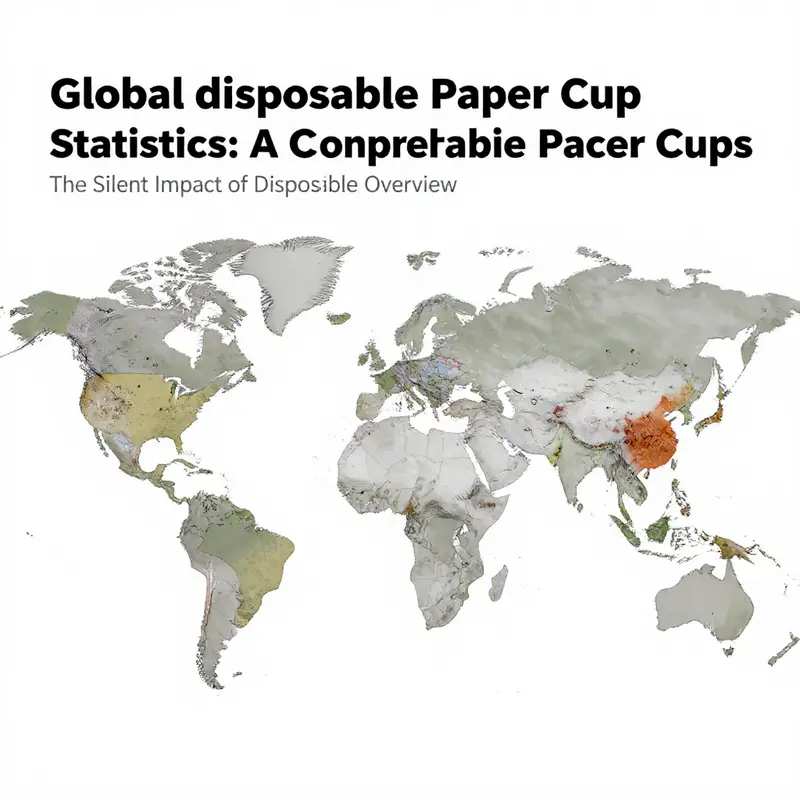
Geography helps explain the scale and pace of cup use. Asia-Pacific currently shoulders a substantial share of demand, accounting for roughly one-third of global consumption. Within this region, China plays a pivotal role, driven by its massive consumer base, rapid urbanization, and a booming café culture that has extended far beyond metropolitan centers. North America follows, buoyed by a dense network of beverage retailers, work environments that rely on quick-service hospitality, and a lifestyle that prizes on-the-go consumption. Europe presents a steadier trajectory, with countries like Germany, France, and the United Kingdom balancing appetite for convenience with a strong emphasis on recycling and recyclable or compostable options. Latin America and the Middle East and Africa regions, while smaller in current market size, show rising uptake as urbanization accelerates and consumer services expand. Taken together, regional dynamics illuminate not only where cups circulate most but also where policy, infrastructure, and consumer culture converge to shape end-of-life outcomes.
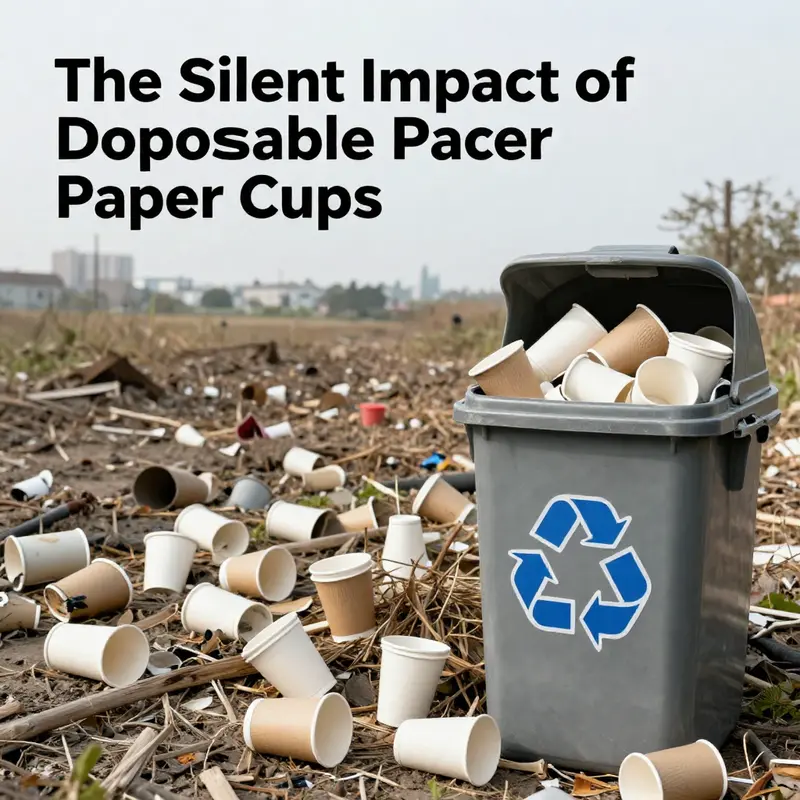
But even as the market grows, the environmental footprint intensifies. The environmental challenge is twofold: the sheer volume of cups and the difficulty of processing them after use. A widely cited figure estimates that around 50 billion disposable cups are consumed globally each year. If one could line them up end to end, the distance would stretch to the moon back and forth many times—an image that starkly communicates scale. Yet this figure sits alongside other estimates that emphasize the entire lifecycle of disposable cups, including those that are counted in broader packaging categories or recycled in specialized facilities. The tension between these numbers reflects not only methodological variations but also the real-world frictions at the intersection of consumer behavior, municipal waste management, and recycling infrastructure. A critical point in this discourse is the packaging inside many cups: polyethylene, a thin plastic coating that prevents leaks and preserves the beverage quality. This coating, while functionally essential, complicates recycling in standard municipal streams and often renders cups non-recyclable through typical curbside programs. In practice, that coating contributes to a paradox. The cups are presented as “eco-friendly” or at least preferable to pure plastics, yet their end-of-life fate frequently lands them in landfills or incinerators, where resources are wasted and microplastics can gradually percolate into soils and waterways.
The environmental narrative around disposable paper cups is not a simple condemnation of single-use culture. It is a call for a more nuanced understanding of where, how, and why cups fail to complete a sustainable loop. The liner, the ink on the cup, and even the adhesives used in branding all influence recyclability and composting potential. In many places, municipal sorting facilities cannot effectively separate the paper from the plastic liner without specialized processes. Contamination by food waste, stickers, and inks further undermines the quality of paper fibers that could otherwise be reborn as new products. The result is a system that often shifts the burden of waste away from the consumer to the fabric of modern waste management itself. The health and environmental concerns linked to chemical migration from inks, coatings, and even printing residues add another layer of complexity. While the actual health risk from casual contact with used cups is generally considered low, the potential for certain substances to migrate into beverages or the surrounding environment during disposal has spurred questions about material safety, especially in the context of repeated or long-term exposure in certain settings.
With these realities in view, the literature and industry talk around sustainability has moved beyond simple recycled-versus-virgin narratives. The collective challenge is how to reconcile a culture that rewards speed and convenience with a waste management system that often lags behind the pace of consumption. In response, many regions are exploring a spectrum of approaches: improving collection and sorting efficiency, developing coatings that either biodegrade more readily in industrial composting facilities or enable easier separation from paper pulp, and creating incentives for the uptake of reusable cup systems. The reusable model, in particular, has gained renewed attention as a counterbalance to rising disposal volumes. It promises a path to decoupling consumption from waste, but its success depends on behavioral norms, robust take-back infrastructure, and consistent consumer participation. The economics of reuse, the energy and water inputs required to wash and sanitize cups, and the nuanced carbon footprints of different disposal pathways all need to be weighed against the benefits of reduced waste.
As researchers and policymakers grapple with these trade-offs, data-driven nuance becomes essential. The numbers reflect not only what people buy and drink but also how cities collect, treat, and value waste. They reveal a market that remains resilient and expanding in many regions, even as the environmental cost of disposables becomes harder to ignore. They also expose how misalignment—between demand signals and waste-management capacity—can yield outcomes where the best intentions—of hygiene, convenience, and consumer choice—are undermined by logistical gaps. In this tension lies an opportunity. If consumers increasingly adopt more deliberate disposal habits, and if municipal systems scale up recycling and composting capabilities, the cups can begin to move toward a true circular path. Achieving that path will require coordinated action across design, manufacture, retail, and waste-management sectors, with a clear recognition that what is chosen for one coffee run reverberates through ecosystems and economies far beyond the cup itself.
Within this chapter, the data points—market size estimates, regional shares, and the stark environmental indicators—serve not as final verdicts but as coordinates for a broader map. They point to where consumption is densest, where recycling infrastructure is most under strain, and where policy levers could shift the balance toward greater circularity. They also remind us that the discourse around sustainability cannot rest on a single metric. The true test lies in how well a society can align its habits with systems that recover and repurpose materials, rather than consign them to waste streams that degrade landscapes and health. In practical terms, the path forward hinges on several intertwined moves: expanding the reach of advanced recycling technologies, ensuring that coatings and inks used on cups are compatible with recycling streams or composting facilities, and reimagining social norms around “single-use” through accessible, convenient, and reliable reuse programs. The challenge is not merely technical but cultural, economic, and political as well.
This deeper understanding of global disposable paper cup usage statistics invites readers to see the phenomenon not as a single statistic, but as a living tapestry of consumption patterns, production choices, and waste-management realities. It invites reflection on how the everyday act of grabbing a hot beverage can ripple through urban systems, impact resource use, and shape environmental outcomes for years to come. The statistics, in their diversity, reveal both the scale of human comfort and the urgency of aligning that comfort with a sustainable future. To those designing policy, supply chains, and consumer experiences, the message is clear: data must inform design and behavior, but it must be partnered with infrastructure, incentives, and cultural shifts that make reuse the default where feasible and recycling or composting the expected norm wherever possible. In the end, the cup is a small vessel with a big footprint, and understanding its journey from bustling storefronts to final resting places is essential if we are to imagine a circular economy that truly matches the pace of modern life.
For readers seeking a concrete example of how sustainability conversations translate into product-design considerations, consider the growing attention to eco-friendly, lid-bearing cup formats that prioritize recyclability and reduced environmental impact. An example of such a path can be found in discussions around environmentally conscious cup options that emphasize compatibility with existing sorting streams and industrial composting where available. This keeps the narrative grounded in practical options while avoiding product-specific endorsements. If you’d like to explore a real-world example of this approach in a consumer-facing context, you can see a representative concept here: eco-friendly disposable coffee cups with lid.
Beyond the cup itself, the broader conversation invites readers to engage with the notion that sustainability is a system property. No single improvement—whether technological, behavioral, or regulatory—alone determines outcomes. Instead, it is the interplay of product design, consumer routines, and municipal waste infrastructure that redirects the fate of these cups from waste to resource. The future of disposable paper cups will be shaped by how quickly and cohesively that system can adapt to high volumes while preserving environmental integrity. In many regions, this means investing in better recycling facilities, encouraging the adoption of coatings that don’t hinder fiber recovery, and creating business models that reward reuse without sacrificing convenience. In others, it might involve pilot programs that demonstrate the viability of deposit schemes or return-and-clean initiatives that make reusables the default choice for daily routines. The statistic itself is not merely a number; it is a spotlight on the choices embedded in everyday consumption—and a prompt to imagine and implement a circular alternative that aligns with a healthier planet.
External resource: https://www.unep.org
Tracing the High-Tide of a Disposable Habit: The Global Footprint of Paper Cup Usage Through the Lifecycle
An everyday act—holding a warm paper cup—belies a complex system of raw materials, energy, and waste. The global footprint of disposable paper cups is large, spanning production, distribution, and end-of-life management in urban life, workplaces, and hospitality. Estimates place annual global use in the hundreds of billions, a scale that makes the cup a public health and environmental topic as much as a consumer convenience. In many analyses, the global count runs roughly 250 to 300 billion units, underscoring how deeply these cups are embedded in daily routines, especially in cafes, fast-food outlets, and offices. The chapter treats these numbers as part of a continuous argument about why disposable cups matter beyond the moment of filling.\n\nThe environmental story centers on the inner liner and the systems that handle the cup after use. Most cups are lined on the inside with polyethylene to prevent leakage, a barrier that is functionally indispensable but complicates recycling in ordinary municipal streams. The barrier makes it difficult to separate paper fibers from plastic, so many cups do not fit easily into standard recycling processes and end up in landfills or mismanaged streams. The practical consequence is a potential for microplastic release as the liner degrades and mobile fibers disperse through soils and waterways. In short, the perceived sustainability of paper can be undermined by waste infrastructure and material design that clash with recycling realities.\n\nToxic elements linked to disposable paper cups have drawn attention in recent years. Some studies raise questions about trace elements such as lead, cadmium, and arsenic that may migrate into beverages under certain conditions. Concentrations vary by cup type and storage conditions, but the possibility adds a health dimension to the lifecycle discussion alongside emissions and resource use. The broader view emphasizes that the cup is not just a momentary convenience; upstream materials, manufacturing, transport, and end-of-life management collectively shape its environmental and health footprint. The assessment is not simply green versus ungreeen but a nuanced accounting of energy intensity, material flows, and timing of environmental benefits and risks.\n\nOn the usage side, the scale remains large in most regions. Globally, disposable cup consumption is measured in billions each year, with the United States alone consuming tens of billions of cups annually. This pattern reflects coffee culture, service-speed demands, and the structure of take-away economies, as well as how waste management systems perform end-of-life processing. Numbers vary by whether one counts all disposable cups or only coffee cups, and by whether the metric is per-capita or annual totals across sectors. The picture is dynamic, growing with urban density and retail footprints while constrained by regional policies and recycling capabilities.\n\nThe environmental implications of such usage are multifaceted. Landfilling and misrouting create perennial hazards for ecosystems, while plastics and liners contribute to slow degradation and potential fragmentation into microplastics that can travel through soil, freshwater, and marine environments. These pathways affect wildlife and may influence human health through exposure. Robust waste-management strategies, consumer and business waste-reduction practices, and clearer information about disposal pathways are essential to reduce risk. From a policy perspective, success depends on aligning product design, packaging, recycling streams, and incentives with real-world end-of-life outcomes.\n\nLifecycle reasoning adds another layer of nuance. Raw material extraction, manufacturing energy, distribution logistics, and the energy and water demands of cleaning in reuse-focused systems all influence the overall balance. In some circumstances, reusable cups can offer emissions advantages if used many times with efficient washing, but break-even timing depends on usage frequency, washing energy, and local infrastructure. A one-size-fits-all conclusion about reuse versus single-use is unlikely; decisions should be grounded in context-specific lifecycle analyses and local energy networks. This nuance informs design choices, policy instruments, and business models that aim to shift behavior toward better environmental outcomes.\n\nFinally, the health dimension interacts with the environmental story. Even when regulated elements stay within limits, consumer risk perception can influence behavior and trust in service systems. Transparent labeling, safer materials, and clearer disposal guidance help align practice with public health goals. The chapter emphasizes opportunities to redesign cups, improve end-of-life infrastructure, and empower consumers to make choices aligned with planetary health.\n\nThe practical takeaway is that no single intervention solves the problem. A credible path forward blends recyclable-friendly design, targeted waste-management improvements, consumer education, and system-level incentives that reflect real usage patterns and local conditions. The chapter closes with a note on concrete actions for designers, policymakers, and researchers who wish to reduce waste, lower emissions, and minimize exposures while preserving the convenience of takeaway beverages.
The Price of Convenience: Economic Forces Shaping Disposable Paper Cup Usage in the Coffee Industry
Across the urban landscape, disposable paper cups have become the quiet currency of daily life. In coffee shops, workplaces, and fast service venues, billions of cups transition from storage to hands to trash each year. The sheer scale is staggering: global estimates place annual usage in the hundreds of billions, a figure that underscores how deeply the humble cup is woven into the fabric of contemporary consumption. Yet this convenience comes with a complex set of economic undercurrents. The chapter that follows examines the economic landscape surrounding disposable paper cup usage within the coffee sector, tracing how market size, growth trajectories, consumer preferences, and production dynamics intertwine to shape spending, investment, and even policy considerations. The numbers, while telling in their own right, point to a broader narrative about value, risk, and opportunity in a sector where cost control and speed of service are as important as the beverage itself. As of 2025, the Disposable Paper Cup Consumption Market was valued at about USD 8.69 billion, a figure that signals both scale and stakeholder interest. Projections suggest a robust compound annual growth rate of roughly 14.72 percent from 2026 to 2033, a pace that signals ongoing expansion and meaningful capital flow into materials, manufacturing, and logistics. This growth is not merely a reflection of rising demand; it also reflects ongoing attempts to balance price, performance, and sustainability in a market that sits at the intersection of consumer convenience and environmental accountability. The global footprint of this market is broad, with a current size that exceeds USD 9 billion when aggregated across regions with differing consumer behaviors, regulatory regimes, and business models. These data points, while impressive on their own, gain meaning when set against the everyday realities of the coffee economy, where cup selection directly influences throughput, wait times, waste streams, and even the perceived quality of the product. The coffee industry has long depended on disposable cups as a logistical solution. They enable quick turnover, predictable handling, and the ability to maintain a clean, standardized service experience across countless points of sale. But the economics of this standardization come with a price tag that is not always visible on the price board. For operators, the cost structure of a typical disposable cup extends beyond the paper and the lid. It includes the costs of production, coating, printing, and inner barrier layers, as well as the expenses tied to energy, labor, transportation, and the overhead associated with maintaining a consistent supply chain. In many cases, these costs have to be balanced against other line items such as cup sleeves, lids, and the cups’ compatibility with cup holders and beverage temperatures. The result is a menu of trade-offs that operators must navigate with each shift. A core economic driver in this landscape is the dominance of single-wall disposable cups. They occupy the largest share of the global market, a reflection of their cost-effectiveness and their broad acceptance in serving both tea and coffee. Single-wall cups are favored for their low manufacturing costs, a factor that resonates with businesses prioritizing operational efficiency and margin protection in high-volume settings. The appeal of these cups is reinforced by supply chain logistics. Efficient sourcing networks, standardized dimensions, and predictable lead times create a reliable backbone for retailers who must maintain uninterrupted service. In addition, material engineering advances have allowed manufacturers to offer higher-value products at competitive price points. For example, multi-layer designs with air gaps can deliver improved thermal insulation without driving up costs excessively. These innovations broaden the range of cups available to operators, enabling them to select options that better match the temperature stability needed for hot beverages and the comfort demanded by customers. This interplay between cost discipline and functional performance is at the heart of the cup market’s current dynamics. It shapes not only what coffee shops purchase but also how they price and segment their offerings. A cup is not merely a vessel; it is a component of a broader service proposition that includes speed, consistency, and branding. The economics of this proposition become particularly visible when considering the total cost of ownership. A cup’s price interacts with its durability, its compatibility with lids and sleeves, and the efficiency gains or losses produced by its weight and insulation properties. In high-throughput environments, even small improvements in heat retention can translate into tangible savings on consumer temps, drink quality, and the need for repeat warming or refilling. The result is a market where product development is as much a response to cost pressures as it is to consumer demand for experience. The manufacturing narrative behind disposable cups is anchored in cost efficiency and reliability. Low manufacturing costs offer a straightforward attraction to buyers who must balance volume with price. This is coupled with supply chain logistics that emphasize consistent availability and timely replenishment. In many regions, the market also benefits from innovations in material engineering that enable better insulation, allowing operators to serve longer without sacrificing interior beverage temperature or exterior cup handling comfort. The insulation capabilities come with a trade-off—sometimes a higher upfront price or a more complex supply chain—but the overall balance often tilts toward improved customer satisfaction and longer service windows. As a result, suppliers that can deliver reliable, scalable, and cost-conscious solutions tend to command the bulk of the market. This dynamic is not uniform across all geographies. Regional disparities in consumer behavior, regulatory frameworks, and the structure of the food service sector influence how cups are used. In some markets, take-away culture is deeply entrenched, reinforcing demand for dependable single-wall cups that maximize throughput and minimize waste handling time at the point of sale. In other regions, environmental awareness and local recycling capabilities push operators to consider alternative designs or more easily recyclable options, even if those alternatives carry a modest premium. The interplay between consumer expectations and policy sentiment contributes to a market that feels both buoyant and evolving. In light of these economic forces, several dimensions deserve particular attention for anyone looking to understand the future of disposable cup usage in the coffee industry. First, the scale of demand underlines how even incremental improvements in efficiency or waste management can generate outsized financial effects. A faster service line reduces labor costs and increases capacity during peak periods. More stable supply chains reduce stockouts, which in turn protect revenue and maintain customer flow. Second, the distribution of demand and the product mix influence pricing strategies. Operators may favor more economical single-wall cups for high-volume, low-margin segments while reserving insulated or printed options for premium or branded experiences. Such segmentation can preserve margins even as raw material costs fluctuate. Third, the environmental dimension cannot be separated from the economic one. The environmental footprint associated with disposable cups—especially those lined with barrier polymers that complicate recycling—poses regulatory and reputational risks. Some markets increasingly require better end-of-life handling, which can raise disposal costs or spur investments in take-back programs and recycling partnerships. These costs, while sometimes difficult to quantify in the short term, become material when viewed across thousands or millions of units. The business response to these pressures often involves a two-pronged approach: optimizing the cost structure of cup procurement and expanding the portfolio to include more sustainable or recyclable options. The procurement side focuses on achieving stronger supplier terms, economies of scale, and better alignment with demand forecasts. When suppliers can guarantee timely delivery and consistent quality at predictable prices, operators reduce the risk of price volatility and stockouts. The product strategy side, meanwhile, seeks to align the cup portfolio with evolving consumer values and regulatory expectations. Operators may experiment with alternatives that offer improved recyclability and life-cycle performance, while still meeting the demands for quick service and reliability. In practice, such a strategy translates into a careful balance of standardization and customization. The majority of cups will continue to be single-wall and cost-driven, but a growing subset will be designed to minimize waste, improve recycling rates, or reflect brand values through printed logos and designs. The economic logic behind this shift is straightforward: consumers want convenience and predictability, operators need margins and throughput, and society increasingly prizes responsible waste management. The convergence of these interests creates a fertile ground for investment and innovation. It also makes visible the indirect costs that often accompany a purely price-based assessment of cup choices. For instance, the cost of waste disposal and the potential penalties or charges associated with poor recycling performance can alter the true price of a given cup. A cup with lower upfront cost but higher end-of-life expenses may not be a bargain after all. Conversely, a slightly more expensive design that simplifies collection or recycling could yield net savings for a business over time. The broad market signals—robust growth, a dominant single-wall cup segment, and meaningful innovation in materials and design—suggest that the disposable paper cup will remain a central feature of coffee service for the foreseeable future. Yet the story is not simply about volumes and margins. It is also about how markets adapt to external pressures and how operators, manufacturers, and policymakers align around shared objectives. Consider how a practical internal example might unfold in a real-world setting. A large take-away operation facing rising input costs and a push for sustainability might reframe its cup strategy by prioritizing supplier reliability and adopting a tiered system for cup types. The basic cups used in the fastest lanes could stay as cost-conscious single-wall variants, while a branded or insulated line could be introduced for a premium segment or for customers who value longer cup warmth and improved drink integrity. In this way, the economics of cup usage become a reflection of the broader business model: how to sustain growth and customer satisfaction while navigating price pressures and environmental responsibilities. For businesses seeking to explore cost-effective options without sacrificing environmental signals, the catalog of available options often includes choices that pair affordability with responsible branding. An example of this approach can be found in the broader market options that emphasize eco-friendly features and printed branding, which can help cafes differentiate themselves while maintaining price discipline. eco-friendly printed-logo paper cups offers a practical point of reference for operators evaluating how design, branding, and sustainability can converge with cost considerations. This kind of choice demonstrates how a small change in supplier selection can yield a ripple effect across service speed, waste management, and customer perception. It is important to acknowledge that the environmental challenges associated with disposable cups are not incidental to their economic appeal. The partial barrier coating inside many cups complicates conventional recycling streams, leading to lower recycling rates in many regions and increased pressure on waste management systems. This reality translates into policy considerations that can reshape market dynamics. When governments or municipalities introduce stricter recycling targets, extended producer responsibility schemes, or incentives for reuse, the economics of cup procurement shift. Operators must weigh not only the immediate price of the cup but also the anticipated costs or savings tied to compliance with new rules and the potential for participation in recycling programs or take-back initiatives. These policy dimensions can, in turn, affect investment decisions. If a region anticipates tighter end-of-life requirements, operators may accelerate the adoption of more recyclable cup designs or invest in partnerships with recyclers. Such strategic moves can alter the competitive landscape by raising barriers to entry for vendors that lack compatible end-of-life solutions. The interplay between policy, consumer expectations, and market structure thus creates a dynamic environment in which the economics of disposable cup usage must be viewed as part of a broader system. The resulting picture is one of a market that remains resilient and transaction-rich, even as it evolves toward greater sustainability and branding sophistication. The lessons from this landscape are instructive for stakeholders across the coffee economy. For operators, the takeaway is not simply to chase the lowest price but to design a cup strategy that balances cost, reliability, and environmental performance. For manufacturers and suppliers, the message is to combine cost efficiency with product innovation that improves end-of-life outcomes and service performance. For policymakers and researchers, the chapter highlights how market data, consumer behavior, and regulatory incentives intersect to shape an industry that is at once essential to daily life and laden with externalities that demand thoughtful governance. In this sense, the disposable paper cup is more than a packaging item. It is a microcosm of a modern economy in which speed, scale, and sustainability must align to deliver value that endures beyond the checkout counter. External reference: MarketWatch provides a forecast and global market dynamics that complement this analysis, offering a broader context for the trajectory of disposable paper cup usage and its economic implications. External resource: https://www.marketwatch.com/press-release/disposable-paper-cups-market-size-industry-share-forecast-to-2034-2026-02-27
Urban Surge: How City Lifestyles Are Driving Disposable Paper Cup Demand and What It Means
Urban centers are reshaping how disposable paper cups are produced, consumed, and discarded. Rapid urbanization, rising disposable incomes, and a global shift toward takeaway beverage habits have converged to push use of single-use paper cups into unprecedented territory. This chapter follows that trajectory: how consumption patterns in cities feed market growth, which regions lead the expansion, and how infrastructure, policy, and corporate choices will determine whether growth translates into manageable waste or escalating environmental harm.
Cities concentrate people, routine beverage purchases, and branded café experiences. Commuters pick up drinks on their way to work. Office workers rely on quick service. Socializing increasingly happens in cafés that emphasize convenience and curated experiences. Those behaviors multiply interactions with disposable vessels. Market analysis captures this dynamic: the global disposable paper cup market reached an estimated value of USD 8.65 billion in 2025 and is projected to grow at a compound annual growth rate of 9.17% between 2026 and 2033, with a forecast value nearing USD 13.79 billion by 2034. Those numbers reflect more than simple unit sales. They reflect a cultural shift toward on-the-go consumption in urban environments across continents.
The Asia-Pacific region is the primary engine of growth. Rapid urban population growth, rising middle-class incomes, and an expanding café culture have created strong demand. Cities in this region are adding millions of residents and millions more daily beverage purchases. Western markets remain important, but growth there is more incremental. Emerging metropolitan areas, by contrast, can lift global figures dramatically because a small change in per-capita consumption in a densely populated city produces huge additional unit demand. This explains why market value and unit growth projections align closely with urbanization trends.
Two forces amplify demand in cities. First, convenience is king: consumers pay for time savings. Second, branding and experience drive premiumization: cups are not merely vessels but mobile billboards and part of a curated lifestyle. Cafés and quick-service outlets design packaging to enhance perceived quality. That drives demand for more specialized cups, lids, and double-wall options. These product trends, in turn, push manufacturers to innovate in coatings, printing, and manufacturing scale. However, the technical choices that make cups waterproof and attractive also complicate their end-of-life processing.
Most disposable paper cups are paperboard lined with a thin layer of polyethylene or similar polymer to resist liquids. That internal coating prevents leaks but also makes cups difficult to recycle in conventional paper streams. In practice, many recycling facilities are not equipped to separate polymer liners from paper fibers. As a result, large proportions of used cups from urban waste streams are diverted to landfills, incinerators, or informal disposal, undermining the assumption that paper equals recyclable. This disconnect between material design and processing capacity is particularly acute in fast-growing cities where waste infrastructure lags consumption patterns.
Urban waste management systems vary dramatically. Some advanced cities have begun investing in specialized pulping lines and thermal recovery systems able to handle polymer-lined paper cups. Others lack the capital or policy framework to retrofit facilities. The outcome is uneven: pockets of efficient collection and recycling contrast with sprawling zones where used cups quickly accumulate. That variability matters because a global market projection is only useful if matched by scalable end-of-life solutions. Otherwise, the growth in cup sales simply translates into heavier waste burdens.
Policy responses are starting to shape market pathways. Several municipalities have adopted measures to reduce single-use disposables or encourage reusable alternatives. Cities that mandate composting or incentivize reusable cup programs can blunt demand for single-use cups. Conversely, where such policies are absent, consumer convenience and corporate practices favor continued expansion. The interaction between regulation and corporate strategy will be decisive: companies may either accelerate adoption of recyclable or compostable cup technologies, or persist with current designs while relying on carbon offsetting or voluntary waste programs.
Technological shifts offer partial solutions, but they are not plug-and-play. Coatings that replace polyethylene with biodegradable polymers exist, and some manufacturers experiment with mono-material solutions to simplify recycling. However, these alternatives can be costlier and require compatible industrial composting or recycling streams. Printing and customization trends complicate recycling further. High-value branding often uses inks and finishes that interfere with pulping processes. For cities aiming to decouple cup consumption from environmental harm, investment in compatible municipal processing and clear standards for manufacturers are crucial.
Business incentives matter in urban markets. For cafés and chains, disposable cups are a small but visible cost. Switching to more sustainable cup designs can raise unit costs. Incentives that align company goals with public outcomes will determine decisions at scale. Deposit-return systems, bulk discounts for reusable cup programs, and differential pricing for disposable versus reusable options can change consumer behavior. When businesses partner with municipalities to facilitate on-site washing stations or offer discounts for reusables, durable reductions in single-use demand are achievable. Without such incentives, price and convenience will continue favoring disposables.
Consumer behavior is shifting slowly. Awareness about waste and health risks tied to packaging chemicals is rising, particularly among younger urban demographics. But awareness alone seldom changes daily routines unless alternatives are clearly superior on convenience, cost, or availability. Reusable cup uptake hinges on practical considerations: portability, thermal performance, and ease of cleaning. In many urban contexts, reusable cup programs have shown the greatest adoption when coupled with financial nudges, like discounts or loyalty points, and visible convenience infrastructure such as cup-return kiosks or office-based cup libraries.
The environmental footprint of disposable paper cups goes beyond landfill volume. Resource extraction for paperboard, energy use in manufacturing, and emissions from disposal are all significant. Cities aiming to reduce impact must think across the lifecycle. Strategies that reduce per-capita consumption, improve material recyclability, and invest in energy-efficient production can produce cumulative benefits. Urban planners, procurement officers, and corporate buyers can drive demand for better designs by specifying recyclability and requiring end-of-life takeback in contracts. Such procurement policies can shift market incentives, rewarding manufacturers that innovate toward circularity.
Looking ahead, the interplay of urban growth and market dynamics will define the path. If current trends continue unchecked, increasing consumption in dense metropolitan zones will proportionally increase waste management burdens and environmental risk. Alternatively, if cities and companies adopt harmonized standards, improve processing infrastructure, and incentivize behavioral change, the market can evolve toward less harmful models. The projected USD 13.79 billion market by 2034 will then represent either expanded waste streams or improved material solutions, depending on policy and investment choices.
Practical steps that cities can take include setting clear material standards for disposable cups sold within municipal boundaries. Standards should prioritize recyclability and compatibility with existing processing capacity. Another effective approach is integrating cup recovery into commercial districts through shared collection and pulping facilities. That reduces contamination and concentrates processing economies of scale. Businesses can contribute by adopting takeback programs and by standardizing cup designs to meet recognized material criteria.
For manufacturers and suppliers, urban markets present both a challenge and an opportunity. Demand is robust, but buyers increasingly seek alignment with sustainability goals. Firms that invest in recyclable mono-materials, scalable compostable coatings, and lower-impact manufacturing will be better positioned. Marketing that emphasizes circular outcomes, supported by verifiable processing infrastructure, will resonate with municipal and corporate buyers who must meet sustainability targets.
Urban lifestyle trends are not immutable. Public transport improvements, localized consumption patterns, and digital ordering can alter how people carry beverages. For example, community coffee stations and office-oriented hot beverage services can reduce individual takeaway purchases. Digital ordering also allows for options like selecting reusable service or pre-ordering in personal thermoses, but these require active coordination between platforms, retailers, and consumers.
Ultimately, the growth of disposable paper cups in cities is a systems problem. It crosses manufacturing, retail, consumer behavior, and municipal services. Markets will respond quickly to clear signals: regulation, procurement standards, and consumer preferences. If those signals move toward circularity, the urban surge in cup demand can be channeled into innovation and infrastructure that reduce environmental harm. If not, cities will face higher waste costs and increased pollution as consumption climbs.
For a more detailed snapshot of market forecasts and regional projections that underpin these trends, see the latest industry analysis here: https://www.marketwatch.com/press-release/disposable-paper-cup-market-from-2026-2033-growth-analysis-2026-01-31.
If you are exploring practical alternatives that align with urban demand and recyclability goals, consider suppliers who offer eco-friendly printed paper coffee cups designed for compatibility with municipal processing. One example of such options is available as eco-friendly printed paper coffee cups. These can be part of a broader supply strategy that prioritizes reduced waste and improved end-of-life outcomes.
Final thoughts
The statistics surrounding disposable paper cup usage reflect a significant aspect of our consumption habits and their consequences on the environment and economy. With billions of cups used each year, it is crucial for businesses to adopt more sustainable practices, including proper recycling methods and the consideration of alternative materials. As the demand for disposable cups continues to rise, understanding these trends will empower bubble tea shops, restaurants, and other beverage providers to make informed choices that contribute to sustainability in their operations. By recognizing the importance of addressing both the environmental impact and the economic implications of disposable paper cup usage, businesses can take meaningful steps toward a greener future.