

Clear plastic cups printed with vivid designs are more than just functional items; they offer a unique blend of branding and presentation for bubble tea shops, restaurants, food trucks, and event planners. The clarity of these cups showcases vibrant beverages beautifully while providing companies with a prime opportunity for branding. Across various applications including corporate events and catering services, the choice of printed cups can enhance the guest experience and drive brand recognition. Each chapter of this article explores the commercial applications, customization options, production processes, environmental considerations, and emerging market trends associated with printed clear plastic cups.
Branded Clarity in Action: The Commercial Case for Printed Clear Plastic Cups

Clear plastic cups that carry printed branding or custom designs do more than hold beverages. They function as dual-purpose tools in the commercial toolkit: practical serveware and nimble, mobile advertising. The appeal rests partly in the cup’s own transparency. When a drink’s hue—bright turquoise smoothie, deep amber coffee, or ruby-red juice—shines through a pristine, uncolored wall, the product appears more vibrant and appealing. The printed elements then layer in the brand story without overpowering the drink itself. This balance between visibility and restraint is what makes printed clear cups a popular choice for venues and events that want consistent visuals across service points while preserving an elevated presentation for the drink inside.
Material safety forms the bedrock of this approach. The cups are typically molded from food-grade resins such as polypropylene, a material known for clarity and stable performance when in contact with beverages. Polypropylene’s chemical resilience helps inks and coatings adhere without contaminating the liquid, and its rigidity preserves the cup’s shape during service. Printing is most often executed via flexographic (flexo) methods, which support vibrant logos, precise type, and scalable color palettes. Flexo’s efficiency matters for high-volume operations, where consistent print quality must be maintained across thousands of cups in short lead times. The result is a product that not only carries a brand but also preserves the drink’s presentation—an essential factor when color and texture contribute to perceived quality.
The range of sizes is part of the versatility. Common capacities include 240ml, 360ml, 400ml, 500ml, 600ml, 700ml, and 1000ml, covering everything from single-serve coffees to large iced beverages and fruit-forward drinks. For venues that emphasize quick service and uniform branding, standardizing on a few sizes streamlines procurement, reduces SKUs, and simplifies throughlines from kitchen to display. Price and lead times follow volume and complexity. Bulk orders often start with higher MOQs, sometimes around 50,000 pieces, and unit pricing tends to range from a few cents to under a dime per cup, depending on the size, color richness, and the intricacy of the print. In practice, a customer can expect a favorable cost-per-unit when ordering at scale, with the added benefit of a consistent, high-impact visual identity that follows the beverage from counter to table.
The geographies of production matter, too. Suppliers based in major manufacturing hubs can offer competitive pricing, robust safety certifications (FDA alignment, ISO 9001, and EU compliance), and flexible sampling programs. Free samples are a common incentive to validate print quality and material feel before a large order, though customers should anticipate shipping costs that apply to samples. The practical takeaway is that brands can pilot a design on a real cup without committing to a full production run, allowing quick iterations that improve legibility, color contrast, and overall impact.
Beyond standard cups, the market also features more advanced iterations aimed at durability and novelty. For instance, 3D-printed or reinforced transparent cups exist to meet niche demands—limited-edition campaigns, tech showcases, or eco-conscious segments seeking durability and a futuristic look. These options typically command higher production costs and longer lead times, partly because they involve more complex manufacturing processes and specialized materials. While they broaden the design vocabulary, they also underscore a broader truth: the simplest print on a clear cup often delivers the clearest brand message at the speed required by takeout, quick-service, and on-premise hospitality.
With this in mind, custom printing remains a cornerstone of effectiveness. Suppliers offer full customization across size, color, and design. A well-executed print reinforces brand identity without overshadowing the beverage’s appearance. When a campaign hinges on seasonal themes or special events, print strategy becomes a coordinating mechanism—across signage, social media, and on-site visuals—so that the cup functions as a seamless element of a broader experiential package. In practice, a brand that commits to consistent typography, color accuracy, and legible messaging can transform ordinary cups into a portable marketing channel that travels beyond the counter.
From a packaging and ecosystem perspective, even ancillary packaging choices matter. A clear plastic cup is frequently bundled with lids that seal and protect the beverage during transport. Flat-sealed or dome lids, splash-safeguards, and color-matched caps can complete the branded experience. These details influence consumer perception of quality and convenience, and they can be coordinated with the cup design to project a unified aesthetic across touchpoints—from ordering to pickup to the table. The end-to-end coherence helps build recognition, especially in crowded venues like festivals, trade shows, or campus events.
The commercial value of printed clear cups also lies in their practicality. They serve as reliable servingware for the food and beverage sector, especially in fast-casual settings, coffee shops, and event catering. The flexibility to showcase logos, slogans, or seasonal motifs without compromising the drink’s presentation is a powerful combination. Clear cups illuminate the drink’s color and clarity, which can elevate perceived quality. The printed elements anchor the brand in the customer’s memory, turning a simple beverage into a branded moment that people may reuse or recycle, extending the exposure beyond a single encounter.
Educational institutions and sports facilities are another important application stream. In these contexts, printed cups help identify teams or events, contributing to organization and a professional impression during tournaments, fundraisers, and pep rallies. For large public events, durability and visibility are again critical. Cups withstand high traffic volumes, minimizing the need for frequent replacements, while the branding supports sponsorships, partnerships, and event signage in a consistent, portable package.
Material safety and sustainability remain in sharp focus as awareness around plastics grows. While many printed cups utilize recyclable PP, consumers and institutions increasingly seek recyclable or certified food-grade options that align with waste-reduction goals. The conversation around sustainability is nuanced: clear cups deliver efficiency and presentation, yet the market continues to explore end-of-life solutions and alternative materials that reduce environmental impact while preserving clarity and print fidelity. In this light, the choice between standard clear cups and more advanced reinforced variants becomes a balance among durability, cost, print quality, and the intended lifecycle of the item.
Quality assurance underpins all these advantages. Reputable suppliers provide consistent print quality, reliable color matching, and robust performance under typical serving conditions. They also offer guidance on ink compatibility with various drinks and handling practices—crucial for ensuring long-term legibility, resisting smudging or fading when beverages are frothy or oily. Industry guidelines from respected associations help frame expectations around material safety, print durability, and performance standards, giving buyers confidence in the cups they select for frontline service. In effect, a printed clear cup becomes more than a container; it becomes a quality signal that a brand communicates with every order.
The broader ecosystem includes opportunities to connect the cups with other packaging elements and promotions. One illustrative path is to consider how a broader packaging suite—such as a clear plastic combo for pastry and dessert packaging—can extend a brand’s visual language beyond the cup itself. This concept, captured in examples of compatible packaging options, shows how printed clarity can unify a company’s presentation across cups, lids, wrappers, and beyond. See an example of this approach here: clear plastic combo pastry dessert packaging.
For readers seeking a standards-oriented overview that informs these choices, industry references provide a comprehensive framework for durability, safety, and engineering applications related to branded plastic cups. A widely cited resource outlines how branded cups meet core industry standards and are engineered for real-world performance, including durability, safety, and printability. External resource: https://www.plasticcupguide.com/standard-plastic-cups-pack-100. This reference helps contextualize material properties and printing considerations within a broader quality ecosystem, supporting brands as they navigate design decisions, supplier selection, and procurement strategies.
In sum, printed clear plastic cups offer a practical and compelling route to combining beverage presentation with brand storytelling. They enable a consistent customer experience across channels and events, while preserving the drink’s visual appeal. The most successful deployments balance material safety, print fidelity, and design clarity with the realities of bulk production, lead times, and cost. When these factors align, a simple cup becomes a strategic asset—an object that travels, engages, and reinforces a brand narrative with every pour.
Branded Clarity: Designing Custom Printed Clear Plastic Cups That Turn Every Drink into a Moving Brand

The appeal of clear plastic cups printed with logos and graphics lies in a simple, almost architectural truth: transparency amplifies both the drink and the message. The cup becomes a stage for the beverage’s color and texture, while the printed surface carries a brand story, a theme for an event, or a moment of discovery for a shopper wandering a trade show aisle. This convergence of utility and visual identity makes printed clear cups a versatile tool for businesses and individuals alike. When designed with care, they do more than hold liquids; they communicate values, set expectations, and cue associations with quality and consistency. The result is a practical collateral item that travels—from coffee cups at morning meetings to promotional giveaways at festivals—yet always carries a trace of the brand that commissioned it. The customization options available today are broad enough to tailor every cup to the moment, yet disciplined enough to maintain reliability at scale, which is essential for everything from one-off events to recurring consumer touchpoints.
Material choice sits at the heart of how customization translates into performance. Clear cups are commonly produced from polypropylene, but options extend to PET and Tritan. Each material offers a distinct balance of clarity, durability, and resilience to temperature and washing cycles. PP is light, economical, and well-suited to single-use or short-run applications. PET emphasizes high transparency and a crisper visual profile, which can be crucial when branding relies on precise color reproduction and intricate line work. Tritan adds a level of toughness and heat resistance that can be valuable for beverages that push the limits of a cup’s thermal tolerance. Designers and buyers must weigh clarity against impact resistance, dishwasher tolerance, and the likelihood of micro-scratches that may blur sharp colors as the cup ages in busy environments. The choice cascades into printing outcomes as well; a material with superior surface smoothness can yield crisper lines and more faithful color reproduction, while a more pliant or textured surface may demand different printing strategies to maintain legibility and vibrancy over time.
Printing technology is the other decisive factor in customization. Flexographic printing, a staple for many clear plastic cups, offers rapid production with vibrant, durable color that stands up to beverages and light abrasion. It supports full-color logos, gradients, and fine typographic details, making it feasible to translate brand assets onto a curved surface with a high degree of consistency. Direct printing is commonly paired with fast-turnaround timelines and scalable volumes, which makes it attractive for events, seasonal campaigns, and ongoing promotions. Design teams must plan for the curvature and surface geometry of the cup, ensuring that critical elements—like a logo or a key slogan—remain legible when viewed from typical angles. In practice, color management and proofing become essential steps to prevent surprises in color shift or misregistration as the cup surface flexes under production tension. A thoughtful approach combines a limited but impactful color palette with tested halftone behavior to reproduce complex brand identities without compromising clarity during handling and use.
Size and shape choices further empower customization by aligning form with function. Common capacities such as 360ml, 500ml, and 1000ml cover a broad spectrum of use cases, from casual beverages to larger, takeaway servings. Beyond capacity, the geometry of the cup matters. Traditional straight-sided designs deliver stacking efficiency and predictable pouring, while more distinctive forms—such as U-shaped profiles or high-foot variants—offer tactile differentiation and stronger on-shelf presence. Design specifications, including mouth diameter and overall height, drive printing considerations and lid compatibility, which in turn influence consumer experience. For some applications, precise measurements like an 89mm or 98mm mouth can dictate whether a design reads well in three dimensions or becomes cramped near the rim. When brands pursue specialty shapes—whether to evoke a mood for a festival, a premium event, or a tech showcase—the printing plan must adapt, preserving legibility without sacrificing the silhouette that makes the cup memorable.
The spectrum of design possibilities is intentionally broad. Printing can cover full-color graphics, patterns, and bold typographic statements, turning a simple vessel into a portable billboard. The design must harmonize with the beverage it contains; a bright juice will benefit from color-accurate artwork, while a minimalist coffee presentation may rely on clean typography and restrained palettes. Thematic cues—such as a seasonal motif, a corporate color story, or a university crest—can be echoed across a family of cups to create a cohesive event experience. It is not enough to simply place a logo on the surface; the design should consider how shading, gloss, and the cup’s inherent transparency affect readability. This is where a keen eye for color science meets practical constraints: gradients must stay crisp when viewed through glass-clear plastic, and text must remain legible against light and dark beverage backdrops. To illustrate the practical range of options, an eco-friendly printed-logo cup exemplifies how sustainability values can be embedded into a design language that remains visually striking while aligned with responsible production practices. eco-friendly printed-logo take-away cup demonstrates how thoughtful typography, a restrained color set, and durable print coexist on a clear surface that showcases the drink.
Beyond the visuals, the packaging ecosystem surrounding printed clear cups adds layers of customization. Lids, whether domed, flat, or vented, come in varieties that seal tightly and preserve drink integrity during transport. The choice of lid influences the perceived quality and the practicality of use in coffee shops, event venues, or street markets. For hot beverages, double-wall insulation and anti-leak features become valuable selling points, reducing the risk of spills while keeping hands comfortable. For cold drinks, a leak-resistant seal still matters, particularly for promotional bundles or to-go commerce where movement is a constant factor. These functional addenda—lids, seals, and even sleeve designs—extend the branding medium and create a coherent user experience from first glance to final sip. In many cases, the most effective campaigns leverage a tightly integrated set of visuals, lid color or styling, and printed cues that echo the campaign’s broader theme, producing a sense of completeness that can elevate a simple cup into a memorable moment for the consumer.
The economics of customization are a practical compass for decisions about materials, printing, and volumes. For large campaigns, bulk orders are common, with minimum order quantities that begin in the tens of thousands and scale with design complexity and color depth. Prices typically range across a broad band, reflecting production volume and the intricacies of artwork, proofing, and the number of print passes required to achieve the desired fidelity. In competitive markets, manufacturers emphasize not only unit cost but also lead times, sample availability, and the reliability of delivery for repeat orders. A well-structured supply approach considers safety certifications, such as FDA-recognized or ISO-compliant processes, ensuring the cups meet food-contact standards while supporting consistent quality across batches. The ability to source from established suppliers in regions known for plastic manufacturing also translates into predictable procurement cycles, strong quality control, and scalable logistics that can support high-volume events and ongoing service models.
In practice, the customization journey often begins with a clear brief: the beverage context, the event or campaign, the audience, and the color or typographic constraints that align with the brand. Then comes material selection, followed by the printing plan and a proofing stage that validates color accuracy and legibility on the curved surface. The design must be adaptable to a family of cup sizes and shapes, so a single motif can traverse multiple SKUs without losing coherence. It is this fluidity—across materials, sizes, shapes, and finishings—that makes printed clear cups a powerful, adaptable medium for storytelling in public settings. The ability to maintain brand consistency while accommodating functional demands—the right lid, the right insulation, the right stacking efficiency—enables brands to present a unified presence at every touchpoint. That coherence, in turn, enhances recall and strengthens the association between the beverage experience and the brand promise.
For practitioners and enthusiasts exploring this space, the path to successful customization is as much about discipline as creativity. Start with the beverage context: hot or cold, casual or premium, one-off or recurring usage. Then map the materials’ tradeoffs against the event’s scale and the brand’s sustainability goals. A restrained color palette with robust proofing can yield a striking result without the risk of misregistration on a curved surface. Finally, consider the broader packaging ecosystem—the lid, the sleeve, and any accompanying collateral—that can amplify the shared narrative across a campaign. These cups are not merely vessels; they are vessels of experience, capable of delivering a consistent, memorable brand moment with every sip.
External resources offer additional context on safety, regulation, and best practices for food-contact materials, which can help guide decisions beyond aesthetics and cost. For regulatory context, visit https://www.fda.gov.
From Granules to Glimmer: The Production and Global Pathway of Printed Clear Plastic Cups

Clear plastic cups printed with logos and patterns are more than simple vessels. They are the product of precise choices in material, design, and logistics that together shape a global supply chain. At their core lies PET, a thermoplastic selected for its clarity, strength, and recyclability. PET resin is sourced from chemical suppliers and melted into granules, then shipped to factories where the cups begin to take form. The transformation happens mainly through two molding techniques: injection molding and blow molding. Each method creates cups with distinct profiles and performance characteristics. Injection molding feeds heated granules into fixed molds, producing uniform rims and rigid walls ideal for short, wide cups used at events. Blow molding inflates a preforms shape into a hollow cylinder, yielding taller, lighter cups with consistent wall thickness. The choice between these methods depends on the desired geometry, production volume, and end-use tolerances.
Once the blank cups are formed, the printing phase begins. This is where a transparent surface becomes a carrier for brand identity, event themes, or product storytelling. Printing can be digital or by screen, and each pathway has its own economics and trade-offs. Digital printing excels in high-resolution graphics and flexibility, supporting small batches and personalized designs without the need for printing plates. Screen printing, by contrast, offers vibrant, durable colors and lower unit costs when volumes are large. Before any ink touches the surface, the cups often undergo surface preparation to improve adhesion. Corona or flame treatments modify the polymer surface, creating a more compatible substrate for inks and coatings while preserving the cup’s clarity and safety. Inks used for food-contact applications must meet regulatory standards and be formulated to resist immersion in beverages, oils, and changing temperatures. The result should be crisp lines, consistent opacity where needed, and a finish that remains legible as it passes through the dishwasher or a humid environment.
Quality control after printing is not perfunctory. Inspectors check print fidelity against the original artwork, verify alignment around the cup’s circumference, and confirm no defects have compromised structural integrity. More technical checks ensure the ink remains stable under typical beverage temperatures and that the print will not migrate or peel during normal use. Food-contact compliance is verified in every batch, with manufacturers often maintaining traceable records to document supplier compliance with FDA or EU regulations. This emphasis on safety and consistency is essential because cups must not impart flavors or contaminants to drinks, even after repeated handling and washing during large-scale events.
Packaging and shipping follow a deliberate logic designed to maintain the cups in pristine condition while supporting efficient distribution. Finished cups are typically packed in bulk, reinforced by shrink-wrapped cases or corrugated cartons that minimize damage during transport. The supply chain for printed cups is highly global, with manufacturing hubs concentrated in Asia and other low-cost regions that can realize economies of scale and drive automation. Companies frequently operate under OEM or ODM arrangements, allowing brands to specify size, design, and even lid compatibility while the factory handles production and quality assurance. Demand in this space is typically met through scalable production calendars, with orders placed months in advance for major campaigns or events, and shorter cycles for repeat orders from long-standing customers.
The decision matrix for buyers includes consideration of minimum order quantities, cost per unit, and lead times. For standard sizes and simple graphics, MOQs may begin in the hundreds or low thousands, escalating for more complex customization. While price points often reflect volume, the real value lies in how well the design translates across multiple runs and how reliably a supplier can deliver on time. The Asia-based production network, supported by years of automation, reduces the time needed to move from a confirmed print file to a ship-ready pallet. Yet this efficiency must be balanced with concerns about sustainability and end-of-life disposal. Recycled PET, or rPET, is increasingly woven into the conversation as buyers seek to align with circular economy goals. Some facilities offer blends or full rPET lines, paired with eco-conscious packaging options to reduce total environmental impact.
For those involved in planning large-scale promotions or seasonal launches, the supply chain also encompasses the broader ecosystem of raw-material suppliers, container manufacturers, printing houses, and logistic partners. Platforms that connect buyers with verified manufacturers facilitate supplier discovery, quality assurance, and order tracking. In this context, the ability to customize goes beyond a single print run. It extends to the entire life cycle of the cup—from shoulder design to base geometry and even compatibility with lids and straws. That breadth of capability is one reason many buyers favor a few trusted suppliers who can execute repeat orders with predictable timing long after the initial program has concluded. A standardized workflow for file preparation, color matching, and packaging requirements helps maintain consistency from batch to batch.
Among the more forward-looking aspects of this sector is how advanced options are entering what remains a cost-sensitive market. 3D-printed or reinforced transparent cups, although more expensive and slower to produce, offer unique forms for tech demos, limited editions, or sustainability showcases. For instance, a reinforced double-wall construction can enhance heat resistance and reduce condensation, while still preserving the visual clarity that customers expect. These options illustrate how the printed cup can evolve beyond a simple promotional item into a tool for experiential marketing, even as mass-produced cardboard alternatives gain traction in some segments. Yet the core business remains the practical, high-volume delivery of reliable cups that can safely hold beverages under a wide range of conditions.
Sustainability remains a live issue throughout the chain. While PET itself is recyclable, the downstream processing, transportation emissions, and the overall life cycle of the product influence environmental judgments. Producers are responding with strategies that include better separation, clearer recycling streams, and, where feasible, the adoption of recycled content. Customers increasingly demand transparency around material composition and end-of-life options, pushing suppliers to label cups clearly and to provide documentation on safety and recyclability. In jurisdictions with strict food-safety regimes, the traceability of the resin, the ink, and the finished product is not merely a courtesy but a regulatory requirement. The industry’s trajectory suggests a future in which clear, printed cups are produced with leaner processes and smarter packaging that minimizes damage and waste while retaining the visual punch that makes these cups effective for branding and event narratives.
Why does all this matter to the broader article? Because the chapter on production and supply chain anchors the discussion of printed clear plastic cups in concrete, operational terms. It shows how a simple design idea travels from resin suppliers to a storefront display or trade-show booth, crossing borders and time zones with a choreography of machines, inks, and people. When readers consider how a brand message is carried by a cup, they now understand that the process is not a one-off printing job but a coordinated value chain that balances cost, speed, safety, and sustainability. For teams seeking inspiration on how to optimize this chain, an example of the customization pathway is available here custom-logo-for-coffee-tequila-cups. The page demonstrates how a supplier translates a logo into a printable surface across multiple cup sizes and formats, reinforcing the idea that marketing impact is achieved not just by what is printed, but by how reliably and efficiently the printing is integrated with production and logistics.
At the same time, the broader ecosystem continues to evolve, with potential shifts in regional manufacturing capabilities and the growing emphasis on circular design. Buyers who understand the full arc—from resin pellets to finished cups on dining tables—are better prepared to negotiate lead times, set realistic MOQs, and demand documentation that supports readiness for inspection and audit. The trajectory favors suppliers who can offer robust customization without sacrificing predictability, who can provide samples quickly, and who can scale production to meet recurring campaigns with consistent quality. It is not simply about choosing a cup with a pretty design; it is about selecting a partner who can manage the complexities of a modern, global supply chain while preserving the essential attributes of clarity, safety, and reliability.
External resource: For broader context on supplier landscapes and capabilities, see this external reference to a major supplier directory: https://www.alibaba.com/product-detail/Custom-Printed-Clear-Plastic-Cups-PET-Disposable_1600378765956.html
Clear Yet Cautious: Navigating the Environmental Footprint of Printed Clear Plastic Cups
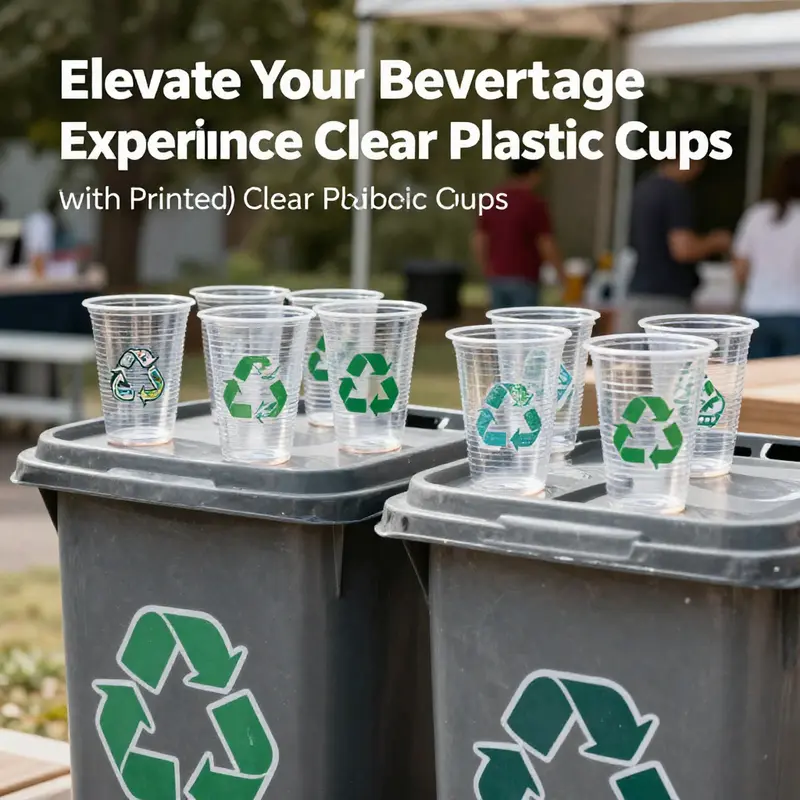
Printed clear plastic cups sit at a curious crossroads. They provide a transparent stage for beverages, letting color and presentation speak for themselves while carrying branding or messaging. Yet their transparency also reveals a practical truth: many are designed for single use. This chapter surveys the environmental footprint of printed clear cups, examining material choices, end-of-life pathways, and strategies to align design with responsible waste management.
The core reality is that most clear cups are made from polypropylene or polystyrene. These polymers deliver clarity and resilience but are largely non-biodegradable and can persist in ecosystems for centuries. End-of-life outcomes depend on local systems, with many cups ending in landfills or as litter. Printing adds complexity: inks, coatings, and adhesive layers can complicate recycling, so careful selection of water-based inks and simpler finishes is beneficial for recyclability. A lifecycle approach suggests preferring materials with lower embodied energy, minimizing ink layers, and seeking closed-loop or local collection programs where feasible.
Alternative materials such as PLA blends, paper-based cups, or bamboo composites offer compostability or reduced fossil-fuel dependence but require appropriate disposal infrastructure to realize benefits. Industrial composting facilities are often needed, and in many communities home or backyard composting will not achieve meaningful decomposition. Cost, performance under cold or hot beverages, and compatibility with branding must be weighed. Reducing reliance on disposable cups and exploring reusable or multi-use service models can further improve outcomes for high-volume events.
For designers, sustainability also means printing responsibly: opt for simple, durable graphics that do not impede recycling, choose inks with proven recyclability, and avoid multi-layer laminations that hinder material recovery. A clear lifecycle focus—from material selection to end-of-life recovery—helps balance brand objectives with environmental responsibility. Finally, consumers and organizers should seek clear disposal guidance and engage with local waste programs to ensure that printed cups contribute to circular systems rather than waste streams.
Clear, Conscious, and Custom: Navigating Market Trends and Consumer Desires in Printed Clear Plastic Cups
The printed clear plastic cup is more than a vessel; it is a portable surface where color, clarity, and brand storytelling meet in real time. The art and science of these cups hinge on a straightforward truth: the cup must remain crystal clear to showcase the drink while offering a durable, high-fidelity canvas for logos, patterns, or event-specific messages. Most printed clear cups are fabricated from food-grade polypropylene, a choice that supports beverage safety and maintains the visual allure of the liquid inside. Printing is typically executed through flexographic processes, which can render vibrant, repeatable graphics across large runs. This combination—clarity, safety, and vibrant decoration—makes printed clear cups a staple at promotional events, corporate gatherings, and experiential marketing moments where brand visibility and thematic coherence are essential.
Market dynamics over the past few years have sharpened the focus on how sustainability intersects with design and function. The strongest driver is an industry-wide shift away from non-compliant or low-quality materials toward products that can be recycled or degraded with reduced environmental impact. Regulatory frameworks and public expectations converge to nudge manufacturers toward better materials, cleaner production, and clearer labeling. In regions observing stringent standards, such as those aligning with carbon-reduction goals and stricter material safety codes, suppliers with robust certifications—FDA or ISO-like quality management, along with EU conformity—tend to outperform. The consequence is not merely a compliance register but a measurable improvement in product integrity, product stewardship, and consumer trust.
Beyond compliance, a powerful economic and strategic trend has emerged: green procurement. For many organizations, the decision to buy is governed by a hardening threshold—environmental responsibility is no longer optional but a prerequisite. Large corporations, multi-unit restaurants, government facilities, and high-end event producers increasingly mandate products that meet environmental criteria and report clear life-cycle attributes. This shift reshapes not only purchasing specifications but also supplier selection, contract terms, and long-term planning. It encourages brands to experiment with recyclable or compostable materials, to document end-of-life options, and to align packaging choices with broader sustainability goals, even when short-term costs are higher.
Innovation in product design has not paused in the wake of these shifts. The market now prizes multifunctional cups that blend form and function: insulated variants, cups engineered for better grip in hot or cold conditions, and even components designed for reuse or enhanced durability. While standard, single-wall cups remain practical for many venues, more demanding environments—especially where service speed, heat resistance, or long-distance transport matter—drive demand for advanced constructs. 3D-printed or reinforced transparent cups represent a specialized niche for tech showcases or limited-edition campaigns, offering precision shapes and enhanced durability. These innovations, however, come with trade-offs in cost and lead times, requiring buyers to weigh the value of extended lifespan against the economics of mass customization.
Another layer shaping the landscape is the integration of digital and AI technologies into how brands discover, select, and deploy cup designs. Shoppers increasingly move through decision paths that resemble “ask-trust-buy” rather than linear search-and-compare journeys. AI-enabled recommendations, personalized design options, and dynamic mockups help consumers envision how a cup can convey brand personality, evoke emotional responses, and optimize the consumer’s in-person or online experience. The implication for manufacturers and suppliers is a need to synchronize catalogues, digital proofing, and production workflows so that customization can scale without sacrificing consistency or quality. In practice, this means flexible manufacturing, tighter QA gates, and smarter logistics that can accommodate frequentChange requests from clients planning multiple events or campaigns.
The industry is also undergoing a structural consolidation. As the market rewards compliance, scale, and innovation, headquarters-scale producers with solid ESG and quality tracks tend to pull ahead. Mid-tier players differentiate themselves through niche capabilities and faster turnaround times, while smaller outfits may struggle to meet the combined demands of sustainability, customization, and delivery velocity. This consolidation reinforces a market where reliability and a compelling sustainability narrative are as valuable as price benefits, and where clients lean toward partnerships that promise predictable performance and long-term value rather than one-off transactions.
From the consumer’s vantage point, several preferences have crystallized around printed clear cups. Safety and quality are non-negotiables. Consumers are increasingly aware of the materials in contact with food and beverages, and the desire for non-toxic, odor-free products that comply with national safety standards is strong. This heightened awareness dovetails with a push for eco-friendly or biodegradable materials. Compostable options—whether in paper-based or other bio-based formats—are gaining traction as the share of green packaging reaches notable momentum in many segments. The emotional value of a cup is also rising in importance. People want more than a vessel; they want an experience, a story, and a sense of self-expression that a well-crafted design can deliver. In this sense, the cup becomes a quiet ambassador for a brand’s values and story, a personal touchpoint that can reinforce loyalty and affinity even after a product is finished.
Customization has morphed from a simple logo print to a form of brand empowerment. Buyers increasingly insist on sophisticated personalization that reflects corporate identity, culture, and messaging. A printed cup can serve as a portable billboard, a conversation starter, and a tactile canvas for narratives about quality, sustainability, and care for the consumer. The most effective campaigns use design as a platform to communicate values, not merely to decorate a cup. That shift elevates the cup from a functional item to a strategic marketing tool, one that travels beyond the event space into daily use, reinforcing a brand’s presence with every sip.
Consumers also seek authentic connections with brands. They favor partners that understand their culture and communicate in ways that feel collaborative rather than promotional. Authentic dialogues, co-creation opportunities, and transparent sustainability claims help brands avoid feeling generic or incongruent with consumer values. In this climate, cups that tell a credible story—whether about recycled content, reduced energy use in production, or local manufacturing commitments—tend to resonate more deeply and foster lasting engagement.
All of these forces converge to shape what success looks like in the market for printed clear cups. Materials and process choices must align with environmental expectations while maintaining clarity and safety. Design must be legible, attractive, and aligned with brand ethos across a spectrum of sizes and occasions. And operations must be capable of delivering consistent quality at scale, with reliable lead times, robust quality assurance, and transparent communication with buyers. A holistic approach is essential—one that blends eco-friendly materials, advanced printing, thoughtful consumer psychology, and genuine customer engagement into a cohesive value proposition.
For readers looking to explore a practical example of eco-conscious printing in related cup categories, consider this resource on environmentally mindful, logo-enhanced dispensing solutions. The content illustrates how brands can integrate sustainability with visually compelling branding, offering a concrete contrast to the traditional plastic cup narrative while underscoring the shared goals of clarity, safety, and brand impact. eco-friendly printed-logo paper cups.
As this landscape continues to evolve, the most resilient players will be those who translate market signals into tangible advantages: materials that are easier to recycle, designs that communicate authentic values, and service models that pair speed with reliability. Clear plastic cups printed with care can still play a central role in this future—provided they are part of a broader, audience-aware strategy that honors safety, sustainability, and storytelling as equal drivers of value. In short, success lies in balancing the clarity of the cup with the clarity of purpose behind the brand that uses it, ensuring the beverage and the message both arrive at the consumer’s table in a form that feels responsible, beautiful, and memorable.
External resource: https://www.un.org/sustainabledevelopment/
Final thoughts
The versatility and vibrant appeal of printed clear plastic cups offer substantial benefits to businesses across the beverage sector. From effectively enhancing brand visibility to providing customization possibilities for any event, these cups cater to a multitude of needs. As consumer preferences shift towards more responsible choices, there is a growing opportunity for companies to align their products with sustainability practices. Understanding these dynamics will empower beverage shops, restaurants, and catering services to make informed choices that both elevate their offerings and resonate with their audience.