

Solo 24 oz clear plastic cups have become a staple for beverage services looking to elevate their offerings. From bubble tea shops to catering services, these cups provide a reliable solution for serving both cold drinks and delightful moments. In this exploration, we’ll delve into five key chapters that cover the sleek design and versatile applications of these cups, the superior material composition that maintains drink integrity, the cost-effectiveness that makes them a smart choice for businesses, and the burgeoning environmental considerations surrounding their use. Each aspect is tailored to guide beverage chains, restaurants, food trucks, and event planners in making informed decisions.
Seeing Through the Moment: The Practical Value of Twenty-Four‑Ounce Clear PET Cups in Everyday Beverage Service
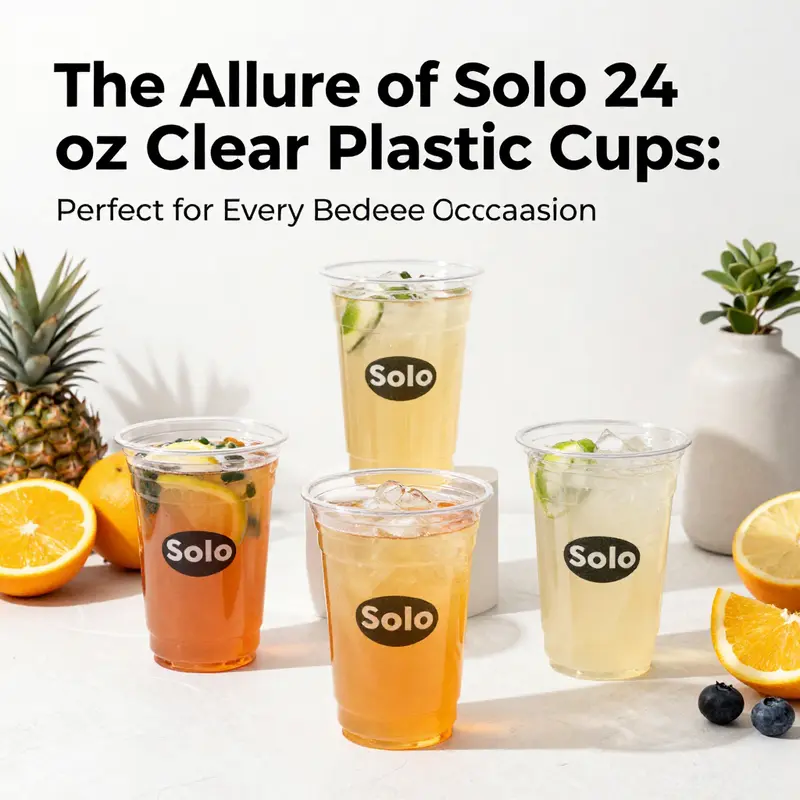
A twenty-four-ounce clear cup is more than a simple container; it acts as a stage for color, texture, and social rhythm. In the quiet exchange between pour and sip, the cup’s transparency elevates what is inside and subtly guides how people experience a drink. The choice of material, the generous capacity, and the geometry together shape a user journey from the moment the beverage is poured to the final taste. This is not a matter of style alone; it is a careful alignment of optics, handling, and logistics that supports gatherings, workplaces, and casual encounters where the cup travels with the drink, often through crowded rooms, service lines, and after-hours events. The twenty-four-ounce capacity is more than a measurement; it signals a tempo—drink at a pace that suits conversation, celebration, or quick turnover—while the clear walls ensure that the color and layering of the beverage remain legible to the eye and appetizing to the senses. In this way, the cup becomes a collaborator in the social ritual of drinking, helping to choreograph moments large and small without demanding attention.
Material choice anchors the experience. The cups are molded from ultra-clear PET plastic, a material known for its optical clarity and its balance of rigidity and lightness. PET’s transparency is not incidental; it lets the drink speak for itself, from the deep brown of iced coffee to the electric hues of a smoothie or the pale iridescence of a chilled cocktail. The absence of color intrusion means the beverage’s appearance—layering, froth, ice, and garnish—reads more vividly, which can subtly influence perceived freshness and quality. The capacity, precisely 24 ounces, translates into a usable portion for a range of contexts. It is large enough to accommodate a substantial iced beverage, a generous smoothie, or a beer-style serving for informal games, yet it remains manageable in the hands and within conventional serving lines. The top diameter, around 3.9 inches, and the base diameter, roughly 2.6 inches, establish a familiar silhouette that fits comfortably in cup holders, kiosks, and takeout workflows. These dimensions matter when service staff must anticipate refills, manage crowd flow, and design efficient set-ups for bulk events or busy break rooms. The geometry also supports stacking, enabling operators to store and transport cups with minimal space while retaining stability when they’re next to cold drinks in a cooler or on a crowded prep table.
The visual and tactile appeal of clarity extends beyond aesthetics. Clarity is not a mere cosmetic feature; it enhances the user’s perception of the drink’s temperature, freshness, and ingredient integrity. Ice shards sparkle as they melt and shift with every tilt, and the hue of the beverage remains true to its natural shade. This is especially valuable in venues that offer a spectrum of cold drinks—coffee drinks with crema, fruit-forward smoothies with visible layers, or mixed beverages that rely on color for consumer expectations. The clear walls also invite playful engagement in social settings, where colors, layers, and textures become part of the experience. In informal gatherings, the cup’s transparency supports spontaneous choices about sweetness, acidity, and chill level, because the drink’s appearance provides immediate feedback that can influence decision-making in the moment.
Functionality underpins form. The cups are designed to withstand the rigors of cold beverages, resisting leakage and maintaining structural integrity under typical loads of ice and foam. The wall thickness is a deliberate compromise: sturdy enough to feel substantial in the hand, yet light enough to be comfortable for extended use in line service or at a party. This balance is crucial when cups are carried through hallways, piled into transport carts, or handed to guests during fast-paced service. A practical feature often highlighted in the category is stackability. Nested cups fold into a compact footprint, saving valuable storage space in back rooms and logistics hubs. In environments where inventory management matters—hotels, convention centers, or weekend festivals—stackability reduces clutter and speeds up the replenishment process during peak periods. The overall reliability, from leak resistance to crush resistance, contributes to a smoother guest experience and fewer service interruptions, which in turn supports better throughput and customer satisfaction when every minute counts.
Contextual use across settings reveals the cups’ versatility. They are staples in offices, break rooms, catering lines, and social venues where beverages are central to the program. For coffee, iced tea, smoothies, and nonalcoholic punches, the cup provides a familiar, comfortable vessel that can be paired with lids, straws, or sleeves as needed. The transparency also makes them suitable for social games that rely on clear visibility of the drink. In casual gatherings, beer pong and similar contests often depend on cups that won’t leak or warp under a bit of rough use; the PET cup’s durability helps maintain a neat presentation from start to finish. For takeout or to-go service, the same cup offers the advantage of a universally recognizable format that customers understand and trust, along with a design that can handle the cold temperatures and syrup-rich beverages common in takeout menus. This broad applicability—from a conference coffee service to a backyard barbecue—highlights how a single, well-considered cup can support diverse service models without requiring specialized equipment for each scenario.
Availability, cost efficiency, and the health of supply chains further amplify the value proposition. In bulk orders, the unit cost can drop to a few cents as volumes rise, making it feasible for high-volume operations to standardize on a dependable cold-beverage cup without inflating per‑drink costs. Retail packaging and commercial distributors offer these cups in quantities suited to different scales—from ongoing corporate refresh programs to major events that require rapid refresh and disposal. The economics of bulk purchasing often hinge on predictable demand, with the ability to align procurement with anticipated peak periods such as holidays, conferences, or sports tournaments. Global demand for disposable serveware underscores the importance of consistent manufacturing quality, resilient distribution networks, and scalable packaging. The practical benefit for operators is straightforward: a reliable cup that delivers on appearance, durability, and cost-efficiency at scale reduces decision fatigue when stocking, refilling, and disposing of beverages.
Within the broader discourse on disposable serveware, it helps to see the cup in relation to other options that serve different beverage profiles or branding goals. The ecosystem includes a range of materials and insulation approaches, each chosen to optimize the customer experience for the intended drink type. For example, insulated or double-wall paper cups find favor for hot drinks and branded events, while the clear PET option excels with cold beverages where color, clarity, and ice play a starring role. A sense of how these families compare can be gleaned by exploring related discussions in the disposable cup space, such as this example that showcases a disposable paper cup collection with branding options for hot beverages: senang-disposable-double-wall-craft-paper-cups-multi-size-6-24-oz-custom-logo-for-coffee-tequila. The contrast between clear plastic and paper branding approaches invites buyers to consider branding, insulation, and end-of-life preferences when selecting serveware for a given event or venue. As these considerations accumulate, the decision often becomes less about a single cup and more about a cohesive strategy that aligns beverage offerings, guest experience, and environmental commitments. External and internal perspectives together help operators map how a standard cold-drink cup fits within a broader service design.
In the end, the twenty-four-ounce clear PET cup embodies a practical philosophy: form follows function, and function supports a seamless social ritual around cold beverages. Its clarity, capacity, and reliable engineering enable a range of settings to present drinks attractively while maintaining efficiency and control over service flow. The cup’s simple silhouette becomes a reliable instrument for hospitality professionals and casual hosts alike, supporting clear beverage presentation, swift handling, and scalable operations. It is a reminder that even everyday items, when designed with attention to use, can elevate moments of connection around the drinks that accompany conversation, celebration, and daily routines.
External resource: https://www.walmart.com/business/p/dart-td24-solo-24-oz-disposable-cup-plastic-clear
The 24-Ounce Clear PET Cup: A Versatile Vessel for Cold Beverages and Everyday Moments

A single, transparent cup can feel almost unremarkable until you consider how often it travels from kitchen to desk, from event bar to backyard party, and from coffee shop to conference hallway. The 24-ounce clear PET cup, crafted from ultra-clear plastic, emerges as a quiet workhorse in modern beverage service. Its size—twenty-four fluid ounces, about 710 milliliters—strikes a balance between generous portions and manageable handling. Users can easily gauge how much remains, how much to refill, and how quickly a drink will be consumed, all without removing the cup from the scene. The cup’s dimensions—about a 3.9-inch top diameter and a 2.6-inch base—contribute to a stable silhouette that sits confidently on a table, a tray, or a crowded event bar. When filled with a vibrant iced tea, a bright smoothie, or a chilled coffee beverage, the cup’s ultra-clear finish becomes part of the presentation, allowing the drink’s color and texture to take center stage rather than the container itself.
Material choice matters as much as volume or design. PET, or polyethylene terephthalate, is chosen for its clarity, light weight, and suitability for cold beverages. In this context, clarity is not merely an aesthetic preference; it is a functional attribute that helps servers, bartenders, and guests quickly identify contents, determine ice-to-liquid balance, and ensure that a sought-after drink—sparkling lemon, ruby-red juice, clouded smoothie—appears as intended. The material’s transparency works in concert with the beverage’s color, making a strawberry smoothie look inviting or a citrus-infused water seem refreshing at a glance. Such visual cues can influence perceived quality and satisfaction, a subtle but meaningful factor in a busy service environment.
Functionally, the primary role of the 24-ounce clear cup is to hold cold drinks reliably. It accommodates a broad spectrum of liquid types, including water, iced tea, soda, and smoothies. In practical terms, this means a single cup can handle a midday office refill, a campus coffee run, or a casual backyard gathering without forcing a switch to a different vessel. The cup’s capacity supports generous servings, which is especially valuable for events where guests expect to be offered a substantial drink without frequent re-fill interruptions. Its compatibility with thicker liquids like smoothies or shakes further extends its usefulness, enabling venues to streamline inventory and reduce the number of unique cup sizes required for a given service.
The range of potential applications extends well beyond conventional cold beverages. Non-carbonated drinks such as juice or milk can be served in the same cup, and the container’s rigid, pliable structure helps maintain texture and temperature for longer periods. For tastemakers and mixologists at gatherings, the cup can present cocktails and non-alcoholic beverages in a straightforward, accessible format, particularly in settings where plated service is less feasible. Even in event contexts where alcohol is served under certain guidelines, the cup can function with appropriate lids to preserve integrity and minimize spills, while still presenting a clean, professional appearance that aligns with a brand’s or venue’s aesthetic.
From a design perspective, the cup delivers both practicality and a premium feel. The transparent finish showcases the drink’s hue and clarity, which can enhance the consumer’s perception of freshness and quality. The simple, unadorned silhouette supports branding through lids, sleeves, or external graphics on the cup’s exterior, making the container a blank canvas for signage and color schemes in settings ranging from casual cafés to upscale receptions. In such contexts, the absence of heavy ornamentation directs attention to the beverage itself, encouraging guests to focus on flavor, aroma, and mouthfeel rather than the vessel’s embellishments. This minimalist approach also translates into easier adaptation across multiple service environments, reducing the need to diversify stock for different occasions.
A crucial advantage lies in its disposability. In high-volume operations—catering, large corporate events, or busy hospitality venues—the ability to serve efficiently while minimizing cleanup time is a decisive factor. The disposable nature of the cup, coupled with standard lid compatibility, offers a practical solution for on-the-go consumption. Teams can prioritize speed and throughput, knowing that the post-event cleanup burden is markedly lighter compared with reusable alternatives. In many scenarios, this translates into substantial time savings, with estimates often cited by operators as a reduction in post-event labor and sanitation demands, a benefit that can free staff to focus on guest experience rather than vessel maintenance.
Of course, every decision involves trade-offs, and sustainability remains a critical consideration for contemporary beverage service. The 24-ounce clear cup is produced from food-grade PET and is designed for recyclability within appropriate municipal streams. Its lifecycle supports modern sustainability goals by enabling a staged approach to waste management—useful for venues striving to balance guest experience with environmental responsibility. Operators can emphasize reuse where feasible, and when disposal is necessary, PET’s established recycling pathways help ensure that the container does not simply end up in a landfill. This alignment with hygiene standards and recyclability helps businesses meet consumer expectations for responsible sourcing and waste reduction, even as they deliver convenience and value to guests.
The practical benefits extend into branding and presentation as well. A cup that is clear and visually neutral offers a blank canvas for branding on lids and sleeves, enabling a cohesive look across a venue’s beverage program. In addition to the cup’s intrinsic clarity, the overall presentation can be tailored through packaging elements, color schemes, and signage around the serving stations. For brands exploring branding opportunities on cups—particularly through eco-conscious or minimalist design approaches—options exist that emphasize branding without sacrificing sustainability or cost efficiency. For example, there are opportunities to incorporate branding on cup-related accessories or on alternative cup formats that align with green initiatives. eco-friendly printed logo paper cups illustrates how a market can pair clear, versatile drinkware with branding that resonates with environmental values, even if the underlying cup is a simple, clear PET vessel. This linkage underscores the broader point that a single beverage container can support both practical service goals and brand storytelling, depending on how it is deployed within a broader packaging strategy.
Reflecting on the everyday realities of serving and consuming beverages, the 24-ounce clear cup demonstrates how physical form, material science, and user experience converge. Its weight and handleability make it comfortable to grip when filled with icy content, while its stability—thanks to a well-calibrated top and base diameter—helps prevent tipping on crowded trays or outdoor surfaces. This stability matters as much to a server rushing through a busy line as it does to a guest who wants to savor a chilled beverage without the distraction of unintended spills. The combination of capacity, clarity, and reliability fosters a straightforward, intuitive user experience that supports consistent service quality at a range of scales, from intimate gatherings to large-scale events.
In the broader context of beverage service, the 24-ounce clear cup is not just a container; it is a facilitator of flow. It supports fast throughput, ensures visibility of the drink’s appearance, and enables operators to manage inventory and waste with greater clarity. It also adapts to a spectrum of beverage styles, from simple hydration to more elaborate cold beverages, and it remains compatible with both casual and premium hospitality environments. This adaptability is what makes the 24-ounce clear PET cup a staple in many operations, allowing staff to deliver consistent experiences without constantly shifting to new vessels. For buyers and managers evaluating stock for a given program, the decision often reduces to whether the cup’s advantages align with service goals, guest expectations, and sustainability commitments—three factors that frequently converge in successful beverage operations.
External resource for specifications and technical details can be found here: https://www.dart.com/products/td24-solo-24-oz-disposable-cup-plastic-clear
Clarity, Strength, and the Recycling Loop: The PET Identity of the 24-Ounce Clear Cold Cup

A 24-ounce clear plastic cup is more than a vessel; it is a material statement about how we drink, share, and dispose of beverages in a culture that prizes convenience without surrendering optics. In this chapter, we examine the material backbone of the standard cold-drink cup—the transparent polymer that carries ice and syrup, keeps gravity in check, and often returns to a recycling stream. These cups are designed for cold beverages, and their success rests on a polymer that blends clarity, strength, and a manageable life cycle. The object of attention here is a 24-ounce cup whose top diameter measures 3.9 inches and whose base diameter is 2.6 inches. It is a classic format for events, takeout, and casual serving where appearance matters as much as practicality. The choice of material is not a mere afterthought; it shapes how the cup feels in the hand, how it performs when filled with a frigid drink, how easily it stacks for transport, and how it might be recovered for recycling after use. The material identity driving all of these properties is polyethylene terephthalate, commonly known as PET, a resin that has become the workhorse of disposable beverage service because of its rare combination of optical clarity, low weight, and broad compatibility with food contact.
The core appeal of PET lies in its optical purity. When a cup is held up to light, the expectation is not simply that the liquid inside will be visible but that the liquid and the ice will appear nearly pristine, free from haze or color distortion. PET’s molecular structure, when oriented during manufacturing, yields a high degree of clarity that makes beverages look appealing and vibrant. This is more than aesthetics; it affects consumer perception in a measurable way. Clarity can influence perceived temperature, sweetness, and even the perceived quality of the drink itself. The same material also offers a comfortable, tactile experience. PET walls can be made thin enough to feel delicate yet durable enough to resist easy dings from a casual drop, which matters in fast-paced service settings or social gatherings where cups are handled quickly and cheerfully. The tilt from mere convenience to reliable performance rests on process choices that shape how the resin is transformed into a usable cup. PET is not just a generic plastic; it is a carefully managed polymer that, when extruded, melted, and stretched in a controlled way, achieves uniform wall thickness, a smooth rim, and the rigidity needed to prevent sagging when filled with a full 24 ounces of liquid and ice.
A closer look at PET reveals why it has become so widely adopted for cold-beverage cups. The polymer offers a favorable balance of impact resistance and stiffness. In a disposable cup, that translates to a structure that can withstand the mechanical stresses of handling by servers, guests, and the occasional enthusiastic beer-pong moment, without cracking or deforming under a light pressure. The material’s low density keeps the overall weight down, which simplifies packing and reduces shipping costs. PET’s barrier properties, though optimized for gas and moisture control in more demanding packaging, are sufficiently robust to contain beverages without excessive permeation for typical cold drinks. This means the cup can retain fizz with carbonated beverages for a reasonable period, and it can maintain the cold temperature long enough for a social event or a takeout order. For hot liquids, the story changes; PET’s thermal profile is more forgiving at cold temperatures than at high heat. This is why PET cups are the default choice for iced coffee, smoothies, and chilled cocktails alike, while hot beverages often prompt alternative materials designed to tolerate higher temperatures. The default recipe here is clear, lightweight, rigid, and food-safe, an almost perfect trifecta for a disposable cup designed for cold consumption.
The manufacture of a clear PET cold cup is a narrative of precision. The resin is melted and formed into a hollow shape through processes such as blow molding or injection-blow molding. The orientation of the PET during forming, often through biaxial stretching, improves both clarity and barrier performance. The result is a cup with a smooth interior and exterior surface, a uniform wall thickness, and a rim that is comfortable to drink from. The top diameter of 3.9 inches and the base diameter of 2.6 inches are not arbitrary measurements; they reflect a geometry designed to balance stability with a comfortable sipping experience. The footprint is broad enough to sit steadily on a table, yet the profile remains slender, aiding when cups are mixed and stacked during service or transport. The capacity, a full 24 ounces, is a practical compromise between the desire for generous servings and the necessity of a reasonable footprint in trays, drink stations, and takeout bags. In a world of disposable convenience, such geometric choices contribute to efficiency: they enable faster pouring, easier gripping, and smoother stack-and-store cycles for events, catering, and retail pickup.
The environmental dimensions of PET complicate the story in meaningful ways. PET is widely recyclable and, in many jurisdictions, accepted in curbside programs. This recyclability makes PET a favorable option from a lifecycle perspective; it offers the possibility of turning a post-consumer cup into new PET products, reducing virgin resin demand and downstream waste. Yet recycling is not automatic. It depends on local infrastructure, contamination levels, and consumer participation. The same property that makes PET attractive—its clarity and stability—also means it can endure through multiple life cycles if properly processed. Recycled PET, or rPET, can be used in new beverage containers or a variety of durable goods, though the proportion of post-consumer PET used in new cups varies with market demand and manufacturing specifications. Consumers play a central role here: rinsing cups before disposal, avoiding contamination with non-PET materials, and placing cups in the appropriate recycling stream can improve the chances that the cup becomes part of a new product rather than ending up in a landfill. The broader story includes discussion of alternative materials and end-of-life pathways, reminding readers that a clear cup is not only a transient accessory but a participant in a recycling loop that continues to evolve.
For the practical user, the PET clear cup promises a predictable, clean, and visually appealing experience. The transparency showcases the beverage’s color and texture, which matters for how a drink is perceived and enjoyed. The rigidity of the wall helps support beverages with ice, reducing the risk that the cup flexes under load. The rim, often generously finished, provides comfort during sipping, and the interior smoothness makes cleaning between uses unnecessary for disposable use, aligning with the convenience narrative. In social settings, the cup’s design supports both casual and semi-formal occasions, from a backyard gathering to an after-work pickup, without demanding more than what ordinary service requires. The clear aesthetic also communicates a sense of purity and simplicity, aligning with consumer expectations for transparent packaging that looks as clean as the contents it holds. At the same time, it is essential to acknowledge the environmental trade-off: as long as the cup is used responsibly and recycled where possible, its clean look and lightweight profile can coexist with a sustainable mindset.
The chapter would be incomplete without a practical nod to alternatives and to the broader ecosystem of disposable cups. While PET’s clarity and lightness suit cold drinks, companies continue to explore compostable and biodegradable fibers for different use cases, particularly where a hot beverage or a fully compostable end-of-life is desired. The choice of material, however, remains tied to the intended use, handling conditions, and local recycling capabilities. In a world where events and takeout meals are a constant drumbeat, the material identity of the cup matters for designers and operators who must balance appearance, performance, and end-of-life considerations. For readers curious about how these choices translate into real-world options beyond PET, consider exploring eco-friendly disposable avenues that align with different consumer priorities, such as paper-based alternatives that emphasize different disposal pathways. eco-friendly disposable single-wall paper ice cream cups with lid.
Further reading on the chemical and regulatory context of PET helps ground the discussion in broader science and policy. For a detailed look at the polymer’s structure, properties, and global usage, the entry on polyethylene terephthalate offers essential context and complements the practical lens offered here. External resource: https://en.wikipedia.org/wiki/Polyethylene_terephthalate
Clear-Cost Clarity: Maximizing Value with Solo’s 24-Ounce Clear PET Cups for Cold Beverages
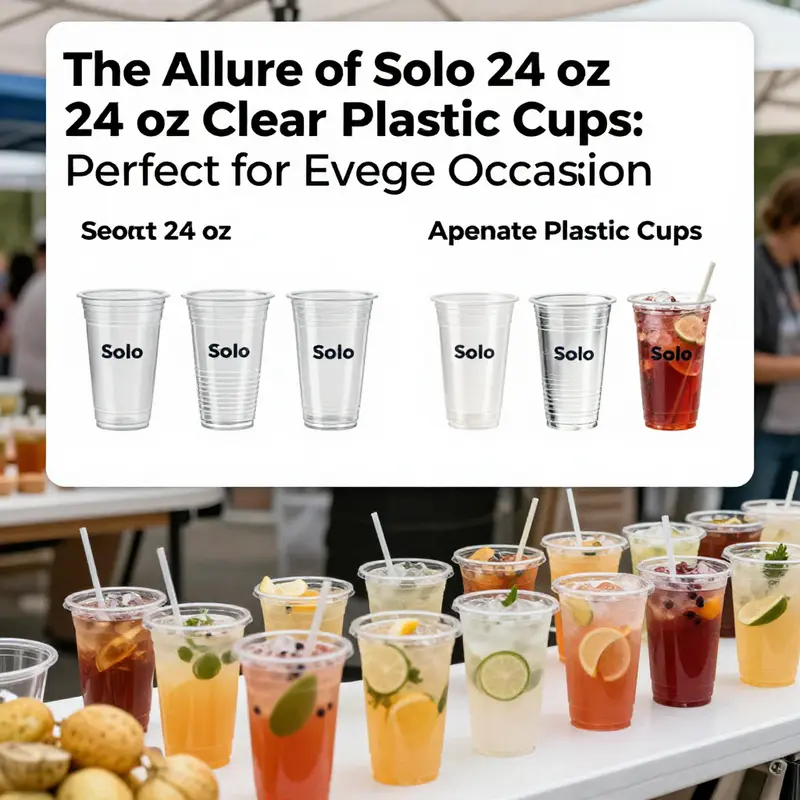
When planning a beverage service that centers on cold drinks, cost-effectiveness isn’t merely a number on a spreadsheet; it becomes a guiding principle that shapes everything from purchasing to service flow and guest perception. Solo’s 24-ounce clear PET cups sit at a compelling intersection of affordability and performance. They are designed to showcase beverages with crystal clarity while delivering practical reliability in busy environments. The combination of a 24-ounce capacity, a notably crisp appearance, and a price point that many operators can absorb makes these cups a focal point for shops, events, and on-the-go vendors who prioritize value without compromising presentation. In this context, the economics are straightforward enough to inform an operational decision, yet nuanced enough to influence how a business projects its brand and handles inventory across multiple events or shifts. The numbers matter, but so do the visual cues they enable and the resilience they offer under typical service conditions.
From a financial perspective, the cost structure is simple and scalable. A case of 600 cups priced at about $99.99 translates to roughly $0.17 per cup before factoring in shipping or taxes. This level of unit cost matters not only because it controls the per-drink expense but also because it aligns with the broader budgeting realities of cafes, casual eateries, and event-driven beverage service. In any business that serves cold beverages in volume—think iced coffees, fruit smoothies, iced teas, or even chilled cocktails—the ability to hold a predictable cost per cup supports more accurate pricing, predictable margins, and straightforward inventory planning. When planners can forecast that a typical event or weekend shift will require a known quantity of containers, it becomes easier to lock in suppliers, avoid stockouts, and minimize waste. Clarity of cost, in turn, reinforces clarity of strategy, allowing operators to allocate resources toward product quality and guest experience rather than toward opaque packaging expenses.
Beyond the bottom line, the material and design of these cups reinforce the value proposition in tangible ways. Constructed from PETE, they offer a crystal-clear appearance that enhances product visibility. Clarity matters; it invites customers to perceive the beverage as fresh and appealing, helping to communicate perceived value with no extra labeling needed. This visual transparency is especially advantageous for drinks with vibrant colors—bright smoothies, sunlit teas, or layered cocktails—where the liquid’s hue can become part of the sensory appeal of the offering. The 24-ounce capacity anchors a practical serving size that many customers recognize as filling without feeling excessive, striking a balance between generous portions and the need to keep costs within reason for day-to-day operations. The design also supports a wide top diameter—about 3.9 inches—with a narrower base around 2.6 inches, a geometry that helps with stability on crowded service lines and in transport, whether on foot through a festival crowd or in a compact café setting.
Durability and safety are central to the ongoing cost-effectiveness argument. PETE is known for being food-safe and for resisting leaching, a combination that reassures operators who must meet health standards while minimizing risk. In practical terms, this means fewer call-backs to the kitchen or back-of-house adjustments and fewer concerns about contaminants migrating into beverages during normal use. The cups are designed to withstand typical handling, which includes stacking, transit, and light drops common to takeout and mobile service. They are not, however, intended for hot liquids; heat resistance is limited, so hot beverages require different packaging. This limitation is not so much a drawback as a guideline that helps businesses segment their packaging strategy by beverage temperature. For cold drinks, the cups deliver consistent performance: they resist warping and cracking under typical chill and drink-time conditions, which translates into fewer broken cups and less waste over the course of a busy service window.
The practical applications of this combination of price, clarity, and durability extend well beyond a single use. Cafes that offer iced beverages can leverage the cups to present drinks with appealing visual clarity, attracting customers who respond to the appearance of freshness. Restaurants that run outdoor service during festivals or farmers markets find the cups’ translucence and rigidity valuable when space is limited and lines move quickly. Mobile vendors, from coffee carts to smoothie trucks, benefit from the balance of economy and reliability, since the per-cup cost scales down with volume while the cups still feel premium enough to communicate value. Office environments, too, can leverage these cups for break-room service, shared beverage stations, or events where a clean, professional look matters without excessive spend. In all these cases, the stark, crystal-clear presentation acts as an unspoken ambassador for the beverage inside, contributing to a perception of quality that complements the actual taste and aroma of the drink.
A notable aspect of the Solo 24-ounce cup’s cost-effectiveness is the broader financial flexibility it affords. For smaller businesses and event planners working within tight budgets, there is an added incentive in the form of payment options that ease capital constraints. The availability of interest-free payment plans can be a practical enabler for acquiring enough stock to cover a peak season or a large one-off event without tying up operating cash. This flexibility means more headroom to invest in the beverage program itself—imagery and merchandising, better ice alignment, or even an improved service workflow—without forcing a trade-off on the packaging layer. In short, the cups contribute to a holistic value proposition: affordable unit costs, dependable performance, and financial mechanisms that support growth during periods of demand. The cumulative effect is a packaging choice that can help a business scale responsibly while maintaining a high level of beverage presentation.
An important nuance, often overlooked in simple cost analyses, is how clarity can influence branding and guest perception without any labeling costs. When a cup is crystal clear, the beverage becomes the focal point. This can translate into a perceived premium, as customers associate visibility with freshness and care in presentation. The fill-line integrity and the clean silhouette help reduce the visual clutter that sometimes accompanies branded cups with busy logos or printed designs. For many operators, this means fewer upfront costs for custom printing while preserving the opportunity to deliver a strong, consistent guest experience. If branding is desired, it can be achieved through secondary cues such as napkins, drink stirrers, or a concise digital ordering interface that appears on receipts and screens rather than on the cup itself. Yet even without additional branding, the clarity and clean lines of a cold-beverage cup can become a subtle differentiation factor in a crowded service environment.
In assessing value, it is useful to consider the broader ecosystem of packaging alongside these cups. The right cold-beverage container should be compatible with standard lids, straws, and sleeves, enabling a smooth, cost-efficient supply chain. The Solo TD24 cup’s popularity is partly driven by its predictable dimensions and compatibility with a range of lids and accessories designed for cold beverages. This compatibility helps operators avoid the hidden costs of misfit components, such as leaks, spills, or the need to reorder because lids don’t fit or fit poorly. For operators who shop across multiple events, the consistency of a single cup type across venues reduces SKU complexity, simplifies ordering, and lowers the risk of receiving mismatched stock that complicates service. In environments where speed matters, the ability to pre-fill cups, place them in service-ready stacks, and deploy them rapidly can translate into meaningful labor savings over the course of a shift or event.
To reflect the practical implications in one compact observation: the combination of a low per-unit cost, high clarity to elevate perceived quality, and solid cold-performance durability makes Solo’s 24-ounce clear cups a robust option for a wide range of beverage service scenarios. For operators who balance cost containment with guest experience, these cups offer a straightforward way to achieve both without resorting to more expensive custom-printed solutions or to lower-quality alternatives that may compromise the drink’s presentation. As with any packaging choice, the best fit depends on the specific business model, drink lineup, and expected throughput. But the data and field-tested behavior suggest that, for cold beverages, these cups deliver a compelling blend of value and performance that can align with most standard service models. To explore related packaging options that can complement cold-beverage service and support sustainability goals, see this broader collection page: senang05-food-grade-take-away-bowl-with-lids.
External Resource: For a vendor’s detailed product overview and specifications, you can reference the official product listing on a major retailer site: https://www.amazon.com/Solo-TD24-Ultra-Clear-PETE-Cold/dp/B0002B3S8K
Clear Footprints: Environmental Considerations and the Life Cycle of 24-Ounce Clear Plastic Cups

The 24-ounce clear plastic cup is a familiar sight at gatherings, outdoor events, and quick-service settings. Its appeal rests in a combination of transparency, lightweight strength, and cost effectiveness. When filled with cold beverages—from water and juice to iced coffee and smoothie—these cups deliver a practical, visually appealing serving option. Yet the same characteristics that make them so convenient also illuminate a set of environmental considerations that ripple from production to disposal. Understanding the full life cycle of these cups helps frame not only their performance in service but also their material responsibilities, waste implications, and the kinds of choices that can reduce their ecological footprint over time.
Material choices for these cups reveal the complexity beneath a simple, clear surface. In many variants, the cups are made from lightweight petroleum-based plastics such as polypropylene (PP) or polystyrene (PS). Each material carries distinct implications for energy use in production, end-of-life handling, and recycling potential. Some versions of clear cups rely on PET for enhanced clarity, especially in markets that emphasize transparent aesthetics. This diversity means that a single product category can encompass a spectrum of environmental profiles, depending on the resin, the manufacturing process, and the local waste-management infrastructure. Across these options, the common thread is that the cups are designed for short-term use and mass distribution rather than durability, which in turn drives high volumes of waste if disposal systems are not optimized.
The single-use nature of these cups sits at the heart of their environmental profile. Their one-time function aligns with fast-paced service contexts where speed, hygiene, and low cost trump durability. But the trade-off is a rapid turnover of objects that quickly become waste. Even when disposed of responsibly, the sheer scale of daily consumption means that a large portion of these cups enters landfills or escapes into the environment as litter. The persistence of plastics in ecosystems is well documented, and clear cups are no exception. The potential for decades or centuries of residence in landfills or natural settings underscores the importance of looking beyond immediate convenience to consider long-term stewardship and waste minimization.
A crucial factor shaping the environmental story is end-of-life management. Recycling is a viable route for some plastics, but it faces significant hurdles. Food and drink residues can contaminate streams, which reduces the efficiency and effectiveness of recycling programs. Contamination often leads to a lower recycling rate for these cups, particularly in systems that rely on consumer sorting and on facilities equipped to handle mixed plastic grades. Even where local programs exist, the outcome hinges on proper collection, cleaning, and separation at the municipal level. In practice, this means that the environmental benefit of recycling depends not only on technology and policy but also on consumer behavior and program efficacy. When recycling is limited or unreliable, the cups are more likely to end up in landfills or as outdoor litter, where they can linger for long periods and contribute to broader plastic-waste challenges.
Heat exposure further narrows the functional window of these cups. They perform best with cold or room-temperature beverages. When exposed to heat, some variants can warp, soften, or lose structural integrity, which undermines both hygiene and user experience. That thermal sensitivity matters from a lifecycle perspective as well: it influences the design choices manufacturers make, the types of beverages most commonly served in these cups, and the end-use contexts in which they are appropriate. In hot beverage service or high-heat environments, alternatives or additional protection may be necessary, potentially increasing material use or driving customers toward reusable options that can better withstand thermal stress.
Recycling challenges extend beyond heat and residue. The broader recycling system is highly uneven across regions. Some municipalities offer plastics recycling, but the effectiveness hinges on the presence of efficient sorting facilities, adequate funding, and clear consumer guidance. Contamination from food and drink residues remains a persistent barrier to high-quality recycling streams. In practice, this means that even well-intentioned disposal efforts can fall short if systems are under-resourced or consumer practices are inconsistent. The result is a disjunction between the availability of recycling programs and their actual impact on reducing the volume of plastic entering landfills.
With these constraints in mind, alternatives and sustainable practices gain prominence. One set of strategies emphasizes reuse rather than single-use disposal. Reusable options such as double-wall insulated tumblers—with durable construction, long service life, and the possibility of replacing components like lids and seals—offer a route to meaningful waste reduction. These options are most effective when used repeatedly and when consumer and business cultures align around responsible cleaning and return or reuse practices. Since the focus is on reducing the lifecycle waste generated by many single-use cups, reusables shift the environmental burden away from production and disposal toward maintenance and use, where the potential for waste minimization is greatest.
In addition to reusables, there is growing interest in reimagining plastic waste as a resource through post-use transformations. Conceptual and practical models that convert used cups into new products, such as lighting fixtures or other durable goods, demonstrate that waste can be recaptured as a resource in a circular economy. This kind of approach reframes the disposal challenge as an opportunity for design innovation and material recovery. It also highlights the importance of designing products with end-of-life pathways in mind, so that after a service life they can be readily diverted from landfills and reintegrated into manufacturing cycles. Such strategies require collaboration among manufacturers, waste-management professionals, and policymakers to establish programs that support collection, processing, and upcycling while maintaining safety and quality standards.
To anchor this discussion in real-world practice, policymakers and organizations continually stress the broader context of sustainable plastics management. The conversation encompasses not only the technical feasibility of recycling and recovery but also the social dimensions of consumption, disposal behavior, and public awareness. Consumer education is a powerful lever; clear guidance about proper disposal, rinsing, and sorting can improve recycling outcomes and reduce contamination rates. Programs that simplify acceptable materials and provide practical tips for households and events contribute to higher-quality recycling streams and, ultimately, to less waste lost to landfills or litter.
In considering the environmental prospects of these cups, it is important to acknowledge the spectrum of alternatives that sit alongside them. Reusables remain central to long-term waste reduction, but there is also room for innovative packaging choices that minimize environmental impact while maintaining the benefits of clarity and convenience. For example, some operators explore paper-based or plant-based cup options for certain applications, or they adopt coatings and barrier technologies that enable lighter, more efficient recyclability. Each path carries trade-offs in energy use, water use, emissions, and end-of-life handling, which must be weighed in light of local infrastructure and community goals. The overarching aim is to align product design, service models, and waste-management systems with a shared commitment to reducing ecological footprints without sacrificing user experience.
Embedded in these discussions is a sense of responsibility to the broader environment. The conversation about clear 24-ounce cups, while anchored in a specific product category, touches on universal questions about how societies balance convenience with stewardship. It invites us to consider the durability of our waste and the degree to which we can, and should, redesign the ways we serve beverages. The evolving narrative around plastic cups is not just about a single item but about a set of choices that shape ecosystems, communities, and industries. By embracing reusable options, exploring upcycling possibilities, and strengthening recycling and education, the industry and its consumers can move toward a model where the ease of a cold drink does not come at an outsized cost to environmental health.
For readers who want to explore sustainable plastics in greater depth, a comprehensive government resource offers data on waste streams, recycling challenges, and sustainable alternatives. This resource helps connect the practical realities of serviceware like 24-ounce clear plastic cups with the policy and programmatic landscape that shapes how plastics are managed.
Internal link reference: For an example of greener packaging options that maintain branding while pursuing environmental goals, see eco-friendly printed-logo paper cups. eco-friendly printed-logo paper cup.
External resource: Sustainable Management of Plastics by the U.S. Environmental Protection Agency provides extensive data on plastic waste, recycling challenges, and sustainable alternatives. https://www.epa.gov/sustainable-management-plastics
Final thoughts
In conclusion, Solo 24 oz clear plastic cups serve as a versatile and practical solution for a variety of beverage services. Their sleek design enhances presentation while their quality construction ensures durability and safety. Cost-effective and adaptable to many settings, these cups can help elevate your offerings, whether in a vibrant bubble tea shop or at an elaborate corporate event. As you consider suppliers, keep in mind the growing importance of sustainability and how the materials used for these cups can align with your business values. Embracing Solo 24 oz clear plastic cups could be your next step toward delivering a better beverage experience.