
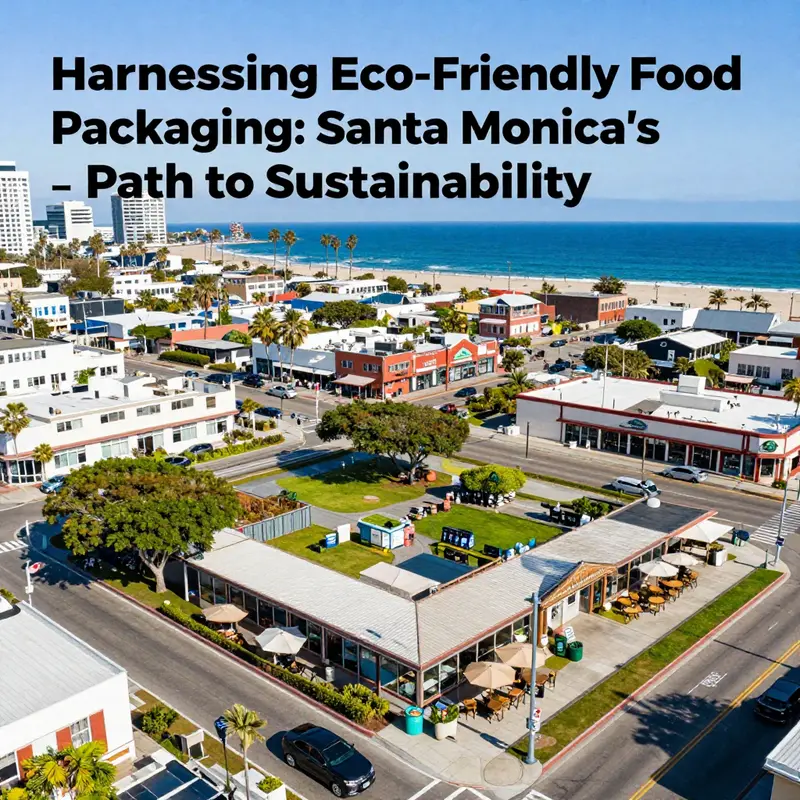
Santa Monica, a city celebrated for its commitment to sustainability, is championing eco-friendly food packaging to enhance its culinary landscape. By reducing single-use plastics and encouraging the use of biodegradable materials, local businesses are aligning with broader environmental goals. The emerging practices not only serve the needs of food service providers but also resonate with consumers increasingly aware of their environmental footprint. Each chapter of this article dives into meaningful aspects of eco-friendly food packaging in Santa Monica—from the materials used to the policies promoting their use, economic impacts, consumer awareness, and future trends—all pivotal in understanding the city’s dedication to a zero-waste future.
Sustainable Materials That Fit Santa Monica: Choosing the Right Eco-Friendly Food Containers
Sustainable Materials That Fit Santa Monica: Choosing the Right Eco-Friendly Food Containers
Santa Monica’s commitment to zero waste has shaped how food businesses select packaging. Choosing the right material is about more than biodegradability. It requires balancing supply chain reliability, food safety, cost, and local disposal options. This chapter walks through the practical materials used across the city, explains what makes each option effective, and highlights operational factors that determine whether a container truly reduces environmental impact.
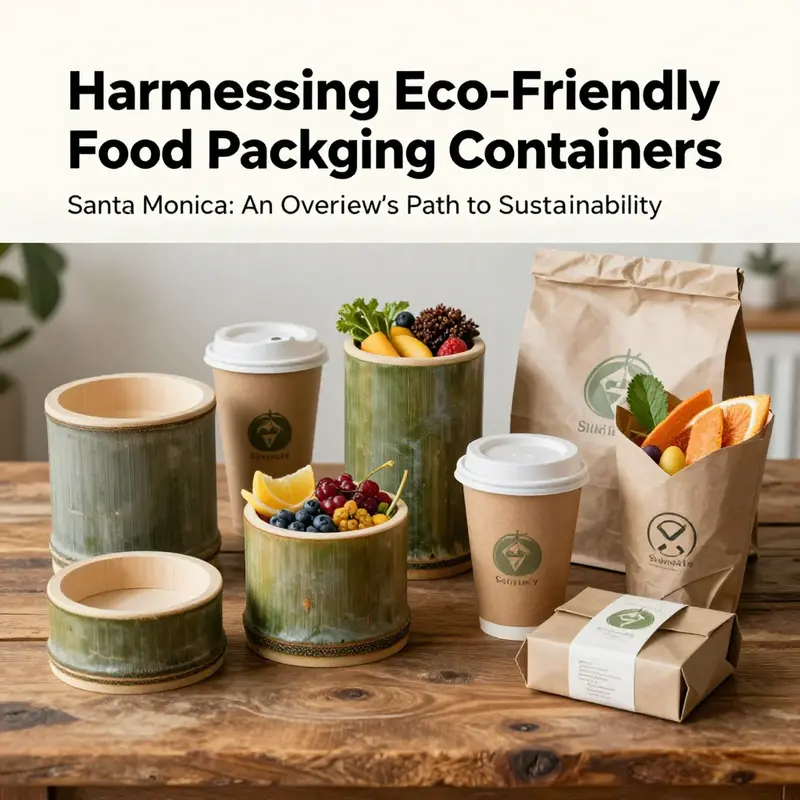
Bamboo stands out for its strength and renewability. Rapid growth and natural resilience make bamboo an attractive resource for both reusable and single-use containers. It can be formed into bowls, trays, and cutlery that feel substantial while remaining lightweight. For businesses that want to project a premium, natural aesthetic, bamboo delivers visual appeal and tactile warmth without heavy processing. Importantly, bamboo containers can be composted in industrial composting systems, provided they have no plastic coatings. When sourcing bamboo, look for suppliers who can document sustainable harvest practices to avoid driving unsustainable demand.
Wood-based and molded-fiber packaging, often made from paper pulp or reclaimed fibers, is a common choice in Santa Monica eateries. These containers excel at compostability and are suited to a wide range of menu items. Bowls for rice and salads, clamshell boxes, and compartment trays made from molded fiber resist oil and moisture better than many assume, especially when paired with plant-based barrier coatings. Because molded fiber originates from wood or recycled paper, the embodied carbon is typically lower than that of petroleum-based plastics. This makes wood-based packaging well aligned with city goals that prioritize reduced carbon footprints and closed-loop materials.
Sugarcane bagasse is another local favorite for takeout bowls and trays. As the fibrous residue left after extracting juice from sugarcane, bagasse repurposes agricultural waste into durable foodservice containers. It performs well with both hot and cold foods and often withstands short microwave use. For businesses seeking compostable alternatives that combine strength and affordability, bagasse offers an excellent balance. If you want to evaluate a real-world option, consider examining natural sugarcane bagasse pulp salad bowl offerings to compare sizes and specifications.
Recyclable plastics remain part of the mix, especially when food preservation and barrier properties matter. Not all plastics are equal. High-recovery recyclable polymers can keep food fresh during delivery, reduce food waste, and in jurisdictions with robust recycling programs, return to circular streams. In Santa Monica, recyclable options are typically chosen for items requiring extended shelf life or transparent lids. However, the environmental benefit depends on proper collection and recycling infrastructure. If recyclable containers end up in landfill, they lose much of their advantage. For that reason, many businesses combine recyclable and compostable solutions, matching container type to menu item and disposal pathway.
Compostable plastics and PLA-coated paperware have a role, but require care. Polylactic acid (PLA) and other compostable resins provide waterproofing without fossil feedstocks. Yet they demand industrial composting to break down reliably. Santa Monica’s composting infrastructure and commercial compost haulers accept certain certified products. Always confirm compatibility before switching. Misplaced compostable items in recycling streams can contaminate recyclables, increasing processing costs. Clear staff training and signage help prevent cross-stream contamination.
Beyond material types, coatings and laminates affect end-of-life outcomes. Oil and water-resistant coatings preserve food quality and reduce leakage, but they vary in compostability and recyclability. Wax coatings may hinder recycling. PE-lined paperboard can complicate composting. Newer technologies use plant-based or water-dispersible coatings that maintain barrier performance while allowing composting or recycling. When evaluating options, request technical data sheets and certification details from suppliers.
Certifications matter because they translate material claims into verifiable standards. Look for ASTM, ISO, or EN certifications that address industrial or home compostability. Certifications confirm that a product will meet expected breakdown rates and that it won’t leave persistent microplastics. For recyclable plastics, seek clarity on resin identification and local recyclability. Third-party green business programs and the city’s Office of Sustainability offer guidance on which standards are accepted locally. Choosing certified materials reduces the risk that a seemingly green product will fail to perform in real-world disposal systems.
Operational fit is as important as environmental credentials. Container size, lid compatibility, stacking behavior, and sealing performance influence food safety and delivery success. Multi-compartment trays are popular with meal services, and options are now available in compostable molded fiber and recyclable plastic variants. Bulk purchasing can cut per-unit costs and reduce packaging waste from frequent small orders. For example, bulk recyclable multi-compartment containers can be sourced at scale for about $0.10 per unit, making them economically viable for high-volume operations while still aligning with sustainability goals.
Supply chain factors should also guide material choices. Local availability reduces transport emissions and the risk of stockouts. When selecting a supplier, evaluate lead times, minimum order quantities, and customization options like compostable inks or custom printing for branding. Durable reusable programs are another path: deposits or return schemes for reusable containers reduce single-use volumes. But reusables require logistics for collection, washing, and tracking—elements that some small businesses find challenging.
Consumer perception and staff training are the final pieces of the puzzle. Customers expect clear labels telling them how to dispose of packaging. Simple, consistent messaging on containers and in-store signage reduces contamination of waste streams. Staff need concise training, too: they sort packaging correctly, advise customers, and choose the right container for each order. Together, these practices improve diversion rates and increase the real-world impact of material choices.
Choosing materials that meet Santa Monica’s sustainability aims also means planning for the entire lifecycle. That begins with material sourcing, includes transport and use, and ends with the disposal pathway. Favor materials that can be collected locally for composting or recycling. Avoid items with unverified claims or opaque coatings. Verify end-of-life options with compost haulers and recycling centers before purchasing. When in doubt, select a material with clear certification and documented acceptance by local processing facilities.
Sustainability is also a design exercise. Containers designed for portion control, leak resistance, and efficient stacking lower food and packaging waste across the operation. Minimalist designs use less material and reduce weight, cutting transport emissions. Consider modular systems that allow the same lid to work with multiple container sizes. These choices improve logistics and reduce complexity for staff and customers.
All these factors converge to create a pragmatic strategy for food businesses in Santa Monica. There is no single perfect material. Instead, a mix of bamboo for reusable options, molded-fiber and bagasse for compostable single-use needs, and selective recyclable plastics for preservation will often produce the best environmental outcomes. The exact blend depends on menu, volume, and access to composting or recycling infrastructure. Businesses that pair certified materials with clear staff protocols and customer-facing disposal instructions will see the greatest benefits.
For help comparing specific product formats and specifications, explore supplier catalogs that showcase sizes, lids, and compostability details, such as offerings for natural sugarcane bagasse pulp salad bowl solutions. For an authoritative overview of Santa Monica’s policies and recommended materials, consult the Office of Sustainability guidance and independent resources available online: https://www.ecofriendlypackaging.com/santa-monica-eco-food-packaging-materials/.
From Bans to Circular Futures: Santa Monica’s Packaging Policies and the Circular Economy
Santa Monica has long positioned itself as a living laboratory for sustainable urban living, and its packaging policies sit at the core of that experiment. The city aims to minimize single use items and to maximize the value of every container through reuse, recycling, or composting. This approach treats packaging as a system level design challenge rather than a cosmetic choice, linking regulatory expectations to how restaurants and retailers select formats and materials.
The Plastic Bag Ban is a visible hinge point that radiates outward to influence packaging decisions across the board. Operators are nudged toward materials that perform in real world use and are compatible with municipal waste streams, including bagasse fiber, bamboo, and recycled paper products. The goal is not merely to ban a material but to create end of life pathways that keep resources circulating and reduce contamination risks in recycling and composting streams.
The Zero Waste by 2035 initiative expands the frame to require that businesses separate recyclables, compostables, and landfill waste. This demand pushes packaging designers toward formats that can be diverted efficiently and verified as compostable or recyclable at scale. Third party certifications and clear performance criteria help operators navigate trade offs between cost, barrier performance, and end of life realities.
Polystyrene foam restrictions reinforce the circular design logic by restricting materials with persistent waste problems and encouraging alternatives such as bagasse, wood fiber, and recycled paper. The emphasis is on compatibility with local facilities and the potential to support a locally grounded circular economy rather than a disposable convenience culture.
Guidance and standards play a critical role. The City Office of Sustainability and allied programs offer procurement tools, testing protocols, and lifecycle thinking that help small and mid sized operators translate regulations into practical decisions. This closer alignment between policy, suppliers, and restaurants reduces uncertainty and signals that sustainable packaging can be a competitive differentiator.
For businesses, the practical takeaway is to align packaging choices with local infrastructure and to treat end of life as a core performance metric. The outcome is a packaging ecosystem that improves resource recovery, reduces waste management costs, and enhances brand trust among residents who value environmental stewardship. Santa Monica’s model illustrates how policy design, industry cooperation, and consumer expectations can converge to drive meaningful, scalable change toward a circular economy.
Green Containers, Local Growth: How Eco-Friendly Food Packaging Shapes Santa Monica’s Economy
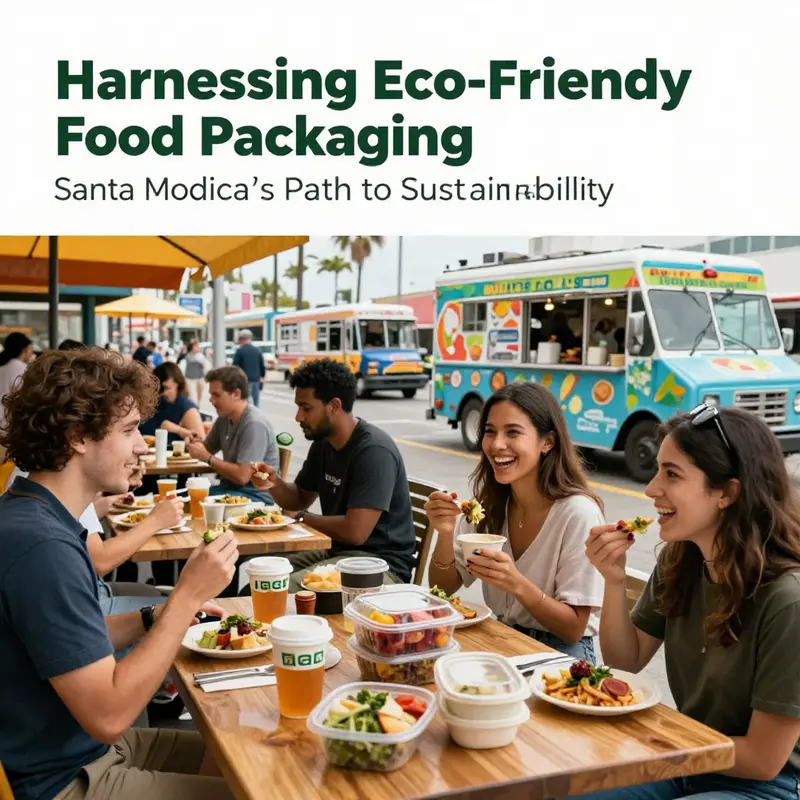
Santa Monica’s move away from single-use plastics does more than change what goes into a takeout bag. It alters cost structures for restaurants, reshapes supplier networks, and creates measurable economic opportunities across the city. The transition imposes short-term costs. Compostable and biodegradable materials often cost more than conventional plastic. For many small restaurants, that difference affects margins. Owners face a choice: absorb costs, raise menu prices, or find efficiencies elsewhere. Yet the local context softens this tension. Municipal regulations make plastic alternatives mandatory in many cases. That certainty lets businesses plan investments over time. It also creates a stable market for eco-friendly supplies, encouraging regional manufacturers to expand operations and hire locally.
As local demand grows, suppliers specializing in fiber-based, bamboo, or sugarcane packaging gain scale. Scale brings price reductions and supply reliability. Small manufacturers that once sold niche batches can invest in automated lines. Those investments create jobs in production, logistics, quality control, and customer service. For Santa Monica, that means new roles in manufacturing and distribution, often filled by residents. The rise of these suppliers also stimulates complementary services, including printing firms that offer recyclable-label solutions and tech providers that help restaurants manage inventory and waste reporting.
Regulation sits at the heart of this economic shift. Santa Monica’s code prohibiting many single-use plastic items effectively redirects procurement spending toward sustainable options. Predictable regulation reduces market uncertainty. Vendors can confidently tailor product lines to meet local needs. For restaurants, predictable rules simplify compliance planning and purchasing decisions. They can standardize packaging across menus and reduce the variety of stock they maintain. Standardization lowers waste from unused inventory and eases training for staff handling to-go orders.
Consumer behavior plays a critical economic role. Santa Monica diners increasingly value sustainability when choosing where to spend. That preference gives restaurants leverage. Many can add modest surcharges for sustainable packaging or rebalance portions and pricing to offset costs. Evidence from similar coastal cities shows patrons often accept slightly higher prices to support greener practices. For businesses, that means the initial price delta between plastic and compostable containers does not always translate into lost customers. Instead, it can be re-framed as a value proposition that strengthens brand loyalty.
There is nuance in how costs are managed. Some establishments absorb the difference to remain price-competitive. Others adopt a hybrid model, using reusable containers for in-house dining and compostable packaging for takeout. Many upscale eateries fold eco-costs into menu design. Fast-casual venues sometimes add a small fee on receipts. Whatever the approach, restaurants that communicate their sustainability rationale clearly see better acceptance from customers.
Municipal efforts amplify private-sector initiatives. Partnerships with local composting and recycling facilities make the use of compostable containers viable. Without that infrastructure, the environmental and economic benefits would be limited. Santa Monica’s collaboration with regional processors increases diversion rates and reduces landfill volumes. Those changes translate into long-term savings for the city. Lower landfill use reduces tipping fees and extends the useful life of waste facilities. Reduced pollution also lowers public health and environmental remediation costs, albeit indirectly. Over time, those savings can offset the initial increase in packaging expenditures across the local economy.
Investments in sustainable packaging also foster resilience. Diversified supply chains reduce reliance on fossil-fuel-based plastics, which face volatile price swings and supply disruptions. Local sourcing options create shorter transit routes and lower freight costs. These efficiencies matter to restaurants operating on thin margins. They also reduce greenhouse gas emissions related to transport, reinforcing Santa Monica’s broader climate goals.
Certification and procurement policy add another economic layer. Businesses that pursue green certification gain marketing advantages. Certification signals to customers and to business partners that a restaurant meets recognized sustainability standards. That signal can unlock new contracts with corporate caterers and event planners who value environmental credentials. Similarly, municipal procurement policies that favor local vendors with sustainable practices create steady demand. When the city awards contracts to providers of compostable containers or to catering services that use them, it injects predictable revenue into the local green economy.
Not all impacts are evenly distributed. Low-margin vendors, such as small coffee stands or family-run food trucks, feel cost pressure more acutely. To mitigate this, cooperative purchasing models have emerged. Groups of businesses pool orders to qualify for bulk pricing. These cooperatives reduce per-unit costs and strengthen negotiating power with suppliers. They also provide a forum for sharing best practices, from storage strategies to waste sorting protocols. Over time, these collaborative models level the playing field and help smaller operators stay competitive.
Innovation is a practical byproduct of demand. Local designers and material scientists explore coatings and fibers that improve performance and reduce cost. Restaurants test different formats—recyclable lids, compostable trays, fiber bowls—to find what works best operationally. As innovation yields better products, market prices fall. Buyers benefit through lower costs and improved durability, while suppliers gain access to larger markets beyond Santa Monica.
Tourism and reputation amplify benefits beyond direct economic metrics. Santa Monica’s identity as a sustainable city attracts visitors seeking environmentally conscious experiences. Eco-friendly dining options enhance that appeal. Tourists tend to spend more on experiences that align with their values. For the hospitality sector, sustainable packaging forms part of a broader green narrative that supports higher occupancy and stronger food and beverage revenues.
Public education and clear labeling are essential economic enablers. When customers understand the lifecycle benefits of compostable or reusable packaging, they are likelier to accept slightly higher prices. Clear labeling also prevents contamination in compost streams, protecting the value of diverted organic waste. Contaminated waste costs processors and municipalities additional sorting expenses. Investment in signage, staff training, and consumer outreach reduces those costs and improves the overall efficiency of the zero-waste system.
Long-term fiscal impacts are compelling. While initial material costs are higher, the total cost of ownership often favors eco-friendly options. Reduced landfill usage, lower regulatory risk, and stronger brand loyalty contribute to net savings. Moreover, as Santa Monica moves toward its zero-waste by 2030 target, those savings compound. Waste diversion increases the value of the city’s sustainability investments. Public health benefits from less plastic pollution and from cleaner coastal environments. Those benefits become economic assets, lowering long-term municipal expenditure.
The market is also responding with tailored products that meet operational needs. For example, manufacturers now produce multi-compartment fiber trays suitable for takeout meals. These designs reduce the need for multiple packages, cutting per-order costs. The local availability of such solutions shortens lead times for restaurants and supports faster turnover during peak service.
In practice, the shift to eco-friendly food packaging in Santa Monica is an evolving economic story. Initial cost hurdles remain. Yet regulation, consumer preferences, procurement policy, and improved infrastructure combine to make sustainable packaging a viable economic strategy. As supply chains mature and volumes rise, per-unit costs fall. Job creation, local manufacturing growth, and waste management savings balance the ledger. For restaurants and vendors, the most successful approaches mix operational efficiency, transparent communication, and smart procurement.
To explore specific compostable container options used by regional suppliers, see this example of a bagasse sugarcane biodegradable lunch box that shows typical design features and compartment choices: https://cupbowlpack.com/product/bagasse-sugarcane-biodegradable-self-erecting-lunch-box-for-sushi-snacks-3-4-5-compartment-takeaway-food-tray-15g-30g-50g/.
For detailed municipal guidance and targets related to waste diversion and sustainable packaging, consult Santa Monica’s Zero Waste Program at the city’s official resource: https://www.smgov.net/Departments/Utilities/Waste-Management/Zerowaste.aspx
Why Santa Monica Diners Prefer Compostable and Reusable Food Containers
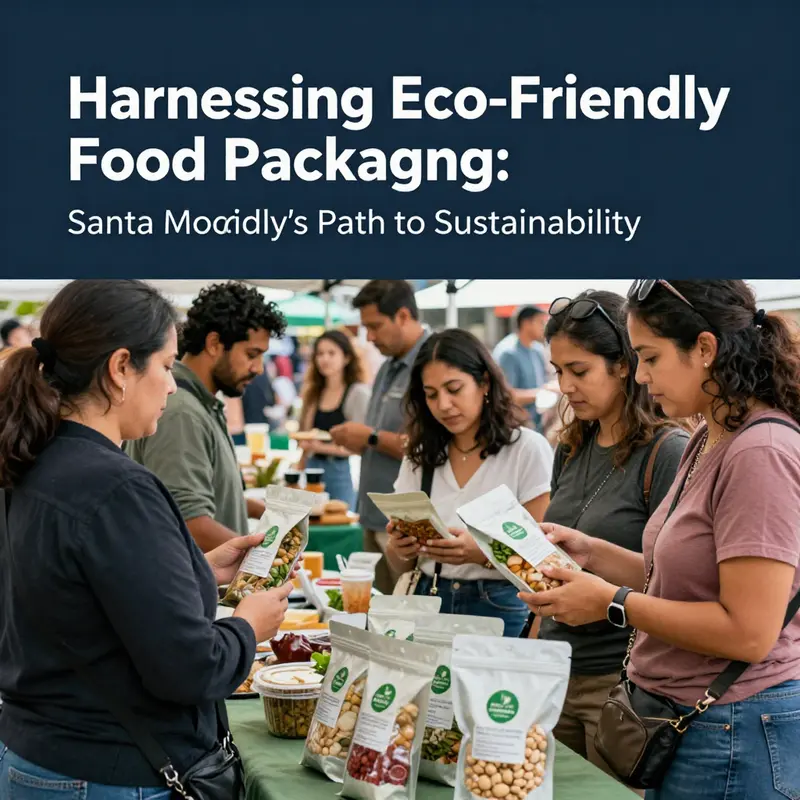
Consumer demand shapes the packaging choices restaurants and vendors make in Santa Monica. Familiarity with the environmental costs of single-use plastics is high. Many residents factor packaging into where they eat. They expect alternatives that perform like plastic but carry lower environmental burdens. That expectation drives a market where compostable, recyclable, and reusable systems compete on cost, function, and trust.
Awareness in Santa Monica grows through policy and visible campaigns. Local initiatives highlight the harms of disposable plastics and promote compostable materials. As a result, consumers know terms such as “compostable,” “biodegradable,” and “bagasse.” They also understand that not all labels mean the same thing. This sophistication has changed buying behavior. According to a 2024 survey by the Santa Monica Office of Sustainability, over 78% of residents consider packaging impact when choosing a food provider. That statistic informs how businesses design menus, present takeout, and communicate sustainability efforts.
Practical expectations guide preference more than abstract ideals. Diners want containers that keep food hot or cold, resist leaks, and stack neatly for transit. They also want items that can be disposed of easily through existing services. Compostable bagasse bowls or bamboo fiber boxes are attractive because they balance performance with lower lifecycle impacts. Yet, consumers will trade up or down based on price, convenience, and clarity. Transparent labeling and clear disposal instructions reduce friction. When packaging is marked “compostable” and paired with a visible compost bin or sign, customers are likelier to follow through.
Trust and verification matter. Santa Monica shoppers look for credible certification and honest communication. Certifications from recognized programs provide reassurance that a product will break down in commercial composters. Many consumers also check whether packaging is home-compostable. Businesses that rely on verifiable claims build loyalty. Conversely, vague messaging or greenwashing harms reputation quickly. For many diners, a single confusing experience—like a soggy container or an unclear disposal path—overrides a previously positive view of a brand.
Transparency extends beyond labels. Customers value knowing what materials were used and where they go after disposal. Restaurants that explain whether their compostable packaging enters the municipal compost system, a private hauler, or landfill score points. This openness connects to broader expectations for corporate accountability. People in Santa Monica often ask about supply chain ethics and material sourcing. They prefer locally supplied or responsibly sourced materials when possible. Clear signage, menu notes, and staff training help meet that demand.
Price sensitivity still influences choices, though less than in some markets. Many residents accept a moderate premium for sustainable packaging. They weigh the cost against perceived benefits, including reduced waste and better product stewardship. However, sharp price increases without obvious value cause pushback. Businesses must communicate why eco-friendly packaging might cost more. When framed around longevity, compostability, or reusability, customers accept modest surcharges.
Reusable systems have gained traction among eco-minded consumers. Programs that offer return-and-reuse containers create a visible culture of stewardship. Customers enjoy the ritual of returning containers for credit. For vendors, reusables reduce long-term packaging spend and deepen customer relationships. Successful reuse programs require simple logistics. Clear drop-off points, sanitization standards, and a small refundable deposit make reuse frictionless. Where reuse is inconvenient or unclear, customers prefer compostable disposables.
Disposal infrastructure is a decisive factor. Compostable packaging only delivers environmental benefits if it enters a composting stream. Santa Monica’s municipal programs and commercial compost services influence consumer behavior. Where curbside or drop-off composting is accessible, residents are comfortable using compostable containers. Where composting options are scarce, people either keep containers for future disposal or default to recyclable or minimal packaging. Education about separation, contamination, and compostable materials helps maintain high diversion rates. For instance, instructing customers to remove plastic lids or liners prevents compost contamination and increases trust in the system.
Perceived product performance affects willingness to switch. Compostable alternatives must match or exceed single-use plastic in durability and convenience. Consumers expect spill resistance, microwave safety, and stackability. When biodegradable boxes leak or degrade prematurely, distrust spreads quickly. Vendors must evaluate packaging under real-world conditions. Piloting products, soliciting feedback, and adjusting suppliers keep customer satisfaction high. Many establishments succeed by choosing high-performing kraft or bagasse containers and by communicating why those choices benefit diners and the environment.
Aesthetics and branding are surprisingly influential. Sustainable packaging that looks premium or thoughtfully designed signals care. Customers interpret branded compostable boxes as an extension of a restaurant’s values. Visual cues—like compostable symbols, clear messaging, and consistent branding—make sustainable choices feel normal. Conversely, cheap-looking packaging undermines perceived food quality, even when materials are sustainable.
Community norms and social signaling amplify preferences. Santa Monica neighborhoods have dense networks of eco-conscious consumers. Word-of-mouth travels fast. A restaurant that adopts clear, certified compostable packaging earns social capital. Social media posts about responsible packaging inspire others and set expectations. For business owners, visible commitment to sustainable packaging becomes a marketing asset as well as a waste-reduction strategy.
Businesses that succeed in this market treat packaging as part of the product experience. They align packaging choice with menu type, price point, and waste infrastructure. They train staff to explain options and to guide customers toward proper disposal. They monitor customer feedback and adjust quickly. When vendors combine compostable or reusable containers with clear, certified claims and simple disposal systems, customers respond positively.
Operational challenges remain. Contamination risks, fluctuating costs, and supply chain disruptions can complicate transitions. Food vendors and city programs mitigate these risks through standardized labeling and vendor education. Programs that promote a single set of accepted compostable materials reduce confusion. Similarly, partnerships between cities and local suppliers improve availability and pricing stability.
Practical tactics for vendors follow from consumer preferences. First, choose packaging with recognized certification and clear disposal instructions. Second, prioritize performance in real-use testing. Third, provide transparent communication about sourcing and end-of-life. Fourth, consider reusable deposit systems for frequent customers. Fifth, engage the community with signage and social media to normalize sustainable behaviors.
Consumer awareness in Santa Monica is more than a trend. It reflects a mature market that blends environmental ideals with practical needs. Residents demand reliable, clearly labeled solutions that fit daily life. Vendors that meet these expectations win trust and loyalty. The resulting ecosystem links individual choices to municipal goals, and aligns with the city’s larger ambition of zero waste.
For businesses seeking examples of sturdy kraft-style containers used widely across the region, consider an example product type such as a kraft paper octagonal bowl with lid. These containers illustrate the balance consumers want between function and sustainability. For more on local policy and consumer outreach, see the City of Santa Monica’s Plastic-Free Santa Monica program: https://www.santamonicacity.org/sustainability/plastic-free-santa-monica
Rethinking the Takeout Habit: Santa Monica’s Path to a National Shift in Eco-Friendly Food Packaging
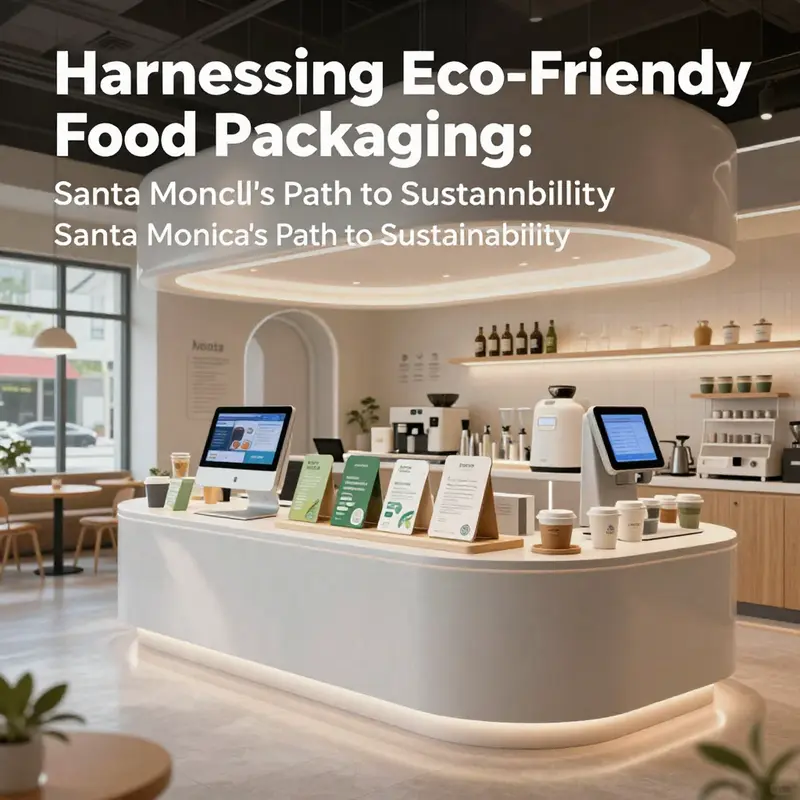
Santa Monica stands at a deliberate intersection where policy, culture, and practical design converge to redefine how a city eats on the go. The city’s push to reduce single-use plastics and to promote compostable or reusable packaging isn’t merely about cleaner sidewalks or brighter storefronts; it is a deliberate blueprint for how urban life can function with less waste, without sacrificing convenience. As restaurants, cafes, and food vendors respond to mandated standards, they are also testing how durable, attractive, and cost-efficient eco-friendly containers can be when backed by intent, infrastructure, and transparent signaling to customers. The chapter that follows considers not only the trends already taking shape but also the broader implications for communities beyond Santa Monica. It explores how municipal policy, emerging materials science, and new business models are knitting together a circular economy that can scale from county lines to national norms, while staying anchored in everyday experiences of takeout and delivery.
At the core of this evolution is a shift toward materials designed to end up where they came from: the compost pile, the recycling stream, or the reuse loop. Compostable and biodegradable options have moved from novelty to necessity as cities like Santa Monica legislate to favor plant-based plastics, bagasse sugarcane fiber, and other fiber-based substrates over conventional fossil-based polymers. The practical effect is twofold. First, it creates demand for reliable industrial composting infrastructure capable of turning bagasse and PLA blends into soil lore rather than lingering in landfills. Second, it pushes suppliers and designers to optimize performance so that heat resistance, moisture barriers, and shelf life are compatible with hot meals, cold desserts, or delicate salads without compromising end-of-life outcomes. In Santa Monica, the policy environment makes this a shared responsibility between city agencies, operators, and waste processors. That triad helps ensure that compostable or recyclable packaging isn’t just a marketing claim but a verifiable standard backed by local enforcement and guidance.
This packaging ecosystem also invites a more ambitious conversation about reuse. Reusable and returnable systems are gradually moving from pilot phases to broader urban adoption because they align with high-density contexts where clients visit multiple venues in a single day. In practice, a cafe or restaurant might issue branded containers that customers return for cleaning and refilling, with incentives such as loyalty discounts or credits. The success of these programs hinges on dependable logistics, meticulous sanitation, and a streamlined handoff between consumer and staff. In Santa Monica’s pedestrian-friendly districts, such systems are particularly viable because of the proximity of businesses, the willingness of residents to participate in sustainable routines, and the existing culture of thoughtful consumption. Aesthetics matter here as well: containers that feel sturdy and reliable encourage ongoing participation, while designs that are too elaborate or heavy can erode the practical appeal of reuse. The balance is delicate and dynamic, often revealing market realities that force a rethinking of the “single-use” mindset without erasing the comfort of convenient service.
Advances in material science further broaden what is possible without compromising environmental goals. Edible films, for example, offer intriguing possibilities for wrapping certain products in a manner that creates minimal waste when the film is discarded. While edible films spark imagination across the spectrum of snack packaging, the broader, more scalable implications lie in improved bioplastics that approach or even exceed the performance of conventional plastics in terms of heat resistance, barriers, and shelf life, all while remaining compostable. Mushroom mycelium and other mycelium-based composites illustrate a future where packaging doubles as a platform for material innovation rather than a disposable afterthought. In practical terms, this means containers that can withstand a hot takeout order, preserve a delicate salad, or protect a frozen dessert during transit, yet break down efficiently when processed through an appropriate facility. Santa Monica’s embrace of such innovations signals a willingness to fund, test, and refine solutions that can later inform standards elsewhere. The challenge remains: how to translate laboratory breakthroughs into mass-market, cost-sensitive products that can be integrated into existing supply chains and waste streams.
Another dimension shaping the next era of packaging is the demand for digital transparency. Consumers increasingly want to know who made the container, what it is made from, how it was produced, and where it ends its life. This drive for accountability is reshaping how brands design and communicate packaging stories. QR codes, blockchain-enabled traceability, and clear labeling about compostability or recyclability are becoming common. The goal is not merely to satisfy curiosity; it is to create a dependable feedback loop that rewards responsible sourcing and end-of-life stewardship. For businesses, this translates into robust supplier audits, traceable material streams, and explicit commitments to reduce carbon footprints. For customers, it means confidence that the container aligns with stated sustainability goals, from raw material extraction to composting guidance and beyond. In a city setting, such transparency can also support community education, enabling residents to participate more effectively in separate collection programs and composting initiatives that Santa Monica is actively expanding.
Policy remains a powerful driver of these trends. The Santa Monica Sustainable Packaging Initiative and related municipal efforts illustrate how a city can codify expectations without stifling innovation. By prioritizing compostable and recyclable options for food service, the city creates a predictable demand environment that encourages suppliers to invest in compatible materials and processing infrastructure. The alignment across planning departments, environmental programs, and business certification bodies helps create a cohesive market signal. This is crucial because the transition to eco-friendly packaging cannot rely solely on consumer preference or industry enthusiasm; it requires a reliable policy backbone that reduces uncertainty for manufacturers and retailers while providing clear guidance to operators on compliance, labeling, and waste disposal. The broader lesson for other urban centers is that policy can and should be a catalyst for experimentation and scale, not a hurdle for creativity.
All of these strands—materials, reuse, science, and policy—must contend with economic realities. Cost is not a peripheral concern but a core driver of adoption, especially for small independent vendors and neighborhood eateries. Yet the Santa Monica perspective shows that costs can be managed when the business case is built on multiple savings streams: reduced waste disposal fees, potential tax incentives or subsidies for sustainable packaging, and the long-term reliability of product performance in varying climate conditions. When containers perform consistently—retaining heat, resisting leaks, holding their shape during transport—customers experience better service, which translates into higher satisfaction and repeat business. Moreover, a strong local market for recycled or composted materials helps close the loop: what goes into the waste stream returns as soil amendment or new feedstock, reinforcing a sense of place and responsibility that residents recognize and value. In such a system, the social costs of convenience are increasingly offset by tangible environmental and community benefits.
Crucially, the Santa Monica model offers a path for other communities seeking to balance urban living with ecological integrity. The pioneering steps toward compostable packaging, the exploration of reusable containers, and the integration of science-driven materials publicly validated through municipal programs create a replicable template. It shows how cities can cultivate a local ecosystem of designers, suppliers, waste processors, and customers who all contribute to a shared objective: reducing the footprint of food packaging while preserving the convenience of modern life. This requires ongoing collaboration, continuous learning, and a readiness to adapt as new evidence emerges about material performance, end-of-life outcomes, and consumer behavior.
In practice, this means that a diner in a busy corridor, a food hall by the pier, or a pop-up vendor at a weekend market can contribute to a larger system that stores value, not waste. It means prioritizing packaging choices that support composting streams when feasible, embracing reusable systems in high-traffic contexts, and leveraging digital transparency to align expectations with outcomes. It also involves recognizing when a given solution is not yet optimal and being willing to recalibrate. The pace of change in Santa Monica may feel incremental at the level of a single purchase, but across a city and its surrounding region, these decisions accumulate into meaningful reductions in plastic waste and clearer signals to manufacturers about market demand. When people begin to see packaging as a resource rather than a disposable nuisance, the social contract shifts toward stewardship, and that shift, in turn, reverberates through schools, neighborhoods, and local businesses alike.
For readers seeking further depth on how municipal policy and technological innovation shape these outcomes, the Santa Monica City Planning Department’s Sustainable Packaging Initiative provides a detailed account of the policy framework, pilot programs, and performance metrics that guide this evolving landscape. A comprehensive external resource is available at https://www.smgov.net/Departments/Planning/Environmental/SustainablePackagingInitiative, which offers context, data, and case studies that complement the narrative outlined here. As the chapter closes, the takeaway is clear: eco-friendly food packaging in Santa Monica is not a fringe movement but a carefully designed ecosystem. Its success depends on thoughtful material choices, practical reuse strategies, scientific advancement, and, above all, a durable policy and community commitment that can inspire other cities to adopt and adapt these ideas in ways that fit their own geographies and economies. In a broader sense, the city’s approach represents an invitation to reimagine everyday habits—how we shop, how we eat, and how we dispose of what we consume—in ways that honor the planet, support local innovation, and preserve the conveniences that make urban life vibrant and sustainable.
Internal resource for deeper reading: disposable kraft paper soup cup with lid.
Final thoughts
Santa Monica’s initiative to prioritize eco-friendly food packaging reflects a broader commitment to sustainability and innovation in the culinary sector. Each chapter sheds light on the various dimensions of this transition—from material choices to impactful policies influencing economic dynamics and consumer preferences. As the city continues to forge ahead, businesses that embrace these practices not only contribute to a greener future but cater to a growing market eager for sustainable options. The landscape of food service in Santa Monica represents an important step toward a more sustainable world, underscoring that every meal can be enjoyed responsibly.