
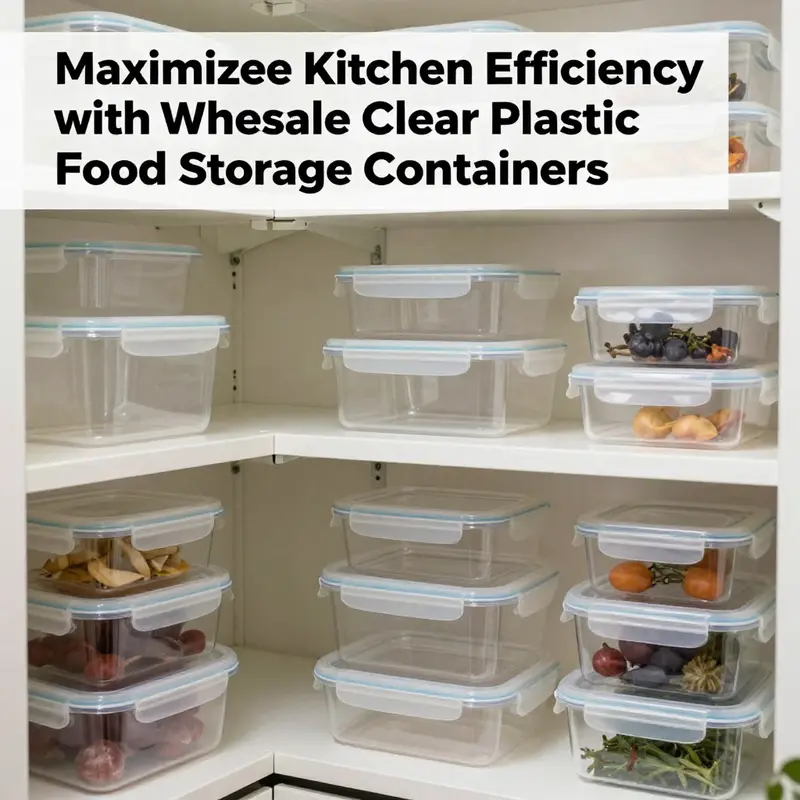
Clear plastic food storage containers have become a staple across various sectors, including bubble tea shops, restaurants, food trucks, and event planning. Offering a seamless combination of visibility, safety, and cost efficiency, these containers enhance the organization and presentation of food. In this exploration, we’ll delve into the key features that make these containers indispensable, examine their wide-ranging applications across industries, and discuss the material safety that underpins their design. Additionally, we’ll highlight the economic advantages and sustainability efforts associated with wholesale procurement, showcasing how businesses can benefit from incorporating these solutions into their operations.
Transparent Efficiency: The Core Features Driving Wholesale Clear Plastic Food Storage Containers
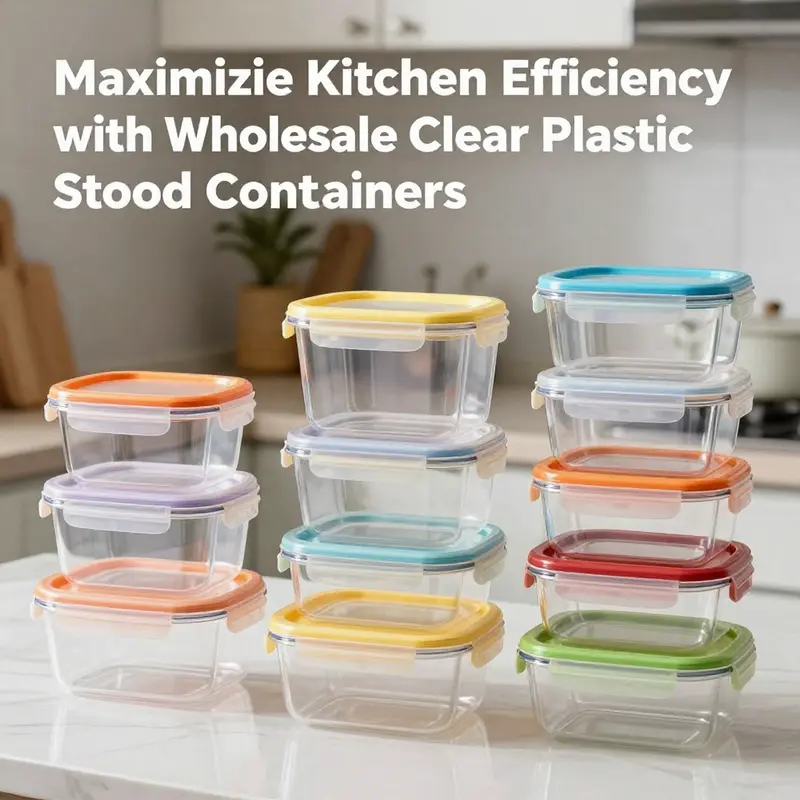
Clear plastic food storage containers sold at wholesale levels are more than simple vessels for shelf life and organization. They are engineered tools that harmonize safety, visibility, durability, and logistics into a single package. In environments ranging from busy domestic kitchens to fast-paced commercial operations, these containers translate efficiency into measurable outcomes: quicker access to ingredients, reduced waste, tighter control over portions, and a cleaner, more predictable supply chain. The chapter that follows weaves these capabilities into a cohesive narrative, illustrating how the main features—material quality, transparency, durability, sealing, design, versatility, and environmental considerations—work together to meet the needs of both buyers and end users. This is not merely about holding food; it is about enabling smoother operations, clearer inventory, and better experiences for consumers at every touchpoint.
At the heart of every wholesale program is material quality and safety. Food-grade plastics, particularly PET and Tritan, are not interchangeable curiosities but foundational decisions. PET offers clarity and chemical inertness that protects contents from flavor transfer and corrosion, making it well suited for perishables, liquids, and dry goods alike. Tritan, meanwhile, adds resilience to staining and odor retention, supporting repeated reuse in demanding settings. The choice among these materials hinges on the intended use, temperature exposure, and the life cycle envisioned for the product. In wholesale procurement, certifications such as Extended Producer Responsibility (EPR) align with strict European environmental and health regulations, signaling that the containers meet rigorous standards for safe contact with edibles and responsible end-of-life handling. Although the specifics of certification marks can vary, the underlying principle is the same: buyers gain confidence that the containers will perform safely across a range of applications—from snack storage in a deli case to baby-food portions in a kitchen warehouse operation. This peace of mind is essential when scale becomes a factor, and it is a major reason why food-grade plastics are favored in wholesale inventories.
Transparency is not merely a cosmetic attribute; it is a strategic function that reshapes how kitchens and stores operate. The clear, rigid construction of these containers makes contents instantly legible. No guesswork is required to identify the contents, whether in a crowded pantry, a busy prep line, or a refrigerated display case. The practical payoff is substantial: less time spent opening lids, fewer mistaken transfers, and improved inventory accuracy. In retail settings, visibility influences merchandising decisions as much as it does kitchen routines. When staff can see portion sizes, freshness indicators, and packaging integrity at a glance, they can respond faster to customer needs and rotate stock more effectively. This visibility also reduces waste by ensuring that leftovers are tracked and used promptly, aligning with broader sustainability goals that increasingly guide supplier selection and store policies.
Durability accompanies clarity as a defining trait of wholesale clear plastic containers. They are designed to withstand the rigors of everyday handling without shattering like glass. This shatter resistance is complemented by a lightweight profile that lowers shipping costs and eases manual handling in busy environments. In the wholesale context, a typical shell thickness around 0.3 millimeters provides a careful balance: strong enough to resist incidental impacts in transit and on shelves, yet light enough to keep weight manageable when assembled into sets or stacked for efficient storage. The durability narrative extends to performance under typical kitchen and food-service conditions. These containers are engineered to endure repeated cycles of washing, reheating, and stacking, with materials chosen for compatibility with common microwave and dishwasher processes when guidelines permit. Of course, any durable design carries caveats; high temperatures, aggressive cleaning agents, or misuse beyond manufacturer specifications can degrade performance or shorten the product’s life. Yet the overarching condition is clear: wholesale options prioritize resilience without sacrificing the clarity and ease of use that customers expect.
Airtight sealing is the hinge that locks performance into real-world outcomes. A secure screw-top lid or equivalent sealing mechanism creates an airtight environment that helps preserve freshness, protect against contamination, and minimize moisture exchange. This is especially important for snacks, leftovers, condiments, and perishables that benefit from extended shelf life. In many wholesale designs, additional security features—such as tamper-evident elements or hinges designed to resist accidental openings—enhance product integrity during transit and display. By reducing the risk of leaks and exposure, these features contribute to lower waste and cleaner handling, which in turn support streamlined operations in food-service and retail channels. The sealing mechanism is not merely a closure; it is a critical control point in the chain from production to end use, influencing product quality, customer satisfaction, and overall cost management.
The functional design and space efficiency of wholesale clear plastic containers further distinguish them in a crowded market. The cylindrical, stackable form is a strategic choice that optimizes vertical storage in pantries, refrigerators, and warehouses. A flat bottom adds stability on shelves, while top indentations assist with stacking during transport and display, reducing the risk of toppled stacks in crowded spaces. The modularity of these sets allows buyers to curate solutions tailored to specific workflows—ranging from tiny portions for baby food to larger, bulk-storage containers for ingredients or condiments. The versatility extends to how lids fit and seal across sizes, enabling a consistent user experience across a range of capacities. In a wholesale program, this consistency translates into smoother procurement, easier inventory planning, and a more predictable packaging system for customers who rely on standardized containers to manage their operations efficiently.
Versatility and customization are inseparable from strategic buying at wholesale scales. The spectrum of sizes—from small 50-milliliter portions to large 1000-milliliter containers—addresses a wide array of use cases. Portion-controlled servings for caregivers, bulk ingredient storage for kitchens, and compact containers for merchandising in delis or grocery stores—all can be met with a coherent line of products. The opportunity to customize—such as labeling surfaces for branding or identification—adds a practical layer to wholesale procurement. Branded labeling surfaces can simplify stock control for large buyers, support product differentiation for retailers, and improve customer recognition in take-away or display contexts. In practice, customization reduces the friction of repackaging and enables a smoother transition from purchase to use, which is a meaningful advantage for businesses pursuing scale without compromising on clarity or presentation.
Environmental considerations weave through each feature, tempering performance with responsibility. Plastic, in the wholesale supply chain, frequently earns its keep not only through recyclability but also through design choices that minimize waste. PET and HDPE are widely recyclable, and forward-looking manufacturers are investing in products that align with EPR frameworks and other environmental programs. This alignment signals a broader industry trend toward sustainable packaging, where durability and reuse are balanced with end-of-life stewardship. The integration of features such as integrated lids that reduce the need for extra packaging, or designs that facilitate longer shelf life and easier cleaning, further supports environmental goals. While no material is perfect, wholesale containers that emphasize recyclability and responsible life-cycle management offer a practical path to sustainability for both sellers and buyers who must demonstrate environmental accountability to customers and regulators alike.
In practice, the combination of these features yields tangible benefits for a wide range of users. Home cooks gain reliable, clear containers that make meal prep and pantry organization effortless. Small businesses—delis, bakeries, catering outfits—benefit from durable, easy-to-clean options that withstand frequent handling and display pressure. Large retailers and distributors appreciate consistent sizing, labeling compatibility, and the ability to scale orders without sacrificing quality or performance. The wholesale model, in turn, makes these benefits more accessible by delivering cost efficiencies, standardized quality, and the option for branding or customization that supports merchant identity. Taken together, the features form a coherent system that supports both day-to-day operations and long-term strategic goals, from reliability on the shelf to trust in the brand’s safety and stewardship.
For readers seeking a concrete example of how design and material choices translate into practical advantages, consider how a representative line addresses both everyday use and logistics. A wholesale program that prioritizes clear plastics will often emphasize easy identification of contents, quick access, and reliable sealing across a spectrum of sizes, with careful attention paid to compatibility with heat and cleaning processes. The real-world implications extend beyond the act of storing food; they touch on inventory control, waste reduction, and customer satisfaction at every touchpoint—from prep stations to display cases and at-home kitchens. This is the core reason wholesale clear plastic containers have become a staple in modern food management, reflecting a disciplined approach to material science and product design that recognizes how small, well-considered features compound into meaningful outcomes.
As the conversation about packaging evolves, contemporary buyers increasingly expect evidence of responsible manufacturing alongside performance. The presence of certifications, including environmental and safety standards, reinforces trust and broadens the scope of uses—from infant meals to pet foods and ready-to-eat products. This convergence of safety, clarity, durability, sealing, design, versatility, and environmental stewardship is what makes wholesale clear plastic food storage containers a foundational element in contemporary food management. The outcome is not merely a container that holds food; it is a thoughtfully engineered solution that supports efficiency, safety, and sustainability for households and enterprises alike. For those exploring practical pathways to apply these concepts in branding and logistics, a representative wholesale option with a well-designed lid and labeling surface can illustrate how a simple change in packaging strategy cascades across procurement, storage, and retail presentation. The discussion can extend to wholesale branding and shelf presentation strategies for CPG buyers.
Clarity and Consistency: The Value of Wholesale Clear Plastic Storage Containers
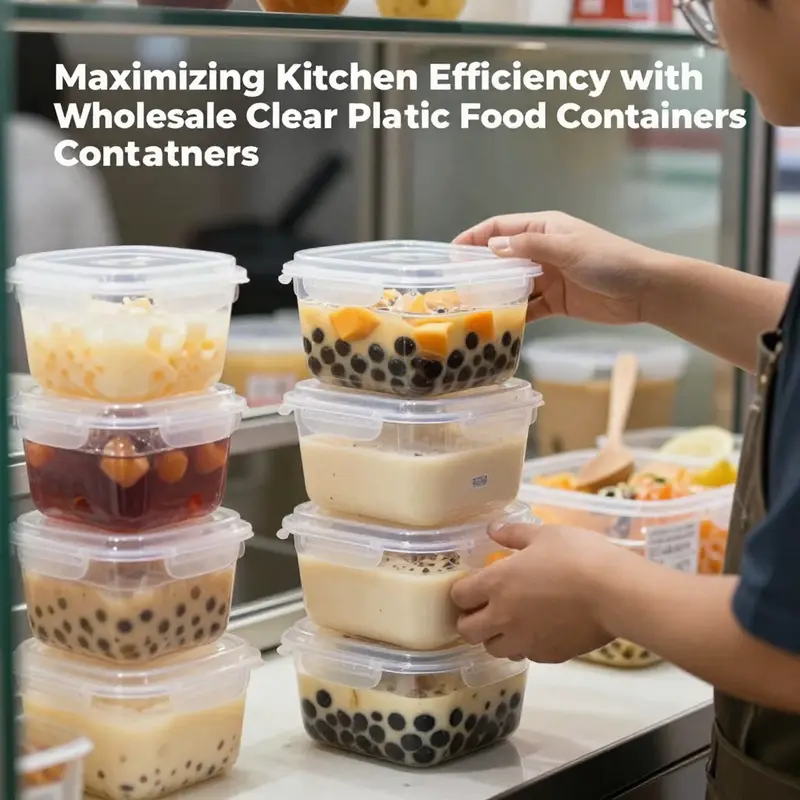
Clear plastic storage containers provide immediate visibility, enabling faster picking, packing, and inventory checks across wholesale operations.
Material choices such as PET and HDPE balance clarity, durability, and compatibility with cold storage, while premium options like Tritan offer improved odor resistance and scratch resistance for high-turn environments.
Airtight seals and standardized lid interfaces support modular shelving and scalable storage, reducing misfiling and spillages during high-volume fulfillment.
From procurement to disposal, buyers consider total cost of ownership, lead times, and recyclability, ensuring that designs meet safety standards and align with sustainability goals.
In sum, wholesale buyers gain consistency, speed, and control by selecting transparent, well-sealed containers that fit a range of products and workflows.
How Material Science and Safety Standards Shape Wholesale Clear Plastic Food Containers
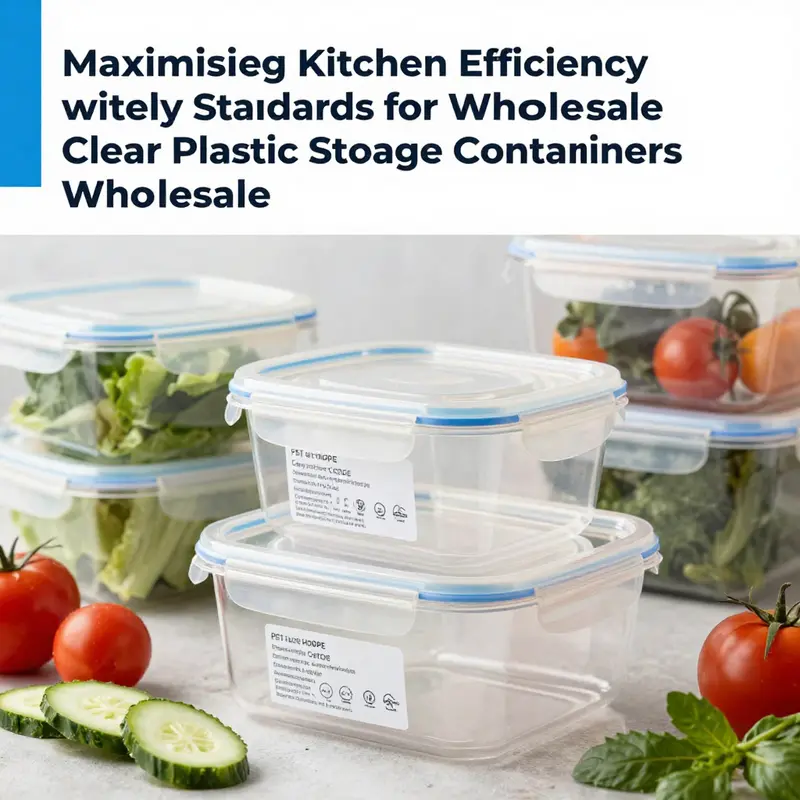
Material choices shape performance, compliance, and perception in wholesale clear plastic food storage containers. Selecting the right polymer, designing the right seal, and proving safety through testing determine whether a container protects food, preserves quality, and meets regulatory demands. For buyers sourcing at scale, these technical details translate directly into lower risk, predictable shelf life, and stronger brand trust.
Plastic chemistry explains many of the visible differences among clear containers. Polyethylene terephthalate (PET) delivers outstanding optical clarity and surface gloss. That makes it ideal when full product visibility matters, for example in retail displays and deli counters. PET resists corrosion from many food acids and is lightweight, which reduces transport costs. Polypropylene (PP) balances rigidity with flexibility. It handles repeated snapping and stacking without cracking and tolerates freezer-to-microwave cycles better than many alternatives. Tritan™, a modern copolyester, emulates glass-like clarity while resisting staining and odor absorption. It offers exceptional durability and long-term clarity under repeated washing. High-density polyethylene (HDPE) sacrifices transparency but gains impact and chemical resistance; it suits opaque applications where strength matters. Less common polymers such as styrene acrylonitrile (SAN) or polycarbonate (PC) can offer useful properties but raise specific concerns that must be managed through testing, particularly around bisphenol compounds.
Understanding the trade-offs among these materials helps wholesale purchasers match product requirements to real-world use. If visibility and shelf appeal are priorities, PET and Tritan often top the list. For foodservice containers that need frequent reheating or freezing, PP is frequently preferred. When chemical resistance is critical—such as for acidic sauces or certain condiments—HDPE or specially formulated copolyesters can provide better long-term performance.
Material properties alone do not guarantee safety. Migration of constituents from plastic into food depends on polymer chemistry, additives, processing aids, and the conditions of use. Temperature, time, food composition, and repeated use all influence migration rates. That is why safety standards and testing protocols focus on realistic use scenarios. Wholesale buyers should insist on documentation that confirms a product’s suitability for intended uses, not just the polymer name.
Regulatory frameworks set the baseline for acceptable performance. In the United States, the Food and Drug Administration specifies allowable substances and use conditions for food contact materials. The European Union requires compliance with Regulation (EC) No 1935/2004, which mandates that food contact materials must not transfer their components to food at harmful levels. International quality systems such as ISO 22000 complement material approvals; they demonstrate that a supplier manages food safety risks across manufacturing and supply processes. For wholesale procurement, verifying a supplier’s declarations against these standards prevents costly recalls and reputational damage.
A single compliance certificate is not enough. Wholesale orders magnify the impact of any defect. Requesting detailed technical documentation is essential. Ask for third-party migration test reports performed under realistic conditions. These tests typically use food simulants—acids, alcohols, and oil equivalents—to mimic contact with different food types. Test protocols cover a range of time-temperature profiles, including prolonged cold storage and repeated heating cycles. Certificates of analysis (COAs), batch traceability records, and material safety data sheets (MSDS) provide additional context. When possible, insist on independent laboratory validation rather than supplier internal tests alone.
Chemical safety discussions often center on bisphenol A (BPA). Many modern container lines advertise BPA-free status, which is a necessary but not sufficient claim. Substitutes such as bisphenol S (BPS) or certain phthalates can also present endocrine-disrupting potential. Responsible suppliers will supply migration data and endocrine activity screening where relevant. For wholesale buyers, the practical approach is to specify acceptable additive families and to require migration test results, rather than accept marketing claims without evidence.
Thermal stability and mechanical robustness determine how containers perform across the supply chain and in end use. Suitable containers should tolerate freezer temperatures down to -18°C without becoming brittle. They should also endure short-duration microwaving or hot-filling at temperatures approaching 100°C, when designed for that use. However, temperature limits vary by polymer and formulation. PP typically withstands higher temperatures than PET, while Tritan resists clouding after repeated hot cycles. Seal integrity under temperature stress is equally important; lids must maintain contact surface hardness and elastic gasket performance across the operating temperature range to prevent leaks and contamination during transport.
Design details that matter in manufacturing include wall thickness, rim tolerances, and lid geometry. Wall thickness affects both rigidity and thermal mass. Thinner walls save material and shipping weight but can warp under heat or collapse under load. Rim tolerances determine how reliably lids snap on or screw down and whether tamper-evident features function consistently across thousands of units. For wholesale buyers, requesting tolerance specifications and production capability data reduces the chance of receiving batches that fail to stack, seal, or ship properly.
Durability covers more than impact resistance. Plastics can change over time. Repeated dishwasher cycles, exposure to oils, and contact with colored sauces accelerate clouding and staining. Tritan-type copolyesters are formulated to resist these effects, maintaining optical clarity and reducing odor retention. PET, while clear, can show stress-cracking and clouding with aggressive cleaning. PP resists oils better but will discolor with some foods. Understanding expected lifecycle behavior helps procurement teams set realistic warranties and replacement cycles.
Sustainability and end-of-life considerations now influence purchasing decisions as much as cost per unit. PET and PP are widely collected in many recycling streams, but real-world recycling rates are constrained by contamination, mixed-material designs, and local infrastructure. Designing for recyclability means choosing mono-material constructions where possible and avoiding bonded multi-material assemblies that complicate sorting. Some manufacturers combine recyclable PP bases with distinct removable lids to simplify separation. Others supply containers with clear labeling about material identification to support downstream recycling. Wholesale purchasers should assess whether suppliers offer take-back programs, or can provide information on recycled content and projected recyclability in target markets.
Testing for food contact safety also includes sensory evaluations. Plastic containers can absorb odors or impart tastes if not designed correctly. Odor resistance testing, stain resistance testing, and accelerated aging protocols reveal likely sensory issues before large-scale deployment. These performance tests help protect brand perception. They also reduce waste, since containers that resist staining and odor are more likely to be reused rather than discarded after a single use.
For large orders, quality assurance extends into the factory. Insist on production audits and on-site material verification. Check that resin lots are traceable, that pigments or clarifiers are approved for food contact, and that production tooling maintains specified tolerances. Random sampling and third-party lab testing of delivered batches provide an added layer of assurance. Many wholesale buyers incorporate incoming inspection procedures into their contracts, requiring supplier compensation for nonconforming lots and defining acceptable defect rates.
Labeling and documentation complete the safety picture. Containers destined for retail should carry clear marking of material type (for example, “PET” or “PP”), temperature limits, and whether they are microwave- or dishwasher-safe. Where tamper-evident or tamper-resistant features are part of the design, label instructions should describe correct removal and resealing practices to preserve warranties and compliance claims.
Finally, negotiate contractual terms that reflect the technical complexity of food-grade plastics. Specify required certifications, the frequency of third-party testing, acceptable migration limits, and corrective action timelines for failed batches. Embed expectations for documentation—batch traceability, COAs, and MSDS—into purchase orders. When innovation is part of the offering, for example new copolyesters or recycled-content blends, require pilot samples and validated test results before scaling to full production.
For wholesale buyers, the intersection of material science and regulatory compliance is not abstract. It affects product appearance, shelf life, shipping efficiency, and legal risk. Prioritize polymers and designs that match intended use, then verify performance through independent testing and detailed documentation. Design for recyclability and ask suppliers about end-of-life pathways. Finally, build quality assurance into contracts so that large shipments arrive with predictable, certified safety and performance.
For guidance on regulatory requirements and food contact substance approvals in the United States, see the FDA resource on food contact substances: https://www.fda.gov/food/food-contact-materials/food-contact-substances
For examples of food-grade containers that pair polymer performance with practical lids, consider supplier examples such as reusable square salad bowls with PP lids.
Clear Choices, Big Impacts: Economic Value and Sustainability in Wholesale Clear Plastic Food Storage Containers
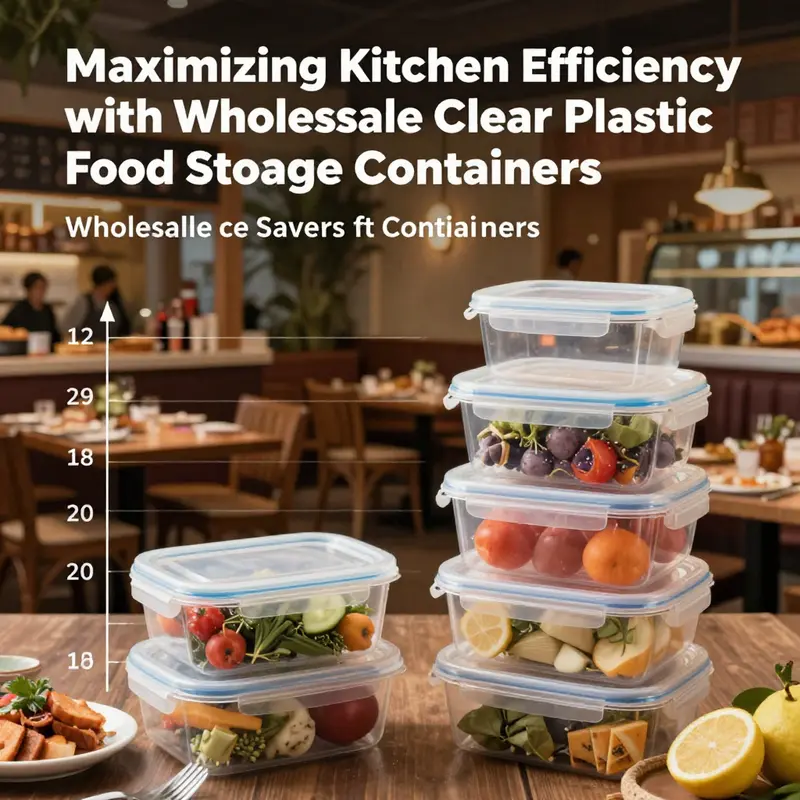
Clear plastic food storage containers occupy a pivotal position at the intersection of cost discipline and operational practicality. In wholesale markets, the math of value is not merely the sticker price per unit; it is a composite of purchase economics, lifecycle performance, and the long tail of sustainability that customers increasingly demand. When viewed through this lens, the appeal of clear plastic storage—especially those made from widely used polymers like polypropylene (PP) and polyethylene (PE)—becomes a story about how small, repeatable choices in material, design, and procurement can transform daily routines in kitchens, bakeries, delis, and distribution centers into reliably lean, resilient, and increasingly responsible operations. The conversation about economic benefits, therefore, cannot be separated from questions of safety, reuse, and end-of-life management. Instead, they must be embraced as a single, integrated approach to modern packaging that champions both cost efficiency and environmental clarity.
From a purely economic standpoint, the allure of wholesale clear plastic containers begins with their low production and purchase cost. Even among plastics, the footprint of PP and PE is typically smaller than that of more premium materials, which translates into lower unit prices at scale. In wholesale channels, the ability to procure large quantities without sacrificing uniformity in size, shape, and fit is a defining advantage. This uniformity reduces the downstream effort of inventory planning, error-proof picking, and cross-docking in distribution centers. The visual transparency of these containers further amplifies efficiency: staff can identify contents at a glance, speeding up stock checks, reducing mislabeling, and shortening restocking cycles. In a sector where speed and accuracy drive margins, such gains accumulate quickly across hundreds or thousands of items. Even the seemingly modest benefit of a lighter weight becomes a meaningful savings when multiplied across a global supply chain—lower freight costs, easier handling, and less energy for transport all contribute to a lower total cost of ownership.
Durability is another economic pillar. While glass or metal might convey a premium feel, plastic storage options engineered for repeated use in professional environments consistently outperform expectations in real-world wear and tear. The ability to withstand frequent washing, stacking, and re-packaging without cracking or warping translates into longer service life, fewer replacements, and stabilized budgeting for long-range planning. In wholesale contexts, this durability is not a luxury but a necessity, as vendors, caterers, and retailers rely on consistent performance to meet customer expectations during peak seasons, promotional campaigns, and large-volume takeout operations. The cost savings accrued from extended lifespans compound with the operational benefits of stackability and modularity. In turn, this supports more aggressive inventory strategies—for example, higher fill rates with less space and fewer move cycles in warehouses—creating a positive feedback loop between product design and logistics efficiency.
Another economic driver is the transparent design that makes contents instantly recognizable. In food service and retail environments, visibility reduces the need for excessive handling, questioning, and time spent cross-referencing labels. When managers can see what is inside without opening a container, cycle times drop and shrinkage risk declines. For wholesale buyers, this translates into lower labor costs and more reliable, repeatable workflows. The same principle extends to branding and product presentation. Clear containers enable a clean, consistent display that can emphasize freshness and portion control while keeping outer packaging minimal. This aligns well with modern retail tendencies toward streamlined aesthetics and faster decision-making by consumers.
Alongside price and performance, scalability is central to the wholesale value proposition. Clear plastic storage solutions scale in two senses: volume and variety. Large buyers can lock in favorable unit costs with multi-pallet or bulk orders, while suppliers can offer a spectrum of sizes and shapes in consistent formats. This modular scalability supports a range of applications—from baby-food portions to bulk ingredient storage—without the need for bespoke tooling or custom molds. In practice, that means fewer bottlenecks in production planning and a more predictable supply chain. The capacity to harmonize a family of containers across different applications reduces the complexity for both buyers and sellers, which is a key driver of reliability and confidence in wholesale relationships.
The economics of brand and customization also play a meaningful role in wholesale markets. For many buyers, the option to tailor packaging with branding, labeling, or logo surfaces can create added value without introducing prohibitive costs. Original Equipment Manufacturer (OEM) collaborations allow businesses to align their packaging with corporate identity while maintaining the efficiency advantages of standardized container formats. In wholesale terms, this is not just a marketing footnote but a strategic lever for customer retention and market differentiation. A well-executed customization program can elevate perceived value and customer loyalty, helping to justify higher mix profitability and smoothing demand volatility across seasons.
Yet the economic story cannot ignore the sustainability dimension that increasingly influences procurement decisions. Clear plastic containers, particularly those made from PP and PE, present a compelling case for responsible reuse when coupled with thoughtful lifecycle practices. While plastics are not inherently biodegradable, they can be reused many times, reprocessed, and recycled, which helps reduce the overall environmental footprint when managed correctly. The sustainability payoff hinges on three linked factors: material choice, reuse culture, and end-of-life management. PP and PE offer favorable chemical resistance and a mature recycling infrastructure in many regions, which supports safer, more efficient recycling streams compared with some alternative polymers. In practice, this means wholesale buyers can design systems that prioritize reuse for daily operations and then feed end-of-life material back into recycling streams, extending the value of each container beyond its initial purchase.
A central sustainability consideration is the safety and compatibility of materials with food contact. Modern clear plastic containers used in wholesale settings are frequently BPA-free and designed to handle microwaves or dishwashers within manufacturer guidelines. This is not merely a regulatory checkbox; it directly influences user confidence, repeat purchases, and the breadth of applications. When buyers trust that containers will not leach harmful substances or degrade under typical cleaning and reheating conditions, they are more likely to adopt standardized, reusable systems that minimize waste. The upshot is a more intentional approach to packaging that reduces the need for single-use alternatives and the excess waste that accompanies them.
End-of-life considerations, however, are where sustainability discussions become more complex. Plastics that are not recycled can contribute to pollution and long-term waste. A robust sustainability strategy in wholesale markets recognizes this reality and emphasizes durable, reusable designs and clear recycling pathways. Manufacturers have responded with designs that maximize durability and minimize the need for disposable packaging, while many suppliers increasingly describe the recyclability of their products and offer greener options. In this ecosystem, the value proposition for buyers extends beyond upfront price and immediate performance to include the potential for material recovery and lower environmental impact over the container’s life cycle. This broader view is not an ideal but a practical necessity as consumer expectations shift toward responsible consumption, even in bulk procurement scenarios.
The role of standards and certifications remains a critical component of the sustainability narrative. In many regions, products sold wholesale adhere to stringent environment and safety certifications that reassure buyers about compliance and performance. When suppliers communicate strong standards—from food safety certifications to environmental stewardship credentials—buyers gain additional leverage to unify procurement with corporate sustainability goals. The resulting alignment between cost efficiency and regulatory compliance strengthens long-term supplier relationships and helps ensure stable access to reliable materials across changing market conditions. The interplay between standards, material choice, and design leads to a coherent strategy: select durable, recyclable PP and PE containers, invest in reusable lifecycle programs, and collaborate with suppliers who provide clear documentation about compatibility, safety, and end-of-life options.
An important practical dimension in wholesale procurement is the ability to integrate packaging decisions with broader supply chain strategies. Clear plastic containers can be designed to fit seamlessly with existing shelving, racks, and handling equipment, reducing the friction that sometimes accompanies new packaging deployments. The compatibility of stackable, uniform containers with existing warehouse systems lowers adaptation costs and speeds time-to- value for wholesale buyers. Moreover, the procurement process benefits from predictable quality and performance across large orders. When suppliers can guarantee consistent material thickness, clarity, and sealing performance, buyers face fewer surprise costs related to returns, reworks, or spoilage due to compromised containment. This predictability is a form of economic resilience—an intangible but meaningful benefit in volatile markets where fuel costs, labor shortages, or supply disruptions can ripple through the entire value chain.
A practical tension exists, however, between the desire for the lowest possible unit price and the pursuit of sustainability-driven features. Some buyers may lean toward the cheapest option, risking higher replacement costs or less durable designs. Others may privilege higher initial costs for longer service life, greater recyclability, and better end-of-life outcomes. The wholesale decision framework must reconcile these priorities by evaluating total cost of ownership, not just purchase price. In this calculus, the cost of waste, the labor required to manage inventory, and the potential savings from improved food safety and reduced spoilage all factor into the final decision. The most effective procurement strategies, therefore, treat packaging as an integrated system—one that balances upfront affordability with lifecycle efficiency and environmental accountability.
The broader market trajectory reinforces this integrated view. As consumer demand for sustainable products grows, manufacturers and distributors are increasingly emphasizing durable designs, multi-use functionality, and compatibility with recycling programs. This trend strengthens the case for PP and PE-based containers in wholesale contexts because these materials combine affordability with a mature infrastructure for reuse and recycling in many regions. The combined effect is a more resilient procurement profile: buyers gain steady access to cost-effective, high-performing containers while aligning with evolving expectations around waste reduction and resource stewardship. In this environment, innovation tends to focus not only on new sizes or tighter lids but also on improving downstream recyclability, improving seal integrity to extend shelf life, and reducing overall material usage without sacrificing performance. Such advances create layered value: immediate cost savings, enhanced operational efficiency, and a clearer pathway to sustainable packaging practices that resonate with customers, regulators, and communities alike.
To connect these ideas to practical sourcing decisions, consider the broader ecosystem in which wholesale buyers operate. Large orders enable price stability and predictable production timelines, but they also require reliable lead times and flexible terms to absorb demand fluctuations. Suppliers that offer standardized formats, clear safety data, and robust post-purchase support become essential partners in achieving both cost control and sustainability objectives. The best wholesale relationships leverage standardized containers across multiple applications—storage of perishables, dry goods, and prepared foods—while preserving the option to tailor branding or labeling where it adds value without compromising the efficiency of the core container design. In such arrangements, economies of scale compound with responsible material stewardship to generate true, long-term competitive advantage.
For readers seeking to deepen their understanding of how material choices and design decisions translate into performance metrics, a broader literature base emphasizes the compatibility of PP and PE with typical food-service workflows. It underscores how precise tolerances in wall thickness, clear clarity, and airtight seals influence spoilage rates, odor retention, and user satisfaction. These metrics, while technical, translate into practical outcomes for wholesale buyers: lower product loss, simpler compliance checks, and cleaner, more reliable packaging that reduces the overhead of quality control and returns. In short, the economics of wholesale clear plastic containers are inseparable from their performance in real-world operations. When material science and supply chain discipline align, the result is a package that is affordable, dependable, and aligned with a sustainability mindset that communities and regulators increasingly expect.
To illustrate how a buyer might weave these threads into a cohesive procurement strategy, imagine a mid-sized food-service operation that relies on large-scale portions and clear merchandising. The operation benefits from using a standardized set of PP- and PE-based containers that cover the spectrum from small portion control to bulk storage. The visual transparency supports rapid inventory checks, while the light weight reduces handling strain on staff. The reusable design lowers long-term cost per use, and a defined end-of-life program—supported by recycling partnerships or take-back schemes—reduces waste impact. The economic gains are not a one-off but compound as the operation scales, with predictable pricing, fewer breakages, and a stronger alignment with sustainability commitments that customers increasingly value. In wholesale markets, those gains are amplified as suppliers respond with complementary services: bulk packaging guidance, labeling templates, and co-branded packaging solutions that help retailers present a consistent, dependable image while maintaining cost discipline.
For readers who wish to explore a concrete facet of the broader packaging ecosystem, one relevant resource highlights how a broader category of packaging solutions can be integrated into wholesale strategies in ways that emphasize eco-friendliness and scalability. See the internal link here for an example of wholesale-aware packaging options: senang05-promotion-large-porridge-350ml-double-wall-eco-friendly-disposable-round-kraft-paper-soup-bowl-with-lid-cup-bucket.
In conclusion, the economic and sustainability case for wholesale clear plastic food storage containers rests on a triad of repeatable savings, performance reliability, and responsible lifecycle thinking. PP and PE containers deliver cost efficiency through low unit prices and lightweight handling, while their durability supports long service life and predictable supply chain performance. The transparent design reduces labor costs and simplifies inventory management, reinforcing reliability in high-demand settings. When combined with thoughtful end-of-life planning and a commitment to safe, BPA-free materials, these containers become a practical, scalable solution that meets today’s expectations for efficiency and responsibility without sacrificing the core advantages that have made clear plastic containers a staple in kitchens, bakeries, and distribution networks around the world. As markets evolve, the ongoing focus will be on balancing low total cost of ownership with opportunities to improve recyclability, reduce waste, and support circular economic models—an alignment that benefits buyers, sellers, and the communities they serve.
External resource: For additional details on performance specifications and industrial applications of BPA-free food container wholesale, see https://www.example.com/bpa-free-food-container-wholesale
Final thoughts
Clear plastic food storage containers represent an essential investment for businesses in the food industry. Their fantastic visibility, safety features, and economic benefits make them ideal for food storage across various environments, from bubble tea shops to catering services. By understanding the features, applications, materials, and economic advantages, businesses can make informed decisions about their stock and procurement practices, ultimately enhancing operational efficiency and sustainability. The continuous demand for innovative and environmentally responsible packaging solutions emphasizes the importance of selecting high-quality container materials that comply with safety standards, ensuring the durability and functionality of the containers over time.