
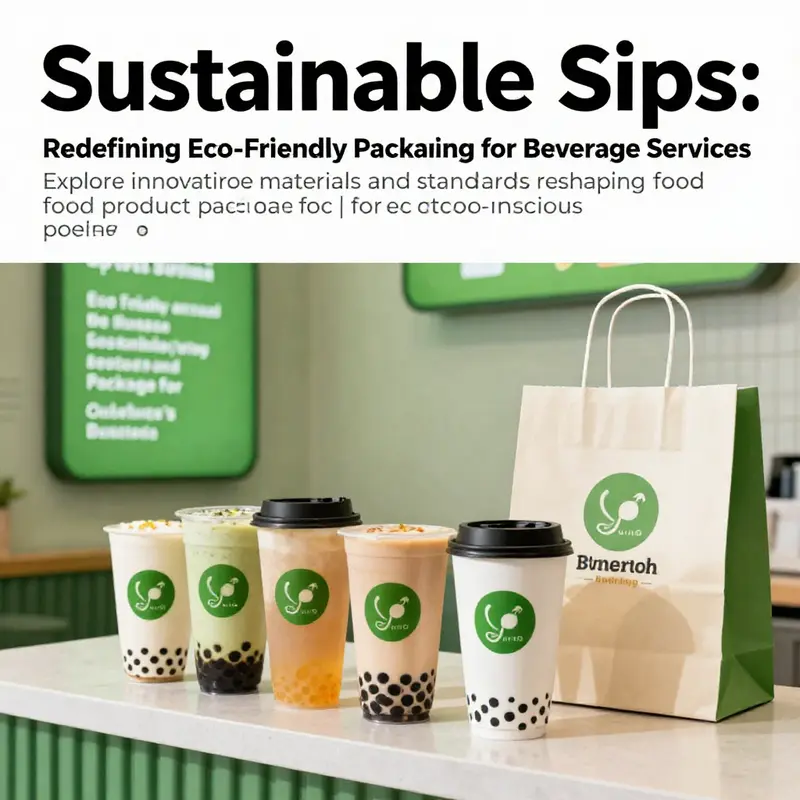
The pressing challenge of plastic pollution has sparked a national dialogue about sustainability, especially within the food and beverage industry. As consumers become more environmentally aware, businesses are transitioning to eco-friendly food product packaging to meet demand. This movement is vital, particularly for bubble tea shops, restaurants, food trucks, and catering services that aim to blend convenience with eco-responsibility. Through four insightful chapters, we will examine the innovative materials driving this change, delve into the role of bioplastics, explore paper-based solutions, and understand the regulatory landscape that governs these advancements. Each chapter builds upon the last, offering a holistic view of how sustainable packaging can elevate your business while contributing positively to the planet.
null
null
Bioplastics as Pathways to Circular Food Packaging: Materials, Impacts, and Real-World Realities
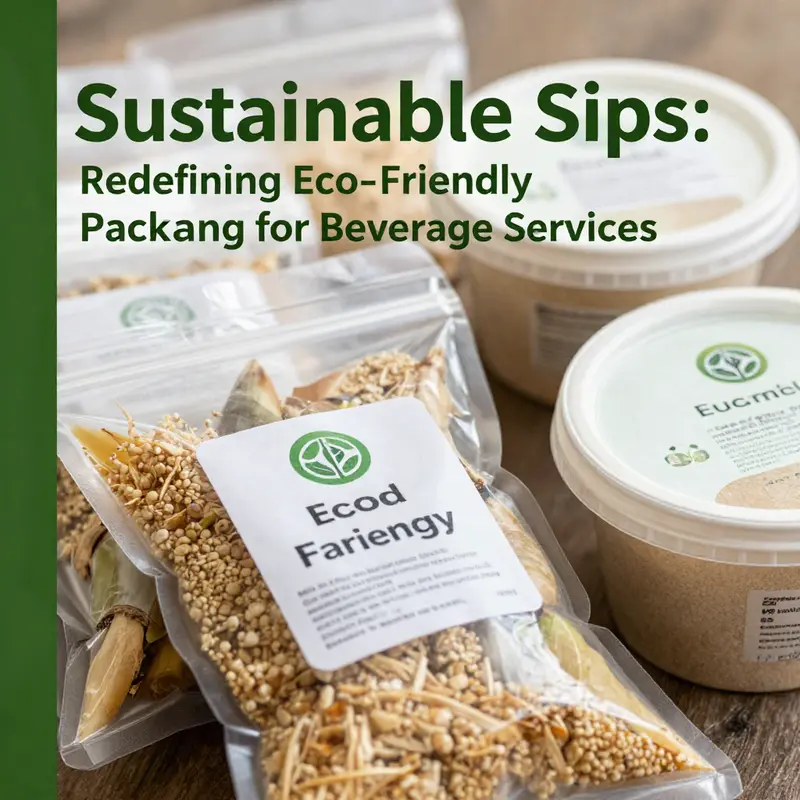
Bioplastics have moved from the margins of packaging innovation into a core node of how food systems imagine sustainability. They are a family of options from renewable biomass, offering a potential decoupling of packaging from fossil carbon. Bioplastics can be bio-based, biodegradable, compostable, or combinations. Bio-based does not always mean biodegradable, and biodegradable does not automatically imply compostable in every waste stream. The most compelling bioplastics for food packaging are those that perform on par with traditional plastics while offering clearer end-of-life options such as composting, recycling, or reuse, aligned with waste-management infrastructure and consumer behavior.
Environmentally, they promise advantages: renewable feedstocks and potentially lower lifecycle greenhouse gas emissions when designed for compostability or biodegradability under proper conditions. The real-world benefits depend on integration with waste systems and available facilities, and on life-cycle assessment from feedstock to end-of-life.
Advances broaden options for packaging formats: starch-derived films; bio-based polyesters; fibers; and blends, each with trade-offs in barrier properties, heat-resistance, and cost. The challenge is selecting the right material for the right use and ensuring compatibility with recycling or composting streams.
Industry adoption includes yogurt containers, bags, and molded components. Performance can match conventional plastics with tailored blends and coatings, but end-of-life performance hinges on the packaging structure and the waste system; labels and certifications remain crucial to avoid greenwashing and to guide consumers.
Costs remain a hurdle; however, as technology advances and scales, price parity is increasingly possible when policymakers, brands, and recyclers cooperate on end-of-life economics. The regulatory landscape, including standards and certifications (e.g., compostability standards), shapes adoption and credibility.
A practical takeaway: bioplastics are most effective when integrated with other sustainable materials, such as paper-based structures or molded-fiber solutions, to tailor performance and end-of-life pathways. Market examples show packaging that pairs plant-based resins with paperboard to deliver barrier performance while enabling recycling or composting where facilities exist.
In summary, bioplastics are part of a broader toolkit for circular food packaging. Their value comes from renewable feedstocks, potential emissions reductions, and the possibility of compostable or biodegradable disposal, provided there is robust certification, labeling, and waste-management infrastructure. The overarching goal is to optimize the entire system—feedstock, processing, packaging design, labeling, and end-of-life management—to reduce environmental impact, not merely swap materials.
From Fiber Forward: The Transformative Power of Paper-Based Packaging in Eco-Friendly Food Systems
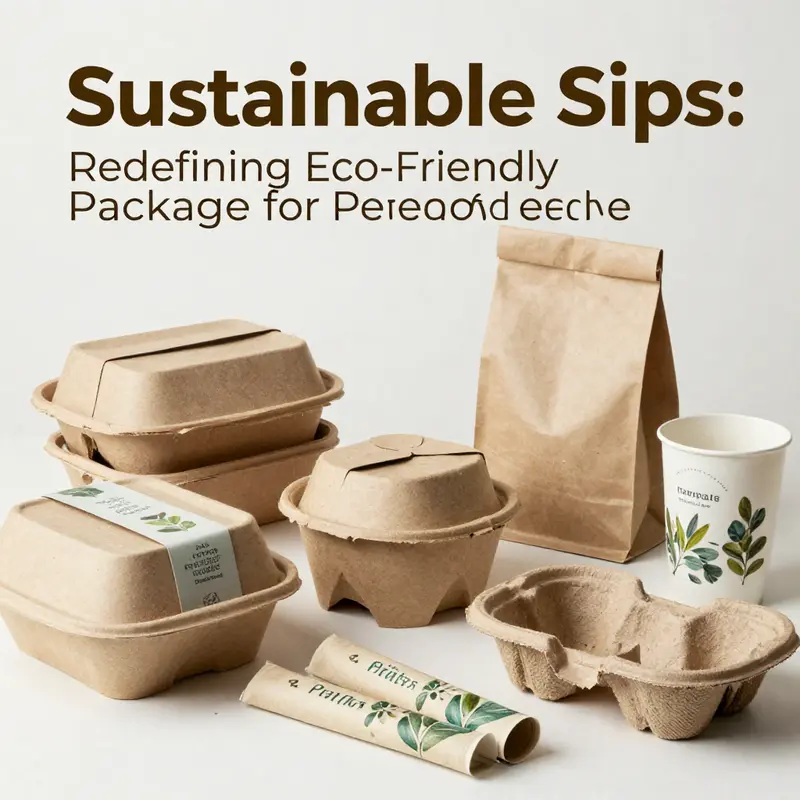
The shift toward paper-based packaging is redefining how food is protected, presented, and disposed. Across regions, brands are turning to paper as a renewable, recyclable backbone for packaging that works from production through consumption to end of life. Paper made from responsibly sourced pulp and reclaimed fibers offers a path to lower environmental impact while meeting performance needs such as barrier resistance, strength, and heat sealing. While plastics remain part of the landscape, the paper option is expanding the design space for sustainability, traceability, and consumer trust.
A core advantage is life-cycle thinking: renewable sourcing, efficient manufacturing, and end-of-life options such as industrial composting or recycling when facilities exist. Transparent labeling and credible certifications help prevent greenwashing and empower shoppers to make informed choices. Standards such as ASTM and EN test methods give brands a credible basis to claim compostability or recyclability, while third-party certification strengthens the supply chain.
Technically, modern papers for food packaging combine barrier coatings, fiber integrity, and process compatibility. High-barrier papers limit oxygen and moisture ingress, enabling longer shelf life for perishable foods. Grease resistance and heat sealing are achieved with coatings that are chosen to stay compatible with paper fiber recovery and compostability. Nano-enabled surface treatments can improve performance without compromising recyclability. The goal is a package that protects the product while fitting into established recycling or composting streams.
Industry examples show the breadth of application: fast food wraps, ready-to-eat entrées, fresh produce trays, and bakery cartons all benefit from fiber-based solutions designed for performance, aesthetics, and end-of-life clarity. In some regions, pilot programs are advancing fully fiber-based laminates that avoid mixed plastics, aiming to reduce microplastics and simplify waste management. Public investment and cross-sector collaboration help scale these technologies from lab-scale demonstrations to mass-market packaging.
For readers seeking deeper technical insight, researchers are mapping material grades, barrier performance, and process economics, while practitioners share case studies that connect material choices to real-world outcomes. The most effective paper-based systems balance protection with recyclability and compostability, and they require aligned labeling, supply-chain cooperation, and continuous testing. The outcome is a packaging ecosystem that supports safe, appealing products and a lower environmental footprint across the lifecycle.
The future of eco-friendly packaging will likely blend papers with bio-based coatings and molded-fiber components, expanding the toolbox for sustainable design. As standards evolve and consumer expectations sharpen, credible claims backed by transparent data will drive trust and adoption across categories from quick-service to premium products. The fiber-based path is not a niche trend but a pragmatic route to resilient, circular food packaging.
Compliance as a Catalyst: Designing Eco-Friendly Food Packaging for a Regulated, Circular Future
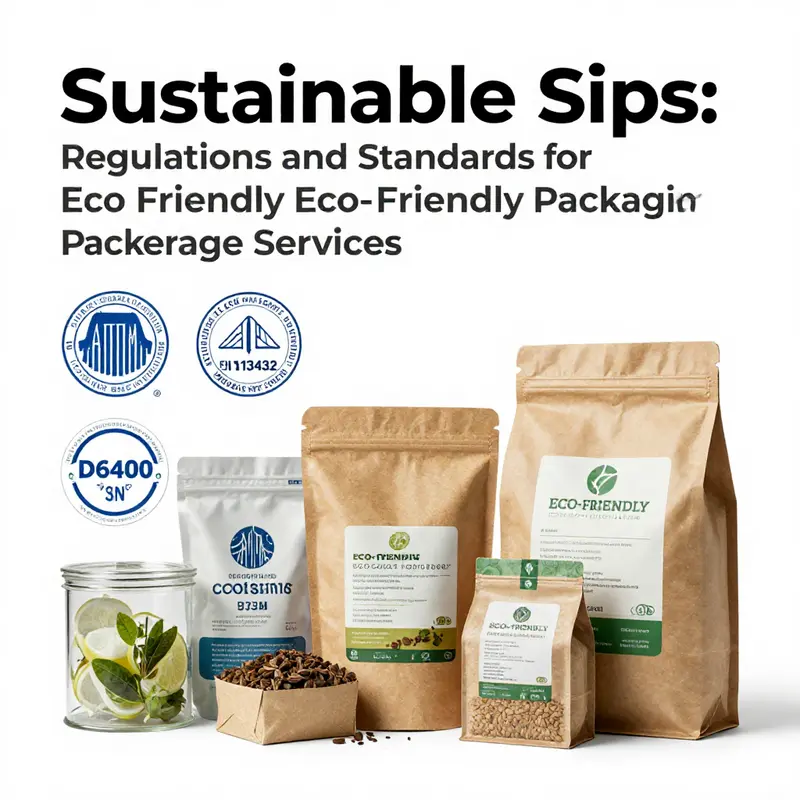
Regulatory ambitions around packaging are no longer a footnote in product development; they are a driving force that reshapes every design choice, material selection, and end-of-life plan. In the European Union, the forthcoming Packaging and Packaging Waste Regulation (PPWR) marks a turning point. Although the regulation becomes effective in 2026, the trajectory is already clear: packaging placed on the EU market must be reusable or recyclable by design. At the heart of this mandate lie concrete targets for recycled content and a tightening leash on hazardous substances used in food-contact materials. For manufacturers, retailers, and even small producers, the PPWR is less about compliance as a burden and more about aligning with a broader shift toward a circular economy where packaging is designed to stay within the economic system rather than become waste. The regulation creates a moving baseline that incentivizes innovations in materials, design strategies, and labeling that can withstand scrutiny across diverse member states and waste streams. The practical upshot is that packaging decisions cannot be made in isolation from end-of-life realities; they must account for how materials flow through recycling facilities, industrial composting, or reuse programs, and how those pathways influence overall environmental impact.
The PPWR’s emphasis on recyclability by design encourages a rethinking of material stacks. It pushes teams to consider monomaterial configurations, simpler adhesives, and more compatible coatings that do not slam the brakes on recycling streams. It also foregrounds recycled content as a non-negotiable attribute, prompting a recalibration of supply chains toward higher-quality post-consumer streams and consistent quality controls. Alongside these requirements, there are explicit restrictions on certain hazardous substances, which means that food-contact packaging must not only be technically feasible to recycle but also inherently safer for people and the environment. In practice this combination of reuse, recyclability, and hazard reduction nudges designers toward materials and constructions that can be confidently sorted, separated, and processed without compromising food safety or consumer trust. As a result, the regulatory signal reinforces a broader industry movement that had already begun with environmental labeling, lifecycle assessments, and corporate commitments to circularity, but now carries a formal harmonization that minimizes market fragmentation.
In this landscape, the broader goals of eco-friendly packaging—renewable origins, biodegradability, compostability, and end-of-life clarity—must be evaluated through the PPWR lens. Cornstarch-based materials, bioplastics derived from sugarcane or cassava, and paper-based solutions with plant-based coatings each present pathways to reduced carbon footprints and lower fossil fuel dependence. Yet these pathways must be scrutinized with respect to recyclability and compostability, particularly for food-contact applications. The regulation invites designers to pursue options that can perform in a way that is compatible with both recycling and composting infrastructures, or in some cases encourage reuse programs that keep products in circulation longer. It also reinforces the importance of clear, verified claims about material capabilities, so that consumers, retailers, and waste managers share accurate expectations about end-of-life outcomes.
From a practical perspective, compliance begins with a materials inventory that maps every component of a package—from the core barrier layer to adhesives, inks, and labels. Each element should be assessed for recyclability, potential contamination of recycling streams, and compatibility with industrial composting if applicable. The PPWR’s emphasis on design for recyclability motivates teams to favor materials and constructions that minimize the use of complex laminates and multi-layer blends that obstruct separation processes. It also underlines the value of standardizing dimensions, making it easier for sorting facilities to identify and direct packaging materials to appropriate streams. In parallel, the regulation raises the bar for recycled-content targets, which demands robust supply chains and traceable material provenance. Certifications and third-party verifications become essential tools not only to satisfy regulators but to build credibility with retailers and consumers who increasingly demand transparency about the environmental performance of packaging.
To translate regulatory requirements into concrete actions, many organizations are turning to established standards as a shared reference. ASTM D6400, which addresses compostability, and EN 13432, the European standard for packaging recoverability, are frequently cited in readiness programs. These standards establish performance criteria that guide product testing and certification processes. They help shrinking the gap between a theoretical sustainability claim and an independently verifiable outcome. Certification bodies—such as TÜV Austria or the Compostable Packaging Alliance—offer validation that a packaging solution delivers on its stated end-of-life properties. Such endorsements are more than marketing; they provide the regulatory and consumer-facing assurance needed in a market where green claims are widely scrutinized. Greenwashing is no longer a permissible shortcut; it undermines trust and invites regulatory risk. The PPWR, reinforced by these standards and certifying bodies, creates a framework in which credibility, rather than rhetoric, becomes the competitive differentiator.
Within this framework, the choice of materials takes on greater strategic weight. Bioplastics and renewable-origin polymers can deliver performance on par with conventional plastics, but they must be managed in ways that support recyclability and measured life-cycle benefits. For example, sugarcane-based bio-based polyethylene can offer similar mechanical and moisture-barrier properties while reducing the carbon footprint relative to fossil-based counterparts. However, when such materials are used in multi-layer structures that complicate separation and processing, they risk undermining recyclability. The PPWR thus incentivizes designers to weigh functional requirements against end-of-life realities, encouraging a balanced approach that avoids over-engineering for barriers that cannot be accommodated by existing waste-management infrastructure. Similarly, molded fiber packaging and paper-based solutions gain traction not solely for their compostability features but for their potential to align with fresh recycling streams provided by regional facilities. The goal is a packaging ecosystem where material innovations are matched to clear, scalable waste-management capabilities.
The PPWR also underscores the importance of consumer-facing labeling and education. Even the most thoughtfully designed package can fail to deliver environmental benefits if it confuses end users about proper disposal. Simple, consistent labeling that communicates whether a package is reusable, recyclable, or compostable—and under what conditions—helps ensure that the intended circular path is actually followed. The regulation’s ambition for clear pathways dovetails with business strategies that invest in consumer education, recycling partnerships, and accurate communications across channels. When labeling aligns with the realities of local waste streams, it reduces contamination and improves recovery rates, further amplifying the environmental promise of eco-friendly packaging.
This regulatory backdrop motivates a practical, design-led approach to compliance. Start with a materials audit that inventories every element of the packaging system and assigns a life-cycle perspective to each choice. Question whether a multi-layer assembly can be simplified without compromising essential performance, whether coatings are compatible with recycling streams, and whether inks and adhesives pose any contamination risks. Assess whether the product can be designed for reuse in a take-back model or if a recyclable design, paired with standardized sorting, would be more feasible. In parallel, establish a robust certification plan that aligns with recognized standards. Engage suppliers early, pushing for documentation of material compositions, supply-chain traceability, and third-party test results. Create a transparent labeling strategy that communicates end-of-life options clearly to consumers while staying within regulatory constraints. And nurture a culture that views compliance not as a hurdle but as a catalyst—an engine for innovation, quality, and trust across the value chain.
To ground these considerations in real-world packaging design, consider a tangible example of how monomaterial concepts can translate into market-ready solutions. A kraft paper octagonal box with a lid—designed for takeout salads or prepared meals—embodies several PPWR-aligned principles: it uses a single, readily recyclable material; it minimizes reliance on diverse polymers that complicate sorting; it can be produced with a water-based or low-toxicity coating that preserves grease resistance while staying recyclability-friendly; and it can support consumer education about proper disposal. Such an approach demonstrates how packaging architecture can meet functional demands without creating waste-management friction. For readers seeking a concrete reference point, a widely accessible example in the ecosystem is available here: senang03-in-stock-new-design-salad-rectangle-takeaway-kraft-paper-octagonal-box-with-lid. This design emphasizes monomaterial integrity, minimal barrier complexity, and the potential for reuse or simple recycling in standard streams, aligning with both current and anticipated PPWR requirements.
Beyond materials and labeling, the PPWR accelerates a broader shift toward circular packaging models. It encourages reuse schemes, enhanced recycling, and sophisticated take-back programs that extend the life of packaging assets and reduce virgin-material demand. Implementing such models requires cross-functional collaboration—from product design and procurement to logistics and retail partnerships. It also requires precise communication with waste-management stakeholders, who can provide practical input on what is technically feasible within local facilities. In this sense, compliance becomes a collaborative exercise, where regulatory insight informs design decisions, and waste-management expertise feeds back into product development. This synergy helps ensure that sustainability claims are not just aspirational but operationally realizable in diverse markets with varying waste infrastructures.
To stay ahead, organizations should view the PPWR as a compass rather than a constraint. The regulation helps with market clarity and consumer confidence, but it also demands ongoing adaptation. Recycled-content targets may evolve as supply chains mature and collection systems scale up. Standards and certification criteria may tighten as testing methodologies refine. In response, teams should embed flexible design principles, maintain open channels with suppliers and certification bodies, and continuously monitor waste-management capabilities across key markets. The result is a packaging ecosystem that can evolve with regulation while keeping the core promise intact: packaging that protects product safety, minimizes environmental footprint, and plays a constructive role in a circular economy.
A final note on the global horizon. While the PPWR anchors EU practice, its influence extends beyond borders. Regions pursuing single-use plastic bans or stricter material controls are watching closely, adapting regulatory playbooks and encouraging industry-wide improvements in recyclability, compostability, and consumer communication. In practice, this means aligning with international standards while accommodating regional waste realities, a balancing act that requires careful planning, cross-border exchange, and the willingness to iterate. For researchers, policymakers, and practitioners, the PPWR represents a milestone that crystallizes a long-running trend: sustainability is no longer an optional attribute but a core design criterion. As the regulatory chorus grows louder, the most resilient packaging strategies will be those that integrate material science, lifecycle thinking, credible certification, and lucid consumer messaging into a cohesive design philosophy. This integration turns regulatory compliance into a competitive advantage and a meaningful contribution to a cleaner, more sustainable food system.
External resources can deepen understanding of how these dynamics are unfolding in practice. For a comprehensive, forward-looking perspective on how sustainable packaging is reshaping the food industry, see the World Economic Forum’s in-depth analysis published in March 2026: How Sustainable Packaging Is Changing the Food Industry – World Economic Forum. This report provides context on emerging technologies, supply-chain challenges, and real-world corporate transitions that complement the regulatory lens described here.
Final thoughts
As eco-friendly food product packaging continues to evolve, it becomes increasingly vital for businesses in the beverage sector to adopt these sustainable practices. By integrating innovative materials such as bioplastics and paper-based solutions, alongside adherence to compliance standards, bubble tea shops, restaurants, and food service providers can not only meet consumer demands but also contribute meaningfully to environmental stewardship. Transitioning to eco-friendly packaging is more than just a trend; it’s a commitment that can differentiate your brand in a competitive market, fostering trust and loyalty among environmentally-conscious consumers. Embracing these packaging solutions lays the groundwork for a more sustainable future for our planet and the food industry alike.