
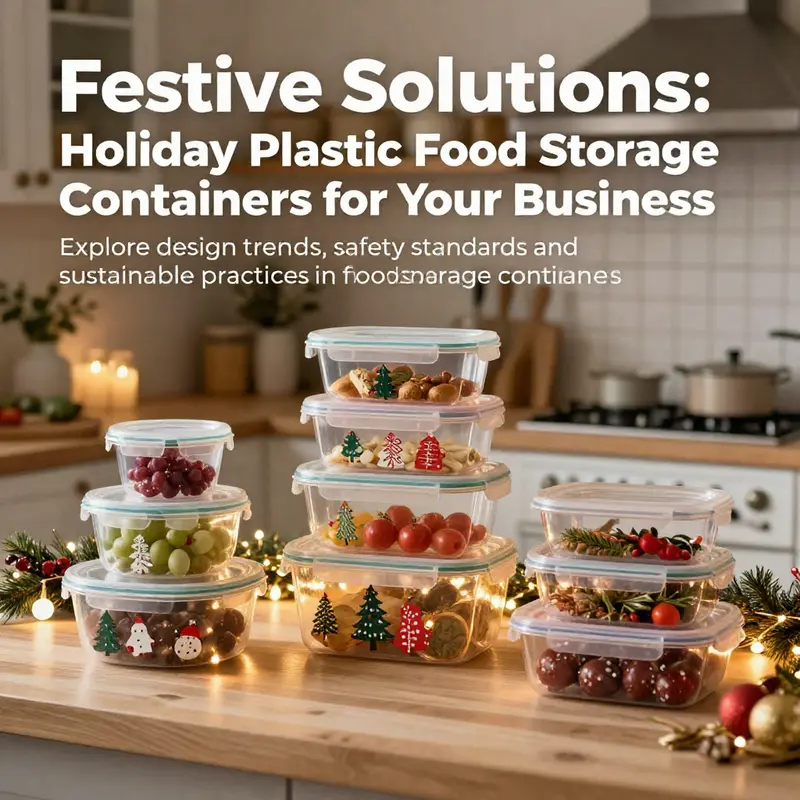
The holiday season brings a flurry of culinary delights, and the need for effective food storage solutions is paramount for businesses in the food and beverage industry. Holiday plastic food storage containers not only serve the practical purpose of preserving delicious seasonal treats but also add a festive touch to your offerings. This article tackles essential aspects for bubble tea shops, restaurants, food trucks, catering services, event planners, and corporate procurement teams. We will dive into the design trends that capture holiday spirit, establish the importance of material safety standards, explore the economic impact on the retail landscape, delve into consumer preferences, and embrace sustainability practices that resonate with today’s eco-conscious consumers. Each chapter will enhance your understanding of how these containers can enhance your business during the bustling holiday season.
Festive Form, Lasting Function: Design Trends Shaping Holiday Plastic Food Storage Containers
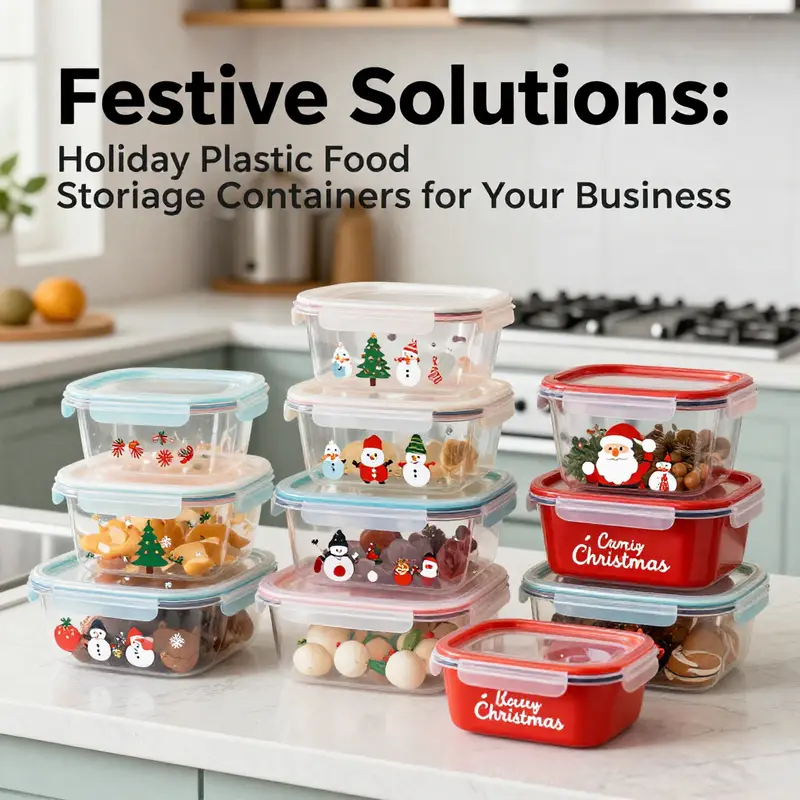
When the kitchen lights start to twinkle and the pantries fill with cookies, candies, and holiday leftovers, a quiet drama unfolds around the storage vessels that hold it all. Design trends in holiday plastic food storage containers are not simply about pretty lids or cheerful prints; they embody a careful balance between visual delight and practical reliability. The best options weave festive spirit into every facet of their construction—from the lid’s interface to the transparency of the walls—so that a batch of cookies can be tucked away with a sense of ceremony and a guarantee of freshness. In this space, form follows function, but it also follows the calendar. The heart of holiday storage isn’t only about keeping food safe; it’s about sustaining moments of shared abundance during a time of year when every plate, box, and basket is part of a larger story about giving and gathering.
A prominent thread running through contemporary design is the direct integration of seasonal motifs onto the containers themselves. Lids and walls now feature intricate gingerbread house patterns, whimsical cookie motifs, or bursts of seasonal color that cue the eye before the hand reaches for a lid. These designs do more than decorate; they expedite organization in a busy kitchen. In the chaos of a holiday kitchen, quick identification matters. A quick glance reveals a container’s contents without opening it, which helps preserve flavor and reduce the risk of cross-contamination. The clear bases that remain popular in many lines contribute to this efficiency, letting a baker’s assortment or a sampler tray be seen at a glance. The visual language of these containers—festive yet practical—helps households maintain order amid the seasonal influx of treats and gifts.
Beyond aesthetics, modularity has become a guiding principle. Stackable systems with interlocking lids and uniform shapes maximize storage in a way that feels almost architectural. The success of these designs lies in predictability: interchangeable parts encourage rearrangement as plans evolve, whether for a fridge, a freezer, or a crowded cabinet. The 24-piece sets seen in many brands exemplify this trend, offering a coherent ecosystem where one could keep cookies, chocolates, and savory leftovers neatly segregated while occupying a fraction of the space that disparate containers would require. The module logic isn’t merely about space-saving; it’s about enabling households to plan ahead with confidence, a crucial advantage when weeks of celebrations demand ready-made portions and efficient re-use.
A touchstone of responsible design in this arena is the growing emphasis on sustainability. Consumers increasingly seek packaging that aligns with a broader ethic of care for the planet without sacrificing performance. Materials such as polypropylene (PP) and high-density polyethylene (HDPE) are highlighted for their food-safe properties, durability, and potential for reuse. Some lines emphasize recyclability and the capacity to re-enter the supply stream after a season of use, while others offer durable, reusable containers that can transition from holiday storage to year-round use. The rhetoric around these products has evolved from single-season utility to long-term value, signaling a shift in how households measure the payoff of their holiday investments. In this light, festive storage becomes not just a temporary solution but a durable asset that travels from one season to the next, reducing waste and supporting responsible consumption.
An intellectual and practical accompaniment to sustainability is a quiet revolution in material science. Modern holiday containers are engineered for enhanced sealing properties, which translates into longer freshness and reduced spoilage. Clear, crack-resistant walls pair with lids that seal tightly, resisting leaks when carried in gift baskets or tucked into packed holiday sacks. The goal is not merely a bright, holiday-ready appearance; it is a robust system that preserves flavor, texture, and aroma. As researchers and industry observers note, the smartest holiday containers are built to last, not to be discarded after a single use. They embody a philosophy of durability that speaks to both holiday expectations and everyday needs, creating a bridge between festive cheer and sustainable practice. The practical insight from this shift is clear: protection of food quality over multiple uses is as important as the aesthetics that signal the season’s spirit.
The conversation around design also intertwines with how these containers function as gift packaging. Festive containers reveal thoughtfulness when presented as part of a gift set, turning a simple storage solution into a collectible or keepsake. The act of giving becomes a further incentive to invest in higher-quality construction and a more thoughtful design language. In this respect, holiday storage behaves like a small stage set for hospitality: it frames the contents, complements the host’s table styling, and reinforces the idea that holiday treats deserve careful preservation and presentation. This perception nudges brands toward cleaner lines, clearer walls, and lids that are intuitive to use even with gloved hands or during a bustling party setup. It is a reminder that packaging decisions have a broader social dimension: they shape how families experience meals, rituals, and the exchange of edible gifts during a season defined by sharing.
As design thinking in this category evolves, the industry also contends with the practical realities of reuse and resilience. Consumers want containers that can withstand repeated heating and washing without clouding or warping, which can distort visibility and compromise safety. This emphasis on longevity dovetails with the sustainability conversation, underscoring how durability reduces waste and extends product life. The emphasis on seal integrity is not merely about keeping leftovers tidy; it is about maintaining the quality of baked goods, candy, and seasonal dishes across days and even weeks of indulgence. In this light, the modern holiday container becomes a small champion of quality and care, designed to support the flavors and textures that define holiday feasts.
To bring these ideas together, designers are crafting container ecosystems rather than isolated boxes. The best sets present a cohesive language: consistent shapes, compatible lids, and a predictable stacking pattern that simplifies inventory and reduces clutter. They acknowledge the seasonal rhythm—the rush of baking, the quick turn-around of party trays, the impulse to gift—while offering practical resilience for everyday life beyond December. The visual cues—clear walls, transparent lids, and a restrained use of color—work with the body’s instinct to scan quickly and decide, a feature invaluable in the kitchen where time is currency during holiday preparation. In parallel, the sustainability narrative invites families to view these containers as investment pieces that can travel through the year, supporting meal prep, picnics, school lunches, or weekend gatherings long after the last gingerbread crumb has vanished.
This evolving design discourse reflects a broader cultural shift: storage products are no longer seen as disposable after the holidays. Instead, they are part of a material culture that values thoughtful packaging, easy maintenance, and responsible consumption. The design choices—festive details balanced with robust engineering, modular architecture, and durable materials—share a common purpose: to honor the season with beauty while honoring the planet with practicality. The result is a more confident consumer experience, where people can plan, store, serve, and gift with less anxiety about waste, leaks, or confusion. It is a small but meaningful part of how households create moments of warmth and hospitality during the holidays, anchored by containers that not only hold food but also hold the memory of careful preparation and shared delight.
As you explore the landscape of holiday storage options, you may notice a growing invitation to consider alternatives that align with long-term goals. For instance, a related approach emphasizes eco-friendly kraft packaging as an option alongside traditional plastics, pointing to a broader conversation about how we package holiday treats in ways that honor taste, texture, and safety while reducing environmental impact. eco-friendly kraft packaging offers a glimpse into this broader design philosophy, illustrating how a non-plastic path can still carry the seasonal spirit and practical advantages of a well-made container. This is not a call to abandon familiar favorites but an invitation to imagine how containers—whether plastic or kraft—can elevate the holiday experience through thoughtful form and durable function.
The chapter on design trends thus closes on a note of integration: aesthetics anchored in function, sustainability embedded in every seam, and modular systems that honor the season’s demands while staying relevant through the year. The conversation is ongoing, shaped by consumer feedback, regulatory developments, and the evolving materials landscape. What remains constant is the sense that holiday storage is more than a necessity; it is a small stage for celebration, efficiency, and responsible living. The containers we choose—carefully designed, thoughtfully used, and prudently recycled—become part of the ritual of care that characterizes holiday hospitality. The result is a more organized, more joyful season where food preservation meets festive delight in a way that endures beyond December.
External resource: For a broader view on how market options are evolving in holiday storage, see the following external source: COOK WITH COLOR Holiday Food Storage Containers, 24 Piece.
Safe and Festive: Material Standards for Holiday Plastic Food Storage Containers
As the kitchen fills with the scent of cinnamon and roasted citrus, holiday hosting becomes a careful choreography of timing, storage, and shared pleasures. The season invites a crowd, and with it a flood of treats that must stay fresh from the moment they leave the oven to the moment they reach dessert tables and then the fridge for later snacking. In this busy rhythm, the right containers are more than vessels; they are quiet partners that protect taste, texture, and safety. They must be sturdy enough for transport, space-efficient enough to fit into crowded fridges, and simple enough to use without a second thought when guests arrive. The decision about what to reach for when stacking cookies or reheating cranberry-honey glazes is not a superficial one. It speaks to the heart of a holiday gathering: how easily one can share, store, and savor with confidence, not worry about spills or safety concerns that can disrupt the mood of a festive moment.
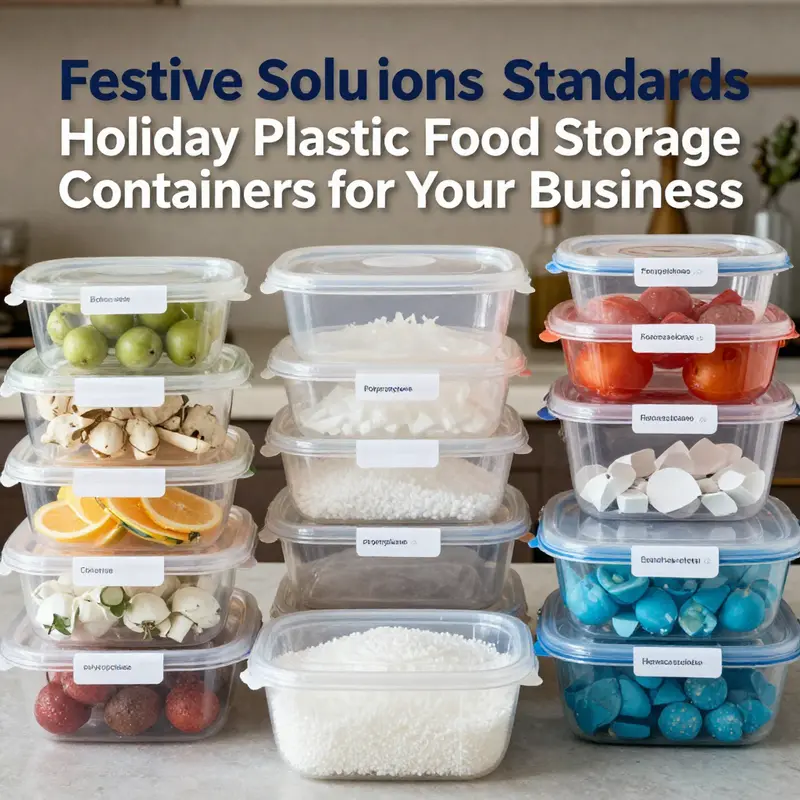
Material safety begins at the core—the plastic itself. Not all plastics behave the same under heat or when they meet the bright acidity of citrus zest or the butter richness of holiday desserts. For holiday use, the most reliably safe bets are polypropylene (PP) and Tritan™, both designed with food contact in mind. These materials resist leaching of problematic chemicals such as BPA and phthalates and tend to hold up under repeated microwaving and dishwashing when the product is clearly labeled as microwave- and dishwasher-safe. In many regions, PP is a trusted workhorse for durable food containers because it remains stable through multiple heating cycles. Food-safe polyethylene (PE) is another familiar option in European markets, valued for affordability and versatility. Yet PE often fares best for cold or room-temperature storage; prolonged exposure to high heat can compromise its integrity depending on the grade. The practical upshot is clear: always seek explicit labeling that a container is microwave-safe and dishwasher-safe, and look for credible certifications such as FDA or EFSA compliance. The presence of a clear safety label isn’t mere bureaucracy; it’s a practical guardrail against unwanted chemical migration during a holiday season when meals expand into longer gatherings and leftovers circle back to the fridge and then to the table.
Silicone has emerged as an appealing alternative for households seeking even greater reassurance without sacrificing flexibility. Dr. Lena Patel, an environmental health scientist at Johns Hopkins Center for Exposure Science, notes that silicone maintains stability across a wide temperature range—from freezing to high-heat cooking—making it an excellent companion for holiday leftovers, meal prep, and serving. Unlike traditional plastics, silicone does not readily degrade or leach chemicals after repeated use. Its resilience is particularly valuable during a season notorious for new batches of leftovers and spontaneous hosting duties. Of course, silicone is not a cure-all; it often comes at a higher upfront cost, and quality varies. The key is to verify explicit food-grade labeling and clear heat tolerance information so that you know the product can perform as promised when you reheat or re-store in the same container.
Beyond the material itself, design matters as much as composition. The shapes most commonly favored during the holidays—rectangular or square—maximize refrigerator and freezer real estate, which matters when you’re corridor-limited by a crowded kitchen and a mountain of baked goods. Airtight, snap-on, or locking lids help preserve moisture, seal in flavors, and prevent leaks that could smear tablecloths or travel bags. For holiday gifts or party favors, themed lids and clear, transparent walls let you see what’s inside without opening, a small but useful convenience when you’re juggling multiple trays and plates. The aesthetic is a bonus, but practical performance remains the anchor: a well-sealed, clearly labeled container with a dependable lid reduces the risk of accidental spills and helps maintain the texture of delicate holidays treats, from crumbly shortbread to glossy ganache glazes. In short, the holiday kitchen benefits from a thoughtful balance of durability, practicality, and a touch of festive charm that does not compromise safety or cleanliness as the season unfolds.
The safety conversation is not just about chemistry; it is also about clarity and consistency in labeling. Clear temperature guidance and explicit safe-use instructions empower hosts to plan menus that transition smoothly from oven to fridge to plate. When a lid seals well and a wall remains brightly transparent, it’s easier to rotate leftovers and rewarm portions without opening every container in search of the right one. Look for certifications and standards that reflect adherence to strict food-contact regulations, rather than relying on glossy claims alone. And while the season invites generosity, it’s wise to avoid containers with signs of wear. Warping, cracking, or cloudiness after repeated heating and washing can indicate degraded materials and increased risk of contamination or leakage. Replacing worn containers is a straightforward step toward protecting health and extending the life of the holiday kitchen toolkit. It’s also a practical move for the planet: well-used, durable containers create less waste and offer a reliable reuse cycle that aligns with responsible holiday hosting.
In practice, many households appreciate sets that offer versatility without crowding the cabinet. Sets of three or more give you flexibility to store different categories—cookies, candies, and savory nibbles—while maintaining organization and accessibility during a bustling season. The goal is to provide a straightforward, dependable system that supports guests’ enjoyment rather than turning storage into a logistical obstacle. This is where material safety meets everyday use: the most robust options are those that survive the rigors of holiday cooking, transport, and reheating, while remaining visually reassuring and easy to clean. A cohesive toolkit built around safe materials, clear labeling, and sturdy lids translates directly into more time spent with friends and family and less time worrying about whether leftovers will be safe or whether a container will leak during a midnight snack run.
For a practical example of durable, reusable storage with secure lids, consider the following real-world option: senang-kraft-paper-octagonal-bowl-pet-lid-waterproof-eco-friendly-disposable-customizable-snack-pet-food-salad-containers-1l.
As this discussion shows, the holiday season invites a careful blend of safety, practicality, and small touches of festive style. The containers you choose should be capable of withstanding heat when reheating a holiday supper, accommodating cold storage of seasonal fruits, and maintaining the crisp textures that make cookies and confections so appealing. They should also be easy to clean, resistant to wear after repeated cycles, and built to minimize waste. In short, a thoughtful approach to material safety—anchored by robust polymers like PP and Tritan, supported by credible labeling, and complemented by durable lids and useful shapes—gives you the freedom to focus on what truly matters: gathering with loved ones, sharing meals, and savoring the holidays without unnecessary concerns about what’s inside the storage.
External resource: https://www.fda.gov/food/food-contact-materials
Seasonal Stock, Lasting Footprint: The Economic Pulse of Holiday Plastic Food Storage Containers in Retail
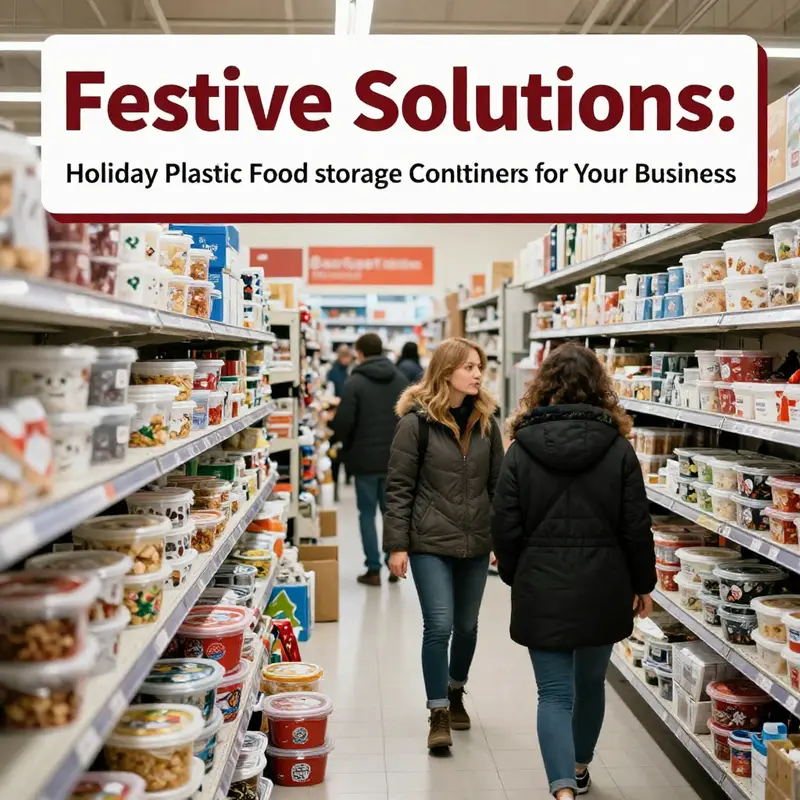
The holiday season functions as a high-stakes pulse point for retailers, and plastic food storage containers occupy a central, almost quiet role in that rhythm. They are not the flashiest stars on the shelf, but their performance under pressure can illuminate broader truths about consumer behavior, supply chains, and the evolving economics of packaging. As households prepare for Christmas feasts, Thanksgiving gatherings, and New Year celebrations, the demand for both reusable and disposable plastic containers surges in tandem with the tempo of seasonal entertaining. This demand does more than move units; it sets a financial tempo for manufacturers, bulk distributors, and retailers who must navigate a complex choreography of forecasting, pricing, and shelf space. The result is a cyclical boost in wholesale orders that ripples through the entire ecosystem, from a factory line sprinting to meet early-mquirk spikes to a warehouse team juggling bulk shipments and a store manager calibrating promotions against a limited horizon of holiday demand.
In practical terms, holiday-specific plastic containers are valued for their space efficiency, durability, and ease of use. Rectangular and modular shapes dominate because they maximize refrigerator, freezer, and cabinet real estate. The sealed lids—whether snap-on, locking, or hinged—promise freshness and minimize leaks during transport from kitchen to car to party table. For retailers, these design features translate into lower spoilage risk and higher customer satisfaction; for consumers, they offer reliable performance when reheating or serving a dish at a social gathering. The festive lids and clear bodies that reveal contents at a glance also play a subtle but meaningful marketing role. A buyer can spot a tray of cookies or a batch of leftovers without opening the container, which reduces handling and preserves presentation during display and storage. These practical benefits underpin steady demand, even as the wider market faces longer-term shifts in material choices and waste reduction goals.
The economic engine behind holiday plastic containers is remarkably straightforward on the surface: seasonal demand drives sales, which in turn elevates wholesale order volumes and supports a robust supplier network. When retailers anticipate a surge, they place larger orders in advance to avoid stockouts that could derail service during peak shopping days or left-turn moments like last-minute cookie platters for office parties. For many businesses, this anticipation is not just best practice; it is a strategic necessity. A well-timed bulk purchase translates into better unit economics, as fixed costs—such as tooling, packaging design, and distribution—are spread over greater volumes. This reality helps explain why wholesalers and manufacturers gear up their production lines months ahead of the holidays, optimizing capacity to meet both routine replenishment needs and the unpredictable spurt of holiday orders.
The operational benefits cascade further when the supply chain is aligned with consumer calendars. Food service operators, pop-up markets, and seasonal catering teams rely on consistent availability of containers that can withstand rapid reheating and repeated washing. In fast-paced environments, the ability to stock up on reliable packaging reduces the risk of service delays, which in turn preserves revenue streams during high-demand windows. The economic logic is reinforced by the diverse product families that retailers curate for holiday readiness: multi-pack sets, gift-ready bundles, and theme-laden designs that double as festive packaging. Such assortments encourage higher basket values, promote cross-selling with related bakeware and prep tools, and support seasonal merchandising that can be more visually impactful than everyday offerings.
Yet the economics of holiday plastics are not insulated from the broader pressures that shape modern retail. The same factors that push retailers to stock up in bulk—price volatility in resin markets, logistic bottlenecks, and the need for rapid ramp-ups—also heighten exposure to regulatory and societal shifts surrounding packaging. In recent years, public awareness of plastic’s environmental footprint has intensified, driven by research, advocacy, and policy developments. The lifecycle of plastic—from raw material extraction to manufacturing, distribution, use, and eventual disposal—entails emissions and waste considerations that become more salient during periods of high usage. When the holiday season accelerates demand, it can also accelerate scrutiny, as stakeholders examine the cumulative impact of packaging waste generated during peak consumption. Dr. Jane Goodall has framed the conversation with a broader climate lens, highlighting that emissions and ecological harm are embedded in each stage of a product’s life. That framing nudges retailers toward a more ambitious, sustainability-minded calculation: cost versus externalities, short-term revenue versus long-term brand equity, and the balance between convenience and responsibility.
The retail response to these tensions is already visible in the widening range of packaging options that retailers are willing to promote during the holidays. Plastic remains cost-effective and versatile, especially in forms like high-density polyethylene and various polyethylene terephthalate derivatives, which offer reasonable chemical resistance and safety for food storage. The economic argument for plastic persists in 2026, given its durability, light weight, and recyclability in many jurisdictions. However, the footprint of traditional plastic packaging is increasingly weighed against the rising share of eco-friendly alternatives—glass, biodegradable composites, and compostable materials—that customers perceive as aligning with a greener holiday ethos. This tension does not just affect product choice; it reshapes pricing, margins, and promotional strategies. When retailers pilot eco-friendly options, they confront a cost structure that often includes higher material costs, different manufacturing processes, and changes to logistics and waste management. The payoff, if executed well, is a differentiated value proposition that can command premium pricing or foster loyalty among sustainability-minded shoppers.
In this evolving landscape, the role of design and packaging science becomes critical to profitability. The most successful holiday containers are those that combine durability with minimal waste, provide clear visibility of contents, and enable reuse or straightforward recycling. The clarity of labeling, the stability of lids, and the resistance to warping or clouding after repeated heating contribute directly to consumer trust and repeat purchase behavior. Retailers learn to value products that minimize returns and complaints because consistent performance lowers the total cost of ownership for the consumer, who, in turn, becomes a repeat buyer across seasons. This is the kind of feedback loop that sustains volumes across years even as market conditions shift. In practice, many buyers now weigh not just unit price but total cost—covering freight, warehousing, and the potential savings from reduced spoilage and waste. That broader cost calculus helps explain why some retailers favor larger, multi-use sets that can handle holiday leftovers for days, while others lean toward gift-oriented bundles that pair containers with accessories and decorative lids for seasonal charm.
Amid the push toward sustainability, retail buyers also confront the risk of overreliance on disposable solutions. The packaging waste metric cited in many municipal reports—packaging often representing a sizable fraction of household waste—creates pressure to limit single-use plastics where possible. This pressure translates into budget trade-offs: the cost of switching to reusable or compostable options may be higher upfront, but it can yield long-term savings through brand differentiation, improved consumer perception, and potential regulatory incentives or penalties that reward lower waste. In practice, some retailers calibrate their holiday assortments to provide a spectrum of choices—from durable, reusables designed for repeat use to eco-friendly disposables that can be composted or recycled where facilities exist. The strategy seeks to meet a spectrum of consumer values while maintaining affordability and seasonal profitability. The internal math becomes more complex, but the underlying objective remains clear: manage demand peaks, optimize margins, and align with a social mandate toward more sustainable packaging.
The consumer remains a crucial variable in this economic equation. Holiday shoppers seek containers that are practical for gifting, easy to clean, and capable of preserving the freshness of baked goods and treats. For many households, the container itself becomes part of the gifting experience, reinforcing the notion that packaging is not just a vessel but a message about care and quality. This sentiment helps sustain demand for well-designed, appealing containers, including options that feel festive yet functional. Retailers respond by featuring visually appealing, thematically themed options that stand out during seasonal events, while also ensuring alternative, serviceable designs exist for price-conscious buyers. The resulting diversity of choices can cushion the market against abrupt shifts in resin prices or supply chain disruptions, as customers spread their spending across a broader lineup of products.
One tangible example of how packaging options intersect with seasonal demand is the growing emphasis on specialty take-away solutions that carry holiday appeal. Wholesalers and retailers increasingly discuss options like the 26oz kraft-paper soup cup with lid for takeout packaging. Such a product sits at a compelling intersection of form, function, and sustainability. It offers a sturdy, presentable option for holiday soups, stews, and warm treats that travelers and party-goers value during winter gatherings. By featuring a kraft-paper exterior with a protective lining and a reliable lid, this kind of container can support both the consumer’s need for convenience and the retailer’s need for cost-effective stocking. For further context on how such packaging choices fit into broader market dynamics and sustainability considerations, see related discussions in industry analyses and consumer packaging trends. 26oz kraft-paper soup cup with lid.
In the longer horizon, the economics of holiday plastics will be tested by ongoing debates about waste, recycling infrastructure, and the true cost of disposables. The long-term sustainability of relying on plastic packaging is under increased scrutiny as communities push for higher recycling rates, better waste management, and more circular economy models. The argument for plastic’s continued dominance rests on its versatility, cost-effectiveness, and performance, but it must contend with broader policy shifts and evolving consumer expectations. Retailers who adapt may find a more resilient business model by diversifying packaging portfolios, investing in clear labeling and end-of-life options, and aligning promotions with sustainability narratives that resonate with customers during the holidays. The Guardian’s current coverage of sustainable packaging shifts underscores how quickly the retail environment can pivot when policy and public sentiment cohere in favor of greener choices. As the season of giving accelerates, so too does the opportunity to reframe a familiar product category as both economically sensible and environmentally responsible. For readers seeking an external perspective on these regulatory and market dynamics, see the ongoing discourse at The Guardian: https://www.theguardian.com/environment/2026/mar/15/sustainable-packaging-retail-holiday-season.
Choosing Cheer and Safety: How Consumers Shape Holiday Plastic Food Storage Containers
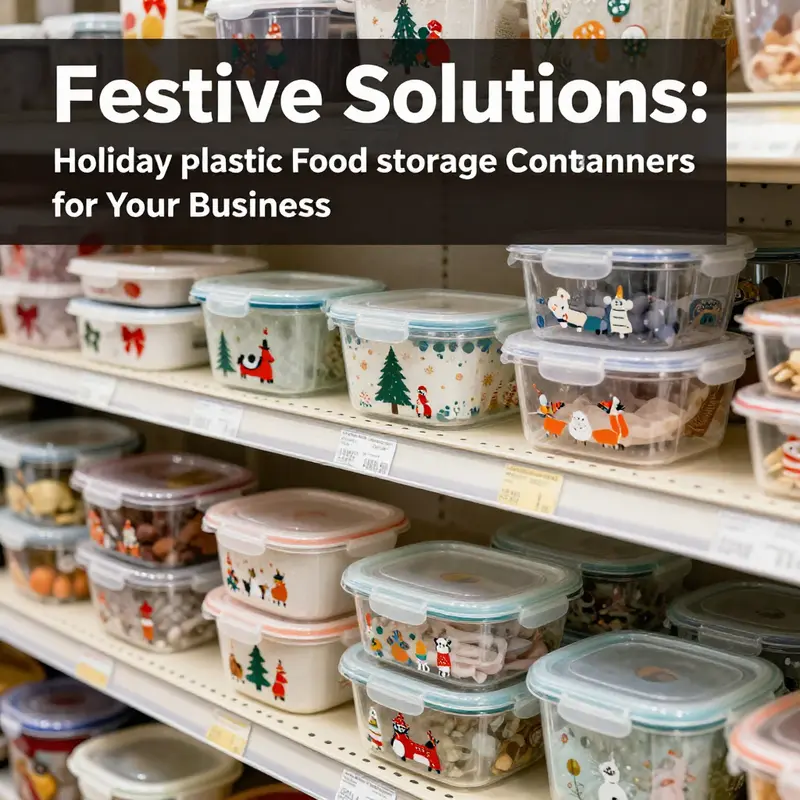
The holiday season places a premium on more than just delicious meals and festive gatherings. It hinges on memory, routine, and the quiet choreography of storage—how baked goods are kept from drying out, how candies stay inviting, and how leftovers are preserved without sacrificing flavor or texture. In this context, consumer preferences for plastic food storage containers drift toward a balance of safety, sustainability, and everyday practicality, with a dash of seasonal charm. People want containers that protect what’s inside, look tidy in a crowded fridge, and fit into the rhythm of busy days and late-night kitchen cleanups. This demand shapes not only what is produced but how it is marketed, packaged, and repurposed in homes during the holidays and beyond.
Material safety remains a foundational priority. Across markets, there is a clear tilt toward materials that feel trustworthy to both casual shoppers and careful parents who store treats for visiting relatives. Food-grade plastics like polypropylene and other robust options are favored for their chemical stability and resilience. In addition, consumers increasingly weigh the environmental footprint of what they buy. Eco-conscious buyers often lean toward materials with strong safety profiles, durable construction, and reduced environmental impact, such as alternatives that endure multiple uses without compromising food integrity. In some regions, there is a stronger preference for materials that resist staining and odor retention, which matters when multiple holiday staples—cookies, candy, and roasted nuts—are stored in the same household. The trend toward sustainable materials isn’t a fringe concern but a baseline expectation that influences packaging design, seal reliability, and the long-term value of a container through repeated holiday seasons.
Functionality remains the heartbeat of holiday storage. For perishable or semi-perishable items, high sealing performance can make the difference between a fresh-tasted plate and a disappointing visit to the fridge freezer. Double lids, secure snap closures, and even vacuum-seal functions are frequently cited as features that extend the life of holiday fare. When families gather, leftovers become currency for future meals, and the ability to keep flavors intact while minimizing leakage or condensation is prized. In practice, this means designs that prioritize airtight seals without sacrificing ease of use. The balance is delicate: a lid that fits snugly yet unlocks easily for elderly relatives or energetic kids who want to help with cleanup during the festivities.
Convenience and design form a confident duo in shaping consumer choice. Lightweight, easy-to-handle containers that stack neatly in standard refrigerator and freezer spaces are particularly valued. The rectangular or square formats often win favor because their shape makes the most of narrow shelves and door bins, a practical advantage during a season when every inch of storage counts. Yet convenience is not only about physics; aesthetics matters too. Clear walls that reveal contents and avoid unnecessary guesses about what sits behind a lid save time when you’re juggling a party platter and a tray of cookies. For some shoppers, a hint of holiday whim enhances the experience: a container with a festive lid motif or a transparent wall that makes cameo appearances of holiday treats can feel like a small but meaningful touch, a way to keep the atmosphere light and joyful in a kitchen that is otherwise busy with function.
The march toward smarter storage is quietly gaining pace. A substantial portion of consumers express interest in future features that move beyond the basics. Notably, around two-thirds of respondents indicated a desire for a smart expiry date indicator that would help determine whether a stored product remains safe to eat. Such a feature could transform how households approach holiday leftovers, giving quick, data-driven reassurance on safety while reducing waste. While not every household is ready to adopt sensor-equipped lids or connected containers, the appetite for digital or anticipatory cues signals a broader trend in consumer tech enthusiasm that could redefine how we think about freshness, labeling, and inventory management in home kitchens during peak holiday periods.
Style, in the sense of modern aesthetics and trend-aware design, also matters. Younger shoppers especially gravitate toward containers that feel current and visually appealing, because these products become part of the kitchen’s overall look during social gatherings and photo-worthy tables. The visuals matter not only for gift viability but for everyday use as well; a container that looks good on a shelf can encourage more frequent reuse and a longer lifecycle. This emphasis on design does not replace the need for robust performance. Instead, it reinforces a holistic approach: containers must perform without fuss, be easy to clean, and present a degree of artistry that aligns with contemporary kitchens and holiday entertaining.
From a business perspective, the holiday season magnifies the appeal of versatile packaging that can function as both storage and gift presentation. In broader markets, single-purpose solutions give way to sets and bundles that offer variety while maintaining consistent quality. For retailers and caterers, bulk procurement of reliable, easy-to-use containers becomes essential to meet seasonal demand. A standard set that includes different capacities and shapes enables households to adapt to gift baskets, cookie plates, and party platters with a cohesive look and predictable performance. The logic is simple: volume, reliability, and a pleasing design converge to create a storage system that supports the season’s abundance rather than complicating it.
Yet the story of consumer preference is not purely about what is bought; it is also about what is replaced. Even the most thoughtfully designed containers wear. Warping, cracking, clouding, or degraded seals after repeated heating or washing are clear signals that a container’s useful life has paused or ended. Holiday use amplifies wear since temperatures vary from fridge chill to microwave reheats to oven-safe reheats in some households. Aware shoppers learn to monitor for performance changes and to replace items when necessary, ensuring food safety and reducing the environmental footprint of suboptimal containers. This pragmatism—knowing when to retire a piece of storage—fits naturally with the festival ethos of refreshment and renewal that defines many households’ approach to the holidays.
In the spirit of practical guidance, consider how a consumer might weigh a few core attributes in a single decision. A shopper might begin with safety and material quality, scanning for food-grade labeling and a reputation for durable construction. They then assess sealing performance: is the lid snap tight, does it resist pressure from stacked containers, and can it endure the occasional dishwasher cycle? They will next weigh convenience: is it light enough for older relatives to handle, is the shape optimized for fridge space, and does the design permit visible contents without opening every lid? Finally, they consider design and potential smart features. The allure of a future “smart expiry” indicator is not merely novelty; it is a practical promise of fewer wasted leftovers and a clearer sense of kitchen inventory during the holidays.
This is where the interplay between consumer preferences and product design becomes most visible. Designers respond not only to what people say they want but to how they actually use containers during a high-stakes period of social dining and shared meals. The result is a family of storage solutions that blends three core pillars: safety, sustainability, and simplicity, with a dash of seasonal personality. For households that frequently prepare bake sales, cookie boxes, and party favors, a thoughtful set that integrates predictable sealing, easy handling, and a touch of festive charm can be a reliable ally through December and into the New Year. In practice, this means material choices that survive repeated use, reliable locking mechanisms that stand up to busy countertops, and designs that avoid overcomplication while still delivering a visually pleasing, gift-ready package.
For readers seeking tangible examples of how packaging formats can align with these preferences while staying mindful of sustainability, consider a packaging option that emphasizes space efficiency and eco-friendliness. kraft-paper-octagonal-bowl-1200ml-waterproof-eco-friendly-disposable-salad-bowl-for-snack-cookie-warm-cold-food-pet-lid offers a case in point. It illustrates how a design can prioritize stackability and clear purposes while remaining aligned with broader sustainability goals and the practical demands of seasonal use. Such formats demonstrate that performance and presentation can travel together, enabling households to store a mix of cookies, candies, and savory bites without clutter or fatigue in the kitchen.
On a broader scale, consumer preferences during the holidays align with global trends that emphasize safety, durability, and openness to smart features that enhance everyday life. The interplay of these factors suggests a future where holiday storage containers evolve to offer intuitive, user-friendly experiences that reduce waste and simplify festive hosting. As households explore their options, the conversation about what makes a container truly holiday-ready expands beyond the traditional metrics of capacity and price. It encompasses how a product supports shared meals, how it looks on a shelf, and how it communicates safety and sustainability through every snap of a lid and every rinse cycle.
External perspectives reinforce this view. A comprehensive study of regional consumer preferences and product design optimization highlights how safety, durability, and eco-conscious materials shape design decisions across markets. This broader lens helps explain why features like airtight seals and clear walls resonate so strongly with holiday shoppers who juggle flavors, textures, and temperatures in the same week. It also points to the potential value of smarter materials and integrated indicators that assist with freshness judgments during periods of heightened dining activity and kitchen traffic. For those who want a deeper dive into these regional dynamics and design implications, see the external resource linked at the end of this chapter.
In sum, consumer preferences for holiday plastic food storage containers are evolving toward products that feel trustworthy, perform reliably, and carry a light, festive touch. The optimal container is not merely a box with a lid; it is a tool that keeps what matters fresh, supports efficient organizing, and aligns with modern aesthetics and responsible consumption. As families plan cookies, casseroles, and plate sharing, the right storage solution becomes part of the holiday experience itself—one that respects safety, reflects care for the planet, and adds a sense of cheerful order to the busiest time of year.
External resource for further exploration: https://www.researchandmarkets.com/reports/5894379/china-freshness-box-consumer-preferences-and-product-design
Tidings and Trade-offs: Reimagining Holiday Storage for a Greener Season
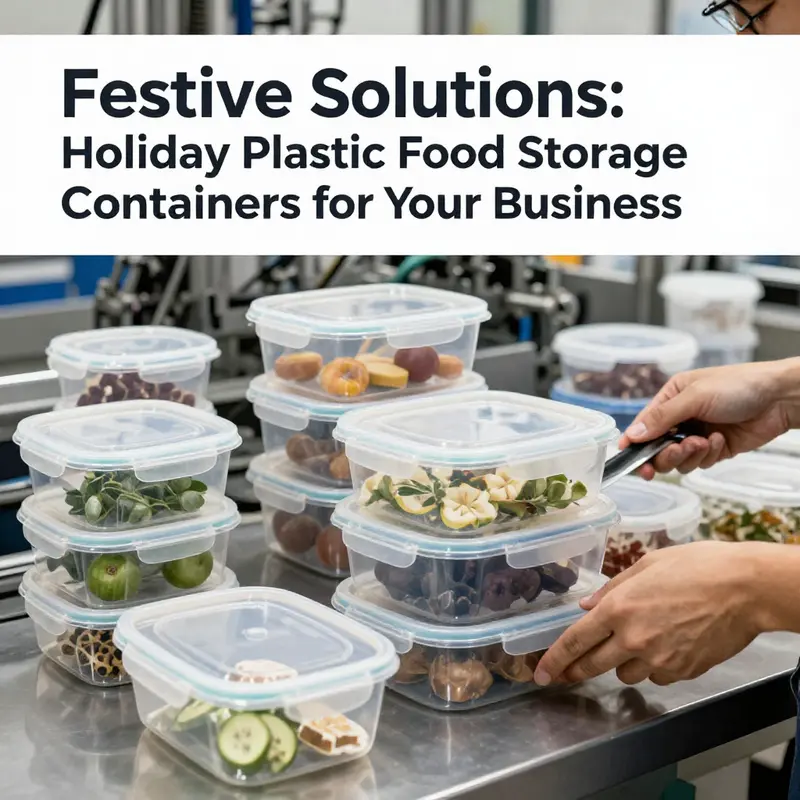
The holiday season invites celebration and abundance, yet it also raises questions about waste and health. This chapter explores practical storage choices that keep leftovers fresh while reducing single-use packaging. We discuss durable materials like glass and stainless steel, the role of airtight seals, and the benefits of reusable wraps. We consider plant-based alternatives and bulk storage strategies for events, along with the importance of end-of-life clarity. The aim is to help households and organizers choose containers that endure across holidays and years, balancing convenience with environmental responsibility.
Final thoughts
Holiday plastic food storage containers encapsulate the spirit of the season while providing invaluable benefits to businesses. By keenly embracing design trends, adhering to stringent material safety standards, and understanding both economic implications and consumer preferences, businesses can optimize their holiday offerings. The move towards sustainable practices not only meets consumer demand for eco-friendliness but also positions your brand favorably in a competitive market. Ultimately, these containers not only organize your kitchen but also enhance your brand’s reputation as a holiday-ready provider of exceptional food and experiences.