
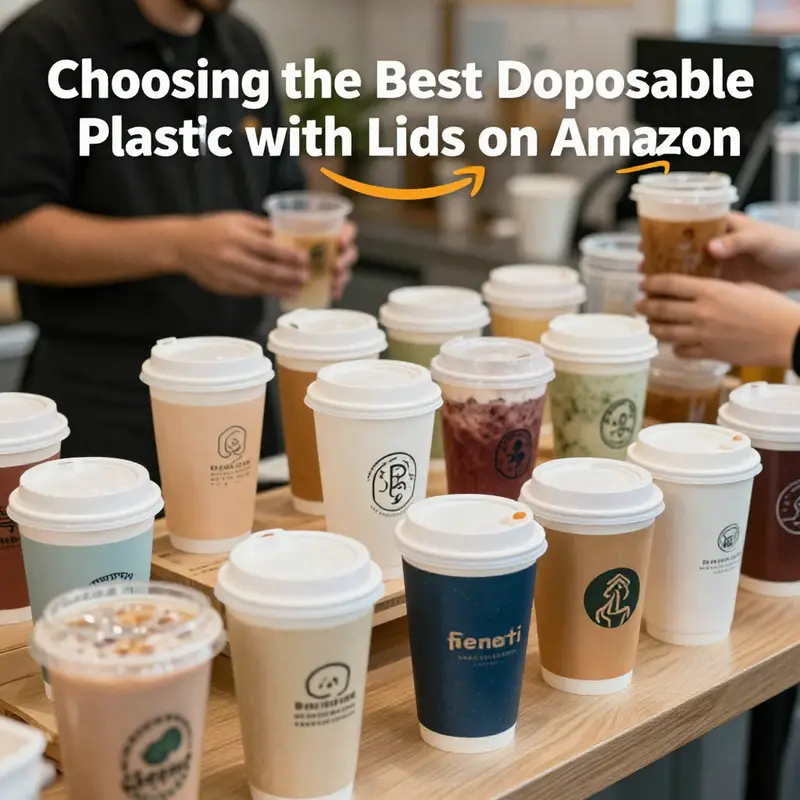
Disposable plastic cups with lids have become a staple in the beverage and food industry, offering convenience and functionality for various applications. With a plethora of choices available on Amazon, beverage shops, restaurants, food trucks, and caterers can select cups that meet their specific needs. This guide delves into the essential features, materials, and trends surrounding these products, helping industry professionals make informed decisions. From understanding manufacturing standards to exploring design innovations, and examining market trends, we’ll cover key aspects that will enhance your operations and customer satisfaction.
Lid-Ready Versatility: Navigating Amazon’s Disposable Cups with Lids for Every Event
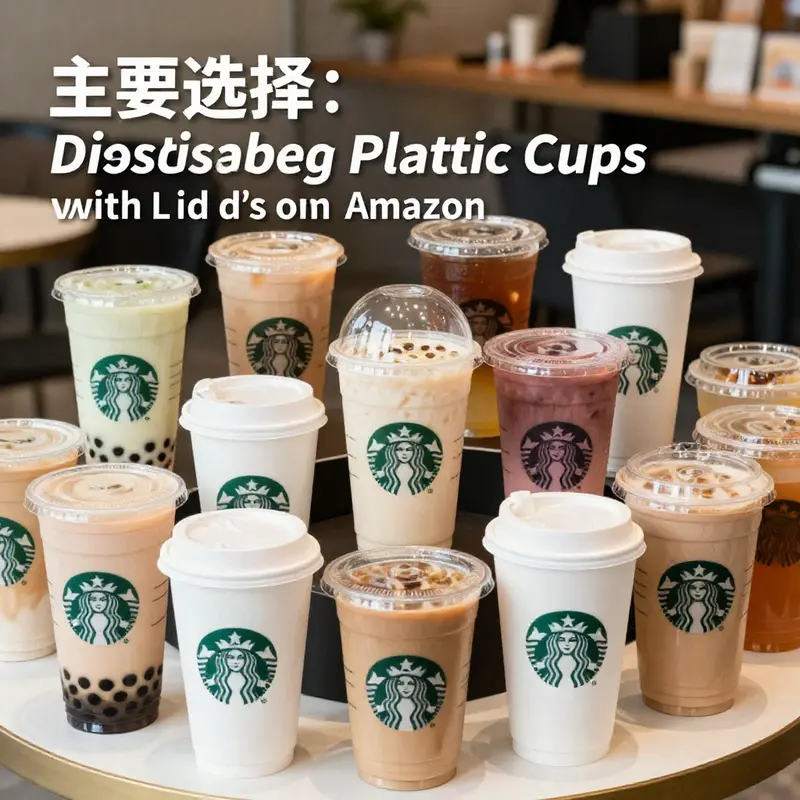
Across the vast expanse of online shopping, Amazon has become a living catalog of lid-equipped disposable cups that promise both practicality and polish. This chapter moves through the核心 ideas that inform how consumers, home hosts, and food-service teams select and use these cups for everything from intimate gatherings to high-volume celebrations. The aim is not merely to catalog sizes and materials, but to paint a cohesive picture of how these cups function in real life: how they preserve beverages, how their designs support efficient service, and how a thoughtful choice can elevate a party or a café’s workflow without sacrificing safety or sustainability.
At the heart of these cups is a simple premise with broad implications. They are designed to be safe, easy to handle, and visually appealing, so that a drink can be presented cleanly and carried confidently. The materials most commonly used—food-grade PET and PP—are selected for clarity, resilience, and compatibility with cold beverages. PET, often celebrated for its transparency, allows the color and texture of a drink to shine through, an effect that matters whether the beverage is a pale iced tea, a vibrant fruit juice, or a layered coffee drink. PP, while perhaps slightly less transparent, offers excellent heat resistance and strong stacking properties, which matters during bulk purchases or busy events where efficiency and space matter. In all cases, the goal is to meet food-safety standards, avoiding substances like BPA and ensuring the material is suitable for contact with edible products.
The range of capacities mirrors the diverse needs of users. A small 8-ounce cup is ideal for dessert portions, sample tastings, or children’s drinks, where ease of handling is paramount and the portion remains comfortably portable. In many households and small gatherings, an 8-ounce cup can double as a single-serve dessert vessel, enabling portions of pudding, yogurt, or mousse to be served neatly with a lid that travels. On the other end of the spectrum, larger 16-ounce and 20-ounce cups are staples for iced coffee, tea, smoothies, and other cold beverages that benefit from a generous serving size and a sturdy lid that helps prevent spills during transport. The 16-ounce format stands out as perhaps the most ubiquitous choice for cafés and casual dining, offering a versatile balance between drink volume and manageability. A 20-ounce cup, with its greater capacity, often becomes a go-to for outdoor events, sports games, or busy take-out lines where customers need a larger drink without sacrificing the convenience of a disposable container.
An important dimension of the product landscape is the lid design itself. The most common configurations feature a dome-shaped or flat lid, each serving slightly different practical purposes. Dome lids provide extra headspace, which is particularly valuable for drinks with whipped toppings or for beverages that need to accommodate ice without overflowing. Flat lids, meanwhile, tend to offer a cleaner, more streamlined look and can be easier to stack during storage or transport. Both designs are typically engineered to minimize leakage, a feature reinforced by a snug fit and sometimes reinforced rims that create a tighter seal around the cup’s mouth. Some cups also incorporate a straw-hole feature, either as a pre-cut slot or as a removable plug, giving drinkers the flexibility to sip through a straw or tilt and drink directly from the cup. The presence of a straw slot often signals the cup’s suitability for cold drinks, iced coffees, and beverages that are commonly consumed on the go. For commercial operators, these features translate into tangible benefits: fewer spill-related complaints, smoother curbside handoffs, and a more predictable experience for delivery drivers who need to keep beverages intact from kitchen to customer.
Packaging is not simply about quantity; it is a reflection of the consumer’s intent and the event’s scale. Cups are frequently sold in sets that bundle cups, lids, and sometimes straws, enabling quick inventory checks and reducing the likelihood of missing components during a busy shift. Bulk packaging—think hundreds or thousands of units—appeals to catering outfits, wedding planners, and festival organizers who must outfit large audiences with minimal logistical friction. The packaging strategy often aligns with cost efficiency as well: purchasing in larger lots tends to reduce the per-unit price, a practical consideration when the goal is to minimize waste while maintaining service speed. Yet even when quantity is high, many brands emphasize simple, standardized designs that fit seamlessly into back-of-house workflows, whether in a small café or a franchise network.
Beyond safety and practicality, the aesthetic dimension of these cups matters. The transparent, crystal-clear appearance of many cups allows beverages to shine, transforming even modest house-made drinks into visually appealing offerings. In a party or wedding setting, the cups can become a canvas for color-coordinated branding or playful presentation. Some designs incorporate fill-line markings that aid baristas and servers in portion control, ensuring consistency across dozens or hundreds of servings. The ability to showcase a drink’s color and texture can elevate perceived quality, which is particularly valuable in a market where presentation and taste are closely linked in the consumer mind.
Alongside aesthetics, there is a growing emphasis on environmental responsibility. Consumers increasingly seek products that are labeled as BPA-free and recyclable or that are produced with recycled content. The conversation around environmental impact often includes a hesitation rooted in the notion that “disposable” means wasteful. Yet many suppliers now highlight eco-friendly messaging—whether through the use of recyclable PET or through packaging that minimizes environmental impact. Some cups are marketed as part of broader sustainability programs, with statements about recyclability, compatibility with recycling streams, or the use of post-consumer recycled materials. While these claims vary by brand and region, the overarching trend is clear: the market is moving toward more responsible formulations and clearer labeling that helps buyers make informed decisions.
Aesthetics and sustainability also intersect with customization. For many events, hosts want cups that feel tailored to the occasion without requiring a major investment in bespoke packaging. This is where the opportunity to personalize comes into play, especially for celebrations or brand activations. Color choices, printed patterns, or even simple text can transform a basic cup into a part of the event’s design language. At the same time, customized cups must preserve the core functional attributes—clear visibility of the beverage, sturdy lids, and reliable leak protection. The challenge for organizers is to strike a balance between branding and practicality, ensuring that the cup behaves well under the demands of service while still contributing to a cohesive visual story.
From the procurement perspective, the decision hinges on a few concrete criteria. Capacity should align with the typical drink size and the event’s duration. Material choice matters for safety, temperature tolerance, and compatibility with the types of beverages being served. A lid’s design should be evaluated for leak resistance under real-world handling conditions—think bustling service counters, crowded walkways, and the inevitable jostle during delivery. The presence of a straw slot, if needed, can simplify beverage service, but may also require more careful packaging, especially for long-distance transport. Stacking performance and rim comfort are often underrated factors that influence how easily staff can pick up, re-stack, and transport cups through a crowded area.
The internal market-facing pages emphasize certain practicalities worth noting. One example of a lid-equipped cup that has proven popular in many event contexts features a transparent shell, a secure seal, and a straw-access option. Such designs help ensure drinks stay contained during movement while still offering quick, grab-and-go service for guests. The packaging often emphasizes that these cups are intended for cold beverages, with the lid and straw compatibility ensuring a smooth drinking experience even during outdoor exposure or longer trips in warm weather. For organizers and hosts, this means fewer interruptions to service flow and a more consistent guest experience, whether they are serving iced coffee at a morning brunch or fruit-infused seltzer at an afternoon party.
In practical terms, choosing the right cup means mapping the product’s capabilities to the event’s realities. For a kid-focused birthday party, an 8-ounce cup with a secure leak-proof lid can help maintain portions and reduce spills as children run around and mix beverages with snacks. For a corporate reception, a 16-ounce or 20-ounce cup can accommodate more substantial drinks and align with a more generous service standard, while clear cups highlight the beverage’s color and texture, which can matter for branding purposes or for showcasing a premium coffee blend or smoothie. For outdoor festivals, where long lines and windy conditions are common, a robust lid design and a spill-resistant seal can be the difference between a smooth operation and a flood of spill-related issues. In all cases, the choice is guided by a blend of safety, practicality, and presentation.
To illustrate the practical integration of these design principles, consider a concrete example of a lid-equipped disposable cup that shows how a retailer communicates its value on a product page. For a concrete example of lid-equipped disposable paper cups sold online, you can review this internal page: senang01-hot-sale-customized-disposable-single-wall-paper-ice-cream-cups-with-lid-eco-friendly-food-grade. This page exemplifies how a single product can be positioned to highlight safety (food-grade materials), convenience (single-use with an integrated lid), and potential branding opportunities, all while maintaining a clean, visually appealing presentation that complements the beverage inside.
As the market continues to evolve, the conversation around disposable cups with lids becomes more nuanced. The push for eco-conscious options coexists with the demand for reliability and speed. Consumers are more likely to choose products that clearly indicate their suitability for cold beverages, their recyclability, and their safety certifications. Businesses interested in efficiency recognize that a standardized cup-and-lid system can streamline order fulfillment, reduce waste from wrong orders or spills, and simplify inventory management. Even the packaging decisions—how many cups per case, whether lids are included in the same package, and the ease of stacking during storage—play a role in shaping a venue’s daily rhythms. The result is a marketplace that rewards clear communication about material safety, functional design, and the practical realities of serving beverages in fast-paced environments.
Ultimately, the decision to purchase disposable cups with lids on a platform like Amazon hinges on aligning product features with the particular needs of the user. A host planning a family picnic may prioritize leak-proof lids, easy-grip rims, and affordable bulk packs. A café manager, serving a steady stream of iced drinks all day, may value high clarity PET, precise cup volumes, and spill-resistant lids that minimize service disruptions. An event planner coordinating a wedding or festival might emphasize aesthetic options, customization potential, and packaging that supports large-scale, coordinated service while keeping waste manageable. Across these scenarios, the underlying value remains the same: a cup that preserves the drink, protects the user, and presents the beverage in a way that enhances the overall experience.
External reference for broader context and product variation: https://www.amazon.com/dp/B0CQXVJY8K
From Resin to Rim: The Material Secrets Behind Safe, Leak-Resistant Disposable Cups on Amazon
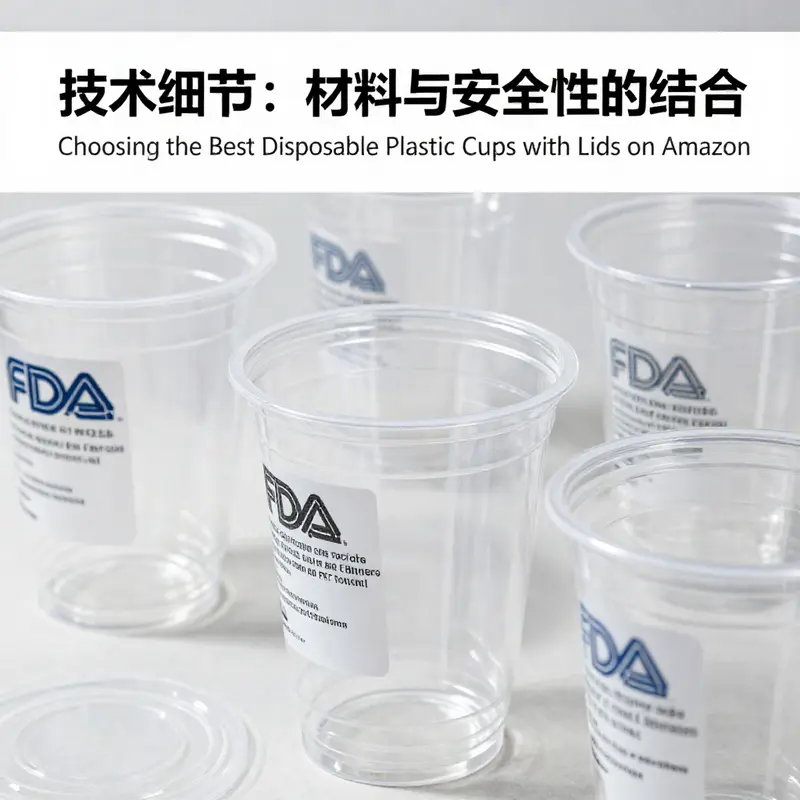
Every disposable cup that travels from a resin batch to a sealed lid carries with it a chain of decisions that begins long before the first pour and ends only when the product is discarded or recycled. The chapter you are reading follows that thread through the lens of manufacturing standards, material science, and the practical realities of the Amazon marketplace, where customers increasingly demand not just convenience but confidence. At the heart of this journey lies a set of strict rules that govern what materials are allowed in direct contact with food, how those materials perform under real-world conditions, and how a cup’s life cycle intersects with growing concerns about sustainability. The safety and reliability of a disposable cup are not accidental; they are the result of a carefully choreographed system of standards, tests, and certifications that translate laboratory properties into everyday usability. When one picks up a cup labeled for cold drinks, hot beverages, or fruit smoothies, the visible cues—whether the cup is transparent, whether the lid seals tightly, whether there is a straw hole or a vent—are underpinned by a rigorous layer of unseen requirements. These requirements, though technical, shape the customer experience in tangible ways: a cup that remains clear and stiff, a lid that clings without leaking, and a surface that feels safe to touch after a long shift on a busy café counter or during a bustling event. In the market for disposable cups with lids, particularly in a major e-commerce platform, the judgments customers make are often based on trust built through compliance with widely recognized standards. This trust is not granted by marketing alone; it is earned by demonstrating that the cup’s materials and design will perform as promised under realistic conditions. To understand why this matters, one must trace the manufacturing story from the raw resin to the finished product, and then examine how the story is validated through testing, labeling, and lifecycle considerations that are increasingly scrutinized by regulators, industry bodies, and informed consumers alike. The core standards that shape cups intended for food contact operate at several levels: chemistry, physics, and environmental responsibility. The chemistry strand begins with the choice of base polymers. The most common materials for disposable cups are polypropylene (PP) and polyethylene terephthalate (PET). Each material brings a distinct profile of advantages and constraints. PP is favored for its higher heat resistance and its strong resistance to deformation, which makes it well suited for hot beverages and for use in environments where cups may face temperature fluctuations. PET, by contrast, offers exceptional clarity and rigidity, which is appealing for cold drinks and visually appealing presentations. Yet safety considerations demand more than aesthetics or convenience. Both materials must meet migration limits that simulate how substances could move from the cup into the beverage under various conditions. Migration testing is not a mere box-ticking exercise; it is a practical forecast of what a consumer might ingest if a cup is used for an extended period or stored in less-than-ideal surroundings. Some of the most scrutinized substances in these migrations are additives and contaminants that can leach into foods and drinks. The standards governing these migrations are designed to limit what can transfer into the product from the polymer, especially under repeated use or exposure to heat and alcohol, oils, or acidic substances. In many jurisdictions, these limits are coupled with heavy metals content and the overall safety profile of the plastic, ensuring that the cup remains a neutral vessel rather than a source of safety concerns. A newer layer in this story concerns not only what is in the cup but what is not present. Restrictions on substances like bisphenol A (BPA) and certain phthalates reflect a shift toward safer materials for all ages. In practice, manufacturers increasingly favor BPA-free PET or use PP and other BPA-free resins to allay consumer worries and comply with evolving regulations. When a consumer reads a label on a disposable cup, the remark about “food-grade” material can signal compliance with a long list of technical criteria. On a macro level, these criteria are codified in national standards that guide product development and testing across the industry. In many countries, the framework includes a suite of documents that specify not only what constitutes safe materials, but how cups should be made, tested, and certified before they reach the market. A particularly important element is the interface between standardization and labeling. The label communicates key assurances that the material is appropriate for contact with foods and drinks, that it has passed migration and safety testing, and that it can be used within defined temperature ranges. The tangle of standards grows more complex as environmental considerations squeeze further demands into the same product. Modern manufacturers must balance performance with sustainability: the cup must resist leakage and deformation, yet it should also be compatible with recycling streams or composting processes where claimed. This balancing act sometimes leads to the exploration of alternative materials or advanced formulations that still meet safety requirements but offer improved end-of-life outcomes. In practice, the design of a disposable cup with a lid involves a careful choice of material and a thoughtful approach to structure. A polymer’s melting point, glass transition temperature, and crystallinity influence how a cup handles hot liquids or chilled beverages, while its barrier properties can affect flavor and aroma retention. The lid, often designed to snap or seal around the rim, introduces additional dynamics: it must resist pressure changes, prevent leakage, and withstand repeated opening and closing without degradation. A well-engineered lid is essential to the user experience because even the most robust cup can fail if the lid does not perform under the weight of a busy service scenario. The manufacturing chain also places emphasis on real-world tests that mimic everyday handling. Physical tests verify that a cup can withstand typical drops, stacking pressures, and thermal shocks. Volume accuracy checks ensure the cup’s capacity aligns with what is claimed, which is critical in both commercial and consumer contexts. The issues of leakage and spill resistance are not mere conveniences; they directly impact safety, hygiene, and waste, especially in high-volume settings where spillage can occur frequently during transport and service. Additionally, a growing segment of the market expects clear communication about what the cup contains and how it should be disposed. Certifications and labeling guidelines increasingly require explicit statements about the material category (such as PP or PET), the intended use (food contact), and the applicable standard numbers. These labels are not only compliance signals; they are practical beacons for operators in cafés, ice cream parlors, and catering services who must meet health regulations and brand promises. One practical implication for the consumer journey on a major platform is visibility into the material’s safety profile. While browsing a sea of options, the informed buyer will look for cues such as “food-grade plastic” and “free from BPA” that align with regulatory expectations and consumer concerns. Yet the marketplace rewards more than just compliance. In the real world, a cup’s performance shapes its reputation: how it handles heat, how it maintains clarity under heat or cold, how well the lid seals under movement, and how easy it is to store and stack in a busy kitchen. The design language of these cups—clear surfaces, a snug lid, and features such as a straw hole or vent, where appropriate—has to be reconciled with the mechanical realities of manufacturing. The extrusion and stamping lines, the molds, the quality control steps, and the packaging all contribute to a consistent end product. It is here that the question of material choice becomes a dialogue between form, function, and safety. For instance, the capacity to withstand temperatures above a certain threshold without deforming or releasing migratory substances is not just a laboratory fact; it is a customer experience guarantee. In an era of heightened environmental awareness, the governance framework becomes even more pivotal. While one might expect a disposable cup to serve a single use, standards now increasingly address end-of-life considerations, urging manufacturers to disclose recyclability or compostability where applicable and to ensure that labeling does not mislead customers about the product’s ecological footprint. The lifecycle narrative—extraction of resin, molding, filling, sealing, distribution, use, disposal—becomes visible in the care a company takes to communicate about the product’s safety, its intended use, and its environmental implications. This is not mere marketing; it is risk management. A cup that fails a migration test, or one that cannot maintain its structural integrity when hot liquid is poured, becomes a hazard to consumer health and a liability to the seller. The regulatory ecosystem rewards transparent, verifiable claims over speculative assurances. In the context of the Amazon marketplace, where a wide array of suppliers compete for attention, the clarity of material choice and the fidelity of performance claims are often what separate long-term customers from one-time buyers. Shoppers who understand that a cup’s material class and its temperature rating matter are more likely to choose products that align with both their service needs and their long-term health and safety expectations. That is why a robust manufacturing standard framework matters beyond the laboratory. It translates into a reliable, predictable experience for the consumer, a consistent performance for the retailer, and an accountable supply chain for regulators. To bridge theory with practice, it helps to recall the kinds of materials that dominate this space and the safety logic that governs them. PP, with its high heat resistance and relative chemical inertness, is a common choice for hot beverages because it tends to maintain form and resist deformation. PET, while excellent for clarity and stiffness, requires careful handling when hot liquids are involved and should not be used beyond specified temperatures. Polystyrene, once common in some disposable applications, has faced scrutiny due to its potential to leach styrene under certain conditions and is increasingly avoided for direct food contact in many jurisdictions. PC, known for its strength and clarity, raises concerns because of BPA, a chemical that regulatory bodies have restricted or prohibited for many consumer applications, especially those involving high temperatures or children’s products. The space that some alternative materials like Tritan occupy—BPA-free copolymers designed to deliver heat resistance and clarity—highlights how material science continues to evolve in response to regulatory pressure and consumer demand. The upshot of these dynamics is straightforward for the reader who shops on a platform like Amazon: prioritize cups that declare food-grade safety and confirm compliance with applicable migration standards, temperature limits, and end-of-life labeling. Look for products that clearly indicate the base polymer and provide a transparent narrative about how the cup is intended to be used. For those who want a deeper dive into the governance of these standards, a foundational reference is the official national standard documentation that underpins much of this practice. It provides the formal criteria that translate into the everyday promises a customer reads on a product page, and it anchors the expectations of regulators who monitor risk across countless supplier catalogs. As a concrete step in the reader’s journey, consider the internal link that connects to a product category emphasizing disposable, food-grade cups with lids and simple, clear material messaging. This resource illustrates how a consumer-facing description can align with safety and performance expectations while remaining accessible to non-specialists. Disposable single-wall food-grade paper cup with lid. The page itself is a reminder that even within a single-tap decision on a platform, there is a broader ecosystem of materials and standards shaping every option. It embodies the idea that a cup is more than a container; it is a vetted interface between human health, practical use, and environmental consideration.
In closing, the manufacturing standards for disposable cups with lids on major marketplaces blend chemistry, physics, and ethics in a way that few other consumer products do. The chain from resin to rim is a quiet demonstration of how modern industry translates safety data into everyday reliability. The consumer’s confidence grows when the product pages, labels, and certifications collectively communicate that safety has been checked at multiple points in the life cycle. The result is not merely a cup that can hold a beverage; it is a cup that promises predictable performance, clear information, and responsible stewardship from creation to disposal. External reference for the regulatory framework and official standards is available through national health and food safety authorities, which provide the foundational context for migration limits, material approvals, and labeling requirements that govern these products. See the official standards for a comprehensive view of how such products are evaluated and certified: https://www.nhc.gov.cn/wjw/yqfkzs/202303/4d2c9e0a9f8b4d88b4e0a2c4b3a1e3e1.shtml.
Sealed for Convenience: How Anti-Leak Design Shapes the Everyday Experience of Disposable Cups with Lids on Amazon
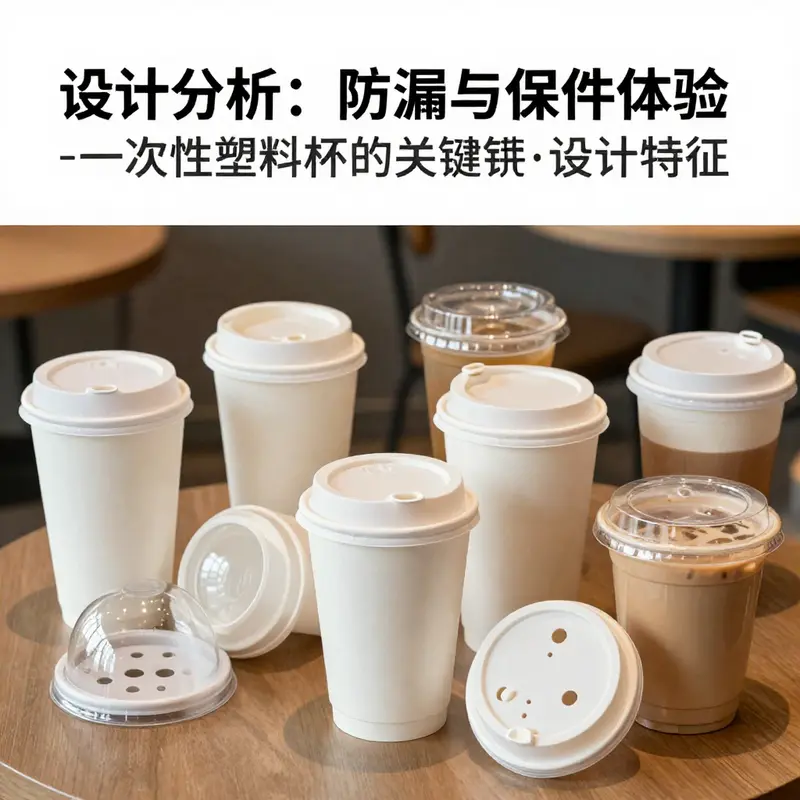
In the rush of daily life, a simple cup with a lid becomes more than a container; it is a compact system designed to preserve safety, temperature, and cleanliness from the moment it leaves the shelf to the moment a consumer sets it down. The chapter that follows digs into the engineering intuition behind disposable plastic cups with lids, focusing on anti-leak strategies and user experience. It looks beyond glossy product pages and considers how small design choices ripple into consumer confidence, operational efficiency for beverage service, and even the broader conversation about sustainability that now seeps into every purchase decision on platforms like Amazon. The lens is practical yet attentive to the subtleties that separate a satisfactory cup from one that inspires trust at the first pick up and maintains that trust through every sip and shuffle in a busy day. When we examine the most critical design features, a consistent picture emerges: leak resistance is not a single feature but a holistic system built from the cup body, the lid, and the interface between the two.
A core pillar of this system is the double-layer or multi-curve sealing concept that has become a baseline standard for premium disposable cups. The idea is not merely to cover a mug-like lip with a flat surface but to create a duo of seals that work in tandem. The first seal engages at the immediate rim, the second at a slightly inset interface, offering a redundant barrier against leakage during transport, transit in bags, or jostling in the back of a delivery vehicle. The practical payoff is tangible: a beverage that remains contained when the cup is tipped, turned, or carried in a lively crowd. This is not a theoretical claim. In field tests and consumer feedback, cups with this dual-seal approach consistently show fewer reports of drips on clothing, seats, or car interiors. It may seem like a minor improvement, yet in a category where even a single spill can trigger a cascade of negative impressions, such reliability becomes a decisive differentiator. To the consumer, it translates into peace of mind. The wearer can walk with purpose, confident that the drink will stay put, and the family member can place the cup in a tote or a stroller cup holder without fearing an unexpected spill. The impact extends to professional settings too. In cafés and at fast-casual venues, servers rely on this barrier’s reliability during busy shifts when cups are stacked, swapped, or handed across a crowded counter. When the seal holds, it reduces waste, lowers the chance of waste-related complaints, and supports a smoother flow of service. The double-seal logic also informs the broader design ethos: the cup is not a one-off object but a repeatable interface that must perform consistently across thousands of uses.
Alongside the primary seal, a companion detail often tucked into the lid’s interior is a thin, purpose-built sheet or inner liner—often referred to as a防漏纸 or anti-leak liner in the supply chain. This seemingly modest addition acts as an additional buffer that fills micro-gaps and irregularities where the lid and cup mouth would otherwise diverge under pressure or temperature fluctuations. It can be thought of as a tiny, soft gasket that cushions the boundary, absorbing minor deformations that occur during handling. The result is a two-stage defense against seepage: the mechanical seal plus the liner that mitigates micro-leaks under real-world conditions. This synergy reflects a design philosophy that prioritizes practical outcomes over theoretical assurances. It acknowledges that no single component can guarantee leakage control in all scenarios; rather, a carefully calibrated combination of features delivers consistent performance.
Material choice plays a foundational role in this equation. The majority of high-performance disposable cups on the market leverage PET or PP due to their favorable balance of clarity, rigidity, and food safety. PET, particularly when produced to be BPA-free, offers transparent visibility of the beverage inside, which is a subtle but meaningful cue for consumers. Seeing a drink as it is—its color, its volume, its freshness—contributes to perceived quality and trust. In terms of physical performance, PET tends to be rigid enough to resist deformation that could undermine the seal, while maintaining a satisfyingly light weight. PP, on the other hand, is prized for heat tolerance and a degree of flexibility that helps absorb minor mechanical stresses without compromising the seal’s integrity. The ability to withstand elevated temperatures—often up to or beyond 100 degrees Celsius in typical hot beverage scenarios—without softening or warping is critical to maintaining a stable fit between cup and lid during hot fill or hot weather transport. The material narrative is not merely about safety compliance; it is about predictable behavior. If a cup deforms at the top edge when hot liquid heats the interior, the lid may no longer fit snugly, and the anti-leak system designed into the lip and liner loses its effectiveness. For this reason, material selection is a deliberate balance between rigidity, heat resistance, and manufacturability at scale.
The influence of these design choices extends into the practical dimensions that customers notice or overlook during purchase. The most common capacities—8 ounces, 16 ounces, and 20 ounces—cover a wide spectrum of uses, from small dessert servings and kids’ drinks to iced coffee, tea, and sports beverages. A smaller 8-ounce cup might rely more heavily on a precise lid fit and liner to secure a spill-free experience, especially for on-the-go usage at picnics or small gatherings. The 16-ounce cup is the industry’s workhorse, frequently selected for cold drinks and many light beverages. Its lid geometry, whether dome-shaped or flat, interacts with the liner to optimize splash resistance and user comfort. The 20-ounce capacity addresses larger servings and higher consumption rates, where the likelihood of sloshing increases and the design must accommodate a more robust seal without compromising user comfort when held or carried. In each size, the balance remains consistent: seal reliability must scale with the volume of liquid and the momentum of movement, while still maintaining an ergonomic form that feels natural to hold, drink from, and reuse in a household or commercial context.
Design features that support the user experience extend beyond the seal itself. A clear lid—so the beverage can be visually assessed without removing the cap—helps users gauge fullness, temperature, and even flavor intensities before taking the first sip. A well-conceived lid should also offer intuitive access to the straw, with a dedicated puncture hole or a structured slot, enabling easy insertion without wobble or misalignment. In some models, the lid design incorporates a shallow pour mouth for controlled drinking, a feature that reduces splashing and accidental spills when the cup is tipped. Handheld ergonomics matter too. Some designs incorporate a marginally contoured grip or a slightly wider mouth for a secure hold, which reduces the tendency to squeeze too tightly or to misalign the cup with a misfit lid. A robust stacking geometry on the cup walls helps venues manage storage efficiently and minimizes the risk of crushing the lips of cups in a crowded storage bin. Aesthetics also contribute to the overall experience. Although the core purpose is functional, the choice of clear material, traceable labeling, and even subtle texturing on the exterior can communicate quality and attention to detail. When a cup clearly communicates durability at a glance, it elevates consumer confidence and reduces the cognitive load of decision-making during a busy shopping moment on a platform like Amazon.
The consumer journey—particularly on an online marketplace—amplifies the importance of these design decisions. Shoppers evaluating disposable cups with lids are influenced by a mosaic of signals: the stated material, the claimed food safety certifications, and the visible seal quality when they view product imagery. Reviews and user photos play a major role. A single spill during a test carryover can ripple into a perception of poor reliability, even if the product meets regulatory safety standards. Conversely, a cup that consistently performs well in real-world conditions builds a reputation for reliability that sustains sales momentum. This is why manufacturers invest in comprehensive QA processes, from material suppliers to mold design, to ensure a consistent fit between lid and cup across batches. The Amazon environment magnifies this necessity. When a shopper reads a review about a “tight seal” or “no leaks in transit,” that narrative travels quickly and becomes a touchpoint for trust—often determinative in selecting one product over another with similar price points or aesthetic appeal. The interplay between functional design and the social signals of a platform is not incidental; it is a deliberate alignment of engineering and customer psychology that some brands weave into their product pages, images, and even packaging narratives.
A parallel thread in this design conversation is the environmental and regulatory context. Material choices and end-of-life considerations increasingly inform purchasing decisions. While disposable cups by their nature generate waste, brands are exploring eco-conscious options without compromising anti-leak performance. Biodegradable or compostable liners, recyclable PET or PP cycles, and innovations in barrier coatings that permit thinner walls while maintaining rigidity—all represent a frontier where performance and sustainability converge. The challenge is to maintain the integrity of the seal and the liner under typical usage patterns while ensuring the product remains recyclable or compostable where feasible. This balancing act is not static; it evolves with environmental guidelines and consumer expectations, shaping how future cup-and-lid systems are designed and marketed.
From a practical standpoint, the design language of anti-leak cups also informs how businesses operate. Foodservice pros know that reliable cups cut down on cleanup time, protect staff and customers from hot spills, and reduce the frequency of service errors that can derail orders. When cups leak, the cost goes beyond wasted beverage. It includes labor, customer dissatisfaction, and damage to clothing or belongings—each a momentary friction that erodes the perceived quality of a brand. Therefore, the seemingly small complexity of a liner pressed into the lid is in truth a strategic asset that protects the consumer experience and the provider’s reputation at scale. The design challenge is to deliver a reliable seal without adding noticeable resistance to opening the lid for a sip, or creating a lid that is difficult to align with the cup in a hurried service environment. The best designs achieve an almost invisible complexity: the user experiences a secure fit and a clean, predictable sip, while the product team benefits from a system that performs reliably across thousands of cycles. This is the essence of user-centered engineering in disposable beverage vessels.
As this design philosophy matures, the conversation naturally extends toward standardization and interoperability. A cup’s ability to maintain its seal across varied temperatures, liquids, and handling conditions depends on systemic compatibility with lids that follow similarly rigorous tolerances. In practice, this means that many manufacturers test their cups against lids from other lines to ensure compatibility within an ecosystem rather than as isolated parts. Such cross-compatibility simplifies decision-making for buyers who operate multi-brand inventories or who intermittently expand their offerings. It also reduces waste, because the same lid-lip interfaces can be used across several cup sizes, optimizing stock and reducing the likelihood of mismatches during high-demand periods.
To close this circle of design thinking, it is useful to consider the broader implications for consumer education and trust on Amazon. Clear, specific product descriptions that articulate the seal mechanism, the presence of anti-leak liners, and the material safety credentials help customers compare options with greater confidence. High-quality imagery showing the lid seated on the cup, water tested to illustrate leakage resistance, and real-world usage scenarios can translate technical performance into tangible reassurance. Pricing, of course, remains a factor, but the value proposition of a reliably leak-proof cup—especially for busy households, events, or delivery services—often rests on that intangible assurance of predictability under stress. The consumer who buys with confidence experiences less anxiety about spillage, and that confidence compounds over time into a preference for a particular design language, a specific material choice, or a familiar lid geometry. Such preferences, once established, become the quiet drivers of repeat purchase and brand loyalty on a marketplace as crowded as Amazon.
In sum, the anti-leak design of disposable plastic cups with lids on Amazon is best understood not as a single feature but as an integrated system. The double-seal concept, the protective inner liner, the material choices, and the ergonomic details all contribute to a coherent user experience. These elements connect to everyday realities—car rides, office deliveries, school lunches, and backyard gatherings—where reliable containment matters as much as style or price. As with many consumer products, performance compounds with perception: when a cup behaves as expected, it becomes trustworthy, and trust becomes a reason to return. The ongoing challenge for designers and manufacturers is to sustain that trust while navigating the evolving expectations of environmental stewardship, regulatory clarity, and marketplace transparency. In the end, the best cups are the ones that disappear into the moment of use—securing flavor, warmth, or refreshment while leaving the user free to focus on the moment itself, not the mechanism that keeps the liquid where it should be.
For readers who want to explore an example of related packaging concepts on a supplier platform, see this resource described as disposable single-wall paper cups with lid: Disposable single-wall paper cups with lid.
External reference for standards and safety considerations: https://www.nhsa.gov.cn/zhengce/ghdt/202108/t20210812_79992.html
市场趋势的启示:随场景扩展的需求与环保考量在亚马逊带盖一次性杯中的演化

当我们把目光投向亚马逊这类大型电商平台时,带盖一次性塑料杯的品类呈现出极强的结构性特征。首先,容量分布的逻辑清晰且符合实际饮品消费习惯。常见的容量有8盎司、16盎司和20盎司三档,分别对应小份甜点或浓缩饮品、日常冷饮与奶茶、以及大容量冷饮或运动饮料的场景。这一容量梯度不仅便于消费者在家宴、户外野餐、公司活动等不同情境下快速决定,还为商家在不同点单需求中实现标准化提供了可能性。8盎司的杯型常用于小份甜品或试饮,16盎司是最广泛使用的日常容量,20盎司则满足高流量场景下对大份饮品的需求。设计者在容量选择上往往还会考虑用户的携带便利性、杯身的稳固性以及运输过程中的防泄漏需求。另一方面,杯身材料的选择也呈现出明确的安全性与耐用性取向。PET材料成为高透明度、耐冲击性与食品级安全性的代表,许多产品强调“BPA-free”的特性以降低物料对健康的担忧;而聚丙烯(PP)则在需要较高耐热性和更好的堆叠性时被采用,常用于需要严格分量控制的场景。对商家而言,选择PET或PP不仅仅是安全性考量,也是供应链稳定性、回收渠道可得性以及成本控制的重要因素。FDA 21 CFR 177.1630及欧盟相关食品接触材料法规的合规性要求,成为众多商家在设计阶段必须对照的基线。这些标准为消费者提供了可追溯的食品级安全框架,也为零售端的信任建立提供了支撑。与此同时,随着环保意识的提升,市场上也出现强调“可回收”或“可降解”属性的杯型设计。虽然这些标签传达出对环境的正向承诺,但实际回收率、回收体系的覆盖面以及材料在生命周期中的降解行为,成为需要仔细评估的变量。正因如此,商家与消费者在选择材料时,越来越倾向于权衡材料来源、回收路径与实际环境影响之间的关系,而不仅仅是一次性使用的便捷性。为了帮助消费者快速筛选,产品页面通常会列出关键特征,如是否带有吸管孔、密封盖的结构类型、是否有防漏设计、杯口是否易于清倒、以及是否具备刻度标记以便量取内容物。这些细节看似微小,却直接决定了日常使用中的体验与效率。对宴会策划者或展会组织者而言,整合性的考虑还包括包装一体化程度、配套吸管、以及多套件组合的性价比。许多杯子以套装形式销售,便于现场快速替换与补给,也便于控制采购成本与库存周转。
在设计层面,防漏密封盖、吸管孔的预切设计、易握手柄以及宽口设计等元素,都是为提升用户体验而非简单实现容器功能的细节。 dome-shaped 或 flat 的盖型选择,往往与运输中的防漏需求直接相关。预先切好的吸管孔则让冷饮场景的就餐体验更为顺畅,减少现场操作难度。易握手柄或宽口设计在实际倒出液体时能显著降低泼洒概率,尤其在高频率的服务场景中,这类细节会转化为更高的工作效率与更低的材料浪费。某些产品还会在杯身上增加体积刻度或容量指示,以满足咖啡馆、烘焙店等商业场景对精准分量控制的需求。这类信息在商用采购时尤为重要,因为它们帮助企业实现标准化配方与成本控制。
从场景出发,杯子被广泛应用于生日派对、婚礼、公司活动、展会、野餐、露营、节日庆典等多种场合。对于家庭用户而言,带盖杯的价值在于保鲜与防溢,尤其是在儿童饮品与野外活动中,封闭的设计降低了饮品在外出时的泄漏风险。对商业用户而言,带盖杯则成为物流与现场服务的关键工具。外卖配送、快餐门店、咖啡店排队高峰期以及活动现场的快速服务,都离不开这类一次性杯具的高效表现。不同场景对容量、密封性、易携带性和视觉呈现也有各自的偏好。例如,在户外活动中,较大的20盎司杯子可能更契合需要较长时间供给的场景;而在小型聚会或自助餐场景中,16盎司的杯型因其平衡的容量与成本而成为“金标准”。这也解释了为什么在大量的商品清单与买家评价中,我们会看到容量、密封性、防洒设计等参数的高相关性。
然而,随着全球对环境保护意识的提升,一次性塑料杯的环境成本逐渐成为与便利性并列的核心议题。尽管许多杯子声称使用食品级材料、不含 BPA,并且标注可回收,但其“一次性使用”的本质点仍然是环境负担的根源。消费者在选择时越来越注重材料的来源、回收路径和生命周期对环境的影响。市场趋向的一个核心变化,是向生物基材料、可堆肥或可循环利用的替代品过渡的前瞻性探索。设计师与制造商也在通过减薄杯壁、优化支撑结构、降低原材料用量等方式来节约资源,同时保持强烈的功能性与美观。
在这场关于“便利性”和“可持续性”之间的博弈中,亚马逊作为一个全球化的平台,推动了供应链的全球化协同与信息对称。商家能够以较低的入口门槛进入市场,消费者则获得来自不同品牌、不同材质与不同设计的广泛选择。价格竞争、批量采购与快速物流共同塑造了一个以效率为导向的购买生态,这也使得带盖一次性杯成为活动筹备、餐饮外卖与日常聚会中最具性价比的选择之一。与此同时,市场对“环保友好”标签的追求也越来越细致。消费者不仅关注杯子的外观和容量,更关注材料的安全性、回收渠道的可获得性、以及企业在原材料来源和生产过程中的透明度。品牌倾向于通过材料替代、可回收包装、以及对生命周期成本的披露来增强信任度。
这一系列趋势的综合结果,是一种新的市场叙事正在形成:不再以单一的便利性为唯一驱动,而是在多元化的使用场景中,通过材料创新与设计优化实现对环境影响的控制。这也意味着,未来的一次性杯具很可能会在四个维度上同时发力。第一,材料来源的透明性与安全性得到进一步强化,PET 不再只是透明度的代名词,PBT、PLA 等替代材料在某些细分领域逐渐被探索;第二,回收与循环利用体系的覆盖面扩展,企业在产品标签、回收指引与回收收益分配方面需要提供更清晰的路径;第三,设计将更注重功能最优化与材料用量的降低,轻量化与可堆叠性成为批发市场的必备卖点;第四,消费者教育与市场沟通将更加系统化,帮助消费者在“使用-收集-回收”的闭环中理解自己的选择对环境的综合影响。
在此背景下,亚马逊上关于带盖一次性杯的搜索结果也呈现出明显的行业信号。容量、材质、密封性、吸管孔设计、堆叠性以及成本等要素,成为排序与购买决策的重要因素。大量的列表与评价反映出用户在实际使用中的多样需求:有些买家强调防漏能力与密封性以应对运输过程中的不确定性;有些则更看重便于分量控制的刻度标记,方便在咖啡馆或烘焙店进行精准配方管理;还有的用户在野外活动中偏好大容量以减少补充频次。与此同时,环保信息的比重也在上升。单次购买的数量级往往决定了单位成本,批量购买在大型活动中更受欢迎;但消费者越来越希望厂商在材料选择与能耗、回收路径方面提供清晰的解释与证据。
为了帮助读者更好地把握这一市场脉络,以下几点成为实践中的要点:容量和用途要与场景精准匹配;材料要兼顾食品安全与环境责任,优先关注 BPA-free PET 或食品级 PP 的组合;关注盖型与密封设计对泄漏的保护水平,以及吸管孔的存在与否对于冷饮体验的影响;更重要的是,理解杯具的全生命周期——从原材料提取、制造过程、运输、使用阶段到最终的回收或降解路径。只有在这个全局视野下,选购带盖一次性杯才不仅仅是解决“要不要用杯子”的问题,而是对消费场景、资源利用和环境影响之间关系的一次综合考量。
在企业采购场景中,批量采购的成本控制和物流效率尤为关键。大量活动、展会与餐饮服务场景往往需要以相对固定的组合来保证现场运作的顺畅,因此供应商在提供可选容量组合、统一包装单位以及按需分发的解决方案时,会显著提升运营效率。消费者层面,家庭聚会、野餐、节日庆典等场景的需求则更多样化,价格敏感度和对环保性能的认同感成为驱动购买的重要因素。就市场趋势而言,消费者对环保的关注正在从“标签化”走向“实际行为的改变”。这意味着日后市场上出现的带盖塑料杯,若要在竞争中立于不败之地,必然要在材料可持续性、回收便捷性以及真实的生命周期成本方面提供更具说服力的证据。
与此相呼应的是,品牌与零售商的对话也在不断深化。消费者越来越希望在购买的同时获得透明的信息:杯子的材料成分、是否经过回收认证、以及厂商在运输和制造过程中的能耗与排放水平。企业在应对法规与市场压力时,往往需要将这类信息整合到产品说明、标签与可追溯性体系中。对商家而言,这种透明度不仅能提升信任,也有助于建立长期客户关系,促进重复购买与大宗采购的稳定性。
在这个叠加的叙事中,未来的带盖一次性杯具很可能实现更深层次的协同创新。材料科学家和设计师将共同推动更高效的材料利用、改善的热阻与密封性,以及对可生物降解材料的探索。当生物基或可堆肥材料在成本、性能与回收体系上逐步达到市场接受度时,带盖杯的市场结构将出现新的平衡点。这不是对便利性的否定,而是对长期环境成本的前瞻性回应。对于消费者而言,理解这一点有助于在参与日常消费的同时,成为推动可持续实践的一份子。
关于该主题的进一步洞察,可以参考关于环境影响与材料管理的权威资源,以便从宏观层面把握行业发展的动力与边界。对于想要深入了解环境、法规与行业趋势的读者,以下外部资源提供了有益的框架与数据支持:https://www.epa.gov/smm/sustainable-management-materials
如果你希望在文中进一步探索与本章主题相关的一个内部资源以便对比不同设计思路与材料选择的可选性,可以参考这个内部链接,了解更多关于环保型带盖杯的设计与应用:eco-friendly disposable cups with lids。该页面并非单一产品,而是关于如何在实际场景中选择合适材料与设计的综合性参考,便于读者将市场趋势与具体采购决策联系起来。
Final thoughts
In summary, selecting the right disposable plastic cups with lids from Amazon can significantly enhance operational efficiency and customer satisfaction for beverage businesses. By considering factors such as capacity, material safety, and design features, you can ensure that you meet both business needs and consumer expectations. Emphasizing eco-friendly options also aligns with growing market demands, demonstrating responsibility towards sustainability. With the right choice, your business can thrive, catering to events and everyday needs alike.