

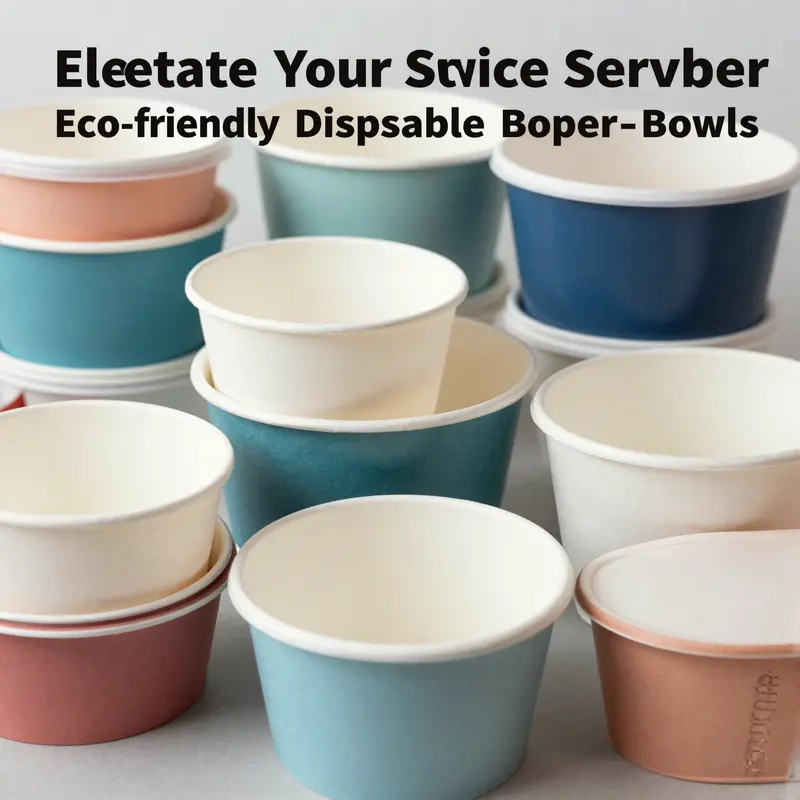
In the modern foodservice landscape, disposable paper soup bowls stand out as a versatile, eco-friendly solution for establishments ranging from bubble tea shops to catering services. Their unique composition and impressive features cater to a variety of needs, making them an indispensable product for those aiming to provide quality service with a commitment to sustainability. As we delve into the aspects of these containers, each chapter explores their composition and features, current market trends focusing on sustainability, opportunities for customization and branding, and economic considerations for sourcing. Whether you’re looking to elevate your offerings or streamline your operations, understanding disposable paper soup bowls is crucial for success.
null
null
Rising Demand, Responsible Design: The Evolving Market for Disposable Paper Soup Bowls
The market for disposable paper soup bowls is tracing a pattern familiar to anyone watching consumer packaging evolve: rapid adoption of convenience paired with a recalibrated sense of responsibility toward the environment. In kitchens, cafeterias, and street-food scenes around the world, these bowls have moved from simple receptacles to strategic packaging choices. They are no longer judged solely by how well they keep heat in or grease out; they are evaluated for life-cycle impact, recyclability, and how easily they can be integrated into branding and service models that prize speed without compromising ethics. As a result, demand is not a single line of growth but a constellation of shifts that touch material science, manufacturing logistics, consumer perception, and regulatory environments. The trajectory is clear: continued expansion through 2033, undergirded by a growing appetite for sustainable options even within budget-conscious segments of the market. In 2023, for instance, single-wall paper bowls accounted for roughly more than half of market revenue, underscoring how core formats still drive the bulk of sales while other variants press forward with their own niche advantages. The overall market size hovered around USD 1.2 billion, a figure that highlights both the scale of the take-away economy and the central role of disposable containers in everyday dining. Yet beneath the headline numbers lies a more nuanced truth: companies are competing not just on price, but on the ability to deliver a credible sustainability story alongside practical functionality. This combination matters because customers—from casual diners to enterprise buyers—are increasingly asking for proof that the packaging choices they make align with broader environmental commitments. In this context, the conversation around disposable paper soup bowls has shifted from whether to replace plastic to which paper solutions can meet stringent standards for forestry sustainability, renewable materials, and end-of-life options.
The sustainability dimension has become a core criterion across markets, particularly in regions where environmental regulations are tightening and consumer awareness is rising. A growing segment of buyers looks for FSC-certified paper, which signals responsible forestry management and governance. In addition, PLA-coated variants—where the petroleum-based polymer is replaced with a compostable alternative derived from renewable resources—are gaining traction for their potential to reduce plastic load in disposal streams. These certifications and coatings do not merely satisfy compliance; they align with a broader consumer expectation that packaging should be as considerate as the food it contains. The consequence is a market where materials, coatings, and certifications are not optional add-ons but essential differentiators. The emphasis on certified sustainability mirrors a global shift toward transparency and traceability in the supply chain, a trend that resonates with buyers across the United States, Europe, Australia, Canada, and beyond. It also aligns with the rise of circular economy models in which packaging is designed for recycling or composting, with clear pathways for end-of-life processing.
Manufacturers have responded in ways that reflect both the urgency of sustainability and the practical realities of food service. The industry is now characterized by a broader array of options, including more robust paper stocks, better printability for branding, and coatings engineered to balance heat resistance with compostability. The move toward PLA coatings, for example, addresses the need for water and grease resistance while trying to avoid compromising compostability in industrial facilities. This dual objective—maintaining performance while improving disposal outcomes—drives ongoing research and development. At the same time, producers are expanding their offerings with options that cater to different service moments. Some bowls are designed without lids for fast, cost-efficient service in attractive, high-volume environments; others come with secure lids for take-away meals, cooling during transit, or buffet-style service where moisture management is critical. The availability of kraft brown or white finishes adds another layer of choice for brand storytelling and consumer perception, enabling vendors to harmonize packaging aesthetics with the vibe of their food concepts. In practice, these evolutions translate into concrete purchasing considerations: durability for hot soups, grease resistance for a range of menu items, and the ability to print logos and messages with high fidelity. The result is a packaging ecosystem that supports both speed and storytelling, two pillars of modern take-out culture.
The geography of demand further reveals how the market is changing. Buyers across the USA, Europe, Australia, Canada, Israel, the UAE, and India are increasingly engaging with suppliers who offer rapid sample turnaround and responsive customer service. This responsiveness is not merely a nicety; it reduces the time-to-market for new concepts and allows businesses to test consumer reception to different materials, sizes, and branding approaches with confidence. In addition, the industry has learned that the smallest design choices can have outsized impacts on sustainability and performance. For instance, the thickness of the paper, the exact nature of the coating, and even the way heat migrates through the vessel can determine whether a bowl can be used for a 10-minute service window or must be retired early due to degradation. As service models evolve—no longer limited to dine-in or takeaway but increasingly embracing hybrid formats like pop-ups, meal kits, and curbside pickup—the demand for versatile, reliable, and responsibly sourced bowls grows more complex and more consequential.
Price dynamics in this sector reflect a tension between the scale advantages of mass production and the premium attached to sustainability credentials. Order quantities shape the unit economics, with large-scale purchases often delivering lower per-unit costs that appeal to large chains and food-service operators. Conversely, smaller, eco-conscious batches—whether for pilots, limited-time offers, or region-specific campaigns—tend to command higher prices, particularly when certified materials or special coatings are involved. The minimum order quantities for custom designs, frequently in the tens of thousands per design, illustrate the challenge of balancing customization with cost efficiency. Yet the investment in customization is increasingly justified by branding benefits. A bowl becomes a moving advertisement, a tiny ambassador for a restaurant’s commitment to responsibility. The printing capabilities—CMYK or Pantone colors, high smoothness for sharp graphics, and bright finishes—offer a way to elevate the dining experience and reinforce a message that aligns with consumer values. In many cases, this branding potential is as important as the functional performance of the vessel itself. The trend toward customization is thus not just about aesthetics; it is a strategic lever to differentiate in a crowded market where many operators carry similar menus and price points.
The narrative of sustainability is also complemented by practical guidelines that help buyers navigate options without sacrificing service quality. The recommendations for eco-conscious purchasing—favoring FSC-certified paper and considering PLA coatings—provide a clear framework for evaluating supplier proposals. Beyond materials, buyers should assess the end-of-life options in their local waste streams. In some regions, industrial composting facilities exist and can process PLA-coated materials, while in others, recycling remains the predominant pathway. This disparity underscores a broader issue: packaging decisions must be contextualized within local infrastructure. Suppliers who provide transparent guidance about disposal conditions, compostability certifications, and recyclability potential empower customers to make choices that truly reduce environmental impact. The market’s forward momentum will likely be shaped by how effectively brands translate sustainability claims into verifiable outcomes and how well waste-management ecosystems align with packaging innovations.
Amid these dynamics, there is a subtle but meaningful shift toward more durable and versatile form factors. The 850 ml size remains a common standard, valued for its generosity and suitability for soups and heartier meals. Yet other capacities—ranging from small bowls for starters to larger, multi-use formats—are gaining traction for set menus, catering, and events where portion control and heat retention are essential. The option to pair bowls with lids is a practical response to take-away demand, enabling safe transport and retention of temperature and moisture. In addition, the visual language of the packaging matters. A bright finish can enhance branding and customer recognition, while a smooth surface supports high-quality printing that communicates a brand’s values at a glance. Taken together, these design considerations reveal a packaging system that is as much a vessel of customer experience as it is a container for food.
For practitioners immersed in the day-to-day realities of menu design and supply-chain management, the current landscape presents both opportunities and responsibilities. On the opportunity side, there is room to experiment with coatings and materials that improve safety, performance, and end-of-life outcomes while still delivering value to customers. On the responsibility side, there is a growing expectation to verify claims with credible certifications and to align packaging choices with broader sustainability goals. The integration of FSC certification and PLA coatings is one example of how an industry can respond to this dual demand for quality and accountability. Another important dimension is supply-chain transparency: buyers increasingly want to know where materials come from, how forests are managed, and what happens to packaging after use. Suppliers who invest in traceability, third-party verification, and renewable-material pipelines position themselves for a market that prizes trust as much as performance.
The broader implications of these trends are not limited to individual orders or brand campaigns. They influence how restaurants think about waste management, how regulators shape product standards, and how supply chains optimize for efficiency without compromising environmental commitments. In a world where consumer expectations are shaped by both convenience and conscience, disposable paper soup bowls can no longer be treated as mere afterthoughts in the sourcing matrix. They are central components of a responsible dining ecosystem, capable of delivering reliable service while signaling a commitment to sustainable practices. The ongoing convergence of technological improvement, certification frameworks, and customer demand creates a fertile ground for innovation. Advances in paper science, coatings, and compostability will continue to push the envelope, offering options that satisfy heat and grease resistance while remaining compatible with increasingly stringent environmental criteria. In practice, this means more choices, better performance, and clearer pathways for end-of-life processing.
The practical takeaway for buyers, operators, and designers is straightforward. Seek packaging that balances functionality with credible sustainability credentials. Look for FSC-certified paper, evaluate coatings for compostability where available, and consider the end-of-life realities in your market. Ask suppliers to demonstrate performance under hot and demanding service conditions and request transparent information about the disposal routes their products support. Consider how branding and consumer communication can be harmonized with packaging to reinforce a story of responsibility without sacrificing user experience. And recognize that the most effective packaging solutions will emerge from collaboration across design, procurement, and operational teams—teams that understand not only costs and capabilities but also the values that today’s diners increasingly expect from the brands they patronize. When this holistic approach is adopted, disposable paper soup bowls become more than a convenience; they become a tangible expression of a restaurant or catering operation’s commitment to sustainable, responsible practice.
For those seeking concrete examples of how these trends translate into procurement decisions, a representative option in the market demonstrates the scale and flexibility now typical of the space. The option highlights the capacity to deliver a 26-ounce kraft paper soup cup with a paper lid, designed for take-away and lunch-packaging contexts. This configuration illustrates how suppliers are meeting the demand for larger portions, secure transport, and branding opportunities within a single package. It stands as a practical case of the larger trend: packaging that can be customized, standardized, and optimized for sustainable performance across diverse markets and service models. senang05-disposable-26oz-kraft-paper-soup-cup-bowl-with-paper-lid-takeaway-lunch-packing-takeout-food-packaging-bucket-bowl
Looking ahead, the future of disposable paper soup bowls will be shaped by both material science and market structure. As technology improves, coatings and fibers will offer better heat resistance, moisture control, and end-of-life performance without compromising recyclability or compostability. Regulatory developments in different regions will continue to influence material choices and labeling practices, driving more consistent standards for sustainability claims. The market is well positioned to benefit from efficiency gains in manufacturing, digital printing for branding, and enhanced logistics that reduce lead times and improve supply reliability. Ultimately, the enduring strength of this segment will be its capacity to adapt—offering packaging solutions that align with the evolving expectations of consumers, operators, and policymakers alike while maintaining the economic viability essential to a thriving global food-service ecosystem. External resources and ongoing industry analyses will help stakeholders stay abreast of the latest dynamics as they unfold across continents and through changing environmental landscapes.
External resource: For broader market dynamics and sustainability options, see the latest industry analysis on Alibaba’s global disposable soup bowl paper market trends and sustainability.
External resource link: https://www.alibaba.com/showroom/disposable-soup-bowl-paper.html
From Takeaway to Trademark: Turning Disposable Bowls into Brand Moments
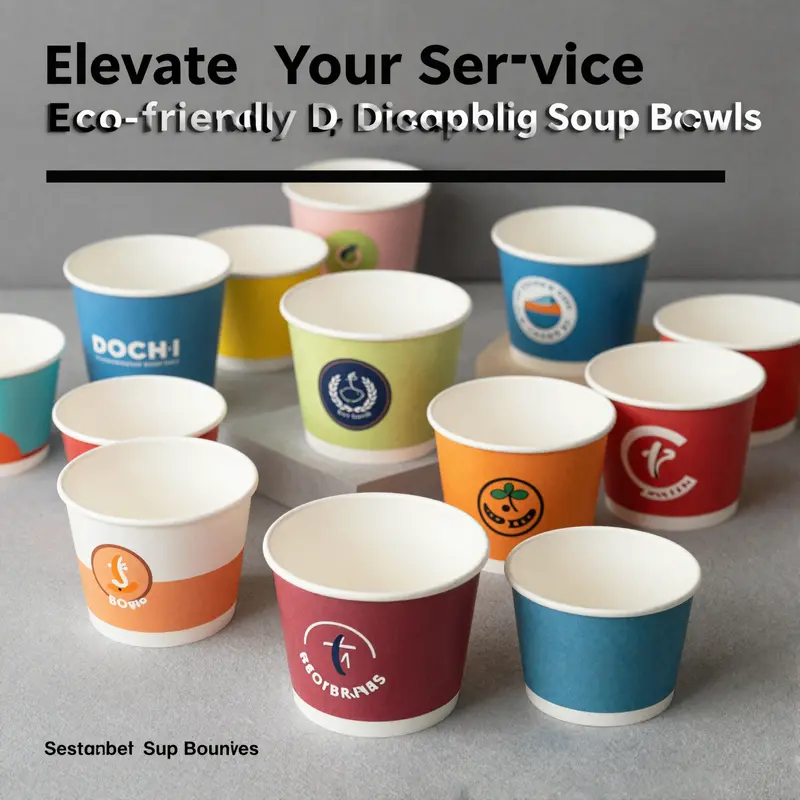
A serving vessel used to hold a simple bowl of soup can become a moving canvas for a brand’s story. When a consumer lifts a steaming cup of comfort from a table or a curbside window, the surface that touches their fingers also carries the voice of a business. In the realm of disposable paper soup bowls, customization is not a mere decorative afterthought; it is a strategic tool that fuses utility with identity, function with memory, and convenience with a lasting impression. The bowl’s material and construction already deliver performance—waterproofing, grease resistance, heat tolerance—so the real opportunity lies in how that surface can communicate a brand’s values, personality, and promise. The surface is a platform, and every design decision on that platform shapes how customers experience the brand in a single, often solitary moment: the moment they choose to eat, share, or revisit the food buying decision they just made.
The practical ground for branding begins with the surface quality itself. Disposable paper soup bowls are typically built from paper stock finished with a thin layer of polymer coatings to ensure waterproofing and moisture resistance. This combination supports hot and cold applications, reduces the risk of leakage, and preserves the integrity of the design across a range of temperatures. The smoothness of the surface matters because it determines how sharply a logo, a tagline, or a seasonal graphic reads when printed. A high-smoothness surface translates into crisper lines and more faithful color reproduction, which in turn enhances perceived value. Structural stiffness is equally important; no brand wants a chip or a flimsy impression during a quick service handoff or a self-serve station. In practice, that means the bowls must balance rigidity with a light touch, so branding elements stay legible as the cup is cradled, held, and consumed, even when hands are gloved or lids are closed for takeout.
Brands are drawn to customization because it offers a way to transform a functional item into a small but highly recognizable touchpoint. At the core of customization is the logo, printed directly onto the bowl surface using techniques such as CMYK or Pantone based printing and, in some cases, more specialized offset methods. The result can be a full-color logo, a bold color block, or a subtle brand cue that harmonizes with the overall packaging ecosystem—from napkins and cups to takeaway bags and signage. The ability to print a logo, a tagline, or a seasonal message directly onto the bowl helps reinforce brand identity with every use. For businesses that want more than a single color imprint, a multi-color approach can be employed to create a vibrant, cohesive look that remains legible even at the smaller end of the size spectrum, where the print area is more constrained. This is especially useful for shops that want to align their bowls with broader campaigns, such as a seasonal menu refresh or a loyalty initiative, without changing the entire packaging system.
The design possibilities extend beyond simple logos. Advanced printing technologies enable not just logos but comprehensive branding motifs—patterns, textures, and color narratives that echo a restaurant’s interior design or a cafe’s signature vibe. A kraft paper bowl can carry a warm, earthy palette that plays off natural textures, while a white coated surface can offer a high-contrast canvas for sharp typography and graphic elements. Customization can also reach functional dimensions: different bowl capacities (ranging from compact 8-ounce servings to generous 32-ounce portions) can be paired with corresponding lid designs that maintain branding continuity from the moment the order is handed to a customer to the instant they unwrap the lid for dining. A cohesive approach to size, shape, color, and lid not only preserves brand visibility but also reinforces a consistent customer experience across dine-in, takeout, and catering settings.
The opportunity to print extends into the realm of interactive branding, which elevates the bowl from a disposable container to a mobile marketing node. QR codes or callouts can be integrated into the design to connect customers to menus, loyalty programs, or social media channels. A QR code becomes more than a barcode—it is a bridge that guides a customer toward deeper engagement, providing an easy path to a digital dining experience, feedback, or special offers. The use of QR codes should be thoughtfully integrated so they complement the visual identity rather than disrupt it. When combined with well-chosen color palettes and typography, the QR element can feel like a natural extension of the brand’s graphic language rather than an afterthought.
The business case for investing in branded disposable bowls rests as much on strategy as on aesthetics. For many operators, a branded bowl signals trust and quality; it signals that the business cares about the customer experience, even in the moment of transit or casual dining. The economics of customization are real and vary with scale. MOQs for full-color printing often start around fifty thousand pieces, with lead times that can span a week to several weeks after design confirmation and deposit. While this means customization shines for fast-casual chains, events, or company-branded catering, it also invites strategic thinking about long-term branding commitments and exit strategies for seasonal campaigns. Price points, too, hinge on several levers—print coverage, coating materials, the choice between kraft or white finishes, and whether a lid is included. The decision calculus becomes a balance among brand impact, environmental credentials, and total cost of ownership for a given campaign period. A bulk order with a lower per-unit cost can fund more elaborate branding ideas, enabling a cohesive ecosystem of disposable ware that speaks in one loud, confident voice across all service channels.
Sustainability remains a central driver of branding credibility in this space. Brands that emphasize environmental stewardship can choose biodegradable or compostable variants that align with growing consumer expectations around responsible packaging. Certifications such as FSC verification, RoHS compliance, and EU food-grade standards (EC 1935/2004) help communicate safety and ethics, two attributes that modern diners increasingly weigh when choosing where to eat. The coatings that make bowls waterproof can sometimes conflict with compostability, so suppliers are increasingly offering coatings that maintain performance while meeting recycling, composting, or biodegradability benchmarks. This intersection of performance and sustainability is where branding decisions become emotionally resonant rather than purely cosmetic. A well-crafted sustainability narrative paired with consistent branding can transform a disposable bowl into a symbol of a brand’s broader commitments, strengthening loyalty across repeat customers and attracting new ones who seek responsible choices.
In translating branding goals into tangible packaging, it helps to conceive bowls as part of an integrated marketing system rather than as isolated units. Consider how branding on bowls interacts with other touchpoints: a consistent color story across cups, napkins, bags, and signage; a uniform typographic system that preserves legibility in all lighting and viewing conditions; and a cohesive tone that echoes the restaurant’s voice, whether it’s rustic, modern, or playful. When brands think of bowls as one element of the broader customer journey, it becomes easier to design compelling campaigns that reach audiences in diverse environments—from a busy campus cafe to a mobile food truck, from a corporate conference to a neighborhood pop-up. In this context, the bowl’s branding becomes an efficient channel for storytelling, delivering a quick narrative about values, origin, and care with every disposable handoff.
A practical path to harness this potential begins with alignment. Brand teams should translate the brand’s visual identity into a set of packaging guidelines tailored to the bowl format: acceptable color palettes, typographic treatments, safe zones for logos and text, and sizing considerations across all standard capacities. Designers should provide vector files and scalable assets so printers can reproduce the look consistently across multiple production runs. The emphasis should be on readability and legibility; the most striking logo loses impact if it cannot be read quickly at a glance in a dim or crowded setting. It is equally important to test how the branding communicates in real-world conditions—through lighting variations, grease exposure, and the handling motion of customers. Early proofs and physical samples help identify potential misalignments between the intended brand message and the actual consumer experience, allowing adjustments before mass production begins.
If the aim is to maximize the bowls’ value as a marketing asset, consider a layered approach to design that allows the bowl to tell more than one story. A core branding motif—color, typography, and logo placement—can be complemented by seasonal or event-specific elements such as a limited-time colorway or a message that promotes a specific menu item. A well-executed seasonal design not only drives immediate sales but also creates a sense of timeliness that encourages customers to return for future promotions. Yet there is a caveat: too many competing elements can dilute the core message. The safest path involves anchoring the branding in a few high-impact cues and letting the material quality, printing precision, and finish carry the rest. In this sense, the bowl becomes a practical ambassador for the brand, a compact narrative that travels with the customer from the restaurant or street kiosk to the home, to the office, and back again.
The internal conversation around customization should also address practicalities beyond aesthetics. Suppliers frequently offer various material options—kraft brown, white paper, PE or PET coatings, and, increasingly, compostable or recyclable alternatives. The material choice influences not only sustainability credentials but also the printing performance and the perceived value of the bowl. Some operators favor kraft for its natural warmth, especially when paired with minimalist branding that highlights the texture and tactile feel of the paper. Others choose white stock for bold color reproduction and a cleaner, more contemporary look. Each combination must pass food-safety tests and meet the brand’s stated environmental commitments if those commitments are to resonate with customers. The end result—an aesthetically appealing, robust, and compliant packaging solution—reinforces trust and invites the consumer to connect with the brand’s broader story.
As brands contemplate moving from generic disposables to branded packaging, the decision-making pace is often governed by logistical realities. Customization, while powerful, requires forecasts, design approvals, and manufacturing lead times that may extend several weeks. Companies must inventory planning around peak seasons, promotions, and special events to avoid shortages that disrupt customer experience. They should also negotiate terms that address not only cost-per-unit but also the impact of changes in design, color, or coating on schedule and quality control. Transparent communication with suppliers, including clearly defined expectations for color accuracy, print coverage, and coating performance, helps prevent misalignment and delays. In the end, a well-executed branding program for disposable paper soup bowls should feel seamless to the customer: a quick, reliable dining experience that communicates the brand’s message without friction, and one that leaves a lasting inference about quality, care, and identity.
External reference: https://www.alibaba.com/product-detail/Lvsheng-8oz-26oz-PE-Coating-Kraft_1600752516707.html
Pricing, Promises, and Practicalities: Economic Navigation in Sourcing Disposable Paper Soup Bowls

Sourcing disposable paper soup bowls sits at the intersection of convenience, branding, and bottom line discipline. The choice between a plain, cost efficient unit and a customized, brand enhancing vessel is rarely just a matter of sticker price. Instead, it unfolds as a negotiation among material quality, design ambitions, order size, delivery timelines, and the risk palette that comes with moving goods across borders. For operators who serve soups, stews, chowders, or hot entrees in a take away format, the economic equation is not simply how cheap can we buy; it is how can we balance cost, speed, sustainability, and brand experience to maximize profitability over time. In this chapter, we trace how pricing structures, trade terms, and the financial choreography of orders shape the choices that food service businesses make when selecting disposable paper soup bowls while keeping a steady eye on the evolving expectations of eco conscious customers and the realities of global supply chains.
First, price bands are driven by volume, material composition, and the desire for added features. In markets that encourage bulk purchases unit costs can approach fractions of a cent. A bulk scenario, such as orders of fifty thousand pieces or more, can yield remarkably competitive rates for standard printed bowls, with reported figures in the vicinity of US$0.02 per piece. Yet, when the order size shrinks or when customization requires exact color matches and logo fidelity, the price per unit climbs quickly. Small to mid-size batches can hover around US$0.06 per piece, a jump that might still be economically rational if the design produces measurable lift in brand recognition and repeat orders. The balance point often lies in a careful calculation of the expected lifetime value of a customer encounter versus the upfront cost of branded packaging. Customization, especially logo printing in CMYK or Pantone palettes, intensifies this dynamic. It carries higher minimum order quantities—typically 10,000 or 50,000 pieces—but that higher initial commitment can translate into durable brand visibility, clearer shelf presence, and a more polished consumer experience that drives incremental sales over time.
The material choice is another pivotal driver of cost. Kraft paper variants, sometimes paired with a polyethylene coating, have become a popular compromise between sustainability and practicality. Such compositions deliver water resistance and grease barriers needed for hot or greasy dishes, while staying visibly aligned with eco-conscious narratives that resonate with a broad segment of diners. The price for large orders of kraft-coated options can sit in a narrow band, roughly around US$0.045 per piece, reflecting a thoughtful balance between environmental considerations and production efficiency. For businesses aiming to push compostable or fully biodegradable options, the economics can tilt toward slightly higher unit costs, but the premium is often offset by marketing value, potential waste-disposal incentives, and the growing expectation that food-service packaging should align with consumer sustainability goals. It’s not just about keeping soup from leaking; it’s about delivering a story customers want to tell about responsibility and care for the planet.
Beyond the sticker price, the way you pay for and transport these bowls matters as much as the price per unit. Standard trade terms—EXW, FOB, CIF, and DDU—function as a map of responsibility and risk from factory to doorstep. EXW places most costs and risk on the buyer from the moment goods leave the supplier’s premises, while FOB shifts several responsibilities to the seller up to the point the goods cross the ship’s rail. CIF takes on still more risk allocation by including insurance and freight costs, and DDU moves the burden of duties and delivery to the buyer at the destination. Each term changes the cash-flow profile and the predictability of delivery windows. For instance, a buyer who negotiates FOB terms can leverage freight-forwarding expertise to optimize container utilization and routing, potentially shaving precious days off lead times. Yet this advantage hinges on a reliable logistics partner and diligent supplier communication.
Payment methods, too, sculpt the economics of an order. Telegraphic transfers (T/T) are a common baseline, typically requiring a 30 percent deposit with the remaining balance due before shipment. For buyers seeking strengthened payment security, letters of credit (L/C) or alternative arrangements such as wired transfers through reputable channels can mitigate counterparty risk and facilitate smoother onboarding with new suppliers. The overall timeline—from design confirmation to production and then to delivery—depends on how these financial schedules align with manufacturing capacity and port schedules. A supplier listing that cites a delivery window of 25 to 30 days after design confirmation and deposit highlights how schedule discipline can become a critical constraint for business planning, especially when seasonal demand spikes compress the window for restocking soup bowls during peak service periods.
The decision to invest in customization, branding, and packaging aesthetics is, at its core, a strategic trade-off between short-term cash outlay and long-term differentiation. Custom logo printing, color matching, and high-gloss finishes can significantly elevate the perceived value of a takeaway meal. A bowl that presents a crisp brand impression on the shelf can justify a margin premium when the product is marketed as part of a complete, cohesive dining experience. The ability to print in CMYK or Pantone colors—though more expensive—opens the door to vibrant, on-brand storytelling across multiple SKUs and campaigns. Companies that adopt such branding may earn disproportionate returns through stronger customer recall, increased share-of-wallet, and the ability to command higher average order values. In an industry where per-unit costs are small, branding spend needs to be measured against the incremental revenue it can unlock, and this calculation is most persuasive when anchored to reliable demand forecasts and repeat purchase cycles.
The broader sustainability narrative also reshapes economic thinking. As environmental expectations rise, many operators are choosing paper bowls that align with recyclability or biodegradability. This shift can influence both the upfront price and the long-tail costs associated with waste processing, municipal recycling rates, and consumer willingness to pay a premium for greener packaging. While a compostable option may carry a modest premium, it can unlock access to customers who explicitly seek out eco-friendly brands and restrict the use of non-recyclable packaging in certain markets. In some cases the cost delta is offset by reductions in disposal fees or enhanced eligibility for sustainability incentives offered by councils or corporate partners. The financial calculus here becomes a narrative about brand trust as well as material science: better barriers, safer coatings, and enhanced printability often converge with supply-chain resilience, reducing the risk of spoilage or damage during transit and thereby protecting gross margins.
The practicalities of scale are rarely far from the pricing conversation. For operators who serve large volumes or operate multiple channels—retail counters, food trucks, catering events—bulk pricing and supply reliability can outsize any single promotional advantage. A high MO, often in the tens of thousands, becomes not merely a price lever but a reliability guarantee that ensures product availability during key sales periods. The flip side is that large MO requirements can stress cash flow. To manage this, many buyers negotiate staged MO or flexible production windows, locking in favorable unit costs while preserving liquidity and reducing the risk of unsold inventory. In this balancing act, supplier confidence and manufacturing capacity are crucial. A vendor with robust output and predictable cycles can preserve margins even as input costs drift, a factor that becomes especially important when raw materials swing with exchange rates, energy costs, and transportation rates.
The role of internal branding and promotional planning cannot be understated. When soup bowls become a canvas for promotions, seasonal themes, or limited-time offers, the synergy between product packaging and marketing calendars becomes a force multiplier. An optimized cycle can align procurement, design confirmation, production, and delivery with the life of a campaign, ensuring that branding investments are synchronized with consumer demand. For example, retailers and caterers may design capsule menus or promotional events that hinge on a single packaging concept. The ability to rapidly reproduce branded bowls at scale—without sacrificing print fidelity or barrier performance—delivers a structural advantage in a competitive landscape where customer attention is a scarce resource.
To ground these considerations in practical action, it helps to think about supplier selection as an integrated decision about price, risk, and brand alignment. An informed buyer will compare unit costs across materials—kraft-coated, PE-coated, or fully biodegradable—while assessing MOQs, lead times, and the reliability of supply chains under pressure. They will examine the trade terms that accompany each quote, asking not only how much money changes hands, but who bears the cost of delays, damaged goods, or customs clearance. They will test the feasibility of printing capabilities against the marketing calendar, ensuring that color accuracy and finish do not become bottlenecks that erode customer satisfaction. And they will consider the sustainability trajectory of the packaging portfolio, weighing the reputational and regulatory incentives for greener choices against the practicalities of waste management in their key markets.
In this context, one practical anchor point for ongoing learning is the literature of supplier catalogs and wholesale platforms. These sources illustrate a spectrum of possibilities, from low cost, unbranded options to sophisticated branded solutions that enable end-to-end storytelling on a single vessel. They reveal how pricing is rarely a fixed figure but a negotiation parameter that shifts with order size, customization, and delivery expectations. The most effective sourcing approach blends rigorous cost modeling with creative product engineering. It requires visibility into production capacities, realistic demand planning, and a willingness to invest in design work and supplier relationships that yield dividends over multiple cycles of product refreshment and sales growth. For teams building or revitalizing a disposable packaging program, the discipline of aligning price signals with strategic branding and sustainable material choices is what transforms a simple bowl into a reliable vehicle for value creation.
In practice this means developing a sourcing playbook that clearly maps costs to outcomes, while preserving flexibility to adapt to market shifts. It means negotiating terms that defend margins without compromising service levels or supplier relationships. It means embedding sustainability criteria into vendor evaluations so that eco-friendly options become standard rather than exceptions. And it means preserving a small reserve of branding budget for the times when a seasonal effort or a major promotional push demands a striking, durable packaging solution. The economics of disposable paper soup bowls are not a fixed recipe but a dynamic framework that rewards foresight, disciplined procurement, and a disciplined eye for how small, well-placed investments can yield outsized returns in a crowded, brand-conscious marketplace. To illustrate how these principles function in a real setting, consider how a brand might leverage a packaged solution that combines branded printing, reliable supply, and a credible sustainability narrative to reinforce customer loyalty across channels. The result is not merely a container for soup; it is a micro-ecosystem of product design, cost discipline, and consumer value that supports sustained profitability over years of operation.
For readers seeking concrete pathways into this landscape, one can explore supplier catalogs and wholesale listings that highlight the scale economies and customization options described above. These resources demonstrate how price bands tighten with volume, how MOQs shape cash-flow planning, and how eco-friendly configurations influence both cost and market positioning. At the same time, the opportunities for branding and design are not mere adornments; they are strategic levers that can convert every meal into a touchpoint with a brand story, reinforcing trust and repeat business. The balancing act remains precise: optimize the unit cost, secure reliable delivery, and fund a branding program that elevates the experience without eroding margins. When these elements align, the disposable paper soup bowl becomes a durable asset in a restaurant’s or caterer’s toolkit, contributing to a sustainable, scalable, and financially sound operation.
As a closing note, readers may wish to consider external references that illuminate broader market dynamics and supplier practices. For example, exploring wholesale listings provides insight into typical price ranges, MOQs, and lead times that shape planning decisions. External resources can ground internal budgeting and forecasting in real-world terms, helping teams craft smarter purchase orders and more resilient supply agreements. For further reading see the external resource link below, and to complement this chapter s practical focus on customization and branding, consider how a supplier s capabilities for printed, eco friendly bowls can be integrated into a cohesive marketing strategy that aligns product packaging with the broader sustainability and branding goals of the business. For example, one example in supplier directories highlights how cost effective branding can be achieved through scalable, print-enabled packaging designed to meet both functional and aesthetic objectives. For more context on product options and their implications you can consult additional supplier resources and catalogs and consider the internal link to a related article on eco friendly packaging customization senang07 eco-friendly printed logo paper ice cream cups with lid ice cream paper bowl paper ice cream cups with lid. External resource: https://www.alibaba.com/product-detail/Disposable-Paper-Soup-Bowl-Wholesale-9991601829425881.html?spm=a2700.galleryofferlist.pofferlist.1.2a5c6d7bZxHJpE&productId=1601829425881&scm=1007.12070.159562.0&source=productdetail&from=productdetail&albCatId=100000116&categoryName=FoodServiceSupplies&sortType=priceasc
Final thoughts
Disposable paper soup bowls represent a blend of convenience, sustainability, and branding potential that can significantly enhance the service offerings of businesses in food and beverage. Their eco-friendly nature aligns with evolving consumer preferences for sustainable practices, while customization opens new avenues for brand identity. Understanding the composition, market trends, and economic factors related to these products equips businesses to make informed decisions that underpin success and responsibility. Adopting these solutions not only improves operational efficiency but also positions your business as one that values customer satisfaction and environmental stewardship.