
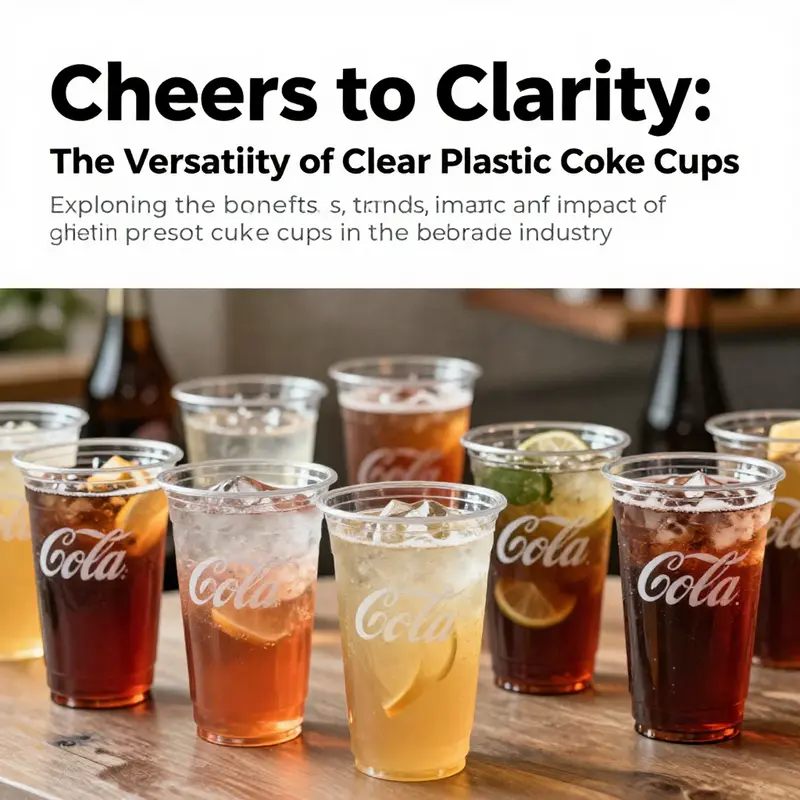
Clear plastic Coke cups have become a staple for beverage service providers ranging from bubble tea shops to event planners. Their transparent design not only showcases the vibrant colors of drinks but also highlights the iconic Coca-Cola branding, making them appealing for various settings such as restaurants, food trucks, and catering services. This article delves into the characteristics and designs of these cups, their practical applications, market trends, environmental considerations, and anticipates their future role in consumer culture. Each chapter elucidates these aspects, providing a comprehensive understanding of why clear plastic Coke cups make an excellent choice for your beverage service needs.
Transparency as Strategy: The Design and Impact of Clear Plastic Cups in Cola-Brand Experiences
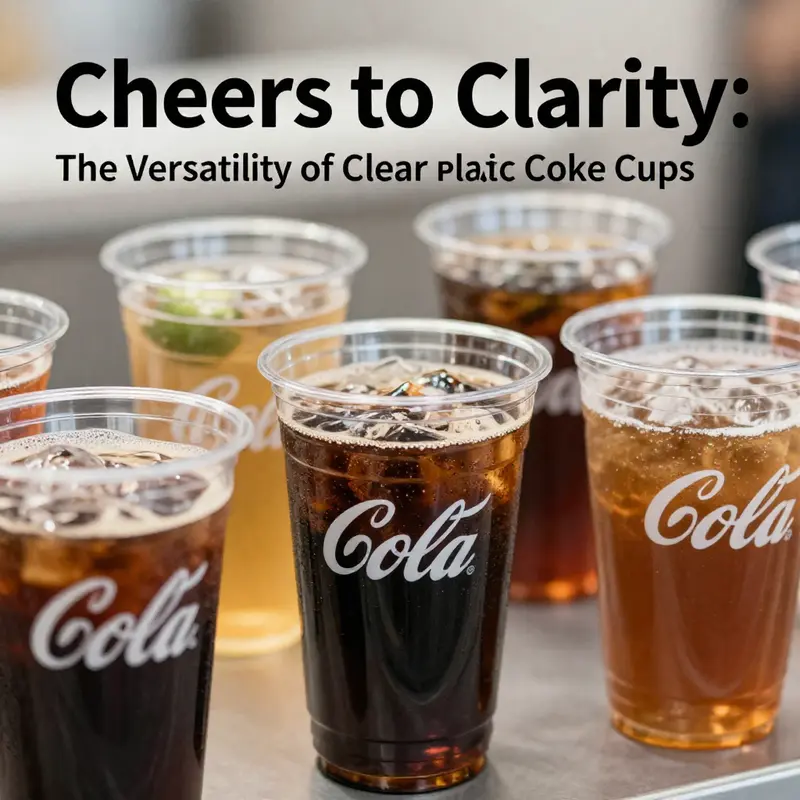
Transparency in service is more than a visual effect; it is a strategic tool that shapes how a beverage is perceived, how much of it a guest consumes, and how a brand communicates its values in a crowded marketplace. In the realm of cola beverages, the cup acts as a stage, letting the rich caramel tones, the shimmer of ice, and the carbonation dance in the light. A clear plastic cup does more than contain liquid; it frames color, texture, and temperature, turning a simple drink into a sensory event. When a guest lifts the cup, the clarity allows the consumer to judge pour quality at a glance—the smoothness of the pour, the absence of bubbles clinging to the sides, the crispness of the ice. This immediacy of perception can elevate the perceived freshness and portion integrity, which is particularly important in fast-service environments where speed and reliability matter as much as taste. The contemporary beverage experience leans heavily on what customers can see, and the clear cup functions as an honest medium that neither distracts from nor distorts the drink’s presentation. In this way, the cup becomes part of the brand’s storytelling, weaving together product visibility, value perception, and visual branding into a single, coherent moment that can reinforce loyalty and encourage repeat purchases.
From the perspective of operations, the choice of a clear plastic cup is a balance between aesthetics, functionality, and economy. The technology behind these cups centers on materials that deliver clarity without sacrificing durability. Many of the most widely used clear cups are made from food-grade polyesters such as PET, which combine light weight with a shatter-resistant profile that helps teams in busy venues manage breakage risk and waste. The transparency is not merely cosmetic; it serves a practical purpose. When staff can see the level of liquid, ice, and even the presence of a lid or straw, mis-pours and spill risks decline, contributing to a smoother service flow. In addition, the crystal-clear appearance of these cups supports a uniform customer experience from counter to table or through a drive-thru lane, where speed is essential and visual cues can speed decision-making for the guest.
Size is a crucial variable in this ecosystem. The 24-ounce category is a staple in many quick-service and casual-dining settings because it provides ample capacity for a standard cola pour, plus room for ice and foam. This size supports multiple use cases—from casual refills at a counter to on-the-go consumption in a busy coffee shop or stadium concourse. The commonality of this size helps streamline procurement, inventory, and training, creating predictable handling across kitchen, bar, and front-of-house workflows. With a consistent 24-ounce class, operators can harmonize glassware-free service with printed menus, eco-friendly disposal programs, and branded packaging, ensuring that the drink experience remains consistent regardless of the channel through which it is purchased. The design philosophy behind these cups emphasizes a uniform, even rim. A smooth, level edge reduces drips during pouring, enhances stacking stability, and improves the ergonomic feel when a guest sips, an important factor for encouraging longer engagement with the drink rather than hurried consumption.
Constructed for daily, high-volume use, these cups are often designed to be stackable. The stacked form minimizes freezer or shelf space, enabling a compact footprint in busy kitchens, mobile carts, or event setups. Yet stackability must be balanced with durability; the rim and shoulder geometry are carefully engineered to resist crushing and to maintain a pristine appearance after repeated use or washing cycles. In environments that reuse cups, machines used for washing and sanitizing must be compatible with the material so that clarity remains intact after multiple cycles. The combination of light weight, resistance to shattering, and cost-effectiveness makes clear plastic cups an appealing option for large-scale venues.
Branding is another layer of complexity and opportunity. The clear cup’s most powerful feature is its ability to showcase both the beverage and the brand’s visual language. In practice, this means that the cup either remains unprinted to preserve the beverage’s color and clarity or carries branding in a way that complements rather than competes with the drink itself. When branding is applied to the cup, care is taken to maintain legibility and color integrity; the iconic red-and-white branding motif, for example, can live on the cup’s exterior through subtle prints or decals that align with the beverage’s identity while never obscuring the liquid’s appearance. The interface between branding and clarity can become a marketing moment, particularly in campaigns that emphasize freshness, transparency, and quality. A well-executed design can convey a sense of value and trust that extends beyond taste, suggesting that what is inside is as carefully crafted as what surrounds it.
Yet the clarity of the cup is not merely an aesthetic asset; it also reveals practical considerations that shape everyday operations. Fingerprints, water spots, or residue from cleaning agents can mar the surface and disrupt the pristine look that consumers expect from a premium presentation. This is not merely a cosmetic concern; it touches upon perceptions of cleanliness and care. Operators must balance the desire for a spotless, high-clarity finish with the realities of busy, fast-paced service. Effective cleaning protocols, targeted staff training, and appropriate detergent choices help minimize visible residues while preserving the cup’s optical quality. In environments where time is of the essence, quick-drying rinsing routines and microfiber drying aids can play a critical role in maintaining the cup’s crystal-clear appearance at the moment of service.
From an environmental standpoint, the material choice—frequently PET or similar food-grade plastics—opens discussions about recyclability and waste management. PET is widely recyclable in many regions, a factor that commercial buyers consider alongside cost, supply, and performance. However, recycling capabilities vary by locale, and the feasibility of repurposing or reprocessing cups depends on local facilities and programs. This practical dimension means that the sustainability story of clear plastic cups is not a single, universal claim but a mapping of recycling options, collection streams, and consumer participation. In practice, operators may tumblingly balance the desire for clarity and durability with the realities of end-of-life disposition, encouraging customers to dispose of cups in the appropriate streams and supporting venues to partner with recycling initiatives where possible. The simplicity of a clear cup thus becomes a starting point for broader conversations about responsible consumption and material stewardship, inviting brands to align their visual language with sustainable practices that resonate with today’s value-conscious guests.
The beverage itself benefits visually from the transparency of the cup. For cola and other caramel-toned beverages, the color gradient from ice to liquid to glass adds depth to the perception of temperature and quality. Ice crystals catching the light can enhance the drink’s perceived freshness, while carbonation bubbles tracing upward provide a dynamic, almost kinetic, sense of liveliness. These subtle visual cues contribute to a momentary sense of value, encouraging guests to savor rather than simply sip. In settings that rely on branding campaigns, product launches, or guest giveaways, the clear cup becomes a flexible canvas. It can carry a brand message through color-matched lids, printed sleeves, or limited-edition motifs that complement a beverage lineup without overpowering the drink’s own presentation. In these instances, the cup provides continuity across channels—dine-in, takeout, and event environments—while allowing the beverage’s character to shine through.
The overall takeaway is that clear plastic cups designed for cola experiences integrate clarity, durability, and branding into a single, efficient package. They enable operators to maintain a consistent, attractive presentation in high-volume contexts, while giving guests a transparent window into the drink’s color, texture, and temperature. They also invite ongoing attention to cleaning, handling, and end-of-life considerations that reflect a broader commitment to quality and responsibility. In this sense, the cup is not a mere vessel but a coordinated element of the service ecosystem, aligning with front-of-house workflows, branding strategies, and sustainability ambitions. For readers seeking a deeper technical dive into the specifications, grades, and application techniques for clear plastic cups, see the technical overview linked in the external resource.
External resource: https://www.benjaminross.com/understanding-clear-plastic-cups-for-tasting-technical-specifications-grades-and-application-techniques/
Clear Canvas, Bold Reach: The Applications and Brand Potential of Transparent Cupware

Clear plastic cups, when they are transparent, function as more than vessels; they serve as portable canvases that bridge beverage color, texture, and consumer perception. The materials commonly used for these cups—PET and PP—prioritize clarity, strength, and safety, yielding a versatile tool across hospitality, events, and everyday use. PET provides exceptional visual transparency and rigidity, making it ideal for showcasing the hue and fizz of cold drinks, while PP adds durability and dishwasher-friendly qualities that suit busy service environments. The choice between these polymers often comes down to a balance between maximum visibility and practical longevity. Neither option should be treated as purely utilitarian; in practice, the cup becomes a stage on which a brand’s personality can perform, even in the most ordinary moment of refreshment. When light travels through a clear cup around a color-rich beverage, the drink’s color and texture emerge more vividly, and this optical interaction can elevate perceived quality. In this sense, the cup is not merely a container but a design element that supports the overall dining or drinking experience. The transparency invites attention to the beverage itself, encouraging the consumer to evaluate color, layering, or foam at a glance, which in turn can influence expectations about taste and freshness. This perceptual dynamic is an important reminder that form and function in tableware are inseparable when the goal is to craft a cohesive sensory narrative around a drink.
Beyond the fundamentals of material properties, the real value of clear plastic cupware lies in its capacity to act as a branding and experiential amplifier. The plain, transparent surface provides a blank yet powerful surface for logos, taglines, and seasonal graphics. With the right print or labeling approach, a beverage served in a clear cup can carry brand messaging without cluttering the table setting or overpowering the drink’s presentation. A bold color on the drink itself, paired with a crisp logo on the cup, can create a compelling visual contrast that catches the eye from across a room. This is especially relevant in settings where multiple brands share a space or where a campaign seeks to maximize reach with minimal fragmentation of the customer experience. The cup becomes a portable billboard that travels with the guest—into lobbies, photo moments, and social feeds—extending the reach of a campaign far beyond the confines of a single event or venue. The value proposition is practical as well as aesthetic. Clear cups reduce the risk of misreading a drink because the beverage’s shade and clarity are visible at a glance, aiding servers and guests during busy service periods.
In catering, restaurants, and large-scale events, these cups commonly serve both hot- and cold-beverage programs when heat-tolerant variants are employed. While many clear options excel with cold drinks, there are configurations designed to withstand warmth, enabling consistent performance across a spectrum of service scenarios. The ability to monitor fill levels quickly is another tangible benefit; staff can gauge portions by the visible liquid line, which speeds up service and helps maintain consistency across dozens or hundreds of beverages in a single shift. For events and venues that rely on quick throughput, the transparent cup also reduces the need for excessive labeling or extra signage. The visual clarity acts as a natural cue for guests, reinforcing the impression of cleanliness and attentiveness in service.
The promotional potential of clear, branded cups is not limited to large campaigns. In many contexts, sponsors, vendors, and organizers leverage the cup as a recurring touchpoint that reinforces recognition through repeated exposure. At concerts, sports events, theme parks, or product launches, a cup carrying a sponsor’s identity becomes a mobile ambassador, circulating among thousands of attendees and then into homes, offices, and everyday routines. The design language carried by the cup—its logo, color scheme, and graphic elements—helps create a unified brand presence that can be reinforced across multiple channels without requiring additional materials. This efficiency is part of what makes clear cupware attractive to marketers who are balancing reach with cost, since the cup can deliver visibility without the logistical weight of separate merchandise or wide-scale print collateral.
From a home and restaurant perspective, there is a category of heavy-duty, shatter-resistant clear tumblers designed to withstand more frequent use. These durable options are dishwasher-safe, stackable for efficient storage, and significantly less prone to breakage than glass. In fast-paced kitchens or on bustling catering lines, the reliability of clear plastic cups supports consistent service flow and reduces downtime caused by breakage. They knit together a modern aesthetic with practical performance, offering a sleek, minimalist silhouette that complements a range of tableware styles, from casual to refined. This dual appeal—durability coupled with a transparent, contemporary look—means the cups can transition easily from everyday gatherings to more polished events without feeling out of place.
Even in more formal or elegant gatherings, the clean lines and transparency of clear cupware contribute to a refined presentation. A simple glasslike cup can elevate the perceived quality of beverages, especially when paired with thoughtful garnishes or color-coordinated drink selections. There are, however, practical limits to keep in mind. Prolonged exposure to direct sunlight and intense UV could degrade clarity over time for some formulations, and high-pressure carbonation can also affect the clarity or integrity of some variants if used aggressively. For event planners and caterers, this translates into a practical guideline: select cups that match the intended service duration, environmental conditions, and beverage profile. Short- to mid-term uses aligned with well-managed warehousing, transport, and service windows can deliver outstanding visual impact and ease of handling without compromising safety or performance.
From a lifecycle perspective, clear cupware sits at an intersection of convenience and sustainability discussions. These cups are typically designed for single-use or limited reuse, dependent on local recycling infrastructure and facility capabilities. The appeal, then, lies in configuring a program that respects both environmental considerations and the realities of high-volume service. When used in settings with robust waste-management practices, the cups offer the advantage of reduced breakage risk and a simpler post-service cleanup, while still enabling an elevated presentation and clear beverage visibility that enhances guest experience. The lightweight nature of these cups also supports efficient transport and lower shipping costs, a practical consideration for operators serving large audiences. In sum, the optimal use of clear plastic cupware combines performance, visual appeal, and brand storytelling with a pragmatic approach to waste and reuse, ensuring a coherent, cost-conscious solution for a wide range of service environments.
For teams exploring how to extend branding into cupware, there are customizable options that align with sustainable philosophies and with the practical realities of service. The capacity to print or label a clear cup and to integrate branding into the overall cup design offers a flexible, scalable approach to marketing at the point of purchase and consumption. senang01-hot-sale-customized-disposable-single-wall-paper-ice-cream-cups-with-lid-eco-friendly-food-grade provides a concrete example of how branding can be integrated at the cup level in ways that respect hygiene standards and consumer expectations. This kind of customization demonstrates that even everyday objects—cups that accompany beverages through a day, a festival, or a dinner—can carry a brand’s design language with subtlety and coherence, reinforcing recognition and recall without dominating the beverage experience. The result is a harmonized user journey, where the cup contributes to the narrative rather than merely housing the drink.
External resources offer broader context on branded cupware and beverage-service innovations. For further perspective on branded plastic cup offerings from a major beverage brand, see the external resource: https://www.coca-colaproducts.com/en-us/our-products/coca-cola-branded-plastic-cups.html
Clarity in Flux: The Market for Clear Plastic Cups in a Regulated, Sustainability-Driven Era

The market for clear plastic cups used in serving beverages, especially cola-style drinks, sits at a complex crossroads where visual clarity, brand experience, and policy demands collide. On the surface, the appeal is straightforward: a transparent vessel that shows the color and fizz of a drink, with branding or logo visibility that reinforces a product’s identity. Yet as the decades-long shift toward sustainability accelerates, that clarity is increasingly entangled with questions of end-of-life viability, material performance, and the true cost of single-use convenience. A closer look at the trajectories shaping this segment reveals a market in which growth remains possible, but only when suppliers, brands, and policymakers align around materials that can deliver both consumer satisfaction and responsible stewardship. The broader disposable beverage cup market is projected to grow at a robust pace—historically cited around a double-digit CAGR in the near term—but this optimism comes with caveats. Regulatory tightening, waste-management infrastructure, and evolving consumer expectations are reframing what “clear” and “convenient” mean in practice. In practical terms, the question is no longer simply whether a cup can be manufactured with high clarity and rigidity, but whether it can also be recycled or composted in real-world systems, and at a price that brands can comfortably bear while preserving margins. The economic and environmental calculus is being rewritten as a single narrative: clarity must coexist with responsibility, even when that means compromising on the old speed-to-market and cost paradigms.
A primary driver of this shift is the rapid adoption of alternative materials designed to emulate the performance of conventional plastics while endowing the packaging with improved environmental credentials. Biodegradable and compostable options, notably those based on polylactic acid (PLA) and polybutylene adipate terephthalate (PBAT), are increasingly substituting traditional polymers in regions with stringent environmental policies. The European Union, for example, has instituted regulatory frameworks that discourage or restrict conventional plastics in food-service contexts, spurring both material science innovation and changes in supplier portfolios. The goal is not merely to replace a cup with a greener version but to create end-to-end solutions that minimize waste and maximize recovery. In practice, this means developers and manufacturers are investing heavily in R&D to close gaps in barrier performance, heat resistance, and clarity—areas where plant-based alternatives historically trailed petroleum-derived plastics. The challenge is not only technical but economic. Even as producers achieve gains in performance, the premium for sustainable materials remains a factor, and price-sensitive buyers must weigh the environmental benefit against cost increments. The market’s response has been to pursue a blended strategy: pilot programs and phased rollouts that pair clear plastic options with a rising portfolio of compostable or recyclable alternatives, allowing brands to calibrate consumer messaging and lifecycle outcomes without abrupt disruption to supply chains.
Consolidation is another defining trend reshaping the competitive landscape. The cup manufacturing sector is moving toward greater concentration as large brands and their centralized procurement systems exert stronger bargaining power. This shift, often described through the lens of the “Matthew effect,” benefits producers that invest in automated, scalable production and can deliver consistent quality at scale. At the same time, smaller manufacturers face intensified competition, tighter payment terms, and the pressure to innovate rapidly to maintain relevance. The outcome is a market where a handful of capable producers can dominate a larger portion of the supply, shaping pricing, product availability, and the pace at which new materials are brought to market. This dynamic is not solely about economics; it influences the very availability of greener options. When scale becomes a prerequisite for survival, the cost and risk of introducing novel materials increase, potentially slowing the adoption of sustainable cups in some regions or market segments. Yet the trend also creates a platform for more ambitious collaborations, as large players seek to secure reliable supply and drive standardization across procurement channels, which can in turn empower more consistent waste-management outcomes.
Technology and the business model accompanying it are evolving in tandem with these structural shifts. A growing portion of the industry conversation centers on a product-plus-service approach. Beyond selling cups, companies are exploring value-added services around waste collection, sorting, and recycling. This shift aligns closely with ESG (Environmental, Social, Governance) objectives and the pursuit of a green premium—a market reality where consumers are sometimes willing to pay more for packaging that embodies responsible design and end-of-life accountability. Certification schemes and third-party audits are increasingly recognized as differentiators, signaling to retailers and consumers that a brand or supplier is serious about lifecycle stewardship. In this context, the visual appeal of a clear cup becomes part of a broader narrative about responsible consumption: the clarity of the cup now also communicates clarity about its environmental footprint. The risk landscape grows more complex as well. New microplastics regulations, potential import/export disruptions, and volatility in raw-material costs can all alter the economics of clear-plastic cup supply. Prepared brands and manufacturers may need to hedge these risks with diversified material portfolios, regional manufacturing footprints, and flexible design strategies that allow quick adaptation to regulatory changes.
Within this evolving landscape, market insights point to a few practical implications for players across the value chain. First, the preference for clear cups remains strong for branding and consumer experience reasons, but the need to offer recycling-friendly or compostable options is no longer optional in many markets. Second, the cost premium for sustainable materials, though declining with scale, still influences buying decisions, particularly in sectors where margins are thinner. Third, consolidation among suppliers can shorten the path from concept to shelf, enabling faster adaptation to new regulations and consumer expectations but also pressing smaller producers to find niche strengths—such as customization, localized production, or partnerships that optimize end-of-life outcomes.
For those seeking a tangible sense of the broader ecosystem, the literature emphasizes a transition toward materials and services that bridge the gap between convenience and responsibility. It highlights the importance of regional policy alignment, as regulatory landscapes vary significantly across continents and even within countries. The Chinese market, cited in comprehensive regional analyses, remains a pivotal hub for both production and consumption, underscoring how global supply chains are interwoven with local policy regimes and consumer behavior. Across markets, the central question remains how to maintain the benefits of a clear, high-visibility beverage cup while reducing its environmental burden. The answer is seldom one-size-fits-all; it requires a portfolio approach that blends improvements in barrier properties and clarity with robust end-of-life pathways, supported by credible ESG credentials and transparent lifecycle data.
As brands and manufacturers navigate these currents, one practical signal stands out: the catalog of options is expanding beyond single-material dependence. From renewed interest in paper-based alternatives to recyclable and compostable multilayer constructs, the industry recognizes that the path to sustainability is not a single pivot but a series of coordinated shifts. The emphasis is on systems thinking—designing cups that not only please the eye but also integrate with modern waste streams, recycling infrastructure, and consumer education. This integrated approach helps explain why you see more collaborative projects, pilot tests in major markets, and shifts toward centralized collection and processing of used cups. In the end, the goal is to retain the clarity that makes a cup appealing while ensuring that its life cycle aligns with a world that aims to reduce waste and conserve resources.
For readers curious about concrete manifestations of these trends, consider how the market positions certain eco-friendly cup options, even when they stem from materials that change the traditional performance envelope. In practice, brands observe that clear-cup aesthetics can be compatible with sustainable options if the packaging design accounts for stacking efficiency, insulation, and transport stability, while providing clear messaging about recyclability. The interplay between design, material science, and policy is what ultimately determines whether a clear cup remains a preferred choice or evolves into a different category of beverage packaging. The trajectory suggests continued growth in the greater category of disposable cups, but with more nuanced segmentation—where clarity, branding, and environmental responsibility are balanced through material innovation, regulatory alignment, and strategic partnerships.
To illustrate how the market is expanding beyond plastic-only thinking, one example from the current catalog of environmentally minded options shows how a popular product line blends single-wall, paper-based construction with lid and printing capabilities that cater to brand identity while offering clearer end-of-life pathways. This reference, while just one data point in a broad landscape, signals a broader industry willingness to diversify formats in response to regulatory and consumer pressures. It also hints at the potential for hybrid packaging strategies that optimize performance while reducing environmental impact. This dynamic underscores the need for ongoing collaboration across supply chains, from raw-material suppliers to manufacturers to retailers and waste-management operators, so that the visual clarity of the cup remains a comfortable feature rather than a logistical liability.
For readers interested in exploring these alternatives further, a representative example from the current product landscape illustrates how a brand-oriented catalog positions a range of eco-friendly, single-wall paper ice-cream cups with lids alongside traditional clear plastics. hot-sale customized disposable single-wall paper ice-cream cups with lid offers a concrete glimpse into how firms are expanding their portfolios to meet sustainability targets without sacrificing user experience. You can explore this option here: hot-sale customized disposable single-wall paper ice-cream cups with lid.
As the market continues to evolve, the interplay between policy, technology, and consumer demand will largely shape which paths gain traction. The 14% CAGR projection for the broader disposable beverage-cup market through 2033 reflects not only growth potential but the necessity of adapting to a more demanding regulatory environment and to an increasingly discerning consumer base. In practice, success will hinge on the ability to deliver clarity—both visual and lifecycle clarity—that resonates across the value chain, from raw materials to end users. The chapter remains focused on the tension between the desire for a crisp, transparent cup and the imperative to make that cup part of a sustainable system, a balance that will define the next era of clear plastic cup design and deployment.
External resource: For a broader context on sustainability in consumption and production, see the United Nations Sustainable Development page on sustainable consumption and production. https://www.un.org/sustainabledevelopment/sustainable-consumption-production/
Clear Cups and Circularity: Toward a Sustainable Path for Transparent Beverage Cups

Transparent plastic cups reveal the beverage inside, a design cue that builds trust but also highlights environmental costs. The same clarity that makes a drink appealing can obscure how the cup is sourced, used, and discarded. This chapter examines the lifecycle of a clear cup, from resin feedstocks to end-of-life, and questions whether the current system can shift toward reuse, recycling, and reduced material intensity. We explore material options, the role of redesign, and the policies and business models that could sustain convenience while lowering environmental impact. Finally, we outline practical steps for brands, retailers, and utilities to move toward circular cup systems that preserve performance without multiplying waste.
Seeing Through Refined Transparency: Clear Cups and Cola Culture

Clear plastic cups do more than hold a beverage. They act as stage lights for color, fizz, and texture, allowing the drink, ice, and condensation to be perceived together in a single moment. Visual clarity shapes how a beverage is experienced, influencing expectations and social rituals in cafes, stadiums, offices, and kitchens. Because the liquid is visible, the cup becomes a shared signal of honesty and freshness, inviting memory and anticipation. The container thus contributes to the story of a refreshment, turning a practical vessel into a small ceremony. Industry designers pursue finishes and materials that preserve clarity while resisting fogging and wear, balancing performance with end of life considerations. In everyday use, the right cup reduces friction, frames the drink, and supports a moment that feels deliberate and pleasant.
Final thoughts
As we navigate through the vibrant world of clear plastic Coke cups, it’s clear they are more than just a container for beverages. Their unique characteristics cater to a range of beverage applications, making them ideal for diverse settings. As market trends shift towards sustainability, the demand for these aesthetically pleasing and practical cups is likely to grow. Understanding their impact and exploring future possibilities can significantly enhance beverage service strategies across the board. Clear plastic Coke cups not only represent brand loyalty but also trendy solutions that align with consumer preferences.