
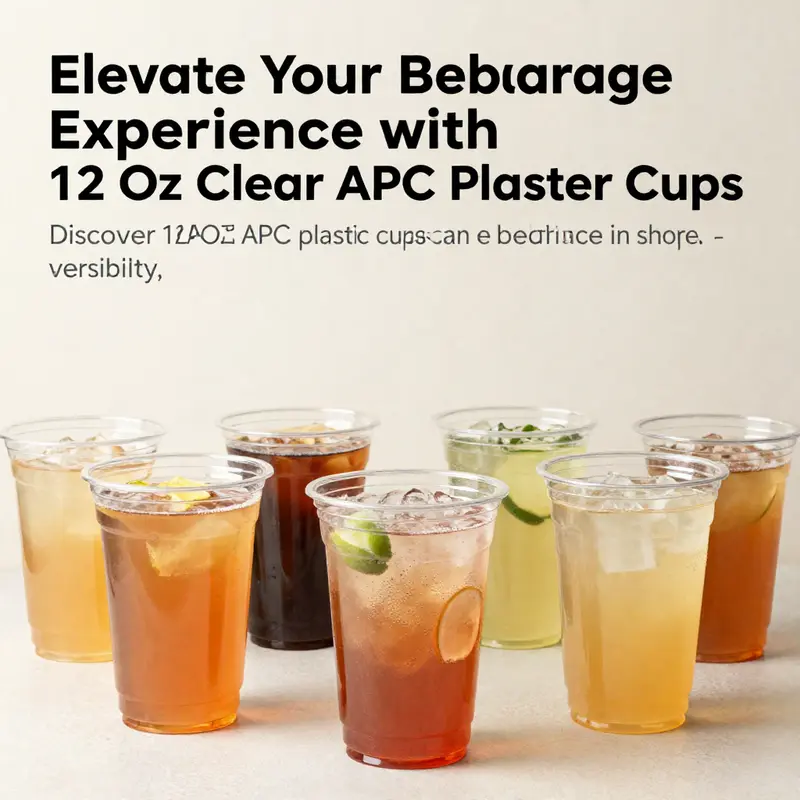
In today’s competitive beverage industry, presentation is key. Clear plastic cups, particularly the APC 12 oz version, offer a sleek and professional way to showcase drinks—from vibrant bubble teas to classic sodas. Their clear design allows customers to see the freshness of the beverage, while their disposable nature adds convenience. As we delve into this article, we will explore the materials and design of these cups, their ideal applications at events, the economic impact of choosing them, and important environmental considerations. Each chapter will build upon the importance of APC plastic cups in providing a quality beverage experience.
Clarity as Craft: Material and Design of Clear 12 oz Plastic Cups
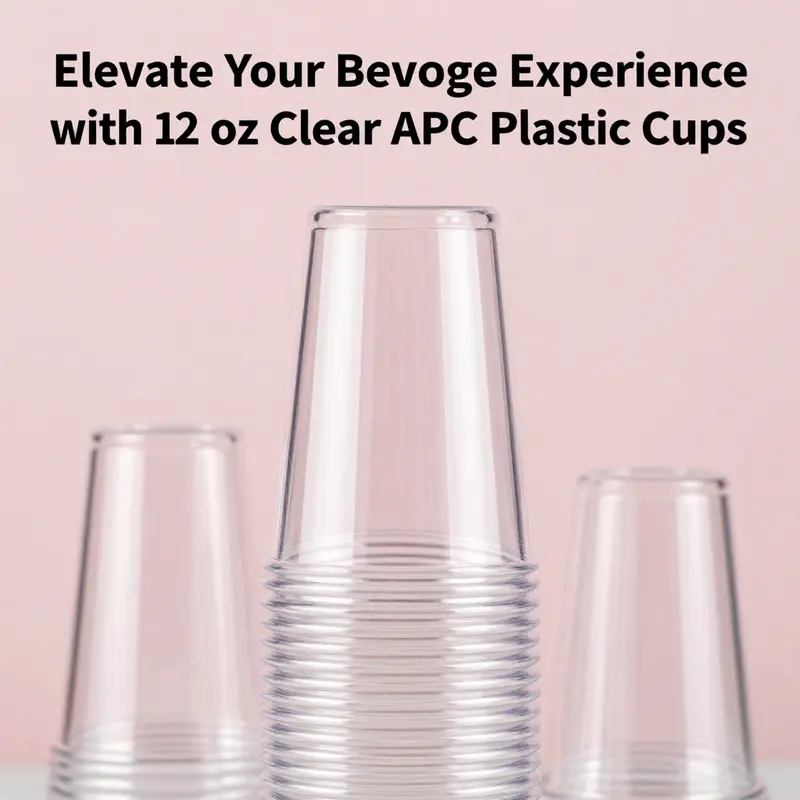
Transparency has a quiet power in the world of disposable drinkware. When a glass is not an option, a clear plastic cup must do more than hold liquid; it must showcase color, convey freshness, and invite touch. The keyword you started with—APC plastic cups clear 12 oz—points to a common object in event planning, quick-service, and home entertaining. Yet a closer read of the market reveals a broader truth: there is no single brand that defines all the clear 12-ounce cups. Instead, a family of cups shares a material DNA and a design language that makes them instantly recognizable on a table, at a party, or behind a concession stand. At the core of this chapter lies a simple question: why do these cups look so purpose-built, so versatile, and so widely adopted for cold beverages? The answer lies in material science, geometrical decisions, and the social rituals that revolve around drinking, sharing, and presenting beverages in a way that feels both practical and a touch celebratory.
The material most commonly chosen for these cups is PET, or polyethylene terephthalate. PET is the workhorse behind many single-use beverage containers because it balances clarity, weight, and safety. Clarity is not merely about being see-through. It is about the way light travels through the wall of the cup, about how the liquid inside interacts with the wall, and about how the cup’s surface resists microscopic scratches that would dull the sparkle of a cold drink. PET’s molecular structure is arranged to minimize scattering of light, a property that yields a glass-like appearance while preserving the portability and affordability customers expect in disposable ware. PET also offers a favorable combination of stiffness and flexibility. A cup that feels too soft can bend under condensation or when gripped by a crowded line. A cup that is too rigid can feel clinical rather than welcoming. The mid-range stiffness of PET makes it reliable for everyday use while keeping production costs in check. In a world where cold beverages are increasingly visually driven—think iced tea with a slice of citrus, or a sparkling cider catching the light—the material’s transparency becomes an essential performance feature.
Beyond clarity, the choice of PET speaks to sustainability considerations that are now embedded in many purchasing decisions. PET is widely recyclable in curbside programs, and its recycling stream is well established in many regions. This is not merely about ending a cycle with a recycling symbol; it is about the practical reality that many venues, offices, and households seek to minimize waste while still enjoying the conveniences of single-use ware for events, tastings, and on-the-go service. Of course, the recyclable nature of PET does not absolve buyers from considering reuse, cleaning, and lifecycle impacts. Some cup lines integrate features that support careful reuse in controlled contexts, while others emphasize the efficiency of single-use formats for quick turnover and hygiene. The material’s recyclability also interacts with lid and straw ecosystems, which are common companions for 12 oz clear cups and influence the total environmental footprint of the serving setup.
The 12-ounce capacity itself is a careful compromise that aligns with how people actually drink in social settings. At many events, a 12-ounce portion represents a comfortable, manageable sip—neither too small to feel stingy nor so large that it requires frequent refills to maintain energy over an evening. This capacity translates into a diameter and height relationship that affects grip, stacking, and lid compatibility. When a cup is taller relative to its rim diameter, it grips more easily in crowded environments, reducing the likelihood of spills in transit from table to table. A cup that is too squat can feel crowded in cold beverages with lots of ice, as the ice competes for space with liquid volume. Manufacturers tune these dimensions to optimize balance: a clean upright silhouette that allows the beverage’s color to dominate the visual field, while the lip remains comfortable for sipping without creating sharpness at the edge. The result is a cup that is almost invisible in use—except when the beverage inside catches the eye and the occasion calls for a clear, unobtrusive presentation.
Design details matter as much as material. The cup walls are typically straight or slightly tapered. Straight walls offer a minimalist, modern profile that is flattering in both casual and formal settings. A subtle taper can enhance grip and stackability, allowing empty cups to nestle within one another for efficient storage and transport. Wall thickness plays a critical role in perceived quality. Too thin a wall can feel brittle; too thick can feel heavy and wasteful. Manufacturers aim for a wall thickness that conveys strength and durability without compromising the cup’s lightness. The lip or rim design also matters. A smooth, rounded rim improves drinking comfort and reduces the likelihood of dribbles or fatigue during extended use. The inner and outer surfaces must be engineered to resist fogging and to minimize the tendency of condensation to cling. Even the junction where the cup meets the lid—if a lid is used—requires careful tolerancing to ensure a snug seal that prevents leaks while still enabling easy removal and replacement.
Clear cups are not simply vessels; they are canvases for situational storytelling. In weddings, corporate receptions, or outdoor festivals, the color of the beverage becomes part of the narrative. A bright lemonade reads as celebratory; a deep red sangria conveys warmth and sophistication; a pale beer glitters under lighting in a stadium environment. The plastic’s transparency allows the human eye to perceive tone, saturation, and carbonation with immediate clarity. Yet this same clarity imposes expectations. The beverage must appear clean, unclouded, and inviting. Any haze or imperfection in the cup or liquid disrupts the aesthetic, reminding us that the medium is still a crucial part of the message. For this reason, quality control in manufacturing and careful storage to prevent scratches or scuffs become invisible under the bright lights of social display but are deeply felt by the event experience.
Lids and closures are not afterthoughts; they are essential partners in the design ecosystem of clear cups. In many service settings, a flat lid with a small vent hole or a straw slot becomes a practical necessity. The integration of a lid depends on the cup’s geometry and on the intended service tempo. Some lid designs accommodate standard straws, while others feature sip-through openings that minimize spills when cups are jostled in line or during transport in a vehicle. The compatibility between cup and lid is a subtle performance metric: a well-matched combination looks seamless, feels secure in the hand, and gives the user confidence that the drink will remain contained. The same logic applies to accessory designs, including lids with tamper-evident features and cups that are compatible with dome lids for cold beverages like smoothies or creamy drinks. The design language thus extends beyond the cup wall to a broader system that supports reliability, hygiene, and user satisfaction.
From a materials and design perspective, one might wonder about the market labels that accompany these cups. In practice, the term APC appears in your keyword set, but the research landscape does not flag a distinct, universally recognized APC brand within the clear 12-ounce PET cup category. This absence does not diminish the value or applicability of the cups; rather, it highlights a robust market where many manufacturers deliver a similarly styled, functionally reliable product. The universal features—clear PET, 12-ounce capacity, cold-drink suitability, and a disposable or semi-reusable mindset—form a common baseline. The variation you encounter across offerings tends to be in wall thickness, precise diameter, logo-printing options, and packaging density. Some producers emphasize ultra-clear clarity with anti-scratch coatings, while others prioritize ultra-lightweight profiles for high-volume events. In practice, what matters most is how well the cup performs in real-world service: does it hold up to a bustling bar, a summer fair, or a family picnic? Does it present the beverage beautifully while remaining cost-effective for the organizer? These questions ground the design in practical use rather than branding alone.
Within the broader ecosystem of clear beverage containers, there are related packaging options that share a similar philosophy of visibility and convenience. For those exploring related clear plastic packaging, this supplier resource offers a practical reference point. clear plastic combo pastry dessert packaging. The link points toward a family of packaging that emphasizes clarity in plastic presentation while pairing with other disposables in a single-serve context. While it may not be identical to PET cups, the underlying principle—use a clear plastic medium to elevate the product inside—resonates across categories. The conversation about clarity, sealing, and user experience becomes richer when we consider how these similar materials and design approaches solve different serving challenges. This cross-pollination helps designers and buyers think holistically about the visual and tactile language of disposable ware.
The pragmatic realities of using 12 oz clear cups in diverse settings also invite a reflection on the lifecycle of the product. In fast-service environments, the speed at which a queue moves, the ease of grabbing a cup, and the quick recognition of a beverage type all contribute to an efficient workflow. The clear wall gives staff immediate cues about what is inside, enabling faster service without the need for elaborate labeling on the cup itself. In more formal settings, the transparency supports a refined aesthetic where simplicity and purity are celebrated. Here, the absence of heavy branding on the cup itself shifts attention to the drink’s color, the glass-like refraction of light, and the overall balance of the presentation. Even the decision to opt for a single-use format, as opposed to a reusable glass or ceramic, can be anchored in context: during high-volume events, disposables reduce the burden of washing and downtime between pours, while in a more intimate gathering, the clear cup can still evoke a sense of cleanliness and modern style.
In thinking about future directions, the conversation around clear PET cups intersects with broader societal demands for sustainability, product safety, and convenience. Innovations that reduce plastic use without sacrificing user experience are increasingly visible in the marketplace. This includes optimizing material formulations to lower weight without compromising strength, improving compatible lid designs to reduce spillage, and exploring post-consumer recycled content that preserves clarity and performance. The cultural appeal of a glass-like appearance remains strong; therefore, advances that maintain optical clarity even when recycled or reused will likely shape the next generation of clear cups. Practitioners who plan events or operate food-service operations can benefit from evaluating not only the immediate costs but also the long-term operational implications of choosing a specific cup line. A crystal-clear cup might be the first thing a guest notices, but the ease with which staff can manage inventory, clean up, and recycle at the end of an event often determines the overall success of a service experience.
If you step back to connect this to the broader article topic—the APC clear 12 oz concept—it becomes clear that you are engaging with a product category whose strength lies in a careful alignment of material behavior, user perception, and logistical practicality. The absence of a singular brand identity in the supply landscape should not obscure the shared traits that unite these products: reliable cold-drink performance, predictable dimensional tolerances, and the capacity to present beverages with clarity and confidence. In this sense, the chapter’s focus on material and design serves as a guide for readers who want to understand not just what a clear 12-ounce cup does, but how it does it, why certain choices matter, and how those choices ripple through the events and settings where these cups are used. This approach invites practitioners to consider their next procurement decision not as a mere purchase of a disposable item, but as an investment in a small but meaningful component of the hospitality experience—the moment when beverage and container meet and the color, aroma, and texture of a moment are shaped by clear, carefully designed plastic.
External resources can illuminate practical nuances that go beyond theory. For example, a widely available consumer resource offers a concrete view of the market’s clear plastic cups and related accessories, helping buyers compare dimensions, lids, and packaging options across brands and price points. External resource: https://www.amazon.com/dp/B07ZJX8Y4B
Clear 12-Ounce Plastic Cups: Elevating Drink Presentation at Events and Gatherings

Clear 12-ounce plastic cups have quietly become indispensable in the toolbox of event planning and everyday hospitality. Their appeal rests not just in their practicality but in their ability to showcase what is inside. The high clarity of the material seems almost glass-like, yet the cups remain light, stackable, and disposable in a way that supports fast service and adaptable branding. When a beverage is poured into a transparent vessel, its color, texture, bubbles, and even the subtle gradient of a layered drink become part of the presentation. The audience perceives quality not only through the flavor but through the visual choreography of service, and these cups contribute a quiet elegance that can elevate even the most casual gathering into something worthy of a moment of pause.
At the heart of these cups is a straightforward material choice: clear PET plastic, chosen for its combination of clarity, strength, and safety for food contact. The 12-ounce capacity is a versatile standard size, ample for a single serving without overwhelming a guest, and compact enough to be used en masse across large events. This size works particularly well in venues where speed matters—catering lines, concession stands, or a standing reception—because it fits well with standard drink dispensers and coolers. The cup’s form is designed to minimize spill risk when carried from table to table, especially when paired with a compatible lid or straw hole. The result is a dependable vessel that supports a smooth, uninterrupted flow of beverages from prep to consumption.
The market offers a wide spectrum of what counts as a clear 12-ounce cup, but several features recur across the most widely used models. The most critical is the transparency itself. A cup that looks cloudy or tinted undermines the visual impact of the beverage inside. Clear PET, chosen for its clarity and chemical stability, preserves the beverage’s appearance—from the deep amber of an iced tea to the bright hues of a fruit-forward cocktail. The 12-ounce size also aligns with common portioning norms found in many service contexts, making it easier for servers and bartenders to maintain consistent pours and inventory control. Careful design often includes a lip and rim that are comfortable for sipping and a base that remains stable on flat surfaces, reducing the risk of tipping when placed on crowded tables or bars.
For events of all scales, the ability to deliver both practicality and style in one disposable item translates into real-world benefits. In a wedding reception, for instance, transparent cups allow guests to appreciate the color and sparkle of a signature punch or champagne with minimal distraction. In a corporate function or a community fair, the same cups can be used across multiple drink stations without compromising the aesthetic of the event space. The 12-ounce format also aligns well with the way beverages are stored and served in bulk. A standard hotel or catering kitchen can stock these cups in bulk packs, such as hundreds or thousands of units, which translates into fewer restocks on the floor and a steadier service tempo during peak periods.
Beyond the basic vessel, the practical design language of these cups often includes compatibility with spill-resistant or resealable lids. Lids are not only a containment solution for transport but also a way to preserve beverage integrity in outdoor or high-traffic settings. A flat lid with a small sip opening can be a discreet yet functional addition, allowing guests to move through aisles or mingle without pausing to finish a drink. In busy venues—from festival grounds to sports arenas—the ability to cap a beverage quickly and securely adds a layer of operational efficiency that hosts and vendors value highly. Moreover, the compatibility with straw openings supports both eco-conscious choices and guest preferences, offering a flexible, versatile approach to drink service.
The aesthetic and functional considerations of clear cups extend into the realms of safety and sustainability. Food-contact safety is a baseline expectation in any disposable serviceware, and contemporary clear cups are designed to meet or exceed regulatory standards for beverage use. In many markets, PET cups are BPA-free, addressing concerns about potential chemical transfer and aligning with consumer expectations for safer, more responsible packaging. The modern sustainability conversation—driven by consumer demand for lower environmental impact—also nudges manufacturers and event organizers toward options that emphasize recyclability, reuse, and clear labeling. Some lines of PET cups come with certifications or assurances that the materials are recyclable or accepted by local curbside programs, while others highlight BPA-free formulations as part of a broader commitment to health and safety.
The conversation about sustainability is not limited to the material composition alone. A growing share of event planners now weighs the entire lifecycle of the cup, from production to disposal. In practice this means considering bulk purchasing strategies that reduce packaging waste, choosing suppliers who offer bulk packs that minimize secondary packaging, and coordinating with venues on recycling practices. It also means acknowledging the pressure to balance cost with environmental responsibility. Clear cups that are BPA-free and recyclable can offer a pragmatic compromise: a product that performs reliably for service needs while supporting responsible end-of-life handling. In some contexts, event organizers even explore branding possibilities on the cup or its lid, turning a simple beverage vessel into a portable inch of advertising and memory that attendees take away with them.
Branding and customization are subtle but meaningful ways to extend the utility of clear 12-ounce cups at events. The cups themselves can be kept neutral to maximize beverage presentation, but when the situation calls for heightened visibility, cups can be customized with logos, event details, or color accents through lid selections or printed sleeves. Customization can transform ordinary drinkware into a cohesive element of the event’s visual language, reinforcing the brand message or the theme of the gathering without disrupting the drink’s presentation. The impact is twofold: guests experience a polished, professional ambiance, and organizers derive practical marketing value from a commonplace item that is handled by many attendees.
In practical terms, the decision to deploy clear 12-ounce cups hinges on a matrix of factors: expected guest count, beverage variety, service speed, and venue constraints. A large wedding might emphasize aesthetic coherence and brand alignment across the reception space, with cups serving as a subtle extension of the design palette. A school event or community fundraiser, by contrast, might prioritize cost efficiency and robust bulk availability, ensuring quick replenishment and predictable inventory control. Sports events and outdoor activities often demand durability and weather resilience, with cups chosen to withstand the occasional rough handling that accompanies high-energy environments. The common denominator across these scenarios is the cup’s ability to deliver a dependable, visually appealing beverage experience with minimal fuss for servers and guests alike.
From a sensory perspective, the clarity of the cup can amplify the perceived quality of the beverage. Children and adults alike respond to color, texture, and the sense of freshness that a sparkling soda or a cold brew can convey when seen through a transparent vessel. The cup becomes a transparent stage where the drink’s allure is on display. At the same time, the visual simplicity of the cup helps keep the event space cohesive. When a party features a spectrum of beverages—fruit punches, iced teas, lemonade, and coffee—clear cups ensure that the colors remain the focal point rather than competing with ornate, colored glassware or busy motifs on the cup itself. This balance between clarity and practicality is what makes these cups so adaptable across a broad range of event formats.
For organizers who are careful about cost without sacrificing experience, bulk procurement is a recurring consideration. These cups are commonly available in bulk packs that suit both small gatherings and large-scale catering operations. The economics of scale come into play in ways that go beyond the sticker price. Bulk purchases can reduce per-unit costs, lower transportation and handling Aufwand, and simplify inventory management on event days. The ability to reorder quickly or substitute with similar items when supply is constrained helps planners stay agile in the face of unpredictable demand. A well-managed stock of clear 12-ounce cups can be a quiet backbone of a successful event, enabling staff to focus on guest experiences rather than dashing between supply closets.
Beyond service efficiency and cost, the cups’ neutral look supports diverse beverage offerings. They adapt to both upscale and casual settings, enabling bartenders to craft visually appealing cocktails while letting the natural color of the ingredients shine through. In nonalcoholic contexts, these cups are equally adept at featuring layered drinks or color-rich punches, where the translucence adds depth and interest to the presentation. For many hosts, this visual flexibility is as important as the practical reliability. It allows a single cup to accommodate a wide menu of beverages across multiple service points, simplifying logistics while maintaining a high level of guest perception.
In reflecting on these cups, it is helpful to consider a broader ecosystem of disposable drinkware that serves similar functions. While the emphasis in this discussion remains on the clear 12-ounce cup, there is value in recognizing the existence of other options—paper cups with printed logos, reusable acrylics for high-end events, or biodegradable alternatives designed for sustainability. Each category has its own set of strengths and tradeoffs, and the best choice often comes from aligning the selection with the event’s goals, guest expectations, and environmental considerations. For broader context on disposable drinkware options, see the eco-friendly printed-logo paper cup take-away page eco-friendly printed-logo paper cup take-away.
Ultimately, the value of clear 12-ounce cups lies in their ability to blend simplicity with sophistication. They offer a reliable, efficient, and visually appealing solution for serving beverages at events of all kinds. Their design supports the practical needs of service teams while enhancing the guest experience through presentation that is clean, bright, and unobtrusive. In this way, these cups become more than just containers; they act as enablers of mood, memory, and flow. They help shape the dynamics of a gathering, guiding guests through the beverage experience with grace and efficiency. And when used thoughtfully, they contribute to a sense of occasion without demanding attention, letting the other elements of the event—food, music, décor, and guest interactions—shine.
External reference: https://www.alibaba.com/product-detail/FULING-12oz-16oz-32oz-PET-cold-drinking_1600479854685.html
Clear Value: The Economic Dynamics Behind 12-Ounce Transparent PET Cups
Above all, the market for clear 12-ounce disposable cups rests on a simple premise: presentation matters. In many settings, from festivals to office break rooms, the way a drink is displayed can influence choices, perceived quality, and the overall pace of service. The cups themselves are small but essential components of a broader ecosystem that includes beverage providers, event organizers, retailers, and logistics partners. Their value comes not merely from holding a liquid but from preserving its appearance, aroma, and temperature while withstanding the rigors of transport, stacking, and repeated handling. When you examine the economics of these cups, you quickly see that the price of a single unit is the product of a tightly coupled chain: resin chemistry, conversion efficiency, packaging, and the friction of demand across multiple end-uses. In the most fundamental terms, these cups are crystalline, single-use vessels that must deliver clarity, strength, and reliable containment at scale. The material most often used to achieve that is a clear, food-grade polymer known for its optical brilliance and lightweight strength. The choice of material matters because it interacts with the drink it holds and with the environment in which it is circulated. Clear PET cups, for example, are designed to minimize light diffusion and maintain the allure of a beverage’s color and effervescence. This clarity is not incidental; it is a carefully engineered feature that makes the product serving more appealing and, ultimately, more marketable. Yet clarity alone does not determine value. The thickness of the cup wall, the finish of the rim, and the geometry of the lip all influence user experience, stacking density, and even compatibility with lids and straws. When suppliers speak of “crystal-clear” or “ultra-clear” cups, they are signaling a combination of optical performance and mechanical reliability. Each batch of resin is processed to yield a consistent transparency level, and the downstream tooling and cutting are calibrated to preserve that appearance under various temperatures and handling conditions. The interplay between material properties and process control shapes the final price, even before any branding or design work is considered. One practical implication is that price breaks often follow tiers of quantity rather than aesthetics alone. A common pattern in the market is that pricing per cup declines as order size increases, reflecting the efficiencies of scale. A typical consumer pack might contain a few dozen cups, while bulk buyers—catering businesses, event planners, or food-service distributors—often secure cartons containing thousands. The economics of bulk purchasing hinge on a blend of fixed and variable costs. Fixed costs include the setup of molds, the depreciation of machinery, and the overhead of maintaining a production line tuned for high-throughput, high-clarity outputs. Variable costs respond to demand: resin prices, energy costs, labor, and direct logistics. When demand accelerates or supply tightens, even a small shift in raw material costs can propagate through the price ladder. In this context, it is important to recognize that many buyers negotiate directly with suppliers or through distributors. The exact unit price in a carton of 1,000 cups is rarely posted as a standard figure. Instead, buyers engage in conversations that consider destination, delivery timelines, and the possibility of bundled items such as lids, straw openings, or printed branding on the cups. The negotiation environment rewards buyers who operate with accurate forecasts, consistent ordering patterns, and a willingness to commit to longer-term supplier relationships. The upstream supply chain is sensitive to global resin markets, regional packaging regulations, and recycling incentives. PET resin price movements, even when they seem small on a monthly basis, accumulate into meaningful shifts in the unit cost of a bulk order. Likewise, changes in energy costs and labor availability affect manufacturing throughput. From the buyer’s perspective, these fluctuations underline the importance of timing and flexibility. A supplier who can adjust production schedules to align with a buyer’s event calendar or seasonal peaks can offer more favorable terms than one constrained by rigid timelines. It is also worth noting that the packaging dimension of the cup, while seemingly secondary to the beverage, exerts its own influence on total cost. Cartons must be designed for efficient shipping, stacking, and storage. The weight and volume of a pallet-load determine freight costs, warehouse space, and even the environmental footprint of a purchase. In this sense, the economic calculus extends beyond the price tag displayed on a single carton. The total cost of ownership for a clear 12-ounce cup includes not only the purchase price but also the logistics, the risk of stockouts, and the potential for waste. A reliable supplier offers more than a price quote; they provide service elements that reduce risk, such as transparent lead times, consistent quality, and responsive substitutions if a particular batch is unavailable. Buyers assess these quality and service dimensions by looking for indicators such as defect rates, color consistency, and the stability of the cup’s mechanical performance under cold or room-temperature conditions. The ability of a cup to withstand chilled beverages without cracking, or to maintain its shape when held by a guest wearing gloves, translates into tangible savings. Fewer breakages, less replacement stock, and a smoother workflow all contribute to a lower effective unit cost in practice. The economic landscape is further shaped by the end-use environment. Event-driven settings often demand additional features, such as compatible lids and secure, leak-resistant designs for on-the-go consumption. Offices and hospitality venues, in contrast, may value cups with improved stacking efficiency and a sturdier feel when grasped. Some buyers also consider whether cups can be recycled or contain post-consumer recycled content. Sustainability considerations, while not always the primary driver of price, influence long-term cost structures. Regulations in some regions encourage or require higher recycled content or clearly labeled recycling streams. Meeting these expectations may entail slightly different manufacturing inputs or post-processing steps, which can affect price, lead times, and supply availability. In the broader view, the pricing narrative for clear 12-ounce cups is inseparable from demand patterns and channel strategies. Retailers may offer seasonal promotions that bundle cups with related products, while food-service distributors may run volume-based programs to secure steady streams of sales in exchange for predictable orders. The flexibility to adapt to demand pulses—such as graduation ceremonies, summer festivals, or sports events—depends on cultivating relationships with suppliers who can scale production and logistics without sacrificing clarity or integrity of the product. When a buyer looks at a bulk carton of 1,000 cups, the decision-making process encompasses more than the unit price. It includes the certainty of fulfillment, the reliability of the supplier network, and the compatibility of the cups with the venue’s service model. A smooth end-to-end experience reduces operational friction and supports a more predictable budget. For example, a purchaser may prefer to negotiate a stable, volume-based price over a one-off quote for a single shipment. In return, the supplier benefits from demand certainty, reduced administrative overhead, and decreased risk associated with small, sporadic orders. The most successful buyers tend to treat these cups as an integrated component of their service proposition rather than a mere accessory. They think through the beverage’s visual appeal, throughput, and the guest’s experience, all of which feed back into the value proposition of the entire event or facility. The chain then returns to the market’s comparative dynamics. Clear, 12-ounce cups face competition not only from other brands but also from alternative formats. Some venues may default to larger or smaller sizes depending on the typical serving style or beverage menu. Others experiment with different materials that offer varying degrees of clarity, rigidity, or sustainability. Each alternative carries its own price implications and performance trade-offs. Buyers who study these trade-offs often come away with a deeper understanding of how much of the final price is driven by material science and how much by logistics, packaging design, and supplier relationships. The broader market context also shapes expectations around delivery times, stock levels, and the speed at which new features can be introduced. For instance, a cup that supports a quick-change lid system or a printed branding option might carry a premium, but the premium is justified by enhanced brand visibility and a more streamlined service flow. In turn, brands and event organizers balance these benefits against the incremental costs, seeking a synthesis that fits the event’s scale and the organizer’s brand strategy. A practical takeaway from this economic lens is that price is a signal of value, not an isolated figure. When evaluating bids for clear 12-ounce cups, buyers should weigh the totality of costs—unit price, lead times, quality consistency, packaging efficiency, and the supplier’s willingness to collaborate over time. A well-structured procurement approach recognizes that the most economical choice is not always the option with the lowest sticker price. It is the option that guarantees dependable supply, predictable budgeting, and the best consumer experience across multiple events or service settings. The market’s sensitivity to timing also matters. In some regions, the lead time from order to delivery can be a decisive factor, especially for large events with fixed schedules. Shorter lead times may carry a premium, but they reduce the risk of stockouts and last-minute procurement costs that could derail a project. Buyers who plan ahead gain the most leverage, turning a commodity-like item into a strategic supply that underpins service quality. Looking ahead, the price trajectory for clear 12-ounce cups will continue to be influenced by a mosaic of forces: raw material markets, energy costs, manufacturing efficiency, and the evolving expectations of sustainability-conscious buyers. The industry will likely witness ongoing improvements in clarity and thickness control, enabling even more consistent presentation of beverages. At the same time, logistics innovations—such as more efficient packaging, optimized palletization, and improved freight routing—could offset some cost pressures by lowering handling and shipping expenses. In this sense, the economics of the cups are less about an isolated unit price and more about the value created through reliable performance, consistent aesthetics, and dependable service ecosystems surrounding the cups. The reader seeking precise, up-to-date pricing would do well to engage directly with suppliers, requesting quotes tailored to quantities and delivery terms. A well-informed negotiation yields not only a favorable unit price but also a robust supply framework that minimizes risk and aligns with the buyer’s operational cadence. For those who require a snapshot of market behavior, several industry analyses note that pricing patterns tend to stabilize once buyers commit to regular volumes and predictable schedules. Even in volatile resin markets, this discipline can yield meaningful cost containment over the course of ongoing programs. In sum, the economics of clear 12-ounce PET cups are a composite of material science, process engineering, packaging design, logistics efficiency, and strategic procurement. The final price point a buyer pays reflects not just the cup in hand but the reliability of the entire supply chain that makes that cup ready for service. External reference for further market context: https://www.hakoware.com/products/12-oz-ultra-clear-disposable-plastic-cold-cups
Clear Footprints: Rethinking the Environmental Footprint of 12-Ounce Amorphous-Polyolefin Clear Cups
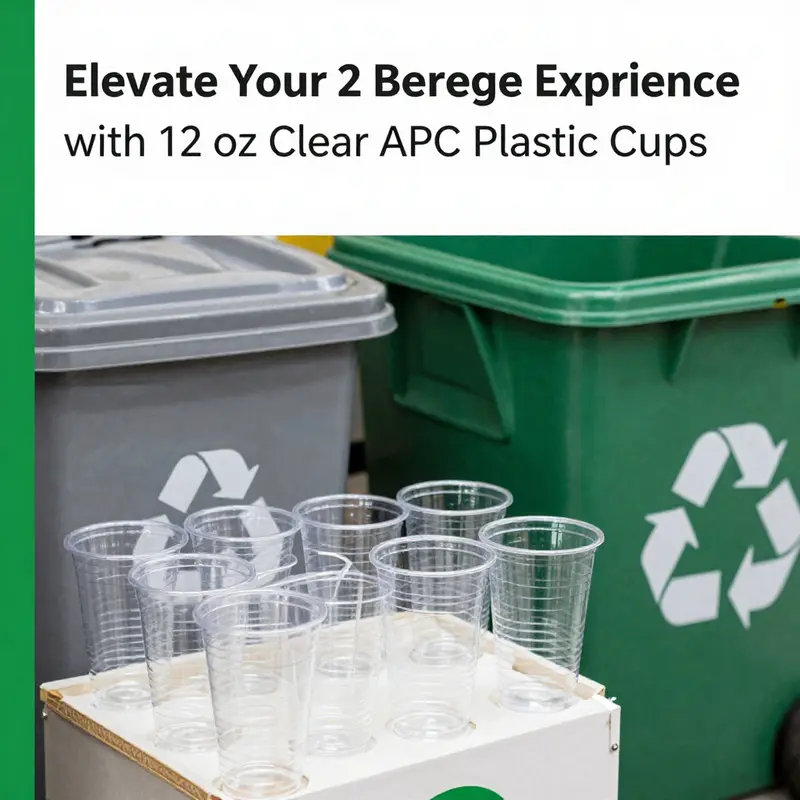
Clear, crisp cups that hold a perfect pour have become a familiar backdrop at gatherings of every kind. From office break rooms to weddings, from sports arenas to outdoor festivals, the 12-ounce clear cup is a staple of convenience. Yet when we pause to consider the environmental footprint of these seemingly ordinary vessels, the conversation expands beyond colorless clarity and into the complex interplay of material choice, production energy, disposal infrastructure, and consumer behavior. The topic here centers on cups that are clear and about 12 ounces in capacity, often described in industry discussions by their base material—amorphous polyolefin—and their single-use design. In practice, the market houses cups that owe their transparency to polymers like amorphous polyolefin (APO) blends, though many more familiar clear cups rely on other plastics such as PET. Either way, the environmental question remains: what happens after the beverage is gone, and how much harm or hope does our habitual use of these cups carry?
The material story matters. Amorphous polyolefin-based clear cups are applauded in some quarters for their clarity, UV stability, and strength, which allow the liquid inside to glow with accurate color and bubbles. These features matter for beverage presentation and consumer satisfaction. But the environmental calculus does not stop at aesthetics. In life-cycle terms, the production of any single-use cup consumes fossil fuels and energy, contributing to greenhouse gas emissions and fossil resource depletion. For APC-like plastics, the balance hinges on how the resin is produced, how efficiently it can be molded into cups, and how far the resulting product travels through the supply chain to its end use. The story also depends on whether the cup is recycled or recovered at the end of its life, and if so, whether the local waste system can process it efficiently. The cycle is not simply about the material itself; it is about the system that surrounds it—the collection, sorting, and processing capabilities of cities and regions, and the willingness of venues and consumers to participate in recycling programs.
In many places, the question of recyclability for clear disposable cups is entangled with local infrastructure. Recycling rates for any plastic of this class depend heavily on the local facilities, collection streams, and consumer participation. A cup that seems straightforward to recycle in a well-equipped city might become a coaster of misfit waste in another region where the recycling stream lacks the necessary sorting capabilities or where contamination from residues disrupts processing. This variability underlines a crucial point: the environmental performance of a clear 12-ounce cup is not solely a function of the resin’s chemistry but also of the broader waste-management network that surrounds it. When a city cannot reliably receive, sort, or bale these cups, much of their potential environmental advantage can slip away, ending up in landfills or as litter, where the degradation timeline stretches across decades.
Beyond end-of-life considerations, another layer of complexity comes from the comparison with alternative materials. Some analyses suggest that APC-type or amorphous polyolefin cups can offer advantages during production relative to traditional plastics, potentially reducing certain emissions and energy demands. Yet there is a caveat: even if production might be comparatively cleaner, the typical usage pattern for disposable cups remains one-time. The environmental benefit from a cleaner production is often offset by the perpetual cycle of use, waste, and disposal if the cups are not effectively recovered. In short, improved production efficiency does not automatically translate into a lower overall footprint when the cup is intended for single use in large quantities. The practical takeaway is that the material’s inherent advantages vanish if the system fails to close the loop.
The public conversation around sustainability has frequently highlighted alternatives that aim to minimize waste: compostable cups designed for industrial facilities, reusable cups that endure repeated use, and even redesigned single-use formats that reduce overall material consumption per serving. Compostable cups, for example, promise a shorter path to waste that can exit the landfills more quickly, but their effectiveness hinges on industrial composting infrastructure that can accept and process them. Without such facilities, compostable cups may still end up in landfills, where they do not necessarily reach a beneficial end of life. Reusable cups, meanwhile, shift the burden of waste away from the landfill and toward the logistics of cleaning, return programs, and the behavior change required from staff and attendees. The most robust sustainability gains in many contexts arise from programs that combine reuse with carefully considered materials and waste streams, paired with clear consumer expectations and venue policies.
That broader landscape prompts a practical design philosophy for event organizers, workplaces, and hospitality settings. When faced with the choice of a clear 12-ounce cup, it is not enough to optimize for clarity or cost in isolation. A more holistic approach weighs the cup’s entire life cycle, from raw material sourcing to end-of-life outcomes, and asks how the infrastructure will respond in real-world use. In this sense, the question becomes not only what the cup is made of, but also how it is used, collected, and disposed of in the places where people drink from it. This system-thinking perspective invites venues to examine how they present beverages, how they label and separate streams for recycling and composting, and how they communicate with attendees about what happens to waste after a party or a game.
The consumer role cannot be understated. A cup’s fate often mirrors everyday habits: rinsing and recycling practices, pre-rinse to reduce contamination, and a willingness to participate in take-back programs or deposit schemes. These micro-behaviors aggregate into macro effects. A culture that prioritizes reuse and disciplined recycling will extract more environmental value from the same cup material than one that treats disposal as the default option. The challenge lies not only in engineering a better cup but in engineering social practice alongside it. In environments such as offices, schools, and event venues, the most compelling improvements tend to come from clear, easy-to-follow waste guidelines, visible recycling and composting stations, and staff training that makes sustainable behavior the default rather than the exception.
Designing for options beyond one-time use also means recognizing that different contexts call for different solutions. In a fast-paced sports arena, for example, the imperative is to minimize queue times and maintain beverage quality; here, a transparent study of waste streams can reveal whether a push toward reusable cups is feasible or whether a robust, clearly labeled single-use alternative paired with a strong recycling program offers the best compromise. In more intimate settings—corporate events, conferences, or weddings—the balance often tilts toward reducing waste by encouraging attendees to bring their own reusable cups or by providing cup-dispensing systems that minimize waste while preserving the aesthetic of a polished event. Across these scenarios, the unstated promise remains the same: cups can be part of a sustainable environment if their use is embedded in a thoughtful waste-management framework and supported by behavior that aligns with that framework.
To illustrate a practical path forward, consider the broader ecosystem of cup choices that exist in the marketplace. While the clear, 12-ounce format is a standard, the sustainability conversation extends to how brands and venues communicate the lifecycle of their cups. Some operators experiment with limited-quantity reuse programs, while others explore partnerships with facilities capable of accepting a wider range of plastics and turning them into secondary products. These mechanisms, when executed with transparency, can help communities understand the trade-offs involved and make more informed decisions about which cups to deploy in specific contexts. Moreover, the narrative surrounding sustainable cup choices benefits from accessible information about how the cups are produced, what materials they use, and what happens after they are discarded. When stakeholders can access clear data on energy use, emissions, and end-of-life pathways, they can move beyond slogans toward concrete improvements.
For readers seeking practical guidance, the landscape suggests a spectrum of options rather than a single silver bullet. One pragmatic approach is to assess local recycling and composting capabilities first. If the local system supports high recycling rates for clear polymer cups and can separate streams effectively, investing in a high-clear, single-use option with optimized recycling can be reasonable. If not, it may be wiser to pursue alternatives that reduce waste generation at the source—such as encouraging reuse, providing incentives for customers to return cups, or selecting materials with favorable end-of-life characteristics in facilities that can handle them. Another lever is supplier collaboration: working with producers to design cups that maximize recyclability, minimize contamination risk, or enable easier disassembly at end of life. In parallel, venues can invest in education and signage that clearly explain how to dispose of cups and which streams they belong to. The combination of design, process, and culture ultimately determines whether a given cup contributes to a sustainable system or simply embodies a momentary convenience.
As the conversation continues to evolve, it helps to situate the discussion within the broader debate about plastic pollution and resource stewardship. Plastic cups, by their nature, embody the tension between the benefits of convenience and the long-term costs of waste. The research landscape suggests that APC-type or amorphous polyolefin cups can be part of a more sustainable toolkit when integrated with robust waste-management systems and mindful consumption patterns. Yet this does not absolve stakeholders from responsibility. Rather, it invites them to view disposables as a design and policy problem as much as a material science challenge. By embracing a systems view—one that pairs material choice with efficient collection, accurate sorting, consumer education, and reuse where feasible—we can chart a path toward clearer cups and, more importantly, clearer environmental outcomes.
For readers exploring greener paths within this framework, consider how a broader portfolio of cup designs can support sustainability goals. There is value in recognizing that no single option fits every setting. In some contexts, a high-clarity single-use cup with effective recycling may be appropriate; in others, a reusable system or a compostable cup designed for industrial facilities could yield more substantial environmental benefits. The key is to align product design with local capabilities and to pair that design with clear, consistent guidance for users. This alignment turns the potential environmental advantages of material innovations into real-world improvements, reducing waste and preserving resources without sacrificing the convenience and appeal that cups provide.
Internal link: For a broader look at eco-friendly cup options that emphasize responsible design and clear lifecycle messaging, you might explore resources focused on eco-friendly printed-logo paper cups and their role in sustainable event design. eco-friendly printed-logo paper cups. While this example involves a different substrate, it reflects how design choices and messaging can influence consumer behavior and waste streams in practical settings.
External resource: To complement this discussion with official guidance on plastics and sustainability, consult environmental information from a major environmental protection agency on plastics basics and lifecycle considerations. External reference: https://www.epa.gov/sustainability/basic-information-plastics
Final thoughts
The APC clear 12 oz plastic cups are not only a visually appealing choice for beverage service but also a highly practical one. Their material and design enhance the customer experience, making them ideal for various applications, from lively events to casual settings. Understanding the economic implications and environmental considerations surrounding these cups is essential in today’s conscious consumer market. By choosing APC cups, businesses can enjoy a blend of aesthetic and functional advantages while also aligning with sustainability goals. Embrace the clear choice for your beverage needs, and elevate your service experience.