
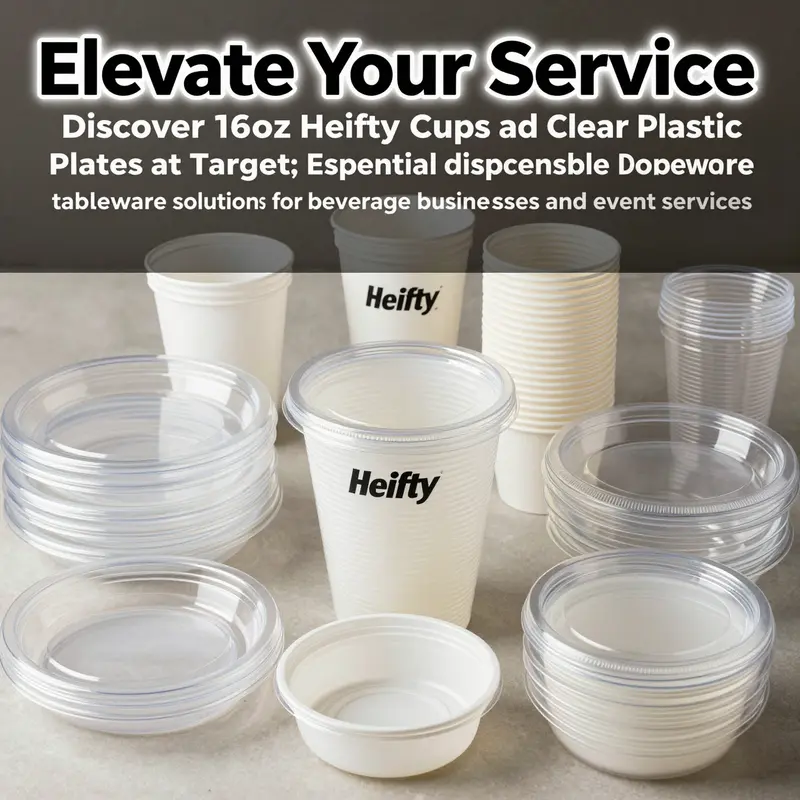
In the competitive landscape of beverage services and event planning, choosing the right disposable tableware can significantly impact customer satisfaction and operational efficiency. Target offers high-quality products such as 16oz Hefty cups and clear plastic plates that cater to the needs of bubble tea shops, restaurants, food trucks, catering services, and corporate procurement teams. This article highlights features, availability, and purchasing trends to help your business make informed decisions.
Bulk Convenience: 16-Ounce Clear Cups and Disposable Plates at Major Retailers
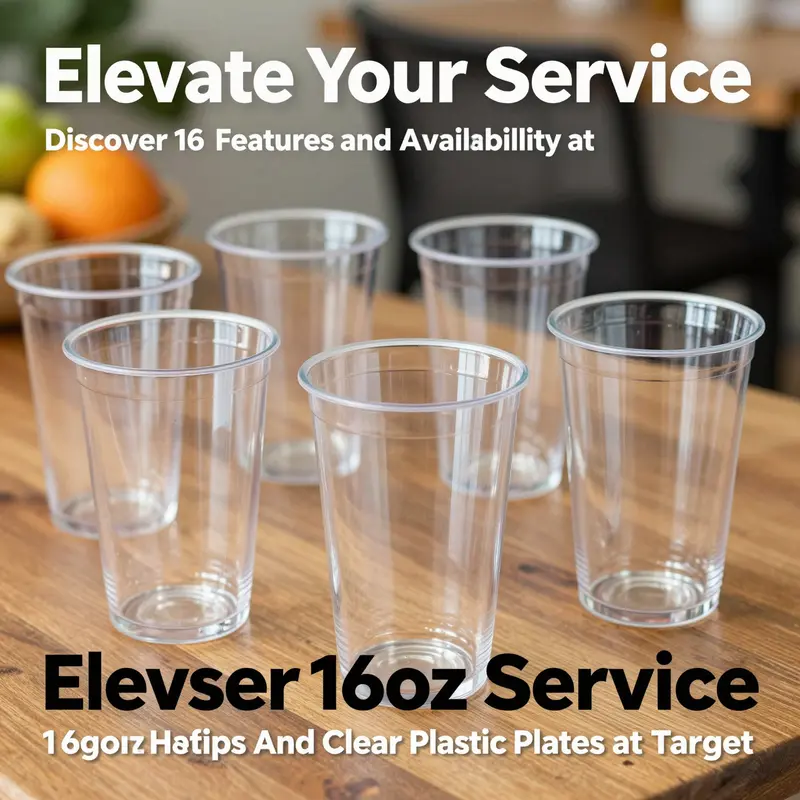
When planning gatherings, everyday practicality often wins. Bulk packs of 16-ounce clear cups and clear plastic plates are staples in party supplies and kitchenware aisles at major retailers. These disposables offer a straightforward solution for beverages and light meals, from casual family gatherings to school events. The clear design helps monitor drink levels at a glance, while the plates provide a neutral canvas for food colors and textures. Bulk sets—often around fifty cups and a matching set of plates—offer economies of scale and fewer store trips. Shopping options include in-store aisles and online catalogs with real-time availability and pickup or doorstep delivery. Manufacturers emphasize BPA-free plastics and recyclable pathways where available, though environmental considerations remain important. Availability across retailers means competition on price and convenience, with bulk purchases supporting entertaining needs without constant restocking. In short, these everyday disposables balance practicality, reliability, and value for hosts who want to streamline hosting and cleanup.
Clear Plastic Plates and 16-Ounce Cups: Designing Everyday Tables at Target
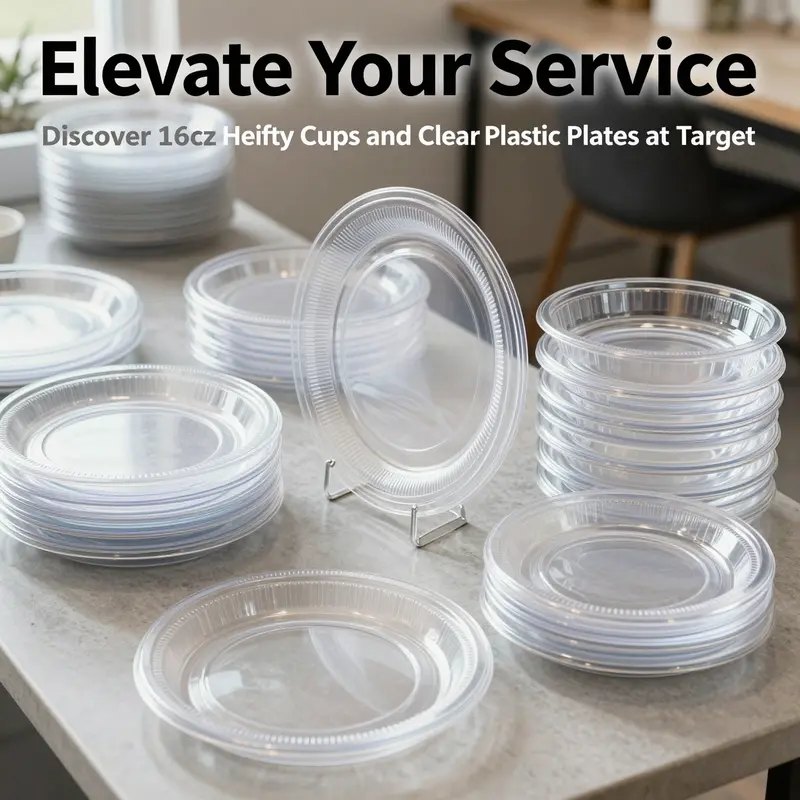
Tables set for everyday meals or weekend gatherings gain personality from the small, unsung choices we make about disposable dinnerware. When you walk through Target’s aisles or scroll the online catalog, you’ll notice a quiet consistency in how clear plastic plates and 16-ounce disposable cups come together. The goal isn’t just to eat or drink; it’s to create a look that feels intentional, clean, and a touch modern, even when you’re stocking up for a busy week or hosting a casual party. The rise of minimalist, transparent dinnerware has turned simple table settings into an exercise in restraint and clarity. Clear plastic plates with their bright transparency and gentle edges pair naturally with tall, clear cups that hold a generous 16 ounces. Together, they offer a versatile canvas for color accents—whether you choose bright napkins, a vivid centerpiece, or nothing more than the natural hue of a well-chosen beverage.
The practical appeal of a 16-ounce disposable cup lies in its balance of capacity and handling. A 16-ounce profile means you can serve a full, satisfying drink without frequent refills, making it ideal for social occasions where conversation flows and guests move from room to room. The clear cup also serves another purpose: it allows the color of the beverage to shine through, a small but meaningful design detail that can elevate even a casual party drink from ordinary to memorable. A well-made cup is sturdy enough to resist warm drinks and condensation, yet light enough to go unnoticed in hand, which is exactly the kind of unobtrusive utility that keeps a table looking calm and uncluttered. In a storefront that prioritizes value, the best options offer a solid lip and a smooth rim that feel comfortable against the lips, along with good stacking properties for easy setup and compact storage. The shopping experience for these cups becomes less about chasing novelty and more about confirming that everyday use will be reliable, efficient, and visually coherent with the rest of the table.
Clear plastic plates, especially those with a scalloped or softly curved edge, carry a different kind of design language. They read as modern and lightweight, but the clarity of the material often carries a hint of elegance that can elevate a casual dinner to something a notch tidier. The visual lightness of clear plates helps other table elements—fruit, centerpieces, and even the grain of a wooden table—to breathe, all while keeping the setting adaptable for a wide range of meal types. In 2026, Target introduced styling options that gently push this aesthetic toward a clean, minimalist look. These options are designed to blend with different dinnerware palettes, so shoppers can maintain a coherent table setting even as their entertaining needs shift. The price point for a single plate tends to sit in an accessible range, making it feasible to mix and match across different occasions without feeling the pinch. The combination of a clear plate and a 16-ounce cup thus becomes a practical tandem: both components are durable enough for everyday use and simple enough to disappear into the background of the table’s overall color story, letting food and decor take center stage.
Within Target, the availability of clear plastic plates is wide enough to be dependable for most shoppers. You’ll find a spectrum of sizes and edge treatments, from plates with a subtle scallop to those with a crisp, uninterrupted rim. The key is matching plate size to serving needs: a larger plate for bigger portions or salads, a smaller plate for sides or desserts. As for the cups, a 16-ounce capacity correlates to casual drinking contexts—from iced tea and lemonade to cocktails on a warm afternoon. The packaging for these items is often designed to be stackable and easy to store, which makes restocking less of a chore and more a quick, satisfyingly efficient task. When you consider the total cost of a table for four your first time, you might pay around a couple of dollars per plate and a similar range per cup, depending on the exact style and the volume you’re purchasing. Those price points are not just about affordability; they reflect a strategy that favors bulk purchases for larger events and smaller packs for daily usage, enabling households to choose precisely what fits their routine.
A central question for many shoppers is how to combine these pieces so they feel intentional rather than disposable. The plates’ transparency works best when paired with a coherent color or texture scheme. For instance, you might set a light, natural table with a few carefully chosen napkins in a single accent color, allowing the clear plates to do the heavy lifting visually. The cups, in turn, can be positioned to echo that accent color at a later point in the setting, perhaps in the beverage station or at the place where guests gather for a toast. The effect is subtle but meaningful: a table that looks designed rather than improvised. When a meal is formal or celebratory, you can still preserve that minimalist look by choosing plates with refined edges and cups with smooth rims, avoiding anything overly busy or patterned. The idea is to maintain a sense of openness and simplicity while still delivering a sense of polish.
If you’re shopping for these items, you’ll likely encounter new styling options that reflect broader design trends in home entertaining. Some plate lines emphasize edge detailing that catches light in a way reminiscent of fine china, while others lean into a more understated, almost glass-like clarity. The cups may feature reinforced bases or slightly thicker rims for a more tactile grip, which can be especially helpful for outdoors or poolside gatherings where sturdiness matters. Target’s assortment tends to balance durability with price, offering an approachable entry point for households just starting to assemble their own disposable dinnerware sets and for occasional hosts who want a quick, reliable solution for big groups. The overarching advantage remains the same: you can assemble a table that feels coherent and thoughtful without committing to expensive or heavy ceramic pieces. The plates’ sheer transparency invites you to play with textures and colors in your centerpiece, while the unadorned cups keep drinks visually accessible and easy to appreciate.
In thinking about sustainability, it’s useful to weigh your priorities against convenience. Disposable plates and cups obviously generate waste, so the decision to use them should be deliberate. For everyday meals, many households adopt a mixed approach, reserving disposable options for gatherings and busy weeks while investing in reusable dinnerware for regular meals. If you choose to use disposables, look for plates and cups made from materials that can be recycled in your local program or that align with a composting plan where available. The debate between convenience and environmental impact often pushes shoppers toward lines that emphasize durability and recyclability within an affordable price range. The design of clear plates also matters here: more durable materials and clean edges reduce the likelihood of cracks and breakage during handling, which in turn can minimize waste by extending the life of a pack that would otherwise be used quickly and discarded. In practical terms, this means that you can shop with a view toward value—plates that maintain their shape and clarity for multiple uses within a single event, or cups that resist cracking after a long afternoon of socializing—without feeling you must overspend.
The experience of using these items is shaped by how they’re displayed and offered to guests. A thoughtful display—where plates are stacked neatly and cups are placed in a central, reachable location—reduces clutter and makes the table feel prepared rather than improvised. The most successful setups often rely on a clean, consistent look that emphasizes function and ease. You can accent a simple plate-and-cup pairing with a few well-chosen accessories: a tray for drinks, a compact napkin stack, and perhaps a single, vivid centerpiece that stands in for more elaborate décor. This approach highlights the clarity of the dinnerware itself while ensuring that guests focus on conversation, not on managing a complicated table layout. When designed with care, even a modest, cost-conscious assortment of cups and plates can create the impression of a well-planned event, a subtle reminder that good design isn’t about splurging on a single statement piece but about harmonizing the small, practical choices that support a comfortable, welcoming atmosphere.
To connect these ideas back to the shopping experience, consider how a shopper might discover a line of eco-friendly options that align with a broader commitment to sustainable packaging and responsible consumption. For those curious about related products, a useful route is to explore a range of disposable containers and lids that share a common design language with clear plastic plates and 16-ounce cups. You can learn more about one such option that highlights the potential for eco-conscious labeling and convenient use by following this internal link to a product page. In the end, the appeal of clear plastic plates and 16-ounce cups at Target rests on their ability to deliver a reliable, aesthetically coherent experience without demanding a premium price. The plates offer a sense of lightness and clarity that makes any food pop, while the cups provide practical capacity and comfortable handling. The combination is flexible enough to support a casual breakfast or a casual dinner party, a backyard barbecue, or a weeknight family meal that feels a little more considered than usual. The 2026 styling updates underline that this isn’t about chasing novelty for novelty’s sake. It’s about embracing a design language that supports clarity, ease, and a sense of calm at the table. The shopper who chooses these items is often someone who values efficiency as a virtue and elegance as a subtle, everyday habit. And because Target makes these items readily accessible—both in-store and online—the path from decision to table is short, frugal, and satisfying, a quiet testament to how well-chosen disposable ware can quietly elevate ordinary meals into moments worth remembering.
On the Shelf: How 16-Ounce Clear Cups Stack Up Against Competitors in Mass Retail
On the shelf, a familiar tier of disposable time-savers sits beside stacks of crisp, transparent plates. The 16-ounce clear cup, with its simple geometry and bright clarity, has become a staple for beverage service in casual settings. A bulk option typically appears as a 50-count pack, valued for its convenience and predictable performance. This chapter follows the thread of that everyday product, probing what shoppers actually gain when they compare this cup against other brands offered at mass retailers. It also acknowledges the gaps in the current research landscape, which, as of now, does not yield a straightforward, head-to-head analysis that pits one widely used cup against its closest competitors within a single store ecosystem. Instead, the landscape presents a mosaic: broad descriptions of cup design, scattered consumer reviews, and general notes about price and availability, with few studies that quantify differences in grip, lid compatibility, or long-term durability when all variables—material, thickness, and manufacturing tolerances—are considered together. In other words, the landscape invites a grounded, reader-facing approach: learn what matters in real use, understand how retailers present options, and imagine a practical way to test and compare when data are incomplete.
From a shopper’s perspective, the appeal of the 16-ounce clear cup rests on several converging factors. Clarity is the most obvious; the absence of color ensures that the beverage itself remains the focal point. The wall thickness and rigidity of the cup influence not just feel but durability during transport and the carding of ice and carbonation in transit from cart to party table. The lip design—the rim’s contour and edge smoothness—affects sipping comfort, spill resistance, and even the ease with which a straw can be inserted. These factors become especially salient when the cups are bundled in bulk, as is typical for events, picnics, and informal gatherings where quantity matters as much as quality. In these contexts, the decision to select a 50-count pack, rather than a smaller or larger configuration, hinges on how reliably the product will perform under varied conditions: the distance from vehicle to venue, the variety of beverages poured, and the likelihood of reuse or exchange at a gathering.
A practical constraint in the current data picture is that, while stores stock a broad range of disposable cups and accompanying clear plastic plates, the literature does not yet offer a clean, comparative dataset for 16-ounce cups across competing brands within the same retail channel. The available sources more often describe categories—“clear disposable cups,” or “16-ounce cups for beverages”—and less often provide side-by-side metrics. This absence matters for both consumers and retailers. For shoppers, it means that recommendations must rely on personal testing, trusted reviews, and in-store trials rather than a consolidated summary of performance attributes. For retailers, it implies opportunities to create more transparent, side-by-side comparisons on product pages, highlighting which brands meet specific needs: heat tolerance, stackability, lid compatibility, and recyclability. The lack of a formal comparative framework also means that consumers frequently navigate a blend of perceptions and experience when choosing among similar-looking products. A cup’s success is rarely determined by appearance alone; it is defined by the micro-conditions of use—temperature, carbonation, transport, and the occasional rough handling that happens in busy event settings.
In the absence of a rigorous head-to-head study, it helps to approach the decision with a simple, repeatable rubric. Start with price per cup, which is often obscured by promotions, multi-pack discounts, or loyalty offers. A straightforward calculation—total price divided by number of cups—provides a baseline for value. Yet price alone rarely captures true value. A cup that costs a few cents more per unit might deliver better performance and lower waste due to fewer breakages or leaks, translating into tangible savings over the course of a party or service shift. Materials matter, too. Clear cups are typically molded from either polystyrene or PET, each with distinct properties. PET tends to offer higher rigidity and clarity, and can perform better in terms of impact resistance, while polystyrene can be more economical with a different feel in the hand. Thickness, often described in gauge or millimeter terms in supplier specifications, influences both the tactile quality and the likelihood of cracking when ice or ice cubes collide against the cup during a hurried transfer.
Another critical axis is compatibility. A cup’s rim must be comfortable to drink from, and the diameter must align with a broad range of lids if a catering scenario requires a sealed or spill-resistant option. In practice, many bulk packs are designed to pair with lids sold separately in the same product family. When evaluating the competing brands, it helps to test the combination of cup and lid in close proximity, if possible, to avoid mismatches on event day. This is not merely a matter of convenience; it reduces the risk of spills, which carry both mess and waste implications. The potential for compatibility issues is especially pronounced in environments where a variety of beverages are served, from still to carbonated to heat-holding drinks, each with its own pressure and temperature characteristics.
Beyond the mechanical and economic factors, environmental considerations have become a meaningful dimension of the decision. Recyclability varies by plastic type and by local facilities. Clear cups made from PET are broadly recyclable in many curbside programs, yet regional exceptions exist, and some facilities may be hesitant to process thin-walled containers that are thin and prone to contamination. In the public discourse around disposables, compostable options exist but require dedicated industrial facilities and careful handling to avoid contamination with non-compost materials. For retailers, clarifying recycling or disposal guidance on packaging can help reduce uncertain outcomes for customers and improve overall sustainability metrics. For consumers, this translates into checking local recycling guidelines and, where possible, selecting cups that maximize recyclability without compromising performance in the context of a given event.
Where does clear plastic dinnerware fit within this landscape? Clear plastic plates, like their cup counterparts, are judged by how well they carry, display, and support food in a way that remains visually unobtrusive. The pairing of a clear plate with a clear cup can create a streamlined, cohesive presentation at casual gatherings, while also presenting practical questions about stacking, stability, and compostability. In many cases, retailers curate a broad assortment of plate styles and sizes, from simple round plates to more elaborate shapes that echo the modern, minimal look of clear disposables. The dichotomy between form and function becomes particularly salient as events scale up: plates must hold a range of foods without buckling under weight, while cups must manage liquids without leakage or slippage. The integration of cup and plate choices therefore becomes a matter not only of individual product performance but of overall event planning: how many people, what menu, what service method, and what environmental considerations will shape the final selection.
The practical implication for shoppers who want a reliable, consistent experience is to view the selection from the retailer’s perspective. Store shelves and online catalogs are organized to guide decisions with visible attributes: pack size, material type, clarity level, and, increasingly, sustainability notes. A consumer who habitually buys the same bulk pack for summer gatherings will appreciate predictable pack contents, consistent cup height, and a stable rim that accepts a wide range of lids. This predictability reduces the cognitive load of decision-making and frees time for other event-planning tasks. Yet the gap in direct, published comparative analyses means that the most credible guidance may come from a shopper’s own testing. A customer who orders a sample from a few different brands and then observes spill rates, grip comfort, and lid fit over a few days can translate those observations into a personal benchmark. Such a benchmark becomes more robust when paired with real-world data: how often a given brand is back-ordered, how often a particular size sells out during peak seasons, and how price promotions shift over the calendar.
To readers seeking practical, actionable insight, this is where the value of a structured, consumer-empirical approach becomes evident. A simple protocol can be adopted by individuals, event planners, or small retailers who want to perform a quick, repeatable assessment without expensive lab testing. Start with a baseline test: pour a standard beverage into several cups of the same brand, use the same ice quantity, and transport the beverages over a short distance. Note any sweating, condensation, or structural changes as the beverages warm or cool. Then, perform a parallel test with a competing brand’s cup—again ensuring identical conditions. Compare grip, lip comfort, and the ease with which a lid can be applied if necessary. Record any instances of cracking, browning around the rim, or leakage when pouring between vessels. Document stacking behavior: do some cups deform under weight when stacked, or do they nest neatly and securely? This type of field testing with a few straightforward metrics can reveal practical differences that may not be obvious from packaging descriptions alone.
The internal ecosystem of product data in mass retail often lags behind the nuance of actual use. This is precisely why a proactive consumer can gain an edge by focusing not only on price and pack size but also on the qualitative signals that indicate resilience and user comfort. For example, a cup that feels unusually brittle in cold conditions or a rim edge that scuffs the hand after repeated handling may signal a marginally less favorable experience, even if the price per cup is attractive. Conversely, a slightly higher price per cup may be justified if the cup delivers superior tactile feel, consistent lid fit, and lower breakage rates during transport. These trade-offs do not appear in a single, canonical study, but they emerge clearly in practical use and, over time, in consumer reviews and retailer feedback.
An additional layer to consider is the online shopping experience itself. Retail websites increasingly provide side-by-side comparisons, customer rating aggregations, and filters that help shoppers sort by pack size, material, and compatibility with lids. The online interface can turn the decision into a quicker task for everyday buyers or a more transparent process for event planners who manage multi-brand orders. Even when a precise, peer-reviewed comparative dataset remains elusive, the online shopping environment can deliver valuable signals: consistent availability of bulk packs, clear labeling about material types, and user-submitted photos and notes that reveal how a product behaves in real-world scenarios. In this sense, the consumer journey becomes a blend of product knowledge, personal testing, and community feedback that, together, approximate a robust comparative framework in the absence of formal research.
To illustrate, consider a linked example of related packaging content that demonstrates how integrated packaging materials can influence user perception and performance. A related product entry discusses disposable packaging made from kraft paper with a clear plastic component, illustrating how transparency and material diversity can coexist in a single offering. This example, while not a direct cup-to-cup comparison, sheds light on how clear plastic elements are positioned within broader packaging ecosystems and how retailers communicate these options to shoppers. See the related entry for context on how clear-plastic components can appear in mixed-material packaging scenarios: disposable-biodegradable-kraft-paper-matt-lamination-clear-plastic-combo-pastry-dessert-tiramisu-cake-food-container-packaging.
For those seeking a more tangible cue beyond the metric of price per cup, the physical reality of the cups on display matters. In stores, the cups that win favor with buyers are those that convey assurance at a glance. Thickness that feels robust when grasped, a rim that appears comfortable to drink from, and a cup height that looks proportionate to its diameter—all of these micro-details accumulate into a trustworthy impression. The user experience is not solely about how the cup performs when completely filled; it begins the moment a shopper picks it up. The tactile cues—the weight, the smoothness of the interior wall, the uniformity of the edge—signal quality that can justify a price premium or a decision to select a different pack size. The same logic extends to the matching clear plastic plates: stability, rigidity, and the ability to hold foods without warping or moisture transfer all contribute to perceived value, particularly in buffet or casual dining contexts where plates must bear variable weights and flourish in a visually clean presentation.
In short, while the current research landscape may not offer a ready-made, numerical comparison of 16-ounce clear cups across competing brands within a single mass-retail channel, shoppers can still arrive at a well-supported conclusion through a practical, field-tested approach. Focus on the core performance traits—clarity, thickness, rim comfort, lid compatibility, stacking behavior, and overall durability—while keeping an eye on price-per-unit and environmental considerations. The result is a robust, user-centered assessment that reflects real-world needs more accurately than any single product description could. And because the retail environment continuously evolves—with new packaging configurations, seasonal promotions, and shifting stock—this approach remains adaptable. It allows consumers to make informed, confident choices even in the absence of a formal comparative study. The ultimate takeaway is not that one brand is categorically superior, but that the right choice depends on the specific use case: the number of attendees, the beverage type, the service tempo, and the environmental expectations of the event.
External resource: https://www.target.com
Aisle Signals: Reading Consumer Trends in 16-Ounce Clear Cups and Disposable Plates

A single shelf in a busy national retailer can feel like a living barometer of how households plan gatherings.
When a shopper picks up a 16-ounce clear cup and tucks a stack of transparent plates into the cart, they signal a preference for convenience and reliability.
The 16-ounce size sits at a versatile midpoint: large enough for cold drinks and small enough to carry easily. The clear plate serves as a blank canvas that makes the food pop while staying unobtrusive.
For many shoppers, disposables are about predictable outcomes—no spill, quick cleanup, and a smooth transition from shopping to hosting. Retailers study how items are displayed side by side and how bundles or complementary products influence basket size. The pairing embodies speed, simplicity, and a silent promise of preparedness.
Beyond practicality lies a lens on sustainability; shoppers weigh convenience against environmental impact, and suppliers respond with options that balance performance with recyclable or compostable materials.
A major manufacturer in this category may undergo ownership changes, potentially shifting branding, packaging, and sustainability messaging. Shoppers will notice packaging updates, clearer recycling instructions, and new product variants, but the core expectation remains: reliable performance when needed, and transparent environmental claims when possible.
Bundling cups with plates near napkins and utensils can simplify decision making and support higher baskets online and in-store, as shoppers compare sizes, read reviews, and tally expected guest counts.
The ultimate takeaway is that the 16-ounce cup and the clear plate endure because they deliver trust: they are easy to find, simple to use, and dependable for a range of gatherings, from casual weeknight dinners to spontaneous get-togethers.
For readers seeking context on sustainable options within disposable tableware, a practical reference page highlights compostable and recycled-content choices and how suppliers balance performance with responsibility. The retail aisle thus reflects a broader trend: shoppers want convenient, affordable, and credibly sustainable options, with product variety and clear communication guiding purchase decisions.
Final thoughts
Choosing the right disposable tableware enhances the customer experience in beverage and event services. The 16oz Hefty cups and clear plastic plates available at Target offer a balance of functionality and aesthetic appeal, meeting the practical needs of various businesses. By understanding features, options, and consumer trends, you can make informed purchasing decisions that support your operation. Explore these options today to elevate your service.