
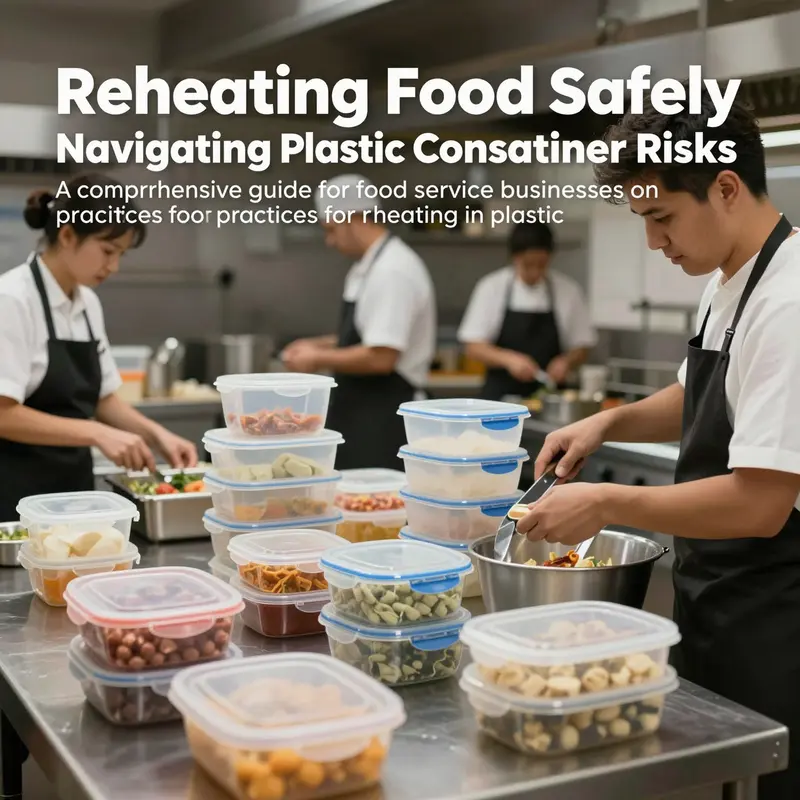
Understanding the safety concerns surrounding reheating food in plastic containers is crucial for businesses dealing with food service. This guide delves into the potential risks associated with using plastic for reheating, helping bubble tea shops, restaurants, food trucks, event planners, and corporate procurement teams make informed choices. The following chapters will explore the risks of reheating food in plastic containers, how to choose the safest options when necessary, and best practices for ensuring safety within the confines of plastic usage.
Heat, Plastic, and Potential Harm: Unpacking the Risks of Reheating Food in Plastic Containers
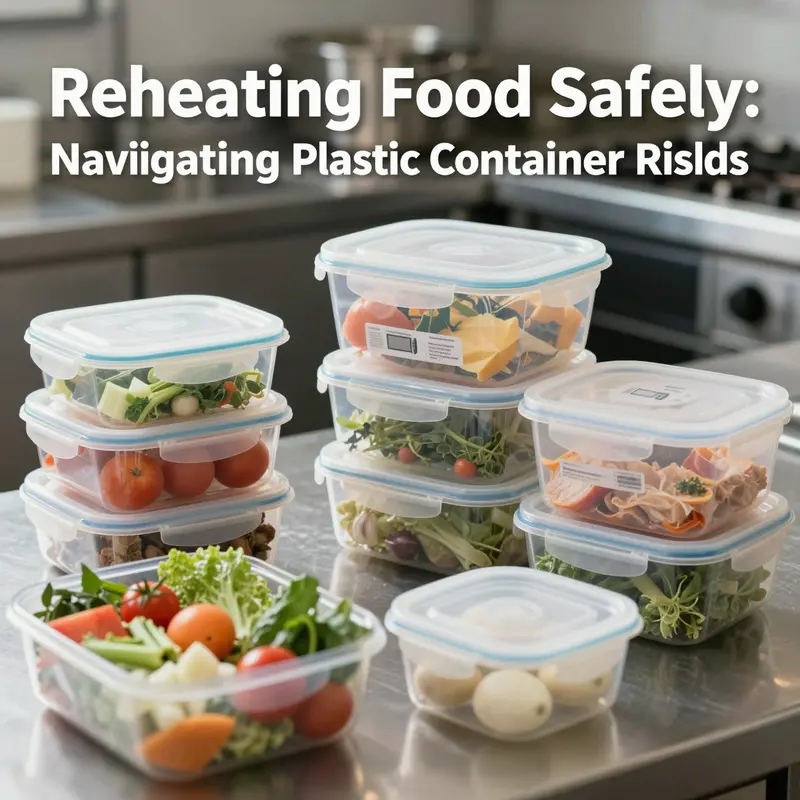
In the quiet choreography of a modern kitchen, reheating leftovers often unfolds as a simple, almost automatic ritual. A container with a snap-on lid slips into the microwave, and a few minutes later steam escapes, the meal resumes its warmth, and life continues. Yet beneath that familiar routine lies a web of potential risk that many busy cooks never pause to consider. The question at hand—can I reheat food in plastic containers—touches not just on convenience, but on the integrity of what ends up on our plates and, more subtly, on how small, everyday choices shape long-term health. The surface answer is straightforward: some plastics are labeled microwave-safe, but that designation does not guarantee safety for every meal, every temperature, or every repeated use. The more accurate picture is nuanced: heating can alter a plastic’s molecular structure, and those changes can drive the release of chemical companions into the very food we eat. This is not merely a theoretical concern. It sits at the intersection of chemistry, physiology, and daily life, where a drop of oil or a hint of acidity can become a catalyst for leaching when heat is applied.
Plastic containers are built from synthetic polymers, most often derived from petroleum. They are not just inert vessels but complex matrices that incorporate a range of additives. Bisphenols such as BPA, along with their substitutes like BPS, are among the most publicized players in this story. Phthalates and other plasticizers also pepper the landscape of additives, designed to modulate flexibility, durability, and shelf life. None of these substances are chemically bound to the plastic’s backbone in a way that makes them immutable. When a container is heated, these additives can migrate into the food—especially when the food is fatty, acidic, or oily. The migration is not a one-time event; it can accumulate with repeated heating, washing, and use, as micro-scratches and microscopic imperfections open more pathways for transfer. In practice, this means that a container that looks perfectly sound—no warps, no cracks, no cloudiness—may still be releasing measurable chemicals once it has endured several rounds in the microwave.
A growing body of scientific work has begun to quantify these concerns in real-world conditions. A 2023 peer-reviewed study published in Environmental Science & Technology tested fifty common plastic food containers under microwave-like conditions and found that even those labeled “microwave-safe” released detectable endocrine-disrupting chemicals. Antimony, phthalates, and nonylphenol appeared in measurable amounts. The implications of these findings extend beyond short-term discomfort or a single meal: endocrine-disrupting compounds have been linked to hormonal imbalances, developmental issues, reproductive disorders, and an elevated risk profile for certain cancers when exposure is prolonged, even at low doses. The study also underscored a practical and alarming truth: the degradation process accelerates with repeated use, and visible signs of wear—scratches, cloudiness, warping, discoloration—are not just cosmetic blemishes. They are clues that the container’s barrier against chemical migration has weakened, allowing more material to migrate into foods under heat.
This is not a call to panic, but a prompt to reframe how we assess risk in the kitchen. Regulatory agencies, like the U.S. Food and Drug Administration, do set guidelines for chemical migration that are considered acceptable under specific conditions. Those guidelines are crucial for ensuring a baseline of safety and for allowing plastics to serve as a practical, affordable option. Yet they do not account for the cumulative, long-term, low-dose exposure that accompanies habitual reheating with the same container across months or years. In other words, FDA approval for a given plastic does not equate to a guarantee of zero risk over time. Consumers who rely on microwave-safe labels should understand that safety, in this context, is a matter of reduced risk rather than absolute safety. This distinction matters because it reframes decisions around daily meal prep and leftovers: the convenience of plastic should be weighed against the possibility of ongoing chemical exposure.
The health implications of these exposures are a moving target, shaped by the complex interplay of dose, timing, individual susceptibility, and the wide spectrum of plastics in common use. Endocrine disruptors can influence hormonal signaling pathways that regulate growth, metabolism, and reproduction. Some evidence points to developmental concerns in children and potential hormonal disturbances in adults, with long-term perspectives that include cancer risk as a possibility rather than a certainty. Given the heterogeneity of plastics and the variability of heat exposure, it is not prudent to assume that all microwave-safe labels equal a universal safeguard. Instead, a cautious approach acknowledges that heat accelerates molecular movement, and that movement is most likely to occur where fats and oils standing in contact with a container are warmed to high temperatures.
Part of the challenge is the very diversity of plastics on kitchen shelves. Polypropylene, polycarbonate, polystyrene, polyethylene terephthalate, and a spectrum of copolymers each behave differently under heat. Some are relatively stable at typical reheating temperatures, while others shed additives more readily when heated. Even within a single material class, manufacturing practices, recycling status, and age can shift performance. Scratches and clouding are not merely superficial; they are signals that microcracks have formed, increasing the surface area through which chemicals can migrate. This degradation, driven by thermal cycling and mechanical stress from washing, exposes food to higher risk than would be suggested by a pristine, new container.
For those who prefer to minimize risk while preserving the convenience of reheating, the evidence strongly points toward glass as a superior alternative. Borosilicate and tempered soda-lime glass are chemically inert under high temperatures and do not leach additives into food in the way some plastics do. Glass withstands rapid heating and cooling, and it does not exhibit the same susceptibility to microcracking that plagues many plastics. The difference is not merely about safety in a single meal, but about resilience across repeated reheating cycles. Glass containers, when used for leftovers, provide a stable barrier that remains faithful to its core properties even after thousands of temperature fluctuations. The practical takeaway is straightforward: if you want to risk the lowest level of chemical migration and preserve the integrity of flavors and textures, glass is the safer, more durable choice.
Of course, the kitchen cannot operate on absolutes alone. Plastic remains ingrained in many households because of cost, weight, and the perception of convenience. The prudent path is to interpret microwave-safe as a relative measure rather than a green light. Short, intermittent reheating in a microwave-safe plastic container, followed by immediate transfer to a non-plastic vessel for final consumption, can reduce overall exposure. Avoid letting food sit and heat long enough to become a full boil, and avoid storing fatty or acidic foods in plastic for extended periods after cooking. Above all, reject the instinct to rely on a single container for every reheating task; variety in containers can distribute exposure and help minimize cumulative leaching risk. In practice, this means recognizing that the plastic you used yesterday may not be the best choice today, and that a quick switch to glass or a ceramic alternative can be a small but meaningful precaution.
The narrative around safety and convenience is not simply about risk avoidance; it is also about sustainability and responsible consumption. Reheating in plastic can contribute to environmental concerns, especially when worn containers are discarded after a few cycles. While many plastics carry recycling labels, the reality is that not all recyclers handle every polymer with equal efficiency. The friction between personal habit and recycling infrastructure means that opting for long-lasting, inert alternatives—such as glass—offers an environmental advantage in addition to potential health benefits. A durable glass container minimizes the need for frequent replacement, reducing waste routed to landfills and the energy spent on manufacturing new containers. In this broader view, the choice to favor glass for reheating aligns with both health-minded and environmentally conscious living.
For readers seeking concrete direction amid the complexity, remember that the FDA article on plastic food packaging and microwaving remains a cornerstone resource. It clarifies that while microwave-safe plastics exist, minimizing heat exposure and limiting repeated use are essential to lowering health risks. This is not a call to abandon plastics entirely, but a reminder to align practice with evolving science. When you choose to reheat in plastic, cap the exposure: keep heating time brief, avoid letting the container drift into the hottest zone of the microwave, and consider transferring the food to a glass vessel for final reheating if you plan to eat soon. When time permits, changing habits to rely on glass for reheating can become a practical yes to both taste and safety.
To illustrate how these issues translate into everyday decision-making, consider the pathways by which people manage leftovers at work or in family households. The allure of a microwave-safe plastic tub is strong—lightweight, affordable, and easy to stack. Yet the same containers that make lunch boxes practical can also complicate health considerations over time. The challenge for consumers is to balance convenience with an understanding of the trade-offs inherent in heating plastic. It is not a binary choice between safety and convenience; rather, it is a spectrum where informed decisions, careful handling, and occasional substitutions can collectively reduce risk without surrendering practicality.
If you are exploring safer packaging alternatives for reheating purposes, you may find it useful to consider containers designed with alternative materials in mind. For instance, a kraft paper octagonal bowl with a lid embodies a shift toward eco-friendly, disposable packaging that can support reheating in some contexts, depending on the specific design and use-case. These options are not a one-size-fits-all solution, but they offer a tangible route for households seeking to minimize chemical exposure while maintaining the convenience of ready-to-use containers. For a closer look at one such option, you can explore the kraft paper octagonal bowl with lid and its accompanying features here: kraft paper octagonal bowl with lid and eco-friendly disposable. While no packaging choice guarantees absolute safety in every scenario, this kind of alternative represents a practical step toward reducing reliance on heated plastics and embracing materials with a longer record of inertness under heat.
Ultimately, the core takeaway is a call to informed, deliberate kitchen practice. Reheating food in plastic containers carries measurable risks that become more pronounced with heat, repeated use, and the nature of the food being heated. The science does not scream crisis; it whispers a cautionary note that a growing body of research is elevating into public awareness. Consumers who understand that microwave-safe does not mean risk-free can implement strategies that preserve both flavor and health. When possible, switching to glass for reheating simplifies the calculation: it eliminates the primary vector for chemical migration, reduces the chances of unwanted chemical transfer, and provides a robust, reusable solution for a wide range of meals. In conversations with scientists and health advocates, this approach is frequently endorsed as a prudent default, especially for households that regularly reheat leftovers or prepare meals in advance for the week.
The conversation does not end here. It continues as researchers refine their understanding of low-dose exposures and as manufacturers respond with better materials and clearer labeling. It also invites readers to reflect on how they source and store food, how they heat it, and what standards they set for their home kitchens. The evolving story of reheating, safety, and material science is not a single chapter but a living dialogue that mirrors the daily choices we make about what we feed ourselves and those we love. By embracing glass where feasible, by paying attention to signs of wear on plastic containers, and by remaining curious about the science behind everyday conveniences, we can navigate the potentially hidden costs of reheating in plastic with greater clarity and confidence. In this light, the question “can I reheat food in plastic containers?” becomes less about a universal prohibition and more about a carefully weighed risk-to-benefit assessment that reflects current science, personal health priorities, and the practical realities of modern living.
For readers who want to dig deeper into the empirical frontiers of this topic, a rigorous, peer-reviewed examination provides a thorough account of how plastic containers behave under realistic microwave conditions and what this means for chemical migration over time. See the 2023 Environmental Science & Technology study for a detailed analysis of the specific compounds detected and the experimental conditions used to measure leaching. Keeping pace with such research helps ensure that kitchen practices stay aligned with the best available evidence, rather than with convenience alone. As the science evolves, so too can the everyday choices we make at the counter, in the pantry, and around the microwave. The interplay between materials science, toxicology, and daily eating habits is not abstract—it is about the health of families, the integrity of food, and the long arc of our collective well-being.
External reference for further reading: https://pubs.acs.org/doi/10.1021/acs.est.2c06948
Heat Without Harm: Choosing Safer Containers for Microwave Reheating
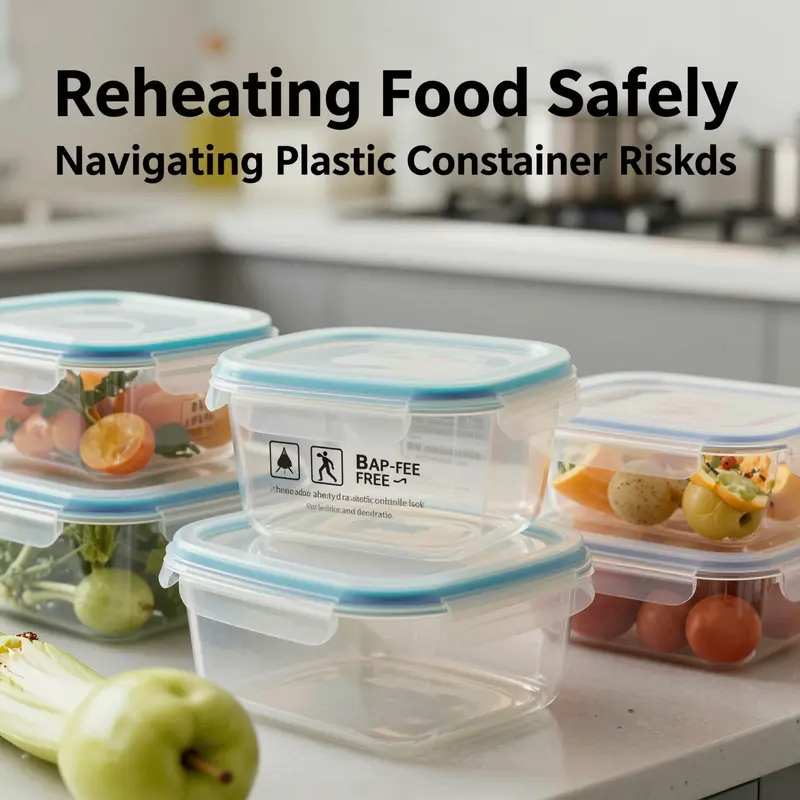
When you reheated yesterday’s leftovers, you probably reached for the container that already lived in your refrigerator door. Plastic boxes, lids, and easy-to-grab takeout vessels shape many kitchens, and the habit is hard to break. Yet the question of whether it is safe to reheat food in plastic is more nuanced than a simple yes or no. The broader truth rests on how plastics interact with heat, what they are made of, and how carefully you treat them before, during, and after microwaving. Reheating in plastic is not universally forbidden, but the safest approach is to recognize that not all plastics are created equal, and even those marketed as microwave safe can introduce risk if used in the wrong way or too often. The canton of recommendations points toward a cautious practice: favor containers designed for high heat, label-detectable indicators that a container has passed appropriate testing, and, whenever possible, swap to materials that are inert, durable, and environmentally considerate. In this framing, the core issue is not merely a label but a chain of decisions about material, design, and care that together determine how heat interacts with food and with the container that holds it.
To begin with, the idea of microwave safe is not a guarantee of absolute safety. It is, in effect, a signal that the container is less likely to melt or warp under typical microwave conditions. It does not imply that heat exposure is harmless over time or that repeated use will not alter the chemical landscape of the food and the container. Plastics can break down at a molecular level when heated, releasing substances that your food could pick up. Classic concerns have centered on BPA, a chemical historically used in some plastics and resins. Even in products advertised as BPA-free, other additives can migrate when heat is applied. These substances may be present in small amounts, but given enough heat and multiple reheatings, the cumulative exposure becomes worth considering, especially for food that is fatty, acidic, or sweet, all of which can drive greater leaching. When you repeatedly heat, wash, and reuse a plastic container, microscopic cracks and surface roughness can grow. Those microscopic changes create additional pathways for migration, especially at the spots where plastic has already begun to degrade. In other words, the risk is not just a single heating event; it compounds over time.
In the practical kitchen, the best protections come from choosing containers with clear, explicit safety credentials. The most trustworthy indicators are labels such as microwave safe, microwave applicable, or a clearly recognizable microwave icon, like a wavy line symbol, that confirms the product has passed specific testing for microwave use. The presence of those indicators should be understood as evidence that the product has been evaluated for the heat profile of reheating and is designed to withstand it without immediate, dramatic failures like melting or warping. It is equally important to verify that both the container and its lid are made from materials suitable for heating. A lid may be made from a different polymer than the base, or from a material that is not rated for microwave use. In many cases, the lid is not microwave safe and should be removed before heating. The key is to confirm the material specification on the base and ensure the lid either is rated as microwave-safe or is not heated at all during the reheating process.
The material that earns the strongest position for microwave reheating is polypropylene, which carries the resin identification code number five. Polypropylene can withstand temperatures up to roughly 120 degrees Celsius, or 248 degrees Fahrenheit, making it one of the few plastics that can tolerate the heat of a microwave without a quick decline in structure. It is commonly found in containers used for takeout, meal-prep, and many reusable lunchboxes. When you see the number five inside the triangle on the base of a container, you have a strong signal that the plastic is PP and has been designed with higher-heat applications in mind. However, to maintain safety, you should verify that both the container and its lid are PP. There is a common pitfall here: many lids are not microwave-safe, even when the base is. If you heat with the lid on, you trap heat and may cause uneven heating or additional migration. A quick habit is to heat with the lid removed and only replace it after cooling, or use a vented lid designed for hot food, which can reduce steam buildup and the risk of pressure-related leaks during reheating.
Conversely, several other plastic families warrant strong caution or avoidance altogether for reheating. Number 1 plastics, which include PET, are typically used for beverage bottles and are not engineered to withstand heat; they soften well before any reheating goal is met. Number 3 PVC, which is associated with flexible materials, can release phthalates when heated. Number 6 PS, known as polystyrene, can deform and leach styrene at elevated temperatures. Number 7, the category for other plastics, often includes polycarbonate and is frequently where BPA concerns originate. While some modern versions of number 7 plastics are marketed as BPA-free, the remaining additives can still migrate under heat and heat-related stress. This is not to dismiss every item labeled as “7,” but it is to acknowledge that this category contains a broad spectrum of materials with uneven safety profiles for reheating. With these cautions in mind, the simplest path is to avoid these plastics for microwave reheating altogether.
Beyond chemical composition, the physical condition of a container matters as much as its labeling. A cracked, discolored, scratched, or warped container is a red flag. Degradation can create micro-cracks or grooves where heat concentrates and the barrier between the food and the plastic weakens. If you notice any such signs, discard the container rather than risking increased chemical migration. The same logic applies to containers that have held hot, fatty, or sugary foods for extended periods. The combination of oil and sugar can cause localized overheating, softening the plastic, and increasing the chance of deformation or chemical migration, even if the container sits within an officially approved category.
For those who reheate regularly or who store leftovers in portions intended for later use, switching to materials designed for long-term high-temperature use offers a clear safety margin. Glass emerges as the gold standard in this regard. Borosilicate glass, known for its inertness and high heat tolerance, does not shed chemical components into foods under normal reheating conditions and resists degrading over time. It also handles repeated heating and cooling cycles without the structural fatigue seen in some plastics. Ceramic containers labeled as microwave-safe can provide similar stability with the added aesthetic and design flexibility that many households value. The trade-offs—weight, care requirements, and potential fragility—are real, but the safety dividends in terms of chemical inertness and heat resilience are substantial. In wellness terms, the glass or ceramic choice aligns with a broader aim: to minimize cumulative chemical exposure from everyday cooking practices without sacrificing convenience.
As with building any reliable cooking habit, practical steps matter. If you must use plastic, seek PP with a solid microwave-safe endorsement and confirm the lid’s compatibility. Do not heat oily or sugary foods in plastic containers for longer than necessary. Use slower, shorter heating cycles with a stir or shake halfway through to promote even heat distribution and reduce localized hotspots that can drive heat-induced leaching. Always let reheated food stand briefly before consuming so the heat can distribute evenly and so any potential residual heat can lessen before the container is handled. These small, consistent habits accumulate into meaningful protection for you and your family over time.
For those who want an immediate alternative that reduces risk while preserving convenience, consider a take-away option built from inert materials like kraft paper or other compostable packaging that is explicitly labeled as microwave-safe. If you are curious about such alternatives, there is a practical path that many people adopt as part of a broader shift toward safer reheating options. A simple choice is to reach for containers described as microwavable and designed for heat exposure, but with a material that is less prone to leaching than typical plastics. These kraft-paper take-away cups and bowls with appropriate lids are often designed for reheating or at minimum for hot foods that will be consumed soon after purchase. They provide a compelling balance of convenience and safety, reducing the likelihood of chemical migration during heating while still supporting a practical kitchen workflow. When you select these alternatives, you are not only safeguarding health but also supporting a line of packaging that can be more environmentally considerate in the long run.
If you are exploring safer reheating options, you may want to explore kitchen-ready packaging that emphasizes heat tolerance and inertness. To connect with a practical, ready-to-use option without sacrificing the streamlined feel of everyday meals, consider disposable kraft-paper soup cups with paper lids. The concept is straightforward: a container designed to endure reheating without releasing unwanted chemicals, paired with a lid that keeps moisture in during transport and can be removed for heating. Such packaging—designed for short-term use and easy disposal—offers a bridge between the necessity of reheating and the goal of reduced chemical exposure. disposable kraft-paper soup cups with paper lids provides a tangible example of this approach, illustrating a path to safer reheating practices that is distinct from plastic dependence and aligned with growing consumer interest in simpler, more inert materials.
In parallel with material choices, one should consult trusted authorities for a baseline of evidence and guidance. The U.S. Food and Drug Administration maintains a body of recommendations on microwave-safe packaging that distinguishes between the safety of food-contact materials and the risks associated with heat exposure. Their guidance emphasizes that microwave-safe plastics are approved for short-term use, but minimizing heat exposure and avoiding repeated cycles are key principles for reducing health risks. They also underscore that even BPA-free plastics do not guarantee safety, as other additives can migrate under heat. These official guidelines do not eliminate all concerns, but they do provide a framework for understanding how heat interacts with packaging and what steps are prudent to minimize risk. For a deeper dive into the official stance on microwave safety and packaging, the FDA offers a comprehensive resource that expands on these principles and clarifies common questions about reheating and plastics.
In making sense of this guidance for everyday life, it is useful to translate the science into a cooking practice that is both practical and protective. The recommended stance is not to abandon plastic entirely but to treat it with heightened discernment. When you do choose plastic, prefer materials explicitly engineered for microwave reheating, marked with clear indicators, and verified for high-heat stability. Treat the container and lid as a system: the base material and the lid may respond differently to heat, so heat with the lid off unless you know the lid is rated for microwave use. If you can, alternate to glass or ceramic containers for frequent reheating, particularly for longer reheating cycles or for reheating fatty or sugary foods that tend to create hotspots. In households where reheating is a daily routine, creating a small set of go-to containers—one for frequent reheating in glass, one for short reheats in plastic PP with clear labeling—can reduce decision fatigue while raising safety standards.
The bottom line is practical and measurable. You should be able to look at a container and answer three questions confidently: Is it made from polypropylene or another high-heat-rated plastic? Does the base and lid carry explicit microwave-safe labeling? Is the container in good physical condition, free from cracks, scratches, or warping? If the answer to any of these questions is no, it is wise to consider a safer alternative. The decision is not about perfection but about reducing risk through informed choices and consistent reheating practices. In most homes, a measured blend of safer plastics for quick reheat, guarded use of glass for frequent or longer reheats, and mindful handling practices will produce better health outcomes without sacrificing the convenience that modern kitchens demand.
For those who want to learn more about safer reheating packaging, the FDA’s microwave-safety guidance is a reliable resource that helps translate laboratory findings into everyday decisions. It is worth revisiting periodically as new materials and testing standards emerge, since the field of food-contact materials evolves with technology and consumer expectations. The core practice remains steady: choose materials that have been explicitly tested for heat, inspect containers for wear, and favor inert materials when reheating is a regular part of your routine. In that spirit, the kitchen becomes not only a place of nourishment but also a space where science and daily life meet to minimize risk while preserving convenience. If you are inclined toward a more cautious path, you can begin by integrating a handful of heat-safe containers into your routine and using glass or ceramic for the bulk of reheating. Over time, these small shifts accumulate into a safer, more transparent reheating practice.
For authoritative guidance, refer to the FDA’s recommendations on microwave-safe packaging. The official resource helps clarify what constitutes microwave safety in packaging and how heat exposure should influence your handling and selection of containers: https://www.fda.gov/food/food-contact-materials/food-packaging-and-microwave-safety [FDA microwave-safety guidance].
Reheating with Care: Navigating Heat, Plastics, and Health in Everyday Kitchens
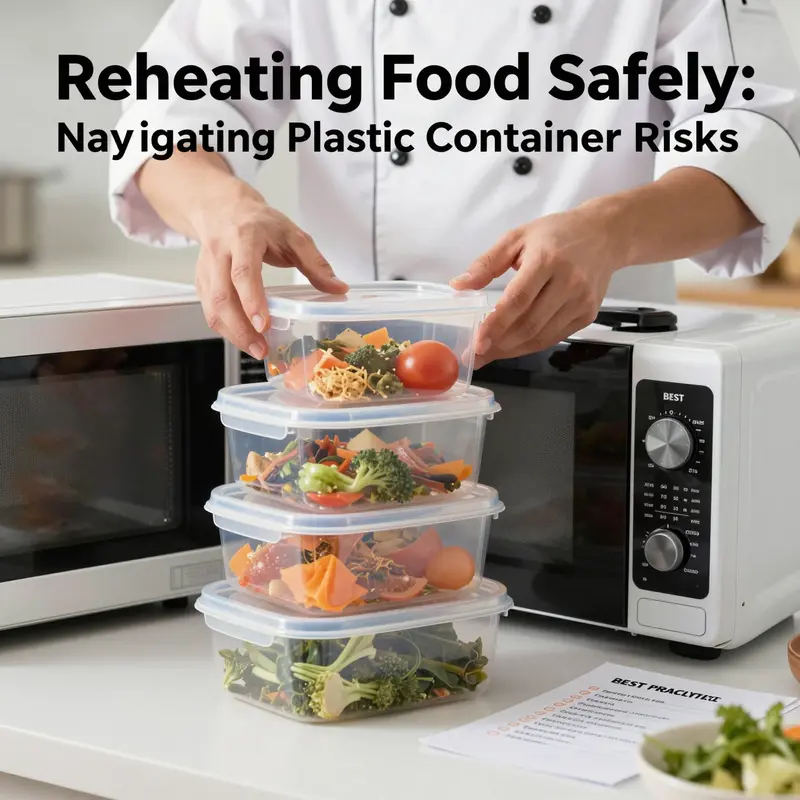
Reheating food in plastic containers is a habit many people slip into for convenience. Yet a careful look at how heat interacts with plastic reveals a subtler truth: microwave-safe labeling is not a guarantee of safety for every reuse or every type of food. Plastics can change at the molecular level when heated, and those changes can influence how materials migrate into food. The result is not an abrupt chemical explosion, but a slow, ongoing risk that depends on the specific plastic, the age of the container, the contents being heated, and the duration and intensity of the heat. The conversation about reheating in plastic is not about demonizing a material; it is about understanding how heat can alter packaging and, in turn, how those changes can affect what ends up on your plate. This chapter builds on what the broader science and regulatory landscape tell us, stitching together the physics of heating with the chemistry of plastics and the practical choices that keep meals both convenient and safe.
The core concern centers on the way some additives in plastics behave when they encounter heat. Substances such as plasticizers and certain stabilizers can migrate from the container into food, particularly when fats or acidic ingredients are involved. Phthalates, used in some polyvinyl chloride-based products, and endocrine disruptors like BPA have been subjects of intense scrutiny because even low levels of exposure over time might influence hormonal systems. While there is consensus that not all plastics pose equal risk, and that many microwave-safe products are designed to minimize leaching, the key message is nuanced: heat increases the potential for migration, and repeated heating compounds that risk. The chemistry of leaching is not instantaneous. It unfolds through a combination of temperature, time, and the physical condition of the container itself. An older, scratched, or cloudy plastic is more likely to shed microscopic fragments or allow chemicals to migrate into contents than a new, well-preserved one. In other words, the same container that seems perfectly fine for a quick reheat might behave differently if its surface has degraded through age and use.
To understand why, imagine heat as a catalyst that makes the polymer matrix more permeable. When microwaves or high-heat settings are applied, the energy can cause small molecules embedded in the plastic to loosen their grip and drift toward the surface. If the container is in contact with fatty or highly seasoned foods, the chemical migration can accelerate. The result is a twofold concern: potential chemical exposure for the cook and the diner, and the gradual degradation of packaging materials that makes future reheats more risky. This is not a blanket indictment of all plastics; instead, it is a call for discernment in daily choices, especially when reheating meals that will be consumed soon after heating. The FDA has reiterated a balanced stance: microwave-safe plastics are generally acceptable when used as directed, but consumers should be mindful of container condition and usage patterns. That stance aligns with a broader precautionary principle—minimize heat exposure, avoid reusing containers beyond their designed lifespan, and favor inert materials for frequent reheating.
In kitchens, an often overlooked factor is the vulnerability of containers to wear. Repeated washing, aggressive scrubbing, or exposure to sunlight can introduce microcracks or clouding. These features signal structural degradation that can create tiny pathways for chemicals to migrate more easily into food. The migration risk is not just theoretical. It tends to rise with heating time and temperature, with high-fat and acidic foods being particular culprits. A creamy sauce, a tomato-based dish, or a fatty leftover like fried items—these types of foods can push more of certain chemicals into your meal than a bland, low-fat option might. And while microwave-safe labels provide a level of assurance, they do not authorize unlimited use. The safest practice from a long-term perspective is to adopt a conservative approach: store and reheat in containers that remain in good condition, and use the lowest effective heat settings for the shortest practical duration.
What emerges from this landscape is a set of practical, everyday decisions. The first is to select the right container for reheating. Only containers explicitly labeled as microwave-safe by the manufacturer should be considered for heating. That label indicates testing under microwave conditions and suggests a reduced likelihood of harmful migration under typical use. However, it does not remove the need for vigilance. If a container is scratched, cloudy, warped, or aged, it should be retired from reheating duties. Visual signs of wear are a reliable early warning that the container may begin to behave differently when heated. The polymer network in such containers becomes increasingly compromised by repeated heating and washing, and with that compromise comes a higher likelihood of chemical migration.
The second practical principle is to exercise caution with certain foods. High-fat, highly acidic, or very spicy dishes can heighten the rate of chemical migration and should be reheated with extra care. When possible, it is wise to transfer a portion of food to a glass or ceramic container before reheating, especially if the original plastic container shows signs of aging or if you anticipate a longer reheating period. The inertness of glass and ceramic means they do not participate in the same migratory processes, and they can often withstand higher temperatures without degrading in the way some plastics do. This transfer not only reduces potential chemical exposure but also provides a more uniform heating experience. Glass and ceramic materials can also offer more predictable heating dynamics, helping to minimize hot spots that sometimes accompany microwaving in plastic.
A third guideline is to minimize exposure by controlling the reheating process itself. Shorter reheating times, lower power settings, and the practice of stirring or rearranging food midway through heating can help avoid prolonged contact between food and the container. In addition, keeping vents open or covering food with a loose lid or vented microwave-safe wrap allows steam to escape while reducing the chance that plastics briefly soften or warp under pressure. These steps collectively reduce the energy transfer to the container and the food’s contact duration, which are key factors in minimizing leaching potential. If you must use plastic, consider using it as a temporary vessel, designed for one or two uses at most, rather than a long-term storage option that will be repeatedly heated.
The health context surrounding reheating in plastic is not just about individual choices in the home. It also reflects how kitchens manage packaging and storage across the food system. In settings such as take-away operations or meal-prep services, the precautionary practice is to rely on microwave-safe plastics for short-term reheating while ensuring containers are in excellent condition and are disposed of when signs of wear appear. The broader message is one of mindful reuse and mindful disposal—an approach that minimizes cumulative risk over time. It also underscores the importance of design choices in packaging. Where possible, consumers and food service providers alike should favor packaging that is inert and stable under heat, and that can transition safely to glass or ceramic when reheating is anticipated as a frequent activity.
To ground these observations in expert voices, consider the perspective of researchers who study environmental health and exposure to consumer products. Dr. Lena Patel, an environmental health scientist, emphasizes a balanced stance: not all plastics pose a significant risk, but repeated exposure to certain types under heat increases the chance of chemical transfer. Her emphasis on staying informed aligns with the precautionary approach that guides safe reheating practices. This view dovetails with regulatory guidance that invites consumers to reduce heat exposure and minimize repeated use of microwave-safe plastics beyond their intended life cycle. The practical implication is clear: reheating is convenient, but it should be paired with thoughtful container choices, methodical heating practices, and a willingness to switch to safer materials when the situation calls for it.
For readers who want a regulatory touchstone, the U.S. Food and Drug Administration provides ongoing monitoring of food contact materials, including plastics, and offers guidance on microwave-safe plastics. While the FDA notes that microwave-safe plastics are generally safe when used as directed, it also stresses remaining vigilant about container condition and usage patterns. This balanced guidance helps connect the everyday decisions of home cooks with the larger framework of food safety regulation, reminding us that safety is not a fixed label but a practice that evolves with use and knowledge.
In linking theory to practice, some kitchens find that packaging choices extend beyond heating alone. The way containers are designed for service, storage, and transport can influence how often a box or container is exposed to heat during a typical day. For example, a take-away packaging system that favors a sturdy, inert material for reheating can reduce the risk of leaching and degrade more slowly under heat. The emphasis, then, moves from chasing absolute safety to managing exposure—choosing containers that reduce risk, using them wisely, and transitioning to safer materials when needed. This mindset keeps the meal experience convenient without sacrificing health considerations, and it aligns with growing consumer demand for safer, more sustainable packaging solutions.
To connect the current discussion with broader packaging realities, consider how packaging choices intersect with daily cooking routines and kitchen practices. If a container is intended for multiple uses, its material should be chosen with heat stability in mind. A container that can withstand repeated cycles of heating and washing without significant surface degradation is preferable, especially in households that reheat leftovers regularly. The value of this approach lies not just in reducing chemical migration but also in improving the predictability of reheating outcomes. Food heats more evenly when it is not competing with a degrading container, and the experience of the meal—texture, aroma, and warmth—retains a more consistent quality.
In closing, the safe reheating of food in plastic containers is not about a universal prohibition but about disciplined choices and smart practices. It means selecting microwave-safe containers and inspecting them for wear, avoiding high-fat or acidic foods when using plastic for longer heating times, and transferring to glass or ceramic containers when frequent reheating is anticipated. It means using the lowest practical heat setting and the shortest heating duration, and it means staying informed about evolving guidance from authorities and researchers. The goal is a practical balance: the convenience of reheating in containers that support safe, timely meals without introducing unnecessary chemical exposure. This balance is achievable when people treat reheating as a process with steps—selecting the right container, understanding how heat interacts with plastic, and knowing when to pivot to safer materials. The result is not only safer meals but a kitchen that treats materials thoughtfully, reflects on how we prepare food, and remains adaptable as science and regulation advance.
For readers seeking packaging considerations that intersect with reheating practices, a related resource on eco-friendly packaging options can offer additional context about how materials behave under heat and in food-contact scenarios. eco-friendly kraft-box packaging for fast-food offers a practical illustration of how packaging design can support safer reheating in busy settings. This resource aligns with the broader goal of choosing materials that minimize risk while maintaining the efficiency and convenience that modern kitchens expect. eco-friendly kraft-box packaging for fast-food
External resource: For authoritative guidance on microwave-safe plastics and related food-contact materials, consult the U.S. Food and Drug Administration article on microwave-safe plastics. https://www.fda.gov/food/food-contact-materials-and-regulatory-information/microwave-safe-plastics
Final thoughts
Overall, understanding the risks associated with reheating food in plastic containers allows food service businesses to make informed choices. By prioritizing the selection of safe plastic containers and following best practices, you can ensure the health and safety of your customers while maintaining the quality of your offerings. Avoiding unnecessary risks and opting for safer alternatives where possible not only supports customer health but can also enhance the reputation of your business.