
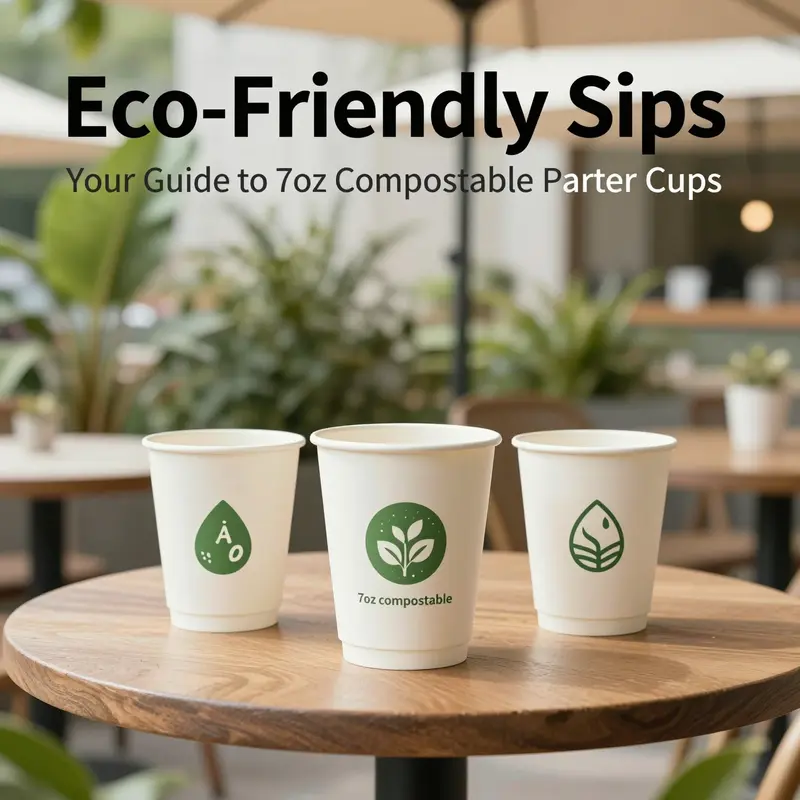
As the demand for eco-conscious options rises in the beverage industry, the appeal of 7oz compostable paper cups has never been more significant. These cups cater to a variety of beverages, from soothing teas to energizing coffees, while supporting sustainability efforts. As businesses transition to greener choices, understanding where to source these products, their features, certified standards, and their suitability for different applications becomes crucial for decision-makers like bubble tea shops, restaurants, food trucks, event planners, and corporate procurement teams. This guide not only highlights the available options but also provides insights into making informed decisions that support both brand identity and environmental responsibility.
null
null
Decoding 7oz Compostable Paper Cups: A Buyer’s Guide to Sustainable Sipping, Solid Performance, and Brand Integrity
Choosing a 7oz compostable paper cup is more than meeting a size specification. It’s a negotiation among sustainability, performance, and brand storytelling. In many professional settings, these cups are pressed into service for hot coffees, chilled beverages, and even kids’ drinks at events that promise green credentials. The procurement path starts with a clear understanding of what “compostable” means in practice. A true compostable cup must do more than look right on a shelf; it must behave reliably in use and break down predictably in composting facilities or appropriate home settings, depending on the certification and the disposal infrastructure available in a region.
Material composition forms the backbone of this decision. Paper cups of 7 ounces are typically made from a layered structure that may include a single sheet of paper, a lining or coating, and, in some designs, a double-wall insulating layer. The coating is a critical decision point. A plant-based coating such as PLA (polylactic acid) provides an alternative to conventional wax or petrochemical-derived coatings. PLA-coated cups align with plastic-free narratives while preserving rigidity and moisture resistance. For hot beverages, a double-wall construction can greatly improve insulation, reducing heat transfer to hands and improving the drinking experience. Yet, the trade-off is often higher material cost and sometimes thicker walls, which can affect stacking efficiency and the cup’s compaction in packaging lines. Conversely, wax-coated or wax-free single-wall cups may offer cost savings and simpler disposal pathways, but may underperform in heat retention or leak resistance.
Certification compliance remains a non-negotiable filter in any responsible procurement. Buyers should insist on independent certification that a cup is truly compostable and safe for food contact. This means verifying standards such as EN13432 for industrial compostability and the appropriate national or international certifications that certify home compostability where applicable. In some markets, recognized marks serve as indicators of compostability, while a certification like BPI is widely recognized in North America for compostability. FDA approval for food contact safety is another baseline criterion. These certifications are not decorations; they are independent attestations that the product performs as claimed under defined disposal conditions and safety standards. When a supplier presents a claim of compostability, buyers should request the exact certificate numbers and the issuing laboratories, then verify them through the certifying bodies’ public registries. The existence of multiple certifications can signal broad acceptance across waste streams and disposal environments, from municipal facilities to consumer-owned composting setups.
Understanding how a cup performs across temperatures is essential for a seamless consumer experience. Hot drinks stretch the limits of disposable paper cups, especially when the cup’s wall thickness is modest. Double-wall cups with a structured interior layer reduce the risk of seepage and burn risk, supporting longer beverage holds without compromising integrity. For cold beverages, the choice of coating and inner lining can influence condensation, sleeve fit, and downstream packaging in take-away scenarios. The design must guard against leakage not only from the cup itself but from the lid and the compatibility of the lid with the cup’s rim—an often overlooked factor in field use. The best choices balance thermal performance, grip comfort, and cost, while staying within compostable self-imposed constraints. This is not about chasing the cheapest unit; it is about choosing a product that preserves brand experience from the moment a drink is handed to the guest to the point where the cup leaves the event for disposal.
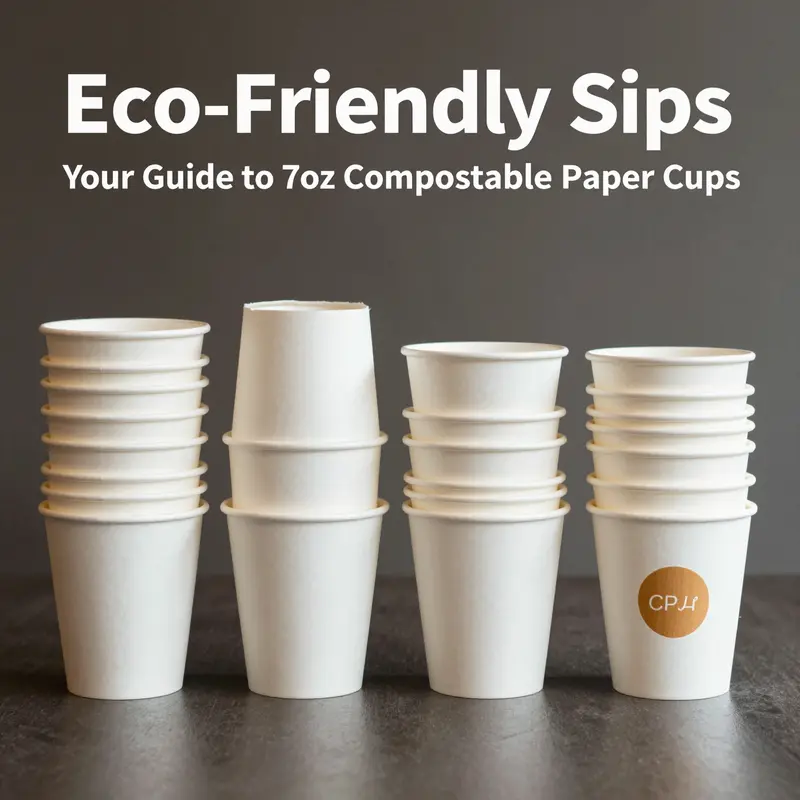
Structural integrity during handling is another critical axis. Imagine a fleet of cups stacked for transport to an event, loaded into a trunk, or placed on a crowded service line. The cups must maintain roundness and rigidity through stacking, loading, and serving. A cup that deforms easily invites spills, misfills, and a messy experience that undermines brand trust. The mechanical design—wall thickness, corner rounding, lip reinforcement, and sleeve compatibility—plays a major role here. Suppliers who observe tight tolerances in their manufacturing processes tend to deliver more predictable performance in high-volume settings. In addition, rim dimensional accuracy helps ensure that lids stay in place during transit and service, a small feature with a disproportionately large impact on user satisfaction and waste reduction, since loosened lids often result in spillage and product loss.
End-of-life disposal is finally about the cup’s destiny. A 7oz compostable cup might be positioned as an eco-friendly alternative to traditional plastics, but its actual impact depends on the disposal infrastructure. In regions with robust industrial composting networks, certified compostable cups can degrade into compost within weeks. In less developed waste streams, homing in on the smallest shared denominator—whether home compostable options exist—is a pragmatic approach. Buyers should seek explicit guidance from suppliers on the recommended disposal pathway, highlighting whether home composting is an option and clarifying any caveats about municipal compost facilities. It’s important to differentiate between “compostable” and “recyclable” in practice, because recycling streams for paper cups with compostable coatings require specialized handling and may not be widely available. A transparent supplier will present a disposal matrix, including typical composting times, temperature ranges, and how impurities like glue, ink, or printing inks interact with composting processes. In addition to end-of-life considerations, recycling and waste-to-energy options deserve attention when evaluating cradle-to-grave sustainability.
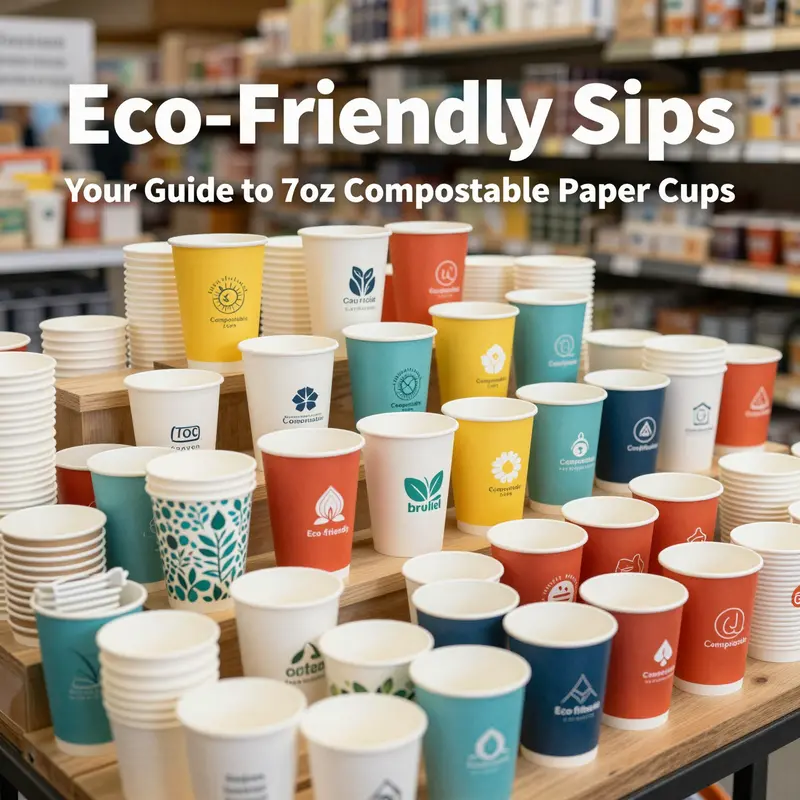
Customization is more than a marketing flourish. For the buyer with branding goals, the opportunity to print logos, messages, or event themes on cups can be a key value driver. This capability varies by manufacturer and by coating type; some providers offer integrated branding through direct printing on the cup or via sleeve configurations that preserve the cup’s compostable properties. A flexible path for customization harmonizes with supply chain stability, ensuring that branding is not sacrificed for lead times or price. When discussing customization, buyers should confirm color fidelity, print durability under hot beverage conditions, and whether the coating interferes with ink adhesion or compostability claims. It’s also important to verify lid compatibility if branding requires alignment with cup geometry or if lids must be supplied as part of a branding package. The ability to coordinate branding across multiple SKUs, such as a hot cup with a double-wall shell, can deliver a consistent brand narrative across beverage formats. For brands seeking customized disposable single-wall paper cups with lid, consider options like this approach customized disposable single-wall paper cups with lid, which demonstrates how branding can be integrated without compromising compostability.
Navigating procurement involves strategy as much as selection. Buyers commonly turn to broad B2B marketplaces to explore a spectrum of offerings from various manufacturers and distributors. The challenge is not simply price, but risk management and long-term supply viability. A prudent approach is to establish a minimum set of criteria: verified eco-certifications, documented material composition, temperature performance data, and clear end-of-life guidance. The presence of a robust supplier assessment framework—where manufacturers’ production capabilities, audit results, and environmental performance are publicly verifiable—offers a stronger basis for decision-making. This is particularly important for organizations that purchase in large volumes or over extended periods, where supplier reliability translates into predictable budgets and consistent sustainability claims across campaigns and seasons. When planners begin to request quotes, RFQs can help compare like-for-like specifications and ensure that the chosen supplier meets the defined sustainability standard. The process may involve regional considerations as well; for example, certain provinces or regions with integrated supply chains and advanced automation can support high-volume, compliant production while maintaining competitive pricing.
In practice, a thoughtful procurement path blends the technical with the practical. A buyer might start by confirming the intended application: hot beverages in winter markets or cold beverages at outdoor festivals. Then they map their packaging requirements: plain single-wall cups for basic hot drinks, insulated double-wall variants for premium experiences, or PLA-coated options that align with plastic-free narratives. Budget considerations will guide the balance between wall thickness and coating type, while branding priorities influence printing capabilities and color management. The decision emerges from a synthesis of use-case needs, disposal expectations, and brand promises. The literature of procurement suggests a strategic framework: verify certifications, scrutinize material composition, examine performance data under temperature stress, assess durability during handling, and demand disposal guidance with clear end-of-life pathways. The result is not merely a purchase; it is a purchase that supports a sustainability story while delivering reliability to staff and customers alike. For buyers who want to explore supplier options in depth and gather quotes efficiently, a widely used sourcing framework emphasizes verified eco-certifications, sustainable production practices, and transparent performance benchmarks. It’s not about chasing the lowest price; it’s about enabling a genuinely compostable cup to do what it promises: support a circular economy while performing reliably in real-world service.
As buyers broaden their sourcing horizons, the role of supplier background and regional advantages becomes relevant. A well-connected supply chain offers not only cost efficiencies but the assurance of consistent supply in peak demand periods. Regions with integrated manufacturing ecosystems often host suppliers who can scale up to multi-million-unit orders while maintaining environmental controls, traceability, and compliance with international standards. Buyers should request documentation of audits, factory certifications, and supply chain transparency. For organizations pursuing ambitious environmental goals, a careful audit of the supply chain can uncover opportunities to reduce waste, optimize coating choices, and align with circular economy objectives. The end result of this approach is a cup that serves not only as a practical beverage vessel but as a tangible symbol of a company’s commitment to sustainability.
In sum, the selection of a 7oz compostable paper cup hinges on a blend of performance, compliance, and purpose. It requires a disciplined approach to material choices, a careful read of certifications, and a realistic assessment of disposal realities. It also invites brands to think strategically about customization as a lever for message discipline and stakeholder engagement. When designers, sustainability officers, and procurement teams align around a shared framework—one that values environmental outcomes without sacrificing user experience—the result is a responsible packaging decision that travels from event to waste stream with clarity and purpose. For buyers who want to explore supplier options in depth and gather quotes efficiently, a widely used sourcing framework emphasizes verified eco-certifications, sustainable production practices, and transparent performance benchmarks. It’s not about chasing the lowest price; it’s about enabling a genuinely compostable cup to do what it promises: support a circular economy while performing reliably in real-world service.
External reference: https://www.alibaba.com
Certifications as a Compass: Navigating 7oz Compostable Paper Cups Toward Real Compostability
Choosing 7oz compostable paper cups is more than selecting a size and a coating; it is about aligning a purchase with real-world environmental performance. Buyers who want to reduce waste at events, coffee shops, or workplace cafeterias face a landscape crowded with branding claims and vague labels. The practical question is not only whether a cup is biodegradable or made from recycled materials, but whether it will truly break down in a composting facility, leaving no toxic residues and preserving safety for people and the environment. In this chapter, we explore the certification framework that separates marketing from measurable compostability. We begin with the most influential standards and then translate those standards into a buying approach that applies specifically to 7oz compostable paper cups. The core idea is simple: certifications function as a compass that guides decisions beyond appearance, coating, or price. When a cup bears certified marks, buyers gain confidence that the product will perform as promised under composting conditions, whether those conditions are industrial or home-based, and that the process will not introduce harmful residues back into soil or water.
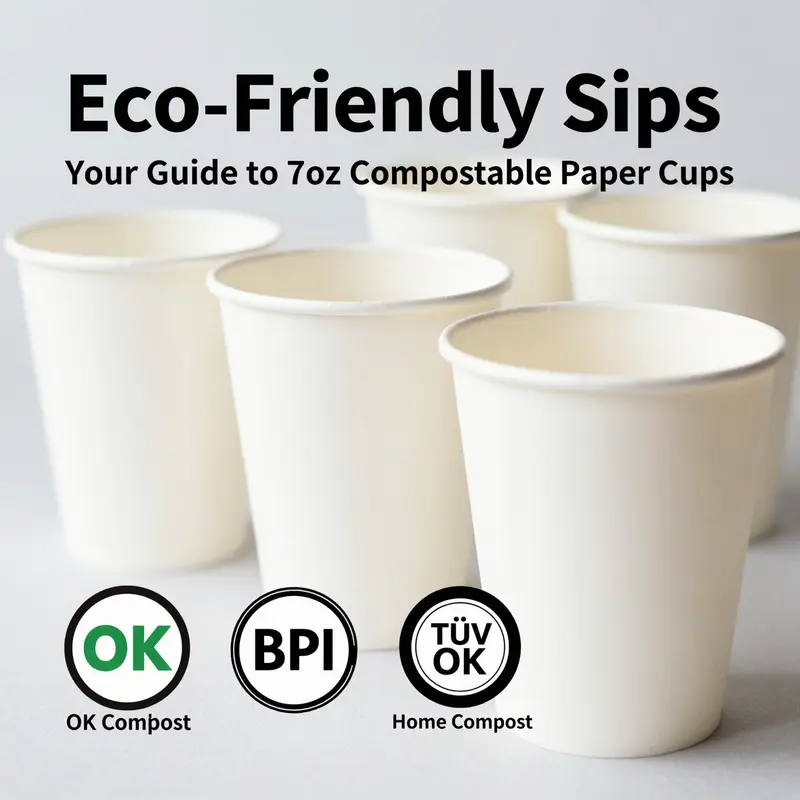
At the heart of credible certification is TÜV OK Compost, issued by TÜV Austria. This mark targets the disintegration and biodegradation of products under composting conditions. It distinguishes between OK Compost INDUSTRIAL, which assumes industrial facilities capable of maintaining higher temperatures and controlled moisture, and OK Compost HOME, which is relevant to domestic composting environments where temperatures tend to be lower and processing times longer. For 7oz paper cups, this distinction matters because some cups are designed for a standard industrial compost stream, while others claim home compostability. The certification indicates that, given the right conditions, the cup will fully biodegrade within a defined timeframe and will not leave toxic residues. The practical takeaway for buyers is straightforward: if the product claims OK Compost, verify which variant applies and whether the target facility aligns with your event’s composting capabilities. In hot beverage scenarios, where double-wall designs may be favored for insulation, the certification must be explicit about how the cup’s architecture interacts with composting performance. The absence of a clear OK Compost certification or the ambiguity between HOME and INDUSTRIAL can lead to a false sense of sustainability, especially when the cup is intended for children’s events or for venues that rely on municipal composting programs rather than specialized industrial facilities.
Beyond TÜV OK Compost, another widely recognized standard is ASTM D6400. This American standard establishes criteria for materials and products to be labeled as compostable in industrial facilities. The benchmark is rigorous: at least 90% of the material must disintegrate into small fragments within about 12 weeks, and the entire material must biodegrade into carbon dioxide, water, and biomass within six months under controlled composting conditions. While ASTM D6400 is heavily oriented toward industrial contexts, it serves as a critical signal for buyers concerned about performance in legitimate composting streams. For cups that are used for hot beverages, where integrity and barrier properties matter, meeting ASTM D6400 demonstrates that the base material and any coatings will not thwart the composting process. This standard is not a universal guarantee for home composting, but it gives buyers a high level of assurance that the cup meets a proven baseline in a controlled setting. When a supplier advertises ASTM D6400 certification, it is helpful to request documentation and cross-check the scope to ensure the certification is specific to the cup material and its coating, and not merely to a broader packaging category.
In the United States, the Biodegradable Products Institute (BPI) certification has become a key third-party verification for compostability. BPI’s program emphasizes rigorous performance testing, including heat resistance and moisture barrier integrity, to ensure that the cup will maintain its function during use while still meeting compostability criteria after disposal. BPI certification is particularly valuable for facilities that require standardized testing and documentation to qualify for composting programs. For buyers who intend to market 7oz cups in regions where municipalities rely on BPI-certified products to meet local composting requirements, BPI certification can be a deciding factor. It provides a layer of assurance that the product’s performance during use—such as heat tolerance for hot coffee or robust moisture resistance for cold drinks—will not compromise its compostability at the end of life. For those contemplating home composting, BPI certification remains relevant because it signals that the product was designed and tested against established compostability criteria, even if the home stream’s performance may differ from industrial facilities.
A frequent misconception is that all “biodegradable” cups are compostable. The reality is more nuanced. Biodegradable describes the potential to break down, but without certification, there is no standardized guarantee about the rate, completeness, or safety of that breakdown. Certifications like OK Compost, ASTM D6400, and BPI provide third-party validation that the cup meets explicit criteria under defined conditions. It is essential to check for official logos and to obtain the documentation from the supplier. Some labels may imply environmental friendliness without a clear standard behind them. When evaluating a 7oz cup, buyers should look for a transparent statement about the applicable certification (OK Compost INDUSTRIAL or HOME, ASTM D6400, or BPI) and confirm that the certification is specific to paper cups rather than to a broader packaging category. The presence of a logo on the cup or packaging is a starting point, but the documentation supplied by the supplier, including certificate numbers and the certifying body, should be requested and cross-verified in official databases.
Coatings add another layer of complexity. PLA-coated cups are often marketed as plastic-free and compostable, and they have become popular for events that aim to avoid conventional plastics. PLA coatings can enable compostability in many facilities while maintaining the structural integrity needed for hot beverages and for longer shelf life. Yet the interplay between the coating and the base paper with regard to certification is critical. Some certifications explicitly cover the entire cup including coatings, while others may certify the base paper but not the coating. Buyers should confirm that the certification applies to the full cup assembly, including any inner wax or PLA coating, and whether it is compatible with their target composting stream. The presence of PLA may make a cup suitable for industrial composting, but not necessarily for home composting. If a cup is intended for children’s drinks at events, the environmental profile matters even more, because cups with child-friendly marketing may still fall short if they cannot break down safely in typical municipal composting operations.
For those who value insulation and heat retention, many suppliers offer double-layer or double-wall 7oz cups. These designs improve user experience for hot beverages while presenting a potential challenge to compostability if the additional layers or barrier coatings complicate disintegration. Certification bodies scrutinize these designs carefully to ensure that all components of the cup—paper, coatings, and any structural linings—meet the applicable compostability standard. As a buyer, you should request certification coverage for the specific cup construction you intend to purchase, including the double-wall format, and verify that the testing used to obtain certification included samples of the exact configuration you will deploy. In practice, asking for the lot-specific certificate or the certificate covering the exact model can prevent mismatches between what’s advertised and what’s tested, enabling more reliable planning for events and supply chains.
Verifying certifications is a multi-step process that protects both buyers and the broader waste management ecosystem. First, examine the product packaging for the certification logos and any accompanying code or certificate numbers. Second, request documentation from the supplier—this can include test reports, scope of certification, and details about the coating or lining. Third, cross-check the certification against official databases. Reliable sources such as TÜV Austria’s OK Compost database or BPI’s database can be searched to confirm the status and scope of the certification. When you encounter a supplier that cannot provide verifiable documentation, treat the claim as unproven and pursue alternatives. The credibility of your composting program depends on this due diligence, especially when large quantities are involved or when the cups are intended for events with diverse waste streams.
In practice, a thoughtful procurement approach blends certification diligence with practical use cases. For hot beverages, such as coffee or tea, your selection should prioritize cups that combine robust barrier properties with a certification that covers the complete cup assembly. If branding is a priority, you may consider suppliers that offer branding options alongside certified cups; for instance, you might source a cup with an eco-friendly printed logo, which brings branding into the sustainability equation without compromising compostability. A good way to explore such options is to review suppliers that offer branding alongside sustainability credentials, such as this option that highlights eco-friendly printed-logo designs for take-away cups. You can learn more about this branding option here: senang07-eco-friendly-printed-logo-buy-paper-cup-take-away-coffee-cup.
Putting all these elements together, the buying decision for a 7oz compostable paper cup should center on a clear certification story that answers three core questions: Which certification applies, and to which cup construction? Does the certification cover the entire cup, including coatings and liners, and is the facility type specified (industrial versus home)? And finally, does the certification align with the intended waste management stream for your project, whether municipal, industrial, or backyard composting? When the answers align, the cup becomes more than a convenient vessel; it becomes a reliable partner in a circular economy, capable of delivering the desired consumer experience while contributing to waste reduction and resource conservation.
In closing, the certification landscape is not simply a checklist. It is a map that guides responsible buyers toward products that truly meet environmental expectations and regulatory benchmarks. By prioritizing OK Compost, ASTM D6400, and BPI where applicable, and by ensuring that the scope matches the cup’s design and intended disposal pathway, buyers can make informed decisions that withstand scrutiny from waste handlers, certification bodies, and conscientious customers. For those who want to explore branding possibilities alongside sustainability credentials, there are options that pair eco-friendly printing with certified compostability, allowing brands to communicate values without compromising performance. For further reference on standards databases and verification, consult authoritative resources such as the official TÜV OK Compost databases at https://www.tuv.com. This ensures you are not guessing about compostability but rather making decisions grounded in verifiable, third-party validation.
Choosing 7oz Compostable Paper Cups: A Practical Guide to Performance and Certification
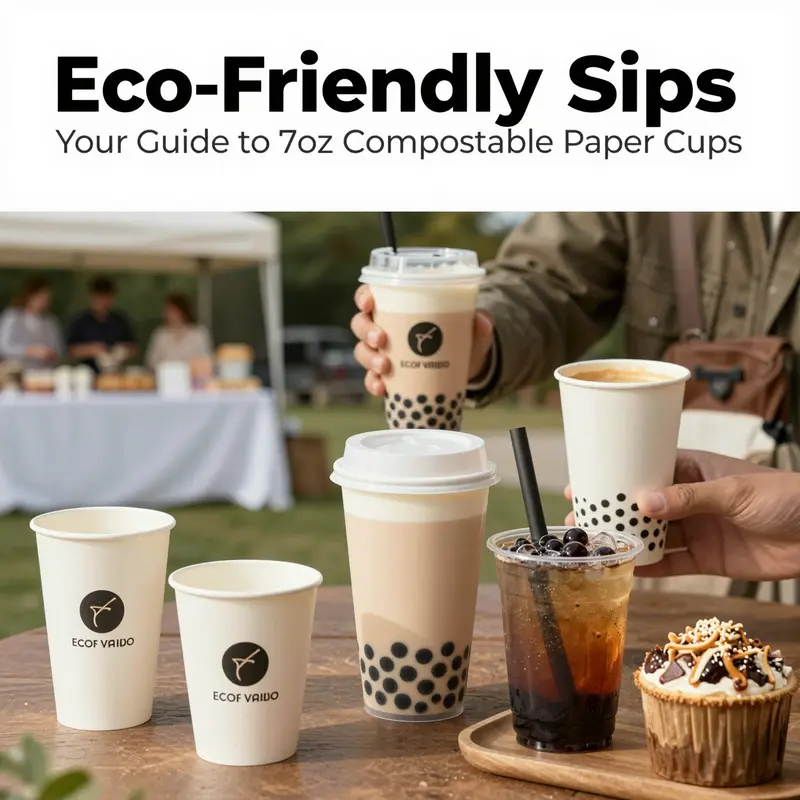
Choosing the right 7oz compostable paper cup is more than picking a size. It requires weighing performance, sustainability credibility, and how well procurement processes support reliable disposal. A seven-ounce cup often sits between a quick morning drink and a more deliberate beverage service, making it suitable for tasting sessions, compact coffee breaks, or light café service. While it is small, the design choices inside matter for heat tolerance, liquid resistance, and durability over a typical 15- to 20-minute consumption window.\n\nMost cups in this size range are single-wall for light weight and cost efficiency, but many suppliers offer double-wall options for hot beverages. The insulation provided by a double-wall design helps keep the drink hotter longer and protects hands from heat, which can reduce spill risk during busy service. When a cup uses a PLA lining or coating, it gains the advantage of compostability in industrial facilities, but this benefit hinges on local waste infrastructure. Home composting or small community facilities often cannot process PLA-coated cups, so the environmental impact depends on available facilities. This is a reminder that true compostability is a system property, not a product property alone.\n\nCertification is the most credible way to verify compostability claims. Look for explicit certification statements on packaging or supplier disclosures and confirm that the certification covers the exact product configuration, whether it is a single-wall cup, a double-wall cup, or a PLA-coated variant. Recognized programs like OK Compost, TÜV OK Home Compost, and the Biodegradable Products Institute (BPI) provide independent verification that a cup will break down in a managed composting facility within a defined timeframe. Temperature, moisture, and time all influence outcomes, so a product should show alignment with the right facility type and process.\n\nTemperature performance is a practical anchor for decision-making. For hot drinks like coffee and tea, single-wall designs can suffice for short-term use in casual, low-volume contexts. For longer contact with hot liquids or more robust handling, a double-wall design becomes more appealing for additional insulation and reduced heat transfer. In cold beverage contexts, insulation is less critical, but structural integrity is important if the coating or wall thickness affects leakage resistance. PLA coatings enable compostability without traditional wax, but they should be balanced with liquid resistance and heat tolerance so the cup performs reliably in typical service conditions.\n\nBeyond the technical specs, the intended use case should drive procurement strategy. For home and office environments, cost-per-unit often guides initial choices, provided the cups meet recognized compostability standards and display clear disposal guidance. In these settings, ease of disposal is as important as ease of use. For cafés and restaurants, durability, liquid resistance, and branding potential rise in importance. Commercial-grade cups tend to feature sturdier constructions and more robust inner linings, supporting consistent performance during busy service and enabling branding opportunities through printed logos or color schemes. The trade-off is typically higher upfront costs, offset by stronger customer impressions and fewer mid-service disruptions from leaks.\n\nEvent and catering contexts add another layer of complexity. Large‑scale events demand scalable procurement, predictable quality, and efficient waste management. Bulk packaging helps with setup and inventory control, but the environmental benefits hinge on the availability of suitable composting streams at the site or nearby facilities. If a host relies on municipal or industrial facilities, confirm that the cups’ compostability is compatible with those streams. A cup that fails to break down in a given waste stream does not deliver the expected environmental ROI, even if certified overall. This highlights the importance of aligning product choice with local waste-management capabilities and communicating disposal instructions to attendees.\n\nProcurement paths for these cups typically unfold on B2B platforms, where buyers can request quotes, compare materials, and sample configurations before placing larger orders. Look for suppliers offering transparent material compositions, clear certification documentation, and options for bulk orders. The ability to tailor cups with branding through printing services can be a decisive advantage for businesses that want packaging to reinforce identity and sustainability messaging. In such cases, the relationship between performance and branding becomes mutually reinforcing.\n\nAs with any purchasing decision tied to environmental claims, due diligence remains vital. The best approach blends product testing with verification, ensuring the cup performs as promised in the contexts where it will be used. This goes beyond a spec sheet; it includes verifying that packaging and labeling clearly indicate compostability certification, that disposal guidance aligns with local waste streams, and that there is evidence the product’s compostability has been verified in the target facility type. In many regions, home composting is not reliable at scale, so industrial facilities may be the true end-of-life destination for PLA-coated cups. Understanding this nuance helps prevent mismatches between environmental expectations and real-world outcomes.\n\nFor buyers seeking practical pathways, a well-curated catalog of 7oz cups can be navigated by aligning beverage context with cup design. Hot beverages benefit from double-wall insulation, while cold drinks can leverage lighter single-wall profiles. Branding can be supported through printing options that preserve compostability while delivering a recognizable look for cafés and events. The interplay of material choice, certification, and service level is central to a sound decision.\n\nInternal resources can aid this journey. A practical supplier page emphasizing printed-logo capability can help buyers compare printing capabilities and verify whether a supplier can accommodate branding requirements while maintaining compostability. The core aim remains consistent: identify a 7oz cup that meets environmental standards, fits the intended setting, and supports a reliable waste-management path. The right choice brings together performance, certification credibility, and procurement practicality into a cohesive decision.\n\nExternal standards provide a frame for judging compostability claims. Standards documents articulate what environmental claims mean in the real world, including how long materials take to break down and under what conditions. For a comprehensive understanding of the technical criteria, readers may consult established standard references, such as ASTM D6400, which outlines the criteria for compostable plastics in industrial facilities. This standard helps distinguish between true compostability and other green claims, clarifying expectations for suppliers and buyers alike. The alignment with recognized standards anchors the conversation in verifiable science and infrastructure, guiding responsible procurement across home, café, and event contexts. See the standard here: https://www.astm.org/Standards/D6400.htm.
Final thoughts
In conclusion, the shift towards eco-friendly packaging options, particularly 7oz compostable paper cups, is essential for businesses aiming to align with sustainability practices. By carefully selecting suppliers, understanding the integral characteristics of these cups, ensuring compliance with certifications, and recognizing their suitability for diverse applications, businesses like yours can make impactful green choices. Such decisions not only enhance brand reputation but also cater to an increasingly environmentally conscious consumer base, paving the way for a more sustainable future.