
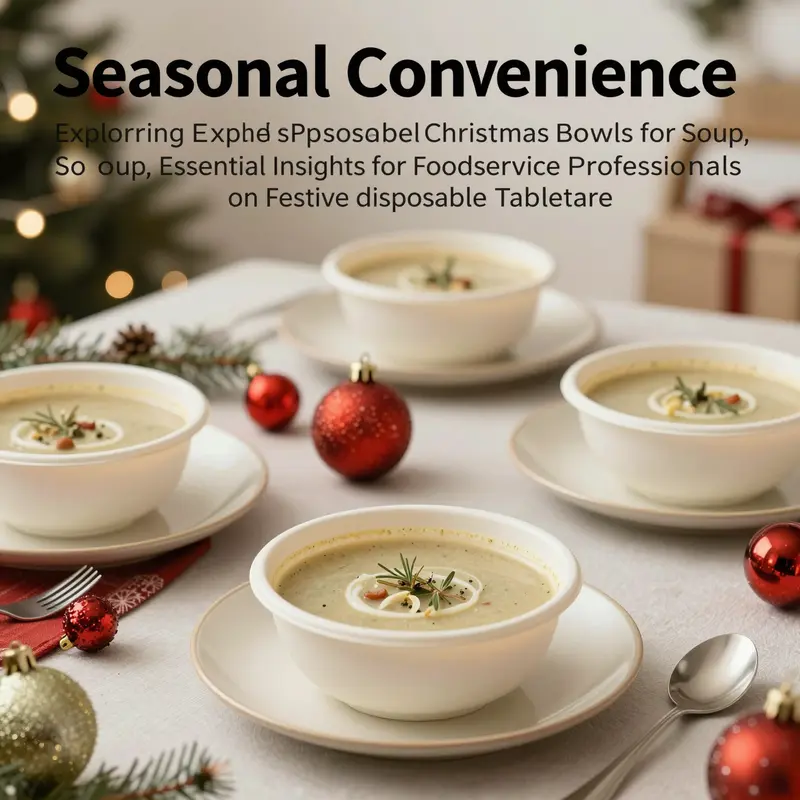
As the holiday season approaches, foodservice professionals face unique challenges in providing efficient, safe, and festive dining experiences. One solution gaining popularity is the use of disposable Christmas bowls for soup. These specially designed bowls are tailored to meet the demands of various sectors, including bubble tea shops, restaurants, food trucks, and catering services. This article explores their designs and features, addresses the environmental implications, and examines current market trends and consumer preferences, thereby offering a comprehensive understanding of how they can enhance holiday service offerings.
Festive Vessels: The Craft, Function, and Presentation of Disposable Christmas Bowls for Soup

The act of sharing soup during the holidays hinges on more than the recipe. It rests on the vessel that carries warmth from pot to palate, a container that respects the ritual of a Christmas meal while easing preparation, service, and cleanup. Disposable Christmas bowls for soup sit at this crossroads of celebration and practicality. They are not mere containers; they are small acts of hospitality designed to preserve heat, prevent mess, and elevate the festive mood through color, texture, and careful detailing. When a table brims with gatherings—from family dinners to corporate celebrations—these bowls become the unsung stagehands of the feast. They must perform with quiet confidence: sturdy enough to hold a steaming broth, stylish enough to feel appropriate for a holiday setting, and simple enough to be used by guests of all ages without a second thought. If the overall aim of the season is to foster warmth and connection, the vessels we choose to hold that warmth deserve as much thought as the menu itself.
Design and aesthetics emerge as the most immediate way these bowls translate holiday spirit into everyday practicality. The visual language of Christmas—snowflakes, holly, reindeer, and the classic palette of red, green, gold, and white—finds a natural home on disposable bowls. A well-designed set can mimic the elegance of more formal serveware while preserving the convenience of single-use items. The ornamented surface, often achieved through lightweight printing on premium paper or a smooth plastic shell, creates a surprising sense of occasion. The look is deliberate: bold enough to catch the eye across a crowded table, restrained enough to harmonize with a variety of table linens and centerpieces. The materials chosen—whether a heavyweight paper with a waterproof coating or a durable plastic—serve two core purposes: they convey durability and they deliver comfort. The feel of a sturdy rim, the weight of the bowl in hand, and the clean silhouette all communicate that the bowl is built for service, not merely for display. In this sense, the design becomes a form of hospitality, signaling that guests will be cared for from the first lift of the lid to the last spoonful.
Size and capacity modern disposable bowls typically cluster around a few standard options: smaller servings for aperitifs or delicate soups, mid-range portions for heartier broths, and larger cups for generous portions or for accompanying stews and chilis. The 9-ounce size accommodates a light starter or a delicate consommé, a welcome choice for tasting menus or school fundraisers where many small bowls circulate. The 12-ounce variant offers a more substantial measure for a hearty winter soup or a winter starch-streaked stew, while the 16-ounce option is the workhorse for robust fare, such as chili or ramen, where temperature retention and volume matter. The decision among sizes is less about one perfect number and more about the rhythm of the event. A party with a steady flow of guests can benefit from modular choices that prevent lineups and reduce waste, allowing hosts to supply a comfortable amount per guest without resorting to excess. The practical height of these bowls—neither overly tall to spill nor too shallow to leak—helps ensure that even hot soups stay within the confines of the vessel, preserving the experience and reducing the risk of embarrassing spills during mingling or socializing.
Material construction stands as the fulcrum of performance. Heavyweight plastic excels when the goal is durability and reusability in a disposable format. It resists deformation under heat and pressure, a critical trait when soups are poured steaming hot and the bowls must stand up to the weight of toppings or a thick, viscous texture. Paper-based options, favored for eco-conscious events, pair a robust outer shell with waterproof coatings that guard against leaks and soak-through. The choice between these materials is seldom purely aesthetic; it is a decision about environmental impact, product lifecycle, and end-of-event disposal. Eco-friendly coatings on paper-based bowls can offer a practical path to recyclability or compostability, albeit with regional variations in waste processing. In all cases, the structural integrity must be tested not only for the moment of serving but for the after-effect: a bowl must travel from kitchen to table, perhaps to a plate, and finally to a bin, without losing its form or leaking. The presence or absence of secure lids adds another layer of reliability. A well-fitted lid can transform a hot, liquid meal into a portable experience, ideal for office parties where people are moving between desks or for outdoor gatherings where wind and movement could otherwise jostle the contents. The lid, when designed with a snug seal and a lip that aligns with the bowl’s rim, minimizes the risk of drips and spills, reinforcing the sense that the event is well managed and thoughtful.
Microwavability often emerges as a practical priority in festive contexts. The ability to reheat a portion directly in its container adds flexibility for hosts who plan for leftovers or guests who appreciate a hot meal upon arrival home. While some models are explicitly labeled as microwave-safe, the underlying expectation is broader: warmth should be accessible without the need to transfer to another dish, a small but meaningful convenience during a busy holiday season. For guests, this means fewer steps and less disruption to the convivial tempo of the gathering. For organizers, it translates into smoother service and greater control over timing. The compatibility with microwaves is not merely a technical feature; it shapes how a holiday menu can be executed in diverse settings—from intimate family kitchens to bustling event spaces. The performance of a disposable bowl in heat, its lid in place, and its surface remaining intact under steam, all contribute to a reliable, dignified dining experience.
Practicality—often the most persuasive virtue of disposable bowls—flows from a straightforward assessment of what the season demands. The avoidance of washing up after a feast is not only convenient; it is a streamlining of the post-meal ritual that can help families linger at the table rather than retreat to the sink. In larger settings, the option to prepare and portion ahead reduces the day-of stress and allows servers to focus on hospitality rather than logistics. The bowls’ portability supports a range of event formats: a buffet line at a church hall, a corporate holiday luncheon, or a family doorstep gathering during a snowstorm when heat, aroma, and presentation become more important than formality. In small gatherings, the same vessel can be used for a comforting winter soup as guests arrive, then re-purposed for dessert or fruit, extending the life and value of the single-use option. The versatility of these bowls is not incidental; it reflects a deliberate design philosophy that values multi-functionality within a disposable framework.
Aesthetic presentation is one of the most immediate ways these bowls influence the dining experience. The contrast of bright red with white soup, the gleam of a gold-accented rim against a white or ivory interior, or a subtle holly pattern that frames a simple broth can uplift the mood of the table without introducing complexity to the service. When combined with secure lids and coordinated color schemes, the bowls help create a cohesive holiday tableau. The aim is not to overwhelm the soup, but to frame it with an appropriate stage where color, texture, and form work together to deliver a sense of occasion. The decorative aspect has value beyond aesthetics; it signals care, planning, and a willingness to invest in small but meaningful touches that guests remember. In such settings, the bowl becomes a tiny prop in a larger story—the story of a shared meal, a moment of warmth, and the simple joy of gathering around food. This is where a single-use item earns its place, by contributing to a smoother flow of service and a sense of festive dignity that complements the menu and the company.
Sustainability remains a significant consideration, even as the bowls fulfill their celebratory role. The conversation around disposable serveware often centers on environmental impact, and rightly so. Brands vary in their approaches to recyclability and compostability, and regional waste streams can alter the practicality of certain options. Paper-based bowls with eco-friendly coatings may offer pathways to recycling or composting, but users must understand local facilities and disposal rules to ensure responsible handling. In planning a holiday event, hosts can factor waste streams into the overall experience by providing clearly labeled bins and simple disposal instructions, thereby reducing contamination and increasing the likelihood that eco-friendly options are properly processed. Thoughtful choices in color and finish can also reflect sustainable values—opting for designs that appear premium yet rely on recyclable materials, balancing aesthetics with responsibility. It is worth noting that the sustainability narrative is not only about end-of-life; it also encompasses how the bowls perform during service. A bowl that resists leakage and maintains heat without excessive energy use contributes to a more efficient, less wasteful event. Thoughtful procurement may also consider whether the provider offers bulk quantities with consistent sizing, reducing waste from mismatched orders and ensuring that the bowls can be used across multiple holiday occasions.
The practical and visual synergy of these features folds into the larger ecology of event planning. The choice of disposable bowls aligns with how hosts view hospitality: as a coordinated set of decisions that honor guests, respect the environment, and honor the time and effort invested in the gathering. The bowls are one part of a broader table language—plates, napkins, utensils, and decorative elements all speak in a shared dialect of festive hospitality. When designed with considerations for grip, lid fit, leak resistance, and heat retention, these vessels perform their function gracefully and quietly. They reduce friction at the moment of service, allowing servers to focus on warmth, conversation, and the rhythm of the meal. In turn, guests can savor the soup without worrying about spills or awkward transitions between courses. The overall effect is a dinner that feels curated rather than hurried, where the vessel is as much a companion to the meal as the spoons and bowls that arrive at the table.
To connect these design principles to hands-on practice, consider how one might select a set for a particular event. A host planning a family-friendly Christmas brunch might favor 12-ounce bowls with reinforced walls and a secure lid to support a light mushroom soup or hold a pudding-like stew for a comforting finish. A corporate holiday lunch, by contrast, could benefit from a mix of sizes and a unifying color scheme to maintain a cohesive aesthetic while accommodating a range of soups—from a spicy chili to a creamy chowder. In all cases, ensuring that the chosen vessels fit the event’s tempo and space is essential. The right bowls should feel like an extension of the host’s hospitality, enabling guests to focus on the warmth of conversation as much as on the warmth of their soup. The experience is the result of a careful orchestration of design, material choice, heat management, and presentation, with sustainability woven throughout the decision chain.
In the spirit of practical curiosity, a quick note on resources that broaden the understanding of disposable soup vessels helps anchor these reflections. For readers who want to see how a supplier frames the functional priorities of disposable soup cups—leak resistance, heat retention, and portability—this overview offers a concise reference that aligns with the themes above. It underlines how a seemingly simple object—the bowl—can carry a meaningful balance of form and function, especially when the goal is to host with both cheer and ease.
Beyond the table, the broader lesson is clear: the joy of a holiday meal is heightened when the vessels that hold it are crafted with intention. Disposable Christmas bowls that marry festive styling with resilient construction demonstrate how even single-use items can contribute to a sense of occasion. They make it possible to offer generous servings, preserve warmth, and reduce cleanup time, all while keeping the focus on sharing food and conversation. The design choices—color, motif, material, lid, and size—are not trivial adornments but practical tools that shape the rhythm of the gathering. They enable hosts to deliver hospitality with a quiet confidence, letting the soup take voice while the table glows with the glow of holiday lighting and the warmth of familiar faces. In this light, the bowl becomes more than a container; it becomes a co-host in the experience, a small yet essential instrument in the choreography of a memorable Christmas meal.
External reference: https://www.amazon.com/dp/B0CQY4J8ZP
A Festive Footprint: Rethinking Disposable Christmas Bowls for Soup
A Festive Footprint: Rethinking Disposable Christmas Bowls for Soup
The act of sharing soup at a Christmas gathering often centers on warmth, aroma, and togetherness. Yet beneath the steam and the gleam of holiday tableware lies a quiet, enduring question about the bowls that carry that warmth: what is their legacy after the last spoonful is gone? The answer is more intricate than it first appears. Disposable soup bowls designed for holiday meals are optimized for convenience, heat retention, and easy disposal. They are engineered to withstand hot liquids, prevent leaks, and be portable enough to navigate bustling kitchens, crowded buffets, and office parties. But their environmental footprint extends far beyond the moment of purchase. They become part of a wider system of material production, consumption patterns, waste streams, and disposal infrastructure that can either minimize harm or amplify it, depending on choices made by manufacturers, caterers, retailers, and households.
The research trajectory surrounding disposable Christmas bowls for soup begins with a simple observation: these items are designed to solve a practical problem—how to serve hot, liquid foods in celebratory settings with minimum fuss and maximum convenience. The usual materials range from polystyrene foam to paperboard cups with plastic liners, to molded fiber options, to various forms of polypropylene and plant-based bioplastics. Each material brings a specific balance of thermal performance, rigidity, moisture resistance, and, importantly, end-of-life handling. PS foam bowls, for instance, are praised in some circles for their impressive insulation and lightweight form. They can keep soup hot while remaining relatively portable. But the downside is persistent environmental harm. PS foam resists biodegradation and can fragment into microplastics that linger in soils and waterways for decades, a truth that becomes magnified when the bowls are deployed at scale during festive seasons. In the language of sustainability, this is not just a material issue; it is a systems problem, tying the fate of a single holiday dinner to the health of ecosystems far beyond the dinner table.
Paper-based bowls with plastic linings present a different set of challenges. They are often marketed as convenient, recyclable options, yet the plastic barrier complicates recycling in municipal streams. The result is a lot of waste that ends up in landfills, where decomposition can be slow and emissions can accumulate. The very notion of recyclable becomes blurred when the packaging requires specialized facilities or divergent local curbside capabilities. Even when facilities exist, contamination from food waste can derail the recycling process, reducing recovery rates and threatening the overall environmental promise of these options. In the long arc of a holiday season, when tens or hundreds of thousands of servings might be produced, shipped, and discarded in a single city, the cumulative impact is not hypothetical. It becomes measurable, and it begs the question of whether the drive for convenience is compatible with a learning curve toward better waste management practices.
Bioplastics, including PLA-based options, are often presented as a bridge between performance and sustainability. They can be formulated to be compostable under industrial conditions, offering the potential to transform what ends up in a landfill into a material that re-enters the nutrient cycle. However, the reality is more nuanced. Industrial composting facilities capable of processing PLA require specific temperatures and residence times that are not universally available. In many communities, the infrastructure simply does not exist, or the programs are inconsistent. The result is a mismatch between expectations and actual end-of-life outcomes. If a PLA cup ends up in a municipal compost bin that operates at a home-level scale or in a landfill, its intended biodegradability may not materialize as hoped. When composting is not an option, PLA behaves much like conventional plastics, raising questions about the true environmental benefit of such choices during a festive season characterized by surplus and disposal.
Beyond the materials themselves lies the energy and emissions embedded in their production. The cradle-to-grave analysis of single-use bowls reveals a reliance on fossil fuels at several linkages: extraction of raw materials, processing, molding, assembly, packaging, distribution, and transport. Each hop in the supply chain adds a measurable dose of greenhouse gases, contributing to climate change in ways that compound the seasonal expectations of joy and generosity with a more somber reminder about planetary limits. This is not a distant problem but a near-term one. The 2026 EPA assessment of sustainable management of food waste emphasizes that the footprint of packaging is inseparable from what happens after the event—how the waste is collected, sorted, and processed, and what infrastructure supports or fails to support sustainable outcomes. The bottom line is that material choice alone is insufficient to guarantee sustainability; it must be connected to a functioning network of recycling and composting options, along with consumer behavior that prioritizes waste reduction whenever possible.
In practice, the Christmas table is a stage on which multiple pressures converge. There is social pressure to present a cheerful and generous feast, to accommodate diverse dietary preferences, and to ensure that guests can eat and mingle with ease. The disposable bowl is the instrument that makes this possible in many settings. Yet the instrument also creates a chorus of externalities that are not immediately visible at the moment of service. The environmental costs are real, and they require a thoughtful response that respects both the festive spirit and the limits of the planet. A robust response recognizes that there is no single silver bullet. It favors a layered approach that blends better product design, smarter waste management, and, where possible, durable reuse. The most effective strategy is not simply to replace one material with another but to reframe how we think about serving ware at festive events—how we minimize waste in the first place, how we maximize recovery in the back end, and how we build demand for products and services that align with a circular economy.
One practical pathway lies in exploring alternatives that are more compatible with end-of-life systems that exist in many communities. Molded fiber bowls, often made from recycled paper or agricultural waste, have gained traction as a more sustainable option. They tend to be compostable under industrial conditions and typically avoid the persistence problems associated with PS foam. Their structural integrity makes them suitable for hot soups and other liquids, and their natural, earthy appearance aligns with the seasonal aesthetic many hosts seek. Yet even here the full story must be told. The compostability of molded fiber depends on access to appropriate facilities. If industrial composting is not available, the environmental advantage may be less pronounced. The same is true for other alternatives based on plant fibers or bagasse, the pulpy residue from sugarcane. In all cases, the critical factor is the disposal infrastructure available to the consumer and the willingness of local programs to embrace newer materials. In many regions, this means expanding and upgrading facilities, funding education campaigns that explain how to segregate waste correctly, and coordinating collection streams so that compostables do not mix with recyclables or contaminants.
The festive context also invites a broader conversation about design and material science. Is it possible to engineer a disposable soup bowl that delivers heat retention, leak resistance, and consumer convenience while also becoming fully recyclable in municipal streams? Or can we design systems that favor reuse without sacrificing the speed, efficiency, and social joy of holiday gatherings? An emerging answer lies in dual-path strategies: optimizing the performance of recyclable or compostable materials and investing in infrastructure. For example, certain double-wall kraft paper bowls with lids have been developed to blend durability with a more favorable end-of-life profile when matched with compatible waste streams. While these options do not automatically solve the problem, they illustrate how thoughtful product design can tilt the balance toward sustainability when paired with appropriate facilities and consumer habits. In the narrative of practical implementation, a host might choose such a product with the knowledge that it aligns more closely with available recycling or composting options, and that guests are encouraged to dispose of containers in the correct stream after the meal.
The question then becomes how to translate this knowledge into everyday Christmas practice. It is tempting to overvalue convenience and overlook the consequences of disposal. Yet the current understanding—bolstered by recent environmental policy and waste-management research—advocates for a more deliberate approach. Businesses serving holiday crowds can influence outcomes through a combination of product choice, packaging design, and participation in broader sustainability initiatives. For instance, suppliers can offer options that are explicitly designed for recyclability or compostability in local facilities and that include clear, easy-to-understand labeling to guide proper disposal. Caterers can implement systems that minimize waste by optimizing portion sizes, encouraging guests to take only what they will consume, and setting up clearly marked collection points that direct containers to the appropriate streams. Households can contribute by planning for waste reduction in advance—by carrying reusable serving vessels for certain events, by selecting multi-use servingware where appropriate, or by delegating responsibility for sorting waste to individuals who understand the local programs.
The deeper lesson is that sustainability is not a product feature alone; it is an outcome of a chain of decisions that begins before the first scoop and ends long after the bowls have cooled. The Environmental Protection Agency highlights that the environmental footprint of disposable packaging is inextricably linked to disposal infrastructure and consumer behavior. If communities lack robust recycling or composting capacity, even the most eco-conscious product choices can fail to deliver meaningful environmental benefits. This realization invites a shift in perspective from “how can I make this disposable item green?” to “how can I participate in or help build a local waste management system that can handle these materials responsibly?” The shift is not about abandoning festive meals but about reimagining how those meals are served, consumed, and ultimately reintegrated into the cycle of use and reuse.
In this reimagining, one can imagine a Christmas scene where bowls are less a symbol of disposable convenience and more a node in a network of responsible consumption. This network includes a spectrum of options—from reusable servingware in more intimate gatherings to carefully chosen disposable options that align with local disposal capabilities, to a broader transition toward compostable or recyclable designs that are clearly supported by municipal programs. The choice of material then becomes a decision not merely about immediate performance but about alignment with local waste realities and regional infrastructure investments. The potential for a more harmonious holiday season rests on this alignment. It rests on a shared commitment to reduce contamination, to improve sorting, and to invest in facilities that can transform what would otherwise become waste into resources for future use.
For readers seeking a concrete link to practical options, there are products designed to balance performance with a more sustainable end-of-life profile. For example, certain eco-friendly, double-wall kraft paper soup bowls with lids are marketed as a more responsible alternative to conventional plastics or foamed materials. These options demonstrate that design thinking can honor both the celebratory spirit and environmental accountability when the broader system supports them. If you are exploring these kinds of choices, consider how the product description reflects end-of-life handling and how it fits into your local waste streams. Such considerations deepen the conversation beyond surface-level green branding and encourage a more honest assessment of what sustainability looks like in a busy holiday kitchen.
In closing, the environmental conversation surrounding disposable Christmas bowls for soup is not a dismissive critique of convenience but a call to integrate care for place, people, and land into festive rituals. It asks hosts, suppliers, and communities to imagine a future in which the warmth of winter meals does not come at the expense of the climate or the health of ecosystems. This is a future where the aesthetic charm of holiday presentation meets practical stewardship—a future where the bowl you pick matters because it fits into a system that can manage the waste it generates. The challenge is not merely choosing a different cup but embracing a broader, systems-minded approach to festive eating that respects both our shared tables and our shared environment.
Internal link for further exploration of a packaging option that emphasizes an eco-friendly end-of-life pathway can be found here: eco-friendly Kraft paper soup bowls with lids.
For readers who want to explore the larger policy and infrastructure context that shapes the fate of disposable packaging, the Environmental Protection Agency’s Sustainable Management of Food Waste offers a comprehensive overview of how packaging and disposal impacts interlock with waste-management systems. This resource helps connect the everyday choice of a holiday serving bowl with the broader question of how communities collect, sort, and process discarded materials. It is a reminder that true sustainability rests not only on the materials we choose but also on the systems that manage those materials after use. https://www.epa.gov/sustainable-management-food-waste/food-waste-and-packaging
The Holiday Table Meets Practical Sustainability: Disposable Christmas Bowls for Soup
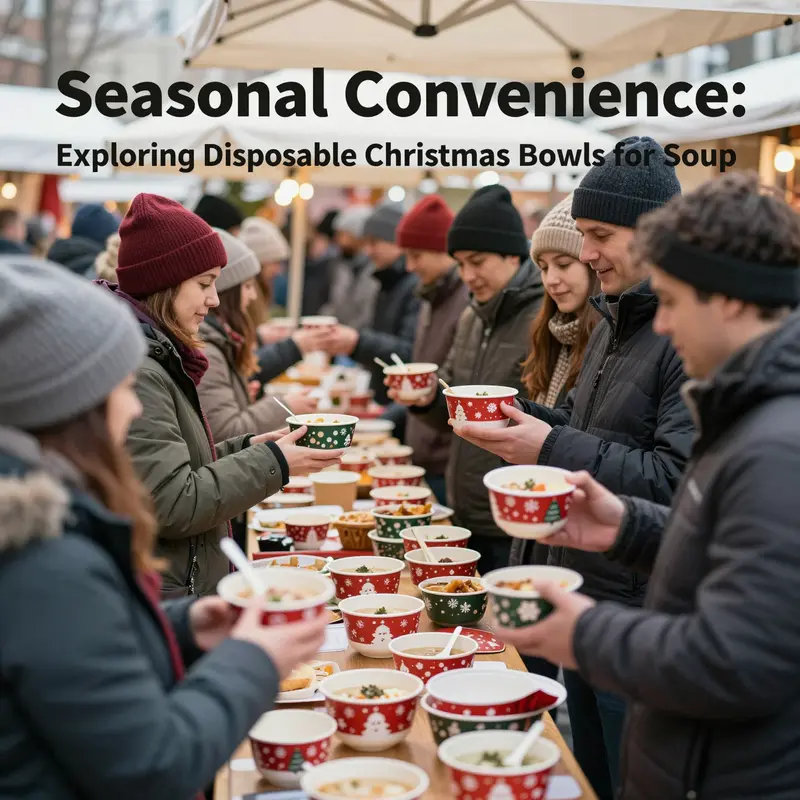
As December deepens, the art of hosting expands to the table itself. Disposable Christmas bowls are no longer merely convenient receptacles for soup; they serve as a small stage for hospitality, enabling gatherings of every size to feel intentional and festive without the burden of heavy cleanup. Their presence signals care, warmth, and a shared moment around a simple bowl.
Design and customization have become defining influences in this category. The best bowls blend festive motifs with subtle texture and a palette that complements china and glassware rather than competing with it. Brands now offer patterns that echo winter light, metallic accents, and deeper reds and greens while keeping the surface tactile and premium in feel. Logo printing and event branding can be integrated into complete kits that include lids, utensils, and napkins, allowing hosts to create a cohesive look with minimal effort.
Material choices reflect growing concern for sustainability. Paper and plant based fibers with responsibly sourced coatings are common, and many options emphasize heat resistance and leak protection while still aiming for home compostable or recyclable end of life. Consumers increasingly expect transparency about cradle to grave impacts, and this drives continuous improvements in barrier layers and coatings that preserve performance without sacrificing recyclability.
Durability remains crucial. Modern disposable bowls often feature reinforced walls and double wall constructions that keep soups steaming and prevent leaks during transport. This reliability supports gatherings that include buffets or backyard potlucks as well as formal planned events, where timing matters and guest flow is important.
E commerce and bundled packaging have reshaped procurement. Online catalogs let buyers compare designs, calculate compatible kits, and order bowls with lids, utensils, and napkins in a single transaction. This plug and play approach reduces lead times, aligns branding with the event, and helps organizers scale their holiday service with less friction.
In shaping the future, the focus is on balancing aesthetics, functionality, and environmental responsibility. The most successful options will merge striking festive design with practical performance, while clear disposal guidance helps guests follow through after the meal. Disposable bowls thus contribute to the ritual of gathering, turning a simple soup into a moment of connection that endures in memory long after the last spoonful.
Final thoughts
The use of disposable Christmas bowls for soup provides a practical solution for foodservice businesses during the bustling holiday season. Their thoughtful designs not only meet the aesthetic demand of festive gatherings but also cater to the need for convenience and safety. Moreover, with an increasing focus on environmental sustainability, selecting eco-friendly options can enhance your brand’s image. As we have explored throughout this article, understanding consumer preferences alongside current market trends will position your business competitively, ensuring that your holiday service remains both festive and efficient.