
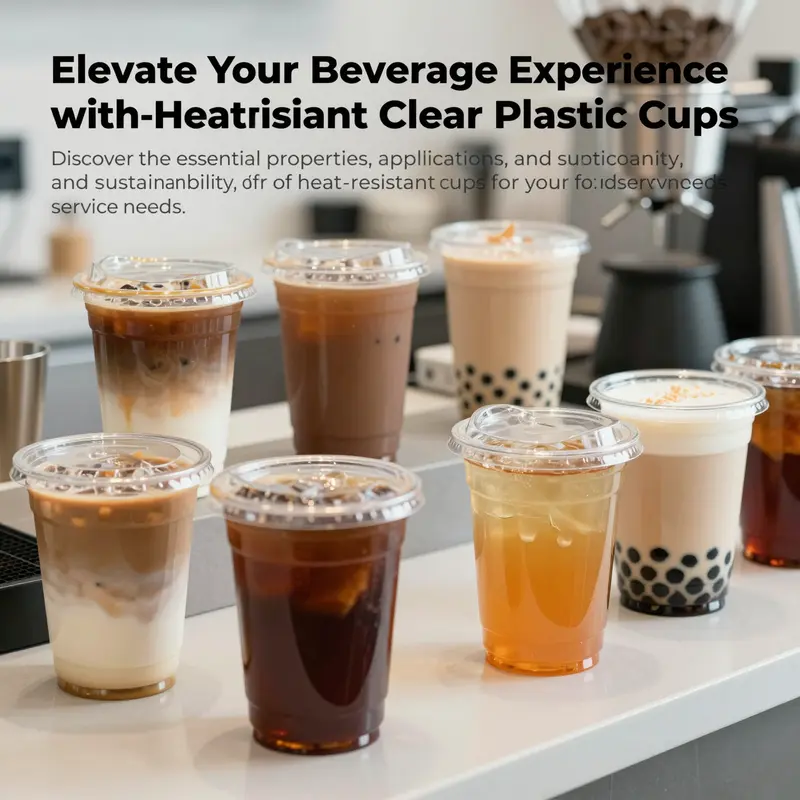
In today’s competitive beverage and food service industry, ensuring that your products are not only appealing but also functional is paramount. Heat-resistant clear plastic cups play a pivotal role in this equation, especially for bubble tea shops, beverage chains, restaurants, food trucks, and catering services. These cups are designed to withstand high temperatures while providing excellent clarity, making them perfect for serving hot beverages without compromising on presentation or safety. This article explores the key properties and benefits of polypropylene cups, the importance of heat-resistant PET, applications in various food service contexts, and the sustainability considerations of these essential items. Each chapter builds on the last, providing you with a comprehensive understanding of how heat-resistant clear plastic cups can enhance your service offerings.
Clarity Under Pressure: How Polypropylene Shapes Heat-Resistant Clear Cups
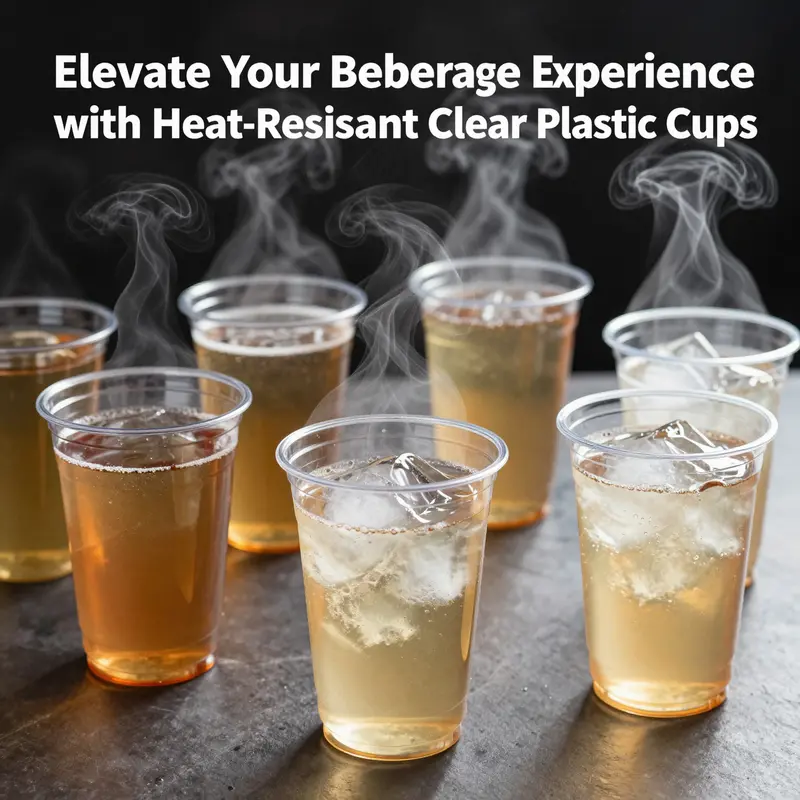
Polypropylene has quietly become the backbone of heat-resistant clear cups, a material choice that blends performance with practicality in a way few plastics can match. In the fast-paced world of food service and consumer packaging, the demand is not merely for a cup that holds a drink; it is for a cup that preserves presentation, resists kiss-and-tell warping, and endures the rigors of everyday use. Polypropylene rises to this challenge with a straightforward elegance rooted in its molecular structure and manufacturing behavior. Its popularity is not a coincidence but the result of deliberate properties that align with how hot beverages are made, transported, and enjoyed. When a barista pours a steaming latte or a server hands over a piping hot tea, the cup in hand must stand up to temperature without bending or cracking. PP does just that. It can handle temperatures high enough to safely accommodate beverages well above ordinary room temperature, providing a reliable shield between heat and the wearer’s comfort or the cup’s own integrity. This thermal margin is a decisive factor for brands that seek to minimize waste, reduce customer complaints, and maintain a clean, premium look from the first pour to the last sip. The practical advantage goes beyond comfort. In an era where to-go culture dominates and return-to-kitch environments are common, the ability to re-heat, rinse, and reuse a cup without a performance hit translates into significant operational savings. PP’s resilience translates into real-world benefits: fewer distorted shapes that complicate stacking, less surface damage from repeated dishwashing, and steadier performance when a microwave or oven reheating step is involved. The material’s reliability under heat thus has a direct line to productivity and customer satisfaction, two pillars of modern foodservice success.
If the market craves a cup that remains visually enticing while withstanding heat, polypropylene’s clarity is a key differentiator. Clarity matters not only for aesthetics but for brand storytelling. The natural translucence of PP offers a true view of the beverage’s color, layers, and texture, enabling cafés to showcase the richness of a cold-brewed pour or the subtle gradient of a layered fruit-infused drink. This optical quality is achieved without sacrificing safety or performance, because the polymer’s refractive index is favorable to a clean, glass-like appearance without the weight and fragility of glass. In a competitive display setting, where a customer’s eye is drawn to a vivid beverage against the light, a PP cup can enhance the perceived value of a product simply by allowing the liquid’s color and texture to dominate the visual field.
Beyond appearance, the material’s lightness invites handling convenience that is particularly valuable in busy venues. A cup that feels sturdy yet light in the hand reduces fatigue for service staff and makes takeaway experiences more comfortable for customers who carry beverages across large spaces or into vehicles. PP’s durability is also a practical boon: it resists moisture and many common chemical exposures that accompany sweeteners, syrups, citrus, and dairy. Liquids with sugars or acids can be corrosive to certain plastics, but polypropylene maintains its integrity more consistently, guarding against surface degradation that could compromise flavor, fragrance, or safety. In the spectrum of disposables and reusables, this combination of light weight and reliable resistance broadens the deployment options. It suits daily use in coffee shops and office environments as well as more formal catering contexts where cups must present well and perform under variable temperatures.
The thermal performance of polypropylene is not merely a single data point but a practical capability baseline. With a melting point that can reach up to 160°C (320°F), these cups tolerate hot beverages without deformation. That upper bound is not a license to hover near boiling water, but it provides a robust margin for everyday hot liquids. It also supports safe reheating in controlled settings, such as microwave-assisted serving or rewarming portions of soups or hot drinks that have cooled to a manageable temperature. While not every PP cup is designed for direct steaming, its resilience to short bursts of high heat makes it a versatile option for kitchens that juggle multiple service styles—from quick-service counter to formal plated service. In short, heat tolerance translates into reliability, enabling operations to plan menus and workflows around the expectation that the cup will remain dimensionally stable through the critical moments of serving, transport, and consumption.
Another practical advantage lies in the material’s resistance to moisture and chemicals. The cup’s exterior is unlikely to swell or warp under damp handling, and its interior is built to withstand contact with sugary syrups, citrus beverages, dairy fats, and mild acids without absorbing flavors or suffering surface damage. This chemical resilience supports a broad range of beverage types, from concentrated espresso-based drinks to fruit-infused waters, without compromising cleanliness or safety. In a world where cross-contamination controls and sanitation standards are non-negotiable, PP’s compatibility with common cleaning cycles—whether hand-washed, machine-washed, or briefly reheated—helps maintain hygiene while sustaining product appearance. Yet, while PP delivers many strengths, its narrative also includes caveats that are important for designers and operators to consider. Prolonged exposure to extreme heat can lead to slight warping, a reminder that even the most robust plastics have limits. Outdoor applications in direct sunlight can accelerate aging processes, gradually affecting surface clarity and rigidity. UV exposure, in particular, can make PP more brittle over time, which has implications for reusability and lifecycle planning in outdoor events or sunny climates. The environmental footprint, too, invites reflection. Polypropylene is recyclable, typically coded as a #5 plastic, but it is not biodegradable. This fact matters for sustainability programs that emphasize circular economies and end-of-life stewardship. When cups are designed with reuse in mind, the potential for plastics to be reclaimed and turned into new products becomes a meaningful feature rather than a liability. The conversation around PP thus weaves together performance, reuse potential, and responsibility, presenting a balanced view of what polypropylene can and cannot do in heat-resistant clear cups.
From a design perspective, polypropylene’s processability plays a central role. The material lends itself to efficient molding, allowing manufacturers to produce cups with smooth surfaces, consistent wall thickness, and precise rims. Smooth walls not only enhance optical clarity but improve stacking, grip, and dishwasher performance. A well-controlled wall thickness reduces the risk of uneven heating during microwaving and helps ensure consistent consumer experiences across a batch. The straight rims and seamless transitions—common design features in PP cups—contribute to a clean, premium appearance that teams can customize with branding or subtle visual cues such as color-tinted interiors or translucent logos. The simplicity of the geometry also helps manufacturers achieve tight tolerances, which translates into repeatable performance across thousands of units. In practice, this means a coffee shop can rely on the same cup every day, regardless of batch size, while a caterer can confidently scale operations for large events without sacrificing presentation or reliability.
In considering the broader landscape of heat-resistant clear cups, polypropylene often stands as the leading choice for high-temperature applications and reusable scenarios. Its performance is not limited to hot beverages alone; it extends to situations where cups may be used for warm foods, reheated meals, or multi-serve beverage styling. The material’s stability under heat supports a broad spectrum of use cases, from single-use catering cups to durable, reusable serviceware. Nonetheless, industry players recognize the complementary strengths of heat-resistant PET variants, particularly in contexts that prize crystal-clear transparency and high recyclability for single-use or event-focused deployments. PET variants can offer exceptional clarity and dimensional stability, with their own advantages and trade-offs. The choice between PP and high-heat PET hinges on the intended lifecycle, the maximum service temperature, the cleaning and reheating protocols, and the environmental goals of the program. In many operations, the decision is driven by a balancing act between thermal robustness, cost-per-use, and end-of-life strategy. Polypropylene’s edge in heat resistance, combined with its light weight and robust mechanical performance, often tips the scale toward PP when the goal is a versatile cup suitable for both disposable and reusable workflows.
The lifecycle considerations for PP cups are nuanced and deserve attention. On one hand, their recyclability underlines a path toward reuse and reprocessing within modern waste-management systems. On the other hand, the reality of recycling infrastructure means that the actual environmental benefit depends on collection rates, sorting efficiency, and the availability of recycling streams that accept polypropylene. Designers and operators are increasingly mindful of this dynamic, pursuing strategies that extend cup life through reuse programs, proper cleaning protocols, and clear labeling that communicates care instructions to consumers. In practice, this holistic approach helps reduce waste, maintain product quality, and support regulatory compliance around food-contact materials. It also reinforces the value proposition for customers who want to pair performance with responsible consumption. The balance between reusability and recyclability is not a fixed rule but a strategic consideration that evolves with regional infrastructure, consumer behavior, and brand commitments to sustainability.
As this narrative unfolds, the conversation about heat-resistant clear cups moves beyond the raw performance metrics of melting points and glossy finishes. It becomes a story about how a single polymer can support the ritual of a hot drink—from the moment steam curls up from the cup’s rim to the moment a barista places it on a saucer for a final presentation. It is about seeing through the cup to the beverage’s color and composition, about feeling the weight and texture that signal quality, and about trusting that the cup will hold its shape when heat, movement, and time press against it. In this sense, polypropylene’s role is not just technical but also operational and experiential. The material enables a consistent, predictable experience for both servers and customers, while allowing brands to express their identity through clarity, form, and function. For developers of foodservice packaging, the lesson is that high-temperature performance is not an isolated spec. It is a composite outcome shaped by molecular resilience, processing precision, and thoughtful design that anticipates how cups are used, cleaned, stored, and disposed of in real life.
At the heart of this chapter’s examination lies a simple but powerful idea: heat resistance and clarity do not have to be at odds. In polypropylene, they often exist in a productive tension that yields a cup capable of withstanding heat and preserving presentation. The capital that PP brings to the table is not just its high melting point; it is a reliable combination of surface quality, chemical resistance, and lightness that translates into better handling, safer use, and more sustainable practices over the product’s lifecycle. It is this synergy of properties that underwrites PP’s position as the leading material for heat-resistant, clear plastic cups and explains why designers, operators, and consumers alike have come to rely on it for a wide array of hot-beverage experiences. The broad compatibility with microwaving and dishwashing, coupled with its acute attention to surface appearance, signals a mature material choice that can adapt to evolving service paradigms without demanding a wholesale redesign of cups, lids, or branding systems.
For stakeholders who want to deepen their understanding, the polypropylene story offers a framework for evaluating other materials. It invites a careful comparison of heat tolerance, clarity, durability, and end-of-life options. It reminds us that a cup’s performance is the sum of its parts: resin chemistry, mold design, wall geometry, and the quality of the finishing processes. In a marketplace that continually seeks to balance cost, performance, and sustainability, polypropylene presents a dependable baseline from which innovation can grow. By focusing on this material, manufacturers can optimize the user experience, reduce waste, and deliver products that not only perform under heat but also align with the evolving expectations of customers and regulators. The result is a clear, confident, and capable cup that stands up to heat without shedding its composure or its visual appeal, a small yet essential piece of the broader system that serves beverages around the world.
External reference: Plastics News provides a detailed discussion of polypropylene’s thermal performance in disposable cups, offering technical depth that complements this chapter’s emphasis on practical application and market relevance. For further reading, see the related industry coverage at Plastics News.
External resource: https://www.plasticsnews.com/industry-news/polypropylene-thermal-performance-in-disposable-cups
null

null
Crystal Confidence: How Heat-Resistant Clear Cups Elevate Service, Safety, and Spectacle in Food Service and Events

Clear plastic cups that can stand up to heat have reshaped how foodservice operators present beverages and even certain heated foods. They marry the transparency that showcases color and appeal with a resilience that keeps their shape intact under the pressure of hot liquids, wind, and busy handling in rapid-service environments. In the spectrum of available materials, the latest high-performance polymers—copolyesters such as PETG and robust polycarbonate—emerge as standout options for cups designed to hold hot drinks and warmth-holding foods without clouding, warping, or releasing concerns about safety. These materials offer thermal stability that outperforms more traditional plastics like standard polystyrene or basic polypropylene, enabling operators to deliver a consistent, high-quality experience from the first sip to the last bite. In practice, this means more than a cleaner look. It means reliability in service lines, safer transport for both staff and guests, and a presentation that preserves the integrity of the product itself. The relationship between material science and service design becomes visible in the moment a customer sees a cup that remains crisp and clear after a lengthy hold by a busy barista or caterer. The beverage looks as inviting at the end of a long line as it did at the moment it was poured, and that continuity of appearance is a subtle but powerful driver of perceived quality and satisfaction.
From a design standpoint, heat resistance and clarity are not merely about surviving a hot pour. They influence the entire customer journey. In premium fast-casual settings, for example, the choice of a cup can communicate brand values as clearly as the logo on a lid or the color of the straw. A cup that stays transparent and bright after passing between hands, trays, and service stations can showcase the true color of a latte’s crema or a vibrant tea infusion. It also supports brand storytelling. In events, whether a corporate gathering or a wedding reception, a clear cup with superb clarity allows the beverage to speak for itself—the hue, the layer separation in a latte, or the glistening surface of a chilled juice more readily catching the eye. The material choice thus becomes part of the event’s aesthetic language, simultaneously practical and persuasive.
In the materials landscape, copolyester-based options, such as PETG, and polycarbonate stand out for their heat-resistance profiles and their ability to remain optically clear. These polymers are engineered to maintain surface smoothness, resist hazing, and withstand repeated handling without cracking. Their performance is a step above standard plastics used in disposable or semi-reusable cups. The emphasis here is not solely on temperature, but on the total package: clarity that stays intact through brief reheats or warm pours, impact resistance to reduce breakage in fast-paced settings, and chemical stability that keeps the surface inert to the occasional splash of coffee, tea, or sauces. What this means in practical terms is that staff can carry more confidently, guests can enjoy a seamless experience, and event logistics can be streamlined by reducing the rate of cup failure or the need for replacement during a single service window. The reduction in spillage and the associated cleanup also contribute to overall service efficiency and guest satisfaction, a subtle but meaningful benefit in crowded venues where every minute matters.
The materials choice also intersects with safety considerations and regulatory expectations. Clear cups designed for hot beverages must promote safe hot-handling practices. The polymer matrix itself is only one part of the equation. Additives, surface treatments, and printing inks used for branding all interact with heat exposure. Reputable cups designed for hot liquids are formulated to minimize leaching and to avoid releasing volatile compounds when exposed to typical service temperatures. For copolyester PETG and polycarbonate, the combination of chemical stability and low haze formation under heat supports both safety and presentation. While some high-heat PET variants exist for specific uses, the consensus in the industry emphasizes that the chosen material should be compatible with food-contact regulations and free from contaminants that could migrate into beverages during typical service conditions. In this light, the design process for heat-resistant clear cups becomes as much about regulatory alignment as about performance under heat. A well-engineered cup is one that not only withstands temperature but also aligns with safety and sustainability goals that modern foodservice teams must meet.
Turning to applications, hot beverages remain the primary arena for these cups. Coffeehouse service, corporate events, weddings, and outdoor festivals all rely on a cup that can contain steam, protect hands, and maintain a crisp, transparent appearance even after a long exposure to heat. In many cases, the cups are used for extended service periods, during which a cup’s rigidity and shape retention help with stacking, transport, and handling. The visual clarity of copolyester and polycarbonate cups supports branding and presentation goals, particularly in settings where beverages are part of a broader display and table design. Beverages like coffee, tea, hot chocolate, or even warmed specialty drinks benefit from the cup’s stability. The cups are well-suited to both single-use and semi-reusable models, enabling operators to balance convenience with sustainability goals. Their transparency also favors product storytelling—viewers can see the beverage’s layers, the carbonation in certain drinks, or the vivid color of a fruit-infused tea. This optical clarity is not merely cosmetic; it influences customer perception of quality and freshness, often translating into higher satisfaction scores and repeat visits.
Equally important is the cup’s ability to handle heated foods in catering contexts where warmth and presentation converge. Heated sauces, warm soups, or bite-sized offerings presented in a clear cup or cup-like vessel can benefit from the same material advantages: stability, a clean surface, and the absence of deformation that might otherwise disrupt the dish’s presentation. In premium catering environments, such as hotel banquets or corporate events, a clear, heat-stable cup can substitute for more fragile glassware in certain service windows, thereby reducing breakage risk while preserving the refined look of the event. The fusion of heat tolerance and transparency also aligns with branding strategies that emphasize purity, quality, and sophistication—appealing to guests who expect both function and aesthetics in equal measure.
From a manufacturing perspective, the choice between PETG, polycarbonate, and other high-performance thermoplastics informs processing conditions, cycle times, and overall cost. PETG offers a favorable balance of clarity, toughness, and ease of fabrication, while polycarbonate counters with exceptional impact resistance and high heat tolerance. These properties influence the design of thin-wall cups, the thickness necessary to resist cracking under heat and impact, and the feasibility of printing or labeling directly onto the cup for branding. For operators, the practical implications include faster service with sturdy cups that resist denting or cracking during handling, as well as reduced product loss due to breakage. Moreover, the ability to recycle or responsibly manage end-of-life streams depends on the material selected. While not all high-clarity polymers are equally recyclable in every region, the industry trend continues toward compatibility with established recycling streams or dedicated programs that can handle clear copolyesters and polycarbonates more effectively. In this context, cups serve not only as vessels but as nodes in a broader conversation about sustainability in the events and foodservice ecosystem.
The social and operational advantages converge most clearly in environments where guests interact with the service flow. In busy cafes, for instance, staff rely on cups that can handle back-of-house heat while staying visually appealing in front of customers. In corporate events, the cups can function as portable branding canvases, capturing light and drawing attention to the beverage and its presentation. For wedding receptions and premium tastings, the cups can complement other tableware and glassware to sustain an overall mood of refinement. Importantly, the durability and stability of heat-resistant clear cups reduce the risk of micro-mishaps—the kind of small failures, like cracking at the rim or globe-wobbling when stacked—that can add to service time and guest frustration. In short, the right cup becomes a quiet but essential partner in both the efficiency of operations and the experiential quality delivered to guests.
Looking ahead, the industry continues to balance performance with sustainability. Clear cups must be designed to withstand heat without compromising recyclability or safety. The evolving material science landscape—where copolyesters and polycarbonates offer improved clarity and stability—supports this balance. Yet each application area has its own demands. A bustling coffee bar may prioritize rapid cycle times and high-volume throughput, favoring a material with low-cost processing and robust durability for daily use. A catered outdoor event, on the other hand, might emphasize higher heat resistance to accommodate longer serving windows and the potential for outdoor temperature swings, even if that means a different recycling pathway at the end of life. In all cases, the ideal solution harmonizes clarity, heat tolerance, mechanical resilience, and environmental responsibility, resulting in a cup that can perform reliably under pressure while upholding the brand’s visual narrative.
The broader picture is that heat-resistant clear cups have evolved from simple, disposable vessels into sophisticated tools that enable better service design. They empower operators to push creative boundaries in presentation—whether showing off the beverage color in a milk-white latte, highlighting the warmth of a consommé, or delivering a premium texture of a heated sauce in a transparent vessel. They also enable safer handling practices, as improved rims and wall strength reduce the likelihood of leaks or spills that could endanger staff or guests. While many of these advantages revolve around the material’s core properties, the ultimate measure of success lies in the customer experience: does the cup help convey warmth and quality, does it perform without fail during peak service, and does it support a sustainable, brand-aligned approach to packaging?
For readers seeking to connect these insights to practical decisions, it helps to align material choices with expected service conditions. If the environment involves frequent direct contact with hot liquids and a need for pristine presentation, PETG and polycarbonate cups offer a strong combination of heat stability and optical clarity. If the business model includes more aggressive reuse cycles or a tighter tolerance for micro-variations in hot-liquid performance, a carefully engineered variant of high-heat PET or related copolymers may be appropriate, balancing heat tolerance with cost and end-of-life considerations. Across these choices, one theme remains constant: the cup is more than a receptacle. It is a living part of the service experience, shaping how guests perceive warmth, quality, and trust in the brand. By selecting materials that uphold clarity under heat and resist deformation, foodservice operators can deliver consistent experiences that meet modern expectations for safety, aesthetics, and sustainability.
External resources end here with an eye toward deeper standards for heat resistance. For context on heat resistance standards in plastic cups, see this industry reference: https://www.plasticsnews.com/article/20251028/plastic-cups-heat-resistance-standards
Clear Responsibility: Material Choices, Recycling Realities, and the Sustainability Path of Heat-Resistant Clear Plastic Cups
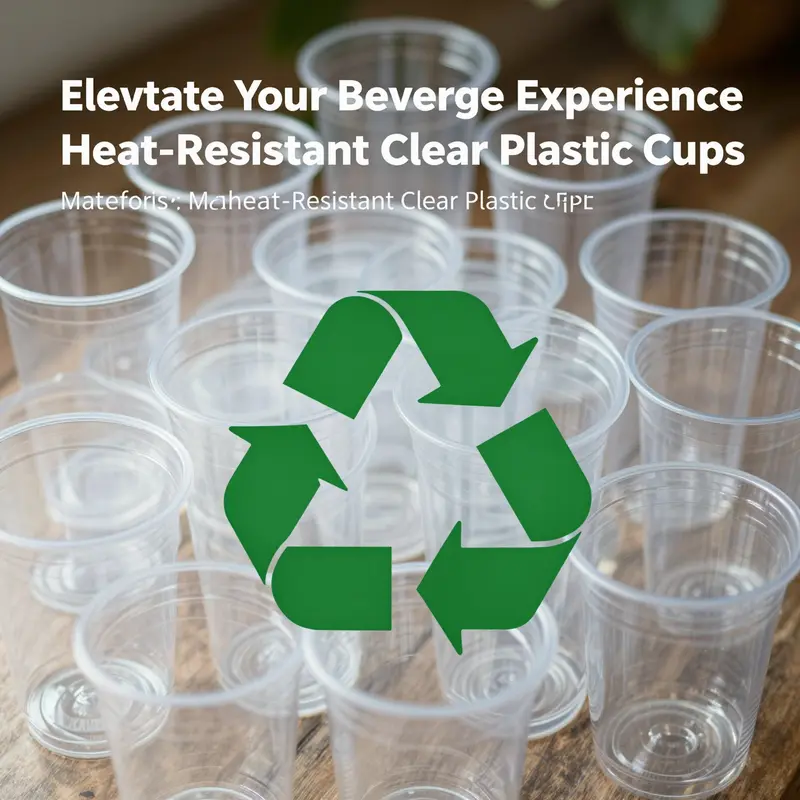
This chapter examines how heat-resistant clear cups perform in practice and how their life cycle can be made more sustainable. It discusses material options such as polypropylene (PP) and PET, including their heat tolerance, clarity, and recyclability. It also covers end-of-life challenges like recycling infrastructure, contamination, mono-material designs, and the role of labeling and consumer behavior. The goal is to connect cup performance with waste management realities and to outline practical steps for designers, manufacturers, retailers, and policymakers. By prioritizing recyclability, recycled content, and system improvements that support reuse where viable, the industry can reduce environmental impact without sacrificing usability.
Final thoughts
Heat-resistant clear plastic cups are more than just a practical choice; they are a vital component of modern foodservice and event planning. Their properties, particularly those found in polypropylene and heat-resistant PET, highlight the benefits in thermal stability and visual appeal. As businesses strive towards sustainability, the recyclability of these cups aligns with eco-friendly practices while offering dependable solutions for serving beverages. In an industry where both function and presentation matter, investing in the right heat-resistant clear plastic cups can elevate your service, ensuring both customer satisfaction and environmental responsibility.